Tag: free
-
Trump administration’s reasons for detaining Mahmoud Khalil threaten free speech
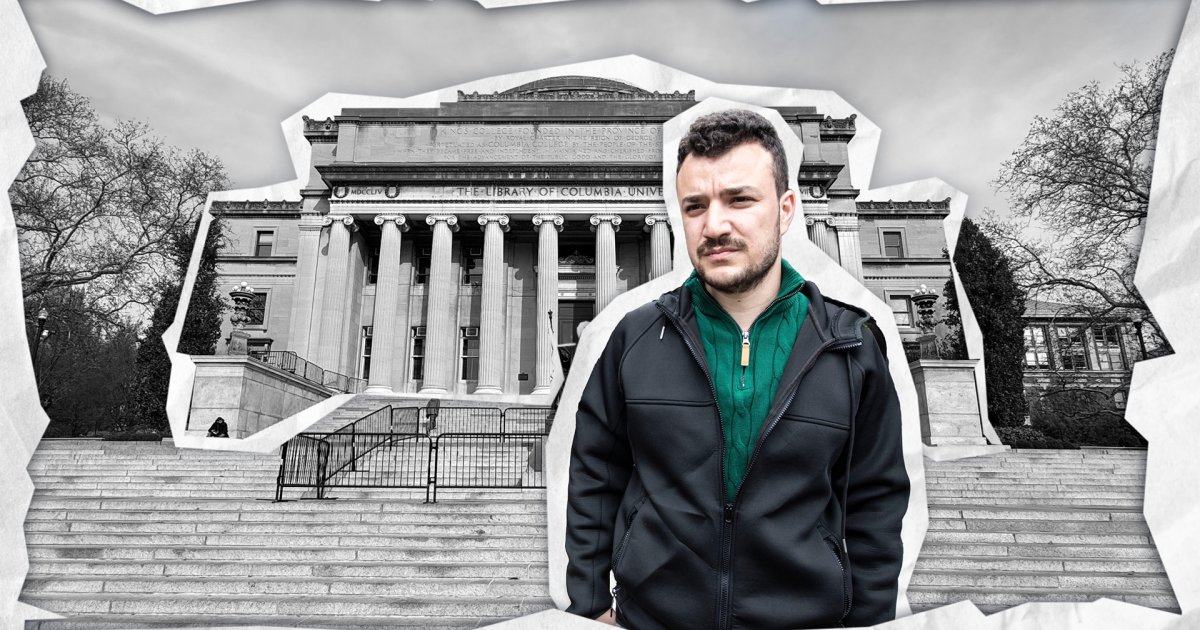
It’s been three days since the government arrested and detained Mahmoud Khalil for deportation. This afternoon, the administration finally stated the basis for its actions. Its explanation threatens the free speech of millions of people.
Yesterday, an administration official told The Free Press, “The allegation here is not that [Khalil] was breaking the law.” This was confirmed today by White House Press Secretary Karoline Leavitt, who announced Khalil is being targeted under a law that she characterized as allowing the secretary of state to personally deem individuals “adversarial to the foreign policy and national security interests of the United States of America.”
Leavitt said Khalil “sid[ed] with terrorists,” “organized group protests” that “disrupted college campus classes and harassed Jewish American students and made them feel unsafe,” and distributed “pro-Hamas propaganda.” She also said the Department of Homeland Security is trying to track down “other individuals who have engaged in pro-Hamas activity” at Columbia University.
The law Leavitt appears to be citing requires the secretary of state to have “reasonable ground to believe” the person’s “presence or activities in the United States . . . would have potentially serious adverse foreign policy consequences for the United States.”
The administration is wielding this standard — deportation for people whose activities could cause “serious adverse foreign policy consequences for the United States” — to arrest and detain an individual graduate student. In explaining how he met this standard, the administration did not allege Khalil committed a crime. But it did explicitly cite the content of his speech, characterizing it as “anti-American” and “pro-Hamas.” Protesting government policy is protected by the First Amendment, as is rhetorical support for a terrorist group (if not directly coordinated with it, which the government has not alleged here).
Disrupting college classes and harassing students is not protected expression, to be sure, and Leavitt stated that Khalil organized protests that may have done so. But the administration has not detailed Khalil’s specific actions with respect to those protests, so it remains unclear whether Khalil himself violated any campus rules against discriminatory harassment. Whether any such violation justifies detention and deportation is a separate question. In either adjudication, Khalil must be afforded due process.
There are millions of people lawfully present in the United States without citizenship. The administration’s actions will cause them to self-censor rather than risk government retaliation. Lawful permanent residents and students on visas will fear a knock on the door simply for speaking their minds.
If constitutionally protected speech may render someone deportable by the secretary of state, the administration has free rein to arrest and detain any non-citizen whose speech the government dislikes. The inherent vagueness of the “adversarial to the foreign policy and national security interests” standard does not provide notice as to what speech is or is not prohibited. The administration’s use of it will foster a culture of self-censorship and fear.
This is America. We don’t throw people in detention centers because of their politics. Doing so betrays our national commitment to freedom of speech.
FIRE social media post about the government’s detention of Mahmoud Khalil, March 10, 2025. -

Free speech advocates rally to support FIRE’s federal appeal to defend advocacy in public parks
Protesting in public parks is as American as apple pie. It’s at the heart of our First Amendment — and one of our nation’s most time-honored principles. That right does not disappear merely because a private entity operates the public park on the government’s behalf.
That’s why FIRE and the Law and Religion Clinic at the University of Texas School of Law are appealing a district court ruling that weakens this First Amendment right. And we are proud to be backed by a broad coalition of prominent organizations as “friends of the court.”
Here’s what happened. Several years ago, animal welfare advocates Daraius Dubash and Dr. Faraz Harsini took to Houston’s largest public park to raise awareness about the harms of industrialized farming. For Dubash, this activism is rooted in his Vedantic Hindu faith, which compels him to promote the teaching of ahimsa, or nonviolence. To communicate their message, Dubash and Harsini serve as co-organizers for an international nonprofit animal-rights group. Their signature event involves volunteers showing muted documentary footage of farming practices to passersby, while others remain available to answer questions.
Dubash and Harsini’s right to peacefully advocate on this issue in a public park is beyond dispute. But on three separate occasions, the public park’s private management ordered them to leave. The fourth time, park management had Houston police arrest Dubash for criminal trespass and banned them both from showing their video footage in the park in the future. Why? Because the park’s private managers and city police deemed their message “offensive.”
With the help of FIRE and the Law and Religion Clinic, Dubash and Harsini filed suit in 2023 against the City of Houston, the park management corporation, its then-president, and the arresting officers. But in September, 2024, the U.S. District Court for the Southern District of Texas dismissed their claims, ruling that none of the defendants were responsible for violating Dubash and Harsini’s constitutional rights in a public park.
We disagree.
FIRE and the Clinic appealed to the Fifth Circuit, arguing that the ruling effectively lets the government bypass the First Amendment by delegating the management of public spaces to private organizations. And the court’s limited interpretation of governmental liability would make it nearly impossible for anyone to challenge violation of their constitutional rights by municipalities or law enforcement.
Last week, 12 prominent organizations from across the ideological spectrum filed nine amicus curiae briefs in support of Dubash and Harsini:
The ACLU of Texas argues the park management company was acting as a state actor and public-private partnerships “cannot serve as an end run around the First Amendment.” The brief also argues the district court erred by failing to hold the arresting officers accountable based on their “mistaken belief” that the park was private. As the brief explains, probable-cause findings must be based on “objective facts and circumstances rather than subjective beliefs.”
Young America’s Foundation, Hamilton Lincoln Law Institute, and Advancing American Freedom explain that Houston cannot bypass its duty to protect free speech in its public spaces by granting oversight authority to a private third party. The brief also emphasizes the sweeping implications of the district court’s decision, including in the academic context where state universities are increasingly attempting to evade First Amendment protections by outsourcing park management to nominally private entities like student governments.
Liberty Justice Center argues the district court’s decision “blurs the line between state and private actors,” allowing Houston to “contract out of its constitutional obligations.” We could not agree more.
The Center for American Liberty, in a brief submitted through Reeves Law LLC, argues that maintaining a public park is a traditional and exclusive government function, with public parks serving “as public forums for the expression of speech,” whether or not they are managed by a private entity.
The National Press Photographers Association, in a brief submitted through the First Amendment Clinic at Southern Methodist University Dedman School of Law, explains how the district court’s ruling “threatens the sanctity of the spaces where speech is deserving of the highest protection.”
Law Enforcement Action Partnership and the National Police Accountability Project explain that accountability for law enforcement officers and municipalities is crucial to preserving public confidence in the police and the government, and that failing to hold police officers accountable “undermines public trust in law enforcement.” The brief also argues that municipalities should know their police officers “need training and guidance to appropriately respond” to peaceful expressive activity, and failing to provide that training is sufficient to establish municipal liability.
Protect the First Foundation, in a brief submitted through the Religious Freedom Clinic at Harvard Law School and Schaerr Jaffe LLP, highlights that Dubash was motivated to proselytize nonviolence by his deeply held religious beliefs, and describes the long history and tradition of public proselytization, from the persecution of religious minorities in the colonies through the legal protections established by First Amendment jurisprudence.
The Hindu American Foundation, in a brief submitted through Jackson Walker LLP, explains that Dubash’s religious motivation to advocate for nonviolence towards animals is consistent with Hindu teachings. The brief also argues that his “arrest, detention, and the ongoing prohibition on his method of proselytizing” do not pass constitutional muster.
The American Hindu Coalition, in a brief submitted through the Free Exercise Clinic at Yale Law School, emphasizes the history of public parks and streets as centers of religious activity, how marginalized faiths rely on these spaces to exercise their faith, and that Dubash’s activism is rooted in his religious beliefs.
Our clients and their counsel are grateful for the support of this impressive and diverse amicus coalition. This case will play a critical role in protecting the rights of other protesters and religious minorities to engage in protected expression as guaranteed under the First Amendment.
-
Maine’s censure of lawmaker for post about trans student-athlete is an attack on free speech
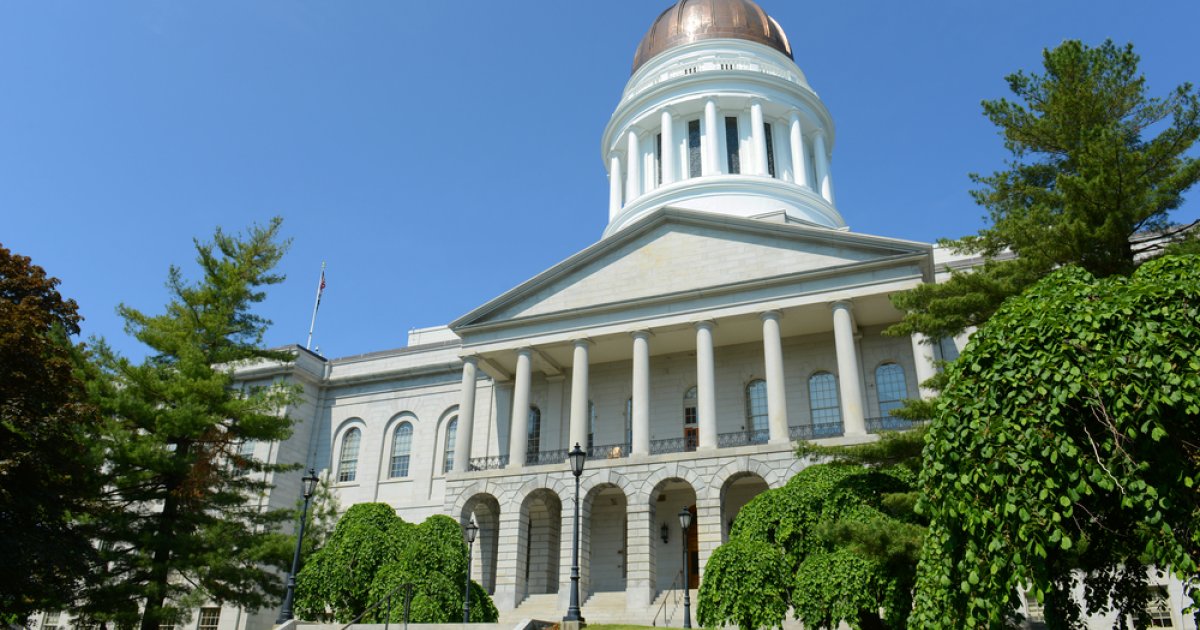
Citizens elect representatives to advocate zealously on their behalf, empowering officials to vote according to their conscience and express themselves freely on controversial topics. That’s why the Maine House of Representatives’ recent actions are so alarming — withdrawing an elected representative’s right to speak or vote on the House floor for refusing to take down a Facebook post.
Three weeks ago, Representative Laurel Libby of Maine’s 64th District posted on Facebook that a high school athlete won first place in girls’ pole vaulting at the Class B state championship after having competed the year before in the boys’ event and finishing in a tie for fifth place.
Libby’s post is constitutionally protected. She was speaking out about the policy in her state, set by the Maine High School Principals Association, that a high school athlete may participate in competitions for the gender with which they identify. Her post was also part of a nationwide debate. Maine Governor Janet Mills and President Trump have publicly sparred over the president’s executive order proposing to cut off education funding if states do not ban transgender athletes from competing in girls’ sports.
But just days after Libby’s post, the Maine House speaker and majority leader demanded she take it down. When she refused, the majority leader introduced a censure resolution — to be heard in the House the next day — because Libby’s post had included photos and the first name of the student, who is a minor. Libby sought to defend herself in the hastily called House vote, but was repeatedly cut off. The censure resolution passed 75-70 on a party-line vote.
If all the censure did was express disapproval of Libby’s actions, that would be one thing.
A state legislative body is entitled to express displeasure with a member’s actions, which by itself does not violate the First Amendment, as the Supreme Court recently ruled.
But in Libby’s case, the Maine House went further, much further. When Libby refused to apologize for her protected speech, the House speaker declared she would be barred from speaking on the House floor or voting on any legislation until she capitulated. Thus, the House majority party has precluded Libby from doing her job and effectively disenfranchised her constituents, end-running Maine constitutional provisions that say a representative cannot be expelled absent a two-thirds vote or recall election.
These actions are a clear example of retaliation based on constitutionally protected speech and amount to removal of an elected representative essentially because the House majority disagrees with her views or how she chose to express them. Sixty-nine years ago the U.S. Supreme Court held that a state legislature could not refuse to seat a duly elected member because of his public statements about the Vietnam War: “The manifest function of the First Amendment in a representative government requires that legislators be given the widest latitude to express their views on issues of policy.”
This is still the law. Under the constitution, the Maine House cannot censor Libby as it has done.
-
Trump’s federal funding crackdown includes troubling attacks on free speech
With his second term underway, President Trump has moved aggressively to reshape federal spending. Organizations that promote “diversity, equity, and inclusion” (DEI) or “gender ideology,” for example, are at risk of losing government grants and contracts. Although the government has discretion in spending taxpayer dollars, some of the administration’s attempts to yank funding from groups based on their speech run headlong into the First Amendment.
New funding restrictions target everything from DEI to ‘Gulf of Mexico’
On Jan. 21, Trump issued an executive order that purports to require funding recipients to abandon “illegal DEI” programs but does not define “DEI” or explain which programs the administration deems unlawful. The Department of Government Efficiency (DOGE) reportedly cited the order in moving to cancel contracts with eight U.S. Department of Housing and Urban Development (HUD) contractors over DEI language on the contractors’ own websites and LinkedIn profiles, even though it was unrelated to their contractual obligations. Late last month, a federal court blocked key parts of the executive order on First Amendment grounds.
One thing is clear: The government cannot constitutionally use funding as a cudgel to control speech outside the funded activity.
DEI isn’t the administration’s only target. Another executive order bans the use of federal funds to “promote gender ideology.” Meanwhile, the National Oceanic and Atmospheric Administration (NOAA) reportedly told The Nature Conservancy it would lose funding unless it adopted the term “Gulf of America” (echoing the White House’s ultimatum to the Associated Press to use the term or lose access to certain press events). And last week, Trump threatened to pull federal funding from any college that “allows illegal protests.”
Although these examples are different in important ways, they all raise First Amendment questions.
What does the Supreme Court have to say?
Several of Trump’s moves clash with decades of Supreme Court precedent. One thing is clear: The government cannot constitutionally use funding as a cudgel to control speech outside the funded activity. The funding is supposed to support a specific program or purchase, not give the state control over everything an institution does. The government can, however, decide whether to pay a group or person to speak on its behalf.
For instance, the Supreme Court held the government violated the First Amendment by forcing groups to denounce prostitution or lose funding for fighting HIV/AIDS. It also invalidated a ban on federal funding for public broadcasters who engaged in any editorializing, even with their own money.
Conversely, in Rust v. Sullivan, the Court upheld federal restrictions on abortion counseling in government-funded family planning programs — because Congress was subsidizing and controlling its own message about family planning.
One caveat: The government’s power to regulate speech within a funded activity is not absolute. The Court struck down a restriction on legal aid attorneys using federal grants to challenge welfare laws. Why? Unlike in Rust, the government wasn’t transmitting its own message — it was subsidizing legal aid attorneys’ advocacy on behalf of their indigent clients. Similarly, the University of Virginia — a public institution — violated the First Amendment when it denied a student magazine access to funding because of its religious viewpoint. The fund was for helping students express their own messages, not the university’s.
These same principles apply in other contexts where the government offers a financial benefit. Most Americans would rightly balk at the idea of a public school refusing to hire any Republicans, or a state government offering a tax exemption for Democrats only. Those policies would be plainly unconstitutional.
Trump’s funding restrictions: legal or overreach?
So how do Trump’s actual and proposed funding restrictions fit into this legal framework?
In partially blocking enforcement of Trump’s DEI executive order, a federal court emphasized that it unlawfully limited speech “outside the scope of the federal funding.” That means DOGE’s alleged targeting of HUD contractors for their DEI activities likely violates the First Amendment if those activities have nothing to do with their government work.
As for the “Gulf of America” mandate, the administration may be able to require The Nature Conservancy to use the term in official reports produced for NOAA. But if the mandate goes beyond that, it could also run into First Amendment problems.
And what about the executive order prohibiting use of federal funds to “promote gender ideology”? The only way this passes muster is if it controls the government’s own messaging or concerns non-speech activities, and not, for instance, if the government pulls a university’s funding because it believes a professor is somehow promoting such views. Congress funds universities to support the creation and spread of knowledge, not for faculty to act as government mouthpieces.
Pulling federal funding from colleges based solely on the views of student protests would also violate the First Amendment — and the administration cannot do so unilaterally. It’s one thing for the government to regulate its own speech, but quite another to punish colleges for how students express themselves on their own time. Trump’s statement referred to “illegal” protests, but his past remarks suggest his idea of “illegal” encompasses not just protest activity involving unlawful conduct but protected speech as well, such as whatever he deems “antisemitic propaganda.” This dovetails with how, during his first term, Trump directed civil rights agencies to use a definition of anti-Semitism that includes protected expression.
Efforts to deny federal funding to groups and institutions whose views the current administration dislikes seriously threaten Americans’ First Amendment rights. The government must tread carefully to avoid crossing the line into unconstitutional speech policing, otherwise the courts — and history — are unlikely to be on their side.
-
The National Institutes of Health shouldn’t use FIRE’s College Free Speech Rankings to allocate research funding — here’s what they should do instead
In December, The Wall Street Journal reported:
[President-elect Donald Trump’s nominee to lead the National Institutes of Health] Dr. Jay Bhattacharya […] is considering a plan to link a university’s likelihood of receiving research grants to some ranking or measure of academic freedom on campus, people familiar with his thinking said. […] He isn’t yet sure how to measure academic freedom, but he has looked at how a nonprofit called Foundation for Individual Rights in Education scores universities in its freedom-of-speech rankings, a person familiar with his thinking said.
We believe in and stand by the importance of the College Free Speech Rankings. More attention to the deleterious effect restrictions on free speech and academic freedom have on research at our universities is desperately needed, so hearing that they are being considered as a guidepost for NIH grantmaking is heartening. Dr. Bhattacharya’s own right to academic freedom was challenged by his Stanford University colleagues, so his concerns about its effect on NIH’s grants is understandable.
However, our College Free Speech Rankings are not the right tool for this particular job. They were designed with a specific purpose in mind — to help students and parents find campuses where students are both free and comfortable expressing themselves. They were not intended to evaluate the climate for conducting academic research on individual campuses and are a bad fit for that purpose.
While the rankings assess speech codes that apply to students, the rankings do not currently assess policies pertaining to the academic freedom rights and research conduct of professors, who are the primary recipients of NIH grants. Nor do the rankings assess faculty sentiment about their campus climates. It would be a mistake to use the rankings beyond their intended purpose — and, if the rankings were used to deny funding for important research that would in fact be properly conducted, that mistake would be extremely costly.
FIRE instead proposes three ways that would be more appropriate for NIH to use its considerable power to improve academic freedom on campus and ensure research is conducted in an environment most conducive to finding the most accurate results.
- Use grant agreements to safeguard academic freedom as a strong contractual right.
- Encourage open data practices to promote research integrity.
- Incentivize universities to study their campus climates for academic freedom.
Why should the National Institutes of Health care about academic freedom at all?
The pursuit of truth demands that researchers be able to follow the science wherever it leads, without fear, favor, or external interference. To ensure that is the case, NIH has a strong interest in ensuring academic freedom rights are inviolable.
As a steward of considerable taxpayer money, NIH has an obligation to ensure it spends its funds on high-quality research free from censorship or other interference from politicians or college and university administrators.
Why the National Institutes of Health shouldn’t use FIRE’s College Free Speech Rankings to decide where to send funds
FIRE’s College Free Speech Rankings (CFSR) were never intended for use in determining research spending. As such, it has a number of design features that make it ill-suited to that purpose, either in its totality or through its constituent parts.
Firstly, like the U.S. News & World Report college rankings, a key reason for the creation of the CFSRs was to provide information to prospective undergraduate students and their parents. As such, it heavily emphasizes students’ perceptions of the campus climate over the perceptions of faculty or researchers. In line with that student focus, our attitude and climate components are based on a survey of undergraduates. Additionally, the speech policies that we evaluate and incorporate into the rankings are those that affect students. We do not evaluate policies that affect faculty and researchers, which are often different and would be of greater relevance to deciding research funding. While it makes sense that there may be some correlation, we have no way of knowing whether or the degree to which that might be true.
Secondly, for the component that most directly implicates the academic freedom of faculty, we penalize schools for attempts to sanction scholars for their protected speech, as tracked in our Scholars Under Fire database. While our Scholars Under Fire database provides excellent datapoints for understanding the climate at a university, it does not function as a systematic proxy for assessing academic freedom on a given campus as a whole. As one example, a university with relatively strong protection for academic freedom may have vocal professors with unpopular viewpoints that draw condemnation and calls for sanction that could hurt its ranking, while a climate where professors feel too afraid to voice controversial opinions could draw relatively few calls for sanction and thus enjoy a higher ranking. This shortcoming is mitigated when considered alongside the rest of our rankings components, but as discussed above, those other components mostly concern students rather than faculty.
Thirdly, using CFSR to determine NIH funding could — counterintuitively — be abused by vigilante censors. Because we penalize schools for attempted and successful shoutdowns, the possibility of a loss of NIH funding could incentivize activists who want leverage over a university to disrupt as many events as possible in order to negatively influence its ranking, and thus its funding prospects. Even the threat of disruption could thus give censors undue power over a university administration that fears loss of funding.
Finally, due to resource limitations, we do not rank all research universities. It would not be fair to deny funding to an unranked university or to fund an unranked university with a poor speech climate over a low-ranked university.
Legal boundaries for the National Institutes of Health as it considers proposals for actions to protect academic freedom
While NIH has considerable latitude to determine how it spends taxpayer money, as an arm of the government, the First Amendment places restrictions on how NIH may use that power. Notably, any solution must not penalize institutions for protected speech or scholarship by students or faculty unrelated to NIH granted projects. NIH could not, for example, require that a university quash protected protests as a criteria for eligibility, or deny a university eligibility because of controversial research undertaken by a scholar who does not work on NIH-funded research.
While NIH can (and effectively must) consider the content of applications in determining what to fund, eligibility must be open to all regardless of viewpoint. Even were this not the case as a constitutional matter (and it is, very much so), it is important as a prudential matter. People would be understandably skeptical of, if not downright disbelieve, scientific results obtained through a grant process with an obvious ideological filter. Indeed, that is the root of much of the current skepticism over federally funded science, and the exact situation academic freedom is intended to avoid.
Additionally, NIH cannot impose a political litmus test on an individual or an institution, or compel an institution or individual to take a position on political or scientific issues as a condition of grant funding.
In other words, any solution to improve academic freedom:
- Must be viewpoint neutral;
- Must not impose an ideological or political litmus test; and
- Must not penalize an institution for protected speech or scholarship by its scholars or students.
Guidelines for the National Institutes of Health as it considers proposals for actions to protect academic freedom
NIH should carefully tailor any solution to directly enhance academic freedom and to further NIH’s goal “to exemplify and promote the highest level of scientific integrity, public accountability, and social responsibility in the conduct of science.” Going beyond that purpose to touch on issues and policies that don’t directly affect the conduct of NIH grant-funded research may leave such a policy vulnerable to legal challenge.
Any solution should, similarly, avoid using vague or politicized terms such as “wokeness” or “diversity, equity, and inclusion.” Doing so creates needless skepticism of the process and — as FIRE knows all too well — introduces uncertainty as professors and institutions parse what is and isn’t allowed.
Enforcement mechanisms should be a function of contractual promises of academic freedom, rather than left to apathetic accreditors or the unbounded whims of bureaucrats on campus or officials in government, for several reasons.
Regarding accreditors, FIRE over the years has reported many violations of academic freedom to accreditors who require institutions to uphold academic freedom as a precondition for their accreditation. Up to now, the accreditors FIRE has contacted have shown themselves wholly uninterested in enforcing their academic freedom requirements.
When it comes to administrators, FIRE has documented countless examples of campus administrators violating academic freedom, either due to politics, or because they put the rights of the professor second to the perceived interests of their institution.
As for government actors, we have seen priorities and politics shift dramatically from one administration to the next. It would be best for everyone involved if NIH funding did not ping-pong between ideological poles as a function of each presidential election, as the Title IX regulations now do. Dramatic changes to how NIH conceives as academic freedom with every new political administration would only create uncertainty that is sure to further chill speech and research.
While the courts have been decidedly imperfect protectors of academic freedom, they have a better record than accreditors, administrators, or partisan government officials in parsing protected conduct from unprotected conduct. And that will likely be even more true with a strong, unambiguous contractual promise of academic freedom. Speaking of which…
The National Institutes of Health should condition grants of research funds on recipient institutions adopting a strong contractual promise of academic freedom for their faculty and researchers
The most impactful change NIH could enact would be to require as a condition of eligibility that institutions adopt strong academic freedom commitments, such as the 1940 Statement of Principles on Academic Freedom and Tenure or similar, and make those commitments explicitly enforceable as a contractual right for their faculty members and researchers.
The status quo for academic freedom is one where nearly every institution of higher education makes promises of academic freedom and freedom of expression to its students and faculty. Yet only at public universities, where the First Amendment applies, are these promises construed with any consistency as an enforceable legal right.
Private universities, when sued for violating their promises of free speech and academic freedom, frequently argue that those promises are purely aspirational and that they are not bound by them (often at the same time that they argue faculty and students are bound by the policies).
Too often, courts accept this and universities prevail despite the obvious hypocrisy. NIH could stop private universities’ attempts to have their cake and eat it too by requiring them to legally stand by the promises of academic freedom that they so readily abandon when it suits them.
NIH could additionally require that this contractual promise come with standard due process protections for those filing grievances at their institution, including:
- The right to bring an academic freedom grievance before an objective panel;
- The right to present evidence;
- The right to speedy resolution;
- The right to written explanation of findings including facts and reasons; and
- The right to appeal.
If the professor exhausts these options, they may sue for breach of the contract. To reduce the burden of litigation, NIH could require that, if a faculty member prevails in a lawsuit over a violation of academic freedom, the violating institution would not be eligible for future NIH funding until they pay the legal fees of the aggrieved faculty member.
NIH could also study violations of academic freedom by creating a system for those connected to NIH-funded research to report violations of academic freedom or scientific integrity.
It would further be proper for NIH to require institutions to eliminate any political litmus tests, such as mandatory DEI statements, as a condition of grant eligibility.
The National Institutes of Health can implement strong measures to protect transparency and integrity in science
NIH could encourage open science and transparency principles by heavily favoring studies that are pre-registered. Additionally, to obviate concerns that scientific results may be suppressed or buried because they are unpopular or politically inconvenient, NIH could require its grant-funded research to make available data (with proper privacy safeguards) following the completion of the project.
To help deal with the perverse incentives that have created the replication crisis and undermined public trust in science, NIH could create impactful incentives for work on replications and the publication of null results.
Finally, NIH could help prevent the abuse of Institutional Review Boards. When IRB review is appropriate for an NIH-funded project, NIH could require that review be limited to the standards laid out in the gold-standard Belmont Report. Additionally, it could create a reporting system for abuse of IRB processes to suppress, or delay beyond reasonable timeframes, ethical research, or violate academic freedom.
The National Institutes of Health can incentivize study into campus climates for academic freedom
As noted before, FIRE’s College Free Speech Rankings focus on students. Due to logistical and resource difficulties surveying faculty, our 2024 Faculty Report looking into many of the same issues took much longer and had to be limited in scope to 55 campuses, compared to the 250+ in the CFSR. This is to say there is a strong need for research to understand faculty views and experiences on academic freedom. After all, we cannot solve a problem until we understand it. To that effect, NIH should incentivize further study into faculty’s academic freedom.
It is important to note that these studies should be informational and not used in a punitive manner, or to decide on NIH funding eligibility. This is because tying something as important as NIH funding to the results of the survey would create so significant an incentive to influence the results that the data would be impossible to trust. Even putting aside malicious interference by administrators and other faculty members, few faculty would be likely to give honest answers that imperiled institutional funding, knowing the resulting loss in funding might threaten their own jobs.
Efforts to do these kinds of surveys in Wisconsin and Florida proved politically controversial, and at least initially, led to boycotts, which threatened to compromise the quality and reliability of the data. As such, it’s critical that any such survey be carried out in a way that maximizes trust, under the following principles:
- Ideally, the administration of these surveys should be done by an unbiased third party — not the schools themselves, or NIH. This third party should include respected researchers across the political spectrum and no partisan slant.
- The survey sample must be randomized and not opt-in.
- The questionnaire must be made public beforehand, and every effort should be made for the questions to be worded without any overt partisanship or ideology that would reduce trust.
Conclusion: With great power…
FIRE has for the last two decades been America’s premier defender of free speech and academic freedom on campus. Following Frederick Douglass’s wise dictum, “I would unite with anybody to do right and with nobody to do wrong,” we’ve worked with Democrats, Republicans, and everyone in between (and beyond) to advance free speech and open inquiry, and we’ve criticized them in turn whenever they’ve threatened these values.
With that sense of both opportunity and caution, we would be heartened if NIH used its considerable power wisely in an effort to improve scientific integrity and academic freedom. But if wielded recklessly, that same considerable power threatens to do immense damage to science in the process.
We stand ready to advise if called upon, but integrity demands that we correct the record if we believe our data is being used for a purpose to which it isn’t suited.
-
Americans overwhelmingly support free speech — but 10% endorse calls to violence
Over 80% of Americans across party lines agree that exercising free speech involves dealing with disagreements — but that this should never lead to calls for violence.
That’s according to a new survey by YouGov, highlighting that the American people understand the realities of free expression and the importance of civil discourse.
But not all the data are encouraging.
Though eight in 10 respondents said we should discourage calls to violence, about one in 10 said they weren’t sure — and another one in 10 actually disagreed.
Also, roughly 78% of Americans believe freedom of speech doesn’t include freedom from consequences — including 76% of Republicans, up 16 points from 2022, and 86% of Democrats. That said, it’s difficult to know what to make of this without knowing whether respondents took “consequences” as referring to the court of public opinion or the iron fist of the state. After all, people have every right to judge each other for the things they say but the government cannot punish speech based on viewpoint.
Reflecting recent findings by FIRE’s National Speech Index, the survey also reveals that 54% of respondents agree that the government is the biggest threat to free speech, up from 45% in YouGov’s 2022 survey. While Republican sentiment on this question has fallen over that period from 69% to 60%, Democrats have gone from 28% to 48%.
Even with the nine-point drop among Republicans and 20-point increase among Democrats, the former remain far more likely to view the government as the main threat to free speech.
On the other hand, the NSI found that 67% of conservatives and 83% of very conservative Americans have “a lot” or total confidence in President Donald Trump to protect their First Amendment rights, compared to only 11% of liberals and 12% of very liberal Americans.
But here’s a spot of good news. That same 2022 survey found that just below one-third of Americans believed limiting speech for some can expand free speech for all, including 24% of Republicans and a whopping 40% of Democrats. This year, however, while the figure for Republicans only fell by 2 percentage points, the percentage for Democrats dropped by an encouraging 12 points.
Still, compared to Republicans and the general population, Democrats are significantly more censorial when it comes to this question.
In line with this, the NSI results showed that 52% of conservatives but only 45% of liberals agree that “the First Amendment goes too far in the rights it guarantees.” Though here again, more information would be helpful in order to understand what specific limitations to free speech Democrats and Republicans have in mind.
As the Charlie Hebdo cartoonist Laurent Sourisseau has said, “When you have something to say, there is always someone somewhere with a very good reason to stop you from saying it.”
But of course, that doesn’t mean they should.
-

This week in 5 numbers: Why the UT System offers microcredentials for free
How many higher education institutions are overseen by Florida’s university and college systems. This week, Florida Gov. Ron DeSantis launched the state’s own version of the Elon Musk-led Department of Government Efficiency and directed it to work with education officials to cut “unnecessary spending, programs, courses, staff, and any other inefficiencies.” -
The FTC is overstepping its authority — and threatening free speech online
Federal Trade Commission Chair Andrew Ferguson reached out to followers on X yesterday asking for “public submissions from anyone who has been a victim of tech censorship (banning, demonetization, shadow banning, etc.), from employees of tech platforms.” His post was accompanied by a press release from the FTC and a forum for comments on their website, both making the same requests.
This outreach is being conducted, according to Ferguson, “to better understand how technology platforms deny or degrade users’ access to services based on the content of their speech or affiliations, and how this conduct may have violated the law.”
In reality, the chair is angling to label editorial decisions he doesn’t like “unfair or deceptive trade practices.” But consumer protection law is no talisman against the First Amendment, and the FTC has no power here.
The simplified formulation of Ferguson’s argument is this: If social media platforms are not adhering to their content policies, or “consistent” (whatever that means) in their enforcement, they are engaging in “false advertising” that harms consumers.
Calling something censorship doesn’t make it so, and framing content moderation as “unfair or deceptive trade practices” does not magically sidestep the First Amendment.
Now, it is true that the FTC can generally act against deceptive marketing. That’s because pure commercial speech — that is, speech which does no more than propose a commercial transaction — possesses “a lesser protection” under the First Amendment than other forms of protected speech. And commercial speech that is false or misleading receives no First Amendment protection at all. But when speech — even in a commercial context — expresses opinions about social policy, government power over that speech gives way to the First Amendment.
Content policies and moderation decisions made by private social media platforms are inherently subjective editorial judgments. In the vast majority of cases, they convey opinions on social policy as well as what expression they find desirable in their communities. Attempts to control or punish those editorial judgments violate the First Amendment.
The Supreme Court recently made clear that these subjective decisions enjoy broad First Amendment protection. In Moody v. NetChoice, the Court rebuffed direct attempts by Texas and Florida to regulate content moderation decisions to remediate allegedly “biased” enforcement of platform rules:
The interest Texas asserts is in changing the balance of speech on the major platforms’ feeds, so that messages now excluded will be included. To describe that interest, the State borrows language from this Court’s First Amendment cases, maintaining that it is preventing “viewpoint discrimination.” Brief for Texas 19; see supra, at 26–27. But the Court uses that language to say what governments cannot do: They cannot prohibit private actors from expressing certain views. When Texas uses that language, it is to say what private actors cannot do: They cannot decide for themselves what views to convey. The innocent-sounding phrase does not redeem the prohibited goal. The reason Texas is regulating the content-moderation policies that the major platforms use for their feeds is to change the speech that will be displayed there. Texas does not like the way those platforms are selecting and moderating content, and wants them to create a different expressive product, communicating different values and priorities. But under the First Amendment, that is a preference Texas may not impose.
This is no less true when the government attempts to regulate through the backdoor of “consumer protection.”
To illustrate the problem: Imagine a claim that platforms are engaging in unfair trade practices by removing some “hate speech,” but not speech that aligns with a certain view. What constitutes “hate speech” is entirely subjective. For the FTC to assess whether a “hate speech” policy has been applied “consistently” (or at all), they would have to supplant the platform’s subjective judgment with the government’s own “official” definition of “hate speech” — which, as you can probably already guess, will likely not be the same as anyone else’s.
And this illustration is not the product of wild imagination. In fact, FIRE is litigating this very question before the U.S. Court of Appeals for the Second Circuit right now. In Volokh v. James, FIRE is challenging a New York law requiring social media platforms to develop and publish policies for responding to “hateful conduct” and to provide a mechanism for users to complain about the same. Our motion for a preliminary injunction, which the district court granted, argued that the First Amendment prohibits the government from substituting its judgments about what expression should be permitted for a platform’s own:
Labeling speech as “hateful” requires an inherently subjective judgment, as does determining whether speech serves to “vilify, humiliate, or incite violence.” The Online Hate Speech Act’s definition is inescapably subjective—one site’s reasoned criticism is another’s “vilification”; one site’s parody is another’s “humiliation”—and New York cannot compel social media networks to adopt it. . . . The definition of “hateful,” and the understanding of what speech is “vilifying,” “humiliating,” or “incites violence,” will vary from person to person . . .
The First Amendment empowers citizens to make these value judgments themselves, because speech that some might consider “hateful” appears in a wide variety of comedy, art, journalism, historical documentation, and commentary on matters of public concern.
Ferguson and the FTC’s actions are particularly egregious given the fact that it has been made perfectly — and repeatedly — clear in the past that these kinds of editorial decisions are outside of their authority.
LAWSUIT: New York can’t target protected online speech by calling it ‘hateful conduct’
Press Release
Today, the Foundation for Individual Rights and Expression sued New York Attorney General Letitia James, challenging a new state law that forces websites and apps to address online speech that someone, somewhere finds humiliating or vilifying.
In 2004, the political advocacy groups MoveOn and Common Cause asked the FTC to act against Fox News’ use of the “Fair and Balanced” slogan, arguing that it was false and misleading. Then-FTC Chair Tim Muris appropriately replied, “There is no way to evaluate this petition without evaluating the content of the news at issue. That is a task the First Amendment leaves to the American people, not a government agency.”
In 2020, the nonprofit advocacy group Prager University argued in a lawsuit that YouTube violated its free speech rights by restricting access to some of its videos and limiting its advertising. They claimed that as a result, the platform’s statements that “everyone deserves to have a voice” and “people should be able to speak freely” constituted deceptive marketing. However, the U.S. Court of Appeals for the Ninth Circuit rejected this claim, holding that the platform’s statements are “impervious to being quantifiable” and, as a result, were non-actionable.
The bottom line is this: Calling something censorship doesn’t make it so, and framing content moderation as “unfair or deceptive trade practices” does not magically sidestep the First Amendment. And as always, beware — authority claimed while one is in power will still exist when one is not.
-

EY and Microsoft equip the next generation with AI skills
The EY organization and Microsoft announced this month the launch of the AI Skills Passport (AISP), which assists students aged 16 and older in learning about artificial intelligence (AI) technologies, and how to work with and apply them to various industries and careers. This free online program is part of an ongoing social impact collaboration focused on supporting young people and those furthest from opportunity to build the AI skills necessary to thrive in today’s AI economy.
According to Randstad research, demand for AI skills in job postings has surged by 2,000%. However, a recent EY and TeachAI survey, with support from Microsoft, found that only 15% of Gen Z respondents feel fully satisfied with how their schools or employers are preparing them for the implications of AI and the use of AI tools. The AISP aims to bridge this gap by equipping learners with essential AI skills for the modern workplace, with a goal of upskilling one million individuals.
The free online learning program is accessible on web and mobile platforms and participants can take the 10-hour course at their own pace to learn about key topics such as the fundamentals of AI, ethical considerations and its applications across business, sustainability and technology careers. By completing the course, participants will receive an EY and Microsoft certificate of completion to strengthen resumes and gain access to additional learning and employment resources.
The EY organization and Microsoft have now successfully activated the course in the United States, United Kingdom, India, Italy, Greece, Belgium, S. Africa, Ireland, Switzerland, Cyprus, Australia, New Zealand, Fiji, Papua New Guinea, Sweden, China and India. Expansion plans are underway to roll out to additional countries through 2025 — and to translate to five languages.
Together, the EY organization and Microsoft have collaborated on a multitude of programs to help empower job seekers and impact entrepreneurs with the skills needed for an AI-driven future, furthering the EY Ripples ambition to impact one billion lives by 2030.
Other high-impact EY and Microsoft social programs include:
- Microsoft Entrepreneurship for Positive Impact: This Microsoft program provides support to innovative tech-first entrepreneurs who are addressing our world’s most pressing challenges. The EY organization and Microsoft run a series of Skills Labs to support more than 100 entrepreneurs to date on key growth challenges identified, such as investment strategies, financial planning, environmental, social and governance (ESG) strategy and business resilience.
- EY and Microsoft Green Skills Passport: A program aimed to help learners aged 16 and over develop skills to find green jobs and pursue opportunities in the growing green economy. To date, more than 46,000 learners have completed this free course and are on their way to a green skills career.
- Future Skills Workshops (FSW): An EY offering to upskill young or underserved groups equipping them with knowledge to help them navigate a changing world. The “All about AI” module is the newest module and will be launched across Latin America through in-person delivery with the EY organization, Microsoft and Trust for Americas.
Gillian Hinde, EY Global Corporate Responsibility Leader, says:
“The EY and Microsoft collaboration is a powerful example of how organizations can come together to help drive meaningful social change and help shape the future with confidence. The AI Skills Passport program aims to equip young people and underserved communities with the AI experience needed to thrive in today’s digital age, while also sharing the skills necessary for tomorrow.”
Kate Behncken, Global Head of Microsoft Philanthropies, says:
“Through this new initiative with EY, we’re helping young people build the AI skills they need to succeed in the evolving AI economy. By bridging the gap between education and employability, we’re creating opportunities for the next generation to contribute, innovate, and thrive in the new AI economy.”
Learn more about the EY-Microsoft AI Skills Passport here.
 Latest posts by Kevin Hogan (see all)