Tag: free

  • Bridget Phillipson reaffirms commitment to free speech

    Bridget Phillipson reaffirms commitment to free speech

    Secretary of State Bridget Phillipson has delivered a statement to Parliament on her regulatory approach to higher education – specifically, the future of the Higher Education (Freedom of Speech) Act.

    Ahead of her day in court with the Free Speech Union – which is taking her to court over her implementation pause – she announced that key provisions will be brought into force, whilst “burdensome provisions” will be scrapped.

    And the good news is that pretty much for the first time from a minister on this issue, there’s an explicit recognition of the fine lines, complexities and contradictions often in play on the issue. A press notice covers largely the same material.

    You’ll recall that on taking office back in July, Phillipson paused further commencement of the Act in response to “concerns raised by a cross section of voices” – and controversially, at least for some, a “source” branded the Act as passed a “Tory hate charter”.

    In the intro, Phillipson said she was still committed to ensuring the protection of academic freedom and free speech – “vital pillars” of the university system:

    Universities are spaces for debate, exploration, and the exchange of ideas, not for shutting down dissenting views… extensive engagement with academics, universities, students, and minority groups revealed concerns about unworkable duties, legal system burdens, and potential impacts on safety, particularly amid rising antisemitism on campuses.

    Insights from her work to consult with interested stakeholders (both for and against the act), says Phillipson, have shaped a “balanced, effective, and proportionate approach” to safeguard free speech while addressing minority welfare.

    What stays

    First up, the government will commence the following requirements currently in the act (in sections 1,2 and 6):

    • The duties on higher education providers to take reasonably practicable steps to secure and promote freedom of speech within the law
    • The duty on higher education providers to put in place a code of conduct [practice] on freedom of speech

    Those are relatively uncontroversial – most providers were preparing in that spirit already, although the (very) detailed suggestions on compliance previously proposed by OfS may yet change.

    Underpinning that, Phillipson also intends to commence the duties on the Office for Students (OfS) (section 5) to promote freedom of speech and the power to give advice and share best practice. And unsurprisingly, the ban on non-disclosure agreements for staff and students making complaints about bullying, harassment and sexual misconduct will also remain.

    There was a curious passage on the Director for Free Speech and Academic Freedom role – the Secretary of State said that she had “complete confidence” in Arif Ahmed who will be staying on – but then criticised how he’d been appointed, drawing on interim Chair David Behan’s review of the regulator that had recommended a look at how all OfS executive and board appointments should be made.

    She said will decide on the process of appointing directors to the independent regulator “shortly”.

    What’s going

    A couple of other measures were “not proportionate or necessary”, so she’ll be seeking repeal.

    The duties on students’ unions are to go – because they’re neither “equipped nor funded” to navigate such a complex regulatory environment, and are already regulated by the Charity Commission:

    But I fully expect students unions to protect lawful free speech, whether they agree with the views expressed or not, and expect providers to work closely with them to make sure that happens, to act decisively to make sure their students union complies with their free speech code of conduct.

    That effectively returns us to the Education Act 1986 position – of providers taking reasonably practicable steps to get their SU to comply – and sensibly removes the prospect of a new student being told about two codes of practice to follow depending on who they’d booked a room with.

    Most controversially for some, she will also repeal the legal tort, on the basis that it would have resulted in:

    Costly litigation that risks diverting resources away from students at a time when University finances are already strained – remaining routes of redress have plenty of teeth.

    Those pro the tort worry that that only leaves OfS’ powers to find as the compliance lever – although others worried that the threat of it would have resulted in more threatening letters than sensible, nuanced decisions.

    What’s changing

    On the OfS free speech complaints scheme, it will remain in place for university staff and visiting speakers – but there will be two changes. OfS will first be freed up to prioritise the more serious complaints – and be officially empowered to ignore others.

    And the government will remove the “confusing duplication” of complaint schemes for students. Students will be diverted to using the Office of the Independent Adjudicator (OIA, and OfS will take complaints from staff, external speakers and university members.

    That doesn’t quite remove the potential duplication of the two bodies considering the same incident or issue from different angles/complaints – but it’s a sensible start.

    And the government will also amend the mandatory condition of registration on providers to give OfS flexibility in how they apply those conditions to different types of providers – we’d expect that to cover issues like the obvious oversight of 14-year olds in FE colleges caught by the Act suddenly gaining free speech rights.

    The government says it will also take more time to consider implementation of the overseas funding measures in the act as it “works at pace” on the wider implementation of the foreign influence registration scheme that was part of the National Security Act 2023. Those two bits of legislation never felt properly aligned – so that also feels pretty sensible.

    In the debate that ensued, there was some lingering suspicion from the opposition that that all amounted to the government going soft on China – and regardless of the foreign funding clauses, there were some concerns from providers about the workability of the draft OfS guidance on the main duties re oppressive regimes and TNE. That will be one to watch.

    Finally, we will also get a policy paper to set out the proposals in more detail, potentially alongside a decision on information provision for overseas funding.

    What’s next

    As we signalled back in March, the interaction with allegations and incidents of antisemitism appears to have been a big influence on the decisions – the press notice reminds readers that there were fears that the legislation would encourage providers to “overlook” the safety and wellbeing of minority groups, including Jewish students, and instead protect those who use hateful or degrading speech on campus:

    Groups representing Jewish students also expressed concerns that sanctions could lead to providers overlooking the safety and well-being of minority groups.

    Phillipson even referenced the faux pas from Michelle Donelan way back in May 2021 when, on the day the Bill was launched, she was unable to explain how the government’s proposals would prevent Holocaust deniers coming to campus.

    Phillipson said that she could see “no good reason” why any university would invite a Holocaust denier onto campus to deny the overwhelming evidence that the Holocaust is an “appalling form of antisemitism”. Even when the last government had clarified the position on holocaust denial, it never confirmed that holocaust deniers could be banned – and the point about many external speaker edge cases is that they rarely fill the form in with “I’m going to say something unlawful”.

    There’s still a way to go yet on these (and other) fine lines – in the ensuing debate, Phillipson said that she was worried that the regime that was due to launch would have “unduly prioritized” free speech which is hateful or degrading over the interests of those who feel harassed and intimidated – these issues, she said, can be “very finely balanced”. That may well see a push from the SOS that the two sets of guidance – on OfS’ new Harassment and Sexual Misconduct duties, and the drafts on this regime, are integrated more sensibly.

    The ongoing questions surrounding the IHRA definition of antisemitism may also yet pop up again too – not least because of Arif Ahmed’s own apparent u-turn on it and the ensuing cases challenging its usage in disciplinary procedures. Questions of pro-Palestinian activism on camps and where that might stray into antisemitism were notably absent from OfS’ guidance drafts.

    Overall, some in the debate will be furious at the government’s apparent watering down of the Act, others will be pleased that some of the arguably more unworkable aspects are being amended.

    But probably the most important signal from Phillipson was a recognition that the area is complex and decisions often finely balanced – putting a degree of trust in universities (and their SUs) that they will also take it seriously.

    Whatever else has happened over the past few years, there’s plenty of evidence that understanding has improved in the sector – it looks it has in Whitehall too. The question now is whether, next time an incident or issue comes along, it is handled by a university (or its SU) in a way that commands confidence.

    Source link

  • University of Washington alumni seek to revive the spirit of free inquiry

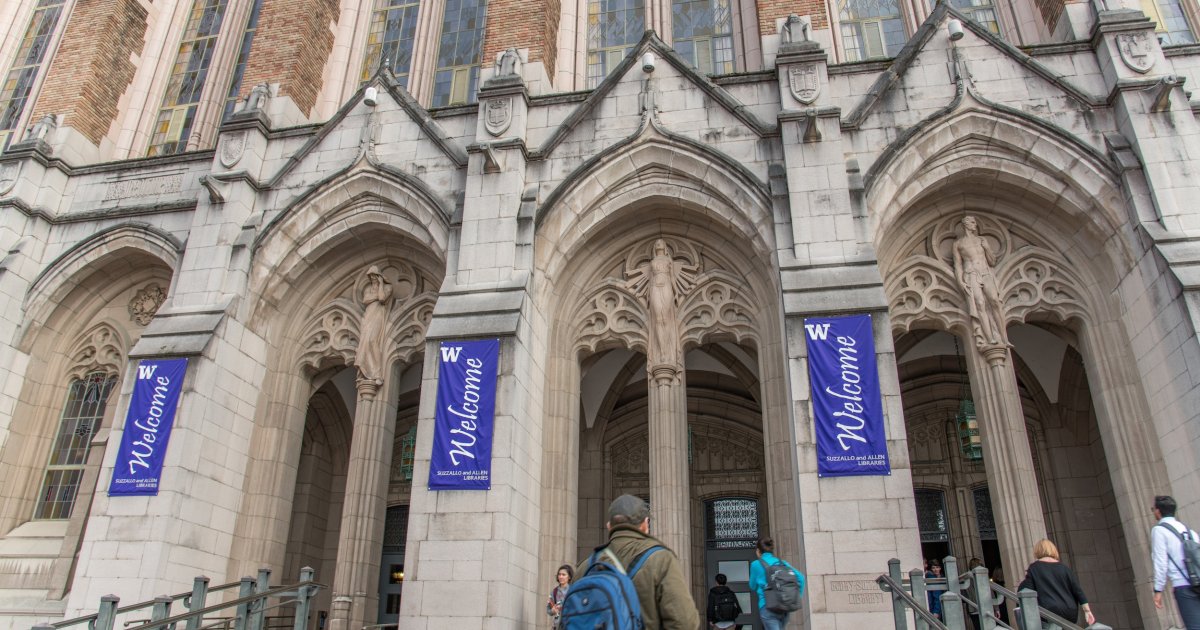
    University of Washington alumni seek to revive the spirit of free inquiry

    Amid the urban hum of downtown Seattle and the friendly clatter of a FIRE supporters’ meetup, a consequential alliance was born. 

    Two alumni of the University of Washington, separated by generations but united by a shared purpose, converged in conversation. Cole Daigneault, a freshly minted graduate from the class of 2024, and Bill Severson, a two-time UW graduate who earned his bachelor’s and law degree in the early 1970s, lamented over the encroaching illiberalism at their alma mater. 

    That evening’s conversation, later sustained through an alumni email listserv, soon crystallized into Husky Alumni for Academic Excellence

    This new, independent UW alumni group has articulated a mission that is ambitious yet essential: “To reinvigorate free and open academic inquiry and to foster a campus ethos where civil discourse and intellectual courage flourish.” 

    “My hope with this alumni group,” Daigneault says, “is to rally former UW students, who like me, are concerned about the culture of discourse on campus. The group will also be a place for graduated students to continue the fight long after they leave.” 

    Daigneault’s early activism was catalyzed by the controversy surrounding UW professor Stuart Reges, whose parody land acknowledgment and subsequent legal battles with the university became a major flashpoint in the free speech landscape. Inspired by Reges’ story — and FIRE’s robust defense of him — Daigneault founded Huskies for Liberty in 2022, a UW student organization devoted to “the preservation of free expression and individual liberty on campus and beyond.” 

    The fight for free speech on campus, as history has long demonstrated, is never truly won. It must be waged anew by each generation. 

    Furthermore, through FIRE’s Campus Scholar Program, Daigneault organized “Free Speech Matters,” UW’s first student-led conference devoted to the enduring relevance of free speech, civil discourse, and academic freedom. 

    Alongside Daigneault, Bill Severson brings over a half-century of legal experience and an unabiding love for his alma mater. His concerns over the state of higher education were sparked by the 2017 debacle at Evergreen State College, where an angry mob of students confronted Professor Bret Weinstein for publicly objecting to a proposal that white students and professors leave campus for Evergreen’s annual “Day of Absence.”

    “I was appalled by how that situation was handled,” Severson recounts. “It led me to explore thinkers like Jonathan Haidt and Steven Pinker and organizations like FIRE.” 

    Severson’s recollections of his time in school are colored with a mixture of nostalgia and grave concern. “When I attended UW in the late 1960s and early 1970s, the atmosphere on campus was markedly different than today. Then, as now, students and faculty leaned left, but it was not a monoculture and there was not such a marked intolerance of other viewpoints.” 

    The emergent partnership between Daigneault and Severson is not only remarkable, it highlights an enduring truth: The defense of free speech on campus is not a transient endeavor but a generational relay, requiring both the vigor of youth and wisdom of age. One without the other is as useful as a compass without a needle.

    Daigneault and Severson’s decision to form Husky Alumni for Academic Excellence is timely, to say the least. 

    “Last year, free speech became a major campus issue due to widespread protests over the Israel-Hamas War,” Daigneault recalls. “Unfortunately, alongside many instances of protected expression, we also saw a rise in illiberal behaviors, such as shouting down speakers, preventing students from accessing public areas, and even vandalizing historic buildings on campus.”

    Daigneault’s reflections are not mere anecdotes. They are substantiated by FIRE’s reports. UW has consistently languished near the bottom of FIRE’s College Free Speech Rankings (in 2022, UW was the lowest ranked public university). And 2024 was not much better: UW ranked 226 out of 257 schools. 

    The data is grim:

    • 71% of students believe it is sometimes acceptable to shout down a speaker.
    • 30% think using violence to silence a speaker is sometimes acceptable.
    • 50% admit to self-censoring on campus at least once or twice a month.

    Among the faculty and administration, the picture is scarcely brighter. According to FIRE’s 2024 Faculty Survey Report, over one-third of UW faculty respondents confessed to moderating their writing to avoid controversy, while 40% expressed uncertainty about the administration’s commitment to protecting free speech. 

    FIRE to Congress: More work needed to protect free speech on college campuses

    News

    FIRE joined Rep. Murphy’s annual Campus Free Speech Roundtable to discuss the free speech opportunities and challenges facing colleges.


    Read More

    For Severson, the conclusion is clear.

    “Educational institutions have lost their way,” he says, though he insists there is still hope. “Alumni can be a force to push schools back toward their mission — promoting honest inquiry, academic excellence, the pursuit of truth, and the dissemination of knowledge.”

    In the burgeoning movement of alumni stewardship,  Daigneault and Severson offer a clarion call to UW alumni who not only revere the university’s storied past (UW is one of the oldest universities on the West Coast), but also seek to reclaim it against the present maladies of orthodoxy and intellectual timidity.

    The fight for free speech on campus, as history has long demonstrated, is never truly won. It must be waged anew by each generation. Daigneault and Severson have valiantly taken up the mantle. The question remains, who will join them? 


    If you’re ready to join Husky Alumni for Academic Excellence, or if you’re interested in forming a free speech alumni alliance at your alma mater, contact us at [email protected]. We’ll connect you with like-minded alumni and offer guidance on how to effectively protect free speech and academic freedom for all. 

    Source link

  • Rethinking free speech with Peter Ives

    Rethinking free speech with Peter Ives

    Is the free speech conversation too simplistic?

    Peter Ives thinks so. He is the author of “Rethinking Free Speech,” a new book that seeks to provide a more nuanced analysis of the free speech debate within various domains, from government to campus to social media.

    Ives is a professor of political science at the University of Winnipeg. He researches and writes on the politics of “global English,” bridging the disciplines of language policy, political theory, and the influential ideas of Antonio Gramsci.

    Enjoying our podcast? Donate to FIRE today and get exclusive content like member webinars, special episodes, and more. If you became a FIRE Member through a donation to FIRE at thefire.org and would like access to Substack’s paid subscriber podcast feed, please email [email protected].

    Read the transcript.

    Timestamps:

    00:00 Intro

    02:25 The Harper’s Letter

    05:18 Neil Young vs. Joe Rogan

    08:15 Free speech culture

    09:53 John Stuart Mill

    12:53 Alexander Meiklejohn

    17:05 Ives’s critique of Jacob Mchangama’s “History of Free Speech” book

    17:53 Ives’s definition of free speech

    19:38 First Amendment vs. Canadian Charter of Rights

    21:25 Hate speech

    25:22 Canadian Charter and Canadian universities

    34:19 White supremacy and hate speech

    40:14 Speech-action distinction

    46:04 Free speech absolutism

    48:49 Marketplace of ideas

    01:05:40 Solutions for better public discourse

    01:13:02 Outro

    Show notes:

    Source link

  • So to Speak: The Free Speech Podcast

    So to Speak: The Free Speech Podcast

    So to Speak: The Free Speech Podcast takes an uncensored look at the world of free expression through the law, philosophy, and stories that define your right to free speech. Hosted by FIRE’s Nico Perrino.

    New episodes post every other Thursday.

    Source link

  • Get College Credit For Free

    Get College Credit For Free

    OPPORTUNITY FOR STUDENTS TO EARN FREE COLLEGE CREDIT

    A new, high-quality path to free college credit was launched in 2017.
    The goal of the program, dubbed “Freshman Year for Free,” is to make
    college more accessible and affordable for high school students, college
    students and adult learners, including active duty military personnel,
    their families, and veterans.

    WHO IS MAKING THIS POSSIBLE?

    Modern States, the New York-based charitable organization behind the
    effort, has funded production of online courses taught by college
    professors. The courses prepare students for introductory College Level
    Examination Program (CLEP) exams in Economics, Sociology, Algebra, and
    other areas.

    HOW DOES THIS LEAD TO COLLEGE CREDIT?

    The CLEP exams, administered by the College Board, are accepted for
    credit by more than 2,900 colleges and universities. Modern States is
    partnering with high schools and colleges that are making students aware
    of the opportunity.

    WHY PARTICIPATE?

    This is the first time there have been courses (see list below)
    taught by top quality college professors for CLEP subjects. Also, Modern
    States is paying the CLEP exam fee and scheduling fee for students who
    enroll in the courses and take the exams. The benefit for participating
    institutions is that this creates a free on-ramp to college that
    facilitates learning and earning credits.

    WHAT ELSE DO I NEED TO KNOW?

    Modern States will pay for you to take the CLEP exam. After you complete the coursework and practice questions, request a CLEP voucher
    code from the Modern States website. There are no prerequisites for the
    32 courses that are available, and all of them are self-paced. Some of
    the courses stem from a partnership between Modern States and edX, the
    online education platform created by Harvard and MIT.

    HOW DOES IT WORK?

    Modern States Education Alliance™ offers free, high-quality online
    courses taught by college professors that prepare you for the CLEP
    exams, which are well-established and widely-accepted. Solid performance
    on the exams (each participating college decides what scores you need
    for credit) can earn you college credits and enable you to save tuition
    dollars. You can take one course or many; if you do well on eight exams,
    you can potentially earn Freshman Year for Free™.

    HOW CAN I GET INVOLVED?

    Sign up today by clicking here – it’s free!

    Source link

  • FIRE to Congress: More work needed to protect free speech on college campuses

    FIRE to Congress: More work needed to protect free speech on college campuses

    What is the state of free speech on college campuses? More students now support shouting down speakers. Several institutions faced external pressure from government entities to punish constitutionally protected speech. And the number of “red light” institutions — those with policies that significantly restrict free speech — rose for the second year in a row, reversing a 15-year trend of decreasing percentages of red light schools, according to FIRE research.

    These are just a few of the concerns shared by FIRE’s Lead Counsel for Government Affairs Tyler Coward, who joined lawmakers, alumni groups, students, and stakeholders last week in a discussion on the importance of improving freedom of expression on campus.

    Rep. Greg Murphy led the roundtable, along with Rep. Virginia Foxx, Chairwoman of the House Committee on Education and the Workforce, and Rep. Burgess Owens. 

    But the picture on campus isn’t all bad news. Tyler highlighted some positive developments, including: an increase in “green light” institutions — schools with written policies that do not seriously threaten student expression — along with commitments to institutional neutrality, and “more and more institutions are voluntarily abandoning their requirements that faculty and students submit so-called DEI statements for admission, application, promotion, and tenure review.”

    Tyler noted the passage of the Respecting the First Amendment on Campus Act in the House. The bill requires public institutions of higher education to “ensure their free speech policies align with Supreme Court precedent that protects students’ rights — regardless of their ideology or viewpoint.” Furthermore, crucial Title IX litigation has resulted in the Biden rules being enjoined in 26 states due to concerns over due process and free speech.

    Lastly, Tyler highlighted areas of concern drawn from FIRE’s surveys of students and faculty on campus, including the impact of student encampment protests on free expression on college campuses.


    WATCH VIDEO: FIRE Lead Counsel for Government Affairs Tyler Coward delivers remarks at Rep. Greg Murphy’s 4th Annual Campus Free Speech Roundtable on Dec. 11, 2024.

    Students across the political spectrum are facing backlash or threats of censorship for voicing their opinions. Jasmyn Jordan, an undergraduate student at University of Iowa and the National Chairwoman of Young Americans for Freedom, shared personal experiences of censorship YAF members have faced on campus due to their political beliefs. Gabby Dankanich, also from YAF, provided additional examples, including the Clovis Community College case. At Clovis, the administration ordered the removal of flyers YAF students posted citing a policy against “inappropriate or offensive language or themes.” (FIRE helped secure a permanent injunction on behalf of the students. Additionally, Clovis’s community college district will have to pay the students a total of $330,000 in damages and attorney’s fees.)  

    VICTORY: California college that censored conservative students must pay $330,000, adopt new speech-protective policy, and train staff

    Press Release

    Federal court orders Clovis and three other community colleges to stop discriminating against student-group speech based on viewpoint.


    Read More

    Conservative students aren’t the only ones facing challenges in expressing their ideas on campus. Kenny Xu, executive director of Davidsonians for Free Speech and Discourse, emphasized that free speech is not a partisan issue. Citing FIRE data, he noted that 70% of students feel at least somewhat uncomfortable publicly disagreeing with a professor in class. “I can assure you that 70% of students are not conservatives,” he remarked. Kyle Beltramini from the American Council of Trustees and Alumni, reinforced this point. Sharing findings from ACTA’s own research, he emphasized that “this is not a problem faced by a single group of students but rather an experience shared across the ideological spectrum.”

    The roundtable identified faculty as a critical part of the solution, though they acknowledged faculty members often fear speaking up. FIRE’s recent survey of over 6,000 faculty across 55 U.S. colleges and universities supports this claim. According to the results, “35% of faculty say they recently toned down their writing for fear of controversy, compared to 9% who said the same during the McCarthy era.”

    While this data underscores the challenges faculty face, it also points to a broader issue within higher education. Institutions, Tyler said, have a dual obligation to “ensure that speech rights are protected” and that “students remain free from harassment based on a protected characteristic.” Institutions did not get this balance right this year. But, ACTA’s Kyle Beltramini noted the positive development that these longstanding issues have finally migrated into the public consciousness: “By and large, policy makers and the public have been unaware of the vast censorial machines that colleges and universities have been building up to police free speech, enforce censorship, and maintain ideological hegemony in the name of protecting and supporting their students,” he stated. This moment presents an opportunity to provide constructive feedback to institutions to hopefully address these shortcomings.

    FIRE thanks Rep. Murphy for the opportunity to contribute to this vital conversation. We remain committed to working with legislators who share our dedication to fostering a society that values free inquiry and expression.

    Alumni are also speaking up, and at the roundtable they shared their perspectives on promoting free speech and intellectual diversity in higher education. Among them was Tom Neale, UVA alumnus and president of The Jefferson Council and the Alumni Free Speech Alliance, who highlighted the importance of connecting with alumni from institutions like Cornell, Davidson, and Princeton, since they’re “all united by their common goal to restore true intellectual diversity and civil discourse in American higher-ed.”

    Other participants at the roundtable included members of Speech First, and Princetonians for Free Speech. 

    So what can be done? Participants proposed several solutions, including passing legislation that prohibits the use of political litmus tests in college admissions, hiring, and promotion decisions. They also suggested integrating First Amendment education into student orientation programs to ensure incoming undergraduates understand their rights and responsibilities on campus. Additionally, they emphasized the importance of developing programs that teach students how to engage constructively in disagreements — rather than resorting to censorship — and to promote curiosity, dissent, talking across lines of difference, and an overall culture of free expression on campus. 

    FIRE thanks Rep. Murphy for the opportunity to contribute to this vital conversation. We remain committed to working with legislators who share our dedication to fostering a society that values free inquiry and expression.

    You can watch the roundtable on Rep. Murphy’s YouTube channel.

    Source link

  • We answer your free speech questions

    We answer your free speech questions

    FIRE staffers take your questions on the TikTok ban, mandatory
    DEI statements, the Kids Online Safety Act, Trump vs. the media,
    and more.

    Joining us:

    • Ari Cohn, lead counsel for tech policy

    • Robert Shibley, special counsel for campus advocacy

    • Will Creeley, legal director

    This webinar was open to the public. Future monthly FIRE Member
    Webinars will not be. Become a paid subscriber today
    to receive invitations to future live webinars.

    If you became a FIRE Member
    through a donation to FIRE at thefire.org and would like access to Substack’s paid
    subscriber podcast feed, please email [email protected].

    Timestamps:

    00:00 Intro

    00:52 Donate to
    FIRE
    !

    02:49 TikTok ban

    10:01 Ari’s work as tech policy lead counsel

    12:03 Mandatory DEI statements at universities

    15:19 How does FIRE address forced speech?

    18:17 Texas’ age verification law

    24:35 Would government social media bans for minors be a First
    Amendment violation?

    33:48 Online age verification

    35:17 First Amendment violations while making public comments
    during city council/school board public meetings

    37:25: Edison, New Jersey city council case

    39:48 FIRE’s role in educating Americans

    41:55 If social media addiction cannot be dealt with like drugs,
    how can it be dealt with?

    43:34 “Pessimists Archive” Substack and moral panics

    45:27 Trump and the media

    51:23 Gary Gadwa case

    52:49 How to distinguish the freedom of speech versus freedom
    from social consequences?

    55:53 Free speech culture is a “mushy concept”

    57:58 ABC settlement with Trump

    01:01:27 Nico’s upcoming book!

    01:02:32 FIRE and K-12 education

    01:04:40 Outro

    Show notes:

    TikTok Inc. and ByteDance LTD. v. Merrick B. Garland, in his
    official capacity as attorney general of the United States

    (D.C. 2024)

    Opinion: The TikTok court case has staggering implications for
    free speech in America
    ” L.A. Times (2024)

    H.B. No. 1181 (Tex. 2023; Texas age-verification
    law)

    The Anxious Generation” Jonathan Haidt (2024)

    S. 1409 – Kids Online Safety Act (2023-2024)

    American Amusement MacH. Ass’n v. Kendrick (Ind.
    2000)

    Edison Township, New Jersey: Town Council bans props, including
    the U.S. flag and Constitution, at council meetings
    ” FIRE
    (2024)

    LAWSUIT: Arizona mom sues city after arrest for criticizing
    government lawyer’s pay
    ” FIRE (2024)

    President Donald J. Trump v. J. Ann Selzer, Selzer & Company,
    Des Moines Register and Tribune company, and Gannett Co.,
    Inc.
    ” (2024)

    Trump v. American Broadcasting Companies, Inc.
    (2024)

    New Jersey slaps down censorship with anti-SLAPP
    legislation
    ” FIRE (2023)

    FIRE defends Idaho conservation officer sued for criticizing
    wealthy ranch owner’s airstrip permit
    ” FIRE (2023)

    On Liberty” John Stuart Mill (1859)

    Home Depot cashier fired over Facebook comment about Trump
    shooting
    ” Newsweek (2024)

    Free speech culture, Elon Musk, and Twitter” FIRE
    (2022)

    Questions ABC News should answer following the $16 million
    Trump settlement
    ” Columbia Journalism Review (2024)

    Appellants’ opening brief — B.A., et al. v. Tri County Area
    Schools, et al.
    ” FIRE (2024)

    Transcript:

    *Unedited transcript and edited transcript for Substack will
    be available later in the week!

    Source link

  • Free Social Skills Worksheets (2024)

    Free Social Skills Worksheets (2024)

    The following free social skills worksheets are designed to help children, people with learning disabilities, clients, and even adults to actively reflect on their skills in social situations.

    The worksheets cover various scenarios and sub-skills, including:

    • Conversation starters
    • Listening skills
    • Personal space
    • Social problem-solving
    • Giving and receiving compliments

    When printing, you might want to select “shrink to fit” to ensure an optimal output.

    License and Terms of Use: All printables are provided for non-commercial personal and classroom use only, not for resale or distribution. All rights reserved.

    Social Skills Worksheets

    check mark Designed by Chris

    Conversation Starters Worksheet

    Use this version for getting students to actively reflect on how to start a conversation and interact appropriately with others verbally.

    social skills worksheet

    check mark Designed by Chris

    Listening Skills Worksheet

    Use this version to get students to think about active listening skills and brainstorm the best ways to respond to people when listening to them in order to absorb what they’re saying.

    social skills worksheet

    check mark Designed by Chris

    Personal Space Worksheet

    Use this version to help people to understand how to give people personal space and maintain an appropriate distance in various social situations.

    social skills worksheet

    check mark Designed by Chris

    Social Problem Solving Worksheet

    This version is ideal for helping people to deal with scenarios where someone may lose their temper. The scenarios discuss various appropriate ways to respond to potentially hairy situations.

    social skills worksheet

    check mark Designed by Chris

    Giving and Receiving Compliments

    Use this piece to brainstorm ways to give and receive compliments in various situations. Students must sort between various potential responses to compliment and ways to give compliments.

    social skills worksheet

    check mark Designed by Chris

    Social Skills Checklist

    This checklist gets students to reflect on social skills they’ve used in the past week, and then to think about their strengths and areas for improvement.

    Thanks for checking out these worksheets. If you want to brainstorm different examples of social skills, read this blog post.


    Chris

    Dr. Chris Drew is the founder of the Helpful Professor. He holds a PhD in education and has published over 20 articles in scholarly journals. He is the former editor of the Journal of Learning Development in Higher Education. [Image Descriptor: Photo of Chris]

    Source link

  • Free speech advocates converge to support FIRE’s ‘Let’s Go Brandon’ federal court appeal

    Free speech advocates converge to support FIRE’s ‘Let’s Go Brandon’ federal court appeal

    FIRE, supported by a wave of prominent organizations and scholars as “friends of the court,” has appealed a district court’s ruling that limited the rights of students to attend middle and high school wearing clothes bearing the “Let’s Go Brandon” political slogan. FIRE is asking a federal appeals court to strike down the decision below and uphold freedom of expression for public school students, and a broad spectrum of free speech advocates and language experts are backing us up.

    So what happened? In April 2023, FIRE sued a west Michigan school district and two administrators for preventing two students from wearing “Let’s Go Brandon” sweatshirts. The “Let’s Go Brandon” slogan originated during an October 2021 NASCAR race. After the race, won by Brandon Brown, members of the crowd chanted “Fuck Joe Biden” during Brown’s post-race interview. A commentator remarked that the fans were shouting “Let’s Go Brandon!” 


    WATCH VIDEO: NASCAR fans chant “Fuck Joe Biden” after the race.

    Since then, the presidential campaign of Donald Trump and Republican members of Congress have used the phrase widely, including during Congressional floor speeches, to show their displeasure with the Biden administration. The “Let’s Go Brandon” slogan airs uncensored on broadcast television, national cable news, and broadcast radio for all to hear. In the case on appeal, FIRE’s clients wore their “Let’s Go Brandon” sweatshirts to school to express their disapproval of Biden and his administration. 

    During the lawsuit, the school acknowledged the students did not cause any disruption with their apparel. Yet this past August, the District Court for the Western District of Michigan upheld the school district’s censorship of “Let’s Go Brandon” apparel, holding “Let’s Go Brandon” is legally indistinguishable from “Fuck Joe Biden” and therefore constitutes “profanity.” 

    As FIRE’s appeal argues, that’s not how speech works. “Heck” is not the same as “hell,” “darn” is not the same as “damn,” and “Let’s Go Brandon” is not the same as “Fuck Joe Biden.” The government may not censor public school students’ political expression absent substantial disruption. Nor may school districts bypass this First Amendment protection by dubbing disfavored political speech “profane.” 

    This case will play a critical role in protecting the rights of other minor students to engage in non-disruptive political expression as guaranteed under the First Amendment.

    Last week, 18 individuals and organizations, including some of the world’s foremost linguistic experts, joined together to file eight amicus curiae, or “friend of the court” briefs in support of minors’ free speech rights. These briefs urge the Sixth Circuit to recognize what has long been understood outside the courtroom — sanitized expression is, by design, distinguishable from the profane language it replaces: 

    Linguistic Scholars: Dr. Melissa Mohr, Dr. Rebecca Roache, Professor Timothy Jay, Professor John H. McWhorter, and Professor Steven Pinker are internationally recognized linguistic scholars whose works focus on the history, psychology, and sociology of swearing. Each has written extensively on how language works and the role it continues to play in society. Together, they submitted a brief through Quinn Emanuel Urquhart & Sullivan, LLP, helpfully delineating the different types of “sanitized expression,” including euphemisms like “Let’s Go Brandon,” and describing their ubiquity and importance in political discourse. As they state at the beginning of their brief: “This case is not about swearing; it is about not swearing.”

    First Amendment Scholars: Dean Erwin Chemerinsky, Professor Clay Calvert, Professor Roy Gutterman, Professor Mary-Rose Papandrea, and Professor Joseph A. Tomain submitted an amicus brief through Cornell Law School’s First Amendment Clinic and attorney Michael Grygiel. Drawing on decades of study, the scholars methodically apply seminal First Amendment decisions to this particular case. Their brief argues: “the lower court failed to apply Tinker’s ‘substantial disruption’ test, as required when schools seek to prohibit student expression within the school environment that communicates a political message,” and thus “departed from longstanding public student constitutional free speech principles.”

    Liberty Justice Center: The Liberty Justice Center’s amicus brief asserts the district court’s decision represents an unprecedented expansion of “profanity” and is part of a nationwide increase in political censorship. The brief describes how “censorship of entirely mainstream political discourse has become all too common around the country” and school authorities increasingly seek to restrict free expression. The LJC argues that the district court’s opinion exacerbates this growing problem, by authorizing schools to treat “every euphemism . . . as the equivalent of its reference.”

    Dhillon Law Group, Young America’s Foundation, and Hamilton Lincoln Law Institute: These organizations submitted an amicus brief asserting the lower court’s failed to properly apply Tinker and its progeny to the students’ “Let’s Go Brandon” sweatshirts, which likewise represented political, non-profane student speech. Through careful analysis of First Amendment doctrine, their brief explains that the “district court erred in disregarding the political nature of appellants’ ‘Let’s Go Brandon’ apparel” and undervaluing the importance of First Amendment protections in K-12 public schools.

    National Coalition Against Censorship: The National Coalition Against Censorship submitted an amicus brief through Covington & Burling LLP to challenge the district court’s categorization of “Let’s Go Brandon” as unprotected “profane” expression. The brief argues that the “district court’s analysis would create a new, ill-defined category of ‘euphemistic’ profanity,” and “give school officials wide latitude to silence viewpoints they find objectionable, a result at odds with existing First Amendment doctrine.” The brief asserts that the lower court’s decision “represents a serious departure from our nation’s historical commitment to protecting political speech” and urges the Sixth Circuit to reverse. 

    Manhattan Institute: The Manhattan Institute’s amicus brief emphasizes the critical importance of preserving free speech rights in K-12 public schools, where students develop the skills necessary to productively engage in democratic society. The brief describes case law reflecting the importance of these freedoms in primary and secondary schools — and argues the district court’s opinion fails to “accurately reflect this understanding.”

    Parents Defending Education: Parents Defending Education submitted an amicus brief through Consovoy McCarthy PLLC arguing that the district court’s decision cannot be reconciled with First Amendment principles. The brief emphasizes how the school codes at issue in this case are part of a growing and concerning “trend of schools adopting speech codes prohibiting controversial speech.” And the brief asserts each of the cases relied on by the lower court are distinguishable.

    Buckeye Institute: The Buckeye Institute’s amicus brief contends that under established First Amendment doctrine, “[r]egulation of speech under the First Amendment should constitute a rare exception.” Yet, they argue, the Michigan school district, motivated by desire to censor what it deems undesirable speech, disregarded that doctrine in order to censor non-disruptive political speech “that does not fall within one of the Supreme Court’s approved exceptions” to the First Amendment’s protection. 

    Our clients and their counsel are grateful for the support of this impressive and diverse amicus coalition. This case will play a critical role in protecting the rights of other minor students to engage in non-disruptive political expression as guaranteed under the First Amendment.

    Source link

  • 9 Pedagogical Approaches for Higher Ed Explained [Plus: 40+ Free Strategies to Implement in Your Classroom]

    9 Pedagogical Approaches for Higher Ed Explained [Plus: 40+ Free Strategies to Implement in Your Classroom]

    This article will provide you with an understanding of what ‘pedagogy’ is, why it’s important for every classroom and how pedagogy has been evolving to take 21st-century skills and learning into account.

    You’ll learn about the different aspects of pedagogy, as well as some common pedagogical knowledge and approaches. Examples for each will provide greater insight into how you can apply different pedagogical teaching styles to your own classroom.

    With tips on creating your own pedagogy, including taking into account how digital technology and online and collaborative work are changing teaching, you’ll understand why and how having a clear and concise pedagogy can support your curriculum. 

    There are countless pedagogies that can work for your course. Download our free guide, which highlights and explains 9 different pedagogical approaches and how they can be used to keep your students motivated and engaged.

    Table of Contents

    1.0. What is pedagogy?

    1.1. Why is pedagogy important?

    1.2. How do you say ‘pedagogy’?

    2.0. Different types of pedagogy

    2.1. What is constructivist pedagogy?

    2.2. What is inquiry-based learning?

    2.3. What is the Socratic method?

    2.4. What is problem-based learning

    2.5. What is collaborative learning?

    2.6. What is integrative pedagogy?

    2.7. What is reflective pedagogy?

    2.8. What is critical pedagogy?

    2.9. What is culturally responsive teaching?

    3.0. Creating your own pedagogy

    3.1. How can pedagogy support your curriculum?

    3.2. How does pedagogy impact the learner?

    4.0. How is pedagogy changing?

    4.1. Online learning

    4.2. Personalizing pedagogies

    5.0. Conclusion

    Pedagogy is often confused with curriculum. The definition of pedagogy refers to how we teach—the theory and practice of educating. Curriculum refers to the material being taught. Pedagogy, meaning the relationship between learning techniques and culture, is determined based on an educator’s beliefs about how learning takes place. Pedagogy requires meaningful classroom interactions between educators and learners. The goal is to help students build on prior learning and develop skills and attitudes. For educators, the aim is to present the curriculum in a way that is relevant to student needs.

    Shaped by the educator’s own experiences, pedagogy must take into consideration the context in which learning takes place, and with whom. It isn’t about the materials used, but the process and the strategy adopted to lead to the achievement of meaningful cognitive learning.

    In a literal sense, the word pedagogy stems from the Greek word that effectively means “the art of teaching children.” More specifically, agogos means leader in Greek, and pedagogue refers to the teacher. Paidagogos were slaves tasked with taking boys to school and back, teaching them manners and tutoring them.

    Pedagogy vs. Andragogy

    Pedagogy is the teaching of children or dependent personalities. This means that it is up to the instructor to determine how, what and when course concepts are learned. Andragogy is the facilitation of learning for adults, who are self-directed learners. Adults are primarily driven by intrinsic motivation and can solve complex problems relying on past experiences. This must be taken into account in order to best support them in retaining new ideas, learning new ways of problem-solving, and strengthening independent thinking.

    1.1. Why is pedagogy important?

    Having a well-thought-out pedagogy can improve the quality of your teaching and the way students learn, helping them gain a deeper grasp of fundamental material. Being mindful of the way you teach can help you better understand how to help students achieve deeper learning. And it can, in turn, impact student perception, resulting in cooperative learning environments. The proper pedagogical approach helps students move beyond simple forms of thinking as defined in the Bloom’s taxonomy pyramid, like basic memorization and comprehension, to complex learning processes like analysis, evaluation, and creation. Students can leverage their preferred learning styles with a teaching process that supports them, and the way they like to learn.

    1.2. How do you say ‘pedagogy’?

    Pedagogy is pronounced differently in various countries. The International Phonetic Alphabet pronunciation is ˈpɛdəˌɡoʊdʒi/ /ˈpɛdəˌɡɑdʒi/. In both the U.K. and U.S., it’s often pronounced “ped-a-gaug-gee” (as in “geese”) though some use the “j” sound and pronounce it “paidag-o-jee” (as in the seventh letter of the alphabet, “g”.)

    Others, particularly in the U.K., say “pe-de-gaw-jee,” with more of an “ugh” sound in the middle, and replace the “go” sound with “gaw.” The Merriam-Webster dictionary suggests it should be “pe-de-go-je” (or ga).

    2. Pedagogical strategies

    There are countless pedagogies that can help you engage students. By implementing activities from different pedagogical techniques in your classroom, you’ll ensure students can tackle learning in a way that best meets their needs. Here, we outline nine pedagogical approaches that help students develop higher-order thinking skills and provide a more nuanced understanding of how their learnings fit into the world around them.

    2.1. What is constructivist pedagogy?

    Constructivist teaching strategies help students understand the meaning of their learning materials, instead of just passively ingesting content. Rather than focusing on the subject or lesson being taught, educators are encouraged to focus on how the student learns. 

    An example of a constructivist pedagogical practice:

    KWL(H) Charts are a great way to get an overview of student progress throughout the term. After finishing a unit or series of lessons, have learners fill out a chart with the following fields: What we know, What we want to know, What we have learned, How we know it.

    2.2. What is inquiry-based learning?

    Inquiry-based learning encourages students to ask questions and complete research while learning various concepts. The pedagogy focuses on helping learners acquire the skills necessary to develop their own ideas, as well as question themselves and group members in a constructive way. The four steps of inquiry-based learning are:

    • Developing problem statements that require students to pitch their question using a constructed response, further inquiry and citation.
    • Researching the topic using time in class where the instructor can guide students in their learnings
    • Presenting what they’ve learned to their peers or to a small group
    • Asking students to reflect on what worked about the process and what didn’t. Students focus on how they learned in addition to what they learned, to activate metacognition skills (or thinking about thinking).

    An example of inquiry-based learning: One way to incorporate inquiry-based learning in your classroom is through oral history projects. Ask students to research the personal histories of an individual of their choice, conduct interviews with the person (if possible) and create a presentation that includes artifacts, a feature article, a personal memoir and a photograph.

    2.3. What is the Socratic method?

    The Socratic method is a traditional pedagogy named after Greek philosopher Socrates, who taught students by asking a series of questions. The principle underlying the Socratic method is that students learn through the use of critical thinking, reason and logic. 

    An example of Socratic learning:

    To implement Socratic learning strategies in your classroom, arrange students in inner and outer circles. The inner circle engages in discussion, while the outer circle observes and takes notes. The outer circle then shares their observations and questions the inner circle with guidance from the instructor. The Socratic Method is one of many tools that professors at the University of Chicago Law School use to help theirstudents become lawyers. Elizabeth Garrett writes that “The Socratic Method provides all students greater confidence about talking to large groups, allows them to develop the ability to argue forcefully and persuasively, and teaches them to think critically. “

    2.4. What is problem-based learning?

    In problem-based learning, students acquire knowledge by devising a solution to a real-world problem. As they do, they acquire knowledge, as well as communication and collaboration skills.

    An example of problem-based learning pedagogical practice:

    Concept mapping is an engaging activity that helps students tackle complex course concepts. Divide the class into teams and present them with a course-related problem. One team member writes down a solution and passes the sheets of paper along to the next team member, who builds upon that idea and then passes it along to the rest of the team. In the end, a spokesperson can present their ultimate solution. In a study monitoring the learning of students in an Engineering course, the research found that participants’ learning gains from problem-based learning were two times their gains from a traditional lecture.

    2.5 What is collaborative pedagogy?

    Collaborative pedagogy rejects the notion that students can think, learn and write effectively in isolation. Collaborative pedagogy is a learner-centered strategy that strives to maximize critical thinking, learning and writing skills through peer-to-peer interaction and interpersonal engagement.

    An example of collaborative pedagogical practice:

    Set up stations or posters in a few locations around the classroom and get students to participate in a gallery walk. Divide students into small groups and have them rotate between each station together sorting their observations into categories. Finally, ask them to write down a list of questions about the source material they are viewing.

    2.6. What is integrative pedagogy?

    Integrative learning is the process of making connections between concepts and experiences so that information and skills can be applied to novel and complex issues or challenges.

    An example of integrative pedagogical practice:

    Hands-on learning experiences, like community service, are a great way to bring integrative pedagogy into the classroom. Holding fundraisers, volunteering at local schools or eldercare homes or preparing meals for those experiencing food insecurity are forms of experiential learning that can help students take part in community service activities, like volunteering at food kitchens, tutoring children in local schools, or working in local prisons and detention centers to help with literacy skills, like Queen’s Students for Literacy.

    2.7. What is reflective pedagogy?

    Reflective pedagogy encourages the instructor to reflect upon lessons, projects and assessments, with the goal of improving them for future use. Students are also encouraged to reflect on their performance on assessments and look for areas where they can improve.

    An example of reflective pedagogy:

    Conversation stations are a great way for students to engage with their peers and reflect on their own learnings. Instructors start by sharing a list of discussion questions pertaining to a course reading, video or case study. Students are put into groups and given five-to-ten minutes to discuss, before rotating to another group. The students who have just joined a group have an opportunity to share findings from their last discussion, before answering the second question with their new group. Similarly, reflective pedagogy is useful when used as a complement to placement-based internships. These pedagogical strategies allow students to understand what they have learned and experienced on a deeper level.

    2.8. What is critical pedagogy?

    Critical pedagogy asserts that issues of social justice and democracy are not distinct from acts of teaching and learning. It is a theory and practice that helps students question and challenge prevalent beliefs and practices—and achieve critical consciousness.

    An example of critical pedagogy:

    Flipped classroom strategies aim to increase student engagement and learning by having students complete readings at home and then work on live problem-solving during class time. These strategies allow instructors to orient their teaching to be knowledge-based, focusing on the development of critical thinking skills and understanding what it means to create a just society.

    2.9. What is culturally responsive teaching?

    Culturally responsive teaching is a more modern pedagogy that acknowledges, responds to and celebrates fundamental cultures. It strives to offer equitable access to education for students from all cultures.

    An example of culturally responsive teaching:

    Use learning stations in your classroom to accommodate a variety of student learning styles at the same time. Whether due to culture, socialization, preference or learning needs, students respond differently to a variety of content. You can provide a range of material to each student by setting up learning stations where students can play a game or watch a video.

    3. Creating your own pedagogy

    To create your own pedagogy, start by forming a personal philosophy of teaching statement. This is a crucial step in the profession of teaching. This helps students manage their expectations about your teaching methods and better approach your curriculum. Critically, make sure to support students in finding the best ways to understand the subject matter and encourage engaging discussions in the classroom.

    It’s also important to be mindful of the different educational experiences students have and their preferred methods of participation, as well as their personal experiences and backgrounds. That might include monitoring for cues like wait time between talking in a conversation, eye contact or using written forms of communication, like discussion threads. You can use real-world experiences to demonstrate abstract concepts, and link them back to everyday experiences to which students can relate. Followed by activities that are purpose-built to involve students, this helps learners break down course concepts in their own ways.

    3.1. How can pedagogy support your curriculum?

    Pedagogy can allow students to gain a deeper understanding of subject matter and can help them apply their learnings to their own personal experiences outside the classroom. Teachers can work together with students to come up with the best way for subject matter to be studied.

    Once you’ve created your own pedagogy in higher education, you can then develop course material and activities that are challenging for students. This will assist them in cognitive development, ensuring that they advance their understanding of concepts to higher levels.

    With a clear understanding of your pedagogy, students can follow your instruction and feedback clearly. They know what they need to do and how to do it, and can respond in kind. This encourages engaging dialogue between educators and students, as well as among students themselves—that’s because everyone shares ideas, questions, and knowledge to explore concepts and deepen their knowledge.

    3.2. How does pedagogy impact the learner?

    With a clear and concise understanding of pedagogy, everyone is on the same page. Students can comfortably share ideas and understand how curriculum will be approached and what’s expected of them. 

    Students expand their knowledge base, but also understand how to use their learnings in authentic and relevant real-world contexts. They can draw on their own cultural knowledge as well to come up with unique and personalized thoughts and opinions. Concrete evidence, facts and data, are combined with the exploration of cultural differences of others to further expand knowledge. This allows students to reflect on new concepts and open their minds to different approaches.

    Through your pedagogical strategies, students can also learn what approaches work best for them: Which learning activities and learning styles they tend to gravitate towards—and how to develop concepts and build mental models to further their learning—are all important elements to consider. Overall, active learning makes student engagement rise. Students get to participate in personalized teaching strategies, rather than be mere spectators in the classroom.

    4. How is pedagogy changing?

    Pedagogy has been evolving to better support 21st-century skills and ideas. The traditional classroom lecture is no longer as effective as it once was. Teaching has expanded to include new forms of learning, like interactive and collaborative projects and online and remote curricula, and to accommodate more flexible schedules.

    Real-world scenarios and cultural differences are being taken into account, affording students new ways to acquire, construct and organize their learning. Pedagogy is shifting focus beyond basic memorization and application of simple procedures to aiding students in higher-order learning, including critical thinking skills, effective communication, and greater autonomy.

    4.1. Online learning

    Online learning has become a significant part of higher education. Any modern pedagogy must account for students finding, analyzing and applying knowledge from a growing number of online tools, platforms and sources. Higher-order skills, like critical thinking and the ability to learn more independently, as well as in larger groups, are essential for engaging in online learning in a meaningful way.

    Students must be comfortable using technology to help them learn, and to access, share, and create useful information and gain better fluency in a subject. Educators, in turn, can use technology to enhance course materials and further support their pedagogies through blended learning that combines classrooms with online teaching, flipped classrooms that provide materials students can access after class, like videos, lecture notes, quizzes, and further readings, and overall wider access to sources and experts online.

    They can integrate new forms of technology to teach, like videos, animations, and simulations through sources like YouTube channels, podcasts and clickers. Digital textbooks can incorporate content like video and audio clips, animations, and rich graphics that students can access and annotate. All of this content enhances the experience for students, and particularly benefits students who are struggling. It can also reduce spending since students have plenty of valuable, real-time updated information at their fingertips for free.

    4.2. Personalizing pedagogies

    It’s critical that what you’re teaching students is relevant and meaningful, and personalized to their experiences. The increase in non-formal, self-directed learning methods means that students have more access to information than ever before. It makes it easier for educators to track their learning through digital activities. But it also requires more attention in guiding them to the right sources, adjusting lecture content and adopting approaches purpose-built for engagement and collaboration.

    In many innovative pedagogies, there’s a power shared between educator and student. Students learn more independently, instead of following a set course of lectures and textbooks from an instructor. In many cases, students thrive in self-directed learning methods, while educators can use lecture time more effectively for discussion and collaborative work.

    The educator, then, becomes a critical guide and assessor for students, linking them to accepted sources of information and emphasizing the importance of accreditation. They are no longer the only source of information, delivered in chunks via lectures. And this requires an overhaul of the strategy towards how student learning is achieved, monitored and assessed.

    5. Conclusion

    Pedagogies are constantly evolving. You can develop your own, inspired by common ones and modified for 21st-century learning. A pedagogy must fit your audience, and focus on helping students develop an understanding of the material beyond basic memorization and surface knowledge. Students should be able to relate concepts back to the real world, and even their own lives.

    Every pedagogy is different. A good starting point is to create a philosophy of teaching statement that outlines your communication goals as an instructor, and how you plan to relate the work you do in the classroom to professional development once the student moves on to a career. Then, design classroom experiences around this philosophy, work with students to adapt methods to encourage positive responses and determine how you will evaluate and assess their performance. It’s also worth considering how you will integrate technology into lesson plans and classwork, as well as promote inclusivity.

    Taking all of this into consideration makes for a great recipe for a successful pedagogical approach. The more aware you are of the way you are teaching, the better you’ll understand what works best for your students.

    Download the free guide: 9 Pedagogical Approaches—and How to Use Them in Your Course

    Tagged as:

    Source link