Tag: free

  • Free Speech Forum empowers next generation of First Amendment heroes

    Free Speech Forum empowers next generation of First Amendment heroes

    By FIRE Summer Interns Eli Kronenberg, Suhani Mathur, and Matt Rigby.


    This June, high school students from across the country assembled in our nation’s capital to offer a glimpse of one of the most important things in America — the future of the First Amendment.

    Held at American University in Washington, D.C., FIRE’s Free Speech Forum mixed big ideas with bigger conversations, bringing together 200 high schoolers to explore, deepen, and celebrate their interest in free speech. Thanks to the collaborative efforts of our generous donors, dedicated staff, enthusiastic counselors, and our incredible students, the forum was a resounding success, leaving us with a feeling of immense pride and a renewed belief in the power of young voices to shape the future of free expression.

    Throughout the week-long event, students had the opportunity to hear from world-renowned free speech advocates, engage in respectful discussions with their peers on pressing political issues, and explore the capital’s treasure trove of historic landmarks. But as one student remarked, the main highlight was simply “being around others who are also interested in civil discourse!”

    The conference kicked off in earnest with a keynote address by musician and activist Daryl Davis, who is known for convincing members of the Ku Klux Klan to renounce the group. Davis captivated the audience with his tales of attending KKK rallies as a black man, bringing Klan leaders inside his home for interviews, and even walking one Klansman’s wife down the aisle at her wedding. Through his commitment to civil dialogue, Davis has persuaded dozens of Klan officials to abandon their racist beliefs, and continues to inspire future generations of free speech advocates. 

    As one student reflected, “Opening with Daryl Davis made a big impact because it forced us to consider if this man can hear this hateful speech and still believe in free expression, then we should be able to do so as well.”


    WATCH VIDEO: An accomplished blues musician, Daryl Davis has dedicated decades of his life to a mission that defies conventional wisdom. Through the transformative power of conversation, Davis fearlessly takes on the challenging task of convincing members of the Ku Klux Klan and other extremist groups to renounce their deep-seated bigotry.

    Students also had the opportunity to meet former congressman and FIRE advisory councilmember Justin Amash during a live taping of FIRE Executive Vice President Nico Perrino’s So to Speak podcast. Campers thoughtfully engaged the former representative with questions about his time in office and his future political aspirations. 

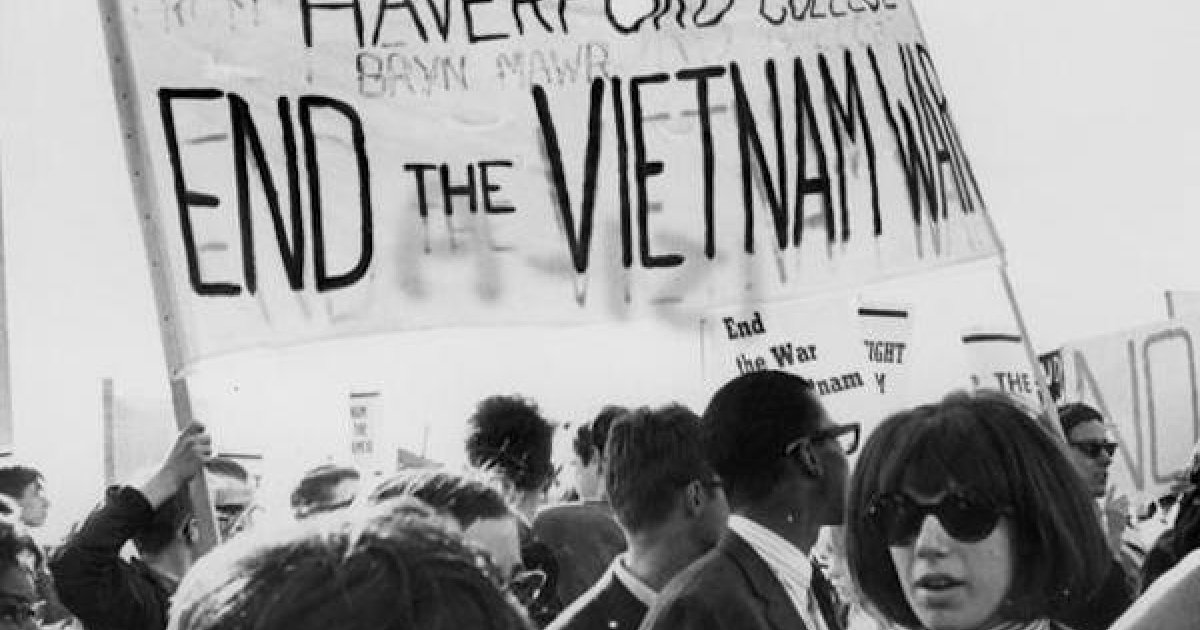
    Capping off our keynote speakers for the week was Mary Beth Tinker, the plaintiff in the landmark Supreme Court decision Tinker v. Des Moines (1969). In 1965, Tinker and her brother wore black armbands in protest of the Vietnam War and were subsequently punished under the school’s code of conduct. Tinker’s victory in the Supreme Court paved the way for generations of students to enjoy greater First Amendment rights in the classroom. Tinker gave students an inspiring testimony about advocating for expression and taking an active role in defending causes you believe in. Her legendary story and lifelong dedication to public service was a striking reminder of students’ power to make an impact on a national scale.

    During the week, students learned the “dos and don’ts” of productive civil discourse, how to engage with opposing perspectives, the fundamentals of First Amendment case law, and how to connect and network with their peers in ways that foster lifelong personal and professional relationships. Breakout sessions like our model debate tournament gave students the chance to think on their feet and work together to form cohesive arguments about a variety of topics. In the session titled “Protected vs. Unprotected,” students tested their critical thinking skills by analyzing potential real-world speech scenarios and determining their protected status under the First Amendment.

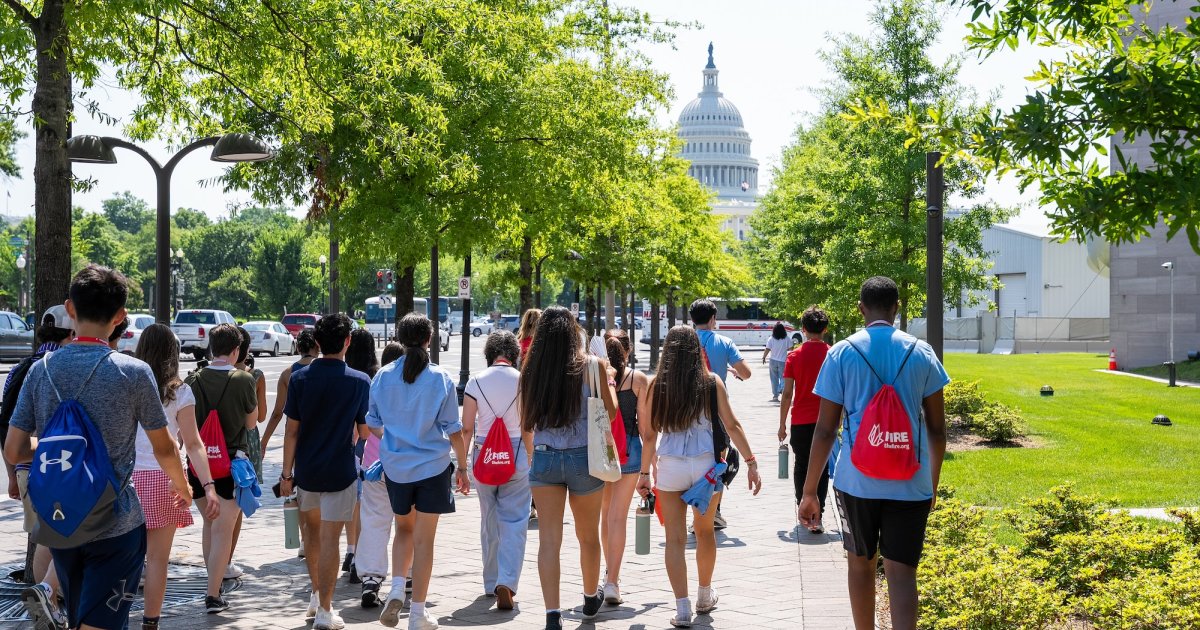
    Free Speech Forum students and counselors exploring the Supreme Court

    Free Speech Forum attendees and counselors explore the Supreme Court building in Washington, D.C.

    As the week progressed, it became clear that whether it was a lively discussion in the dining hall, a spirited debate on the walk to sessions, or the inquisitive questions posed to our speakers, students were engaged and used each opportunity to learn and mold their own perspectives, all while keeping an open mind and a curious attitude. One student said one of the things that most influenced their view on free speech was the “different debates and conversations we had amongst ourselves — on topics not everyone agreed with.”

    In addition, students had the chance to explore their nation’s capital beyond American’s campus, venturing to some of D.C.’s iconic museums and federal buildings. The National Archives, Library of Congress, Supreme Court, and Capitol Building each played host to scores of forum attendees, who supplemented their First Amendment education by standing at the sites where America’s enduring commitment to free speech has been cemented.

    And in true FIRE fashion, students who debated fervently in the classroom still managed to become friends outside of it. We would be remiss not to mention the impromptu piano sing-along during our game night when counselors and campers alike started belting out Ed Sheeran and Bruno Mars hits. The Free Speech Forum talent show was no snoozer either, featuring speed cubing, magic tricks, and cohort acapella. The show was capped off with a group of students presenting a new FIRE flag representing the forum’s transformative impact on our campers.

    “My daughter had an incredible experience,” one parent commented. “She particularly appreciated the chance to connect with other like-minded students from diverse backgrounds.” The parent added, “My daughter left the program feeling more confident in her ability to advocate for causes she cares about and to contribute to open, respectful dialogue.”

    It’s no surprise our Saturday dismissal was accompanied by teary goodbyes, the exchanges of contact information, and promises to stay in touch. We as interns hope students take what they learned at the conference to their communities and campuses, advocating for an America in which no one fears the censorious axe of the government, and in which political differences are resolved with mutually respectful discourse.

    Source link

  • Free Photo Library Captures Authenticity of Higher Ed

    Free Photo Library Captures Authenticity of Higher Ed

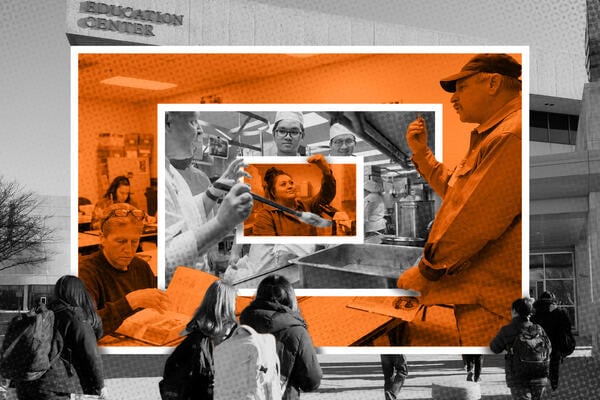
    Photo illustration by Justin Morrison/Inside Higher Ed | Allison Shelley/Complete College Photo Library

    Towering, Hogwarts-style academic buildings. Carefree young students posing with generic textbooks in their dorm rooms or throwing a Frisbee on the lawn. Racially balanced study groups composed of stunningly attractive students who may not actually be students at all.

    Those are the types of stock images that news organizations, policymakers, education and research groups, and institutions often use to visually represent what higher education looks like.

    “They have a very specific look and feel,” said Brandon Protas, interim vice president of alliance and engagement, research and innovation at the higher education advocacy group Complete College America. “Students are often posed, looking directly into the camera, and the racial makeup is very intentional.”

    While they may provide organizations with quick options to accompany stories, reports, presentations and campaigns, such photos don’t always represent what college life actually looks like on a particular campus. Portas said they can also reinforce misconceptions about higher education, including the widespread notion that it’s only an option for recent high school graduates who can afford to attend a pricey, residential, four-year institution.

    Although attending college isn’t without cost, many institutions—especially those rarely pictured in the stock photos that run alongside education-related media—are more affordable than the general public may believe. According to a recent survey from Strada, 77 percent of respondents said college is unaffordable, and the majority significantly overestimated how much it costs.

    “When people are saying college is too expensive, they’re probably not thinking about community colleges or states that offer free tuition programs. They’re thinking of really expensive, elite colleges, which aren’t the types of colleges most students are attending,” Protas said. “We want to change how people are seeing and understanding higher education.”

    That’s why CCA created the new Complete College Photo Library, which launched Wednesday. The searchable photo library includes nearly 1,000 photographs of college students at a mix of institution types, including historically Black colleges and universities, Hispanic-serving institutions, community colleges, tribal colleges, and technical schools. The photos are licensed under Creative Commons and are free for media outlets, researchers and education organizations to use for noncommercial purposes.

    “We took authentic photos of students, faculty and staff on-site to show the reality of students’ lived experiences,” Protas said. “If we can make this the go-to source that people look at first, then that can slowly influence the ecosystem.”

    The library, which is an ongoing project that will be updated with additional images, features photos from seven different campuses across the country, including Bergen Community College, the College of Northern New Mexico, the College of Southern Nevada, Salish Kootenai College, Pasadena City College, Tougaloo College and the University of Indianapolis. At each one, photographer Allison Shelley captured images of actual college students as they balanced their coursework with social lives, jobs and family responsibilities.

    Those artistic choices were meant to reflect the reality that for many college students, school is just one part of life. An estimated 20 percent of students are caregivers or parents, while learners over the age of 25 make up about one-third of all postsecondary students.

    The collection includes shots of students sitting in traditional lecture halls, meeting with their advisers, playing chess, walking to class, reading to their children and getting hands-on training in a variety of different technical fields.

    CCA’s selection of those institutions was designed to reflect a cross-section of geographic locations and institution types.

    And the types of institutions students attend also varies: More than 40 percent attend community colleges, which enroll higher numbers of Black and Hispanic students compared to other institutions. Moreover, HBCUs enroll 10 percent of all Black students in the United States, while HSIs enroll more than 65 percent of all Hispanic undergraduates.

    In addition to widening representation of institution types and student experiences, CCA’s project could also provide a model for how the higher education sector should portray itself during a moment of political and public scrutiny, said Nathan Willers, director of internal communications at the University of Denver, whose research has focused on authenticity in higher education marketing.

    “For a lot of institutions that have limited creative resources, they may be going to something like Shutterstock because they don’t have a lot of other options,” he said. A model like CCA’s library, however, shows how colleges can prioritize using photos that “look like real students in a real classroom with levels of diversity that are appropriate to the institution.”

    Over the past decade, colleges have made a dramatic swing from clamoring to portray themselves as bastions of racial and ethnic diversity—some have even been caught doctoring photos to create such an illusions—to dismantling their diversity, equity and inclusion efforts to comply with President Trump’s recent orders to root out any mention of DEI in education.

    When it comes to promoting a commitment to diversity and inclusion nowadays, “we really have to show and not tell, for better or worse,” Willers said. “This kind of a project helps inform institutions on how to show that effectively.”

    Source link

  • Jailed for basic journalism, Texas reporter takes free speech fight to Supreme Court

    Jailed for basic journalism, Texas reporter takes free speech fight to Supreme Court

    For years, Priscilla Villarreal has fought to hold officials accountable when they violate Americans’ First Amendment rights, including the Laredo officials who threw her in jail just for asking police to verify facts as part of her everyday news reporting. 

    Priscilla sued, and last fall, the Supreme Court gave her a shot at justice, granting her petition and ordering the U.S. Court of Appeals for the Fifth Circuit to reconsider Priscilla’s case against the officials who tried to turn routine journalism into a felony.

    But in April, a divided Fifth Circuit doubled down, holding the Laredo officials had qualified immunity, a doctrine that often shields government officials from lawsuits even when they violate the Constitution. In his dissent, one judge lamented that the court had simply reinstated what it “mistakenly said before, just in different packaging.”

    So Priscilla and FIRE are doubling down, too. We’re heading back to the Supreme Court, asking it to make crystal clear that Americans have every ability to hold officials accountable for violating core First Amendment rights — like the right to ask government officials questions, and publish what they share.

    That’s exactly what Priscilla has been doing for years, reporting on local crime, traffic, and other news for her 200,000 Facebook followers. She’s made a name for herself too. The New York Times describes her as “arguably the most influential journalist in Laredo.”  But despite her experience, her journey from Laredo, a city on the Mexican border, to the Supreme Court has been a long one.

    In 2017, she reported on a high-profile suicide and a fatal car accident. For both stories, Priscilla received tips from private citizens and verified those facts by asking a Laredo police officer. The First Amendment squarely protects this routine journalistic practice. After all, at the heart of the First Amendment is the freedom to ask government officials and institutions questions, even tough ones.

    Angered by Priscilla’s reporting on these incidents, Laredo officials tried to bully her into silence by arresting her. But with no legitimate basis on which to charge her with a crime, police and prosecutors turned to a decades-old statute that no local official had ever enforced. 

    That law makes it a felony to ask for or receive non-public information from a government official with the intent to benefit from that information. Laredo police and prosecutors pursued two warrants for Priscilla’s arrest under the statute. In short, Priscilla went to jail for basic journalism. 

    So in 2019, she sued the officials for violating her First and Fourth Amendment rights. As Judge James Ho later remarked in his dissent at the Fifth Circuit, it “should’ve been an easy case for denying qualified immunity.”

    But it hasn’t been. A Texas federal district court dismissed her claims on the basis of qualified immunity. A three-judge panel of the Fifth Circuit reversed that decision, denying qualified immunity. But when the whole Fifth Circuit reheard the case at the government’s request, it reversed the panel ruling in a splintered 9-7 decision.

    In 2024, Priscilla and FIRE took her fight to the Supreme Court for the first time. The Court granted Priscilla’s petition to review the Fifth Circuit’s decision and ordered it to reconsider her case in light of the Supreme Court’s 2024 decision, Gonzalez v. Trevino. That decision affirmed the ability to sue government officials when they retaliate against protected speech by selectively enforcing statutes.

    But last April, a splintered Fifth Circuit decided against Priscilla again, granting qualified immunity to the officials who defied longstanding Supreme Court precedent and core principles of American liberty by orchestrating her arrest.

    The Fifth Circuit’s ruling not only denies Priscilla justice, but gives police and prosecutors a free pass to turn core First Amendment rights into a crime. That result cannot stand. And that’s why Priscilla and FIRE are going back to the Supreme Court.

    Priscilla’s fearless reporting has made her a local “folk hero.” Now, she’s channeling the same grit into defending not just her own rights, but the First Amendment rights of all Americans.

    Source link

  • The Supreme Court’s decision in Free Speech Coalition v. Paxton

    The Supreme Court’s decision in Free Speech Coalition v. Paxton

    FIRE staff responds to the Court’s decision in Free Speech
    Coalition v. Paxton that addresses a Texas law requiring age
    verification for accessing certain sexual material online.

    Joining us:

    Will
    Creeley
    — Legal director

    Bob Corn-Revere — Chief counsel

    Ronnie London — General counsel

    Timestamps:

    01:21 How the case wound up at the Supreme Court 06:57 Bob’s
    experience with arguing strict scrutiny in the courts 09:32
    Ronnie’s perspective on the ruling 10:22 Brick + mortar stores vs.
    online sites 12:07 Has the Court established a new category of
    partially protected speech? 13:36 What speech is still subject to
    strict scrutiny after the ruling? 15:55 What does it mean to
    address the “work as a whole” in the internet context? 17:24 What
    modifications to the ruling, if any, would have satisfied FIRE?
    18:06 What are the alternatives to address the internet’s risks
    toward minors? 20:16 For non-lawyer Americans, what is the best
    normative argument against the ruling? 22:38 Why is this ruling a
    “canary in the coal mine?” 23:36 How is age verification really
    about identity verification? 24:42 Why did the Court assume the
    need to protect children without citing any scientific findings in
    its ruling? 26:17 Does the ruling allow for more identity-based
    access barriers to lawful online speech? 28:04 Will Americans have
    to show ID to get into a public library? 29:30 Why does stare
    decisis seem to mean little to nothing to the Court? 32:08 Will
    there be a problem with selective enforcement of content-based
    restrictions on speech? 34:12 Could the ruling spark a patchwork of
    state laws that create digital borders? 36:26 Is there any other
    instance where the Court has used intermediate scrutiny in a First
    Amendment case? 37:29 Is the Court going to keep sweeping
    content-based statutes in the “incidental effect on speech” bucket?
    38:14 Is sexual speech considered obscene? 40:33 How does the
    ruling affect adult content on mainstream social media platforms
    like Reddit and X? 43:27 Where does the ruling leave us on age
    verification laws?

    Show notes:

    – Supreme Court ruling: https://www.supremecourt.gov/opinions/24pdf/23-1122_3e04.pdf

    – FIRE statement on FSC v. Paxton ruling: https://www.thefire.org/news/fire-statement-free-speech-coalition-v-paxton-upholding-age-verification-adult-content

    – FIRE’s brief for the Fifth Circuit: https://www.thefire.org/news/supreme-court-agrees-review-fifth-circuit-decision-upholding-texas-adult-content-age

    – FIRE’s amicus brief in support of petitioners and reversal:
    https://www.thefire.org/research-learn/amicus-brief-support-petitioners-and-reversal-free-speech-coalition-v-paxton

    Source link

  • DfE sets out the detail on the free speech act

    DfE sets out the detail on the free speech act

    In some ways, there’s little that’s new in the Department for Education’s Command Paper on the future of the Higher Education (Freedom of Speech) Act 2023.

    Over 30 pages or so, it basically puts some meat on the bones of the two announcements made by Secretary of State Bridget Phillipson – the one from last Summer where the act’s implementation was paused, and the one from January which discussed the plan in outline to partially repeal.

    This isn’t the first Command Paper from DfE on the issue – back in 2021, then Secretary of State Gavin Williamson’s effort was a fairly heavily ideological compendium of Telegraph stories and Policy Exchange talking points – picking up everything from cancel culture to students being encouraged “to report others for legal speech”.

    This run at things tends to deftly avoid all of that. It’s about as technical as you can get, with pretty much all of the critique justifying the approach based on workability and burden. Even that “sources close to the Secretary State” quote from last Summer on the Act representing some sort of “hate speech charter” is missing in action here – with the only discussion on harassment surrounding the ban on non-disclosure agreements.

    That’s either savvy politics from a government keen to douse down culture war flames, or a hostage to fortune when OfS’ particular approach to the balancing act between free speech and EDI at some stage comes back to bite – with ministers caught in the middle.

    And we’re off

    We already knew that the government had decided to commence the duties on providers regarding freedom of speech and academic freedom, as set out in Section 1 of the Act. The regulations were made on 28 April 2025, the duties come into force on 1 August 2025, and we got some actual (if controversial) guidance from OfS on 19 June.

    These include requirements for providers to take reasonably practicable steps to secure freedom of speech within the law for staff, members, students, and visiting speakers, as well as protecting academic freedom for academic staff. The Command Paper is keen to point out that the expanded definition of academic freedom will be retained, protecting academic staff from suffering adverse employment consequences solely based on their opinions or ideas.

    Ditto Section 2 of the Act, which covers constituent institutions of providers. DfE says that its decision ensures that constituent institutions such as colleges, schools, or halls within universities (for example, the individual colleges at Oxford and Cambridge) are subject to the same obligations as their parent HE providers.

    It says that the clarification was particularly important to put beyond doubt that these constituent institutions cannot avoid the freedom of speech duties that apply to the main institution – although to the extent to which you see these things as a see-saw, that does mean that Oxbridge Colleges will each be able to maintain their own free speech code of practice, while it’s the central university that will hold a central responsibility for the harassment and sexual misconduct duty as of 1 August.

    Given that Oxbridge colleges tend to be fiercely guarded about their autonomy and independence, that harassment duty and features like its “single source of information” were going to be interesting enough – but given that OfS’ free speech guidance repeatedly mentions harassment considerations when making decisions on free speech, you can see how some astonishing complexity and internal conflict could be coming further down the track.

    It’s also worth noting in passing that while DfE seems keen to put Oxbridge colleges’ direct duties beyond doubt, there’s nothing in here on transnational education – which as we noted in the commentary on OfS’ guidance, is asserted to be outside of the scope of the Act without anything in the way of meaningful justification.

    The other thing in this section is DfE’s pride at extending the non-disclosure agreement ban OfS was already putting in place for harassment and sexual misconduct cases to bullying. It quotes campaigns like “Can’t buy my silence”, but of course doesn’t explain to students why silence can be bought over other types of complaint.

    Yes yous

    The original version of the Bill proposed regulating students’ unions directly – although notably, the SUs of those constituent colleges were to have been exempted on the basis that the college exercises sufficient control.

    Pretty much by accident, that did mean that an FE union whose College was on the register and in receipt of OfS funding was going to be expected to bear all of the complex legal duties and issue a Code of Practice – even if it was unincorporated and run entirely by FE (rather than HE) volunteers.

    So entirely sensibly, there’s confirmation that the government has decided to repeal sections 3 and 7 of the act in their entirety, which would have imposed the direct freedom of speech duties and given OfS regulatory powers over them.

    The workaround is the one that’s been in place since 1994 – regulating SUs through their provider. The rationale for repeal centres on concerns that SUs can lack the financial resources, regulatory capacity, and legal expertise to handle complex duties, that monetary penalties or damage awards could severely impact their ability to provide services and support to students, and the government recognised that SUs are already regulated as charities by the Charity Commission, which oversees their compliance with legal duties including furthering educational purposes through enabling discussion and debate.

    So instead of direct regulation, the government has decided to adopt our proposal from 2021 – the government will expect providers to take reasonably practicable steps to ensure their students’ unions follow codes of practice, which is what already happens over a whole range of issues. Some will see that as an attack on autonomy, others a charter for avoidance – sensible people will see this as the approach that will work.

    Or at least it should work, were it not for the fact that OfS seems to be requiring universities (and therefore by proxy their SUs) to adopt an approach to the balance between free speech and harm that is not legally compliant. More on that in our commentary on OfS’ guidance, suffice to say that SUs at the sharp end of some of the tensions may end up resolving that what OfS might have told them to do is not what they actually should do on a given issue.

    Complainants will be able to complain about the reasonably practicable steps thing – DfE civil servants may have forgotten that the Education Act 1994 also sets up some statutory complaints requirements on SUs themselves, which involve provider review. The other odd bit is that DfE’s amendments to the Act will require providers to set out in their Code of Practice how their students’ union will ensure that affiliation is not denied to any student society on the grounds of its lawful policy or objectives, or the lawful ideas or opinions of its members.

    That goes slightly further than the compliance already expected of SUs as charities over protected beliefs, and extends (very slightly) an existing provision in the Education Act 1994 that the procedure for allocating resources to groups or clubs should be fair and should be set down in writing and freely accessible to all students. It’ll cause conflict at the edges – students do expect to be able to vote on things, and votes can be problematic – but overall this all makes sense.

    Tort a lesson

    You might remember the controversy over the statutory tort – the thing that would have allowed staff, students, and external speakers to bring civil claims against HE providers, constituent institutions, or students’ unions for breaches of their freedom of speech duties.

    The government’s rationale for repealing that bit centres on concerns about its potentially harmful effects on the higher education sector – a chilling effect on freedom of speech that might make institutions more risk-averse about inviting challenging or controversial speakers due to fear of litigation. And so given judicial review, employment tribunals, the OIA complaints scheme for students, and the forthcoming enhanced OfS complaints scheme are all alternatives, plus the financial burden of potential legal costs, it’s gone.

    That all pretty much matches Lords speeches opposed to the Tort at the end of 2022 – this we might expect this to re-emerge as a flashpoint when all of this finds its “appropriate legislative vehicle”.

    This section also says that the government is also concerned that the threat of legal proceedings might lead institutions to prioritise protecting hateful or degrading speech over the interests of those who feel harassed or intimidated – an interesting idea given that both hateful and degrading speech can still be within the law, or at least OfS’ interpretation of it.

    Complaints chaos

    As expected, the Office for Students is going to be stripped of the ability to hear complaints from… students over academic freedom and freedom of speech.

    To be fair, the sensible rationale there is that the Office of the Independent Adjudicator (OIA) is a well-established route that is recognised and understood by students and providers – and that approach will prevent students being baffled about who to approach, or worse, arbitrary categories that had the potential to take a wide-ranging complaint and insist on it being sliced up.

    That won’t remove the potential problem of students on one end of the see-saw and staff on the other each making complaints about the same issue – or OfS and OIA potentially making different judgements. There’s also the prospect that OfS and OIA will handle things at a different pace, and while OfS was proposing to allow a complaint to roll in without exhausting internal procedures, OIA usually needs a Completion of Procedures letter.

    It’s all very well asking the OIA to look at OfS’ guidance, but presumably there’s some risk that the OIA will look at the way OfS is defining free speech within the law and have representations made to it that disagree. Wales would feel pretty aggrieved if OfS’ particular interpretation was imposed on it via OIA’s dual country coverage, and presumably it would be wild for the OIA to say one thing about an incident in Wales and another in England.

    It all feels like the two bodies are being asked to get in a room and talk – on that, DfE just points at Section 63 of HERA (OfS may co-operate with others where appropriate) and says you two should talk. It might strengthen it if needs be.

    DfE also says that it will ask OfS to consider and then set out in requirements or guidance what fit for purpose internal complaints processes for academic freedom look like, although you could just as easily ask the OIA to build something into its Good Practice Framework.

    The other aspect here is that the legislation will switch from OfS having a power rather than a duty to consider complaints under its scheme. DfE says that will enable it to prioritise, for example, the most serious complaints or complaints on issues affecting the whole sector.

    The expectation is that “OfS and Dr Ahmed” will be transparent, independent and neutral in how they prioritise consideration of those complaints – notwithstanding the position-taking evident in the guidance already, that presumably points to some sort of criteria for folk to fight about.

    Lurking in the background of all that is academic freedom – in its consultation on the complaints scheme, OfS pointed at the Higher Education and Research Act and said “the Act will require us to consider every complaint that is capable of being referred under the scheme. It does not preclude us from considering matters of academic judgement.”.

    The OIA of course can’t look at such matters – and with “duty” switched to “power”, we’re going to need OfS to take a view on whether it will do things for staff and speakers that the OIA won’t be able to do for students.

    Foreign funding

    The one policy area where an announcement was pending was section 9 of the legislation, related to OfS’ monitoring of overseas funding to providers with an eye to assessing the extent to which such funding presents risks to freedom of speech and academic freedom. This measure is not currently in force.

    When Bridget Phillipson updated Parliament on Labour’s plans in January, it was the one area where a decision was not announced:

    I will take more time to consider implementation of the overseas funding measures. I remain fully committed to tackling cases of interference by overseas Governments, and the wider measures in the Act will further strengthen our protections. However, I want to ensure that any new reporting requirements for providers add value without being overly burdensome. We continue to work at pace with the sector on the wider implementation of the Foreign Influence Registration Scheme. My officials are working across Government and with the sector to review our response, and I will confirm my final decision in due course.

    Now we get a decision of sorts – and that decision is to continue to keep this under review, and introduce “alternative mitigations to support HE providers to improve international due diligence.”

    For a long time under the last government, the response to any and all bugbears that commentators and politicians had with universities’ and students’ relationships with other countries – ranging from overreliance on international students from certain countries, to research collaborations in weapons technology, to transnational repression, to the activities of Confucius Institutes and Chinese student associations – was that this would all be sorted out through the twin approach of the free speech act and the Foreign Influence Registration Scheme (FIRS). Labour has instead taken the approach that the latter needs to be implemented first.

    FIRS will come into effect on 1 July – we reviewed its implications for the sector back in April – and the policy paper promises to assess what comes out of it. FIRS, we are told, will provide “greater visibility of foreign state influence in the UK,” and information disclosed will be shared with DfE and OfS where relevant, allowing for pattern recognition as well as the prevention of specific threats.

    The alternative – that is, additional – mitigations mentioned above include asking the Office for Students to “consider the value of an explicit regulatory expectation” around due diligence on international partnerships. There’s also work on possible codes of practice and best practice sharing.

    The caveat here is that as FIRS is implemented:

    …it may demonstrate that further reporting on financial or other international arrangements would be beneficial to improve the identification and mitigation of these risks. As a result, we will keep the overseas funding provisions in the act under review in the event that, during FIRS implementation, evidence indicates further transparency reporting is necessary.

    But it feels that the government has come down on the side of listening to the sector about avoiding burden and duplication and, as the paper says, “minimising diversion of resources away from teaching and research.”

    There’s an interesting table on pages 24 and 25 of the command paper, perhaps anticipating criticism over the wait-and-see approach. The table lists all the different measures (ATAS, export controls, harassment duties, financial monitoring, national security act powers) that are already in place to mitigate against “foreign interference”, even without implementing OfS’ new powers.

    (In this context it’s worth briefly noting that Monday’s industrial strategy announced that the government will consult on updating the definitions of the 17 areas of the economy subject to mandatory notification under the National Security and Investment Act, to ensure that they remain “targeted and proportionate”. This could – potentially – see a slight loosening of the areas of research collaboration where higher education institutions need to notify and get approval from the government.)

    Equality impacts

    Finally, there’s a very odd section at the end of the command paper that describes and comments on an Equality Impact Assessment that DfE has, for some mysterious reason, not actually published.

    One of the sections might give us a clue as to why:

    Expanding these duties may lead to more open expression of views which could have a negative impact on those who currently face elevated levels of lawful but offensive comments related to their protected characteristics. They could also potentially lead to increased unlawful harassment against groups with specific protected characteristics.

    It’s almost as if DfE doesn’t want to publish a document that makes the legislation Phillipson is progressing sound like a “Tory hate charter” after all.

    It all partly depends on how OfS plays its duty – again, see the article on the meaning of free speech within the law – but you’d also have to assume that the detail is pretty bleak, and/or offers up all of the remaining fine lines and rhetorical contradictions being dumped on universities to navigate. The tort might be gone, but all of that complexity very much remains.

    Source link

  • Podcast: Free speech guidance, R&D

    Podcast: Free speech guidance, R&D

    This week on the podcast we examine the Office for Students’ new free speech guidance as controversial requirements prepare to take effect from August 1st.

    What do the “deeply disturbing” YouGov findings about academic self-censorship really tell us, and how should universities navigate campus protests and challenging research topics?

    Plus we discuss outgoing UKRI chief Ottoline Leyser’s stark warning about “inevitable consolidation” in university research.

    With Mark Peace, Professor of Innovation in Education at King’s College London, Arti Saraswat, Senior Policy Manager for Higher Education at the Association of Colleges, Livia Scott, Partnerships Coordinator at Wonkhe, and presented by Jim Dickinson, Associate Editor at Wonkhe.

    Sussex fined almost £600k over free speech

    So are universities allowed to chill misogyny or not?

    The franchise problem may not have a quick answer

    Welcome to the walk-in degree

    What is the franchising boom doing to drop-out?

    Source link

  • A Setback for Maine’s Free Community College Program

    A Setback for Maine’s Free Community College Program

    The Maine Legislature’s budget-writing committee voted last week in favor of ending the state’s free college program, to the great disappointment of community college leaders.

    The move by Democrats on the Appropriations and Financial Affairs Committee contradicts Governor Janet Mills’s proposal earlier this year to make the program a permanent fixture. The free college program, which Mills initially put forward, went into effect in 2022 to support students affected by the pandemic. It originally covered two years of community college tuition for anyone who graduated high school between 2020 and 2023, after other forms of aid were applied. Though created with one-time funding, the program enjoyed strong bipartisan support and was extended in 2023 to include the Classes of 2024 and 2025. Students have a certain amount of time to enroll; for example, 2025 graduates have to start college no later than the 2027–28 academic year to take advantage of the program.

    Since the program began, Maine’s community college enrollment has surged—enrollment of all degree-seeking students in the system jumped from 11,308 in 2022 to 14,278 in 2024. A total of 17,826 students have participated in the program since it started, according to data from the Maine Community College System. Many hoped, and expected, the program would continue.

    But the Appropriations and Financial Affairs Committee’s proposal would give the community college system $20 million over two years to help current participants finish their studies before winding down the program for good, Maine Public Radio reported. The recommendation comes as Maine faces a lean budget year, with federal funding for the state hard to predict. President Donald Trump threatened to cut Maine’s federal funds after a tense exchange with Mills in February over his executive order barring transgender athletes from competing on the teams that match their gender identity.

    Maine representative Michael Brennan said at the committee meeting last week, “We’ve had to make hard decisions about what we think we can afford and not afford,” though he called the free college program “tremendously successful.”

    Senator Peggy Rotundo, co-chair of the Appropriations and Financial Affairs Committee, emphasized in a statement to Inside Higher Ed that state lawmakers are honoring their commitment to fund students who graduated in 2025 and expected to receive the program’s support. She implied the program could still be made permanent in the future.

    “When considering what comes next, our focus is on ensuring this program’s long-term sustainability,” she wrote. “The Appropriations and Financial Affairs Committee is seeking additional data and evaluation from the community college system to inform a responsible, future-focused approach. In a tough budget year, we have a duty to balance expanding opportunity with fiscal responsibility—and that means looking ahead to build a durable model that can serve Maine students for years to come.”

    The decision to nix the program isn’t set in stone—the state budget still needs to make its way through the state House and Senate and finally to the governor’s desk. But state legislators indicated they plan to wrap up the budget by today.

    David Daigler, president of the Maine Community College System, wrote a letter to the system’s Board of Trustees on Saturday expressing “deep disappointment” over the committee’s vote. He told the board it’s “highly unlikely” there will be any major changes to funding for the free college program at this point.

    “Ultimately, the committee’s vote reflects the state’s challenging financial situation, which made it hard to get support even though Free College is a very popular, effective program that directly benefits Maine families, students, and employers,” Daigler said in the letter. “You can be certain that we will build on the momentum of this program to emerge stronger, wiser, and re-dedicated to providing an affordable, accessible education to Mainers looking to improve their lives.”

    In February, Daigler and community college staff members advocated for the program before the committee. Multiple students also spoke out in support, some arguing they wouldn’t have attended college without the program.

    Brianna Michaud, a health-science student at Southern Maine Community College, told the budget-writing committee she considered not going to college because, despite her working two jobs, her family couldn’t afford it. Then she heard about the free college program.

    “As a first-generation college student who’s entirely responsible for paying off their education, the Maine free college scholarship is the reason why I’m able to put my hard work and dedication toward fulfilling my purpose in life, which is to help others,” said Michaud, who plans on becoming a pediatric occupational therapist.

    Payson Avery, a student representative at Southern Maine, said he graduated high school in 2020, during the height of the pandemic, and didn’t know what to do. He felt like his grades senior year didn’t show his potential. After two years, while working at a restaurant, he decided to take the state up on its free college offer. Now he has plans to attend the University of Maine at Farmington to major in education, he told the committee.

    “Without this program, I’m not sure I would have been able to make it to this point,” he said.

    Source link

  • WVU cracks down on dangerous idea: free books

    WVU cracks down on dangerous idea: free books

    Passing out copies of a book on a college campus should not prompt a formal investigation. But that’s exactly what happened to freshman Eliyahu Itkowitz at West Virginia University. His experience illustrates how easily students and staff can weaponize a university’s investigative process to silence views they dislike. 

    In December 2024, Itkowitz was handing out copies on campus of Alan Dershowitz’s book, “The Ten Big Anti-Israel Lies: And How to Refute Them with Truth.” But after he gave one to a Muslim dining hall employee, she reported him to campus police and the university’s Division of Diversity, Equity, and Inclusion. His crime? Giving her an “anti-Muslim book.” The employee also requested that Itkowitz be banned from the dining hall. (The employee’s request to ban Itkowitz was not granted, probably because handing out books is not misconduct.) 

    The employee said she recognized Itkowitz from the Muslim Student Association’s social media posts in October, warning students to stay away from Itkowitz after he expressed disagreement with the anti-Israel slogans MSA members had painted on protest signs.

    The next time Itkowitz visited the dining hall, that employee falsely claimed to her manager that Itkowitz had been banned for anti-Muslim speech. The employee then called campus police while her manager told Itkowitz he had to leave. Itkowitz objected and started recording the encounter, before eventually sitting down to eat with his friends. 

    In her reports to police and DDEI, the employee claimed that Itkowitz engaged in “racially inappropriate” speech, calling her “anti-Jewish” and telling her to “do [her] fucking job.” Itkowitz denies making any of these comments, none of the witnesses present heard any of the alleged comments or saw Itkowitz interact with the employee at all, and the video footage of the encounter does not support the employee’s claims. 

    The employee added that he had also called her a “terrorist” months earlier. He denies this too.

    Nevertheless, WVU issued a no-contact order prohibiting any interaction between the two and launched an investigation into Itkowitz for religious discrimination and harassment. After completing that investigation, WVU eventually dropped the case against Itkowitz last month. 

    But the investigation never should have happened in the first place. 

    Even if the university found that every single one of the dining hall employee’s allegations were 100% true — and there are good reasons to doubt her account of events — the alleged conduct falls well short of the legal standard for discriminatory harassment. Quite simply, even if the allegations are true, the conduct would nevertheless be protected by the First Amendment.   

    As we explained in a letter to WVU sent today, even if a school changes course later, launching an investigation and slapping students with a no-contact order based on protected expression is guaranteed to chill speech by making students think twice before speaking up in the future. Instead, universities that receive such complaints should first conduct internal reviews, and if they confirm the allegations concern wholly protected expression, close the matter without notifying the speaker — thereby avoiding a chilling effect — while offering support to the complainant. 

    Otherwise, WVU is allowing students and staff with ideological disagreements to use its complaint process as a cudgel to silence opponents. Itkowitz’s case was not the first. In fall 2023, WVU launched a 10-month investigation into a student for counterprotesting at pro-Palestinian demonstrations based on a complaint from the Muslim Students Association that similarly alleged wholly protected speech. 

    Universities must not allow weaponization of DEI investigations to inhibit the free exchange of ideas.

    A university campus that investigates students every time someone is offended cannot function as a home for rational dialogue and debate. Administrators must accept that students will sometimes be offended when confronted with views different from their own. At the very least, handing out books on a university campus should never be cause for investigation. 

    Source link

  • Investing in Student Engagement: University of Georgia Equips Faculty and Students with Free Access to Top Hat

    Investing in Student Engagement: University of Georgia Equips Faculty and Students with Free Access to Top Hat

    New license agreement provides all students and faculty with free access to Top Hat, reinforcing UGA’s strategic focus on affordability, student success, and innovation in teaching.

    TORONTO – June 17, 2025 – Top Hat, the leader in student engagement solutions for higher education, today announced that the University of Georgia has entered into a new enterprise agreement that will provide campus-wide access to the Top Hat platform at no cost to students or faculty. This initiative supports UGA’s continued efforts to promote high-impact teaching practices, student affordability, and innovation in the classroom.

    Top Hat’s interactive teaching platform as well as content authoring and customization tools will be available to UGA faculty to enhance in-person, online, and hybrid courses across disciplines. With this agreement, UGA joins a growing number of leading institutions investing in Top Hat to empower instructors to improve learning outcomes and student success at scale.

    “We are proud to support the University of Georgia in its efforts to deliver proven, student-centered teaching practices,” said Maggie Leen, CEO of Top Hat. “This partnership ensures every student and educator at UGA has access to the tools they need to drive learning and achievement, while reinforcing the university’s focus on affordability, innovation, and evidence-based instruction.”

    This initiative reflects UGA’s commitment to both student affordability and instructional excellence. With Top Hat, faculty can adopt and customize low- or no-cost course materials—including OpenStax and OER—helping to reduce costs for students while delivering engaging, evidence-based instruction. The platform enables instructors to easily integrate active learning strategies, such as frequent low-stakes assessments and reflection prompts, which are proven to enhance student engagement and academic outcomes. Top Hat’s AI-powered assistant, Ace, streamlines course prep by generating high-quality questions directly from lecture content, and supports students with on-demand study help and unlimited practice opportunities—reinforcing learning both in and out of the classroom. Real-time data from polls, quizzes, and assignments also empowers educators to continuously monitor progress and improve instructional impact.

    The University of Georgia is recognized nationally for excellence in teaching and learning, student completion, and affordability. The enterprise agreement with Top Hat is part of UGA’s broader commitment to building a world-class learning environment and increasing access to affordable, high impact teaching and  learning resources.

    About Top Hat

    As the leader in student engagement solutions for higher education, Top Hat enables educators to employ proven student-centered teaching practices through interactive content and tools enhanced by AI, and activities in in-person, online and hybrid classroom environments. To accelerate student impact and return on investment, the company provides a range of change management services, including faculty training and instructional design support, integration and data management services, and digital content customization. Thousands of faculty at 900 leading North American colleges and universities use Top Hat to create meaningful, engaging and accessible learning experiences for students before, during, and after class.

    Contact [email protected] for media inquiries.

    Source link

  • No gay rights without free expression

    No gay rights without free expression

    Three dates reliably bring me dread: the first Tuesday in November, April 15, and the day the Foundation for Individual Rights and Expression releases its annual College Free Speech Rankings.

    Each spring offers new reasons to despair, and this year’s report doesn’t disappoint. According to the poll of nearly 60,000 undergraduates at more than 250 schools across the country, the percentage of students who believe that it is at least “rarely” acceptable to shout down a speaker, block other students from hearing a speaker, or violently disrupt a speech has risen to 68%, 52% and 32% respectively. Majorities believe that speeches promoting six out of eight controversial propositions — “Transgender people have a mental disorder,” “Abortion should be completely illegal,” and “Black Lives Matter is a hate group” among them — should be banned from campus. (71%, meanwhile, say that speeches endorsing the genocidal call “From the river to the sea, Palestine will be free” should be allowed.) And while either half or the majority of students believe that 15 out of 17 types of student groups ranging from “Christian” to “Democrat” to “LGBTQ” should be eligible to receive student activity fees, only 40% say the same for “pro-Israeli” ones (49% say pro-Palestinian groups should be eligible to receive student activity fees).

    Five years of FIRE surveys demonstrate that the nation’s future leaders harbor a shocking degree of ignorance about America’s uniquely robust free speech principles, content neutrality foremost among them. To be sure, college students are like many other if not most Americans in this regard. Ask any random person on the street if they believe in free speech, and they’ll probably say “yes,” but dig down and you’ll discover that they adhere to the proposition, “free speech for me, but not for thee.” It’s all well and good to support the right to free speech of people with whom you concur; it’s the willingness to support the rights of those whose message you despise that is the true test of one’s commitment to the principle of free expression.

    Particularly disturbing to me in reading this year’s survey is a trend I’ve been monitoring for some time: the persistently lower support for free speech among LGBT students compared to their heterosexual peers. As in past surveys, this year’s poll found that students in eight categories ranging from Gay/Lesbian to Pansexual (essentially, anything other than “straight”) were more likely than their heterosexual classmates to support censorship. For instance, while 69% of heterosexual students believe it is “never” or “rarely” acceptable to shout down a speaker, that figure stands at 49% for gay and lesbian students and 39% for queer ones. Similarly, 80% of straights oppose blocking other students from hearing a speaker, but only 69% of gays and 68% of queers agree. And while 75% of queer students think that a speech arguing “Collateral damage in Gaza is justified for the sake of Israeli security” should “definitely” or “probably” be banned, a mere 13% say the same for a speech promoting the destruction of Israel.

    Put aside the monumental ignorance that leads some LGBT students, of all people, to take the side of murderous religious fanatics over the sole democracy in the Middle East. What makes these figures so tragic is that, were it not for the First Amendment and the robust protections it affords for free expression, none of these students would be enjoying the freedoms they so blithely take for granted today. For the legal equality and social acceptance that LGBT people now have is entirely a product of America’s free speech culture.

    Consider that, in postwar America, homosexuality was a crime in every state, a sin according to organized religion, and a mental disorder in the eyes of the medical establishment. Gay bars and other gathering places were routinely raided by police and gay men and women were subjected to horrific medical experiments in a sadistic attempt to “cure” them of their “disease.” When Senator Joe McCarthy launched his crusade against communists and homosexuals in the State Department, it was reported that three-fourths of the mail pouring into his office was primarily fixated on the latter scourge.

    In the 1950s, a small band of incredibly courageous people began a decades-long effort to change this state of affairs, and throughout it they did so by relying upon the Constitutional right to free expression. The first Supreme Court case to deal with the subject of homosexuality, ONE, Inc. vs. Olesen was a challenge to federal government censorship. Beginning in 1953, the U.S. Post Office and the Federal Bureau of Investigation launched a crusade against ONE, the country’s first widely circulated, national gay periodical. The following year, Los Angeles Postmaster Otto Olesen declared the magazine (which contained nary a racy photo or explicitly sexual article) as “obscene, lewd, lascivious and filthy” and therefore unmailable under the Comstock Act of 1873.

    The magazine brought a suit against the Postmaster in federal court in California. Ruling in favor of the defendant, the Court stated that “The suggestion advanced that homosexuals should be recognized as a segment of our people and be accorded special privilege as a class is rejected.” The case made its way to the Supreme Court, which in 1958 issued a brief per curiam decision overruling the lower court’s decision, effectively legalizing pro-gay political expression in the United States. In its first issue published after the ruling, ONE declared that “For the first time in American publishing history, a decision binding on every court now stands. … affirming in effect that it is in no way proper to describe a love affair between two homosexuals as constitut(ing) obscenity.”

    Several years later, in 1962, the right of gay people to express themselves as freely as their heterosexual countrymen was further advanced with the Supreme Court case MANual Enterprises vs. Day. MANual Enterprises was a publisher of “beefcake” magazines, publications whose images of scantily clad young men were no more prurient than those of the “pin-up” girls popular among American GIs during the Second World War. Following a campaign of government harassment similar to that endured by ONE, the company appealed its case to the Supreme Court. This time, the Court decided to hear the case. The government’s singling out homosexuals and denying them the right to receive certain publications through the mail, the company’s lawyer argued, “reduces a large segment of our society to second class citizenship.” It was a daring argument, utilizing a term popularized by the African American civil rights movement. “If we so-called normal people, according to our law, are entitled to have our pin-ups, then why shouldn’t the second-class citizens, the homosexual group . . . why shouldn’t they be allowed to have their pin-ups?”

    Writing for the majority in a 6–1 decision, Justice John Marshall Harlan II stated that while he personally found the magazines to be “dismally unpleasant, uncouth and tawdry . . . these portrayals of the male nude cannot fairly be regarded as more objectionable than many portrayals of the female nude that society tolerates.” However qualified by his expressions of personal distaste, Harlan’s argument that erotic images created for the titillation of homosexuals were not inherently more obscene than those designed to arouse their heterosexual fellow citizens recognized an important principle that laid the groundwork for further gay rights legal victories to come.

    Three years later, another instance of free expression in the furtherance of gay civil rights occurred outside the White House gates. A group of 10 men and women affiliated with the Mattachine Society of Washington, D.C., one of the first gay rights organizations in the country, formed a picket on the sidewalk across the street from Lafayette Square. Marching in an oval-like motion and dressed in business attire, they held signs declaring, “FIFTEEN MILLION U.S. HOMOSEXUALS PROTEST FEDERAL TREATMENT, GOVERNOR WALLACE MET WITH NEGROES, OUR GOVERNMENT WON’T MEET WITH US and “U.S. CLAIMS NO SECOND CLASS CITIZENS, WHAT ABOUT HOMOSEXUAL CITIZENS?” Four years before the much more famous Stonewall Riot erupted in Greenwich Village, this was the first organized public demonstration for gay rights in the United States.


    Though the protest garnered scant media attention, it inspired gay men and women across the country more than anything up to that time. “Nothing like these demonstrations has been seen before,” Eastern Mattachine Magazine, a publication of the Mattachine Society, enthused. “The most hated and despised of minority groups has shown its face to the crowds, and it is plain for all to see that they are not horrible monsters. They are ordinary looking, well-dressed human beings!” For one of the picketers, the event was “the most important day of my life” next to her marriage to her partner over two decades later.

    For the leader of the march, Mattachine Society co-founder Frank Kameny, free expression had been a vital tool since the federal government fired him for being gay. In 1957, the Harvard-trained Army Map Service astronomer was recalled from his observatory in Hawaii to Washington. Army officials had discovered an arrest record for “lewd and indecent acts” he allegedly committed in a police entrapment operation while visiting San Francisco. Kameny was fired on the spot and joined the ranks of the thousands of other patriotic American gay men and women rejected by their government solely because of their sexual orientation.

    What distinguished Kameny from the rest was that he had the courage to fight back, and the wherewithal to base his case for equality on the Declaration of Independence and the Constitution. He appealed to the Civil Service Commission (predecessor to the Office of Personnel Management), and when that failed, argued his case all the way to the Supreme Court. Not even the ACLU was willing to defend a homosexual in 1960, however, and so Kameny, who had no formal legal training, represented himself. In his petition to the Court, he wrote:

    The government’s entire set of policies and practices in this field is bankrupt, and needs a searching re-assessment and re-evaluation — a re-assessment and re-evaluation which will never occur until these matters are forced into the light of day by a full court hearing, such as is requested by this petition.

    Kameny was denied his opportunity to expose the irrationality of government discrimination against homosexuals in “the light of day” — the Court refused to hear his case. But the setback was only temporary. Kameny began a lifelong campaign for equality on all fronts that culminated with his receiving a formal apology from OPM Director John Berry — himself a gay man — in 2009.

    The most celebrated moment in the history of the gay rights movement, the Stonewall Riot of 1969, was, at its heart, a protest in defense of the First Amendment’s protection of freedom of association. As in many jurisdictions across the United States at the time, serving alcohol to homosexuals was illegal in New York City, as was dancing between two members of the same sex. This led to a situation in which the only gay bars allowed to operate were controlled by the mafia, who paid the police for the privilege. This arrangement, however, did not stop the police from regularly raiding the bars and carting out patrons for arrest and humiliation before tipped-off newspaper photographers.

    On the evening of June 28, 1969, a group of patrons at the Stonewall Inn said: Enough. According to the Constitution, all Americans have the freedom to associate with one another; nowhere does it state that this right is exclusive to heterosexuals or, for that matter, people with brown eyes or black hair. Patrons forcibly resisted arrest, the NYPD called in backup, and for almost a week, the police and gay people engaged in running street battles outside the Stonewall. The following June, New York City held the world’s first gay pride parade, a tradition that has now extended to an entire month of commemoration and celebration of the freedom to be oneself.

    So much of the widespread acceptance that LGBT people enjoy today is attributable to free expression. Social attitudes were gradually changed by films like 1972’s That Certain Summer, the first gay-themed TV-movie and one of the earliest positive portrayals of gay people, and TV shows like Will & Grace, which brought lovable gay characters into the homes of millions of people across America and around the world. (And which then-Vice President Joe Biden cited as playing a role in his own evolution on the issue, a gaffe that forced President Obama to declare that he, too, now supported marriage equality). The AIDS activism of the 1980s and 1990s, much of it confrontational, awakened the country to the devastating effects of a terrible disease. The decision by celebrities, athletes, politicians, and business leaders to come out continues to have an immeasurably positive impact on the way straight people treat their gay neighbors, colleagues, and family members. Indeed, coming out is itself an act of free expression; every gay person utilizes it when they acknowledge the truth about themselves to others.

    Considering this awe-inspiring history, the sort of thing that ought to make young people proud to be American, how is it that free speech is opposed by so many of the students who have benefitted from it most? One reason is power dynamics. While gay people desperately needed free expression to press their case when they were treated as criminals by their own government, today, pro-LGBT sentiment is widespread throughout corporate America, Hollywood, the non-profit sector, the business world, higher education, labor unions, and white-collar professions. Why, the college sophomore asks, should we allow bigots to challenge this hard-won consensus and potentially drag us back to the proverbial Stone Age? This dynamic is hardly exclusive to the LGBT movement; just look at all the right-wing critics of “woke” censoriousness who have gone silent since Donald Trump returned to the White House and launched an anti-free speech campaign against his critics. This is all the more reason to support content-neutral free speech policies: in a democracy, power changes hands, and smothering the speech of one’s adversaries creates a precedent for them to do the same once they’re in charge.

    Another reason is a total lack of knowledge about the history outlined in this essay. Young LGBT people today are far likelier to know about Marsha P. Johnson, a drag queen who has earned iconic status for “throwing the first brick” at Stonewall despite not even being there when it erupted, than they are Frank Kameny, Elaine Noble, Bayard Rustin, or Martina Navratilova. The early gay rights movement is too heavily composed of “cisgender” white men to serve today’s “intersectional” purposes. Working within the system, using the methods provided by the Constitution, trying to persuade those who disagree with you, all of these are forms of “respectability politics,” the strategy of sell-outs. In this narrative, Stonewall is given primacy, a riot against cops better suited to inspire a radical political agenda than the slow and steady work of lobbying, legislating and litigating.

    Finally, there’s the influence of academic queer theory and the proliferation of “queer” as not so much a sexual identity but a political one. Like other modes of critical theory, queer theory seeks to subvert hierarchies and challenge established knowledge, “queering” them such that they become totally unrecognizable in their original form. It’s through sophistry like this that constitutionally protected speech becomes “violence” to be suppressed. Tolerance, a word once esteemed by gay and lesbian activists seeking a place at the table in a pluralistic society, is now denigrated in the fashion of Herbert Marcuse’s concept of “repressive tolerance,” which argues that because the expression of conservative views is harmful to marginalized groups, it ought to be suppressed.

    As a gay writer who has reported from countries where gay people live under extreme social and legal subjugation, I have witnessed first-hand the inextricable connection between free expression and LGBT rights. Looking at a map of the world, it’s no coincidence that the countries most accepting of LGBT people are liberal democracies that, however imperfectly, ensure freedom of expression, and that by and large the world’s dictatorships and illiberal regimes either criminalize or harshly repress homosexuality. Just as there is no equality for gay people without free expression, the equality of gay people will not be ensured unless the right to free expression applies equally to everyone.

    Source link