Tag: FTC

  • FTC Robot Build: Starter Kit and Drive Base Kit Upgrade Ideas

    FTC Robot Build: Starter Kit and Drive Base Kit Upgrade Ideas

    Quick Summary: Building a reliable, high-performing robot for the 2025-2026 DECODE Season is one of the most rewarding parts of the FTC robot build process. Whether your team is using the Studica Robotics FTC Starter Kit or the FTC Drive Base Kit, both systems provide a strong mechanical foundation. However, the real power lies in following an iterative design approach, where you prototype, test, analyze, and refine your robot over time.

    This article guides teams through practical, beginner-friendly methods to upgrade both kits while enhancing their engineering skills.

    Why Iteration Matters for Your FTC Robot Build

    One of the most valuable lessons in FTC is understanding that robots are not built once; they’re built over time. Every test, every failure, every small adjustment moves your team closer to a stable, high-scoring machine.

    Both Studica Robotics kits are designed to support that iterative design process:

    Iterating early and often helps teams:

    ➡️ Improve driving performance

    ➡️ Test mechanisms in real-world conditions

    ➡️ Make informed upgrades instead of guessing

    ➡️ Build confidence with hardware and mechanical systems

    The Engineering Cycle Behind FTC Iteration

    Iterative design in FTC is not a random trial and error process. It is a structured engineering cycle that mirrors professional engineering practices. Every improvement your team makes follows the same core steps found in professional engineering:

    Define → Ask → Imagine → Plan → Prototype → Test → Iterate
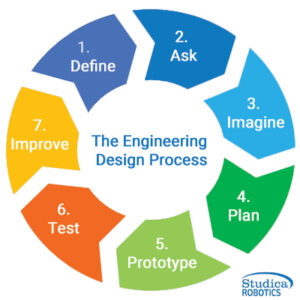
    Engineering Design ProcessThis cycle helps teams:

    ➡️ Identify what needs to change or improve

    ➡️ Explore constraints, rules, and existing solutions

    ➡️ Brainstorm multiple ways to solve the problem

    ➡️ Select an approach that fits strategy and resources

    ➡️ Build quick prototypes to try ideas early

    ➡️ Test designs on the field to gather real performance data

    ➡️ Refine based on what the tests reveal

    Using these steps gives teams a clear, repeatable method for refining mechanisms, improving scoring consistency, and strengthening overall robot reliability throughout the season. Review the full breakdown of the Engineering Design Process.

    How to Iterate Effectively During Your FTC Robot Build

    No matter which kit your team uses, these principles ensure smarter, safer iteration.

    ➡️ Make one change at a time to isolate what works and what does not

    ➡️ Test early and test often to see real performance in the field

    ➡️ Take pictures and document changes to save time during troubleshooting

    ➡️ Keep wiring organized to reduce disconnects and simplify servicing

    ➡️ Build with symmetry when possible to make balancing and reinforcement easier

    Iterating with the Studica Robotics Building System

    The Studica Robotics building system is designed for easy reconfiguration, ideal for rapid prototyping and refinement during an FTC robot build.
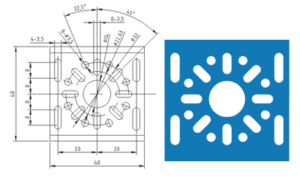
    The Studica Robotics Structure AdvantageThe Studica Robotics Structure AdvantageKey Advantages:

    Radial Hole Pattern:
    The unique hole pattern makes most structural pieces universally compatible, allowing parts to be easily repositioned or swapped.

    Versatile Structural Components:
    Available in multiple lengths and colors for refined prototyping:

    Easy to Swap and Adjust:
    Consistent hole spacing allows teams to:

        • Reinforce weak points
        • Add bracing
        • Change wheel types
        • Adjust motor layout
        • Mount sensors cleanly

    This flexibility is exactly what teams need when refining their robot design.

    Upgrading the Starter Kit for Your FTC Robot Build

    The FTC Starter Kit provides the baseline components for this season’s DECODE Starter Bot. It is designed to help teams:

    • Begin programming both autonomous and tele-op
    • Drive-test early
    • Understand drivetrain behavior
    • Work with OMS components
    • Add prototype mechanisms to the FTC Starter Bot to evaluate ideas early in the season.

    Once the Starter Bot is assembled and tested, teams can begin upgrading it.

    FTC Starter Kit Upgrade Ideas

    1. Add Low-Profile U-Channel Wheel Guards:
      Prevents field elements or other robots from catching on the drivetrain.
    2. Experiment with Different Flex Wheels:
      Different durometer (hardness) ratings affect how flex wheels compress and interact with game pieces, helping teams fine-tune intake behavior.
    3. Explore Motor Options:
      Studica Robotics offers Maverick HEX shaft motors with multiple planetary gearbox options available.
      Teams frequently choose between higher torque options and higher RPM options, depending on their drive strategy or mechanism needs.
    4. Reinforce the Chassis:
      Extra brackets or beams help maintain rigidity as mechanisms are added.
    5. Transition to a Mechanism-Ready Chassis:
      Many teams take the FTC Starter Bot’s scoring mechanism concepts and move them onto a more competition-ready Mecanum chassis. This helps teams learn:
      🔹 How to mount mechanisms cleanly
      🔹 How to maintain access to wiring
      🔹 How to improve scoring consistency

    FTC Starter Bot: Shooter on Mecanum Chassis

    This example takes the scoring system from the Studica Robotics FTC Starter Bot and places it onto a refined, competition ready Mecanum chassis. It’s a great starting point for teams looking to practice drivetrain control, get comfortable with strafing, and improve scoring efficiency.

    FTC Starter Bot: Wheel Guard Configuration

    This variation keeps the core Starter Bot design but adds wheel guards to boost durability and protect the drivetrain. The guards help prevent walls, other robots, and game elements from catching on the wheels or interfering with rotation.

    FTC Starter Bot Shooter with Mecanum WheelsFTC Starter Bot Shooter with Mecanum Wheels FTC Starter Bot with Wheel Guard blogFTC Starter Bot with Wheel Guard blog
    What it demonstrates:
    How teams can reuse a proven mechanism while upgrading mobility for smoother alignment, better field positioning, and more consistent scoring.
    What it demonstrates:
    A simple, low-effort upgrade that improves reliability without significant structural changes.

    Upgrading the FTC Drive Base Kit

    The FTC Drive Base Kit provides a complete mecanum drivetrain with omnidirectional movement, giving teams flexibility when designing mechanisms. Unlike the FTC Starter Kit, the FTC Drive Base Kit only provides the materials needed to create a drivetrain, giving teams total creative freedom to design their own scoring mechanisms.

    FTC Drive Base Kit Upgrade Ideas

    1.  Reinforced Mecanum Wheel Guards – Helps protect rollers during contact-heavy gameplay using:
      🔹 Standoffs
      🔹 T Brackets
      🔹 End Piece Plates
      🔹 Low-Profile U-Channels
    2. Vertical Motor Mounting – Some teams choose to mount motors vertically to create a clean underside with space for:
      🔹 Odometry
      🔹 Sensors
      🔹 Cable routing
    3. Leave Room for Sensors and Expansion – The area under the 288 mm U-Channels is ideal for:
      🔹 Odometry pods
      🔹 Distance sensors
      🔹 IMU stabilization mounts
      🔹 Future scoring mechanisms
    4. Improve Structural Rigidity – As teams add mechanisms, reinforcing the drivetrain with additional brackets or cross-members helps maintain frame strength.

    FTC Drive Base Kit: Protected Drivetrain with Odometry Support

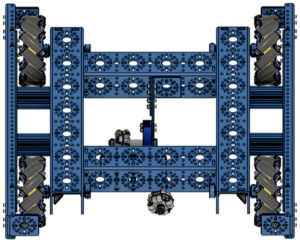
    This version doesn’t include scoring mechanisms, but it features reinforced wheel guards designed to shield the Mecanum rollers and support the drivetrain during high-contact DECODE gameplay and space for odometry pods.

    FTC Drive Base Kit: Vertical Motor Mount for Under-Channel Odometry Space

    This design is a more competition-focused refinement of the FTC Drive Base Kit v2. The motors are mounted vertically, leaving a clean channel beneath the 288 mm U-Channels—perfect for odometry pods, sensors, or future add-ons. It also includes reinforced Mecanum wheel guards built using standoffs, T-brackets, end plates, and low-profile U-Channels to help protect the wheels from hard impacts.

    FTC Drivebase Kit with Wheel Guards and Odometry Kit Top ViewFTC Drivebase Kit with Wheel Guards and Odometry Kit Top View FTC Drivebase Kit vertical motor mount drivebaseFTC Drivebase Kit vertical motor mount drivebase
    What it demonstrates:
    Wheel guards and integrated odometry pods for more accurate autonomous tracking and movement.
    What it demonstrates:
    A clean, expandable layout optimized for sensors and autonomous performance.

    Frequently Asked Questions

    What’s the main difference between the FTC Starter Kit and the FTC Drive Base Kit?
    The FTC Starter Kit includes everything needed for a baseline Starter Bot. The FTC Drive Base Kit is drivetrain-only, giving teams full freedom to design.

    Do I need special tools to upgrade the FTC Starter Bot?
    No. The unique Studica Robotics hole pattern allows parts, motors, gears, and other components to connect easily without special equipment.

    Can I use the FTC Starter Bot for prototyping?
    Yes. Many teams test early mechanisms or scoring ideas on the FTC Starter Bot.

    Can the FTC Drive Base Kit support advanced mechanisms?
    Absolutely. Its open layout is designed for sensors, scoring systems, and expansion structures.

    Should I choose torque or high-RPM motors?
    It depends on your design. Many teams prototype with different planetary gearbox ratios on their motor to determine their preferred performance.

    Why is iteration so important in FTC?
    Each change helps teams improve reliability, score faster, and understand how mechanical decisions affect robot behavior.

    Where can I learn more about the engineering design process?
    Learn more here: Dive into Robotics with the Engineering Design Process

    Closing Thoughts

    Both the FTC Starter Kit and FTC Drive Base Kit give teams a reliable starting point for their FTC robot build. Most teams improve performance by using the design-test-refine process reinforcing structure and refining layouts throughout the season. These adjustments help teams understand mechanical behavior while gradually developing a more consistent robot.


    Source link

  • FTC Claims the ABA Is a Monopoly

    FTC Claims the ABA Is a Monopoly

    The Federal Trade Commission accused the American Bar Association of having a “monopoly on the accreditation of American law schools” in a letter to the Texas Supreme Court at a time when the state is considering minimizing the ABA’s oversight of legal education.

    In April, the Texas Supreme Court announced it was looking into eliminating ABA requirements for licensure. Justices wrote in a tentative opinion in the fall that the ABA “should no longer have the final say on whether a law school’s graduates are eligible to sit for the Texas bar exam and become licensed to practice law.” It also invited the public to comment on a proposal to potentially undercut the ABA as an accreditor for Texas law schools.

    FTC officials Clarke Edwards and Daniel Guarnera signaled support for potentially moving away from ABA accreditation in a nine-page letter submitted to the Texas Supreme Court on Monday. In addition to claiming the ABA was a monopoly, they argued it had “rigid and costly requirements” and that it mandates “every law school follow an expensive, elitist model of legal education.”

    The two FTC officials also accused the ABA of driving up the costs of law school.

    “The ABA’s standards for accreditation appear to go far beyond what is reasonably necessary to assure adequate preparation for the practice of law in Texas, increasing the cost of a legal education. The current rule therefore likely causes Texas to forgo admitting many potentially qualified lawyers who could provide needed legal services to the Texas public,” they wrote.

    Monday’s letter reflects rhetoric from President Donald Trump and his allies who have taken aim at accreditors in recent years. Trump blasted the ABA in an April executive order, accusing it of discrimination for its diversity, equity and inclusion standards. (The ABA suspended DEI standards for accreditation in February, before the executive order.)

    The ABA did not respond to a request for comment from Inside Higher Ed.

    Source link

  • A tech policy bonanza! The FCC, FTC, AI regulations, and more

    A tech policy bonanza! The FCC, FTC, AI regulations, and more

    Does a cat stand on two legs or four?

    The answer to that question may tell you all you need
    to know about the government involving itself in social media
    content moderation.

    On today’s show, we cover the latest tech policy
    developments involving the Federal Communications Commission,
    Federal Trade Commission, AI regulation, and more.

    Guests:

    – Ari
    Cohn
    , FIRE’s lead counsel, tech policy.


    Adam Thierer
    , a resident technology and innovation senior
    fellow at the R Street Institute

    Jennifer
    Huddleston
    , a technology policy senior fellow at the CATO
    Institute

    Timestamps:

    00:00 Intro

    01:30 Section 230

    06:55 FCC and Section 230

    14:32 Brendan Carr and “faith-based programming”

    28:24 Media companies’ settlements with the Trump

    30:24 Brendan Carr at Semafor event

    38:37 FTC and social media companies

    48:09 AI regulations

    01:03:43 Outro

    Enjoy listening to the podcast? Donate to FIRE today and
    get exclusive content like member webinars, special episodes, and
    more. If you became a FIRE Member
    through a donation to FIRE at thefire.org and would like access to
    Substack’s paid subscriber podcast feed, please email
    [email protected].

    Show notes:

    Source link

  • The FTC is overstepping its authority — and threatening free speech online

    The FTC is overstepping its authority — and threatening free speech online

    Federal Trade Commission Chair Andrew Ferguson reached out to followers on X yesterday asking for “public submissions from anyone who has been a victim of tech censorship (banning, demonetization, shadow banning, etc.), from employees of tech platforms.” His post was accompanied by a press release from the FTC and a forum for comments on their website, both making the same requests. 

    This outreach is being conducted, according to Ferguson, “to better understand how technology platforms deny or degrade users’ access to services based on the content of their speech or affiliations, and how this conduct may have violated the law.”

    In reality, the chair is angling to label editorial decisions he doesn’t like “unfair or deceptive trade practices.” But consumer protection law is no talisman against the First Amendment, and the FTC has no power here.

    The simplified formulation of Ferguson’s argument is this: If social media platforms are not adhering to their content policies, or “consistent” (whatever that means) in their enforcement, they are engaging in “false advertising” that harms consumers.

    Calling something censorship doesn’t make it so, and framing content moderation as “unfair or deceptive trade practices” does not magically sidestep the First Amendment. 

    Now, it is true that the FTC can generally act against deceptive marketing. That’s because pure commercial speech — that is, speech which does no more than propose a commercial transaction — possesses “a lesser protection” under the First Amendment than other forms of protected speech. And commercial speech that is false or misleading receives no First Amendment protection at all. But when speech — even in a commercial context — expresses opinions about social policy, government power over that speech gives way to the First Amendment.

    Content policies and moderation decisions made by private social media platforms are inherently subjective editorial judgments. In the vast majority of cases, they convey opinions on social policy as well as what expression they find desirable in their communities. Attempts to control or punish those editorial judgments violate the First Amendment.

    The Supreme Court recently made clear that these subjective decisions enjoy broad First Amendment protection. In Moody v. NetChoice, the Court rebuffed direct attempts by Texas and Florida to regulate content moderation decisions to remediate allegedly “biased” enforcement of platform rules:

    The interest Texas asserts is in changing the balance of speech on the major platforms’ feeds, so that messages now excluded will be included. To describe that interest, the State borrows language from this Court’s First Amendment cases, maintaining that it is preventing “viewpoint discrimination.” Brief for Texas 19; see supra, at 26–27. But the Court uses that language to say what governments cannot do: They cannot prohibit private actors from expressing certain views. When Texas uses that language, it is to say what private actors cannot do: They cannot decide for themselves what views to convey. The innocent-sounding phrase does not redeem the prohibited goal. The reason Texas is regulating the content-moderation policies that the major platforms use for their feeds is to change the speech that will be displayed there. Texas does not like the way those platforms are selecting and moderating content, and wants them to create a different expressive product, communicating different values and priorities. But under the First Amendment, that is a preference Texas may not impose.

    This is no less true when the government attempts to regulate through the backdoor of “consumer protection.”

    To illustrate the problem: Imagine a claim that platforms are engaging in unfair trade practices by removing some “hate speech,” but not speech that aligns with a certain view. What constitutes “hate speech” is entirely subjective. For the FTC to assess whether a “hate speech” policy has been applied “consistently” (or at all), they would have to supplant the platform’s subjective judgment with the government’s own “official” definition of “hate speech” — which, as you can probably already guess, will likely not be the same as anyone else’s. 

    And this illustration is not the product of wild imagination. In fact, FIRE is litigating this very question before the U.S. Court of Appeals for the Second Circuit right now. In Volokh v. James, FIRE is challenging a New York law requiring social media platforms to develop and publish policies for responding to “hateful conduct” and to provide a mechanism for users to complain about the same. Our motion for a preliminary injunction, which the district court granted, argued that the First Amendment prohibits the government from substituting its judgments about what expression should be permitted for a platform’s own:

    Labeling speech as “hateful” requires an inherently subjective judgment, as does determining whether speech serves to “vilify, humiliate, or incite violence.” The Online Hate Speech Act’s definition is inescapably subjective—one site’s reasoned criticism is another’s “vilification”; one site’s parody is another’s “humiliation”—and New York cannot compel social media networks to adopt it. . . . The definition of “hateful,” and the understanding of what speech is “vilifying,” “humiliating,” or “incites violence,” will vary from person to person . . .

    The First Amendment empowers citizens to make these value judgments themselves, because speech that some might consider “hateful” appears in a wide variety of comedy, art, journalism, historical documentation, and commentary on matters of public concern. 

    Ferguson and the FTC’s actions are particularly egregious given the fact that it has been made perfectly — and repeatedly — clear in the past that these kinds of editorial decisions are outside of their authority.

    LAWSUIT: New York can’t target protected online speech by calling it ‘hateful conduct’

    Press Release

    Today, the Foundation for Individual Rights and Expression sued New York Attorney General Letitia James, challenging a new state law that forces websites and apps to address online speech that someone, somewhere finds humiliating or vilifying.


    Read More

    In 2004, the political advocacy groups MoveOn and Common Cause asked the FTC to act against Fox News’ use of the “Fair and Balanced” slogan, arguing that it was false and misleading. Then-FTC Chair Tim Muris appropriately replied, “There is no way to evaluate this petition without evaluating the content of the news at issue. That is a task the First Amendment leaves to the American people, not a government agency.”

    In 2020, the nonprofit advocacy group Prager University argued in a lawsuit that YouTube violated its free speech rights by restricting access to some of its videos and limiting its advertising. They claimed that as a result, the platform’s statements that “everyone deserves to have a voice” and “people should be able to speak freely” constituted deceptive marketing. However, the U.S. Court of Appeals for the Ninth Circuit rejected this claim, holding that the platform’s statements are “impervious to being quantifiable” and, as a result, were non-actionable.

    The bottom line is this: Calling something censorship doesn’t make it so, and framing content moderation as “unfair or deceptive trade practices” does not magically sidestep the First Amendment. And as always, beware — authority claimed while one is in power will still exist when one is not.

    Source link