Tag: Fund

  • AI can be a great equalizer, but it remains out of reach for millions of Americans; the Universal Service Fund can expand access

    AI can be a great equalizer, but it remains out of reach for millions of Americans; the Universal Service Fund can expand access

    In an age defined by digital transformation, access to reliable, high-speed internet is not a luxury; it is the bedrock of opportunity. It impacts the school classroom, the doctor’s office, the town square and the job market.

    As we stand on the cusp of a workforce revolution driven by the “arrival technology” of artificial intelligence, high-speed internet access has become the critical determinant of our nation’s economic future. Yet, for millions of Americans, this essential connection remains out of reach.

    This digital divide is a persistent crisis that deepens societal inequities, and we must rally around one of the most effective tools we have to combat it: the Universal Service Fund. The USF is a long-standing national commitment built on a foundation of bipartisan support and born from the principle that every American, regardless of their location or income, deserves access to communications services.

    Without this essential program, over 54 million students, 16,000 healthcare providers and 7.5 million high-need subscribers would lose internet service that connects classrooms, rural communities (including their hospitals) and libraries to the internet.

    Related: A lot goes on in classrooms from kindergarten to high school. Keep up with our free weekly newsletter on K-12 education.

    The discussion about the future of USF has reached a critical juncture: Which communities will have access to USF, how it will be funded and whether equitable access to connectivity will continue to be a priority will soon be decided.

    Earlier this year, the Supreme Court found the USF’s infrastructure to be constitutional — and a backbone for access and opportunity in this country. Congress recently took a significant next step by relaunching a bicameral, bipartisan working group devoted to overhauling the fund. Now they are actively seeking input from stakeholders on how to best modernize this vital program for the future, and they need our input.

    I’m urging everyone who cares about digital equity to make their voices heard. The window for our input in support of this vital connectivity infrastructure is open through September 15.

    While Universal Service may appear as only a small fee on our monthly phone bills, its impact is monumental. The fund powers critical programs that form a lifeline for our nation’s most vital institutions and vulnerable populations. The USF helps thousands of schools and libraries obtain affordable internet — including the school I founded in downtown Brooklyn. For students in rural towns, the E-Rate program, funded by the USF, allows access to the same online educational resources as those available to students in major cities. In schools all over the country, the USF helps foster digital literacy, supports coding clubs and enables students to complete homework online.

    By wiring our classrooms and libraries, we are investing in the next generation of innovators.

    The coming waves of technological change — including the widespread adoption of AI — threaten to make the digital divide an unbridgeable economic chasm. Those on the wrong side of this divide experienced profound disadvantages during the pandemic. To get connected, students at my school ended up doing homework in fast-food parking lots. Entire communities lost vital connections to knowledge and opportunity when libraries closed.

    But that was just a preview of the digital struggle. This time, we have to fight to protect the future of this investment in our nation’s vital infrastructure to ensure that the rising wave of AI jobs, opportunities and tools is accessible to all.

    AI is rapidly becoming a fundamental tool for the American workforce and in the classroom. AI tools require robust bandwidth to process data, connect to cloud platforms and function effectively.

    The student of tomorrow will rely on AI as a personalized tutor that enhances teacher-led classroom instruction, explains complex concepts and supports their homework. AI will also power the future of work for farmers, mechanics and engineers.

    Related: Getting kids online by making internet affordable

    Without access to AI, entire communities and segments of the workforce will be locked out. We will create a new class of “AI have-nots,” unable to leverage the technology designed to propel our economy forward.

    The ability to participate in this new economy, to upskill and reskill for the jobs of tomorrow, is entirely dependent on the one thing the USF is designed to provide: reliable connectivity.

    The USF is also critical for rural health care by supporting providers’ internet access and making telehealth available in many communities. It makes internet service affordable for low-income households through its Lifeline program and the Connect America Fund, which promotes the construction of broadband infrastructure in rural areas.

    The USF is more than a funding mechanism; it is a statement of our values and a strategic economic necessity. It reflects our collective agreement that a child’s future shouldn’t be limited by their school’s internet connection, that a patient’s health outcome shouldn’t depend on their zip code and that every American worker deserves the ability to harness new technology for their career.

    With Congress actively debating the future of the fund, now is the time to rally. We must engage in this process, call on our policymakers to champion a modernized and sustainably funded USF and recognize it not as a cost, but as an essential investment in a prosperous, competitive and flourishing America.

    Erin Mote is the CEO and founder of InnovateEDU, a nonprofit that aims to catalyze education transformation by bridging gaps in data, policy, practice and research.

    Contact the opinion editor at [email protected].

    This story about the Universal Service Fund was produced by The Hechinger Report, a nonprofit, independent news organization focused on inequality and innovation in education. Sign up for Hechinger’s weekly newsletter.

    The Hechinger Report provides in-depth, fact-based, unbiased reporting on education that is free to all readers. But that doesn’t mean it’s free to produce. Our work keeps educators and the public informed about pressing issues at schools and on campuses throughout the country. We tell the whole story, even when the details are inconvenient. Help us keep doing that.

    Join us today.

    Source link

  • Brown to Fund Grad Students Who Lost Grants

    Brown to Fund Grad Students Who Lost Grants

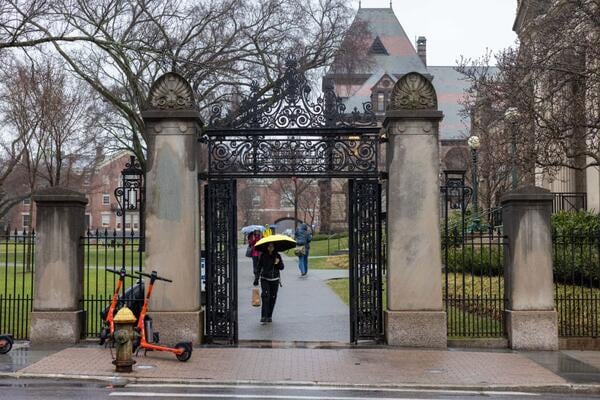
    Brown University will give money to some of its graduate students whose federal research grants were cut by the Trump administration, The Brown Daily Herald reported

    “We want to make sure that we’re able to give each of you all of the attention and support that you need to get through comfortably [and] well supported,” Janet Blume, interim dean of the graduate school, said at a Graduate Student Council meeting Wednesday. She said the university will honor the financial commitments of M.F.A. and Ph.D. students who lost their grants. 

    The National Institutes of Health, the National Science Foundation and other federal agencies have terminated thousands of academic researchers’ grants—including many at Brown—that don’t align with the Trump administration’s ideological agenda. 

    Blume said Brown is also reducing its graduate student admissions target this year to allow “time to work out issues of the federal financial landscape and also shifts in the job market.”

    In addition to canceling research grants, numerous federal agencies have put forth plans to cap the amount of money they reimburse universities to cover indirect research costs, which universities say will hurt their budgets and slow innovation. Brown is among the institutions suing the government over its changes to indirect cost reimbursement rates, which are on pause during ongoing litigation. 

    Brown, which had a $46 million deficit before President Trump took office in January, has also faced targeted scrutiny from the Trump administration. The university implemented a hiring freeze in March. In April, the government froze $510 million of Brown’s federal research dollars in retaliation for the university’s alleged failures to address antisemitism on campus.

    In June, administrators warned of the potential for “significant cost-cutting” measures amid the “deep financial losses” resulting from grant cuts, increased endowment taxes and threats to international student enrollment.

    The following month, Brown and the government came to an agreement, and the frozen grant money is coming back to the university. However, the deal did not restore the grants of researchers whose funding was terminated as part of the broader ideologically driven policy changes.

    Source link

  • The University of Kentucky suspended a professor for criticizing Israel. Now, FIRE’s Faculty Legal Defense Fund is stepping up to defend him.

    The University of Kentucky suspended a professor for criticizing Israel. Now, FIRE’s Faculty Legal Defense Fund is stepping up to defend him.

    LEXINGTON, K.Y., Aug. 7, 2025 — A University of Kentucky professor suspended for criticizing Israel’s conduct in the Gaza war now has legal representation thanks to the Foundation for Individual Rights and Expression.

    Ramsi Woodcock had established a steady career as a law professor at UK, where he has taught for seven years. He earned tenure in 2022 and was promoted to full professor on July 1.

    Less than two weeks later, the vice provost of the university informed the professor that the university received unspecified complaints about Woodcock’s criticisms of Israel outside the classroom on his personal website and at conferences. 

    The university failed to respond to Woodcock’s requests for copies of the complaints. On July 18, university officials removed Woodcock from teaching and banned him from campus. The university also sent a message to its campus condemning Woodcock’s views as “repugnant” and publicly announcing an investigation. 

    Specifically, the university took issue with a petition Woodcock circulated to other law professors across the country that called for military action against Israel because of its war in Gaza, as well as his arguments that Israel should cease to exist. 

    “This isn’t complicated,” said Graham Piro, FIRE’s Faculty Legal Defense Fund fellow. “Woodcock’s arguments about Israel are clearly protected speech on a matter of public concern, and as a faculty member at a public institution, he has the right to voice his ideas, regardless of whether others find them objectionable. And reprimanding a professor over one set of views opens the door to further restrictions on other opinions down the road.”

    With the help of the FLDF, Woodcock is being represented by Joe F. Childers of Joe F. Childers & Associates. Childers will work to lift Woodcock’s suspension so he can return to teaching in the classroom and continue speaking freely outside of it. 

    “Punishing me for my views on Israel sends a terrifying message to students and colleagues: voice the ‘wrong’ opinion on a sensitive subject and face consequences from the university,” Woodcock said. “It’s not only my career that’s at stake — it’s about whether the University of Kentucky will continue to exist as an institution that encourages and permits free thought and expression.”


    The Foundation for Individual Rights and Expression (FIRE) is a nonpartisan, nonprofit organization dedicated to defending and sustaining the individual rights of all Americans to free speech and free thought—the most essential qualities of liberty. FIRE recognizes that colleges and universities play a vital role in preserving free thought within a free society. To this end, we place a special emphasis on defending the individual rights of students and faculty members on our nation’s campuses, including freedom of speech, freedom of association, due process, legal equality, religious liberty, and sanctity of conscience.

    CONTACT:

    Karl de Vries, Director of Media Relations, FIRE: 215-717-3473; [email protected]

    Source link

  • Look to Your Culture (American Indian College Fund)

    Look to Your Culture (American Indian College Fund)

    Cheryl Crazy Bull, President and CEO of the American Indian College Fund, was the 2025 keynote speaker for Oglala Lakota College’s graduation ceremony. She acknowledges the difficulties Native communities are facing with the new administration’s budgets. Native experiences in the sixties and seventies led to a renaissance in Native communities and education and she cites the lessons they provide, based on Lakota culture, for surviving and thriving.

    Source link

  • ED Won’t Fund CTE, Dual Enrollment for “Illegal” Students

    ED Won’t Fund CTE, Dual Enrollment for “Illegal” Students

    The Education Department said Thursday that federal money shouldn’t fund dual enrollment, adult education and certain career and technical education for “illegal alien” students, whether they’re adults or K–12 pupils who are accessing postsecondary education.

    Department officials said in a news release that they are rescinding parts of a 1997 Dear Colleague letter that had allowed undocumented students to access those programs.

    In the interpretative rule published on the Federal Register, the department declared that “non-qualified alien adults are not permitted to receive education benefits (postsecondary education benefits or otherwise) and non-qualified alien children are not eligible to receive postsecondary education benefits and certain other education benefits, so long as such benefits are not basic public education benefits. Postsecondary education benefits include dual enrollment and other similar early college programs.”

    Education Secretary Linda McMahon said in the release that “under President Trump’s leadership, hardworking American taxpayers will no longer foot the bill for illegal aliens to participate in our career, technical, or adult education programs or activities. The department will ensure that taxpayer funds are reserved for citizens and individuals who have entered our country through legal means who meet federal eligibility criteria.”

    Augustus Mays, vice president of partnerships and engagement at EdTrust, an education equity group, said in a statement that the change “derails individual aspirations and undercuts workforce development at a time when our nation is facing labor shortages in critical fields like healthcare, education, and skilled trades. This decision raises barriers even higher for undocumented students who are already barred from accessing federal financial aid like Pell Grants and student loans.

    “Across the country, we’re seeing migrant communities targeted with sweeping raids, amplified surveillance, and fear-based rhetoric designed to divide and dehumanize,” Mays said. “Policies like this don’t exist in a vacuum. They are rooted in a political agenda that scapegoats immigrants and uses fear to strip rights and resources from the most vulnerable among us.”

    Source link

  • Legal defense fund will seek to fill gap left by OCR reduction

    Legal defense fund will seek to fill gap left by OCR reduction

    This audio is auto-generated. Please let us know if you have feedback.

    Education attorneys are set to launch a new organization by fall 2025 that would defend students’ civil rights in court and also track and report civil rights data. The effort, according to its founding nonprofit, aims to fill the gap left by the Trump administration’s dismantling of the U.S. Department of Education and its civil rights enforcement arm. 

    The Public Education Defense Fund will be launched by the National Center for Youth Law, which advocates for educational equity among other youth-related issues. It will contract with former Office for Civil Rights attorneys. 

    “At a time when civil rights protections for students are under unprecedented attack, preserving those rights is not negotiable — it’s vital,” said Johnathan Smith, chief of staff and general counsel at NCYL. “We can’t stand by while the federal government abandons its responsibility to uphold the basic rights of children and young people in this country.”

    As part of the administration’s efforts to “end bureaucratic bloat” and send educational control to the states, U.S. Secretary of Education Linda McMahon laid off half of the Education Department’s staff as part of what she called the agency’s “final mission.” The move was followed by an executive order from President Donald Trump calling for the department to be shut down to “the maximum extent appropriate and permitted by law.”

    The Education Department’s Office for Civil Rights took a major blow, with the department shuttering seven of the 12 regional offices that were in charge of more than half of the nation’s open civil rights cases. Over 200 OCR employees were laid off as part of the reduction in force.

    Under the Biden administration, those employees carried a load of more than 40 cases per person. Attorneys fired as part of the reduction in force were in charge of investigating civil rights complaints related to discrimination and harassment in schools, as well as overseeing resolution agreements with school districts. These agreements guide the school systems involved in making policy changes to improve educational access, especially for historically marginalized students.

    Prior to the announcement of the Public Education Defense Fund, NCYL filed a lawsuit against the Education Department in March to challenge the changes at the OCR. The lawsuit said the civil rights enforcement arm “stopped investigating complaints from the public based on race or sex discrimination, it cherry-picked and, on its own initiative, began targeted investigations into purported discrimination against white and cisgender students.”

    Source link

  • $100m Coalition election promise to fund 200 regional medical students matches Labor – Campus Review

    $100m Coalition election promise to fund 200 regional medical students matches Labor – Campus Review

    Regional and rural Australia’s doctor shortage is being targeted as an election issue by the Coalition, which is promising to fund an extra 200 students to train as general practitioners to work in the bush.

    Please login below to view content or subscribe now.

    Membership Login

    Source link

  • Northwestern to Fund Research After Federal Freeze

    Northwestern to Fund Research After Federal Freeze

    Northwestern University is stepping in to fund ongoing research projects after the private institution received stop-work orders on nearly 100 federal grants, CBS News Chicago reported.

    The move comes after the Trump administration froze $790 million in federal research funding at Northwestern, which is one of multiple institutions across the U.S. hit by similar setbacks. Others include Harvard University, which had $2.2 billion frozen after it rejected changes demanded by the Trump administration in response to alleged antisemitism and harassment; Cornell University (more than $1 billion); Columbia University ($650 million); Brown University ($510 million); Princeton University ($210 million); and the University of Pennsylvania ($175 million).

    Northwestern, like others on the list, had a pro-Palestinian encampment protest on campus last spring, which prompted Congress to bring its president in for a hearing on antisemitism in May.

    Northwestern president Michael Schill and Board of Trustees chair Peter Barris told the university community in an email obtained by CBS News Chicago that the university still had not received formal notice that federal research funding had been pulled, but the university has received stop-work orders. They noted the university will continue funding on projects that received stop-work orders as well as other research threatened by the Trump administration.

    “The work we do is essential to our community, to the nation and to the world. Enabling this vital research to continue is among our most important priorities, and supporting our researchers in this moment is a responsibility we take seriously,” Schill and Barris wrote in the Thursday email.

    Northwestern is among the nation’s wealthiest universities, with an endowment recently valued at $14.2 billion. However, financial experts have cautioned against leveraging endowments to plug budget holes, prompting some wealthy institutions targeted by the administration to issue bonds or take out private loans.

    Source link