Tag: Funding

  • Funding high-quality teacher preparation programs should be the highest priority for policymakers

    Funding high-quality teacher preparation programs should be the highest priority for policymakers

    by Sharif El-Mekki and Heather Kirkpatrick, The Hechinger Report
    November 25, 2025

    By dismantling the Department of Education, the Trump administration claims to be returning control of education to the states. 

    And while states and local school districts are doing their best to understand the new environments they are working in, they have an opportunity amidst the chaos to focus on what is most essential and prioritize how education dollars are spent.  

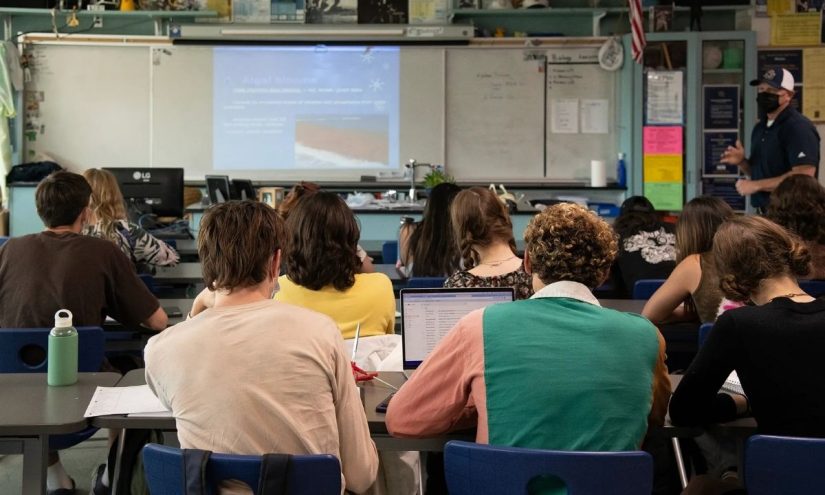
    That means recruiting and retaining more well-prepared teachers with their new budget autonomy. Myriad factors affect student learning, but research shows that the primary variable within a school’s control is the teacher. Other than parents, teachers are the adults who spend the most time with our children. Good teachers have been shown to singularly motivate students.  

    And that’s why, amidst the chaos of our current education politics, there is great opportunity. 

    Until recently, recruiting, preparing and retaining enough great teachers has not been a priority in policy or funding choices. That has been a mistake, because attracting additional teachers and preparing them to be truly excellent is arguably the single biggest lever policymakers can use to demonstrate their commitment to high-quality public schools. 

    Related: Interested in innovations in higher education? Subscribe to our free biweekly higher education newsletter. 

    Great teachers, especially whole schools full of great teachers, do not just happen. We develop them through quality preparation and meaningful opportunities to practice the profession. When teachers are well-prepared, students thrive. Rigorous teacher preparation translates into stronger instruction, higher K-12 student achievement and a more resilient, equitable education system

    Teachers, like firefighters and police officers, are public servants. We rightly invest public dollars to train firefighters and police officers because their service is essential to the safety and well-being of our communities. Yet teachers — who shape our future through our kids — are too often asked to shoulder the costs of their own preparation. 

    Funding high-quality teacher preparation should be as nonnegotiable as funding other vital public service professions, especially because we face a teacher shortage — particularly in STEM fields, special education and rural and urban schools.  

    This is in no small part because many potential teaching candidates cannot afford the necessary education and credentialing. 

    Our current workforce systems were not built for today’s teaching candidates. They were not designed to support students who are financially vulnerable, part-time or first-generation, or those with caregiving responsibilities.  

    Yet the majority of tomorrow’s education workforce will likely come from these groups, all of whom have faced systemic barriers in accumulating the generational wealth needed to pursue degrees in higher education. 

    Some states have responded to this need by developing strong teacher development pathways. For example, California has committed hundreds of millions to growing the teacher pipeline through targeted residency programs and preparation initiatives, and its policies have enabled it to recruit and support more future teachers, including greater numbers of educators from historically underrepresented communities. 

    Pennsylvania has created more pathways into the education field with expedited credentialing and apprenticeships for high school students, and is investing millions of dollars in stipends for student teachers. 

    It has had success bringing more Black candidates into the teaching profession, which will likely improve student outcomes: Black boys from low-income families who have a Black teacher in third through fifth grades are 18 percent more interested in pursuing college and 29 percent less likely to drop out of high school, research shows. Pennsylvania also passed a senate bill﷟HYPERLINK “https://www.senatorhughes.com/big-win-in-harrisburg-creating-the-teacher-diversity-pipeline/” that paved the way for students who complete high school courses on education and teaching to be eligible for career and technical education credits. 

    At least half a dozen other states also provide various degrees of financial support for would-be teachers, including stipends, tuition assistance and fee waivers for credentialing.  

    One example is a one-year teacher residency program model, which recruits and prepares people in historically underserved communities to earn a mster’s degree and teaching credential.  

    Related: Federal policies risk worsening an already dire rural teacher shortage 

    Opening new pathways to teaching by providing financial support has two dramatic effects. First, when teachers stay in education, these earnings compound over time as alumni become mentor teachers and administrators, earning more each year.  

    Second, these new pathways can also improve student achievement, thanks to policies that support new teachers in rigorous teacher education programs

    For example, the Teaching Academy model, which operates in several states, including Pennsylvania, New York and Michigan, attracts, cultivates and supports high school students on the path to becoming educators, giving schools and districts an opportunity to build robust education programs that serve as strong foundations for meaningful and long-term careers in education, and providing aspiring educators a head start to becoming great teachers. Participants in the program are eligible for college scholarships, professional coaching and retention bonuses.  

    California, Pennsylvania and these other states have begun this work. We hope to encourage other state lawmakers to seize the opportunities arising from recent federal changes and use their power to invest in what matters most to student achievement —teachers and teacher preparation pathways. 

    Sharif El-Mekki is founder & CEO of the Center for Black Educator Development in Pennsylvania. Heather Kirkpatrick is president and CEO Alder Graduate School in California. 

    Contact the opinion editor at [email protected]. 

    This story about teacher preparation programs was produced by The Hechinger Report, a nonprofit, independent news organization focused on inequality and innovation in education. Sign up for Hechinger’s weekly newsletter. 

    This <a target=”_blank” href=”https://hechingerreport.org/opinion-funding-high-quality-teacher-preparation-programs-should-be-the-highest-priority-for-policymakers/”>article</a> first appeared on <a target=”_blank” href=”https://hechingerreport.org”>The Hechinger Report</a> and is republished here under a <a target=”_blank” href=”https://creativecommons.org/licenses/by-nc-nd/4.0/”>Creative Commons Attribution-NonCommercial-NoDerivatives 4.0 International License</a>.<img src=”https://i0.wp.com/hechingerreport.org/wp-content/uploads/2018/06/cropped-favicon.jpg?fit=150%2C150&amp;ssl=1″ style=”width:1em;height:1em;margin-left:10px;”>

    <img id=”republication-tracker-tool-source” src=”https://hechingerreport.org/?republication-pixel=true&post=113500&amp;ga4=G-03KPHXDF3H” style=”width:1px;height:1px;”><script> PARSELY = { autotrack: false, onload: function() { PARSELY.beacon.trackPageView({ url: “https://hechingerreport.org/opinion-funding-high-quality-teacher-preparation-programs-should-be-the-highest-priority-for-policymakers/”, urlref: window.location.href }); } } </script> <script id=”parsely-cfg” src=”//cdn.parsely.com/keys/hechingerreport.org/p.js”></script>


    Source link

  • Total NSF, NIH Funding Didn’t Plunge in Fiscal 2025

    Total NSF, NIH Funding Didn’t Plunge in Fiscal 2025

    The National Science Foundation and National Institutes of Health doled out about as much total grant funding in the recently ended fiscal year as they did the year before, despite the Trump administration’s “unprecedented” earlier slowdown of federal science funding, Science reported Wednesday.

    According to the journal’s analysis, “NSF committed approximately $8.17 billion to grants, fellowships, and other funding mechanisms in the 2025 fiscal year”—which ended Sept. 30—“about the same as in 2024.” It found that NIH spending also remained level.

    But both federal research funding agencies still reduced the number of new grants they awarded, Science reported. It wrote that NSF funded about 8,800 new research project grants, down from 11,000 in 2024, adding that an anonymous NSF staffer said this “was one of several changes designed to reduce the agency’s future financial obligations, in case Trump’s proposed budget cut is realized.” The analysis also found that the agency reduced from 2,600 to 1,100 “the number of new continuing grants, and ‘forward funded’ a number of existing continuing grants.”

    NSF declined to confirm or deny Science’s figures. NIH spokespeople didn’t return Inside Higher Ed’s requests for comment Thursday.

    Congress has yet to decide how much to fund NSF in the current fiscal year; most of the federal government is currently funded by a continuing resolution that expires Jan. 30, and the government could shut down again if lawmakers don’t pass appropriations bills by then. But Republicans from both chambers have indicated they don’t plan to cut $5 billion from NSF, as Trump has requested; in July, Senate appropriators put forth a cut of only $16 million, while the suggestion in the House was to slash the NSF budget by $2 billion.

    Source link

  • It will take patience and courage to fix K-12 education without the Department of Education

    It will take patience and courage to fix K-12 education without the Department of Education

    by John Katzman, The Hechinger Report
    November 19, 2025

    The Trump administration’s dismantling of the U.S. Department of Education this week provides a rare opportunity to rethink our current top-down approach to school governance.

    We should jump on it. It’s not sexy to talk about governance, but we can’t fix K-12 education until we do so, no matter how we feel about the latest changes.

    Since the Department of Education opened in 1980, we’ve doubled per-pupil spending, and now spend about twice as much per student as does the average country in the European Union. Yet despite that funding — and the reforms, reports and technologies introduced over the past 45 years — U.S. students consistently underperform on international benchmarks. And people are opting out: 22 percent of U.S. district students are now chronically absent, while record numbers of families are opting out of those schools, choosing charters, private schools and homeschooling.

    Most federal and state reform approaches have been focused on curricular standards and have accomplished little. The many billions spent on the Common Core standards coincided with — or triggered — a 13-year decline in academic performance. The underlying principles of the standards movement — that every student should learn the same things at the same time, that we know what those things are and that they don’t change over time — have made our schools even less compelling while narrowing instruction to what gets tested.

    Related: A lot goes on in classrooms from kindergarten to high school. Keep up with our free weekly newsletter on K-12 education.

    We need to address the real problem: how federal, state and district rules combine to create a dense fog of regulations and directives that often conflict or constrain one another. Educators are losing a rigged game: It’s not that they’re doing the wrong things, it’s that governance makes them unresponsive, bureaucratic, ineffective and paralyzed — can you name an industry that spends less on research and development?

    Fixing governance won’t be simple, but it shouldn’t take more than 13 years to do it: three years to design a better system of state governance and 10 more to thoroughly test and debug it.

    I would start by bringing together experts from a variety of disciplines, ideally at a new “Center for K-12 Governance” at a university’s school of education or school of public policy, and give them three years to think through a comprehensive set of state laws and regulations to manage schools.

    The center would convene experts from inside and outside of education, in small groups focused on topics including labor, funding, data, evaluation, transportation, construction, athletics, counseling, technology, curricula and connections to higher education and the workforce. Its frameworks would address various educational and funding alternatives currently in use, including independent, charter and parochial schools, home schooling and Education Savings Accounts, all of which speak to the role of parents in making choices about their children’s education.

    Each group would start with the questions and not the answers, and there are hundreds of really interesting questions to be considered: What are the various goals of our K-12 schools and how do we authentically measure schools against them? What choices do we give parents, and what information might help them make the right decisions for their kids? How do we allow for new approaches to attract, support and pay great teachers and administrators? How does money follow each student? What data do we collect and how do we use it?

    After careful consideration, the center would hand its proposed statutes to a governor committed to running a long-term pilot to fully test the model. He or she would create a small alternative department of education, which would oversee a few hundred volunteer schools matched to a control group of similar schools running under the state’s legacy regime; both groups would include schools with a range of demographic and performance profiles. The two systems could run side by side for up to a decade.

    Related: Schools confront a new reality: They can’t count on federal money

    Each year, the state would assess the two departments’ performance against metrics like graduation and college-completion rates, teacher retention, income trajectories, civic participation, student and parent satisfaction, and, yes, NAEP scores. Under intense scrutiny by interested parties, both groups would be free to tweak their playbooks and evaluate solutions against a range of real-world outcomes. Once definitive longitudinal data comes in, the state would shutter one department and move the governance of its schools over to the other, perhaps launching a new test with an even better system.

    This all may seem like a lot of work, but it’s a patient approach to a root problem. Schools remain the nation’s most local public square; they determine income mobility, civic health and democratic resilience. If we fail to rewire the system now to support them properly, we guarantee their continued decline, to the detriment of students and society. Instead of celebrating students, teachers and principals who succeed despite the odds, we should address why we made those odds so steep.

    That’s why we should use this moment to draft and test something audacious, and give the next Supreme Court a happier education case to decide: how to retire a legacy system that finally lost a fair fight.

    John Katzman has founded and run three large ed tech companies: The Princeton Review, 2U and Noodle. He has worked closely with many large school districts and has served on the boards of NAPCS and NAIS.

    Contact the opinion editor at [email protected].

    This story about fixing K-12 education was produced by The Hechinger Report, a nonprofit, independent news organization focused on inequality and innovation in education. Sign up for Hechinger’s weekly newsletter.

    This <a target=”_blank” href=”https://hechingerreport.org/opinion-it-will-take-patience-and-courage-to-fix-k-12-education-without-the-department-of-education/”>article</a> first appeared on <a target=”_blank” href=”https://hechingerreport.org”>The Hechinger Report</a> and is republished here under a <a target=”_blank” href=”https://creativecommons.org/licenses/by-nc-nd/4.0/”>Creative Commons Attribution-NonCommercial-NoDerivatives 4.0 International License</a>.<img src=”https://i0.wp.com/hechingerreport.org/wp-content/uploads/2018/06/cropped-favicon.jpg?fit=150%2C150&amp;ssl=1″ style=”width:1em;height:1em;margin-left:10px;”>

    <img id=”republication-tracker-tool-source” src=”https://hechingerreport.org/?republication-pixel=true&post=113457&amp;ga4=G-03KPHXDF3H” style=”width:1px;height:1px;”><script> PARSELY = { autotrack: false, onload: function() { PARSELY.beacon.trackPageView({ url: “https://hechingerreport.org/opinion-it-will-take-patience-and-courage-to-fix-k-12-education-without-the-department-of-education/”, urlref: window.location.href }); } } </script> <script id=”parsely-cfg” src=”//cdn.parsely.com/keys/hechingerreport.org/p.js”></script>
    Source link

  • MacKenzie Scott’s recent college gifts top $700M. See who got funding.

    MacKenzie Scott’s recent college gifts top $700M. See who got funding.

    This audio is auto-generated. Please let us know if you have feedback.

    Billionaire philanthropist MacKenzie Scott is on another donation spree, giving more than $740 million total to over a dozen historically Black colleges and universities, as well as at least one tribal college since mid-October.

    In 2019 — the same year Scott and her ex-husband, Amazon founder Jeff Bezos, divorced — she pledged to give away most of her wealth. Scott’s fortune is estimated to be worth $38.7 billion, according to Bloomberg.

    On Thursday, Little Priest Tribal College, in Nebraska, said it received a $5 million donation from the billionaire philanthropist. The institution — the first tribal college to publicly announce a gift from Scott during her latest donation blitz — said it would use the gift to accelerate plans to develop a new 10-acre campus.  

    Only two days earlier, Xavier University of Louisiana, a HBCU, announced it had received a $38 million unrestricted donation from Scott. 

    So far, Howard University, in Washington, D.C., has garnered the largest among Scott’s recent gifts to colleges. Earlier this month, the philanthropist donated the research university $80 million, earmarking $17 million of that amount for its medical college. 

    Most of the colleges have received gifts from Scott before. 

    Scott has made mass donations to higher education institutions in previous years — by 2021, she had given at least $1.5 billion total to roughly six dozen institutions. Her other rounds of donations have likewise focused on minority-serving institutions, such as Hispanic-serving institutions and HBCUs. 

    Below, we’re rounding up colleges that have received gifts from Scott in her latest donation spree. Let us know if we’ve missed any announcements.

    Scott has given over $700M to colleges in latest donation spree

    The gifts higher education institutions have received from Scott in recent months

    Source link

  • Feds cannot withhold funding from UC system amid lawsuit, judge rules

    Feds cannot withhold funding from UC system amid lawsuit, judge rules

    This audio is auto-generated. Please let us know if you have feedback.

    Dive Brief:

    • A federal judge on Friday issued a preliminary injunction barring the Trump administration from freezing the University of California system’s research funding as part of civil rights investigations. 
    • In a scathing ruling, U.S. District Judge Rita Lin found the administration’s actions unconstitutional, describing “a playbook of initiating civil rights investigations of preeminent universities to justify cutting off federal funding,” with the aim of “forcing them to change their ideological tune.”
    • While a lawsuit over the Trump administration’s actions is ongoing, Lin barred the federal government from using civil rights investigations to freeze UC grant money, condition its grants on any measure that would violate recipients’ speech rights, or seek fines and other money from the system.

    Dive Insight:

     In her ruling, Lin described a “three-stage playbook” that the Trump administration uses to target universities. First, an agency involved with the administration’s Task Force to Combat Anti-Semitism announces civil rights investigations or planned enforcement actions. Then, the administration issues mass grants cancellations without following legally mandated administrative procedures, Lin wrote.

    In the third stage, Lin said, the U.S. Department of Justice demands payment of millions or billions of dollars in addition to other policy changes in return for restored funding. A DOJ spokesperson on Monday declined to comment on the lawsuit. 

    In the case of UC, the judge ruled that plaintiffs — a coalition of faculty groups and unions, including the American Association of University Professors — provided “overwhelming evidence” of the administration’s “concerted campaign to purge ‘woke,’ ‘left,’ and ‘socialist’ viewpoints from our country’s leading universities.”

    It is undisputed that this precise playbook is now being executed at the University of California,” wrote Lin, citing public statements by Leo Terrell, senior counsel in the DOJ’s civil rights wing and the head of administration’s antisemitism task force. Terrell alleged that the UC system had been “hijacked by the left” and vowed to open investigations. 

    The Trump administration did just that. In August, it froze $584 million in research funding at the University of California, Los Angeles after concluding that the institution violated civil rights law. It primarily cited UCLA’s decision to allow a 2024 pro-Palestinian protest encampment to remain on campus for almost a week before calling in the police. 

    The administration has sought a $1.2 billion penalty from UCLA to release the funds and settle the allegations. “The costs associated with this demand, if left to stand, would have far-reaching consequences,” Chancellor Julio Frenk said in a public message in August. 

    Lin noted in her Friday ruling that the administration also sought settlement terms “that had nothing to do with antisemitism,” including policy changes to how UCLA handles student protests, an adoption of the administration’s views on gender, and a review of its diversity, equity and inclusion programs.

    The administration’s campaign resulted in a significant and ongoing chilling of faculty’s actions, both in and out of the classroom, Lin said.

    In addition to teaching and conducting research differently, members of the plaintiff groups have also changed how they engage in public discourse and limited their participation in protest, Lin said. Faculty have self-censored on topics such as structural racism and scrubbed their websites of references to DEI out of fear of reprisal. 

    These are classic, predictable First Amendment harms, and exactly what Defendants publicly said that they intended,” Lin concluded.

    While acknowledging the importance of combating antisemitism, Lin said the government was “silent on what actions UCLA took to address” antisemitism issues on its campus between May of 2024, when pro-Palestinian protesters established an encampment, and July 2025, when the DOJ concluded UCLA had violated civil rights law by not doing enough to protect Jewish students from harassment.

    As part of a separate lawsuit, Lin in September ordered the National Institutes of Health and other agencies to restore suspended grants to UCLA. 

    UCLA and the UC system are just one of several prominent universities similarly targeted by the federal government. At least five institutions so far have signed deals with the Trump administration to resolve federal civil investigations. The agreements brokered by Columbia, Brown and Cornell universities require each to pay millions of dollars to the federal government, causes favored by the Trump administration or both.

    Harvard University, on the other hand, has fought back against the administration’s tactics. After repeated federal attacks, accompanied by unprecedented ultimatums, the university sued the administration and successfully had the government’s $2.2 billion funding freeze against it reversed. The Trump administration has previously stated its intent to appeal. 

    Source link

  • SNAP funding restored through next September

    SNAP funding restored through next September

    This audio is auto-generated. Please let us know if you have feedback.

    President Donald Trump on Wednesday signed into law funding legislation that ended the longest-ever government shutdown in U.S. history and funds SNAP and WIC until the end of September 2026.

    The bill extends current funding levels for most federal government operations through January 2026 and funds several agencies, including the U.S. Department of Agriculture, through the remainder of the federal government’s current fiscal year, which ends Sept. 30, 2026.

    The USDA funding includes $107.5 billion for SNAP — about 8% more than the program’s fiscal 2024 level. It also includes $8.2 billion for WIC, almost 8% more than the allotted amount for fiscal 2025. The measure also reimburses the contingency reserves for WIC and SNAP to account for expenditures during the government shutdown.

    The deal buys Congress time to hash out spending and brings more financial security to SNAP following a tumultuous battle during the shutdown over how to cover the food aid program with emergency funds.  

    The National Grocers Association and FMI — The Food Industry Association said in separate statements that the reopening of the government and fully restoring federal funding of SNAP provides stability for consumers receiving food assistance.

    “We are proud of the way our retailer and supplier members stepped up during this difficult time to support their communities through a variety of food and household product donation programs, discounted pricing and enhanced funding for neighborhood organizations,” FMI Chief Public Policy Officer Jennifer Hatcher said in a statement

    The most recent USDA data shows nearly 42 million people participated in SNAP and received an average of $188 in May. About 39% of SNAP recipients are children under the age of 18, according to the National Education Policy Center.

    Source link

  • New test tubes or shiny buildings? The choice facing policymakers when it comes to funding research

    New test tubes or shiny buildings? The choice facing policymakers when it comes to funding research

    Let me start with a vignette. Back in 2017, we published a brilliant award-winning report on TRAC written by a young intern. This looked specifically at cross-subsidies in universities from Teaching (international students) to Research.

    Back then, there was no clear cross subsidy towards home students, as they (more than) paid for themselves due to £9,000 fees. But the subsidy from international students towards research was large, as it remains today.

    We held a launch event at the LSE for the paper. This remains seared on my mind for, instead of being impartial, the eminent professor in the Chair attacked our young intern for having the temerity to publicise the split in resources for teaching and research.

    His (widely shared) view was that, at an institution like the LSE, research informs teaching and teaching informs research, so policy makers should not look too closely under the bonnet but instead let universities spend their resources as they see fit.

    The interesting part of this story is that the person who asked us to write the report was the LSE’s own Director of Research. He was frustrated that his colleagues seemed not to understand the financial flows in their own institution.

    A second reason why we should shine a spotlight on how universities work is that teaching and research are now split down the middle when it comes to political oversight:

    • we have one Minister for teaching and another for research;
    • we have one Whitehall Department for teaching and another for research; and
    • we have one regulator / funder for teaching and another for research.

    We might prefer it if it were not so, but it is naïve to think substantial cross-subsidies within institutions fit as naturally with these arrangements as they did with the arrangements in place back at the turn of the millennium, when TRAC was first mooted.

    In our 2017 report, we showed that, according to TRAC, only 73% of research costs were recovered. On revisiting the issue in another report three years later, we found cost recovery had fallen to 69%. Today, as the KCL report shows, the number is just 66%.

    In other words, during a decade when politicians have exalted the power of R&D to transform Britain, the level of cost recovery has been falling at almost 1 percentage point a year.

    However, what has changed over time is that this is now fairly well understood. For example, TRAC data were heavily used to show the sector’s challenges in both the Universities UK Blueprint and the recent Post-16 Education and Skills white paper.

    Let me focus on that white paper for a second. It is a slightly odd document, where you can see the joins between the three Secretaries of State (for Education, Work and Pensions and Science, Innovation and Technology) who share responsibility for it.

    In particular, the white paper recommits to improving cost recovery for research while simultaneously looking for new ways to crack down on the international students who currently provide big cross-subsidise for research.

    The end result, as the white paper itself admits, is likely to be less research:

    We will work with the sector and other funders to address the cost recovery of research. … We recognise that this may result in funding a lower volume of research but at a more sustainable level.

    While some research-intensive institutions may celebrate this concentration, it does not feel like we have talked enough about the consequences in terms of what it could mean:

    • for research capacity in each region;
    • for the pipeline of new researchers; and
    • for the likelihood of missing out on new discoveries that may otherwise happen.

    In other words, what we have in the white paper is the perhaps inevitable result of giving the Minister for Science, Research and Innovation, Lord Vallance, the additional role of champion for the ‘Oxford-Cambridge corridor’.

    So far, I have assumed the TRAC numbers are accurate, yet we all know they are rough – or worse. A 10-year old piece on TRAC in Times Higher Education quotes one university finance director as saying: ‘if you put garbage [data] in, you will get garbage out.’

    In preparation for this session, I spoke to one academic at a research-intensive university, who even argued: ‘TRAC is a piece of fiction to conceal how much teaching subsidises research.’

    He went on to explain that your contract might say 40% of time should be on Teaching and 40% on Research (with 20% for admin): ‘If you spend 60% on Research and 20% on Teaching, you would be in violation of contract so no one will admit to it.’

    A second academic I contacted was similarly scathing:

    ‘I think it is a classic case of looking for a lost wedding ring under the lamppost, even when you lost it a mile away. Universities obviously have an incentive to say that teaching UK students and doing research is more expensive, because they hope to get more money from the government. That is why TRAC does not lead to better business models – the stuff is known to be suspect.’

    Such criticisms may explain why I have only ever been able to find one university that has followed the logic of their own TRAC numbers by refusing to take on any major new research projects (and even they only had the ban in force temporarily).

    The lesson I take from all this is that TRAC is useful, but not enough. Some sort of calculation needs to occur to inform policy makers, funders and managers. But TRAC is not the slam dunk that people sometimes like to think it is because:

    1. the process is neither liked nor trusted by those it measures;
    2. institutions do not respond to what the data say, so look guilty of crying wolf; and
    3. every sector in search of public money does its own calculations, so the fact that TRAC exists and shows a substantial shortfall in the full economic costs of research and, increasingly, teaching home students too does not automatically give higher education institutions a leg up over other areas of when lobbying the Government.

    Finally, TRAC is meant to help politicians understand the world but I think we also need to recall the motivations of political leaders. When I was in Whitehall, we struggled to persuade the Treasury to move towards full economic costing. They caricatured it as buying new test tubes when the alternative was shiny new buildings. In the end, politicians in hard hats cannot go to topping-out ceremonies for new test tubes.

    Source link

  • Cornell inks $60M deal with Trump administration to restore funding

    Cornell inks $60M deal with Trump administration to restore funding

    This audio is auto-generated. Please let us know if you have feedback.

    Dive Brief:

    • Cornell University on Friday struck a deal with the Trump administration, agreeing to pay $60 million and adhere to strict reporting conditions in exchange for having more than $250 million in federal funding reinstated. 
    • In addition to the financial payments, the Ivy League institution will submit expanded undergraduate admissions data to the federal government, and include the U.S. Department of Justice’s July guidance against diversity, equity and inclusion efforts as “a training resource” for employees. Cornell’s president will provide regular compliance reports to the administration.
    • In turn, three federal agencies — the DOJ and U.S. departments of Education and Health and Human Services — agreed to close their civil rights investigations into the New York university. Cornell is the fifth university to publicly strike a deal with the Trump administration to restore federal funding.

    Dive Insight:

    Cornell President Michael Kotlikoff on Friday said the deal reverses costly federal funding cuts that caused significant disruption to the university.

    “The months of stop-work orders, grant terminations, and funding freezes have stalled cutting-edge research, upended lives and careers, and threatened the future of academic programs at Cornell,” he said in a statement. 

    Under the deal, Cornell will pay the federal government $30 million over three years. 

    It will pay an additional $30 million over the same period toward agriculture research programs that “directly benefit U.S. farmers through lower costs of production and enhanced efficiency.” Both the agreement and Kotlikoff’s statement emphasized Cornell’s history as a land-grant university.

    Kotlikoff noted that the bargain does not require Cornell to admit wrongdoing, and he said it does not turn over the university’s academic freedoms to the federal government. 

    As part of the deal, the university will report additional admissions data to the Education Department. Once a quarter through 2028, the university will submit undergraduate admissions disaggregated by students’ race, GPA, performance on standardized tests, and major. Much of the criteria align with a Trump administration proposal to dramatically expand the type of admissions data colleges must report.

    The university will also use the DOJ’s wide-ranging anti-DEI guidance as a training resource for faculty and staff. The document labels race-based scholarships and student resources dedicated to specific racial or ethnic groups as illegal and warns colleges they could lose federal grant funding over such practices.  

    Colleges could similarly lose funding if the DOJ decides they are using “facially neutral” criteria as proxies for federally protected characteristics, such as asking job applicants to demonstrate “cultural competence” as a means of assessing someone’s racial or ethnic background.

    The U.S. Department of Education released a similar document in February threatening federal funding over DEI practices. At the time, Kotlikoff called diversity a driver of Cornell’s excellence. The Education Department’s guidance has since been struck down as unconstitutional in federal court.

    On Friday, Cornell said it will continue to conduct an annual campus climate survey, including on the experience of students with shared Jewish ancestry. Questions will include whether students feel welcome on campus and safe to report antisemitism.

    Kotlikoff agreed to provide the Trump administration with quarterly reports demonstrating Cornell’s compliance.

    Cornell’s agreement shares some elements with that signed by the University of Virginia last month. The public flagship similarly agreed to comply with the DOJ’s anti-DEI guidance and provide quarterly compliance reports to the Trump administration. 

    And like Brown University, Cornell agreed to pay money into a cause seemingly unrelated to the charges the Trump administration levied against it — in Brown’s case, $50 million to workforce development organizations in Rhode Island.

    “Today’s deal is a positive outcome that illustrates the value of universities working with this administration,” Attorney General Pamela Bondi said in a Friday statement.

    U.S. Secretary of Education Linda McMahon said the Cornell deal is an example of the Trump administration forcing colleges to refocus “their attention on merit, rigor, and truth seeking — not ideology.”

    Kotlikoff instead called the deal a reaffirmation of “principles to which we have already independently and publicly committed” and noted that the university already conducts annual campus climate surveys.

    Cornell, he said, “looks forward to resuming the long and fruitful partnership with the federal government.”

    Source link

  • UC to Stop Funding Systemwide Postdoc Program

    UC to Stop Funding Systemwide Postdoc Program

    Juliana Yamada/Los Angeles Times/Getty Images

    Starting next fall, the University of California system office will no longer pay for the UC President’s Postdoctoral Fellowship Program, a fellowship established in 1984 to encourage more women and minority Ph.D.s to pursue academic careers.

    The fellowship program, available at all 10 UC campuses and three national laboratories, has inspired numerous copycats at other state universities, including at the University of Maryland, the University of Minnesota–Twin Cities, the University of Michigan and Pennsylvania State University. But its focus on recruiting diverse candidates has also been criticized by conservatives who claim it’s a pipeline for young hires with radical leftist politics.

    The UC system office will stop providing financial support for the program beginning with fellows hired after summer 2025, a system spokesperson told Inside Higher Ed. Since 2003, the UC system office has paid the $85,000 salaries of PPFP fellows for their first five years on the faculty; then the UC campus where they are employed takes over. To date, the system has spent $162 million on PPFP faculty salaries, averaging about $7.36 million per year.

    “Due to the severe budget constraints currently facing UC, the PPFP faculty hiring incentive is sunsetting as of fall 2025,” the spokesperson said in a statement. “While the University will continue to provide five years of salary support to PPFP fellows hired by summer 2025 and in earlier years, no new incentives will be provided going forward. Campuses will still be able to hire PPFP fellows as part of their normal search and hiring processes, but the additional financial contribution from the incentive program will no longer be available.”

    The University of California system is facing a decline in state funding and pressure from the Trump administration to implement a number of changes that weaken or abolish diversity, equity and inclusion practices. In March, former system president Michael Drake announced a systemwide hiring freeze and other cost-saving measures. At the same time, the system board prohibited campus officials from asking job candidates to submit a diversity statement as part of the hiring process. In August, the Trump administration demanded that the University of California, Los Angeles, pay a $1.2 billion fine for allegedly failing to address antisemitism on campus, as well as overhaul numerous policies related to admissions, hiring, athletics, scholarships, gender identity and discrimination.

    In a thread posted to Bluesky, Sarah Roberts, a professor of information studies, gender studies and labor studies at UCLA, called the PPFP program a “jewel in the crown for faculty development and recruitment at the University of California.”

    “To my mind, not only is this a direct attack by a UC central admin content to capitulate and emulate the federal position that arrived via extortion letter, it is part of a much larger plan, congruent with UC central admin, of weakening and eliminating faculty governance and power,” Roberts wrote about the decision to end funding for the program.

    Despite its origins, the PPFP no longer explicitly seeks women and minority candidates and instead considers applicants “whose life experiences and educational background would help to broaden the perspectives represented in the faculty of the University of California,” according to the website.

    This is a recent change; in 2024, the PPFP webpage included the tagline “advancing excellence through faculty diversity.” The criteria also stated that “faculty reviewers will evaluate candidates according to their academic accomplishments, the strength of their research proposal, and their potential for faculty careers that will contribute to diversity and equal opportunity through their teaching, research and service. Faculty reviewers also may consider the mentor’s potential to work productively with the candidate and commitment to equity and diversity in higher education.”

    The PPFP, and fellow-to-faculty programs at large, have drawn criticism from conservatives including John D. Sailer, a senior fellow at the Manhattan Institute who has written extensively on the programs. He believes they allow universities to recruit scholars who “embrace positions on the fringes of leftist politics.”

    “Ideological screening has downstream consequences for our sensemaking institutions,” Sailer wrote in a February article. “Ultimately, the fellow-to-faculty model pushes conformity across once-distinct academic fields. As the UC professor put it, ‘it erodes disciplinary boundaries,’ flattening all forms of inquiry into a discussion of race and oppression.”

    Source link

  • WEEKEND READING: Axing IB funding in the state sector harms our ambitions for higher-level education and training

    WEEKEND READING: Axing IB funding in the state sector harms our ambitions for higher-level education and training

    This blog was kindly authored by Richard Markham, Chief Executive Officer of the IB Schools and Colleges Association (IBSCA).

    At International Baccalaureate (IB) schools and colleges, we have always been ambitious for our students. We know what they can achieve and support them to reach their goals. Through its broad curriculum – including Maths, English, a humanities, science, arts and language subject – the IB Diploma Programme (DP) provides stretch and challenge, developing a thirst for lifelong learning in our 16 to 19-year-olds. And, through extended essays, theory of knowledge and service in the community, it produces confident, well-rounded citizens who thrive in life and work. Year after year, we join our students and their families in celebrating their outstanding destinations at top universities and apprenticeships.

    That is why it is deeply disappointing that the Government is axing the financial uplift for schools and colleges delivering the IB DP in the state sector, as soon as the next academic year.

    Disappointing, but also surprising. By axing the large programme uplift – the top-up funding awarded to schools and colleges to reflect the additional teaching time required to deliver the IB DP – the Government risks tripping over its own hurdles. The post-16 white paper sets “objectives” for the 16-19 sector, with the first being that it “delivers world-leading provision that breaks down the barriers to opportunity”. The imminent final report of the Curriculum and Assessment Review will set out its recommendations to ensure that “every child” has “access to a broad range of subjects”.  

    On this front, it is vital that we keep the IB alive in the state sector. Far more extensive than A Levels, T Levels and now V Levels, the IB proves that creativity is not the preserve of the arts, nor logic the preserve of science. Both belong together in world-class education. It is a rigorous, aspirational study programme, offering all the advantages of a private school education, accessible to families who couldn’t dream of affording tuition. We should be expanding opportunities to an IB education, not shutting them down.

    The second objective set for further education is that it supports the Government’s “ambition for two-thirds of young people to participate in higher-level learning” after they leave school. IB DP students in the UK are three times more likely to enrol in a top-20 higher education institution. Deep thinkers, broad skill sets – they excel at university-level study. DP students are 40% more likely to achieve a first-class or upper second-class honours degree. If the Government does not find a way through, the higher education sector will be poorer for it.

    Moreover, UCAS data from the 2021/24 cycles gives us an indication of just how well the IB DP supports progression into courses that closely align with the UK’s Industrial Strategy priority sectors. The greatest proportion of DP students (4,900) accepted university offers in courses related to the life sciences sector, driven by medicine, dentistry and nursing. This was closely followed by professional and business services – with 3,365accepted offers for subjects like economics, law, management and politics – and upwards of 1,000 accepted offers in crucial science and engineering courses.

    Evidently, this is a financial decision, not one taken in the best interests of our education and skills system. To dress it up in any other way does our educators a disservice. The large programme uplift given to IB DP schools is worth just £2.5 million a year. That is 0.0025 per cent of the Department for Education’s £100 billion annual budget. A drop in the ocean, and yet the programme delivers true value for money.

    On Wednesday, MPs across the House united to fight for the future of the IB in Westminster Hall, calling for an urgent reversal of these cuts to provide certainty for school and college leaders, current and prospective IB students and their families, universities and employers. MPs questioned the very basis for the Department’s decision: “how can the Government can claim to want more students, particularly more girls, on STEM pathways while cutting funding for a qualification that demonstrably helps to achieve exactly that?”

    Let us not forget, it was a Labour Government under Prime Minister Tony Blair that pledged an IB school in every local authority, but subsequent Prime Ministers have recognised the value and championed a baccalaureate-style education system. Support for the IB cuts across party lines and nation’s borders – reflecting the shared values of its global community of alumni, prospective students, parents, teachers, and policymakers who see its potential to raise ambition and foster international understanding. That cross-party appeal is no accident: many MPs, former IB teachers and alumni, know first-hand what the programme can do. They recognise its power to develop deeper thinkers, broader skill sets and more adaptable young people – qualities our economy and universities urgently need right now.

    Find out more about the ‘Save the IB’ via the IBSCA website: www.ibsca.org.uk/save-the-ib-with-ibsca

    Source link