Tag: Funding

  • Tribal Colleges Fear for Their Federal Funding

    Tribal Colleges Fear for Their Federal Funding

    Leaders of Nueta Hidatsa Sahnish College were thrilled to find out two years ago that they won a nearly $5 million grant from the U.S. Department of Agriculture to promote Indigenous food and agriculture practices. That five-year grant, which is roughly the same amount as the college’s endowment, funded student internships and several staff positions.

    But just as the college was gearing up to work on the project after putting in place the initial pieces, like selecting interns, funds for the program ceased when the USDA’s National Institute of Food and Agriculture froze the grant in February.

    The college has already spent about half a million dollars on the project, expecting those funds would be reimbursed, like other government grants, said Twyla Baker, president of Nueta Hidatsa Sahnish College. Now, six students have lost their internships, and the college is scrambling to reassign staff to other projects to avoid having to let anyone go.

    “We don’t have a timeline or any type of information as to when or if that [funding] will be restored to us,” Baker said.

    She and other tribal college leaders across the country are scrambling to make contingency plans as the Trump administration continues to review, freeze and slash federal grants in a massive effort to downsize government and roll back federal programs they perceive as related to diversity, equity and inclusion. Some have already seen grants disappear, while others are preparing just in case. Meanwhile, staff cuts to the Bureau of Indian Education and the Department of Education—not to mention plans to dismantle the department—are exacerbating fears and uncertainty on campuses.

    Tribal college leaders watched nervously as the two tribal colleges administered by the bureau, Haskell Indian Nation University and Southwestern Indian Polytechnic Institute, experienced major layoffs in February, spurring a lawsuit from tribes and students. The cuts sent the two institutions into what some worried was a death spiral, with professor-less classes and mounting infrastructure problems, until those layoffs were reversed in recent weeks.

    We’re survivors, and we’ll be here, but it’s going to be a rough couple years, that’s for sure.”

    —Dan King, president of Red Lake Nation College

    The country’s 37 tribal colleges already live a precarious existence. They tend to serve small, disproportionately first-generation and low-income student populations in remote areas on or near reservations and operate on lean budgets. They depend heavily on federal dollars, and many campuses are struggling with crumbling infrastructure thanks to chronic underfunding from Congress. Some tribal college presidents fear even small changes to federal funding or staffing could mean losing critical student supports, services and academic programs or risk the most vulnerable institutions closing altogether.

    “It takes so many different tiny little grant programs and resources woven all across the federal government just to keep the doors open and the lights on,” said Moriah O’Brien, vice president of congressional and federal relations at the American Indian Higher Education Consortium. “Any interruption or disruption or pausing of federal funding and resources or the federal employees that support those programs … could have very disruptive impacts.”

    ‘Sitting and Waiting’

    Nueta Hidatsa Sahnish College isn’t the only tribal college waiting on frozen USDA funds. College of Menominee Nation in Wisconsin, for example, found out that a grant covering 20 student scholarships was suspended, putting those students’ continued enrollment in jeopardy, ProPublica reported.

    Baker worries other federal funding sources could be next. At this time of the year, she normally would have received a request for proposals for Title III grants from the Department of Education by now. (Title III funds help to support infrastructure improvements at tribal colleges as well as other minority-serving institutions.)

    “We’re sitting and waiting,” she said. “And if those dollars go away, it’s another colossal loss.” Tribal colleges received roughly $82 million in discretionary and mandatory Title III funds last year.

    Amid the uncertainty, tribal colleges are tightening their belts. Nueta Hidatsa Sahnish College is considering a travel moratorium and looking into ways to strengthen partnerships with foundations and state lawmakers in hopes of diversifying its funding. Although Red Lake Nation College in Minnesota hasn’t had its grants suspended, the college has frozen hiring, pay increases and nonessential travel. Red Lake Nation is aiming to cut spending by 20 to 25 percent to prepare for any future funding losses.

    Dan King, president of Red Lake Nation, said he’s been trying to stress to others, “We’re going to make it through this … We’re survivors, and we’ll be here, but it’s going to be a rough couple years, that’s for sure.”

    O’Brien said that AIHEC is working to assess how many institutions have had grants suspended and how colleges are responding to this moment of uncertainty. In the meantime, the group is working to educate federal policymakers about tribal colleges—namely that the federal government is obligated to support them by treaty and that funding for tribal colleges is unrelated to DEI.

    “The federal government’s unique responsibilities to tribal nations have been repeatedly reaffirmed by the Supreme Court, legislation, executive orders and regulations … and this legal duty and trust responsibility applies across all branches of the federal government,” she said. As a result, the “conversation about tribal sovereignty and the federal trust and treaty obligations is entirely separate and distinct from the conversation around diversity, equity and inclusion.”

    Uncertainty at ED

    Tribal college leaders are also anxiously waiting to see what comes of the Education Department after mass layoffs and President Donald Trump’s order to close it down “to the maximum extent appropriate and permitted by law” and “return authority over education to the States.”

    O’Brien noted that not only do many funding sources for institutions flow out of the department, but 75 percent of tribal college students are also eligible for the Pell Grant, a federal financial aid program for low-income students.

    American Indian communities are incredibly resilient, because we have to be, but [there’s] not an unlimited supply of resources to be resilient with. And so, there’s a breaking point.”

    —Sandra Boham, chief operating officer at Native Forward

    “We want to make sure that there’s no interruption to the resources that are going to TCUs as institutions and to individual tribal citizens who are students,” she said.

    O’Brien also wants to ensure that any funding set aside for tribal colleges, through tribal college–specific or broader federal programs, goes directly to them, rather than being administered by states.

    “It’s not clear that those funds would ever get to TCUs,” she said. Plus, “the trust and treaty obligations are between tribal nations and the federal government,” not the states.

    Cheryl Crazy Bull, president and CEO of the American Indian College Fund, said it’s hard to know what will happen to department programs, so tribal colleges are preparing for all kinds of scenarios, including programs possibly coming under the auspices of other federal agencies.

    “We don’t want the Department of Ed to be dismantled,” she said. “At the same time, if it’s going to be dismantled, what strategies need to be used in order to ensure continued funding?”

    Education Secretary Linda McMahon has said that shutting down the department won’t mean funding cuts and said that core functions will continue.

    But major reductions in force at the Department of Education and other federal agencies have made it difficult for tribal colleges to find out which of their funding streams may be at risk.

    Tribal college leaders stressed that getting through to the right people at the Education Department, the USDA, the Department of the Interior or other federal agencies to ask questions is a challenge in and of itself, let alone budgeting for an uncertain landscape.

    Not being able to even “get ahold of” the people who administer grant programs “causes a lot of worries for people, too,” said King at Red Lake Nation. “It’s very stressful. It’s chaotic and it’s unpredictable right now.”

    What’s at Stake

    Tribal college advocates worry some of these institutions wouldn’t survive federal funding losses.

    While some tribal colleges have managed to scrape together meager endowments, many operate on low reserves. Some have as little as 90 days’ worth of operating funds on hand at any given time, said Sandra Boham, chief operating officer at Native Forward, a Native American scholarship provider, and a former president of Salish Kootenai College.

    “American Indian communities are incredibly resilient, because we have to be, but [there’s] not an unlimited supply of resources to be resilient with,” she said. “And so, there’s a breaking point.”

    Tribal college leaders are also concerned about the ripple effects if colleges are forced to cut down on student supports and services.

    “You don’t have the big travel budgets to trim,” Boham said. “You don’t have the big athletic budgets to trim. You’re talking support and instructional staff and shuttering buildings or those kinds of things, and that is not a pleasant conversation to have.”

    O’Brien described tribal colleges as “anchors of their community,” as well, that provide “not just individual classes, but often [serve] as a hub for the community, providing all kinds of different [services] from GED classes to certificate programs to community space to having their libraries open to the community.”

    Baker said the value of tribal colleges “is not a difficult story to tell,” but “just the fact that we’re having to tell it is pretty frustrating.”

    Some of these institutions “function on the brink,” Baker said, and they serve “some of the poorest parts of our nation. If it weren’t for tribal colleges, some of these students wouldn’t access higher education at all.”

    Source link

  • Trump Investigates Harvard’s Federal Funding

    Trump Investigates Harvard’s Federal Funding

    Craig F. Walker/The Boston Globe via Getty Images

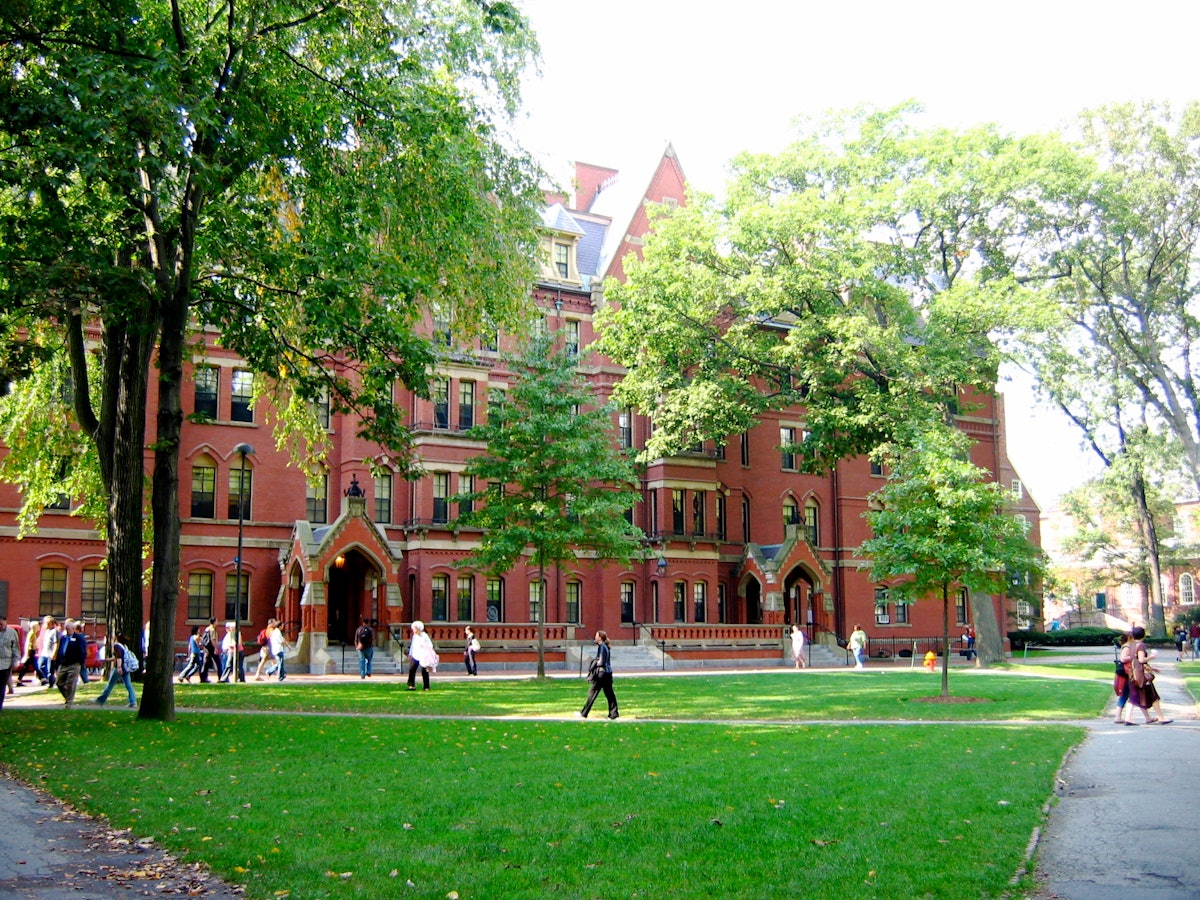
    Harvard University is the latest higher education institution to be investigated by the Trump administration in response to its alleged mishandling of antisemitic harassment on campus. The institution will undergo a “comprehensive” analysis of nearly $9 billion in federal grants and contracts, according to a multi-agency news release.

    The review, announced Monday afternoon, is part of ongoing efforts by the Justice Department’s Joint Task Force to Combat Anti-Semitism to tackle alleged antisemitic harassment on college campuses. The Departments of Education and Health and Human Services and the General Services Administration will carry out the investigation to “ensure the university is in compliance with federal regulations, including its civil rights responsibilities,” the news release said.

    The task force said its review process for Harvard will be similar to the one it is currently carrying out at Columbia University.

    “This initiative strengthens enforcement of President Trump’s Executive Order titled ‘Additional Measures to Combat Anti-Semitism,’” which “ensures that federally funded institutions uphold their legal and ethical responsibilities to prevent anti-Semitic harassment,” the news release said.

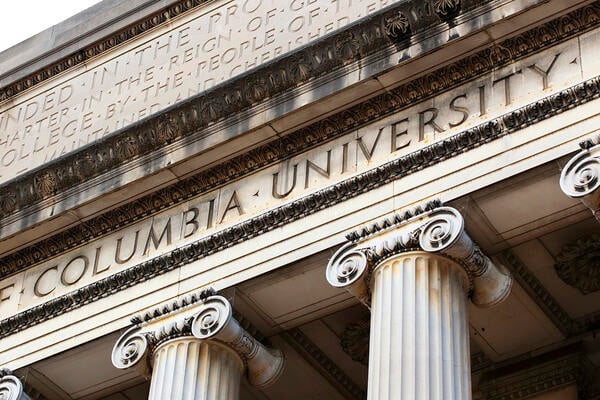
    In a matter of weeks, the task force’s investigation into Columbia has upended the institution. It received a notification in early March that the government had launched a review into $54.1 million in federal contracts. Then, on March 7, the department retracted $400 million in grants and contracts, and on March 13 it sent the university a sweeping list of demands, calling for immediate compliance in order to regain the funding. Columbia agreed to nearly all of the demands a week later, but the administration has not reinstated the funds.

    Shortly after announcing the decision to comply, the university’s interim president, Katrina Armstrong, resigned.

    The administration has said it will now review more than $255.6 million in federal contracts and $8.7 billion in multiyear grant commitments at Harvard.

    As with Columbia, the agencies will consider stop-work orders for any contracts the review identifies. But Harvard has also been ordered to submit a list of all federal contracts—both direct and through affiliates—that were not identified in the task force’s initial investigation.

    Addressing the review in a letter to the Harvard community, President Alan M. Garber acknowledged that nearly $9 billion in research funding is at risk: “If this funding is stopped, it will halt life-saving research and imperil important scientific research and innovation.”

    He said the institution had “devoted considerable effort” to addressing antisemitism on campus for the past 15 months, but added, “We still have work to do” and committed to working with the task force.

    “We resolve to take the measures that will move Harvard and its vital mission forward while protecting our community and its academic freedom,” he said.  

    Critics have broadly opposed the Trump administration’s tactics, saying they are prime examples of using claims of antisemitism to justify “aggressive” executive overreach.

    “What we’re seeing is an attempt to weaponize federal funding to punish schools that don’t align with their political views,” said Wesley Whistle, a project director at New America, a left-leaning think tank. “That kind of pressure stifles the free exchange of ideas—and that’s the whole point of higher education.”

    Meanwhile, Education Secretary Linda McMahon said the university’s “failure to protect students on campus from antisemitic discrimination—all while promoting divisive ideologies over free inquiry—has put its reputation in serious jeopardy.

    “Harvard can right these wrongs and restore itself to a campus dedicated to academic excellence and truth-seeking, where all students feel safe on its campus,” she said.

    Source link

  • Trump cuts research funding to six Aus universities and counting – Campus Review

    Trump cuts research funding to six Aus universities and counting – Campus Review

    At least six Group of Eight (Go8) universities have had research grants terminated by the United States amid an anti-diversity and gender ideology studies crackdown from US President Donald Trump’s office.

    Please login below to view content or subscribe now.

    Membership Login

    Source link

  • University of California freezes hiring as it braces for funding cuts

    University of California freezes hiring as it braces for funding cuts

    Dive Brief:

    • The University of California is implementing a hiring freeze across its 10 campuses as it navigates potential funding cuts at both the federal and state levels, system President Michael Drake said in a message Wednesday. 
    • Drake also directed UC locations to roll out other cost-cutting measures, such as delaying maintenance and reducing travel expenses. 
    • I recognize this is a time of great uncertainty for many in our UC community and in higher education across the country,” Drake said. “Throughout our history as an institution and as a nation, we have weathered struggles and found new ways to show up for the people we serve.”

    Dive Insight:

    UC joins an ever-growing cohort of higher education institutions taking preemptive steps to brace their budgets against a storm of funding cuts and financial attacks coming from the Trump administration. 

    Harvard University, the University of Notre Dame and Northwestern University are just a few of the major research universities that have also frozen hiring in recent weeks as they brace for federal funding cuts potentially coming from multiple directions

    Many institutions have cited the 15% cap on indirect research cost funding that the National Institutes of Health announced in February. Such a reduction would amount to billions of dollars collectively and could translate into funding shortfalls in the tens of millions of dollars for many universities. 

    NIH is the largest funder of UC research, having provided a total $2.6 billion to the system in the 2023-24 academic year, according to the system. Among the system’s campuses that could be hardest hit, UCLA stands to lose $65 million under the funding cap, UC San Francisco $121 million and UC San Diego $102 million, according to a New York Times analysis.  

    Faced with massive cuts to its research funding from the agency, UC filed a declaration in support of the lawsuit against NIH brought by the California attorney general and more than 20 other states.

    A judge overseeing multiple lawsuits against NIH has paused the funding cap, but uncertainty abounds among higher education leaders over the issue and other potential funding stoppages in Washington. 

    The University’s legal team prepared for this moment and has been working diligently to protect the University and our mission through the courts,” Drake said. “These efforts have allowed us to stave off some of the immediate and projected financial impacts — but not all.”

    Even before President Donald Trump took office, UC faced potential future budget strains from state-level cuts. A fiscal 2025-26 budget proposal unveiled in January by Gov. Gavin Newsom would reduce UC’s funding by $271 million. At the time, Drake— who plans to step down as system leader at the end of the 2024-25 academic year —  expressed concern about how the cuts would affect UC students and services. 

    Prior to that, the system had been improving its financial trajectory, with the system’s overall total budget loss shrinking significantly in fiscal 2024 to $178 million, less than a tenth of the prior year’s shortfall. 

    In his message Wednesday, Drake said he asked the presidents of all UC locations to “prepare financial strategies and workforce management plans that address any potential shortfalls,” adding that “every action that impacts our University and our workforce will only be taken after serious and deliberative consideration.”

    Source link

  • Research funding won’t redistribute itself

    Research funding won’t redistribute itself

    On the whole research funding is not configured to be sensitive to place.

    Redistribution

    It does good things in regions but this is different to funding being configured to do so. For example, universities in the North East performed strongly in the REF and as a consequence they received an uplift in QR funding. This will allow them to invest in their research capacity, this will bring agglomerate benefits in the North East, and go some small way to rebalancing the UK’s research ecosystem away from London.

    REF isn’t designed to do that. It has absolutely no interest where research takes place, just that the research that takes place is excellent. The UK isn’t a very big place and it has a large number of universities. Eventually, if you fund enough things in enough places you will eventually help support regional clusters of excellence.

    There are of course some specific place based funds but this doesn’t mean they are redistributive as well as being regionally focussed. The Higher Education Innovation Fund (HEIF) is focussed on regional capacity but it is £260m of a total annual Research England funding distribution of £2.8bn. HEIF is calculated using provider knowledge exchange work on businesses, public and third sector engagement, and the wider public. A large portion of the data is gathered through the HE-BCI Survey.

    The result of this is that there is place based funding but inevitably institutions with larger research capacities receive larger amounts of funding. Of the providers that received the maximum HEIF funding in 2024/25 five were within the golden triangle, one was in the West Midlands, one was in the East Midlands, two were in Yorkshire and the Humber, one was in the North West, and one was in the South East but not the golden triangle. It is regional but it is not redistributive.

    Strength of feeling/strength in places

    RAND Europe has released a process evaluation of wave two of the Strength in Places Fund (SIPF). As RAND Europe describe the fund is

    The Strength in Places Fund (SIPF) is a £312.5 million competitive funding scheme that takes a place-based approach to research and innovation (R&I) funding. SIPF is a UK Research and Innovation (UKRI) strategic fund managed by the SIPF delivery team based at Innovate UK and Research England. The aim of the Fund is to help areas of the UK build on existing strengths in R&I to deliver benefits for their local economy

    This fund has been more successful in achieving a more regionally distributed spread of funding. For example, the fund has delivered £47m to Wales compared to only £18m in South East England. Although quality was a key factor, and there are some challenges to how aligned projects are to wider regional priorities, it seems that a focus on a balanced portfolio made a difference. As RAND Europe note

    […]steps were taken to ensure a balanced portfolio in terms of geographical spread and sectors; however, quality was the primary factor influencing panel recommendations (INTXX). Panel members considered the projects that had been funded in Wave 1 and the bids submitted in Wave 2, and were keen on ensuring no one region was overrepresented. One interviewee mentioned that geographical variation of awards contributed to the credibility of a place-based funding system[…].

    The Regional Innovation Fund which aimed to support local innovation capacity was allocated with a specific modifier to account for where there had historically been less research investment. SPIF has been a different approach to solving the same conundrum of how best support research potential in every region of the UK.

    It’s within this context that it is interesting to arrive at UKRI’s most recent analysis of the geographical distribution of its funding in 2022/23 and 2023/24. There are two key messages the first is that

    All regions and nations received an increase in UKRI investment between the financial years 2021 to 2022 and 2023 to 2024. The greatest absolute increases in investment were seen in the North West, West Midlands and East Midlands. The greatest proportional increases were seen in Northern Ireland, the East Midlands and North West.

    And the second is that

    The percentage of UKRI funding invested outside London, the South East and East of England, collectively known as the ‘Greater South East’, rose to 50% in 2023 to 2024. This is up from 49% in the 2022 to 2023 financial year and 47% in the 2021 to 2022 financial year. This represents a cumulative additional £1.4 billion invested outside the Greater South East since the 2021 to 2022 financial year.

    Waterloo sunset?

    In the most literal sense the funding between the Greater South East and the rest of the country could not be more finely balanced. In flat cash terms the rest of the UK outside of the Greater South East has overtaken the Greater South East for the first time while investment per capita in the Greater South East still outstrips the rest of the country by a significant amount.

    The reasons for this shift is because of greater investments in the North West, West Midlands, and East Midlands who cumulatively saw an increase of £550m worth of funding over the past three years. The regions with the highest absolute levels of funding saw some of the smallest proportions of increases in investment.

    The evaluations and UKRI’s dataset present an interesting picture. There is nothing unusual about the way funding is distributed as it follows where the highest numbers of researchers, providers, and economic activity is located. It would be an entirely arbitrary mechanism which penalised the South East for having research strengths.

    Simultaneously, with constrained resources there are lots of latent assets outside of the golden triangle that will not get funding. The UK is unusually reliant on its capital as an economic contributor and research funding follows this. The only way to rebalance this is to make deliberate efforts, like with SIPF, to lean toward a more balanced portfolio of funding.

    This isn’t a plea to completely rip up the rule book, and a plea for more money in an era of fiscal constraint will not be listened to, but it does bring into sharp relief a choice. Either research policy is about bolstering the UK’s economic centre or it is about strengthening the potential of research where it receives less funding. There simply is not enough money to do both.

    Source link

  • How Trump is disrupting efforts by schools and colleges to combat climate change

    How Trump is disrupting efforts by schools and colleges to combat climate change

    This week I dug into how the Trump administration’s anti-climate blitz is hampering schools’ and colleges’ ability to green their operations, plus a new report on the California wildfires’ impact on students. Thank you for reading, and reply to this email to be in touch. — Caroline Preston

    LeeAnn Kittle helps oversee the Denver public school district’s work to reduce carbon emissions by 90 percent by 2050.

    In January, her job got a lot tougher. 

    Denver expected to receive tax credits via the Inflation Reduction Act for an additional 25 electric school buses. President Donald Trump attempted to freeze clean energy funds through the IRA in his first days in office. Kittle, the district’s executive director of sustainability, also considered applying for tax credit-like payments for energy-efficient heat pumps for the district’s older buildings that lack air conditioning. And she’d intended to apply this spring for a nearly $12 million grant through Renew America’s Schools, a Department of Energy program to help schools become more energy efficient. Staff working on that program have left and its future is uncertain.  

    “I think we’re all in shock,” said Kittle. “It’s like someone put us in a snow globe and shook us up, and now we’re asked to stand straight. And it’s like I don’t know how to stand straight right now.”

    Since January, the Trump administration has launched a broadside against efforts to reduce gases that cause climate change, including by freezing clean energy spending, slashing environmental staff and research, scrubbing the words “climate change” from websites, and rethinking decades of science showing the harms of global warming to human health and the planet. Experts and education leaders say those actions — some of which have been challenged in court — are disrupting, but not extinguishing, efforts by schools and colleges to curtail their emissions and reduce their toll on the planet.

    Related: Want to read more about how climate change is shaping education? Subscribe to our free newsletter.

    At the start of the year, the State University of New York was awarded $15 million to buy 350 electric vehicle charging stations. “We have yet to see the dollars,” said its chancellor, John B. King Jr. A webinar on the Department of Transportation grant program, which is funded by the bipartisan infrastructure act, was canceled. “It’s been radio silence,” said Carter Strickland, the SUNY chief sustainability officer. 

    The SUNY system, which owns a staggering 40 percent of New York State’s public buildings, had also planned to apply for IRA payments for a variety of projects to electrify campuses, reduce pollution and improve energy efficiency. In November, it applied for approximately $1.45 million for an Oneonta campus project that uses geothermal wells to provide heating and cooling. It still expects to get that money since the project is complete and the IRA remains law, but it can no longer count on payments for newer projects, King said. 

    “What the IRA did was turbocharged everything and gave many more players the ability to see themselves as part of a clean energy economy,” said Timothy Carter, president of Second Nature, a group that supports climate work in higher education. But the confusion that the Trump administration has sowed — even though the IRA has not been repealed — means both K-12 and higher education institutions are reconsidering clean energy projects. 

    There’s no count of how many colleges have sought funding through the IRA and bipartisan infrastructure act-funded programs, said Carter, but the work is spread across red and blue states, and some education systems have dozens of projects under construction. The University of California system, for example, filed applications for more than 70 projects, including a $1 billion project to replace UC Davis’s leaky and inefficient heating and cooling system and a project at UC Berkeley to phase out an old power plant and replace it with a microgrid. 

    “We remain hopeful that funding will be provided per the program provisions,” David Phillips, associate vice president for capital programs at the University of California, wrote in an email. 

    Sara Ross, co-founder of Undaunted K12, which helps school districts green their operations, said her group tells school leaders that for now, “energy tax credits are still the law of the land.” 

    But she expects those credits could be eliminated in the new tax bill that Congress is negotiating this year. 

    In the past, entities that begin construction on projects before any changes in a new law go into effect have been grandfathered in and still received that money, she said. “No promises,” Ross said, but historically that’s how such tax credit scenarios have worked. She said some school districts are speeding up projects to beat that possible deadline, while others are abandoning them.

    There is some political movement to preserve clean energy tax credits. Roughly 85 percent of the private-sector dollars that have gone into clean energy projects are in GOP-led districts, according to a report last year. Some GOP lawmakers have advocated for maintaining that funding, which has contributed to a surge in renewable energy jobs.  

    Steven Bloom, assistant vice president of government relations with the American Council on Education, said that gives supporters of the IRA some hope. But he said that many higher education institutions are facing so much pain and uncertainty from other Trump administration actions, like the National Institutes of Health’s plan to slash overhead payments and investigations into alleged antisemitism, that unfortunately “climate investments may get pushed down the ladder of priorities in the near term.” 

    Related: How colleges can become ‘living labs’ for combating climate change

    Another important vehicle for greening schools, the Renew America’s Schools grant program, was started in 2022 with $500 million for school districts. Many of the Department of Energy staff working on that effort have left, Ross said, and some school districts have not heard back about the status of funding for their projects.    

    In Massachusetts, the Lowell school district won a prize through the Renew America program that could unlock up to $15 million to help the district improve its aged facilities. The district’s facilities for the most part lack air conditioning and schools have been closed on occasion due to high temperatures.

    Katherine Moses, the city of Lowell’s sustainability director, wrote in an email that the district had so far pocketed $300,000 that it is using for energy audits to identify inefficiencies and lay the groundwork for a larger investment. It’s unclear what could happen beyond that and if the district will receive more money. She said Lowell is proceeding according to the requirements of the grant “until we hear otherwise from DOE.” 

    More than 3,400 school districts have applied for money through programs created under the bipartisan infrastructure law and the IRA to electrify school buses. After a federal judge ruled against the administration’s freeze on clean energy spending, grants through those programs appear to have been unfrozen and districts have been able to access payments, said Sue Gander, director of the electric school bus initiative with the nonprofit World Resources Institute. 

    But rebates for electric buses are still stalled, she said. Districts are submitting forms to receive rebates, she said, “but there’s no communication coming back to them through the system about the status of their award or any indication that any payment that may have been requested is being provided.”  

    The Transportation and Energy departments and the Environmental Protection Agency, which runs the Clean School Bus Program, did not respond by deadline to requests for comment for this article.  

    King, of SUNY, noted that climate change is already negatively affecting young people and contributing to worsening disasters like floods and fires. For some faculty, staff and students, the backtracking from climate action at the federal level is stirring disappointment and fear, he said. “There is this very intense frustration that as a society we are stopping efforts to deal with what is truly an existential threat.” 

    Contact Caroline Preston at 212-870-8965, on Signal at CPreston.83 or via email at [email protected]

    This story about clean energy was produced by The Hechinger Report, a nonprofit, independent news organization focused on inequality and innovation in education. Sign up for our climate and education newsletter.

    What I’m reading:

    My colleague Neal Morton traveled to northwest Colorado for a story on how phasing out coal-powered plants affects school budgets and career prospects for graduates. School districts haven’t done enough to plan for those changes or prepare students for alternate careers, he writes, and renewable energy projects are not popping up fast enough to smooth the financial pain.  

    Some 725,000 students at more than 1,000 schools faced school closures during the California wildfires in January, according to a new report from Undaunted K12 and EdTrust. The fire had a disproportionate impact on students living in poverty and from underrepresented backgrounds, the report says: Three-quarters of the affected students came from low-income households, and 66 percent were Hispanic. 

    The U.S. Coast Guard Academy removed the words “climate change” from its curriculum, reports Inside Climate News. The academy falls under the purview of the Department of Homeland Security, whose new director, Kristi Noem, issued a directive in February to “eliminate all climate change activities and the use of climate change terminology in DHS policies and programs.”

    Schools with satisfactory heating systems reduce student absences by 3 percent and suspensions by 6 percent, and record a 5 percent increase in math scores, according to a study by researchers at the University at Albany, State University of New York. Schools with satisfactory cooling systems see an increase of 3 percent in reading scores. 

    Contact editor Caroline Preston at 212-870-8965, on Signal at CPreston.83 or via email at [email protected].

    This story about clean energy was produced by The Hechinger Report, a nonprofit, independent news organization focused on inequality and innovation in education. Sign up for our climate and education newsletter.

    The Hechinger Report provides in-depth, fact-based, unbiased reporting on education that is free to all readers. But that doesn’t mean it’s free to produce. Our work keeps educators and the public informed about pressing issues at schools and on campuses throughout the country. We tell the whole story, even when the details are inconvenient. Help us keep doing that.

    Join us today.

    Source link

  • Columbia University faces ultimatum from Trump administration to keep federal funding

    Columbia University faces ultimatum from Trump administration to keep federal funding

    This audio is auto-generated. Please let us know if you have feedback.

    Columbia University received a daunting laundry list of tasks Thursday from the Trump administration: Suspend or expel protesters. Enact a mask ban. Give university security “full law enforcement authority.”

    The Ivy League institution must comply with these and other demands by March 20 or further endanger its “continued financial relationship with the United States government,” according to a copy of the letter obtained by multiple news sources. 

    Last week, the Trump administration’s newly created Joint Task Force to Combat Anti-Semitism canceled $400 million of Columbia’s federal grants and contracts, alleging the university had failed to take action “in the face of persistent harassment of Jewish students.” It also noted that Columbia has $5 billion in federal grant commitments at stake.

    The stunning move came only four days after the task force opened an antisemitism investigation into the university.

    On Monday, the U.S. Department of Education also sent warnings to 60 colleges — including Columbia — that it could take punitive action if it determines they aren’t sufficiently protecting Jewish students from discrimination or harassment.

    In Thursday’s letter, Trump administration officials said they expected Columbia’s “immediate compliance” after which they hope to “open a conversation about immediate and long-term structural reforms that will return Columbia to its original mission of innovative research and academic excellence.” 

    The letter’s edicts are just the latest in a series of decisions made by the Trump administration and Columbia officials that have put the well-known New York institution into a tailspin.

    Strong language, few details

    Officials at the Education Department, U.S. Department of Health and Human Services, and U.S. General Services Administration sent Columbia Interim President Dr. Katrina Armstrong nine policy changes the Trump administration expects the university to make to retain federal funding.

    The agencies — all of which are part of the Trump administration’s antisemitism task force — accused Columbia of failing “to protect American students and faculty from antisemitic violence and harassment,” along with other alleged violations of civil rights laws. 

    But despite the high stakes, the task force’s demands are ambiguous. 

    For example, its letter orders the university to deliver a plan on “comprehensive admissions reform.”

    “The plan must include a strategy to reform undergraduate admissions, international recruiting, and graduate admissions practices to conform with federal law and policy,” it said.

    The task force’s letter offers no further insight into what it expects Columbia to change or how it believes the university is out of line with federal standards.


    The letter goes far beyond what is appropriate for the government to mandate and will chill campus discourse.

    The Foundation for Individual Rights and Expression


    The GSA directed an emailed request for comment to the Education Department. Neither the Education Department nor HHS responded to inquiries Friday.

    The task force also ordered the university to ban masks that “are intended to conceal identity or intimidate others,” while offering exceptions for religious and health reasons. But it did not give criteria to determine why someone is wearing a mask.

    “We are reviewing the letter from the Department of Education, Department of Health and Human Services, and General Services Administration,” a spokesperson for Columbia said Friday. “We are committed at all times to advancing our mission, supporting our students, and addressing all forms of discrimination and hatred on our campus.”

    The Foundation for Individual Rights and Expression, a civil rights watchdog, criticized the federal officials’ demands Friday. 

    While the group has been critical of Columbia’s handling of student protesters, it said the letter does not follow “the normal procedure for revocation of federal financial assistance for violations of Title VI.” Title VI refers to the law barring discrimination on race, color and national origin at federally funded educational institutions. 

    “While these include some policy steps that Columbia should already have taken, the letter goes far beyond what is appropriate for the government to mandate and will chill campus discourse,” FIRE said in a statement.

    A change in due process

    The Trump administration’s task force is demanding Columbia complete ongoing disciplinary proceedings against pro-Palestinian protesters who occupied campus buildings and organized encampments last year. The university must dole out meaningful discipline — meaning expulsions or multi-year suspensions — the letter said.

    The same day the task force’s letter is dated, Columbia announced it had issued “multi-year suspensions, temporary degree revocations, and expulsions” related to the occupation of Hamilton Hall.

    In April 2024, pro-Palestinian protesters occupied the university’s Hamilton Hall after then-President Minouche Shafik announced Columbia would not divest from companies with ties to Israel. 

    Source link

  • More Colleges Freeze Hiring Amid Federal Funding Uncertainty

    More Colleges Freeze Hiring Amid Federal Funding Uncertainty

    As the higher education sector grapples with federal funding cuts and other disruptions, a growing number of colleges across the country—from public flagships to Ivy League institutions—are freezing hiring and spending and pausing graduate student admissions.

    This week, Brown University, Duke University, Harvard University, the University of Pennsylvania, the University of Washington and others joined the list of more than a dozen colleges that have temporarily paused hiring and vowed to hold off on some discretionary spending.

    “It is meant to preserve our financial flexibility until we better understand how changes in federal policy will take shape and can assess the scale of their impact,” Harvard president Alan Garber wrote this week in a message to the campus community. “We plan to leave the pause in effect for the current semester but will revisit that decision as circumstances warrant.”

    Garber added that Harvard will continue to advocate for higher education in Washington, D.C.

    “Expanding access to higher education for all, preserving academic freedom, and supporting our community’s research, teaching, and learning will always be our highest priorities,” he wrote.

    Colleges and universities started to curb costs last month after the National Institutes of Health said it plans to cap reimbursements for costs indirectly related to research—a move expected to cost colleges at least $4 billion. A federal judge has since blocked that proposal from moving forward, but the Trump administration has essentially stopped awarding new NIH grants, creating financial uncertainty for many colleges.

    The latest wave of freezes comes after the Trump administration announced it was pulling $400 million in federal grants and contracts from Columbia University, warning that other universities could see a similar penalty as part of the government’s crackdown on alleged campus antisemitism. Meanwhile, Secretary of State Marco Rubio said he was essentially shutting down the U.S. Agency for International Development, which has provided billions to colleges over the years. And the Education Department laid off nearly half its staff, which could cause disruptions for colleges, though the financial impact is not clear.

    Congress is also considering proposals to put some colleges on the hook for unpaid student loans and to raise the endowment tax on wealthy institutions, among other ideas that could affect universities’ bottom lines.

    Penn officials said this week that while the final impact of the federal changes and cuts isn’t yet clear, the university is already “experiencing reduced funding.” In addition to a hiring freeze, Penn is reducing noncompensation expenses by 5 percent and reviewing all spending on capital projects.

    “The scope and pace of the possible disruptions we face may make them more severe than those of previous challenges, such as the 2008 financial crisis or the COVID pandemic,” Penn officials wrote in a letter. “With careful financial management, however, Penn is well-positioned to navigate them.”

    At the University of Washington, officials are facing not only the federal policy changes but also potential state funding cuts. Officials have noted that the university is in a good financial position over all but said they need to take proactive measures—such as stopping all nonessential hiring, travel and training—to prepare for any losses.

    “These risks together have the potential to jeopardize the full scope of our work, including existing and new research projects, patient care, instruction and basic operations,” university provost Tricia Serio wrote in a blog post.

    Other colleges that have paused hiring or instituted other cost-cutting measures this month include Emory University, the University of Notre Dame, the University of Nebraska–Lincoln, the University of Pittsburgh and the University of Vermont.

    Beyond hiring freezes, some colleges continue to re-evaluate graduate student admissions, particularly for Ph.D. students who are typically supported by federal grants.

    On Wednesday, the Morningside Graduate School of Biomedical Sciences at the University of Massachusetts Chan Medical School in Worcester rescinded provisional offers of acceptance to students who planned to pursue a doctorate, a spokesperson confirmed to Inside Higher Ed.

    “With uncertainties related to the funding of biomedical research in this country, this difficult decision was made to ensure that our current students’ progress is not disrupted by the funding cuts and that we avoid matriculating students who may not have robust opportunities for dissertation research,” the spokesperson said. “All impacted applicants are being offered the opportunity to receive priority consideration without the requirement to reapply, should they wish to join our Ph.D. program in a future admissions cycle.”

    Neither current students nor those at the medical school’s other graduate schools are affected.

    Iowa State University also rescinded some acceptance offers, The Iowa Capital Dispatch reported, joining other colleges that made similar decisions in the last month.

    As the list grows, academics worry about the long-term consequences of the cost-cutting measures. The hiring freezes and disruptions to graduate student admissions have thrown a wrench into the plans of early-career researchers, who are now looking to Europe and the private sector for job opportunities.

    Puskar Mondal, a lecturer on math at Harvard and a research fellow, wrote in an opinion piece for The Harvard Crimson that the hiring freeze is “troubling.”

    “The hiring freeze isn’t just a financial or administrative issue—it’s something that could have a ripple effect across all disciplines at Harvard,” Mondal wrote. “It could lead to fewer opportunities for students, more pressure on faculty, and a slowdown in research that could take years to recover from. And that’s not just bad for Harvard—it’s bad for all of us.”

    Source link

  • Funding Freeze on University of Maine System Lifted

    Funding Freeze on University of Maine System Lifted

    Senator Susan Collins of Maine said the pause on federal agriculture funding for her state’s public colleges and universities has been lifted, WMTW reported Wednesday.

    The Department of Agriculture froze all spending Tuesday as part of an investigation into the institutions’ compliance with Title IX, the federal law that prohibits sex-based discrimination in schools. USDA launched the investigation shortly after a heated exchange between Maine’s Democratic governor and President Trump in late February.

    The state’s flagship institution, the University of Maine, requested clarification Wednesday on the status of USDA’s Title IX compliance review and the extent of the pause. Collins also consulted the Trump administration about the freeze. Relief followed quickly after.

    “This USDA funding is critically important not only to the University of Maine but to our farmers and loggers,” Collins said in a statement. “Now that funding has been restored, the work that the university does in partnership with the many people and communities who depend on these programs can continue.”

    The system has nearly $63 million in active grants from the Agriculture Department and is expecting $35 million to be paid out for ongoing statewide education, research and extension activities, a system spokesperson told Inside Higher Ed.

    “Since our flagship’s founding as Maine’s land grant 160 years ago, funding from USDA has enabled us to strengthen and grow the state’s natural resource economy, sustain rural jobs and communities, and support hands-on 4-H youth development opportunities,” system chancellor Dannel Malloy and University of Maine president Joan Ferrini-Mundy said in a joint statement. “The University of Maine System was thrilled to learn from Senator Collins that the USDA has agreed to lift its plan to temporarily pause our federal funding, which has been an unnecessary distraction from our essential education, research and extension activities that benefit Maine and well beyond.”

    Source link

  • USDA restores funding to University of Maine System

    USDA restores funding to University of Maine System

    In a quick reversal, the U.S. Department of Agriculture has restored funding to the University of Maine System after pausing it on Monday

    On Wednesday evening, U.S. Sen. Susan Collins, a Maine Republican, announced that USDA funding for UMS programs had resumed after she had consulted with the Trump administration. 

    “This USDA funding is critically important not only to the University of Maine, but to our farmers and loggers, as well as to the many people who work in Maine’s agriculture, aquaculture, and forestry industries,” Collins said in a statement.  

    UMS leaders learned of the funding restoration from Collins. System Chancellor Dannel Malloy and University of Maine President Joan Ferrini-Mundy said in a joint statement late Wednesday that the shutoff was an “unnecessary distraction from our essential education, research and extension activities.”

    Altogether, UMS has $63 million in active USDA grants — most of which goes to the flagship University of Maine campus in Orono, the system said. Of that, about $35 million is left to be paid out. The funding helps finance a wide array of programs, including agricultural research, the youth agricultural engagement program 4-H, and plant and tick disease testing. 

    The funding freeze came weeks after a tense public exchange between President Donald Trump and Maine Gov. Janet Mills, a Democrat. Trump threatened Mills on Feb. 21 with pulling all federal funding to the state if it did not comply with his executive order barring transgender women from K-12 and college sports teams aligning with their gender identity. 

    The day after the exchange, USDA announced a compliance review of the University of Maine under Title IX, which bars sex-based discrimination at federally funded education institutions. Meanwhile, the U.S. Department of Health and Human Services also announced a civil rights investigation into the state on Feb. 21, finding just four days later that its education department had violated Title IX. 

    UMS said it heard nothing from USDA between Feb. 26 and March 10, when the system learned via a forwarded email that USDA had temporarily cut off all funding. 

    UMS maintains that it is “fully compliant” with all state and federal laws as well as with updated NCAA rules. The college sports association changed its rules to adhere to Trump’s executive order the day after it was signed. 

    “At no point since USDA announced its Title IX compliance review on Feb. 22 has that Department, or any other party, alleged any violation by Maine’s public universities of Title IX or any other federal or state law,” UMS said in a release Wednesday.

    Source link