Tag: Funding

  • Child care crisis deepens as funding slashed for poor families

    Child care crisis deepens as funding slashed for poor families

    by Jackie Mader, The Hechinger Report
    November 1, 2025

    The first hint of trouble for McKinley Hess came in August. 

    Hess, who runs an infant and toddler care program in Conway, Arkansas, heard that the teen moms she serves were having trouble getting their expected child care assistance payments. Funded by a mix of federal and state dollars, those subsidies are the only way many low-income parents nationwide can afford child care, by reimbursing providers for care and lowering the amount parents have to pay themselves.

    In Arkansas, teen parents have long been given priority to receive this aid. But now, Hess heard, they and many other families in need were sitting on a growing wait-list.

    Hess had just enrolled eight teen moms at her central Arkansas site, Conway Cradle Care, and was counting on state subsidies to pay for their children’s care. As the moms were stuck waiting for financial assistance, Hess had two options: kick them out, or care for their infants for free so their mothers wouldn’t have to drop out of school. She chose the latter. 

    Just a month later, another hit: Arkansas government officials announced they were going to cut the rates they pay providers on behalf of low-income families. Beginning Nov. 1, Hess will get $36 a day for each infant in her care and $35 a day for toddlers, down from $56 and $51 a day respectively. She’s already lost out on more than $20,000 by providing free care for 8 infants for the past two months.

    “Financially, it really is going to hurt our day care,” Hess said. But the stakes are also high for the parents who need child care assistance, she said: “For them to be able to continue school, these vouchers are essential.” 

    As states face having to cut spending while bracing for fewer federal dollars under the budget bill President Trump signed in July, some, including Arkansas, view early learning programs as a place to slash funding. They’re making these cuts even as experts and providers predict they will be disastrous for children, families and the economy if parents don’t have child care and can’t work. 

    The same families face other upheaval: The ongoing government shutdown means states may not receive their Nov. 1 shares of federal money for the Supplemental Nutrition Assistance Program, also known as food stamps, meaning families may not get that aid. Across the country, more than 100 Head Start centers, part of a federally funded preschool program that provides free child care, may have to close, at least temporarily, if the shutdown drags on as expected and they do not get expected federal cash by the start of next month. 

    Related: Young children have unique needs and providing the right care can be a challenge. Our free early childhood education newsletter tracks the issues. 

    Elsewhere, Colorado, Maryland and New Jersey recently stopped accepting new families into their child care assistance programs. In June, Oregon’s Democratic-led legislature cut $20 million from the state’s preschool program for low-income families. In September, Indiana joined Arkansas in announcing reductions in reimbursement rates for providers who care for low-income children. This summer, the governor of Alaska vetoed part of the state’s budget that would have given more money to child care and early intervention services for young children with developmental disabilities. Washington state legislators cut $60 million last month from a program that provides early learning and family support to preschoolers. Additional cuts or delays in payments have cropped up in Ohio, Nevada and the District of Columbia.

    “Almost every state is facing a very, very, very significant pullback of federal dollars,” said Daniel Hains, chief policy officer at the D.C.-based National Association for the Education of Young Children. “It does not help families when you cut provider reimbursement rates, when you cut funds going to providers, because it makes it less likely that those families are going to access the high-quality child care that they need.”

    This trend could further devastate America’s fragile child care industry, which has been especially slow to recover since the pandemic due to a lack of funding. Child care programs are expensive to run and, with limited public support, providers rely heavily on tuition from parents to pay their bills.

    In many parts of the country, parents already pay the equivalent of college tuition or a second mortgage on child care and have little ability to pay more. Yet child care staff generally make abysmally low wages and have high turnover rates. There’s often little wiggle room in program budgets.

    One of the only sources of federal funding for child care centers comes from the federally funded Child Care and Development Fund. Each year, Congress sets the level of block grants to states, which add matching funds. Arkansas officials said recent cuts to their subsidy program are in response to an unexpected $8 million decrease in federal CCDF funding this year after post-pandemic changes to the way state payouts are calculated.

    In September, Arkansas Secretary of Education Jacob Oliva told lawmakers that without cutting rates to providers, the state would be unlikely to be able to sustain the program. “The last thing I want to do is set up a reimbursement rate that at Christmas we have to call everybody and say we’re done, we spent all our money,” he said during a hearing.

    In addition to cutting payments to providers, the state increased family co-payments, the amount parents must pay toward child care in addition to what their subsidy covers. It’s far from a perfect solution, Oliva told lawmakers. “But we have to do something.”

    Related: How early ed is affected by federal cuts

    During the pandemic, child care programs and states received a fresh infusion of public funds from the American Rescue Plan Act and the Child Care and Development Block Grant, helping to stabilize those businesses. Many states used the influx to bolster their subsidy programs, allowing more children to use them and increasing what providers were paid.

    As that aid expired over the last two years, some states found money to sustain that expansion, but others did not. Indiana was left with a $225 million gap between the cost of its child care subsidy program and the state money dedicated to filling it. In October, officials cut reimbursement rates by 10 to 35 percent, saying in a statement that “there is only one pot of money — we could either protect providers or kids, and we chose kids.”

    Experts and child care directors say, however, that in the child care business it’s impossible to decouple kids from providers. The decision to cut reimbursement rates will ultimately hurt both, they insist, especially as providers find it hard to keep their doors open. Already, some programs have shuttered or announced plans to close by the end of the year. At others, families have left in search of more affordable care.

    Cori Kerns, a senior staff consultant at Little Duckling Early Learning Schools in Indianapolis, said that now that schools are receiving less money from the state, parents must make up the difference. Since the changes were announced in September, Little Duckling has lost 26 children — nearly 18 percent of its enrollment — because parents cannot afford that increase. 

    “That could be a tank of gas to them, that could be some groceries, that could be school supplies or medical needs. Some of them have had to literally stop and stay home with their child in order to survive and also not pay for child care,” Kerns said. “Those kids are suffering” as they stay home with stressed parents who are worrying about lost income, she added.  

    As families pulled their children, Kerns merged two buildings of her program into one, creating larger class sizes and new teacher assignments. That’s led to challenging behavioral problems for children who must adjust to new environments. Kerns anticipates losing teachers now that the work environment has become more stressful.

    Experts warn this trend in some states of scaling back early childhood investments is widening an existing nationwide disparity in the availability of affordable, high-quality child care. While states like Arkansas and Indiana pull back, a handful of others are moving the opposite direction, putting more money toward early learning. In New Mexico, for example, the nation’s first free universal child care program will launch on Nov. 1, paid for by oil and gas revenue that is routed to the state’s Early Childhood Education and Care Fund. In 2023, Vermont passed a payroll tax to increase child care funding in the state, while Connecticut established an endowment this year to route surplus state funds into early learning programs. 

    States have already been diverging in their approach to the child care industry since the pandemic. Rather than invest in more qualified workers, some states have opted to deregulate child care and bring teenagers in to care for young children. At the same time, places like the District of Columbia have increased qualifications for child care providers.

    Related: Rural Americans rely on Head Start. Federal turmoil has them worried

    “This is what happens when you don’t have public federal dollars in the system,” said NAEYC’s Hains. In states that are clawing back child care funds, “it’s going to result in lower quality care for children, or it’s going to result in families pulling back from the workforce and facing greater economic insecurity,” Hains said. “We’re going to see a real harmful impact on children and families as these investments are pulled back.”

    In Mooresville, Indiana, Jen Palmer calculated that her program, The Growing Garden Learning Center, will lose about $260,000 from its annual budget because of cuts in state contributions to care for children from low-income families. 

    “If nothing changes as of today, I can sustain for a year,” Palmer said. “Past that, I’m going to start dipping into my retirement savings.” She’s hesitant to discuss closing the program, one of highest-quality centers in the area. “I believe in this place. What we do is amazing. We just have to make it through this.”

    The lower subsidy rate is just the latest of a series of changes that Palmer has endured. Last December, Indiana stopped accepting new applicants into the care aid program and instead launched a waiting list. Palmer stopped getting calls from parents who wanted to enroll their children, as they couldn’t pay for care on their own. 

    Earlier this year, Indiana also announced cuts to reimbursement rates for its pre-K program, which is run in schools and child care programs throughout the state. Palmer now receives about $148 a week for each pre-K student she serves, down from more than $300 a week last year. Over the past three months, she’s had to lay off seven teachers and has taken over teaching in a pre-K classroom in the mornings. “We’re going to do our darndest that the kids don’t feel the impact,” she said. 

    She hasn’t been able to completely shield them. One toddler in her program recently shocked and delighted his teachers when he said his first word in English: a bold “no.” Concerned that the child had language delays, they were thrilled that he was starting to make progress. 

    Then the child’s family pulled him out of the program. His mother, who works as a delivery driver, had previously qualified for free child care paid for by state. With the state now paying less, her tuition jumped to $167 a month. 

    Instead of interacting with other children and teachers, playing and learning new skills, the toddler is now “sitting in mom’s car in a car seat driving around all over the county while she delivers for Uber,” said Palmer. “That just set that little guy years back. When he enters school, he’s no longer going to be on par with his classmates. That’s not fair. That can’t be the answer.”

    Contact staff writer Jackie Mader at 212-678-3562 or [email protected] 

    This story about child care was produced by The Hechinger Report, a nonprofit, independent news organization focused on inequality and innovation in education. Sign up for the Hechinger newsletter.

    This <a target=”_blank” href=”https://hechingerreport.org/child-care-crisis-deepens-as-funding-slashed-for-poor-families/”>article</a> first appeared on <a target=”_blank” href=”https://hechingerreport.org”>The Hechinger Report</a> and is republished here under a <a target=”_blank” href=”https://creativecommons.org/licenses/by-nc-nd/4.0/”>Creative Commons Attribution-NonCommercial-NoDerivatives 4.0 International License</a>.<img src=”https://i0.wp.com/hechingerreport.org/wp-content/uploads/2018/06/cropped-favicon.jpg?fit=150%2C150&amp;ssl=1″ style=”width:1em;height:1em;margin-left:10px;”>

    <img id=”republication-tracker-tool-source” src=”https://hechingerreport.org/?republication-pixel=true&post=113184&amp;ga4=G-03KPHXDF3H” style=”width:1px;height:1px;”><script> PARSELY = { autotrack: false, onload: function() { PARSELY.beacon.trackPageView({ url: “https://hechingerreport.org/child-care-crisis-deepens-as-funding-slashed-for-poor-families/”, urlref: window.location.href }); } } </script> <script id=”parsely-cfg” src=”//cdn.parsely.com/keys/hechingerreport.org/p.js”></script>

    Source link

  • Senate Democrats hold a press conference on Trump admin’s funding of SNAP benefits

    Senate Democrats hold a press conference on Trump admin’s funding of SNAP benefits

    Senators Bernie Sanders (I-Vt.), Edward Markey (D-Mass.), Jeff Merkley (D-Ore.), Chris Murphy (D-Conn.), Tina Smith (D-Minn.), Elizabeth Warren (D-Mass.), Peter Welch (D-Vt.) and Chris Van Hollen (D-Md.) will hold a press conference to “discuss the Trump administration’s refusal to use a $5 billion emergency Supplemental Nutrition Assistance Program (SNAP) fund.”

    Source link

  • The white paper is wrong – changing research funding won’t change teaching

    The white paper is wrong – changing research funding won’t change teaching

    The Post-16 education and skills white paper might not have a lot of specifics in it but it does mostly make sense.

    The government’s diagnosis is that the homogeneity of sector outputs is a barrier to growth. Their view, emerging from the industrial strategy, is that it is an inefficient use of public resources to have organisations doing the same things in the same places. The ideal is specialisation where universities concentrate on the things they are best at.

    There are different kinds of nudges to achieve this goal. One is the suggestion that the REF could more closely align to the government missions. The detail is not there but it is possible to see how impact could be made to be about economic growth or funding could be shifted more toward applied work. There is a suggestion that research funding should consider the potential of places (maybe that could lead to some regional multipliers who knows). And there are already announced steps around the reform on HEIF and new support for spin-outs.

    Ecosystems

    All of these things might help but they will not be enough to fundamentally change the research ecosystem. If the incentives stay broadly the same researchers and universities will continue to do broadly the same things irrespective of how much the government wants more research aimed at growing the economy.

    The potentially biggest reform has the smallest amount of detail. The paper states

    We will incentivise this specialisation and collaboration through research funding reform. By incentivising a more strategic distribution of research activity across the sector, we can ensure that funding is used effectively and that institutions are empowered to build deep expertise in areas where they can lead. This may mean a more focused volume of research, delivered with higher-quality, better cost recovery, and stronger alignment to short- and long-term national priorities. Given the close link between research and teaching, we expect these changes to support more specialised and high quality teaching provision as well.

    The implication here is that if research funding is allocated differently then providers will choose to specialise their teaching because research and teaching are linked. Before we get to whether there is a link between research funding and teaching (spoiler there is not) it is worth unpacking two other implications here.

    The first is that the “strategic distribution” element will have entirely different impacts depending on what the strategy is and what the distribution mechanism is. The paper states that there could, broadly, be three kinds of providers. Teaching only, teaching with applied research, and research institutions (who presumably also do teaching.) The strategy is to allow providers to focus on their strengths but the problem is it is entirely unclear which strengths or how they will be measured. For example, there are some researchers that are doing research which is economically impactful but perhaps not the most academically ground breaking. Presumably this is not the activity which the government would wish to deprioritise but could be if measured by current metrics. It also doesn’t explain how providers with pockets of research excellence within an overall weaker research profile could maintain their research infrastructure.

    The white paper suggests that the sector should focus on fewer but better funded research projects. This makes sense if the aim is to improve the cost recovery on individual research projects but improving the unit of resource through concentrating the overall allocation won’t necessarily improve financial sustainability of research generally. A strategic decision to align research funding more with the industrial strategy would leave some providers exposed. A strategic decision to invest in research potential not research performance would harm others. A focus on regions, or London, or excellence wherever it may be, would have a different impact. The distribution mechanism is a second order question to the overall strategy which has not yet dealt with some difficult trade offs

    On its own terms it also seems research funding is not a good indicator of teaching specialism.

    Incentives

    When the White Paper suggests that the government can “incentivise specialisation and collaboration through research funding reform”, it is worth asking what – if any – links there currently are between research funding and teaching provision.

    There’s two ways we can look at this. The first version looks at current research income from the UK government to each provider(either directly, or via UKRI) by cost centre – and compares that to the students (FTE) associated with that cost centre within a provider.


    [Full screen]

    We’re at a low resolution – this split of students isn’t filterable by level or mode of study, and finances are sometimes corrected after the initial publication (we’ve looked at 2021-22 to remove this issue). You can look at each cost centre to see if there is a relationship between the volume of government research funding and student FTE – and in all honesty there isn’t much of one in most cases.

    If you think about it, that’s kind of a surprise – surely a larger department would have more of both? – but there are some providers who are clearly known for having high quality research as opposed to large numbers of students.

    So to build quality into our thinking we turn to the REF results (we know that there is generally a good correlation between REF outcomes and research income).

    Our problem here is that REF results are presented by unit of assessment – a subject grouping that maps cleanly neither to cost centres or to the CAH hierarchy used more commonly in student data (for more on the wild world of subject classifications, DK has you covered). This is by design of course – an academic with training in biosciences may well live in the biosciences department and the biosciences cost centre, but there is nothing to stop them researching how biosciences is taught (outputs of which might be returned to the Education cost centre).

    What has been done here is a custom mapping at CAH3 level between subjects students are studying and REF2021 submissions – the axis are student headcount (you can filter by mode and level, and choose whichever academic year you fancy looking at) against the FTE of staff submitted to REF2021 – with a darker blue blob showing a greater proportion of the submission rated as 4* in the REF (there’s a filter at the bottom if you want to look at just high performing departments).

    [Full screen]

    Again, correlations are very hard to come by (if you want you can look at a chart for a single provider across all units of assessment). It’s almost as if research doesn’t bring in money that can cross-subsidise teaching, which will come as no surprise to anyone who has ever worked in higher education.

    Specialisation

    The government’s vision for higher education is clear. Universities should specialise and universities that focus on economic growth should be rewarded. The mechanisms to achieve it feel, frankly, like a mix of things that have already been announced and new measures that are divorced from the reality of the financial incentives universities work under.

    The white paper has assiduously ducked laying out some of the trade-offs and losers in the new system. Without this the government cannot set priorities and if it does not move some of the underlying incentives on student funding, regional funding distribution, greater devolution, supply-side spending like Freeports, staff reward and recognition, student number allocations, or the myriad of things that make up the basis of the university funding settlement, it has little hope of achieving its goals in specialisation or growth.

    Source link

  • Nevada Funding for Dolly Parton Book Program in Clark County Dries Up – The 74

    Nevada Funding for Dolly Parton Book Program in Clark County Dries Up – The 74


    Join our zero2eight Substack community for more discussion about the latest news in early care and education. Sign up now.

    Over the past two years, upwards of 18,000 young children in the Las Vegas metro area have received free monthly books in the mail as part of an early literacy program started by country icon Dolly Parton. But that ends this month.

    Storied Inc., the Clark County-based nonprofit partner for Parton’s Imagination Library, last week announced to parents and guardians that its October books would be the last until additional funding for the program is secured. The program, when funded, provides a free, age-appropriate monthly book to children 0 to 5 years old.

    According to Meredith Helmick, executive director of Storied, the nonprofit sought funding from the Nevada State Legislature earlier this year to keep the program going after an initial two-years of state grant funding ended, but they came up empty handed.

    Assembly Speaker Steve Yeager sponsored a bill to appropriate $3.9 million to the United Way of Northern Nevada and the Sierra, which currently runs the Imagination Library for Washoe County residents, to expand the program statewide. The bill was referred to the Assembly Committee on Ways & Means, where it languished until the end of the regular session without a hearing or even a mention, according to the legislature’s website.

    Helmick also hoped the nonprofit program might be able to secure funding through Senate Bill 460, Senate Majority Leader Nicole Cannizzaro’s omnibus education legislation.

    An early version of that bill appropriated $50 million for early childhood literacy readiness programs, but an amendment reduced that to $0 for the fiscal year beginning July 2025 and $12 million for the fiscal year beginning July 2026. Helmick says lawmakers chose to prioritize expansion of preschool seats, a Cannizzaro priority.

    SB460 was heavily negotiated and amended to include many of Gov. Joe Lombardo’s education priorities. Those priorities included setting aside $7 million in grant funding for charter school transportation.

    It appears those other priorities came at the expense of existing innovative programs that were working.

    Helmick says a survey of her families last year found 62% of them had fewer than 20 children’s books in their homes before enrolling their children in the program.

    “This program is such a low cost, high reward program,” she added.

    Helmick is hopeful the program can return to the Las Vegas area. She says Storied is having conversations with large companies and other nonprofits, reaching out to elected officials at all levels of government, and urging their supporters to do the same.

    “We’ve heard rumors of a special session,” she adds. “Can we rewrite SB460 to include the language that it took out? Are there other funds that we could add or tap into that we could fit under? Maybe that’s an avenue.”

    ‘It isn’t just about the books’

    Meredith Helmick and her husband, Kyle, were inspired to start Storied Inc. after attempting to sign up their daughter for Imagination Library only to learn the nationwide program didn’t serve their area.

    Dolly Parton launched Imagination Library in 1995 and the program has since given out more than 250 million free books to children in the United States and four other countries.

    Storied Inc. is one of several partners running the program in Nevada. According to Helmick, the other partners have managed to continue their programs, either in whole or by scaling down the number of kids served.

    The sheer size of Clark County’s population makes that a tougher task for Storied. According to the Imagination Library’s website, nearly 29,000 Nevada children are enrolled, the vast majority through Storied.

    Helmick says that before they even had a chance to market the program or figure out stable funding, an intrepid stranger found the sign up form and shared it on a social media group for parents in Las Vegas.

    “In 48 hours, we had 3,500 kids registered,” she recalls. “It was, like, ‘I guess we’re doing it now.’ But it all worked out beautifully.”

    From there, the program quickly grew just by word of mouth. It was funded from June 2023 to July 2025 by a grant from the state’s Early Childhood Innovative Literacy Program. Participation fluctuates each month as kids are signed up or age out at 5 years old, but Helmick says it stays in the range of 18,000 or 19,000 thousand children spanning most of Clark County.

    (Boulder City residents have a dedicated partner, Reading to Z, which currently serves fewer than 200 kids. Rural Clark County residents who live in Valley Electric Association’s service area can sign up for a program run by the energy cooperative’s charitable foundation.)

    Over the summer, with the funding drying up, Storied stopped accepting new kids into the program.

    “We didn’t want to disappoint families” by starting to send them books only to stop sending them a few months later, said Helmick. “One thing that sets (Imagination Library) apart is these books are sent directly to their home. I am a huge proponent of libraries. I’m there practically every week. But not everybody is able to do that. That is a barrier.”

    Additionally, the books arrive addressed to the child.

    “Getting it in the mail, the label with their name, it gives them ownership of the book,” says Helmick. “It makes a huge difference. I didn’t realize it until I heard it from families.”

    On the inside of each book cover is a note from Imagination Library with tips for parents on conversations they can have with their child about the book, or questions they can ask to boost critical thinking and early reading skills.

    “It isn’t just about the books and the words and the stories you’re reading with your kids,” said Helmick. “It’s sitting together side by side. It’s having conversations with them.”

    Nevada Current is part of States Newsroom, a nonprofit news network supported by grants and a coalition of donors as a 501c(3) public charity. Nevada Current maintains editorial independence. Contact Editor Hugh Jackson for questions: [email protected].


    Did you use this article in your work?

    We’d love to hear how The 74’s reporting is helping educators, researchers, and policymakers. Tell us how

    Source link

  • Funding technology initiatives in uncertain times

    Funding technology initiatives in uncertain times

    Key points:

    Recent policy shifts have caused significant uncertainty in K-12 education funding, especially for technology initiatives. It’s no longer business as usual. Schools can’t rely on the same federal operating funds they’ve traditionally used to purchase technology or support innovation. This unpredictability has pushed school districts to explore creative, nontraditional ways to fund technology initiatives. To succeed, it’s important to understand how to approach these funding opportunities strategically.

    How to find funding

    Despite the challenges, there are still many grants available to support education initiatives and technology projects. Start with an online search using key terms related to your project–for example, “virtual reality,” “virtual field trips,” or “career and technical education.”

    Explore national organizations like the Bill & Melinda Gates Foundation or Project Tomorrow and consider potential local funding sources. Local organizations such as Rotary or Kiwanis clubs can be powerful allies in helping to fund projects. The local library and city or county government may also offer grants or partnership opportunities. Schools should also reach out to locally-headquartered businesses, many of which have community outreach or corporate social responsibility goals that align with supporting local education.

    Colleges and universities are another valuable resource. They may be conducting research that aligns with your school’s technology project. Building relationships with these institutions and organizations can put your school “in the right place at the right time” when new funding opportunities arise.

    Strategies to win the grant

    Once potential funding sources are identified, the next step is crafting a compelling proposal. Consider the following strategies to strengthen your application.

    1. Focus on the “how and why,” not just the “what.” If your school is seeking funds to buy hardware, don’t simply say, “Here’s what we want to buy.” Instead, frame it as, “Here’s how this project will improve student learning and why it matters.” Funders want to see the impact their support will have on outcomes. The more clearly a proposal connects technology to learning gains, the stronger it will be.

    2. Highlight the research. Use evidence to validate your project’s value. For example, if a school plans to purchase virtual reality headsets, cite studies showing that VR improves knowledge retention, engagement, and comprehension compared to traditional instruction. Demonstrating that the technology is research-backed helps funders feel confident in their investment.

    3. Paint a picture. Bring the project to life. Describe what students will experience and how they’ll benefit. For example: “When students put on the headset, they aren’t just reading about ancient civilizations, they’re walking through them.” Vivid descriptions help reviewers visualize the impact and believe in your vision.

    Eight questions to consider when applying for a grant

    Use these guiding questions to sharpen your proposal and ensure a strong foundation for implementation and long-term success.

    1. What is the goal? Clearly define what students will be able to do as a result of the project. Use action-orientated language: “Students will be able to…”
    2. Is the technology effective? Support your proposal with evidence such as whitepapers, case studies, or research that can demonstrate proven impact.
    3. How will the technology impact these specific students? Emphasize what makes your school or district unique, whether it’s serving a rural, urban, or high-poverty community and how this technology addresses those specific needs.
    4. What is the scope of the application? Specify whether the project involves elementary school, secondary school, or a specific subject or program like a STEM lab.
    5. How will success be measured? Too often schools reach the end of a project without a plan to track results. Plan your evaluation from the start. Track key metrics such as attendance, disciplinary data, academic performance, or engagement surveys, both before and after implementation to demonstrate results.
    6. What are your budgetary needs? Include all associated costs, including professional development and substitute coverage for teacher training.
    7. What happens after the grant is over? If you plan to use the technology for multiple years, apply for a multi-year grant rather than assuming future funding will appear. Sustainability is key.
    8. How will success be celebrated and communicated to stakeholders? Share results with the community and stakeholders. Host events recognizing teachers, students, and partners. Invite local media and highlight your funding partners–they’re not just donors, but partners in student success.

    Moving forward with confidence

    Education funding will likely remain uncertain in the years ahead. However, by being intentional about where to look for funds, how to frame proposals, and how to measure and share impact, schools can continue to implement innovative technology initiatives that elevate teaching and learning.

    Latest posts by eSchool Media Contributors (see all)

    Source link

  • Nearly All State Funding for Missouri School Vouchers Used for Religious Schools – The 74

    Nearly All State Funding for Missouri School Vouchers Used for Religious Schools – The 74


    Get stories like this delivered straight to your inbox. Sign up for The 74 Newsletter

    State funding of private-school vouchers is primarily being used for students attending religious institutions, with nearly 98% of funding going toward Catholic, Christian, Jewish and Islamic schools.

    This year, state lawmakers passed a budget that included a request from Gov. Mike Kehoe to supply the state-run K-12 scholarship program, MOScholars, with $50 million of general revenue. Previously, the impact to the state’s bottom line was indirect, with 100% tax-deductible donations fueling the program.

    Donations are still part of MOScholars’ funding, but the state appropriation has more than doubled the number of scholarships available.

    During the 2024-25 school year, MOScholars awarded $15.2 million in scholarships.

    In August alone, the State Treasurer’s Office received invoices for scholarships totaling $15.6 million, according to documents obtained by The Independent under Missouri’s open records laws.

    The invoice process is unique to the direct state funding of the program. The nonprofits that administer scholarships, called educational assistance organizations, were the sole keepers of scholarship funds. But now, the State Treasurer’s Office holds scholarship money derived from general revenue in an account previously only used for program marketing and administration.

    The invoices contained data on which schools MOScholars students are attending and the scholarship amount.

    Of the 2,329 scholarships awarded in August, only 59 went to students in nonreligious schools.

    This number did not surprise Democratic lawmakers, who for years have warned that state revenue was going to be siphoned into religious schools.

    “We are simply subsidizing, with tax dollars, parents who would already choose to send their kids to a private school,” state Sen. Maggie Nurrenbern, a Kansas City Democrat, told The Independent. “And now we are using public dollars to pay for schools that are not transparent whatsoever in choosing who to educate and who not.”

    Some schools have been criticized for admission requirements that push a moral standard.

    Christian Fellowship School in Columbia, which received scholarships for 63 MOScholars students in August, requires “at least one parent of enrolled students professes faith in Christ and agrees with the admission policies and the philosophy and doctrinal statements of the school,” according to its handbook

    These statements include disapproval of homosexuality.

    “The school reserves the right, within its sole discretion, to refuse admission of an applicant or to discontinue enrollment of a student,” the handbook continues.

    With around 430 K-12 students enrolled at Christian Fellowship School, according to National Center for Educational Statistics survey data, MOScholars makes up a sizable portion of its funding. But it is not the only school with a large number of scholarship recipients.

    Torah Prep School in St. Louis had 229 K-12 students during the 2023-24 school year. And in August, 197 MOScholars students received funding to attend the school. Torah Prep did not respond to a request for comment.

    The high number of students attending religious schools with MOScholars funding is somewhat incidental, somewhat by design.

    The MOScholars program allows its six educational assistance organizations to choose what scholarships they are willing to support. 

    Religious organizations stepped into the role to help connect congregants with affiliated schools. Only two of the six educational assistance organizations partner with schools unaffiliated with religion.

    The Catholic dioceses of Kansas City-St. Joseph and Springfield-Cape Girardeau run the educational assistance organization Bright Futures Fund, which administered nearly half of the scholarships awarded in August.

    The educational assistance organization Agudath Israel of Missouri focuses on Jewish education, partnering with four Jewish day schools.

    The organization’s director Hillel Anton told The Independent that students are attracted to the program for more than just religious reasons.

    “(Parents’) first and foremost concern is where their child is going to be able to be in the best learning environment,” Anton said. “And you may have a faith-based school that is fantastic and is able to provide that.”

    The demand for the program has long exceeded funding availability. Going into August, organizations had waitlists of students eligible for a scholarship but without funding secured.

    Agudath Israel of Missouri couldn’t guarantee scholarships for all of the returning students, Anton said, until the state funding was official.

    “Because a lot of the funding is done towards the end of the year… we had everyone on a wait list,” he said. “Because we didn’t know necessarily how much funding we were going to have, we weren’t awarding anyone (the funding).”

    Because the program was previously powered by 100% tax-deductible donations, the majority of funds poured in around December. But families need the money months sooner, with tuition due at the start of the school year.

    Some educational assistance organizations prefunded scholarships, dipping into their savings to front expenses in the fall. Others had schools that would accept students and wait for payment.

    The funding from the state, though, has resolved the backlog and allowed organizations to give scholarships to everyone on their wait list.

    “Everyone who qualified for a scholarship this year received one,” Ashlie Hand, Bright Futures Fund’s director of communications, told The Independent.

    Bright Futures Fund nearly doubled the number of students it serves, from 1,050 to 1,909.

    Agudath Israel of Missouri is growing, too. The new funding helped the organization expand from 175 scholarships last year to 277 this year.

    Some expect the state funding to continue next year to support this year’s windfall of scholarships. State Treasurer Vivek Malek told The Independent in May that if donations fall short, he will request state funds to support the new students through graduation.

    Missouri Independent is part of States Newsroom, a nonprofit news network supported by grants and a coalition of donors as a 501c(3) public charity. Missouri Independent maintains editorial independence. Contact Editor Jason Hancock for questions: [email protected].


    Get stories like these delivered straight to your inbox. Sign up for The 74 Newsletter

    Source link

  • CSU Campuses Reel From Blow to HSI Funding

    CSU Campuses Reel From Blow to HSI Funding

    California State University, Fresno, celebrated the launch of a new program this fall called Finish in Five, which allows students to earn both a bachelor’s and master’s degree within five years. University leaders were eager to offer students at the Central Valley campus—which serves large populations of first-generation and low-income students, many the children of local farmworkers—a streamlined pathway to high-demand STEM fields in an economically distressed region.

    But less than a month later, the program’s funding, which came from a Hispanic-serving institution grant, abruptly ended. The Education Department stopped awarding grants for HSIs and many other minority-serving institutions last month, claiming the federal programs amounted to “discrimination.” Officials argued the programs are “unconstitutional” because they require institutions to enroll certain percentages of students from specific racial or ethnic backgrounds, among other criteria.

    Saúl Jiménez-Sandoval, president of Fresno State, said he doesn’t know what’s going to happen to the Finish in Five program now that the money is gone. In the past, the campus relied on about $5 million annually in HSI funding, which fueled a wide range of student supports and programs. The university was also expecting to receive $250,000 this fiscal year as an Asian American and Native American Pacific Islander–serving institution.

    “In the grander scheme of things, most of the innovative programs that we have at Fresno State that further student success and graduation rates started with an HSI grant or with an MSI grant,” Jiménez-Sandoval said.

    Similar stories are playing out across the California State University system. Hispanic students account for almost half of the system’s more than 450,000 students. Out of the CSU’s 22 campuses, 21 are Hispanic-serving institutions, meaning they enroll at least 25 percent Hispanic students and at least half low-income students. In addition, 11 are AANAPISIs, which have the same low-income student threshold and enroll at least 10 percent Asian and Pacific Islander students. CSU officials estimate ED’s axing of the grant programs leaves the system $43 million short on funds it expected for the 2025–26 fiscal year.

    CSU chancellor Mildred García called the move “deeply troubling.”

    “This action will have an immediate impact and irreparable harm to our entire community,” García said in a statement. “Without this funding, students will lose the critical support they need to succeed in the classroom, complete their degrees on time, and achieve social mobility for themselves and their families.”

    Potential for ‘Great Devastation’

    The sudden loss of funding caught system and campus leaders off guard.

    Jeff Cullen, CSU’s assistant vice chancellor for federal relations, said he knew the HSI program was at risk when the state of Tennessee and the advocacy group Students for Fair Admissions sued the Education Department in June over such programs, questioning their constitutionality. But he expected the case to wind its way through the courts. He said ED’s swift decision to end the grant programs robbed campuses of time to prepare or fight on MSIs’ behalf. Cullen also pointed out that CSU campuses qualify as HSIs because of the demographics of their surrounding communities—not because they rely on affirmative action in admissions, one of the issues raised in the lawsuit; California banned affirmative action in 1996.

    “Canceling grants midcycle and right in the middle of the semester creates unprecedented confusion and chaos,” Cullen said. “Our central goal is student success and getting students across the stage with a degree in hand. And this just continually undermines those efforts to do that.”

    Meanwhile, CSU has no way to make up for the full extent of the funding losses, said Dilcie Perez, the system’s deputy vice chancellor of academic and student affairs. She called the abrupt end of MSI grants a “triple blow” at a time when the system’s campuses are already facing a $144 million cut in state support. The system also has only $760 million in reserves, a meager emergency fund compared to the endowments of wealthier institutions. She expects campus leaders will have to make painful choices, including cutting faculty and staff positions, to make the numbers work.

    “I think the reality is we don’t know the magnitude yet,” Perez said, “but what we know is … we have folks who have lost positions, we have students who have lost support services, and that is not OK. What I know to be true is that no one campus can completely replace any of the funding that they lost.”

    Jiménez-Sandoval, of Fresno State, said because of state-level cuts, he’s had to scrape together funds for “the basics,” leaving the university to rely on HSI funding to afford efforts to boost retention and graduation rates. More than 60 percent of Fresno State’s students are Latino, and about 65 percent qualify for Pell Grants and are the first in their families to attend college; many of them “need an extra little push in order to support them through their college career,” he said.

    Despite some success with fundraising, he doesn’t believe philanthropy will ever make up for the missing funds.

    The HSI program “is systemic and comprehensive in its support, and likewise, it is systemic and comprehensive in the tragic hit that we are taking right now,” he said.

    Ronald S. Rochon, president of California State University, Fullerton, said he’s reaching out to alumni, donors and industry leaders in the hopes of keeping programs previously supported by HSI funding alive.

    The end of HSI grants cost the campus at least $4.2 million, he said, endangering a range of student services. For example, money evaporated for the university’s Establishing Roots to Grow STEMs program, which offers peer mentoring and other supports to math and science majors, as well as the Fullerton ASPIRE program, which aims to improve graduation and retention rates for underserved students, including first-generation and community college transfer students.

    Rochon plans to “fight hard” to preserve such programs. He emphasized that the university’s student success goals aren’t going to change, despite the losses. But he also pleaded with policymakers to “reconsider.”

    While 54 percent of CSUF’s more than 45,000 students are Hispanic, “this is not just impacting students who identify as Hispanic,” Rochon stressed. “This impacts our entire campus community.” Some of these losses risk bringing “great devastation to our student body.”

    Perez worries that the full effects of the funding losses on CSU students won’t be clear for years. She expects the sudden end of MSI funding will get in the way of the system’s long-term goals for students, including increasing graduation rates.

    “More likely than not, there will be students who are not able to hit the finish line in the same time frame as they would have with this support and with this funding,” Perez said. CSU leaders are scrambling to figure out “how do we mitigate that as much as possible, because we’re not OK with students not crossing the finish line.”

    Source link

  • Advanced Teaching Roles Program Shows Improved Test Scores, but Faces Funding Concerns – The 74

    Advanced Teaching Roles Program Shows Improved Test Scores, but Faces Funding Concerns – The 74


    Get stories like this delivered straight to your inbox. Sign up for The 74 Newsletter

    North Carolina’s Advanced Teaching Roles program, which allows highly effective teachers to receive salary supplements for teaching additional students or supporting other teachers, is having positive effects on math and science test scores, according to an evaluation presented by NC State University’s Friday Institute for Educational Innovation at the State Board of Education meeting last week.

    Since 2016, the ATR initiative has allowed districts to create new career pathways and provide salary supplements for highly effective teachers — or Advanced Teachers — who mentor and support other educators while still teaching part of the day. Their roles include Adult Leadership teachers, who lead small teams and receive at least $10,000 supplements, and Classroom Excellence teachers, who take on larger student loads and receive a minimum of $3,000 supplements. 

    Those in adult leadership roles teach for at least 30% of the day, lead a team of 3-8 classroom teachers, and share responsibility for the performance of all those teachers’ students. Classroom excellence teachers are responsible for at least 20% more students than before they enter the role.

    “Our ATR program was designed to allow highly effective classroom educators to reach more students and to support the professional growth of educators,” said Dr. Callie Edwards, the program’s lead evaluator, at the State Board of Education meeting last Wednesday. “ATR aims to improve the quality of classroom instruction, the recruitment and retention of teachers, as well as ultimately impact student academic achievement.”

    In the 2024-25 school year, 26 districts operated ATR programs across 400 schools — 56% of which were elementary schools — employing 1,494 Advanced Teachers who supported nearly 4,000 classroom teachers statewide, according to the evaluation. Edwards said that 88% of Adult Leadership teachers received at least $10,000, and 85% of Classroom Excellence teachers received $3,000 or more.

    Statistical analysis of the 2023-24 school year’s data found that students in ATR schools outperformed their peers in non-ATR schools in math and science, showing statistically significant learning gains. 

    “Across the various programs I’ve evaluated, these are positive results — especially in math and science — where the impact of ATR is equivalent to about a month of extra learning for students,” said Dr. Lam Pham, the leading quantitative evaluator. “The results in ELA are positive but not statistically significant, which has been consistent for the last three years,” Pham said, referring to English Language Arts.

    These effects on math and science grow over time, according to the evaluation. Math scores improved throughout schools’ first six years of ATR implementation — though they are no longer significant by the seventh year of implementation, according to the presentation. For science scores, statistically significant gains began in the fifth year after schools began implementing ATR.

    Additionally, math teachers in ATR schools reported higher EVAAS growth scores than their peers in comparable schools.

    Teachers in ATR schools also reported feeling like they have more time to do their work compared to teachers in non-ATR schools.

    This year’s report featured data on teachers supported by ATR teachers for the first time. The evaluation found no positive effects on test scores for students taught by supported teachers compared to students taught by teachers who are not in the program. The researchers also found no effect on turnover levels for teachers supported by Advanced Teachers. However, the report says additional years of data will be necessary to verify if those effects appear over time.  

    The evaluation recommended that principals in ATR schools should foster collaboration and communicate strategically about the program with staff, beginning during Advanced Teachers’ hiring and onboarding.

    “It’s important to integrate ATR into those processes,” Edwards told the Board. “That means introducing Advanced Teachers to new staff and making collaboration, especially mentoring and coaching, a structured part of the day.”

    Edwards said these practices have been adopted in some schools, but principals reported needing more time and support to build collaboration opportunities into the school schedule.

    The report also urges district administrators to coordinate with Beginning Teacher (BT) programs, advertise ATR in recruitment materials, and improve their data collection practices. It also calls on state leaders to standardize the program to ensure consistency across participating districts.

    “Districts need standardized messaging, professional learning opportunities, and technical assistance to support implementation,” Edwards said. “The state can also create more opportunities for districts to share what’s working with one another and expand the evaluation beyond test scores to capture things like classroom engagement, social, emotional development, and feedback from teachers and principals.”

    The evaluators also said “there’s more to do” to expand the program in western North Carolina after Board members raised concerns about uneven participation across the state’s regions.

    2026-27 participants

    After the Friday Institute’s presentation, Board members heard a presentation on proposals for the next round of districts to join the ATR program from Dr. Thomas R. Tomberlin, senior director of educator preparation, licensure, and performance.

    Tomberlin said DPI received 15 proposals representing 22 districts. These proposals have been evaluated by seven independent evaluators, Tomberlin said. The Board had to choose the program’s next participants by Oct. 15 to comply with a legislative requirement. 

    The state can only allocate $911,349 for new implementation grants in 2026-27 — less than one-sixth of the funding required to fund all applications. That level of funding is “very low” compared to previous years, Tomberlin said. In the 2023-25 state budget, the General Assembly appropriated $10.9 million in recurring funds for these supplements in each year of the biennium.

    Tomberlin recommended that the Board approve the three highest-scoring proposals for the 2026-27 fiscal year, and fund these districts at 85% of their request. If the Board approves this recommendation, the state would still have $37,981 in planning funds left over for districts approved during the 2026 proposal cycle.

    Tomberlin said districts are already struggling to pay for the program’s salary supplements. The Friday Institute’s report showed that, despite the high median supplements, some districts are offering supplements as little as $1,000.

    “Some districts are not able to pay the full $10,000 because they have more ATR teachers than the funding that we can give them in terms of those allotments,” Tomberlin said. “And we had requested the General Assembly, I think, an additional $14 million to cover those supplements, and we didn’t get any.”

    The Senate’s budget proposal this session included funds to expand the ATR program over the biennium, while the House proposal did not. The General Assembly has not yet passed a comprehensive state budget, and its mini-budget did not include ATR program funding.

    Tomberlin said DPI would be in touch with the three districts to verify if they can proceed with the program despite limited funding.


    This article first appeared on EdNC and is republished here under a Creative Commons Attribution-NoDerivatives 4.0 International License.


    Get stories like these delivered straight to your inbox. Sign up for The 74 Newsletter

    Source link

  • MIT rejects Trump’s preferential funding offer

    MIT rejects Trump’s preferential funding offer

    MIT president Saly Kornbluth said the agreement went against freedom of expression and the university’s independence, and that it was “fundamentally” inconsistent with MIT’s “core belief that scientific funding should be based on scientific merit alone”. 

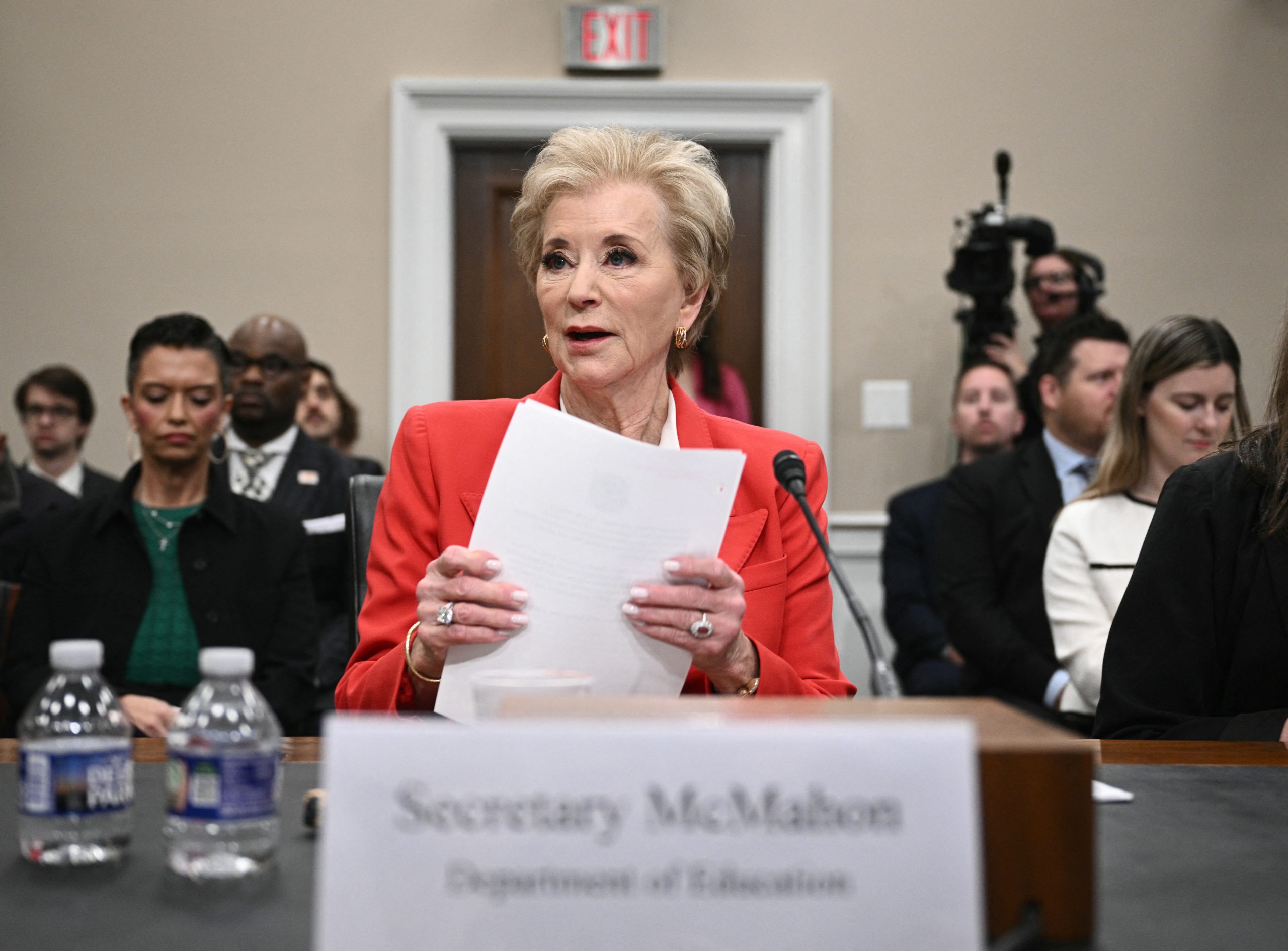
    Last week, the Trump administration sent a compact to nine US colleges laying out sweeping demands including capping international enrolments, banning the use of race or sex in hiring and freezing tuition for five years. In return, schools that signed on would receive competitive advantages from the government.  

    In a letter to US education secretary Linda McMahon, Kornbluth said: “We must hear facts and opinions we don’t like – and engage respectfully with those whom we disagree.” 

    Under the terms of the compact, signatories must abolish university units that “punish” or “belittle” conservative ideas, and all college employees “must abstain in their official capacity from actions or speech related to politics”.  

    If adopted by the institutions, it would set a 15% cap on international undergraduate students including a 5% limit for any given country. It also stipulates that universities must hand over international student information, including discipline records, upon the request of the government.  

    MIT is the first of the nine institutions to officially respond to the administration before the October 20 deadline. Stakeholders said the White House is likely aiming to expand the compact if institutions engage.  

    The day after it was sent, the University of Texas swiftly announced it was “honoured” to be a part of Trump’s proposal, though the remaining institutions were notably quiet on the agreement, which has received strong pushback from faculty leadership and administrators. 

    Faculty senates at the University of Virginia and the University of Arizona voted to oppose the compact with overwhelming majorities, while Dartmouth College president said in a statement she was “deeply committed” to the university’s values and would always defend its “fierce independence”.  

    In Tennessee, academic and workers unions have called on Vanderbilt University to reject what they called “Trump’s Fascist Compact”, with a petition from Graduate Workers United garnering almost 1,000 signatures as of October 8.  

    Elsewhere, California governor Gavin Newsom quickly responded saying: “California universities that bend to the will of Donald Trump and sign this insane ‘compact’ will lose billions in state funding – IMMEDIATELY.”

    “California will not bankroll schools that sign away academic freedom,” he wrote on October 2, sending a clear sign to the University of Southern California (USC), the only Californian college to receive the proposal so far.  

    Alongside MIT, the compact demands were thrust upon: Vanderbilt University, Dartmouth College, the University of Pennsylvania, the University of Southern California, the University of Texas, the University of Arizona, Brown University and the University of Virginia. 

    California universities that bend to the will of Donald Trump and sign this insane ‘compact’ will lose billions in state funding – IMMEDIATELY

    Gavin Newsom, Governor of California

    While it remains unclear how the recipients were chosen, stakeholders have noted that the list includes high prestige universities as well as public flagships, likely to generate maximum sectoral and media impact.  

    “The compact forces all nine institutions to reveal their positions; it sets the narrative for media reporting and public discussion of the points in the compact; and starts a public sorting of university responses to these policy priorities,” Boston College professor Chris Glass told The PIE News. 

    Whether MIT’s response emboldens the universities to reject the proposal remains to be seen, but even without the signatures, “the compact creates lasting ripples, as universities, accreditors, and state officials recalibrate for future policy fights,” said Glass.  

    The compact’s international student cap is yet another clear sign of Trump’s anti-immigration stance, though experts have noted that none of the nine universities have undergraduate international student populations that exceed the 15% limit.  

    While U Penn and USC are both close to the threshold with international undergraduate populations around the 14% mark, the universities of Virginia, Arizona and Texas at Austin all enrol less than 6% international undergraduates, according to analysis by Soka University of America professor Ryan Allen. 

    As such, Glass speculated the cap was intended to signal to universities beyond the nine, especially those above the 15% threshold, that they may face future scrutiny. 

    “Just by introducing the cap, the administration sets the terms of debate and sends a strong message – to its base, to all universities in the US, and to prospective international students,” he said.

    As per Allen’s analysis, just 14 of the top 114 US universities have undergraduate international populations that exceed the proposed limit.

    If it is implemented, the impact of the cap by itself might not be significant, “but this is part of an overall message that the US does not want international students … It’s tough to grapple with in the classroom because our students are feeling that message,” said Allen. 

    Typically, international students make up a larger proportion of postgraduate than undergraduate enrolments, though universities rarely disaggregate the two in overall student counts.  

    And yet: “Undergrad admissions are much more contentious and political than grad school. So, the idea that international students are somehow taking seats from Americans is much more salient in that space,” said Allen.  

    Source link

  • Virginia lawmakers threaten state funding consequences if UVA signs Trump compact

    Virginia lawmakers threaten state funding consequences if UVA signs Trump compact

    This audio is auto-generated. Please let us know if you have feedback.

    Dive Brief:

    • Three leading Virginia state senators this week urged University of Virginia’s top officials to immediately reject the Trump administration’s proposed higher education compact and threatened the institution’s state funding if they signed on.
    • In an Oct. 7 letter to UVA leaders, Democratic state Sens. Scott Surovell, L. Louise Lucas and Mamie Locke called the federal government’s conditions “an unprecedented federal intrusion into institutional autonomy and academic freedom.” 
    • Agreeing to those terms would invite further federal interference at the university, the trio said, citing the Trump administration’s recent ouster of UVA’s president. If UVA agrees to the compact, they warned, the institution will face “significant consequences in future Virginia budget cycles.”

    Dive Insight:

    The Trump administration’s compact would offer UVA, along with eight other research universities, preferential access to federal research funding if they agree to its wide-ranging and unprecedented conditions. 

    Some of those terms are straightforward, such as a five-year tuition freeze, a standardized testing requirement for admissions and a 15% cap on international students’ share of undergraduate enrollment.

    Others are less clear cut, including required public audits of the viewpoints of employees and students, institutional neutrality on most political and social events, and a commitment to changing — or ending — institutional units that purposefully “punish” or “belittle” conservative ideas.

    All of the proposed conditions of the agreement “are fundamentally incompatible with the mission and values of a premier public research university,” the lawmakers told UVA Interim President Paul Mahoney and Rachel Sheridan, head of the institution’s governing board. 

    For instance, the state senators raised alarms about one element of the compact that would bar signatories with large endowments from charging tuition for students enrolled in “hard science programs.”

    That would force students in humanities and social sciences “to subsidize” those enrolled in STEM programs, representing “a bizarre federal intrusion into institutional financial planning that devalues essential fields of study,” they wrote. 

    “This is not a partnership,” the lawmakers said. “It is, as other university leaders have aptly described, political extortion.”

    Surovell, Lucas and Locke wield significant legislative power as the state Senate majority leader, president pro tempore and chair of the Senate Democratic Caucus, respectively. They underlined this influence in their letter, vowing “to ensure that the Commonwealth does not subsidize an institution that has ceded its independence to federal political control.”

    The three senators pointed specifically to the forced departure of former UVA President Jim Ryan, who abruptly resigned in June amid federal pressure to step down over the university’s diversity efforts during his seven-year tenure. 

    In his announcement, Ryan said he wouldn’t fight back against the Trump administration and attempt to keep his job because staying would cost UVA research funding and student aid and hurt its international students.

    Federal officials ousted Ryan, the state senators said, “not for any failure of leadership, but because they disagreed with the University’s approach to diversity and inclusion.” They categorized Ryan as a successful leader who was made into a political sacrifice — one that didn’t stave off further interference.

    “President Ryan’s resignation was meant to spare the University from federal retaliation, yet here we are again, facing even more aggressive demands on institutional autonomy,” they told UVA leaders. “The lesson is unmistakable — appeasing this Administration only emboldens further encroachment.”

    UVA faculty similarly called for institutional leaders to rebuke the compact. In a 60-2 vote, the university’s faculty senate approved a resolution on Oct. 3 whose preamble called the proposal dangerous to UVA and a likely violation of state and federal law.

    The Trump administration gave the nine universities until Oct. 20 to offer feedback on the compact and until Nov. 21 to sign the agreement.

    Source link