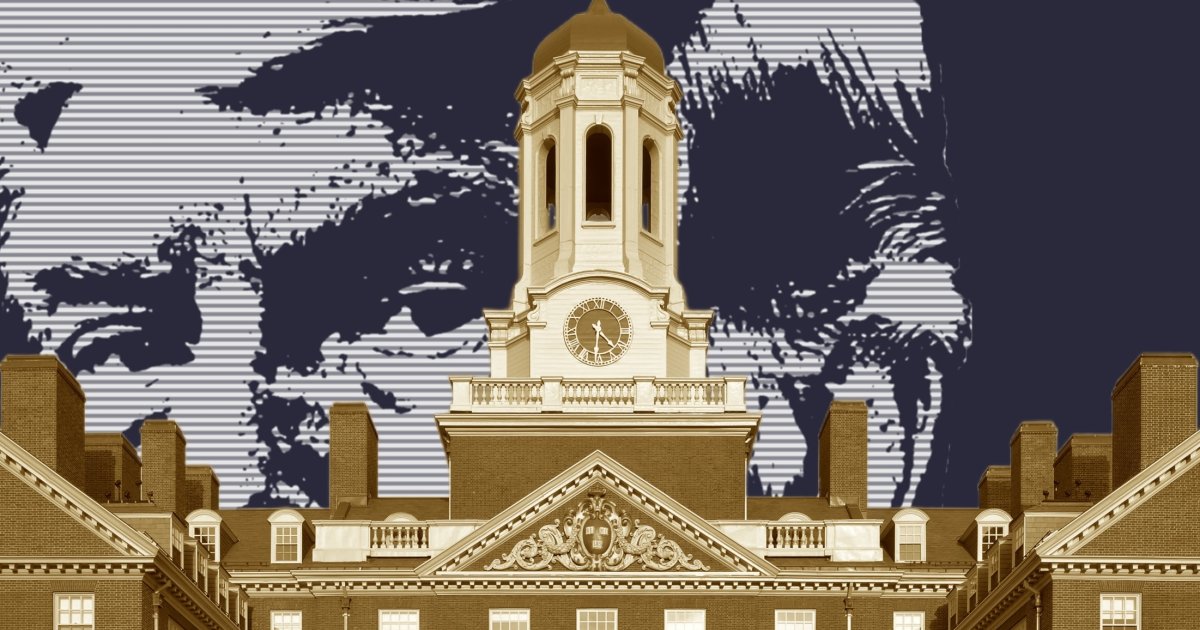
A federal district court in Massachusetts found yesterday that the government violated Harvard University’s First Amendment rights, as well as Title VI of the Civil Rights Act of 1964, when it stripped the university of billions in federal funding last April. At the time, the Trump administration’s explanations for the cuts strongly suggested its actions were based on hostility towards Harvard’s political viewpoint, though the government eventually shifted to an argument that they were an effort to fight campus anti-Semitism.
Much of the opinion covers a dispute about what court has jurisdiction to hear the case. But when it comes to the First Amendment and Title VI, the court’s reasoning echoes what FIRE has saidpublicly and in our own amicus brief in the Harvard case: Pursuing the worthy end of fighting anti-Semitic and other unlawful discrimination on campus does not justify flatly unlawful and unconstitutional methods.
Here are FIRE’s three quick takeaways about this decision and what it means for campus rights.
Government cannot force private institutions like Harvard to punish speech protected by the First Amendment
Like many universities, Harvard receives hundreds of millions of dollars every year in research grants and student aid. That money comes with both formal legal requirements and less-formal leverage over how the university operates.
In a letter it sent to Harvard in April, the federal government tried to use this leverage to make sweeping demands of Harvard if it wished to continue receiving federal funds, including prohibiting the admission of international students deemed “hostile” to “American values,” political litmus tests in the name of viewpoint diversity, and even the derecognition of pro-Palestinian student groups.
As our nation’s oldest and wealthiest university, if Harvard was unwilling to defend its rights in court, it was unlikely that any other institution would have the fortitude to do so.
But as FIRE’s amicus brief pointed out, “the government cannot strongarm private actors into punishing speech that the First Amendment protects from state intrusion,” noting that the Supreme Court reaffirmed this principle just last year in National Rifle Association v. Vullo, . In Vullo, the NRA accused New York state financial services chief Maria Vullo of using state power to coerce companies not to do business with the NRA because of the state’s opposition to the organization’s pro-gun viewpoint.
The district court read the law the same straightforward way. Comparing the government’s actions at each step to the actions at issue in Vullo, the court found:
Defendants (like Maria Vullo) urged and threatened Harvard (in the position of the insurer) to hire faculty and make curricula and research choices that better aligned with the government’s preferred viewpoints, to the detriment of professors and researchers with competing views (like the NRA). Pursuant to Vullo, using this type of coercion to suppress speech, third-party or otherwise, is not permissible.
Whether it’s a state or federal official doesn’t matter: They may not use their power to coerce private actors to unconstitutionally do the government’s bidding.
Feds must follow Title VI if it wants to strip funding for Title VI violations
FIRE has also expressed alarm about the government’s failure to follow the procedures Congress prescribed when stripping funding from Harvard (and other universities) in the name of fighting race, color, and national origin discrimination (including anti-Semitic discrimination) under Title VI of the Civil Rights Act of 1964.
Being stripped of federal funding under civil rights law has long been seen as a nuclear option. The loss would likely shut down all but the richest colleges and universities by barring them not just from federal research grants but also from federal student aid, such as Pell grants and federally subsidized loans. That’s why Title VI requires the government to give institutions like Harvard “notice, a hearing, and an opportunity to come into compliance voluntarily before the government can terminate funding,” as we wrote in our amicus brief. Yet the government skipped the process and failed to do so.
Again, predictably, this failure did not escape the court. It outlined the same procedures to which FIRE pointed in its brief, noting that it was “undisputed” that the government did not comply with them before freezing and terminating funding. Rejecting the government’s arguments that it could “combat anti-Semitism” at Harvard by terminating funding under different provisions, the court found that “Congress has…passed a law that explicitly provides for when and how an agency can terminate federal funding to address this type of discrimination—and that law is Title VI, which dictates that ‘no such action shall be taken until the department or agency’ has gone through the appropriate procedures.”
Harvard’s free speech record is terrible, but be thankful one university found its spine
FIRE has always been a critic of Harvard’s handling of student and faculty free speech issues. When I say always, I mean that literally. As we told the court, Harvard’s repeated failure to honor student and faculty rights over decades was a major contributor to Boston civil liberties lawyer (and Harvard Law alumnus) Harvey Silverglate’s decision to co-found FIRE in 1999. But none of Harvard’s problems excuse the government’s decision to make these unlawful, unconstitutional demands.
FAQ: Responding to common questions about the fight between Harvard and the Trump administration
Harvard vs. Trump isn’t just a headline, but a battle to decide whether the government can use funding to force ideological conformity. In this explainer, FIRE makes clear why not.
Harvard should be commended for standing up for its legal rights rather than settling under this intense government pressure. As our nation’s oldest and wealthiest university, if Harvard was unwilling to defend its rights in court, it was unlikely that any other institution would have the fortitude to do so.
The decision should also serve as a needed wake-up call for government agencies charged with enforcing our civil rights laws. As we wrote with regard to Columbia University, which recently settled with the government under similar circumstances, there’s plenty of reason to have legitimate concerns about Title VI violations on college campuses. But Title VI requires that the federal government follow the appropriate procedures for a reason. When followed in good faith, the process increases the chance of just outcomes for colleges, students, and faculty while combatting unlawful discrimination. Federal agencies must follow our Constitution and laws while they do their important work.
Welcome back to our fourth season. Time Flies. We’ve gone back to an audio only format ’cause apparently y’all are audio and bibliophiles and not videophiles, so we decided to chuck the extra editing burden. Other than that, though, it’s the same show. Bring you stories on higher education from all around the world. So, let’s get to it.
Today’s guest is Pedro Teixeira. He’s a higher education scholar from the University of Porto in Portugal, focusing to a large extent on the economics of education, but he also just finished a term as that country’s Secretary of State for higher education. That’s a position closer to a junior minister rather than a deputy minister, but it has elements of both.
I first met Pedro about 20 years ago, and I ran into him again this summer in Boston at the Center for International Higher Education’s biannual shindig, where he was giving the Philip Altbach lecture. And let me tell you, this was the best lecture I have listened to in a long time.
Two reasons for this. First, Pedro spoke about his experiences as a Secretary of State trying to negotiate a new funding formula with universities in that country. I won’t spoil the details, but one big highlight for me was that he was in the rare position of being a politician, trying to convince universities not to have a performance-based element in their funding formula. And second, he talked about the future of higher education in the face of possible falling returns to education due to wider adoption of artificial intelligence.
It was such a good talk, I knew my World of Higher Education podcast listeners would think it was great too. And while I couldn’t record it, I did do the next best thing. I invited Pedro to be our lead off guest for this season’s podcast. Let’s listen to what he has to say.
The World of Higher Education Podcast Episode 4.1 | From Funding Formulas to AI: Pedro Teixeira on Higher Education’s Next Challenges
Transcript
Alex Usher: Okay, so Pedro, you were an academic at CIPES (Centre of Research on Higher Education Policy) at the University of Porto, and you went from that to being a minister of state. That’s not an unfamiliar path in Portuguese higher education—Alberto Amal, I think, did something similar. But that move from academia to government, how big a shift was that? What did you learn, and what were you not expecting when becoming a minister of state?
Pedro Teixeira: I think you’re right in the sense that there are quite a few people who have done this, not only in Portugal but also in other parts of Europe, in different areas. And I think it’s always a bit of a challenge, because there’s this expectation that, since you’re an academic—and especially if you’re an expert on the topic—people expect you to have a solution for all the problems. And it’s not exactly like that.
At the same time, I think one is worried that what you do in office will be coherent with what you had advocated as an academic and with what you had written about specific topics. That’s challenging.
In some respects, I wasn’t very surprised by what I faced, because I had been involved in advisory roles and I knew people who had been in that kind of policy role. So I think I wasn’t—I mean, there were the things you expect, like the amount of work and the long days. But I never felt that was really the most difficult part. Of course, going through these things and living them is a little different than knowing them in the abstract.
But I think the main concern for me was the permanent pressures. You are always concerned with something, always worried either about the problems you have to deal with or the problems that will emerge.
What I was not so happy with was the lack of a sense of urgency in some of the actors, both on the government side and on the side of stakeholders in the sector. Because if you feel the problems are significant, you need to move forward—of course not rushing, but you do need to move forward.
On the positive side, I think the quality and dedication of staff was very important. Civil service is often criticized, but I found that very important. And the other thing that was also very important was the role of data and evidence, while at the same time you also need to develop arguments and persuade people about the points you’re trying to make.
Alex Usher: So what were those urgent issues? I know one of the big things you dealt with was a funding formula—and we’ll come to that later—but what, to your mind, were the other big urgent issues in Portuguese higher education at that time?
Pedro Teixeira: As we know, most people in their higher education system always think their system is very specific, very different from everyone else. But in fact, we know there are a lot of commonalities across education sectors.
In many ways, the challenges were the same ones that people describe as belonging to mass systems, or what others might call mature systems. One significant issue, of course, was the adverse demographic trends.
Another was the tension between, on the one hand, wanting to broaden access and enhance equity in the system, and on the other, facing enormous pressures toward stratification and elitism, with the system tending to reproduce socioeconomic inequalities.
There were also issues related to diversity versus isomorphism. On the one hand, people agree that in order for a mass system to function, it needs to be diverse. But there are pressures in the system that tend to push institutions toward mimicking or emulating the more prestigious ones.
The balance between missions is another challenge. This relates to that issue of isomorphism, because research has become so dominant in defining what higher education institutions do and how they see their mission.
And, of course, there were issues of cost and relevance: who should pay for higher education, and how can we persuade society to put more resources into a sector that, because it is a mass system, is already absorbing a significant amount of public funding?
Alex Usher: All right. On that point about demographics, I saw a story in one of the Portuguese newspapers this week saying that applications were down 15% this year. Is that a rapidly evolving situation? That seems like a lot.
Pedro Teixeira: No. There’s been a downward trend over the last three or four years, but because the number of applicants was bigger than the number of places, it didn’t disturb things much. Most of what we’re seeing now is actually due to the fact that in 2020, with the pandemic, exams for the conclusion of secondary education were suspended.
They were only reintroduced this year. That decision was taken at the end—actually by the government I was part of—at the beginning of 2023. But in order to give students and schools time to adjust, the change only applied to the students who were starting secondary education then. Those are the students who applied this year for higher education.
Basically, when you look at the data—we don’t yet have the numbers on how many graduated from secondary education—but the number of applicants is very much in line with what we had in 2019, which was the last year we had exams for the conclusion of secondary education.
And in fact, if you take into account the declining trend of the last three or four years, I would say it’s not a bad result. It actually means the system managed to compensate for those losses.
Alex Usher: Managed to absorb.
Pedro Teixeira: Yeah, yeah. But it’s also a signal for the sector in that respect.
Alex Usher: So let’s go back to the funding formula issue, because I know that was a big part of your tenure as Secretary of State for Higher Education. What was wrong with the old formula, and what did you hope to achieve with a new one?
Pedro Teixeira: There are two things. I think there were some issues with the old formula. It was designed in 2006, so 15 years had passed. The sector was very different by then—the situation, the challenges, everything had changed.
Also, like many formulas of that time, it was quite complicated, with many indicators and many categories for fields of study. That didn’t make the system very transparent. If you introduce too many indicators and variables, in many ways the message you want to convey is lost. A funding formula is supposed to be an instrument to steer the system.
But the larger problem was that this old formula hadn’t been applied for the last 12 years. When the Great Recession started around 2005–2010, the government suspended its application. Since then, the budgets of all institutions have evolved in the same way—same amount, same direction—regardless of their number of students or their performance.
So when we came into government in 2022, the situation was, in many cases, very unbalanced. Some institutions that had grown significantly didn’t have funding to match that growth. Others that had declined hadn’t seen any adjustments either.
The idea of having a new formula was preceded by an OECD review commissioned by the previous government, which we took over. Our idea was to design a simpler and more transparent formula that would form part of the funding system. In addition to the formula, we introduced funding contracts, focused mainly on institutions located in more peripheral regions of the country.
The idea was also to have a four-year period of gradual implementation of the new model and funding system. At the same time, this would correct some of the imbalances caused by not having applied any formula for 12 years.
Alex Usher: And how did institutions respond to those proposals? Were they on your side? Were there things they liked, and things they didn’t like? Universities don’t like change, after all.
Pedro Teixeira: On the other hand, I think a significant part of the sector was very keen to finally have some kind of formula—some set of rules that would be applied to the whole sector. Of course, some institutions were afraid that by reintroducing a formula, given their recent evolution, they might end up on the losing side.
But one of the key aspects of the process was that this was always seen as a formula, or a new system, that would be introduced within a pattern of growth in funding for the sector—not as a way of redistributing funds from some institutions to others. That made the process easier. It would have been much more difficult if we had been taking money from some institutions to give to others.
This required political commitment from the government, and it was very important to have the backing of the Prime Minister and the Minister of Finance. That meant we could correct imbalances without creating disruption for institutions.
I would say the main critical points were, first, the differentiation between sectors. We have a diverse education system with universities and vocational institutions. Then there was the question of whether to differentiate between regions. Our decision was to have a formula that applied in the same way to all regions, and then use funding contracts as additional resources targeted for strategic purposes—mainly for institutions located in more deprived or less populated regions.
Another point raised in discussions was fields of study. Everyone wants their own fields—or the ones in which they are strongest—to be better funded. But we really wanted to simplify the mechanism, and I think that helped.
Finally, there was the issue of performance indicators. We didn’t propose to introduce them from the start. Because we had gone so many years without a formula, we didn’t have consistent data, and moreover we wanted performance indicators to be developed collaboratively with institutions. The idea was that institutions themselves would decide which areas they wanted to focus on, which areas they wanted to contribute to, and therefore which indicators they wanted to be assessed by.
Because we decided that performance indicators would come in a second step, some institutions wanted them introduced earlier. That was also a point of discussion.
Alex Usher: I find that fascinating, because I don’t think I’ve ever heard of universities—maybe “demanding” is the wrong word—but being disappointed that there wasn’t enough performance-based funding in a system. Why do you think that was?
Pedro Teixeira: I’m not sure I was surprised, but it was significant that some institutions were pressing for it. In some ways, it could have been a strategic approach by certain institutions because they thought they would be on the winning side.
But I think it also has to do with the fact that this competitive, performance ethos has so deeply permeated higher education. At some point, I even said to some institutions: be careful what you wish for. Because in some cases, this could curtail your autonomy and increase the possibility of government interference in your ability to devise your own strategy.
Actually, I think that was, in many ways, the only real public criticism that came up. And that was quite interesting, to say the least.
Alex Usher: I want to shift the ground a little bit from Portugal to Boston. Two months ago, you gave the Philip B. Altbach Lecture at Boston College’s Center for International Higher Education. You devoted a lot of your talk to artificial intelligence and how it’s likely to change higher education. Could you tell us a little bit about your views on this?
Pedro Teixeira: That’s a fascinating topic. Of course, it’s an important issue for many people around the world and for many education institutions.
It’s fascinating because, to a certain extent, we’ve been nurtured by a view that has dominated over the last decades—that progress has been skill-biased. In previous waves of technological progress, the labor market tended to favor those with higher skills. Education was often seen as contributing to that, helping people be on the winning side, and the returns to more education and more skills seemed to confirm it.
My concern is that this wave may be slightly different. I’m not saying it will destroy a lot of jobs, but I am concerned that it may affect skilled and experienced workers in ways that previous waves did not.
We’ve already seen, and many of us have already experienced in our own jobs, that AI is performing certain tasks we no longer have to do. It’s also changing the way we perform other tasks, because it works as a collaborative tool.
So I think there is a serious possibility that AI—especially generative AI—will change the tasks associated with many jobs that today require a higher education degree. We need to pay attention to that and respond to it.
I worry that because education has been such a success story over the last half-century in many countries, there is a degree of complacency. People take a relaxed attitude, saying: “We’ve seen previous changes, and we didn’t experience so many problems, so we’ll be fine this time as well.”
I think there are quite a few aspects we need to change in our approach.
Alex Usher: And what might those areas be? Because I have to say, whenever I hear people discussing AI and radical change in the labor market, I think: that’s the stuff that’s actually hardest for higher education to deal with—or for any kind of education to deal with.
Education is often about teaching a corpus of knowledge, and there is no corpus of knowledge about AI. We’re all flailing blindly here—it’s totally new.
I think a lot about James Bessen and his book Learning by Doing. He was talking about how education worked during the Industrial Revolution in Manchester, and in other parts of England that were industrializing. Basically, when there’s a totally new technology, who are you going to get to teach new people? There’s no settled corpus of knowledge about it.
What do you think higher education institutions should be doing in that context?
Pedro Teixeira: One of the major concerns I have is that we tend to focus so much on the impact of digitalization and technology on science and technology fields. But we should be much more attentive to how it’s changing non-technical fields—health professions, the humanities, and the social sciences. These make up a very large part of higher education, and a very large part of the qualified workforce in many of our countries.
I think there are several things we need to do. The first is to rethink the balance between the different missions of higher education. At the moment, so much of the pressure and so many of the rewards are focused on missions other than education, teaching, and learning. We need to rebalance that. If institutions don’t commit themselves to education, it will be much more difficult for anything significant to happen at the basic level—among professors, programs, and so on.
If AI does affect more experienced workers, that means many people will need more support in terms of lifelong learning. They will need support in reskilling, and in some cases, in changing their professional trajectories. This is an area where many higher education institutions preach much more than they practice.
So I think we need to rethink how we allocate our efforts in education portfolios, moving more attention toward lifelong learning. So far, the focus has been overwhelmingly on initial training, which has been the core of the sector in many systems.
Finally, we would need to rethink—or at least introduce—changes at the level of initial training: the way we teach, the way we assess students, the way we train and retrain academic staff. None of this will be obvious. But in the end, it will all come down to how much institutions are committed to education as the prime mission of higher education.
Alex Usher: So even if AI is not a mass job killer—either now or in the future—we are seeing declining rates of return on higher education around the world. There’s massive graduate unemployment in China, quite a bit in India, and in the United States, for the first time, young graduates are less likely to be employed than non-graduates of the same age.
What does it mean for the higher education sector globally if rates of return decline? Are we heading for a smaller global higher education sector?
Pedro Teixeira: I tend to be cautious with some of these conclusions. We may be extracting too much from what could be transitional situations. We’ve seen in the past moments where there were problems adjusting supply and demand for graduates, and those didn’t necessarily lead to a permanent or structural situation where education became less relevant.
In countries like China and India, higher education systems have expanded tremendously in recent years. In some ways, what we’re seeing now is similar to what other countries experienced when they went through massive expansions and the economy couldn’t absorb the rising number of graduates as quickly as the education system was producing them.
It’s also not surprising that in many countries we’re seeing lower relevance of initial training—bachelor’s or first-cycle degrees. That’s a supply-and-demand issue. As systems move from elite to mass, that’s normal. But in many cases, we’ve seen a growing premium for postgraduate degrees and for continuing education. So I’d be cautious about concluding that education will become less and less relevant.
That said, I would repeat my concern about complacency. I don’t necessarily expect a decline in the sector, but perhaps a slower pattern of growth. That will be a challenge, because we’re coming out of decades of relentless growth in many education systems.
I also think we’ll see a broader scope in how we approach education and differences in higher education portfolios. It’s not that there aren’t many things we can do, but it will probably require us to rethink what we expect from professors and where institutions should focus their attention.
Alex Usher: Right. Pedro, thank you so much for being with us today.
Pedro Teixeira: My pleasure.
Alex Usher: And it just remains for me to thank our excellent producers, Sam Pufek and Tiffany MacLennan, and you, our listeners and readers, for joining us. If you have any questions or comments about today’s episode, or suggestions for future episodes, don’t hesitate to get in touch with us at [email protected].
Join us next week when our guest will be the University of Melbourne’s Andrew Norton. He’ll be talking about what lies ahead for Australian higher education under a second Labor government. Bye for now.
*This podcast transcript was generated using an AI transcription service with limited editing. Please forgive any errors made through this service.Please note, the views and opinions expressed in each episode are those of the individual contributors, and do not necessarily reflect those of the podcast host and team, or our sponsors.
A federal judge delivered a sweeping victory for academic freedom Wednesday, ruling that the Trump administration’s freeze of $2.2 billion in federal grant funds to Harvard University was illegal and unconstitutional.
U.S. District Judge Allison Burroughs determined that the administration imposed the funding freeze in retaliation for Harvard’s refusal to comply with demands that would have violated First Amendment protections, including ending diversity, equity, and inclusion programs and screening international students for ideological biases.
The ruling vacates all freezing orders affecting Harvard and bars Trump administration officials from enforcing those orders going forward.
The administration froze Harvard’s federal grants on April 14, just hours after the university rejected a list of ten demands. While only one demand related to antisemitism concerns, six others targeted ideological and pedagogical issues, including restrictions on who could lead, teach, and be admitted to the university, as well as what could be taught.
Judge Burroughs noted that the “swift termination” of funding occurred before the administration had learned anything substantive about antisemitism on campus or Harvard’s response efforts, suggesting the antisemitism concerns were “at best arbitrary and, at worst, pretextual.”
The funding freeze halted work on critical research projects spanning multiple fields, including studies on tuberculosis, NASA astronauts’ radiation exposure, Lou Gehrig’s disease, and a predictive model to help Veterans Administration emergency room physicians assess suicidal veterans. Burroughs ruled that none of these affected projects had any connection to antisemitism.
The American Association of University Professors (AAUP) celebrated the ruling as a landmark victory for higher education.
“This is a huge win for all of American higher education, for science, and for free and critical thought in this country,” said Dr. Todd Wolfson, National AAUP President. “Time and again, Trump has tried to restrict speech and cripple lifesaving university research. As today’s victory shows, Trump’s war on higher education is unconstitutional.”
Veena Dubal, National AAUP General Counsel, characterized the administration’s actions as “cynical and lawless, leveraging claims of discrimination to bludgeon critical research and debate.”
The Harvard AAUP chapter also praised the outcome. “This historic ruling underscores the importance of free inquiry, truth, and the rule of law in a democratic society,” said Kirsten Weld, AAUP-Harvard Faculty Chapter President.
Harvard President Dr. Alan Garber had previously stated that “no government — regardless of which party is in power — should dictate what private universities can teach, whom they can admit and hire, and which areas of study and inquiry they can pursue.”
The Education Department pushed back against the ruling through spokesperson Madi Biedermann, who criticized Burroughs as “the same Obama-appointed judge that ruled in favor of Harvard’s illegal race-based admissions practices” before the Supreme Court ultimately overturned those practices.
“Cleaning up our nation’s universities will be a long road, but worth it,” Biedermann said, suggesting the administration may continue its broader efforts to reshape higher education policies.
The ruling establishes important precedent for protecting academic freedom and research independence from political interference. Legal experts note that the decision reinforces constitutional limits on government retaliation against educational institutions for their speech, curriculum choices, and admissions policies.
AAUP leaders said that the victory demonstrates the importance of collective action in defending academic freedom, with faculty and administrators standing together against what they characterize as authoritarian overreach into university governance and research priorities.
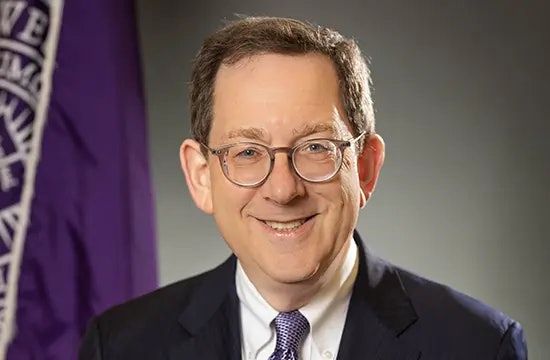
Northwestern University President Michael Schill announced his resignation Thursday, concluding a three-year tenure that brought record achievements alongside unprecedented federal challenges, including an ongoing $790 million funding freeze imposed by the Trump administration.
Schill, who became Northwestern’s 17th president in September 2022, cited the need for “new leadership to guide Northwestern into its next chapter” in his message to the campus community. His departure adds to a growing list of university presidents who have stepped down amid tensions with the federal government and campus controversies.
The resignation comes as Northwestern grapples with a federal funding freeze that began approximately four months ago, when the Trump administration halted $790 million in federal support. The action was reportedly connected to Title VI investigations, which examine discrimination in federally funded programs.
The frozen funds support what Northwestern describes as “innovative and life-saving research,” including development of the world’s smallest pacemaker and Alzheimer’s disease research. University officials warned that “this type of research is now at jeopardy” due to the funding suspension.
Northwestern joins other elite institutions facing similar federal actions, with universities like Cornell, Harvard, Columbia, and the University of Virginia experiencing funding freezes or leadership changes amid disputes over diversity programs and responses to Gaza-related campus protests.
During Schill’s tenure, Northwestern reached notable milestones while navigating significant challenges. Schill oversaw major academic initiatives, including the establishment of research centers like the Chan Zuckerberg Biohub Chicago and the NSF-Simons AI Institute for the Sky. He also championed free expression initiatives, launching the Litowitz Center for Enlightened Disagreement and establishing the President’s Advisory Committee on Free Expression and Institutional Speech.
However, his presidency was marked by significant controversies. Shortly after arriving on campus, Schill inherited a hazing scandal involving student-athletes, leading to new protective policies. More recently, he navigated campus tensions following the October 7, 2023, Hamas attack on Israel and subsequent protests.
Republican lawmakers, including House Education and Workforce Committee Chairwoman Elise Stefanik, had criticized Schill’s handling of campus antisemitism. Stefanik called his resignation “long overdue,” claiming he “failed to protect Jewish students” and “caved to the demands of the antisemitic, pro-Hamas mob.”
Northwestern officials counter that they have “fully cooperated with investigations by both the Department of Education and Congress” and implemented policy updates that resulted in a “dramatic decrease” in reported antisemitic incidents.
White House spokesperson Liz Huston said the Trump administration “looks forward to working with the new leadership, and we hope they seize this opportunity to Make Northwestern Great Again.”
The Northwestern Board of Trustees will name an interim president soon, with Schill continuing in his role until the transition is complete. Board Chair Peter Barris praised Schill’s leadership through “unparalleled challenges” and credited him with “lasting achievements that contribute robustly to Northwestern’s continued advancement.”
After stepping down, Schill plans to take a sabbatical before returning to teach and conduct research as a faculty member at Northwestern Pritzker School of Law.
This audio is auto-generated. Please let us know if you have feedback.
Dive Brief:
The Trump administration violated Harvard University’s First Amendment rightsand didn’t follow proper procedures when it froze $2.2 billion of the university’s federal funding earlier this year, a federal judge ruled Wednesday.
U.S. District Judge Allison Burroughsalso ruled that the federal government acted arbitrarily and capriciously when halting the funds. The judicial branch must ensure important research isn’t improperly terminated, she wrote,“even if doing so risks the wrath of a government committed to its agenda no matter the cost.”
Burroughsstruck down the Trump administration’s freeze orders and grant termination letters, opening the door for Harvard’s funding to be reinstated. But a White House spokesperson said the Trump administration will immediately move to appeal the decision and keep Harvard “ineligible for grants in the future,” in apparent defiance of the ruling.
Dive Insight:
In April, the Trump administration froze $2.2 billion in multi-year grants and $60 million in multi-year contracts to Harvard, hours after the university’s leadershiprebuked its demands for changes to its admissions, hiring, governance and campus policies.
The federal government carried out the freeze under the auspices of the Trump administration’s Joint Task Force to Combat Anti-Semitism, which has alleged that the Ivy League institution has not done enough to fight antisemitism on its campus.Subsequent grant termination letters from multiple federal agencies repeated those claims.
But Burroughs questioned that rationale in her decision Wednesday, saying a connection between the federal government’s stated motivations and actions was “wholly lacking.”
The evidence does not “reflect that fighting antisemitism was Defendants’ true aim in acting against Harvard,” the judge wrote in her 84-page ruling. “Even if it were, combatting antisemitism cannot be accomplished on the back of the First Amendment.”
U.S. Education Secretary Linda McMahon also told Harvard in a May 5 letter that it would cut the university off from all future research grants — an order that Burroughs also permanently blocked.
Burroughs also cast doubt on the Trump administration’s argument that its revocation of Harvard’s funding had nothing to do with university President Alan Garber’srefusal to comply with extensive federal ultimatums.
Among several wide-ranging requirements, the Trump administration sought to have Harvard hire a third party to audit programs and departments that it described as fueling “antisemitic harassment” or reflecting “ideological capture.” It also called for “meaningful governance reform” within the university, such as reducing the power of faculty engaged in activism.
The ultimatums and cut-off funds prompted Harvard to sue the federal government in April. It argued that the Trump administration violated its free speech by pulling funding for refusing to comply with viewpoint-based demands and that the government didn’t follow the proper procedures for terminating the grants.
Despite the Trump administration assertions that Harvard’s pulled funding was unrelated, Burroughs said its own members undercut its argument.
“Numerous government officials spoke publicly and contemporaneously on these issues, including about their motivations, and those statements are flatly inconsistent with what Defendants now contend,” the judge wrote.
Burroughs cited social media posts from President Donald Trump two days after the task force announced the funding freeze.
“Harvard is a JOKE, teaches Hate and Stupidity, and should no longer receive Federal Funds,” he wrote on April 16.
That post and others like it demonstrated that Trump’s ongoing concern was “untethered from antisemitism,” Burroughs said.
But a White House spokesperson doubled down on Wednesday, saying the federal government’s actions against the university are intended to “hold Harvard accountable.”
“To any fair-minded observer, it is clear that Harvard University failed to protect their students from harassment and allowed discrimination to plague their campus for years,” White House Assistant Press Secretary Liz Huston said in an email.Burroughs was “always going to rule in Harvard’s favor, regardless of the facts,” she added.
In late April, Harvard published two long-awaited reports about the climate of its Massachusetts campus — one on antisemitism and anti-Israeli bias and another on anti-Muslim, anti-Arab, and anti-Palestinian bias.
The reports found that Jewish, Israeli and Zionist students and employees at Harvard — along with their Muslim, Arab and Palestinian peers — at times felt shunned or harassed while at the university during the 2023-24 academic year.
“Harvard was wrong to tolerate hateful behavior for as long as it did,” Burroughs wrote before noting that the university is “currently, even if belatedly, taking steps it needs to take to combat antisemitism and seems willing to do even more if need be.”
But the federal government failed to consider this, the judge wrote.
“The agencies considered little, if any, data regarding the antisemitism problem at Harvard” and disregarded “substantial policy and other changes” the university enacted to address the issue, Burroughs said.
They also “failed to weigh the importance of any particular grant or to evaluate whether a particular grant recipient had engaged in antisemitic behavior before cutting off critical research,” she said.
Today, a federal court echoed what FIRE has said all along: The Trump administration trampled Harvard University’s First Amendment rights and broke civil rights law when it yanked billions in federal grants and contracts over alleged Title VI violations.
The worthy goal of combating unlawful anti-Semitic discrimination on campus cannot justify the flatly unlawful and unconstitutional means used by the Trump administration in this attempted hostile takeover, including demanding that Harvard impose ideological litmus tests and restrictive speech codes. Our government may not use civil rights laws as a pretext to violate the First Amendment.
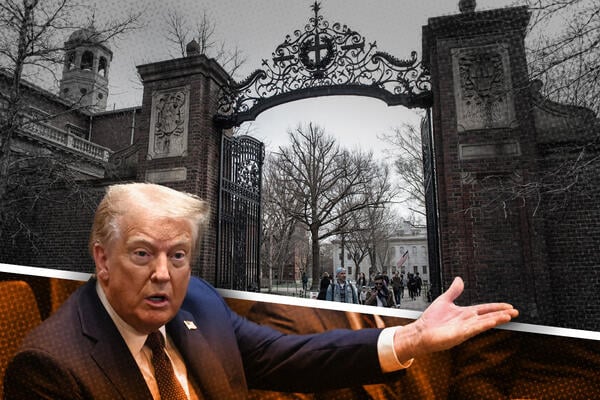
A federal judge in Boston ruled in favor of Harvard University Wednesday.
Photo illustration by Justin Morrison/Inside Higher Ed | Mandel Ngan and Joseph Prezioso/AFP/Getty Images
A judge ruled Wednesday that the Trump administration illegally froze more than $2 billion in research funding at Harvard University over how officials handled alleged campus antisemitism.
Judge Allison Burroughs of the U.S. District Court in Boston found that the federal government violated Harvard’s First Amendment rights and the U.S. Civil Rights Act in her 84-page opinion, writing, “We must fight against antisemitism, but we equally need to protect our rights, including our right to free speech, and neither goal should nor needs to be sacrificed on the altar of the other.” She added that Harvard is “currently, even if belatedly” taking action against antisemitism.
Harvard sued the Trump administration in April after the federal government froze $2.2 billion in funding when the Ivy League university rejected demands to enact a far-reaching slate of changes that would have overhauled admissions, governance, hiring and much more.
Burroughs, an Obama appointee, appeared skeptical of the Trump administration’s claims in a July hearing, telling government lawyers that they failed to back up claims Harvard did not appropriately address antisemitism. She also ruled against the administration in another case in June, temporarily blocking the government from halting Harvard’s ability to host international students.
Burroughs wrote Wednesday that “Harvard was wrong to tolerate hateful behavior for as long as it did,” but “the record … does not reflect that fighting antisemitism” was the “true aim” of the defendants and such efforts “cannot be accomplished on the back of the First Amendment.”
The ruling comes as rumors of a Harvard settlement with the federal government continue to swirl. The Trump administration has demanded a $500 million settlement that would force other changes to admissions and discipline policies, similar to agreements made by its Ivy League peers Columbia University and Brown University.
Harvard President Alan Garber said in a statement Wednesday that “the ruling affirms Harvard’s First Amendment and procedural rights, and validates our arguments in defense of the University’s academic freedom, critical scientific research, and the core principles of American higher education.”
Wednesday’s legal ruling also prompted celebration from free speech groups and others.
“Today, a federal court echoed what [the Foundation for Individual Rights and Expression] has said all along: The Trump administration trampled Harvard University’s First Amendment rights and broke civil rights law when it yanked billions in federal grants and contracts over alleged Title VI violations,” FIRE wrote in a statement.
“This is a huge win for all of American higher education, for science, and for free and critical thought in this country,” said Todd Wolfson, president of the American Association of University Professors. “Time and again, Trump has tried to restrict speech and cripple lifesaving university research. As today’s victory shows, Trump’s war on higher education is unconstitutional. We will continue to stand up and fight back against these attempts to dismantle our universities, terrify students and faculty, and punish hospitals and scientists for not bowing to authoritarianism. And we will win.”
The American Council on Education praised Burroughs’s ruling.
“We are pleased to see a federal court affirm what we always knew to be true: The Trump administration has ignored the law in pursuing politically motivated attacks on Harvard and other institutions,” said Peter McDonough, general counsel for ACE. “We urge the administration to abandon these harmful attacks and instead work to restore the partnership that has made colleges and universities the engine of American innovation for decades.”
Judging from the Department of Education’s response to the ruling, that seems unlikely.
“In an unsurprising turn of events, the same Obama-appointed judge that ruled in favor of Harvard’s illegal race-based admissions practices—which was ultimately overturned by the Supreme Court—just ruled against the Trump Administration’s efforts to hold Harvard accountable for rampant discrimination on campus,” spokesperson Madi Biedermann wrote in an emailed statement. “Cleaning up our nation’s universities will be a long road, but worth it.”
In a post on X, Education Secretary Linda McMahon added, “The Trump Administration is fully committed to appealing this erroneous decision and will ensure that new taxpayer funding is not invested at any university that steadfastly refuses to uphold civil rights for all students.”
As a college president, I see the promise of higher education fulfilled every day. Many students at my institution, Whittier College, are the first in their families to attend a university. Some are parents or military veterans who have already served in the workforce and are returning to school to gain new skills, widen their perspectives and improve their job prospects.
These students are the future of our communities. We will rely on them to fill critical roles in health care, education, science, entrepreneurship and public service. They are also the students who stand to lose the most under the proposed fiscal year 2026 federal budget, and those who were already bracing for impact from the “One Big Beautiful Bill” cuts, including to the health care coverage many of them count on.
The drive with which these extraordinary students — both traditionally college-aged and older — pursue their degrees, often while juggling caregiving commitments or other responsibilities, never fails to inspire me.
Related: Interested in innovations in higher education? Subscribe to our free biweekly higher education newsletter.
We do not yet know the precise contours of the spending provisions Congress will consider once funding from a continuing resolution expires at the end of September. Yet we expect they will take their cues from the president’s proposed budget, which slashes support for students and parents and especially hammers those already struggling to improve their lives by earning a college degree, with cuts to education, health and housing that could take effect as early as October 1.
That budget would mean lowering the maximum Pell Grant award from $7,395 to $5,710, reversing a decade of progress. For the nearly half of Whittier students who received Pell Grants last year, this rollback would profoundly jeopardize their chances of finishing school.
So would the proposal to severely restrict Federal Work-Study, which supports a third of Whittier students according to our most recent internal analysis, and to eliminate the Supplemental Educational Opportunity Grant, which more than 16 percent of our student body relies upon. In addition, this budget would impose a cap on Direct PLUS Loans for Parents, which would impact roughly 60 percent of our parent borrowers. It would also do away with the Direct PLUS Loans for Graduates program.
These programs are lifelines, not just for our students but for students all across the country. They fuel social mobility and prosperity by making education a force for advancement through personal work ethic rather than a way to rack up debt.
If enacted, these proposed cuts would gut the support system that has enabled millions of low-income students to earn a college degree.
Higher education is a bridge. To cross it and achieve their full potential, students from all walks of life must have access to the support and resources colleges provide, whether through partnerships with local high schools or with professional gateway programs in engineering, accounting, business, nursing, physical therapy and more. Yet, to access these invaluable programs, they must be enrolled. How will they reach such heights if they suddenly can’t afford to advance their studies?
The harm I’ve described doesn’t stop with cuts to financial aid, loans and services. Proposed reductions also target research funding for NASA, NIH and the National Science Foundation. One frozen NASA grant has already led to the loss of paid student research fellowships at Whittier, a setback not just in dollars but in momentum for students building real-world skills, networks and résumés.
These research opportunities often enable talented first-generation students to connect their classroom learning to career pathways, opening the door to graduate school, lab technician roles and futures in STEM fields. We’ve seen how federal funding has supported student projects in everything from climate data analysis to environmental health.
Stripping away support for hands-on research undermines the federal government’s own calls for colleges like ours to better prepare students for the workforce by dismantling the very mechanisms that make such preparation possible.
It’s particularly disheartening that these changes will disproportionately hurt those students who are working the hardest to achieve their objectives, who have done everything right and have the most to lose from this lack of investment in the future.
The preservation and strengthening of Pell, Work-Study, Supplemental Educational Opportunity grants and federal loan programs is not a partisan issue. It is a moral and economic imperative for a nation that has long been proud to be a land of opportunity.
Let’s build a system for strivers that opens doors instead of slamming them shut.
Let’s recommit to higher education as a public good. Today’s students are willing to work hard to deserve our continuing belief in them.
Kristine E. Dillon is the president of Whittier College in California.
The Hechinger Report provides in-depth, fact-based, unbiased reporting on education that is free to all readers. But that doesn’t mean it’s free to produce. Our work keeps educators and the public informed about pressing issues at schools and on campuses throughout the country. We tell the whole story, even when the details are inconvenient. Help us keep doing that.
This audio is auto-generated. Please let us know if you have feedback.
Dive Brief:
Twenty four states and the District of Columbia are seeking to throw out a lawsuit challenging this summer’s delay of K-12 federal grant funding. A joint motion to dismiss was filed Monday by the coalition of states, led by California, and the Trump administration, with both parties agreeing that the balance of the remaining funds be released no later than Oct. 3.
The expected July 1 release of more than $6 billion in fundingwas delayed for several weeks due to a “programmatic review” by the White House’s Office of Management and Budget. OMB said an initial review found that “many of these grant programs have been grossly misused to subsidize a radical leftwing agenda.”
The funding delays impacted after-school programs, English learner services, academic supports, migrant student assistance, adult education and professional development. The inaction caused significant financial disruptions just as schools were finalizing staffing and programming for the upcoming school year, according to educators, families, lawmakers and education-related organizations.
Dive Insight:
The states’ lawsuit, State of California, et al. v. Linda McMahon, et al., was filed July 14 and said the “abrupt freeze is wreaking similar havoc on key teacher training programs as well as programs that make school more accessible to children with special learning needs, such as English language learners.”
President Donald Trump, U.S. Education Secretary Linda McMahon and OMB Director Russell Vought are named as defendants in the lawsuit, as are OMB and the U.S. Department of Education.
In a statement Monday, California Attorney General Rob Bonta said the assurance by the federal government that it will release the remaining funds resolved the states’ lawsuit.
“The Trump Administration upended school programs across the country when it recklessly withheld vital education funding just weeks before the school year was set to begin,” Bonta said. “Our kids deserve so much better than what this anti-education Administration has to offer, and we will continue to fight to protect them from this President’s relentless attacks.”
The Trump administration has said it wants to close the Education Department and give states more decision-making authority over federal K-12 spending.
The states’ lawsuit said that the funding freeze had violated federal funding statutes and regulations. In addition to the states’ lawsuit, a coalition of 14 school districts, parents, teachers unions and nonprofit organizations also sued the Education Department and OMB for withholding the K-12 federal funds. Both parties in that lawsuit — Anchorage School District, et al. v. U.S. Department of Education, et al. — also filed a joint motion to dismiss that lawsuit on Monday.
That motion said the second tranche of federal funding due to states should be available on or about Oct. 1.
This audio is auto-generated. Please let us know if you have feedback.
Dive Brief:
Cornell University leaders expect to begin restructuring the institution’s operations and workforce in phases beginning late this year and continuing into 2026.
In a community update Friday, senior leaders echoed a June message warning of job cuts.“Reducing costs will mean reconsidering how we handle all of our processes, from procurement to technology, and rethinking, in fundamental ways, how we allocate our resources,” they said Friday. “It will also, inevitably, mean reducing our workforce.”
The officials cited inflation, historical staff growth, contractions in federal funding, “significant legal and regulatory expenses,” and “an uncertain and unprecedented federal landscape.”
Dive Insight:
In June, the same group of Cornell leaders — President Michael Kotlikoff, Provost Kavita Bala, Chief Financial Officer Chris Cowen and Provost for Medical Affairs Robert Harrington — told the university community that disruption in the higher education world would “require financial austerity.”
“The spring semester was unlike anything ever seen in higher education, with hundreds of millions of dollars in federal research contracts at Cornell terminated or frozen, and serious threats to future research funding, federal financial aid, medical reimbursement, and research cost recovery, along with an anticipated tax on our endowment income, and rapidly escalating legal expenses,” they wrote at the time.
The June message also brought news of a hiring freeze. On Friday, the leaders said hiring restrictions would continue “indefinitely” with “rare exceptions” determined by campus committees.
Cornell was among the 60 institutions that the Trump administration warned in March could face potential sanctions over allegations related to antisemitism.
In April, the administration reportedly froze $1 billion in federal research funding for the university.Administrators said then that they hadn’t received official word from the government about the frozen funds but were hit with dozens of stop-work orders on grant projects. This summer, Bloomberg reported thatCornell was nearing a deal with the Trump administration to restore grant funding that could involve a $100 million payment.
Even before the Trump administration’s actions, Cornell faced budget pressure from rising expenses. For fiscal 2024, the Ivy League institution posted a $175.5 million operating deficit, compared to $23 million surplus the year before.
Cornell’s senior leaders said that to save costs, the university is looking to consolidate operations where it can, seeking “new efficiencies and reducing duplication of work.” And while part of the university’s tradition, its decentralized structure is also a source of significant administrative inefficiencies, they added.
“Part of our task is identifying opportunities to scale and regularize our academic support systems across units with unique characteristics and needs without compromising our institutional excellence,” they said.
That means centralizing operations that are duplicated across colleges and units, which will ultimately lead to a smaller workforce, leaders said. They didn’t note whether those losses would be primarily through layoffs, buyouts, attrition or other means.
Cornell didn’t immediately respond to a request for comment Monday.
The leaders said they expect to complete an analysis and planning process around the university’s operations this fall.
“These changes will be difficult for our community but are vital for our future,” they added, describing the steps they are taking as “necessary to ensure that Cornell pursues its academic mission sustainably for generations to come.”