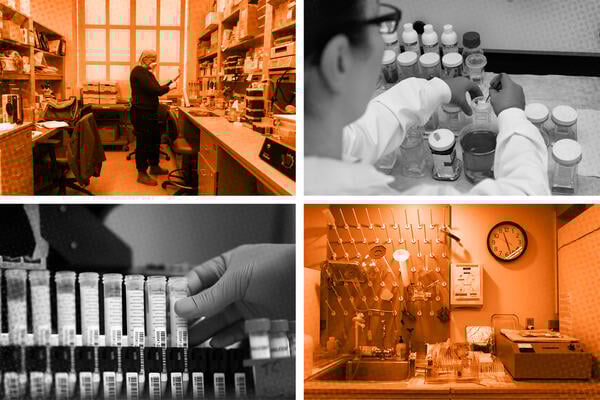
What happened? On May 14, U.S. Defense Secretary Pete Hegseth issued a memo declaring that the Defense Department would move to cap reimbursement for indirect research costs to 15% for all new grants for colleges. Hegseth also ordered officials to renegotiate rates on existing awards. If colleges do not agree, DOD officials should terminate previously awarded grants and reissue them under the “revised terms,” he said.
Overall, Hegseth estimated the move would save the agency $900 million annually.
A group of higher education associations and research universities sued on June 16, arguing that the Defense Department overstepped its authority and noting that other courts had blocked the Trump administration’s caps at other agencies.
“As with those policies, if DOD’s policy is allowed to stand, it will stop critical research in its tracks, lead to layoffs and cutbacks at universities across the country, badly undermine scientific research at United States universities, and erode our nation’s enviable status as a global leader in scientific research and innovation,” they wrote in court documents.
The next day, U.S. District Judge Brian Murphy granted a temporary restraining order blocking the Defense Department from implementing its policy until further ordered.
What’s next? Murphy has scheduled a July 2 hearing on the temporary restraining order.
After the National Institutes of Health tried earlier this year to cut funding for universities’ costs indirectly related to research and set off alarm bells across higher education, 10 higher education associations decided to come up with their own model for research funding rather than having the government take the lead.
Now, after just over six weeks of work, that group known as the Joint Associations Group is homing in on a plan to rework how the government funds research, and they want feedback from the university research community before they present a proposal to Congress and the Trump administration at the end of the month.
“Unfortunately, something is going to change,” said Barbara Snyder, president of the Association of American Universities. “Either we will be part of it or it will be imposed upon us … Significant division in the research community is going to kill us.”
Snyder and other JAG members said at a virtual town hall Tuesday that the current system for direct and indirect research funding costs has served the community well, but it isn’t transparent and leads to confusion about how the rates are calculated, among other challenges. AAU and other higher ed groups sued the NIH in February after the agency proposed capping indirect expenses for all institutions at 15 percent of the direct research costs—down from the average of 28 percent. (Historically, colleges negotiate their own reimbursement rates directly with the federal government.)
The White House said the cap would make more money available for “legitimate scientific research,” but universities warned that the change would halt lifesaving research and lead to job losses, among other consequences. The NIH rate cap would mean a cut of $4 billion for university-based research.
Court challenges have since halted the NIH plan, as well as similar caps proposed by twoother federal agencies; meanwhile, the Department of Defense is working on its own plan related to indirect costs. Snyder said the lawsuits are about fiscal year 2025, while the JAG effort looks ahead to fiscal year 2026 and beyond.
Over the years, Congress and federal agencies have sought to rethink the funding model but didn’t reach an agreement. In fact, after the first Trump administration proposed a 15 percent cap on indirect costs in 2017, Congress specifically prohibited such a move. But now that prohibition doesn’t seem likely to stick as lawmakers consider bills to fund the government for fiscal year 2026, so a new model is necessary. Adding to the pressure on universities, Trump has proposed significant cuts to research funding in his budget.
JAG’s panel of experts presented two options to the university research community at a webinar last week and then answered questions at the town hall Tuesday. Colleges and universities have until June 22 to test the proposed models and provide feedback before JAG sends its final proposal to the government June 27, though any model will likely need additional work.
“No one would choose to work at this rapid pace and rethink how to effectively, fairly and transparently cover these real and unavoidable costs,” said Matt Owens, president of the Council of Government Relations, at last week’s webinar. “But we are where we are, and it’s vital that we meet this moment so that we can emerge with an improved and sustainable indirect cost policy that will enable our country to continue leading the world in research and innovation.”
Proposed Models
Both versions of what JAG is calling the Fiscal Accountability in Research model, or FAIR, are geared toward offering more accountability and transparency about how federal research dollars are spent. JAG hopes that in the end, the new model will be simpler than the current one. They also want to nix terms like “indirect costs rate” and “overhead” for either essential research support or general research operations in an effort to underscore that the money goes toward the real costs of research.
“This will require a bit of a culture change in institutions, but we think the benefit of that far outweighs the downsides,” said Kelvin Droegemeier, a professor and special adviser to the chancellor for science and policy at the University of Illinois at Urbana-Champaign, who led the JAG effort, at the webinar.
One model, which the group calls FAIR No. 1, would include costs related to managing the grant, general research operations and facilities as a fixed percentage of the total budget. The percentage would be based in part on the type of institution and research. This approach is designed to be simple and reasonable, according to the group’s presentation, but it’s more general, which makes it “difficult to account for the wide array of research frameworks that now exist.”
The other model, FAIR No. 2, would more accurately reflect the actual costs of a project and make the structure for federal grants more like those from private foundations. Under this model, essential research support would be lumped into the project costs while funding for general research operations, such as payroll and procurement, would be a fixed percentage of the total budget. That change would likely increase the direct costs of the project.
Droegemeier and other members of JAG’s expert panel noted that FAIR No. 2 would be a “significant departure” from the current approach, and universities would likely need more time to overhaul their processes for tracking costs. Still, the group said this model would better show what the money goes toward, addressing a key concern from Congress.
Droegemeier described the two models as “bookends” and said the group would probably end up somewhere between the two.
‘In a Good Spot’
At Tuesday’s town hall, attendees questioned whether Congress or the Trump administration would even consider JAG’s proposal and why any change was necessary.
Droegemeier said he’s met with members of Congress who have endorsed their process, and he’s kept in touch with Trump administration officials about the group’s work. So far, he’s seen a positive response to the models, adding that officials at the Office of Management and Budget indicated that they weren’t “oceans apart.”
“We’ve done everything possible to build goodwill and trust,” he said. “There’s a long road ahead of us, but I think we’re in a good spot.”
Other speakers echoed that point, noting that Sen. Susan Collins, a Republican from Maine and chair of the powerful Appropriations Committee, publicly supported the models at a recent hearing. And NIH director Jay Bhattacharya called the proposals “quite promising” at the same hearing, STAT Newsreported.
Additionally, the House’s appropriations bill for the Department of Defense calls on the agency to “work closely with the extramural research community to develop an optimized Facilities and Administrative cost reimbursement solution for all parties that ensures the nation remains a world leader in innovation.”
Across the board, speakers at the town hall said they must act to have a say in discussions about the future of research funding.
“The two models are a significant change,” said Deborah Altenburg, vice president for research policy and advocacy at the Association of Public and Land-grant Universities. “But all of our organizations are responding to a new political situation.”
Earlier this year the University of North Carolina at Chapel Hill Board of Trustees approved the design of a $228 million research facility that would expand UNC’s work on virology, vaccine development and other areas. But now that project is suddenly on hold.
UNC Chapel Hill is one of several major research universities pausing construction plans due to financial uncertainty provoked by the Trump administration’s efforts to cap federal research funding reimbursement rates.
In recent months multiple federal agencies have announced plans to cap research reimbursement rates at 15 percent. (While such rates typically hover just under 30 percent, some institutions have negotiated reimbursement rates upward of 50 percent.) Though court challenges have halted the rate cuts for now, the uncertainty has prompted some institutions to pause certain construction projects—particularly research labs and related facilities.
Institutions pausing or slowing plans to build new projects include some of the nation’s wealthiest private universities: Yale, Johns Hopkins and Washington U in St. Louis, which posted endowments of $41.4 billion, $13 billion and $11.9 billion, respectively, in the last fiscal year, according to a recent study of endowments. (UNC Chapel Hill is among the nation’s wealthiest public institutions, with a $5.7 billion endowment.)
In some cases, construction on other facilities, like a new residence hall at UNC Chapel Hill, is moving forward while projects such as research labs have been halted.
“We’re riding out a bad period,” Alexandra Daum, Yale’s associate vice president for New Haven affairs and university properties, said at a local Chamber of Commerce event earlier this month.
One of those projects is the planned conversion of a street into a pedestrian and cyclist-only plaza, which officials decided in February to delay, Daum told The New Haven Independent, another local news outlet. Yale has not identified the other nine projects it plans to put off.
Daum pointed to uncertainty about federal funding as the reason for the pause.
“Like many, Yale is tracking federal funding closely and anticipating there will be impact to projects in the planning pipeline,” Daum wrote in an email to Inside Higher Ed. “We don’t know how much of an impact federal decisions will have on these projects, so we are being prudent.”
Construction on projects already underway will reportedly continue.
Johns Hopkins University announced a similar decision in early June. Administrators wrote in a message to campus that the university has experienced “a steady stream of research grant terminations, suspensions, and delays” that created uncertainty, particularly when coupled with the proposals for lower research reimbursement rates. The rate caps could deal the university a loss of more than $300 million a year in federal research funding, officials wrote.
JHU is taking a number of measures to handle budget concerns, including a staff hiring freeze, as well as pulling back on planned construction projects.
“Prudence dictates cutting back our ambitions in the near term, and we have decided to reduce our capital construction and renovation plans by approximately 10-20%,” officials wrote. “Final decisions on these reductions will be made over the summer in consultation with the divisions, with an emphasis on continuing mission-critical projects, essential deferred maintenance, and projects that are already far along in the permitting, demolition, and construction process.”
JHU did not identify what specific projects might be pushed back.
Washington University halted construction of a new arts and sciences building in April; work was expected to begin earlier this year, according to a news release from last fall.
WashU officials also cited federal funding concerns.
“We regret that it’s necessary to take these actions, but in our current climate, it is simply not prudent to continue with these projects as scheduled,” Chancellor Andrew D. Martin said in a news release. “We are always careful stewards of the university’s resources, but at this time, given the uncertainty around federal research funding and other potential government actions, we have to take a careful look at every aspect of our operations. We hope that once we have a clearer sense of the financial picture, we may be able to revisit some of these investments.”
“Due to ongoing uncertainty surrounding federal research funding, the University has paused plans for the Translational Research Building. We are currently evaluating our research infrastructure, including our research facilities, and will continue to monitor funding trends. Scenario planning is underway to help us remain prepared for future opportunities,” a UNC Chapel Hill spokesperson told Inside Higher Ed in an emailed statement.
In neighboring Virginia, Republican governor Glenn Youngkin rejected $600 million in funding requests for 10 planned renovation and expansion projects at public universities last month, The Virginia Mercury reported. In a letter to state legislators, Youngkin cited economic uncertainty.
“I am optimistic about Virginia’s longer-term prospects for Fiscal Year 2027 and Fiscal Year 2028, and beyond, but there are some short-term risks as President Trump resets both fiscal spending in Washington and trade policies that require us to be prudent and not spend all of the projected surplus before we bank it,” Youngkin wrote to state lawmakers in May.
Some of those planned projects were research-oriented, though many were not.
The Outlook
While a few universities have publicly walked back big projects, that doesn’t appear to be happening en masse, experts say. Planned construction is still happening at many colleges.
“Projects, generally, are moving ahead. There are some larger projects that have been paused. The ones that have been stopped tend to be research-focused projects,” said Chris Purdy, director of higher education at SmithGroup, a design and planning firm that works in the sector.
Other buildings, particularly those that are student-focused or in high-growth areas such as health sciences and STEM, are also moving ahead, he noted. Purdy pointed out that research labs and related facilities are often highly specialized and therefore the most expensive to build.
“They’re primed to be under the most scrutiny just because they’re very expensive buildings,” Purdy said.
He noted that SmithGroup continues to see requests for proposals for campus construction and is optimistic that colleges won’t back off of planned projects throughout the rest of the year. But looking ahead to next summer, or fiscal year 2027, Purdy is less sure about where things will stand, noting the looming economic uncertainty for many institutions.
“At that point they’re going to have a different outlook on funding for capital projects,” Purdy said.
This story was originally published by CalMatters. Sign up for their newsletters.
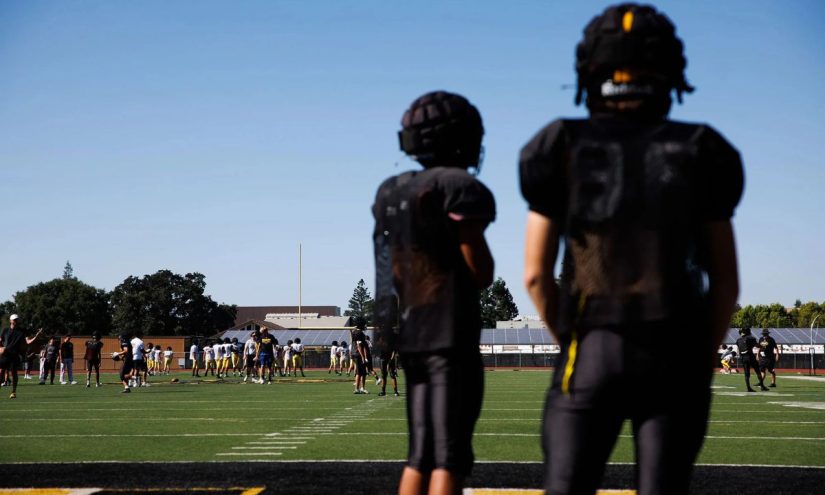
California’s schools and colleges receive billions in federal funding each year — money that President Donald Trump is threatening to terminate over the actions of one student. AB Hernandez, a junior from Jurupa Valley High School, is transgender, and on May 31 she won first- and second-place medals at the state track and field championship.
“A Biological Male competed in California Girls State Finals, WINNING BIG, despite the fact that they were warned by me not to do so,” Trump said in a social media post last week. “As Governor Gavin Newscum (sic) fully understands, large scale fines will be imposed!!!”
Despite this post and a similar threat a few days earlier to withhold “large-scale” federal funding from California, Trump lacks the authority to change the state’s policy toward transgender athletes without an act of Congress or a decision by the U.S. Supreme Court. And recent court cases suggest that Trump also may have a hard time withholding money from California.
California state law explicitly allows transgender students in its K-12 school districts to compete on the team that matches their preferred gender, but the Trump administration has issued multiple directives that restrict access to girls’ sports, including a letter last week from the U.S. Department of Justice telling high schools to change their policies.
On Monday, California Attorney General Rob Bonta sued the Justice Department over its letter, saying it had “no right to make such a demand.”
“Let’s be clear: sending a letter does not change the law,” said State Superintendent of Public Instruction Tony Thurmond in a statement to school districts. “The DOJ’s letter to school districts does not announce any new federal law, and state law on this issue has remained unchanged since 2013.” On Monday, Thurmond sent his own letter to the Trump administration, refuting its legal argument.
California receives over $2 billion each year for its low-income Title I schools, as well as over $1 billion for special education. At the college level, students receive billions in federal financial aid and federal loans. Even if Trump lacks the legal authority to change state law, he could still try to withhold funding from California, just like he tried with Maine. In February, Trump asked Maine Gov. Janet Mills if her state was going to comply with a presidential executive order — which is not a law — that directed schools to bar transgender girls from certain sports. Mills said she’d comply with “state and federal laws,” effectively rebuking the president.
The Trump administration has since tried to withhold funding from Maine, but legal challenges have prevented it.
The NCAA vs. California state law
Trump made banning transgender youth athletes a centerpiece of his 2024 presidential campaign, and it’s remained a focal point for his administration this year. Nationally, Americans increasingly support restrictions on transgender athletes, according to surveys from the Pew Research Center. Gov. Gavin Newsom, who last year signed legislation supporting trans students, spoke out against transgender athletes in a podcast this March, saying it was “deeply unfair” to allow transgender girls to compete in girls’ sports.
Female athletes with higher levels of testosterone or with masculine characteristics have long faced scrutiny, biological testing and disqualification. Debates about who gets to participate in girls’ or women’s sports predate the Trump administration — and Newsom — and policies vary depending on the athletic institution.
In 2004, the International Olympic Committee officially allowed transgender athletes to compete in the sport that aligned with their gender identity, as long as the athlete had sex reassignment surgery, only to change that policy in 2015 and require hormone testing. In 2021, the committee changed the policy again, creating more inclusive guidelines but giving local athletic federations the power to create their own eligibility criteria.
Across California, youth leagues, private sports leagues and other independent athletic associations all have their own policies. Some allow transgender women and men to participate; some restrict who can compete. Some require “confirmation” of a participant’s gender, such as a government ID or statements from health care professionals, while other associations take the athletes at their word.
California’s colleges and universities are not allowed to discriminate against transgender students but state law doesn’t provide any guidance beyond that. After the presidential executive order in February, the National Collegiate Athletic Association (NCAA), which independently regulates college sports, changed its rules, prohibiting transgender women from competing and putting colleges in a bind. Roughly 60 California universities are part of the NCAA, including almost all of the UC and many Cal State campuses. Community colleges, which represent the bulk of the state’s undergraduates, are not part of the NCAA.
“There’s a strong argument (the NCAA rules) could violate state law and federal equal protection,” said Elana Redfield, the federal policy director at UCLA’s Williams Institute, which studies LGBTQ+ issues.
Amy Bentley-Smith, a spokesperson for the California State University system, declined to comment about how the NCAA policy conflicts with state and federal regulations. She said the Cal State campuses abide by the NCAA rules — preventing transgender athletes from competing — while still following state and federal non-discrimination laws regarding trans students.
Stett Holbrook, a spokesperson for the University of California system, said the UC does not have a system-wide policy for transgender athletes. He did not respond to questions about whether the campuses abide by NCAA rules.
Unlike the NCAA, the California Community College Athletic Association allows transgender athletes to compete. A spokesperson for the association, Mike Robles, said he’s aware of the NCAA rules and the Trump administration’s priorities but he did not say whether the association will modify its own policy.
The U.S. Constitution is silent on trans students
In February, just days after the president’s inauguration and the executive order regarding transgender athletes, the U.S. Department of Education launched an investigation into San Jose State after a women’s volleyball player outed her teammate as transgender. The education department has yet to provide an update on that investigation.
With the Trump administration’s focus now on CA K-12 school districts, the legal debate has intensified. In its letter to the state’s public schools last week, Assistant U.S. Attorney General Harmeet Dhillon said allowing transgender girls to compete in girls’ sports is “in violation” of the Equal Protection Clause of the U.S. Constitution and asked schools to change their policies.
But the U.S. Constitution doesn’t say anything about transgender athletes, at least not explicitly.
Instead, Dhillon is offering an interpretation of the Constitution, “which doesn’t carry the full force of law,” Redfield said. The laws that do govern transgender athletes, such Title IX, aren’t clear about what schools should do, and the U.S. Supreme Court — the entity with the power to interpret federal law and the Constitution — has yet to decide on the matter.
That said, many lower level judges have already weighed in on whether the Constitution or Title IX law protects transgender students or athletes.“The preponderance of cases are in favor of trans plaintiffs,” Redfield said. “The federal government is contradicting some pretty strong important precedent when they’re making these statements.”
After Trump’s comments about AB Hernandez, the nonprofit entity that regulates high school sports, the California Interscholastic Federation, changed its policy, slightly. For the state’s track and field championship, the federation said it would implement a new process, whereby AB Hernandez would share her award with any “biological female” that she beat. All “biological female” athletes below Hernandez would also move up in ranking.
On May 31, Hernandez shared the first-place podium twice and the second-place podium once, each time with her competitors smiling supportively, the San Francisco Chronicle reported.
A spokesperson for the governor, Izzy Gardon, said that approach is a “reasonable, respectful way to navigate a complex issue without compromising competitive fairness.”
This audio is auto-generated. Please let us know if you have feedback.
Dive Brief:
The state of Tennessee and Students for Fair Admissionssued the U.S. Department of Education Wednesday over allegations the agency’s decades-long practice of designating federal grant funding for Hispanic-serving institutions is unconstitutional.
The plaintiffs argued that the department’s eligibility requirements for HSI grantsare discriminatory and undercut opportunities for all students, including those who are Hispanic and attend colleges that aren’t HSIs. To qualify as an HSI, a college must be nonprofit and enroll a full-time undergraduate student body that is at least 25% Hispanic.
Asserting that all colleges serve Hispanic students, Tennessee and SFFA are asking the federal court to strike down the HSI grant program’s ethnicity-based requirements and allow all institutions to apply for the grants “regardless of their ability to hit arbitrary ethnic targets.”
Dive Insight:
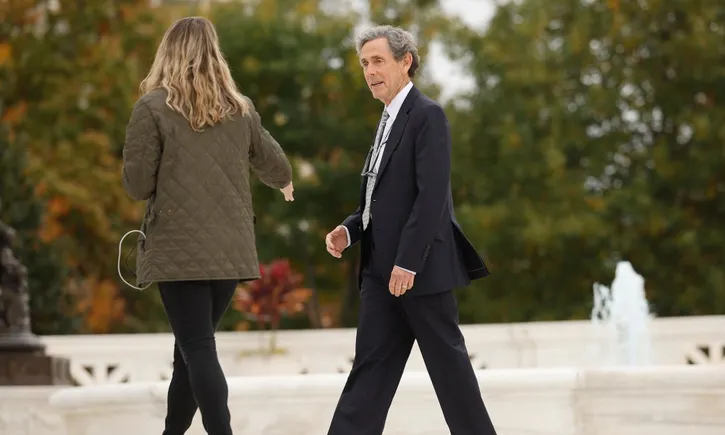
Edward Blum, president of SFFA, said the advocacy organization is suing to ensure equal opportunity for all, not “denying opportunity to any racial or ethnic group.”SFFA successfully challenged race-conscious admissions before the U.S. Supreme Court, getting the practice banned in 2023.
“This lawsuit challenges a federal policy that conditions the receipt of taxpayer-funded grants on the racial composition of a student body,” Blum said in a statement Wednesday. “No student or institution should be denied opportunity because they fall on the wrong side of an ethnic quota.”
HSI is a designation first established in 1992 as part of the Higher Education Act, and the federal government began distributing funds to qualifying institutions three years later.
The Education Department’s HSI division exists to distribute grant funding to “expand the educational opportunities for Hispanic Americans and other underrepresented populations,” according to its website.
Though a majority of states have at least one HSI, the institutions are clustered in areas with higher Hispanic populations.
Seven states — California, Texas, New York, Illinois, Florida, New Mexico and New Jersey — and Puerto Rico are home to 81% of HSIs,according to an analysis of federal data by the Hispanic Association of Colleges and Universities.
The Hispanic and Latino population is one of the fastest-growing minority groups in the country. In 2023, 65.2 million Hispanic and Latino people lived in the U.S., accounting for nearly a fifth of the population.The Hispanic population is expected to grow to roughly a quarter of the U.S. population by 2060, according to federal data.
In Tennessee, Hispanic students made up just over 8% of undergraduates in the 2023-24 academic year, according to HACU. The state has just one HSI — Southern Adventist University, a private nonprofit.
No public Tennessee college qualifies for HSI funding, despite all serving some population of Hispanic students, state officials said in Wednesday’s lawsuit. This puts public college students at a disadvantage and harms the institutions, they argued.
Tennessee Attorney General Jonathan Skrmetti alleged that the HSI grant system “openly discriminates against students based on ethnicity.”
“The HSI program perversely deprives even needy Hispanic students of the benefits of this funding if they attend institutions that don’t meet the government’s arbitrary quota,” he said in a Wednesday statement.
Both Skrmetti and Blum invoked the 2023 Supreme Court ruling on race-conscious college admissions in their statements. Blum argued the court “made clear” that federal funding practices like the HSI grant program are “patently unconstitutional.”
That interpretation of diversity-focused federal funding has yet to be tested judicially. The high court’s 2023 decision only addressed admissions practices. But since then, conservative policymakers and those opposed to diversity initiatives have sought to apply it to a wide range of college affairs, including scholarships and diversity programs for students.
Now, they are turning their attention to a long-standing federal program through this lawsuit, filed in U.S. District Court in Tennessee.
The Education Department did not immediately respond to a request for comment Thursday.
However, the department under Trump has already sought to apply the Supreme Court’s 2023 ruling against Harvard University and the University of North Carolina to diversity, equity and inclusion efforts at federally funded institutions.In February, the agency threatened to pull all funding from colleges and K-12 schools that considered race in their programs and policies.
On the first day of his second term, President Donald Trump issued an executive order repealing a Biden-era initiative aimed at boosting educational access via Hispanic-serving institutions. Among several goals, that program sought to expand the educational capacity of Hispanic-serving institutions through federal support.
Trump’s order — which revoked dozens of Biden-era executive actions — described the repealed policies as a move to “restore common sense” in the federal government.
This is of course a massive own goal with dangerous implications, as commentators such as Holden Thorp and William Kirby have pointed out. But it is not simply about Americans losing scientific/technological supremacy. As the Economist has pointed out, the entire world has a stake in what happens to American science; its hobbling will have consequences not just for global science but for the global economy as well.
It has been fascinating over the past few weeks watching how the American debacle had grabbed the attention of the rest of the world as well. It has been very difficult this past month or so to be somewhere where the papers weren’t obsessing about what was happening to students at Harvard (check out a representative smattering from Ethiopia, Iceland, Vietnam, Malaysia, India and Kazakhstan). At the policy level, almost every OECD government is revving up plans to poach US-based researchers even in places which genuinely don’t have the scientific infrastructure to poach anyone (Ireland? Czechia? C’mon). In other words, you have basically the entire world looking at how the American debacle in a massively self-centred way. Basically, it’s all: “Yeah, yeah, death of the American research university, how does this affect me/how can I profit?”
But the world has yet to grapple in any kind of serious way is how to maintain growth and innovation in a world where the largest spender on research is reducing expenditures by 50%. This has implications for absolutely everybody and at the moment there are no serious discussions about how the world gets by without it. Obviously, other countries can’t replace what used to come out of NSF and NIH. But they can, as Billy Beane from Moneyball might say, recreate it “in the aggregate” by working together. Unfortunately, that’s not quite what they are doing. That would require Australia, Canada, Japan and Korea to be working actively with the European Union; not only is that not happening, but these days the EU can’t even get it’s own act together on research.
Meanwhile, in large parts of the world, the main higher education story we hear about is one of “cutbacks”, “austerity” and the like. But there are, I think, some fundamentally different issues at work in different countries. In the rich Anglosphere, which happens to be where most of the big producers of higher education are located, mature higher education systems highly reliant on market fees are being forced into big cuts as governments remove their ability to attract funds, usually by changing their student visa regimes. (An aside here: many people ask: where will international students go if not Canada/US/Australia/wherever? To which the answer is usually: to a great extent, they will just stay home. But a few countries do seem to be doing better on international students as of late, mostly in Asia. Turkey, Dubai and Uzbekistan in particular seem to be the big winners, though the growth in their intakes is lower than the drop in the intakes of the big anglophone countries).
But in other countries, the fundamental financial tension is that demand for higher education is far outstripping the ability of either public or private funding to keep the system afloat (government could choose not to meet so much demand, but political needs must). Kenya, with its widespread university financial problems comes into this category, and Nigeria, where funding new universities seems to come at the expense of funding existing ones clearly come under this category. Intermediate cases here include France (increasing demand, flat funding), Brazil (which has done a series of policy U-turns on transfers to federal universities and whose overall policy might best be described as “confused”), and perhaps Colombia (promises of money co-existing with widespread institutional precarity, even in the public sector). What is common here is that a lot of countries seem to have built systems which are too big/expensive for what the public – collectively or individually – is willing to pay.
A common response to the problem of inadequate public funding is the expansion of private higher education. Almost unbelievably, private higher education now makes up about 20% of total provision in Spain, France and Germany (in two of those countries, tuition is free, and in the third it is minimal – under 1000 euros per year in most cases). In many cases, the expansion is in relatively cheap classroom-heavy courses (often in business) but in many cases these universities are moving into other areas such health care provision. This explosion has led to a significant tightening of regulations on private universities in Spain and a “tri” (meaning triage”) on France’s Parcoursup system, meaning that certain types of private college will have a harder time advertising themselves to prospective students. This phenomenon is not constrained to Europe: Tunisia is also currently pre-occupied with how to regulate private institutions. An alternative to letting domestic private universities rip is to invite foreign institutions into the country. India is the country most in the news for attempting this at the moment but places like Saudi Arabia, Uzbekistan and Vietnam are also eagerly heading down this route.
My tip for the story this summer? Watch graduate unemployment rates around the world, particularly in India and China (where the situation is so bad the government has just announced a kind of emergency blitz on graduate hiring which sure seems like it is set up for failure). I think the push to align higher education more with the labour market is about to go into overdrive.
All caught up now! See you back here in September.
The Trump administration is asking Congress to cut funds for tribal colleges and universities by nearly 90 percent, according to the Department of the Interior’s proposed budget released Monday.
Tribal college advocates told ProPublica, which first reported on the cuts, that tribal colleges could have to shutter if Congress approves the plan, leaving thousands of students without the support they need to complete a degree program. And reports from ProPublicashow that it will only further devastate institutions that were already underfunded.
“The numbers that are being proposed would close the tribal colleges,” Ahniwake Rose, president and CEO of the American Indian Higher Education Consortium, told ProPublica. “They would not be able to sustain.”
The budget request calls for about $860 million to operate Indian Education Programs, which includes two federally controlled tribal colleges—Haskell Indian Nations University and Southwestern Indian Polytechnic Institute. Of that $860 million, about $22 million would go toward postsecondary programs. That’s about a $161 million cut compared to fiscal year 2024.
Tribal colleges argue that their funding is protected by treaties and contend that the institutions up for discussion are critical providers in some of the country’s poorest areas.
“It doesn’t make sense for them to [approve the cuts[ when they’re relying on us to train the workforce,” Dawn Frank, president of Oglala Lakota College in South Dakota, told ProPublica. “We’re really relying on our senators and representatives to live up to their treaty and trust obligation.”
A federal judge ordered the Trump administration to restore funding to AmeriCorps programs in 24 states and Washington, D.C., following a lawsuit that challenged the April cuts to the program, The Hill reported Thursday.
The judge, Obama appointee Deborah Boardman, ruled that the states were likely to succeed in their argument that the agency’s funding could not legally be cut without a notice-and-comment period. The ruling did not reinstate any of the agency’s staff.
AmeriCorps volunteers and grants support at least 100 college-access organizations across the U.S., many of which had to lay off their AmeriCorps members in the wake of the cuts.
It’s the latest court order blocking the administration’s crusade to reduce the size of the federal government; recently, judges reversed layoffs at the Department of Education and ruled that a lawsuit challenging funding cuts at the National Institutes of Health could move forward.
A birds-eye view quickly reveals the inadequacy and complexity of UK postgraduate student finance, as four systems operate (and awkwardly overlap) in a world of high tuition fees and rising living costs.
As practitioners, we have a much more ground level perspective: seeing how students struggle through these systems in practice and witnessing the winners and losers who result from a system that should, at least in principle, be equally useful to all.
With the UK’s national funding agencies opening applications for 2025-26, now is the time to update our understanding of postgraduate loan options, and highlight anomalies. Doing so reminds us to spot the obstacles students may not see: the metaphorical potholes that can quite literally slow a student’s progress or stop them progressing at all.
It also helps us ask whether some of these obstacles really need to be there.
When moving to study reduces the amount you can borrow
One major factor that prospective students often overlook is how changing their country of residence affects their eligibility for future funding – and how this can happen without them realising.
Take this real-world example:
A student from England completed their bachelors and masters’ in Scotland
As many students do, they supplemented their Student Finance England (SFE) Masters loan with part-time work (at their university)
They chose to continue to a PhD, having found a supervisor and a place
However, their residency had been updated from England to Scotland… meaning they are no longer eligible for a SFE doctoral loan (despite having already received its UG and PGT support)
Because Student Awards Agency Scotland (SAAS) doesn’t offer doctoral loan, they were left in postgraduate funding limbo
Whilst moving to study doesn’t affect residency status, moving to work does. This prevents people who have moved permanently to work from picking a preferred loan based on their address history. But it introduces perverse pitfalls that potentially incentivise against study mobility. And in some cases, like this one, it could hamper the chances of students from less affluent backgrounds – those who need to work while studying – from progressing to doctoral study.
The easy solution here would be for each funding organisation to ensure that work during study doesn’t impact residency.
When you better get it right first time
Most of the PG loan systems restrict finance for candidates with equivalent or higher qualifications.
Again, the design is fair in principle, but confusing in practice. Do students readily understand the difference between holding a postgraduate masters, an undergraduate integrated masters or a conferred “Oxbridge MA”?
And is the principle actually practical? To take a slightly hypothetical example:
Mark has an MA in Gothic Studies (yes, really). He paid for this himself almost 20 years ago (again – yes, really). He now wants to take an MSc in Data Analytics to support his work analysing prospective PG audience shifts at scale. A master’s loan would help him do so, but he can’t get one. Because he has a self-funded MA in Gothic Studies from 20 years ago.
In an age of upskilling and reskilling, it’s worth asking if this is really what we want for the UK economy. And no, the LLE won’t help either.
Should we allow access to the PG loan for courses in priority subjects, and/or where student finance hasn’t previously been awarded? It’s a conversation worth having, but there are no signs that the issue is top of anyone’s list of priorities.
When the postgraduate student finance system penalises you for being… a postgraduate
Postgraduate students are, by definition, older than undergraduates. As such, they’re also more likely to have children (or, indeed, other caring responsibilities).
A childcare grant is offered in England to help support student-parents, but eligibility explicitly excludes anyone not receiving undergraduate student finance or receiving a postgraduate loan. This feels like a fairly difficult needle for a masters student to thread and a clear blocker to seeing more of the UK workforce taking advantage of postgraduate-level training (something Mark has drawn attention to before).
Perhaps it is time to extend the existing Childcare Grant to postgraduates on similar age and earnings criteria.
When you could borrow less but pay nothing back
A more outlandish example, but one that also speaks to the unintended consequences of having multiple loan funding systems.
Meet Ewan and Evan, two 59 year-olds, financially independent and planning to retire at 60. Both have enrolled on the same MSc History (Online, Part-time, 2 years) at The University of Edinburgh, starting September 2025 with a course fee of £17,100. Here’s where things differ:
Ewan is Scottish-resident and eligible for a SAAS loan of £7,000 which is paid directly to the university. He needs to find another £10,100 to cover the fees.
Evan, a Welsh-resident can access a SFW loan of up to £19,255, paid directly to him. After paying the course fees, he may have up to £2,155 remaining
The likelihood is that neither will fully repay their loan given their age and the repayment thresholds. But whereas Ewan has had to find extra money, Evan has studied a masters “for free.
While there’s no simple fix, it’s crucial that funding agencies continue to provide clarity on terms, conditions and eligibility criteria. Universities should also signpost where to find this definitive information and ideally clarify the difference in funding arrangements to help prospective students better understand their options.
The importance of professional guidance
Exploring the nuances of the loan system in this way may feel somewhat obscure, but it allows us to better understand the genuine confusion and frustration that prospective students often feel when navigating the complexities of postgraduate funding, particularly UK postgraduate loans.
As professionals in the postgraduate space, our aim is not to encourage manipulation of the system, but we do need to understand how its unintended quirks can misdirect students and be ready to guide them when that occurs.
We also need to stay updated on loan policies and repayment thresholds. That way, we can help students make informed decisions.
The more we understand the nuances of postgraduate funding, the better equipped we all are to support students in their academic journeys.
The kindergartners of South Dakota’s Hamlin County are, in fact, in space. To be specific, they are on planet Earth, near the geographic center of North America, sitting crisscross applesauce inside an 11-foot-high inflatable planetarium set up in their school gym.
The darkness is velvety. Childish whispers skitter around the dome like mice. The kids are returning from a short mission to Jupiter, piloted by Kristine Heinen, a young museum educator with a ponytail who knows how to make her voice BIG AND EXCITED and then inviting and quiet to hold little ones’ attention.
“Now we’re over China!” Heinen says.
“My friend went to China!” a girl calls out.
“The other side is nighttime and this side’s bright,” expounds a boy with a crew cut. “The sun shines here so it can’t shine over there.“
The school is in eastern South Dakota, 34 miles northeast of the settlement where Laura Ingalls Wilder grew up and attended a one-room schoolhouse. The sprawling Hamlin Education Center is a modern-day analogue, serving an entire district in one building, with just under 900 students, pre-K through 12. Notable graduates include U.S. Homeland Security Secretary Kristi Noem, the former governor of South Dakota.
The center is roughly equidistant from four tiny towns, surrounded by open fields where cornstalks shine in the sun; 95 percent of students arrive by bus, from up to 20 miles away. Over a third of them qualify for free or reduced-price lunch, said Dustin Blaha, the elementary school’s principal.
Hamlin Elementary students line up for their turn visiting a traveling planetarium sponsored by the South Dakota Discovery Center. Credit: Anya Kamenetz for The Hechinger Report
During the planetarium’s daylong visit to the small community of Hayti, S.D., an educator from the South Dakota Discovery Center wowed 500 elementary school students with a presentation about the planets and stars. Credit: Anya Kamenetz for The Hechinger Report
Many Hamlin Elementary haven’t had a chance to visit the South Dakota Discovery Center in Pierre three hours away, so the museum brings traveling exhibits like a portable planetarium to them. Credit: Anya Kamenetz for The Hechinger Report
Blaha said that most of these children have never been to the South Dakota Discovery Center, a hands-on science museum three hours west in the state capital. But thanks to a federal agency called the Institute of Museum and Library Services, a part of the museum can come to them.
The IMLS was established in 1996, combining previously separate programs. The small agency became the largest source of federal funding for museums and libraries, last year awarding $266.7 million in program grants, research and policy development across all 50 states. IMLS awarded the South Dakota Discovery Center about $45,000 in 2023 to upgrade this traveling planetarium.
But students around the state may be waiting a long time for the next upgrade.
Related: Young children have unique needs and providing the right care can be a challenge. Our free early childhood education newsletter tracks the issues.
President Donald Trump signed an executive order in mid-March calling for the agency to be “eliminated to the maximum extent consistent with applicable law.” Mass firings followed.
On May 1, the U.S. District Court in Washington, D.C., issued a temporary restraining order to block the agency’s dismantling, followed on May 6 by a second federal judge finding the dismantling of this and two other agencies unconstitutional. On May 20, the American Library Association reported that employees are returning to work and some grants have been restored.
But the administration is continuing its legal battle to all but shutter the IMLS. The latest post on the agency’s Instagram account is captioned, “The era of using your taxpayer dollars to fund DEI grants is OVER,” holding up for criticism grants that were aimed at addressing systemic racism in museums, equitable library practices, and diverse staff development. The IMLS and the Department of Government Efficiency did not respond to requests for comment.
A veteran of the agency who asked to remain anonymous because of fear of reprisal said they first saw DOGE staffers meeting with leadership on March 28. “On the 31st, we were put on administrative leave. We had about two hours to turn in your key cards, your ID, get everything off your laptop you’re ever going to need. We were locked out of our computer systems by 3:30 and told to get out of the building.” A skeleton crew was hastily rehired the next day.
The ex-staffer points out that the Institute of Museum and Library Services spends, or spent, just 7 percent of its budget on its 70 staff, passing the rest along as grants. “We are not a bloated agency.” They have two kids at home, one with special needs and are married to another federal employee whose job is also at risk; but they are almost as worried about their grantees as themselves.
“After 20 years, I didn’t even get to put an out-of-office response up. Is someone emailing me right now and getting nothing, because all of a sudden their grant just ended? I hate that,” the former IMLS employee said.
Almost all grants awarded required a one-to-one cost share out of the local institution’s budget, the staffer said. Plus, typically the grantees pay for activities first and then apply to get reimbursed. “We’re leaving these often small rural museums and libraries on the hook.”
Anne Lewis, executive director of the South Dakota Discovery Center, said that organizations like hers would be “wobbly” without federal funding and would have to scale back on ambitious programs like the planetarium upgrade.
“The new system has much better interaction and control,” said Heinen, the museum educator. An earlier version had a static point of view, but upgraded visual effects means that “now we have spaceship mode,” she said. “We can travel to destinations including planets, and go in a full 360-degree mode around galaxies.”
With a flick of the touchscreen menu, she can also display the constellations of a dozen different cultures including Lakota, a significant benefit especially when she visits tribal schools.
The South Dakota Discovery Center, based in Pierre, has used federal support from the Institute for Museum and Library Services to pay for a traveling planetarium exhibit. Credit: Anya Kamenetz for The Hechinger Report
It’s a lean operation: Heinen drove solo nearly 200 miles from Pierre to Watertown the evening before and spent the night at an Econo Lodge. From there, it was another 20-some miles to Hayti, where she arrived at 7:30 in the morning, set up the dome herself, and ran 30-minute programs all day.
The whole elementary school, about 500 kids in total, saw the planetarium, with each show customized to the children’s interest and grade level; and she also conducted a parent engagement program in the afternoon. Heinen said she never tires of being a “Santa Claus” for science. ”As soon as they see me, they know something fun is going to happen.”
During this visit, the fan favorites were Jupiter, Mars and the sun. “It was cool when we went to Mars,” said Nash Christensen, 6. “And the volcano on that one moon, and the big hurricane on Jupiter. I think Jupiter is a dangerous place to live.”
Grant recipients of the Institute of Museum and Library Services say the support from the federal government has been critical to running their programs. For example, the Boston Children’s Museum, the second-oldest children’s museum in the country, has used federal grant money to improve school readiness. One of the outcomes was a new exhibit in the museum, “Countdown to Kindergarten,” that mimics a kindergarten classroom, complete with a school bus you can sit in out front.
“It’s helpful not only for the kids, but some of our caregivers who came from other countries and may not have gone to a school like this,” said Melissa Higgins, the museum’s vice president of programs and exhibits.
At the Madison Children’s Museum in Wisconsin, federal funds paid for a multistate partnership that provides climate education for young children and their families. In Fort Lauderdale, Florida, a grant covered five “STEMobiles,” which offer hands-on science activities for children ages 3-5 in low-income parts of Broward County. The Philadelphia School District won a two-year planning grant to try to improve its pipeline of school librarians; they were down to only a handful for a district of 200,000 students.
But the greatest impact may come in rural, often deep-red areas.
“Rural communities have particularly unique challenges,” said Lewis at the South Dakota Discovery Center. “There’s 800,000 people in the state, and they’re dispersed. We don’t have a concentration of funders and donors who can help support these enrichment activities.”
She said the teachers she serves are “passionate, committed and, like every other place in the world, underfunded.” If not for institutions like hers, students would probably go without this kind of hands-on science experience, she said.
Blaha, the elementary school principal, concurred. “The planetarium brings excitement and expertise that we don’t typically have in a community like this,” he said.
For now, the excitement is coming to an end. The class has “landed” on a green lawn, under a deep blue sky. Heinen announces “It’s time to leave.” She’s met with a chorus of, “Noo!”
“You guys, we were in here for a full 30 minutes.”
“It felt like 10!”
“It felt like a second!”
Tonight, many of them will be able to look up at the dark sky over the prairie and show their parents Jupiter, Ursa Major and Mars.
Contact the editor of this story, Christina Samuels, at 212-678-3635 via Signal at cas.37 or [email protected].
The Hechinger Report provides in-depth, fact-based, unbiased reporting on education that is free to all readers. But that doesn’t mean it’s free to produce. Our work keeps educators and the public informed about pressing issues at schools and on campuses throughout the country. We tell the whole story, even when the details are inconvenient. Help us keep doing that.