Tag: funds

  • Illinois Budget Lists Funds for Defunct College

    Illinois Budget Lists Funds for Defunct College

    Illinois lawmakers budgeted $500,000 for Lincoln College in a state budget that went into effect July 1—even though the small private institution closed in 2022, WICS News Channel 20 reported.

    The earmark added in a capital bill in 2018 continues to resurface in the budget each year because it’s included in a state law, even though it hasn’t been funded.

    “That money’s still in there. However, it wouldn’t have any place to go to now,” state senator Sally Turner told WICS.

    But it could be redirected in the future.

    “Later on, down the road, we could probably change that title to the city of Lincoln or to the furtherment of the development of Lincoln Developmental Center or something of that nature, if it ever gets funded,” Turner said.

    Critics say it raises broader concerns about the budgeting process.

    State Representative Bill Hauter, whose district includes Lincoln, told The Center Square that state lawmakers have hours to review thousands of budget pages.

    “This line item for Lincoln College? It’s basically a banner that says ‘incompetent,’” he said.

    Source link

  • Trump administration to release frozen after-school, summer program funds

    Trump administration to release frozen after-school, summer program funds

    This audio is auto-generated. Please let us know if you have feedback.

    Dive Brief:

    • The Trump administration will now release the federal funding for after-school and summer programs that districts and states expected to begin accessing July 1 but had been frozen by the Office of Management and Budget, OMB confirmed on Friday.
    • The $1.3 billion for 21st Century Community Learning Centers was under review by OMB to ensure the funding aligned with Trump administration priorities. The weekslong delay had already caused cancellations and other disruptions to summer and school-year student services, according to educators, families, education organizations and lawmakers.
    • Still under OMB review is about $5.6 billion in other K-12 funds, including programs for English learners, professional development, student academic supports, migrant services and adult education. OMB did not provide a time frame for the review or release of those funds.

    Dive Insight:

    In an emailed statement Friday to K-12 Dive, an OMB senior administration official verified the release of the after-school and summer program money and said, “Guardrails have been put in place to ensure these funds are not used in violation of Executive Orders.” The official did not say when the funds would be released to states.

    Earlier this week, OMB said its preliminary findings found the grant programs “have been grossly abused to promote a radical leftwing DEI agenda” — referring to diversity, equity and inclusion initiatives — and directly violate Trump’s executive orders.

    The 21st Century grant money for after-school and summer programming, and the other withheld funds, come from the federal fiscal year 2025 budget, which was approved by Congress and then signed into law by President Donald Trump in March. States and districts typically expect to access the funding in question on July 1 for the upcoming school year.

    Federal Title I funds for low-income schools and districts and money for the Individuals with Disabilities Education Act was released on July 1 as expected.

    The funding hold caused widespread concern among governors, Republican and Democratic senators, parents, education organizations and others calling for the federal government to release the money. Some 24 states filed a lawsuit against Trump, the U.S. Education Department and OMB, calling the funding freeze “contrary to law, arbitrary and capricious, and unconstitutional.”

    Jodi Grant, executive director of the Afterschool Alliance, said in a Friday statement that “working parents in particular are breathing an enormous sigh of relief” with the news of the release of the summer and after-school funds.

    But, she added, the funding delay “caused massive chaos and harm with summer learning programs abruptly shutting down and a large number of afterschool programs canceling plans to open in the fall.”

    The uncertainty caused those programs to fall behind in hiring, outreach, contracting and other work, Grant said. 

    Relief at the funding release also came from David Schuler, executive director of AASA, the School Superintendents Association.

    However, Schuler added, “Districts should not be in this impossible position where the Administration is denying funds that had already been appropriated to our public schools, by Congress. The remaining funds must be released immediately — America’s children are counting on it.”

    Source link

  • Trump Administration Freezes Education Funds to 23 States, Legal Challenges Follow

    Trump Administration Freezes Education Funds to 23 States, Legal Challenges Follow

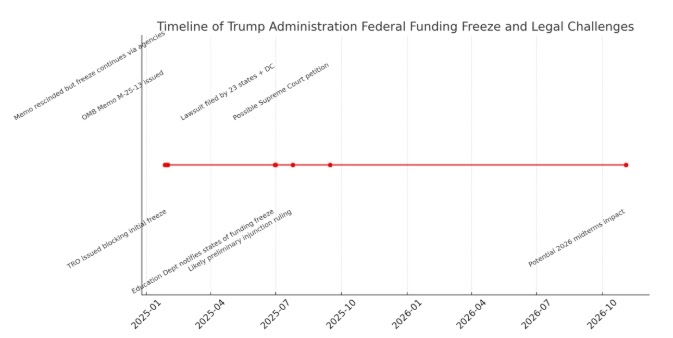
    In a move that has sparked legal action from nearly half the country, the Trump administration has frozen more than $6 billion in education funds to 23 states and the District of Columbia. The decision, issued by the U.S. Department of Education in late June 2025, follows a broader pattern of halted federal support for state and local programs, many of which were previously protected by court rulings.

    The funding pause is linked to the Trump administration’s January 2025 memorandum from the Office of Management and Budget (OMB Memo M-25-13), which directed federal agencies to withhold disbursements from thousands of grant and aid programs. The stated purpose was to align spending with the administration’s priorities, though the policy has been challenged as lacking legal authority. The memo was later rescinded, but its effects have continued through new administrative directives.

    In this latest instance, the Department of Education cited a need to review Title II and Title IV programs under the Elementary and Secondary Education Act (ESEA), including programs for teacher development, after-school enrichment, and English language learners. 

    The decision disproportionately affected Democratic-led states, with California alone facing the loss of $939 million. 

    States impacted include Arizona, California, Colorado, Connecticut, Delaware, Hawaii, Illinois, Maine, Maryland, Massachusetts, Michigan, Minnesota, Nevada, New Jersey, New Mexico, New York, North Carolina, Oregon, Rhode Island, Vermont, Washington, Wisconsin, and the District of Columbia.

    On June 30, attorneys general from those jurisdictions filed suit in Rhode Island, arguing that the Education Department lacks the authority to unilaterally withhold funds that Congress has already appropriated. They assert that the freeze violates both statutory obligations and constitutional principles, including the separation of powers. The lawsuit follows earlier court rulings from January and February in which judges issued temporary restraining orders and preliminary injunctions to stop the administration from freezing other categories of grants. Those cases were largely brought by Democracy Forward, a legal advocacy organization that has played a leading role in contesting the OMB memo.

    Although the administration has defended the funding freeze as a necessary review of federal spending, courts have questioned the legality of such actions. In March, a federal court criticized the lack of statutory basis for the freezes, and Democracy Forward issued a detailed brief outlining the harm to nonprofit programs, environmental projects, and public services. That brief emphasized the breadth of affected programs and the legal overreach involved.

    The broader legal battle continues. While some funding has been restored through court action, the Education Department’s freeze represents a new front in ongoing disputes between the Trump administration and state governments. Plaintiffs argue that withholding these funds sets a precedent that undermines established appropriations and legislative intent. More lawsuits are expected.

    The Trump administration’s freeze on education funding to 23 states opens several legal and political paths, each with different implications depending on how courts and federal agencies proceed. Below are the most likely possibilities based on current legal precedent, federal authority, and political conditions:

    Courts Overturn the Freeze, Funding Restored

    The most immediate and probable outcome is that courts will order the Education Department to restore the frozen funds, as they did earlier this year with other parts of the federal grant freeze. Courts have already found that the administration lacked statutory authority to suspend programs that Congress explicitly funded. If this logic holds, the education freeze will likely be ruled unlawful and states will receive the funds—possibly with retroactive reimbursement for missed payments.

    Partial Restoration, Continued Legal Conflict

    The administration may attempt to restore only some of the funding—especially those programs that have garnered the most public or bipartisan support—while continuing to block others. In this scenario, the courts could issue narrow rulings or temporary injunctions that apply to specific funding streams. This would prolong litigation and administrative uncertainty, potentially pushing the issue into 2026 or the next presidential term.

    Supreme Court Intervention

    If the lower courts issue conflicting rulings or the Trump administration loses significant cases, the Justice Department may seek Supreme Court review. The Court could use this as an opportunity to clarify executive authority over grant disbursement. Depending on the composition of the Court and its interpretation of separation of powers, this could either curtail future executive control over federal spending—or affirm broader authority to “review” or condition funding.

    Legislative Response

    Congress, particularly if Democrats control at least one chamber in 2025-2026, could pass legislation to prohibit similar funding freezes in the future or require automatic disbursement of appropriated funds. However, any such legislation would likely face veto threats or require a veto-proof majority, making this a longer-term fix rather than a short-term remedy.

    Further Administrative Retaliation or Expansion

    If courts delay action or issue narrow rulings, the Trump administration could expand the use of funding freezes to other agencies or sectors, testing the limits of executive control. The precedent set by OMB Memo M-25-13 could be repurposed in other contexts—such as public health, housing, or infrastructure—creating broader instability in federal-state relations.

    Political Mobilization and Fallout

    States may respond by increasing pressure on Congress and federal courts while using the issue as a rallying point in the 2026 midterm elections. Public schools, educators, and parents may amplify the issue if it leads to job losses, school closures, or reduced services. The freeze could become a political liability for the Trump administration, especially in battleground states that rely heavily on federal education support.

    In sum, the most likely near-term result is court-mandated restoration of the withheld funds. But depending on how aggressively the administration continues to test the boundaries of federal authority, the dispute could escalate into a broader constitutional and political conflict over the power to allocate and control federal funds.

    Sources

    Democracy Forward, “Initial Policy Memo on Federal Grant Freezes,” March 12, 2025.

    CBS News, “Democratic states sue Trump administration over halted education funds,” July 1, 2025.

    Reuters, “Trump asks US court to end judicial overreach, allow funding freezes,” February 11, 2025.

    Wikipedia, “2025 United States federal government grant pause.”

    The Daily Beast, “GOP Lawmakers Blast Trump Chief Russell Vought for Freezing Education Money,” July 2025.

    The Guardian, “Nothing like this in American history: the crisis of Trump’s assault on the rule of law,” March 9, 2025.


    Source link

  • 10 GOP senators call on OMB to release frozen K-12 funds

    10 GOP senators call on OMB to release frozen K-12 funds

    This audio is auto-generated. Please let us know if you have feedback.

    Dive Brief:

    • Ten Republican senators on Wednesday urged the White House budget director to unfreeze over $6 billion in already appropriated federal education funds that the Trump administration has been withholding.
    • Withholding the funds, which states were to receive July 1, “is contrary to President Trump’s goal of returning K-12 education to the states,” the GOP letter said. 
    • Their plea follows a similar request from the other side of the aisle, made in a July 10 letter from 32 Democratic senators to both the Office of Management and Budget the U.S. Department of Education. 

    Dive Insight:

    In the Republican senators’ letter to OMB Director Russell Vought, they said they want to work with him and U.S. Education Secretary Linda McMahon to ensure all of the federal education dollars “help states and school districts provide students an excellent education.”

    While they said they share concerns about using federal dollars to fund “radical left-wing programs,” they said they don’t believe that’s happening with these funds meant to support after-school and summer programming as well as adult learners. 

    The GOP senators emphasized the money had already won approval from Congress and President Donald Trump through the continuing resolution enacted earlier this year. 

    Other programs at risk — if the funds are not released —  include English learner services, academic supports, migrant student assistance and professional development.

    “We want to see students in our states and across the country thrive, whether they are adult learners, students who speak English as a second language, or students who need after-school care so that their parents can work,” the senators wrote to Vought. “We believe you share the same goal.”

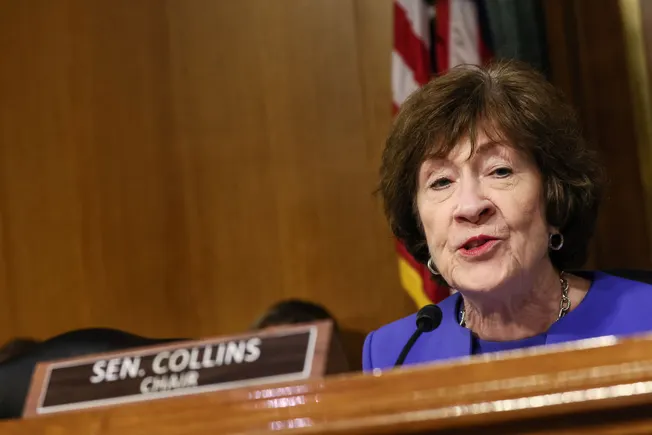
    The signees include Shelley Moore Capito (W.Va.), Susan Collins (Maine), John Boozman (Ark.), Katie Boyd Britt (Ala.), Deb Fischer (Neb.), John Hoeven (N.D.), Jim Justice (W.Va.), Mitch McConnell (Ky.), Lisa Murkowski (Alaska) and Mike Rounds (S.D.). 

    Last week’s letter from 32 Democratic senators charged that OMB and the Education Department are illegally withholding funds. “It is unacceptable that the administration is picking and choosing what parts of the appropriations law to follow, and you must immediately implement the entire law as Congress intended and as the oaths you swore require you to do,” the Democrats wrote to Vought and McMahon. 

    Additionally, 24 states and the District of Columbia on Monday sued Trump, the Education Department and OMB over the funding freeze. Students and schools are already beginning to feel the impacts of the freeze, which has disrupted student programs for summer services and supports for English learners, according to the lawsuit.

    In a July 17 statement to K-12 Dive, an OMB spokesperson said no funding decisions had been made and that it was still reviewing education funding. The spokesperson added that its preliminary findings show the grant programs “have been grossly abused to promote a radical leftwing DEI agenda” and directly violate Trump’s executive orders. 

    The OMB spokesperson said it found examples of funds being used by schools to “promote illegal immigrant advocacy organizations” and “conduct a seminar on ‘queer resistance in the arts.’” 

    The bipartisan calls to unfreeze the funds come as public pushback mounts against the Trump administration over the situation. 

    On Thursday, 600 local, state and national organizations representing districts, teachers, families and students sent a letter to McMahon and Vought urging them to immediately disburse the funds. The “damage has already been done,” the groups said, as K-12 leaders have had to lay off staff, cancel programs, and terminate contracts “that will impact more than 95,000 schools, nearly 55 million K-12 students, and 1.2 million adult learners.”

    Source link

  • Withheld Adult Education Funds Worry Community Colleges

    Withheld Adult Education Funds Worry Community Colleges

    The Trump administration is holding up hundreds of millions of dollars slated for adult education programs as part of a review of education spending.

    The roughly $716 million was supposed to be disbursed to states July 1 and then divvied up among their adult education providers, such as community colleges. But the funding for high school equivalency classes, English as a second language programs and other adult education services never arrived. The news comes as the Trump administration continues to withhold $7 billion from states for K–12 education, including ESL classes and after-school programs, which includes the adult education money.

    The freeze is part of a broader “ongoing programmatic review of education funding,” an unnamed spokesperson for the Office of Management and Budget wrote in a statement to Inside Higher Ed.

    “Initial findings show that many of these grant programs have been grossly misused to subsidize a radical leftwing agenda,” wrote the OMB spokesperson, citing examples of states and schools using the money to support students in the country without proper documentation as well as for a seminar on “queer resistance in the arts,” though the statement made no mention of adult ed programs.

    The fate of the withheld funding remains unclear. “No decisions have been made yet,” the spokesperson said.

    Now states and their community colleges, which offer a significant share of adult education programs, are scrambling to figure out how to continue providing adult education services despite staggering funding shortfalls.

    “If funding is not provided, there are nothing but bad options for institutions,” said David Baime, senior vice president for government relations for the American Association of Community Colleges. He predicts community colleges would have to reduce adult education services, lay off personnel and vie for funds to fill in the gap from states and other sources. But even so, “the funding is so substantial in a number of places that there’s no immediate source of replacing that money.”

    He emphasized that adult education programs have received “broad support from both parties for decades”—and they were already underfunded relative to student need.

    Adult basic education is “a core function and a core part of the mission of community colleges across the country,” he said.

    Adult education is one of several programs on the chopping back in the Education Department’s proposed budget for fiscal year 2026. Officials wrote in budget documents that states and localities are “best suited to determine whether to support the activities authorized under this program or similar activities within their own budgets and without unnecessary administrative burden imposed by the federal government.”

    Higher ed advocates worry other programs like the Child Care Access Means Parents in School program that are on the chopping block could suffer a similar fate.

    Concerns Across the Country

    Community colleges in red and blue states alike are anxiously waiting for the adult education funds to come through.

    Heather Morgan, executive director of the Kansas Association of Community Colleges, said if the pause persists beyond two months with no alternative funding, Kansas’s 19 community colleges will have to make “tough decisions” about laying off or furloughing staff.

    She added that college leaders were given no notice, leaving them with no time to prepare.

    “Situations where funding doesn’t come as expected are real hardships on small colleges and really leave staff in a position of wondering and not knowing what’s coming next,” she said.

    Joe Schaffer, president of Laramie County Community College in Wyoming, said the withheld funds risk hurting high-demand, successful adult education programs in the state.

    He noted that, historically, the coal and oil industries in the state offered well-paying jobs that didn’t necessarily require a high school diploma. But now, because of changes in technology and the state’s diversifying economy, many jobs do require at least a high school education. Wyoming workers hit with that realization are coming to adult education programs later in life to earn high school equivalency certificates, commonly referred to as the GED.

    And the programs work. Roughly 80 percent of Wyoming adult basic education students get a job or enroll in college after their programs, and 84 percent earn a credential beyond a GED. These programs graduate more people with a high school equivalency than any one high school in the state, making the programs arguably Wyoming’s “largest high school,” he said.

    Because the state funds half of these programs, he believes Laramie County Community College can make do without the federal funds and continue to offer these programs for another year, with some belt-tightening measures.

    But still, the move to withhold federal funds risks “reducing the flow of high school graduates at a time when the workforce pipeline, the talent pipeline, is a concern of everybody across the nation,” Schaffer said.

    Morgan agreed that state economies would suffer if adult education programs took a permanent funding hit.

    For many Kansans, “this is their option to get out of poverty and to get into a higher-paying job,” she said. “The ability for them to get skilled up is important, and we have to have the resources to do that, and the uncertainty that’s been injected into the system is not helpful in trying to meet our mission, which is to prepare citizens for the Kansas economy.”

    Source link

  • Mellon Foundation Gives Humanities Councils Emergency Funds

    Mellon Foundation Gives Humanities Councils Emergency Funds

    The Mellon Foundation is giving $15 million in emergency funding to state humanities councils after the National Endowment for the Humanities eliminated $65 million in support for the councils, amid sweeping cuts to its grants and workforce, the foundation announced Tuesday.

    These councils, established by Congress in 1971, are nonprofits that support educational programming for the public, such as literacy initiatives, lectures, book fairs and cultural programs. The support will go toward all 56 state and jurisdictional humanities councils across the country in hopes of staving off possible deep cuts and closures. The foundation plans to allocate $2.8 million to challenge grants of up to $50,000 for each council, to be matched by other funders. And each council will received $200,000 in immediate operational support, The New York Times reported.

    Elizabeth Alexander, president of the Mellon Foundation, said in the announcement that while the emergency funds can’t cover the full extent of cuts, it’s a show of support.

    “At stake are both the operational integrity of organizations like museums, libraries, historical societies in every single state, as well as the mechanisms to participate in the cultural dynamism and exchange that is a fundamental part of American civic life,” Alexander said.

    Phoebe Stein, president of the Federation of State Humanities Councils, called the foundation funding a “lifeline.”

    “Mellon’s support allows us to not only preserve this vital network—it helps ensure that everyday Americans can thrive through lifelong learning, connection, and understanding of one another,” she said in the announcement.

    Source link

  • Trump administration moves to cut off Maine’s federal K-12 funds

    Trump administration moves to cut off Maine’s federal K-12 funds

    This audio is auto-generated. Please let us know if you have feedback.

    The U.S. Department of Education on Friday moved to terminate federal K-12 funding for the Maine Department of Education, following through on its promise to cut off the state and ultimately others if they do not enforce Title IX so as to keep transgender students from girls’ locker rooms, restrooms and athletic teams. 

    The move marks the first time the Trump administration has officially initiated a cut in federal funding to a state K-12 school system over civil rights violations.

    The department at the same time referred its Title IX investigation of Maine to the U.S. Department of Justice for enforcement — after multiple threats that it would do so if the state did not sign onto a resolution agreement within 10 days of the agency finding Maine in violation of Title IX.  

    “The Department has given Maine every opportunity to come into compliance with Title IX, but the state’s leaders have stubbornly refused to do so, choosing instead to prioritize an extremist ideological agenda over their students’ safety, privacy, and dignity,” said Craig Trainor, acting assistant education secretary for civil rights in an April 11 statement. 

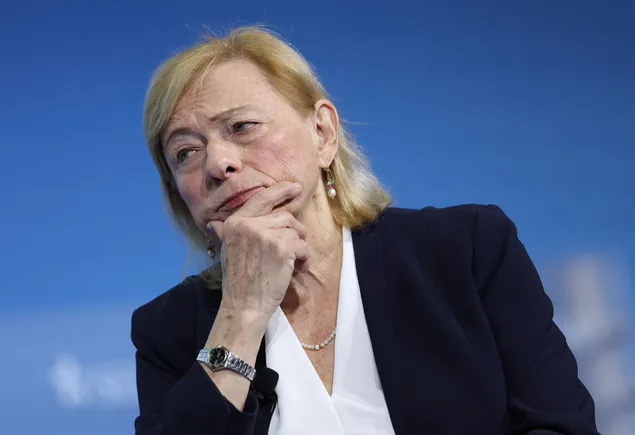
    Gov. Janet Mills “would have done well to adhere to the wisdom embedded in the old idiom — be careful what you wish for,” Trainor said. “Now she will see the Trump Administration in court.” 

    Mills has maintained since the investigation’s launch that the state is not in violation of Title IX. The governor has said the federal investigation is “not just about who can compete on the athletic field,” but rather “about whether a President can force compliance with his will, without regard for the rule of law that governs our nation. I believe he cannot. 

    A swift investigation

    The directed investigation — meaning one initiated without a public complaint — was initiated by the department on Feb. 21 and concluded less than a month later in March. The move was precipitated by a public spat between Mills and Trump in February over the state’s transgender athlete policies, during which Mills threatened to see Trump in court. 

    The day the investigation was launched, alongside a nearly identical one into Maine by the U.S. Department of Health and Human Services also over Title IX, Mills said the outcome was “all but predetermined.” 

    Indeed, the investigation’s directed nature, quick turnaround time, high stakes attached, and referral to the Department of Justice — which traditionally has been reserved for egregious cases — has raised eyebrows in the education civil rights community. 

    The seemingly targeted, quick and aggressive enforcement strategy marks a significant shift from education civil rights enforcement under past administrations. Investigations traditionally took months or years, involved interviews and other investigative tools, and concluded with a negotiation with schools to bring them into compliance with federal law. Resolution agreements often included changes to school district operations like conducting climate surveys or hiring or training staff to ensure all students have access to an equal education. 

    Resolution agreement rebuffed

    In this case, however, the administration gave Maine 10 days to sign a draft resolution agreement that would change state and district policies to define “females” by “a reproductive system with the biological function of producing eggs (ova),” and “males” by having “a reproductive system with the biological function of producing sperm.” “Gender” would be the same as “sex” under the agreement.

    The draft agreement also would have required the state to apologize to each cisgender girl impacted by the state’s transgender female athlete policy “for allowing her educational experience and participation in school sports to be marred by sex discrimination.” 

    After the state refused to sign the agreement, the department warned officials on March 31 that it would send the case to the Department of Justice by April 11. 

    “Under prior administrations, enforcement was an illusory proposition. No more,” said Trainor in a March 31 statement.  “The Trump-McMahon Education Department is moving quickly to ensure that federal funds no longer support patently illegal practices that harm women and girls.” 

    While cutting off states or districts from funds was always within the Education Department’s power, it was a stick that was rarely used in past administrations, and especially not over Title IX, according to the Association of Title IX Administrators. 

    Within three months under this Trump administration, the department has threatened the cancellation of more than $9.5 billion for Ivy League universities over alleged Title VI and Title IX violations related to alleged antisemitism and LGBTQ+ policies, threatened some 60 colleges and a handful of districts with additional loss of funding over allegations of antisemitism, and promised that “this is only the beginning.”  

    Source link

  • Trump Sets Demands Harvard Must Meet to Regain Federal Funds

    Trump Sets Demands Harvard Must Meet to Regain Federal Funds

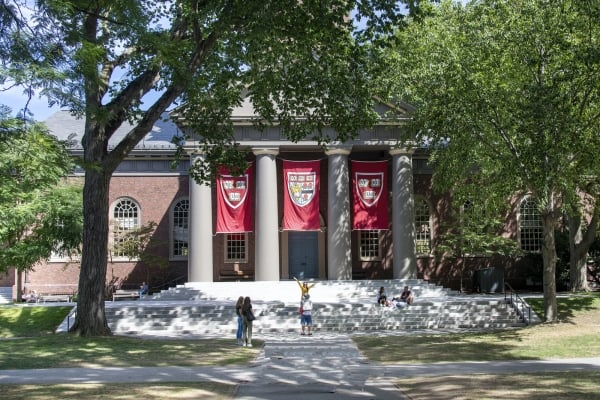
    The Trump administration presented Harvard University with a letter Thursday outlining “immediate next steps” the institution must take in order to have a “continued financial relationship with the United States government,” The Boston Globe reported and Inside Higher Ed confirmed.

    The ultimatum came just three days after the president’s Joint Task Force to Combat Anti-Semitism notified the university it had been placed under review for its alleged failure to protect Jewish students and faculty from discrimination. If the case follows the precedent set at other universities, Harvard and its affiliate medical institutions could lose up to $9 billion in federal grants and contracts if they do not comply.

    Sources say the move is driven less by true concern about antisemitism on campus than by the government’s desire to abolish diversity efforts and hobble higher ed institutions it deems too “woke.” This week alone, the administration has retracted funds from Brown and Princeton Universities. Before that, it targeted the University of Pennsylvania and Columbia University and opened dozens of civil rights investigations at other colleges, all of which are ongoing.

    Many of the task force’s demands for Harvard mirror those presented to Columbia last month, including mandates to reform antisemitism accountability programs on campus, ban masks for nonmedical purposes, review certain academic departments and reshape admissions policies. The main difference: Columbia’s letter targeted specific departments and programs, while Harvard’s was broader.

    For example, while the letter received by Columbia called for one specific Middle Eastern studies department to be placed under receivership, Harvard’s letter called more generally for “oversight and accountability for biased programs [and departments] that fuel antisemitism.”

    Inside Higher Ed requested a copy of the letter from Harvard, which declined to send it but confirmed that they had received it. Inside Higher Ed later received a copy from a different source.

    Some higher education advocates speculate that the Trump administration’s latest demands were deliberately vague in the hopes that colleges will overcomply.

    “What I’ve learned from various experiences with higher ed law is that it’s unusual to be general in legal documents,” said Jon Fansmith, senior vice president of government relations and national engagement for the American Council on Education. Trump’s “open-ended” letter “starts to look like a fishing expedition,” he added. “‘We want you to throw everything open to us so that we get to determine how you do this.’”

    But conservative higher ed analysts believe the demands—even when broadened—are justified.

    “Many of these are extremely reasonable—restricting demonstrations inside academic buildings, requiring participants and demonstrations to identify themselves when asked, committing to antidiscrimination policies, intellectual diversity and institutional neutrality,” said Preston Cooper, a senior fellow at the American Enterprise Institute.

    Still, he raised questions about how certain mandates in the letter will be enforced.

    “When you see this in the context of the federal government trying to use funding as a lever to force some of these reforms, that’s where one might raise some legitimate concern,” he said. “For instance, trying to ensure viewpoint diversity is a very laudable goal, but if the federal government is trying to … decide what constitutes viewpoint diversity, there is a case to be made that that is a violation of the First Amendment.”

    What Does the Letter Say?

    The demands made of Harvard Thursday largely target the same aspects of higher ed that Trump has focused on since taking office in January.

    Some center on pro-Palestinian protests, like the requirements to hold allegedly antisemitic programs accountable, reform discipline procedures and review all “antisemitic rule violations” since Oct. 7, 2023.

    Others focus on enforcing Trump’s interpretation of the Supreme Court’s 2023 ruling on affirmative action; the university must make “durable” merit-based changes to its admissions and hiring practices and shut down all diversity, equity and inclusion programs, which the administration believes promote making “snap judgments about each other based on crude race and identity stereotypes.”

    The letter was signed by the same three task force members who signed Columbia’s demand letter: Josh Gruenbaum, commissioner of the Federal Acquisition Service; Sean Keveney, acting general counsel for the Department of Health and Human Services; and Thomas Wheeler, acting general counsel for the Department of Education.

    The most notable difference in Harvard’s letter is that the task force is demanding “full cooperation” with the U.S. Department of Homeland Security. That department and its Immigration and Customs Enforcement agency have been arresting and revoking visas from international students and scholars who, the government says, are supporting terrorist groups by participating in pro-Palestinian protests.

    Will Harvard Capitulate?

    Harvard already appears to be taking steps to comply. On Wednesday, the university put a pro-Palestinian student group on probation. The week before, a dean removed two top leaders of the Center for Middle Eastern Studies, which has been accused of biased teaching about Israel.

    A letter to the campus community from university president Alan Garber also suggested capitulation is likely.

    “If this funding is stopped, it will halt life-saving research and imperil important scientific research and innovation,” Garber wrote following the task force’s review. “We will engage with members of the federal government’s task force to combat antisemitism.”

    But Fansmith noted such actions may not be enough to predict whether Harvard will fully acquiesce to the Trump administration’s demands.

    “If you look at all of these institutions over the last two years, they’ve been making a number of changes in policies, procedures, personnel and everything else,” he said. “And a lot of that was happening and was at pace before this administration took office and started sending letters.”

    Harvard was one of the first three universities that the House Committee on Education and the Workforce grilled about antisemitism on campus in December 2023. Shortly after, then-president Claudine Gay—the first Black woman to lead Harvard—resigned. The university has since been working to make changes at the campus level.

    Both Fansmith and Cooper pointed to Trump’s mandates regarding curriculum as the most likely to face opposition, as was the case at Columbia.

    A little over a week after the Trump administration laid out its ultimatum, Columbia capitulated and agreed to all but one demand: The university refused to put its department of Middle Eastern studies into receivership, a form of academic probation that involves hiring an outside department chair. Instead, it placed the department under internal review and announced it would hire a new senior vice provost to oversee the academic program.

    “You need to be making sure that Jewish students are not subject to harassment,” Cooper said. But “where that crosses the line is if the federal government is telling the universities … ‘this is how you have to appoint somebody to put an academic department into receivership,’ as was the original demand made of Columbia.”

    Regardless of how Harvard responds, one thing seems likely: There are more funding freezes to come.

    “A lot of folks were expecting Columbia to file a legal challenge, and when that didn’t happen, that might have emboldened the administration a bit to go after some of these other institutions,” Cooper said. But sooner than later, “one of these institutions might say, ‘We’re not going to make the reforms.’”

    “I don’t have a great guess as to which institution that will be,” he added, “but I would expect we probably will see a lawsuit at some point.”

    Source link

  • Donors Support Grad Students Lacking Federal Research Funds

    Donors Support Grad Students Lacking Federal Research Funds

    Recent federal executive orders from President Donald Trump have put a halt to some university operations, including hiring and large swaths of academic research. The National Institutes of Health and the National Science Foundation, among others, have paused grant-review panels to comply with the orders and cut funding, leaving researchers in limbo.

    Graduate students often receive educational stipends from federal agencies for their research, putting their work—and their own degree attainment—at risk.

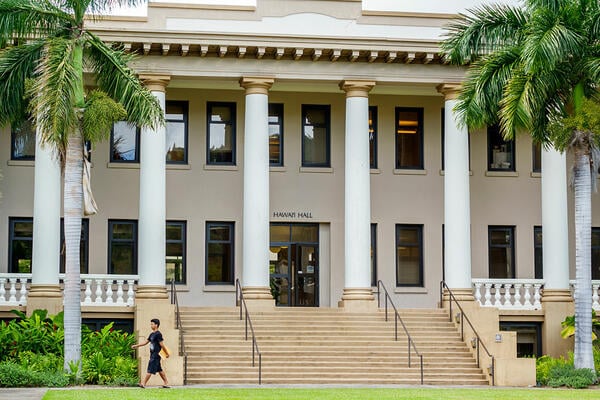
    To alleviate some hardships, the University of Hawaiʻi’s UH Foundation launched a Graduate Student Success Fund, which will provide direct relief for learners who have lost funding.

    Fewer than a dozen graduate students in the system have been impacted to various degrees to date, but “like most institutions, the extent of the possible impact is unknown,” a UH spokesperson said.

    On the ground: Michael Fernandez, a first-year UH Mānoa doctoral student in the botany program, is a participant in the National Science Foundation’s Graduate Research Fellowship Program, which supports learners pursuing research-based master’s or doctoral degrees in STEM education fields. The five-year fellowship includes three years of financial aid for tuition and fees and an annual stipend.

    “I and other fellows in the program feel uncertain about future funding from the fellowship,” Fernandez said in a press release. “This is especially concerning for me, as the NSF-GRFP is currently my primary and sole source of funding for my graduate studies.”

    University of Hawaiʻi president Wendy Hensel spurred the creation of the Graduate Student Success Fund for grad students at UH Mānoa and UH Hilo. The fund, supported by private donations, mirrors an undergraduate student success fund available to bachelor’s degree seekers who need help paying for tuition, books and fees.

    The UH Foundation will also support undergraduate researchers who may have had their work interrupted due to federal freezes.

    The Graduate Student Success Fund is designed to aid student retention and financial wellness and also support career development and future talent in Hawaiʻi.

    “It is critical that we do all we can to ensure that our university graduates, the next generation of talent, desperately needed for Hawaiʻi’s workforce,” Hensel said. “These graduate students are our scientists, doctors, nurses, psychologists, social workers, engineers, educators and leaders of tomorrow.”

    Details as to how funds will be distributed, including amounts and number of recipients, are still being determined, the spokesperson said.

    The bigger picture: Federally funded research projects that address diversity, equity, inclusion, gender, green energy or other alleged “far-left ideologies” have come under fire in recent weeks.

    In January Trump signed an executive order halting federal grant spending, which was later rescinded, but some organizations have halted funding regardless.

    Trump Administration Weaponizes Funding Against Institutions

    On March 7, the Trump administration announced it had canceled $400 million in federal grants and contracts to Columbia University for “the school’s continued inaction in the face of persistent harassment of Jewish students.” The federal government has also threatened to pull funding from any educational institution that invests in diversity, equity and inclusion programs.

    In February, the National Institutes of Health announced it would cut funding for indirect costs of conducting medical research, including hazardous waste disposal, utilities and patient safety. In 2024, the agency sent around $26 billion to over 500 grant recipients connected to institutions.

    Hensel published a memo in February opposing the cuts for reimbursement of facilities and administrative costs.

    “For UH, the impact of this decision cannot be overstated,” Hensel wrote. “The university is supported by 175 awards and subawards from the NIH with a current value of $211 million. NIH’s reduction of UH’s current negotiated [indirect compensation] rate of 56.5 percent at the JABSOM [UH Mānoa John A. Burns School of Medicine] and the [UH] Cancer Center alone will eliminate approximately $15 million in funding that UH uses to support its research programs, including ongoing clinical trials and debt service payments.”

    How is your college or university supporting students affected by federal action? Tell us more.

    Source link

  • Oklahoma State improperly diverted state funds, audit finds

    Oklahoma State improperly diverted state funds, audit finds

    A new report finds that $41 million in state appropriations “were not properly restricted and in some instances were co-mingled with other funds” at Oklahoma State University in violation of state laws and policies, according to an internal audit obtained by media outlets in the state.

    The audit—conducted by an office of the Oklahoma Agricultural and Mechanical Colleges Board of Regents, which oversees Oklahoma State and other public institutions—found “significant issues in the allocation and management of legislatively appropriated funds” at OSU.

    The report found examples of such funds being transferred improperly, including $11.5 million for aerospace, health and polytechnic programs being directed to the OSU Innovation Foundation instead, without a contractual agreement or approval from regents.

    “As a result, some state appropriated funds were utilized for unauthorized and unrelated purposes, and were not retained in full by OSU, the intended recipient,” the audit found.

    A university spokesperson told the Tulsa World that “while the financial decisions and transactions which occurred are concerning, they were isolated and do not impact OSU’s overall financial foundation.”

    The audit also called on Oklahoma State to improve financial oversight and transparency.

    Though the audit did not name former president Kayse Shrum, who resigned abruptly without explanation last month, it indicated the alleged misappropriation happened during her administration. Shrum did not appear to be interviewed as part of the audit, according to a list of individuals who were contacted as part of the investigation into the use of appropriated funds.

    Source link