
Tag: game design

  • Why early STEAM education unlocks the future for all learners

    Why early STEAM education unlocks the future for all learners

    Key points:

    When we imagine the future of America’s workforce, we often picture engineers, coders, scientists, and innovators tackling the challenges of tomorrow. However, the truth is that a student’s future does not begin in a college classroom, or even in high school–it starts in the earliest years of a child’s education.

    Early exposure to science, technology, engineering, arts, and mathematics (STEAM) builds the foundation for critical thinking, collaboration, and creativity. Research indicates that children introduced to STEAM concepts before the age of eight are significantly more likely to pursue STEM-related fields later in life. Yet for too many children, especially neurodivergent learners and those in underserved communities, STEAM education comes too late or not at all. That gap represents a missed opportunity not only for those children, but also for the industries and communities that will rely on their talents in the future.

    The missed opportunity in early education

    In most school systems, STEAM instruction ramps up in middle school or high school, long after the formative years when children are naturally most curious and open to exploring. By waiting until later grades, we miss the chance to harness early curiosity, which is the spark that drives innovation.

    This late introduction disproportionately affects children with disabilities or learning differences. These learners often benefit from structured, hands-on exploration and thrive when provided with tools to connect abstract concepts to real-world applications. Without early access, they may struggle to build confidence or see themselves as capable contributors to fields like aerospace, technology, or engineering. If STEAM employers fail to cultivate neurodivergent learners, they miss out on theirunique problem-solving skills, specialized strengths, and diverse thinking that drives true innovation. Beyond shrinking the talent pipeline, this oversight risks stalling progress in fields like aerospace, energy, and technology while weakening their competitive edge.

    The result is a long-term underrepresentation of neurodivergent individuals in high-demand, high-paying fields. Without access to an early STEAM curriculum, both neurodivergent students and employers will miss opportunities for advancement.

    Why neurodivergent learners benefit most

    Neurodivergent learners, such as children with autism, ADHD, or dyslexia, often excel when lessons are tactile, visual, and inquiry-based. Early STEAM education naturally aligns with these learning styles. For example, building a simple bridge with blocks is more than play; it’s an exercise in engineering, problem-solving, and teamwork. Programming a toy robot introduces logic, sequencing, and cause-and-effect.

    These types of early STEAM experiences also support executive functioning, improve social-emotional development, and build persistence. These are crucial skills in STEM careers, where theories often fail, and continued experimentation is necessary. Additionally, building these skills helps children see themselves as creators and innovators rather than passive participants in their education.

    When neurodivergent children are given access to STEAM at an early age, they are not only better equipped academically but also more confident in their ability to belong in spaces that have traditionally excluded them.

    Houston as a case study

    Here in Houston, we recognize the importance of early STEAM education in shaping our collective future. As the world’s Energy Capital and a hub for aerospace innovation, Houston’s economy will continue to rely on the next generation of thinkers, builders and problem-solvers. That pipeline begins not in a university laboratory, but in preschool classrooms and afterschool programs.

    At Collaborative for Children, we’ve seen this firsthand through our Collab-Lab, a mobile classroom that brings hands-on STEAM experiences to underserved neighborhoods. In these spaces, children experiment with coding, explore engineering principles, and engage in collaborative problem-solving long before they reach middle school. For neurodivergent learners in particular, the Collab-Lab provides an environment where curiosity is encouraged, mistakes are celebrated as part of the learning process, and every child has the chance to succeed. Additionally, we are equipping the teachers in our 125 Centers of Excellence throughout the city in practical teaching modalities for neurodivergent learners. We are committed to creating equal opportunity for all students.

    Our approach demonstrates what is possible when early childhood education is viewed not just as childcare, but as workforce development. If we can prioritize early STEAM access in Houston, other cities across the country can also expand access for all students.

    A national priority

    To prepare America’s workforce for the challenges ahead, we must treat early STEAM education as a national priority. This requires policymakers, educators and industry leaders to collaborate in new and meaningful ways.

    Here are three critical steps we must take:

    1. Expand funding and resources for early STEAM curriculum. Every preschool and early elementary program should have access to inquiry-based materials that spark curiosity in young learners.
    2. Ensure inclusion of neurodivergent learners in program design. Curricula and classrooms must reflect diverse learning needs so that all children, regardless of ability, have the opportunity to engage fully.
    3. Forge stronger partnerships between early education and industry. Employers in aerospace, energy, and technology should see investment in early childhood STEAM as part of their long-term workforce strategy.

    The stakes are high. If we delay STEAM learning until later grades, we risk leaving behind countless children and narrowing the talent pipeline that will fuel our nation’s most critical industries. But if we act early, we unlock not just potential careers, but potential lives filled with confidence, creativity and contribution.

    Closing thoughts

    The innovators of tomorrow are sitting in preschool classrooms today. They are building with blocks, asking “why,” and imagining worlds we cannot yet see. Among them are children who are neurodivergent–who, with the proper support, may go on to design spacecrafts, engineer renewable energy solutions, or code the next groundbreaking technology.

    If we want a future that is diverse, inclusive, and innovative, the path is clear: We must start with STEAM education in the earliest years, for every child.
    Source link

  • Games for Change Opens 2026 Student Challenge to Game Creators and Innovators Ages 10–25

    Games for Change Opens 2026 Student Challenge to Game Creators and Innovators Ages 10–25

    The annual global game design awards $20,000 in grand prizes for creative and impactful games that advance the UN Sustainable Development Goals

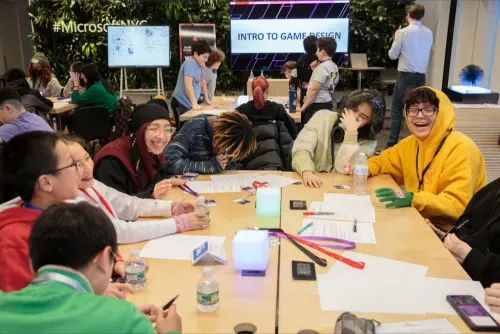
    NEW YORK, NY — [NOV 10, 2025] — Games for Change (G4C), the leading nonprofit that empowers game creators and innovators to drive real-world change, today announced the kick off of the 2025- 2026 Games for Change Student Challenge, a global game design program inviting learners ages 10–25 years old to tackle pressing world issues that address the United Nations Sustainable Development Goals, through creativity, play, and purposeful design.

    Now in its eleventh year, the Student Challenge has reached more than 70,000 students and almost 2,000 educators and faculty across 600cities in 91 countries, inspiring the creation of over 6,600 original student-designed games that connect learning to action. From November to April 2026, participants will design and submit games for consideration in regional and global competitions, with Game Jams taking place worldwide throughout the season.

    “The G4C Student Challenge continues to show that when young people design games about real-world issues, they see themselves not just as players, but as problem solvers and changemakers,” said Arana Shapiro, Chief Operations and Programs Officer at Games for Change. “Through game design, students learn to think critically, collaborate, and build solutions with purpose. In a world shaped by AI and constant change, durable skills like problem solving, critical thinking, and game design will allow all learners to thrive in their communities and worldwide.”

    This year, students will explore three new themes developed with world-class partners to inspire civic imagination and problem-solving:

    Two grand-prize winners will receive a total of $20,000 in scholarships, generously provided by Take-Two Interactive and Endless. Winners and finalists will be celebrated at the Student Challenge Awards on May 28, 2026, in recognition of exceptional creativity, social impact, and innovation in student game design.

    “With 3.4 billion players worldwide, the video games industry has an unprecedented ability to reach and inspire audiences across cultures and our next generation of leaders,” said Lisa Pak, Head of Operations at Playing for the Planet. “We’re excited about our collaboration with Games for Change, empowering students to use their creativity to spotlight the threats to reefs, rainforests, and our climate. Together, we’re transforming play into a powerful tool for awareness, education, and action.”

    More than 319 million people face severe hunger around the world today,” said Jessamyn Sarmiento, Chief Marketing Officer at World Food Program USA. “Through the ‘Outgrow Hunger’ theme, we’re giving the next generation a way to explore the root causes of food insecurity and imagine solutions through research, game design, and play. This collaboration helps students connect their creativity to one of the most urgent challenges of our time—ending hunger for good.”

    Additionally, G4C is expanding its educator support with the launch of the G4C Learn website, the world’s largest online resource library featuring lesson plans, tutorials, and toolkits to guide students, teachers, and faculty on topics like game design, game-based learning, esports, career pathways, and more. In partnership with Global Game Jam, educators worldwide can receive funding, training, and support to host Student Challenge Game Jams in their classrooms and communities.

    “Games turn learning into challenges students actually want to take on,” said Luna Ramirez, CTE teacher at Thomas A. Edison CTE High School based in New York City. “When students design games to tackle pressing global problems affecting their communities, they become curious about the world around them, experimenting, and bringing ideas to life. The best learning happens when students take risks, fail forward, and collaborate, and that’s exactly what the Games for Change Student Challenge empowers.”

    Educators, parents, and learners ages 10–25 can now registerfor the 2026 Games for Change Student Challenge and access free tools and resources at learn.gamesforchange.org.

    This year’s Student Challenge is made possible through the generous support of key partners, including Endless, General Motors, Verizon, Motorola Solutions Foundation, Take-Two Interactive, World Food Program USA, Playing for the Planet, Unity, and Global Game Jam.

    About Games for Change

    Since 2004, Games for Change (G4C) has empowered game creators and innovators to drive real-world change through games and immersive media, helping people learn, improve their communities, and make the world a better place. G4C partners with technology and gaming companies, nonprofits, foundations, and government agencies to run world-class events, public arcades, design challenges, and youth programs. G4C supports a global community of developers using games to tackle real-world challenges, from humanitarian conflicts to climate change and education. For more information, visit: https://www.gamesforchange.org/.

    Media contact(s):

    Alyssa Miller

    Games for Change

    [email protected]

    973-615-1292

    Susanna Pollack
    [email protected]

    Latest posts by eSchool News Contributor (see all)

    Source link

  • Is gamification the key to achieving true inclusion in special education?

    Is gamification the key to achieving true inclusion in special education?

    Key points:

    For students with special needs, learning can often resemble a trek through dense woods along a narrow, rigid path–one that leaves little to no room for individual exploration. But the educational landscape is evolving. Picture classrooms as adventurous hunts, where every learner charts their own journey, overcomes unique challenges, and progresses at a pace that matches their strengths. This vision is becoming reality through gamification, a powerful force that is reshaping how students learn and how teachers teach in K–12 special education.

    Personalized learning paths: Tailoring the adventure

    Traditional classrooms often require students to adapt one method of instruction, which can be limiting–especially for neurodiverse learners. Gamified learning platforms provide an alternative by offering adaptive, personalized learning experiences that honor each student’s profile and pace.

    Many of these platforms use real-time data and algorithms to adjust content based on performance. A student with reading difficulties might receive simplified text with audio support, while a math-savvy learner can engage in increasingly complex logic puzzles. This flexibility allows students to move forward without fear of being left behind, or without being bored waiting for others to catch up.

    Accessibility features such as customizable avatars, voice commands, and adjustable visual settings also create space for students with ADHD, autism, or sensory sensitivities to learn comfortably. A student sensitive to bright colors can use a softer palette; another who struggles with reading can use text-to-speech features. And when students can replay challenges without stigma, repetition becomes practice, not punishment.

    In these environments, progress is measured individually. The ability to choose which goals to tackle and how to approach them gives learners both agency and confidence–two things often missing in traditional special education settings.

    Building social and emotional skills: The power of play

    Play is a break from traditional learning and a powerful way to build essential social and emotional skills. For students with special needs who may face challenges with communication, emotional regulation, or peer interaction, gamified environments provide a structured yet flexible space to develop these abilities.

    In cooperative hunts and team challenges, students practice empathy, communication, and collaboration in ways that feel engaging and low-stakes. A group mission might involve solving a puzzle together, requiring students to share ideas, encourage one another, and work toward a common goal.

    Gamified platforms also provide real-time, constructive feedback, transforming setbacks into teachable moments. Instead of pointing out what a student did wrong, a game might offer a helpful hint: “Try checking the clues again!” This kind of support teaches resilience and persistence in a way that lectures or punitive grading rarely do.

    As students earn badges or level up, they experience tangible success. These moments highlight the connection between effort and achievement. Over time, these small wins raise a greater willingness to engage with the material and with peers and the classroom community.

    Fostering independence and motivation

    Students with learning differences often carry the weight of repeated academic failure, which can chip away at their motivation. Gamification helps reverse this by reframing challenges as opportunities and effort as progress.

    Badges, points, and levels make achievements visible and meaningful. A student might earn a “Problem Solver” badge after tackling a tricky math puzzle or receive “Teamwork Tokens” for helping a classmate. These systems expand the definition of success and highlight personal strengths.

    The focus shifts from comparison to self-improvement. Some platforms even allow for private progress tracking, letting students set and meet personal goals without the anxiety of public rankings. Instead of competing, students build a personal narrative of growth.

    Gamification also encourages self-directed learning. As student complete tasks, they develop skills like planning, time management, and self-assessment, skills that extend beyond academics and into real life. The result is a deeper sense of ownership and independence.

    Teachers as learning guides

    Gamification doesn’t replace teachers, but it can help teach more effectively. With access to real-time analytics, educators can see exactly where a student is excelling or struggling and adjust instruction accordingly.

    Dashboards might reveal that a group of students is thriving in reading comprehension but needs help with number sense, prompting immediate, targeted intervention. This data-driven insight allows for proactive, personalized support.

    Teachers in gamified classrooms also take on a new role, both of a mentor and facilitator. They curate learning experiences, encourage exploration, and create opportunities for creativity and curiosity to thrive. Instead of managing behavior or delivering lectures, they support students on individualized learning journeys.

    Inclusion reimagined

    Gamification is not a gimmick; it’s a framework for true inclusion. It aligns with the principles of Universal Design for Learning (UDL), offering multiple ways for students to engage, process information, and show what they know. It recognizes that every learner is different, and builds that into the design.

    Of course, not every gamified tool is created equal. Thoughtful implementation, equity in access, and alignment with student goals are essential. But when used intentionally, gamification can turn classrooms into places where students with diverse needs feel seen, supported, and excited to learn.

    Are we ready to level up?

    Gamification is a step toward classrooms that work for everyone. For students with special needs, it means learning at their own pace, discovering their strengths, and building confidence through meaningful challenges.

    For teachers, it’s a shift from directing traffic to guiding adventurers.

    If we want education to be truly inclusive, we must go beyond accommodations and build systems where diversity is accepted and celebrated. And maybe, just maybe, that journey begins with a game.

    Latest posts by eSchool Media Contributors (see all)

    Source link

  • 4 ways to transform your classroom through playful gamification 

    4 ways to transform your classroom through playful gamification 

    Key points:

    Every educator hopes to instill a lifelong love of learning within their students. We strive to make each lesson engaging, while igniting a sense of curiosity, wonder, and discovery in every child.

    Unfortunately, we don’t always succeed, and recent reports suggest that today’s students are struggling to connect with the material they’re taught in school–particularly when it comes to STEM. While there are many potential culprits behind these numbers (shortened attention spans, the presence of phones, dependency on AI, etc.), educators should still take a moment to reflect and strategize when preparing a new lesson for their class. If we truly want to foster a growth mindset within our students, we need to provide lessons that invite them to embrace the learning process itself.

    One way to accomplish this is through gamification. Gamification brings the motivational elements of games into your everyday lessons. It increases student engagement, builds perseverance, and promotes a growth mindset. When used strategically, it helps learners take ownership of their progress and encourages creativity and collaboration without sacrificing academic rigor.

    Here are just 4 ways that educators can transform their classroom through playful gamification:

    1. Introduce points and badges: Modern video games like Pokémon and Minecraft frequently use achievements to guide new players through the gaming process. Teachers can do the same by assigning points to different activities that students can acquire throughout the week. These experience points can also double as currency that students can exchange for small rewards, such as extra free time or an end-of-year pizza party.
    2. Create choice boards: Choice boards provide students with a range of task options, each with a point value or challenge level. You can assign themes or badges for completing tasks in a certain sequence (e.g., “complete a column” or “complete one of each difficulty level”). This allows students to take ownership of their learning path and pace, while still hitting key learning targets.
    3. Host a digital breakout: Virtual escape rooms and digital breakouts are great for fostering engagement and getting students to think outside the box. By challenging students to solve content-based puzzles to unlock “locks” or progress through scenarios, they’re encouraged to think creatively while also collaborating with their peers. They’re the ideal activity for reviewing classwork and reinforcing key concepts across subjects.
    4. Boss battle assessments: This gamified review activity has students “battle” a fictional character by answering questions or completing tasks. Each correct response helps them defeat the boss, which can be tracked with points, health bars, or progress meters. This engaging format turns practice into a collaborative challenge, building excitement and reinforcing content mastery.

    When implemented correctly, gamification can be incredibly fun and rewarding for our students. With the fall semester drawing closer, there has never been a better time to prepare lessons that will spark student curiosity, creativity, and critical thinking.

    We can show our students that STEM learning is not a chore, but a gateway to discovery and excitement. So, get your pencils ready, and let the games begin.

    Latest posts by eSchool Media Contributors (see all)

    Source link

  • Solving our literacy crisis starts in the lecture hall

    Solving our literacy crisis starts in the lecture hall

    Key points:

    The recent NAEP scores have confirmed a sobering truth: Our schools remain in the grips of a literacy crisis. Across the country, too many children are struggling to read, and too many teachers are struggling to help them. But why? And how do we fix it?

    There are decades of research involving thousands of students and educators to support a structured literacy approach to teaching literacy. Teacher preparation programs and school districts across the nation have been slow to fully embrace this research base, known as the science of reading. Since 2017, consistent media attention focused on the literacy crisis has created a groundswell of support for learning about the science of reading. Despite this groundswell, too many educators are still entering classrooms without the skills and knowledge they need to teach reading.

    While there is steady progress in teacher preparation programs to move toward the science of reading-aligned practices, the National Council on Teacher Quality’s latest report on the status of teacher preparation programs for teaching reading (2023) still shows that only 28 percent of programs adequately address all five components of reading instruction. Furthermore, according to the report, up to 40 percent of programs still teach multiple practices that run counter to reading research and ultimately impede student learning, such as running records, guided reading, leveled texts, the three cueing systems, etc. This data shows that there is still much work to be done to support the education of the teacher educators responsible for training pre-service teachers.

    The disconnect between theory and practice

    When it comes to literacy instruction, this problem is especially glaring. Teachers spend years learning about teaching methods, reading theories, and child development. They’re often trained in methods that emphasize comprehension and context-based guessing. However, these methods aren’t enough to help students develop the core skills they need to become proficient readers. Phonics–teaching students how to decode words–is a critical part of reading instruction, but it’s often left out of traditional teacher prep programs.

    One primary reason this disconnect happens is that many teacher prep programs still rely on outdated methods. These approaches prioritize reading comprehension strategies that focus on meaning and context, but they don’t teach the foundational skills, like phonics, essential for developing fluent readers.

    Another reason is that teacher prep programs often lag when it comes to incorporating new research on reading. While the science of reading–a body of evidence built from decades of research and studies involving thousands of students and educators about how humans learn to read and the instructional practices that support learning to read–has been gaining deserved traction, it’s not always reflected in the teacher preparation programs many educators go through. As a result, teachers enter classrooms without the knowledge, skills, and up-to-date methods they need to teach reading effectively.

    A way forward: Structured literacy and continuous professional development

    For real progress, education systems must prioritize structured literacy, a research-backed approach to teaching reading that includes explicit, systematic instruction in phonics, decoding, fluency, and comprehension. This method is effective because it provides a clear, step-by-step process that teachers can follow consistently, ensuring that every single student gets the support they need to succeed.

    But simply teaching teachers about structured literacy is not enough. They also need the tools to implement these methods in their classrooms. The goal should be to create training programs that offer both the theoretical knowledge and the hands-on experience teachers need to make a lasting difference. Teachers should graduate from their prep programs not just with a degree but with a practical, actionable plan for teaching reading.

    And just as important, we can’t forget that teacher development doesn’t end once a teacher leaves their prep program. Just like doctors, teachers need to continue learning and growing throughout their careers. Ongoing professional development is critical to helping teachers stay current with the latest research and best practices in literacy instruction. Whether through in-person workshops, online courses, or coaching, teachers should have consistent, high-quality opportunities to grow and sharpen their skills.

    What do teacher educators need?

    In 2020, the American Federation of Teachers published an update to its seminal publication, Teaching Reading is Rocket Science. First published in 2000, this updated edition is a collaboration between the AFT and the Center on Development and Learning. Although some progress has been made over the past 20 years in teaching reading effectively, there are still too many students who have not become proficient readers.

    This report outlines in very specific ways what pre-service and in-service teachers need to know to teach reading effectively across four broad categories:

    1. Knowing the basics of reading psychology and development
    2. Understanding language structure for word recognition and language comprehension
    3. Applying best practices (based on validated research) in all components of reading
    4. Using validated, reliable, efficient assessments to inform classroom teaching

    There should be a fifth category that is directly related to each of the four areas listed above: the knowledge of how to address the specific oral language needs of multilingual learners and speakers of language varieties. Structured, spoken language practice is at the heart of addressing these needs.

    Moving forward: Reimagining teacher training

    Ultimately, fixing the literacy crisis means changing the way we think about teacher preparation and ongoing professional development. We need to create programs that not only teach the theory of reading instruction but also provide teachers with the practical skills they need to apply that knowledge effectively in the classroom. It’s not enough to just teach teachers about phonics and reading theory; they need to know how to teach it, too.

    Literacy instruction must be at the heart of every teacher’s training–whether they teach kindergarten or high school–and ongoing professional development should ensure that teachers have the support they need to continuously improve.

    It’s a big task, but with the right tools, knowledge, and support, we can bridge the gap between theory and practice and finally begin to solve a literacy crisis that has stubbornly endured for far too long.

    Latest posts by eSchool Media Contributors (see all)

    Source link