

Tag: Gaslighting

  • Debating Gaslighting

    Debating Gaslighting

    My column about gaslighting has drawn some criticism that I want to address. Noam Schimmel argues in his letter that “gaslighting” is a correct term to use when people face “hostile claims that their reported experiences are fabricated, exaggerated or made with malicious intent.” But we must always have debates about whether general claims of bigotry are exaggerated or understated, and we shouldn’t presume malicious intent from anyone.

    Schimmel claims that “it is inimical to the respect and fulfillment of civil rights and human rights to focus on debating whether terms such as ‘gaslighting’ or ‘institutional discrimination’ are appropriate to describe real and widespread experiences of exclusion and abuse.” Actually, it’s never inimical to human rights to discuss the extent of forms of discrimination or to debate how we should describe bigotry. Free speech is essential to human rights, and that includes allowing people to deny that human rights are being violated, even if they are wrong.

    In fact, gaslighting and institutional discrimination are radically different concepts. The latter describes an institutional failure to prevent discrimination by a legal standard, but gaslighting describes a kind of conspiracy theory that suggests everyone who questions these demands for censorship is plotting against recognition of an obvious truth about antisemitism.

    Another letter in response to my column comes from William Mills IV, which I will post here in its entirety:

    Gaslighting About Gaslighting

    Yes, gaslighting is real even if it doesn’t involve turning down gas lights to drive someone crazy.

    By William T. Mills IV, Ph.D.

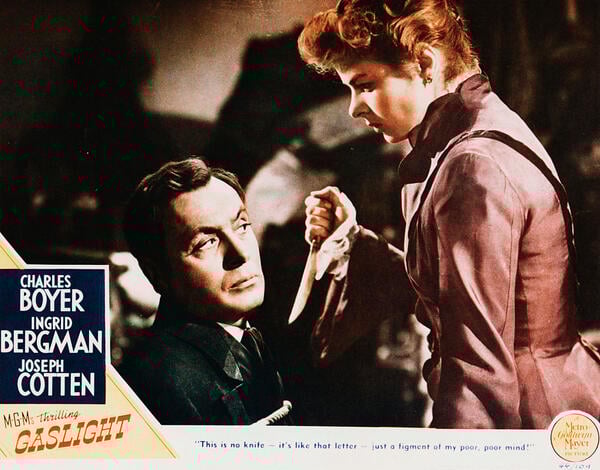
    In his opinion column on Wednesday, author John Wilson derides the author of an email he received accusing him of gaslighting when he referred to antisemitism at Harvard as a “myth.” In his rebuttal to a private email, Mr. Wilson says that he is not gaslighting because he is not literally turning down gas lights to drive his wife crazy, as the husband in the 1944 film Gaslight did. Interestingly, Mr. Wilson defends of his use of the word “myth” to describe antisemitism at Harvard, even though he is not literally referring to antisemitism at Harvard as, for example, a historic tale about a creator sending birds to retrieve mud from the bottom of a primordial ocean to form the earth. Of course, the use of the word “myth” does not denote the literal origin of the word but rather the meaning we all understand today.

    So yes, in fact, claiming that antisemitism at Harvard is a “myth” is gaslighting readers, as it tells them a lie and denies that they are being told one. There is no other reason I can conceive of, at least not a charitable one, to tell people who watched antisemitism—that Harvard admitted to—with their own eyes that antisemitism is a “myth,” than to drive them insane.

    Mr. Wilson says that “universities are not guilty of antisemitic discrimination if they allow free expression of hateful ideas.” And herein lies the problem. Yes, of course, free expression does not equal antisemitism. But having a stated policy against “bullying, harassment, intimidation” and not enforcing that policy when death is openly called for against Jewish students is antisemitism in its truest form. Protecting everyone except Jewish students from “bullying, harassment, intimidation” is the definition of antisemitic discrimination. The entire country watched this fact be highlighted by Rep. Elise Stefanik in her takedown of Harvard president Claudine Gay, but I suppose we are also expected to believe that the thing we watched with our own eyes wasn’t really happening. But it did happen, and Mrs. Gay [sic] is no longer the president because of it.

    In his conclusion, Mr. Wilson laments the negative impact that using the term “gaslight” will have on intellectual discussion. But in reality, nothing could do more harm to “intellectual discussion” than telling people lies, then telling them they are not being lied to, and then telling them that they are not being lied to about not being lied to. The way to protect “intellectual discussion” is not to bar the use of the word “gaslight,” but rather to stop lying. Antisemitism is present at Harvard. Antisemitism is allowed by the administration at Harvard. Antisemitism at Harvard is not a myth.

    William T. Mills IV, Ph.D.

    Assistant Professor of Biology

    Mount St. Mary’s University

    The existence of antisemitism and other forms of bigoted beliefs is deplorable, but it is not evidence of antisemitic discrimination by a college if a college allows hateful beliefs on campus.

    Mills may believe that Harvard is “protecting everyone except Jewish students,” but I see no evidence to support that claim, and a great deal of evidence that contradicts it.

    One reason why we must have free speech in the fight against antisemitism and other isms is that it’s dangerous to allow presumptions of bigotry to dictate repression. Mills claims that “when death is openly called for against Jewish students is antisemitism in its truest form” which I think is true when it happens, but not necessarily true whenever the phrase “from the river to the sea” is uttered. Mills claims that my defense of free speech is gaslighting him, which is precisely my problem with the term.

    Just like Mills and Schimmel, I think my critics are getting the facts wrong and have a false view of the world. I think they are in error, but unlike them, I don’t think they’re gaslighting me. I don’t think they’re intentionally telling lies or downplaying discrimination they know is real against other groups. I like they’re simply making mistakes, in their facts and values, concerning an issue they care about deeply. We can debate ideas and have strongly worded arguments without presuming that the people on the other side are bigoted and evil.

    When people claim that denying bigotry or failing to silence bigotry is itself a form of bigotry, then we run the risk of creating a growing cycle of censorship—first the alleged bigots are to be punished, then anyone who defends the bigots and then any college that fails to silence the bigots. And that’s precisely the crisis of censorship we face in America today, where accusations of bigotry happening on campuses without proof of systematic discrimination are being used to punish colleges and seek suppression of free speech.
    John K. Wilson was a 2019–20 fellow with the University of California National Center for Free Speech and Civic Engagement and is the author of eight books, including Patriotic Correctness: Academic Freedom and Its Enemies (Routledge, 2008), and his forthcoming book The Attack on Academia. He can be reached at [email protected], or letters to the editor can be sent to [email protected].

    Source link

  • No One Is Gaslighting You

    No One Is Gaslighting You

    In response to my column last week about “the myth of antisemitism at Harvard,” I received an email claiming, “Your argument is deeply antisemitic and morally bankrupt,” and adding, “Accusing victims of fabricating their own abuse to serve hidden agenda [sic] is gaslighting.”

    When I call antisemitism a “myth” at Harvard, I’m not denying the real, terrible experiences some people have. The myth of antisemitism—like the “Myth of Political Correctness” I wrote about decades ago—means that the bigger stories told are often based on real incidents but still promote a false, simplistic narrative. There are too many real cases of antisemitism, just as there are too many real cases of anti-Palestinian or Islamophobic bias. But universities are not guilty of antisemitic discrimination if they allow free expression of hateful ideas.

    However, I don’t want to repeat my arguments about what institutional discrimination means and why Harvard isn’t guilty of it. Instead, I want to focus on the common abuse of the term “gaslighting” to denounce our enemies.

    The truth is, no one is gaslighting anybody. No one is trying to drive you crazy with lies. No one cares enough about you to do that. And the more we see “gaslighting” everywhere around us, the weaker our intellectual arguments will become.

    “Gaslighting” is a term that comes from the world of fiction. It’s a fantasy—first a play in 1938 by British playwright Patrick Hamilton, then two movies in the early 1940s. The Victorian-era plot of Gaslight involves an evil husband trying to steal from his wife (Ingrid Bergman) by driving her crazy—dimming the gas lights and denying that anything is wrong.

    The term “gaslight” was fairly obscure until the 2010s, but it exploded in popularity, becoming Merriam-Webster’s word of the year in 2022 and a popular word for a culture swimming in conspiracy theories. When you gaslight, you’re not just getting debatable facts wrong. You’re not even intentionally lying to win an argument. No, gaslighting refers to someone who is trolling us, telling an outlandish lie so outrageous that it’s designed to drive us crazy.

    “Gaslighting” is a term that turns us all into villains or victims and discourages intellectual discourse. The concept of gaslighting also encourages people to hide in their ideological silos. After all, if a gaslighter is just trying to drive you crazy with lies, the solution is to refuse to listen to them. Any engagement with a gaslighter is giving them what they want.

    Gaslighting is also an outgrowth of our therapeutic culture, using this term for interpersonal psychological manipulation to describe intellectual debates. But it has a destructive impact when translated to universities and intellectual life.

    So is gaslighting ever real? Perhaps the most famous example of gaslighting theory is what Steve Bannon once admitted: “The real opposition is the media. And the way to deal with them is to flood the zone with shit.” But even Bannon’s technique falls short of gaslighting. Bannon ultimately doesn’t care if he drives liberals crazy (even if he enjoys it)—he’s adapting an old tactic of competitive debate where you make so many claims that you win because your opponent can’t respond to every one of them. Overloading a media system of fact-checking with an endless parade of lies has become a key technique of Donald Trump’s presidency. But the goal is distraction, not gaslighting. The true target is the gullible mark in the middle who can be manipulated, not the progressive who is driven crazy by watching reality denied on a daily basis as democracy dims.

    Our intellectual discussions will suffer when we assume that everyone we encounter is a political hack like Bannon, intent on lying to win. When we insult our critics rather than engaging with their arguments, everybody suffers.

    When we imagine gaslighting behind every argument, we begin to develop the same sense of paranoia as Ingrid Bergman’s character. Debates are no longer sincere exchanges of ideas, but battles with gaslighting enemies who want to destroy you. When someone is out to get you, paranoia is an understandable response. In intellectual debates, the paranoia of seeing gaslighting everywhere has a deeply corrosive effect.

    Using the term “gaslighting” is an extreme type of ad hominem argument. Instead of refuting claims, you dismiss your opponent as intentionally lying for purely evil motives. It’s time for us to stop dismissing our opponents for “gaslighting” and to start engaging with and analyzing the merits of their arguments.

    John K. Wilson was a 2019–20 fellow with the University of California National Center for Free Speech and Civic Engagement and is the author of eight books, including Patriotic Correctness: Academic Freedom and Its Enemies (Routledge, 2008), and his forthcoming book The Attack on Academia. He can be reached at [email protected], or letters to the editor can be sent to [email protected].

    Source link

  • In Columbia’s Deal, More Gaslighting (opinion)

    In Columbia’s Deal, More Gaslighting (opinion)

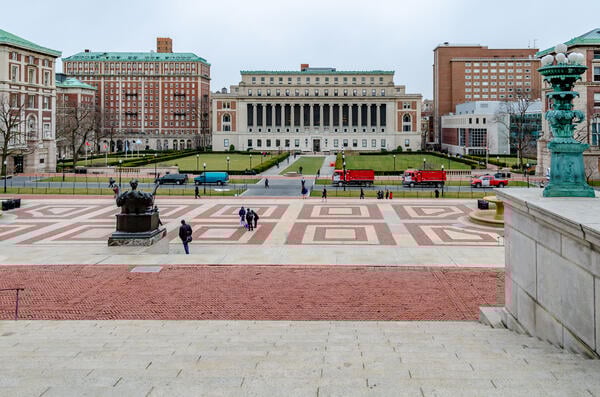
    Columbia University president Claire Shipman would have us believe she snatched academic freedom from the flames of Trump’s higher education dumpster fire, but this is more of the same gaslighting we’ve endured for almost two years. Beginning with the first university administrator’s response to the first campus protest against the war in Gaza, university administrations everywhere repeatedly decried antisemitism while rarely naming what the students were actually calling for—namely, for the harm to the Palestinian people to stop, not for harm to come to the Jewish people.

    The words “Palestine” and “Gaza” almost never appeared in university administrators’ statements. That they also don’t appear in Shipman’s announcement of the agreement Columbia reached with the federal government to settle allegations of antisemitism is one tell that protections for academic freedom were not “carefully crafted” over the course of the negotiations but that they were abandoned instead. (For a thorough analysis of the settlement’s many failures that goes beyond the focus of this article, see “An Agreement That Settles Nothing,” by the Columbia chapter of the American Association of University Professors.)

    On CNN, Shipman claimed that the resolution “protects our academic integrity,” calling that a “red line” for Columbia. In her announcement, Shipman offers as evidence of this integrity a sentence in the settlement that reads, “No provision of this agreement, individually or taken together, shall be construed as giving the United States authority to dictate faculty hiring.” She glosses this by adding, “The federal government will not dictate … who teaches.”

    When reading the official document, one is startled, then, to find that faculty hiring is dictated by its terms:

    “13. Columbia shall, consistent with its announcement on March 21, 2025, appoint new faculty members with joint positions in both the Institute for Israel and Jewish Studies and the departments or fields of economics, political science, or SIPA [the School of International and Public Affairs].”

    The government should not be determining which programs Columbia chooses to invest in. I suspect that the slippage in Shipman’s statement from “faculty hiring” (the government cannot dictate faculty hiring) to “who teaches” (the government cannot dictate who teaches) is purposeful. She can always say that no member of the multiagency Task Force to Combat Anti-Semitism that had her by the throat will be personally reviewing candidate files, so Columbia retains control over the who of who teaches. But this is a distinction without substance when the ideological viewpoint of candidates is guaranteed in advance.

    The Institute for Israel and Jewish Studies “is dedicated to the academic study and discussion of Israel and Jewish Studies,” we learn from its webpage. “The Institute for Israel and Jewish Studies supports the State of Israel’s right to exist and to flourish,” its webpage also tells us. Can an academic department be a kind of lobbying organization at the same time? And can an academic department on Israel exclude some of the best thinking on its formation, that of anti-Zionist Jewish scholars? Isn’t this combination of the academic and the ideological a bit like the nonsensical liberal platitude calling Israel a Jewish and democratic state? The conjunction “and” does a heck of a lot of spackling work.

    By sharing the hires in the Institute for Israel and Jewish Studies as joint appointments with other departments, the work performed by phrases like “Israel’s right to exist” is amplified. In this way, the settlement seeks to multiply a particular, pro-Israel point of view in the university, potentially helping to shield Israel from criticism at the very moment it most needs to be criticized. This is not institutional neutrality. This is an intentional tilting of an already painfully tilted playing field.

    If anyone doubts that this tilt is precisely what the settlement seeks to secure, they need only consult No. 12 in the agreement, which stipulates that “the Senior Vice Provost, acting with the authority of the Office of the Provost, will conduct a thorough review of … the Center for Palestine Studies; the Institute for Israel and Jewish Studies; Middle Eastern, South Asian, and African Studies; the Middle East Institute; the Tel Aviv and Amman global hubs; the School of International and Public Affairs Middle East Policy major; and other University programs focused on the Middle East.”

    This person will “make recommendations to the President and Provost, in accordance with academic procedures, about any necessary changes, academic restructuring, or investments.” We already know which program on this list will find its fortunes soon improved. It’s not hard to imagine which ones might find themselves impoverished under the heading “necessary changes” or “academic restructuring.”

    Columbia did negotiate something wise. As Shipman wrote, “We have agreed on a robust dispute resolution process that includes a mutually agreed upon independent monitor and arbitrator as neutral third parties, rather than ceding authority to the government or a court.” Without this provision, Columbia would face a future of potentially endless arbitrary civil rights investigations.

    As more journalists report on the transformation of the federal civil service from a body of mostly nonpartisan experts into one evaluated on loyalty to the president, and as more stories expose the illegitimate tactics and methodologies used to levy accusations of antisemitism, this caveat providing for a third-party arbiter will be one that every institution will want to negotiate before discussing anything else. Columbia’s saga is, after all, only one of the first of many likely to come—last week, Brown University became the second institution to strike a deal with the Trump administration, and Harvard University is reportedly making progress toward one). After the Columbia settlement was announced, Trump posted on Truth Social, “Numerous other Higher Education Institutions that have hurt so many, and been so unfair and unjust, and have wrongly spent federal money, much of it from our government, are upcoming.”

    But this third-party provision holding out the hope that saner heads than those in the federal government will adjudicate going forward—a provision that will have to be negotiated individually by each institution—isn’t good enough, is it? Each institution, in this scenario, stanches its own bleeding, but not one of them directly challenges the federal administration’s use of antisemitism as a weapon of intimidation. It’s a rational calculation for each institution, I suppose, but a disastrous one taken as a whole.

    “For months,” Shipman says, “Columbia’s discussions with the federal government have been set up as a test of principle—a binary fight between courage and capitulation. But like most things in life, the reality is far more complex.” No doubt Shipman has in mind the real tragedies that would have resulted from a show of courage that might have cost Columbia its federal funding—critical research halted, jobs lost, students’ lives derailed, perhaps even the end of Columbia’s continued existence. The stakes were very high for Columbia, as they remain very high for all but the most financially insulated universities and colleges.

    And I suppose the compromises to academic freedom our institutions make, with no end in sight, in order to keep doors open and funds flowing might be forgivable, were it not for the 60,000 people and counting who are now dead—18,500 of them children. Were it not for the “worst-case scenario of famine” now unfolding. Were it not for the “war crimes in plain sight.”

    When the presidents of our universities and colleges compromise our academic freedom, they are doing so by playing along with a narrative of widespread antisemitism that they know is a pretext and a deflection. By going along with this narrative rather than challenging it, they co-create with the federal government a culture of fear that makes us scared to use our voices as professors to name and discuss a genocide. When we hesitate to openly address what is morally undeniable, the world begins to wobble. Yes, the reality is more complex than “a test of principle,” because we do not lose an abstract principle when we lose academic freedom; we slowly but surely lose our ability to tell right from wrong.

    Jennifer Ruth is a professor in the School of Film at Portland State University. She is co-author, with Michael Bérubé, of It’s Not Free Speech: Race, Democracy, and the Future of Academic Freedom (Johns Hopkins Press, 2022); coeditor, with Ellen Schrecker and Valerie Johnson, of The Right to Learn: Resisting the Right-Wing Attack on Academic Freedom (Beacon, 2024); and co-director, with Jan Haaken, of the film The Palestine Exception: What’s at Stake in the Campus Protests?

    Source link