by Jon Marcus, The Hechinger Report January 20, 2026
WATERTOWN, Mass. — Amanda Leef remembers thinking for the first time about becoming a veterinarian when she was 4 and found a garter snake in her Michigan backyard.
“I think every girl goes through a phase of wanting to be a vet,” Leef said.
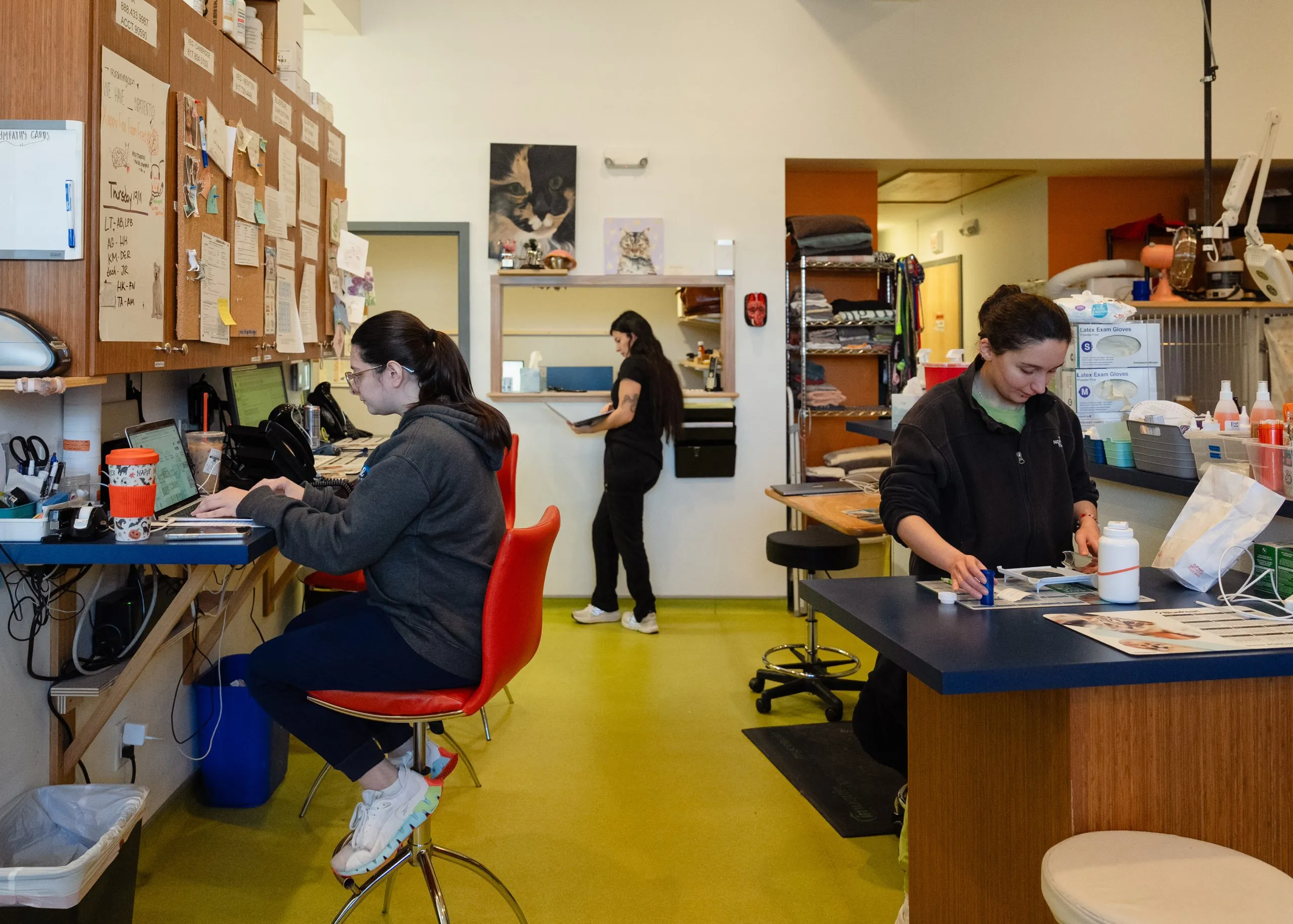
For her, it wasn’t just a phase. Now, at 48, she co-owns her own bustling veterinary practice, Heal Veterinary Clinic, in this Boston suburb.
All seven veterinarians here are women. So is the large team of vet techs, and the entire rest of the 22-member medical staff.
“In really broad generalities, I think women are more interested in the emotional and empathetic side of things than men are,” Leef said, sitting on the floor of an examination room with one of her patients, an affectionate, white-furred golden retriever named Cypress.
For that and other reasons, women studying veterinary medicine now outnumber men by four to one.
It’s not just veterinary school. The number of women has surpassed the number of men in law school, medical school, pharmacy school, optometry school and dental school.
Women in the United States now earn 40 percent more doctoral degrees overall, and nearly twice as many master’s degrees, as men, according to the U.S. Department of Education — a trend transforming high-end work.
This is no longer some distant statistical abstraction. Americans can see it when they take their pets to the vet or their kids to the dentist, need a lawyer or an eye exam, see a therapist or pick up a prescription.
The dramatic shift in who is being trained for these fields is partly because more women are going into them. But it’s also the result of a steady slide in the number of men enrolling in graduate and professional schools. And while that may be elevating women, it’s affecting the nation’s economic competitiveness and even the point at which people get married and have children.
“Having all students represented and engaged in graduate study ensures that we have healthy communities and families and a vital economy,” said Chevelle Newsome, president of the Council of Graduate Schools.
Related: Interested in innovations in higher education? Subscribe to our free biweekly higher education newsletter.
Graduate schools — including the 460 Newsome represents — have their own motive for wanting more men to enroll. They’re facing new threats from declining international enrollment, impending federal borrowing limits for graduate study and a public backlash against the high cost and uneven returns of graduate degrees.
The main reason women have overtaken men in graduate school, however, is that more women than men are earning the undergraduate degrees required to go on to advanced study.
“Women certainly still see education in terms of upward mobility,” said Lisa Greenhill, chief organizational health officer at the American Association of Veterinary Medical Colleges, whose job includes trying to diversify veterinary medicine. “Men have a lot more options. They feel like they don’t have to go to a four-year program or a graduate program.”
The number of men enrolled as undergraduates in college nationwide has dropped by nearly a quarter of a million, or 4 percent, just since 2020, the National Student Clearinghouse Research Center reports.
Women now account for about 60 percent of undergraduate enrollment. Nearly half of women aged 25 to 34 have bachelor’s degrees, compared to 37 percent of men, according to the Pew Research Center.
“Men aren’t seeing higher education as valuable,” said Newsome. Many go into the trades or take other jobs straight out of high school to begin immediately earning a wage, forgoing the need to spend time in or money on college. Even men who do get undergraduate degrees may not see the value in continuing beyond them, she said.
The effects of this have been stark and swift.
The number of women earning law degrees passed the number of men in 2019, figures from the American Bar Association, or ABA, show; while only four of the law schools ranked among the 20 most prestigious by U.S. News & World Report had more women than men in 2016, women now outnumber men at 18 of them, according to the nonprofit law student news site JURIST.
That’s already having a real-world impact. By 2020, the ABA says, the majority of general lawyers working for the federal government were women, and by 2023, the majority of associates at law firms were.
In medical schools, the number of women also overtook the number of men in 2019. Today, 55 percent of future doctors are women, up from 48 percent in 2015, according to the Association of American Medical Colleges, or AAMC.
Women also outnumber men by three to one in doctoral programs in psychology, and by nearly four to one in master’s programs, the American Psychological Association reports. They make up 55 percent of graduates of dental schools, and 72 percent in pediatric dentistry, according to the American Dental Association.
More than seven out of 10 students in schools of optometry are women, the Association of Schools and Colleges of Optometry says. And at pharmacy schools, women constitute two-thirds of students working toward master’s degrees and 56 percent of those seeking doctorates, statistics from the American Association of Colleges of Pharmacy show.
There are still more men than women in doctoral and master’s degree programs in business, engineering, math and the physical sciences. But women make up substantial majorities of graduate enrollment in health sciences, public administration, education, social and behavioral sciences and biological and agricultural sciences, according to the Council of Graduate Schools.
While this represents impressive progress for women, the declining number of men enrolling in graduate programs is bad news for universities and colleges that offer them, for some patients in the health care system and for the economy.
That’s because the growing number of women going to graduate and professional schools can’t continue forever to outpace the decline in the number of men. Total graduate enrollment at private, nonprofit colleges and universities was already down this fall, the Clearinghouse reports.
That’s a problem made worse by visa restrictions and cuts to federal research funding, which have helped reduce the number of international students coming to the United States for graduate study by 12 percent, according to the Institute of International Education.
New federal loan limits scheduled to take effect next year are widely expected to further eat into graduate school enrollment. The changes will cap borrowing at $100,000 for graduate students and $200,000 for those in professional programs. That’s much less than the $408,150 the AAMC says it costs to get a medical degree from a private, nonprofit university or the $297,745 from a public one. The association of medical colleges projects a national shortage of as many as 124,000 physicians by 2034.
The price of getting a graduate degree has more than tripled since 2000, according to the Georgetown University Center on Education and the Workforce. Graduate degrees have become a critical revenue source for universities, which take in about $20 billion a year from master’s programs alone, a separate analysis, by the right-leaning think tank the American Enterprise Institute, calculates.
Students of all genders are increasingly questioning the return on that investment. Nearly 40 percent of prospective graduate students say graduate programs that cost more than $10,000 a year are too expensive, a new survey by the enrollment management consulting firm EAB finds. Payoffs vary widely, making some graduate degrees “a potentially high-risk investment,” the Georgetown Center on Education and the Workforce has concluded.
The proportion of Americans 25 and older with master’s degrees or higher has fallen since 2000, from first in the world to 24th, according to the World Bank, while the percentage of those with doctoral degrees has dropped during that period from first to seventh.
“That is a huge concern, when you think about where economies are going,” said Claudia Buchmann, an Ohio State University sociologist who studies this issue and is coauthor of the book “The Rise of Women.” “If we’re trying to compete on a global level, the fact that men’s college-going rates are so stagnant means we can’t fix this problem until we get more men.”
Men are, after all, half the nation’s labor force. And while some graduate degrees may not pay off, many of them do, substantially. People with advanced degrees are also much less likely to be unemployed.
“When you think about global economic competitiveness for the United States — despite the skepticism that’s out there — education and training are still the keys to good jobs,” Buchmann said. Falling behind by that measure “is doing damage to men in this country.”
But experts worry that the gender shift is self-perpetuating. Men may be put off by what they see as the “feminization” of professions in which they now are the minority, research by the veterinary medical colleges association concluded.
“I’m not seeing a national effort to say we need to change this,” Buchmann said. “If anything, the opposite is true.”
Graduate school leaders say the most effective efforts at reversing this trend are at the undergraduate level. “A lot of the effort from the graduate community has been to reach down and support those projects,” said Newsome, who was formerly dean of graduate studies at California State University, Sacramento. Universities also are encouraging employers to sponsor graduate education for male employees, she said.
The effects of this widening gender divide are not just economic. New studies show that growing gender disparities in education can affect relationships. Marriage rates have fallen as levels of education rise, according to research from Iowa State University; each additional year of schooling reduces by about 4 percentage points the likelihood that someone between 25 and 34 is married. The proportion of Americans in that age bracket who are married has declined from 80 percent in 1970 to 38 percent today.
“When folks are looking for partners, there’s a desire to find someone economically comparable,” said Greenhill, of the veterinary medical colleges association. Added Buchmann, at Ohio State: “A lot of masculine norms are about being the breadwinner of the family. If the woman is the principal breadwinner, that presents not just economic challenges, but challenges to make marriages work.”
More-educated women are also more likely to delay or forgo having children, according to separate research from the Wharton School of Business at the University of Pennsylvania.
Back at her veterinary clinic, Amanda Leef makes the rounds, checking in on a dog getting his teeth cleaned and a pair of kittens waiting to be adopted.
Only one male veterinarian has ever applied to work there, Leef said. He was hired, but eventually left to go into research.
“It does change the personality of a clinic” to be made up of only women, she said. “A staff that’s diverse is more accessible to a broader range of people. I just think the world is better with greater gender diversity.”
Contact writer Jon Marcus at 212-678-7556, [email protected]orjpm.82 on Signal.
This <a target=”_blank” href=”https://hechingerreport.org/women-far-outnumber-men-in-law-school-med-school-vet-school-and-other-professional-programs/”>article</a> first appeared on <a target=”_blank” href=”https://hechingerreport.org”>The Hechinger Report</a> and is republished here under a <a target=”_blank” href=”https://creativecommons.org/licenses/by-nc-nd/4.0/”>Creative Commons Attribution-NonCommercial-NoDerivatives 4.0 International License</a>.<img src=”https://i0.wp.com/hechingerreport.org/wp-content/uploads/2018/06/cropped-favicon.jpg?fit=150%2C150&ssl=1″ style=”width:1em;height:1em;margin-left:10px;”>
by Catharine Hill, The Hechinger Report January 20, 2026
While attending a gathering of Ivy League women years ago, I upset the audience by commenting that a real challenge for U.S. higher education was the declining participation of men in higher education, not just the glass ceiling and unequal pay faced by women.
At the time, I was president of Vassar College (which did not become co-ed until 1969). We surveyed newly admitted students as well as first-year students and learned that the majority expressed a preference for a gender-balanced student body, with as co-educational an environment as possible.
With fewer men applying, that meant admitting them at a higher rate, something some other selective colleges and universities were already doing. While, historically, men were much more likely to attain a college degree than women, that changed by 1980. For more than four decades now, the number of women on campuses has surpassed the number of men.
Related: Interested in innovations in higher education? Subscribe to our free biweekly higher education newsletter.
These days, 27 percent more women than men age 25 to 34 have earned a bachelor’s degree, according to the Pew Research Center. Aiming for greater gender balance, some colleges and universities have put a “thumb on the scale” to admit and matriculate more men.
But the end of affirmative action, along with the Trump administration’s statements warning schools against considering gender identity (or race, ethnicity, nationality, political views, sexual orientation and religious associations) in admissions, could end this preference.
To be clear, I believe that the goal of admissions preferences, including for men, should be to increase overall educational attainment, not to advantage one group over another. Economic and workforce development should be a top higher education priority, because many high-demand and well-paying jobs require a college degree. America should therefore be focused on increasing educational attainment because it is important to our global competitiveness. And the selective schools that have high graduation rates should give a preference to students who are underrepresented in higher education — including men — because it will get more Americans to and through college and benefit our economy and society.
Preferencing students from groups with lower overall educational attainment also helps colleges meet their own goals.
For schools that admit just about all comers, attracting more men — through changes in recruitment strategies, adjustments in curricula and programs to support retention — is part of a strategy to sustain enrollment in the face of the demographic cliff (the declining number of American 18-year-olds resulting from the drop in the birth rate during the Great Recession) and declining international applicants due to the administration’s policies.
Colleges that don’t admit nearly all applicants have a different goal: balancing the share of men and women because it helps them compete for students.
Selective schools don’t really try to admit more men to serve the public good of increasing overall educational attainment. They believe the students they are trying to attract prefer a co-educational experience.
We are living in a global economy that rewards talent. When selective colleges take more veterans, lower-income students and students from rural areas and underrepresented groups, the chance of these students graduating increases. That increases the talent pool, helping to meet employer demand for workers with bachelor’s degrees.
The U.S. has been slipping backward in education compared to our peers for several decades. To reverse this trend, we need to get more of our population through college. The best way to do this is by targeting populations with lower educational attainment, including men. But by adding gender to the list of characteristics that should not be considered in admissions decisions, the Trump administration is telling colleges and universities to take the thumb off the scale for men.
I suspect this was unintended or resulted from a misunderstanding of who has actually been getting a preference in the admissions process, and in assuming incorrectly that women and/or nonbinary applicants have benefited.
Over the last 15 years or more, some attributes, including academic performance, have likely been traded off in order to admit more men. How big these trade-offs have been has differed from college to college and will be hard to calculate, given all the student characteristics that are considered in making admissions decisions.
I’m in favor of making these trade-offs to contribute to improved overall educational attainment in America.
But given the Trump administration’s lumping of gender with race, college and university policies intended to attract men will now face the same legal challenges that affirmative action policies aimed at improving educational attainment and fairness face.
Differential admit rates will be scrutinized. Even if the administration doesn’t challenge these trade-offs, rejected women applicants may seek changes through the courts and otherwise, just as happened with regard to race.
Admitting male athletes could also unintentionally be at risk. If low-income has become a “proxy” for race, then athletic admits could become “proxies” for men. (Some schools have publicly stated that they were primarily introducing football to attract male applicants.)
Colleges and universities, including selective ones, are heavily subsidized by federal, state and local governments because they have historically been perceived as serving the public good, contributing to equal opportunity and strengthening our economy.
Admissions decisions should be evaluated on these grounds, with seats at the selective schools allocated according to what will most contribute to the public good, including improving our nation’s talent pool.
Targeting populations with lower-than-average college-going rates will help accomplish this. That includes improving access and success for all underserved groups, including men.
Unfortunately, the current administration’s policies are working directly against this and are likely to worsen educational attainment in America and our global competitiveness.
Catharine “Cappy” Hill is the former managing director of Ithaka S+R and former president of Vassar College.
This <a target=”_blank” href=”https://hechingerreport.org/colleges-men-trump-new-policies-disadvantage/”>article</a> first appeared on <a target=”_blank” href=”https://hechingerreport.org”>The Hechinger Report</a> and is republished here under a <a target=”_blank” href=”https://creativecommons.org/licenses/by-nc-nd/4.0/”>Creative Commons Attribution-NonCommercial-NoDerivatives 4.0 International License</a>.<img src=”https://i0.wp.com/hechingerreport.org/wp-content/uploads/2018/06/cropped-favicon.jpg?fit=150%2C150&ssl=1″ style=”width:1em;height:1em;margin-left:10px;”>
by Kathryn Joyce, The Hechinger Report January 6, 2026
The West Shore school board policy committee meeting came to a halt almost as soon as it began. As a board member started going over the agenda on July 17, local parent Danielle Gross rose to object to a last-minute addition she said hadn’t been on the district’s website the day before.
By posting notice of the proposal so close to the meeting, charged Gross, who is also a partner at a communications and advocacy firm that works on state education policy, the board had violated Pennsylvania’s open meetings law, failing to provide the public at least 24 hours’ notice about a topic “this board knows is of great concern for many community members interested in the rights of our LGBTQ students.”
The committee chair, relentlessly banging her gavel, adjourned the meeting to a nonpublic “executive session.” When the committee reconvened, the policy was not mentioned again until the meeting’s end, when a lone public commenter, Heather Keller, invoked “Hamlet” to warn that something was rotten in the Harrisburg suburbs.
The proposed policy, which would bar trans students from using bathrooms and locker rooms aligned with their gender identity, was a nearly verbatim copy of one crafted by a group called the Independence Law Center — a Harrisburg-based Christian right legal advocacy group whose model policies have led to costly lawsuits in districts around the state.
“Being concerned about that, I remembered that we don’t partner with the Independence Law Center,” Keller said. “We haven’t hired them as consultants. And they’re not our district solicitor.”
To those who’d followed education politics in the state, Keller’s comment would register as wry understatement. Over the past several years, ILC’s growing entanglement with dozens of Pennsylvania school boards has become a high-profile controversy. Through interviews, an extensive review of local reporting and public documents, In These Times and The Hechinger Report found that, of the state’s 500 school districts, at least 20 are known to have consulted with or signed formal contracts accepting ILC’s pro bono legal services — to advise on, draft and defend district policies, free of charge.*
But over the last year, it’s become clear ILC’s influence stretches beyond such formal partnerships, as school districts from Bucks County (outside Philadelphia) to Beaver County (west of Pittsburgh) have proposed or adopted virtually identical anti-LGBTQ and book ban policies that originated with ILC — sometimes without acknowledging any connection to the group or where the policies came from.
In districts without formal partnerships with ILC, such as West Shore, figuring out what, exactly, their board’s relationship is to the group has been a painfully assembled puzzle, thanks to school board obstruction, blocked open records requests and reports of backdoor dealing.
Although ILC has existed for nearly 20 years, its recent prominence began around 2021 with a surge of “parents’ rights” complaints about pandemic-era masking, teaching about racism, LGBTQ representation and how library books and curricula are selected. In many districts where such debates raged, calls to hire ILC soon followed.
In 2024 alone, ILC made inroads of one kind or another with roughly a dozen districts in central Pennsylvania, including West Shore, which proposed contracting ILC that March and invited the group to speak to the board in a closed-door meeting the public couldn’t attend. (ILC did not respond to multiple interview requests or emailed questions.)
On the night of that March meeting, Gross organized a rally outside the school board building, drawing roughly 100 residents to protest, even as it snowed. The board backed down from hiring ILC, but that didn’t stop it from introducing ILC policies. In addition to the proposed bathroom policy, that May the board passed a ban on trans students joining girls’ athletics teams after they’ve started puberty and allowed district officials to request doctors’ notes and birth certificates to enforce it.
To Gross, it’s an example of how West Shore and other school boards without formal relationships with ILC have still found ways to advance the group’s agenda. “They’re waiting for other school boards to do all the controversial stuff with the ILC,” Gross said, then “taking the policies other districts have, running them through their solicitors, and implementing them that way.” (A spokesperson for West Shore stated that the district had not contracted with ILC and declined further comment.)
“It’s like a hydra effect,” said Kait Linton of the grassroots community group Public Education Advocates of Lancaster. “They’ve planted seeds for a vine, and now the vine’s taking off in all the directions it wants to go.”
Related: Become a lifelong learner. Subscribe to our free weekly newsletter featuring the most important stories in education.
ILC was founded in the wake of a Pennsylvania lawsuit that drew nationwide attention and prompted significant local embarrassment.
In October 2004, the Dover Area School District — situated, like West Shore, in York County, south of Harrisburg — changed its biology curriculum to introduce the quasi-creationist theory of “intelligent design” as an alternative to evolution. Eleven families sued, arguing that intelligent design was “fundamentally a religious proposition rather than a scientific one.” In December 2005, a federal court agreed, ruling that public schools teaching the theory violated the U.S. Constitution’s establishment clause.
During the case, an attorney named Randall Wenger unsuccessfully tried to add the creationist Christian think tank he worked for — which published the book Dover sought to teach — to the suit as a defendant, and, failing that, filed an amicus brief instead. When the district lost and was ultimately left with $1 million in legal fees, Wenger found a lesson in it for conservatives moving forward.
Speaking at a 2005 conference hosted by the Pennsylvania Family Institute — part of a national network of state-level “family councils” tied to the heavyweight Christian right organizations Family Research Council and Focus on the Family — Wenger suggested Dover could have avoided or won legal challenges if officials hadn’t mentioned their religious motivations during public school board meetings.
“Give us a call before you do something controversial like that,” Wenger said, according to LancasterOnline. Then, in a line that’s become infamous among ILC’s critics, Wenger invoked a biblical reference to add, “I think we need to do a better job at being clever as serpents.” (Wenger did not respond to multiple requests for comment.)
The following year, in 2006, the Pennsylvania Family Institute launched ILC with Wenger as its chief counsel, a role he remains in today, in addition to serving as chief operating officer. ILC now has three other staff attorneys and has worked directly as plaintiff’s attorneys on two Supreme Court cases: one was part of the larger Hobby Lobby decision, which allows employers to opt out of employee health insurance plans that include contraception coverage; the other expanded religious exemptions for workers.
ILC has financial ties and a history of collaborating with Christian right legal advocacy behemoth Alliance Defending Freedom, including on a 2017 lawsuit against a school district outside Philadelphia that allowed a trans student to use the locker room aligned with their gender. ILC has filed amicus briefs in support of numerous other Christian right causes, including two that led to major Supreme Court victories for the right in 2025: Mahmoud v. Taylor, which limited public schools’ ability to assign books with LGBTQ themes; and United States v. Skrmetti, which affirmed a Tennessee ban on gender-affirming care for minors. In recent months, the group filed two separate amicus briefs on behalf of Pennsylvania school board members in anti-trans cases in other states. In both cases, which were brought by Alliance Defending Freedom and concern school sports and pronoun usage, ILC urged the Supreme Court to “resolve the issue nationwide.”
In lower courts, ILC has worked on or contributed briefs to lawsuits seeking to start public school board meetings with prayer and to allow religious groups to proselytize public school students, among other issues. More quietly, as the local blog Lancaster Examiner reported — and as one ILC attorney recounted at a conference in 2022 — ILC has defended “conversion therapy,” the broadly discredited theory that homosexuality is a disorder that can be cured.
To critics, all of these efforts have helped systematically chip away at civil rights protections for LGBTQ students at the local level, seeding the policies that President Donald Trump’s administration is now trying to make ubiquitous through executive orders. And while local backlash is building in some areas, activists are hindered by the threat that the ILC’s efforts are ultimately aimed at laying the groundwork for a Supreme Court case that could formalize discrimination against transgender students into law nationwide.
But ILC’s greatest influence is arguably much closer to its Harrisburg home, in neighboring Lancaster and York counties, where nine districts have contracted ILC and at least three more have adopted its model policies.
The rural hillside and farmland in Lancaster County, Pennsylvania, are seen on Aug. 15, 2025. The local school district, Penn Manor, adopted anti-trans and anti-LGBTQ policies presented by the Independence Law Center, a Harrisburg-based Christian-right legal advocacy group.
A sign is seen in a residential neighborhood in Holtwood, Pennsylvania.
In Lancaster’s Hempfield district, it started with a 2021 controversy over a trans student joining the girls’ track team. School board meetings that had already grown tense over pandemic masking requirements erupted in new fights about LGBTQ rights and visibility. In the middle of one meeting, recalled Hempfield parent and substitute teacher Erin Small, a board member abruptly suggested hiring ILC to write a new district policy. The suddenness of the proposal caused such public outcry, said Small, that the vote to hire ILC had to be postponed.
But within a few months, the district signed a contract with ILC to write what became Pennsylvania’s first school district ban on trans students participating in sports teams aligned with their gender identity. Other ILC policy proposals followed, including a successful 2023 effort to bar the district from using books or materials that include sexual content, which immediately prompted an intensive review of books written by LGBTQ and non-white authors. (The Hempfield district did not respond to requests for comment.)
In nearby Elizabethtown, the path to hiring ILC began with a fraudulent 2021 complaint, when a man claimed, during a school board meeting, that his middle schooler had checked out an inappropriate book from the school library. Although it later emerged that the man had reportedly used a fake name and officials found no evidence he had children attending the school, his claim nonetheless sparked a long debate over book policies, which eventually led to the district contracting ILC as special legal counsel in 2024. Two anti-trans policies were subsequently passed in January 2025, and a ban on “sexually explicit” books, also based on ILC’s models, was discussed this past spring but has not moved forward to date. (The Elizabethtown district did not respond to requests for comment.)
Across the Susquehanna River in York County — where five districts have contracted ILC and two more have considered or passed its policies — the group’s influence has been broad and sometimes confounding. In one instance, as the York Dispatch discovered, ILC not only authored four policy proposals for the Red Lion Area School District, but ILC senior counsel Jeremy Samek, a registered Pennsylvania lobbyist, also drafted a speech for the board president to deliver in support of three anti-trans policies, all of which passed in 2024. (The Red Lion district did not respond to requests for comment.)
The same year, South Western School District, reportedly acting on ILC advice, ordered a high school to cut large windows into the walls of two bathrooms that had been designated as “gender identity restrooms,” allowing passersby in the hallway to see inside, consequently discouraging students from using them. (The district did not respond to requests for comment, but in a statement to local paper the Evening Sun, school board President Matt Gelazela cited student safety and said the windows helped staff monitor for vaping, bullying and other prohibited activities.)
In many districts, said Lancaster parent Eric Fisher, ILC’s growing relationships with school boards has been eased by the ubiquitous presence around the state of its sister organizations within the Pennsylvania Family Institute, including the institute’s lobbying arm, voucher group, youth leadership conference and Church Ambassador Network, which brings pastors from across Pennsylvania to lobby lawmakers in the state Capitol.
As a result, said Fisher, when ILC shows up in a district, board members often are already familiar with them or other institute affiliates, “having met them at church and having their churches put their stamp of endorsement on them. I think it makes it really easy for [board members] to say yes.”
But in nearly every district that has considered working with ILC, wide-scale pushback has also followed — though often to no avail. In June 2024, in Elizabethtown — where school board fights have been so fractious that they inspired a full-length documentary — members of the public spoke in opposition to hiring ILC at a ratio of roughly 5 to 1 before the board voted unanimously to hire the group anyway.
In the Upper Adams district in Biglerville, southwest of Harrisburg, the school board voted to contract ILC despite a cacophony of public comments and a 500-signature petition in opposition.
In Lancaster’s Warwick district, the school board’s vote to hire ILC prompted the resignation of a superintendent who had served in her role for 15 years and who reported that the district’s insurance carrier had warned the district might not be covered in future lawsuits if it adopted ILC’s anti-trans policies.
Since then, Warwick resident Kayla Cook noted during a public presentation about ILC this past summer, the mood in the district has grown grim. “We do not have any students at the moment trying to participate [in sports] who are trans. However, we have students who simply have a short haircut being profiled as being trans,” Cook said. “It’s tipped far into fear-based behaviors, where we are dipping our toes into checking the student’s body to make sure that they’re identifying as the appropriate gender.” (A district spokesperson directed interview requests to the school board, which did not respond to requests for comment.)
But perhaps nowhere was the fight as fraught as in Lancaster’s Penn Manor School District, which hired ILC to draft new policies about trans students just months after the suicide of a trans youth from Penn Manor — the fifth such suicide in the Lancaster community in less than two years.
Before the Penn Manor school board publicly proposed retaining ILC, in June 2024 — scheduling a presentation by and a vote on hiring ILC for the same meeting — district Superintendent Phil Gale wrote to the board about his misgivings. In an email obtained by LancasterOnline, Gale warned the board against policies “that will distinguish one group of students from another” and passed along a warning from the district’s insurance carrier that adopting potentially discriminatory policies might affect the district’s coverage if it were sued by students or staff.
In a narrow 5-4 vote, the all-Republican board declined to hire ILC that June. But after one board member reconsidered, the matter was placed back on the agenda for two meetings that August.
Members of the community publicly presented an open letter, signed by roughly 80 Penn Manor residents, requesting that, if policies about trans students were truly needed, the district establish a task force of local experts to draft them rather than outsource policymaking to ILC. One of the letter’s organizers, Mark Clatterbuck, a religious studies professor at New Jersey’s Montclair State University, said the district never acknowledged it or responded. (Maddie Long, a spokesperson for Penn Manor, said the district could not comment because of the litigation.)
That February, Clatterbuck’s son, Ash — a college junior and transgender man who’d grown up in Penn Manor — had died by suicide, shortly after the nationally publicized death of Nex Benedict, a nonbinary 16-year-old in Oklahoma who died by suicide the day after being beaten unconscious in a high school girls’ bathroom.
In the first August meeting to reconsider hiring ILC, Clatterbuck told the Penn Manor board, through tears, how “living in a hostile political environment that dehumanizes them at school, at home, at church and in the halls of Congress” was making “life unlivable for far too many of our trans children.”
Two weeks later, at the second meeting, Ash’s mother, Malinda Harnish Clatterbuck, pleaded for board members talking about student safety to consider the children these policies actively harm.
“ILC does not even recognize trans and gender-nonconforming children as existing,” said Harnish Clatterbuck, a pastor whose family has lived in Lancaster for 10 generations. “That fact alone should preclude them from even being considered by the board.”
A painted portrait of Ash Clatterbuck in his parents’ home in Holtwood, Pennsylvania.
Malinda Harnish-Clatterbuck walks a labyrinth made in 2023 by her late son, Ash, on their property in Holtwood.
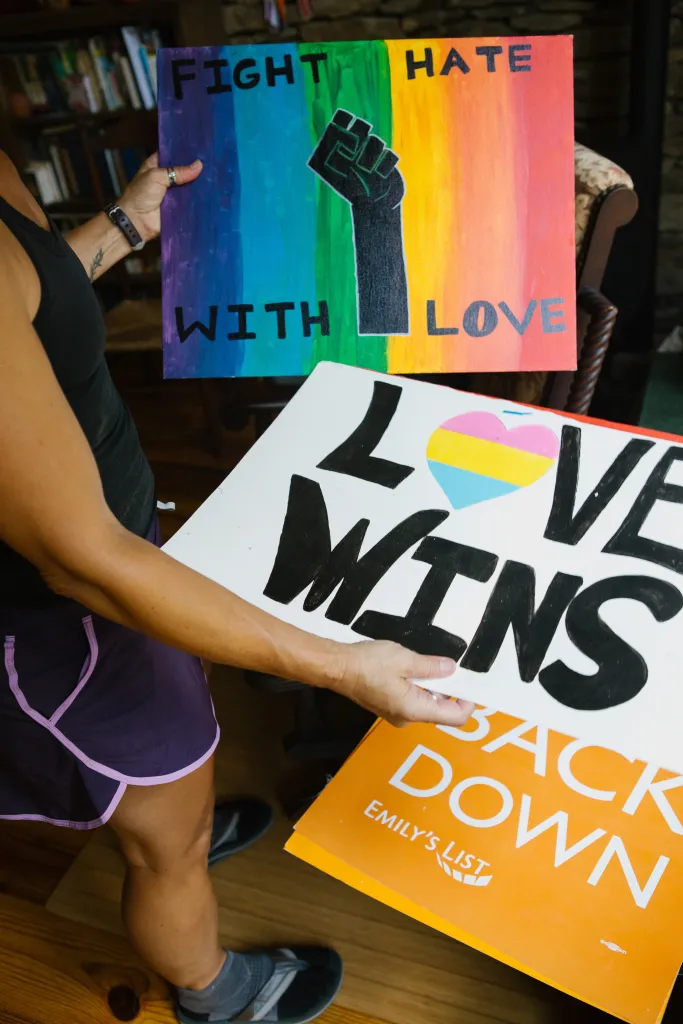
Hand-painted signs that once hung on the walls of Ash’s dorm room
Her husband spoke again as well, telling the board how Ash had frequently warned about the spread of policies that stoke “irrational hysteria around” trans youth — “the kind of policies,” Mark Clatterbuck noted, “that the Pennsylvania-based Independence Law Center loves to draft.”
Reminding the board that five trans youth in the area had died by suicide within just 18 months, he continued, “Do not try to tell me that there is no connection between the kind of dehumanizing policies that the ILC drafts and the deaths of our trans children.”
But the board voted to hire ILC anyway, 5-4, and in the following months adopted two of ILC’s anti-trans policies.
In anticipation of such public outcry, some school boards around Pennsylvania have taken steps to obscure their interest in ILC’s agenda.
Kristina Moon, a senior attorney at the Education Law Center of Pennsylvania, a legal services nonprofit that advocates for public school students’ rights, has watched a progression in how school boards interact with ILC.
When her group first began receiving calls related to ILC, around 2021, alarmed parents told similar stories of boards proposing book bans targeting queer or trans students’ perspectives, or identical packages of policies that included restrictions about bathrooms, sports and pronouns.
“At first, we would see boards openly talking about their interest in contracting with ILC,” said Moon. But as local opposition began to grow, “board members stopped sharing so publicly.”
Instead, Moon said, reports began to emerge of school boards discussing or meeting with ILC in secret.
In Hempfield, in 2022, the board moved some policy discussions into committee sessions less likely to be attended by the public, and held a vote on an anti-trans sports policy without announcing it publicly, possibly in violation of Pennsylvania’s Sunshine Act, as Mother Jones reported.
Across the state, in Bucks County, one Central Bucks school board member recounted in an op-ed for the Bucks County Beacon how her conservative colleagues had stonewalled her when she asked about the origins of a new book ban policy in 2022, only to have the board later admit ILC had performed a legal review of it “pro bono,” as PhillyBurbs reported.
Subsequent reporting by the York Daily Record and Reuters revealed the board’s relationship with ILC was more involved and included discussions about other policies related to trans student athletes and pronoun policy. (Both Central Bucks’ books and anti-LGBTQ policies were later cited in an ACLU federal complaint that cost the district $1.75 million in legal fees, as well as in a related Education Department investigation into whether the district had created a hostile learning environment for LGBTQ students.)
But the sense of backroom dealing reached an almost cartoonish level in York County, where, in March 2024, conservative board members from 12 county school districts were invited to a secret meeting hosted by a right-wing political action committee, along with specific instructions about how to keep their participation off the public radar. According to the York Dispatch, the invitation came from former Central York school board member Veronica Gemma, who (after losing her seat) was hired as education director for PA Economic Growth, a PAC that had helped elect 48 conservatives to York school boards the previous fall. (Gemma did not respond to interview requests.)
Gemma’s invitation was accompanied by an agenda sent by the PAC, which included a discussion about ILC and how board members could “build a network of support” and “advance our shared goals more effectively countywide.” The invitation also included the admonition that “confidentiality is paramount” and that each district should only send four board members or fewer — to avoid the legal threshold for a quorum that would make the meeting a matter of public record.
“Remember, no more than 4 — sunshine laws,” Gemma wrote.
In the wake of stories like these, Wenger’s 2005 suggestion that conservatives “become as clever as serpents” in concealing their intentions became ubiquitous in coverage of and advocacy against ILC — showing up in newspaper articles, in editorials and even on a T-shirt for sale online.
“I think it’s very obvious,” reflected Moon, “but if something has to be taking place in secrecy, I’m not sure it can be good for our students.”
But the lack of transparency shows up in subtler ways too, in the spreading phenomenon of districts adopting ILC policies without admitting where the policies come from. That was the case in Eastern York in 2025, where board members who had previously lobbied for an ILC pronoun policy later directed their in-house attorney to write an original policy instead, following the same principles but avoiding the baggage an ILC connection would bring.
In Elizabethtown (which did contract ILC), one policy was even introduced erroneously referencing clauses from another district’s code, in an indication of how directly districts are copy-pasting from one another.
In 2025, ILC attorney Jeremy Samek even seemed to acknowledge the trend, predicting that fewer districts might contract ILC going forward, since the combination of Trump’s executive orders on trans students and the general spread of policies similar to ILC’s meant “it’s going to be a lot easier for other schools to do that without even talking to us.”
In the face of what appears like a deliberate strategy of concealment, members of the public have increasingly turned to official channels to compel boards to disclose their dealings with ILC. Mark Clatterbuck did so in 2024 and 2025, filing 10 Right-to-Know requests with Penn Manor for all school board and administration communications with or about ILC and policies ILC consulted on and any records related to a set of specific keywords.
Thirty miles north, three Elizabethtown parents sued their school board in the spring of 2025, alleging it deliberately met and conferred with ILC in nonpublic meetings and private communications to “circumvent the requirements of the Sunshine Act.”
In both cases, and more broadly in the region, ILC critics are keenly aware that, by bringing complaints or lawsuits against the group or the school boards it works with, they might be doing exactly what ILC wants: furthering its chances to land another case before the Supreme Court, where a favorable ruling could set a dangerous national precedent, such as ruling that Title IX protections don’t cover trans students.
“They’re itching for a case,” said Clatterbuck. To that end, he added, his pro bono attorneys — at the law firm Gibbel Kraybill & Hess LLC, which also represents the Elizabethtown plaintiffs pro bono — have been careful not to do ILC’s work for it.
Largely, that has meant keeping the cases narrowly focused on Sunshine Act violations.
But in both cases, there are also hints of the larger issue at hand — of whether, in a repeat of the old Dover “intelligent design” case, ILC’s policies represent school boards imposing inherently religious viewpoints on public schools. After all, ILC’s parent group, the Pennsylvania Family Institute, clearly states its mission is to make Pennsylvania “a place where God is honored” and to “strengthen families by restoring to public life the traditional, foundational principles and values essential for the well-being of society.” And in 2024, the institute’s president, Michael Geer, told a Christian TV audience that much of ILC’s work involves working with school boards “on the transgender issue, fighting that ideology that is pervasive in our society.”
In the Elizabethtown complaint, the plaintiffs argue that district residents must “have the opportunity to observe Board deliberations regarding policies that will affect their children in order to understand the Board members’ true motivation and rationale for adopting policies — particularly when policies are prepared by an outside organization seeking to advance a particular religious viewpoint and agenda.”
The public has ample cause to suspect as much. Five current and former members of Elizabethtown’s school board are connected to a far-right church in town, where the pastor joined 150 other locals in traveling to Washington, D.C., on Jan. 6, 2021. Among them were current board members Stephen Lindemuth — who once preached a sermon at the church arguing that “gender identity confusion” doesn’t “line up with what God desires” — and his wife, Danielle Lindemuth, who helped organize the caravan of buses that went to Washington. (Stephen Lindemuth replied by email, “I have no recollection of making any judgmental comments concerning LGBTQ in my most recent preaching the past few years.” Neither he nor his wife were accused of any unlawful acts on Jan. 6.)
Another board member until this past December, James Emery, went through the church’s pastoral training program and in 2022 served as a member of the security detail of far-right Christian nationalist gubernatorial candidate Doug Mastriano.
School board meetings in Elizabethtown have also frequently devolved into religious battles, with one local mother, Amy Karr, board chair of Elizabethtown’s Church of the Brethren, recalling how local right-wing activists accused ILC’s opponents of being possessed by demonic spirits or a “vehicle of Satan.”
In Penn Manor, Clatterbuck similarly hoped to lay bare the “overtly religious nature” of the board’s motivation by including in his Right-to-Know requests a demand for all school board communications about ILC policies containing keywords like “God,” “Christian,” “Jesus,” “faith” and “biblical.”
For nearly a year, the district sought to avoid fulfilling the requests, with questionable invocations of attorney-client privilege (including one board member’s claim that she had “personally” retained ILC as counsel), sending back obviously incomplete records and protestations that Clatterbuck’s keyword request turned up so many results that it was too burdensome to fulfill. Ultimately, Clatterbuck appealed to the Pennsylvania Office of Open Records to compel the board to honor the request.
This fall, Clatterbuck received a 457-page document from the board containing dozens of messages that suggest his suspicions were correct.
In response to local constituents writing in support of ILC — decrying pronoun policies as a violation of religious liberty, claiming “the whole LGBTQ spectrum is rooted in the brokenness of sin” and calling for board members to rebuke teachers unions in “the precious blood of Jesus” — at least three board members wrote back with encouragement and thanks. In one example, board member Anthony Lombardo told a constituent who had written a 12-page message arguing that queer theory is “inherently atheistic” that “I completely agree with your analysis and conclusions.”
When another community member sent the board an article from an evangelical website arguing that using “transgendered pronouns … falsifies the gospel” and “tramples on the blood of Christ,” board member Donna Wert responded, “Please know that I firmly agree with the beliefs held in [this article]. And please know that heightened movement is finally being made concerning this, as you will see.”
To Clatterbuck, such messages demonstrate the school board’s religious sympathies, as well as how Christian nationalism plays out at the local level. While national examples of Christian right dominance, like Defense Secretary Pete Hegseth’s Crusader tattoos or Supreme Court Justice Samuel Alito’s “Appeal to Heaven” flag, get the most attention, Clatterbuck said, “this is what it looks like when you’re controlling local school boards and passing policies that affect people directly in their local community.”
But the local level might also be the place where advocates have the best chance of fighting back, said Kait Linton of Public Education Advocates of Lancaster.
Speaking ahead of a panel discussion on ILC at Elizabethtown’s Church of the Brethren last June — one of several panels PEAL hosted around Lancaster in the run-up to November’s school board elections — Linton emphasized the importance of focusing on the “hyperlocal.”
“With everything that’s happening at the national level,” Linton said, “we find a lot of folks get caught up in that, when really we have far less opportunity to make a difference up there than we do right here.”
PEAL’s efforts have been matched by other groups at the district level, like Elizabethtown’s Etown Common Sense 2.0, which local parent and former president Alisha Runkle said advocates against the sort of policies ILC drafts and also seeks to support teachers “being beaten down and needing support” in an environment of relentless hostility and demands to police their lesson plans, libraries and language.
They’re also reflected in the work of statewide coalitions like Pennsylvanians for Welcoming and Inclusive Schools, which helps districts share information about ILC policies — including a searchable map of ILC’s presence around the state — and resources like the Education Law Center, which has sent detailed demand or advocacy letters to numerous school districts considering adopting ILC-inspired policies.
This past November, that local-level work resulted in some signs for cautious hope. In Lancaster County’s Hempfield School District — one of the first districts in the state to hire ILC — the school board flipped to Democratic control. Among the new board members are Kait Linton and fellow PEAL activist Erin Small.
Across the river, in West Shore, the departure of three right-wing board members — one who resigned and two who lost their elections — left the board with a new 5-4 majority of Democratic and centrist Republican members. After the election, the board promptly moved to table three contentious policy proposals, including the anti-trans bathroom policy the board had copied from ILC and a book ban policy that drew heavily on ILC’s work.
While in other Lancaster districts — including Elizabethtown, Warwick and Penn Manor — school boards remained firmly in conservative control, there are also signs of growing pushback, as in Elizabethtown, where Runkle noted the teachers union has recently begun challenging the board during public meetings and local students have gotten active protesting book bans.
Similar trends have happened statewide, said the Education Law Center’s Kristina Moon, who noted that voters “were so concerned about the extremist action they saw on the boards that it was kind of a wake-up call: that we can’t sleep on school board elections, and we need to have boards that reflect a commitment to all of the students in our schools.”
While reports of ILC’s direct involvement with school boards seem to have waned in recent months, said Moon, that “does not mean the threat to our public schools is over. We see continued use of those discriminatory policies by school boards just copying the policy exactly as it was adopted elsewhere. And it causes the same harm in a district, whether the district is publicly meeting with ILC or not.”
Plus there are now Trump’s anti-trans executive orders, which have spread confusion statewide. And just this December, a legal challenge brought by another Christian right law firm, the Thomas More Society, is challenging the authority of Pennsylvania’s civil rights commission to apply anti-discrimination protections to trans students in public schools.
As a consequence, the Education Law Center has spent much of the past year trying to educate school and community leaders that executive orders are not the law itself, and they cannot supersede case law supporting the rights of LGBTQ students.
“We’re trying to cut through the noise,” Moon said, “to ensure that schools remain clear about their legal obligations to provide safe environments for all students … so they can focus on learning and not worrying about identity-based attacks.”
*Correction: At least 20 of Pennsylvania’s 500 school districts are known to have consulted with or signed formal contracts accepting the ILC’s pro bono legal services. This story previously reported 21.
Contact editor Caroline Preston at 212-870-8965, via Signal at CarolineP.83 or on email at [email protected].
This <a target=”_blank” href=”https://hechingerreport.org/clever-as-serpents-how-a-legal-groups-anti-lgbtq-policies-took-root-in-school-districts-across-a-state/”>article</a> first appeared on <a target=”_blank” href=”https://hechingerreport.org”>The Hechinger Report</a> and is republished here under a <a target=”_blank” href=”https://creativecommons.org/licenses/by-nc-nd/4.0/”>Creative Commons Attribution-NonCommercial-NoDerivatives 4.0 International License</a>.<img src=”https://i0.wp.com/hechingerreport.org/wp-content/uploads/2018/06/cropped-favicon.jpg?fit=150%2C150&ssl=1″ style=”width:1em;height:1em;margin-left:10px;”>
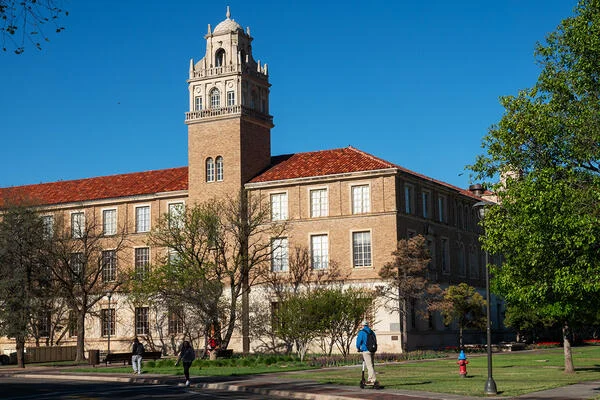
In a Dec. 19 memo that McCoul’s lawyer Amanda Reichek shared with the Times, the Texas A&M system’s vice chancellor for academic affairs, James Hallmark, wrote that he had “determined that Dr. McCoul’s dismissal was based upon good cause.”
McCoul was “disappointed by the university’s unexplained decision to uphold her termination but looks forward to pursuing her First Amendment, due process and breach of contract claims in court very soon,” Reichek said in a statement to the Times.
When Cara Romero’s daughter was 11, she became interested in dolls. Romero, who is an enrolled member of the Chemehuevi Indian Tribe in Southern California, began to think about doll culture more deeply and what it can convey to the next generation.
Romero’s husband grew up collecting G.I. Joes, and her mother-in-law had her own Victorian-style porcelain doll collection. For Romero, though, her daughter’s doll phase reminded her of the Native American dolls she grew up seeing at truck stops along I-40.
The dolls were often dressed in plastic pony beads and fake buckskin that parroted the Native American Halloween costumes she knew all too well as dehumanizing stereotypes. So Romero, who is a photographer and artist, set out to create a series of photos that broke down these tropes.
Each photograph in the “First American Doll” series features a life-sized doll box that she designed and crafted, where she poses the women with objects that represent their families, traditions and unique stories.
She wanted her daughter to be proud of her heritage. “I come from a community where women are allowed to have a voice, allowed to be really strong,” she said. “So [I was] wanting to pass down good self esteem and a strong sense of self and identity,” she said. “That’s what we aim to do as moms.”
She started the series with artist and powwow dancer Wakeah Jhane, who is of Kiowa, Comanche and Blackfeet descent. While the Plains Tribes that she is from are the models for stereotypical dolls and costumes, Romero’s photograph captures her intricate buckskin regalia, which was made by her family. Also on display are her moccasins and a fan.
“You can see the stark contrast between what she’s wearing and the Halloween costumes that people portray Plains people as,” she said. “I really wanted to kind of own it and be like, “You guys even have this wrong.’”
She has since published nine photographs for the series, the most recent featuring Fawn Douglas, an artist, activist and enrolled member of the Las Vegas Paiute Tribe, who is posed with handcrafted baskets and a gourd rattle made by her family. The box is bordered by a Las Vegas playing card motif.
Cara Romero (Getty Images)
The current day symbolism and high fashion lighting communicates that these women are also contemporary, Romero said. “When artwork, and specifically photography, is devoid of modern context, it does something psychologically, it perpetuates [this idea] that we’re gone and only living in history.”
Naming each of the pieces after the models was also meant to humanize Indigenous women in a way that they weren’t in historical photos. “A lot of times in the ethnographic photographs, they didn’t even say their name,” she said. “We don’t know who they were.”
Some of the photographs from the series are currently traveling the country as part of Romero’s first solo museum exhibition, titled: “Panûpünüwügai (Living Light).” They will be on display next at the Phoenix Art Museum in Arizona starting in February.
A senior Texas A&M University System official testing a new artificial intelligence tool this fall asked it to find how many courses discuss feminism at one of its regional universities. Each time she asked in a slightly different way, she got a different number.
“Either the tool is learning from my previous queries,” Texas A&M system’s chief strategy officer Korry Castillo told colleagues in an email, “or we need to fine tune our requests to get the best results.”
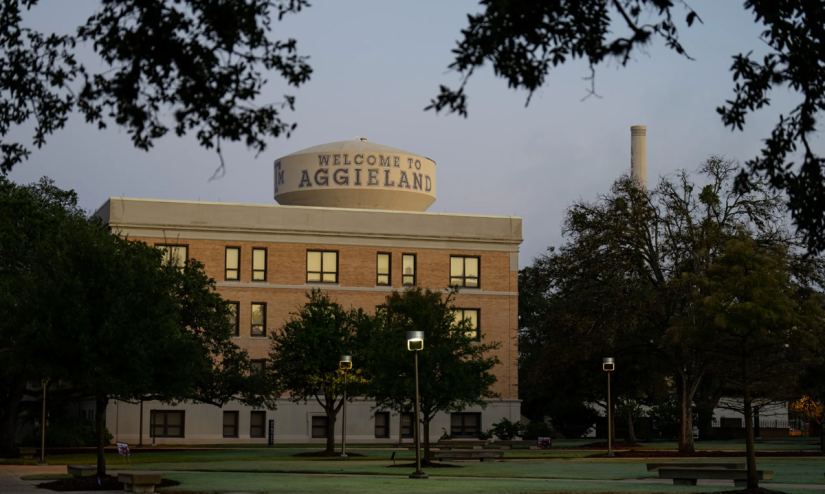
It was Sept. 25, and Castillo was trying to deliver on a promise Chancellor Glenn Hegar and the Board of Regents had already made: to audit courses across all of the system’s 12 universities after conservative outrage over a gender-identity lesson at the flagship campus intensified earlier that month, leading to the professor’s firing and the university president’s resignation.
Texas A&M officials said the controversy stemmed from the course’s content not aligning with its description in the university’s course catalog and framed the audit as a way to ensure students knew what they were signing up for. As other public universities came under similar scrutiny and began preparing to comply with a new state law that gives governor-appointed regents more authority over curricula, they, too, announced audits.
Records obtained by The Texas Tribune offer a first look at how Texas universities are experimenting with AI to conduct those reviews.
At Texas A&M, internal emails show staff are using AI software to search syllabi and course descriptions for words that could raise concerns under new system policies restricting how faculty teach about race and gender.
At Texas State, memos show administrators are suggesting faculty use an AI writing assistant to revise course descriptions. They urged professors to drop words such as “challenging,” “dismantling” and “decolonizing” and to rename courses with titles like “Combating Racism in Healthcare” to something university officials consider more neutral like “Race and Public Health in America.”
While school officials describe the efforts as an innovative approach that fosters transparency and accountability, AI experts say these systems do not actually analyze or understand course content, instead generating answers that sound right based on patterns in their training data.
That means small changes in how a question is phrased can lead to different results, they said, making the systems unreliable for deciding whether a class matches its official description. They warned that using AI this way could lead to courses being flagged over isolated words and further shift control of teaching away from faculty and toward administrators.
“I’m not convinced this is about serving students or cleaning up syllabi,” said Chris Gilliard, co-director of the Critical Internet Studies Institute. “This looks like a project to control education and remove it from professors and put it into the hands of administrators and legislatures.”
Setting up the tool
During a board of regents meeting last month, Texas A&M System leaders described the new processes they were developing to audit courses as a repeatable enforcement mechanism.
Vice Chancellor for Academic Affairs James Hallmark said the system would use “AI-assisted tools” to examine course data under “consistent, evidence-based criteria,” which would guide future board action on courses. Regent Sam Torn praised it as “real governance,” saying Texas A&M was “stepping up first, setting the model that others will follow.”
That same day, the board approved new rules requiring presidents to sign off on any course that could be seen as advocating for “race and gender ideology” and prohibiting professors from teaching material not on the approved syllabus for a course.
In a statement to the Tribune, Chris Bryan, the system’s vice chancellor for marketing and communications, said Texas A&M is using OpenAI services through an existing subscription to aid the system’s course audit and that the tool is still being tested as universities finish sharing their course data. He said “any decisions about appropriateness, alignment with degree programs, or student outcomes will be made by people, not software.”
In records obtained by the Tribune, Castillo, the system’s chief strategy officer, told colleagues to prepare for about 20 system employees to use the tool to make hundreds of queries each semester.
The records also show some of the concerns that arose from early tests of the tool.
When Castillo told colleagues about the varying results she obtained when searching for classes that discuss feminism, deputy chief information officer Mark Schultz cautioned that the tool came with “an inherent risk of inaccuracy.”
“Some of that can be mitigated with training,” he said, “but it probably can’t be fully eliminated.”
Schultz did not specify what kinds of inaccuracies he meant. When asked if the potential inaccuracies had been resolved, Bryan said, “We are testing baseline conversations with the AI tool to validate the accuracy, relevance and repeatability of the prompts.” He said this includes seeing how the tool responds to invalid or misleading prompts and having humans review the results.
Experts said the different answers Castillo received when she rephrased her question reflect how these systems operate. They explained that these kinds of AI tools generate their responses by predicting patterns and generating strings of text.
“These systems are fundamentally systems for repeatedly answering the question ‘what is the likely next word’ and that’s it,” said Emily Bender, a computational linguist at the University of Washington. “The sequence of words that comes out looks like the kind of thing you would expect in that context, but it is not based on reason or understanding or looking at information.”
Because of that, small changes to how a question is phrased can produce different results. Experts also said users can nudge the model toward the answer they want. Gilliard said that is because these systems are also prone to what developers call “sycophancy,” meaning they try to agree with or please the user.
“Very often, a thing that happens when people use this technology is if you chide or correct the machine, it will say, ‘Oh, I’m sorry’ or like ‘you’re right,’ so you can often goad these systems into getting the answer you desire,” he said.
T. Philip Nichols, a Baylor University professor who studies how technology influences teaching and learning in schools, said keyword searches also provide little insight into how a topic is actually taught. He called the tool “a blunt instrument” that isn’t capable of understanding how certain discussions that the software might flag as unrelated to the course tie into broader class themes.
“Those pedagogical choices of an instructor might not be present in a syllabus, so to just feed that into a chatbot and say, ‘Is this topic mentioned?’ tells you nothing about how it’s talked about or in what way,” Nichols said.
Castillo’s description of her experience testing the AI tool was the only time in the records reviewed by the Tribune when Texas A&M administrators discussed specific search terms being used to inspect course content. In another email, Castillo said she would share search terms with staff in person or by phone rather than email.
System officials did not provide the list of search terms the system plans to use in the audit.
Martin Peterson, a Texas A&M philosophy professor who studies the ethics of technology, said faculty have not been asked to weigh in on the tool, including members of the university’s AI council. He noted that the council’s ethics and governance committee is charged with helping set standards for responsible AI use.
While Peterson generally opposes the push to audit the university system’s courses, he said he is “a little more open to the idea that some such tool could perhaps be used.”
“It is just that we have to do our homework before we start using the tool,” Peterson said.
AI-assisted revisions
At Texas State University, officials ordered faculty to rewrite their syllabi and suggested they use AI to do it.
In October, administrators flagged 280 courses for review and told faculty to revise titles, descriptions and learning outcomes to remove wording the university said was not neutral. Records indicate that dozens of courses set to be offered by the College of Liberal Arts in the Spring 2026 semester were singled out for neutrality concerns. They included courses such as Intro to Diversity, Social Inequality, Freedom in America, Southwest in Film and Chinese-English Translation.
Faculty were given until Dec. 10 to complete the rewrites, with a second-level review scheduled in January and the entire catalog to be evaluated by June.
Administrators shared with faculty a guide outlining wording they said signaled advocacy. It discouraged learning outcomes that describe students “measure or require belief, attitude or activism (e.g., value diversity, embrace activism, commit to change).”
Administrators also provided a prompt for faculty to paste into an AI writing assistant alongside their materials. The prompt instructs the chatbot to “identify any language that signals advocacy, prescriptive conclusions, affective outcomes or ideological commitments” and generate three alternative versions that remove those elements.
Jayme Blaschke, assistant director of media relations at Texas State, described the internal review as “thorough” and “deliberative,” but would not say whether any classes have already been revised or removed, only that “measures are in place to guide students through any adjustments and keep their academic progress on track.” He also declined to explain how courses were initially flagged and who wrote the neutrality expectations.
Faculty say the changes have reshaped how curriculum decisions are made on campus.
Aimee Villarreal, an assistant professor of anthropology and president of Texas State’s American Association of University Professors chapter, said the process is usually faculty-driven and unfolds over a longer period of time. She believes the structure of this audit allows administrators to more closely monitor how faculty describe their disciplines and steer how that material must be presented.
She said the requirement to revise courses quickly or risk having them removed from the spring schedule has created pressure to comply, which may have pushed some faculty toward using the AI writing assistant.
Villarreal said the process reflects a lack of trust in faculty and their field expertise when deciding what to teach.
“I love what I do,” Villarreal said, “and it’s very sad to see the core of what I do being undermined in this way.”
Nichols warned the trend of using AI in this way represents a larger threat.
“This is a kind of de-professionalizing of what we do in classrooms, where we’re narrowing the horizon of what’s possible,” he said. “And I think once we give that up, that’s like giving up the whole game. That’s the whole purpose of why universities exist.”
The Texas Tribune partners with Open Campus on higher education coverage.
Disclosure: Baylor University, Texas A&M University and Texas A&M University System have been financial supporters of The Texas Tribune, a nonprofit, nonpartisan news organization that is funded in part by donations from members, foundations and corporate sponsors. Financial supporters play no role in the Tribune’s journalism. Find a complete list of them here.
by Christina A. Samuels, The Hechinger Report December 18, 2025
Last year, Project 2025 was a conservative wish list: a grab bag of proposals large and small that would transform the federal government, including in education.
Months later, many of those wishes have become reality. That includes, at least in part, Project 2025’s ultimate goal of doing away with the Education Department.
The department still exists — getting rid of it completely would require congressional action— but it is greatly diminished: Much of the department’s work is being farmed out to other federal agencies. Half of its workforce of about 4,100 people have left or been fired. And Education Secretary Linda McMahon wrote after her confirmation that she was leading the department’s “final mission.”
Eliminating the Education Department was just one of many goals, however. While the administration did not meet all the other tasks in this “to-do” list below, compiled by The Hechinger Report and taken directly from Project 2025, there’s still three more years to go.
Early childhood
Eliminate Head Start: NO. Head Start, which provides free preschool for low-income children, still exists, though some individual centers had problems accessing their money because of temporary freezes from the Department of Government Efficiency and the prolonged government shutdown. The federal government also closed five of 10 Head Start regional offices, which collectively served 22 states.
Pay for in-home child care instead of universal (center-based) daycare: NO. Project 2025 states that “funding should go to parents either to offset the cost of staying home with a child or to pay for familial, in-home childcare.” There have been no moves to fulfill this goal, but the budget reconciliation bill the president signed in July increased the child tax credit and introduced “Trump Accounts” for children under age 18.
Expand child care for military families:YES. The National Defense Authorization Act, passed on Dec. 17 and sent to the president for his signature, authorizes over $491 million to design and build new child care centers for these families, among other provisions. The Department of Defense provides child care to military families on a sliding scale based on income. However, about 20 percent of military families who need child care can’t get it because there is not enough space.
Give businesses an incentive to provide “on-site” child care: NO. Project 2025 states that “across the spectrum of professionalized child care options, on-site care puts the least stress on the parent-child bond.”
K-12 education
Move the National Center for Education Statistics to the Census Bureau; transfer higher education statistics to the Labor Department: NO. Education data collection remains at the Education Department. However, the agency’s capacity has been sharply reduced following mass firings and the termination of key contracts — a development not envisioned in Project 2025. At the same time, Donald Trump directed the center to launch a major new data collection on college admissions to verify that colleges are no longer giving preferences based on race, ethnicity or gender.
Expand choice for families by making federal funding portable to many school options: PARTIAL. In January, the president signed an executive order encouraging “educational freedom.” One of the order’s provisions requires the departments of Defense and Interior — which run K-12 schools for military families and tribal communities, respectively — to allow parents to use some federal funding meant for their children’s education at private, religious and charter schools. However, that initiative for Indian schools ended up being scaled back after tribes protested. The “big, beautiful” spending bill signed in July created a national voucher program, but states have to opt in to participate.
Send money now controlled by the federal government, such as Title I and special education funding, to the states as block grants: NO. In the current fiscal year, about $18.5 billion in Title I money flowed to districts to support low-income students. States received about $14 billion to support educating children with disabilities. Project 2025 envisions giving states that money with no strings attached, which it says would allow more flexibility. While the administration has not lifted requirements for all states, it is considering requests from Indiana, Iowa and Oklahoma that would allow those states to spend their federal money with less government oversight. Also, in his fiscal 2026 budget proposal, Trump floated the idea of consolidating several smaller education programs, such as those supporting rural students, homeless students and after-school activities, into one $2 billion block grant. That would be far less than the combined $6.5 billion set aside for these programs in the current budget.
Reject “radical gender ideology” and “critical race theory,” and eliminate requirements to accept such ideology as a condition of receiving federal funds:YES. Immediately after Trump was sworn into office, he reversed a Biden administration rule that included protection of LGBTQ+ students under Title IX, which bans sex-based discrimination in education programs and activities that receive federal money. Trump also signed an executive order threatening to withhold federal dollars from schools over what the order called “gender ideology extremism” and “critical race theory.” In the months since, the administration launched Title IX investigations in school districts where transgender students are allowed to participate on sports teams and use bathrooms that align with their gender identity. It sent letters to schools across the country threatening to pull funding unless they agree to its interpretation of civil rights laws, to include banning diversity, equity and inclusion (DEI) policies and initiatives. The Education Department also pulled federal research grants and investigated schools and colleges over DEI policies it calls discriminatory.
Pass a federal “parents’ bill of rights,” modeled after similar bills passed at the state level: NO. House Republicans passed a Parents’ Bill of Rights Act two years ago, which would have required districts to post all curricula and reading materials, require schools receiving Title I money to notify parents of any speakers visiting a school, and mandate at least two teacher-parent conferences each year, among other provisions. The Senate did not take it up, and lawmakers have not reintroduced the bill in this session of Congress. About half of the states have their own version of a parentsʼ bill of rights.
Shrink the pool of students eligible for free school meals by ending the “community eligibility provision” and reject universal school meal efforts: NO. Under current rules, schools are allowed to provide free lunch to all students, regardless of their family’s income, if the school or district is in a low-income area. That provision remains in place. The Trump administration has not changed income eligibility requirements for free and reduced-price lunch at schools: Families that earn within 185 percent of the federal poverty line still qualify for reduced lunch and those within 130 percent of the poverty line qualify for free lunch.
Higher education
Roll back student loan forgiveness and income-driven repayment plans: PARTIAL.Three income-driven repayment plans will be phased out next year and a new one — the Repayment Assistance Plan — will be added. RAP requires borrowers to make payments for 30 years before they qualify for loan forgiveness. The administration also reached a proposed agreement to end even earlier the most controversial repayment plan known as SAVE (Saving on a Valuable Education). Trump officials have referred to the SAVE plan as illegal loan forgiveness. Under the plan, some borrowers were eligible to have their loans cleared after only 10 years, while making minimal payments.
End Parent PLUS loans: PARTIAL. These loans, which parents take out to help their children, had no limit. They still exist, but as of July 2026, there will be an annual cap of $20,000 and a lifetime limit of $65,000 per child. Grad PLUS loans, which allow graduate students to borrow directly on behalf of themselves, are being phased out. Under the Repayment Assistance Plan, graduates in certain fields, such as medicine, can borrow no more than $50,000 a year, or $200,000 over four years.
Privatize the federal student loan portfolio: NO. The Trump administration reportedly has been shopping a portion of the federal student loan portfolio to private buyers, but no bids have been made public. Project 2025 also called for eliminating the Federal Student Aid office, which is now housed in the Education Department and oversees student loan programs. Education Secretary Linda McMahon said the Treasury Department would be a better home for the office, but no plans for a move have been announced.
End public service loan forgiveness: NO. PSLF allows borrowers to have part of their debt erased if they work for the government or in nonprofit public service jobs and make at least 120 monthly payments. The structure remains, but a new rule could narrow the definition of the kinds of jobs that qualify for loan forgiveness. The proposed rule raises concerns that borrowers working for groups that assist immigrants, transgender youth or provide humanitarian aid to Palestinians, for example, could be disqualified from loan forgiveness. The new rule would go into effect in July.
Rescind Biden-era rules around sexual assault and discrimination: YES. The Department of Education almost immediately jettisoned changes that the Biden administration had made in 2024 to Title IX, which governs how universities and colleges handle cases of sexual assault and discrimination. Under the Biden rules, blocked by a federal judge days before Trump’s inauguration, accused students were no longer guaranteed the right to in-person hearings or to cross-examine their accusers. The Trump Education Department then returned to a policy from the president’s first term, under which students accused of sexual assault will be entitled to confront their accusers, through a designee, which the administration says restores due process but advocates say will discourage alleged victims from coming forward.
Reform higher education accreditation: YES. In an executive order, Trump made it easier for accreditors to be stripped of their authority and new ones to be approved, saying the existing bodies — which, under federal law, oversee the quality of colleges and universities — have ignored poor student outcomes while pushing diversity, equity and inclusion. Florida and Texas have started setting up their own accreditors and said the administration has agreed to expedite the typically yearslong approval process. The Department of Education has earmarked $7 million to support this work and help colleges and universities switch accreditors.
Dismantle DEI programs and efforts: PARTIAL. Though the administration called for eliminating college DEI programs and efforts, most of the colleges that have shut down their DEI offices have done so in response to state-level legislation. Around 400 books removed from the Naval Academy library because of concerns that they contained messages of diversity or inclusion, but most of the books were ultimately returned. The National Science Foundation canceled more than 400 grants related to several topics, including DEI.
Jill Barshay, Ariel Gilreath, Meredith Kolodner, Jon Marcus, Neal Morton and Olivia Sanchez contributed to this report.
This <a target=”_blank” href=”https://hechingerreport.org/trump-administration-makes-good-on-many-project-2025-education-goals/”>article</a> first appeared on <a target=”_blank” href=”https://hechingerreport.org”>The Hechinger Report</a> and is republished here under a <a target=”_blank” href=”https://creativecommons.org/licenses/by-nc-nd/4.0/”>Creative Commons Attribution-NonCommercial-NoDerivatives 4.0 International License</a>.<img src=”https://i0.wp.com/hechingerreport.org/wp-content/uploads/2018/06/cropped-favicon.jpg?fit=150%2C150&ssl=1″ style=”width:1em;height:1em;margin-left:10px;”>
by Sarah Butrymowicz, The Hechinger Report December 14, 2025
The 10-year-old was dragged down a school hallway by two school staffers. A camera captured him being forced into a small, empty room with a single paper-covered window.
The staffers shut the door in his face. Alone, the boy curled into a ball on the floor. When school employees returned more than 10 minutes later, blood from his face smeared the floor.
Maryland state lawmakers were shown this video in 2017 by Leslie Seid Margolis, a lawyer with the advocacy group Disability Rights Maryland. She’d spent 15 years advocating for a ban on the practice known as seclusion, in which children, typically those with disabilities, are involuntarily isolated and confined, often after emotional outbursts.
Even after seeing the video, no legislators were willing to go as far as a ban. Nor were they when Margolis tried again a few years later.
In 2021, however, the federal Justice Department concluded an investigation into a Maryland school district and found more than 7,000 cases of unnecessary restraint and seclusion in a two-and-a-half-year period.
Four months later, Maryland lawmakers passed a bill prohibiting seclusion in the state’s public schools, with nearly unanimous support.
“I can’t really overstate the impact that Justice can have,” said Margolis. “They have this authority that is really helpful to those of us who are on the ground doing this work.”
Related: Become a lifelong learner. Subscribe to our free weekly newsletter featuring the most important stories in education.
Within the Justice Department’s Civil Rights Division is a small office devoted to educational issues, including seclusion, as well as desegregation and racial harassment. The division intentionally chooses cases with potential for high impact and actively monitors places it has investigated to ensure they’re following through with changes. When the Educational Opportunities Section acts, educators and policymakers take notice.
Now, however, the Trump administration is wielding the power of the Justice Department in new and, some say, extreme ways. Hundreds of career staffers, including most of those who worked on education cases, have resigned. The Department of Education’s Office for Civil Rights also has been decimated, largely through layoffs. The two offices traditionally have worked closely together to enforce civil rights protections for students. The result is a potentially lasting shift in how the nation’s top law enforcement agency handles issues that affect public school students, including millions who have disabilities.
“There are those who would say that this is an aberration, and that when it’s over, things will go back to the way they were,” said Frederick Lawrence, a lecturer at Georgetown Law and former assistant U.S. attorney under President Ronald Reagan. “My experience is that the river only flows in one direction, and things never go back to the way they were.”
The Justice Department’s lawyers historically have worked on a few dozen education cases at once, concentrating on combating sexual harassment, racial discrimination against Black and Latino students, restraint and seclusion, and failure to provide adequate services to English learners.
As the Educational Opportunity Section’s mission shifted, it shrunk in size. In January, before President Donald Trump took office, about 40 lawyers tackled education issues. In the spring, the U.S. Senate confirmed Harmeet Dhillon as leader of the Civil Rights Division. Dhillon founded the conservative Center for American Liberty, which describes itself as “defending civil liberties of Americans left behind by civil rights legacy organizations.”
By June, no more than five of the 40 lawyers were left, according to former employees. Some new staff have been hired or reassigned to the section, but the head count remains well below usual. It’s far from enough to sustain the typical workload, said Shaheena Simons, who was chief of the Educational Opportunities Section until she resigned in April. “There’s just no way the division can function with that level of staffing. It’s just impossible,” said Simons, who took over the section in 2016. “The investigations aren’t going to happen. Remedies aren’t going to be sought.”
Department officials responded to a list of questions from The Hechinger Report about changes to their handling of student civil rights protection with “no comment.”
The Department of Justice, including its educational work, has always been somewhat subject to White House interests, said Neal McCluskey, director of the libertarian Cato Institute’s Center for Educational Freedom. During President Joe Biden’s term, for example, the agency pursued allegations of discrimination against transgender students, reflecting administration priorities.
McCluskey added, though, that the Trump administration is more aggressive in how it is pursuing its goals and is bypassing typical protocols, noting that in many cases “it’s like they’ve already decided the outcome.”
An investigation into allegations of antisemitism at the University of California, Los Angeles, for instance, took just 81 days before the department concluded the school had violated federal law. DOJ investigations typically have taken years, not months, to complete.
Lawrence, who also serves as president of the Phi Beta Kappa honor society, said he could not speak to specific investigations, but the UCLA timeline “does suggest a rather accelerated process.”
A federal judge recently ruled that the administration could not use the findings from its UCLA investigation as a reason to fine the university $1.2 billion, which if paid would have unlocked frozen federal research funding. She wrote that the administration was using a playbook “of initiating civil rights investigations of preeminent universities to justify cutting off federal funding.”
As new investigations are opened, older ones remain unresolved, including one of practices in Colorado’s Douglas County Public Schools.
In 2022, Disability Law Colorado submitted a complaint to the Justice Department about the district’s use of seclusion, as well as restraint, where school employees physically restrict a student’s movement.
The following year, three other families sued the school system, alleging racial discrimination against their children. The students were repeatedly called monkeys and the N-word, threatened with lynchings and “made by teachers to argue the benefits of Jim Crow laws,” according to the complaint.
The Department of Justice decided to investigate both issues. Four staffers were assigned to the restraint and seclusion investigation, said Emily Harvey, co-legal director at Disability Law Colorado.
As part of the inquiry, Justice officials visited the district twice. The second time was during the final week of Biden’s presidency.
After that visit, Douglas County didn’t hear anything about the investigation from the Trump administration until a mid-May email. “Good morning,” it read. “We are having some staffing changes.”
The email, which The Hechinger Report obtained through a public records request, said that going forward, the district could contact two staffers on the restraint and seclusion case. The racial harassment case would be reduced to only one employee until another Justice staffer returned from leave in the fall.
One Douglas County parent, who asked her name be withheld because she is afraid of retaliation from the district, said that although she knew the investigation could take a couple of years, the longer it goes without a resolution, the more children could be harmed.
“The justice system is just moving so incredibly slow,” she said.
The parent said she knows of dozens of families who have dealt with restraint and seclusion issues in the district. Her own son, she said, was secluded in kindergarten. “He was scared of the person who put him in there. He kept saying, ‘I can’t go back,’” she said. “I never envisioned, until my son was secluded, a world where the school would not care about my child.”
When Harvey, of Disability Law Colorado, first contacted the Department of Justice, she hoped for statewide reform. She wanted to see a ban on seclusion, like Margolis had helped secure in Maryland, and for the state to commit to more accurate tracking of use of restraints. The way Colorado law is written, restraints must be recorded only if they last more than a minute. Douglas County, the second largest in the state with 62,000 students, reported 582 restraints to the Colorado Department of Education in the 2023-24 school year. The number of shorter-term restraints, however, is unknown.
“We believe this is an arbitrary distinction,” Harvey said. “My hope was that the Department of Justice would potentially weigh in on that as a violation” of the Americans with Disabilities Act.
Douglas County school administrators said in a statement to The Hechinger Report that their “focus is on taking care of each and every one of our students” and that they take all concerns seriously.
They have worked with the federal government to set up school visits and interviews during their visits, according to emails from January.
Subsequent emails between district and federal officials describe a phone call over the summer and requests for additional documents. Another DOJ employee was included in the messages.
There are signs that the Justice Department is not abandoning restraint and seclusion work, said Guy Stephens, founder of the national advocacy group Alliance Against Seclusion and Restraint. A webpage about previous cases that was removed after Trump took office has been restored, and in July, the DOJ announced a settlement with a Michigan district over these issues.
Yet Stephens has concerns. “There are still people very, very dedicated to this work and the mission of this work, but it’s very hard to work in a system that is shifting and reprioritizing,” he said.
Former DOJ employees worry that it might not only be future investigations that are markedly different. The department has historically monitored places where it has reached agreements that demand corrective action, rewriting them if districts or colleges fail to live up to their promises. It also provides support to achieve the new goals. Now, provisions written into past resolutions might be at odds with Trump administration actions, and oversight of some settlements is ending early.
Take, for instance, a DOJ investigation into Vermont’s Elmore-Morristown Unified Union School District over allegations of race-based harassment against Black students. Investigators found that the district didn’t have a way to handle harassment or discrimination not targeted at a specific person, according to David Bickford, the school board chairman.
As part of a settlement agreement signed two weeks before Trump was inaugurated, the district agreed to provide staff training on implicit bias. A Trump executive order, however, calls for eliminating federal funding for anyone that discusses such a concept in schools.
Bickford said that the district has complied with everything the settlement called for, including professional development.
The investigation itself, he said, was extremely thorough, and required handing over nearly a thousand pages of documentation. Since then, the district has sent regular reports to the department but has not received any lengthy response or input, Bickford said. He also noted there had been staffing changes in who the district reports to.
Justice officials decided to end supervision of a 2023 settlement early following a racial harassment investigation in another Vermont district, Twin Valley. The original plan was to monitor the district for three years. In October 2024, investigators visited the district to check in. In a letter two months later, officials noted that while Twin Valley had made significant progress, they still had several areas of concern, including how the district investigated complaints, as well as “persistent biased language and behavior on the basis of multiple protected classifications; a pervasive culture of sexism; and lack of consistent and effective adult response to biased language and behavior.”
Even so, the department was pleased overall with its visit, said Bill Bazyk, superintendent of Windham Southwest Supervisory Union, which includes Twin Valley. “But things certainly sped up after the election,” said Bazyk, who started his job after the case had been settled.
Throughout the spring, Bayzk and his staff checked in with the department, and in May the district was told oversight of the settlement would end a year early, as Twin Valley had fully complied with the terms.
“We were doing all the right things,” Bayzk said, noting that the district’s work on diversity and equity is ongoing. “We took the settlement very seriously.”
The investigation began in 2021 after the American Civil Liberties Union of Vermont filed a complaint. Legal Director Lia Ernst said it is possible that Twin Valley resolved those lingering problems between December and May, stressing that it’s impossible to know from the outside. But still, she said, there is a larger pattern of ambivalence to the Justice Department’s approach to civil rights complaints.
“It is disappointing to see that one ending early,” she said. “It is my hope that it is ending early because Twin Valley has made so much progress, but it is my fear that it is ending early because DOJ just doesn’t care.”
Contact investigations editor Sarah Butrymowicz at [email protected] or on Signal: @sbutry.04.
This <a target=”_blank” href=”https://hechingerreport.org/under-trump-protecting-students-civil-rights-looks-very-different/”>article</a> first appeared on <a target=”_blank” href=”https://hechingerreport.org”>The Hechinger Report</a> and is republished here under a <a target=”_blank” href=”https://creativecommons.org/licenses/by-nc-nd/4.0/”>Creative Commons Attribution-NonCommercial-NoDerivatives 4.0 International License</a>.<img src=”https://i0.wp.com/hechingerreport.org/wp-content/uploads/2018/06/cropped-favicon.jpg?fit=150%2C150&ssl=1″ style=”width:1em;height:1em;margin-left:10px;”>
Once faculty submit their responses, they will be compiled into spreadsheets by college, which department chairs and deans will review.
raclro/iStock/Getty Images
As promised in a memo from the chancellor earlier this month, some Texas Tech University system faculty members were asked this week to report whether any course they teach “advocates for or promotes” specific race, gender or sexual identities. It is the latest step in a sweeping curricular review focused on limiting discussion of transgender identity, racism and sexuality across the five-campus public system.
By 11:59 p.m. on Dec. 22, faculty members at Angelo State University must fill out a survey for each class they teach. In addition to the course title and reference number, the survey asks the following questions: “Does this course include any content that advocates for or promotes race- or sex-based prejudice, as defined in the Chancellor’s memorandum? Does this course include any content that recognizes or discusses more than two sexes (male and female), or addresses gender identity beyond what is recognized under state and federal law? Does this course include any content related to sexual orientation?”
If a faculty member answers yes to any of those questions, they are then prompted to answer, “What is the course material required for? Check all that apply,” and select from the options “professional licensure/certification,” “accreditation,” “patient/client care” and “other.” Faculty must also provide a justification statement to support their response and are asked to “be as specific as possible.”
Once faculty submit their responses, they will be compiled into spreadsheets by college, which department chairs and deans will review. They then must report the outcomes to the president and provost, Angelo State University provost Don Topliff said in an email to all faculty. “Faculty will be notified of outcomes after approval,” he wrote. It is unclear exactly what curricular changes the outcomes will prompt.
Faculty at the Texas Tech University Health Sciences Center received a similar email this week, a faculty member told Inside Higher Ed. But instead of filling out a survey, they are being asked to enter the same information directly into a spreadsheet. A faculty member at Texas Tech’s flagship campus in Lubbock said faculty there have yet to receive any information beyond the chancellor’s Dec. 1 memo. Spokespeople for the Texas Tech system did not answer Inside Higher Ed’s questions about whether faculty at the remaining two institutions—Midwestern State University and Texas Tech University Health Sciences Center El Paso—received a survey.
“Across the System, institutions are expected to follow the established course content review process. As outlined in the Chancellor’s December 1 memorandum, department chairs and deans will review any materials used locally, with outcomes shared with the Provost and President to ensure consistency moving forward,” a spokesperson wrote in an email.
In an email about the survey to his colleagues in the Angelo State history department, chair Jason Pierce encouraged them to answer no for all three questions.
“When I filled those forms out, I put ‘no’ for all of my classes, because I do not think talking about any of these issues is advocacy or promotion,” Pierce told Inside Higher Ed. “Also, in my history from the Civil War to present class, there is no way to not talk about Reconstruction, civil rights, the women’s movement. I mean, those are in every textbook … So I don’t feel like I even need to fill out a form saying that I’m going to talk about Reconstruction or civil rights or whatever, because I’m telling people what happened. I’m not advocating for a particular viewpoint.”
He linked the system’s crackdown to broader trends in the sector.
“There’s a deep distrust of higher ed right now across the political spectrum, but particularly on the right,” said Pierce. “There’s this misconception that the professors want to go out and brainwash their students, and I can say, as a history professor, I don’t want my students coming out of my class thinking like I think. I want them to come out of my class thinking for themselves.”
Today’s blog was kindly authored by Hans Luyten, University of Twente, Netherlands ([email protected]).
Across many education systems, secondary-school teaching remains a predominantly female profession. While this fact is well known, less is understood about whether the gender composition of the teaching workforce relates to gender differences in student achievement at the system level. My recently published paper, Overrepresentation of Female Teachers in Secondary Education and Gender Achievement Gaps in PISA 2022 (Studies in Educational Evaluation), takes up this question using recent international data.
The study investigates whether gender differences in reading, mathematics, and science among 15-year-olds vary according to the extent to which women are overrepresented among secondary-school teachers, relative to their share in each country’s labour force.
Data and analytical approach
The analysis draws on two international datasets:
PISA 2022: Providing country-level average scores for 15-year-olds in reading, mathematics, and science. Gender achievement gaps are operationalised as the difference between the average score for girls and that for boys.
Labour-market data: Measuring the proportion of women among secondary-school teachers in each country and the proportion of women in the wider labour force.
Female overrepresentation is defined as the difference between these two proportions.
Although the analysis focuses on statistical correlations at the country level, it does not rely on simple bivariate associations. A wide range of control variables is included to account for differences between countries in:
Students’ out-of-school lives, such as gender differences in family support;
School resources, such as the availability of computers;
School staff characteristics, such as the percentage of certified teachers.
These controls help ensure that the observed relationships are not simply reflections of broader cross-national differences in socioeconomic conditions or school quality.
Key findings
Three main results emerge from the analysis:
First, gender achievement gaps tend to be larger in favour of girls in countries where women are more strongly overrepresented among secondary-school teachers.
Second, this association holds across all three domains (reading, mathematics, and science), although the size and direction of the gender gap differs by subject.
Third, the relationship becomes more pronounced as the degree of female overrepresentation increases. Countries with only modest overrepresentation tend to have smaller gender gaps, whereas those with large overrepresentation tend to have wider gaps.
These findings concern gender differences in performance, not the absolute levels of boys’ or girls’ achievement. The study does not examine, and therefore does not draw conclusions about, whether boys or girls perform better or worse in absolute terms in countries with different levels of female teacher overrepresentation.
Interpreting the results
The analysis identifies a robust statistical association at the country level, after accounting for a broad set of background variables. However, as with any cross-national correlational study, it cannot establish causality. Other country-specific characteristics (cultural, institutional, or organisational) may also contribute to the observed patterns.
It is also important to note that the study addresses a different question from research that examines the effects of individual teachers’ gender on the achievement of individual students. Earlier classroom- and school-level studies often find little or no systematic effect of teacher gender on student outcomes. The present study, by contrast, examines the overall gender composition of the teaching workforce and its relation to system-level gender achievement gaps.
Implications
Although the findings do not directly point to specific policy interventions, they suggest that the gender composition of the secondary-school teaching workforce is a feature of educational systems that merits closer attention when interpreting international variation in gender gaps. Teacher demographics form part of the broader context within which student achievement develops, and system-level gender imbalances may interact with other structural characteristics in shaping performance differences between girls and boys.
I hope this summary brings the findings to a wider audience and encourages further research on how system-level characteristics relate to gender differences in educational outcomes.