Tag: generation

  • In Philly, a new generation finds its voice — and the tools to defend it

    In Philly, a new generation finds its voice — and the tools to defend it

    Katie Ratke is a rising senior and Shloka Mehta is a rising sophomore, both working as FIRE summer interns.


    Nearly 250 years ago, mere steps from the National Constitution Center in Philadelphia, a group of men locked in sweltering rooms debated the blueprint for a new nation, conceived in liberty. First among the freedoms they secured was the right to speak one’s mind, free from the chill of government meddling or the heat of mob intimidation. 

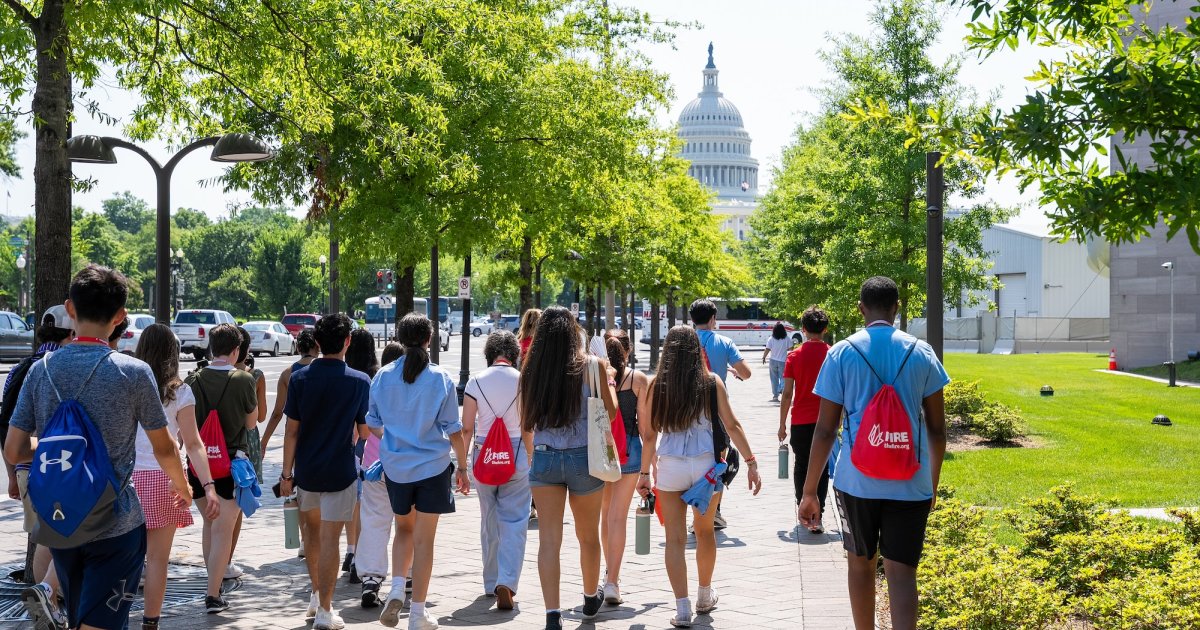
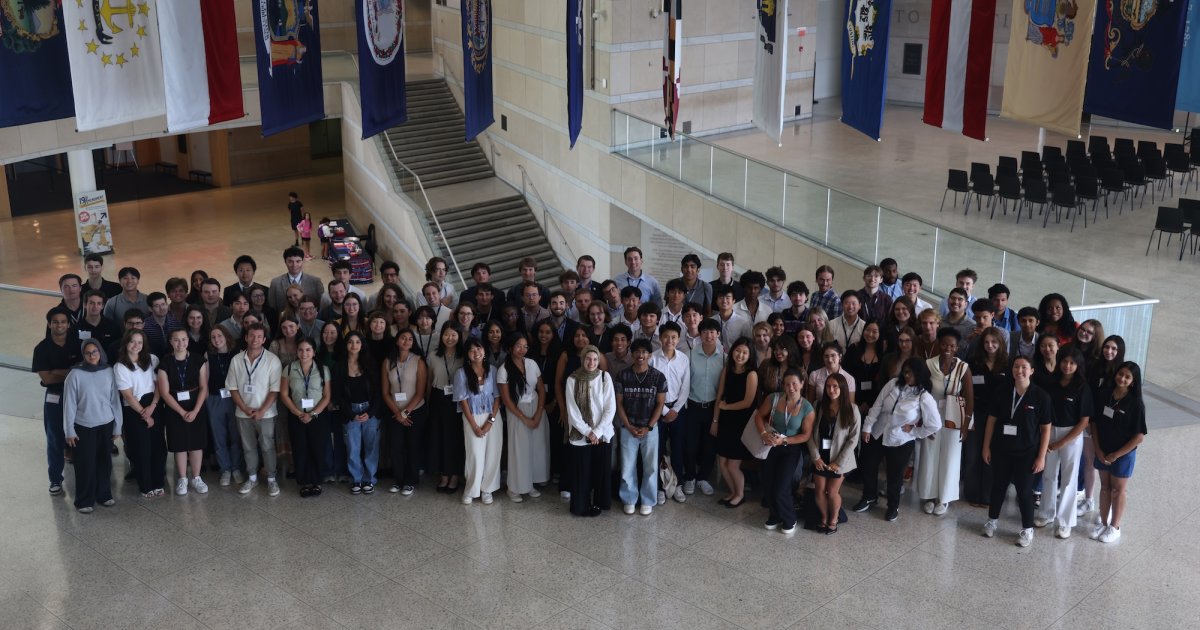
    Today, the floor echoes in the National Constitution Center. The walls are lined with powerful quotes. Along the gentle curve of the tall, marble ceilings hang the flags of all 50 states. And normally, these rooms are relatively still. But this July, the Center came alive when over 100 students from 70 universities across the country gathered there, not to write a constitution, but to figure out how to keep its promises alive.

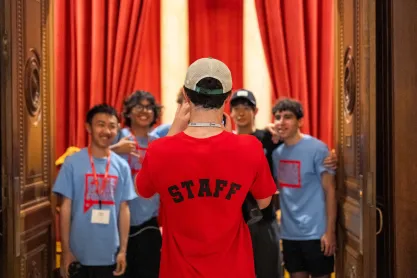
    From July 11-13, FIRE hosted its annual Student Network Summer Conference at the National Constitution Center — a weekend-long crash course in civil liberties for young Americans who still believe the First Amendment matters, especially on campuses today. And, thanks to the generosity of FIRE’s donors, they were able to attend at no cost — with their travel, lodging, and meals entirely covered.

    “Hosting FIRE’s Summer Conference serves as a way to unite college students who care about preserving a climate of free expression on their campuses,” said Molly Nocheck, FIRE’s vice president of Student Development. “We hope students are able to take the lessons from this weekend and use them to foster a culture of civil discourse at their institutions.”

    The conference kicked off Friday evening in the Grand Hall Overlook, perched above exhibits of the very Constitution students had come to defend. FIRE’s Chief Operating Officer Alisha Glennon opened the program with a brief history of FIRE’s work protecting Americans’ First Amendment rights.

    Then came a crowd favorite: a live podcast recording of Advisory Opinions, hosted by New York Times columnist and former FIRE President David French, alongside Politico contributing editor Sarah Isgur, who is also former senior counsel to the deputy attorney general at the Department of Justice. The two unpacked a grab bag of pressing legal issues, including a new Florida decision regulating the use of pronouns in public schools and the long-running tug-of-war over campaign finance.

    Isgur ended the podcast with a rousing call-to-action: “To all you students, go out there and fight the fight!”

    Judging from the energy and spirit of debate on display throughout the weekend, the audience seemed ready to take up Isgur’s challenge.

    Saturday morning kicked off with “Free Speech 101,” led by FIRE Legal Director Will Creeley in a no-frills tour of key Supreme Court precedents and core First Amendment concepts. Afterwards, FIRE’s undergraduate summer interns turned up the heat with a fast-paced quiz game asking students to identify whether landmark cases involved protected or unprotected speech. 

    Next, FIRE General Counsel Ronnie London joined Creeley in dissecting the recent Supreme Court decision in Free Speech Coalition v. Paxton. This talk focused on the reasons why age restrictions burden free speech and raise privacy concerns. 

    After lunch, participants engaged in small group sessions where they discussed everything from global censorship to the underlying philosophy behind free speech. One student said the philosophy session was their favorite event of the weekend. “One of the exercises we did was about making the strongest cases against free speech,” they noted, “which was very useful.”

    Later that evening, David French returned for an open Q&A session that pulled no punches. Students asked about political polarization in the digital age and how to foster bipartisan dialogue on college campuses. These questions sparked probing discussions that continued well into dinner.

    The final day blended reflection with application. On Sunday morning, students put their First Amendment knowledge to the test with a Kahoot! quiz featuring scenarios based on Supreme Court cases, hosted by FIRE’s summer interns. Participants were then given the opportunity to play a massive game of  “This or That,” a political debate in which peers defended opposing views in real time. 

    Then came one of the weekend’s most forward-looking sessions. Ari Cohn, FIRE’s lead counsel for tech policy, gave a talk on the growing role of artificial intelligence in shaping public discourse and its relationship to freedom of speech.

    Before wrapping up, students heard from FIRE’s Chief People Officer Cait Scanlan, who mapped out career pathways within the civil liberties world. 

    Then the FIRE summer interns closed out the weekend with a session introducing FIRE’s “Let’s Talk!” curriculum, which teaches respectful civil discourse. Participants demonstrated key free speech principles through considering the arguments for their opponents side and ensuring everyone had an opportunity for their voice to be heard. 

    “A version of ‘Let’s Talk’ will definitely make an appearance on my campus,” one student said. But it’s not just this curriculum. This year’s cohort returns with more than just a handful of business cards. They walk away with a newfound mission to return to campus and begin work reviving the culture of civil discourse in this nation. Philadelphia may have been where free speech first became law, but for these students, it’s where their fight for it began.

    Want to join us next time? Stay tuned here for details about next year’s Student Network Summer Conference.

    Source link

  • Why RNL Helps the Next Generation

    Why RNL Helps the Next Generation

    Admit it. You were young once. And when you were young, chances are you didn’t know what the future held. Enter job shadowing, a great way to explore careers and gain useful information about what it takes to succeed in different fields, according to Kirkwood Community College in Cedar Rapids, Iowa. As a higher education marketing firm and award-winning design agency, RNL was an ideal choice as a job shadowing partner.

    When Kirkwood helps connect classroom learning to real-world opportunities, the results speak for themselves:

    • 98% of job shadow/internship students said their experience provided valuable information regarding their career interests.
    • 67% said their experience positively influenced their decision to live and work in Iowa.

    Job shadows give teens a sneak peek into what it’s like to work in a professional setting. They offer an opportunity to meet people, make connections, and potentially land internships or even future jobs.

    Joining forces with RNL

    Kirkwood’s Workplace Learning Connection first teamed with RNL’s content writing services and design strategy team six years ago to expose students to marketing for higher education and fundraising tactics.

    As Kirkwood advertises the RNL virtual shadowing day: “Use your creative powers for good! The concept behind art and design is for people to react to your work. Get a positive reaction to a product and — boom! That’s marketing. Chat with graphic designers, content writers and web designers at Ruffalo Noel Levitz. Learn how they use their creative abilities to help you make one of the most important decisions of your lives—where to go to college.”

    RNL’s expertise in higher education marketing helps colleges and universities effectively attract, engage, and enroll students. Our extensive experience in marketing strategy for fundraising benefits non-profits and universities. We believe sharing our collaborative and creative process encourages younger people to pursue rewarding careers at design and marketing agencies.

    Each year, high school students from seven Iowa counties register to listen, ask questions, and seek guidance about future positions in marketing. In turn, RNL creative team members share our work and the reasons we chose our profession.

    Helping the next generation

    Jolie Baskett has been the glue for the RNL job shadow team for years—this year, Sarah Reimer and I also participated.

    “Six years ago, I volunteered because I wanted to be the help that I needed when I was young,” she said. Since then, she has advanced from designer to senior designer to director of design.

    “I love working with wonderful clients and brands and helping others. I want to help the next generation find their paths and be the best they can be,” she said. Personally, I am a former high school teacher and am passionate about writing and public speaking, so I raised my hand several years ago to share my enthusiasm for writing with these high school students. As I tell them, effective writing and clear communication are essential to every career.

    Senior Designer Sarah Reimer enjoys working with RNL’s collaborative creative team. She wants high school students to know graphic design is a competitive industry, but there’s room for everyone.

    “It’s important that we share our experiences and expertise with the next generation of creatives coming up, getting them excited to be creative as a career, learn about collaboration, and how to work on a team,” said Reimer. “Those are job skills they can apply anywhere.”

    Listening and learning

    During a 90-minute presentation, our RNL team shares our experiences and answers questions from students, ranging from broad queries like “What advice would you give an aspiring writer?” to much more specific questions like “How do you code for accessible web design?”

    Female student working on a design project at her computer

    The proof is in the pudding. Here’s what three students had to say about our presentation:

    • “I learned a lot about what specifically a creative marketing job would entail, and I also learned there are several different types of jobs within this field (coder, writer, designer).”
    • “It helped me think of what classes I need to get into for different careers.”
    • “I liked being able to ask questions about their day-to-day work and what exactly their responsibilities are.”

    Refreshing perspectives

    All three of us agree that seeing our experience through fresh eyes helps us appreciate our roles in a new perspective. Plus, when we help others, it’s a meaningful way to contribute to both the workforce and the community.

    As we looked back through the years and considered ourselves as teenagers, we all had advice for our high school selves:

    Baskett was an art kid her entire life and always had a drive to make the world a more beautiful place. To her teenage self, she’d say, “Believe in yourself.”

    I knew I wanted to become a writer in fifth grade. I fell in love with feature writing and served as newspaper editor in high school. I’d tell my 17-year-old self: “You’re passionate about telling other’s stories. Do what you love.”

    As for Reimer? Art wasn’t on her radar when she began college as a law enforcement major, before pivoting to graphic design. She would tell that college freshman: “You can make a career and support yourself being creative. Learn to be assertive, accept constructive criticism, and have fun letting that creative mind do its job!”

    Source link

  • Free Speech Forum empowers next generation of First Amendment heroes

    Free Speech Forum empowers next generation of First Amendment heroes

    By FIRE Summer Interns Eli Kronenberg, Suhani Mathur, and Matt Rigby.


    This June, high school students from across the country assembled in our nation’s capital to offer a glimpse of one of the most important things in America — the future of the First Amendment.

    Held at American University in Washington, D.C., FIRE’s Free Speech Forum mixed big ideas with bigger conversations, bringing together 200 high schoolers to explore, deepen, and celebrate their interest in free speech. Thanks to the collaborative efforts of our generous donors, dedicated staff, enthusiastic counselors, and our incredible students, the forum was a resounding success, leaving us with a feeling of immense pride and a renewed belief in the power of young voices to shape the future of free expression.

    Throughout the week-long event, students had the opportunity to hear from world-renowned free speech advocates, engage in respectful discussions with their peers on pressing political issues, and explore the capital’s treasure trove of historic landmarks. But as one student remarked, the main highlight was simply “being around others who are also interested in civil discourse!”

    The conference kicked off in earnest with a keynote address by musician and activist Daryl Davis, who is known for convincing members of the Ku Klux Klan to renounce the group. Davis captivated the audience with his tales of attending KKK rallies as a black man, bringing Klan leaders inside his home for interviews, and even walking one Klansman’s wife down the aisle at her wedding. Through his commitment to civil dialogue, Davis has persuaded dozens of Klan officials to abandon their racist beliefs, and continues to inspire future generations of free speech advocates. 

    As one student reflected, “Opening with Daryl Davis made a big impact because it forced us to consider if this man can hear this hateful speech and still believe in free expression, then we should be able to do so as well.”


    WATCH VIDEO: An accomplished blues musician, Daryl Davis has dedicated decades of his life to a mission that defies conventional wisdom. Through the transformative power of conversation, Davis fearlessly takes on the challenging task of convincing members of the Ku Klux Klan and other extremist groups to renounce their deep-seated bigotry.

    Students also had the opportunity to meet former congressman and FIRE advisory councilmember Justin Amash during a live taping of FIRE Executive Vice President Nico Perrino’s So to Speak podcast. Campers thoughtfully engaged the former representative with questions about his time in office and his future political aspirations. 

    Capping off our keynote speakers for the week was Mary Beth Tinker, the plaintiff in the landmark Supreme Court decision Tinker v. Des Moines (1969). In 1965, Tinker and her brother wore black armbands in protest of the Vietnam War and were subsequently punished under the school’s code of conduct. Tinker’s victory in the Supreme Court paved the way for generations of students to enjoy greater First Amendment rights in the classroom. Tinker gave students an inspiring testimony about advocating for expression and taking an active role in defending causes you believe in. Her legendary story and lifelong dedication to public service was a striking reminder of students’ power to make an impact on a national scale.

    During the week, students learned the “dos and don’ts” of productive civil discourse, how to engage with opposing perspectives, the fundamentals of First Amendment case law, and how to connect and network with their peers in ways that foster lifelong personal and professional relationships. Breakout sessions like our model debate tournament gave students the chance to think on their feet and work together to form cohesive arguments about a variety of topics. In the session titled “Protected vs. Unprotected,” students tested their critical thinking skills by analyzing potential real-world speech scenarios and determining their protected status under the First Amendment.

    Free Speech Forum students and counselors exploring the Supreme Court

    Free Speech Forum attendees and counselors explore the Supreme Court building in Washington, D.C.

    As the week progressed, it became clear that whether it was a lively discussion in the dining hall, a spirited debate on the walk to sessions, or the inquisitive questions posed to our speakers, students were engaged and used each opportunity to learn and mold their own perspectives, all while keeping an open mind and a curious attitude. One student said one of the things that most influenced their view on free speech was the “different debates and conversations we had amongst ourselves — on topics not everyone agreed with.”

    In addition, students had the chance to explore their nation’s capital beyond American’s campus, venturing to some of D.C.’s iconic museums and federal buildings. The National Archives, Library of Congress, Supreme Court, and Capitol Building each played host to scores of forum attendees, who supplemented their First Amendment education by standing at the sites where America’s enduring commitment to free speech has been cemented.

    And in true FIRE fashion, students who debated fervently in the classroom still managed to become friends outside of it. We would be remiss not to mention the impromptu piano sing-along during our game night when counselors and campers alike started belting out Ed Sheeran and Bruno Mars hits. The Free Speech Forum talent show was no snoozer either, featuring speed cubing, magic tricks, and cohort acapella. The show was capped off with a group of students presenting a new FIRE flag representing the forum’s transformative impact on our campers.

    “My daughter had an incredible experience,” one parent commented. “She particularly appreciated the chance to connect with other like-minded students from diverse backgrounds.” The parent added, “My daughter left the program feeling more confident in her ability to advocate for causes she cares about and to contribute to open, respectful dialogue.”

    It’s no surprise our Saturday dismissal was accompanied by teary goodbyes, the exchanges of contact information, and promises to stay in touch. We as interns hope students take what they learned at the conference to their communities and campuses, advocating for an America in which no one fears the censorious axe of the government, and in which political differences are resolved with mutually respectful discourse.

    Source link

  • Middle and high school students need education, career guidance

    Middle and high school students need education, career guidance

    Key points:

    Students need more support around education paths and career options, including hands-on experiences, according to a new nationwide survey from the nonprofit American Student Assistance.

    The survey of more than of 3,000 students in grades 7-12 offers insights into teens’ plans after high school. The research, Next Steps: An Analysis of Teens’ Post-High School Plans, uncovers evolving trends in teenagers’ attitudes, perceptions, and decision-making about their post-high school plans.

    “This analysis of teens’ post high school plans reveals shifts in students’ thinking and planning. We need to change the way we help young people navigate the complex and evolving landscape of education and career options,” said Julie Lammers, Executive Vice President of ASA. “Starting in middle school, our young people need early access to opportunities that empowers them to explore careers that match their interests and strengths; hands-on, skills-based experiences in high school; and information and resources to navigate their path to postsecondary education and career. All of this will enable them to graduate informed, confident, and empowered about what they want to do with their futures.” 

    The survey offers notable findings regarding parental influence on teens’ planning, perceptions of nondegree pathways like trade or technical school, apprenticeships, and certificate programs, and a continued drop-off in kids’ plans to go to college immediately after high school graduation.

    Key findings include:

    Teens’ interest in college is down while nondegree paths are on the rise. Nearly half of all students said they aren’t interested in going to college, with just 45 percent saying two- or four-year college was their most likely next step. Meanwhile 38 percent of teens said they were considering trade or technical schools, apprenticeships, and technical bootcamp programs, although only 14 percent say that such a path is their most likely next step.

    Parents are one of teens’ biggest influencersand they’re skeptical of nondegree options. A vast majority (82 percent) of teens said their parents agree with their plans to go to four-year college, while only 66 percent said parents supported plans to pursue a nondegree route. In fact, teens reported parents were actually more supportive (70 percent) of foregoing education altogether right after high school vs. pursuing a nondegree program.    

    A concerning number of young people don’t have plans for further education or training. Nearly one quarter (23 percent) said they have no immediate plans to continue formal education or training upon graduation. Teens not planning to continue education after high school indicated they were thinking of beginning full-time work, entering a family business, starting their own business, or joining the military.

    Teens, and especially middle schoolers, are feeling better prepared to plan their futures. In recent years policymakers, educators, employers, and other stakeholders have pushed to make career-connected learning a more prominent feature of our education to workforce system. Survey results say it’s paying off. Agreement with the statement “my school provides me with the right resources to plan for my next steps after high school” grew from just 59 percent in 2018, to 63 percent in 2021, to 82 percent in 2024. Notably, the largest increase occurred at the middle school level, where confidence in in-school planning resources jumped from 60 percent in 2018 to 90 percent in 2024.

    Girls are much more likely to plan to attend college than boys. Boys and girls are equally interested in college when they’re in middle school, but by high school, more than half (53 percent) of girls say they’re likely to attend college compared to just 39 percent of boys. The gender gap is smaller when it comes to nondegree pathways: 15 percent of high school boys say they will likely attend vocational/trade school, participate in an apprenticeship, or take a certificate program, compared to 10 percent of high school girls.

    City kids aren’t as “into” college. Urban teens were least likely (39 percent) to say they plan to go to college. Suburban teens are much more likely to plan to attend a college program (64 percent) while 46 percent of rural students planned on college.

    Students of color are college bound. More than half (54 percent) of Black teens and 51 percent of Hispanic youth are planning to go to college, compared to 42 percent of White teens.  

    This press release originally appeared online.

    eSchool News Staff
    Latest posts by eSchool News Staff (see all)

    Source link

  • Making Fourth Generation Universities intentional: sounds good but what does it mean? 

    Making Fourth Generation Universities intentional: sounds good but what does it mean? 

    • By Lucy Haire, Director of Partnerships at HEPI.

    At a recent roundtable discussion of university leaders convened by HEPI with Elsevier, the focus was the concept of the Fourth Generation University. If first-generation universities focused on teaching, second-generation universities on research, third-generation universities on knowledge exchange, then fourth-generation universities combine all those things for the express purpose of addressing real-world challenges. Rather than universities beavering away and occasionally ‘throwing something out there,’ commented one roundtable guest, the idea is to link university delivery to specific goals in partnerships with other agencies.   

    ‘It is tempting in a time of financial crisis in the UK university sector to withdraw into core activities’ continued the discussion contributor, ‘when in fact the opposite is needed – bold steps into more explicit civic engagement.’  One former head of a medical school said that he had never been asked what society needed of his institution. Fourth Generation Universities, conversely, link their work to health priorities and any number of other pressing public concerns. They respond head-on to the UK Secretary of State for Education, Bridget Philipson’s Five Priorities for Universities outlined in her letter to vice-chancellors in autumn 2024, especially number two about economic growth and number three about civic roles. In addition, the Government has stated that it will be publishing a document this summer setting out some plans for higher education reform. 

    Elsevier is at the heart of developments, establishing a Fourth Generation University global community and a basket of metrics to analyse progress. Eindhoven University of Technology is a trailblazer in the field, and early adopters in the UK include the Universities of Newcastle, Swansea, Aston and Strathclyde, among others. Robert Jan-Smits, recently retired president of the executive board of Eindhoven University of Technology (TUE), and also former Director General of Research and Innovation at the European Commission, offers his reflections on the initiative which, he states, might not suit every institution.  

    One HEPI and Elsevier roundtable participant who has analysed and encouraged university civic engagement across the UK explained that the three components for success were strong leadership, strong relationships and a strong sense of intentionality. He cautioned that the country is divided in terms of public engagement: swaths of the country never or seldom set foot on a university campus, nor have knowledge of higher education’s work and impact. A chorus of university leaders at the discussion acknowledged their need to do more in terms of better serving and communicating with such groups. University-speak and the dreaded sector acronyms should be banned! 

    There are plenty of success stories of universities acting as anchor institutions in their regions. Many boast start-up business support, science and innovation parks and strategic collaboration with regional authorities. Others address skills shortages, health inequalities, local transport deficits and low university participation rates. They are all important employers and many serve local, national and global communities simultaneously. Cybersecurity and defence projects which bring together industry and academia, often from multiple institutions, are in ever-increasing demand. One discussion participant reminded the group that some higher education institutions, such as Coventry University, had been set up with civic goals in mind, while another said that resource and planning were needed to develop the right ecosystems and infrastructure in which Fourth Generation Universities can thrive. 

    While there could be pockets of resistance, most academics can be persuaded that if their students’ job prospects are improved and their own research sharpened, the aims of Fourth Generation Universities are worthwhile. Fully integrating the student voice was key, with a special mention for Arts and Humanities graduates whose storytelling capabilities should be deployed to showcase the positive impact of Fourth Generation initiatives.  

    One roundtable contributor advised that the UK should take note of what is happening in American universities in terms of heated anti-intellectual rhetoric and huge funding cuts since the start of Donald Trump’s second administration. People need to see the ‘tangible impact’ of universities and understand the connections between their lives and the Academy as a bulwark against aggression.  

    Attention around the table turned to the recent UK local elections in which a relative political newcomer, Reform, made huge strides. Those universities working in partnership with councils now controlled by Reform reported positive early engagement and an understanding among new councillors of the importance of the success of their local universities. Meanwhile, when it comes to national politics, higher education policy is not seen as a vote-winner.  

    Perhaps if universities could make their impact on the economy better known, the sector could garner more strategic attention from the government, not least to support the growth agenda. One guest suggested posing a counterfactual: ‘What if there were no, or far fewer, universities? What would the impact be on the economy?’ Another speaker referenced the trend in Australia of universities reporting outcomes like how much growth and employment they had delivered. UK funding systems such as Higher Education Innovation Funding (HEIF) and the Research Excellence Framework (REF) could be developed to better incentivise Fourth-Generation initiatives. The gathered group also remembered that developing more rigorous and consistent methods to measure both the private and public benefits of universities, including social and civic outcomes, was a key priority in Universities UK 2024 Opportunity, Growth and Partnership: a blueprint for change. The metric frameworks being developed by the Fourth Generation University global community could provide a basis on which to start.  

    From publican to professor, fishmonger to founder, cabbie to the cabinet, Fourth Generation Universities need to make sense, deliver outcomes and foster a sense of shared endeavour in a turbulent world. 

    Source link

  • Helping students evaluate AI-generated content

    Helping students evaluate AI-generated content

    Key points:

    Finding accurate information has long been a cornerstone skill of librarianship and classroom research instruction. When cleaning up some materials on a backup drive, I came across an article I wrote for the September/October 1997 issue of Book Report, a journal directed to secondary school librarians. A generation ago, “asking the librarian” was a typical and often necessary part of a student’s research process. The digital tide has swept in new tools, habits, and expectations. Today’s students rarely line up at the reference desk. Instead, they consult their phones, generative AI bots, and smart search engines that promise answers in seconds. However, educators still need to teach students the ability to be critical consumers of information, whether produced by humans or generated by AI tools.

    Teachers haven’t stopped assigning projects on wolves, genetic engineering, drug abuse, or the Harlem Renaissance, but the way students approach those assignments has changed dramatically. They no longer just “surf the web.” Now, they engage with systems that summarize, synthesize, and even generate research responses in real time.

    In 1997, a keyword search might yield a quirky mix of werewolves, punk bands, and obscure town names alongside academic content. Today, a student may receive a paragraph-long summary, complete with citations, created by a generative AI tool trained on billions of documents. To an eighth grader, if the answer looks polished and is labeled “AI-generated,” it must be true. Students must be taught how AI can hallucinate or simply be wrong at times.

    This presents new challenges, and opportunities, for K-12 educators and librarians in helping students evaluate the validity, purpose, and ethics of the information they encounter. The stakes are higher. The tools are smarter. The educator’s role is more important than ever.

    Teaching the new core four

    To help students become critical consumers of information, educators must still emphasize four essential evaluative criteria, but these must now be framed in the context of AI-generated content and advanced search systems.

    1. The purpose of the information (and the algorithm behind it)

    Students must learn to question not just why a source was created, but why it was shown to them. Is the site, snippet, or AI summary trying to inform, sell, persuade, or entertain? Was it prioritized by an algorithm tuned for clicks or accuracy?

    A modern extension of this conversation includes:

    • Was the response written or summarized by a generative AI tool?
    • Was the site boosted due to paid promotion or engagement metrics?
    • Does the tool used (e.g., ChatGPT, Claude, Perplexity, or Google’s Gemini) cite sources, and can those be verified?

    Understanding both the purpose of the content and the function of the tool retrieving it is now a dual responsibility.

    2. The credibility of the author (and the credibility of the model)

    Students still need to ask: Who created this content? Are they an expert? Do they cite reliable sources? They must also ask:

    • Is this original content or AI-generated text?
    • If it’s from an AI, what sources was it trained on?
    • What biases may be embedded in the model itself?

    Today’s research often begins with a chatbot that cannot cite its sources or verify the truth of its outputs. That makes teaching students to trace information to original sources even more essential.

    3. The currency of the information (and its training data)

    Students still need to check when something was written or last updated. However, in the AI era, students must understand the cutoff dates of training datasets and whether search tools are connected to real-time information. For example:

    • ChatGPT’s free version (as of early 2025) may only contain information up to mid-2023.
    • A deep search tool might include academic preprints from 2024, but not peer-reviewed journal articles published yesterday.
    • Most tools do not include digitized historical data that is still in manuscript form. It is available in a digital format, but potentially not yet fully useful data.

    This time gap matters, especially for fast-changing topics like public health, technology, or current events.

    4. The wording and framing of results

    The title of a website or academic article still matters, but now we must attend to the framing of AI summaries and search result snippets. Are search terms being refined, biased, or manipulated by algorithms to match popular phrasing? Is an AI paraphrasing a source in a way that distorts its meaning? Students must be taught to:

    • Compare summaries to full texts
    • Use advanced search features to control for relevance
    • Recognize tone, bias, and framing in both AI-generated and human-authored materials

    Beyond the internet: Print, databases, and librarians still matter

    It is more tempting than ever to rely solely on the internet, or now, on an AI chatbot, for answers. Just as in 1997, the best sources are not always the fastest or easiest to use.

    Finding the capital of India on ChatGPT may feel efficient, but cross-checking it in an almanac or reliable encyclopedia reinforces source triangulation. Similarly, viewing a photo of the first atomic bomb on a curated database like the National Archives provides more reliable context than pulling it from a random search result. With deepfake photographs proliferating the internet, using a reputable image data base is essential, and students must be taught how and where to find such resources.

    Additionally, teachers can encourage students to seek balance by using:

    • Print sources
    • Subscription-based academic databases
    • Digital repositories curated by librarians
    • Expert-verified AI research assistants like Elicit or Consensus

    One effective strategy is the continued use of research pathfinders that list sources across multiple formats: books, journals, curated websites, and trusted AI tools. Encouraging assignments that require diverse sources and source types helps to build research resilience.

    Internet-only assignments: Still a trap

    Then as now, it’s unwise to require students to use only specific sources, or only generative AI, for research. A well-rounded approach promotes information gathering from all potentially useful and reliable sources, as well as information fluency.

    Students must be taught to move beyond the first AI response or web result, so they build the essential skills in:

    • Deep reading
    • Source evaluation
    • Contextual comparison
    • Critical synthesis

    Teachers should avoid giving assignments that limit students to a single source type, especially AI. Instead, they should prompt students to explain why they selected a particular source, how they verified its claims, and what alternative viewpoints they encountered.

    Ethical AI use and academic integrity

    Generative AI tools introduce powerful possibilities including significant reductions, as well as a new frontier of plagiarism and uncritical thinking. If a student submits a summary produced by ChatGPT without review or citation, have they truly learned anything? Do they even understand the content?

    To combat this, schools must:

    • Update academic integrity policies to address the use of generative AI including clear direction to students as to when and when not to use such tools.
    • Teach citation standards for AI-generated content
    • Encourage original analysis and synthesis, not just copying and pasting answers

    A responsible prompt might be: “Use a generative AI tool to locate sources, but summarize their arguments in your own words, and cite them directly.”

    In closing: The librarian’s role is more critical than ever

    Today’s information landscape is more complex and powerful than ever, but more prone to automation errors, biases, and superficiality. Students need more than access; they need guidance. That is where the school librarian, media specialist, and digitally literate teacher must collaborate to ensure students are fully prepared for our data-rich world.

    While the tools have evolved, from card catalogs to Google searches to AI copilots, the fundamental need remains to teach students to ask good questions, evaluate what they find, and think deeply about what they believe. Some things haven’t changed–just like in 1997, the best advice to conclude a lesson on research remains, “And if you need help, ask a librarian.”

    Steven M. Baule, Ed.D., Ph.D.
    Latest posts by Steven M. Baule, Ed.D., Ph.D. (see all)

    Source link

  • Career-connected learning builds a more employable, future-ready generation

    Career-connected learning builds a more employable, future-ready generation

    Key points:

    Abraham Maslow’s Hierarchy of Needs is a fundamental psychological theory that explains human motivation. At its base are physiological and safety needs, followed by love and belonging, esteem, and self-actualization at the peak. While this theory is universally recognized for understanding personal growth in human development, it can also be applied to an individual’s educational journey.

    Had Maslow been an educator, he might have reconsidered the foundation of our education system to one that would align student aptitudes and interests to sustain the rapidly changing workforce. Consider the phrase, “If you give a man a fish, he will be hungry tomorrow. If you teach a man to fish, he will be richer forever.” It could be applied here, too. If we pair students’ strengths and aptitudes with in-demand careers through personalized learning, we are ensuring the success of our students and tomorrow’s workforce, thus realigning motivation and fulfilling the individuals Hierarchy of Needs.

    States have begun investing in career-connected learning (CCL) to connect learning to career pathways as a means to boost employability and inevitably support businesses and the local economy.

    Students are rarely guided toward career paths that match their aptitudes (or natural talents). But if our districts began doing so, we would likely see higher levels of employment and job satisfaction, and lower economic instability and gaps in the job market. This could ultimately impact our communities and the national economy at large.

    While work is being done, there is still plenty to do as the career exposure gap grows, particularly in IT, manufacturing, finance, and more. It’s time for educational stakeholders–policy, K-12 decision makers, guidance counselors and parents alike–to rethink how we prepare young people for their futures.

    The foundation: Addressing basic needs first

    It has become ever so clear that every student, starting as early as junior high, should have the opportunity to take an aptitude assessment. Researchers have identified that students’ natural aptitudes solidify by age 14, forming the foundation for understanding what they’re inherently good at. If Maslow were designing today’s educational experience, this would be the starting point–helping students discover their strengths and setting the stage for growth.

    Students’ ability to learn, and therefore their level of education, has always shown to have direct correlations to their physical well-being and sense of security. Often, students feel discouraged and unengaged in their coursework because it doesn’t connect to their innate strengths, making it harder to feel confident in their abilities and motivated to tap into potential future pathways for employment. 

    When these foundational supports are provided, students are likely to feel ready to explore career opportunities and develop the workplace-ready skills needed in today’s economy.

    Building confidence: Belonging and self-esteem in education

    Students thrive when they feel a sense of belonging–both in the classroom and in the broader community. They also need to build self-esteem by experiencing achievement, recognition, and purpose. Connecting education with natural aptitudes and real-world career experiences can foster this sense of belonging and achievement.

    Encouraging students to participate in internships, apprenticeships, or mentorship programs can bridge the connection between their talents and real-world job opportunities. This fosters a sense of community and a personal identity tied to their future careers and success. CCL helps students understand that they have valuable contributions to make, both in school and beyond, which often leads to students taking ownership of their educational journeys.

    Path to self-actualization: Unlocking career potential

    At the pinnacle of Maslow’s hierarchy is self-actualization. Students are no longer just attending school to pass tests–they are actively seeking knowledge and skills to help them achieve their dreams. Students are often more motivated when they see the relevance of their learning, especially when they understand how it connects to their future aspirations.

    Tech solutions have helped districts provide personalized career assessments and work-based learning experiences for students, which empowers them to explore their career interests in-depth. When we offer students opportunities for hands-on exploration and real-world application, they find greater fulfillment in their educational experiences and a stronger desire to achieve higher learning goals.

    The crisis: How the current system is failing to meet Maslow’s vision

    Most high school graduates (75 percent) do not feel prepared to make college or career decisions after graduation.

    Simultaneously, 40 percent of employers stated that educational institutions do not sufficiently prepare students for their future careers, and 90 percent emphasized the need for stronger partnerships between K-12 schools and postsecondary institutions.

    Despite the clear benefits of linking education to career pathways, more often schools solely focus on academic success, neglecting the broader skills students need to thrive in the workforce. And CCL is frequently seen as a nice-to-have, rather than an essential piece of education. The growing career exposure gap is evidence of this disconnect.

    Closing this disconnect begins with helping people understand where to invest in their skills. 

    A new model: Career-connected learning as the solution

    By ensuring basic needs are met, fostering belonging and esteem, and unlocking students’ potential, we equip students with the real-world skills they need to succeed. CCL benefits every student and should be seen as an essential part of education, not just a nice-to-have.

    Personalized learning platforms, aptitude assessments, career identification, and skill-based learning tools provide the foundation for this transformation. But it’s the convergence among educators, employers, policymakers, and technology providers that will ultimately ensure that every student has the opportunity to realize their full potential. 

    My final thoughts: Maslow would remind us that education isn’t just about filling students’ heads with knowledge–it’s about inspiring them to dream, grow, and discover their limitless opportunities. This vision offers not just hope for individual students, but economic benefits for society as a whole.

    Latest posts by eSchool Media Contributors (see all)

    Source link

  • EY and Microsoft equip the next generation with AI skills

    EY and Microsoft equip the next generation with AI skills

    The EY organization and Microsoft announced this month the launch of the AI Skills Passport (AISP), which assists students aged 16 and older in learning about artificial intelligence (AI) technologies, and how to work with and apply them to various industries and careers. This free online program is part of an ongoing social impact collaboration focused on supporting young people and those furthest from opportunity to build the AI skills necessary to thrive in today’s AI economy.

    According to Randstad research, demand for AI skills in job postings has surged by 2,000%. However, a recent EY and TeachAI survey, with support from Microsoft, found that only 15% of Gen Z respondents feel fully satisfied with how their schools or employers are preparing them for the implications of AI and the use of AI tools. The AISP aims to bridge this gap by equipping learners with essential AI skills for the modern workplace, with a goal of upskilling one million individuals.

    The free online learning program is accessible on web and mobile platforms and participants can take the 10-hour course at their own pace to learn about key topics such as the fundamentals of AI, ethical considerations and its applications across business, sustainability and technology careers. By completing the course, participants will receive an EY and Microsoft certificate of completion to strengthen resumes and gain access to additional learning and employment resources.

    The EY organization and Microsoft have now successfully activated the course in the United States, United Kingdom, India, Italy, Greece, Belgium, S. Africa, Ireland, Switzerland, Cyprus, Australia, New Zealand, Fiji, Papua New Guinea, Sweden, China and India. Expansion plans are underway to roll out to additional countries through 2025 — and to translate to five languages.

    Together, the EY organization and Microsoft have collaborated on a multitude of programs to help empower job seekers and impact entrepreneurs with the skills needed for an AI-driven future, furthering the EY Ripples ambition to impact one billion lives by 2030.

    Other high-impact EY and Microsoft social programs include:

    • Microsoft Entrepreneurship for Positive Impact: This Microsoft program provides support to innovative tech-first entrepreneurs who are addressing our world’s most pressing challenges. The EY organization and Microsoft run a series of Skills Labs to support more than 100 entrepreneurs to date on key growth challenges identified, such as investment strategies, financial planning, environmental, social and governance (ESG) strategy and business resilience.
    • EY and Microsoft Green Skills Passport: A program aimed to help learners aged 16 and over develop skills to find green jobs and pursue opportunities in the growing green economy. To date, more than 46,000 learners have completed this free course and are on their way to a green skills career.
    • Future Skills Workshops (FSW): An EY offering to upskill young or underserved groups equipping them with knowledge to help them navigate a changing world. The “All about AI” module is the newest module and will be launched across Latin America through in-person delivery with the EY organization, Microsoft and Trust for Americas.

    Gillian Hinde, EY Global Corporate Responsibility Leader, says:

    “The EY and Microsoft collaboration is a powerful example of how organizations can come together to help drive meaningful social change and help shape the future with confidence. The AI Skills Passport program aims to equip young people and underserved communities with the AI experience needed to thrive in today’s digital age, while also sharing the skills necessary for tomorrow.”  

    Kate Behncken, Global Head of Microsoft Philanthropies, says:

    “Through this new initiative with EY, we’re helping young people build the AI skills they need to succeed in the evolving AI economy. By bridging the gap between education and employability, we’re creating opportunities for the next generation to contribute, innovate, and thrive in the new AI economy.”

    Learn more about the EY-Microsoft AI Skills Passport here.

    Kevin Hogan
    Latest posts by Kevin Hogan (see all)

    Source link

  • ‘Betraying an entire generation of students’? What do Trump University and Matt Goodwin’s excoriating new book tell us about universities today?

    ‘Betraying an entire generation of students’? What do Trump University and Matt Goodwin’s excoriating new book tell us about universities today?

    Browsing in a good bookshop sure beats scouring the internet for things to read. And when I was recently in my local independent bookshop (the Book House in Thame since you ask), I stumbled across a new biography of Donald Trump focusing on his pre-politics business career. Seeing that the book, Lucky Loser: How Donald Trump squandered his father’s fortune and created the illusion of success by Russ Buettner and Susanne Craig, included a section on Trump University, I snapped it up.

    Every leader’s weaknesses are clear before they rise to power if you look in the right places. We knew Gordon Brown’s seriousness could merge into tantrums long before the revelations about throwing phones at staff came to light, and we knew Boris Johnson’s joie de vivre hampered an eye for detail long before he caught the ball ‘from the back of the scrum’ and entered Number 10. If Nigel Farage ever makes it to the top job, as ever more people seem to be predicting, no one will be able to claim his destructive approach to politics was previously hidden.

    Similarly, this new biography of Trump written by two New York Times journalists proves the US President’s weaknesses were evident beneath the bluster throughout his long business career in hotels, casinos and golf courses. If the authors are right, Trump has long been prone to taking big risks on a hunch, to acting litigiously and to seeking credit for things that aren’t his doing. The title suggests he was a Lucky Loser, though perhaps that is just an uncharitable way of saying he was a big winner against the odds.

    As a businessman, the book shows how Trump began lucky, with ‘the equivalent of half a billion dollars from his father’, and ended lucky, with ‘another half billion as a reality television star’. These allowed him to take on huge debts, aided by paying as little tax as possible and reclaiming what tax he had paid whenever he could (as during Obama’s Great Recession recovery programme).

    Trump’s dollars from the TV show ‘The Apprentice’ came not so much from appearance fees as from his right to half the profits from any sponsorship deals and from lending his name to all sorts of businesses attracted by his TV success, from health supplements to early video phones. These enabled him to keep afloat. But there were many lows to Trump’s business career and a number of his big projects declared bankruptcy in the 1990s and 2000s, leading the two authors to conclude, ‘He would have been better off betting on the stock market than on himself.’

    If there’s one person responsible for Trump’s rise to the top, it is Mark Burnett, a British Falklands veteran who is now the United States Special Envoy to the UK. Burnett invented the TV programme ‘Survivor’ before creating an urban equivalent in The Apprentice (and later also creating ‘The Voice’). And if there’s one thing responsible for Trump’s rise it seems to be vanilla-and-mint Crest toothpaste as Proctor & Gamble were the first mass consumer company to do serious sponsorship of The Apprentice. They paid $1.1 million to get the contestants to come up with a new toothpaste, thereby drawing attention to the actual new vanilla-and-mint product sitting on shop shelves.

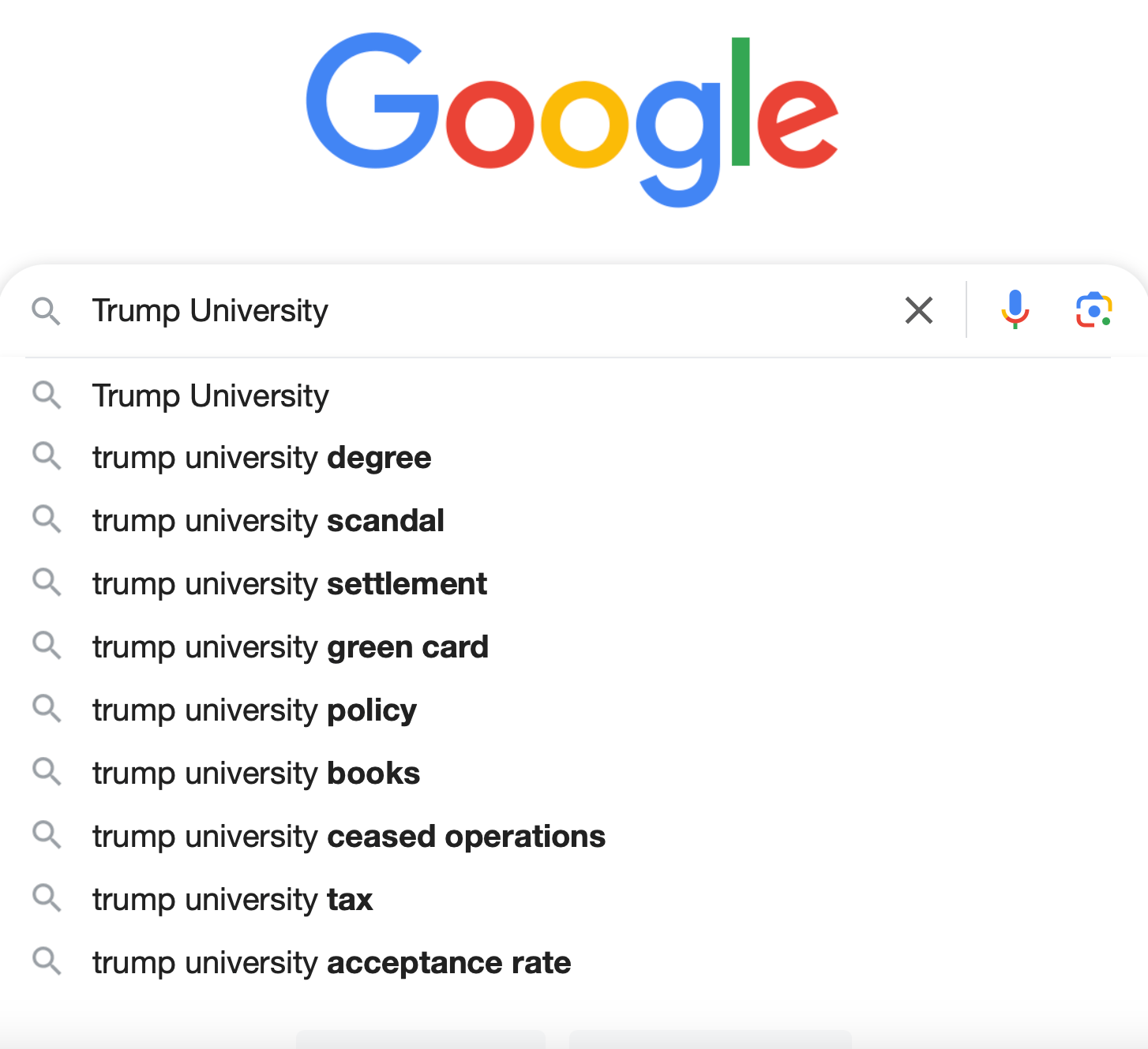
    Ostensibly, this all has little to do with higher education. But Trump University (also known as Trump U) is one of the most notable of all the current US President’s past projects and one of the ventures undertaken just before he stood for the Presidency for the first time. Trump not only lent his name to the project, he also invested millions of dollars in return for 93% of the business –like Victor Kiam, he liked it so much he bought the company. But the authors of this book conclude the whole thing was a disaster from start to finish.

    Beginning as a way to sell recorded lectures to small and medium-sized businesses, Trump University quickly moved into get-rich-quick in-person seminars. The Trump Elite Gold programme had a fee of $34,995 (about the same as the entire cost of a three-year degree in England or Wales). Prospective learners were told, ‘There are three groups of people … People who make things happen; people who wait for things to happen; and people who wonder, “What happened?”’ If you wanted to be in the first group, you were encouraged to open your wallet or else borrow the necessary fee.

    One failed applicant for The Apprentice, Stephen Gilpin, found himself tapped up to work for Trump U but later wrote an exposé that claimed, ‘the focus for Trump University was purely on separating suckers from their money.’ At the time, Trump said he hand-picked the instructors, but he did no such thing. The whole venture ended up in three major lawsuits, which were settled just as Trump became President for the first time.

    In the end, the story of Trump University confirms a truism: it is vital to protect the use of the term ‘University’ and to police it actively and in real time. The book serves as a reminder that – as Jo Johnson has argued persuasively on the HEPI blog – pausing new awards for University Title means the Office for Students is giving less attention to this area than it should.

    It is ironic that the global leader of right-wing populism should not only have sought to establish his own ‘University’ but that, having done so, it should embody in such exaggerated form all the negatives that populists tend to ascribe to traditional universities: poor value for money; an unoriginal curriculum taught by ill-trained staff; and insufficient personal attention to students. However, if a new book being published today attacking UK and US universities, Bad Education: Why our universities are broken and how we can fix them by Matt Goodwin, is any guide to populism more generally, then the failure of Trump U has not deterred the attacks on places that actually do have the legal right to call themselves a ‘University’.

    Goodwin starts with a chapter called ‘Why I decided to speak out’ though it could just have easily been called ‘The grass is always greener’ or ‘Looking back with rose-tinted spectacles’. The book’s core argument is that:

    the rapid expansion of the university bureaucracy, the sharp shift to the left among university academics and the politicization of the wider system of higher education have left universities in a perilous state.

    As a result, Goodwin argues, ‘our universities are not just letting down but betraying an entire generation of students.’

    He notes that, as the number of EDI (Equality, Diversity, and Inclusion) champions has gone up, some types of diversity, such as diversity in academic thought, have gone down. But Goodwin is a political scientist rather than a historian and the problems he identifies are not as new as he makes out. Far-left students used to disrupt Enoch Powell, Keith Joseph and Leon Brittan when they spoke on campus; now they try and block Helen Joyce, Kathleen Stock and Jo Phoenix. The issue of whether such individuals should be allowed to speak even if some people on campus will be ‘offended’ are the same. The recourse to legislation in response is the same too: the rows of the 1980s led to the Education (No. 2) Act (1986) and the rows of today led to the Higher Education (Freedom of Speech) Act (2023).

    Notably, Goodwin’s views seem to have changed even more over time than the institutions he criticises. Two decades ago, Goodwin was a progressive studying for a PhD under Professor Roger Eatwell, an expert in fascism and populism at the University of Bath, after which he moved to Manchester and Nottingham, where he worked with political scientists like Rob Ford and Philip Cowley, and thereafter to Kent. These days, Goodwin has not only given up his professorship but is found speaking at Reform UK meetings while accepting a job as a GB News presenter.

    And while Goodwin says his book has been 20 years in the making, it reads like it was 20 weeks in the writing. That is not meant to be rude for the piece is pacey, personal and polemical – and all the more readable for that. But while it is based in part on others’ research – including pieces of HEPI output – it generally draws from just one well: the place inhabited by Eric Kaufman, Jonathan Haidt and Niall Ferguson. The dust jacket includes endorsements from Douglas Murray, Claire Fox and Nigel Biggar among others.

    Goodwin’s pamphleteer-style of writing ensures his text has little in common with the meticulous research on recent university history by Mike Shattock or Roger Brown and Helen Carasso or Steve Jones (who will be writing his own review of the book for HEPI in due course). Nonetheless, whisper it quietly but – whether you like his general approach or not, whether you like his new acquaintances or not and whether you like his writing style or not – Matt Goodwin may have something of a point.

    Universities do not always welcome or reflect the full diversity of viewpoints in the way that perhaps they should, given their business is generating and imparting knowledge. It has been said many times before by others, so it is far from original, yet that doesn’t make it false. Goodwin quotes the US economist Thomas Sowell: ‘when you hear university academics talk about diversity, ask them how many conservatives are in their sociology department.’ It seems a fair question.

    But grappling with that is not easy. The best answer, Goodwin argues, is a muscular response. Rather than leaving it to the sector to resolve its own issues, he wants to see hard-nosed interventions from policymakers and regulators:

    only government action and new legislation, or pressure from outside universities, can change the incentive structures on campus. This means adopting a proactive rather than a passive strategy, making it clear that the individual freedom of scholars and students is, ultimately, more important than the freedom or autonomy of the university.

    At the very end, Goodwin even argues someone should ensure ‘all universities be regularly audited for academic freedom and free speech violations’, with fines for any that transgress. Yet that begs more questions than it answers: we don’t know who would do the audit or what the rules for it would be.

    So there is a paradox at the heart of Goodwin’s critique. He ascribes the problems he sees to flaws in the ‘system’ whereby the number of university administrators, institutions’ central bureaucracy and the pay of vice-chancellors have all increased rapidly. But such changes have often reflected:

    1. external influences, such as the increase in the regulation of education (in response to scandals of the Trump U variety);
    2. the need to have flattering statistics (such as to present to the Treasury in the battle for public resources); and
    3. recognition that the old ways of working are not going to root out inappropriate behaviours (for example, sexual harassment).

    Perhaps making universities more accountable to regulators and policymakers will make them bastions of free speech in the way Goodwin hopes, but might it not just clog up the lives of academics even more?

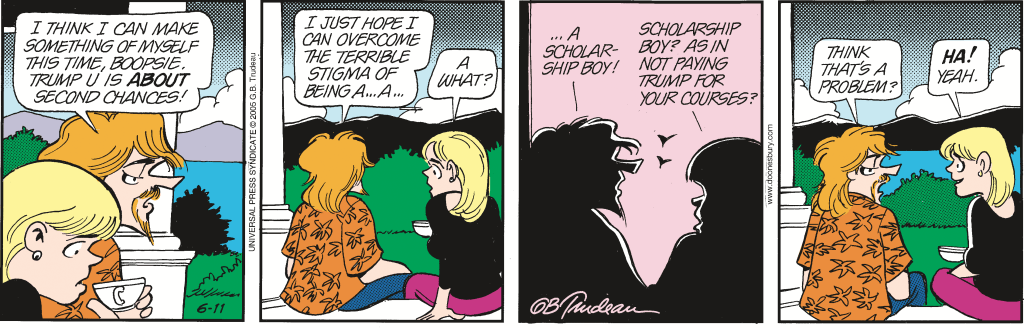
    Reprinted with permission of ANDREWS MCMEEL SYNDICATION. All rights reserved.

    Source link