Tag: Generative

  • Generative Engine Optimization (GEO) for Higher Education

    Generative Engine Optimization (GEO) for Higher Education

    Preparing for an AI-Powered Evolution in How Students Search

    If you’ve ever been involved in your institution’s digital marketing efforts, you’ve undoubtedly heard of search engine optimization — otherwise known as SEO. 

    But after more than a decade of optimizing keywords and backlinks in content for search engines like Google and Bing, we’re now at the dawn of a new age spurred on by artificial intelligence (AI) and a new approach is required: generative engine optimization (GEO). 

    As prospective students turn to AI tools and large language models (LLMs) to guide their college search, traditional SEO tactics are no longer enough. Digital marketing teams must also incorporate new GEO-focused tactics into their strategies.

    In an increasingly competitive and LLM-driven world, institutions must now rethink their visibility, branding, and recruitment strategies for a digital landscape that continues to evolve.

    Understanding Generative Engines and Their Impact on Students’ Search Behavior

    Generative engine optimization is emerging as a critical response to the way AI is reshaping how prospective students find and evaluate colleges. Unlike traditional search engines, generative engines powered by large language models deliver conversational, synthesized responses — often without requiring users to click through to a website. 

    This shift is impacting how institutions need to approach their digital visibility and student engagement efforts.

    The Rise of LLMs

    As students move away from traditional search engines toward AI search tools, LLMs and LLM-powered tools like ChatGPT, Claude, Perplexity, and Google’s Gemini and Search Generative Experience (SGE) are leading the way. 

    These platforms generate real-time, AI-powered answers that summarize information from across the web — often citing sources, but not always linking to them directly. Their growing popularity signals a move away from standard search engine results toward fluid, question-driven discovery.

    The Impact of LLMs on Students’ Search Experiences

    Prospective students are already turning to generative engines to ask nuanced questions such as, “What are the top 20 online MSW programs?” or “Which colleges have the best student support services for veterans?” 

    Instead of having to navigate a list of blue links, they’re receiving direct, synthesized answers to their questions. This introduces key shifts that digital marketers must consider, including: 

    For colleges and universities, adapting to this new behavior is essential to staying prominent in students’ minds during their decision-making process.

    SEO vs. GEO in Higher Education

    Search engine optimization and generative engine optimization share a common goal: to ensure content is discoverable, relevant, and credible. Both approaches rely on strategic keyword usage, high-quality content, and data-driven refinement to increase visibility.

    SEO was built for traditional search engines that return ranked lists of links. GEO is designed for AI-powered engines that synthesize information and deliver complete answers. 

    For universities, this change requires a new, blended approach — one that takes both SEO and GEO into account when creating admissions materials, program pages, and search rankings-focused content such as blog posts.

    How Generative Engines Pull and Rank University Content

    Generative engines like ChatGPT and Google’s SGE don’t rank web pages the same way traditional search engines do. Instead, they synthesize information from multiple sources to deliver a single, cohesive answer. 

    To be included in these AI-generated responses, university content needs to strike a balance between academic credibility and an accessible, student-friendly structure. AI prioritizes information that is well-organized, clearly written, and backed by authoritative sources, such as: 

    Institutions that prioritize clarity and credibility in their content are more likely to be cited and surfaced in generative search results.

    Key GEO Strategies for Colleges and Universities

    To stay visible in AI-driven searches, institutions need to adopt innovative content strategies tailored to how generative engines interpret and deliver information. Here are some core GEO tactics:

    Showcase Faculty Within Content

    Ensure AI- and LLM-Friendly Structure and Markup

    Create Concise and Clear Content

    Use Content Formats That Perform Well in GEO

    Build Brand Authority and Trust

    Measuring GEO Performance in Enrollment Marketing

    As with every digital marketing initiative, it’s not enough to just roll out a GEO strategy — institutions need to measure its success. Here’s how it’s done in the GEO world:

    Create LLM-Focused Dashboards via GA4 and Looker Studio

    Institutions can build LLM-focused dashboards using Google Analytics 4 (GA4) and Looker Studio by creating filters for platforms like ChatGPT, Perplexity, Microsoft Copilot, Google Gemini, and Claude. 

    Google currently doesn’t provide direct data for AI Overview referrals, and they have been neutral in response to questions on if they will ever release AI Overview data.  

    While LLMs are still evolving, isolating referral traffic from these tools can provide institutions with early insight into how students are discovering their content through AI.

    Use Attribution Models for AI-Influenced Student Journeys

    To fully understand how GEO affects students’ enrollment behavior, marketers need to evolve their attribution models, or how enrollment conversions are attributed to different channels. AI-generated responses often play a role at the top of the enrollment funnel, influencing students before they ever land on a university’s website. 

    Measuring that influence through multitouch attribution and long-view funnel analysis will become increasingly important as AI tools reshape how students explore, compare, and commit to higher education programs.

    Challenges and Ethical Considerations

    As generative engines continue to shape how students discover universities, inherent challenges will likely arise. 

    AI tools can misrepresent data or present outdated information, raising concerns about their accuracy and whether they can be trusted. There’s also the risk that well-resourced, elite institutions may disproportionately dominate generative search results, reinforcing existing inequities. Lack of transparency in how algorithms surface and prioritize content makes it difficult for institutions to ensure they are receiving fair and accountable representation.

    Future Trends in Higher Education GEO

    When it comes to emerging digital marketing techniques like GEO, early investments can help institutions stay ahead of the curve.  

    Multimodal Optimization for Virtual Campus Tours and Visual Content

    As generative engines evolve, optimizing for multimodal content — such as images, video, and virtual tours — will become increasingly important. 

    This goes beyond traditional desktop experiences. In Meta’s first quarter 2025 earnings call, Mark Zuckerberg predicted that smart glasses will eventually replace smartphones, describing them as ideal for AI and the metaverse. 

    With Meta already partnering with Ray-Ban on AI-integrated eyewear, higher ed marketers need to start preparing content that’s not just LLM-friendly but also immersive, interactive, and wearable-ready.

    AI-Driven Personalization for Students

    Rather than relying on static rankings or one-size-fits-all search experiences, AI is ushering in a wave of hyperpersonalization. Prospective students may soon interact with personalized advisors, see school rankings tailored to their goals, and receive customized digital content that aligns with their academic and career interests. 

    This shift will push institutions to deliver flexible, student-centered content that adapts to each individual’s intent and pathway.

    Search by Outcome, Not Degree

    Generative tools are beginning to trace backward from desired career outcomes by identifying what roles successful professionals hold, then linking those roles to specific programs, professors, and institutions. 

    For colleges and universities, this means alumni outcomes, employer partnership information, and job title visibility are essential signals. Institutions that surface these elements clearly will be better positioned to show up in outcome-based searches and AI-generated guidance.

    Ready to Get Ahead of the Curve

    The use of AI and large language models in search is only going to increase, fundamentally reshaping how students discover, evaluate, and engage with higher education institutions. 

    Developing a strong generative engine optimization strategy is essential. GEO needs to be seamlessly integrated into your existing SEO and digital marketing efforts to ensure your institution stays visible and relevant in a rapidly shifting landscape.

    With generative engines evolving at an unprecedented pace, now is the time to prepare for how you’ll reach the next generation of students.

    Want to talk through how GEO fits into your broader enrollment strategy? Contact Archer Education to start the conversation.

    Sources 

    Search Engine Journal, “How LLMs Interpret Content: How to Structure Information for AI Search”

    Search Engine Land, “What Is Generative Engine Optimization (GEO)?”

    The Verge, “Why Mark Zuckerberg Thinks AR Glasses Will Replace Your Phone”

    Yahoo Tech, “What Mark Zuckerberg Said About Smartglasses This Week Reveals His Opinion on AI”

    Subscribe to the Higher Ed Marketing Journal:

    Source link

  • Adjusting to Generative AI in Education Means Getting to the Roots

    Adjusting to Generative AI in Education Means Getting to the Roots

    To help folks think through what we should be considering regarding the impact on education of generative AI tools like large language models, I want to try a thought experiment.

    Imagine if, in November 2022, OpenAI introduced ChatGPT to the world by letting the monster out of the lab for a six-week stroll, long enough to demonstrate its capacities—plausible automated text generation on any subject you can think of—and its shortfalls—making stuff up—and then coaxing the monster back inside before the villagers came after it with their pitchforks.

    Periodically, as new models were developed that showed sufficient shifts in capabilities, the AI companies (OpenAI having been joined by others), would release public demonstrations, audited and certified by independent expert observers who would release reports testifying to the current state of generative AI technology.

    What would be different? What could be different?

    First, to extend the fantasy part of the thought experiment, we have to assume we would actually do stuff to prepare for the eventual full release of the technology, rather than assuming we could stick our heads in the sand until the actual day of its arrival.

    So, imagine you were told, “In three years there will be a device that can create a product/output that will pass muster when graded against your assignment criteria.” What would you do?

    A first impulse might be to “proof” the assignment, to make it so the homework machine could not actually complete it. You would discover fairly quickly that while there are certainly adjustments that can be made to make the work less vulnerable to the machine, given the nature of the student artifacts that we believe are a good way to assess learning—aka writing—it is very difficult to make an invulnerable assignment.

    Or maybe you engaged in a strategic retreat, working out how students can do work in the absence of the machine, perhaps by making everything in class, or adopting some tool (or tools) that track the students’ work.

    Maybe you were convinced these tools are the future and your job was to figure out how they can be productively integrated into every aspect of your and your students’ work.

    Or maybe, being of a certain age and station in life, you saw the writing on the wall and decided it was time to exit stage left.

    Given this time to prepare, let’s now imagine that the generative AI kraken is finally unleashed not in November 2022, but November 2024, meaning at this moment it’s been present for a little under six months, not two and a half years.

    What would be different, as compared to today?

    In my view, if you took any of the above routes, and these seem to be the most common choice, the answer is: not much.

    The reason not much would be different is because each of those approaches—including the decision to skedaddle—accepts that the pre–generative AI status quo was something we should be trying to preserve. Either we’re here to guard against the encroachment of the technology on the status quo, or, in the case of the full embrace, to employ this technology as a tool in maintaining the status quo.

    My hope is that today, given our two and a half years of experience, we recognize that because of the presence of this technology it is, in fact, impossible to preserve the pre–generative AI status quo. At the same time, we have more than info information to question whether or not there is significant utility for this technology when it comes to student learning.

    This recognition was easier to come by for folks like me who were troubled by the status quo already. I’ve been ready to make some radical changes for years (see Why They Can’t Write: Killing the Five-Paragraph Essay and Other Necessities), but I very much understood the caution of those who found continuing value in a status quo that seemed to be mostly stable.

    I don’t think anyone can believe that the status quo is still stable, but this doesn’t mean we should be hopeless. The experiences of the last two and a half years make it clear that some measure of rethinking and reconceiving is necessary. I go back to Marc Watkins’s formulation: “AI is unavoidable, not inevitable.”

    But its unavoidability does not mean we should run wholeheartedly into its embrace. The technology is entirely unproven, and the implications of what is important about the experiences of learning are still being mapped out. The status quo being shaken does not mean that all aspects upon which that status quo was built have been rendered null.

    One thing that is clear to me, something that is central to the message of More Than Words: How to Think About Writing in the Age of AI: Our energies must be focused on creating experiences of learning in order to give students work worth doing.

    This requires us to step back and ask ourselves what we actually value when it comes to learning in our disciplines. There are two key questions which can help us:

    What do I want students to know?

    What do I want students to be able to do?

    For me, for writing, these things are covered by the writer’s practice (the skills, knowledge, attitudes and habits of mind of writers). The root of a writer’s practice is not particularly affected by large language models. A good practice must work in the absence of the tool. Millions of people have developed sound, flexible writing practices in the absence of this technology. We should understand what those practices are before we abandon them to the nonthinking, nonfeeling, unable-to-communicate-with-intention automated syntax generator.

    When the tool is added, it must be purposeful and mindful. When the goal of the experience is to develop one’s practice—where the experience and process matter more than the outcome—my belief is that large language models have very limited, if any, utility.

    We may have occasion to need an automatic syntax generator, but probably not when the goal is learning to write.

    We have another summer in front of us to think through and get at the root of this challenge. You might find it useful to join with a community of other practitioners as part of the Perusall Engage Book Event, featuring More Than Words, now open for registration.

    I’ll be part of the community exploring those questions about what students should know and be able to do.

    Join us!

    Source link

  • State Guidance on the Use of Generative AI in K-12 Education

    State Guidance on the Use of Generative AI in K-12 Education

    More than two years into the advent of generative artificial intelligence (AI) in K-12 schools, many state departments of education are issuing guidance or policies for responsible school and student use of AI. A helpful map from AI for Education shows that half of U.S. state departments of education have issued guidance on the use of generative AI in K-12 schools (and there has also been some at the district levels). The states whose departments of education have issued guidance include: Alabama, Arizona, California, Colorado, Connecticut, Delaware, Georgia, Hawai’i, Indiana, Kentucky, Louisiana, Minnesota, Mississippi, New Jersey, North Carolina, North Dakota, Ohio, Oklahoma, Oregon, Utah, Virginia, Washington, West Virginia, Wisconsin, and Wyoming. 

    A Good Start: What Recent Guidance Says About Data Privacy

    All twenty-five states mentioned (or provided resources that included mention of) data privacy or data privacy principles in their guidance. For a detailed analysis, see FPF’s resource – Summary of State AI Guidance for Schools listing the language used by each state for a closer look). Multiple states mention data privacy and the guidance typically falls into the following areas: 

    • Compliance with Federal and/or State Laws: about 20 states reference regulations such as FERPA (Family Educational Rights and Privacy Act), COPPA (Children’s Online Privacy Protection Act), CIPA (Children’s Internet Protection Act), IDEA (Individuals with Disabilities Education Act), and/or other local laws as the baseline for acceptable data handling and privacy practices. 
    • Data Minimization Principles: about 12 states stress the importance of avoiding inputting PII (Personally Identifiable Information) into AI systems. 
    • Data Collection and Retention: about 16 states mention or address data collection, use, sharing, and/or storage practices, with an emphasis on limiting data retention and ensuring data is only collected for specific educational purposes. 
    • Data Security: about 21 states list data security concerns as a focus, with some calling for AI systems to adhere to security best practices, including encryption, authentication, and authorization to prevent unauthorized access. 
    • Transparency and Parental Consent: about 10 states mention the need for transparency surrounding AI policies: both vendor transparency and school administrators’ transparency with parents and students in how AI tools used at school collect and use data. 
    • Vendor Contracts and Third-Party Tools: about 9 states stress the importance of vetting AI vendors and ensuring that contracts with third-party AI providers are aligned with data privacy standards, with some including model language.  
    • AI-Specific Bias Risks and/or Ethical Considerations: about 13 states mention ethical concerns associated with data privacy and AI, particularly around the potential misuse of data and the creation of biased algorithms. 
    • Professional Development and Guidance: about 8 states highlight the need for (or provide resources for) professional development, support, or training for educators on the responsible use of AI tools, including protecting student data privacy. 
    • Accountability and Regular Review: about 3 states emphasize the importance of ongoing reviews of policies and agreements given the evolving nature of AI.

    Next Steps: Tips for Policymakers for Increasing Guidance Effectiveness

    The data privacy principles listed above are integral to responsible, safe, and ethical data privacy practices, and state education departments’ inclusion of them in their guidance on the use of generative AI in K-12 schools is an encouraging start. Even more can and should be done to increase the effectiveness of state guidance when it comes to data privacy considerations. Whether bolstering existing guidance or shaping new guidance, policymakers can provide school leaders more helpful and substantive direction by keeping in mind that the best guidance is:

    • Specific. The most effective guidance is seamless and clear for school leaders to understand and implement. An overwhelming majority of the existing guidance surrounding data privacy related to AI use in K-12 schools is superficial, with many states saying little more than perfunctory statements about the importance or risks of data privacy associated with AI and/or the necessity of following existing privacy laws. If state guidance is to highlight, for example, the need for things such as “establishing strong safeguards” or “keeping student privacy as a primary consideration,” detailing what those strong safeguards should be or how to uphold student data privacy as a primary consideration would dramatically increase guidance utility for school leaders. States that provided slightly stronger guidance included more specific directives to assist schools with taking the next step. These included details such as language for contractual requirements with AI vendors, data handling protocols, training programs, and clear policies on data collection, retention, and security. Even further specificity would be more beneficial to schools and districts. 
    • Actionable. School leaders need actionable guidance that gives a concrete roadmap for the use of generative AIt. While reviewing or drafting guidance, policymakers should ask: what would it mean in practice if school administrators were to do as the guidance suggested? For example, imagine if the guidance indicated that “student personally identifiable information should be protected when using generative AI tools.” To implement this guidance in their schools, school leaders would need to know how to protect that information, they would need to have a policy on it, they would need to train and educate staff and students on that policy, the staff and students would have to adhere to that policy, and the school would have to enforce it. Actionable guidance that details a roadmap or implementation instructions helps school leaders minimize guesswork and provide clear steps they can take. 
    • In Context. The most effective guidance will provide direction in the context of generative AI. Many aspects of student data privacy have been considered for over a decade with the use of education technology (“edtech”) products in schools, and many state and federal laws already regulate the use of student data in the age of edtech and the internet. Guidance that is the most helpful to school leaders will go beyond repeating data privacy principles that have already been stressed in the context of edtech and will provide meaningful direction in the context of AI.

    Including student data privacy considerations in existing state guidance is an encouraging first step towards safeguarding student data privacy in the age of generative AI. By creating specific, actionable directives in the context of AI, policymakers can strengthen the effectiveness, utility, and helpfulness of their guidance on data privacy for generative AI use in K-12 schools. In doing so, they can make navigating the new and evolving reality of generative AI in schools less intimidating and more straightforward for school leaders.


    Endnotes:

    1 (AL AZ CA CO CT DE IN KY NC ND MN MI OH UT WA WV WY)
    2 (AZ CA DE GA HI IN NC NJ OR UT WA WV)
    (AL CA CO CT DE HI LA MN NC NJ OH OK UT WA WV WY)
     (AL AZ CA CO DE GA IN KY LA NC ND NJ MN OH OK UT VA WA WV WY)
     (AL CO DE GA LA NC OH OK WV WA)
     (AL CO DE GA LA NC UT WA WY)
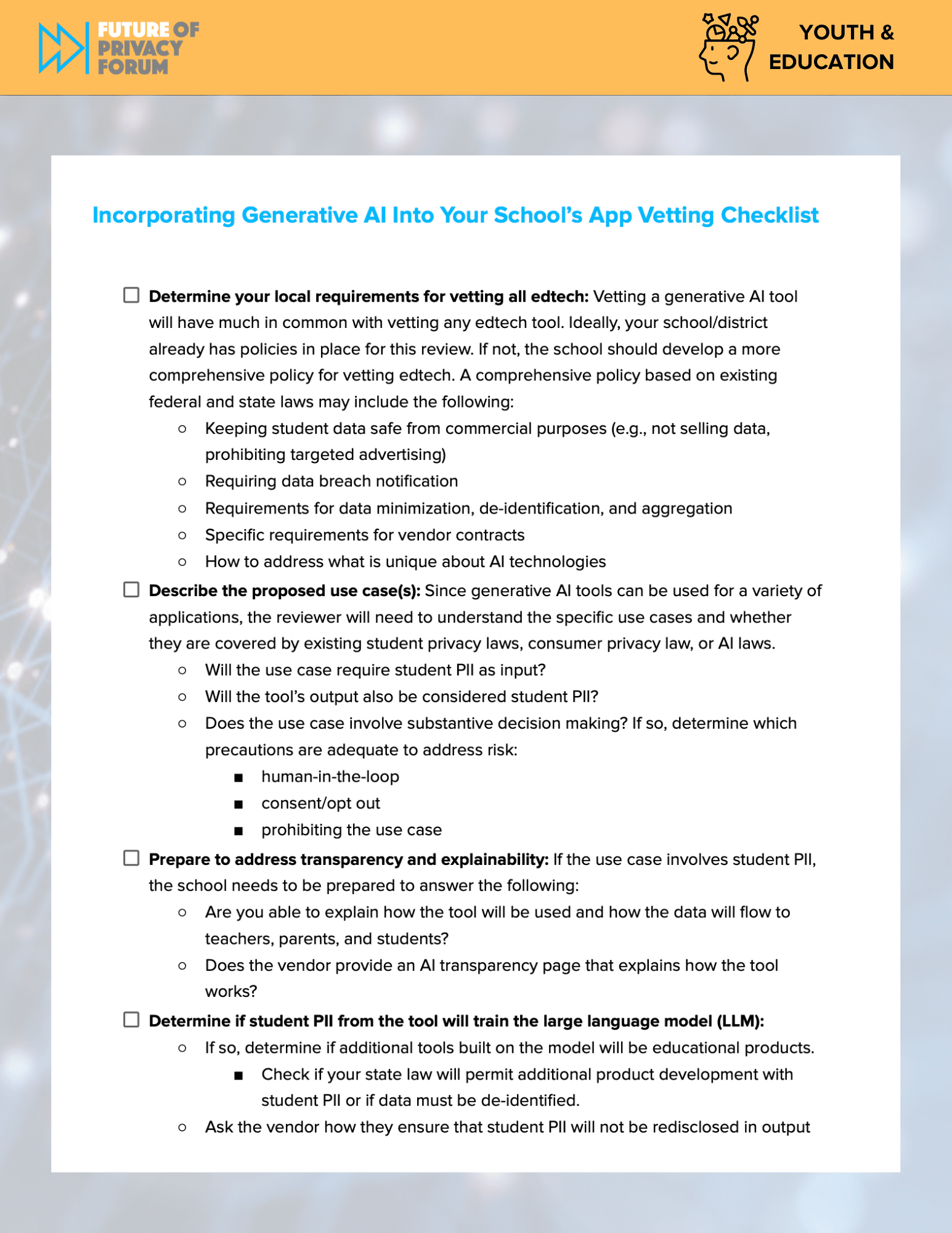
    7  Take a look at FPF’s resource for Vetting Generative AI Tools for Use in Schools, including the checklist and accompanying policy brief.
     (AL CO DE GA LA MN NJ OH UT VA WV WI WA)
     (AL DE GA LA MI, NJ, OH WV)
    10
     (CO GA LA)
    11  e.g. “Data privacy, security and content appropriateness should be primary considerations when adopting new technology.” Minnesota guidance.
    12  e.g.All AI application usage should adhere to state and federal privacy laws” Kentucky guidance

    Source link

  • Unlocking Generative Engine Optimization (GEO): What Marketers Must Do to Stay Ahead

    Unlocking Generative Engine Optimization (GEO): What Marketers Must Do to Stay Ahead

    Remember when SEO was all about keywords and metatags, fueling now-defunct search engines like Yahoo, AltaVista and early Google? Those were the days of “keyword stuffing,” where quantity trumped quality and relevance, delivering poor search results and frustrating users. Google’s PageRank algorithm changed everything by prioritizing content quality, giving birth to the “Content is King” mantra and improving the user experience.

    Fast forward to the Era of the Modern Learner, where digitally astute users demand fast and accurate information at their fingertips. To keep up with their heightened expectations, search engine algorithms have evolved to become more sophisticated, focusing on the intent behind each search query rather than simple keyword matching. This shift has led to the emergence of AI-powered search engines features like Google’s AI Overviews to provide an AI-powered summary which now command prime real estate on the search engine results page.

    In response, Generative Engine Optimization (GEO) is emerging. AI-powered search engines are moving beyond simply ranking websites. They are synthesizing information to provide direct answers. In this fast-paced environment, delivering the right information at the right time is critical now more than ever. All marketers, regardless of industry, must adapt their strategies beyond traditional SEO.

    What is Generative Engine Optimization (GEO)?

    Artificial intelligence is rapidly infiltrating tools across every industry, fundamentally reshaping the digital landscape. Generative Engine Optimization (GEO) is emerging as a new approach to digital marketing, leveraging AI-powered tools to generate and optimize content for search engines. GEO is a catalyst, driving a fundamental shift in how search engines present information and how users consume it

    GEO leverages machine learning algorithms to analyze user search intent, create personalized content, and optimize websites for improved search engine rankings. This advanced algorithmic approach delivers contextually rich information from credible sources, directly answering user searches and proactively addressing related inquiries. A proactive strategy that goes beyond traditional SEO ensures that a school’s information is readily discoverable, easily digestible and favorably presented by AI-powered search engines such as Google’s AI Overviews, ChatGPT, Perplexity and Gemini.

    How GEO Works

    At its core, Generative Engine Optimization (GEO) uses artificial intelligence to bridge the gap between user needs and search engine performance. GEO tools go beyond traditional SEO by harnessing AI to deeply understand user behavior and generate content that’s not only relevant but also personalized and performance driven. Here is how it works across four core functions: 

    • Analyzing User Intent: GEO starts by analyzing user intent. AI models examine search queries, website behavior and browsing patterns to uncover what users are specifically searching for. This helps marketers develop content strategies that directly align with user expectations and needs. 
    • Generating Content: Using these insights, GEO tools generate original content tailored to meet the precise needs of the target audience. The result is content that answers user questions and aligns with how modern search engines evaluate relevance and quality.  
    • Optimizing Content: GEO then optimizes the generated content for performance. AI refines readability, integrates keywords and enhances structural elements for improved visibility in search results, which ensures that content performs well in both traditional and AI-powered search environments.  
    • Personalizing Content: Where GEO truly shines is in content personalization. By leveraging data like demographics, preferences and past interactions, GEO delivers tailored experiences that feel more relevant and engaging to individual users.  

    Comparing SEO and GEO

    While SEO and GEO may seem like competing strategies, they actually complement one another. Both aim to improve visibility in search results and drive meaningful engagement but do so through different methods. Understanding how they align and where they diverge is key to developing a modern, well-rounded digital strategy. 

    Ways GEO is Similar to SEO

    Despite their difference in execution, SEO and GEO share a common goal: delivering valuable content to users and meeting their search intent. Both SEO and GEO strategies contribute to: 

    • Improving website visibility and search rankings in the search engine results pages (SERPs). 
    • Driving organic traffic by making it easier for users to discover relevant information. 
    • Boosting user engagement and conversion rates through informative, well-tailored content.  

    Ways GEO is Different from SEO

    Where SEO and GEO begin to diverge is in their focus, tools, and content strategy:

    • Focus: Traditional SEO emphasizes keyword optimization, meta tags and technical structure. GEO, on the other hand, focuses on understanding user intent and creating dynamic, personalized content that adapts to evolving needs. 
    • Tools: SEO relies on tools like keyword research platforms, backlink analysis, and manual content audits. GEO uses AI-powered platforms to analyze data, generate content, and automate optimization based on real-time user behavior.  
    • Content: SEO often produces static, evergreen content that ranks over time. GEO enables the creation of responsive, personalized content that can shift based on user preferences, past interactions, and demographics. 

    While SEO has historically focused on driving clicks to websites and increasing rankings, GEO recognizes the increasing prominence of zero-click searches—where users find answers directly within AI-powered search overviews. In this new reality, GEO ensures your content remains visible and valuable even when the traditional click doesn’t occur. It does this by optimizing for how AI synthesizes and presents information in search results.

    Is GEO Replacing SEO?

    The rise of GEO has sparked an important question for marketers: Is SEO dead? The short answer is no. Rather than replacing SEO, GEO enhances it.

    GEO builds a foundation of traditional SEO by leveraging artificial intelligence to automate time-consuming tasks, deepen audience insights, and elevate content quality. A strong SEO strategy remains essential, and when paired with GEO, it becomes even more powerful.

    To support marketers in building that foundation, tools like EducationDynamics’ SEO Playbook offer actionable strategies for mastering SEO fundamentals while staying adaptable to innovations like GEO. As the higher education marketing landscape evolves, institutions are reaching a critical inflection point: the status quo no longer meets the expectations of the Modern Learner, and a more dynamic, data-driven approach is essential to stay competitive.

    Here’s how GEO supports and strengthens traditional SEO efforts:

    • Smarter Keyword Research and Optimization: GEO tools analyze search intent more precisely, allowing marketers to choose keywords that better reflect how real users search, creating content that directly answers those queries.  
    • More Personalized Content Experiences: By generating dynamic content based on user behavior, preferences, and demographics, GEO helps ensure the right message reaches the right audience at the right time.  
    • Streamlined Workflows: GEO automates content generation and optimization processes, making it easier to keep web pages fresh, relevant, and aligned with evolving search behaviors—all while saving time and resources.  

    SEO is far from obsolete; however, relying solely on traditional SEO tactics is outdated which is no longer sufficient in today’s evolving higher education landscape. To truly transform their marketing approach, institutions must embrace innovative solutions. 

     As generative AI becomes increasingly embedded in how people search, marketers must adapt. While traditional SEO tactics like on-page optimization, site structure, and link-building still have a role to play, GEO provides the bold innovation needed to drive impactful outcomes. By pairing SEO strategies with GEO’s AI-driven insights and automation, institutions can achieve greater efficiency and effectiveness in their marketing efforts.  

    Together, SEO and GEO provide a holistic, future-ready framework to engage the Modern Learner, enhance digital marketing efforts, and drive both reputation and revenue growth, which are essential for long-term success.

    Integrating GEO and SEO in Your Marketing Strategy for Higher Education Marketers

    As the digital landscape evolves, one thing remains clear: SEO is still essential for institutions looking to connect with today’s students. With the rapid adoption of AI in everyday search habits though, SEO alone is no longer enough.

    According to EducationDynamics 2025 Engaging the Modern Learner Report, generative AI is already transforming how prospective students evaluate their options. Nearly 70% of Modern Learners use AI tools for generative chatbot platforms like ChatGPT, while 37% use these tools specifically to gather information about colleges and universities in their consideration set.

    This shift signals a clear need for higher ed marketers to adapt their digital strategies. GEO provides a pathway to do that while better serving today’s students. By combining the proven fundamentals of SEO with GEO’s advanced AI capabilities, institutions can engage the Modern Learner more effectively at every stage of their decision-making journey.

    Reaching Modern Learners: Integrating GEO and SEO Strategies

    • Speak to What Modern Learners Search For: Modern Learners expect content that speaks directly to their needs and interests. Use GEO tools to identify the actual search terms prospective students use, such as “flexible online MBA,” or “how much does an online degree cost.” Then, develop SEO-optimized pages, blog posts, and FAQs that address these specific questions. Incorporate schema markup, structured headings, and internal links to boost visibility while keeping content informative and student focused.  
    • Personalize the Journey for Every Modern Learner: GEO enables marketers to go beyond generic messaging. Use behavioral data, such as which pages students visit, how long they stay or what programs they explore, to personalize touchpoints across channels. Personalization builds trust and shows Modern Learners you understand what matters to them.  
    • Deliver the Seamless Digital Experiences Modern Learners Expect: Today’s students want fast, seamless experiences. Use GEO insights to identify where users drop off, then optimize navigation and page speed accordingly. Implement clear, scannable layouts with prominent CTAs to enhance your website’s structure and user-friendliness. Consider adding AI-powered chatbots to provide real-time support for everything from application steps to financial aid inquiries.   
    • Use Data to Stay Ahead of the Modern Learner’s Needs: GEO tools give you visibility into what students search for, which content they engage with, and where they lose interest. Regularly review search patterns, click paths, and drop-off points to identify gaps in your content or barriers in the enrollment funnel. Use these insights to refine headlines, adjust keyword targeting, or introduce new resources that better align with what students care about. 

    As prospective students increasingly turn to AI tools to explore their options, higher education marketers must evolve their strategies to keep pace with changing search behaviors. While Search Engine Optimization remains essential for visibility and reach, it no longer fully reflects how today’s students search and engage online. GEO bridges that gap by adapting to real-time behaviors and preferences. To effectively connect with Modern Learners and stay competitive, institutions must evolve their digital strategies to include GEO. 

    The Future of SEO and GEO in Higher Education

    The future of enrollment will be shaped by how well institutions adapt to evolving digital behaviors. GEO is one of the many new components at the forefront of this shift. As AI continues to reshape how students interact with institutions and search for information, GEO will become an instrumental tool for delivering personalized, real-time information to meet their expectations.

    Traditional SEO will still play a vital role in ensuring your institution is discoverable, but GEO takes things further by extracting and tailoring relevant content to meet the specific needs of each user, creating dynamic, intent-driven engagement. With more students using generative AI tools to guide their enrollment journey, institutions must embrace strategies that reflect this new reality.

    Looking ahead, AI-powered SEO strategies will empower higher education marketers to create adaptive content that speaks directly to individual student goals and behaviors. These tools will also make it possible to deliver faster, more relevant information across platforms, often surfacing answers before a student ever clicks a link. With deeper access to behavioral data and user intent, marketers can refine messaging in real time, ensuring they’re reaching the right students with the right information at the right moment in their decision-making journey.

    Unlocking the Power of GEO with EducationDynamics

    As the digital landscape continues to shift, it can be challenging for institutions to keep pace with rapid change—especially when it comes to reaching the demands of today’s students. GEO empowers institutions to transform their digital engagement strategies, moving beyond outdated tactics to cultivate meaningful connections with the Modern Learner. 

    As a leading provider of higher education marketing solutions, EducationDynamics specializes in helping colleges and universities stay ahead. Our team brings deep expertise in foundational SEO and is actively embracing the next wave of digital strategy through Generative Engine Optimization (GEO). We understand what it takes to create meaningful engagement in a competitive enrollment environment and we’re here to help you do just that. 

    Connect with us to discover how we can support your team in building personalized digital strategies—whether it’s laying the groundwork with SEO or embracing innovative approaches like GEO. We’re here to help your institution succeed in today’s ever-changing digital world. 

    Source link

  • Will the use of generative AI shift higher education from a knowledge-first system to a skills-first system?

    Will the use of generative AI shift higher education from a knowledge-first system to a skills-first system?

    On the eve of the release of HEPI’s Student Generative AI Survey 2025, HEPI hosted a roundtable dinner with the report’s sponsor, Kortext, and invited guests to discuss the following essay question:

    How will AI change the university experience for the next generation?

    This was the third roundtable discussion we have hosted with Kortext on AI, over three years. Observing the debate mature from a cautious, risk-averse response to this forward-looking, employability-focused discussion has been fascinating. We spent much of the evening discussing a potential pivot for teaching and learning in the sector.

    The higher education sector places the highest importance on creating, collecting, and applying knowledge. ‘Traditional’ assessments have focused on the recollection of knowledge (exams) or the organisation and communication of knowledge (in essays). The advent of search engines has made acquiring knowledge more accessible, while generative AI has automated the communication of knowledge.

    If knowledge is easily accessible, explainable, and digestible, which skills should our graduates possess that cannot be replaced by ChatGPT, now or in the future? It was suggested that these are distinctly ‘human’ skills: relationship building, in-person communication, and leadership. Are we explicitly teaching these skills within the curriculum? Are we assessing them? Are we rebalancing our taught programmes from knowledge to irreplaceable skills to stay ahead of the AI curve?

    And to get a bit meta about it all, what AI skills are we teaching? Not just the practical skills of application of AI use in one’s field, but deep AI literacy. Recognising bias, verifying accuracy, understanding intellectual property rights and embracing digital ambition. (Professor Sarah Jones of Southampton Solent University has written about this here.)

    Given recent geopolitical events, critical thinking was also emphasized. When and why can something be considered the ‘truth’? What is ‘truth’, and why is it important?

    Colleagues were clear that developing students’ knowledge and understanding should still be a key part of the higher education process (after all, you can’t apply knowledge if you don’t have a basic level of it). In addition, they suggested that we need to be clearer with students about the experiential benefits of learning. As one colleague stated,

    ‘The value of the essay is not the words you have put on the page, it is the processes you go through in getting the words to the page. How do you select your information? How do you structure your argument more clearly? How do you choose the right words to convince your reader of your point?’

    There was further discussion about the importance of experiential learning, even within traditional frameworks. Do we clearly explain to students the benefits of learning experiences – such as essay writing – and how this will develop their personal and employability skills? One of the participants mentioned that they were bribing their son not to complete his Maths homework by using ChatGPT. As students increasingly find their time constrained due to paid work and caring responsibilities, how can we convince students of the value of fully engaging with their learning experiences and assessments when ChatGPT is such an attractive option? How explicitly are we talking to students about their skills development?

    There was a sense of urgency to the discussion. One colleague described this as a critical juncture, a ‘one-time opportunity’ to make bold choices about developing our programmes to be future-focused. This will ensure graduates leave higher education with the skills expected and needed by their employers, which will outlast the rapidly evolving world of generative AI and ensure the sector remains relevant in a world of bite-sized, video-based learning and increasing automation.

    Kortext is a HEPI partner.

    Founded in 2013, Kortext is the UK’s leading student experience and engagement expert, pioneering digitally enhanced teaching and learning in the higher education community. Kortext supports institutions in boosting student engagement and driving outcomes with our AI-powered, cutting-edge content discovery and study products, market-leading learner analytics, and streamlined workflows for higher education. For more information, please visit: kortext.com

    Source link

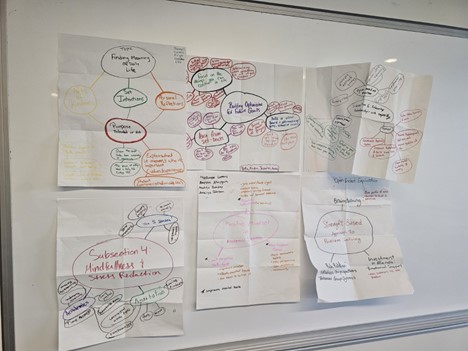
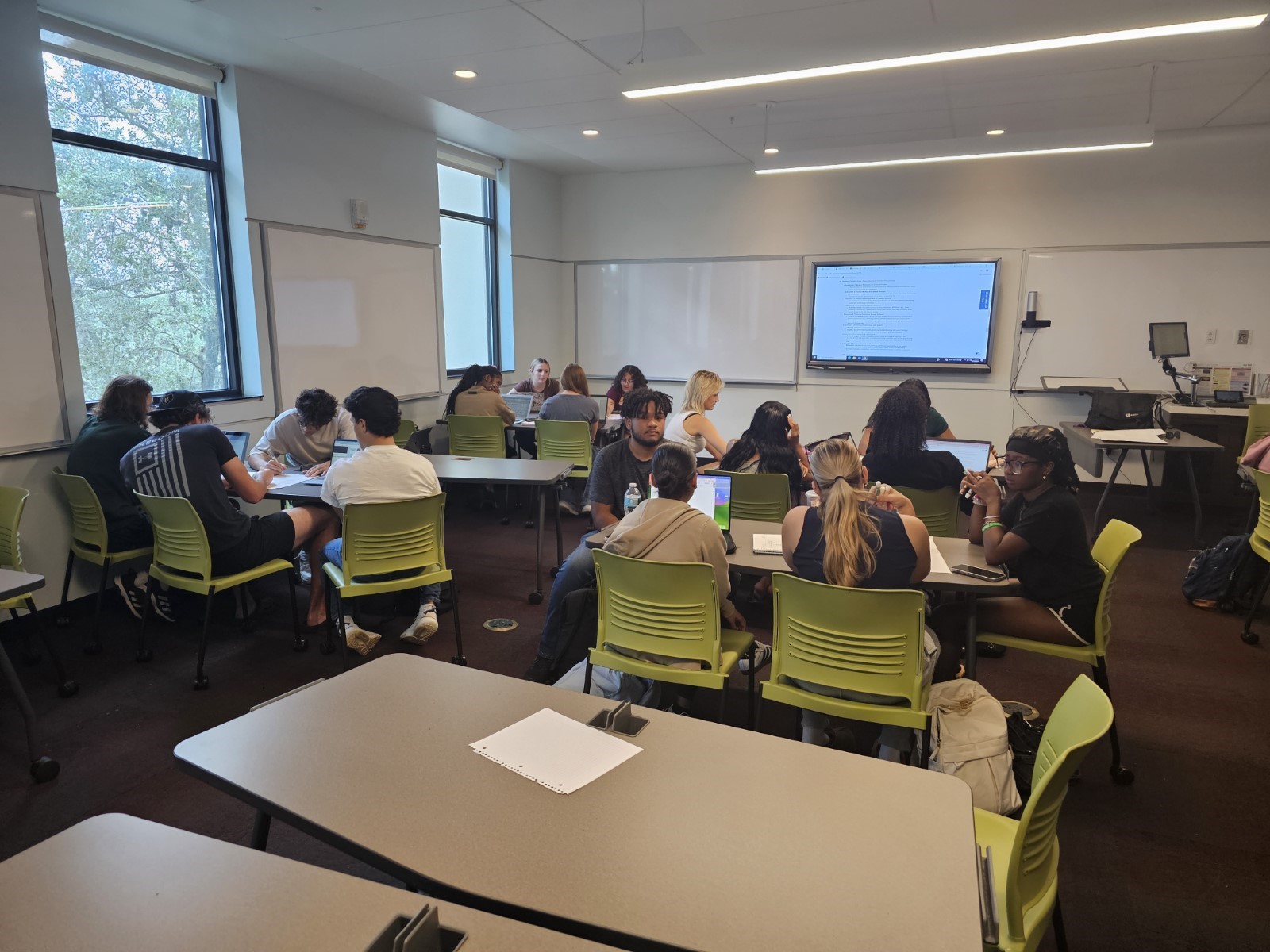
  • Engaging Students in Collaborative Research and Writing Through Positive Psychology, Student Wellness, and Generative AI Integration – Faculty Focus

    Engaging Students in Collaborative Research and Writing Through Positive Psychology, Student Wellness, and Generative AI Integration – Faculty Focus

    Source link

  • Probabilities of generative AI pale next to individual ideas

    Probabilities of generative AI pale next to individual ideas

    While I was working on the manuscript for More Than Words: How to Think About Writing in the Age of AI, I did a significant amount of experimenting with large language models, spending the most time with ChatGPT (and its various successors) and Claude (in its different flavors).

    I anticipated that over time this experimenting would reveal some genuinely useful application of this technology to my work as a writer.

    In truth, it’s been the opposite, and I think it’s interesting to explore why.

    One factor is that I have become more concerned about what I see as a largely uncritical embrace of generative AI in educational contexts. I am not merely talking about egregiously wrongheaded moves like introducing an AI-powered Anne Frank emulator that has only gracious thoughts toward Nazis, but other examples of instructors and institutions assuming that because the technology is something of a wonder, it must have a positive effect on teaching and learning.

    This has pushed me closer to a resistance mindset, if for no other reason than to provide a counterbalance to those who see AI as an inevitability without considering what’s on the other side. In truth, however, rather than being a full-on resister I’m more in line with Marc Watkins, who believes that we should be seeing AI as “unavoidable” but not “inevitable.” While I think throwing a bear hug around generative AI is beyond foolish, I also do not dismiss the technology’s potential utility in helping students learn.

    (Though, a big open question is what and how we want them to learn these things.)

    Another factor has been that the more I worked with the LLMs, the less I trusted them. Part of this was because I was trying to deploy their capabilities to support me on writing in areas where I have significant background knowledge and I found them consistently steering me wrong in subtle yet meaningful ways. This in turn made me fearful of using them in areas where I do not have the necessary knowledge to police their hallucinations.

    Mostly, though, just about every time I tried to use them in the interests of giving myself a shortcut to a faster outcome, I realized by taking the shortcut I’d missed some important experience along the way.

    As one example, in a section where I argue for the importance of cultivating one’s own taste and sense of aesthetic quality, I intended to use some material from New Yorker staff writer Kyle Chayka’s book Filterworld: How Algorithms Flattened Culture. I’d read and even reviewed the book several months before, so I thought I had a good handle on it, but still, I needed a refresher on what Chayka calls “algorithmic anxiety” and prompted ChatGPT to remind me what Chayka meant by this.

    The summary delivered by ChatGPT was perfectly fine, accurate and nonhallucinatory, but I couldn’t manage to go from the notion I had in my head about Chayka’s idea to something useful on the page via that summary of Chayka’s idea. In the end, I had to go back and reread the material in the book surrounding the concept to kick my brain into gear in a way that allowed me to articulate a thought of my own.

    Something similar happened several other times, and I began to wonder exactly what was up. It’s possible that my writing process is idiosyncratic, but I discovered that to continue to work the problem of saying (hopefully) interesting and insightful things in the book was not a summary of the ideas of others, but the original expression of others as fuel for my thoughts.

    This phenomenon might be related to the nature of how I view writing, which is that writing is a continual process of discovery where I have initial thoughts that bring me to the page, but the act of bringing the idea to the page alters those initial thoughts.

    I tend to think all writing, or all good writing, anyway, operates this way because it is how you will know that you are getting the output of a unique intelligence on the page. The goal is to uncover something I didn’t know for myself, operating under the theory that this will also deliver something fresh for the audience. If the writer hasn’t discovered something for themselves in the process, what’s the point of the whole exercise?

    When I turned to an LLM for a summary and could find no use for it, I came to recognize that I was interacting not with an intelligence, but a probability. Without an interesting human feature to latch onto, I couldn’t find a way to engage my own humanity.

    I accept that others are having different experiences in working alongside large language models, that they find them truly generative (pardon the pun). Still, I wonder what it means to find a spark in generalized probabilities, rather than the singular intelligence.

    I believe I say a lot of interesting and insightful things in More Than Words. I’m also confident I may have some things wrong and, over time, my beliefs will be changed by exposing myself to the responses of others. This is the process of communication and conversation, processes that are not a capacity of large language models given they have no intention working underneath the hood of their algorithm.

    Believing otherwise is to indulge in a delusion. Maybe it’s a helpful delusion, but a delusion nonetheless.

    The capacities of this technology are amazing and increasing all the time, but to me, for my work, they don’t offer all that much of meaning.

    Source link

  • Using Generative AI to “Hack Time” for Implementing Real-World Projects – Faculty Focus

    Using Generative AI to “Hack Time” for Implementing Real-World Projects – Faculty Focus

    Source link

  • Call for Submissions for Special Edition – “Trends in the Use of Generative Artificial Intelligence for Digital Learning.” (Anthony Picciano)

    Call for Submissions for Special Edition – “Trends in the Use of Generative Artificial Intelligence for Digital Learning.” (Anthony Picciano)


    Dear Commons Community,

    Patsy Moskal and I have decided to be guest editors for Education Sciences for a special edition entitled,

    “Trends in the Use of Generative Artificial Intelligence for Digital Learning.” (See below for a longer description.)

    It is a most timely topic of deep interest to many in the academy. We would love to have you contribute an article for it. Your submission can be research, practitioner, or thought-based. It also does not have to be a long article (4,000-word minimum). Final articles will be due no later than July 1, 2025.

    You can find more details at: https://www.mdpi.com/journal/education/special_issues/6UHTBIOT14#info

    Thank you for your consideration!

    Tony


    Source link

  • for Generative AI Integration into Education – Sovorel

    for Generative AI Integration into Education – Sovorel

    I’m very happy and excited to share that I have released a new book that is geared specifically to helping universities, as well as all educational institutions, with the very important topic of generative AI integration into education. This is a vital process that higher education and all places of learning need to address in order to become and stay relevant in a world that so filled with AI. All of us in academia must develop AI Literacy skills in order to fully develop these skills within our students. If educational institutions do not integrate this important process now, then they will not be properly setting up their students for success. This book specifically provides an action plan to help educational institutions be part of the solution and to better ensure success.

    Here is a video trailer for the 9 Point Action Plan: for Generative AI Integration into Education book:

    Table of contents for the 9 Point Action Plan: for Generative AI Integration into Education book that is now available as an ebook or printed book at Amazon: https://www.amazon.com/Point-Action-Plan-Generative-Integration/dp/B0D172TMMB

    TABLE OF CONTENTS

    1. Chapter 1: Institutional Policies
      • Examples
      • Policy Examples
      • Implementation
    2. Chapter 2: Leadership Guidance on Utilization of Generative AI
      • Examples
      • Michigan State University Example
      • Yale University Example
      • Template Example: Leadership Guidance on Generative AI in Education
      • Implementation
    3. Chapter 3: Training
      • Faculty Training
      • Staff Training
      • Student Training
      • Examples
      • American University of Armenia Example
      • Arizona State University Example
      • Other Examples
      • Implementation
    4. Chapter 4: Generative AI Teaching & Learning Resources
      • Examples
      • University of Arizona
      • American University of Armenia
      • The University of California Los Angeles (UCLA)
      • Implementation
    5. Chapter 5: Outside Information/Confirmation
      • Bring in an Outside Speaker, Presenter, Facilitator
      • Examples
      • Obtain Employers’/Organizations’ Views & Ideas on Needed AI Skills
      • Implementation
    6. Chapter 6: Syllabus AI Use Statement
      • Examples
      • Tuffs University Example
      • Vanderbilt College of Arts and Science
      • American University of Armenia Example
      • Implementation
    7. Chapter 7: Strategic Plan Integration
      • Components of a Good Strategic Plan and AI Considerations
      • Environmental Analysis
      • Review of Organizational Vision/Mission
      • Identification of Strategic Goals and Objectives
      • Key Performance Indicators
      • Integration of AI Literacy into the Curriculum
      • Example: White Paper: Integration of AI Literacy into Our Curriculum
    8. Chapter 8: Integration Observation and Evaluation
    9. Chapter 9: Community Outreach
      • Example Benefits of Community Outreach
      • Implementation
    10. Chapter 10: Conclusion and Call to Action
    11. Glossary
    12. References
    13. Additional Resources

    As with all of my books, please reach out if you have any questions. I can be found on LinkedIn and Twitter. I also respond to all comments placed this blog or through YouTube. Please also join the Sovorel Center for Teaching and Learning Facebook page where I post a lot of updates.

    Source link