Tag: Global

  • China’s censorship goes global — from secret police stations to video games

    China’s censorship goes global — from secret police stations to video games

    Last year, FIRE launched the Free Speech Dispatch, a regular series covering new and continuing censorship trends and challenges around the world. Our goal is to help readers better understand the global context of free expression. The previous entry covered Australia’s ban on teen social media, South Korea’s martial law decree, and more. Want to make sure you don’t miss an update? Sign up for our newsletter

    China’s censorship in the news — and in the U.S.

    • Late last month, a New York man pleaded guilty in Brooklyn Federal Court to his role in running a secret Chinese government police station in Manhattan. The Chinese government is accused of setting up over a hundred such stations worldwide and using them to surveil, threaten, and silence dissidents outside its borders. His prosecution is the latest in a series of Department of Justice efforts to combat foreign governments’ targeting their critics within U.S. borders.
    • On a related note, President Joe Biden established a “China Censorship Monitor and Action Group” in December. The group’s mission is to “monitor and address the effects of any efforts by the PRC to censor or intimidate, in the United States or in any of its possessions or territories, any United States person, including a United States company that conducts business in the PRC, exercising its freedom of speech.”
    • If you’re a gamer, you might be excited about the popular new video game “Marvel Rivals.” But you may be disappointed to learn that the game comes with some strings attached — namely, users cannot make political statements that the Chinese Communist Party dislikes. The game, created by Marvel and Chinese developer NetEase, blocks users from typing phrases in the chat function including “Tiananmen Square,” “free Taiwan,” “free Hong Kong,” “free Tibet,” and “Taiwan is a country.” What is allowed? Negative commentary about Taiwan. 

    On a somber anniversary, a glimmer of hope for blasphemers

    Sign reading Je Suis Charlie at a memorial for the victims of the Charlie Hebdo magazine terror attacks in 2015. (conejota / Shutterstock.com)

    Jan. 7 marked the tenth anniversary of the Charlie Hebdo attacks, in which cartoonists and staff from satirical French magazine Charlie Hebdo were killed by gunmen over the magazine’s depictions of the Prophet Muhammad. The magazine commemorated the date with a contest for the “funniest and meanest” depictions of God. 

    As I wrote about the anniversary, we have failed to protect blasphemers since the killings and, in some ways, the legal realities are getting even worse for those accused of transgressing against deities. But there are a couple of bright spots in the wake of the commemoration. 


    WATCH: UK to create blasphemy laws?

    A BBC report released on the anniversary itself announced that Nigerian humanist Mubarak Bala was set free from prison after a nearly five year legal battle. Bala was initially sentenced to 24 years in prison for blasphemous Facebook posts. His sentence was reduced last year, and although he has now been released, he is not exactly free. Bala is in hiding in a safe house, due to concerns that he will be attacked by vigilantes or mobs.

    And, now, Spain is looking to set a good example, with the Socialist party’s introduction of a bill that would, among other things, repeal the country’s blasphemy law that hands out fines to offenders. This law “rarely achieves convictions and yet it is constantly used by extremist and fundamentalist organisations to persecute artists, activists (and) elected representatives, subjecting them to costly criminal proceedings,” the party’s spokesperson said. 

    The legislation was prompted by a lawsuit “brought by Abogados Cristianos (Christian Lawyers) against comedienne Lalachus after she, in a state television appearance during New Year’s Eve celebrations, brandished an image of Jesus on which the head of the cow mascot for a popular TV program had been superimposed.”

    The latest in speech rulings and regulations

    From the UK to Germany to Singapore: Police are watching what you post

    Blog

    Police detained a pro-Palestinian activist in London under the UK’s Terrorism Act for, as the arresting officer put it, “making a hate speech.”


    Read More

    • Lithuania’s Constitutional Court ruled as unconstitutional a provision in the country’s Law on the Protection of Minors from Negative Effects of Public Information, which stated that information about non-traditional families was harmful to minors and could be restricted.
    • Irish media regulator Coimisiún na Meán released a decision last month warning Meta to take “specific measures” to reduce the “dissemination of terrorist content” on Facebook and report its progress. The nature of the “terrorist content” remains unclear.
    • The UK’s Investigatory Powers Tribunal issued a ruling finding that an “undercover surveillance operation” by the Police Service of Northern Ireland and Metropolitan Police to identify journalists’ sources was “disproportionate” and “undermined” media protections
    • Albania announced a one-year ban on TikTok, with the country’s prime minister blaming the app for violence among young people, including the recent stabbing death of a 14-year-old. (The Supreme Court is deliberating the TikTok ban here in the United States, a ban FIRE opposes as a First Amendment violation.)
    • On Christmas Day, Vietnam enacted a new decree requiring social media users to verify their identity, a tool that’s ripe for abuse in a country known for its crusade to silence online government critics.

    Maker of infamous Pegasus spyware loses to WhatsApp in California court 

    NSO Group Technologies is an Israeli cyber-intelligence firm known for its proprietary spyware Pegasus

    NSO Group Technologies is a cyber-intelligence firm known for its proprietary spyware Pegasus. (poetra / Shutterstock.com)

    Meta’s WhatsApp won a major victory in the U.S. District Court for the Northern District of California against the NSO Group, an Israel-based spyware company. The NSO Group was accused of exploiting WhatsApp to install its infamous Pegasus spyware program into over a thousand phones. 

    Pegasus, sold to governments around the world by NSO Group, became the center of blockbuster reporting in recent years over its use to target human rights activists and journalists — and the wife of Jamal Khashoggi, the U.S. based journalist who was brutally murdered in the Saudi consulate in 2018.

    Deepening repression continues into 2025

    The new year unfortunately doesn’t mean an end to repressive trends around the world, some of which have been building for years or even decades. 

    • Hong Kong is once again attempting to punish its exiled pro-democracy activists. Late last month, Hong Kong police offered large rewards for information assisting in the arrest of activists now in the UK and Canada who are accused of national security law violations. Then the city’s government canceled the passports of seven activist “absconders,” including some based in the U.S. “You will become a discarded soldier, you will have no identity,” Secretary for Security Chris Tang said at a press conference. “After I cancelled your passport, you cannot go anywhere.” And early this week, police raided a pollster’s home and office over claims he assisted a “wanted person who has absconded overseas.”
    • Meanwhile, critics are still being punished regularly within Hong Kong. A 19-year-old student is battling charges that he insulted China’s national anthem by turning his back while it played at a World Cup qualifier. He pleaded not guilty this month.
    • A teenage girl spent the holidays in pre-trial detention in St. Petersburg, Russia, after being detained on charges of “public calls for committing terrorist activities or public justification of terrorism.” The 16-year-old allegedly put on her school’s bulletin board flyers celebrating “Heroes of Russia” — Russian troops who defected to fight for Ukraine. 
    • It’s difficult to imagine any more ways the Taliban could dream up to suppress the expression and presence of women of Afghanistan, but they found another. A government spokesman announced that existing buildings and new construction would be required to obscure or eliminate windows showing “the courtyard, kitchen, neighbour’s well and other places usually used by women,” as the sight of them could “lead to obscene acts.” 
    • Human rights lawyer Arnon Nampa, whose repeat and unjust prosecutions I’ve discussed in previous Dispatch entries, has once again been sentenced to prison for his commentary about Thailand’s monarchy. This time he’s been sentenced to nearly three years in prison over an anti-monarchy Harry Potter-themed 2020 protest. In total, that puts him at almost 19 years in prison.
    • Apple and Google pulled VPNs from their app stores in India in response to an order from the Indian Ministry of Home Affairs, an act that “marks the first significant implementation of India’s 2022 regulatory framework governing VPN apps.” These regulations require VPN providers to keep for five years records of users’ names and identifying information.
    • A Uyghur woman was sentenced to 17 years in prison for engaging in “illegal underground religious activity” by teaching about Islam to her sons and neighbor.
    • Kenya’s president claimed for months that allegations of forced disappearances of activists connected to a youth protest movement were “fake news” but now appears to admit the government’s responsibility and promises an end to the kidnappings. “What has been said about abductions, we will stop them so Kenyan youth can live in peace, but they should have discipline and be polite so that we can build Kenya together,” president William Ruto said last month.
    • This month, Vietnamese lawyer Tran Dinh Trien went on trial for “infringing upon the interests of the state” in three Facebook posts criticizing the chief justice of the Supreme People’s Court of Vietnam. He’s potentially facing up to seven years in prison.
    • And last week, María Corina Machado, opposition leader against Venezuelan President Nicolás Maduro, was “violently intercepted” and arrested after exiting a protest in Caracas. Machado had previously been in hiding from an arrest warrant issued against her. She’s since been released but her team alleges that she “was forced to record several videos” before being set free.

    Recently unbanned Satanic Verses is popular in India’s bookstores — for now

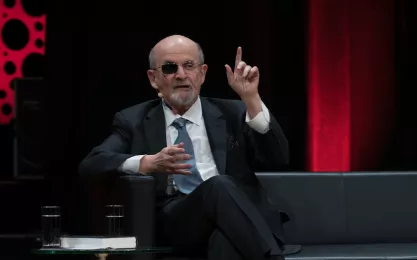
    Salman Rushdie speaks at the 75th Frankfurt Book Fair in October 2023

    Salman Rushdie, author of “The Satanic Verses” speaks at the 75th Frankfurt Book Fair on Oct. 21, 2023.

    In November, I noted that India’s ban on Salman Rushdie’s controversial bestseller “The Satanic Verses” was ending for an absurd reason: No one could find the decades-old order from customs authorities banning its import. 

    The book is now available in the country’s shops and appears to be a hit. One store manager said he was selling out of copies, despite the book’s higher-than-average cost. But not everyone is thrilled by its popularity. Groups calling for a reinstatement of the ban include the Forum Against Blasphemy and the All India Muslim Jamaat, whose president said, “No Muslim can tolerate seeing this hateful book on any bookstore shelf.”

    Source link

  • Where Canada lies in Global Trends with Alex Usher

    Where Canada lies in Global Trends with Alex Usher

    Happy New Year and Welcome back to the World of Higher Education Podcast! I’m Tiffany MacLennan, your host for the day which means our guest is the one and only, Alex Usher.

    In this episode, we’ll explore key global trends in higher education and then dive into how Canada fits—or doesn’t—within them. From widespread funding challenges to the politicization of universities and the evolving focus on vocational education, we’ll unpack how these issues play out on a global scale and what they mean for Canadian post-secondary sector. Let’s hear from Alex.


    The World of Higher Education Podcast
    Episode 3.15 | Where Canada lies in Global Trends with Alex UsherKelchen

    Transcript

    Tiffany MacLennan (TM): Alex, many of our guests this year discussed how their higher education systems are grappling with significant funding challenges. Can you tell me what some of the issues have been globally? Have there been any places that haven’t been struggling financially?

    Alex Usher (AU): I think in the developed world, you’ve got very similar issues: slow economic growth, price volatility, an aging demographic, and frankly, increasing skepticism about how higher education translates into economic growth. What you’ve seen everywhere, I think, is a weakening in the desire to invest in higher education—certainly compared to where we were 20 years ago. Back then, when global rankings started, everyone wanted to climb higher in the rankings. That reflected a belief by countries that investments in knowledge paid dividends, that more top universities meant a better economy. I just don’t think people believe that anymore. And until that belief comes back, it’s going to be tough to get public funding. Private funding—through higher tuition fees, for example—is still possible, and it works in some places, like China. But in much of Europe, where taxes are high, people feel like they’ve already paid their dues and don’t want to pay tuition fees. In North America, Australia, and the UK, there’s growing skepticism about whether higher education is delivering value for money. The combination of those two have put higher education in a difficult position.

    So, globally, there’s a gap. Universities and academics know what kind of product they’d like to offer the public, but nobody wants to pay for it—either privately or publicly. That gap, I’d say, is about 10-15% in most countries. India and Turkey being exceptions to the rule with recent increases.

    TM: That’s interesting. Are these funding challenges playing out in the same way in Canada, or are there unique factors at play here?

    AU: When it comes to public funding, I think Canada’s pretty much following the global trend. Maybe we’ve defunded institutions a bit more than some other countries, but that’s because we thought we’d found a workaround: international students. I always say public funding of public education is a public good, but foreign funding of public education? That’s a public great. If you can get another country’s middle class to subsidize your middle class’s education, why wouldn’t you do it?

    And that’s what Canada did. We thought that marketization would save us and in marketization, in our case, was largely about internationalization. For a decade, every time governments said, “We’re not investing this year,” institutions said, “That’s fine, we’ll bring in another 10,000 international students.” And it worked—for a while, a decade really. But we weren’t the only ones. The UK, Australia, and the Netherlands became similarly dependent on international students.

    And in all those countries, decades of nimbyism and a failure to build housing eventually hit a breaking point. Housing prices soared, and international students—fairly or unfairly—got blamed for it.

    In Canada, we’ve seen the federal government move to cut international immigration, including reducing the number of international students coming in. That’s caused rental prices to drop for the first time in years. But it’s also exposed the vulnerability of this funding model. You can’t rely on international students forever if the public doesn’t want to pay for higher education.

    TM: One of our past guests, Simon Marginson, has talked extensively about the growing polarization in higher education around the world. We’ve heard about this polarization in the U.S. with the Trump administration, in Russia, and in other places. Can you summarize what this polarization means and how it’s playing out globally?

    AU: I’m not convinced that polarization is the right way to frame it. What we’re really seeing is the increased politicization of higher education, a public good.

    For a long time, the idea was that publicly funded higher education would be responsive to the public. But if the public goes bananas—if they elect fascists—then higher education reflects that. It’s not polarization per se; it’s increased state control over higher education, regardless of how much governments are actually funding it.

    In Canada and the U.S., for instance, governments don’t fund post-secondary education to a huge extent, but they’re exerting more and more influence over it. Meanwhile, in places like China and Russia, we’re seeing autocratic governments tighten their grip on higher education—not because of polarization, but because they see academia as a threat. Putin has been in Russia for 25 years, there’s not a new polarization, he’s now choosing to exert greater state control.

    For years, there was this idea that higher education would democratize these countries. “Educate more people, and they’ll demand democracy.” But it didn’t happen. Instead, higher education made autocrats more aware of the potential for political dissent and using higher education to affect political change, and they’ve responded by cracking down on it.

    I think this trend is almost universal. Governments are less democratic overall because of short time frames. You see it in Canada, where provincial governments increasingly order universities to do things. And next week, Alma Maldonado is going to talk about how a left-wing populist government in Mexico is doing similar things. It’s not a left-right issue—it’s about state control.

    TM: Do you think Canada is more insulated from this politicization, or are we seeing divides within our own higher education system? It’s January 6th right now, Justin Trudeau stepped down about 4 hours ago and we’re going to go into an election. How does this affect the next handful of years in Canadian higher education?

    AU: We’re not insulated from it, but the pressures here are less extreme. For example, the Ontario government made a big deal about free speech on campus six years ago, but all it has amounted to is a two-page report every year from the Higher Education Quality Council of Ontario and nothing else happened. It’s performative but the conservatives are happy because they showed those liberal jerks where to get off, and that’s fine. The right is satisfied with a certain level of performativity.

    You’re seeing it right now in Alberta, there’s been some noise about shutting down equity, diversity, and inclusion (EDI) programs. Calgary and Alberta have rebranded EDI portfolios as “access, community, and inclusion,” but they’re not doing anything fundamentally different, even though they have different letters of the alphabet. Boards and universities know it’s worth being inclusive, and they’re not going to stop doing that.

    So you have to give conservative governments symbolic victories over universities, but they still want their kids to go there. That’s different from the U.S., where we’re seeing a real shift in how Republican families view higher education and how many children, male and female, want to attend university. Here, I think we’ll see culture war issues pop up, but I don’t think they’ll reach U.S. levels.

    TM: Another hot topic on the podcast this year has been the vocationalization of higher education—this push for more work-ready graduates. Is this part of a global trend?

    AU: I’m not actually sure this is a new trend. Since at least the 1960s, as we’ve moved from elite systems of higher education to mass and then universal systems, vocationalization has been part of that shift. Once higher education is no longer a luxury good, it becomes more about what people can get out of it.

    Massification has always been accompanied by vocationalization because most people want to know that what they’re studying will help them get ahead. That’s not new.

    You do hear rhetorical volleys about this, like “We need more plumbers and fewer philosophy grads.” I think Rick Scott might’ve been the one to say that. But you don’t actually see governments translating that rhetoric into significant program changes. What really drives programming shifts is student demand—what applicants choose to study. Which is very different from governments coming in and making these changes. For example, are students less interested in the humanities? Sure. But we still have higher humanities enrollments today than for 99% of human history. They’re not as high as they were in the 1980s or 1990s, but they’re still significant.

    In countries that are newer to mass or universal higher education—like in parts of Africa, Asia, and Latin America—you’re seeing more demand for vocational programs. That’s because it’s not just the upper class going to university anymore. Middle-class and lower-middle-class families want to make sure their investment in education leads to tangible returns, they don’t want to do it just because it’s a nice time.

    So, is vocationalization a global trend? Yes, but it’s been happening for decades. It’s not a new phenomenon.

    TM: In Canada, do you think recent changes to immigration and student work visa policies will shift the balance between vocational and liberal arts education?

    AU: Let me start with vocational education in Canada, because I think it’s one of the best things we do. Over the last 60 years, we’ve built a remarkable system—completely unplanned, of course. Canadians don’t really plan higher education; we stumble into things. But we ended up with a system that offers a lot of options for people who don’t want to go to university or pursue more theoretical studies.

    We’ve created pathways into the middle class through vocational education, which I think is the secret to Canadian egalitarianism. The community college system—whether it’s polytechnics, local community colleges, or CÉGEPs in Quebec—provides young people with opportunities that don’t exist in many countries. And they’re good options that lead to good jobs.

    The problem is, like universities, no one wants to pay for it. Governments don’t seem to understand that not training enough people is part of what’s causing bottlenecks in areas like building things and meeting labour needs. It’s wild—especially in Ontario, where the Ford government has no sense of how this all ties together.

    On the international student front, Canada’s college system has been attractive because it offers a pathway to permanent residency. That’s brought in a lot of international students, and some colleges have benefited immensely—especially those that took full advantage of this, and pigged out. They’ve become incredibly rich, and much of that money has gone into building infrastructure. But now, with changes to immigration and postgraduate work visa policies, we’re going to lose a lot of those students. It’s already starting to hurt.

    In Ontario, for example, international students were cross-subsidizing some of the most expensive programs, particularly in the trades. Without them, it’s going to be tough to keep some of those programs running. We’re going to see closures and cuts.

    Universities, on the other hand, won’t be as affected. Most international students at universities are in business, science, and engineering programs, which are less impacted by the policy changes. But for colleges, especially those that relied heavily on international students, the next few years are going to be very difficult. It’s carnage in the colleges and it’s bad for universities.

    TM: Last question. Which of the recent trends do you think will stick, and what do they mean for the future of Canadian higher education?

    AU: I think most of the trends we’re seeing now will stick around for a few years. I don’t foresee governments suddenly having a revelation and deciding, “We should fund post-secondary education more.” It just doesn’t seem likely. You might see some marginal changes, but they won’t be transformative.

    Take Alberta as an example. Over the next decade, they’re expecting a 30 to 40 percent increase in the youth population. You’d think that would lead to investments in higher education capacity—this is as predictable as it gets with demographics—but it’s not happening. It’s not that they can’t see it; they simply don’t want to spend the money.

    One way Canada stands out, though, is how limited our thinking has become when it comes to skills. The PIAAC data came out recently, but it barely made a ripple. Twenty years ago, governments would have looked at that data and asked, “What skills do our young people need to succeed in the world?” Now, when you mention skills, they only think about trades and healthcare. The broader idea of transversal skills—those that matter for the entire economy, not just specific occupations—has disappeared from the conversation.

    Our policy community in higher education seems to have been lobotomized over the past couple of decades. We’ve stopped focusing on the big issues. That said, when governments are lazy or inattentive, institutions sometimes have the space to innovate. I think we’ll see some exciting developments around teaching, AI, and microcredentials. Maybe not as much as some expect, but more than I would’ve thought a few years ago.

    I also expect shorter university programs to emerge—likely returning to three-year degrees, as we had in the 1980s and 1990s. With labour shortages becoming more acute, institutions won’t be able to keep students for four years anymore. This will take time—probably a decade or so—but I think it’s coming.

    In general, universities are going to need to focus more on labour market outcomes, skills, and efficiency. Students will likely appreciate this shift, especially if institutions start respecting their time more. But it’s going to require universities to think differently about money. For decades, the solution has been to find more revenue and throw it at problems. That’s no longer viable. Now, they’ll have to look at the cost side and find smarter, more efficient ways to operate.

    It’s going to lead to a very different kind of university system—one that’s more focused on cost-effectiveness, shorter programs, and labour market alignment. These changes could last five, maybe even ten years, but they’re coming, and they’re going to reshape the sector.

    TM: Alex, thanks for joining us this week. Join us next week, when Alex is back as host, and Alma Maldonado joins us again to give an update on the Mexican higher education system. See you then!

    *This podcast transcript was generated using an AI transcription service with limited editing. Please forgive any errors made through this service.


    Source link

  • Univ. of Arizona Global Campus faculty respond to professor

    Univ. of Arizona Global Campus faculty respond to professor

    In a recent article, “Dear Prospective UAGC Students: Stay Away,” a professor from the University of Arizona discourages students from attending the University of Arizona Global Campus (UAGC). Unfortunately, this article was based on the author’s perspective rather than on facts and thus lacked the academic rigor of factual data from credible sources. This opinion piece was a collection of baseless assumptions, completely overlooking the true mission of UAGC, its faculty, and the diverse students we proudly serve. Frankly, the article has no merit.

    There is power in knowledge and truth. As such, the article could have accurately depicted the realities of UAGC instead of relying on inaccurate critiques about educational quality, enrollment numbers, adjunct faculty, and alleged student dissatisfaction. To set the record straight, UAGC is committed to providing online higher education for non-traditional students, including working adults, military personnel, parents, and underserved communities. Our students juggle countless responsibilities, and UAGC offers the flexibility and support they need. UAGC is vital in making higher education accessible to those who need it most, breaking barriers that traditional institutions often ignore.

    Furthermore, UAGC is unwavering in its commitment to supporting students, staff, and faculty, ensuring consistent educational quality and professional growth. As we continue to evolve, we focus on transparent evolution and collaboration, learning from past oversights to create an environment where our students can improve employment opportunities. Our pursuit of high-quality education is not a destination but an ongoing journey to which UAGC is deeply committed. Like any reputable university, we conduct regular course and program reviews, embrace continuous improvement, and acknowledge areas for development as a perpetual process. This commitment to educational quality is a cornerstone of our institution, ensuring our students receive the best education possible and can be confident in our dedication to their success. 

    The UAGC faculty, the backbone of our institution, is growing increasingly weary of misleading and disparaging remarks against the university and the faculty. It is time to move forward constructively and collegially. In the name of higher education, we implore you to stop defaming our university, staff, faculty, and students. To that end, we welcome meeting and educating any skeptical faculty or staff on our university’s mission and approach to serving non-traditional adult learners. Above all, we’re eager to clear any misconceptions by providing accurate data, helping to ensure that your words align more closely with the truth moving forward.

    As we look to the future (Dr. Cabrera), the late President Franklin D. Roosevelt, who signed the unprecedented G.I. Bill into legislation, stated, “A smooth sea never made a skilled sailor” (Roosevelt, n.d.).”


    Yvonne M Lozano, Ph.D. UAGC Faculty Council Co-Chair
    Teresa Handy, Ph.D. UAGC Faculty Council Representative
    Deanna Lauer, UAGC Associate Faculty Council Representative
    Carl Marquez, UAGC Faculty Council Representative
    Cara Metz, Ph.D. UAGC Faculty Council Co-Chair
    Darla Branda, Ph.D. UAGC Program Chair

    Source link

  • How online learning can help tackle global injustices

    How online learning can help tackle global injustices

    by Sam Spiegel

    How can online learning programmes help tackle systemic global injustices with creative pedagogies? How can universities build effective educational environments and pedagogies to support critical thinking and vigorously challenge contemporary forms of racism, colonialism and inequity?

    These are some of the questions I have reflected on over the past almost 14 years of teaching at the University of Edinburgh. In 2011, I embarked with colleagues at the School of Social and Political Science to develop our school’s first fully online distance learning MSc postgraduate programmes, partnering with an interdisciplinary team spanning the three Colleges  of the University to co-create and co-teach the MSc in Global Challenges. Addressing global development, health and environmental inequalities, with case studies spanning an array of countries, this programme had students from all over the world. The insights and trajectories of our students have been deeply inspirational – many of our students have gone on to do PhDs, work with United Nations organisations, embassies, non-governmental and humanitarian organisations and work in other kinds of practitioner and research careers. In this blog I reflect on the philosophy of the teaching and learning approach we have nurtured – and associated critical conversations about pedagogy.

    We had support from a Principal’s Teaching Award (PTAS) to explore student learning experiences and reflect on our teaching practices, and in 2016 we published an article: ‘Decolonising online development studies? Emancipatory aspirations and critical reflections–a case study’. At the time, it was one of the few critical pedagogy studies to think through ‘international development’ teaching and the risks of replicating colonial logics in online learning modalities (and how to try to counter these). It proposed a critical framework for analysis that took into account barriers to social inclusivity – including the politics of language – that shaped participation dynamics in the programme. It also considered debates regarding critical development course content, rethinking possibilities for bridging counter-hegemonic development scholarship with practice-oriented approaches in a range of social contexts. Our analysis unpacked tensions in tackling intertwined institutional and pedagogic dilemmas for an agenda towards decolonising online development studies, positioning decolonisation as a necessarily unsettling and contested process that calls for greater self-reflexivity.

    Some years ago online learning initiatives were treated with suspicion as a technology craze that could not truly build effective communities of critical learners. This is no longer the case, generally speaking. Our online students have carved out sophisticated learning paths while interacting with ambitious courses – sometimes in live discussions and sometimes in asynchronous discussions that built incredible communities of practice. But there are important online learning-specific pedagogic points to keep in mind, as course instructors craft and adapt approaches to support individual and group learning.

    One is the risk of re-entrenching problematic dynamics of imperial knowledge production, even when intentions are to do exactly the opposite. There is a need to ensure that online learning platforms grapple with colonial legacies and tendencies – including biases that are easily replicable in virtual technology platforms. It is increasingly recognised that ‘decolonising’ is not simply a matter of ‘bringing in’ authors from Global South countries in reading lists. It is also a matter of ensuring that the underpinning pedagogies, assignments, and learning strategies themselves tackle systemic biases that have often shaped the field of ‘international development’ – and doing so from the outset. This may mean inviting students into at-times uncomfortable conversations about ways of understanding histories of dispossession, or ways of thinking about and governing societies; and ensuring that early course activities trouble assumptions – including about what ‘development’ is/means to different people and whose values are prioritised or overlooked. Some students might not normally read the writings of those who fought during liberation wars against colonialism, for example, but might find such readings different and transformative. There are a range of other possibilities, too, from changing the way that case studies are framed – for example, starting with stories of heavily oppressed peoples instead of starting with the technocratic logics of United Nations and government reports.

    Despite global talk of ‘decolonisation,’ there has been a tendency for globally renowned development academics from wealthy countries to dominate reading lists. We have tried in our courses to challenge this – and ensure that activity-focused coursework and online case studies challenge hegemonic assumptions in mainstream policy literature and development discourse. Some of the reflections on our pedagogy were also discussed in a wider influential review article by Shahjahan et al (2022) entitled ‘”Decolonizing” curriculum and pedagogy: A comparative review across disciplines and global higher education contexts’, which notes that ‘decolonization’ has been very differently treated by different educators. Our pedagogy work has also been part of a wider conversation in the scholarly literature on how “precautions need to be taken when incorporating non-Western knowledges into Western universities to avoid mishearing, misrepresenting, exploiting, and decontextualizing them” (Lau and Mendes, 2024; see also Spiegel et al, 2024).

    Relatedly, there is a need to be cautious of ideas about “transfer of knowledge” and instead to embrace values built on reciprocal sharing of knowledge in educational practices (see also Parmentier, 2023). Furthermore, attempts at decolonising development education requires attention to the link between learning strategy and wider institutional practices, including heeding inequities in admissions processes and language barriers in higher education. Our work in developing new online learning pedagogies is just part of the story; we have also been interacting closely with university admissions offices on strengthening approaches to make admissions more inclusive. This has included greater recognition of practitioner qualifications and also, significantly, some modifications in how English language testing requirements were addressed in some of the countries affected. This was especially important in contexts where applicants had demonstrable English language proof, from institutional and/or university experiences, but lived far from test centres and could not afford testing.

    Our article ‘Decolonising Online Development Studies?’ had a question mark in the title, alluding to the ambiguity of interpretation and the uncertainties that may play out over time. It was cited in other PTAS-awarded studies led by other staff members at UoE, supporting further analysis of specific techniques for building online learning communities (see Wood et al, 2021) How these ideas are to be taken forward is an ethically important conversation that relates to the very core of what education seeks to do, requiring ongoing attention to the interplay of values, philosophies, curricula and teaching techniques.

    Dr Sam Spiegel is the director of the Global Challenges MSc programme at the University of Edinburgh, where he serves as the Deputy Director of Research for Knowledge Exchange and Impact at the School of Social and Political Science. He is also a senior lecturer at the Centre of African Studies and has published extensively with colleagues in Zimbabwe and in other regions of the world on migration, displacement, borders, critical pedagogy and social change.

    Author: SRHE News Blog

    An international learned society, concerned with supporting research and researchers into Higher Education

    Source link

  • Global Networks Amplify Local Controversies – GlobalHigherEd

    Global Networks Amplify Local Controversies – GlobalHigherEd

    This entry is also available at Inside Higher Ed.

    ~~~~~~~~~

    What are the implications for universities and their governing boards/trustees/councils of becoming increasingly embedded in global networks?

    There are many implications, including the ability to be interconnected with flows of knowledgeable people (aka human capital), ideas, money, technologies, and so on. These global networks also ensure that international collaborative research and co-authorship occurs, a phenomenon explored on a number of levels in these fascinating reports:

    Pause for a moment, too, and explore this fascinating visualization by Olivier H. Beauchesne of indexable co-authorship between 2005-2009:

    What political boundaries, if any, do you notice in this empirically-based visualization of collaborative activity?

    It’s no surprise if you read the reports flagged above that governments and funding councils across the worlds are enamored with facilitating more international collaborative research. Why? It is perceived to enhance the quality of the knowledge produced, the ability to address key global challenges, and that collaborative output (e.g., articles, reports, books) can generate relatively higher interest and impacts.

    When I examine the above graphic, I think of all of my colleagues at the universities I’ve been educated and have worked at – the University of British Columbia, the University of Bristol, the National University of Singapore, Sciences Po (albeit just for one year), and the University of Wisconsin-Madison. At all of these universities I was (and am, in the case of UW-Madison) surrounded by colleagues who collaborate with colleagues in other universities, national and regional (e.g., European) research councils, firms, government agencies, international organizations, etc., all of which are scattered across the planet. Of course there is variation in researchers’ individual collaborative geographies, but there is evidence of a progressive deepening and extension of global networks, and this is backed up by bibliometric research on the basis of Thomson Reuters and Elsevier data.

    From a broader perspective, it’s worth noting that these globalizing networks are structurally supported by the operation of segmented academic labour markets that are increasingly supra-national in nature, the digitalization of research infrastructures (think of research databases, publication platforms, the Global Research Council, ORCID, etc.), university internationalization strategies, global production networks (value chains), open access online higher education media, etc.

    Now when things go well, universities benefit, as do the economies and societies (both territorialized) they are most closely associated with. Think, for example, of the myriad of ways the local, regional and indeed national economy benefited when one UW-Madison faculty member established the largest medical records company (Epic Systems) in the world, with offices in Verona WI, the Netherlands, and Singapore. When things go well, universities see increased attention from the higher ed media, and the business/economy-focused media (given the critically important role of universities in constructing vibrant knowledge-based economies). Said universities see higher positioning in world university rankings, increased flows of international fee-paying students, more diversity and competition in the make up of job applicant pools, more spin-off companies with genuinely global perspectives, greater competitiveness in extramural funding competitions, and so on.

    As with many phenomenon, the existence of vibrant global networks that run through universities is a double-edged sword. They have the capacity to, if things go poorly, propel near instantaneous and surprisingly durable echoes and reverberations that span out across global space. Information flows, like water – it can’t be suppressed. Epistemic communities care little for the complex causes of major budget cuts, the detailed factors underlying poor leadership, nor the diverse causes of governance ineptitude. These global epistemic communities, supported by mediatized services (e.g., via Twitter, Facebook, email), pay negligible if nil attention to detailed rationale and nuances of controversial policy shifts (e.g., about tenure and layoff provisions). These increasingly global epistemic communities treasure, above all, freedom of thought to produce innovative forms of knowledge in the search for truth, clear and evident autonomy from the interventive impulses of the state, church, society, and governance systems that are proactively supportive vs repressive/micro-management in inclination.

    Unfortunately, while higher education, as well as the associated knowledge economy, is going global, higher education politics with respect to budgets and university governance (at the board/council/trustee level) is at risk of regressing, of becoming more local, regional, hyper-politicized, and ideological. Think, for example, about the messy local/provincial politics shaping key aspects of the University of British Columbia‘s ongoing leadership/governance crisis, or an evident regional agenda to mess about (a ‘solution in search of a problem’?) with one of the foundational principles of academic freedom – tenure – that has built the University of Wisconsin (System), over a century plus, into what it is.

    Going global brings with it amazing opportunities. Going global is a necessary developmental agenda for universities that seek to excel and build resilience in the 21st century. Going global is an integral part of supporting of regional knowledge-based economic development strategies, something I learned much about via colleagues on an OECD mission. But, hand in hand with going global is a global eye on the local.

    Are those governing universities, and provincial/state higher education systems, as aware as they should be about the global networks that play a fundamental role in sustaining the vibrancy, effectiveness, and stature of their universities? If not, they should be, for local controversies and tensions are also simultaneously global in nature – they reverberate, at the speed of light, through global networks.

    Kris Olds

    Source link