Tag: good

  • It’s Time for Higher Education Leadership to Embrace ‘Good Trouble’

    It’s Time for Higher Education Leadership to Embrace ‘Good Trouble’

    Dr. Detris AdelabuOn the day of his death in 2020, an op-ed appeared in the New York Times, pre-written by Congressman John Lewis, urging Americans to stand up for justice and what he called “good trouble, necessary trouble.  Even in his death, Congressman Lewis fought for a more equitable America, where every individual recognizes their moral obligation to persist in the struggle for a more just nation.

    The recent Supreme Court decision striking down race-conscious admissions policies, followed by anti-equity legislation across more than 40 states and at the highest level of government, erodes decades of collective efforts to rectify a history of gross social and structural inequities. In higher education, these legislative attacks have led to a decline in Black and Latino student enrollment at selective colleges and universities and have prompted institutions to abandon their commitment to equity.  Universities such as Harvard, Rutgers, Northeastern, the University of Texas, and Louisiana State University are scrubbing their website of all references to diversity, equity, and inclusion, shuttering DEI offices and laying off staff, and scrutinizing the curriculum for any references to DEI.  If ever there was a time for “good trouble” in higher education, that time is now.  But can higher education leadership muster the political will to stand firm for equity?

    Institutional Responsibility and Moral Leadership

    Legislative setbacks to equity beckon colleges and universities to take bold and creative strategies to reaffirm their commitment to equitable access to resources and opportunities in education. Institutions can, for example, place greater emphasis on partnering with under-resourced high schools and expand outreach to marginalized communities to signal their commitment to equity. While such measures are imperfect, they signal a refusal to yield to a regressive interpretation of equity and justice.

    Higher education institutions can leverage their platforms to articulate their mission and commitment to equity beyond their campuses by working together to:

    1. Form Multi-Institutional Alliances to Challenge Anti-DEI Legislation: Colleges and universities can form alliances on a national scale to amplify their collective advocacy against policies that restrict access to resources and opportunities. Sharing strategies and best practices can strengthen collective efforts to promote equity. Dr. Felicity CrawfordDr. Felicity Crawford

    2. Invest in Community Partnerships: By deepening relationships with K-12 schools, particularly those in strategically under-resourced areas, institutions can create robust pathways for diverse talent. Mentorship programs, financial support, and academic preparation initiatives can help bridge gaps in access and opportunity.
    3. Prioritize Transparency and Accountability: By publishing detailed reports on their equity and diversity metrics, institutions can enhance accountability and demonstrate their progress towards equity.

    Upholding the Educational Mission of Higher Education

    The mission of higher education extends beyond the transmission of knowledge. It encompasses the cultivation of informed, engaged, and socially responsible citizens. Failing to prioritize equity undermines this mission, leaving graduates ill-equipped to navigate the complexities of a global society. Institutions that acquiesce to the erosion of equity risk not only their reputations but also their relevance in a rapidly changing world.

    Resisting harmful laws and policies that oppose equity is not without risks. Institutions may face political backlash, reduced funding, or legal challenges. However, the cost of inaction—both in terms of societal impact and institutional integrity—is far greater. By taking a principled stand, colleges and universities can position themselves on the right side of history, inspiring future generations to do the same. Equity, when implemented with fidelity, fosters diversity.

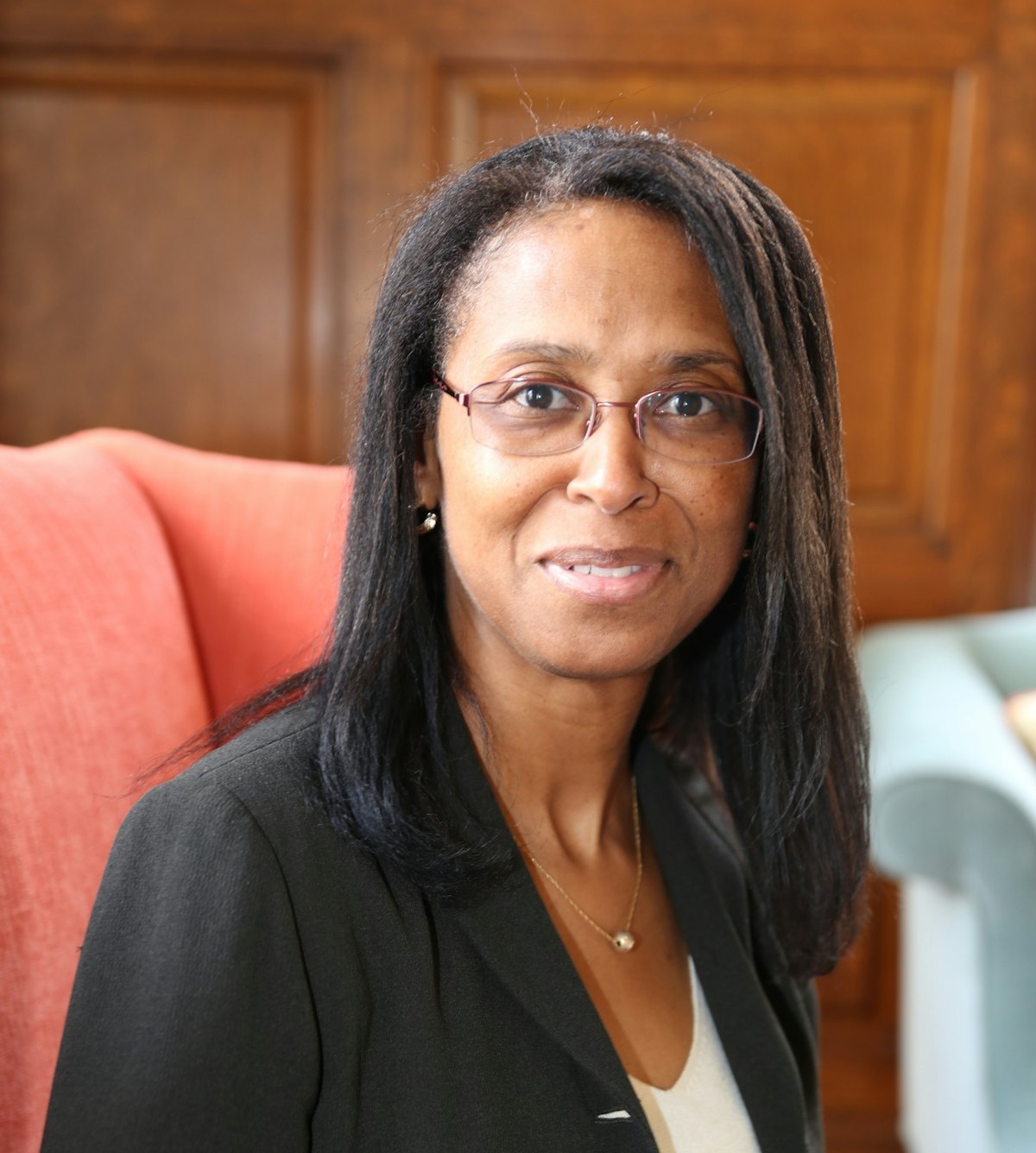
    The current sociopolitical landscape presents a defining moment for higher education. Gross social and structural inequities will not resolve themselves. Left unattended, they will continue to generate detrimental social and economic consequences for American society, with effects that can span generations. By developing innovative strategies, advocating for systemic change, and upholding their educational missions, institutions can resist attacks on progress and continue to serve as beacons of opportunity and justice. In doing so, they not only honor their moral and societal obligations but also preserve the transformative power of education for generations to come.Dr. Linda Banks-SantilliDr. Linda Banks-Santilli
    This moment calls for moral leadership in higher education that not only resists the immediate consequences of anti-DEI legislation but also envisions a more just and inclusive future. This moment calls for good trouble. To echo the words of Dr. Martin Luther King, Jr.:

    “In this unfolding conundrum of life and history, there is such a thing as being too late. This is no time for apathy or complacency. This is a time for vigorous and positive action.”

    Dr. Detris Honora Adelabu is a Clinical Professor at the Boston University Wheelock College of Education and Human Development

    Dr. Felicity A. Crawford is a Clinical Associate Professor at the Boston University Wheelock College of Education and Human Development

    Dr. Linda Banks-Santilli is a Clinical Associate Professor at the Boston University Wheelock College of Education and Human Development

    Source link

  • WEEKEND READING: Matt Goodwin’s ‘Bad Education’ isn’t good scholarship, but does that matter?

    WEEKEND READING: Matt Goodwin’s ‘Bad Education’ isn’t good scholarship, but does that matter?

    • Steven Jones is Professor of Higher Education at the University of Manchester and his latest book is Universities Under Fire (2022). This review of Bad Education by Matt Goodwin has been written in a personal capacity.
    • HEPI’s other review of the Matt Goodwin’s book can be accessed here.

    In Bad Education, Matt Goodwin makes the argument that Western universities have moved ‘sharply and radically to the left’ (p.51) over the last six decades, to the extent that diversity is now deemed more important than merit. According to Goodwin, a woke orthodoxy has gripped the sector: free speech is stifled; non-authorised viewpoints are unwanted; and social justice trumps the pursuit of truth. Some minorities flourish within this culture, but other ‘political’ minorities – like the one to which Goodwin claims membership – are structurally disadvantaged. 

    To stand this argument up, Goodwin needs the reader to accept two fundamental premises. The first is that the author’s sense of victimhood is real, while others are imaginary or exaggerated. Goodwin achieves this by attributing his every professional setback – from having journal articles and funding bids declined to being overlooked for invited talks (p.47) – to his whiteness, his maleness, or his political positions, such as his refusal to participate in ‘cult-like worship of the EU on campus’ (p.44). No other explanation is countenanced. 

    The second premise is that the real power in universities is cultural, not economic, and therefore held by diversity champions and other woke activists. The evidence Goodwin offers here is underwhelming. Where academic scholarship is cited, the sources are mostly US-based, and the author shows no curiosity about the think-tanks and lobby groups that funded the surveys in which he places his faith. Critical higher educational research is studiously avoided, though Goodwin does turn to Elon Musk for a quote about the ‘woke mind virus’ (p.104). In places, Bad Education reads as a checklist of debunked myths and personal memoirs (‘as I’ve seen first-hand’ is a familiar clause). Yet in the final chapter, Goodwin addresses the reader directly to assert: ‘I’ve bombarded you at times with statistics and research because I wanted you to read it for yourself and make up your own mind’ (p.198). 

    I tried hard to make up my own mind, but it’s difficult to be persuaded by Goodwin’s case against universities when the bulk of empirical data point in an opposite direction. If recruitment practices are so diversity conscious, why were there only 25 Black British female professors in the UK as recently as 2019? If ‘reverse racism’ is such a problem, why did the awarding gap between White and Black students achieving high degrees stand at 18.4% in 2021? In my experience, and according to my research, minority groups are far from over-represented in senior levels of university management and governance, and board cultures tend to be driven by corporate principles, not woke ideologies. As for no-platforming, fewer than 0.8 per cent of university events or speaker invitations were cancelled in 2021-22. In other words, the truths that Goodwin is so boldly willing to speak may be his truths, but they are not universal.

    Among the fellow marginalised white men willing to support Goodwin is the University of Buckingham’s Eric Kaufmann, who is quoted extensively, and whose back-cover endorsement describes Bad Education as ‘deeply personal and impeccably researched.’ It’s certainly deeply personal. Take Goodwin’s indignation towards a lecturer who unfriended some Conservative voters on Facebook after the 2015 UK general election (p.89). The reader is not told what this incident is supposed to signify, let alone why Goodwin’s cherished free speech principles appear not to extend to academics’ private social media accounts.

    That’s not to say that the sector is always operating to the highest ethical standards. Goodwin is on firmest ground when highlighting human rights violations in China (p.90), and calling out universities for turning a blind eye. But rather than take this argument to its logical conclusion – by critiquing a fee model that leaves sectors reliant on income from overseas students – Goodwin pivots back into anger and anecdote, rebuking universities for being defensive about their historic links with the slave trade (p.91) and sharing stories about junior colleagues too scared to disclose their pro-Brexit leanings (p.94).

    Despite Goodwin’s stated aim to ‘push back against authoritarianism’ (p.208), there are echoes of Donald Trump’s playbook throughout Bad Education. The author’s anti-diversity bombast recalls the President’s recent claim that a fatal air crash near Washington DC was connected to DEI programmes in federal government. It’s not entirely clear to which level of institutional bureaucracy Goodwin is referring when he imagines a ‘hyper-political and highly activist managerial blob’ (p.157), but the language is redolent of that being deployed in the US to justify a purge of federal bureaucrats. According to Goodwin, this ‘managerial blob’ is defined by an insistence on rainbow lanyards and flags on campus, among other things. This is not a characterisation of senior leaders that most university staff would recognise. Could it be that the author is so distracted by empty performative gestures that he fails to see where power is really located?

    Goodwin has now left academia, a story he tells in most chapters, steadily elevating it to the level of Shakespearean tragedy: ‘my professorship – everything I had ever wanted, everything I had worked for – was over’ (p.195). At a time when 10,000 jobs are on the line at UK universities, such self-indulgence is unfortunate. Goodwin’s contrast between the ‘luxury beliefs’ of academics and the ‘real world’ he claims to inhabit (p.78) encapsulates what makes Bad Education read like a ‘prolonged gripe,’ as another reviewer put it. Paradoxically, Goodwin now enjoys a range of high-profile platforms from which to air his grievances about being no-platformed, regularly appearing on television to blame wokeism for various social ills. Why is it that only ‘cancelled’ academics seem to have media agents?

    Bad Education builds towards what Goodwin calls a ‘manifesto’ for universities (pp.217-19) that want to have ‘good, not bad, education’ (p.217). It’s a simplistic way to wrap up any book, comprising a bullet-pointed list of the same few complaints expressed in slightly different terms. Those of us in higher education will quickly recognise Bad Education’s distortions: universities haven’t lurched radically left and there’s no woke coup. But does that matter? Are we the target readership? Or is the book speaking to external audiences? What if a review like this merely confirms what Goodwin and his fellow academic outcasts have been saying all along?

    Since accepting the terms of the market, English universities have struggled to articulate their role in society. Academic expertise has been devalued and the status of higher education as a public good compromised, with universities increasingly embroiled in unwinnable culture wars. These are perfect conditions for someone like Goodwin to ‘blow up’ his own career (p.4), break the ‘secret code of silence’ (p.3) and position himself as the fearless ‘rogue professor’ (p.16). In such ways, important debates become framed by individuals with the shallowest insights but the deepest grudges. Bad Education does a passable job of confirming suspicions about what really goes on inside a secretive and often aloof sector, guiding its readers further down an anti-university, anti-expert rabbit hole. If we continue to leave vacuums in the discourse, then diversity-blaming narratives like Goodwin’s will continue to fill them.

    Source link

  • Good News About the FAFSA

    Good News About the FAFSA

    Millions of current and prospective college students were let down last year when the federal rollout of the new FAFSA form was badly bungled and delayed for months. The fallout from the resulting chaos and uncertainty was well-documented and widespread, including a drop in over 5 percent in first-year enrollment for fall 2024 linked at least in part to the FAFSA problems.

    But now, there is some good news for students, their families, and the institutions working hard to ensure that low- and middle-income students have a path to higher education.

    While we have been harsh critics of the Department of Education’s failed FAFSA rollout, it is important to recognize when they’ve done well. The department committed to making the new FAFSA form work as intended for the next academic year—and they not only have accomplished that, but they have also done it faster than promised, and faster than many expected.

    Education Secretary Miguel Cardona announced Nov. 21 that after four successful rounds of beta testing, the 2025-26 FAFSA form is now available to all students and families. While we would have preferred for the 2025-26 FAFSA to have been available on Oct.1, we applaud that the department’s announcement came 10 days ahead of the promised Dec. 1 date, and the system appears to be performing as expected. In addition, this fully opens the gateway to the other benefits of the new FAFSA form, including allowing hundreds of thousands more individuals to access Pell Grants, the cornerstone of college affordability for so many students.

    This success is mirrored by a rare bipartisan moment in Congress that underscores how important it is to get federal student financial aid determinations to low-income students as early as possible. During the lame-duck session of Congress–and despite the partisan polarization and acrimony of the election season—the House and Senate approved and sent to President Biden legislation  aimed at streamlining the application process for federal student aid by making Oct. 1 the official FAFSA launch date each year.

    ACE and other higher education associations identified how critical this change in date was, and Congress listened. The FAFSA Deadline Act, introduced earlier this year, gives students and families more time to make crucial financial decisions and institutions adequate time to provide clear and transparent aid offers. We pushed Congress to move the legislation as quickly as possible, and lawmakers acted quickly—and in a bipartisan manner—to approve it.

    Passage of this legislation is a vital step toward improving access to financial aid, particularly for low-income students. Ensuring a properly functioning FAFSA form is another.

    There has been much consternation, rightfully so, about the flawed FAFSA roll out, and the consequences remain serious. All of us—the government and colleges and universities—will have to work hard to bring back the students who were not able to attend college this year because the financial aid system failed them.

    Campus leaders can do their part by ensuring that current and prospective students are well informed about the FAFSA and how to best navigate the new form and process. In its Nov. 21 announcement about the release of the 2025-26 FAFSA, the department also included an array of resources that institutions can share with students and their families and college counselors.

    In a difficult political climate, it is great to see both the legislative and executive branches of the federal government working in tandem to better support low- and middle-income students. These twin successes are extremely important and long overdue. We’ll keep urging policymakers to build on this progress in 2025, and we know that our institutions will do their part as well.


    If you have any questions or comments about this blog post, please contact us.

    Source link

  • Reflections from the Higher Education for Good Book Release Celebration – Teaching in Higher Ed

    Reflections from the Higher Education for Good Book Release Celebration – Teaching in Higher Ed

    What a way to start my week!

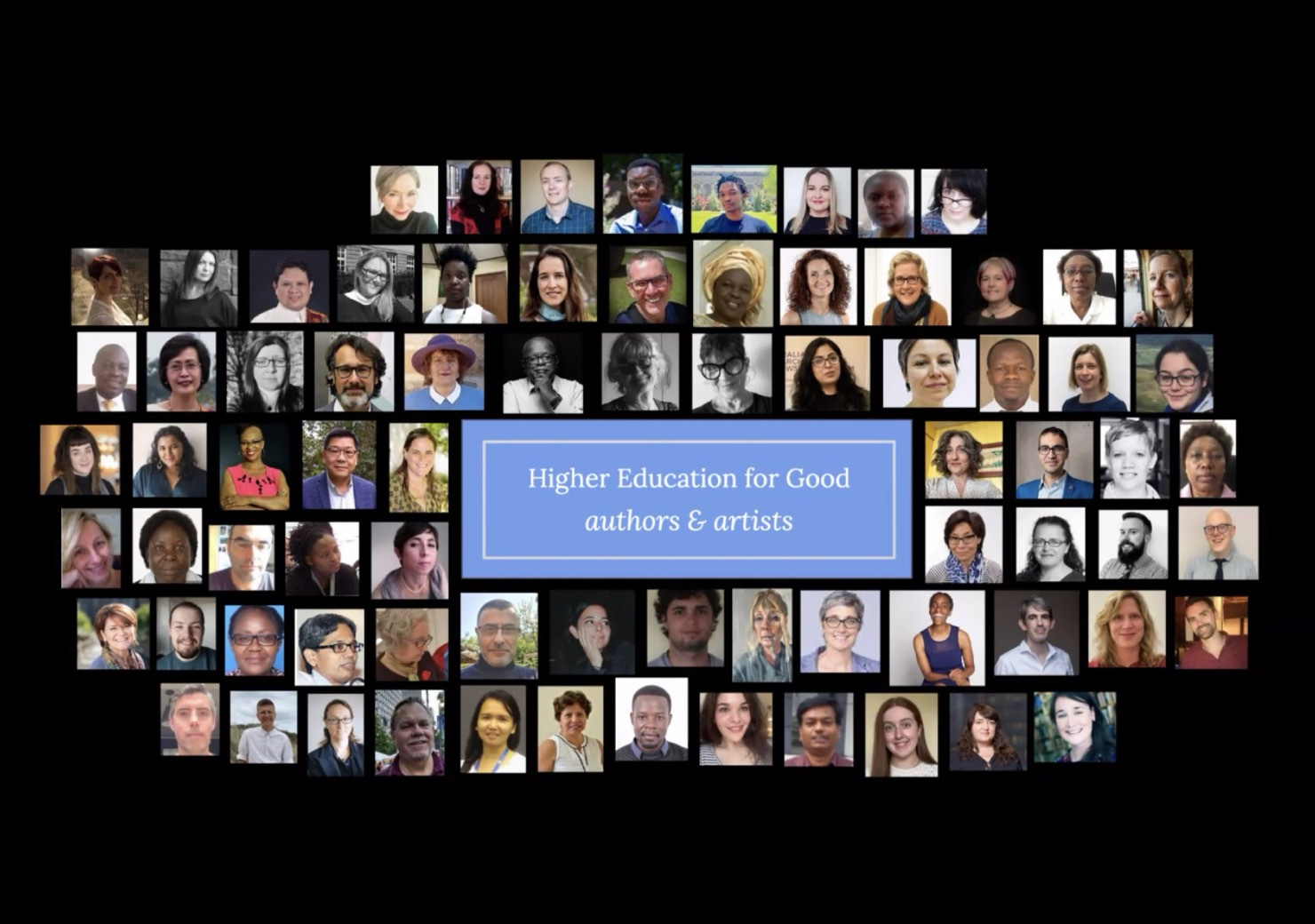
    November 20, 2023, I attended an online launch celebration event for a magnificent project. The book Higher Education for Good: Teaching and Learning Futures brought together 71 authors around the globe to create 27 chapters, as well as multiple pieces of artwork and poetry. Editors Laura Czerniewicz and Catherine Cronin shared their reflections of writing the book and invited chapter authors, and Larry Onokpite, the book’s editor, to celebrate the release and opportunities for collaboration. In total, the work represents contributions from 29 countries from six continents. Laura Czerniewicz was invited to talk about the book by the Academy of Science of South Africa (ASSAf), where she describes the values of inclusion woven throughout this project.

    Higher Ed for Good Aims

    At Monday’s book launch, Laura shared how the authors aimed to write about the tenants that were directed toward the greater aims of the book. Catherine described the call for authors to engage in this project, such that the resulting collection would help people:

    • Acknowledge despair
    • Engage in resistance
    • Imagine alternative futures and…
    • Foster hope and courage

    Laura stressed the way articulating what we stand for and not simply what we are against is essential in facilitating systemic change. Quoting Ruha Benjamin, Laura described ways to courageously imagine the future:

    Only by shifting our imagination, can we begin to think of a world that is more egalitarian, less extractive, and more habitable for everyone not just a small elite.

    It was wonderful to see the community who showed up to help celebrate this magnificent accomplishment. Toward the end of the conversations, someone asked about what might be next for this movement. Frances Bell responded by joking that she wasn’t sure she was necessarily going to answer the question, as she is prone to do. Instead, she described her use of ‘a slow ontology,’ a phrase which quickly resonated with me, even thought I didn’t know exactly what it meant.

    In some brief searching, I discovered a bit more about slow ontology. My novice understanding is that slow ontology asks the question of what lives might look like, were we to live them slowly and resist the socialization of speed as productivity and self-worth. Ulmer offers a look at a slow ontology for writing, while Mol uses slowness to analyze archeological artifacts. One piece I absolutely want to revisit is Mark Carrigan’s Beyond fast and slow: temporal ontology in critical higher education scholarship

    Next Steps

    I’ll have the honor, soon, of interviewing Laura and Catherine for the Teaching in Higher Ed podcast. I’m ~30% through Higher Education for Good and am glad I don’t have to rush through the reading too quickly. I mentioned as a few of us remained online together after the book release celebration that reading Higher Education for Good and Dave Cormier’s forthcoming Learning in a Time of Abundance has been an interesting juxtaposition. Rissa Sorensen-Unruh described a similar serendipity of reading Belonging, by Geoffrey Cohen at the same time as Rebecca Pope-Ruark’s Unraveling Faculty Burnout. After skimming the book description of Belonging, I instantly bought it… adding it to the quite-long digital to-read stack. I suppose that while I struggle with slowing down, that challenge doesn’t apply when it comes to my reading practice.

    Resources:

    Source link

  • When is an extracurricular good enough? Part 2 – Four Years Later!

    When is an extracurricular good enough? Part 2 – Four Years Later!

    By Tim Parros

    I wrote an article four years ago about the importance of extracurriculars in the college admission process (read it here)

    Interestingly enough, it still rings true and is even more critical going into the 2023/2024 admission cycle. As a result, we see our students reaching for many colleges that take a deep look into the extracurriculars; after all, colleges want students to better their communities, and students with experience in this are very attractive to them.

    The admissions landscape continues to evolve, and schools seek students with more than perfect test scores and top grades. There are so many students with perfect scores and outstanding academics, which is still essential, but most schools take a holistic approach to the admissions process. They want students with diverse interests and backgrounds who will be a good fit for the school outside of academics. Your extracurriculars help them determine if you will be equipped to make your mark at their college in a positive and influential way.

    So why is this important again?

    Because it tells admissions more about you as a person. By looking at your activities in your free time, they learn about your interests and the key qualities you possess.

    Essentially, your extracurriculars are one of the application components (along with your college essays and letters of recommendation) that they feel determines the characteristics that you will add to their student body. Different schools may value different traits, but they all value leadership, social responsibility, commitment, drive, and determination. Many other traits will be apparent to them as they review your application. It is also true that extracurriculars make for some great essays when it comes time to apply to college.

    Generally speaking, the quality and the duration of your commitment to your extracurricular activity seem more important than how many you have on your list. The commitment you show in your extracurriculars for college over a more extended period is more impactful than being a member of many clubs for a short period. Even more important in this category is showing them what you learned, how you’ve grown, and how you will interact with their student body.

    When we have students considering some of the top colleges in the US, we start early in helping them identify extracurriculars that they are passionate about. This is critical. I will end with the same advice from 4 years ago.

    Here are some questions to ask yourself about your activities:

    1. Does it benefit your community?

    2. Could it lead to any awards?

    3. Is it possible to write about it and have it published?

    As we discuss extracurricular activities with our students, we try to get them to think outside the box and go beyond with their peers are doing. We’re not encouraging students to give up activities they enjoy, but we hope that asking these questions will spark something and stretch the student in what activities they spend their time on. 

    We want to discuss this and explore how we can help you in your college planning journey.

    Source link

  • Book on Writing Good Learning Outcomes – Sijen

    Book on Writing Good Learning Outcomes – Sijen

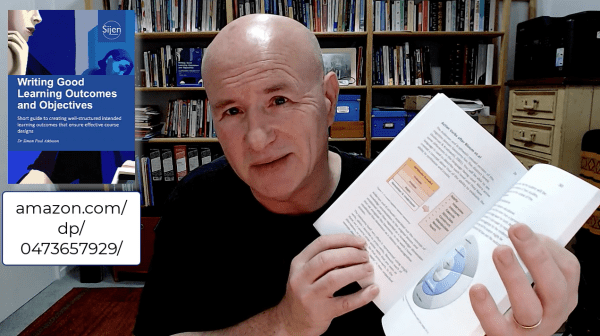
    Introducing a short guide entitled: “Writing Good Learning Outcomes and Objectives”, aimed at enhancing the learner experience through effective course design. Available at https://amazon.com/dp/0473657929

    The book has sections on the function and purpose of intended learning outcomes as well as guidance on how to write them with validation in mind. Sections explore the use of different educational taxonomies as well as some things to avoid, and the importance of context. There is also a section on ensuring your intended learning outcomes are assessable. The final section deals with how you might go about designing an entire course structure based on well-structured outcomes, breaking these outcomes down into session-level objectives that are not going to be assessed.

    #ad #education #highereducation #learningdesign #coursedesign #learningoutcomes #instructionaldesign


    Source link