Tag: Governance

  • Higher education governance needs the conflict between academic and business imperatives to be successful

    Higher education governance needs the conflict between academic and business imperatives to be successful

    The sector’s financial challenges have shone a spotlight on governance effectiveness in higher education in England.

    When the incoming government tasked the Office for Students (OfS) with directing more of its energy towards financial sustainability in the summer of 2024, it was only a matter of months before director of regulation Philippa Pickford put forward the view that the sector needed “a conversation” about governance, specifically about how robustly boards had tested some of the financial projections they had been prepared to sign off.

    That signal of concern about governance has clearly manifested in the corridors of the Department for Education (DfE), if these words from the Secretary of State to the Commons Education Committee in May are anything to go by:

    The government is clear that there needs to be a focus on and improvement in providers’ governance. Planning and strategy development within higher education providers, including financial planning, should be supported by the highest standards of governance to ensure realistic planning, robust challenge and the development of sustainable business models.

    The sector has not been unresponsive to these cues – Advance HE in partnership with the wider sector is (taking the conversation metaphor literally) curating a “big conversation” about governance and the Committee of University Chairs (CUC) has pledged to review the higher education code of governance – which for a large number of institutions acts as a reference document for compliance with OfS’ conditions of registration on governance.

    The implicit underpinning premise from OfS and DfE is fairly stark: the government is disavowing any responsibility it might have to come up with a financial settlement that would shore up higher education finances while retaining the current delivery model; nor is it especially keen to have to deal with institutional bailouts arising from institutional inability to manage the changed funding landscape. The strong signal is that it is up to higher education institutions to work out how to survive in this environment – and if boards are not up to the task of finding the answers then it’s the boards that need reforming.

    Business acumen

    I read this communication as part of a discursive stand off between government and the sector in which the lines between the role of government and role of individual institutions in securing the future of higher education is contested. Within that context, the validity of the implied criticism – that boards are insufficiently businesslike and strategic – needs to be interrogated.

    There was a fascinating piece on The Critic last week by University of Buckingham academic Terence Kealey bemoaning the rise of the managerialist board. In Kealey’s analysis, when the balance of power in governance tilted towards the Senate – the governing body of academics – the institution thrived, as evidenced by strong performance in NSS and a financial surplus. But when the Council flexed its muscles, the university faltered, dropping in the league tables and spending more than it brought in.

    Kealey’s core argument – that academics are best placed to steward the core higher education mission of excellent teaching and research – picks up a longer standing critique of higher education governance that perceives organisational strategic objectives as articulated by institutional boards and executive teams as frequently in opposition to the academic endeavour, being far too concerned with financial efficiency, performance management, reputation/league tables, and capturing market share. Echoes of aspects of this critique appear in the recent Council for the Defence of British Universities’ proposed code of ethical university governance, which urges boards to adhere to high standards of transparent, principled, and public-spirited conduct.

    At the other end of the spectrum, the criticism of higher education governance – including sometimes from governors themselves – is that boards are insufficiently businesslike, fail to articulate long-term strategic objectives that will secure the institution’s sustainability, and have limited entrepreneurial spirit that would allow the institution to adapt to adverse headwinds. A more moderate version of this criticism argues that it is very difficult to convene the diverse skillset that could allow for effective board oversight of the wide range of activities that higher education institutions do.

    Thinking about activities like academic and knowledge exchange partnerships, the creation of new campuses or the erection of new buildings, or civic and international engagement, all of these have the the academic endeavour at their core but are mostly about deploying the knowledge and reputational assets of the institution to generate additional value – and they each carry complicated associated legal and regulatory compliance expectations and reputational risk. It’s not clear that developing those strategies and managing those risks and expectations coheres well with academic professional practice – though some academics will obviously have a keen interest and want to develop knowledge in these areas.

    The worst of both

    There has always been an expectation that higher education institutions need to be simultaneously academically excellent and sufficiently business savvy to make sure the institution remains financially stable. Both academic and institutional governance can fail – the latter often more spectacularly and with greater reputational impact – but the impact of academic governance failure is arguably greater overall both on the long term health of the institution and on the lives of the staff and students affected.

    So you could argue that it’s odd and/or problematic that the sector has witnessed the erosion of the power of senates and academic boards as part of a wider set of trends towards a more executive style of higher education leadership, the rise of metrics, league tables and more managerial approaches to institutional performance, the intensification of regulatory expectations, and the steady withdrawal of direct public funding from the sector. It’s telling that under the current regulatory regime in England institutional boards have had to master new expectations of oversight of academic quality, on the presumption that all institutional accountability should sit in one place, rather than being distributed – suggesting that quality is now seen as part of the wider business imperative rather than a counterweight to it.

    But simply pivoting the balance of power back to senates and the academic community doesn’t necessarily address the problem. It’s possible, I suppose, to imagine a relatively benign or at least predictable funding and regulatory environment in which some of the pressing strategic questions about institutional size and shape, partnerships, or external engagement are answered or moot, and in which knowledge stewardship, academic excellence, and (one would hope) student learning experience are the primary purpose of higher education governance.

    But even if that environment was plausible – I’m not sure it has ever existed – it doesn’t really address the more existential contemporary questions that governments and the public seem to be putting to higher education: how does the country see, and experience the value of all this knowledge stewardship and academic excellence? To realise that value and make it visible in more than an ad hoc way – to be institutionally accountable for the systematic manifestation of public value from academic knowledge – requires knowledge and professional practice beyond individual teaching and research excellence. And, more prosaically but equally importantly, buildings, infrastructure, and systems that create the environment for effective knowledge stewardship. Without a functioning institution there can be no knowledge stewardship.

    There’s a reason, in other words, even if you strip out all the neoliberal value propositions from higher education governance, why higher education institutions need a “business” arm and associated governance structures. And that’s before you confront the actual reality of the current situation where the funding and regulatory environment is neither benign nor predictable – and the need for effective external relationship-building and systematic collaboration is greater than it has been in decades.

    On the other hand, some of the business decisions that are made to secure financial sustainability or long term institutional success put the academic imperative at risk. Rapid growth in student numbers, redundancy programmes, departmental or services cuts or new strategic partnerships can compromise quality, as we have seen in a number of recent cases. There may be mitigations or the impact may be worth the reward, but there can be no meaningful strategic decision without being able to weigh up both.

    Yet where we have ended up, I fear, is in the worst of both worlds – institutional boards that are neither sufficiently academically robust to have a grip of academic excellence nor sufficiently strategic and entrepreneurial to ensure institutions are able to thrive in the current higher education landscape. This is no shade to the immense talent and knowledge of the individuals who take up roles as higher education governors – it is a structural critique.

    Creative tension

    Where I end up is with the question – if there is really an inbuilt tension between the academic and business imperatives of higher education institutions, what would it look like for that tension to be a productive one in higher education governance rather than a source of toxicity?

    I suspect – though I’ve not (yet) asked – many vice chancellors and their executive teams would argue that in their individual experience and team skillset they manifest both academic and business imperatives – that in fact, it is their job to reconcile these two aspects of institutional leadership in their daily practice, decisions, and communications.

    Yet if that reconciliation of two competing imperatives is the job of leadership, arguably it’s not going all that well. While this experience is by no means universal, it’s clear that at times both academic and professional staff can feel sidelined and disempowered in the tug of war for day to day resource – but also at a deeper level for a recognition of their purpose and contribution to the higher education endeavour. Each can feel subordinated to the other in the institutional hierarchy – yet while there are outliers on both sides I’d put money on the majority of individuals on both sides accepting and embracing the value and contribution of the other. Yet at the same time the real tensions and contradictions that manifest in the pursuit of the two parallel imperatives are deeply felt by staff yet not always acknowledged by leadership.

    What if the job of leadership and boards of governors was not to seek to reconcile academic and business imperatives, but to actively manage the conflicts that arise at times? Where strategic questions arise related to either opportunities or risks, boards need to understand the perspective of both “sides” before being able to judge whether the executive team’s decisions are appropriate. And for institutional staff (and students, to the extent they have a role in institutional governance) there needs to be confidence that the governors have the skills and understanding of the value and importance of both imperatives and the relationship between them – so that there is the trust that decisions have been made in the most effective and transparent way possible.

    There might even be a case for institutions to convene internal business strategy boards as part of the governance structure as a counterweight to academic boards – actively empowering both equally as sites of knowledge, expertise and influence – and potentially reducing the strategic burden on institutional boards through creating a more transparent and maybe even more democratic or at least representative forum for internal governance of strategic business development.

    It seems likely that the next academic year will see the higher education sector in England move on from “conversations” about governance into something more systematically developmental, whether that’s via the mechanism of the CUC’s review of the Higher Education Code of Governance, or a policy agenda from one of the sector bodies. This is one of those areas where the sector can help itself with government by taking a lead on reform.

    Yet there’s a risk that the financial pressures on the sector lead to too close a focus on the strategic business imperatives and not enough on the academic excellence imperative. Institutions need both to be successful, and boards and executive teams – as well as any reviewing organisation – need to give deep consideration to how those can – even if not always peacefully – coexist.

    Source link

  • Podcast: Governance, apprenticeships, trends | Wonkhe

    Podcast: Governance, apprenticeships, trends | Wonkhe

    This week on the podcast we examine the OfS penalty imposed on Leeds Trinity over subcontractual partnerships oversight. What does the £115,000 fine and a new proposed code of “ethical” governance tell us about decision-making at the top?

    Plus we discuss the government’s decision to axe level 7 apprenticeships from levy funding, and explore incoming OfS chair Edward Peck’s ten trends shaping the future of campus universities.

    With Alex Stanley, Vice President for Higher Education at the National Union of Students, Pam Macpherson Barrett, Head of Policy and Regulation at the University of Leeds, David Kernohan, Associate Editor at Wonkhe and presented by Mark Leach, Editor-in-Chief at Wonkhe.

    Read more

    Poor quality teaching and student outcomes. But where?

    The new OfS chair identifies ten trends

    A code of ethical university governance is overdue

    Should governance reform be horizontal or vertical?


    Source link

  • A code of ethical university governance is overdue

    A code of ethical university governance is overdue

    It’s a thankless job being a university governor at the best of times.

    The structures and hierarchies – established over decades, even centuries – feel impenetrable.

    You’re overwhelmed with papers and reading, never completely sure what’s going on at meetings.

    Statutes and ordinances, rules and regulations, sub-committees and working groups. And all this you’re doing for free?

    But during precarious times for the sector, the job gets even harder. Income lags further behind expenditure. The funding model seems loaded against you.

    Doubt sets in. Have you really been holding institutional managers robustly to account? Are those course closures and staff redundancies really unavoidable?

    Behind the seens

    Governing bodies are the highest authorities in most institutions. Structures vary from one university to the next, as does the language of governance.

    But in England, all boards are legally accountable to the sector regulator, the Office for Students, and hold significant powers, up to and including the authority to remove the vice chancellor if they so choose.

    However, governing bodies remain a reticent and mostly unseen grouping. Students and staff may occasionally glimpse members at award ceremonies or public events, but closer forms of engagement tend to be discouraged (or carefully managed).

    On policies that reshaped the sector in recent decades, like the 2012 fee rise, governors had little to say. During Covid, one commentator was moved to ask if anyone had seen the governing body.

    Another had previously dismissed governors as “a small cadre talking amongst themselves.” Until a media exposé in 2018, almost all UK vice chancellors were members of the sub-committee that made recommendations on their own pay.

    A 2019 investigation found “significant and systemic” failings in one governing body.

    Yet many individual governors continue to invest substantial time and effort into their never-more-important role – lay members can bring vital external expertise to a sector that has too often been inward-looking and naïve, and staff and student members can help institutional managers see the campus from a ground-level perspective.

    Last year, the Council for the Defence of British Universities (CDBU) conducted interviews with current or former governors at over forty English universities.

    While most reported enjoying the opportunity to learn how universities operate, the same issues arose time and time again:

    • Membership was demographically and ideologically narrow, resulting in “business realist” discourses that privileged the university’s finance and estates over its educational purpose
    • Chairs were too close to senior managers to bring meaningful “challenge”;
    • Cliques had emerged, leading to some members’ views carrying more weight than others;
    • Power dynamics were problematic;
    • Meetings of the main board sometimes served as rubber-stamping exercises for decisions already taken;
    • Processes were reported to be opaque, with few governors understanding how the agenda was set, or knowing how to have an item added.

    More worryingly, as OfS has increased the burden of regulatory and legal compliance, so governing bodies appear to have become more ideologically compliant. The logic of the market goes unchallenged, and the whims of policy-makers and the sector regulator courteously indulged.

    Surprisingly, this critique emerged from lay members as strongly as from elected staff and student governors.

    Relevant, useable and inclusive

    Now the Council for the Defence of British Universities (CDBU) has launched a consultation for its new Code of Ethical University Governance. The sector already has a Higher Education Code of Governance, authored by the Committee of University Chairs (CUC Code) – the new Code supplements this, while presenting a vision of university governance that is more relevant, more useable and more inclusive.

    Practical advice is offered to all members on what to expect from governance, how to navigate complex organisation structures, and – most crucially – how to impact decision-making processes.

    The consultation is necessary so that the Code can be a co-produced document, capturing as many perspectives as possible. So please consider completing this short survey if you’re a current or former governor, a student, a university employee, someone with other connections to the higher education sector, or someone with no connections at all to the higher education sector.

    So far, governing bodies have mostly avoided using their potentially formidable powers to intervene as the sector has been politicised and defunded. Over 10,000 campus jobs are currently at risk, and 40 per cent of universities face budget deficits.

    But the aim of the Code is not to look backwards, let alone to apportion blame. It is to help give future generations of university governors the confidence and wherewithal to bring genuine, meaningful challenge.

    At a time when higher education needs urgently to reclaim its status as a prized public asset, governing bodies have a duty to surpass the Nolan principles, and operate to the very highest standards.

    The CDBU’s Code of Ethical University Governance may be the first step towards nudging governors beyond compliance, and empowering them to speak out. The long-term goal is for governing bodies to see their role as standing up for communities of students and staff, and for the value of higher education to everyone.

    The draft Code can be found here, and the consultation here.

    Source link

  • TEQSA can’t fix wage underpayment, VC pay issues: Governance inquiry

    TEQSA can’t fix wage underpayment, VC pay issues: Governance inquiry

    The National Tertiary Education Union (NTEU) has told the Education and Employment Senate Committee that the sector regulator doesn’t have the correct functions to address staff underpayments, amid calls it needs more power.

    Union policy and research officer Kieran McCarron said there are two general issues with Tertiary Education Quality and Standards Agency (TEQSA) that impact staff.

    “The threshold standards are too high-level and vague, especially when it comes to governance and staffing,” he told the Committee.

    “The second issue is that either the enforcement powers are too weak, it’s too complicated for TEQSA to access them, or they’re just simply inappropriate. For example, deregistration is just inappropriate overkill to deal with the issues that our members face.

    “Having everyone lose their jobs and the universities shut down doesn’t solve wage theft and it doesn’t help the community, so it’s not an appropriate power.”

    He said there needs to be changes to TEQSA so it can “ensure compliance with appropriate penalties,” and better reflect current staff conditions.

    TEQSA chief executive Mary Russell told the same Committee her body needs more powers to wrangle universities and help it to deal with staff-related issues, giving an example of a teaching issue that can’t currently be resolved by TEQSA under its existing powers.

    “There’s actually already a legislative requirement that any person teaching in higher education needs to be engaged in continuing scholarship and research. That’s your traditional “40:40:20 academic.”

    “How is it that at least half of the teaching performed in our universities is performed by casual staff who are hired on an hourly basis and who are only paid for the hours in which they are directly engaged with students?

    “How is it being ensured that they’re performing scholarship and research – because they’re not paid to do that. There’s an assumption made that they’ll just do that in their own time, and that’s unpaid work. This is an example of an issue that TEQSA is aware of but doesn’t have any appropriate tools to deal with.”

    Wage underpayment and financial management

    Wage underpayments and high vice-chancellor pay are the two biggest money-related issues universities have.

    The Fair Work Ombudsman Anna Booth later told the Committee her office has recovered $180.9m for 99,000 university employees as of February 28, 2025. The NTEU has estimated wage underpayments, paid or unpaid, are set to exceed $400m.

    Fair Work Ombudsman Anna Booth said there are repeating factors as to why universities keep discovering underpaid staff. Picture: Martin Ollman

    Ms Booth said the most common “trends” Fair Work sees when dealing with underpayments include: high numbers of casual staff; poor governance and management oversight practices; a lack of centralised human resources functions; pay related issues commonly dealt with by academic managers who lack appropriate expertise; and lack of investment in payroll and time-recording systems.

    “Our investigations have largely concerned casual professional and academic staff and have largely included unpaid work – unpaid marking activities, lecture and tutorial attendance, and other student interactions – as well as the application of incorrect classifications, unpaid entitlements and the improper use of piece rates,” she told the Committee.

    Universities Australia, which is the vice-chancellor’s membership group, in its submission said debate about VC salaries, which average $1m, are solely political and distract from issues of underfunding degrees and research.

    “Debate over vice-chancellor salaries, for example, distracts from the conversation we need to have about funding our universities properly,” chief executive Luke Sheehy wrote.

    “Their salaries are set by university councils. I don’t believe they should be the sole focus of parliamentarians, certainly not at the expense of the policies and funding needed to keep our universities strong.”

    Related stories: La Trobe most recent uni to reveal it underpaid staff | Monash underpays $7.6m as ‘expert council’ on uni governance members announced

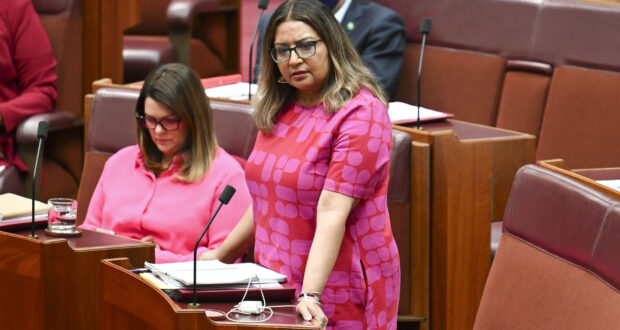
    Greens senator Mehreen Faruqi, who disclosed she is an NTEU member, said she was “pretty outraged” when she read the UA submission.

    “I think this debate is fundamental to how universities operate, especially given the exorbitant pay packets of executive staff and VCs on the one hand and the systemic wage theft, rampant casualisation and insecure work on the other,” she said.

    Fear and secrecy

    NTEU branch president at Federation University Dr Mathew Abbott said constant cuts and restructures throughout the sector has created a workplace culture that fears retribution.

    “University staff fear for their livelihoods, and that creates a culture in which staff become more compliant and less likely to speak out,” he said.

    “This is something I’ve tried to raise – the psychological toll it takes, the professional toll, and, of course, the impact of this on students.

    “When staff are placed under this kind of pressure, along with other issues like workloads and so on, it has a flow-on effect to the quality of the education that we provide to our students.”

    He said there is a “culture of secrecy” in university councils and senates, something NTEU member Professor Fiona Probyn-Rapsey from University of Wollongong also said is exacerbated by largely non-staff elected boards.

    There were multiple calls made for university council meeting minutes to be available to all university staff.

    “We have very little access to what university councils are discussing and how decisions are made. We don’t see minutes, and we barely get any interaction with university council members,” Professor Probyn-Rapsey said.

    “They don’t operate in the same way that the rest of the university does – in a collegial manner – or in the way a university should be behaving.”

    Management should also let staff have more say in teaching decisions, Professor Andrea Lamont-Mills, University of Southern Queensland NTEU branch president, added.

    Professor Andrea Lamont-Mills is associate dean of research at UniSQ. Picture: Newswire

    “Staff feel disempowered because they’re not using their expertise – it’s not valued, and their professionalism is not valued,” she said.

    “It’s disempowering when you get excluded from decisions that actually impact you, or you have limited input into decisions that directly impact you.

    “Our staff are highly skilled and highly knowledgeable, and they want to be part of developing decisions and coming up with solutions, yet they’re disempowered – they’re not able to do that.”

    Source link

  • Four universities being investigated over protests: Governance inquiry

    Four universities being investigated over protests: Governance inquiry

    Committee chair and Labor Senator Tony Sheldon called for the inquiry in January. Picture: Martin Ollman

    The Tertiary Education Quality and Standards Authority (TEQSA) revealed four universities are being investigated for their handling of protests and encampments at the first Quality of governance public hearing.

    Please login below to view content or subscribe now.

    Membership Login

    Source link

  • Campus encampments and protests are a sign of failed university governance: A Canadian perspective

    Campus encampments and protests are a sign of failed university governance: A Canadian perspective

    An Australian National University pro-Palestine encampment in May last year. Picture: Martin Ollman

    Last year, there were multiple protest encampments and other actions by groups of students on Canadian university campuses regarding the Israeli-Palestinian conflict.

    Please login below to view content or subscribe now.

    Membership Login

    Source link

  • Vice-chancellor pay and “quality of governance” to be scrutinised by Senate inquiry

    Vice-chancellor pay and “quality of governance” to be scrutinised by Senate inquiry

    Labor Senator Tony Sheldon is chair of the Senate Committee on Education and Employment. Picture: Martin Ollman

    Australia’s vice-chancellors will be questioned about their pay packages, instances of wage underpayment, and the use of external consultants in a new parliamentary inquiry into the quality of university governance.

    Please login below to view content or subscribe now.

    Membership Login

    Source link

  • Monash underpays $7.6m as ‘expert council’ on uni governance members announced

    Monash underpays $7.6m as ‘expert council’ on uni governance members announced

    CEDA CEO Melinda Cilento interviewing Prime Minister Anthony Albanese in August last year. Picture: Irene Dowdy

    The members who will sit on the council overseeing university governance and advising government on “universities being good employers” have been announced.

    Please login below to view content or subscribe now.

    Membership Login

    Source link

  • The Governance of European Higher Education: Convergence or Divergence? with Michael Shattock

    The Governance of European Higher Education: Convergence or Divergence? with Michael Shattock

    Higher education is famously isomorphic. Around the world, knowledge is divided into disciplines in almost identical ways. Around the world, students go through a largely similar bachelor’s, master’s, doctorate sequence. And around the world, higher education institutions are heavily stratified, mainly according to their research outputs. Higher education institutions aren’t exactly homogenous. But the systems they live in, what they do, what they cover, et cetera, are substantially similar, except for one thing. Governance.

    Governance can mean a few things in higher education. At the system level, it’s about the relationship between institutions, both individually and collectively, and government. At the institutional level, it’s about the nature of public oversight, if any. These two different varieties of governance vary enormously from one country to another, and I would argue, are at the root of the glorious level of disharmony, individuality, and sheer quirkiness we see across national systems today, despite all the drivers towards isomorphism.

    The person who’s possibly written the most about this topic anywhere, ever, is Michael Shattock. He’s the former Registrar of Warwick University, a visiting professor at the University College of London’s Institute of Education, and an Honorary Research Professor in the Department of Education at Oxford University. He’s the author or co-author of a number of books about university governance around the world, and he joined us for this episode to talk about one of his more recent books, published by Bloomsbury, called The Governance of European Higher Education, Convergence or Divergence, co-authored with Aniko Horvath and Juergen Enders.

    Europe has some very old and deep-seated differences in the ways universities are governed. The French, German, and English systems, to take only three, have completely different ideas about what the relationship between the university and the state should be, not to mention some very contrasting notions about the role of the professoriate in institutional management. What practical impact do these differences have? Well, that’s what Michael and I sat down to chat about a few weeks ago. I hope you enjoy the conversation.


    The World of Higher Education Podcast
    Episode 3.17 | The Governance of European Higher Education: Convergence or Divergence? with Michael Shattock

    Transcript

    Alex Usher (AU): Michael, in your book, you talk about three grand traditions of European governance: the British or Anglosphere model, the French Napoleonic model, and the German Humboldtian model. How do those three styles or forms of governance vary when it comes to the relationship between universities and the state?

    Michael Shattock (MS): Well, I wouldn’t call them grand traditions. I think what they are now is more a set of underlying components of higher education policies.

    The Humboldtian tradition, which started in 1810, had an enormous influence across Europe because it brought research and teaching together into a single model. Around the same time, Napoleon established a single university for all of France, but it focused exclusively on teaching. This approach eventually led to the creation of the Grandes Écoles, which were also focused primarily on training.

    In the Anglosphere, universities were founded by local communities and had no initial relationship with the state. In the UK, for example, universities enjoyed considerable autonomy, which only began to change when they started seeking public funding. This relationship was formalized in 1919 and changed again after World War II in 1946, when the government decided to fully fund universities, which were struggling to recover financially.

    AU: One area where these traditions and these approaches to university-state relations have had a significant impact is in how countries have expanded their higher education systems since World War II. For example, some countries have introduced new universities or specialized institutions like the Fachhochschulen in Germany or the Institut Universitaire de Technologie in France. Does one system handle massification better than the others?

    MS: I think Germany has done particularly well in handling massification. Their success stems in part from the German constitution, which emphasizes homogeneity across the Länder. Another factor is that higher education in Germany is devolved to the Länder, so each of the 16 or 17 Länder has its own higher education system.

    These systems are interconnected and governed through collaboration between the Länder, the Conference of German Rectors, and, to some extent, the federal government through bodies like the Wissenschaftsrat. This framework ensures coordination without creating the competition you might see in more marketized systems.

    However, the German system isn’t without its issues. Following the Humboldtian model, Germany requires all universities to be both research- and teaching-oriented. The Fachhochschulen, which were established after the war, are not allowed to conduct research. As a result, three-quarters of students attend universities, while only one-quarter attend Fachhochschulen.

    Even so, the system is relatively equitable across the country and maintains strong principles of integrating research and teaching.

    AU: Governance isn’t just about university-state relations—it’s also about how institutions govern themselves. How do these three traditions differ in that regard?

    MS: Well, if we start with the Napoleonic tradition—which extends beyond France to Italy, Spain, and Portugal—you’ll see that universities are still under strong state control. In theory, the state is meant to act as a steering body, but in practice, these systems are highly regulated.

    The first issue when it comes to expansion in these systems is whether the state is willing to support growth and allocate resources accordingly. By contrast, in the UK, there’s a tacit belief that anyone with the appropriate qualifications should be able to access higher education. Theoretically, funding follows the students, but in reality, over the past five years, we’ve seen the students come while the funding often doesn’t follow.

    Secondly, there’s been a long-running debate—originating with the Lisbon declaration—about whether continental European universities should aim to match American universities. A series of reports, including excellent research by Professor Aguillon, highlighted a key difference: American universities often have lay-run governing bodies, whereas many European universities do not.

    This principle of having a governing body separate from purely academic leadership has been widely debated across Europe, with each country arriving at different solutions. In Hungary, for instance, the governing body consists of only five members, all from the ruling political party—a move that has faced objections in Brussels. Meanwhile, in Norway, the governing body includes two to five laypeople alongside academics, and they’ve even abolished the Senate, feeling it’s no longer necessary.

    So, there have been significant changes in the governance structures of universities, particularly in how these top-level committees are organized.

    AU:  Michael, you state in your book that European systems have faced three major challenges this century: the Lisbon declaration’s push to make Europe the most innovative society, the Bologna Process, and the rise of international rankings. How have European systems responded to these drivers? Have their responses been uniform, or have they diverged?

    MS: If you recall, my book has a secondary title, Convergence or Divergence. After the Lisbon Declaration, the expectation was that there would be significant convergence across European higher education systems. However, higher education wasn’t part of the Treaty of Rome, meaning the EU has no formal jurisdiction in this area.

    One might have assumed that the Bologna Process, with its establishment of the “3-2-3” model—three years for undergraduate degrees, two years for master’s degrees, and three years for PhDs—would lead to greater alignment in how universities are run. But that hasn’t been the case. In fact, the book strongly argues that divergence has overshadowed convergence, driven by national preconceptions and the varying resources available in different countries.

    Take Portugal, for example. In the book, we use it as a case study for universities in Southern Europe. Historically, Portugal’s universities were concentrated in coastal cities like Lisbon, Porto, and Coimbra, with no significant presence in rural areas. One of the country’s key higher education initiatives has been to establish institutions in the countryside. While not entirely successful, this effort has been an important part of their overall strategy to expand access.

    So, while divergence has often dominated, it’s worth noting that differing starting points can sometimes lead to similar endpoints. In some cases, divergent reactions to challenges may still result in convergence on a single model over time.

    AU: Divergence often happens because systems start from different points. For example, the relationship between research and teaching has been diverging in some systems, especially through institutional stratification. Are we seeing convergence in academic culture around this?

    MS: I wouldn’t describe it as a convergence, but if you think back to Lisbon, there was a strong emphasis on increasing the commitment to research within university systems. This focus has led to significant changes in how higher education systems are structured.

    For example, in the UK, research and teaching are managed by two entirely separate government departments. The Department of Education oversees teaching, while the Department of Industry and Innovation handles research. As a result, universities receive funding from two distinct sources.

    In Portugal, we encountered an unusual situation where the government felt it needed to invest more in research. To address this, they proposed—or perhaps it was the universities’ idea—to move research activities off the main university campuses and into smaller, independent research centers. These centers would allow polytechnic researchers to collaborate with those from established research universities. However, this approach has created unintended consequences. These research campuses have become increasingly autonomous, to the point where university rectors often have little understanding of what’s happening at these off-campus sites. Rather than strengthening the polytechnics, this model has effectively turned university campuses into teaching-only institutions, which I see as a step backward.

    The EU has also become more involved in this area, despite not having a formal role in higher education. Through the Horizon program, the EU has made substantial funding available for academics across member states to compete for. Interestingly, the UK has just negotiated its way back into Horizon following Brexit. This shift suggests that the EU, which had previously focused on undergraduate teaching through initiatives like the Bologna Process, is now channeling its higher education investments almost entirely into research via Horizon.

    As a result, universities across Europe are being pulled in different directions, and the ways these tensions manifest vary significantly from country to country.

    AU: One part of your book I enjoyed was your discussion of student participation in governance. In continental Europe, students often have significant roles in decision-making. How do these roles differ across countries?

    MS: I think the cultures around student participation differ significantly between countries. Let me start with Germany. The German higher education system went through a difficult period of intense student activism in the 1980s and 1990s. What has emerged from that is a system where students now play a significant role in university governance, particularly through their involvement in the Senate.

    This involvement is quite remarkable. For instance, when a candidate for a professorship is presented to the Senate for approval, student members have the same rights as academic members to challenge or endorse the appointment. Students are deeply integrated into the university’s internal negotiations, and rectors often leverage student opinions to balance or counteract the influence of academic groups. In this way, students have become a central element of university governance.

    In Norway and Portugal, the role of students is slightly different. National student organizations in these countries hold substantial influence within government decision-making. Additionally, they take on responsibilities that, in systems like those in Britain or Canada, would typically fall to the universities themselves. These include providing student accommodation, offering career advice, and managing other social services.

    While students in these systems may engage with certain academic issues, their role in the direct governance or operational management of the university is far less pronounced than what we see in Germany.

    AU: This isn’t your first book on university governance. With this new book on Europe, do you see European systems heading in the same direction as the rest of the world, or are they charting a different course?

    MS: The global trend is toward greater state involvement and oversight in higher education. Even in countries like Japan, there has been an attempt to shift from a traditional government-management relationship with universities to what is described as a “steering” relationship. However, in reality, governments still maintain a significant grip on university systems.

    Looking across Europe, you can observe different approaches to state control. Take Hungary, for example. In Hungary, the state has effectively taken over the management of the higher education system. Chancellors, often drawn from other public service sectors, are imposed by the state to sit on university governing bodies alongside rectors, with significant control over finances.

    In contrast, countries like Norway and Germany have a much lighter touch when it comes to state intervention. In these systems, there is a belief—particularly in Germany—that university autonomy is crucial for institutional success. This stands in stark contrast to Britain, where there is a rhetoric supporting university autonomy, but in practice, universities are heavily influenced by external pressures like league tables and global rankings.

    Another interesting shift in recent years has been the growing recognition of universities as “anchors” in their communities. This concept emphasizes the important role universities play, particularly in smaller towns, in contributing to local social and economic well-being. This idea of universities having a broader community impact is relatively new compared to 25 years ago, but it reflects an evolving understanding of the societal role of higher education.

    AU: Let’s look forward 25 years. If you were to write this book again in 2050, would you expect more convergence or divergence?

    MS: Well, I have to admit, I was afraid you would ask me this question, and I’ve given it some thought. To put it simply, I believe that in Europe, divergence will persist. The nation-state, as it currently operates in Europe, will continue to resist attempts by the EU to modernize and harmonize higher education systems. This resistance makes it difficult to achieve the kind of convergence the EU envisions.

    AU: Michael, thank you so much for joining us today.

    MS: Pleasure.

    AU: And thank you to our producers, Tiffany McLennan and Sam Pufek, and to you, our listeners and viewers. If you have any questions about today’s episode or suggestions for future ones, email us at [email protected]. Don’t forget to subscribe to our YouTube channel. Join us next week when our guest will be Javier Botero, discussing developments in Colombian higher education. Bye for now.

    *This podcast transcript was generated using an AI transcription service with limited editing. Please forgive any errors made through this service.

    Source link

  • Anticipating Impact of Educational Governance – Sijen

    Anticipating Impact of Educational Governance – Sijen

    It was my pleasure last week to deliver a mini-workshop at the Independent Schools of New Zealand Annual Conference in Auckland. Intended to be more dialogue than monologue, I’m not sure if it landed quite where I had hoped. It is an exciting time to be thinking about educational governance and my key message was ‘don’t get caught up in the hype’.

    Understanding media representations of “Artificial Intelligence”.

    Mapping types of AI in 2023

    We need to be wary of the hype around the term AI, Artificial Intelligence. I do not believe there is such a thing. Certainly not in the sense the popular press purport it to exist, or has deemed to have sprouted into existence with the advent of ChatGPT. What there is, is a clear exponential increase in the capabilities being demonstrated by computation algorithms. The computational capabilities do not represent intelligence in the sense of sapience or sentience. These capabilities are not informed by the senses derived from an organic nervous system. However, as we perceive these systems to mimic human behaviour, it is important to remember that they are machines.

    This does not negate the criticisms of those researchers who argue that there is an existential risk to humanity if A.I. is allowed to continue to grow unchecked in its capabilities. The language in this debate presents a challenge too. We need to acknowledge that intelligence means something different to the neuroscientist and the philosopher, and between the psychologist and the social anthropologist. These semiotic discrepancies become unbreachable when we start to talk about consciousness.

    In my view, there are no current Theory of Mind applications… yet. Sophia (Hanson Robotics) is designed to emulate human responses, but it does not display either sapience or sentience.

    What we are seeing, in 2023, is the extension of both the ‘memory’, or scope of data inputs, into larger and larger multi-modal language models, which are programmed to see everything as language. The emergence of these polyglot super-savants is remarkable, and we are witnessing the unplanned and (in my view) cavalier mass deployment of these tools.

    Three ethical spheres Ethical spheres for Governing Boards to reflect on in 2023

    Ethical and Moral Implications

    Educational governing bodies need to stay abreast of the societal impacts of Artificial Intelligence systems as they become more pervasive. This is more important than having a detailed understanding of the underlying technologies or the way each school’s management decides to establish policies. Boards are required to ensure such policies are in place, are realistic, can be monitored, and are reported on.

    Policies should already exist around the use of technology in supporting learning and teaching, and these can, and should, be reviewed to ensure they stay current. There are also policy implications for admissions and recruitment, selection processes (both of staff and students) and where A.I. is being used, Boards need to ensure that wherever possible no systemic bias is evident. I believe Boards would benefit from devising their own scenarios and discussing them periodically.


    Source link