Tag: government

  • When the government tells you that you cannot pray

    When the government tells you that you cannot pray

    When Abdul Kadeer returned from Saudi Arabia in last month to celebrate the Muslim festival of Eid-ul-Fitr with his family in Meerut, a city northeast of New Delhi in the Indian state of Uttar Pradesh, the 32-year-old found himself gripped by fear. The local administration had announced tough restrictions on Eid-ul-Fitr prayers for Muslims. 

    Eid-ul-Fitr is one of two major holidays celebrated by Muslims and commemorates the end of the holy month of Ramadan, in which Muslims fast daily from before dawn until sunset.

    Because mosques and designated grounds for prayers, known as Eidgahs, have insufficient space to accommodate the large number of worshippers during these holidays people often stop on roadsides to offer prayers. 

    But just days before the festival, Meerut police announced that offering prayers on roads and other public places could lead to passport cancellations. 

    “I came home to celebrate with my family, but now we are living in fear,” Kadeer says. “Why is it that when we pray, it becomes a problem, but during other festivals, roads are blocked and nothing happens?”

    Jamia Masjid Srinagar closed for Eid prayers in Kashmir. (Photo by Sajad Hameed)

    A minority religion

    For Kadeer, losing his passport would cost him his job.

    “I work in Saudi Arabia to support my family here,” he said. “Why are we being targeted for a prayer that lasts barely 20 minutes?”

    The state of Uttar Pradesh has a predominantly Hindu population, with Hindus comprising around 80% of the total population, while Muslims make up approximately 19%.

    Across Meerut, sentiments like Kadeer’s resonate deeply. Many Muslims in the city ask why they face restrictions when Hindu festivals frequently involve processions on public roads without similar consequences.

    “Why is it that only during Eid, roads become a law-and-order issue?” questions a shopkeeper in the city’s old quarter. “During Holi or Diwali, no one is threatened with legal action.”

    Holi and Diwali are major Hindu festivals celebrated with their own distinct rituals rooted in mythology, seasonal change and spiritual themes. Holi celebrates spring with colors, water fights and sweets, symbolizing good over evil. Diwali, the festival of lights, involves lamps, fireworks and sharing food, marking prosperity and the return of the Hindu god Rama.

    When the Indian government restricts public prayer during Muslim festivals like Eid-ul-Fitr it says it does so to maintain public order and prevent communal tensions. Authorities may cite concerns about large gatherings in public spaces causing traffic disruptions, noise pollution or potential clashes, especially in areas with a history of religious friction. 

    Tensions peaked on 31 March, for example, when violence erupted after the Eid prayer in Siwalkhas, a town northeast of New Delhi. According to police, members of two groups clashed, with reports of gunfire. Security forces quickly intervened, dispersing the crowds, but not before more than six Muslims were injured.

    A double standard?

    The restrictions on prayer have sparked national debate. Popular comedian Munawar Faruqui criticised the decision on social media, questioning why a short prayer was being singled out. But Uttar Pradesh Chief Minister Yogi Adityanath defended the measure, citing the Maha Kumbh in Prayagraj as an example of religious discipline. 

    “[Six hundred and sixty million] people attended the Maha Kumbh without any incidents of violence, harassment or disorder. Roads are meant for walking,” he said, suggesting that Muslims should learn from Hindu festival gatherings. 

    Nasir Qureshi, 47, of Bijnor, said that even before Eid, they were warned not to gather in large numbers for prayers. “But when Hindus celebrate their festivals, there are no such restrictions,” he said “Why is there one rule for us and another for them?”

    The directive has drawn criticism not only from opposition parties but also from within the allies of the ruling Bharatiya Janata Party or BJP.

    Iqra Hasan, a member of parliament for the socialist Samajwadi Party, questioned the intent behind the restrictions while Chirag Paswan, a BJP ally, called for a focus on broader issues rather than communal divisions. And Union Minister Chaudhary Jayant Singh compared the crackdown to authoritarian measures described in George Orwell’s book “1984”.

    Opponents to restrictions argue that the Hajj in Mecca, with 2–3 million Muslims praying peacefully, shows that large Muslim gatherings can be managed safely, like the Maha Kumbh’s 400 million Hindus. With proper planning, India could allow Eid prayers fairly, avoiding bias.

    Police and worshippers

    In Meerut, protests took shape in subtle ways. Some worshippers displayed posters stating, “It’s not just Muslims who pray on roads.” The banners listed instances of Hindus and others conducting religious activities on public streets.

    Authorities forcibly removed the posters, leading to further tensions. Among the congregation, expressions of solidarity with Palestine were visible, with worshippers seen holding “Free Palestine” placards and some donning traditional Palestinian attire.

    Mohammed Saeed, 29, a resident of Meerut, said that the police didn’t let them complete their prayers. “They stormed in, shouting at us to leave, and when people protested, they started hitting us,” Saeed said. “Even elderly men were pushed around.”

    Police have registered cases against those raising Palestine-related issues in previous instances, making this a sensitive act of defiance. Beyond Meerut, other decisions have added to the sense of alienation. In Haryana, the state government removed Eid from its list of gazetted holidays, relegating it to a restricted holiday status. This means government offices will remain open on Eid and employees —Hindus or Muslims — must request leave if they wish to observe it.

    Asaduddin Owaisi, an member of parliament from Hyderabad and chief of the right-wing political party All India Majlis-e-Ittehadul Muslimeen, said that these kind of decisions are a direct attack on Muslim minorities in the country. 

    He also said that earlier last year the central government ordered a survey of the Jamia Masjid in Uttar Pradesh, a 500-year-old mosque that is part of a UNESCO World Heritage site. It turned into violence with five people killed and 30 injured. 

    “Hundreds were detained only to deny the survey,” Owaisis said. “These decisions will increase the hate in the communities nothing else.”

    Religious clashes elsewhere

    While India sees frequent communal flashpoints between Hindus and Muslims, other South Asian nations have also witnessed religious tensions manifesting in different ways.

    In Pakistan, religious minorities, particularly Hindus and Christians, have often faced restrictions on their religious practices, though state-imposed bans on mass religious gatherings have been rare.

    In Bangladesh, political conflicts sometimes intertwine with religious identity, leading to incidents of violence during Hindu Durga Puja celebrations. Sri Lanka has seen its own set of religious tensions, with growing restrictions on Muslim practices such as a ban on the niqab — a face veil worn by women — following the 2019 Easter bombings when 269 people were killed in six suicide bombings in churches and hotels. 

    In Kashmir, meanwhile, the state’s approach to religious gatherings has taken a different but equally restrictive form. On 31 March, as Muslims worldwide prepared for Eid-ul-Fitr, authorities in Srinagar locked down the historic Jamia Masjid, preventing worshippers from offering prayers there.

    The region’s chief cleric, Mirwaiz Umar Farooq, was placed under house arrest, a move he strongly condemned.

    “When huge claims of ‘normalcy’ are made every day by the authorities, why are Muslims in Kashmir being kept away from their religious places and practices?” Mirwaiz said in a statement. “What is the agenda? Is the collective identity of Kashmiri Muslims a threat to the rulers?”

    The Jamia Masjid closure follows a pattern seen in recent years, where authorities have restricted access to religious sites on key Islamic occasions, citing security concerns.

    Earlier in March, the mosque was locked for Shab-e-Qadr and Jummat-ul-Vida prayers, triggering strong reactions from opposition parties in Kashmir.

    Darakhshan Andrabi, who is a senior BJP leader and chairs the Jammu and Kashmir Wakf Board, a body that controls the use of religious and charitable properties, justified the decision, stating that Eid prayers could not be held at Eidgah grounds due to ongoing construction work. However, many local residents and religious leaders see such restrictions as politically motivated and part of broader efforts to control religious expression in the region.


    Questions to consider: 

    1. What is Eid-ul-Fitr?

    2. What is a rationale the Indian government has to restrict public prayer during Muslim festivals?

    3. Do you think that the government should be able to regulate religion? Why?



    Source link

  • US Department of Education’s Failure to Address Food Insecurity Among College Students (Government Accountability Office)

    US Department of Education’s Failure to Address Food Insecurity Among College Students (Government Accountability Office)

    Nearly 25% of college students in 2020 reported
    limited or uncertain access to food. Despite being potentially eligible,
    most didn’t receive Supplemental Nutritional Assistance Program (SNAP)
    benefits—formerly known as “food stamps”—which could help them pay for
    food.

    A recent law gave the Department of Education
    authority to share students’ Free Application for Federal Student Aid
    data with federal and state SNAP agencies to identify and help students
    who may be eligible for benefits.

    But Education hasn’t made a plan to start sharing this data—nor have states received guidance about this opportunity.

    We recommended ways to address these issues.

    What GAO Found

    The U.S. Department of Agriculture (USDA) and the Department of
    Education have taken some steps to connect college students with
    Supplemental Nutrition Assistance Program (SNAP) benefits to help them
    pay for food, but gaps in planning and execution remain. Effective July
    2024, a new law gave Education authority to share students’ Free
    Application for Federal Student Aid (FAFSA) data with USDA and state
    SNAP agencies to conduct student outreach and streamline benefit
    administration. However, according to officials, Education had not yet
    developed a plan to implement these complex data-sharing arrangements.
    This risks delays in students getting important information that could
    help them access benefits they are eligible for. Following the passage
    of this new law, Education began providing a notification about federal
    benefit programs for students who may be eligible for them. However, it
    has not evaluated its method for identifying potentially eligible
    students. According to GAO analysis of 2020 Education data, Education’s
    method could miss an estimated 40 percent of potentially SNAP-eligible
    students.

    USDA encouraged state SNAP agencies to enhance student outreach and
    enrollment assistance. However, USDA has not included important
    information about the use of SNAP data and other student data in its
    guidance to state SNAP agencies. These gaps in guidance have left states
    with questions about how to permissibly use and share students’ data to
    help connect them with benefits.

    Student Food Assistance at a College Basic Needs Center

    Officials from the three selected states and seven colleges GAO
    contacted described key strategies for communicating with students about
    their potential SNAP eligibility. These include using destigmatizing
    language, linking students directly to an application or support staff,
    and coordinating outreach efforts with SNAP agencies. Officials from the
    states and colleges GAO contacted said it is helpful to have staff
    available on campus to assist students with the SNAP application. Some
    colleges have found it helpful to partner with their respective SNAP
    agencies to obtain information on the status of students’ applications.

    Why GAO Did This Study

    According to a national survey, almost one-quarter of college
    students were food insecure in 2020, yet GAO found many who were
    potentially eligible for SNAP had not received benefits. The substantial
    federal investment in higher education is at risk of not serving its
    intended purpose if students drop out because of limited or uncertain
    access to food. Studies have found using data to direct outreach to
    those potentially eligible can increase benefit uptake.

    GAO was asked to review college student food insecurity. This report
    addresses (1) the extent to which Education and USDA have supported data
    use to help college students access SNAP benefits, and (2) how selected
    states and colleges have used student data to help connect students
    with SNAP benefits.

    GAO reviewed relevant federal laws and agency documents. GAO also
    interviewed officials from Education, USDA, and national higher
    education and SNAP associations. GAO selected three states and
    interviewed officials from state SNAP and higher education agencies and
    seven colleges in these states. GAO visited one selected state in person
    and interviewed two virtually. States were selected based on actions to
    support food insecure students and stakeholder recommendations.

    Recommendations

    GAO is making five recommendations, including that Education develop a
    plan to implement FAFSA data-sharing and assess its benefit
    notification approach; and that USDA improve its SNAP agency guidance.
    The agencies neither agreed nor disagreed with these recommendations.

    Recommendations for Executive Action

    Agency Affected Recommendation Status
    Department of Education The
    Secretary of Education should develop a written plan for implementing
    provisions in the FAFSA Simplification Act related to sharing FAFSA data
    with SNAP administrators, to aid in benefit outreach and enrollment
    assistance. (Recommendation 1)
    Department of Education The
    Secretary of Education should, in consultation with USDA, evaluate its
    approach to identifying and notifying FAFSA applicants who are
    potentially eligible for SNAP benefits and adjust its approach as
    needed. (Recommendation 2)
    Department of Education The
    Secretary of Education should inform colleges and state higher
    education agencies that FAFSA notifications are being sent to applicants
    who are potentially eligible for SNAP benefits. (Recommendation 3)
    Department of Agriculture The
    Administrator of USDA’s Food and Nutrition Service should, in
    consultation with Education, issue guidance to state SNAP agencies—such
    as in its SNAP outreach priority memo—to clarify permissible uses of
    student data, including FAFSA data, for SNAP outreach and enrollment
    assistance. (Recommendation 4)
    Department of Agriculture The
    Administrator of USDA’s Food and Nutrition Service should issue
    guidance to state SNAP agencies—such as in its SNAP outreach priority
    memo—to clarify the permissible uses and disclosure of SNAP data to
    support SNAP student outreach and enrollment assistance. (Recommendation
    5)

    Source link

  • Sector leaders step up legal pressure on US government

    Sector leaders step up legal pressure on US government

    The Alliance, which represents over 500 college leaders, has pledged its support for the AAUP in the case of AAUP v. Rubio, which seeks an injunction to halt the large-scale arrest, detention and deportation of students and faculty.  

    Submitted in a court document known as an amicus brief, the Alliance argued that recent efforts targeting international students and noncitizen staff had created a “climate of fear” that was “chilling the free exchange of ideas and isolating international students and scholars”.  

    “Recent actions have upended individual lives, undermined the safety of our institutions and jeopardised academic freedom in and beyond the classroom,” said Presidents’ Alliance CEO Miriam Feldblum on April 10.  

    “The uncertainty generated by visa revocations and terminations not only has immediate impacts but also threatens our long-term ability to recruit, retain and employ talented individuals from across the globe,” she added.  

    The court case comes amid growing alarm over the rising number of international student visas revocations and detentions.  

    As of April 10, over 100 US institutions have identified more than 600 international students and recent graduates who have seen their legal status changed by the State Department, according to monitoring by Inside Higher Ed.  

    The AAUP-led lawsuit was filed on March 25, challenging the Trump administration’s policy of arresting, detaining and deporting noncitizen students and faculty who participated in pro-Palestinian activism.  

    The lawsuit alleges that the administration’s “ideological-deportation policy” violates the first amendment right of freedom of speech and the Administrative Procedure Act, as well as being unconstitutionally vague.  

    Recent actions have upended individual lives, undermined the safety of our institutions and jeopardised academic freedom in and beyond the classroom

    Miriam Feldblum, Presidents’ Alliance on Higher Education and Immigration

    In coming together as a sector, Feldblum said she hoped the brief would “amplify the contributions of noncitizen students and scholars, whose ideas and breakthroughs fuel our economy and uphold the collaborative spirit that defines American education”.

    In 2023, international students accounted for 6% of the total US higher education population and contributed over $50bn to the US economy, according to IIE.  

    The unprecedented attacks on international students in the US have provoked outrage across the globe, with the Alliance highlighting longer term impacts which threaten to stifle innovation, intensify ‘brain drain’ and jeopardise the competitiveness of higher education in the US.  

    When paired with declining visa issuance rates from several of the US’ primary sending countries and signs of plummeting interest in the US from postgraduate students, the need for sector-wide unity has never been so strong, say educators.  

    What’s more, the brief highlights the harmful impacts on US students who will lose out on global perspectives, enriched learning experiences and academic collaboration. 

    Scientific talent has already started leaving the US in response to research cuts and threats to academic freedom, with a recent poll revealing three quarters of US scientists were considering leaving the country.   

    Elsewhere, executive members of the US for Success Coalition have urged Congress to press the administration to stop immigration actions and travel restrictions that jeopardise the US’s global attractiveness, highlighting the contributions of international students to America’s “prosperity, safety and security”.

    “International students are the most tracked and vetted visitors to this country,” said NAFSA CEO Fanta Aw.

    “Deterring them from choosing the United States will not make us safer but will certainly deprive us of global talent at a time when competition for these students is increasing around the world,” she added.

    The Coalition is encouraging students and leaders from all sectors including higher education, foreign policy and business, to reach out to members of congress with this message.

    AAUP v. Rubio is scheduled to be heard in court on April 23.

    Source link

  • Federal Government Is Now an Unreliable Partner (opinion)

    Federal Government Is Now an Unreliable Partner (opinion)

    When Linda McMahon was initially picked to be the secretary of education, I wrote a piece that detailed how comparing her to former secretary of education Betsy DeVos was likely inappropriate. I ended that piece by cautiously suggesting that McMahon would strongly align with elements of the Heritage Foundation’s Project 2025 and of the think tank she led, the America First Policy Institute. I also suggested that because the president is ambiguous in his attitudes toward following court orders, McMahon might feel emboldened to engage in similar behavior.

    Since my previous op-ed, McMahon was confirmed as secretary of education and has since shared her vision for the Department of Education in various interviews. While her focus is primarily on K-12 education issues, for higher education she has consistently emphasized that Pell Grants and loans will remain safe—a topic I will revisit later. However, the most predictable outcome has proven accurate: McMahon’s approach aligns closely with the intentions outlined by Heritage and AFPI, as ED is targeted for closure.

    One way to frame McMahon’s leadership and recent behavior as secretary is that she’s the agency’s appointed destructor (just before signing an executive order seeking the dismantlement of the department, President Trump quipped, “Hopefully she will be our last secretary of education.”) Now, ED cannot be eliminated without congressional approval. However, there are many decisions the administration can make to severely hobble the department and offices within it. Some of these decisions have already been executed.

    One of the most impactful and immediate policies that McMahon has pursued was an almost 50 percent reduction of staff at ED, from roughly 4,000 to 2,000 employees. These cuts have reduced employees at offices such as the Office of Federal Student Aid, the Institute of Education Sciences and the Office for Civil Rights. Communications from ED have suggested these cuts will not affect students’ ability to apply for and secure financial aid.

    Of the nearly 2,000 layoffs, more than 300 happened within the Federal Student Aid office—and almost immediately the Free Application for Federal Student Aid site went down for a few hours. Even with a full staff, the Biden administration had well-documented issues with keeping the FAFSA running smoothly, which led to a 9 percent decline in FAFSA submissions for first-time applicants in 2024, or about 432,000 fewer applications over all. Given the department’s reduced capabilities, I have little confidence that it can process FAFSA applications promptly.

    On March 21, President Trump announced that the Small Business Administration would take over the student loan portfolio, an interesting move given that McMahon was the SBA head during Trump’s first term. No clear explanation has been provided for why the SBA should take charge of the portfolio, and no public plan for such a transfer has been released. Additionally, the SBA intends to cut its staff nearly in half, reducing its 6,500-person workforce by about 2,700 employees, while managing this titanic task.

    Although it could be argued that the loan portfolio might be transferred out of the FSA (the “Performance-Based Organization”) based on performance, as outlined in the Higher Education Act of 1965 and the Higher Education Amendments of 1998, it remains unclear whether transferring the portfolio outside of ED is legally permissible. Additionally, the Higher Education Opportunity Act of 2008 does not appear to support moving loans or other financial aid–related processes outside of ED.

    In recent interviews, McMahon has offered no further clarification on this decision, noting that additional ED functions might also be transferred to other departments. While she proposed working with Congress to interpret the legality of these actions, she also has hinted that congressional approval may not be necessary.

    In addition to concerns surrounding financial aid, we should anticipate weaker accountability measures and diminished academic research moving forward. ED’s Institute for Education Sciences has faced significant staff cuts. Although the Integrated Postsecondary Education Data System remains active, providing essential data on enrollment, costs, financial aid and graduation rates, its future is uncertain. This data set is crucial for researchers at foundations and think tanks focused on accountability, as well as for academics studying outcomes in higher education. However, with the survey submission link recently down and limited staff to oversee the system, IPEDS may soon lack accuracy or even public accessibility. As other federal data sets also face potential risks, researchers may need to reconsider the standards for defining good work in this evolving landscape.

    Yet, the staff cuts may have been too abrupt, as ED recently asked several dozen employees to return to fulfill statutory obligations, including responsibilities related to financial aid and loans. However, uncertainty persists regarding how the administration and Secretary McMahon interpret these obligations and the level of efficiency required for their execution.

    McMahon’s influence on higher education has already extended beyond the “Sweet Chin Music” directive for ED (“Sweet Chin Music” is the finishing move of WWE legend Shawn Michaels—a super kick to the face). She seems eager to serve as a bridge for aligning higher education with conservative priorities, as demonstrated by her direct involvement with the revocation of $400 million in federal grants and contracts to Columbia University—the first test case in a broader strategy to pressure universities over allegations of campus antisemitism. Critics argue this is a pretext for advancing a conservative agenda rather than a genuine effort to protect Jewish students and employees, with similar tactics now being applied to Harvard and Princeton Universities. The administration also seems to be using a similar strategy to pressure other institutions like the University of Pennsylvania over issues related to Title IX and transgender athletes.

    To regain federal funding, Columbia was given a list of demands, which included enacting a new campuswide mask ban and placing the Middle Eastern, South Asian and African Studies Department under academic receivership—actions widely criticized as federal overreach. Though Columbia has taken multiple steps to address concerns about antisemitism, including seeking the arrest of pro-Palestinian protesters for trespassing, expelling students and temporarily revoking diplomas, the administration in effect deemed these actions insufficient.

    Though Columbia has largely complied with the administration’s demands, there is little indication that the withheld funds will be restored or to what degree. Regardless of readers’ personal views on the outcome, Columbia’s compliance demonstrates that institutions likely are increasingly susceptible to federal interventions. Looking ahead, I expect both Republican and Democratic administrations to exert distinct political pressures on institutions, significantly reshaping higher education—a shift partly influenced by McMahon’s direct role in the Columbia negotiations.

    Since the National Institutes of Health grant cancellations began, I have described federal government agencies as “unreliable partners” for higher education. The “unreliable partners” label remains fitting as McMahon continues to dismantle ED and transfer its responsibilities to other departments, which is likely to cause extreme inefficiencies. I am especially concerned about delays in FAFSA processing and whether financial aid will reach institutions and students on time next academic year—if at all. Administrators should prepare for these risks. Furthermore, as Columbia has complied with the administration’s demands, it’s possible that future financial aid may come with new conditions (e.g., mask bans on all campuses)—or be intentionally withheld until expectations are met.

    Daniel A. Collier is an assistant professor of higher and adult education at the University of Memphis. His work focuses on higher education policy, leadership and issues like student loan debt and financial aid. Connect with Daniel on Bluesky at @dcollier74.bsky.social.

    Source link

  • An end to sticking plaster politics? Why the government needs to use its upcoming white paper to take a different approach to immigration

    An end to sticking plaster politics? Why the government needs to use its upcoming white paper to take a different approach to immigration

    The Labour Party was elected to government last year on a promise to reduce net migration. Their victory in the 2024 General Election followed a period in which net migration to the UK peaked at 906,000 and public concerns over migration began to rise again for the first time since the Brexit referendum.

    Unsurprisingly, Number 10 views progress on this issue as central to their re-election prospects. Precisely how the government will look to do this is still unclear, yet recent weeks have seen growing speculation over an immigration white paper which is expected to land pretty soon.

    White paper

    A new approach to immigration is needed. Too often, immigration policy has been dictated by the release of the latest migration figures and so the development of a white paper on immigration in and of itself is no bad thing. Moreover, it provides the government with an opportunity to take a more strategic approach to migration policy.

    Prior to the election, the Labour Party committed to a different style of governing which would end ‘sticking plaster’ politics. But how to apply this longer-term view to immigration policy? To be judged as successful, any new approach to immigration would need to see net migration reduced given their manifesto commitment. As such, tough choices need to be made about where further reforms could be made to reduce the overall number of people coming to the UK.

    This creates some obvious risks for UK universities given the importance of international students to the financial sustainability of our sector. Universities UK (UUK) has been clear that, over the long-term, international recruitment should not be the answer to the financial sustainability of higher education institutions. Instead, we need to work with government on a long-term plan, secure increased investment, and explore new approaches to efficiency and transformation in the sector.

    In the absence of a long-term plan to address the underfunding of the higher education sector, any new approach to immigration would, at the very least, need to enable universities to continue to attract international students to study in the UK to prevent current financial challenges from deteriorating further.

    Three tests

    This is no easy task, but it is possible. So, what could a different course of action on migration policy actually look like? I think there are three clear things we need:

    1. A joined up, coordinated approach.

    2. Look forward not back, (as the Labour Party once encouraged us to do).

    3. Draw a line between temporary and permanent migration.


    The left-hand ought to know what the right-hand is doing

    The starting point of any new immigration policy ought to be based on having a joined-up and co-ordinated approach. This may seem obvious but would be a welcome change.

    The key opportunity for the new government is to use their immigration white paper to finally align migration policy with wider government objectives. Based on what the Home Secretary has outlined, at least part of this would be to create much greater join-up between the UK’s visas and skills systems so that immigration is not used as an alternative to training or tackling workforce problems, thereby reducing overall net migration. This is a good start, but the white paper offers an opportunity to go further.

    Under previous administrations, there was a distinct lack of coordination and coherence in policy and strategy. This can be seen most clearly in the development of an International Education Strategy – which set an explicit aim of government policy to grow the number of international students coming to the UK, but which then came up against a Home Office who had been instructed to curb the growth in international students.

    Don’t use the rear-view mirror

    With a clear joined-up strategy, the government should then look to shift the focus of immigration policy away from retrospective net migration trends, towards focussing on future forecasts, thereby creating a more realistic timeframe to achieve their strategy.

    It is quite clear that reducing net migration is going to continue to be the focus of government policy. Yet as we have seen, annual net migration focuses too much on short-term migration trends – be it the increase of people coming from Ukraine, or Hong Kong – and doesn’t focus enough on the anticipated impact of recent policy – such as changes to dependant’s which has led a dramatic reduction in the UK’s attractiveness as a study destination in certain countries.

    By shifting towards long-term projections (measured over a rolling 5-year average), the government could then create the political space to actually achieve their wider objectives. For example, providing a longer-term timeframe to work with employers to implement skills and training initiatives to support those roles where recruitment is primarily met through immigration.

    Any future forecast would, inevitably, be subject to changes and revisions but it would represent a far better metric than basing government policy on retrospective and highly volatile net migration trends from the previous year.

    Separate the temporary from the permanent

    A final welcome change would be for the government to distinguish more between ‘temporary’ and ‘permanent’ migration. After all, while many migrants do settle in the UK, many others do not and have little intention of doing so.

    This applies to many international students. They may stay for a few years after their studies, but very few end up remaining in the UK for the long-term and get settlement. Rather than taking students out of net migration – which would only serve to highlight the contribution which international students do make to net migration while ignoring the impact which students do have on housing and local services – the government should look to place greater focus on different types of visas being granted to those coming to the UK.

    There are lots of ways this could be done, but focussing more on those visa routes which lead to settlement (or ‘indefinite leave to remain’) would help improve public understanding of migration and better reflect the fact that many migrants included in the net migration stats do not contribute significantly to the long-term population of the UK.

    Concerns about immigration are unlikely to go away anytime soon, but the opportunity for a better approach is there for the taking.

    Many parts of the world – particularly across the Anglosphere – are currently seeing higher levels of net migration, and how countries respond is an issue facing many governments.

    With aging societies, slowing rates of economic growth, not to mention an increasing number of people displaced due to climate change, conflict, and natural disasters, immigration will continue to be high on the political agenda.

    Through their immigration white paper, the new UK government has a clear opportunity to address this challenge head on and take a different approach to previous administrations and, in doing so, demonstrate that well-managed immigration can be – and indeed is – a force for good.

    In developing a more joined-up approach, while focussing on future projections – rather than retrospective trends – and which makes a clearer distinction between temporary and permanent migration, the UK government could go a long way to developing a more sensible approach to immigration policy.

    The opportunity is there, the question is whether the government will take it.

    Source link

  • Two tribal colleges have been allowed to rehire staff that had been cut by the federal government

    Two tribal colleges have been allowed to rehire staff that had been cut by the federal government

    After weeks of uncertainty, two tribal colleges have been told they can hire back all employees who were laid off as part of the Trump administration’s deep cuts across the federal workforce in February, part of a judge’s order restoring some federal employees whose positions were terminated.

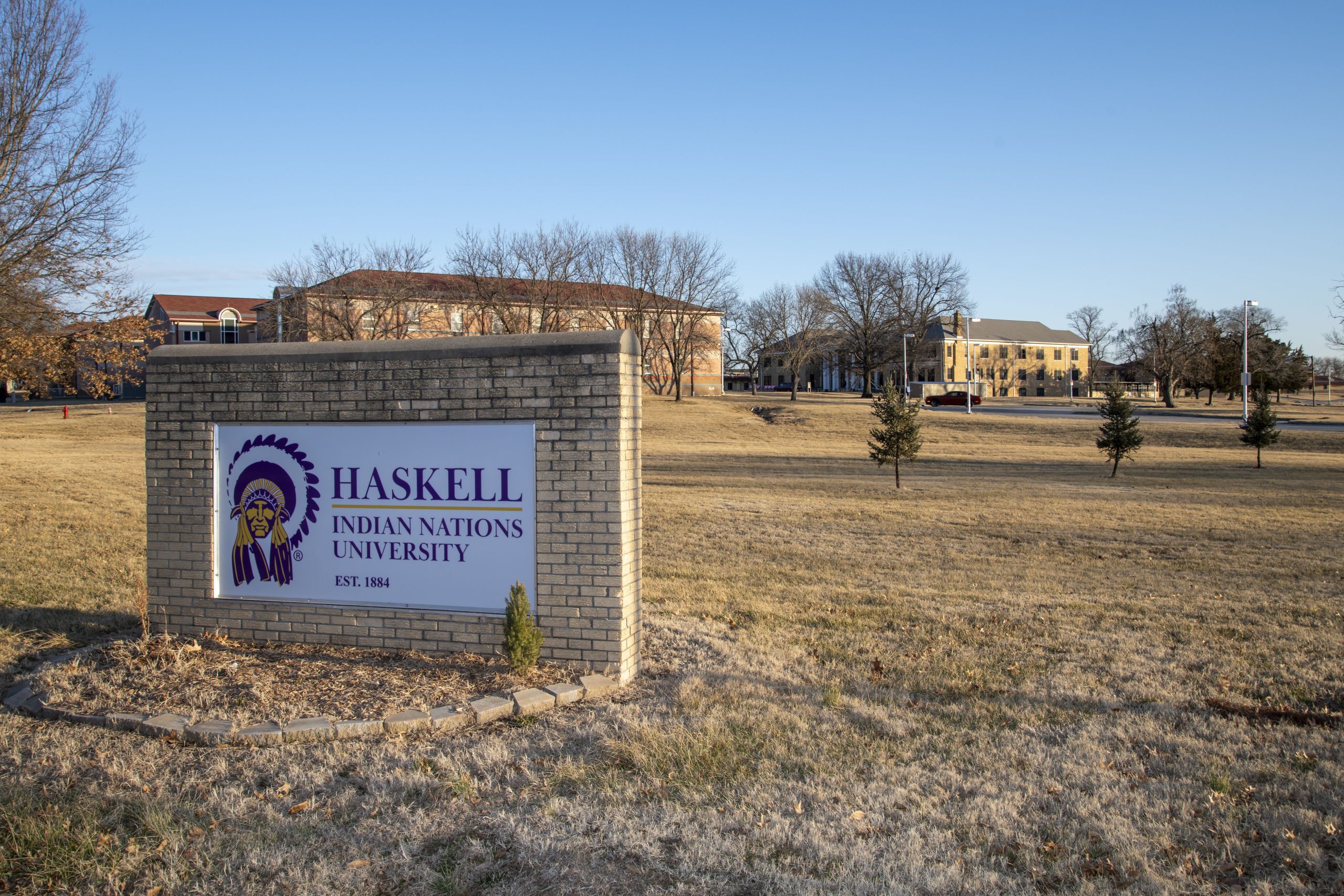
    Haskell Indian Nations University in Kansas and Southwestern Indian Polytechnic Institute, widely known as SIPI, in New Mexico lost about 70 employees in mid-February amid widespread staffing cuts to federal agencies. While most of the nation’s 37 tribal colleges and universities are chartered by American Indian tribes, Haskell and SIPI are not associated with individual tribes and are run by the federal government.

    About 55 employees were laid off and 15 accepted offers to resign, according to a lawsuit filed last month by tribes and students. The colleges were forced to cancel or reconfigure a wide range of services, from sports and food service to financial aid and classes. In some cases, instructors were hired by other universities as adjuncts and then sent back to the tribal colleges to keep teaching.

    Related: Interested in more news about colleges and universities? Subscribe to our free biweekly higher education newsletter.

    It was not clear this week when and if the workers would return, whether the employees who resigned would also be offered their jobs back, or if the government would allow colleges to fill vacancies. Both colleges said some employees had turned down the offers.

    The Bureau of Indian Education, which runs the colleges, declined to answer questions except to confirm the laid-off workers would be offered jobs with back pay to comply with a judge’s order that the government reverse course on thousands of layoffs of probationary employees. But the agency also noted the jobs would be available “as the White House pursues its appeals process,” indicating possible turmoil if an appeals court reinstates the layoffs.

    Both colleges said the bureau also has refused to answer most of their questions.

    SIPI leaders were told last week that the positions were being restored, said Adam Begaye, chairman of the SIPI Board of Regents. The 270-student college lost 21 employees, he said, four of whom decided to take early retirement. All but one of the remaining 17 agreed to return, Begaye said.

    The chaos has been difficult for those employees, he said, and the college is providing counseling.

    “We want to make sure they have an easy adjustment, no matter what they’ve endured,” Begaye said.

    Related: How a tribe won a legal battle against the federal Bureau of Indian Education and still lost

    The chairman of Haskell’s Board of Regents, Dalton Henry, said he was unsure how many of the 50 lost employees were returning. Like SIPI, Haskell was forced after the layoffs to shift job responsibilities and increase the workload for instructors and others.

    Haskell was reviewed by accreditors in December, and Henry said he was worried how the turmoil would affect the process. Colleges and universities must be accredited to offer federal and state financial aid and participate in most other publicly funded programs.

    Henry declined to discuss his thoughts on the chaos, saying there was nothing the college could do about it.

    “Whatever guidance is provided, that’s what we have to adhere to,” he said. “It’s a concern. But at this point, it’s the federal government’s decision.”

    The Bureau of Indian Affairs declined to make the presidents of the two colleges available for interviews.

    Tribal colleges and universities were established to comply with treaties and the federal trust responsibility, legally binding agreements in which the United States promised to fund Indigenous education and other needs. But college leaders argue the country has violated those contracts by consistently failing to fund the schools adequately.

    In the federal lawsuit claiming the Haskell and SIPI cuts were illegal, students and tribes argued the Bureau of Indian Education has long understaffed the colleges. The agency’s “well-documented and persistent inadequacies in operating its schools range from fiscal mismanagement to failure to provide adequate education to inhospitable buildings,” plaintiffs claimed.

    Related: Tribal college campuses are falling apart. The U.S. hasn’t fulfilled its promise to fund the schools

    Sen. Jerry Moran and Rep. Tracey Mann, both Kansas Republicans, said before Trump took office that they plan to introduce a bill shifting Haskell from federal control to a congressional charter, which would protect the university from cuts across federal agencies such as the Bureau of Indian Education.

    “[F]or the last few years the university has been neglected and mismanaged by the Bureau of Indian Education,” Moran said in a written statement in December. “The bureau has failed to protect students, respond to my congressional inquiries or meet the basic infrastructure needs of the school.”

    The February cuts brought rare public visibility to tribal colleges, most of which are in remote locations. Trump’s executive orders spurred outrage from Indigenous communities and a flurry of national news attention.

    “We’re using this chaos as a blessing in disguise to make sure our family and friends in the community know what SIPI provides,” said Begaye, the SIPI board president.

    The uncertainty surrounding the colleges’ funding has left a lasting mark, said Ahniwake Rose, president and CEO of the American Indian Higher Education Consortium, which advocates for tribal colleges. But she added she was proud of how the schools have weathered the cuts.

    “Indian country is always one of the most resourceful and creative populations,” she said. “We’ve always made do with less. I think you saw resilience and creativity from Haskell and SIPI.”

    Contact editor Christina A. Samuels at 212-678-3635 or [email protected].

    This story about tribal colleges was produced by The Hechinger Report, a nonprofit, independent news organization focused on inequality and innovation in education. Sign up for the Hechinger newsletter.

    The Hechinger Report provides in-depth, fact-based, unbiased reporting on education that is free to all readers. But that doesn’t mean it’s free to produce. Our work keeps educators and the public informed about pressing issues at schools and on campuses throughout the country. We tell the whole story, even when the details are inconvenient. Help us keep doing that.

    Join us today.

    Source link

  • So now will the government take the chainsaw to HE regulation?

    So now will the government take the chainsaw to HE regulation?

    The Prime Minister recently declared that Britain has ‘too much regulation and too many regulators’ before the shock announcement to abolish the world’s biggest quango, NHS England. Since December, the Government has been fighting a war against red tape, which it believes is hindering economic growth. University Alliance, and I suspect most of the higher education sector, has some sympathy with the PM on this – at least when it comes to higher education regulation. I cannot remember a meeting in the past several years when the burden of regulation was not brought up as a key source of the sector’s woes.

    We need to be clear here that regulating higher education is important. The recent Sunday Times coverage alleging serious fraud in the higher education franchised provision system is testament to that, and it is right that the government and the regulator continue to act robustly. The question, then, is less whether higher education needs regulating at all, but rather whether the right regulators are regulating the right activity in the right way. It should be perfectly possible to have a tough regulator that prevents fraud and acts in the student interest while also reducing duplication in the system and focusing in on the areas of highest risk.

    The sheer volume of external regulatory demand placed upon our sector goes well beyond the well-documented teething problems with our fledgling regulator, the Office for Students (OfS). To outside observer Alex Usher of Canada’s Higher Education Strategy Associates, it appears extreme:

    ‘Canada has no REF, no TEF, no KEF. We have nothing resembling the Office for Students. External quality assurance, where it exists, is so light touch as to be basically invisible. This does not stop us from having four or five universities in the Global top 100, eight in the top 200, and twenty or so in the top 500.’

    The volume of regulatory requirements is even higher for vocationally oriented and professionally accredited provision, which is the lifeblood of Alliance universities. In addition to the OfS, courses which provide access to the so-called ‘regulated professions’  are also overseen by a wide range of Professional, Statutory and Regulatory Bodies (PSRBs), each with their own requirements. PSRBs have wide authority over course content, assessment, and quality assurance, with formal reaccreditation required every three to six years on average.

    In some cases, particularly in the sphere of healthcare education, multiple PSRBs can have some degree of authority over a single course. For example, an undergraduate degree course in Occupational Therapy must meet the requirements of the OfS, the Health and Care Professions Council (HCPC) and the Royal College of Occupational Therapists (RCOT). Often, these different processes and requirements overlap and duplicate one another.

    If this seems excessive, it is nothing compared to the requirements imposed upon degree apprenticeships. Not only are they regulated by the OfS and likely PSRBs given their vocational nature, but they are also subject to the fiendishly complex funding assurance review procedure of the Education and Skills Funding Agency (ESFA)  as well as in-person Ofsted inspections at least every 5 to 6 years that can take up to a week. A recent UA report on healthcare apprenticeships found that this means they are more expensive to deliver than traditional degrees.

    The problem of regulatory burden in higher education has been continually flagged by sector bodies and by the House of Lords Industry and Regulators Committee, which called for a Higher Education Data Reduction Taskforce. Despite this, the issue has been mostly ignored by policymakers, bar a few small initiatives. It does not feature in any of the Government’s higher education reform priorities, although the Education Secretary is asking universities to become more efficient and the OfS expects them to take ‘rapid and decisive action’ to avoid going bust.

    With 72% of higher education providers facing potential deficit by 2025/26,  it is a mystery why the higher education sector – an acknowledged engine of economic growth – appears to have been left out in the cold while this unexpected reprise of the bonfire of the quangos is being lit. To our knowledge, neither the PM nor the Chancellor have called on higher education sector regulators to demand a cut in the cost and burden of regulation as they have done for others.

    Universities are rightfully subject to robust regulation, but the current regime is disproportionate, diverting dwindling resources away from teaching, student services and research. In the absence of more funding, cutting the cost and burden of regulation would go a long way. The establishment of Skills England, with its convening power and wide-angle, long-focus lens, should be used meaningfully to cut bureaucracy for degree apprenticeships while maintaining quality. Responsibility for monitoring the quality of degree apprenticeships should be given back to the OfS rather than Ofsted, and the ESFA audit process should be simplified. The OfS should also make a public commitment to cut the cost and burden of its regulation and work more closely with other sector regulators and PSRBs to avoid overlap and duplication.

    At a time when the Chancellor has urged ‘every regulator, no matter what sector’ to enact a ‘cultural shift’ and tear down the regulatory barriers that are holding back growth, cutting the cost of regulation in higher education should be a top priority.

    Source link

  • Should the government punish you for allegedly ‘undermining’ American diplomacy?

    Should the government punish you for allegedly ‘undermining’ American diplomacy?

    American foreign policy is vast, complex, and can change by the hour. The First Amendment protects our right to support, challenge, protest, or question the policy of the United States and every other government around the world.

    But in seeking deportations of some legal residents in the United States, federal officials are claiming to target immigrants for expression that could, in their view, impact American diplomacy — and the implications for free expression are profound.

    This broad justification effectively means any legal immigrant in the United States cannot speak his or her mind about any political issue without risking deportation, lest their words in some way implicate present or future foreign policy matters.

    That’s the thing about broad justifications for censorship: They invite broad application.

    In the case of Badar Khan Suri — an Indian citizen, Georgetown University postdoctoral fellow, and recent deportation target — The New York Times reported last week that “an official familiar with Dr. Suri’s case” asserted that “the State Department justified his deportation by arguing that he engaged in antisemitic activity that would undermine diplomatic efforts to get Israel and Hamas to agree to a cease-fire.” 

    Suri is a fellow at Alwaleed Bin Talal Center for Muslim-Christian Understanding at Georgetown’s Edmund A. Walsh School of Foreign Service. In a statement, the school said Suri “has committed no crime.” His father-in-law, Ahmed Yousef, was “a former adviser to Hamas” over a decade ago and “for his part, has criticized the Oct. 7, 2023, attack on Israel.” The ACLU of Virginia, which is serving on Suri’s legal team, asserts that his deportation is “in direct retaliation for his speech in support of Palestinian rights and his family’s ties to Gaza.” 

    And on Friday, Secretary of State Marco Rubio posted that he “will continue to cancel the visas of those whose presence or activities have potentially serious adverse foreign policy consequences for our country.”

    This justification should set off a warning bell for anyone concerned about protecting freedom of expression in the U.S. There is effectively no limiting principle around speech that would allegedly “undermine diplomatic efforts.” 

    Can legal immigrants in the United States discuss human rights violations in Xinjiang or Hong Kong, even though doing so could theoretically imperil tariff talks or trade negotiations with China? What about criticism of the notion that Canada should become the “51st state”? Can Ukrainian immigrants criticize the actions of President Vladimir Putin while the U.S. is involved in talks between Russia and Ukraine? 

    That’s the thing about broad justifications for censorship: They invite broad application.

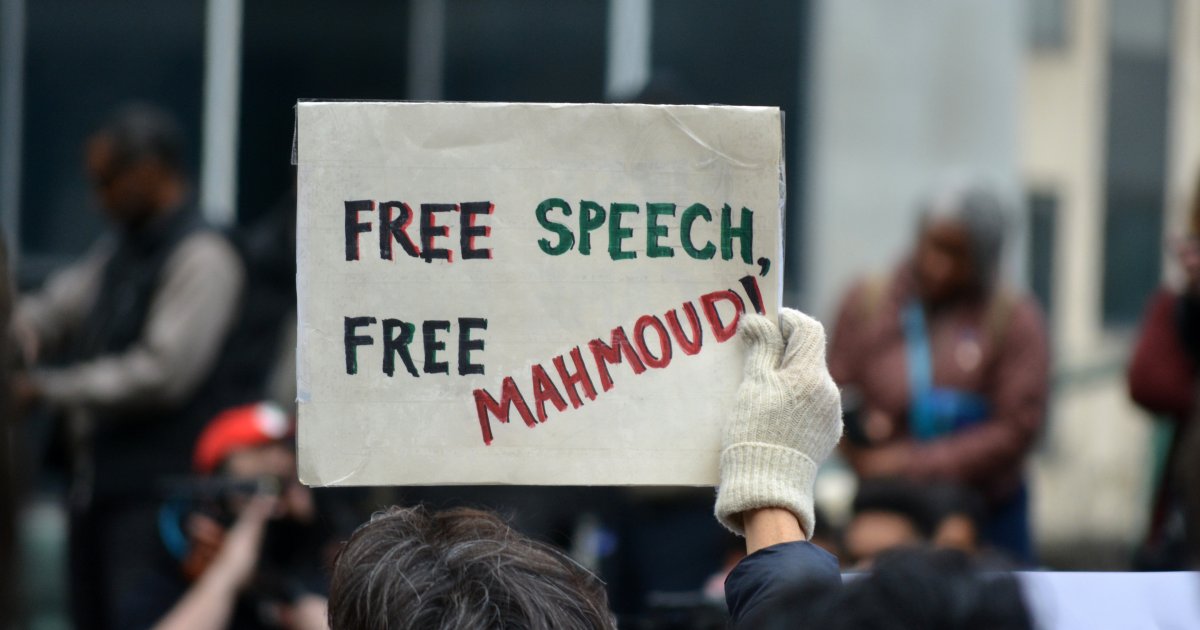
    And that’s why, last week, FIRE filed a “friend of the court” brief along with a coalition of civil liberties groups contesting the federal government’s detention of lawful permanent resident Mahmoud Khalil. 

    The brief challenged the administration’s use of a statute empowering the secretary of state to deport a lawful non-citizen resident if the secretary determines their “presence or activities” has a “potentially serious” effect on American foreign policy. 

    As FIRE explains, none of the many immigrants in the U.S., including the million-plus on campus, “will feel safe criticizing the American government of the day — in class, scholarship, or on their own time — if a current or future secretary of state may, whenever he chooses and at his unreviewable discretion, deem them adverse to American foreign policy and have them deported.”

    Noncitizens lawfully in the United States may lose their residency for many reasons, like criminal activity or overstaying beyond the authorized date.

    Exercising the freedoms protected by our First Amendment should not be one of them. 

    Source link

  • Government economic policy depends on a healthily diverse higher education ecosystem

    Government economic policy depends on a healthily diverse higher education ecosystem

    At GuildHE, we represent over 60 institutions that do not fit the traditional, large, generalist, research-intensive mould. These institutions are deeply focused on industrial readiness, employability, specialist skills and regional growth.

    They deliver vital skills in geographical areas and sectors where the UK faces acute shortages, and directly support the government’s own missions to grow, increase opportunity, develop a greener future, reduce crime levels and build a better NHS. Whether this is achieved through healthcare, the built environment, teaching, policing, agricultural innovations, law or the creative economy, the future talent pipeline to address these missions depends, in large part, on the success of these providers. However, the current funding landscape does little to protect and support them.

    The image of the large generalist, research-intensive traditional higher education institution is the model on which the funding and regulatory system in the UK is based. This model has become the DNA of our systems, which rely on assumptions about the sector as a whole: its strategic missions, delivery mechanisms and capacity. These assumptions naturally impact the incentives and levers that are built into policy frameworks.

    Policies often fail to recognise those that fall outside that image, so that smaller, specialist, and non-traditional institutions face increasing threats to their viability. Sector consolidation and investment in the historically-established HE model, as seen in other settings across the world such as Australia and the US, could undermine our global reputation, agility and responsiveness to diverse students and industries.

    Challenging these systems, and the methodologies on which they are built, will require the government to embrace innovative models of practice across education, skills and research, even if it comes with some associated risk. Indeed, it will require a brave examination of the effectiveness of the very regulatory and funding systems which are encouraging a level of homogenisation across the sector that could spell its own doom.

    To that end, we propose an approach to spending in the next period that focuses on reforms to encourage investment and rethinking the system to make it work smarter.

    Invest in the talent pipeline and protect student choice

    As part of this government’s vision to expand opportunity, we have seen the beginnings of multiple new strategies and administrative initiatives, including proposals for a new Industrial Strategy, a Get Britain Working strategy, a new ten-year plan for the NHS, reform of higher education and the introduction of Skills England. These new arrivals aim to improve economic growth, encourage efficiency in public services, produce a future skills pipeline and build an investment environment for UK business.

    Higher education drives the transformative forces required to raise levels of productivity and improve economic growth. Institutions do this by stimulating the higher-level skills needed in industry, providing lifelong opportunities to retrain and upskill, and expanding opportunities for all to do so. They also do it by cultivating ideas and new knowledge; a cornerstone of productivity and growth.

    Alongside these contributions, we need to protect student choice by preserving a variety of institutional types and locations across the country. Doing so is vital to ensuring the widest range of students can access the transformative power of higher education; a power that yields both individual improvements in life chances and direct improvements to employability, our public services and our economy. Furthermore, a system that boasts a diverse range of institutions and provision types is a healthy one that can deliver to local economies and communities across the country and thereby demonstrate ways in which higher education institutions are vital to those beyond us.

    Balancing government growth and skills priorities with student choice is not mutually exclusive. Models of higher education that prioritise industry practice, employer needs, innovation impacts and workplace experience can achieve these priorities. The capability to develop high-level specialist skills dynamically in a way which also builds the social resilience required to respond effectively to new, advancing technologies is quickly becoming a standard requirement of our graduates. We need reformed spending to achieve it.

    Do things differently, get different results

    Minister of State for Skills Jacqui Smith has said that the government is ready to review the education system and develop a way forward that “challenges the status quo.” To genuinely fulfil this ambition, we need fundamental change to the foundational regulatory and funding systems so that diversity in terms of institution, student, and pedagogical approach can survive into the future. If this government is serious about its ambitions to grow and future-proof education and skills, the following reforms are needed.

    Reform teaching funding to support priorities

    Government should establish funding streams for specific outreach programmes in priority subject areas like creative arts, teaching, healthcare, construction and agriculture. Doing so would acknowledge failures in the prevailing market ideology that implied industrial need for qualified graduates would shape applications into relevant programmes. Identified subject areas required by both our industrial sectors and broader society could provide a clearer rationale for funding allocations than student numbers across current Office for Students bandings.

    The Strategic Priorities Grant for 2024–25 has been used to support “work on high-cost subjects, student mental health, degree apprenticeships, equality of opportunity, technical qualifications and a range of other priorities.” It is hard to see how smaller and smaller block grant funding allocations have delivered to myriad priorities and we have yet to see an evaluation of the effectiveness of that funding to support them.

    Given the existing financial pressures within the sector, which some suggest should be addressed by increasing tuition fees (presumably within the same funding methodologies), we suggest a more ambitious review of the funding system is needed to drive support to where it is most needed to preserve a healthy, dynamic and diverse sector that can deliver to a wide range of students across a wide range of locations, especially where there are limited routes into and through higher education.

    Revise funding for skills, research and innovation to drive growth

    The Growth and Skills Levy needs reforming. It needs to better support SMEs, which comprise 99 per cent of all UK employers and account for 61 per cent of total employment. SMEs are critical to most sectors, but they make up the majority of some identified as crucial sectors in the government’s Industrial Strategy, including life sciences, advanced manufacturing and the creative industries. Data from the Department for Culture, Media and Sport suggests that the vast majority of businesses in the creative industries are micro-businesses. To meet the government’s own industrial ambitions, it must not only reconsider how funding can be delivered through and to those SMEs, but also how investment in training could be flexed.

    Recent announcements by the government indicating plans to defund all Level 7 apprenticeships feel tone-deaf for those working in construction, healthcare, engineering and data science fields. To our minds, more technical skills training in fields meant to drive economic growth, which includes a wide range of skills at different levels, is not only a good thing, but is a necessary investment if those ambitions are to be realised. This is not to say we should fund L7 at the expense of lower level apprenticeships. Rather, we are advocating for investment in apprenticeships at all levels indicated as necessary by employers in those sectors where critical skills shortages have been identified as key barriers to economic growth and improvements in our public services.

    But it’s not just about skills training via apprenticeships. It’s also about generating new ideas and innovations to help us work more productively and unlock our abilities to deliver more with fewer tangible resources. To deliver that ambition, both research and innovation funding streams need reform. Higher Education Innovation Fund (HEIF) thresholds should be lowered to remove systemic biases that disadvantage smaller and specialist institutions. Research funding should be adjusted to provide reasonable minimum levels of allocation to all institutions where excellent research is being generated. Doing so would dramatically broaden the UK’s research base rather than deepen it by funnelling greater levels of funding to points where research is already established, thereby expanding research and development capabilities by widening the pool of contributors.

    Doing so would support a regional growth strategy. It would spread money to areas where infrastructure still needs development and could provide incentives in geographical areas where ERDF funding has been lost. Local authorities in non-mayoral regions should also have a clear role in shaping research and innovation policies, with greater collaboration and knowledge-sharing between them and MCA regions to create a more balanced and inclusive approach to regional development.

    A call for an inclusive funding model

    Higher education in the UK is built on a long history of tradition, prestige, and excellence. However, in a time of economic uncertainty and shifting international alliances, we must now innovate to maintain our position on the world stage. While large, generalist institutions continue to play a critical role in advancing knowledge and global competitiveness, they are just one part of the type of healthy higher education ecosystem needed to support 21st century democracies to deliver economically and socially for their citizens. Smaller-scale, specialist and non-traditional institutions with expertise in vocational, professional programmes are equally vital.

    The government has already acknowledged the importance of skills development, regional growth, and public sector workforce expansion in words, but these priorities must be reflected in its spending decisions, policy frameworks and implementation plans. The coming fiscal choices will contribute to whether the UK’s higher education system remains diverse, dynamic, and globally competitive—or whether it risks stagnation.

    Policymakers face a critical choice: will they promote a more balanced and inclusive approach to funding that embraces risk to boost excellence in research, innovation, and skills development? The future of our sector, the UK’s ability to meet its domestic goals, and the growing need for clear, strong and sustainable geopolitical values, depend on it.

    Source link

  • FIRE and coalition partners file brief rebuking the U.S. government for attempting to deport Mahmoud Khalil for his protected speech

    FIRE and coalition partners file brief rebuking the U.S. government for attempting to deport Mahmoud Khalil for his protected speech

    WASHINGTON, March 20, 2025 — The Foundation for Individual Rights and Expression filed a brief Thursday with a clear message: Jailing people for their political expression betrays America’s commitment to free speech.

    FIRE’s brief — joined by a coalition of civil liberties groups — explains the First Amendment violations stemming from the Trump administration’s unconstitutional detention of and attempts to deport Mahmoud Khalil, a lawful permanent resident of the United States, for his expression. After 12 days in detention, the government still has not charged Khalil with a crime. 

    The “friend of the court” brief from FIRE, the National Coalition Against Censorship, the Rutherford Institute, PEN America, and the First Amendment Lawyers Association argues the Trump administration’s attempt to deport Khalil constitutes textbook viewpoint discrimination and retaliation in violation of the First Amendment.

    “Khalil’s arrest, which President Donald Trump heralded as the ‘first of many to come,’ is an affront to the First Amendment and the cherished American principle that the government may not punish people based on their opinions,” said Conor Fitzpatrick, FIRE supervising senior attorney.

    In its attempt to deport Khalil, the government has thus far focused solely on Khalil’s protected speech rather than charging him with criminal behavior. An administration official told The Free Press that the “allegation here is not that he was breaking the law,” and White House Press Secretary Karoline Leavitt said Khalil faces deportation because he was “siding with terrorists” and “distributed pro-Hamas propaganda flyers with the logo of Hamas.”

    The Supreme Court held in 1945 that non-citizens are entitled to full First Amendment protections. And those protections cover unpopular expression, especially when that expression is political speech. The Supreme Court held in its landmark Texas v. Johnson decision that “if there is a bedrock principle underlying the First Amendment, it is that the government may not prohibit the expression of an idea simply because society finds the idea itself offensive.”

    The administration is relying on a rarely used Cold War-era statute that empowers the secretary of state to deport a lawfully present non-citizen if the secretary determines their “presence or activities” has a “potentially serious” effect on America’s foreign policy. The administration claims that authority extends even to deporting green card holders for protected speech.

    FIRE disagrees. The statute is unconstitutionally vague and gives the secretary of state unfettered discretion to deport lawful permanent residents without giving them notice of what conduct triggers expulsion. Not only does the First Amendment trump a Cold War-era statute, but the sweeping authority the administration claims it confers “places free expression in mortal peril,” as FIRE’s brief argues.

    The brief also explains that the contours of the United States’ foreign policy are ever-changing and provide no meaningful guidance as to what opinions lawful permanent residents may or may not voice. If lawfully present non-citizens can be deported simply for endangering American “foreign policy,” the only sure way to avoid deportation is to self-censor and not voice any opinions. 

    “No one in the United States of America should fear a midnight knock on their door because they voiced an opinion the government doesn’t like,” Fitzpatrick said. “Accepting Secretary Rubio’s position would irreparably damage free expression in the United States.”

    FIRE’s brief analogized the administration’s approach to Article 51 of the Chinese Constitution, which warns that exercising “freedom” must not conflict with the “interests” of the government. “Allowing the government to step in as a censor when it believes free speech threatens the government’s interests is a loophole with an infinite diameter,” Fitzpatrick said. “It has no place in America’s tradition of individual liberty.”

    If Khalil’s deportation proceeds, the chilling effect will be profound for other international students who are presently studying at American universities. 

    “Other foreign college students will have good reason to fear criticizing the American government during classroom debates, in term papers, and on social media,” FIRE attorney Colin McDonell said. “Holding students engaged in basic political expression to different standards based on their citizenship status is poisonous to free speech on campus.”


    The Foundation for Individual Rights and Expression (FIRE) is a nonpartisan, nonprofit organization dedicated to defending and sustaining the individual rights of all Americans to free speech and free thought — the most essential qualities of liberty. FIRE educates Americans about the importance of these inalienable rights, promotes a culture of respect for these rights, and provides the means to preserve them.

    CONTACT:
    Karl de Vries, Director of Media Relations, FIRE: 215.717.3473 x335; [email protected]

    Source link