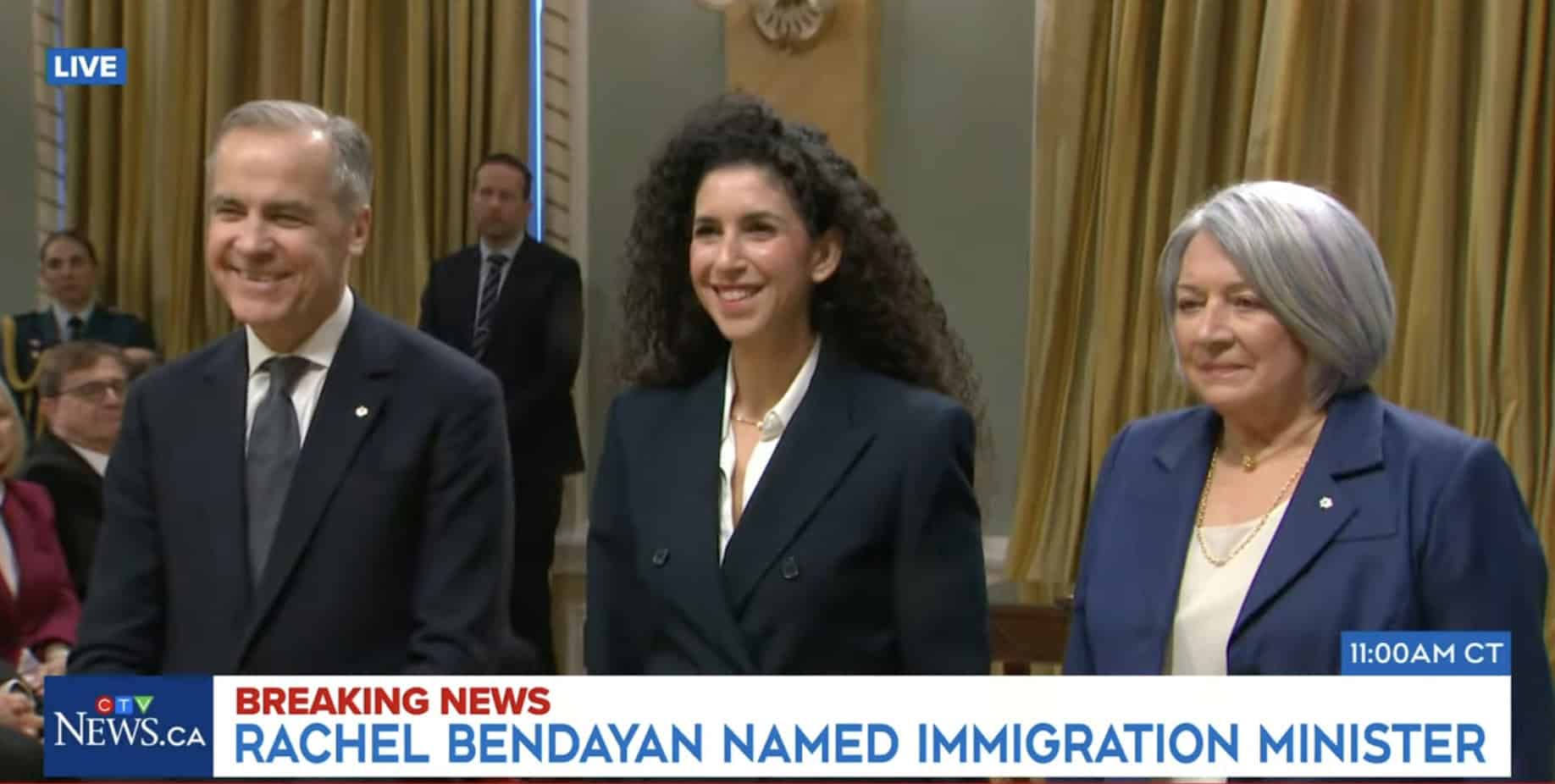
The cabinet reshuffle came upon Carney’s swearing-in ceremony as Canada’s new Prime Minister on Friday 14 March, following his landslide victory in the Liberal leadership race announced on March 10.
Miller has been replaced by Rachel Bendayan, formerly the minister of official languages and associate minister of public safety under Trudeau. Bendayan is one of 11 female ministers in Carney’s 24-member cabinet.
Holding various government positions since being elected to parliament in 2019, Bendayan was the first Canadian of Moroccan descent to join the federal government.
While a change of tack regarding immigration is unlikely until after the federal election, international education stakeholders are hopeful about Miller’s successor who will head up Immigration, Refugees and Citizenship Canada (IRCC).
“Canada is due for a reset on the immigration file. The former minister rode a wave of negative sentiment to make Canada feel increasingly unwelcoming to international students and their family members,” Canadian immigration lawyer Matthew McDonald told The PIE News.
“My hope is that Minister Rachel Bendayan will bring a more positive spirit to the country’s immigration conversation,” he added.
Based on Bendayan’s role as minister for official languages, McDonald said he expected she would continue IRCC’s commitment to the prominence of the French language in permanent residence programs.
Bendayan’s legal background also suggests that she may continue the “technocratic approach” to policy seen of her predecessor, he added.
The former minister rode a wave of negative sentiment to make Canada feel increasingly unwelcoming to international students
Matthew McDonald, Canadian Immigration Services
“We are changing how things work, so our government can deliver to Canadians faster – and we have an experienced team that is made to meet the moment we are in. Our government is united and strong, and we are getting right to work,” said Prime Minister Carney.
Carney, formerly head of the Bank of Canada and Bank of England, and a relative political newcomer, will succeed Justin Trudeau as relations hot up between the US and Canada over Donald Trump’s trade war against its northern neighbour.
Trudeau’s large cabinet was made up of 37 ministers, including his longtime personal friend and the best man at his wedding, immigration minister Marc Miller.
Carney himself never sat on Trudeau’s cabinet, which was part of his appeal to some Liberal voters.
While several Trudeau stalwarts have been dropped from Carney’s cabinet, there is still considerable overlap and only three new faces, which Carney’s team said would ensure “continuity”.
We are changing how things work, so our government can deliver to Canadians faster
Mark Carney, Canadian Prime Minister
In the absence of an education minister at the federal level, Miller has delivered many of the turbulent policy changes in international higher education over the past 14 months. He has become notorious in the sector for repeatedly doing so on a Friday afternoon.
Against the backdrop of a recent increase in anti-immigration sentiment across Canada, McDonald said that Bendayan had “the opportunity to seize this existential moment for Canada and reinforce that we are a country whose past, present, and future is an immigration story”.
Previous statements made by Carney about tackling Canada’s housing crisis, prioritising those already in Canada for permanent residency and reducing temporary foreign worker levels suggest the government’s ongoing immigration policy will largely align with Miller’s going forward.
While Carney has not explicitly said anything about limiting international students, he has previously voiced concerns about institutions’ reliance on international students and has advocated for increased funding for postsecondary education.
Under Canada’s current immigration levels plan, the government is aiming to reduce temporary residents including international students and temporary workers to 5% of the total population by 2027.
Canada’s next federal election is currently scheduled for October, though there is speculation that Carney could call an election before parliament is expected to return on March 24.
A new White House directive to heads of executive departments and agencies threatens to make it prohibitively expensive for Americans to defend the Constitution in court. The memo “directs” the departments and agencies to “demand” that courts make those seeking injunctions against federal actions “cover the costs … incurred if the Government is ultimately found to have been wrongfully enjoined.”
The move could not be more transparent in attempting to scare off potential litigants challenging executive orders or other federal actions of questionable constitutionality.
The White House deems this necessary because “activist organizations” are supposedly “inserting themselves into the executive policy making process” and have “obtained sweeping injunctions.” The administration claims Rule 65(c) of the Federal Rules of Civil Procedure mandates security bonds for all preliminary injunctions and temporary restraining orders to protect against the prospect of a later judicial ruling that the defendant was improperly enjoined.
But this is misleading. That literal reading of the rule may make sense in the mine-run of private disputes, like claims in commercial contexts. But courts have long recognized exceptions for public-interest litigation, especially when it comes to those seeking to protect constitutional rights. In other words, “activist groups” like FIRE and the clients we proudly defend.
Our free speech protections safeguard us from government incursion, they do not extend “rights” — that is, protection — to government actors.
It’s bad enough Rule 65 already exempts “the United States, its officers, and its agencies” from the bond requirement if they win a preliminary injunction, and that the feds also avoid the obligation the Civil Rights Act imposes on state actors to pay attorney fees if a party sues to correct a constitutional violation and wins. But to insist on payment by a party challenging the constitutionality of government action — after that party has shown likelihood of succeeding on the claim, as is required for a preliminary injunction — clearly seeks to buck the case law on public interest litigation. In the name of disincentivizing challenges to constitutionally suspect federal action, no less.
And that’s just wrong — the government should not be in the business of financially punishing those who seek to vindicate their constitutional rights, or of erecting extra barriers to being able to do so.
FIRE made the same point in our recent friend-of-the-court brief filed with the U.S. Court of Appeals for the Ninth Circuit in U.S. News v. Chiu. In that case, San Francisco’s city attorney took issue with U.S. News’ annual hospital rankings and launched a “false advertising” investigation that included subpoenas demanding, among other things, that the publisher disclose its ranking methodology and supporting documents.
So U.S. News challenged the subpoenas in court as retaliation against its protected speech. But the city attorney sought to dismiss the case as a meritless “strategic lawsuit against public participation” (SLAPP) under California’s anti-SLAPP law and sought attorney fees, as the statute allows for prevailing defendants. Troublingly, the court bought it, dismissing the case and ordering U.S. News to pay.
Just one problem: Anti-SLAPP laws protect defendants from frivolous lawsuits alleging defamation or similar claims that are designed not necessarily to prevail, but to silence or punish the exercise of free speech rights. And state actors operating in official roles do not exercise free speech rights at all, but rather, government powers, as the Sixth Circuit recently reaffirmed. Our free speech protections safeguard us from government incursion, they do not extend “rights” — that is, protection — to government actors, which is who wield the powers from which protection is needed. Exactly like those the city attorney wielded in subpoenaing U.S. News.
That’s why, when U.S. News appealed, FIRE’s brief argued the district court was wrong to award fees in granting the city attorney’s anti-SLAPP motion. Giving government officials anti-SLAPP protection serves only to chill people from challenging unconstitutional and illegal government actions, thus threatening the very rights that anti-SLAPP laws seek to protect.
The White House’s new directive suffers from the same chilling problem. If agencies insist that courts make people put up or shut up by having to cover potentially ruinous federal governmental costs if they preliminarily succeed in challenging unconstitutional behavior, then naturally fewer plaintiffs (and organizations that represent them) will be willing and able to vindicate First Amendment rights in court.
Because of its broad membership, regional breadth, early creation and size, SREB President Stephen L. Pruitt said the commission is poised to produce critical recommendations that will inform not only Southern education decision makers but those throughout the nation.
“AI is fundamentally changing the classroom and workplace,” Pruitt said. “With that in mind, this commission is working to ensure they make recommendations that are strategic, practical and thoughtful.”
The commission is set to meet for another year and plans to release a second set of recommendations soon. Here are the first six:
Policy recommendation #1: Establish state AI networks States should establish statewide artificial intelligence networks so people, groups and agencies can connect, communicate, collaborate and coordinate AI efforts across each state. These statewide networks could eventually form a regional group of statewide AI network representatives who could gather regularly to share challenges and successes.
Policy recommendation #2: Develop targeted AI guidance States should develop and maintain targeted guidance for distinct groups using, integrating or supporting the use of AI in education. States should include, for example, elementary students, middle school students, high school students, postsecondary students, teachers, administrators, postsecondary faculty and administrators and parents.
Policy recommendation #3: Provide high-quality professional development State K-12 and postsecondary agencies should provide leadership by working with local districts and institutions to develop plans to provide and incentivize high-quality professional development for AI. The plans should aim to enhance student learning.
Policy recommendation #5: Assess local capacity and needs States should develop and conduct AI needs assessments across their states to determine the capacity of local districts, schools and postsecondary institutions to integrate AI successfully. These should be designed to help states determine which institution, district or school needs state support, what type of support and at what level.
Policy recommendation #6: Develop resource allocation plans States should develop detailed resource allocation plans for AI implementation in schools, school districts and institutions of postsecondary education to ensure that the implementation of AI is successful and sustainable. These plans should inform state fiscal notes related to education and AI.
The 60-plus member commission was established in February of 2024. Members include policymakers and education and business leaders throughout the 16-state SREB region.
For more information about the commission please see the following links:
SREB Staff
A nonprofit, nonpartisan interstate compact, SREB was created in 1948 by Southern governors and legislators who recognized the link between education and economic vitality. SREB states are Alabama, Arkansas, Delaware, Florida, Georgia, Kentucky, Louisiana, Maryland, Mississippi, North Carolina, Oklahoma, South Carolina, Tennessee, Texas, Virginia and West Virginia. More at SREB.org.
Latest posts by eSchool Media Contributors (see all)
Thanks to Alan Collinge and Student Loan Justice for this information on government contractors for the US Department of Education’s Student Loan Portfolio.
By Professor Katy Mason, PVC Dean at the University of Salford’s Business School.
We’re at a crucial moment in our fight to address climate change, with limited time to end the irreversible damage to our planet. However, higher education institutions (HEIs) could play a more pivotal role on the road to net zero.
Climate-related challenges are considerable and require both technological innovation and the reorganisation of our society and economy. Universities are in a strong position to drive these transitions, but because of the required pace of change, they need to do so in collaboration with government. For example, universities are well positioned to mobilise the STEM (science, technology, engineering and maths) and technical expertise required to evolve the way energy is generated, stored and distributed, as well as the SHAPE and social practice expertise to support the social transitions required to transform energy production and consumption. This broad range of expertise, uniquely perhaps, sits under one organisational umbrella: the HEI.
Reducing carbon footprint with research
HEIs have been working, increasingly over recent years, to structure and support multi, inter and transdisciplinary research, in ways that will ultimately support the reduction of our carbon footprint to deliver net zero.
The formation of UKRI (UK Research and Innovation) has supported many of these initiatives. In April 2018, UKRI brought together the UK’s seven research councils, Innovate UK, and Research England, into a single organisation to support the distribution of government funding for impactful, interdisciplinary research.
Accelerating a green growth economy through collaboration
Climate change mitigation and building the UK’s resilience to climate change impacts has been a central tenant of UKRI’s attention, with funding calls driving collaboration between academics, industry and government. But interdisciplinary research, on its own, is not enough. HEIs and government will have to find new ways of collaborating if we are to accelerate a green growth economy.
There are examples of successful collaboration. The Government’s Open Innovation Team is a platform that supports academic-policy collaboration, curating academic expertise to support and inform policy initiatives. Similarly, the United Nations PRME (Principles of Responsible Management Education) platform supports and accelerates the sustainability of current and future business leaders in Business and Management education. However, at present, its take-up is piecemeal and patchy. Much more collaboration is needed if we are to make a difference to climate change.
Recognition of the advantages afforded by collaboration is long-standing. As far back as 2000, Vangen and Huxman were developing a theory of collaborative advantage, arguing that goals, trust, culture and leadership had to be aligned enough – despite differences and tensions – if advantages were to be gained.[i] In this regard, collaboration is often inconsistent, with inherent contradictions and mutually exclusive elements caused by inevitable differences between partners. While it is these differences that often generate advantage, they require time and investment in understanding. This is perhaps why we have not invested sufficiently in making such partnerships work.
Breaking down barriers to collaboration
The contrasting cultures of academics and policymakers may certainty make collaboration difficult: the epistemologies-in-use (how knowledge, evidence and rigour are framed) are different; the production and use of knowledge objectives is different; and the rules of identity and belonging to the home-culture are different.
However, as Beech et al. argue, we can take advantage of these significant cultural differences if HEIs develop a new kind of platform that acts as a learning zone in which key cultural rules of academics and policymakers are suspended (not ‘solved’).[ii] This will enable different groups to contribute and extract learning insights as if they were collaborating with shared understanding, when this may only partially be the case.
In pursuit of creating a new kind of learning platform, HEIs, particularly those leading knowledge exchange and engagement initiatives, might usefully adopt this set of design principles:
Valuing difference and not seeking to resolve it;
Having the purpose of supporting others’ endeavors in their home-culture by providing knowledge resources;
Be willing to aggregate and disaggregate ideas and evidence in novel ways; and
Be willing to suspend judgement of the other and the self to encourage people to step outside their normal modes of interaction
These design principles will likely help knowledge exchange leads catalyse innovation and accelerate the adoption of cutting-edge practice by bringing local, regional and national policymakers together with academics to advance solutions to overcome climate change obstacles.
‘Making Britain a clean energy superpower’
Academics and policymakers are explicit in their ambition to tackle climate change. The UK Government states one of its key missions as ‘making Britain a clean energy superpower’ by ‘creating jobs, cutting bills and boosting energy security with zero-carbon electricity by 2030.’
Driven by government monies directed towards UKRI for this purpose and by researchers’ concerns, passions, and expertise, some universities have built up significant industrial and third-sector networks to support the development and transformation of our greening economy.
For example, researchers at Lancaster, Swansea, Imperial, and Salford have been studying the farming sector and its potential transformation through agrivoltaics. Agrivoltaics co-locate high-quality food and green energy production on the same land while simultaneously aiming to secure biodiversity net gain. This is a complex and ambitious agenda that will contribute to more than the ‘clean energy’ challenge.
Agrivoltaics requires expertise in physics to understand solar panel efficiency, reliability and maintenance, while plant science knowledge is essential to understand food nutrition and biodiversity complexities. In addition, social science expertise is required to understand the design and transformation of the farming sector, the development of a circular economy for solar panels, and how the proliferation of markets might reconnect across the entire food and energy production and consumption systems to ensure sustainability.
To uncover ‘what works’ will ultimately require us to collaborate with those seeking to use agrivoltaics and all those involved in solar panel production and management upstream and downstream of the supply network.
My involvement in this project has been exciting, frustrating and demanding. I suspect that we could have significantly accelerated our impact if we had not lacked access to a platform that systematically supported policy-academic engagement. In line with our research that shows the desire and difficulty for policymakers to engage with researchers, it seems there is much more we can do, as HEIs to support this.
[i] Huxham, C., & Vangen, S. (2013). Managing to collaborate: The theory and practice of collaborative advantage. Routledge.
[ii] Beech, N., Mason, K. J., MacIntosh, R., & Beech, D. (2022). Learning from each other: Why and how business schools need to create a “paradox box” for academic–policy impact. Academy of Management Learning & Education, 21(3), 487-502
As we head towards the federal election, both sides of politics are making a point of criticising universities and questioning their role in the community.
Please login below to view content or subscribe now.
Level 7 apprenticeship growth has been one of the higher education success stories of recent years.
Our technical education system is weak by international standards, yet high level technical skills will be vital to the urban planning and infrastructure improvement ambitions of our current government, while at the same time boosting social mobility by allowing those who can’t afford to study on a traditional course at university the opportunity to gain a postgraduate qualification.
It therefore would appear counterintuitive that the government has been hinting that many if not all level 7 apprenticeships could have their eligibility for levy funding removed, couched in language of prioritising spending on growing lower level and new “foundation” apprenticeships.
This proposed redistribution fails to acknowledge that progression benefits apprentices at all levels, as those moving into senior roles create new vacancies or advancement opportunities via the positions they vacate.
Build baby build?
Nowhere is this clearer than in the built environment sector. The UK’s housing crisis is the pivotal issue that this government has promised to tackle. Their promise to build 1.5 million new homes by 2030 is ambitious – it has been labelled unachievable by the CEO of the UK’s largest housebuilding company because of skills shortages, and most councils are reporting that it won’t be possible to achieve.
If such a goal is to be accomplished, it will demand highly skilled professionals to streamline planning processes, deliver housing projects, and support regional infrastructure development.
At my institution, London South Bank University (LSBU), 70 per cent of our level 7 apprentices are on the chartered town planner standard. On a day-to-day basis they address planning bottlenecks and ensure that housing and infrastructure projects meet the various regulatory and environmental standards. Only last month the first level 7 chartered town planner apprentices in England graduated successfully from LSBU having joined their employer with no prior experience in the planning sector aged 18 after completing school.
Over half of the employers we work with at LSBU on level 7 apprenticeships are local authorities. Our apprentices enable councils to deliver projects in the wake of increased demand and reintroduced mandatory housing targets. The suggestion that, as employers, local authorities should step in and pay for the level 7 apprenticeships themselves is fanciful. The legacy of austerity has left one in four councils expecting to apply for an emergency government bailout in the next two years. If the Treasury decides to remove levy funding, employers will not be able to fill the gap.
If the UK hopes to comply with the Future Homes Standard and the National Retrofit Strategy V2, more highly trained architects are required. The profession is in high demand but short supply – it had been on the Shortage Occupation List until the previous government abolished the list last April.
Level 7 architect apprentices, of which LSBU currently train 78, design energy-efficient buildings and support urban regeneration. They contribute to both public housing schemes and private sector developments by driving innovation in sustainable construction and are already supporting the government’s ambition to retrofit five million homes by 2029.
Growth ambitions
In addition to their clear role in developing infrastructure, level 7 apprenticeships are vital for social mobility. They open doors for individuals from underrepresented groups, in part because apprentices earn whilst they learn and aren’t put off by the prospect of incurring student debt. A true leveller of the playing field, they provide excellent career progression opportunities and higher earnings potential. A greater proportion of our level 7 apprentices are from black, Asian, and minority ethnic (BAME) backgrounds (55 per cent) and are female (52 per cent) than those studying apprenticeships at lower levels.
Most of our level 7 apprentices are under the age of 25, so the characterisation that they are simply the reserve of older learners is unfounded. For example, at LSBU, we provide tailored pathways for young learners to embark on higher level apprenticeships in regionally relevant sectors from level 2 to level 7 through our unique group model which includes London South Bank Sixth Form (a new technically focused sixth form academy concept) and London South Bank Technical College (the first technical college for a generation).
Level 7 apprenticeships are central to this government’s ambitions around growth, sustainability, and equality of opportunity. Despite recent increases in uptake, they have actually accounted for a slightly smaller proportion of the total apprenticeship budget over the last couple of years.
Every standard addresses unique challenges and supports sector-specific needs. A blanket removal of funding from level 7 apprenticeships will risk planning reforms and housing developments. At the very least, apprenticeships in the ten sectors prioritised by Skills England as growth-driving need to be protected from Treasury cuts.
Let’s begin with President Donald Trump’s second inaugural address (Jan. 20), if only to contrast it with last week’s condemnation of his lawsuit against J. Ann Selzer, the Des Moines Register, and its parent company Gannett (see also FAN 451, 449 and 436).
Ready? Here it goes:
After years and years of illegal and unconstitutional federal efforts to restrict free expression, I will also sign an executive order to immediately stop all government censorship and bring back free speech to America.
Never again will the immense power of the state be weaponized to persecute political opponents, something I know something about. We will not allow that to happen. It will not happen again. Under my leadership, we will restore fair, equal, and impartial justice under the constitutional rule of law.
Never again! It will not happen again! Stop all government censorship!
And there’s more: When it comes to free speech, all views will be treated with “impartial justice.” Against that promissory note, let us turn to his unprecedented executive order as discussed below.
Executive Order: Jan. 20, 2025
By the authority vested in me as President by the Constitution and the laws of the United States of America, and section 301 of title 3, United States Code, it is hereby ordered as follows:
What follows is a brief description of the Executive Order along with some preliminary comments.
Section 1. Purpose
This section opens with an attack on the Biden administration’s alleged “trampl[ing of] free speech rights” when it comes to “online platforms.” Such abridgments, it is asserted, were done in the name of combating “misinformation,” “disinformation,” and “malinformation” in order to advance the Biden administration’s “preferred narrative.”
Note at the outset that this section is primarily addressed to reversing the Biden administration’s apparent censorship of online expression. Even so, there is a generalized statement: “Government censorship of speech is intolerable in a free society.”
Keep that in mind when it comes to what is set out in Section 4 below.
Section 2. Policy
This section focuses on four commitments: (i) securing free speech rights of all “American[s]”; (ii) mandating that “no [federal] agent engages in or facilitates” abridgments of free speech; (iii) ensuring that no “taxpayer resources” are used to abridge free speech; and (iv) identify and correct any past federal abridgments of free speech.
Unlike Section 1, the explicit focus of this section is not confined to any free speech abridgments committed by the previous administration. The focus is on securing free speech rights of “citizens.” Hence, the policy is directed to an affirmative obligation of the Executive branch to protect free speech rights. The operative action words are “secur[ing],” “ensur[ing],”and“identify[ing].”
Thus, there is a duty to ensure that no federal officers are used or taxpayer dollars expended in violation of the Speech Clause of the First Amendment. Also, unlike Section 1, much of Section 2 applies to all free speech rights and not those confined to social media. There is also a promise to investigate for any and all existing abridgments of free speech committed by “past misconduct by the Federal Government.”
Section 3. Ending Censorship of Protected Speech
Like Section 1, this section focuses on the actions of the past administration (i.e., abridgments committed “over the past four years”). This section, unlike section 2, explicitly applies to federal departments and agencies, though it also applies to federal officers, agents and employees. Such agencies and departments must comply with the requirements of Section 2.
The second portion of this section deals with the investigative powers of the attorney general working “in consultation with the heads of executive departments and agencies.” Again, this investigation is confined to wrongs committed by the past administration. Following such investigations, a “report” shall be submitted to the President suggesting “remedial actions.”
Much of this section seems repetitive of what is set out in Section 2, save for the references to federal departments and agencies and the need for investigation followed by a report to the President. Note that under Section 3, remedial action is suggested, whereas under Section 4, per this Executive Order, remedial action against the United States and its officers is prohibited.
Section 4. General Provisions
In order to appreciate the import of this clause, it is best to quote the final provision (sub-section (c) it in its entirety (with emphasis added):
This order is not intended to, and does not, create any right or benefit, substantive or procedural, enforceable at law or in equity by any party against the United States, its departments, agencies, or entities, its officers, employees, or agents, or any other person.
The opening provisions of this Section refer to authorizations of grants of executive power. The Order is to be implemented consistent with the “applicable law and subject to the availability of appropriations.”
Importantly, While the First Amendment is a prohibition against the federal government and all its officers, this Executive Order:
applies to free speech wrongs committed during “the last 4 years” or “past misconduct by the Federal Government” or abridgments occurring “over the last 4 years,” though there is a passing mention of securing the free speech rights of all “American[s].”
Yet even as against such past alleged free speech wrongs, the sole remedy is by way of corrective action taken by the Executive Branch.
If such corrective action, or any other actions taken by Executive officials in pursuance of this Executive Order, themselves abridge First Amendment rights, there is no independent remedy secured by the Order.
FIRE weighs in with its own free speech recommendations to the President
Below are the four general categories of recommendations made (see link above for specifics):
Support the Respecting the First Amendment on Campus Act
Address the abuse of campus anti-harassment policies
Rein in government jawboning
Protect First Amendment rights when it comes to AI
“As president, Trump inherits the privilege and the obligation to defend the First Amendment rights of all Americans, regardless of their viewpoint — and FIRE stands ready to help in that effort.”
Justice Ketanji Brown Jackson in free expression mode at the Inauguration?
Justice Ketanji Brown Jackson at the inauguration of Donald Trump on Jan. 20, 2024. (Imagn Images)
Excerpts from Virginia Court of Appeals decision in Patel v. CNN, Inc.
Kash Patel, seen here at the 2023 Conservative Political Action Conference, is President Donald Trump’s nominee to head the FBI. (Consolidated News Photos / Shutterstock.com)
An excerpt from today’s Virginia Court of Appeals decision in Patel v. CNN, Inc., decided by Judge Rosemarie Annunziata, joined by Judge Vernida Chaney (the opinions weigh in at over 12,000 words, so I only excerpt some key passages).
Abortion picketing case lingers on docket
The cert. petition in the abortion picketing case, with Paul Clement as lead counsel, has been on the Court’s docket since July 16 of last year. It has been distributed for conferences seven times, the last being Jan. 21. In his petition, Mr. Clement (joined by Erin Murphy) explicitly called on the Court to “overrule Hill v. Colorado.” (See FAN 433, July 31, 2024))
Paul Clements and Erin Murphy
More in the News
2024-2025 SCOTUS term: Free expression and related cases
Cases decided
Villarreal v. Alaniz(Petition granted. Judgment vacated and case remanded for further consideration in light of Gonzalez v. Trevino, 602 U. S. ___ (2024) (per curiam))
Murphy v. Schmitt (“The petition for a writ of certiorari is granted. The judgment is vacated, and the case is remanded to the United States Court of Appeals for the Eighth Circuit for further consideration in light of Gonzalez v. Trevino, 602 U. S. ___ (2024) (per curiam).”)
TikTok Inc. and ByteDance Ltd v. Garland (The challenged provisions of the Protecting Americans from Foreign Adversary Controlled Applications Act do not violate petitioners’ First Amendment rights.)
This article is part of First Amendment News, an editorially independent publication edited by Ronald K. L. Collins and hosted by FIRE as part of our mission to educate the public about First Amendment issues. The opinions expressed are those of the article’s author(s) and may not reflect the opinions of FIRE or Mr. Collins.
On January 20, the Trump administration issued an executive order (EO) titled, “Defending Women from Gender Ideology Extremism and Restoring Biological Truth to the Federal Government.” The EO was one of several executive orders and actions published by the Trump administration on its first day in office.
The EO states that the United States government will recognize only two sexes — male and female — and defines sex as “an individual’s immutable biological classification as either male or female.” The definition continues to say that sex is “not a synonym for and does not include the concept of ‘gender identity.’” The executive order also defines “woman” and “girl” and “man” and “boy” to be adult and juvenile human females and males, respectively.
The EO orders the secretary of health and human services to provide guidance expanding on the definitions established in the EO. It also directs all federal agencies to use the definitions set forth in the order “when interpreting or applying statutes, regulations, or guidance and in all other official agency business, documents, and communications.” All federal agencies will also be directed to use the term “sex” and not “gender” when administering or enforcing sex-based distinctions in applicable federal policies and documents.
It also appears that the Trump administration hopes to codify these definitions into law through Congressional action. Specifically, the EO directs the assistant to the president for legislative affairs to provide the president proposed bill text to codify the definitions set in the order within 30 days.
The EO also discusses the Supreme Court’s decision in Bostock v. Clayton County, which held that Title VII of the Civil Rights Act of 1964 protects employees from discrimination on the basis of sexual orientation or gender identity. The EO states that the Biden administration argued that the Bostock decision “requires gender identity-based access to single-sex spaces under, for example, Title IX of the Educational Amendments Act,” which the Trump administration states is “legally untenable.” As such, the EO directs the U.S. attorney general to issue guidance to federal agencies to “correct the misapplication” of Bostock to “sex-based distinctions in agency activities.” The EO also directs the attorney general to issue guidance and assist federal agencies in protecting sex-based distinctions.
The EO directs all federal agencies to submit an update to the Trump administration on implementation of this order within 120 days. The update is required to include information on changes to agency documents and agency-imposed requirements on federally funded entities, including federal contractors, that were implemented to comply with the order. The head of each federal agency is also directed to rescind all guidance documents inconsistent with the requirements of the order, and the EO includes a partial list of documents that the administration deems as inconsistent, including several Department of Education guidance documents on Title IX and the Equal Employment Opportunity Commission’s 2024 Enforcement Guidance on Harassment in the Workplace.
Finally, the EO directs agencies to take “all necessary steps, as permitted by law, to end the federal funding of gender ideology” and to “assess grant conditions and grantee preferences” to “ensure grant funds do not promote gender ideology.”
Federal agencies will soon begin to take action and announce guidance to comply with the EO requirements. Institutions should therefore be aware of forthcoming guidance from the Department of Education on Title IX as a result of this EO. There could also be future ramifications for institutions that receive federal funds, including grants and contracts. CUPA-HR will continue to monitor for agency actions as well as any additional updates from the Trump administration as it relates to sex and gender-related policy.
Secretary of state for education, Bridget Phillipson, addressed students considering studying abroad, highlighting the benefits of a UK education and promoting the country’s post-study work opportunities.
“In the new academic year, we will welcome thousands of international students who will be starting courses in our universities and I hope to see many more in the future,” Phillipson said in the video shared by the UK Council for International Student Affairs (UKCISA).
“The UK is a wonderful and safe place to study. Our country is home to some of the very best universities in the world – four of the world’s top 10 can be found right here in the UK.
“An education from a British university has been the springboard for success for so many global trailblazers, from politics to business, from the arts to the sciences, in fact dozens of current and recent world leaders studied here in the UK and our universities have driven some of the most exciting and valuable research anywhere in the world.
“You could be part of the next groundbreaking wave of research and join a new generation of inspiring leaders,” she told prospective students.
Phillipson went on to describe some of the ways in which UK universities support their international students through pastoral support, work experience, scholarships and bursaries.
“You’ll also get have the chance to join Alumni UK – a global group of people from around the world who have studied here. It’s a fantastic professional network that you can tap into to get great advice and guidance.”
Phillipson went on to promote the UK’s Graduate Route, describing the opportunity which lets graduates “work, live and contribute” in the UK.
International students forge international friendships so by studying abroad, you can help build bridges between our countries, and these connections help make the world a better, brighter place.
Bridget Phillipson, UK secretary of state for education
“Studying in the UK sets you up for success in your career, but it’s more than that. International students forge international friendships so by studying abroad, you can help build bridges between our countries, and these connections help make the world a better, brighter place.”
Phillipson previously addressed international students in a video not long after stepping into the role in July 2024.
On the release of the latest video, Anne Marie Graham, UKCISA chief executive, said she was “encouraged” to see the continuing messages of welcome and support from the UK’s education secretary.
“Current and prospective students will also welcome the secretary of state’s ongoing support for the graduate visa and her reflections on the mutual benefits of a UK education – not just the contributions that international students make to the UK, but the positive impact on their own careers and ambitions,” she told The PIE.
“We look forward to continuing to work with the UK government to ensure international students are welcomed and supported, from pre-arrival visas to post-graduation work opportunities, so that all international students have a positive experience studying here.”
Pedram Bani Asadi, chair of the UKCISA’s Student Advisory Group commented: “I welcome the support from this government for international students’ hopes and dreams, and recognition of all the contributions we make to both UK culture and the economy.
“Having access to the Graduate Route has been absolutely essential for me to be able to reinforce the skills I learnt in my studies and contribute to the UK. I appreciate all the friends and experiences I’ve had here and look forward to continuing my role as a #WeAreInternational student ambassador, and working with the UK government to support my fellow international students to have a positive experience.”
Since Labour took came into power, sector stakeholders have noted the government’s more welcoming tone toward international students, a marked contrast to the rhetoric of the previous Conservative government.
Despite a change in rhetoric, the Labour government has shown no intention of reversing the Conservative’s decision to ban international students on UK taught master’s courses from bringing dependants with them to the UK.
“While the new government has said many positive things about international students, the focus on immigration remains acute,” said Jamie Arrowsmith, director of Universities UK International in an update to sector earlier this month.
The UK’s international educations strategy is currently under review, and the rollout of the new approach is set for April.
Sector leaders gathered at the QS Reimagine Education summit in London late last year to discuss priorities for the UK’s international education sector going forward, giving suggestions for a refreshed strategy, which included improved post-study work rights.