Tag: Grad

  • Why Write About Grad, Postdoc Career Development? (opinion)

    Why Write About Grad, Postdoc Career Development? (opinion)

    As a higher education professional with a background in writing and rhetoric, I frame my work in career and professional development in terms of communication, such as helping trainees translate their skills to the language of employers, convey complex research to audiences beyond their fields and forge professional selves through the written and digital texts they produce. By training, I often think about how texts produce effects on readers and the design choices writers make to engage those audiences.

    At a time when higher education faces great adversity, I find myself reflecting on the value of writing about career and professional development work in a venue such as “Carpe Careers”: Why write about graduate and postdoc career and professional development? How does this writing translate the impact of our work to different audiences? In this piece, I outline what we do when we write about graduate and postdoc career and professional development and why we should keep writing about this work.

    Writing to Empower Graduate and Postdoctoral Scholars

    As career and professional development leaders, we sometimes feel frustrated that the impact of our work seems limited to one institution or program. For example, we might be the office of one at our institution and concerned about the scalability of advising appointments or low attendance at workshops. Writing about best practices for career and professional development can expand the reach of our advice to online audiences worldwide.

    For example, “Carpe Careers” writers have penned more than 400 pieces that address key career exploration skills like job search strategies, building an authentic personal brand and identifying transferable skills. In addition to equipping graduate and postdoctoral trainees with strategies for landing fulfilling jobs, we present essential advice for navigating academia, such as how to communicate with faculty mentors, deliver effective presentations and cultivate professional references.

    These essential topics continue to be necessary and relevant to new generations of graduate and postdoctoral readers because they make visible the hidden curriculum of academia and the world of work. Our work gives learners the tools to navigate these spaces with confidence, supplementing the efforts of mentors, coaches and instructional workshops. Likewise, when we write about professional development, we attend to the holistic flourishing of graduate and postdoctoral scholars by centering topics such as mental well-being on the job search, coping with the culture shock of career transitions or the power of rest. We not only give learners practical advice for the next steps in their careers but also cultivate virtual community and belonging for graduate and postdoctoral trainees facing common challenges and pursuing similar goals.

    Writing to Support Fellow Practitioners

    When we write about career and professional development, we put our own spin on old chestnut topics by drawing on our backgrounds, identities and experiences. For example, this recent piece reframes professional networking as a form of evidence-gathering and scientific research, leveraging the authors’ training in science. Putting our own spins on standard topics of career transitions and exploration can help us create a distinct personal professional brand as practitioners: How have we synthesized our own stories and the wisdom of others to support current graduate and postdoc trainees? What do we want to be known for as graduate and postdoc career development leaders?

    Beyond enriching individual professional identities, when we write about graduate and postdoc career and professional development, we also reflect on how our work with graduate and postdoctoral trainees is changing and identify opportunities for innovation, from the pros and cons of using generative AI tools for career-related activities to advice for supporting international job seekers. We likewise showcase innovative approaches to implementing career and professional development for graduate and postdoctoral learners, such as how to tailor experiential learning, alumni mentoring and badging programs to these populations.

    By reflecting on our practice and how we have adapted to challenges, this writing becomes a form of professional development for us, as it enriches the dynamic fields of graduate and postdoc career and professional development and extends our conversations from professional organizations and conferences to wider, virtual communities of practitioners. For instance, recent “Carpe Careers” pieces have highlighted administrative postdoc and “meta” postdoc roles as entry points to career development and related academic administrative work, defining new positions through the perspectives of those who hold these inaugural roles and shaping the futures of work in our fields. When we address practitioners as an audience, writing about career and professional development creates a virtual community of practice where we highlight emerging trends and offer support for one another’s professional growth.

    Writing to Engage Stakeholders

    Writing for fellow graduate and postdoc career practitioners elevates our work and sets the stage to convey its value to stakeholders, such as faculty and senior administrators whose support is crucial for campus career and professional development initiatives. The external recognition from a piece in a venue such as “Carpe Careers” can lead to greater internal recognition for our programs and offices. For example, when I wrote a “Carpe Careers” post on professional thank-you notes for Thanksgiving week 2024, a University of Pittsburgh newswire service highlighted it in a newsletter, and a vice provost invited me to present on writing thank-yous at a faculty retreat.

    Beyond our campuses, when we write about graduate and postdoctoral career development, we communicate the value of our efforts to stakeholders outside higher education, such as employers, policymakers and the public. As Celia Whitchurch observed, graduate and postdoc career and professional development work occupies a third space in higher education amid academic, student affairs and administrative functions, so it is often overlooked and less understood than more conventional academic or student life initiatives.

    Writing about our work situates it—and by extension the experiences of graduate and postdoctoral scholars—in the wider ecosystems of higher education and the workforce. This writing can educate stakeholders who are less familiar with the work of career and professional development, highlighting our contributions to graduate and postdoctoral learners’ success, and thereby helping us advocate for greater visibility and resources. When we write about graduate and postdoc career and professional development, we underscore the value of our work and its impacts on trainees, higher education and the wider society.

    Writing for and as Change

    Writing about graduate and postdoc career and professional development positions us as change agents, championing trainees’ holistic success and envisioning what our field could be. In this writing, we hold space for courageous conversations in difficult times, such as supporting learners through recent disruptions, reflecting on activism as a form of professional development and highlighting the entrepreneurial potential of our trainees amid economic uncertainty. Whether we address learners, fellow practitioners or broader stakeholders, when we write about career and professional development, we let ourselves dream about our careers and those of trainees, not only advocating for change but also modeling what change looks like through our advice, our programmatic innovations and our support for the broader enterprise of higher education.

    In short, writing about graduate and postdoc career and professional development is an affirmation of advanced degrees, higher education and the work of practitioners who support these learners’ long-term professional flourishing. This writing can be rewarding, as it scales up the impact of our advice, enriches professional communities and elevates the profile of career and professional development work. It can be bold, as it envisions and embodies positive change in our areas of practice. For “Carpe Careers” readers who are writers, why do you write about graduate and postdoc career and professional development? For “Carpe” readers who are considering writing about their work, when will you start?

    Katie Homar is the assistant director of the Office of Academic Career Development, Health Sciences, at the University of Pittsburgh. She is a member of the Graduate Career Consortium—an organization providing an international voice for graduate-level career and professional development leaders.

    Source link

  • Preparing Grad Students to Defend Academic Freedom (opinion)

    Preparing Grad Students to Defend Academic Freedom (opinion)

    Defending academic freedom is an all-hands-on-deck emergency. From the current administration’s scrutiny of (and executive orders related to) higher education, to state legislative overreach and on-campus bad actors, threats to academic freedom are myriad and dire.

    As leader of a program focused on free expression and academic freedom, I see faculty and campus leaders who are flummoxed about how to respond: Where to begin? What can be done to make a difference in defending academic freedom?

    I have an answer, at least if you’re graduate faculty, a dean or director of graduate studies, or a provost: Make a plan to prepare graduate students—tomorrow’s professors—to defend academic freedom.

    Graduate students often feel too pressed to focus on anything other than their coursework or dissertation and so are unlikely to study academic freedom on their own, even if they know where to find solid information. It is incumbent on faculty to put academic freedom in front of graduate students as a serious and approachable topic. If their professors and directors of graduate study do not teach them about academic freedom, they will be ill prepared to confront academic freedom issues when they arise, as they surely will, especially in today’s climate.

    An example: When I met with advanced graduate students at an R-1 university, one student recounted an experience as a junior team member reviewing submissions for a journal. He reported that another team member argued for rejecting a manuscript because its findings could be used to advance a public policy position favored by some politicians that this colleague opposed. The student was rightly troubled about political factors being weighed along with methodology and scholarship but reported he didn’t have the knowledge or confidence to respond effectively. Bottom line: His graduate school preparation had incompletely prepared him to understand and act on academic freedom principles.

    Here is a summer action plan for graduate faculty, deans and provosts to ensure we don’t leave the next generation of scholars uncertain about academic freedom principles and how they apply in teaching, scholarship and extracurricular settings.

    Add an academic freedom session to orientation. Orientation for matriculating graduate students is a can’t-miss chance to begin education about academic freedom.

    Patrick Kain, associate professor of philosophy at Purdue University, provides a primer on graduate students’ academic freedom rights and responsibilities during his department’s graduate student orientation. His session covers the First Amendment, state law and campus policies. He provides written guidance about what to do, especially in their roles as teaching assistants (“pay attention to the effects of your expression on others”); what not to do (“don’t compel speech”); and what they should expect (“students’ experiences and sensitivity to others’ expression will vary”).

    Reflecting on his experiences leading these orientation sessions, Kain said, “Graduate students, especially those joining us from quite different cultures and institutions, really appreciate a clear explanation of the ground rules of academic freedom and free expression on campus.” He added, “It puts them at ease to be able to imagine how they can pursue their own work with integrity in these trying times, and what they can expect from others when disagreements arise.”

    However, orientation cannot be a “one and done” for a topic as complex as academic freedom. Additional steps to take this summer include:

    Revisit the professional development seminar. Most graduate students take a professional development seminar before preliminary exams. When I took that seminar three decades ago, academic freedom wasn’t a topic—and my inquiries suggest academic freedom hasn’t been added to many professional development seminars since. This must change. In addition to sessions on writing a publishable article and giving a job talk, include sessions on the history and norms of academic freedom and free inquiry. Assign foundational academic freedom documents, such as the American Association of University Professors’ 1940 Statement on the Principles of Academic Freedom and Tenure and the 1967 Joint Statement on Rights and Freedoms of Students, alongside a text offering an overview of academic freedom principles, such as Henry Reichman’s Understanding Academic Freedom (Johns Hopkins Press, 2025).

    Schedule an academic freedom workshop. Graduate students at all stages—and your faculty colleagues, too!—can benefit from stand-alone workshops. Include tabletop exercises that allow students to appreciate nuances of academic freedom principles. For example, tabletop exercises let students test possible responses to a peer who is putting a thumb on the scale against publishing a manuscript submission on nonacademic grounds, to department colleagues who are exerting pressure on them to sign a joint statement with which they disagree or to administrators bowing inappropriately to donor wishes or political pressures. The reports of the Council of Independent Colleges’ Academic Leaders Task Force on Campus Free Expression include ready-for-use tabletop exercises.

    Bolster classroom training for teaching assistants. Professors with teaching assistants can provide an insider’s look into their process for designing a course and planning class meetings, with a focus on how they build trust and incorporate divergent viewpoints, and their approach to teaching potentially controversial topics. In weekly TA meetings, professors and TAs can debrief about what worked to foster robust discussion and what didn’t. Centers for teaching and learning can equip graduate students with strategies that build their confidence for leading discussions, including strategies to uphold free expression and inclusive values when a student speaks in ways that others think is objectionable or violates inclusion norms. The University of Michigan’s Center for Research on Learning and Teaching offers programs tailored to graduate students and postdocs, including a teaching orientation program.

    Look for opportunities to provide mentorship. An academic career isn’t only about teaching and scholarship but also entails serving on department and university committees, providing—and being subject to—peer review, and planning conferences. Academic freedom questions come up with regularity during these activities. Graduate faculty serve as mentors and should be alert to opportunities to discuss these questions. One idea: Take a “ripped from the headlines” controversy about journal retractions, viral faculty social media posts or how universities are responding to Trump administration pressures and plan a brown-bag lunch discussion with graduate students.

    Take the next step in rethinking graduate student preparation. While the steps above can be taken this summer, with a longer planning horizon, it is possible to rethink graduate preparation for a changed higher education landscape. Morgan State University, a public HBCU in Maryland, offers Morgan’s Structured Teaching Assistant Program (MSTAP), an award-winning course series to prepare graduate students as teachers. Mark Garrison, who as dean of the School of Graduate Studies led the development of MSTAP, explained, “In our required coursework for teaching assistants, we are intensely focused on establishing ground rules for TAs” around how to guide “student engagement that is accepting and encouraging without the intrusion of the TA’s personal views.”

    Garrison added, “This makes free expression a component of instruction that must be cherished and nourished. We cannot assume that the novice instructor will come to this view naturally, and we do our best to embrace a reflective teaching model.”

    Academic freedom is under threat. As Mary Clark, provost and executive vice chancellor at the University of Denver, observed, “Graduate students are developing identities as scholars, learning what academic freedom means in their research and in the classroom—and how their scholarly identity intersects with their extracurricular speech as citizens and community members. It is critical that we support them in developing these understandings.” This summer is the time to plan to do exactly that.

    Jacqueline Pfeffer Merrill is senior director of the Civic Learning and Free Expression Projects at the Council of Independent Colleges.

    Source link

  • Why Grad Students Can’t Afford to Ignore AI  (opinion)

    Why Grad Students Can’t Afford to Ignore AI  (opinion)

    I recently found myself staring at my computer screen, overwhelmed by the sheer pace of AI developments flooding my inbox. Contending with the flow of new tools, updated models and breakthrough announcements felt like trying to drink from a fire hose. As someone who coaches graduate students navigating their academic and professional journeys, I realized I was experiencing the same anxiety many of my students express: How do we keep up with something that’s evolving faster than we can learn?

    But here’s what I’ve come to understand through my own experimentation and reflection: The question isn’t whether we can keep up, but whether we can afford not to engage. As graduate students, you’re training to become the critical thinkers, researchers and leaders our world desperately needs. If you step back from advances in AI, you’re not just missing professional opportunities; you’re abdicating your responsibility to help shape how these powerful tools impact society.

    The Stakes Are Higher Than You Think

    The rapid advancement of artificial intelligence isn’t just a tech trend but a fundamental shift that will reshape every field, from humanities research to scientific discovery. As graduate students, you have a unique opportunity and responsibility. You’re positioned at the intersection of deep subject matter expertise and flexible thinking. You can approach AI tools with both the technical sophistication to use them effectively and the critical perspective to identify their limitations and potential harms.

    When I reflect on my own journey with AI tools, I’m reminded of my early days learning to navigate complex organizational systems. Just as I had to develop strategic thinking skills to thrive in bureaucratic environments, we now need to develop AI literacy to thrive in an AI-augmented world. The difference is the timeline: We don’t have years to adapt gradually. We have months, maybe weeks, before these tools become so embedded in professional workflows that not knowing how to use them thoughtfully becomes a significant disadvantage.

    My Personal AI Tool Kit: Tools Worth Exploring

    Rather than feeling paralyzed by the abundance of options, I’ve taken a systematic approach to exploring AI tools. I chose the tools in my current tool kit not because they’re perfect, but because they represent different ways AI can enhance rather than replace human thinking.

    • Large Language Models: Beyond ChatGPT

    Yes, ChatGPT was the breakthrough that captured everyone’s attention, but limiting yourself to one LLM is like using only one search engine. I regularly experiment with Claude for its nuanced reasoning capabilities, Gemini for its integration with Google’s ecosystem and DeepSeek for being an open-source model. Each has distinct strengths, and understanding these differences helps me choose the right tool for specific tasks.

    The key insight I’ve gained is that these aren’t just fancy search engines or writing assistants. They’re thinking partners that can help you explore ideas, challenge assumptions and approach problems from multiple angles, if you know how to prompt them effectively.

    • Executive Function Support: Goblin Tools

    One discovery that surprised me was Goblin Tools, an AI-powered suite of tools designed to support executive function. As someone who juggles multiple projects and deadlines and is navigating an invisible disability, I’ve found the task breakdown and time estimation features invaluable. For graduate students managing research, coursework and teaching responsibilities, tools like this can provide scaffolding for the cognitive load that often overwhelms even the most organized among us.

    • Research Acceleration: Elicit and Consensus

    Perhaps the most transformative tools in my workflow are Elicit and Consensus. These platforms don’t just help you find research papers, but also help you understand research landscapes, identify gaps in literature and synthesize findings across multiple studies.

    What excites me most about these tools is how they augment rather than replace critical thinking. They can surface connections you might miss and highlight contradictions in the literature, but you still need the domain expertise to evaluate the quality of sources and the analytical skills to synthesize findings meaningfully.

    • Real-Time Research: Perplexity

    Another tool that has become indispensable in my research workflow is Perplexity. What sets Perplexity apart is its ability to provide real-time, cited responses by searching the internet and academic sources simultaneously. I’ve found this particularly valuable for staying current with rapidly evolving research areas and for fact-checking information. When I’m exploring a new topic or need to verify recent developments in a field, Perplexity serves as an intelligent research assistant that not only finds relevant information but also helps me understand how different sources relate to each other. The key is using it as a starting point for deeper investigation, not as the final word on any topic.

    • Visual Communication: Beautiful.ai, Gamma and Napkin

    Presentation and visual communication tools represent another frontier where AI is making significant impact. Beautiful.ai and Gamma can transform rough ideas into polished presentations, while Napkin excels at creating diagrams and visual representations of complex concepts.

    I’ve found these tools particularly valuable not just for final presentations, but for thinking through ideas visually during the research process. Sometimes seeing your argument laid out in a diagram reveals logical gaps that weren’t apparent in text form.

    • Staying Informed: The Pivot 5 Newsletter

    With so much happening so quickly, staying informed without becoming overwhelmed is crucial. I subscribe to the Pivot 5 newsletter, which provides curated insights into AI developments without the breathless hype that characterizes much AI coverage. Finding reliable, thoughtful sources for AI news is as important as learning to use the tools themselves.

    Beyond the Chat Bots: Developing Critical AI Literacy

    Here’s where I want to challenge you to think more deeply. Most discussions about AI in academia focus on policies about chat bot use in assignments—important, but insufficient. The real opportunity lies in developing what I call critical AI literacy: understanding not just how to use these tools, but when to use them, how to evaluate their outputs and how to maintain your own analytical capabilities.

    This means approaching AI tools with the same rigor you’d apply to any research methodology. What are the assumptions built into these systems? What biases might they perpetuate? How do you verify AI-generated insights? These aren’t just philosophical questions; they’re practical skills that will differentiate thoughtful AI users from passive consumers.

    A Strategic Approach to AI Engagement

    Drawing from the strategic thinking framework I’ve advocated for in the past, here’s how I suggest you approach AI engagement:

    • Start with purpose: Before adopting any AI tool, clearly identify what problem you’re trying to solve. Are you looking to accelerate research, improve writing, manage complex projects or enhance presentations? Different tools serve different purposes.
    • Experiment systematically: Don’t try to learn everything at once. Choose one or two tools that align with your immediate needs and spend time understanding their capabilities and limitations before moving on to others.
    • Maintain critical distance: Use these tools as thinking partners, not thinking replacements. Always maintain the ability to evaluate and verify AI outputs against your own expertise and judgment.
    • Share and learn: Engage with peers about your experiences. What works? What doesn’t? What ethical considerations have you encountered? This collective learning is crucial for developing best practices.

    The Cost of Standing Still

    I want to be clear about what’s at stake. This isn’t about keeping up with the latest tech trends or optimizing productivity, even though those are benefits. It’s about ensuring that the most important conversations about AI’s role in society include the voices of critically trained, ethically minded scholars.

    If graduate students, future professors, researchers, policymakers and industry leaders retreat from AI engagement, we leave these powerful tools to be shaped entirely by technologists and venture capitalists. The nuanced understanding of human behavior, ethical frameworks and social systems that you’re developing in your graduate programs is exactly what’s needed to guide AI development responsibly.

    The pace of change isn’t slowing down. In fact, it’s accelerating. But that’s precisely why your engagement matters more, not less. The world needs people who can think critically about these tools, who understand both their potential and their perils, and who can help ensure they’re developed and deployed in ways that benefit rather than harm society.

    Moving Forward With Intention

    As you consider how to engage with AI tools, remember that this isn’t about becoming a tech expert overnight. It’s about maintaining the curiosity and critical thinking that brought you to graduate school in the first place. Start small, experiment thoughtfully and always keep your analytical mind engaged.

    The future we’re building with AI won’t be determined by the tools themselves, but by the people who choose to engage with them thoughtfully and critically. As graduate students, you have the opportunity—and, I’d argue, the responsibility—to be part of that conversation.

    The question isn’t whether AI will transform your field. It’s whether you’ll help shape that transformation or let it happen to you. The choice, as always, is yours to make.

    Dinuka Gunaratne (he/him) has worked across several postsecondary institutions in Canada and the U.S. and is a member of several organizational boards, including Co-operative Education and Work-Integrated Learning Canada, CERIC—Advancing Career Development in Canada, and the leadership team of the Administrators in Graduate and Professional Student Services knowledge community with NASPA: Student Affairs Administrators in Higher Education.

    Source link

  • College grad unemployment surges as employers replace new hires with AI (CBS News)

    College grad unemployment surges as employers replace new hires with AI (CBS News)

    The unemployment rate for new college graduates has recently surged. Economists say businesses are now replacing entry-level jobs with artificial intelligence.


    Source link

  • NYU Withholds Diploma Due to Pro-Palestinian Grad Speech

    NYU Withholds Diploma Due to Pro-Palestinian Grad Speech

    New York University will withhold the diploma of a student commencement speaker who used his speech Wednesday to condemn what he called “the atrocities currently happening in Palestine.”

    According to a statement released by a university spokesperson after the speech, the student, Logan Rozos, “lied about the speech he was going to deliver and violated the commitment he made to comply with our rules.” The university is pursuing disciplinary actions and will withhold his diploma while that process proceeds.

    “NYU is deeply sorry that the audience was subjected to these remarks and that this moment was stolen by someone who abused a privilege that was conferred upon him,” the statement continued.

    Rozos spoke at the ceremony for the university’s Gallatin School of Individualized Study. He told the crowd he was “freaking out” about delivering the controversial speech, but that he felt a “moral and political” obligation to use the platform to speak out in support of Palestinians. Video of the speech shows graduates in caps and gowns clapping and cheering for Rozos and some giving him a standing ovation, though some boos and jeers can be heard off camera.

    Source link

  • The New Pope, Leo XIV, Is a ’77 Villanova Grad

    The New Pope, Leo XIV, Is a ’77 Villanova Grad

    The Vatican announced the selection of a new pope to lead the Catholic Church on Thursday, the first to come from the United States and the first to hold a bachelor’s degree from a U.S. university.

    Pope Leo XIV, then Robert Prevost, graduated from Villanova University in 1977.

    Pope Leo XIV, born Robert Prevost, is a Chicago native who graduated from Villanova University in Philadelphia in 1977 with a bachelor of science in mathematics. In September of that year, he joined the Order of St. Augustine. He took his solemn vows in August 1981 and earned a master of divinity from the Catholic Theological Union in Chicago in 1982.

    Villanova president Peter M. Donohue said in a statement that the university celebrates the election of Pope Leo XIV.

    “I cannot help but reflect on what his Augustinian papacy will mean to our university community and our world,” Donohue said. “Known for his humility, gentle spirit, prudence and warmth, Pope Leo XIV’s leadership offers an opportunity to reaffirm our commitment to our educational mission.”

    For most of his career, Prevost served in Peru, holding roles as a parish pastor, diocesan official, seminar teacher and administrator before becoming bishop of Chiclayo in 2015. In 2023, Pope Francis appointed Prevost prefect of the Dicastery for Bishops, which increased his visibility and influence in the church, putting him on the path to the papacy.

    In addition to being the first pope from the U.S., Leo is also the first dual-citizen pope, holding citizenship in Peru. He’s also the first Augustinian friar to be elected pontiff, reflecting Villanova’s Augustinian Catholic roots.

    The last pope to take the name Leo also has ties to American higher education. Pope Leo XIII (1878–1903) gave his formal approval for the founding of the Catholic University of America in Washington, D.C., on April 10, 1887, and the university recognizes this date as Founders Day.

    Source link

  • Donors Support Grad Students Lacking Federal Research Funds

    Donors Support Grad Students Lacking Federal Research Funds

    Recent federal executive orders from President Donald Trump have put a halt to some university operations, including hiring and large swaths of academic research. The National Institutes of Health and the National Science Foundation, among others, have paused grant-review panels to comply with the orders and cut funding, leaving researchers in limbo.

    Graduate students often receive educational stipends from federal agencies for their research, putting their work—and their own degree attainment—at risk.

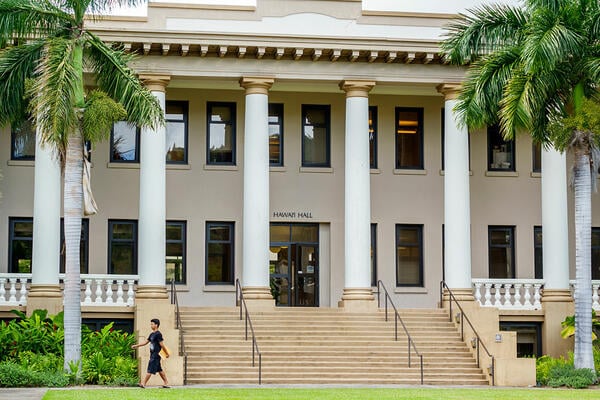
    To alleviate some hardships, the University of Hawaiʻi’s UH Foundation launched a Graduate Student Success Fund, which will provide direct relief for learners who have lost funding.

    Fewer than a dozen graduate students in the system have been impacted to various degrees to date, but “like most institutions, the extent of the possible impact is unknown,” a UH spokesperson said.

    On the ground: Michael Fernandez, a first-year UH Mānoa doctoral student in the botany program, is a participant in the National Science Foundation’s Graduate Research Fellowship Program, which supports learners pursuing research-based master’s or doctoral degrees in STEM education fields. The five-year fellowship includes three years of financial aid for tuition and fees and an annual stipend.

    “I and other fellows in the program feel uncertain about future funding from the fellowship,” Fernandez said in a press release. “This is especially concerning for me, as the NSF-GRFP is currently my primary and sole source of funding for my graduate studies.”

    University of Hawaiʻi president Wendy Hensel spurred the creation of the Graduate Student Success Fund for grad students at UH Mānoa and UH Hilo. The fund, supported by private donations, mirrors an undergraduate student success fund available to bachelor’s degree seekers who need help paying for tuition, books and fees.

    The UH Foundation will also support undergraduate researchers who may have had their work interrupted due to federal freezes.

    The Graduate Student Success Fund is designed to aid student retention and financial wellness and also support career development and future talent in Hawaiʻi.

    “It is critical that we do all we can to ensure that our university graduates, the next generation of talent, desperately needed for Hawaiʻi’s workforce,” Hensel said. “These graduate students are our scientists, doctors, nurses, psychologists, social workers, engineers, educators and leaders of tomorrow.”

    Details as to how funds will be distributed, including amounts and number of recipients, are still being determined, the spokesperson said.

    The bigger picture: Federally funded research projects that address diversity, equity, inclusion, gender, green energy or other alleged “far-left ideologies” have come under fire in recent weeks.

    In January Trump signed an executive order halting federal grant spending, which was later rescinded, but some organizations have halted funding regardless.

    Trump Administration Weaponizes Funding Against Institutions

    On March 7, the Trump administration announced it had canceled $400 million in federal grants and contracts to Columbia University for “the school’s continued inaction in the face of persistent harassment of Jewish students.” The federal government has also threatened to pull funding from any educational institution that invests in diversity, equity and inclusion programs.

    In February, the National Institutes of Health announced it would cut funding for indirect costs of conducting medical research, including hazardous waste disposal, utilities and patient safety. In 2024, the agency sent around $26 billion to over 500 grant recipients connected to institutions.

    Hensel published a memo in February opposing the cuts for reimbursement of facilities and administrative costs.

    “For UH, the impact of this decision cannot be overstated,” Hensel wrote. “The university is supported by 175 awards and subawards from the NIH with a current value of $211 million. NIH’s reduction of UH’s current negotiated [indirect compensation] rate of 56.5 percent at the JABSOM [UH Mānoa John A. Burns School of Medicine] and the [UH] Cancer Center alone will eliminate approximately $15 million in funding that UH uses to support its research programs, including ongoing clinical trials and debt service payments.”

    How is your college or university supporting students affected by federal action? Tell us more.

    Source link

  • UC Riverside Hopes Early Exposure to College Boosts IE Grad Rates – The 74

    UC Riverside Hopes Early Exposure to College Boosts IE Grad Rates – The 74


    Get stories like this delivered straight to your inbox. Sign up for The 74 Newsletter

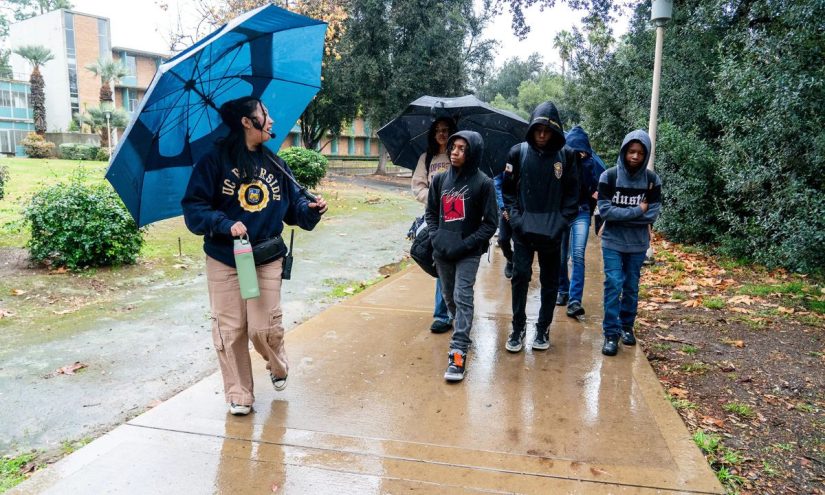
    On a recent rainy day, several dozen students sat in a UC Riverside classroom, planning their path to college.

    These weren’t high school seniors. They were seventh graders getting a jump-start on the competitive university application process. They’re part of a university program called the Middle School Initiative that aims to get Inland Empire students thinking about higher education long before they take their first AP class or submit an application.

    With a four-year college graduation rate about half the state average of 35%, the Inland Empire is falling behind in educating students for well-paid, professional jobs, limiting the economic prospects of the region’s youngest inhabitants. In an effort to raise that ceiling, educators are trying to get tweens to envision their potential for a college education and career. 

    The students from Riverside middle schools discussed how to write college application essays, toured the university campus and learned about admission standards for California universities. 

    “I like that there’s something you can do in middle school so you can do more in high school,” said 13-year-old Simone Reid, a seventh-grader at Villegas Middle School who wants to major in business. “I want to get started early so I have more opportunities.”

    UC Riverside Dean of Education Joi Spencer said she introduced the program this year to reach students who might not consider attending a university, or know how to prepare for it. Middle grades “are where kids get sorted into who’s going to go to college and who’s not,” she said.

    The initiative aims to change that pattern. With an annual budget of $15,200, the program launched has so far reached 500 students, including more than 300 who joined campus tours at UC Riverside.

    “Our first goal is to invoke a conversation across the Inland Empire related to university access and eventual success,” Spencer said. “First and foremost, too many youngsters do not even see university attendance as a possibility for them. This is our fault as adults and educators. We keep producing the same winners and losers in education and we need to break this cycle.”

    The Middle School Initiative is open to students throughout Riverside and San Bernardino counties, with Jurupa, Moreno Valley, Alvord and Riverside Unified school districts among the first participants. Any students in the Inland Empire can participate, but in the early days of the program, administrators have prioritized students who have fallen through the cracks in class.

    “Some of the students are high flyers, but are somehow overlooked in their school setting,” Spencer said. “Others may have average achievement, but high aspirations.”

    The program isn’t just an introduction to college readiness. Program administrators plan to follow students along their academic journey, meeting with them throughout middle and high school and during the transition to college. They will also track college enrollment of students who participate in a related summer program called the STEAM Academy, which increases exposure to the fields of science, technology, education, art and math.

    “This middle school period is the pivotal period to prepare for college,” said Elizabeth Benitez, Middle School Initiative coordinator.

    For instance, she said, many middle schools have foreign language options. Taking that early, in seventh or eighth grade, can pave the way for advanced placement language classes in high school, which boost students’ grade point averages and allow them to earn credits for college. 

    Some students may be a step ahead because of their family background, Frances Calvin, director of the university’s Early Academic Outreach Program, told the group. During the campus workshop she asked seventh graders to raise their hands if they spoke a second language. Several responded that they spoke Spanish, Portuguese or other languages at home.

    “If you speak a second language you are becoming marketable because the world is getting smaller and smaller,” Calvin said.

    Students at the campus event said they clearly heard the message about academic achievement and vowed to work on raising their grade-point averages.

    “I personally think I should focus more on my GPA,” said Dike Okeke, 12. “Then when I have that figured out I could find work to save for college.”

    Money matters loom large for many of the students, especially those hoping to be the first in their family to attend a university. The initiative offers instruction on how to fill out financial aid forms and tips on finding scholarships. Students can come back to the program later in high school to seek help with that process, Benitez said.

    “My family didn’t have the resources to experience college,” said Jeremiah Stinson, 12, who aims to study business and play college football. “I think I need to start saving money to afford this. I need to focus on a scholarship. Debt lasts forever. I don’t want to struggle with that.”

    Interestingly, the seventh graders also discussed personal discipline, and almost universally acknowledged that they needed to curtail electronics use and pay attention to school.

    “I also need to get rid of all my devices because I spend a lot of time on social media,” said Tatum Tobios, an aspiring fashion designer who favors Victorian Gothic styles and plans to go to art school.

    Her peers nodded in agreement. How will they scale back their TikTok and Instagram habits? 

    Some of their solutions: “Delete the apps,” “Lock them away,” “Give it to my mom,” “Hide it from myself.”


    Get stories like these delivered straight to your inbox. Sign up for The 74 Newsletter

    Source link

  • Facing NIH cuts, colleges restrict grad student admissions

    Facing NIH cuts, colleges restrict grad student admissions

    Several colleges and universities are pausing admissions to some graduate programs, reducing class sizes or rescinding offers to students in an effort to cut costs amid uncertainty in federal funding.

    The disruption to graduate school admissions is the latest cost-cutting move for colleges. After the National Institutes of Health proposed cutting reimbursements for costs related to research, several colleges and universities said they would pause hiring and cut spending, Inside Higher Ed previously reported. (A federal judge has blocked the NIH plan from taking effect for now.)

    In recent days, the University of Pittsburgh, the University of Pennsylvania and several other institutions have stopped doctoral admissions, at least temporarily. Some colleges are pausing admissions to some programs such as in the biomedical sciences, Stat News reported. At others, the pause is universitywide. The University of Southern California and Vanderbilt University temporarily paused graduate student admissions, though both universities later said that they’d ended the pause.

    A University of Pittsburgh spokesperson told WESA, a local NPR station, that the university “temporarily paused additional Ph.D. offers of admission until the impacts of that [NIH] cap were better understood … the University is in the process of completing that analysis and expects to be in a position to resume offers soon.”

    Meanwhile, the University of Pennsylvania is planning to cut graduate admissions rates, The Daily Pennsylvanian reported, citing an email from the interim dean of the School of Arts and Sciences, Jeffrey Kallberg, who wrote that the cuts were a “necessary cost-saving measure” to adjust to the NIH proposal.

    “This is not a step any of us wanted to take,” Kallberg wrote, according to the Daily Penn. “We recognize that graduate students are central to the intellectual life of our school—as researchers, teachers, collaborators, and future scholars. However, we must ensure that we can continue to provide strong support for those students currently in our programs and sustain the school’s core teaching and research activities.”

    Tom Kimbis, executive director of the National Postdoctoral Association, wrote in an email to Inside Higher Ed that academic institutions reliant on federal funding “are being forced to make tough decisions to support these researchers in a difficult environment.”

    “The decisions in Washington to pause or cease funding for science and research is impacting early-career researchers across a wide range of disciplines,” Kimbis added. “Slowing or stopping their work, on topics from cancer and Alzheimer’s research to social science issues, hurts Americans in all 50 states.”

    In the last week, some faculty began tracking the reductions in the biomedical sciences via a shared spreadsheet that includes verified cuts and unverified decisions based on word of mouth and internal emails. Faculty on social media said the cuts will have long-term ramifications for sciences as fewer students enter the field. On TikTok, several students who had applied to grad school shared their dismay at how the funding cuts meant they might have to say goodbye to their career plans and research.

    Accepting graduate students, particularly for Ph.D. programs and in the biomedical sciences, requires universities to make a long-term financial commitment, which is more difficult now that the NIH has stopped making new grant awards and is aiming to cut funds. Colleges receive billions from the NIH to support research. If the proposed rate cuts move forward, institutions say they would have to shut down some labs and lay off employees.

    “University research and scholarship operate on a time scale of years and decades,” the Rutgers AAUP-AFT chapter wrote in a letter to New Jersey senators Cory Booker and Andy Kim. “Higher education would become impossible in the face of capricious and arbitrary withholding of funding, elimination of entire areas of grant support for critical scientific research, and cancellation of long-held contracts.”

    They went on to warn that the threat to funding would diminish the country’s strength as a research superpower. “The best scientists, the best scholars, and the best students will make the rational decision to take their talents elsewhere. Once lost, the historic excellence of United States universities, including world-leading institutions in New Jersey, both public and private, will not be easily regained.”


    Source link

  • Why grad students should prioritize friendships (opinion)

    Why grad students should prioritize friendships (opinion)

    How important is friendship to you? According to a Pew Research Center study in 2023, 61 percent of U.S. adults said having close friends is extremely or very important for people to live a fulfilling life, which is much higher than the share who said the same about being married (23 percent), having children (26 percent) or having a lot of money (24 percent). Meanwhile, almost one in three Americans feel lonely every week.

    In this context, perceptions of workplace friendships are evolving as the world of work transforms. Working professionals consider having a best friend at work to be even more important since the start of the pandemic and the dramatic increase in remote and hybrid work. Younger generations, such as millennials and Gen Zers, want to curate authenticity and set boundaries. They may prioritize job satisfaction and mental health over other traditional factors. How do those new priorities relate to friendship?

    In addition to well-being benefits, having friends at work can contribute to an individual’s professional development and workplace performance. Working in an environment that fosters vulnerability, as friendships often do, enables individuals to challenge themselves in ways they may otherwise avoid.

    The topic of friendship at work often focuses on the postgraduate workforce. We argue for the importance of applying the same principles to the graduate student and postdoctoral experience. We discuss ways in which graduate students and postdoctoral scholars can benefit from prioritizing friendships and essential interpersonal skills, which can lead to a more robust academic experience and support network.

    Navigating Challenges and Life After Graduate School

    Studies show that strong relationships at work are linked to a lower risk of burnout, better mental health and fewer traumatic experiences. Having peer friendships helps graduate students and postdoctoral scholars cope with the rigorous nature of their academic training. Although the demands of this training can make it difficult to prioritize one’s social life, intense work environments in group settings also provide many opportunities for like-minded individuals to get to know each other beyond the immediate tasks at hand.

    Cultivating such relationships helps students and scholars to navigate the challenges of graduate school and/or their postdoctoral training and work with the benefit of a support system. Sometimes people struggle to comprehend the unique and specific nature of graduate training. Having peers in the same environment allows one to work through challenges and problems with someone who knows firsthand the context of what they are experiencing.

    As graduate students and postdoctoral scholars face points of transition, either at the beginning or end of their training, many will leave their current support network and find themselves in need of building new connections. Yet, fulfilling friendships can take time and effort to build. Friendships formed in graduate school can provide an incredible form of support for any moment in life and can have lifelong implications for personal and professional careers. In fact, many of us in the workplace still talk to friends we made during our graduate school years and cherish the memories we built based on understanding and trust.

    Strengthening Academic Research and Performance

    A significant portion of the research on workplace friendships highlights the increase in performance and productivity that results from the presence of such relationships. Happiness leads to increased performance across the board. Developing friendships among peers can result in an increase in potential collaborators for opportunities such as co-authorships, conference presentations or interdisciplinary research. It can also happen the other way around—connections that begin as professional collaborations may turn into friendships.

    The two of us writing this article are real examples of how developing friendships within the workplace can provide benefits to one’s career growth. We met as colleagues and quickly found commonalities in our personal interests and professional goals. While our jobs took us to different institutions, a robust co-writing dynamic emerged from the foundations of our friendship. Our story is similar to that of many scholars who write with their friends.

    Developing Transferable Skills

    Creating meaningful connections also helps graduate students and postdoctoral scholars strengthen key transferable skills that are relevant in preparing for diverse career paths. Consider three that come to mind:

    • Communication: For many friendships, there is a sense of comfort that develops over time. This bond encourages an ease in conversations lacking in other types of interactions. Friends can be a sounding board when you are attempting to process your thoughts and put them into words for an external audience.
    • Collaboration: Some graduate students and postdoctoral scholars may conduct solitary research with little opportunity to work within a team or group setting, especially in the humanities. Identifying opportunities to collaborate with friends helps to develop the ability to contextualize one’s responsibilities within a broader project. This cultivates a skill that employers often prioritize in the hiring process: collaboration or teamwork.
    • Cultural competency: Another benefit to fostering workplace friendships is becoming more aware of different lived experiences from your own. While it is possible to do this through less personal interactions, friendships allow you to share life stories and perspectives and build deeper connections. Expanding your perspective will allow you to become a stronger scholar (during your time in graduate school or postdoctoral training) and professional (whatever your postgraduation plans may be) in an increasingly diverse world.

    Implications for Career Development

    Of course, there are some challenges to keep in mind with workplace friendships. These may include: trusting someone too soon and oversharing, participating in gossip and rumors, and in-group pressure to fit in, which ultimately leads to exclusion of some through group homogeneity and barriers to opportunities. Other challenges exist for individuals with marginalized backgrounds. The lack of diversity or representation in certain disciplines can further feelings of isolation and take a greater toll on one’s well-being.

    Those of us working with this unique population can make an intentional effort to facilitate meaningful relationship-building and address the challenges above through educational programming. Professional development events for marginalized populations often provide a “third space” for individuals to connect in a critical mass, breathe and celebrate, and identify role models and peer collaborators. The University of Maryland system’s Alliance for Graduate Education and the Professoriate is a great example of community-building.

    Another viable option for educators and institutions to consider is to leverage the power of peer or near-peer mentoring. Research highlights the importance of mentoring constellations, which acknowledge the varying needs of a mentee and how mentoring relationships differ in structure or intensity. While a “vertical mentor” may be more senior in an organization and offer guidance to mentees based on career progression or life stages, a “horizontal mentor” refers to a peer at a similar career level who shares the mentee’s experiences and challenges. At the University of Maryland, College Park, the Graduate School has created a near-peer mentoring program that focuses on interdisciplinary knowledge-sharing between a doctoral student and a postdoctoral scholar over a year. This program promotes a culture of mentoring where both parties can develop self-awareness and build skills critical to their respective careers.

    Finally, how can graduate students and postdoctoral scholars go about making friends at work? Begin by prioritizing relationships in the spaces you occupy, especially during moments of uncertainty. Then, attend and leverage university programming around well-being, professional development and mentoring, to meet people with similar interests and values. Next, look carefully within your high-touch professional relationships, and consider how proximity, similarity, and reciprocity can help you facilitate the initiation and development of a friendship.

    Yi Hao is the program director of career and professional development at the Graduate School of the University of Maryland, College Park, and a member of the Graduate Career Consortium—an organization providing an international voice for graduate-level career and professional development leaders.

    Mallory Neil is the director of industry partnerships for the College of Science at Clemson University.

    Source link