
Tag: Graduate education

  • As men stop going to college, women have now overtaken them in graduate and professional degrees

    As men stop going to college, women have now overtaken them in graduate and professional degrees

    by Jon Marcus, The Hechinger Report
    January 20, 2026

    WATERTOWN, Mass. — Amanda Leef remembers thinking for the first time about becoming a veterinarian when she was 4 and found a garter snake in her Michigan backyard.

    “I think every girl goes through a phase of wanting to be a vet,” Leef said.

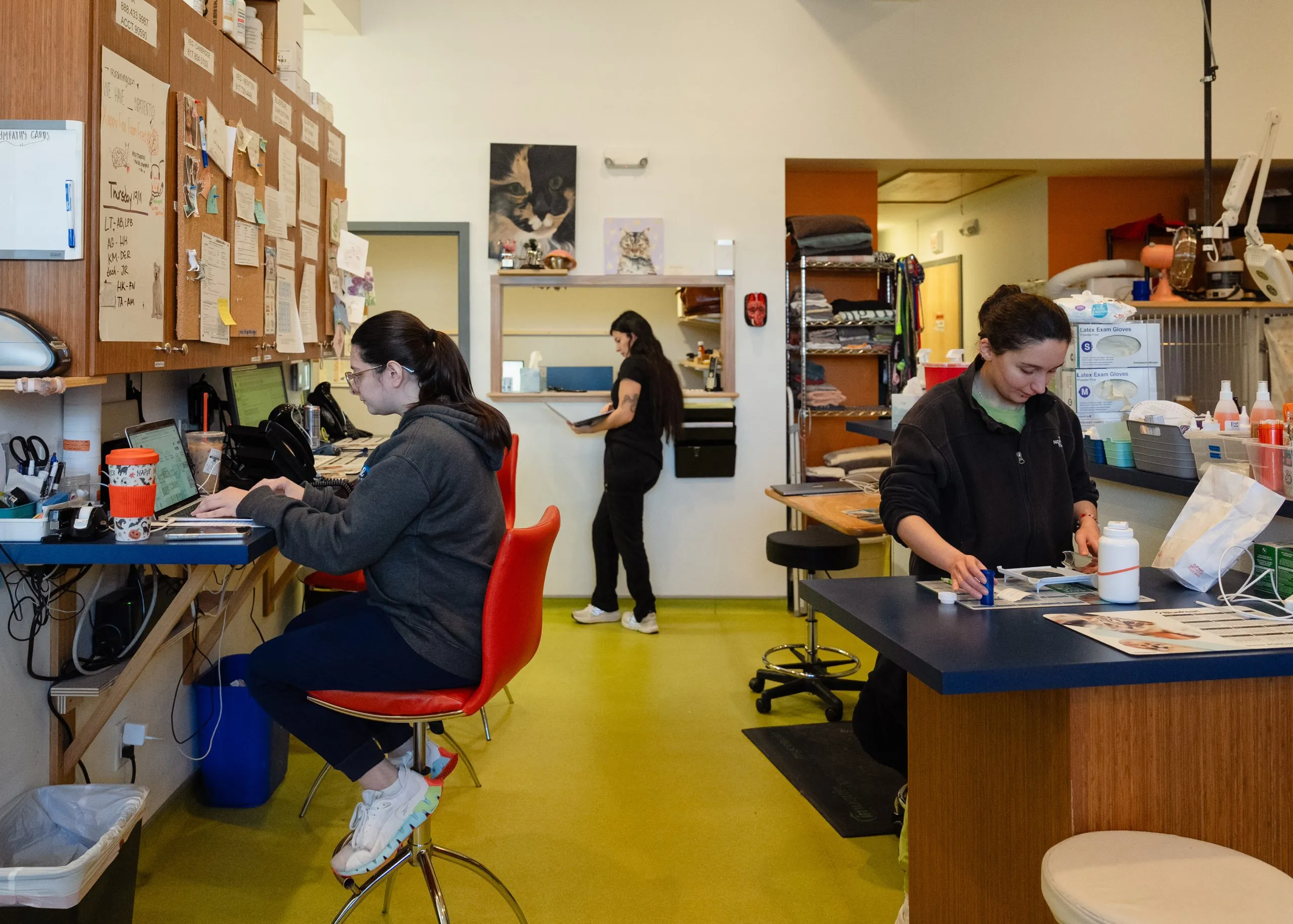
    For her, it wasn’t just a phase. Now, at 48, she co-owns her own bustling veterinary practice, Heal Veterinary Clinic, in this Boston suburb. 

    All seven veterinarians here are women. So is the large team of vet techs, and the entire rest of the 22-member medical staff.

    “In really broad generalities, I think women are more interested in the emotional and empathetic side of things than men are,” Leef said, sitting on the floor of an examination room with one of her patients, an affectionate, white-furred golden retriever named Cypress.

    For that and other reasons, women studying veterinary medicine now outnumber men by four to one

    It’s not just veterinary school. The number of women has surpassed the number of men in law school, medical school, pharmacy school, optometry school and dental school.

    Women in the United States now earn 40 percent more doctoral degrees overall, and nearly twice as many master’s degrees, as men, according to the U.S. Department of Education — a trend transforming high-end work. 

    This is no longer some distant statistical abstraction. Americans can see it when they take their pets to the vet or their kids to the dentist, need a lawyer or an eye exam, see a therapist or pick up a prescription.

    The dramatic shift in who is being trained for these fields is partly because more women are going into them. But it’s also the result of a steady slide in the number of men enrolling in graduate and professional schools. And while that may be elevating women, it’s affecting the nation’s economic competitiveness and even the point at which people get married and have children.

    “Having all students represented and engaged in graduate study ensures that we have healthy communities and families and a vital economy,” said Chevelle Newsome, president of the Council of Graduate Schools.

    Related: Interested in innovations in higher education? Subscribe to our free biweekly higher education newsletter.

    Graduate schools — including the 460 Newsome represents — have their own motive for wanting more men to enroll. They’re facing new threats from declining international enrollment, impending federal borrowing limits for graduate study and a public backlash against the high cost and uneven returns of graduate degrees.

    The main reason women have overtaken men in graduate school, however, is that more women than men are earning the undergraduate degrees required to go on to advanced study. 

    “Women certainly still see education in terms of upward mobility,” said Lisa Greenhill, chief organizational health officer at the American Association of Veterinary Medical Colleges, whose job includes trying to diversify veterinary medicine. “Men have a lot more options. They feel like they don’t have to go to a four-year program or a graduate program.”

    The number of men enrolled as undergraduates in college nationwide has dropped by nearly a quarter of a million, or 4 percent, just since 2020, the National Student Clearinghouse Research Center reports. 

    Women now account for about 60 percent of undergraduate enrollment. Nearly half of women aged 25 to 34 have bachelor’s degrees, compared to 37 percent of men, according to the Pew Research Center.

    “Men aren’t seeing higher education as valuable,” said Newsome. Many go into the trades or take other jobs straight out of high school to begin immediately earning a wage, forgoing the need to spend time in or money on college. Even men who do get undergraduate degrees may not see the value in continuing beyond them, she said.

    The effects of this have been stark and swift.

    The number of women earning law degrees passed the number of men in 2019, figures from the American Bar Association, or ABA, show; while only four of the law schools ranked among the 20 most prestigious by U.S. News & World Report had more women than men in 2016, women now outnumber men at 18 of them, according to the nonprofit law student news site JURIST. 

    Related: Trump’s attacks on DEI may hurt men in college admission

    That’s already having a real-world impact. By 2020, the ABA says, the majority of general lawyers working for the federal government were women, and by 2023, the majority of associates at law firms were.

    In medical schools, the number of women also overtook the number of men in 2019. Today, 55 percent of future doctors are women, up from 48 percent in 2015, according to the Association of American Medical Colleges, or AAMC.

    Women already make up significantly larger proportions of residents in specialties including endocrinology, pediatrics, obstetrics and gynecology, family medicine and psychiatry.

    Women also outnumber men by three to one in doctoral programs in psychology, and by nearly four to one in master’s programs, the American Psychological Association reports. They make up 55 percent of graduates of dental schools, and 72 percent in pediatric dentistry, according to the American Dental Association. 

    More than seven out of 10 students in schools of optometry are women, the Association of Schools and Colleges of Optometry says. And at pharmacy schools, women constitute two-thirds of students working toward master’s degrees and 56 percent of those seeking doctorates, statistics from the American Association of Colleges of Pharmacy show.

    There are still more men than women in doctoral and master’s degree programs in business, engineering, math and the physical sciences. But women make up substantial majorities of graduate enrollment in health sciences, public administration, education, social and behavioral sciences and biological and agricultural sciences, according to the Council of Graduate Schools.

    While this represents impressive progress for women, the declining number of men enrolling in graduate programs is bad news for universities and colleges that offer them, for some patients in the health care system and for the economy.

    That’s because the growing number of women going to graduate and professional schools can’t continue forever to outpace the decline in the number of men. Total graduate enrollment at private, nonprofit colleges and universities was already down this fall, the Clearinghouse reports. 

    Related: Football fantasy: Colleges add sports to bring men, but it doesn’t always work

    That’s a problem made worse by visa restrictions and cuts to federal research funding, which have helped reduce the number of international students coming to the United States for graduate study by 12 percent, according to the Institute of International Education. 

    New federal loan limits scheduled to take effect next year are widely expected to further eat into graduate school enrollment. The changes will cap borrowing at $100,000 for graduate students and $200,000 for those in professional programs. That’s much less than the $408,150 the AAMC says it costs to get a medical degree from a private, nonprofit university or the $297,745 from a public one. The association of medical colleges projects a national shortage of as many as 124,000 physicians by 2034.

    The price of getting a graduate degree has more than tripled since 2000, according to the Georgetown University Center on Education and the Workforce. Graduate degrees have become a critical revenue source for universities, which take in about $20 billion a year from master’s programs alone, a separate analysis, by the right-leaning think tank the American Enterprise Institute, calculates.

    Students of all genders are increasingly questioning the return on that investment. Nearly 40 percent of prospective graduate students say graduate programs that cost more than $10,000 a year are too expensive, a new survey by the enrollment management consulting firm EAB finds. Payoffs vary widely, making some graduate degrees “a potentially high-risk investment,” the Georgetown Center on Education and the Workforce has concluded. 

    The proportion of Americans 25 and older with master’s degrees or higher has fallen since 2000, from first in the world to 24th, according to the World Bank, while the percentage of those with doctoral degrees has dropped during that period from first to seventh.

    “That is a huge concern, when you think about where economies are going,” said Claudia Buchmann, an Ohio State University sociologist who studies this issue and is coauthor of the book “The Rise of Women.” “If we’re trying to compete on a global level, the fact that men’s college-going rates are so stagnant means we can’t fix this problem until we get more men.”

    Related: Even as women outpace men in graduating from college, their earnings remain stuck

    Men are, after all, half the nation’s labor force. And while some graduate degrees may not pay off, many of them do, substantially. People with advanced degrees are also much less likely to be unemployed.

    “When you think about global economic competitiveness for the United States — despite the skepticism that’s out there — education and training are still the keys to good jobs,” Buchmann said. Falling behind by that measure “is doing damage to men in this country.”

    But experts worry that the gender shift is self-perpetuating. Men may be put off by what they see as the “feminization” of professions in which they now are the minority, research by the veterinary medical colleges association concluded. 

    “I’m not seeing a national effort to say we need to change this,” Buchmann said. “If anything, the opposite is true.” 

    Graduate school leaders say the most effective efforts at reversing this trend are at the undergraduate level. “A lot of the effort from the graduate community has been to reach down and support those projects,” said Newsome, who was formerly dean of graduate studies at California State University, Sacramento. Universities also are encouraging employers to sponsor graduate education for male employees, she said.

    The effects of this widening gender divide are not just economic. New studies show that growing gender disparities in education can affect relationships. Marriage rates have fallen as levels of education rise, according to research from Iowa State University; each additional year of schooling reduces by about 4 percentage points the likelihood that someone between 25 and 34 is married. The proportion of Americans in that age bracket who are married has declined from 80 percent in 1970 to 38 percent today.

    Related: Universities and colleges search for ways to reverse the decline in the ranks of male students

    “When folks are looking for partners, there’s a desire to find someone economically comparable,” said Greenhill, of the veterinary medical colleges association. Added Buchmann, at Ohio State: “A lot of masculine norms are about being the breadwinner of the family. If the woman is the principal breadwinner, that presents not just economic challenges, but challenges to make marriages work.”

    More-educated women are also more likely to delay or forgo having children, according to separate research from the Wharton School of Business at the University of Pennsylvania.

    Back at her veterinary clinic, Amanda Leef makes the rounds, checking in on a dog getting his teeth cleaned and a pair of kittens waiting to be adopted. 

    Only one male veterinarian has ever applied to work there, Leef said. He was hired, but eventually left to go into research.

    “It does change the personality of a clinic” to be made up of only women, she said. “A staff that’s diverse is more accessible to a broader range of people. I just think the world is better with greater gender diversity.”

    Contact writer Jon Marcus at 212-678-7556, [email protected] or jpm.82 on Signal.

    This story about higher education and men was produced by The Hechinger Report, a nonprofit, independent news organization focused on inequality and innovation in education. Sign up for our higher education newsletter. Listen to our higher education podcast.

    This <a target=”_blank” href=”https://hechingerreport.org/women-far-outnumber-men-in-law-school-med-school-vet-school-and-other-professional-programs/”>article</a> first appeared on <a target=”_blank” href=”https://hechingerreport.org”>The Hechinger Report</a> and is republished here under a <a target=”_blank” href=”https://creativecommons.org/licenses/by-nc-nd/4.0/”>Creative Commons Attribution-NonCommercial-NoDerivatives 4.0 International License</a>.<img src=”https://i0.wp.com/hechingerreport.org/wp-content/uploads/2018/06/cropped-favicon.jpg?fit=150%2C150&amp;ssl=1″ style=”width:1em;height:1em;margin-left:10px;”>

    <img id=”republication-tracker-tool-source” src=”https://hechingerreport.org/?republication-pixel=true&post=114073&amp;ga4=G-03KPHXDF3H” style=”width:1px;height:1px;”><script> PARSELY = { autotrack: false, onload: function() { PARSELY.beacon.trackPageView({ url: “https://hechingerreport.org/women-far-outnumber-men-in-law-school-med-school-vet-school-and-other-professional-programs/”, urlref: window.location.href }); } } </script> <script id=”parsely-cfg” src=”//cdn.parsely.com/keys/hechingerreport.org/p.js”></script>

    Source link

  • Beyond DEI offices, colleges are dismantling all kinds of programs related to equity

    Beyond DEI offices, colleges are dismantling all kinds of programs related to equity

    by Jeni Hebert-Beirne, The Hechinger Report
    December 22, 2025

    It started with Harvard University. Then Notre Dame, Cornell, Ohio State University and the University of Michigan. 

    Colleges are racing to close or rename their diversity, equity and inclusion (DEI) offices, which serve as the institutional infrastructure to ensure fair opportunity and conditions for all. The pace is disorienting and getting worse: since last January, 181 colleges in all.  

    Often this comes with a formal announcement via mass email, whispering a watered-down name change that implies: “There is nothing to see here. The work will remain the same.” But renaming the offices is something to see, and it changes the work that can be done. 

    Colleges say the changes are needed to comply with last January’s White House executive orders to end “wasteful government DEI programs” and “illegal discrimination” and restore “merit-based opportunity,” prompting them to replace DEI with words like engagement, culture, community, opportunity and belonging. 

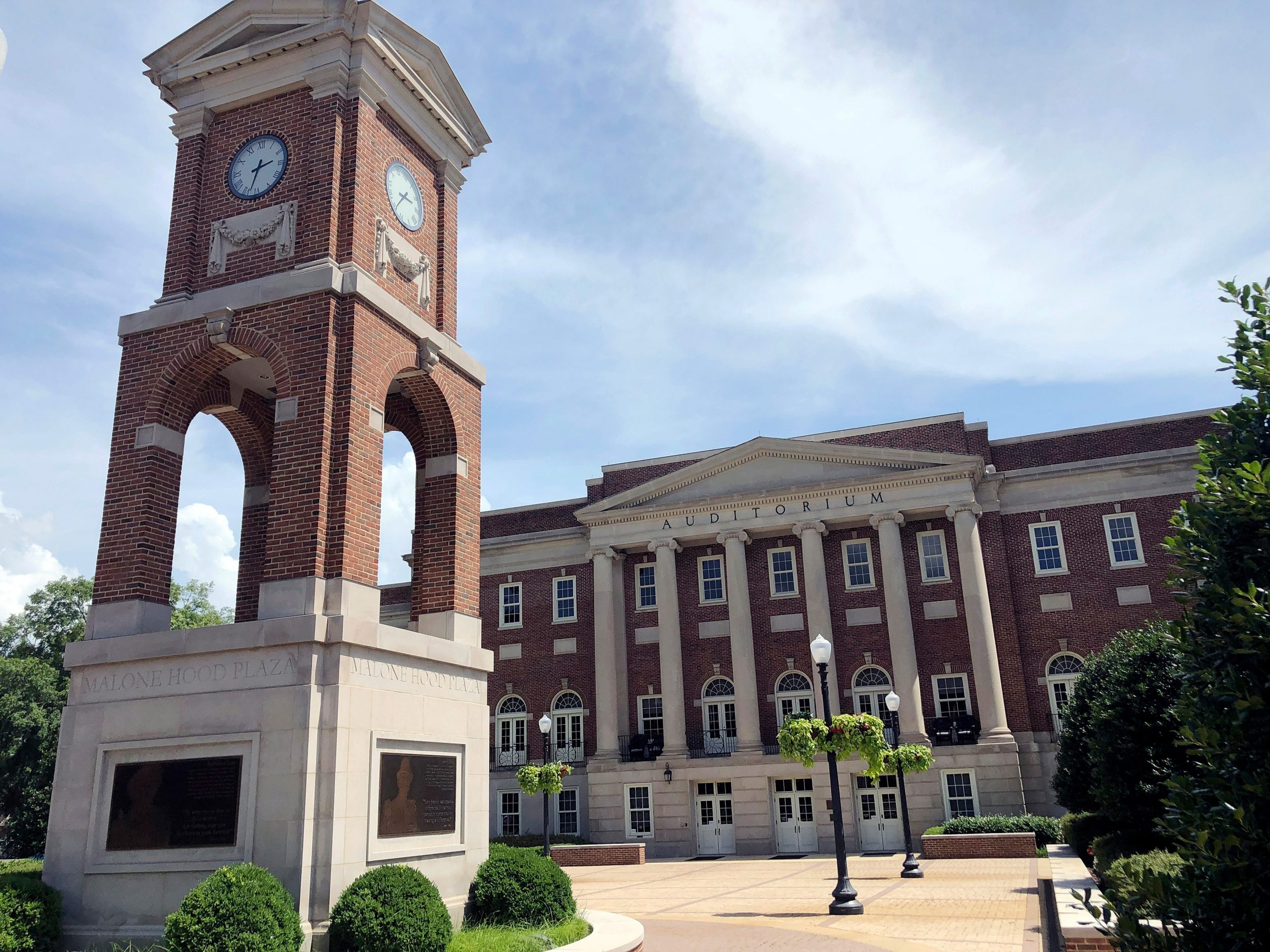
    One college went even further this month: The University of Alabama ended two student-run magazines because administrators perceived them to be targeting specific demographics and thus to be out of compliance with Attorney General Pamela Bondi’s anti-discrimination guidance. Students are fighting back while some experts say the move is a blatant violation of the First Amendment. 

    Related: Interested in innovations in higher education? Subscribe to our free biweekly higher education newsletter. 

    With the one-year mark of the original disruptive executive orders approaching, the pattern of response is nearly always the same. Announcements of name changes are followed quickly by impassioned pronouncements that schools should “remain committed to our long-standing social justice mission.” 

    University administrators, faculty, students, supporters and alumni need to stand up and call attention to the risks of this widespread renaming.  

    True, there are risks to not complying. The U.S. State Department recently proposed to cut research funding to 38 elite universities in a public-private partnership for what the Trump administration perceived as DEI hiring practices. Universities removed from the partnership will be replaced by schools that the administration perceives to be more merit-based, such as Liberty University and Brigham Young University.  

    In addition to the freezing of critical research dollars, universities are being fined millions of dollars for hiring practices that use an equity lens — even though those practices are merit-based and ensure that all candidates are fairly evaluated.  

    Northwestern University recently paid $75 million to have research funding that had already been approved restored, while Columbia University paid $200 million. Make no mistake: This is extortion. 

    Some top university administrators have resigned under this pressure. Others seem to be deciding that changing the name of their equity office is cheaper than being extorted.  

    Many are clinging to the misguided notion that the name changes do not mean they are any less committed to their equity and justice-oriented missions.  

    As a long-standing faculty member of a major public university, I find this alarming. In what way does backing away from critical, specific language advance social justice missions? 

    In ceding ground on critical infrastructure that centers justice, the universities that are caving are violating a number of historian and author Timothy Snyder’s 20 lessons from the 20th century for fighting tyranny.  

    The first lesson is: “Do not obey in advance.” Many of these changes are not required. Rather, universities are making decisions to comply in advance in order to avoid potential future conflicts.  

    The second is: “Defend institutions.” The name changes and reorganizations convey that this infrastructure is not foundational to university work.  

    What Snyder doesn’t warn about is the loss of critical words that frame justice work.  

    The swift dismantling of the infrastructures that had been advancing social justice goals, especially those secured during the recent responses to racial injustice in the United States and the global pandemic, has been breathtaking.  

    Related: Trump administration cuts canceled this college student’s career start in politics 

    This is personal to me. Over the 15 years since I was hired as a professor and community health equity researcher at Chicago’s only public research institution, the university deepened its commitment to social justice by investing resources to address systemic inequities. 

    Directors were named, staff members hired. Missions were carefully curated. Funding mechanisms were announced to encourage work at the intersections of the roots of injustices. Award mechanisms were carefully worded to describe what excellence looks like in social justice work.  

    Now, one by one, this infrastructure is being deconstructed.  

    The University of Illinois Chicago leadership recently announced that the Office of the Vice Chancellor for Equity and Diversity will be renamed and reoriented as the Office of the Vice Chancellor for Engagement. The explanation noted that this change reflects a narrowed dual focus: engaging internally within the university community and externally with the City of Chicago. 

    This concept of university engagement efforts as two sides of one coin oversimplifies the complexity of the authentic, reciprocal relationship development required by the university to achieve equity goals.  

    As a community engagement scientist, I feel a major loss and unsettling alarm from the renaming of “Equity and Diversity” as “Engagement.” I’ve spent two decades doing justice-centered, community-based participatory research in Chicago neighborhoods with community members. It is doubtful that the work can remain authentic if administrators can’t stand up enough to keep the name. 

    As a professor of public health, I train graduate students on the importance of language and naming. For example, people in low-income neighborhoods are not inherently “at risk” for poor health but rather are exposed to conditions that impact their risk level and defy health equity. Health is “a state of complete physical, mental and social well-being,” while health equity is “the state in which everyone has the chance to attain full health potential.” Changing the emphasis from health equity to health focuses the system’s lens on the individual and mutes population impact.  

    Similarly, changing the language around DEI offices is a huge deal. It is the beginning of the end. Pretending it is not is complicity.  

    Jeni Hebert-Beirne is a professor of Community Health Sciences at the University of Illinois Chicago School of Public Health and a public voices fellow of The OpEd Project. 

    Contact the opinion editor at [email protected]. 

    This story about colleges and DEI was produced by The Hechinger Report, a nonprofit, independent news organization focused on inequality and innovation in education. Sign up for Hechinger’s weekly newsletter. 

    This <a target=”_blank” href=”https://hechingerreport.org/opinion-colleges-are-not-just-saying-goodbye-to-dei-offices-they-are-dismantling-programs-that-assure-institutional-commitment-to-justice/”>article</a> first appeared on <a target=”_blank” href=”https://hechingerreport.org”>The Hechinger Report</a> and is republished here under a <a target=”_blank” href=”https://creativecommons.org/licenses/by-nc-nd/4.0/”>Creative Commons Attribution-NonCommercial-NoDerivatives 4.0 International License</a>.<img src=”https://i0.wp.com/hechingerreport.org/wp-content/uploads/2018/06/cropped-favicon.jpg?fit=150%2C150&amp;ssl=1″ style=”width:1em;height:1em;margin-left:10px;”>

    <img id=”republication-tracker-tool-source” src=”https://hechingerreport.org/?republication-pixel=true&post=114031&amp;ga4=G-03KPHXDF3H” style=”width:1px;height:1px;”><script> PARSELY = { autotrack: false, onload: function() { PARSELY.beacon.trackPageView({ url: “https://hechingerreport.org/opinion-colleges-are-not-just-saying-goodbye-to-dei-offices-they-are-dismantling-programs-that-assure-institutional-commitment-to-justice/”, urlref: window.location.href }); } } </script> <script id=”parsely-cfg” src=”//cdn.parsely.com/keys/hechingerreport.org/p.js”></script>

    Source link

  • A ‘Great Defection’ threatens to empty universities and colleges of top teaching talent

    A ‘Great Defection’ threatens to empty universities and colleges of top teaching talent

    Paulina Cossette spent six years getting a doctoral degree with the goal of becoming a university professor. But it wasn’t long before she gave up on that path.

    With higher education under political assault, and opportunities as well as job security diminished by enrollment declines, Cossette felt burnt out and disillusioned. So she quit her hard-won job as an assistant professor of American government at a small private college in Maryland and used the skills she’d learned to go into business for herself as a freelance copy editor.

    Now Cossette is hearing from other newly minted Ph.D.s and tenured faculty who want out — so many, she’s expanded her business to help them leave academia, as she did. 

    Seemingly relentless attacks and funding cuts since the start of Donald Trump’s second presidential term have been “the straw that broke the camel’s back,” said Cossette, who left higher education on the eve of the pandemic, in 2019. “I’m hearing from a lot more people that it’s too much.”

    An exodus appears to be under way of Ph.D.s and faculty generally, who are leaving academia in the face of political, financial and enrollment crises. It’s a trend federal data and other sources show began even before Trump returned to the White House. 

    On top of everything else affecting higher education, this is likely to reduce the quality of education for undergraduates, experts say. 

    Nearly 70 percent of people receiving doctorates were already leaving higher education for industry, government and other sectors, not including those without job offers or who opted to continue their studies, according to the most recent available figures from the National Science Foundation — up from fewer than 50 percent decades ago.

    As for faculty, more than a third of provosts reported higher-than-usual turnover last year, in a survey by Hanover Research and the industry publication Inside Higher Ed. That was before the turmoil of this late winter and spring. 

    Related: Interested in innovations in higher education? Subscribe to our free biweekly higher education newsletter.

    “People who can get out will get out,” said L. Maren Wood, director and CEO of the Center for Graduate Career Success, which works with doctoral and other graduate students at 69 colleges and universities to provide career help

    If the spree of general job-switching that followed Covid was dubbed “the Great Resignation,” Wood said, what she’s seeing now in higher education is “the Great Defection.”

    Getting a Ph.D. is a traditional pipeline to an academic career. Now some of the brightest candidates — who have spent years doing cutting-edge research in their fields to prepare for faculty jobs — are leaving higher education or signing on with universities abroad, Wood said. 

    “It’s going to affect the quality of a student’s experience if they don’t get to study with those leading minds, who are going into private industry or to other countries,” she said.

    “What’s the joke about those who can’t do, teach? You don’t want to be in a situation where the only people left in your classrooms are the ones who can’t do anything else.”

    Related: So much for saving the planet. Climate careers, and many others, evaporate for class of 2025

    Parents sending children to college in the fall should know that they’ll be taking classes “with a faculty member who is worried about his or her research funding and who doesn’t have the help of graduate student teaching assistants. And that’s really going to impact the quality of your student’s experience,” said Julia Kent, a vice president at the Council of Graduate Schools, who conducts research about Ph.D. career pathways. 

    “The quality of undergraduate education is at stake here,” Kent said.

    Even Ph.D.s who want to work in academia are being thwarted. 

    During the Great Recession and the pandemic — two recent periods when there were few available faculty jobs — doctoral candidates could continue their studies until things got better, Wood said. This time, the Trump administration’s cuts to research funding have stripped many of that option.

    “This is way worse” than those earlier crises, she said. “Doctoral students are in panic mode.”

    Related: How Trump is changing higher education: The view from 4 campuses 

    The same deep federal cuts mean doctoral candidates in science, technology, engineering, math and other fields can’t complete the research they need to be eligible for what few academic jobs do become available.

    “You’re basically knee-capping that younger generation, which undermines the intergenerational dynamism that takes place in higher education. And that trickles down into the classroom,” said Isaac Kamola, an associate professor of political science at Trinity College and head of the Center for the Defense of Academic Freedom at the American Association of University Professors, or AAUP.

    Doctoral candidates early in their programs are questioning whether they should stay, said Wood. That could reduce the supply of future faculty. So will the fact that some universities have reduced the number of new Ph.D. candidates they will accept or have rescinded admission offers, citing federal budget cuts. Fewer prospective candidates are likely to apply, said Timothy Burke, a professor of history at Swarthmore College who has written about this topic.

    “Our graduating students right now are thinking differently about what it means to start a doctorate,” Burke said.

    Meanwhile, he said, “all the things that were dismaying to many faculty of long standing just feel worse. People who would have been totally content to stay put, whose prospects were good, who had good positions, who were more or less happy — now they’re thinking hard about whether there’s a future in this.”

    That means undergraduates could experience fewer available classroom professors and teaching and graduate assistants or the “only tenuous presence of faculty who are thinking hard about going somewhere else,” he said. “There are going to be programs that are going to be shut. There are going to be departments running on fumes.”

    The route to a university faculty job has always been hard. Finishing a doctoral degree takes a median of nearly six years, according to the American Academy of Arts and Sciences — nearly seven in the arts and humanities. 

    Doctoral students who manage to finish their programs have always had to fight for faculty positions, even before institutions announced cutbacks and hiring freezes. 

    Universities enroll far more doctoral candidates, to provide cheap labor as teaching and research assistants, than they will ever hire. The number of doctoral degrees awarded rose from 163,827 in 2010 to an estimated 207,000 this year, the National Center for Education Statistics says — a 26 percent increase, during a period in which the number of full-time faculty positions went up at less than half that rate

    Related: These federal programs help low-income students get to an through college. Trump wants to pull the funding

    With colleges and universities under stress, still more doctoral candidates now face the prospect of spending years “training for a career that isn’t actually available,” said Ashley Ruba, a Ph.D. who left higher education to work at Meta, where she builds virtual reality systems. 

    “If you told someone going to law school that they couldn’t get a job as a lawyer, I don’t think they’d do it,” said Ruba, who is also the founder of a career-coaching service for fellow Ph.D.s called After Academia.

    People already in faculty jobs appear equally on edge. More than 1 in 3 said in a recent survey that they have less academic freedom than in the past; half said they worry about online harassment. And faculty salaries have been stagnant. Pay declined for the three years starting with the pandemic, when adjusted for inflation, the AAUP reports, and has still not recovered to pre-pandemic levels. 

    People with Ph.D.s can earn more outside academia — an average of 37 percent more, one study found. Employers value skills including active learning, critical thinking, problem-solving and resilience, which is “everything you learn in a doctoral program,” Ruba said.

    The proportion of faculty considering leaving their jobs who are looking for work outside of academia has spiked. Before the pandemic, it was between 1 and 8 percent each year. Since then, it has been between 11 and 16 percent, according to R. Todd Benson, executive director and principal investigator at the Collaborative on Academic Careers in Higher Education at the Harvard Graduate School of Education, or COACHE. The figure comes from surveys conducted at 54 major universities and colleges.

    Related: More women are landing construction jobs. Trump’s war on DEI could change that

    A Facebook group of dissatisfied academics, called The Professor Is Out, has swelled to nearly 35,000 members. It was started by Karen Kelsky, a former anthropology professor who previously helped people get jobs in academia and now coaches them on how to leave it.

    “It’s difficult to overcome the stereotype of a university professor, which is that they’re coddled, they’re overprivileged, they’re arrogant and just enjoying total job security that nobody else has,” said Kelsky, who also wrote “The Professor Is In: The Essential Guide to Turning Your Ph.D. Into a Job,” a second edition of which is due out this fall. 

    Today, “they are overworked. They’re grossly underpaid. They are being called the enemy. And they’re bailing on academia,” she said.

    “Every time I talk to a tenured professor, they tell me how miserable they are and how desperate they are to get out,” said Kelsky. “And there’s no way this isn’t having real-life, tangible impacts on the quality of education students are getting.”

    Contact writer Jon Marcus at 212-678-7556, [email protected] or jpm.82 on Signal.

    This story about faculty and doctoral recipients leaving academia was produced by The Hechinger Report, a nonprofit, independent news organization focused on inequality and innovation in education. Sign up for our higher education newsletter. Listen to our higher education podcast.

    The Hechinger Report provides in-depth, fact-based, unbiased reporting on education that is free to all readers. But that doesn’t mean it’s free to produce. Our work keeps educators and the public informed about pressing issues at schools and on campuses throughout the country. We tell the whole story, even when the details are inconvenient. Help us keep doing that.

    Join us today.

    Source link

  • STUDENT VOICE: The path to health equity begins in K-12 classrooms

    STUDENT VOICE: The path to health equity begins in K-12 classrooms

    Imagine a classroom in which young students are excitedly discussing their future aspirations and a career in medicine feels like a tangible goal rather than a distant dream. Now, imagine that most of the students come from historically marginalized communities — Black, Hispanic and Indigenous populations — that disproportionately face higher rates of chronic illness, shorter life expectancies and poorer health outcomes.

    We know that these disparities can shrink when patients are cared for by doctors who share their cultural backgrounds and lived experiences. The problem? Our health care workforce remains overwhelmingly unrepresentative of the communities it serves.

    For many students from underrepresented backgrounds, a medical career feels out of reach. The path to becoming a doctor is daunting, full of obstacles like financial hardship, lack of mentorship and systemic inequities in education. Many students are sidelined long before they consider medical school, while those who persist face an uphill battle competing against peers with far more resources and support.

    To mitigate these disparities, we must look beyond our hospitals and medical schools and into the places where young minds are shaped: our K-12 classrooms. Early exposure to health care careers can ignite curiosity and show students that they belong in places where they have historically been excluded.

    Related: Become a lifelong learner. Subscribe to our free weekly newsletter to receive our comprehensive reporting directly in your inbox.

    Organizations like the Florida State University College of Medicine, with its “Science Students Together Reaching Instructional Diversity and Excellence” (SSTRIDE) program, are leading the way in breaking down barriers to medical careers for underrepresented students. SSTRIDE introduces middle and high school students to real-world medical environments, giving them firsthand exposure to health care settings that might otherwise feel distant or inaccessible. Then, the program threads together long-term mentorship, academic enrichment and extracurricular opportunities to build the confidence and skills students need to reach medical school.

    The 15 White Coats program in Louisiana takes a complementary but equally meaningful approach: transforming classroom environments by introducing culturally relevant imagery and literature that reflect the diversity of the medical profession. For many students, seeing doctors who look like them — featured in posters or books — can challenge internalized doubts and dismantle societal messages that suggest they don’t belong in medicine. Through fundraising efforts and scholarships, other initiatives from 15 White Coats tackle the financial barriers that disproportionately hinder “minority physician aspirants” from pursuing medical careers.

    The impact of these programs can be profound. Research shows that students exposed to careers in science or medicine at an early age are far more likely to pursue these fields later in life. And medical students who belong to underrepresented groups are the most likely to return to underserved communities to practice. Their presence can improve communication, foster patient trust and drive innovation in addressing health challenges unique to those communities.

    These programs can even have a ripple effect on families and entire communities. When young people pursue careers in medicine, they become role models for siblings, friends and neighbors. This creates a culture of aspiration in which success feels both possible and accessible, shifting societal perceptions and inspiring future generations to aim higher.

    But programs like 15 White Coats and SSTRIDE cannot thrive without sustained investment. We need personal and financial commitments to dismantle the systemic barriers that prevent students from underrepresented groups from entering medicine.

    Policymakers and educators must step up. Federal and state educational funding should prioritize grants for schools that partner with hospitals, medical schools and health care organizations. These partnerships should offer hands-on experiences like shadowing programs, medical summer camps and health care-focused career fairs. Medical professionals also have a role to play — they can volunteer as mentors or guest speakers, offering valuable guidance and demystifying the path to a medical career.

    Related: The ‘Fauci effect’: Inspired by front-line health care workers, record numbers apply to medical schools

    As a medical student, I know how transformative these experiences can be. They can inspire students to envision themselves in roles they might never have imagined and gain the confidence to pursue dreams that once seemed out of reach.

    Let’s be clear, representation in medicine is not about optics. It’s about improving health outcomes and driving meaningful change. Building a stronger, more diverse pipeline to the medical profession is not just an educational priority. It’s a public health imperative.

    An investment in young minds today is an investment in a health care system that represents, understands and serves everyone. Equity in health care starts long before a patient walks into a doctor’s office. It begins in the classroom.

    Surya Pulukuri is a member of the class of 2027 at Harvard Medical School.

    Contact the opinion editor at [email protected].

    This story about health equity was produced by The Hechinger Report, a nonprofit, independent news organization focused on inequality and innovation in education. Sign up for Hechinger’s weekly newsletter.

    The Hechinger Report provides in-depth, fact-based, unbiased reporting on education that is free to all readers. But that doesn’t mean it’s free to produce. Our work keeps educators and the public informed about pressing issues at schools and on campuses throughout the country. We tell the whole story, even when the details are inconvenient. Help us keep doing that.

    Join us today.

    Source link