Tag: Graduate

  • Podcast: Wales, Franchising, Graduate Jobs

    Podcast: Wales, Franchising, Graduate Jobs

    This week on the podcast we look at Wales’ emerging higher education settlement, as Universities Wales publishes its manifesto for the May 2026 Senedd elections amid polling that points to a potential Plaid-led administration.

    Plus we discuss new Office for Students’ data on subcontracted (franchised) provision showing weaker continuation, completion and progression outcomes relative to sector averages, and assess the Institute of Student Employers’ latest survey, with graduate hiring down overall but highly variable by sector amid persistently high applications per vacancy.

    With Debbie McVitty, Editor at Wonkhe, Sarah Cowan, Head of Policy (Higher Education and Research) at the British Academy, Sarah Stevens, Director of Strategy at the Russell Group and presented by Jim Dickinson, Associate Editor at Wonkhe.

    Universities Wales election manifesto

    Outcomes data for subcontracted provision

    Graduate jobs and recruitment reality

    You can subscribe to the podcast on Apple Podcasts, YouTube Music, Spotify, Acast, Amazon Music, Deezer, RadioPublic, Podchaser, Castbox, Player FM, Stitcher, TuneIn, Luminary or via your favourite app with the RSS feed.

    Source link

  • Graduate jobs and recruitment reality

    Graduate jobs and recruitment reality

    Despite frequent headlines warning of large declines in graduate jobs, the Institute of Student Employers (ISE) Student Recruitment Survey 2025 shows a less severe and more nuanced reality of the entry-level recruitment market.

    Our survey captures recruitment trends from 155 ISE employer members who received over 1.8m job applications for over 31,000 early careers roles. For these employers, graduate hiring has fallen by eight per cent this year, marking the weakest year for graduate hiring since the 12 per cent decline during the pandemic in 2020.

    Although the ISE represents larger employers who recruit graduates onto formal training programmes, broader labour market data also shows reduced hiring which may impact students who take jobs that may not be part of a formal training programme. For example, data from the Recruitment and Employment Confederation shows a 13 per cent drop in all job adverts from July 2024 to July 2025.

    However, this trend varies from sector to sector and employer to employer. ISE’s survey found that while 42 per cent of employers reduced graduate hiring levels, 25 per cent of employers maintained hiring levels – and 33 per cent reported an increase.

    Looking ahead to 2025–26, we expect graduate recruitment to remain challenging as employers forecast an overall seven per cent reduction in graduate hiring, driven by sharp declines for a small number of large employers.

    Rebalancing early talent programmes

    Graduate programmes aren’t the only route into the UK’s top employers and investment in apprenticeships has been growing since the levy was introduced. ISE found employers are rebalancing early careers programmes with more focus on apprenticeships to meet skills demands.

    While graduate hiring declined this year, school and college leaver hiring increased by eight per cent. Graduates still outnumber apprentices and therefore the overall entry-level job market is down five per cent.

    This increase reflects the role of large levy-paying employers with greater resources to develop and manage apprenticeship schemes, bucking the wider market trend. Government data reports only a 0.6 per cent rise in apprenticeship starts among 19- to 24-year-olds over the past year.

    The ratio of graduates to school or college leaver hiring (which is mostly apprenticeships) among ISE members who recruit students onto both pathways is 1.8 graduates for every school/college leaver hire, down from 2.3 last year. This trend looks set to continue into 2025–26 with the ratio is forecast to decline further to 1.6:1.

    Despite this rebalancing, graduate hires still outnumber school and college leaver hires, and although the jobs market remains challenging, graduates remain a core element of early talent strategies.

    AI impact

    AI is undoubtedly reshaping the early careers recruitment sector. However, no one is telling us that AI is replacing entry level jobs (yet).

    As students increasingly use AI to craft job applications, they also submit a greater number of applications, driving up competition for each role. The application to vacancy ratio remains at a historic high of 140 applications per vacancy.

    The authenticity of applications from “AI-enabled candidates” has also emerged as a key employer concern. In fact, an arms race appears to be underway: only 15 per cent of employers said they never suspected or identified candidates cheating in assessments, and 79 per cent of employers are redesigning or reviewing their recruitment processes in response to AI developments.

    Currently around half of employers allow candidates to use AI tools during the recruitment process, primarily for drafting covering letters and CVs and completing online application questions. Only a small proportion of employers (10 per cent) have banned the use of AI or introduced technical measures to prevent its use.

    Our data also shows that 45 per cent of employers had not provided applicants with any guidance on when it was or was not appropriate to use AI. This guidance may support students in navigating their transition into a graduate role and help employers manage their application volumes.

    But while students are embracing AI in their job search, the use of AI by recruiters is currently limited, but likely to grow. While over half of employers use automated systems to fully manage some aspects of testing, AI use is very rare. Employers are most likely to use AI in gamified assessments, but even here the adoption rate is only 15 per cent. Looking ahead to the next five years, more than half of employers expect to use AI in their recruitment processes, and 70 per cent anticipate increasing their use of automation.

    Getting ahead

    The graduate job market is challenging, reflecting the broader economic climate – but it is not without opportunity.

    Students looking to get ahead should remain cautious about their prospects in their chosen career, but the graduate job market is always competitive. A job search should be treated just like a job. Applications should be authentic, considered and tailored, with a focus on quality not quantity. And work experience remains key, with employers reporting former interns better equipped with the skills that they need.

    For universities, these findings highlight the importance of preparing students for a more complex and competitive graduate market through close collaboration with employers.

    As employers rebalance early talent programmes and adapt to the rise of AI, institutions have a key role to play in equipping students with practical experience, adaptability, and digital literacy.

    Strengthening partnerships with employers, embedding employability across the curriculum, and helping students navigate responsible AI use will be critical to ensuring graduates continue to thrive in a shifting recruitment market.

    Source link

  • The Motivations and Concerns of Prospective Graduate Students

    The Motivations and Concerns of Prospective Graduate Students

    Graduate student enrollment is increasingly critical to the overall enrollment health for universities. As demographic changes make it harder to grow traditional undergraduate enrollment, institutions will need graduate student population growth to fill in those gaps.

    The good news is that the graduate student market is growing. According to National Student Clearinghouse data, graduate enrollment reached an all-time high of 3.2 million in fall 2024, with a 3.3% increase over the year before.

    However, in order to compete for these students, you need to understand their motivations, influences, and concerns when it comes to their selection of a higher educational institution. To dig into these issues, RNL surveyed 1,400 prospective and enrolled graduate students on a wide range of issues that relate to their decision to pursue graduate study. Here are some of the key findings that enrollment managers need to know.

    What is their primary motivation to study?

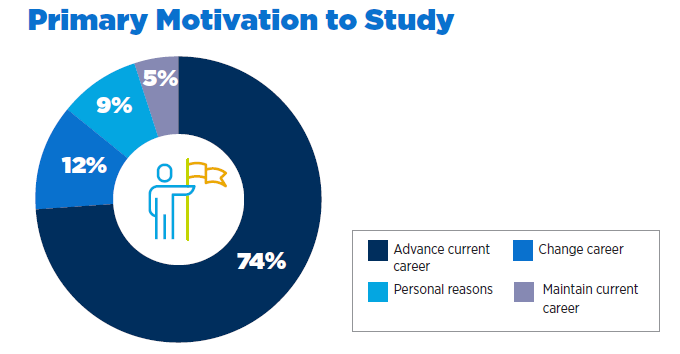
    Circle graph showing 74% of graduate students are primarily motivated to study to advance their current careerCircle graph showing 74% of graduate students are primarily motivated to study to advance their current career

    It’s no surprise that today’s students are career-oriented, but it’s clear that advancing their current career is the top driver, with 74% of our participants listing that as their primary motivation to study.

    What does this mean for us as practitioners in higher education? It’s critical to not only highlight career-related information, but also to make sure that information and outcomes are very easy to find. In another finding from our report, 90% of respondents indicated that it’s important for program pages to provide specific and easy-to-access information on careers related to their field.

    What influences graduate students to consider graduate study?

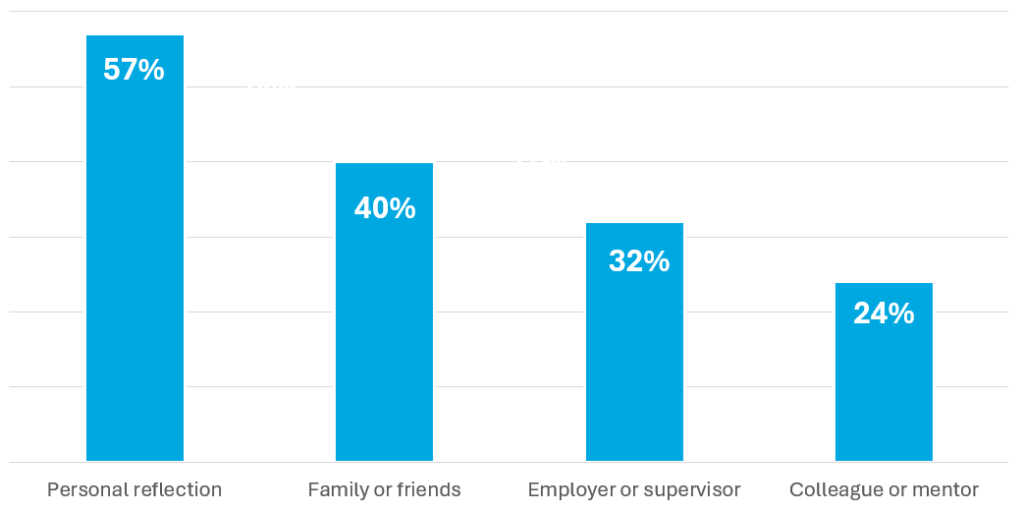
    Bar chart showing the greatest influences on whether to study at the graduate level: 57% personal reflection, 40% family or friends, 32% employer, 24% colleague or mentorBar chart showing the greatest influences on whether to study at the graduate level: 57% personal reflection, 40% family or friends, 32% employer, 24% colleague or mentor

    As you can see here, these decisions are largely self-motivated even if the reasons to pursue grad study are career-oriented. I find it interesting that these are not more employer-driven, especially when it comes to continuing degrees. However, it still shows that the majority of graduate students are self-motivated, intrinsic learners who see graduate study as a way to improve their lives.

    What are the most important program features to prospective graduate students?

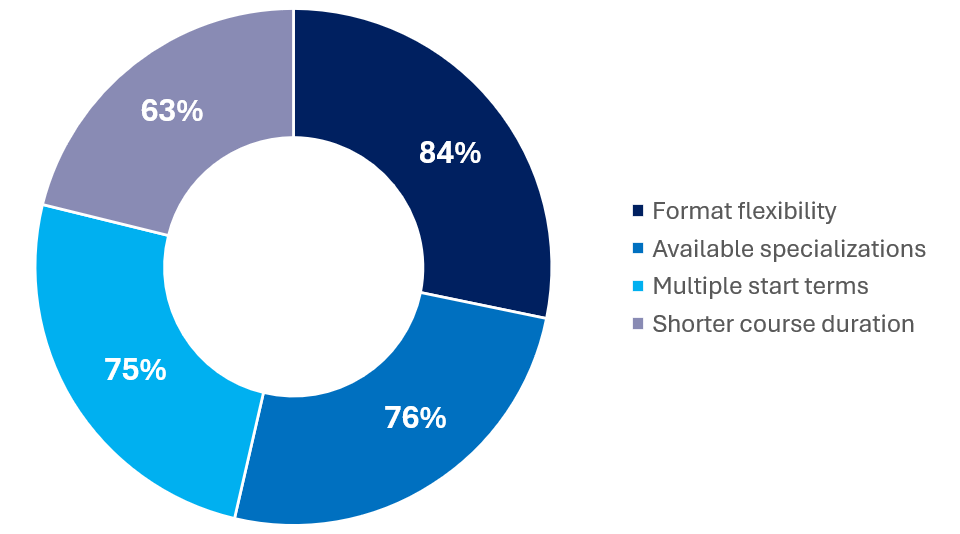
    Circle graph showing most important program features for prospective graduate students: 84% format flexibility, 76% available specializations, 75% multiple start terms, 63% shorter course duration.Circle graph showing most important program features for prospective graduate students: 84% format flexibility, 76% available specializations, 75% multiple start terms, 63% shorter course duration.

    For our survey respondents, format flexibility was the feature that was cited as most important, followed closely by available specializations. This is interesting, as the respondents cited modality, course format, and specializations, and then flexible scheduling. This could be a reflection of the growing number of Gen Z students (those under 29) who make up 56% of the graduate student population according to the fall 2023 IPEDS snapshot. This change in student age demographic emphasizes the importance of offering and designing those programs for multiple delivery types and really meeting those students where they are.

    What are the main concerns of graduate students?

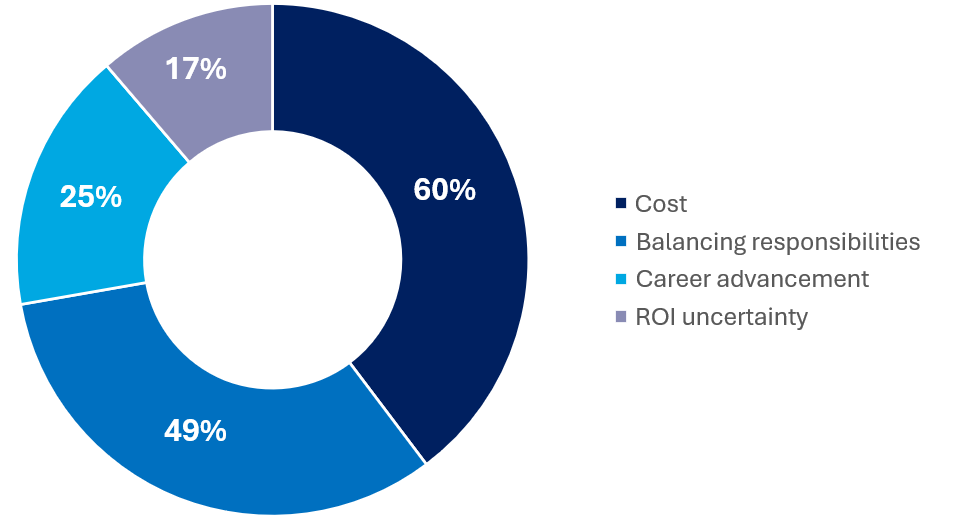
    Circle graph showing the main concerns of graduate students: 60% cost, 49% balancing responsibilities, 25% career advancement, 17% ROI uncertainty.Circle graph showing the main concerns of graduate students: 60% cost, 49% balancing responsibilities, 25% career advancement, 17% ROI uncertainty.

    I don’t think anyone will be shocked that cost is a concern for 60% of graduate students. But half of our respondents also cited balancing responsibilities as a primary concern. This is again, not shocking considering the vast majority of our participants said they worked full-time. While fewer than 20% cited ROI uncertainty, that still represents 1 in 5 of our survey takers. The bottom line is that institutions need to directly address these pain points when they conduct outreach with students. Mitigating some of those concerns right away can help students feel more comfortable in the process and be more likely to enroll in, and ultimately complete their programs.

    What will inhibit a graduate student from applying to a program?

    Finally, we asked our survey respondents which common requirements would potentially dissuade them from applying to a program.

    Table showing inhibitors to applying to graduate school: Letters of recommendation 35%, Essays 33%, Fees 31%, Standardized tests 30%, Writing sample 28%, Resume 28%, Transcripts 27%, Portfolio of work 26%, None 11%Table showing inhibitors to applying to graduate school: Letters of recommendation 35%, Essays 33%, Fees 31%, Standardized tests 30%, Writing sample 28%, Resume 28%, Transcripts 27%, Portfolio of work 26%, None 11%

    As you can see, 1 in 3 students cited letters of recommendation and essays/personal statements. This is not to say that institutions should remove these requirements, but be mindful if your program really needs them in the evaluation process. Similarly, for items such as transcripts, look for ways to make it easier for transcripts to be submitted or gathered to remove the burden from students—and a potential barrier from applying to your program.

    Read the full report for even more insights

    2025 Graduate Student Recruitment Report2025 Graduate Student Recruitment Report

    These findings represent a fraction of what you will find in the 2025 Graduate Student Recruitment Report. It’s packed with findings on the channels graduate students use to search for schools, how they use search engines for research, which digital ads they click on, and much more.

    You can also watch our webinar Keys to Engaging and Enrolling Graduate Students to hear my colleague Lori Cannistra and I discuss the findings and how you can use them to guide your strategies. And if you want to discuss graduate marketing and recruitment strategies, reach out to set up a consultation.

    Talk with our graduate and online enrollment experts

    Ask for a free consultation with us. We’ll help you assess your market and develop the optimal strategies for your prospective graduate students and online learners.

    Schedule consultation

    Source link

  • Green skills, graduate competencies, and championing subject diversity – it’s time to join up some agendas 

    Green skills, graduate competencies, and championing subject diversity – it’s time to join up some agendas 

    Author:
    Rebecca Collins and Santiago Poeira Ribeiro

    Published:

    This HEPI blog was kindly authored by Rebecca Collins, Director, Sustainability and Environment Research and Knowledge Exchange Institute, University of Chester and Santiago Poeira Ribeiro, student in Natural Sciences (Physics), University of Chester. 

    UK universities are currently grappling with a perfect storm of disruptors: financial challenges, ambivalence from national policymakers, and, increasingly, from prospective students as they question what a university education really offers them. At the same time, the employment landscape is weathering its own storms, including those driven by accelerating technological change (particularly AI), concerns about skills deficits, geopolitical turbulence, and equivocation about whether or not this net zero business is here to stay.  UK Government response to these challenges has most recently taken the form of Skills England’s analysis of the skills requirement across ten priority sectors and the promise of a new industrial strategy from 2026-27 that connects these requirements to reforms of the higher education system.  

    It is in this context that a strangely paradoxical scenario is playing out.  On the one hand are claims that the UK does not have the necessary skills for a ‘green transition’ to net zero – what are increasingly being described as ‘green skills’.  (Notwithstanding the current national political ambivalence about net zero, most sectors of the UK economy have long since recognised the necessary direction of travel and know they need an appropriately knowledgeable and skilled workforce to accelerate action.) On the other is a higher education sector beset by the contraction or closure of subject areas perceived by some political and industrial leaders as insufficiently relevant to our collective economic future, ‘green’ or otherwise. However, for many years now, UK higher education has cultivated students’ green skills through its commitment to education for sustainable development (EfSD), widely recognised as essential knowledge for graduates entering the workforce. Indeed, climate literacy training is now often embedded in university curricula, as well as becoming increasingly normalised as a core, if not mandatory, training requirement across a range of industry sectors. Whilst what EfSD looks like at different universities varies, the majority of institutions demonstrate some degree of engagement with this agenda across all subject areas, with some making it a flagship institutional policy.   

    UK higher education thus seems to be quite good already at cultivating green skills for graduates, and across a wide range of subject areas. How, then, does this map onto the very varied definitions of green skills that have emerged from different sectors? The proliferation of reports concerned with this topic has not (yet) resulted in a clear, unified definition. Rather, this tends to be determined by who is doing the defining. Considering the different definitions and concepts prioritised by different institutions, we propose that these intersecting concerns can ultimately be distilled into three main types of green skill: 

    1. Technical skills: particularly those needed to accelerate decarbonisation; concentration of this need in industries such as manufacturing, transportation, utilities and infrastructure.  
    1. Green-enabling skills: otherwise known as soft or transferable skills, including systems thinking, communication, collaboration, critical thinking, adaptability. 
    1. Values-based skills: such as environmental awareness, climate justice, democratic engagement, cultural sensitivity. 

    Whilst definition 1 skews towards STEM subjects (as well as forms of technical expertise developed through other forms of learning, such as apprenticeships or vocational training), definitions 2 and 3 are within the purview of many other subjects commonly studied at undergraduate level, particularly within the arts, humanities and social sciences.   

    It is a timely moment to be reflecting on the relationship between how skills deficit narratives are framed by some corners of industry and government, and how universities position their offer in response. It feels like every academic in UK higher education has a story about recent, current or imminent institution-wide curriculum transformation. Whilst the rationales presented for these varies, one of the stronger narratives concerns ensuring students develop competencies that are fit for the future, respond directly to regional, national or global skills needs, and give students the vocabulary to articulate how the former meets the latter. As such, curriculum transformation presents an opportunity to think about how universities frame their offer, not just to prospective students but equally to the sectors those students might move into as skilled graduates.   

    Further, whilst driven by a range of factors, curriculum transformation presents the opportunity to articulate the role of all subjects studied in higher education, and all types of higher education providers, to contribute to the skills needed for an economy resilient to the socio-political shocks that will inevitably be invoked by environmental crises. There is a role for university leaders to be much bolder in articulating the value of all subjects – STEM and the arts, humanities, social sciences, and everything in between – and the green skills they cultivate. Now is the moment to consider how the promise of higher education might speak to or work with other agendas concerned with ensuring environmentally and socially sustainable and inclusive economies, regionally, nationally and globally. University leaders have a central role to play in advocating for a national higher education system where diversity – of student, skill and subject area – is not just celebrated as a buzzword but is demonstrated to be an essential part of a thriving, resilient and sustainable society.  

    Source link

  • Graduate apprenticeships are failing to scale in Scotland – here’s why

    Graduate apprenticeships are failing to scale in Scotland – here’s why

    This HEPI blog was authored by Elaine Jackson, Lecturer in Business and Management at the University of the West of Scotland.

    Imagine earning a full salary while studying for your degree, graduating debt-free, and having a guaranteed job at the end. This isn’t fantasy, it’s exactly what graduate apprenticeships offer. Yet these programmes represent just 8% of Scotland’s university intake, despite employers desperately needing skilled workers in the very sectors where apprenticeships thrive.

    The story of what’s possible starts with people like Donna. Through her graduate apprenticeship with a Local Authority, she delivered a project that secured £280,000 in funding and earned recognition as a nominee for the 2025 Convention of Scottish Local Authorities (COSLA) excellence awards. Her success demonstrates the transformative potential of combining work and study but it also highlights a troubling question: if graduate apprenticeships work so well, why aren’t there more of them?

    Graduate apprenticeships (GAs), also known as Degree Apprenticeships (DAs) in the UK, represent a specific model of work-based learning where the apprentice is an employee who is simultaneously studying for a full undergraduate or master’s degree. These programmes typically last three to six years, with apprentices spending approximately 20% of their time studying and 80% working.

    The scale challenge reveals a deeper problem

    The numbers reveal a stark reality. Since these programmes launched in 2017, only 37,000 Scots have enrolled in Foundation and Graduate Apprenticeships combined across all years combined. To put that in perspective, 16,340 Scottish 18-year-olds accepted traditional university places in just 2024 alone. Graduate apprenticeships are growing alongside regular university degrees, offering an alternative pathway rather than replacing traditional routes, but they’re growing far too slowly.

    This slow growth becomes even more puzzling when we consider the demand. Skills Development Scotland reports that social work faces a 9.3% vacancy rate, while engineering, digital technology, healthcare, and business management show similar patterns of unmet need. These are exactly the sectors where graduate apprenticeships are proving most successful, yet only 1,378 new opportunities are projected for 2024-25 across all Scottish universities.

    So, what would realistic growth look like? Based on current university capacity, documented employer partnerships, and persistent skills shortages, Scotland could reasonably support 2,000-2,500 new apprentices each year, nearly doubling current numbers. This figure accounts for genuine employer capacity to provide meaningful workplace learning, not just any company willing to take on apprentices. It represents growth that the system could absorb without compromising quality.

    But three fundamental barriers prevent this expansion from happening and understanding them reveals why good intentions alone aren’t enough to scale successful programmes.

    Why growth remains elusive: Three critical barriers

    The first barrier is financial, and it’s more complex than simply needing more money. Graduate apprenticeships cost significantly more to deliver than traditional degrees, yet they’re funded as if they were the same thing. Think about how a typical university lecture works: one professor teaches 200 students in a hall, students complete assignments independently, and most learning happens through individual study. Now consider how apprenticeships work: Glasgow Caledonian University provides one-to-one mentoring and three-way liaison between each student, their employer, and university staff throughout the entire programme. Class sizes on these programmes are typically 15-35 students, not 200, and every apprentice needs dedicated support to balance work and study successfully.

    This intensive approach works, apprentices like Donna achieve remarkable outcomes. But it is expensive. Evidence from England’s apprenticeship system shows funding ranges from £1,500 to £27,000 depending on complexity, with degree-level programmes requiring the higher amounts. Yet Scottish universities, already facing a £4,000 to £7,000 funding gap per student, receive the same amount whether they’re delivering a large lecture or providing intensive one-to-one support. This creates a perverse incentive: the better the apprenticeship programme, the more money the university loses.

    The second barrier involves employer readiness, and here Scotland faces a fundamental difference from countries where apprenticeships work at scale. In Germany and Switzerland, companies must meet standardised quality criteria before they can take on apprentices. They need qualified supervisors, structured learning programmes, and formal assessment processes. This ensures every apprentice receives genuine training, not just a work placement.

    Scotland takes a different approach: any employer can participate without meeting specific training standards. While this sounds more flexible, it creates wildly inconsistent experiences. Some employers, like those partnering with the University of the West of Scotland, provide excellent mentoring and career development. Others treat apprentices more like temporary staff, offering limited learning opportunities. This inconsistency doesn’t just harm individual apprentices, it undermines confidence in the entire system, making other employers hesitant to participate and students uncertain about programme quality.

    The third barrier is bureaucratic complexity that would frustrate even the most determined institutions. Universities wanting to create new apprenticeship programmes must navigate approval processes across Skills Development Scotland, degree-awarding bodies, and professional accreditation requirements. The Scottish Funding Council’s guidance spans multiple pages covering compliance requirements across 14 different subject areas. When universities are already struggling financially, investing scarce resources in complex approval processes for programmes that may not even cover their costs becomes increasingly difficult to justify.

    These barriers explain why graduate apprenticeships remain promising but small-scale, despite clear demand from both employers and students. Early evidence suggests positive retention outcomes among graduate apprentice cohorts, though comprehensive longitudinal data is still emerging given the programmes’ recent introduction. This contrasts with broader patterns where Scotland faces challenges retaining skilled graduates, particularly in STEM fields where migration to other regions for career opportunities remains a persistent concern.

    The investment case

    The solutions are straightforward, though not simple to implement. First, funding must reflect delivery reality. Universities need premium funding of 125-135% of standard degree rates to cover the intensive support that makes apprenticeships effective. Given that Scottish universities already receive £2,020 less per student than English institutions, this investment would address both general underfunding and apprenticeship-specific costs.

    Second, Scotland should build employer capacity systematically rather than simply recruiting more participants. This means developing quality standards for workplace learning, supporting successful employers to mentor others, and focusing on sustainable growth rather than rapid expansion that compromises quality.

    Third, approval processes need streamlining. Rather than navigating multiple agencies with overlapping requirements, universities should face consolidated processes that maintain quality while reducing bureaucratic barriers to innovation.

    The investment required, approximately £20-35 million annually to reach 2,000-2,500 starts, is significant but justified. Graduate apprenticeships address multiple policy priorities simultaneously: reducing student debt, developing skills where shortages are most acute, and retaining talent in Scotland rather than losing graduates to other regions.

    Funding viability: A realistic investment in Scotland’s economic future

    The question of funding viability deserves a data-driven response. The proposed £20-35 million annual investment represents just 0.03-0.06% of Scotland’s £59.7 billion public budget—smaller than typical annual budget variations. Scotland already invests £185 million annually in apprenticeships, making this 11-19% increase both modest and strategically targeted.

    A phased expansion demonstrates fiscal responsibility while addressing urgent skills gaps. Starting with £15 million (expanding from 1,200 to 1,500 graduate apprentices), scaling to £25 million by year three (2,000 apprentices), and reaching £35 million by year five (2,500 apprentices) aligns expansion with demonstrated employer capacity while allowing quality oversight.

    This investment timeline is economically viable because Scotland’s economy is projected to achieve 1.7% growth by 2027. Based on Scottish Fiscal Commission projections of economic growth averaging 1.5% over the implementation period, the apprenticeship investment would represent less than 1% of projected economic expansion—a sustainable allocation that directly addresses the 9.3% vacancy rate in social work and similar shortages across engineering and digital sectors.

    International benchmarking supports this scale. England’s apprenticeship system spends £1,500-27,000 per apprentice depending on complexity, with degree-level programmes requiring higher investments. Scotland’s proposed £14,000-20,000 per graduate apprentice (including university premium funding) sits within this proven range while delivering superior outcomes through integrated workplace learning.

    The return on investment is compelling: each graduate apprentice avoids approximately £15,000 in student debt compared to the Scottish average, while earning during their studies and contributing immediately to productivity. Graduate apprentices also avoid the debt burden that affects traditional students, providing a genuine alternative to debt-financed higher education.

    Rather than adopting loan models that would undermine the fundamental “earn while learning” proposition, Scotland should view this as infrastructure investment—comparable to the £150 million being invested in offshore wind manufacturing. Both create sustainable employment, address skills shortages, and position Scotland competitively in growth sectors. Analysis of successful apprenticeship systems consistently shows that sustainable models rely on public investment rather than employer or student financing.

    The choice is strategic, not fiscal. Scotland can afford this investment; the question is whether it can afford not to make it when facing documented skills shortages in sectors critical to economic growth and the net-zero transition.

    Conclusion

    The choice facing Scottish policymakers is ultimately about ambition and fiscal realism. The evidence shows what works, the economic case is compelling, and the investment is demonstrably affordable through phased implementation. Scotland can accept that graduate apprenticeships remain a valuable but limited option, or it can make a modest, strategic investment to unlock their transformative potential for addressing skills shortages and retaining talent. Now it’s time to scale what works.


    Source link

  • Graduate outcomes should present a bigger picture

    Graduate outcomes should present a bigger picture

    September marks the start of the next round of Graduate Outcomes data collection.

    For universities, that means weeks of phone calls, follow-up emails, and dashboards that will soon be populated with the data that underpins OfS regulation and league tables.

    For graduates, it means answering questions about where they are, what they’re doing, and how they see their work and study 15 months on.

    A snapshot

    Graduate Outcomes matters. It gives the sector a consistent data set, helps us understand broad labour market trends, and (whether we like it or not) has become one of the defining measures of “quality” in higher education. But it also risks narrowing our view of graduate success to a single snapshot. And by the time universities receive the data, it is closer to two years after a student graduates.

    In a sector that can feel slow to change, two years is still a long time. Whole programmes can be redesigned, new employability initiatives launched, employer engagement structures reshaped. Judging a university on what its graduates were doing two years ago is like judging a family on how it treated the eldest sibling – the rules may well have changed by the time the younger one comes along. Applicants are, in effect, applying to a university in the past, not to the one they will actually experience.

    The problem with 15 months

    The design of Graduate Outcomes reflects a balance between timeliness and comparability. Fifteen months was chosen to give graduates time to settle into work or further study, but not so long that recall bias takes over. The problem is that 15 months is still very early in most careers, and by the time results are published, almost two years have passed.

    For some graduates, that means they are captured at their most precarious: still interning, trying out different sectors, or working in roles that are a stepping stone rather than a destination. For others, it means they are invisible altogether, portfolio workers, freelancers, or those in international labour markets where the survey struggles to track them.

    And then there is the simple reality that universities cannot fully control the labour market. If vacancies are not there because of a recession, hiring freezes, or sector-specific shocks, outcomes data inevitably dips, no matter how much careers support is offered. To read Graduate Outcomes as a pure reflection of provider performance is to miss the economic context it sits within.

    The invisible graduates

    Graduate Outcomes also tells us little about some of the fastest-growing areas of provision. Apprentices, CPD learners, and in future those engaging through the Lifelong Learning Entitlement (LLE), all sit outside its remit. These learners are central to the way government imagines the future of higher education (and in many cases to how universities diversify their own provision) yet their outcomes are largely invisible in official datasets.

    At the same time, Graduate Outcomes remains prominent in league tables, where it can have reputational consequences far beyond its actual coverage. The risk is that universities are judged on an increasingly narrow slice of their student population while other important work goes unrecognised.

    Looking beyond the survey

    The good news is that we are not short of other measures.

    • Longitudinal Education Outcomes (LEO) data shows long-term earnings trajectories, reminding us that graduates often see their biggest salary uplift years into their careers, not at the start. An Institute for Fiscal Studies report highlighted how the biggest benefits of a degree are realised well beyond the first few years.
    • The Resolution Foundation’s Class of 2020 study argued that short-term measures risk masking the lifetime value of higher education.
    • Alumni engagement gives a richer picture of where graduates go, especially internationally. Universities that invest in tracer studies or ongoing alumni networks often uncover more diverse and positive stories than the survey can capture.
    • Skills data (whether through Careers Registration or employer feedback) highlights what students can do and how they can articulate it. That matters as much as a job title, particularly in a labour market where roles evolve quickly.
    • Case studies, student voice, and narratives of career confidence help us understand outcomes in ways metrics cannot.

    Together, these provide a more balanced picture: not to replace Graduate Outcomes, but to sit alongside it.

    Why it matters

    For universities, an over-reliance on Graduate Outcomes risks skewing resources. So much energy goes into chasing responses and optimising for a compliance metric, rather than supporting long-term student success.

    For policymakers, it risks reinforcing a short-term view of higher education. If the measure of quality is fixed at 15 months, providers will inevitably be incentivised to produce quick wins rather than lifelong skills.

    For applicants, it risks misrepresenting the real offer of a university. They make choices on a picture that is not just partial, but out of date.

    Graduate Outcomes is not the enemy. It provides valuable insights, especially at sector level. But it needs to be placed in an ecosystem of measures that includes long-term earnings (LEO), alumni networks, labour market intelligence, skills data, and qualitative student voice.

    That would allow universities to demonstrate their value across the full diversity of provision, from undergraduates to apprentices to CPD learners. It would also allow policymakers and applicants to see beyond a two-year-old snapshot of a 15-month window.

    Until we find ways to measure what success looks like five, ten or twenty years on, Graduate Outcomes risks telling us more about the past than the future of higher education.

    Source link

  • Therapy Dogs Boost Graduate Student Well-Being

    Therapy Dogs Boost Graduate Student Well-Being

    Laura Fay/iStock/Getty Images Plus

    Therapy dogs are often touted as a way to give students a reprieve from busy academic schedules or remind them of their own pets at home, but a recent study from Chatham University found that engagement with therapy dogs can instill a sense of social connection for students at all levels.

    An occupational therapy student at Chatham who researched how weekly therapy dog interactions could impact graduate students in health science programs found that the encounters produced benefits for students’ social and emotional health.

    The background: Past research shows animal interventions can mitigate homesickness for first-year students who miss their pets and academic stress for nursing students. Students who participate in “dog office hours” also experience increased social connection and comfort. Shelter dogs can also motivate students’ physical well-being, as demonstrated by the University of South Carolina’s canine fitness course.

    Graduate students in health science programs, in particular, report high rates of anxiety, depression and stress, according to the study.

    Regardless of their program of study, graduate students also tend to be removed from general campus services and activities due to physical campus layouts, residing and working off campus, or a misalignment of schedules between resources and their responsibilities. Therefore, identifying services specifically for graduate students can improve their access and uptake.

    How it works: Twenty-five students were recruited to participate in the study, meeting weekly to engage in activities with a group of therapy dogs, including petting, playing with, brushing, holding and walking the animals. Students could interact with the dogs for up to two hours over the course of the seven weeks. Before and after each puppy playdate, participants completed pre- and post-test surveys to gauge their feelings and the effects of the animal intervention.

    Survey results showed students were less likely to report feeling stressed and more likely to say they felt happy after engaging with the dogs.

    “I’ve really enjoyed this experience,” one participant wrote. “I feel like this has positively impacted my mood and well-being overall. I always leave feeling more relaxed and happier.”

    In open-ended questions, students said the dogs made them feel happy, loved, calm, relaxed, motivated and connected. Many said they also appreciated the opportunity to engage with their peers, noting that the regular cadence allowed them to socialize and meet new people, including the therapy dogs’ owners. Students indicated they wanted the visits to continue in some way if possible.

    The average student spent around 30 minutes with the therapy dogs during the trial, and, if they had the opportunity, a majority said they would participate in therapy animal groups on campus three to four times per month.

    Other Comforting Canines

    Chatham University students aren’t the only graduate students learning to destress from dogs. Here are some other examples of animal-assisted interventions across the country:

    • At Virginia Tech, graduate students at the Innovation Campus receive love and cuddles from Allen, a therapy dog who is co-handled by Barbara Hoopes, the graduate school’s associate dean for the region.
    • The City University of New York’s School of Public Health has hosted a therapy dog visit from the Good Dog Foundation to encourage graduate learners to relax and take a break during their week.
    • The University of Cincinnati featured therapy dogs at their Graduate Student Appreciation Week in April, honoring the hard work students do and helping them break their usual routines.

    Source link

  • Trump Administration’s Higher Education Policies Drive Sharp Decline in College Graduate Support

    Trump Administration’s Higher Education Policies Drive Sharp Decline in College Graduate Support

    The Trump administration’s aggressive stance toward higher education institutions is contributing to a precipitous drop in support among college-educated voters, with new polling data revealing the president’s approval rating among graduates has fallen to historic lows.

    President Donald J. TrumpAccording to Gallup polling, Trump’s approval rating among college graduates plummeted from 34% in June to just 28% by August, with disapproval climbing to 70%. This represents a concerning trend for Republicans as they look toward the 2026 midterm elections, particularly given the growing influence of college-educated voters in key suburban swing districts.

    The administration’s education policies have taken aim at what Trump characterizes as liberal bias and antisemitism on college campuses. Harvard University has faced the most severe federal intervention, with the White House canceling approximately $100 million in federal contracts and freezing $3.2 billion in research funding. The administration has also moved to block international student enrollment and threatened to revoke the institution’s tax-exempt status while demanding sweeping reforms to admissions processes and curricular oversight.

    Similar measures have been enacted against Columbia University, the University of Pennsylvania, and Cornell University over issues ranging from pro-Palestinian campus activism to policies regarding transgender athletes in women’s sports. Harvard officials have characterized these interventions as an unprecedented assault on academic freedom and institutional autonomy.

    The crackdown has generated significant campus unrest and drawn comparisons to Cold War-era loyalty investigations, raising questions about the federal government’s appropriate role in higher education governance.

    The polling data reflects broader dissatisfaction with the administration’s educational approach. Only 26% of college graduates approve of Trump’s handling of education policy, while 71% disapprove. A separate AP-NORC survey from May found that 56% of Americans nationwide disapprove of the president’s higher education agenda.

    However, the policies resonate strongly within Trump’s Republican base, with roughly 80% of Republicans approving his higher education approach—a higher approval rate than his economic policies garner. About 60% of Republicans express significant concern about perceived liberal bias on college campuses, aligning with the administration’s framing of universities as ideologically compromised institutions.

    The Republican coalition shows some internal division on enforcement mechanisms, with approximately half supporting federal funding cuts for non-compliant institutions while a quarter oppose such measures and another quarter remain undecided.

    While political controversies dominate headlines, economic concerns remain the primary driver of public opinion on higher education. Sixty percent of Americans express deep concern about college costs, a bipartisan worry that transcends ideological divisions around campus politics.

    Current data from the College Board and Bankrate show average annual costs of $29,910 for in-state public university students, $49,080 for out-of-state students, and approximately $61,990 for private nonprofit institutions when including room, board, and additional expenses. Financial aid reduces these figures to average net prices of $20,800 at public universities and $36,150 at private colleges.

    These costs reflect decades of sustained increases. EducationData.org reports that public in-state college costs have risen from $2,489 in 1963 to $89,556 in 2022-23 (adjusted for inflation). Over the past decade alone, in-state public tuition has increased by nearly 58%, while out-of-state and private tuition have risen by 30% and 27% respectively.

    The economic pressures extend beyond college costs to post-graduation employment prospects. While overall unemployment among adults with bachelor’s degrees remains low at 2.3%, recent graduates face significant challenges. Bureau of Labor Statistics data shows that only 69.6% of bachelor’s degree recipients aged 20-29 were employed in late 2024, with unemployment among 23-27-year-olds reaching nearly 6%—substantially above the 4.2% national average.

    These employment difficulties contribute to broader economic anxiety, with 39% of college graduates describing national economic conditions as “poor” and 64% reporting job search struggles.

    The confluence of political and economic pressures creates a challenging landscape for Republicans heading into the 2026 midterms. College-educated voters represent a growing and increasingly decisive demographic, particularly in suburban areas that often determine control of swing seats.


    Source link

  • Peer Mentors Help Students Navigate Health Graduate Programs

    Peer Mentors Help Students Navigate Health Graduate Programs

    As a first-year student at Emory University, Leia Marshall walked into the Pathways Center to receive advice on her career goals.

    She was a neuroscience and behavioral biology major who thought she might go to medical school. But after meeting with a peer mentor, Marshall realized she was more interested in optometry. “I didn’t really know a lot about the prehealth track. I didn’t really know if I wanted to do medicine at all,” she said. “Getting to speak to a peer mentor really affected the way that I saw my trajectory through my time at Emory and onwards.”

    Emory opened the Pathways Center in August 2022, uniting five different student-facing offices: career services, prehealth advising, undergraduate research, national scholarships and fellowships, and experiential learning, said Branden Grimmett, associate dean of the center.

    “It brings together what were existing functions but are now streamlined to make it easier for students to access,” Grimmett said.

    The pre–health science peer mentor program engages hundreds of students each year through office hours, advising appointments, club events and other engagements, helping undergraduates navigate their time at Emory and beyond in health science programs.

    The background: Prehealth advising has been a fixture at Emory for 20 years, led by a team of staff advisers and 30 peer mentors. The office helps students know the options available to them within health professions and that they’re meeting degree requirements to enter these programs. A majority of Emory’s prehealth majors are considering medicine, but others hope to study veterinary medicine, dentistry or optometry, like Marshall.

    How it works: The pre–health science mentors are paid student employees, earning approximately $15 an hour. The ideal applicant is a rising junior or senior who has a passion for helping others, Grimmett said.

    Mentors also serve on one of four subcommittees—connect, prepare, explore and apply—representing different phases of the graduate school process.

    Mentors are recruited for the role in the spring and complete a written application as well as an interview process. Once hired, students participate in a daylong training alongside other student employees in the Pathways Center. Mentors also receive touch-up training in monthly team meetings with their supervisors, Grimmett said.

    Peer mentors host office hours in the Pathways Center and advertise their services through digital marketing, including a dedicated Instagram account and weekly newsletter.

    Peer-to-peer engagement: Marshall became a peer mentor her junior year and is giving the same advice and support to her classmates that she received. In a typical day, she said she’ll host office hours, meeting with dozens of students and offering insight, resources and advice.

    “Sometimes students are coming in looking for general advice on their schedule for the year or what classes to take,” she said. “A lot of the time, we have students come in and ask about how to get involved with research or find clinical opportunities in Atlanta or on campus, so it really ranges and varies.”

    Sometimes Marshall’s job is just to be there for the student and listen to their concerns.

    “Once I met with a student who came in and she was really nervous about this feeling that she wasn’t doing enough,” Marshall said. “There’s this kind of impostor phenomenon that you’re not involved in enough extracurriculars, you’re not doing enough to set you up for success.”

    Marshall is able to relate to these students and help them reflect on their experiences.

    “That’s been one of my favorite parts of being a peer mentor: getting to help students recognize their strengths and guide them through things that I’ve been through myself,” she said.

    In addition to assisting their classmates, peer mentors walk away with résumé experience and better career discernment, Grimmett said. “Often our students learn a lot about their own path as they’re in dialogue with other students. It’s a full circle for many of our peer mentors.”

    “It’s funny to think about the fact that our role is to help others, but it really helps all of us as peer mentors as well,” Marshall said. “We learn to connect with a variety of students, and I think it’s been really valuable for me to connect with the advisers myself and get to know them better.”

    If your student success program has a unique feature or twist, we’d like to know about it. Click here to submit.

    This article has been updated to correct the spelling of Branden Grimmett’s name.


    Source link

  • 4 Initiatives for Graduate Student Success

    4 Initiatives for Graduate Student Success

    Ivant Weng Wai/E+/Getty Images

    Graduate student success has been a growing priority for institutions of higher education; national data points to a lower return on investment for some programs, leaving students saddled with debt. Nationally, only 58 percent of students who enter graduate programs complete their degree within six years.

    The elimination of Grad PLUS loans, included in the recently passed One Big Beautiful Bill Act, may further impede students’ ability to pay for graduate degrees, threatening enrollment and persistence in some programs.

    Graduate students can also struggle with basic needs insecurity; 12.2 percent of students pursuing a graduate degree experience food insecurity and 4.6 experience homelessness, according to the U.S. Department of Education’s National Center for Education Statistics.

    Inside Higher Ed compiled four examples of institutions that are devoting resources toward boosting graduate students’ financial and personal well-being.

    1. Texas Christian University: Suits for M.B.A. Students

    Campus leaders at Texas Christian University’s Neeley School of Business created a program to provide M.B.A. students with free professional clothes, helping low-income enrollees dress for success.

    Through a partnership with suit maker Reveal Suits, eligible students receive a custom suit with a TCU-branded lining that includes their name. Thanks to donations, they can also receive shoes and a shirt and tie if needed.

    To receive a suit, students submit an application detailing their career goals and a brief statement of financial need, which university leaders use to select recipients.

    By the Numbers

    Master’s of business administration degrees are among the most popular graduate programs in the U.S.; over 205,000 students earned an M.B.A. in 2021–22, according to data from the National Center for Education Statistics. However, affordability remains a top barrier to students looking to advance their careers.

    Nearly half of students say the cost of an M.B.A. program is one of the top barriers to their pursuit of additional education, according to the 2025 GMAC Prospective Students survey.

    The survey also found that the average candidate plans to fund their degree using more financial aid and less support from their parents, compared to pre-pandemic.

    1. Wichita State University: Mental Health Course

    To emphasize the importance of well-being to executive M.B.A. students, Wichita State University faculty designed a mandatory course that teaches wellness as a leadership skill.

    The course, Mental Wellness as a Business Strategy, launched in fall 2024 and focuses on integrating mental health initiatives into company culture as a way to gain a competitive advantage. Students learn to build psychologically safe teams, incorporate mental health policies into leadership practices and drive business success using well-being.

    1. California State University, Fullerton: Mentorship and Education

    Project upGRADS, short for Utilizing and Promoting Graduate Resources and Access for Disadvantaged Students, provides advising, mentorship and scholarships to students enrolled at CSUF. The program has supported nearly 7,000 students from all levels of higher education since 2019; Excelencia in Education recently recognized it as a model of innovative support for Latino students, according to a university press release.

    The program provides information about the benefits of graduate school, how to navigate the admissions and financial aid processes, and the advantages of participating in faculty mentorship and professional networking.

    Through Project upGRADS, graduate students can ask to be matched with a faculty member who provides support for research, career development and overcoming impostor syndrome. Students can also opt into GRAD 700, a Canvas community that offers deadlines and guidelines for thesis writing in addition to a workshop calendar and upcoming events database.

    1. Ohio State University: Mental Health Resources

    In 2024, Ohio State University bolstered on-campus and online mental health resources for graduate students.

    The university invested in training peer mental health ambassadors, providing teletherapy services and developing online mental health modules for self-paced learning and preventative care.

    Ohio State also extended on-campus services to ensure students who need after-hours care on the weekends or evenings can continue to receive support.

    If your student success program has a unique feature or twist, we’d like to know about it. Click here to submit.

    Source link