Tag: Grant

  • Senate committee rejects K-12 grant consolidations in FY 26 bill

    Senate committee rejects K-12 grant consolidations in FY 26 bill

    This audio is auto-generated. Please let us know if you have feedback.

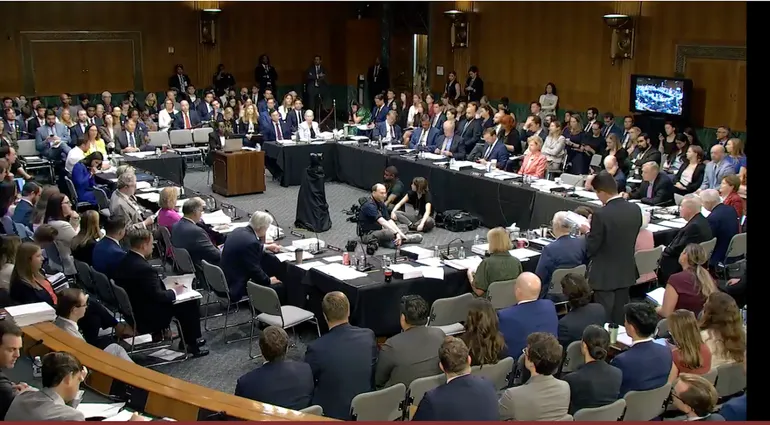
    The U.S. Senate Appropriations Committee on Thursday approved a bipartisan fiscal year 2026 K-12 education bill that would prevent the executive branch from removing Title I and special education programs to agencies outside the U.S. Department of Education. The legislation also rejects several other funding reforms proposed by the Trump administration.

    The bill would require timely awarding of formula grants by the Education Department to states and districts. For several weeks in July, the Education Department and the White House’s Office of Management and Budget withheld $6.2 billion in grant funding that states and districts expected access to starting July 1.

    That funding at pre-approved FY 2025 spending levels was released after the Trump administration conducted a “programmatic review” and added “guardrails” to ensure the funds would not violate executive orders or administration policy, a senior administration official at OMB told K-12 Dive in an email July 25.

    Educators, parents, education organizations, and Republican and Democratic lawmakers had pressured the administration to make the funds available, citing that the disruption in funds was causing school program cuts, canceled contracts and staff layoffs. 

    In total, the Senate Appropriations Committee recommends funding the Education Department in FY 26 at $79 billion, according to the bill text. That’s $12.3 billion more than President Donald Trump’s proposal of $66.7 billion. In the current fiscal year, the Education Department is funded at $78.7 billion. 

    “The bill also supports families by investing in education and affordable child care, which promotes financial stability for working parents and benefits our economy,” said Appropriations Committee Chair Sen. Susan Collins, R-Maine.

    The proposed education budget — which was included in funding legislation for the U.S. Departments of Labor, Health and Human Services, and related agencies — passed the committee in a 26-3 vote. 

    “Our bills reject devastating cuts — and reject many of this administration’s absurd proposals — like dismantling the Department of Education,” said Sen. Patty Murray, D-Wash., vice chair of the Senate Appropriations Committee, in her opening remarks. 

    “We all know President Trump cannot dismantle the Department of Education or ship education programs to other agencies. Authorizing laws prevent that. Appropriations laws prevent that,” Murray said. 

    Trump has said he wants to reduce the size and scope of the federal government and give states and localities more fiscal decision-making authority while reducing bureaucracy. 

    In March, Trump signed an executive order to shutter the Education Department to the “maximum extent appropriate.” Congress, however, would need to approve the closing of the agency.

    Maintaining separate formula grants

    The Trump administration’s budget proposed a new K-12 Simplified Funding Program that would merge 18 current competitive formula funding grant programs into one $2 billion formula grant program. The administration said the SFP would spur innovation and give states more spending flexibility and decision-making power.

    The Senate Appropriation Committee instead rejected that plan by keeping the formula grants separate. The Senate plan would provide a $50 million increase over FY 2025 spending for both Title I-A funding for low-income schools and districts, and for special education services under the Individuals with Disabilities Education Act.

    The bill would maintain current spending levels, except for a few reductions, across other K-12 formula and competitive grant programs targeting improvements in teaching and learning, according to a bill summary from Murray’s office. 

    Other notable spending proposals from the Senate Appropriations Committee FY 26 bill include:

    • The Office for Civil Rights would maintain level spending at $140 million.
    • The Institute of Education Sciences would be funded at $793 million, level with the FY 25 budget. 
    • Title I and IDEA would be funded at $18.5 billion and $15.2 billion, respectively. The two grant programs make up the largest share of funding for K-12 at the Education Department.
    • Under the HHS portion of the legislation, the committee recommends increasing funding for the early childhood learning programs Head Start and the Child Care and Community Block grant by $85 million each to $12.4 billion and $8.8 billion, respectively. 

    The Senate Appropriations bill will now be considered by the House and full Senate. FY 26 starts Oct. 1.
    Source link

  • Grant Applications for Campus Childcare Put on Hold

    Grant Applications for Campus Childcare Put on Hold

    Eveline McPhee, a 39-year-old mother of two, has been a dental assistant in northern Massachusetts for nearly 15 years. And while she’s long aspired to upgrade that title to dental hygienist, for most of her career that goal seemed unattainable.

    With a full-time job, managing classes seemed arduous, and without a job she and her husband wouldn’t be able to afford day care and after-school programs.

    But that all changed last year when an admissions officer at Mount Wachusett Community College told McPhee about Child Care Access Means Parents in School, or CCAMPIS—a $75 million federal grant program designed to help low-income parents in college pay for childcare both on and off campus. McPhee enrolled last fall and is on track to graduate in 2026.

    “I have a 9-year-old son, and they paid for him to go to camp this summer so that I can take an intensive course in the dental hygiene program,” McPhee said. “I definitely would not have been able to go back to school without CCAMPIS.”

    Now the future of the program is cloudy.

    Applications for this year’s CCAMPIS grants—which typically open in May and close by the end of July—have yet to be announced, leaving thousands of student parents in limbo.

    Multiple think tank fellows and student advocacy representatives said they’ve been reaching out to the Trump Department of Education for more information since the spring, but the response is always “We’ll open it soon.” Similar circumstances have been reported for other basic needs programs included under FIPSE, the Fund for the Improvement of Postsecondary Education.

    Neither the Department of Education nor Republican committee chairs in the House and the Senate responded to Inside Higher Ed’s request for comment.

    With the new academic year quickly approaching, the lack of funds leaves many colleges and universities with major budget gaps.

    Until last month, Mount Wachusett’s childcare finances looked grim; CCAMPIS funding was set to run out on Sept. 30. But Ann Reynolds, the student support adviser who runs the program, had seen all the headlines about the Trump administration’s funding freezes and anticipated the delay. (Last year, the Biden administration chose not to open the grant to new applicants, but it sent out a clear notice in advance and allowed existing awardees to reapply.) She reached out to a local philanthropy and secured $94,000 to carry McPhee and about a dozen other student parents through graduation.

    “We could see the writing on the wall, so to speak,” Reynolds said. “And it’s lifted a great weight from my student parents’ shoulders.”

    Not all colleges were so forward-thinking. Many students, including future enrollees at Mount Wachusett, will have to take out additional loans—or drop out and try to repay the loans they already have without a college degree.

    “We’re seeing a lot of students raising children coming to school now, so our need is greater,” Reynolds said. “But we can’t take in new students.”

    Without the grants, which have had bipartisan support in Congress for years, historically underfunded institutions, including community colleges and minority-serving institutions, will be cash-strapped. Some may be forced to cut staffing or eliminate services entirely.

    “Given all the other funds from the U.S. Department of Education that have been frozen or subject to political games in the last few months, the community is right to worry,” said Bryce McKibben, senior director of policy and advocacy at Temple University’s Hope Center for Student Basic Needs. “This doesn’t serve anyone—certainly not taxpayers. The administration should announce a competition or award continuation grants immediately.”

    ‘A Vicious Cycle’

    Most experts speculate the delay is occurring for one of two reasons: Either the department lacks the capacity to meet this statutory requirement since it laid off half its staff in March, or it is intentionally withholding the dollars as part of a broader effort to claw back education funding through a process known as rescission.

    The latter option would require congressional approval. But the president already won enough votes to pass one rescission package earlier this month, and policy analysts say it’s likely he’ll try to do it again. (Trump’s proposed budget for fiscal year 2026 axes CCAMPIS and FIPSE completely.)

    Either way, Theresa Anderson, a senior education and labor fellow at the Urban Institute, a nonpartisan think tank, said the delay symbolizes a larger restriction on college access.

    This is a “well-documented agenda pattern and strategy” of the Trump administration, she explained. “It represents further disinvestment and disinterest in helping people access the necessary training, education and credentialing programs that states recognize are necessary to development of the workforce.”

    Tanya Ang, executive director of the Today’s Student Coalition, an adult learner advocacy group, described the situation as putting the leaders of critical student support services “up against a brick wall.”

    “If students are going to school, we want them to finish, because that’s going to ensure they can get a job and start a long-term career that will provide a strong return on investment,” Ang explained. Cutting off access to childcare “creates a vicious cycle that will hurt not just them and their children as individuals but, honestly, our economy.”

    Critics have long argued that CCAMPIS is a duplicate program, suggesting that the Child Care and Development Block Grant, which is run by the Department of Health and Human Services, fulfills a similar purpose. But higher education experts say that’s simply not the case.

    CCDBG, they say, supports broad, state-level childcare subsidies, predominantly allocated to parents who work full-time. CCAMPIS, on the other hand, is more targeted and serves student parents, many of whom can’t meet the work requirements attached to the block grant.

    “CCAMPIS was really important to not only be able to fill childcare needs in a way that was very flexible for colleges, but also to allow for additional wraparound supports that are incredibly important to support persistence,” Anderson said. It helps student parents “build meaningful community connections, not only with staff of the college, but also with each other.”

    At Mount Wachusett, Reynolds said student parents who participate in the CCAMPIS program have one of the highest completion rates among any demographic, at 73 percent. So she hopes that even a sliver of the current operation will survive past its current end date in 2027.

    When asked what she would tell the Trump administration if she had the chance, McPhee said she was worried people were losing the opportunity to get ahead.

    “I wanted to do better for my family, and this allowed me to do that,” she said. “To not be able to provide that for people moving forward, it’s just not what this country is about. It’s wrong, and I don’t really understand why they would do it.”

    Source link

  • How the Workforce Pell Grant Could Transform Higher Ed and Workforce Training

    How the Workforce Pell Grant Could Transform Higher Ed and Workforce Training

    Higher education is at an inflection point. As college enrollment continues to decline and pressure mounts to demonstrate return on investment, the federal government has responded with a potentially transformative shift: the creation of Workforce Pell Grants.

    Included in the sweeping One Big Beautiful Bill Act (OBBBA) recently signed into law, this expansion of Pell Grant eligibility could open the door to new student populations, new revenue streams, and new institutional strategies — if colleges and universities act quickly and strategically. 

    What is the Workplace Pell Grant? 

    Traditionally, Pell Grants have been limited to students enrolled in credit-bearing, degree-seeking programs. That changed with the passage of OBBBA. Workforce Pell expands access to federal financial aid for students enrolled in short-term, non-degree training programs that lead directly to high-demand jobs. 

    Under the law, students may now use Pell Grants to pay for qualifying workforce training programs that meet the following criteria: 

    • Are between 150 and 600 clock hours (roughly 8 to 15 weeks of instruction); 
    • Are offered by eligible institutions of higher education (IHEs) 
    • Lead to industry-recognized credentials tied to in-demand occupations as defined by the U.S. Department of Labor and/or state workforce boards. 

    This development reflects a growing bipartisan consensus that higher education must play a more responsive role in preparing learners for rapidly evolving labor market needs. 

    Why Workforce Pell matters for colleges and universities 

    The proposed expansion of Pell Grant funding isn’t just a policy update — it’s a strategic opportunity. Here are some key opportunities institutions should be paying attention to:

    1. New enrollment markets 

    Workforce Pell unlocks funding for adult learners, displaced workers, and non-traditional students who may not have the time, resources, or need to pursue a two- or four-year degree. For institutions facing enrollment declines, particularly at the community college level, this represents a powerful new market. 

    2. Revenue diversification 

    Short-term credentialing programs — especially those that can scale — offer a way to generate net new revenue without over-reliance on traditional tuition models. With federal aid now available, these programs become more accessible and financially sustainable. 

    3. Employer partnerships 

    The law encourages alignment between institutions and regional labor market demands. Institutions that already collaborate with employers or workforce boards will be well-positioned to fast-track qualifying programs and potentially receive direct funding support or partnership commitments. 

    4. Strategic positioning 

    Institutions that embrace short-term, skills-based credentialing can position themselves as hubs of workforce development and talent pipelines. This enhances their relevance with local governments, employers, and adult learners alike. 

    Ready for a Smarter Way Forward?

    Higher ed is hard — but you don’t have to figure it out alone. We can help you transform challenges into opportunities.

    How can institutions prepare for the Workplace Pell? 

    Now is the time for higher ed leaders and innovators to act on these policy changes. Here’s where you can start: 

    1. Audit existing offerings 

    Begin by reviewing current non-credit or certificate programs. Identify which ones could meet the new Workforce Pell criteria with limited modification—particularly programs already tied to industry credentials and high-demand jobs. 

    2. Build approval infrastructure 

    Programs must be approved by the U.S. Department of Education and/or state agencies. Start building a compliance plan, including documentation of program outcomes (e.g., job placement rates, earnings gains) and accreditation alignment. Consider appointing a cross-functional task force including financial aid, academic leadership, compliance, and workforce liaisons. 

    3. Seek out strategic partnerships 

    Engage with local employers, chambers of commerce, and workforce boards to validate demand and align curriculum. Public-private partnerships can strengthen program justification and outcomes data—key elements for gaining approval and maintaining eligibility. 

    4. Invest in marketing and outreach 

    Many potential Workforce Pell students are not currently in your database. Institutions must rethink marketing strategies to reach adult learners, incumbent workers, and individuals navigating career transitions. Messaging should highlight affordability, short duration, and job outcomes. 

    5. Track the data 

    Institutions must monitor the performance of Workforce Pell students and programs. The Department of Education will evaluate outcomes like employment rates and earnings. Underperforming programs may lose eligibility, so building robust reporting systems is not optional — it’s critical. 

    A new era of credentialing is coming 

    The Workplace Pell Grant represents more than a funding change — it’s a shift in federal policy philosophy. It signals growing recognition that short, focused training can be just as powerful as a traditional degree in driving upward mobility. 

    This policy has the potential to reshape the education market within a few years, favoring modular, job-connected learning and expanding access for nontraditional students. For institutions ready to lead, the opportunity is clear. 

    At Collegis, we partner with institutions to navigate policy shifts like the Workplace Pell with confidence, bringing the strategy, technology, and operational support needed to move quickly, ensure compliance, and deliver real impact. 

    The future of workforce-connected education is coming fast. Let’s lead it together. 

    Innovation Starts Here

    Higher ed is evolving — don’t get left behind. Explore how Collegis can help your institution thrive.

    Source link

  • NCCU Receives $500K Grant to Study Career Barriers Facing Young Men in Research Triangle

    NCCU Receives $500K Grant to Study Career Barriers Facing Young Men in Research Triangle

    NDr. Tryan McMickensorth Carolina Central University has received a $500,000 grant from the Walton Family Foundation to launch a  research initiative addressing the systemic barriers that prevent young men in the Research Triangle region from accessing career pathways and educational opportunities.

    The two-year study, titled “Understanding Education as a Career Choice for NC Research Triangle Youth,” will focus on what researchers term “opportunity youth” – young men between ages 18 and 24 who have become disconnected from both education and employment systems. Despite broader national gains in educational access, this demographic continues to face significant obstacles that contribute to high dropout rates and limited postsecondary success.

    Dr. Tryan McMickens, professor of higher education and coordinator of NCCU’s higher education administration program, will lead the initiative alongside Dr. Jim Harper II, professor of history and associate dean of the School of Graduate Studies. Their research team will include faculty members, six graduate students from the higher education administration and history programs, and a dedicated project manager.Dr. Jim Harper II Dr. Jim Harper II

    “I am thrilled that the Walton Foundation has chosen to invest in NCCU faculty to advance research on postsecondary attainment among boys and young men,” said Dr. Ontario Wooden, NCCU provost and vice chancellor for academic affairs. “This support highlights the importance of this critical area and empowers our faculty to deliver meaningful, evidence-based results. I eagerly anticipate the insights and impact this work will bring.”

    The research aims to move beyond simply identifying problems to developing concrete solutions through research-based interventions, community engagement, and policy recommendations. The project will culminate in a two-day conference planned for 2026, where findings and potential interventions will be shared with stakeholders across the region.

    McMickens brings extensive expertise in higher education access and the experiences of Black male students to the project. His research centers on college mental health and historically Black colleges and universities, and he authored Black Male College Students’ Mental Health: Providing Holistic Support in Higher Education. Harper’s scholarship focuses on African and African American education and innovative uses of technology for public engagement with history. He co-authored With Faith in God and Heart in Mind: A History of Omega Psi Phi Fraternity, Inc.

    The Research Triangle region, encompassing Raleigh, Durham, and Chapel Hill, represents one of the nation’s most concentrated areas of higher education institutions and technology companies. However, the economic opportunities created by this educational and technological hub have not been equally accessible to all young people in the region, particularly young men from underserved communities.

    The Walton Family Foundation, established by descendants of Walmart founders Sam and Helen Walton, focuses its philanthropic efforts on three primary areas: improving K-12 education, protecting rivers and oceans along with their communities, and investing in Northwest Arkansas and the Arkansas-Mississippi Delta. The foundation also supports projects reflecting individual family members’ personal interests.

    The timing of this research initiative comes as higher education institutions nationwide are examining their role in addressing broader social and economic inequities, particularly those affecting young men of color who face disproportionate barriers to educational and career advancement.

    Source link

  • Lawsuit Over NIH Grant Funding Heads to Supreme Court

    Lawsuit Over NIH Grant Funding Heads to Supreme Court

    Photo illustration by Justin Morrison/Inside Higher Ed | Adam Bartosik and Jacob Wackerhausen/iStock/Getty Images

    The Trump administration has taken its fight over grants awarded by the National Institutes of Health to the Supreme Court, requesting permission Thursday to finalize millions of dollars in award cuts, CBS News reported.

    President Trump began slashing research funding shortly after he took office in January, targeting projects that allegedly defied his executive orders against issues such as gender identity and DEI. By early April, 16 states and multiple academic associations and advocacy groups had sued, arguing the funding cuts were an unjustified executive overreach and bypassed statutory procedures.

    Since then, a federal district court ordered a preliminary injunction requiring all grants to be reinstated, and a court of appeals denied the Trump administration’s request to halt the decision. Now, executive branch legal officials are taking the case to the highest court.

    In an emergency appeal, Solicitor General John Sauer wrote that the NIH is attempting to “stop errant district courts from continuing to disregard” presidential orders.

    The solicitor also pointed to an April ruling from the Supreme Court allowing the Department of Education to terminate some of its own grants for similar reasons. In that case, the justices said the Trump administration would likely be able to prove that the lower court lacked jurisdiction to mandate the payment of a federal award.

    The court system does not allow a “lower-court free-for-all where individual district judges feel free to elevate their own policy judgments over those of the Executive Branch, and their own legal judgments over those of this Court,” Sauer wrote.

    Source link

  • Federal Court Orders Reinstatement of Southern Education Foundation Grant After DEI Controversy

    Federal Court Orders Reinstatement of Southern Education Foundation Grant After DEI Controversy

    Raymond PierceThe Southern Education Foundation has secured a significant legal victory in its fight against the U.S. Department of Education, with a federal judge ordering the reinstatement of a key grant that was terminated earlier this year over allegations of illegal diversity, equity, and inclusion practices.

    On May 21, 2025, a judge in the U.S. District Court for the District of Columbia granted SEF’s motion for preliminary injunction, ordering the Department of Education to restore the organization’s Equity Assistance Center-South grant and reimburse all outstanding expenses. The grant, which had been terminated on February 13, 2025, enables SEF to provide technical assistance to public school districts and state agencies across 11 Southern states to help them comply with federal civil rights law.

    The court’s ruling was particularly pointed in its criticism of the Education Department’s decision to terminate the grant. 

    “In view of the history of race in America and the mission of SEF since the Civil War, the audacity of terminating its grants based on ‘DEI’ concerns is truly breathtaking,” the judge wrote in the opinion.

    The Southern Education Foundation, which has operated for more than 150 years with a mission to advance educational opportunities for Black students in the South, traces its origins to the late 1800s when it supported education for individuals recently emancipated from enslavement. The organization’s Equity Assistance Center represents a continuation of work that began with the original Desegregation Assistance Centers.

    “We are pleased with the Department of Education’s compliance with the court order by reinstating our grant,” said SEF President and CEO Raymond Pierce. “With the grant reinstated, SEF can move forward with developing the assistance needed to free school districts from policies and practices that remain from the dark era of lawful segregation which continue to hinder equal education opportunity for far too many children.”

    The preliminary injunction provides temporary relief while the case proceeds through the courts. The judge found that SEF was likely to succeed on the merits of its claim that the Department violated federal law in terminating the grant. However, the reinstatement is not yet permanent, pending the outcome of the full legal proceedings.

    The case highlights ongoing tensions around diversity, equity, and inclusion initiatives in education, particularly as they relate to organizations with deep historical roots in civil rights work. The Southern Education Foundation’s century-and-a-half commitment to educational equity predates modern DEI terminology by decades, making the Department’s allegations particularly contentious.

    The EAC-South serves a critical function in the region, providing technical assistance to help school districts navigate complex federal civil rights requirements. This support is particularly vital in states with histories of legal segregation, where legacy policies and practices can continue to create barriers to equal educational opportunity.

    The reinstatement allows SEF to resume its work immediately, though the organization will be watching closely as the legal case progresses. The preliminary nature of the court’s order means that while SEF can continue operating the program, the long-term resolution of the dispute remains uncertain.

    The case represents a broader debate about the role of equity-focused programming in education and the extent to which federal agencies can regulate or restrict such work. For the Southern Education Foundation, the stakes extend beyond a single grant to encompass the organization’s fundamental mission and its ability to continue serving communities that have historically faced educational inequities.

    Source link

  • Alliant Credit Union Foundation Grants $108K to Boost AI and Digital Programs at Ridgewood High School

    Alliant Credit Union Foundation Grants $108K to Boost AI and Digital Programs at Ridgewood High School

    The Alliant Credit Union Foundation has awarded a $108,000 grant to Digital Leaders Now, the nonprofit that powers the Digital Leaders Academy at Ridgewood Community High School District 234, to support the implementation of innovative digital opportunity programs.

    The initiative will begin rolling out in Spring 2025, with full program implementation for the 2025-2026 school year. The grant will help students gain critical digital skills, enhance career preparation opportunities at Ridgewood and beyond, and ensure teachers have the necessary resources to integrate technology into the classroom effectively.

    “The Alliant Credit Union Foundation is committed to fostering educational opportunities that prepare students for the future,” said Meredith Ritchie, President of The Alliant Credit Union Foundation. “By partnering with the Digital Leaders Academy, we are helping to bridge the digital divide and ensure that students in Ridgewood Community High School District 234 are equipped with the skills and knowledge they need to succeed in the evolving workforce.”

    The grant will support key initiatives, including:

    • Integration of AI Tools: Students will gain hands-on experience using AI and emerging technologies to enhance their learning and problem-solving skills.
    • Teacher Training & Development: Supporting professional development programs that empower educators with the tools and knowledge to incorporate digital learning strategies into their curriculum.
    • Digital Fluency Expansion: Enhancing student digital literacy and technology-based learning experiences to build a foundation for future careers.
    • Career Readiness Programs: Preparing students for high-demand technology roles by connecting them with industry experts, mentorship opportunities, and real-world applications of digital skills.

    Through this initiative, the Alliant Credit Union Foundation continues its mission of driving positive change in education by expanding access to technology and professional development resources.

    “The Digital Leaders Academy is a testament to the power of partnership and community. With the support of Alliant, we’re equipping students, teachers, and parents with the tools to thrive in the digital age, because when we invest in digital fluency, we unlock limitless potential,” said Caroline Sanchez Crozier, Founder of Digital Leaders Now, an Illinois-based nonprofit, and creator of Digital Leaders Academy.

    Ridgewood Community High School District 234 students will benefit from enhanced learning experiences, giving them a competitive edge in today’s digital economy.

    Kevin Hogan
    Latest posts by Kevin Hogan (see all)

    Source link

  • Harvard Hit With Another $60 Million in Grant Cuts

    Harvard Hit With Another $60 Million in Grant Cuts

    The Trump administration has ended $60 million in federal grant funding for Harvard University amid an ongoing fight with the private institution over concerns about alleged campus antisemitism.

    The Department of Health and Human Services announced the move late Monday night.

    “HHS is taking decisive action to uphold civil rights in higher education,” the agency posted on social media. “Due to Harvard University’s continued failure to address anti-Semitic harassment and race discrimination, HHS is terminating multiple multi-year grant awards—totaling approximately $60 million over their full duration. In the Trump Administration, discrimination will not be tolerated on campus. Federal funds must support institutions that protect all students.”

    HHS also linked to a report from The Daily Caller, a right-wing website, which noted that the $60 million in grants came from funding via the Centers for Disease Control and Prevention.

    The Daily Caller reported that federal government officials sent a letter to Harvard that cites the university’s own findings of antisemitism on campus as detailed in a report published last month.

    A CDC official, according to The Daily Caller, told the university that funding an institution that the Trump administration perceives as discriminatory would be inconsistent with the CDC’s mission. The CDC official concluded that “no corrective action is possible here.”

    Harvard did not respond to a request for comment from Inside Higher Ed.

    The latest move comes as the Trump administration has already pulled other grants and federal contracts and frozen more than $2.7 billion in federal funding—about a third of Harvard’s federal funds.

    Harvard is also facing several investigations from the Trump administration.

    The university has been locked in conflict with the federal government for months since it spurned Trump’s demands to overhaul governance, hiring, admissions and more, which prompted retaliation in the form of a funding freeze. Harvard sued the Trump administration last month, arguing that it sought to “impose unprecedented and improper control over the university.”

    A hearing in that case is set for July.

    Source link

  • FIRE and Cosmos Institute launch $1 million grant program for AI that advances truth-seeking

    FIRE and Cosmos Institute launch $1 million grant program for AI that advances truth-seeking

    AUSTIN, Texas, May 16, 2025 — The Foundation for Individual Rights and Expression (FIRE) and the Cosmos Institute today announced the Truth-Seeking AI Grants Program, a new $1 million initiative to fund open-source projects that build freedom into the foundations of AI, rather than censorship or control.

    Truth-seeking AI: Why it matters

    Truth-seeking AI is artificial intelligence built to expand the marketplace of ideas and sharpen human inquiry — not replace it.

    AI already drafts our sentences, sorts our inbox, and cues our next song. But the technology is advancing rapidly. Soon, it could determine which ideas ever reach our minds — or form within them. Two futures lie ahead, and the stakes couldn’t be higher.

    In one, AI becomes a shadow censor. Hidden ranking rules throttle dissent, liability fears chill speech, and flattering prompts dull judgment until people stop asking “why.” That is algorithmic tyranny.

    In the other, AI works as a partner in truth-seeking: it surfaces counter-arguments, flags open questions, and prompts us to check the evidence and our biases. Errors are chipped away, knowledge grows, and our freedom — and habit — to question not only survives but thrives. 

    To ensure we build AI tools and platforms for freedom, not control, Cosmos and FIRE are putting $1 million in grants on the table to ensure the future of AI is free.

    “AI guides a fifth of our waking hours. The builders of these systems now hold the future of free thought and expression in their hands. We’re giving them the capital, computing resources, and community they need to seize that opportunity,” said Brendan McCord, founder and chair of Cosmos Institute.

    “The First Amendment restrains governments, but the principles of free speech must also be translated into code. We’re challenging builders to do exactly that and prioritize freedom over control,” said Greg Lukianoff, president and CEO of FIRE.

    “AI can already steer our thoughts. The future is AI that expands them, not controls them,” added Philipp Koralus, founding director, Oxford HAI Lab and Senior Research Fellow at Cosmos Institute.

    To read more about why we need to bake principles of free thought and expression into AI code, check out Brendan McCord, Greg Lukianoff, and Philipp Koralus’s piece at Reason

    How it works

    • Grant pool: $1 million (cash + compute); compute credits are from Prime Intellect, a platform for open, decentralized AI development
    • Typical award: $1k – $10k fast grants; larger amounts considered for standout ideas
    • Rolling review: decisions in ~3 weeks; applications open May 16 at CosmosGrants.org/truth
    • Sprint timeline: 90 days to ship a working prototype
    • Community: access to a vetted network of builders, mentors, and advisors at the AI and philosophy frontier
    • Showcase: Top projects funded by Nov 1, 2025 will be invited to demo at the Austin AI x Free Speech Symposium in December 2025; selection is competitive and at the program’s discretion

    What we’re funding

    • Marketplace of Ideas — projects that preserve viewpoint diversity and open debate.
    • Promoting Inquiry — systems that actively provoke new questions, surfacing counter-arguments and open issues that require more study.
    • Bold New Concepts — any approach that pushes AI toward the role of truth-seeking partner.

    Illustrative projects:

    We’re focused on prototypes that translate philosophy to code — embedding truth-seeking principles like Mill’s Trident and Socratic inquiry directly into open-source software.

    Possible projects could include:

    • AI challenger that pokes holes in your assumptions and coaches you forward
    • An open debate arena where swappable models argue under a live crowd score
    • A tamper-proof logbook that records every answer on a public ledger.

    About the Foundation for Individual Rights and Expression (FIRE)

    The Foundation for Individual Rights and Expression (FIRE) is a nonpartisan, nonprofit organization dedicated to defending and sustaining the individual rights of all Americans to free speech and free thought — the most essential qualities of liberty. FIRE educates Americans about the importance of these inalienable rights, promotes a culture of respect for them, and provides the means to preserve them. Learn more at www.thefire.org.

    About Cosmos Institute

    Cosmos Institute is a 501(c)(3) academy for philosopher-builders — technologists who unite deep reflection with practical engineering. Through research, fellowships, grants, and education, Cosmos advances human flourishing by translating philosophy to code across three pillars: truth-seeking, decentralization, and human autonomy. The Institute supported the creation of the new Human-Centered AI Lab at the University of Oxford, the first lab dedicated to embedding flourishing principles in open-source AI. Learn more at www.cosmos-institute.org.

    Media Contact
    Karl de Vries, Director of Media Relations, FIRE
    [email protected] | +1 215-717-3473

    Source link

  • Pell Grant Dollars Are Left Unclaimed: What That Means for Students and States

    Pell Grant Dollars Are Left Unclaimed: What That Means for Students and States

    Title: Pell Dollars Left on the Table

    Authors: Louisa Woodhouse and Bill DeBaun

    Source: National College Attainment Network

    Pell Grants have long supported low-income students as they pursue higher education, increasing the financial capabilities and academic opportunities afforded to students. However, receiving federal financial aid through Pell Grants is dependent on filing the Free Application for Federal Student Aid (FAFSA), which can serve as a barrier to students.

    The National College Attainment Network (NCAN) has published a report on the unclaimed Pell Grants left on the table by high school graduates. Approximately 830,000 Pell Grant-eligible students did not complete FAFSA in the 2024 cycle, resulting in nearly $4.4 billion in unclaimed Pell Grant awards. These unclaimed funds are valuable to both students and states, with the ability to further the educational pursuits of low-income students and strengthen state economies.

    NCAN has run reports detailing the value of unclaimed Pell Grants over the past four years. Typically, nearly 60 percent of high school graduates complete the FAFSA by June 30, with completion rates trailing off markedly as students begin their summer.

    However, due to the technical challenges and delayed launch of FAFSA that occurred in the 2024 cycle, by the end of June, only 50 percent of high school graduates had completed the form. By August 30, 57 percent of students had filed the FAFSA, decreasing the amount of financial aid left on the table. The implications are clear: hindrance to the financial aid application process, whether that be through technical difficulties, decreased assistance, or short staffing, can result in many students losing access to Pell Grant funds.

    The impact of lower FAFSA completion rates, and therefore more unclaimed Pell Grants, is not felt exclusively by students but by states as well. In 2024, students in California and Texas each left nearly $550 million in Pell Grant awards unclaimed. While these states lose the most when FAFSA completion rates are low, they also stand to gain the most if completion rates increase.

    Analysis from NCAN finds that if FAFSA completion rates had increased by an additional 10 percentage points this year, California would have seen a $145 million increase in Pell Grant awards while Texas would have received an additional $130 million. The additional federal aid could translate into more students attending postsecondary institutions, filling workforce gaps and strengthening the states’ economies.

    In establishing the significance of increasing FAFSA filing rates for low-income students, NCAN offers commentary on how states can better support students, especially in the wake of potential policy changes directed at higher education. States can fund FAFSA completion efforts, providing additional in-school and online resources for students to access when filing. Additionally, FAFSA data sharing among states may enable high school counselors and local college access partners to better target students that could benefit from additional assistance.

    To read more about unclaimed Pell Grants and the role states can play on bolstering FAFSA completion rates, click here.

    —Julia Napier


    If you have any questions or comments about this blog post, please contact us.

    Source link