This audio is auto-generated. Please let us know if you have feedback.
Dive Brief:
Preliminary case numbers for pertussis, or whooping cough, in the U.S. remain elevated in 2025, compared to immediately before the pandemic, when more than 10,000 cases were typically reported each year, according to recent figures from the U.S. Centers for Disease Control and Prevention.
Meanwhile, KFF reported this year that exemptions from school vaccination requirements — and particularly non-medical exemptions — have increased. In addition, the New York Academy of Sciences reported in May that disinformation across social media, politicization of vaccines and public figures promoting skepticism, “have all contributed to declining coverage, fueling the resurgence of pertussis.”
Dive Insight:
The Texas Department of State Health Services reported on Nov. 3 that it was tracking a significant increase in pertussis cases in 2025. According to provisional data, the agency said, “Texas has had more than 3,500 reported pertussis cases through October this year, roughly four times the number reported for the same period last year.”
The number of cases is also reportedly the highest for the state in 11 years.
Texas schools, among other entities like hospitals, are required to report individuals who are suspected of having pertussis within one work day, according to the state health agency.
This is the second consecutive year that Texas has experienced high year-over-year increases in reported pertussis cases, and it’s also the second consecutive year the state’s Department of State Health Services has issued a health alert, according to a news release.
The CDC said reported cases of pertussis are currently trending down in 2025 since a peak in November 2024, when more than six times as many cases were reported, compared to 2023. The agency added that case counts will likely change as it finalizes the data.
In September, Colorado-based healthcare system UCHealth reported that cases of whooping cough “are on track to be even worse this year than in 2024,” adding that health officials in parts of the state have warned of “a noticeable jump” in pertussis cases as kids have returned to school.
In many states across the U.S. — including Florida, Oregon and Washington — cases of pertussis as of Sept. 20 were already outpacing total year-to-date cases reported by the CDC in 2025. UCHealth’s September report noted that the worst U.S. pertussis outbreaks so far in 2025 were on the West Coast, with high numbers also reported in Ohio, Michigan, Illinois, Minnesota, North Carolina and Arizona.
Other childhood diseases are also on the rise as a result of shifting attitudes toward vaccines and vaccine mandates. According to the CDC, the best defense against pertussis is a vaccination.
In March, measles infections spread across several U.S. states, a quarter-century after the potentially fatal disease had been declared eradicated in the U.S. in 2000.
In addition to the impact on student health, an uptick in acute and chronic illnesses can also increase chronic absenteeism issues for schools and school districts. A CDC study published last year found that in 2022, 5.8% of children experienced chronic school absenteeism for health-related reasons.
This audio is auto-generated. Please let us know if you have feedback.
Declining student enrollment is plaguing public schools at state and district levels nationwide, with the impact being felt from falling birthrates and expanding school choice programs.
As preliminary enrollment data for the 2025-26 school year has begun rolling out, school leaders are being forced to plan ahead for some tough decisions over staffing and school consolidations.
While K-12 finance researchers have warned of this trend for years, the historic and one-time federal COVID-19 relief funds delayed the inevitable financial challenge for some districts — until now.
Here is a look at how the development is affecting selected states and districts.
Alabama
Alabama experienced a 0.8% dip in public student enrollment from 720,181 in 2024-25 to 714,358 for the 2025-26 school year, according to data from the Alabama State Department of Education.
This marks the state’s steepest enrollment drop in 40 years, Alabama State Superintendent of Education Eric Mackey told an October board meeting. The state’s historic enrollment decline is most likely due to students opting into a new voucher program known as the CHOOSE Act, Mackey said.
Another key reason, though, is that some students “just disappeared” and never showed up despite being enrolled in an Alabama public school, he said. Alabama superintendents have told Mackey that it seems a majority of those students who were unaccounted for were Hispanic with unknown immigration statuses, he said.
Because of the sharp decline in overall student enrollment, Mackey projects that the district will need 500 to 700 fewer teachers by the 2026-27 school year.
Over 23,000 students were approved this year to receive an estimated $124 million in education savings accounts through the CHOOSE Act, which allows families to use ESAs to cover private school tuition, fees and other qualified education expenses, according to an Oct. 17 announcement by Alabama Gov. Kay Ivey.
West Virginia
West Virginia’s enrollment has been in steady decline for the last decade. Between 2023 and 2024, the state saw one of the largest public school enrollment drops in the nation, losing 1.7% of its student body, according to a June analysis by the Reason Foundation, a libertarian think tank.
Since 2017-18, the state’s public school enrollment has fallen steeply — from 270,613 students to 241,013 in 2024-25, for a 10.9% decrease, according to the most recently available data from the West Virginia Department of Education.
This decline, along with the expiration of federal COVID-19 aid, an “outdated” state education funding formula and an increasingly popular state school voucher program have contributed to a wave of school closures statewide, according to the West Virginia Center on Budget & Policy. Over 70 West Virginia public schools have closed since 2019, “and more closures are on the way,” the center said.
Wisconsin
In Wisconsin, preliminary unaudited state data reveals that enrollment fell nearly 6%, or by about 46,180 students in September 2025-26 school year compared to the year-over-year counts. After that drop, the state enrolled 759,701 students this school year versus 805,881 in September of 2024-25, according to the Wisconsin Department of Public Instruction.
One Wisconsin state representative said in September that the number of public school districts in the state — currently at 421 — “is going to have to drop,” The Center Square reported. The legislator, Rep. Amanda Nedweski, added in a press conference that she plans to introduce state legislation by year’s end that would encourage school districts to consolidate as a shrinking population and lower birth rates continue contributing to declining enrollment.
Chicago
Chicago Public Schools’ enrollment has also dropped significantly in the last 15 years, from nearly 403,000 in 2010-11 to just over 316,000 in 2025-26, according to the nonprofit Illinois Policy Institute. Most recently, Chicago Public Schools reported a decline of 9,081 students between 2024-25 and 2025-26.
More than 1 in 3 desks are empty in the district, the institute said.
While cost-saving measures are needed to “fix CPS’ financial outlook” amid enrollment declines and a lingering deficit that the district is working to address, its contract with the Chicago Teachers Union makes it difficult to do so, the institute said. The union ratified a new contract with Chicago Public Schools this summer that calls for hiring additional staffers and is estimated to add $1.5 billion in expenses over four years, according to WTTW News.
The Chicago Teachers Union said, in an April message to its members, that its “historic” contract with the district “will create smaller class sizes, invest in sports, arts and music, and add librarians, counselors, clinicians, teacher assistants and other support staff to schools as they seek to build a force field from discrimination and federal attacks.”
Montgomery County, Maryland
Maryland’s Montgomery County Public Schools — the state’s largest public school system — saw its student enrollment drop by 2,641 students in the past year to a total of 156,541 as of Sept. 30, according to preliminary data from the district in October. The district projects that number will continue to fall to 149,706 students in the next six years.
The district attributed the dip to a decline in birth rateswithin the last decade.
Montgomery County Public Schools Superintendent Thomas Taylor said it’s still too soon to tell based on current projections if school closures will be necessary, the Baltimore Banner reported in October.
This audio is auto-generated. Please let us know if you have feedback.
The U.S. Department of Education’s withholding of $6.2 billion in federal K-12 grants has local and state school systems scrambling to figure out how to make up for the budget shortages. It has also caused a swell of advocacy from families, lawmakers, educators and others across the nation.
The withheld funds for fiscal year 2025 were expected to be released by the Education Department July 1. Programs at risk due to the funding hold include English learner services, academic supports, after-school programming and professional development.
The frozen funds represent at least 10% or more of states’ overall K-12 federal revenues if the money is not distributed, according to the nonpartisan Learning Policy Institute.
At the local level, superintendents and principals are voicing concern about how the funding freeze will impact their school services, particularly those that serve English learners, homeless students and students from low-income families.
Chase Christensen, principal and superintendent of the 80-student Sheridan County School District #3 in rural Clearmont, Wyoming, said his district was expecting $30,000 in Title II and IV funding that is being withheld.
The district had nearly finalized its roughly $4 million budget for the upcoming school year when it learned of the federal funding freeze. It then adjusted the budget to remove those federal funds and is making up the difference by leaving a staffing position vacant.
Although the budget adjustment means student services under those title programs can continue, Christensen said “every dollar of federal funding for education is impactful” at the individual student level.
“When these funds are pulled, especially this late in the game for budget planning and everything else, students are going to be the ones that lose out,” Christensen said.
Nationally, bigger districts have the largest funding gaps, according to a New America analysis of data from 46 states that had available funding figures. Those districts include Los Angeles Unified School District ($82 million), Florida’s Dade County School District ($38 million), and Nevada’s Clark County School District ($22 million).
Advocacy groups and policymakers are calling on the Trump administration to restore the funds. The Boys and Girls Clubs of America, a nonprofit that supports afterschool programs, said the impact of the blocked funds will be “swift and devastating,” in a statement from President and CEO Jim Clark.
Clark said 926 Boys and Girls Clubs across the country could close, and 5,900 jobs would be lost if the funding is not released. “Afterschool and summer learning programs are cornerstones of academic success, public safety, and family stability for millions of young people — but right now, we stand at a dangerous tipping point,” Clark said.
The National English Learner Roundtable, a coalition of more than a dozen national and state-based organizations supportive of English learner services, said in a Thursday statement, “This unprecedented move by the Department has blindsided schools that have always been able to rely on these funds to support the start of the school year, and has created budgetary chaos for nearly every K-12 school district.”
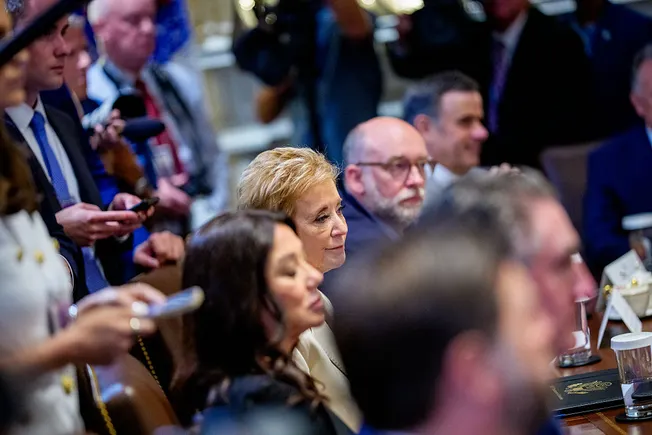
On Thursday, 150 Democratic House lawmakers sent a letter to U.S. Education Secretary Linda McMahon and White House Office of Management and Budget Director Russell Vought demanding the title funds be released.
“This late-breaking decision, which provided no timeline for which states can expect a final decision, is leaving states financially vulnerable and forcing many to make last minute decisions about how to proceed with K12 education in this upcoming school year,” the letter said.
The funding hold has already led to staff layoffs, program delays and cancellations of services, the House members said.
Spending under review
The withheld funds were appropriated by Congress and approved by President Donald Trump earlier this year. States expected to gain access to the monies starting July 1, as routine. But the day before, on June 30, the Education Department told grantees not to expect the funds while it conducts a review and referred questions to OMB.
The specific grant funding being withheld includes:
Title II-A for professional development: $2.2 billion.
Title IV-A for student support and academic enrichment: $1.4 billion.
Title IV-B for 21st Century Community Learning Centers: $1.3 billion.
Title III-A for English-learner services: $890 million.
Title I-C for migrant education: $375 million.
On Thursday, in a statement to K-12 Dive, OMB said no funding decisions have been made and that it is conducting a “programmatic review of education funding.”
The office also said, “initial findings show that many of these grant programs have been grossly misused to subsidize a radical leftwing agenda.”
OMB and the Education Department have not indicated a timeframe for the review of the frozen federal funds.
The Trump administration has said it is scrutinizing spending across all federal agencies to ensure there is no waste, fraud or abuse of taxpayer dollars. Republican leaders have said they want to reduce the scope of the federal government to give states and districts more financial decision-making.
Additionally, since Trump’s inauguration in January, the Education Department has sought to lay off about half its staff, temporarily withheld federal COVID-19 emergency funding, scaled back education research, and promised to shut down the agency.
Supplement, not supplant concerns
All the turmoil is taking a toll on school and district education leaders, said the Center on Reinventing Public Education in a recent post. To support districts, CRPE recommends that state education agencies provide clarity about funding rules and help districts craft innovative solutions for budget shortages.
Finding funding efficiencies such as potential district consolidations may also need to be considered, CRPE said.
Christensen, the Wyoming principal and superintendent, said clarification and guidance from his superintendent networks and the National Association of Secondary School Principals has been helpful to him during this moment of funding uncertainty. Christensen was named Wyoming’s 2025 Secondary Principal of the Year by the Wyoming Association of Secondary School Principals earlier this year.
AASA, The School Superintendents Association, meanwhile, is telling its members that the “supplement, not supplant” rule for federal funding — the practice of using federal funds to replace state or local funds — should not be a concern at this time.
AASA points to a 2013 Education Department letter that said if a district needs to to use local dollars to make up for a funding shortfall in federal money, but then later receives the federal funding, this scenario would not trigger a “supplement, not supplant” concern because the local dollars were being loaned or fronted to fill that federal funding gap.
The 2013 letter also recommends districts document if they use local funds to fill in federal funding shortages.