
Tag: grateful

  • A reflection and a grateful tribute to our field

    A reflection and a grateful tribute to our field

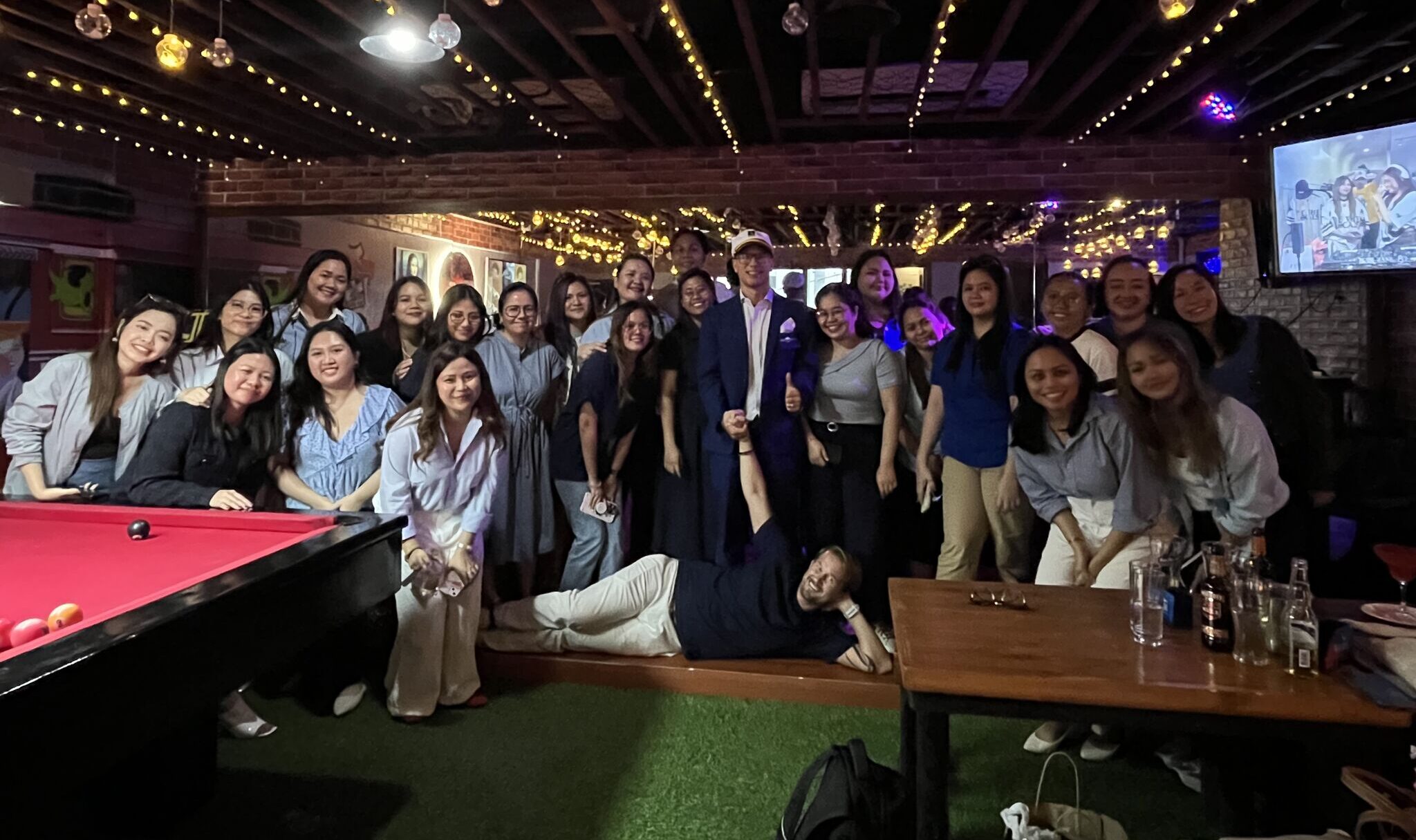
    My last name, Suominen, could translate to Finland. Years ago, while registering for the APAIE conference, I decided to internationalise it. Harry Finland was born. It was practical, memorable, and a little playful.

    Now, at the end of this year, Harry Finland will be no more.

    International education has been my way of living and understanding the world as it could be. It is one of the greatest collective stories of our time: how a single student crossing a border can transform an entire family’s future. How the world rarely changes in political summits, but changes every time young people from different countries become friends.

    After 20 years in this field, I am making one of the biggest shifts of my life and stepping away from the operational role that has shaped almost half of it. I want to write this to you, the PIE community, because this is not just a story about me. It is a story about us.

    From a bulletin board in Finland to a life in Asia

    In 2005, I had completed all my study credits and was preparing to graduate from my alma mater in Finland when I came across a bulletin board ad about studying in Shanghai as a freemover. I postponed my graduation by six months and travelled to Asia for the first time in my life.

    I didn’t know how deeply I would be bitten by the ‘Asian Fly’ – or how that decision would open the door to everything that later became a startup, a lifestyle, or simply my life. I didn’t know it would lead to already 17,000 life-changing student experiences from 130 countries. I didn’t know I would meet my Finnish wife, Susanne, under the Thailand sun. I didn’t know our two creations, Asia Exchange and Edunation, would one day find a home at Keystone Education Group.

    But I did have a quiet intuition that would later become our motto: the further you go, the more you grow.

    What makes this community extraordinary

    If there is one message I hope remains from my story, it is this: I never did anything alone. Asia Exchange was built with my high-school friend, Tuomas Kauppinen. Edunation was built with Tuomas and Susanne.

    And in 2024 Keystone became a home where our vision can expand and our impact deepen. None of this would be possible without the strength of our teams: people who work with heart, and who believe in the mission.

    This field is full of people who continue to care. And that is not a given in a world driven by efficiency, data points, and deadlines.

    But you, my dear colleagues:
    • listen to the student who has no one else
    • build programs whose impact is measured in decades, not quarters
    • believe in collaboration when division often feels more likely
    • work relentlessly so young people can realise their once-in-a-lifetime opportunities

    The work you do transforms individuals, institutions, countries, and entire societies.

    Five lessons learned from a life spent enabling study abroad

    As I stand between an ending and a beginning, I can summarize my journey in five reflections that explain why everyone should study abroad:

    1. Understanding the world and other people: studying abroad dismantles simplistic thinking. It teaches how to live alongside different values, beliefs, and ways of life. It builds empathy and cultural intelligence. These skills are essential for leadership and for preventing conflicts. I truly believe studying abroad can even prevent wars from happening. Imagine if today’s leaders of the major nations had grown up with these skills…
    2. Independence and resilience: Living and studying in a foreign country forces individuals to take responsibility for themselves. Navigating bureaucracy, language barriers, and uncertainty develops resilience, problem-solving skills, and confidence.
    3. Global competence and employability: students develop abilities that cannot be gained at home alone: working in multicultural teams, adapting quickly, communicating across cultures, and thinking globally.
    4. Lifelong networks: Studying abroad creates exceptionally strong human connections. The relationships built in transformative moments become lifelong friendships, collaborations, and opportunities.
    5. A deeper sense of identity: stepping outside one’s home culture helps individuals understand who they are and what they value. Studying abroad strengthens roots; it does not weaken them.

    In short, studying abroad may be the most meaningful experience a student ever has. You and your colleagues are the enablers of this.

    My mission in this field was always about building and enabling impact. Now it is time to step aside and allow a new chapter of my life to unfold. What it will be, I do not yet know. Hopefully something meaningful.

    Thank you.

    To the PIE community, colleagues, partners, students, and friends: thank you.
    You have turned this field into a movement that keeps growing, even as the world becomes more complex.

    The mission continues every time a student boards a plane, makes a friend abroad, or discovers a new version of themselves. It continues in the organisations we built, and especially in the people who are behind those organisations.

    Borders may divide countries, but they never stand a chance against people who dare to cross them.

    Thank you for letting me be part of this. Thank you for making this the most meaningful chapter of my life. Keep going. The world needs you.

    Staying curious,

    Harri Suominen
    Co-founder, Asia Exchange and Edunation (Keystone companies)
    From Finland, based in Malaysia
    Source link

  • College students are tired of being told that we ‘should be grateful’ for our internships. We also want to get paid

    College students are tired of being told that we ‘should be grateful’ for our internships. We also want to get paid

    by Savannah Celeste Scott, The Hechinger Report
    November 17, 2025

    Imagine clocking out of an eight-hour shift and your compensation is a pat on the back and experience for your resume.  

    This scenario is a disturbing reality for around one million college students, and it needs to stop. Students work countless hours on top of their academic pursuits only to be told they should be “grateful for the opportunity.”  

    The government must pass legislation mandating that all internships include monetary compensation; employers must stop exploiting students and recent graduates while they build necessary work experience.  

    The idea of an unpaid internship is odd considering that most of us grew up learning that work is rewarded. Some 71 percent of American households give children ages 5 to 17 an allowance for doing their chores, a Wells Fargo study found.  

    Practices like that have led many of us to believe that labor should be paid, and it should be no different when we enter the job market.  

    Related: Interested in innovations in higher education? Subscribe to our free biweekly higher education newsletter.  

    There is a disturbing correlation between unpaid internships and exploitation, especially for people from marginalized communities. Historically, Black people have been the face of working without compensation — a phenomenon dating back to early American slave practices.  

    Unpaid work is not just exploitation — it is dehumanizing. No person can survive without money, so no one should be required to work with no compensation to help them live. The reality is that, unlike higher-income students, low-income students cannot afford to work for free. They need money to cover their tuition, afford groceries and pay for a place to live. This is why unpaid internships further the cycle of economic exploitation, the student-run Columbia Spectator noted.  

    Yet there are plenty of people who believe compensation does not always have to be monetary. Many students have heard employers extol the value of “experience” as they try to persuade them to work without pay.  

    Such was the case for me when I was hired for a legal internship as a freshman in college. I thoroughly enjoyed my internship, as it gave me both professional and social opportunities. But it was an extremely difficult time for me both mentally and financially.  

    I was taking 16 credit hours, regularly writing for a student publication and working another part-time job to save money for law school. The stress of going into the office every day to handle casework — often ranging from domestic violence to sexual assault cases — was mentally taxing when combined with schoolwork and extracurricular responsibilities.  

    While the experience that the internship provided was incredible, monetary compensation would have made it much less stressful, as I would not have needed the other job.  

    Unpaid internships can also hurt graduates’ prospects in the job market. Those who have had unpaid internships receive fewer job offers on average than those who completed paid internships, statistics from the National Association of Colleges and Employers (NACE) show.  

    The average student who completed an unpaid internship also saw $22,500 less in their starting salaries than those who completed paid internships. According to the Delta Institute, “employers offering compensation tend to invest more in mentoring, performance feedback, and skill-building”; that added investment provides students with more preparation for the job market and helps them look more impressive to an employer.  

    Related: Looking for internships? They are in short supply 

    Unpaid interns have been fighting for compensation for decades. A lawsuit filed by two interns against Fox Searchlight over their lack of compensation when working on the movie “Black Swan” resulted in a legal battle that lasted five years. The two interns were finally compensated a total of $13,500 for their work — despite the film grossing more than $300 million.  

    The Fox Searchlight lawsuit sparked a wave of other impassioned interns to plead their cases as well, including a class-action lawsuit against NBCUniversal back in July 2013. That resulted in a $6.4 million settlement split among thousands of interns.  

    In both cases, the employers made millions of dollars in profits but still refused to pay their interns until they were legally forced to do so.  

    According to Shawn VanDerziel, the president and chief executive officer of NACE, paid internships are a “game changer” to employers and employees alike. The dilemma is this: Employers want labor, and students want internships. The most obvious solution would be to pay students for the work that they do.  

    Students do not work for fun. They work because they want to create better futures for themselves; their success will be less likely if they don’t receive monetary compensation. The government needs to make it illegal for employers to exploit students by having them work without pay.  

    College students should not be expected to work for free.  

    Savannah Celeste Scott is a senior at the University of Georgia in Athens, studying journalism, Spanish and law, jurisprudence and the state on a pre-law track.  

    Contact the opinion editor at [email protected].  

    This story about unpaid internships was produced by The Hechinger Report, a nonprofit, independent news organization focused on inequality and innovation in education. Sign up for Hechinger’s weekly newsletter.

    This <a target=”_blank” href=”https://hechingerreport.org/student-voice-college-students-are-tired-of-being-told-that-we-should-be-grateful-for-our-internships-we-also-want-to-get-paid/”>article</a> first appeared on <a target=”_blank” href=”https://hechingerreport.org”>The Hechinger Report</a> and is republished here under a <a target=”_blank” href=”https://creativecommons.org/licenses/by-nc-nd/4.0/”>Creative Commons Attribution-NonCommercial-NoDerivatives 4.0 International License</a>.<img src=”https://i0.wp.com/hechingerreport.org/wp-content/uploads/2018/06/cropped-favicon.jpg?fit=150%2C150&amp;ssl=1″ style=”width:1em;height:1em;margin-left:10px;”>

    <img id=”republication-tracker-tool-source” src=”https://hechingerreport.org/?republication-pixel=true&post=113342&amp;ga4=G-03KPHXDF3H” style=”width:1px;height:1px;”><script> PARSELY = { autotrack: false, onload: function() { PARSELY.beacon.trackPageView({ url: “https://hechingerreport.org/student-voice-college-students-are-tired-of-being-told-that-we-should-be-grateful-for-our-internships-we-also-want-to-get-paid/”, urlref: window.location.href }); } } </script> <script id=”parsely-cfg” src=”//cdn.parsely.com/keys/hechingerreport.org/p.js”></script>

    Source link