Tag: Group

  • Five Ways to Use Group Work to Engage College Students (opinion)

    Five Ways to Use Group Work to Engage College Students (opinion)

    A few years ago, we hired an adjunct professor to teach a three-hour night class. After a few weeks, he came to us in frustration because he couldn’t get the students to discuss the material, and when he asked if there were any questions, they never responded.

    We probed more. Upon further discussion, we found that his course plan for each night was a three-hour lecture using PowerPoint slides; he didn’t take class planning beyond that. He felt overwhelmed by the responsibility for teaching the content of the course, but he didn’t know where to begin to get the students to contribute, ask questions and actively participate. We immediately put on our coaching hats, working to help him actively engage his class so that students had a deeper learning experience.

    We have heard about this frustration with getting students to participate actively in conversations with many other faculty members, in one-on-one coaching or during faculty development sessions. This often happens because faculty members are relying on lecture because that was the way their own professors taught and often the way they were trained to teach in their graduate programs.

    When moving into team projects, here are four key actions to take:

    1. Assign students to their teams in a way that is transparent and purposeful. Definitely don’t let students pick their own groups.
    2. Show students your grading rubric when you assign the project. We guarantee your students will be more successful when you do this.
    3. Train students on how to conduct peer evaluation, and include peer evaluations as part of the grade.
    4. Check in frequently with teams to see how they are progressing, and to answer any questions. Your students will appreciate this.

    In addition, the distractions that students face when preparing for class and during class time are increasing exponentially. Many are not doing the reading, some are on their phones, more than a few are shopping online during class and some just don’t have the bandwidth left to participate because of their very busy lives outside of school.

    How do we help these faculty members start to turn things around? In our experience as professors, group work is a great way to help instructors, new and experienced, to actively engage classes in discussions.

    The two of us have had extensive experience using in-class group work and executing in-depth team projects across many different disciplines. On most surveys, employers report that one of the top skills they want from college graduates is the ability to work in teams. Given what employers want, we’d of course like everyone to move away from lectures to engaging students with project-based teamwork. But not everyone is comfortable moving to a system that is so different from their current teaching methods.

    So how can we help our struggling adjunct faculty member, and other professors who want to more actively engage their students? Here are five quick and easy ideas to try.

    1. A think-pair-share exercise. This occurs when you pose a question, give students a brief time to reflect and think, and then ask them to turn to their neighbor and share their ideas. If you want them to develop their thoughts even more, you can ask them to turn to another pair and join them to discuss the issue (how many times you do this depends on the size of the class); you can even join up more dyads. Then ask the groups to report back with a few key points.
    2. Prepared discussion questions. Prepare a series of discussion questions based on the reading for that day or about a problem on which the class is working. Next, organize the class into four- or five-person groups. Give students a reasonable amount of time to work through the questions. While they are working, make sure to circulate through the groups, answer questions, make comments to illustrate some of the ideas and provide prompts to help them. At the conclusion of the discussion, have each group report on the highlights of their discussion and use the opportunity to give a series of mini-lectures on points they described and things they might have missed.
    3. Learning through discussion. Developed by William Fawcett Hill, this method is an even more structured approach to group work. We used this method in an upper-level theory course with excellent results. Learning through discussion puts considerable responsibility on a group leader, but if the groups rotate this leadership position across the group each week, it should even out the work (and as a bonus, it can help students develop team leadership skills). The leader synthesizes the material and initiates the discussion. The leader doesn’t teach the group but leads them through an eight-step process to identify major themes in the material and how it integrates with previous knowledge and application. Keeping students in the same groups helps them get used to working together and develop a sense of camaraderie. If you find you need to hold students accountable to help some less motivated ones prepare, you can collect their notes and have the group do quick peer evaluations.
    1. Each one, teach one. These sessions are a great way to have students cover a considerable amount of literature in what might be a psychologically safe environment for them. Divide your class into groups of four to five people. Then assign as many readings as you have members of the groups. Each person in the group completes one reading and then leads a group discussion about the article, partially teaching it to the other members of the group. You can have them accomplish all the outside readings during one week, or across multiple weeks, depending on your needs. Students learn from each other, and the one leading the discussion has to spend time learning to dissect one paper. 
    2. Team projects. Ad hoc group work as we’ve described in the first four ideas is a great way to help students to learn course material for the long haul and spark discussion. Team projects can do this even better. They do, however, take a little more work. Once you are comfortable with breaking the class into groups for ad hoc discussion, you can think about planning a team project. If you’ve never run one before, you may want to start with a small project, something short term (think three to five weeks). As you gain more experience and learn what works for you, your style, and your material, you can then move to bigger, longer projects.

    These are just a few of the ways that you can use groups, or even teams, to actively engage students in the material.

    Source link

  • Yeshiva U Accepts LGBTQ+ Student Group but Not “Pride” Clubs

    Yeshiva U Accepts LGBTQ+ Student Group but Not “Pride” Clubs

    Less than a week after Yeshiva University agreed to recognize an LGBTQ+ student club as part of a legal settlement, university president Ari Berman apologized for the way the university conveyed the announcement and stressed that “pride” clubs still run counter to the values of the Modern Orthodox Jewish university, Jewish Telegraphic Agency reported. He emphasized that the newly approved club would function “in accordance with halacha,” or Jewish law.

    “I deeply apologize to the members of our community—our students and parents, alumni and friends, faculty and Rabbis—for the way the news was rolled out,” Berman, a rabbi, wrote in an email to students Tuesday. “Instead of clarity, it sowed confusion. Even more egregiously, misleading ‘news’ articles said that Yeshiva had reversed its position, which is absolutely untrue.”

    The university has been mired in a legal battle with its LGBTQ+ student group, the YU Pride Alliance, since 2021, when the group sued for official university recognition. Yeshiva said it wasn’t legally required to recognize the club because of Orthodoxy’s stance against same-sex relations. The two parties announced a settlement last week in which students will run an LGBTQ+ club called Hareni that will “operate in accordance with the approved guidelines of Yeshiva University’s senior rabbis,” according to a joint statement issued last Thursday.

    LGBTQ+ students celebrated the settlement as a new milestone. But Berman framed the settlement as doubling down on an old proposal from 2022, when the university sought to create its own LGBTQ+ student club called Kol Yisrael Areivim. Plaintiffs rejected the plan at the time, on the grounds that the club wouldn’t be student-run. But Berman said Hareni was similarly created “to support students who are striving to live authentic, uncompromising” lives within the bounds of Jewish law, “as previously described.”

    “The Yeshiva has always conveyed that what a Pride club represents is antithetical to the undergraduate program in which the traditional view of marriage and genders being determined at birth are transmitted,” Berman wrote in his message to students. “The Yeshiva never could and never would sanction such an undergraduate club and it is due to this that we entered litigation.”

    As he sees it, “last week, the plaintiffs in the lawsuit against YU accepted to run Hareni, instead of what they were originally suing us for, moved to end the case, and the case has been dismissed.”

    Source link

  • AAUP, Middle East Studies Group Sue Trump Over Deportations

    AAUP, Middle East Studies Group Sue Trump Over Deportations

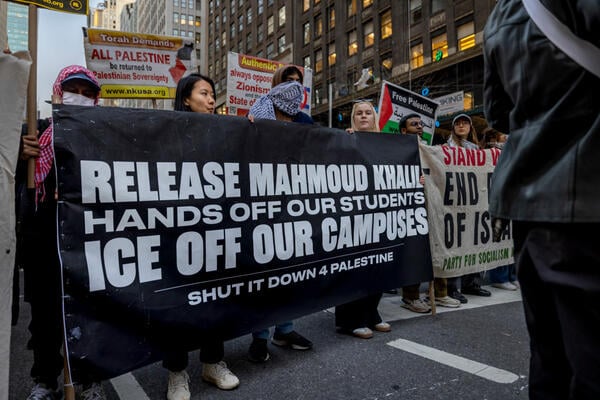
    Accusing the Trump administration of creating a “climate of repression and fear on university campuses,” two faculty groups sued the federal government Tuesday to stop the president’s efforts to deport noncitizen students and faculty who have participated in pro-Palestinian protests.

    The Middle East Studies Association and the American Association of University Professors argue in the lawsuit that what they call Trump’s “ideological-deportation policy” violates the First and Fifth Amendments and the Administrative Procedure Act. They are asking a federal judge to rule that the policy is unconstitutional. This is the second lawsuit challenging the policy, though this legal action includes more faculty and students.

    The litigation comes after immigration officers have, over the past month, targeted international students and postdoctoral fellows for alleged participation in pro-Palestinian protests, raiding their dorm rooms and revoking their visas.

    Tuesday afternoon, a federal judge blocked the Trump administration from deporting a Columbia student, who moved to the United States from Korea when she was 7 but is now a legal permanent resident. The New York Times reported that the government argued Yunseo Chung’s “presence in the United States hinders the administration’s foreign policy goal of stopping the spread of antisemitism.”

    But the judge said Tuesday that “nothing in the record” showed that Chung posed a “foreign-policy risk,” according to the Times.

    Chung has not yet been detained. She’s just the latest student to come under fire from the administration’s crackdown on those who protested the Israel-Hamas war. That crackdown has included revoking the visas of students and faculty, giving universities names of students to target, and a social media surveillance program, according to the AAUP lawsuit.

    The MESA and AAUP lawsuit, filed in the U.S. District Court of Massachusetts, specifically cites the cases of Chung; Badar Khan Suri, a Georgetown University postdoc; and Mahmoud Khalil, a recent Columbia University graduate. Judges have also blocked the government from deporting both men.

    “While President Trump and other administration officials have described pro-Palestinian campus protests as ‘pro-Hamas,’ they have stretched that label beyond the breaking point to encompass any speech supportive of Palestinian human rights or critical of Israel’s military actions in Gaza,” the suit says. “They have left no doubt that their new policy entails the arrest, detention and deportation of noncitizen students and faculty for constitutionally protected speech and association.”

    Attorneys from the Knight First Amendment Institute at Columbia are among the lawyers representing the scholarly groups.

    MESA and the AAUP—along with the AAUP chapters at Harvard, New York and Rutgers Universities—filed the suit against the federal government, Trump, Secretary of State Marco Rubio, Homeland Security secretary Kristi Noem and Immigration and Customs Enforcement acting director Todd Lyons, plus their agencies.

    A DHS spokesperson said in a statement that “taking over buildings, defacing private property, and harassing Jewish students does not constitute free speech.”

    “It is a privilege to be granted a visa to live and study in the United States of America,” the spokesperson added. “When you advocate for violence and terrorism that privilege should be revoked, and you should not be in this country.”

    The White House provided a similar statement from a Justice Department spokesperson, who said, “This department makes no apologies for its efforts to defend President Trump’s agenda in court and protect Jewish Americans from vile antisemitism.”

    Beyond the immediate implications for students and faculty who face deportation, the policy has a broader chilling effect on campus free speech, the lawsuit argues.

    “Out of fear that they might be arrested and deported for lawful expression and association, some noncitizen students and faculty have stopped attending public protests or resigned from campus groups that engage in political advocacy,” the suit says. “Others have declined opportunities to publish commentary and scholarship, stopped contributing to classroom discussions, or deleted past work from online databases and websites. Many now hesitate to address political issues on social media, or even in private texts.”

    The lawsuit adds the policy harms the plaintiff associations “because they are no longer able to learn from and engage with noncitizen members to the extent they once did, and because they have had to divert resources from other projects to address the all-too-real possibility that their noncitizen members will be arrested, imprisoned, and deported for exercising rights that the Constitution guarantees.”

    Source link

  • LAWSUIT: LGBTQ student group sues to overturn Texas A&M’s unconstitutional drag ban

    LAWSUIT: LGBTQ student group sues to overturn Texas A&M’s unconstitutional drag ban

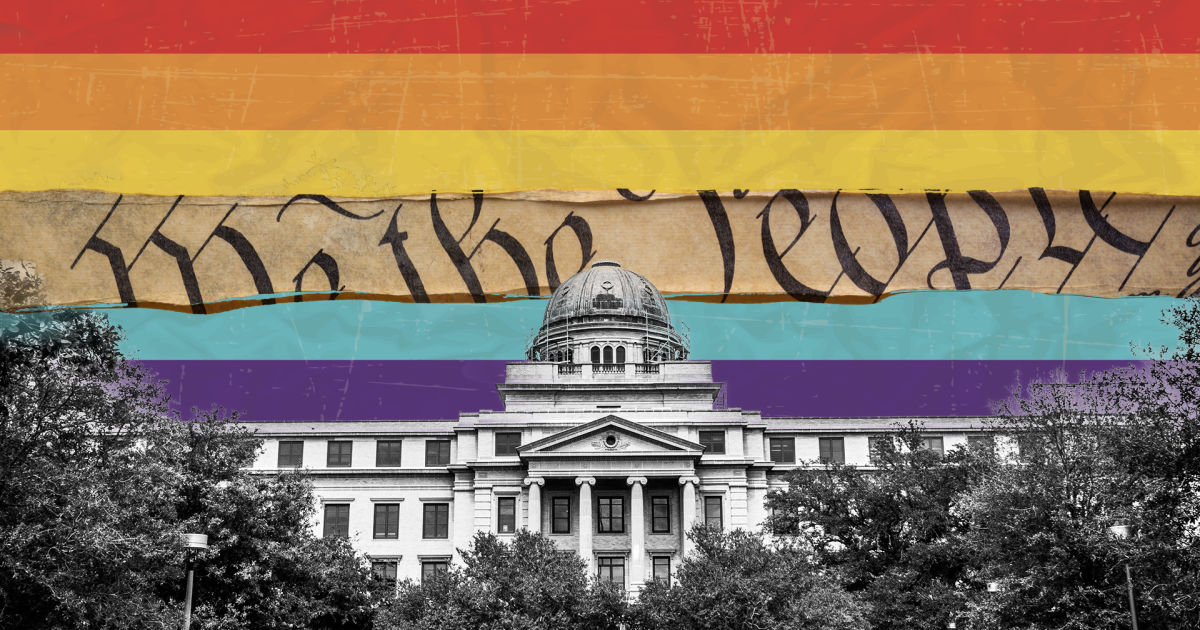
    HOUSTON, Texas, March 5, 2025 — The Foundation for Individual Rights and Expression filed a federal lawsuit on behalf of an LGBTQ+ student organization to block a new policy from the Texas A&M University System that bans drag performances on its 11 public campuses — a clear violation of the First Amendment.

    FIRE is asking a court in the Southern District of Texas to halt Texas A&M officials from enforcing the drag ban, abruptly adopted on Friday afternoon. The lawsuit is on behalf of the Queer Empowerment Council, a coalition of student organizations at Texas A&M University-College Station and the organizers of the fifth annual “Draggieland” event that was scheduled to be held on campus on March 27. 

    “We refuse to let Texas A&M dictate which voices belong on campus,” said the Queer Empowerment Council. “Drag is self-expression, drag is discovery, drag is empowerment, and no amount of censorship will silence us.”

    Texas A&M students first held “Draggieland” (a portmanteau of “Drag” and “Aggieland,” a nickname for Texas A&M) at the campus theatre complex in 2020, and the event has been held on campus annually ever since. But last Friday, the Board of Regents suddenly voted to ban drag events entirely across all 11 Texas A&M campuses. 

    “The board finds that it is inconsistent with the system’s mission and core values of its universities, including the value of respect for others, to allow special event venues of the universities to be used for drag shows,” the board’s resolution reads. The regents also claimed that drag performances are “offensive” and “likely to create or contribute to a hostile environment for women.”

    “Public universities can’t shut down student expression simply because the administration doesn’t like the ‘ideology’ or finds the expression ‘demeaning,’” said FIRE attorney Adam Steinbaugh. “That’s true not only of drag performances, but also religion, COVID, race, politics, and countless other topics where campus officials are too often eager to silence dissent.”

    The regents’ attempts to justify the drag ban as anything other than illegal viewpoint discrimination are feeble. The board admits they want to ban drag on campus because they find it “demeans women,” “promotes gender ideology,” or runs contrary to their “values”—- but the First Amendment squarely protects speech that offends and even angers others. And in all cases, it prevents campus officials from silencing speech because they disagree with the “ideology.” As a taxpayer-funded university system, Texas A&M campuses cannot treat some student events differently simply because they dislike the view being expressed. 

    “Even putting on an on-campus production of Shakespeare or Mrs. Doubtfire, or taking part in powderpuff, could be banned at A&M if some hostile administrator thinks they ‘promote gender ideology,’” said FIRE senior attorney JT Morris. “But if the First Amendment means anything, it’s that the government can’t silence ideologies they don’t like — real or perceived.”

    Title IX’s prohibition on creating a “hostile environment” also does not give public universities the ability to run around the First Amendment. FIRE has long seen efforts to suppress speech on the basis that it might contribute to a “hostile environment” because someone finds it offensive, but if speech can be suppressed because someone believes it is offensive, no speech is safe. The First Amendment does not permit public universities to suppress speech because someone thinks it is inappropriate.

    In order to fit the definition of harassment the Supreme Court has established, speech must be “objectively offensive” AND “severe” AND “pervasive.” A once-a-year drag show in an enclosed theatre that requires a ticket to enter doesn’t even come close to satisfying those strict conditions.

    “If other students dislike or disagree with Draggieland, the solution is simple: don’t go,” said FIRE attorney Jeff Zeman. “Or they could organize a protest, as students opposing drag have in the past. The First Amendment protects drag and the ability to criticize drag — and it forbids the government silencing the side it disagrees with.”

    Finally, the regents’ motion notes that “there are alternative locations for such events off-campus.” But that violates the First Amendment, too. The government cannot censor speech in places the First Amendment protects it, just because a speaker might express themselves elsewhere. “Draggieland” highlights why that principle is so vital: if a student group can’t reach their campus community with their message, then their message can’t fulfill its purpose.

    In the face of unconstitutional censorship, Draggieland organizers have remained unbowed. They have announced to supporters that they will hold an on-campus “Day of Drag” protest on Thursday and that they are committed to holding the event even if forced off-campus.

    “We are committed to ensuring that our voices are heard, and that Draggieland will go on, no matter the obstacles we face,” the Queer Empowerment Council announced.


    The Foundation for Individual Rights and Expression (FIRE) is a nonpartisan, nonprofit organization dedicated to defending and sustaining the individual rights of all Americans to free speech and free thought—the most essential qualities of liberty. FIRE recognizes that colleges and universities play a vital role in preserving free thought within a free society. To this end, we place a special emphasis on defending the individual rights of students and faculty members on our nation’s campuses, including freedom of speech, freedom of association, due process, legal equality, religious liberty, and sanctity of conscience.

    CONTACT:

    Alex Griswold, Communications Campaign Manager, FIRE: 215-717-3473; [email protected]

    Source link

  • EdTech for International Education via the Gateway International Group

    EdTech for International Education via the Gateway International Group

    The Gateway International Group just launched a compilation of EdTech companies/platforms for International Education. Compiled and edited by Erin Niday and Tony Ogden, this compilation has the goal of highlighting those EdTech platforms that have the potential to transform next generational international learning and engagement. You can learn more at https://gatewayinternational.org/edtech/.

    Note: I’m an affiliate of the Gateway International Group but receive no compensation for this post.

    Source link