

Tag: Grows

  • Phone bans proliferate as digital media’s harm to students grows clearer

    Phone bans proliferate as digital media’s harm to students grows clearer

    This audio is auto-generated. Please let us know if you have feedback.

    Even as school cellphone bans proliferate, a growing body of evidence suggests digital media — and cellphone use specifically — is harming child and teen development.

    A meta-analysis of 117 studies published in June found that the relationship between screen time and socioemotional well-being is somewhat of a Catch-22: Increased screen time can lead to emotional and behavioral problems, and children with those problems rely on screens to cope with them. 

    Another study of 4,285 U.S. teens published last week found nearly a third showed increasing addictive behaviors related to social media and almost a quarter for cellphones. These addictive behaviors — rather than screen time alone — were linked to increased risks of suicidal behaviors or thoughts. 

    School phone bans have gained traction across political divides nationwide in recent years, with educators and lawmakers citing both student mental health and academic performance as reasons to restrict cellphones during the school day. 

    As of May, 21 states ranging from California to Utah had instituted a ban or limit on cellphones in the classroom, according to Ballotpedia. 

    Most recently, Nevada Gov. Joe Lombardo signed a law requiring school districts to adopt policies regulating cellphone use during the school day and limiting classroom cellphone use in most cases.

    A separate study released in March — this time examining about 1,500 11- to 13-year-olds in Florida, where cellphones have been banned during class time since 2023 — suggested that restricting cell phones would boost grades and mental health for children who use screens more heavily. 

    The 22% of Florida students surveyed who reported using their favorite app for six or more hours per day were also three times more likely to report getting mostly D’s and F’s than their peers.

    Those students were also 6 times more likely than less-frequent users to report severe depression symptoms — even when ruling out factors like age, household income, gender, parent education, race and ethnicity. 

    Students who always had their cellphone push notifications turned on, which made up about 20% of the sample, were also more likely to report worse grades and to experience anxiety. 

    “Banning students’ access to phones at school means these kids would not receive notifications for at least that seven-hour period and have fewer hours in the day to use apps,” the study’s authors wrote in an overview of the study published by The Conversation, a nonprofit publication written by academic experts. 

    However, that same study found 17% of Florida students who attend schools that ban or confiscate phones report severe depressive symptoms, quadruple the 4% who attended schools that allowed limited phone use and reported those symptoms. 

    Correlation in this case did not necessarily mean causation, however. “We are not suggesting that our survey shows phone bans cause mental health problems,” the authors wrote. “It is possible, for instance, that the schools where kids already were struggling with their mental health simply happened to be the ones that have banned phones. ” 
    Source link

  • Princeton Grants Suspended as Federal Pressure on Universities Grows

    Princeton Grants Suspended as Federal Pressure on Universities Grows

    Princeton University
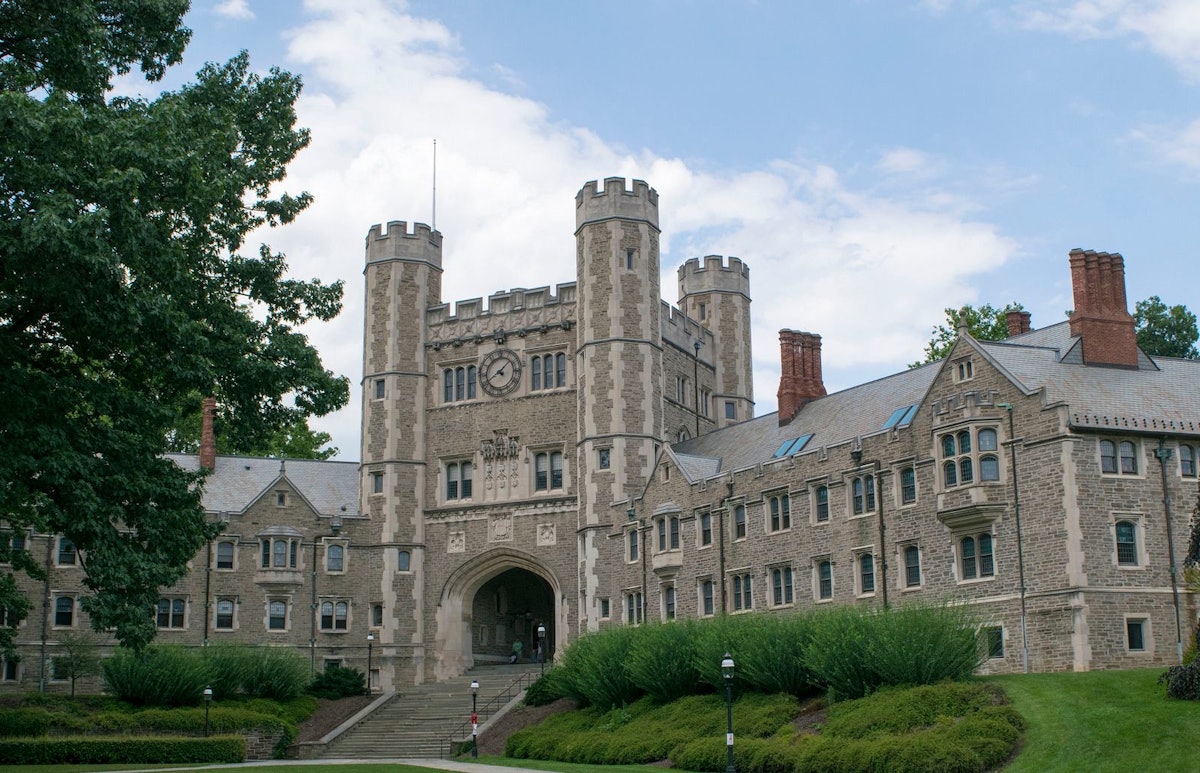
    In a concerning development for research institutions nationwide, Princeton University has become the most recent Ivy League school to have federal funding suspended amid what many academic leaders are describing as an unprecedented federal pressure campaign targeting elite universities.

    Princeton President Dr. Christopher Eisgruber announced earlier this week that “several dozen” federal research grants from agencies including the Department of Energy, NASA, and the Department of Defense have been halted. While the administration’s complete rationale remains unclear, the university is among dozens facing federal investigations into campus antisemitism following pro-Palestinian demonstrations last year.

    “We are committed to fighting antisemitism and all forms of discrimination, and we will cooperate with the government in combating antisemitism,” Eisgruber wrote in a campus-wide message. “Princeton will also vigorously defend academic freedom and the due process rights of this University.”

    The Department of Energy confirmed it had paused Princeton’s funding pending a Department of Education investigation into alleged antisemitic harassment on campus.

    This action follows similar funding suspensions at other prominent institutions:

    • Columbia University lost $400 million in federal grants and agreed to several government demands, including revising student discipline policies and reviewing its Middle East studies department
    • The University of Pennsylvania faced approximately $175 million in suspended funding related to a transgender athlete who previously competed for the school
    • Harvard University is under review for nearly $9 billion in federal grants and contracts amid an antisemitism investigation

    The funding suspensions create significant challenges for research universities, which depend heavily on federal grants. Princeton’s president had previously criticized the Columbia funding cuts as “a radical threat to scholarly excellence and to America’s leadership in research” in a March essay published in The Atlantic.

    Princeton was among 60 universities that received warning letters from the Education Department in March regarding accusations of antisemitism. The department indicated schools could face enforcement actions if they failed to address anti-Jewish bias on campus. Six of the eight Ivy League institutions were included in these warnings.

    The Education Department’s investigation at Princeton began in April 2024 under the previous administration, responding to a complaint that cited pro-Palestinian protests allegedly including antisemitic chants. Similar complaints have been filed against dozens of other institutions.

    The current administration has promised more aggressive measures against campus antisemitism, opening new investigations and taking action against foreign students connected to pro-Palestinian demonstrations. University officials face the challenge of balancing compliance with federal demands while preserving academic freedom and campus autonomy.

    These developments follow congressional hearings on campus antisemitism that contributed to the resignations of presidents at Harvard, Penn, and Columbia. Most recently, Columbia’s interim president Dr. Katrina Armstrong resigned after the university agreed to the government’s demands.

    The situation raises critical questions about federal oversight of higher education, the boundaries of campus free speech, and the future of institutional autonomy at American universities.

    Source link