In the years since free speech and academic freedom experts Erwin Chemerinsky and Howard Gillman published their book Free Speech on Campus, which explained the importance of free speech at colleges and universities, much has changed as colleges faced new pressures and tests and sought to adapt to the changing political climate.
Institutions created—and later abolished—diversity initiatives in response to the Black Lives Matter movement. Campuses weathered the brutal COVID-19 pandemic. State legislatures increased their meddling in what public university faculty can and cannot teach.
Chemerinsky and Gillman’s second book, aptly named Campus Speech and Academic Freedom (Yale University Press, 2026), addresses complicated questions that aren’t necessarily answered by basic speech principles. For example, what obligation do universities have to cover security fees for controversial speakers? Or, does an institution have a responsibility to protect employees and students who are doxed for online speech?
The book was initially scheduled to publish in 2023 but was pushed back and will be released this month.
“Our editor at Yale Press told us he was never so pleased to have a manuscript come in late,” said Chemerinsky, dean of the law school at the University of California, Berkeley—2024 ended up being a year ripe with speech-controversy examples that ultimately strengthened the book, including college responses to the Oct. 7 attack; congressional testimonies from the presidents of Columbia University, Harvard University, the Massachusetts Institute of Technology, Rutgers University, the University of Pennsylvania and the University of California, Los Angeles, about campus antisemitism; and student and faculty encampments in protest against Israel’s actions in Gaza.
Chemerinsky and Gillman, chancellor of the University of California, Irvine, co-chair the University of California’s National Center on Free Speech and Civic Engagement. They are both well versed in First Amendment law as well as campus leadership. Inside Higher Ed spoke with Chemerinsky and Gillman over Zoom about the modern challenges that university leaders face in responding to speech and academic freedom controversies on campus.
The interview has been edited for length and clarity.
Q: It’s been about nine years since the two of you last wrote a book on this topic. What do you hope this book adds to the conversation about campus free speech?
Gillman: At the time we wrote the original book, there were very basic issues about why you should defend the expression of all ideas on a campus that were not resolved. If you remember in 2015–16, there were strong efforts to demand that universities control speakers or prevent certain people from speaking. And at the time, a lot of university leaders … didn’t have the language to explain why a university should tolerate speech that a lot of people thought could be dangerous or harmful.
So we thought we needed to cover the basics. But once you accept that it is a good idea to protect the expression of all ideas, it turns out there’s lots of questions. What do you do about regulating tumultuous protests or people who think that they’re entitled to disrupt speakers with whom they disagree? What do you do about security costs if the need to protect the speaker puts enormous pressures on the budgets of universities? What do you do about speech in professional settings, which maybe shouldn’t be governed by general free speech principles? … So we knew we needed to reassert the importance of the basic principles of free expression, but then we had to systematically go through and address all of the issues that aren’t resolved by that basic question, and that’s what we hope the new book does.
Q: And I have questions about those new questions you answer in the book. One is about institutional neutrality. For a university that claims to have core values like diversity and social justice, couldn’t silence on major global events be interpreted as a violation of those values?
Gillman: We note that a lot of universities have embraced the Kalven report, which suggests that universities should very rarely speak out on matters that are of political debate, because universities should be housing critics and debate rather than taking strong stands. We review how many state legislatures were demanding that universities embrace a policy of neutrality when it comes to political statements.
But the view that we have is that neutrality is really not possible because, as you say, universities are value-laden institutions. It is inevitable that universities are going to take positions. We note, for example, in the wake of Oct. 7, some university leaders took a position and said things that led to controversy. Some university leaders initially attempted not to say anything, and that led to controversy. So we suggest that neutrality is essentially impossible, but university leaders should show restraint for all the familiar reasons—that you need to allow for enough debate on the campus. It’s more important for campus communities to have their voice, rather than for universities and their leaders to always jump in.
Chemerinsky: We both reject the Kalven report approach of silence for university leaders. I think that it’s a question of, when is it appropriate [to speak]? This is an example where, like so many in the book, we never imagined we’d be writing from a first-person perspective, but a lot of the book ended up being written that way. For me, it’s always a question of “Will my silence be taken as a message, and the wrong message?” As an example, I felt it important to put a statement out to my community after the death of George Floyd, and I thought it important to make a statement to the community after Jan. 6. So I very much agree with what Howard said about the importance of restraint, but I also reject across-the-board silence.
Q: Something else you address is how professors approach certain academic materials in the classroom. We’ve seen professors in hot water for reading certain historical texts or using slurs for an academic purpose. Where do you draw the line between the professor’s right to determine their curriculum and the university’s responsibility to prevent a hostile learning environment for students?
Gillman: Professors in professional settings do have the academic freedom as well-trained, ethical professionals to speak in ways that are consistent with their professional responsibilities. So the classroom, for example, is not a general free speech zone where professors can walk in and say whatever they want. We try to provide lots of examples of case studies where professors said and did some things that some people in the classroom or the larger academic community would have objected to, but nevertheless reflect legitimate judgments of how best to approach the issue.
It is inevitable that if you give professors freedom of mind, that some of them are going to exercise their professional competency in ways that some people disagree with. So we try to suggest lots of examples where that academic freedom should be protected, but we also try to identify some examples where people were acting in ways that were not consistent with either their academic competence or their professional obligations. Once you understand the basic boundaries and responsibilities of faculty—not just their privileges, but their responsibilities to act in professional ways—we think that’ll help people do a proper assessment and not always just react whenever what a professor says in a classroom is causing some controversy.
Chemerinsky: I obviously agree. I think your question also raises another major issue that occurred between Free Speech on Campus and this book, and that’s the tension between free speech and academic freedom and Title VI of the 1964 Civil Rights Act. Former assistant secretary for civil rights Catherine Lhamon was very outspoken in saying, “Just because it’s speech protected by the First Amendment doesn’t excuse a university from its Title VI obligations.”
It’s certainly possible that a professor in class could say things that are deeply offensive to students, and [the students] could say, well, this is creating a hostile environment under Title VI. Then the issue becomes: What should the university’s response be? As Howard said, you start with assessing academic freedom—is it in the scope of professionally acceptable norms? To take a recent example, a professor who would go into a computer science class and use it to discuss his views on Israel and the Middle East, that wouldn’t be protected by academic freedom because it’s not about his teaching his class.
Q: Another scenario for you: Event cancellations related to security concerns for speakers feel especially relevant after Charlie Kirk was killed during a campus event. But not all institutions can necessarily afford security for high-profile controversial speakers. For those institutions, would a budgetary-based cancellation be distinct from a speech-based cancellation, or are they the same?
Chemerinsky: The answer is, we don’t know at this point in time. In fall of 2017, a conservative group on the Berkeley campus had scheduled a free speech week, and they invited Milo Yiannopoulos, Ben Shapiro, Ann Coulter and Charles Murray. It cost the university $4 million in security to allow those events to go forward. But what if it wasn’t free speech week? What if it was free speech semester? And what if the cost was $40 million? There has to be some point at which a university says we can’t afford it.
Gillman: But there are certain principles that should govern how you think it through. You need general rules that you apply to every circumstance, but those rules cannot, in effect, be discriminating against people based on their viewpoints. So if your rule is “well, any time a controversial speaker is proposed, we’re worried that it’s going to cost too much in security, so you’re not allowed to bring controversial speakers,” that will create viewpoint discrimination on campuses. It would mean, for example, on a liberal campus, that every liberal student group would always be able to bring their speakers in, but conservative student groups could not.
Q: Right, because what’s controversial would be subjective.
Gillman: Very subjective. So you need a rule in advance … We review in the book a few choices. At the University of California, Irvine, we charge people exactly the same security cost based on the same criteria—the size of the group, how big an event it is, whether you need a parking facility and the like. If we think that there is going to be external [controversy], or other concerns that are not under the control of the sponsoring student group, then the university has to cover those additional costs. Now, so far, that hasn’t bankrupted my university. But, by contrast, UCLA realized that it may quickly end up blowing through its budget, and so they created a policy that, in advance of the year, limited the total number of dollars that they were going to use to cover security on events. Once they blew through that budget for the year, they weren’t going to allow other kinds of speakers after that. You need rules that you will apply in a viewpoint-neutral way and that do protect the expression of all ideas. But then those rules have to be mindful.
Q: One more for you: There were debates, especially in the 2023–24 academic year, over campus encampments and what constitutes a disruption of the educational mission. If a protest on campus is peaceful, but it occupies a space for weeks, is it the duration of the protest or the existence of it that justifies its removal?
Chemerinsky: Campuses can have time, place and manner restrictions with regard to speech, and the rules are clear that they have to be content-neutral. So a campus can have a rule saying “no demonstrations near classroom buildings while classes are in session,” or “no sound amplification equipment on campus,” or they can restrict speech near dormitories at nighttime. As part of time, place and manner restrictions, a campus can say that they’re not going to allow encampments for any purpose, whatever the viewpoint, whatever the topic.
It then becomes a question of, should the campus choose to have such a rule? And how should the campus decide about enforcing that rule? One of the parts of the book that I’m most pleased with is where we go through and offer suggestions to campus administrators about things to consider when dealing with encampments. How much is the encampment disrupting the actual activities? How much is there a threat of violence? How have similar things been dealt with before? What kind of precedent do you want to set? What action might you take, and what would be the reaction to it?
Gillman: I think that very few people believe that individuals or groups of people on the campus or off the campus have a right to come and commandeer a space on the campus for themselves and to do that for an extended period of time. A campus may decide it doesn’t want to rule against that, but I think everybody would understand if campuses had rules against encampment activity. But it has to be viewpoint- and content-neutral.
As the leaves begin to turn across Central Ohio and your students head back to campus in the fall each year, we often focus on the excitement of the new semester — the football games, the homecoming dance, and the bright futures ahead. But as financial planners, we also know that life can change in an instant.
A few years ago, I witnessed a tragedy that hit close to home. A local family was suddenly upended when a father — the sole breadwinner of the household — passed away unexpectedly during his son’s sophomore year of college.
The family was left reeling, navigating a dual crisis: the emotional weight of their loss and the financial reality of how to keep their son in school.
The Silent Hero: A Proactive FAFSA filing
While the family’s previous income level had originally disqualified them from receiving need-based aid, they had made one critical, proactive decision: they filed the FAFSA earlier that year.
Because that document was already on file, the university didn’t have to start from scratch. They had a baseline — a “before” and “after” snapshot of the family’s reality. This allowed the school to move swiftly, recalculating the student’s eligibility in real-time.
The “Angel” in the Financial Aid Office – A Lifeline in Record Time
When the tragedy struck, a compassionate financial aid administrator stepped in. Because the FAFSA was already on file, the university had an immediate baseline. They collected additional information, of course, but they didn’t have to wait for new tax returns or start from scratch.
Within just a few weeks, the university awarded the student an additional$8,000 per semester. That grant allowed the son to stay in school, providing a sense of stability when everything else felt like it was falling apart. It was the difference between the student dropping out or taking on a mountain of debt.
What is a “Special Circumstance Appeal”?
In the world of higher education, the story above is a perfect example of what is known as a Special Circumstance Appeal (sometimes called “Professional Judgment”).
Many families believe that once a financial aid package is set, it’s written in stone. In reality, financial aid offices have the authority to adjust your aid if your current financial reality no longer matches the “prior-prior” tax year data used on the FAFSA.
New Federal Requirements: The Law is on Your Side
Under the FAFSA Simplification Act (fully implemented for the 2024-2025 and 2025-2026 cycles), the federal government now mandates that every college have a process for “Professional Judgment.”
Colleges are no longer allowed to have a “no-appeal” policy. They are required by law to:
Publicly disclose that students can request an adjustment for special circumstances.
Review every request on a case-by-case basis.
Provide a clear process for families to submit their documentation.
As a reminder, ALWAYS file the FAFSA. Even if you think you make “too much” for aid, filing creates a financial “snapshot” that serves as an insurance policy of sorts if your circumstances change mid-year. And also, keep your records organized. Having easy access to tax returns and financial aid forms allows you (or your advocate) to act swiftly during a crisis.
How the Process Works
If your family experiences a significant financial shift, you don’t need to “wait until next year.” As the story above shows, you should reach out to the college’s financial aid office to request a review as soon as possible. You will typically be asked to:
Write an Appeal Letter: Factual and concise, explaining the change in circumstances. Most schools have a form that you will be required to fill out, or a section of the school’s student portal.
Provide Documentation: Such as termination letters, medical bills, or death certificates.
Complete a Verification: The school will verify your current income to determine a new, more accurate “Student Aid Index.”
What Qualifies? (It’s more than you might think)
While the loss of a parent is a clear catalyst for an appeal, schools can also reconsider your aid for several other reasons:
Job Loss or Significant Income Reduction: A layoff, a forced career change, or even a major reduction in overtime pay.
Unreimbursed Medical Expenses: High out-of-pocket costs (usually exceeding 7.5–11% of your income) that weren’t covered by insurance.
Divorce or Separation: When a household splits after the FAFSA has already been filed.
Natural Disasters: Costs associated with repairing a home or business after a flood, fire, or storm.
One-Time Income Spikes: If a one-time IRA distribution or inheritance artificially inflated your income on your tax return, you can ask for it to be excluded.
Our Role as Your Partners
If there is one thing we know for sure, it is that life is going to throw us curveballs. No one can control the future, but as financial planners, we help prepare for the worst and hope for the best. At Capstone, we don’t just manage portfolios and push paper; we help you navigate these complex life transitions.
If your family is facing a change in circumstances, book a Complimentary College Consultation with me. I can help you gather the necessary documentation and coordinate with financial aid offices to ensure your student’s education stays on track.
Lead technology transformation with confidence, clarity, and control.
IT isn’t just a cost center. It’s a critical enabler of your institution’s strategic goals. But too often, campus technology operations are under-resourced, fragmented, and reactive. That leaves CFOs in the dark about what’s working, what’s wasted, and where to invest next.
We built this free guide specifically for higher ed finance leaders who are ready to shift from maintenance mode to a more strategic, future-ready approach.
What you’ll learn:
Why most institutions struggle to modernize their IT function—and how to break the cycle
How to assess infrastructure health, team capabilities, and tech ROI using a practical evaluation framework
Where to find hidden costs, duplication, and vendor inefficiencies
What a high-performing IT operation looks like—and how to build one at your institution
Steps you can take today to align IT investments with institutional priorities
Who it’s for:
CFOs and finance leaders
COOs, CIOs, and enrollment executives involved in tech decision-making
Presidents and provosts seeking better visibility into IT performance
Whether you’re facing outdated systems, overwhelmed teams, or rising IT costs with unclear returns, this guide will give you the insight and structure to lead with impact.
Submit the form on the right to get your free copy.
Our mission is to enable impact in higher education. We help our partners achieve more, deliver superior experiences, and drive impact across the entire student lifecycle by leveraging and aligning data, technology, and talent.
There never is. But if, like me, you have trouble switching off from work but also enjoy being slumped in front of the box with a tub of Heroes (Quality Street are now banned in our house), I have good news.
I’ve picked out films and TV shows released this year that either have something to say about higher education, are set on campus and/or depict contemporary student life.
You’ll laugh, you’ll cry, you’ll shell out for a VPN, you’ll wonder why Disney thinks Nani should abandon her sister for college, and you’ll almost certainly switch off, which is what the break is for – eventually.
Other than the fantastic but final season of Big Boys, it really was slim pickings again this year from a UK perspective – which reminds us that whatever else the BBC, ITV and C4 are doing, it’s not higher education.
Before you take to the comments, I’ve not put in books or podcasts. I do enough reading in this job, and I edit ours, so my appetite for either is fairly thin – but do pop suggestions below if there are any.
You’re welcome – and apologies in advance if you’re at work over the next couple of weeks.
Julia Roberts heads to Yale (sort of – it’s actually filmed in Cambridge but set in New Haven) as a philosophy professor whose star student accuses her colleague of sexual misconduct. If you enjoyed the discomfort of Cate Blanchett in “Tár” but wished it had more Ivy League networking and dialogue about whether university should be a “safe space” or not, this is your Boxing Day sorted. Roberts delivers a line about education being meant to make you uncomfortable, not a “lukewarm bath”. Arif Ahmed will be thrilled.
Guillermo del Toro got his passion project made, and it’s a meditation on academic hubris. Oscar Isaac plays Victor as the ultimate postdoc gone wrong – brilliant, egotistical, and convinced his research will change the world. The university scenes feature actual professors listed in the credits, though they don’t seem to have undertaken that optional supervisor training. Jacob Elordi brings surprising depth to the Creature, who arguably just needed better student support services.
This documentary about the 1988 Gallaudet University protests is the year’s essential viewing for anyone who thinks student activism doesn’t achieve anything. Directed by Nyle DiMarco and Davis Guggenheim, it shows how four students shut down their campus and changed history, forcing the appointment of the university’s first deaf president. The board chair who supposedly said “Deaf people are not ready to function in a hearing world” will have you chanting “Deaf Power!” from your sofa.
If you’ve ever wondered what would happen if someone tried to remake The Sopranos but set it in a Turkish university’s literature department, Bir Zamanlar İstanbul will be right up your street. Ali and Seher – a final-year Turkish Literature student and journalism student respectively – meet during a campus debate on whether crime is driven by society or personal choice, and the series quickly turns into a mafia thriller. It’s another one of those shows that casts 35-year-olds as undergraduates, but at least the debate scene offers a rare glimpse of Turkish academic culture before everyone starts shooting at each other. And just under the surface there’s some fascinating “western culture” v traditional Islamic values themes to get into too.
Where did all the campus high-jinks go? It’s sign of the time that so many titles on this list are bleak – this Spanish show follows 18-year-old Javi as he navigates university after personal tragedy, and shows students dealing with grief, anxiety, and the pressure to experience the perfect university experience. The six half-hour episodes are eminently bingeable and capture the forced intimacy that comes from being thrown together with strangers who you’re told will be friends for life, but in reality are barely friends for the whole of freshers.
Leo Woodall plays Edward Brooks, a Cambridge PhD student whose work on prime numbers could apparently unlock every computer in the world, which would be quite the REF impact if true. The eight-episode thriller sees him team up with an NSA agent after his supervisor dies under suspicious circumstances, and it’s very much The Imitation Game meets Good Will Hunting but with added paranoia about research security. Shot on location in Cambridge, critics moaned about its “uneven pacing” and “leaden dialogue,” which does suggest the writers have captured the authentic Cambridge tutorial experience.
French singer Nolwenn Leroy stars as Fanny, a biologist who returns to teach at the University of Rennes’s biological field station at Paimpont (fictionalised as the “University of Brocéliande”) twenty years after her best friend disappeared and she was the prime suspect. When history repeats itself with another disappearance, we get six episodes of Gallic noir. The series was shot entirely on location at the real university and in the mystical Brocéliande forest, giving us gorgeous establishing shots of campus buildings. It’s particularly refreshing to see academic staff portrayed as accomplished professionals rather than the usual depiction of hapless eccentrics, though the murder rate does suggest their risk assessments need work.
This is a reboot of the cult Russian sitcom “Univer” that brings five freshmen to Moscow State University’s legendary 510th dormitory block, where returning characters like rector Pavel Zuev try to make MVGU “the best university in the country”. The new students are proper Gen Z types who understand TikTok but not why they need to attend lectures, while dealing with the usual comedy of errors that comes from communal living. It’s basically Fresh Meat for the Soviet education system, and comes with the side plot dish of a wealthy student sponsor opening a dumpling restaurant on campus.
Muriel Robin plays Louise Arbus, a psycho-criminology professor who solves murders with the help of four carefully selected students. Now in its second full season with new episodes in 2025, it’s like How to Get Away with Murder but only with more wine and fewer actual murders. The students function as a kind of Greek chorus explaining criminology concepts while their professor employs what I’ll describe here as questionable methods. Lots of vintage Volkswagens to look at too.
It’s a Disney remake nobody wanted, but it puts Nani’s dilemma into policy reality. Her marine biology scholarship becomes the story of care work squeezing out opportunity. The ending has her heading off to university, while Lilo stays with Tūtū as her guardian. Higher education only looks like a choice when someone else is there to pick up the unpaid labour.
If you’ve been missing the “American discovers themselves at Oxbridge” genre since Saltburn, here’s Sofia Carson learning about poetry and terminal illness. Her performance has been universally panned as “stiff” – one reviewer called her and her co-star “beautiful looking puppets going through motions” – but the film does feature that hidden church in Amsterdam if you’re planning a European city break. The student-supervisor romance is romanticised in ways that feel quite dated these days, and the idea that American students would be treated like a novelty at Oxford suggests the writers have never visited.
The superhero university returns with our protagonists now framed as terrorists while the actual villain becomes dean. For me at least, it’s a fun satire of how university leaders someone chuck their own students under the bus. The handling of actor Chance Perdomo’s death (his character dies from the neurological toll of his powers) is genuinely moving, and the new villain Dean Cipher is basically every smooth talking university manager you’ve ever met, but with better hair.
Eva Victor off of TikTok makes her directorial debut with this fractured narrative about a professor dealing with trauma. Shot in Ipswich, Massachusetts, it’s been doing the festival circuit and dividing audiences who either find it “nuanced and brilliant” or “self-pitying mumblecore.” I just thought it was boring.
The final season of Jack Rooke’s masterpiece begins with the gang on holiday in Faliraki before returning to Brent Uni for their terrifying final year. It’s easily both the funniest and most devastating thing on television, dealing with Danny’s mental health crisis and Jack’s Princess Diana poetry with equal sincerity. If you don’t cry at the ending, you will need to check you still have a pulse. Jon Pointing deserves awards for his portrayal of male depression, and the show remains the gold standard for depicting that specific third-year feeling of everything ending before it’s begun.
Odessa A’zion (who’s apparently going to be massive) plays a scholarship student facing expulsion after her father’s death, who deals with it by pool-hopping through Chicago’s wealthy suburbs instead of attending her make-or-break meeting. It’s “The Breakfast Club” meets “Booksmart” meets class warfare, with a healthy dose of Malort (if you know, you know). The film captures the emptiness of a campus over the summer – no catering open and the wrong kind of quiet…
A French philosophy student navigates her Muslim faith, her emerging lesbian identity, and the commute between the Parisian banlieue and the Sorbonne. Based on Fatima Daas’s autobiographical novel, it’s been doing the festival circuit to acclaim, though reviews get it right when they say the pacing is “deliberately contemplative” (nothing happens for ages). Stick with it for some thoughtful A&P parallels – the university serves as both escape and alienation, a place where she can be herself but never quite belong.
Netflix threw a lot of money at this Japanese series about a college drummer recruited by the “Amadeus of Rock” for his new band. Takeru Satoh learned to actually sing and play guitar for the role, the campus (actually a private management uni in Tokyo) looks amazing and the music slaps. The romance subplot is however dire, not least because the male band members have better chemistry with each other than with the female lead.
Amazon’s take on the 2022 University of Idaho murders focuses on the victims rather than the killer (still on trial when released) – which is fine, but makes for an oddly unfinished documentary. The interviews with the Dean of Students show a management completely overwhelmed by the media circus, while the exploration of how TikTok sleuths made everything worse should be mandatory viewing for anyone teaching crisis communications.
George Clooney produced this documentary about decades of sexual abuse by team doctor Richard Strauss and the wrestling coaches who allegedly knew. It’s harrowing viewing – a real lesson in how institutional harbouring works – and multiple reviewers single out current congressman Jim Jordan’s alleged complicity, making this essential context for American politics watchers.
Season 2 of South Africa’s answer to “Euphoria” has more chaos in the Pantera residence. Four young women navigate koshuis culture, drug dealing to pay fees, and the casual trauma of South African university life. It’s dedicated to the late rapper Angie Oeh and features enough Afrikaans slang to make subtitles essential even for Dutch speakers. The show’s frank depiction of everything from abortion to assault has made it a massive hit on Showmax while horrifying conservative viewers, which is usually a good sign.
It’s a merger! Due to budget cuts, a university merges its engineering department with its modelling department, forcing computer science students to share space with fashion students. The protagonist, Ju Yeon San, is a brilliant coder who treats human emotion like buggy software that needs fixing. When campus celebrity Kang Min Hak – famous from a dating show but unable to operate a laptop – accidentally destroys her computer, he becomes the test subject for her new AI dating programme, LOVE.exe. A cautionary tale for those engaged in wedging modules together to create “interdisciplinary” programmes.
The Dutch have made a #MeToo university drama, focusing on a young lawyer forced to re-examine her “consensual” relationship with her thesis supervisor when he’s accused of abuse by current students. Based loosely on real University of Amsterdam scandals, it features a charismatic predator (Fedja van Huêt is terrifyingly good) and asks uncomfortable questions about power and consent.
Benito Skinner (of TikTok fame) created this series about a closeted freshman football player desperately trying to maintain his facade. Filmed in Toronto pretending to be America, featuring actors who are clearly 30 pretending to be 18, it nonetheless captures something real about the exhausting performance of identity that university demands. Reviews praise its “chaotic energy” and “intentionally unlikeable characters” – it certainly reminded me of those lads lads in the sports clubs that roam around in jackets.
A mockumentary that follows a struggling junior college cheerleading team in Oklahoma. Kristin Chenoweth plays an assistant coach with aggressively toxic positivity, while the rest of the cast nail a specific community college/clearing energy of “we’re all here because we couldn’t get in anywhere else.” Wholesome chaos.
Kristen Stewart’s directorial debut adapts the memoir of a competitive swimmer turned writer navigating trauma through a non-linear narrative. Jim Belushi plays Ken Kesey running a writing workshop, and reviews are divided between “visionary” and “pretentious,” with one critic comparing it to “watching someone’s therapy session through a kaleidoscope.” It took them 10 years to finish it, and it very much felt like a decade watching it.
A soapy “vertical” (watch it on your phone Grandad) mini-series that dives into the high-stakes, exclusionary world of elite university Greek Life. The plot follows a student at a top-tier university who becomes entangled in a volatile love triangle, struggling to balance a relationship with her boyfriend while maintaining a secret affair with a fraternity president. Starring K-Ledani, Amalie Vein, and Ellen Dadasyan, the show explores the social stratification of campus culture, where maintaining one’s reputation in the “elite social scene” often comes at the cost of personal integrity. Ideal for a hangover.
Fees! An Indonesian student accepts a polygamous marriage to fund her Korean study abroad dreams. It’s based on a hit novel and was the first Indonesian film shot on location in Korea, combining K-drama aesthetics with conservative Islamic values. The student finance crisis that drives the plot feels painfully real even if the solution doesn’t.
This documentary follows tech millionaire Bryan Johnson as he spends $2 million a year trying to reverse aging. The contrast between his son preparing for university naturally while Bryan frantically tries to reclaim his youth through supplements and plasma exchanges is weirdly poignant. Academics from Harvard and Birmingham pop up to point out the obvious flaws in his methodology while he ignores them, making this basically a film about the dangers of having too much money and not enough peer review.
Student protests
If you’re in the mood for student protest cinema, 2025 has a clutch. As Quatro Estações da Juventude (Four seasons of youth) spent a decade documenting Brazilian students fighting to keep their university funded while completing their degrees, creating an archive of a generation that refused to give up. Inner blooming springs captures Georgian students at Tbilisi State University moving between lecture halls and tear gas during the Foreign Agents law protests, with the director as part of the friend group being filmed, blurring the line between documentation and participation.
And Wake up, Serbia! gains exclusive access inside Belgrade’s University of Dramatic Arts during the student uprising, showing how the campus became the nerve centre of resistance against authoritarianism. All three refuse to romanticise protest – they show the exhaustion, the infighting, the way movements fragment when the cameras leave, and the specific courage required when your education becomes inseparable from your politics.
This Finnish documentary deserves more attention than it’s getting. An Australian neurodivergent man called Andrew Clutterbuck appears in Helsinki and somehow becomes the darling of Aalto University’s innovation ecosystem. They love him when he’s being disruptive and bringing that “entrepreneurial energy” that the strategic plan talks about. Then something tragic happens (the film’s coy about what), and suddenly Mr Innovation is yesterday’s news. Nine psychiatric diagnoses later, the “happiest country in the world” can’t find a bed for him.
And the rest
I’ve not had time to catch everything, obviously. Tiny Toons Looniversity finished with the characters getting degrees in “Toonery” from ACME Looniversity [insert Mickey Mouse degrees joke here]. Night of the dead sorority babes exists and features cannibal witches running a sorority and some nudity. There’s also Shutter, where past university crimes return as literal ghosts, The family plan 2, where Mark Wahlberg’s daughter studying in London kicks off an European heist (you’ll not be hankering for Family Plan 1), and College of the dead does exactly what it says on the tin.
Happy viewing, and if you’re struggling to stream any of these, HMU and I’ll put you in touch with Firestick Dave down the road from me 😉
With the DoJ’s April 24, 2026 deadline approaching mandating all digital tools be accessible, every educator across the US (and Canada) is rushing to make their course materials accessible.
An IncompleteGuide to Accessibility (for Educators) is for instructors, professors, or TAs that need help approaching digital accessibility. In plain language, we’ll demonstrate how to update learning materials to meet compliance—without treading all over your painstakingly-planned pedagogy. It’s important to emphasize that accessibility is ultimately about breaking barriers for people with disabilities, and this guide will strive to keep that in mind.
Accessibility isn’t easy
It’s important not to downplay the work needed to ensure digital materials are well-designed for everyone, without discrimination.
But… accessibility really isn’t that hard, either.
While more complex solutions can be harder to implement, the basics of accessibility are fairly easy to understand and action on. Start there, and grow over time.
It’s a skill. It takes practice. But it’s not rocket science, or evaluating 100 student essays on the diction of Shakespeare, either. Every week, educators share ideas and concepts with students, which, with any luck, germinate into critical thinking skills. Teaching is a much harder thing; accessibility is simple by comparison.
As a digital product designer with over 20 years experience, I know the effort it takes to push accessibility forward. In 2020, Top Hat’s product and engineering team worked to make our platform more accessible for any student.
The goal of this guide is to help you navigate this work, too.
This guide is evolving
The “incomplete” title of this guide is intentional. Members of the Top Hat team will add to this guide over time, but accessibility standards change. In software, compliance drift can happen as companies make updates to their little corner of the web. The very browser you’re using to read these words has likely been updated dozens or hundreds of times since this guide was written.
Obligatory legal note (sorry): Please don’t mistake this guide as legal advice or counsel. Consider this work an incomplete and imperfect list of suggestions from our experience, nothing more.
We appreciate feedback
Both good and constructive feedback (what my cat’s therapist calls “bad” feedback) are encouraged. If you spot any gaps or errors in the guide, please let us know and we’ll remediate. Just send us an email to [email protected].
Chapter 1: Making Sense of Compliance
Awareness of the law is important, but don’t get lost
It’s easy to get overwhelmed by all the accessibility laws flying about. Federal, DOJ, State. How do they measure up against each other? What do you need to care about?
TLDR: WCAG 2.1 Level AA
WCAG 2.1 Level AA is the standard to follow. If you know what that alphabet salad means, you can probably skip this chapter.
It’s the W3C standard this guide (and Top Hat) uses.
A wave of legislation
Here is a list of accessibility policies from the US. I recommend glossing over it, unless you enjoy sifting through rats nests of legalese for reasons I won’t ask about:
Americans with Disabilities Act (ADA), Section 508 of the Rehabilitation Act. Arizona (digital accessibility standards in statewide IT policy), Arkansas (Act 1227 of 1999), California (multiple government code sections), Colorado (House Bill 21-1110), Connecticut (Universal Website Accessibility Policy), Delaware (State Digital Accessibility Policy), Georgia (digital properties accessibility), Idaho (Web Publishing Guidelines), Illinois (Illinois Information Technology Accessibility Act), Indiana (Code 4-13.1-3), Iowa (Website Accessibility Standard), Kansas (Information Technology Executive Council Policy), Maine (Digital Accessibility and Usability Policy), Maryland (Information Technology Nonvisual Access Regulatory Standards), Massachusetts (Enterprise Information Technology Accessibility Policy), Michigan (Digital Accessibility Standard), Minnesota (Digital Accessibility Standard), Missouri (RSMo. 161.935), Montana (state code 18-5-605), Nebraska (Accessibility Policy), Nevada (ADA Technology Accessibility Guidelines), New Hampshire (Web and Mobile Application Accessibility Standards), New Jersey (NJ A4856), New York (NYS-P08-005 and Senate Bill S3114A), Ohio (Administrative Policy, Website Ability), Oklahoma (Electronic and Information Technology Accessibility Law), Pennsylvania (Information Technology Policy), Rhode Island (World Wide Web Consortium Priority 1 Checkpoints), Texas (Web Accessibility Standards and Administrative Code), Utah (accessibility standards for executive branch agencies), Virginia (Information Technology Access Act and Accessibility Standard), and Washington (USER-01 Accessibility Policy).
You might have noticed not all states are listed. Some states decided to spare us the headache of adding more to this list. Americans with Disabilities Act (ADA)—the big kahuna of federal legislation—still applies.
Real risk
If your legal department puckers up at the word accessibility, you should know it’s because the risk to your school is real. The ADA publishes “settlements” on its website, which is a public list where complainant(s) have filed discrimination suit(s) against a corporation and settled. A good chunk of them are against educational institutions (K-12, community colleges, and big institutions alike).
State and federal policy is not written for you
Its job is to provide the judicial system the right to pursue action against anyone caught discriminating, and to make you aware that they can (and might) do that. Less discrimination is good for everyone. We like that idea.
But knowing there are arcane words hanging above every slide deck and document you decide to share with your student body is scary. There’s pressure here to Do The Right Thing.™
Good news: There’s a simple way to meet state and federal legislation: WCAG. Protip: It’s pronounced wug-ka-guh.
WCAG: One Standard to Rule them All
Bad news: WCAG is written by engineers, but don’t hold that against it.
WCAG stands for Web Content Accessibility Guidelines. It’s managed by the World Wide Web Consortium, otherwise known as “W3C,” which is a wizardly-sounding name, if you ask me. Most policies across the US and Canada list it as a standard to meet for digital accessibility (the only reason I’m not saying ALL policies is because I haven’t read them all, but I’m fairly certain everyone is just copying each other’s homework here).
Understanding the WCAG Alphabet Salad: Versions and Levels
There are levels to the WCAG standard, but it’s very simple to unpack.
Which WCAG version?
Because almost all legislation focuses on WCAG 2.1 Level AA, we’ve focused this guideline on that.
Why not WCAG 2.2?
WCAG 2.2 adds more consideration to its framework for mobile devices and form factors. Top Hat follows 2.2, because our product supports mobile apps.
This isn’t as applicable for educators, so we’re focusing on 2.1 for this guide.
What are WCAG levels?
Within each version of WCAG there are “levels” of compliance denoted by A, AA, and AAA. Level AA is where most software vendors and digital services will hang out.
There’s no extra credit for meeting AAA. Generally speaking, AA will be a better choice for delivering great learning materials to students. The scuttlebutt on the street (the youth are all aflutter about this) is that AAA is for banks and government institutions.
Note for Canadians
Canadians will be expected to adhere to the Accessible Canada Act (ACA). Ontario, British Columbia, and Newfoundland and Labrador have their own laws, too.
In most cases WCAG 2.1 Level AA will meet the letter of these laws, too.
This guide follows: WCAG 2.1, Level AA
This guide follows WCAG 2.1, Level AA standard, and so does Top Hat’s content and platform.
If your institution uses another level, or something other than WCAG, this guideline may not be useful to you.
It’s helpful to think of content and software together, but separate
In addition to ensuring the form and fit of the software you use is up to standard, educators have an obligation to make sure the content and materials of a course are compliant, too.
If the software presenting your slides can’t be navigated by a user using assistive technology? That’s a violation.
If the reading order of your slides isn’t correct? Violation.
If you use an image to convey information that doesn’t have alt-text or a long description? Violation (every physics instructor will be hit especially hard by that last one).
All of it needs to meet WCAG 2.1 AA compliance.
For your own sanity, it will be helpful to keep both software and content in mind when navigating accessibility.
Full disclosure: This article is published by Top Hat
The goal of this article isn’t to woo you into using Top Hat. Top Hat is an ed tech platform that has features to help make educational content accessible, but it’s important to us that this guide will be useful for as many educators as possible.
Throughout the chapters, where possible, we’ll provide accessible considerations for content both with and without use of the Top Hat platform. As you’ll see in this guide: where content is authored and shared with learners alters the choices you need to make to ensure your stuff works.
Let’s go!
Now that the standards are out of the way let’s get into the fun stuff: making your course and materials accessible.
Next Chapter: Text Alternatives for Educational Images and Visual Aids
Today’s medicine is deeply rooted in the advancements of methods and technology in the field of medical research. From uncovering the causes of diseases to developing new therapies and preventive strategies, medical researchers connect the curiosity of science with the compassion of medicine.
Alvin Pham
Pre-Medical Committee, American Physician Scientists Association
Behind every statistic is a patient, and behind every breakthrough is a team of scientists, physicians, and participants working toward a healthier world. These diverse goals of medical research give rise to a range of specialized careers, each contributing to health innovation in unique ways. The following are some of the most impactful paths within the field.
Physician-scientists
Physician-scientists combine clinical care with laboratory or clinical research. They investigate disease mechanisms, develop therapies, and translate discoveries from the bench to the bedside.
It requires an M.D./D.O. and Ph.D. (about 8 years), followed by 3-7 years of residency and fellowship training, or an M.D./D.O. (4 years) with residency and research experience.
Physician-scientists bridge the gap between science and medicine by turning laboratory findings into real treatments. Their dual expertise enables them to identify and resolve clinical needs and lead interdisciplinary teams that directly improve patient outcomes.
Clinical research scientists
Clinical research scientists design and conduct studies to evaluate new treatments, diagnostics, and interventions in human subjects. They often work in hospitals, universities, or pharmaceutical companies, focusing on the safety and efficacy of medical innovations.
To become a clinical research scientist typically requires a Ph.D. in biomedical sciences or clinical research (about 4–6 years) or an M.D./D.O. (4 years) with research experience. Postdoctoral training may add 2–4 years.
Clinical research scientists advance evidence-based medicine by generating the data that guides clinical decisions. Their work ensures that new drugs, devices, and therapies are both safe and effective before reaching patients.
Public health researchers
Public health researchers investigate population-level health trends, disease prevention strategies, and policy impacts. Their work informs public health programs, pandemic response, and health equity initiatives.
This role typically requires a Master of Public Health (M.P.H.) (about 2 years) or a Dr.P.H./Ph.D. in public health or epidemiology (about 4–6 years).
Public health researchers shape the health of entire populations through data-driven research and public policy. Their work reduces disease burden, addresses health disparities, and guides interventions that save lives on a global scale.
Medical anthropologists
Medical anthropologists study how culture, society, and behavior shape health and illness. They often work in global health, public policy, or academic research, analyzing medical practices across different populations.
This job typically requires a Ph.D. in anthropology or medical anthropology (about 4-6 years), sometimes preceded by an M.A. in anthropology (about 2 years).
Medical anthropologists link social and cultural factors and show how those influence health behaviors and care delivery. Their insights improve communication between healthcare providers and patients, fostering culturally sensitive and effective medical practice.
Biotechnology researchers and engineers
Biotechnology researchers and engineers develop and test new biomedical technologies such as genetic therapies, diagnostic tools, or drug delivery systems. They work in academic, corporate, or government research labs, bridging biology and engineering.
This role typically requires a Ph.D. in biotechnology, molecular biology, or bioengineering (about 4-6 years), although Master’s-level researchers (2 years) can enter industry positions earlier.
Biotechnology researchers drive innovation in medicine by developing new tools and technologies that transform diagnosis and treatment. Their discoveries enable personalized medicine and accelerate the development of next-generation therapeutics.
Medical research is not a single path or person but a network of disciplines united by a shared goal: to improve human health through discovery and innovation. Whether exploring cultural influences on health as an anthropologist or translating lab findings into clinical care as a physician-scientist, each role contributes a vital piece to the puzzle of modern medicine. Together, these careers form the foundation of scientific progress, turning questions into cures and curiosity into compassion.
Higher education is undergoing rapid transformation — from shifting student demographics to the urgent need for digital agility. At Collegis Education, we’ve navigated a similar journey. What began as a services organization has evolved into a technology-enabled partner, helping institutions thrive amid disruption. And while the journey hasn’t always been easy, one thing has kept us steady through it all: our culture.
When we talk about culture, we’re really talking about who we are when things get hard — how we make decisions, how we treat one another, and how we stay focused on our shared mission even when the future feels uncertain.
At Collegis, our culture is built on four core values that have guided every step of our transformation: authenticity, innovation, commitment, and collaboration. These aren’t just words. They’re the foundation that enables us to stay grounded and keep moving forward — together.
Shared transformation with our partners
Institutions across higher education are also undergoing profound transformation — navigating demographic shifts, evolving technology expectations, and increasing pressure to deliver on access and affordability.
These pressures have tested the resilience of colleges and universities nationwide. Yet just like Collegis, many institutions have found strength by doubling down on their missions and values.
That’s why our relationships with our partners are so strong. We understand that mission-driven organizations operate with purpose, and so do we. Higher education is about service, learning, and impact. At Collegis, our purpose is to help institutions live that mission more effectively through innovation, data, and technology — while never losing sight of the human side of education.
Authenticity in action: How trust drives transformation
Transformation requires honesty. Honesty about what’s working, what isn’t, and what comes next. Like many institutions, we’ve made difficult decisions in recent years. We’ve rethought how we serve our partners, restructured internally, and evolved how we operate.
Throughout these moments, authenticity has been our anchor. We communicate openly, acknowledge challenges, and lead with transparency to build trust.
It also means bringing our true selves to work. The people who thrive at Collegis are those who lead with integrity, admit mistakes, and approach challenges with humility and purpose. That creates space for bold ideas and genuine growth.
Authenticity connects us to our partners as well. Institutions strive to build cultures of empathy, honesty, and integrity — just like we do. It’s a value that runs deep across the higher ed ecosystem.
Innovation that moves us forward
Change is accelerating. The ability to innovate isn’t just a differentiator — it’s a requirement.
At Collegis, innovation is about more than technology. It’s how we think. It’s how we tackle complex challenges, experiment with new ideas, and find better ways to deliver value.
We’ve seen innovation in action across our organization — in the development of Connected Core®, in our use of AI to personalize student experiences, and in our operations teams that continuously improve how we work.
Our partners are innovating too. From program design to data strategy to student engagement, institutions are finding new ways to serve their communities. Together, we’re helping higher ed adapt and thrive.
Commitment that never wavers
Change tests commitment. It’s easy to be dedicated when things are smooth. It’s much harder when goals shift, markets move, or resources tighten.
What’s impressed me most about our Collegis team is the depth of commitment I see every day. Our people lean in. They solve problems, meet deadlines, and show up for one another and for our partners.
That same spirit exists across the institutions we serve — a relentless focus on students, on mission, and on progress. It’s what fuels our shared success.
Collaboration that scales
No transformation succeeds in isolation. Every major milestone we’ve achieved at Collegis has happened because of collaboration across disciplines, departments, and partner campuses.
Our strength comes from diverse perspectives — technologists, strategists, enrollment experts, marketers, and more — working together to deliver real outcomes.
Higher education is built on collaboration, too. Shared governance, interdisciplinary research, cross-campus teamwork — it’s all about connection. And that’s where we thrive.
Culture is our constant
We’re living in an era of rapid change. The pace of advancement, the evolving needs of students, and the challenges facing institutions demand agility and resilience.
In that context, culture is our constant. It’s what grounds us. It defines how we show up for one another and for our partners.
Culture doesn’t eliminate uncertainty. But it gives us confidence in how we face it — with respect, dignity, and shared purpose.
Staying grounded in what matters most
We’re proud of how far we’ve come, and we’re even more excited about where we’re headed. Our transformation didn’t happen by chance. It happened because our people chose to lead with authenticity, innovate boldly, stay committed, and collaborate with purpose.
Those values mirror the best of what higher education stands for. We’re honored to work alongside mission-based institutions shaping lives and strengthening communities.
As we continue to evolve, one thing won’t change: our shared belief in dignity, respect, and building organizations that reflect the best of who we are.
If we stay grounded in those values — as a company and as a community of partners — there’s nothing we can’t achieve together.
Marketing can make or break a private school’s success. Because even the best programs won’t fill classrooms if families don’t know what your school has to offer.
Private and independent schools that once relied on word-of-mouth or legacy reputation now compete in a vastly different environment. Families have more options, higher expectations, and greater access to information than ever before. The result? Schools must communicate not just what they offer, but why it matters.
The pandemic underscored this shift. While many private schools saw enrollment rise as families sought flexibility and a sense of community, sustaining that growth now depends on something deeper: a clear, consistent brand story and a modern marketing strategy that builds trust through every interaction.
This guide shows you how.
Drawing on 15+ years of HEM’s work with schools and colleges, we’ll clarify what private educational marketing means and why it’s now mission-critical for admissions and retention. Then we’ll move from strategy to execution, how to define your school’s positioning, understand the motivations of parents and students, and turn that insight into high-performing digital and word-of-mouth campaigns.
What you’ll learn:
How to differentiate your school with a compelling value proposition and proof points
The channels that actively move inquiries (website/SEO, social, email, paid)
Content and community tactics that convert interest into visits and applications
A step-by-step plan to build (or refresh) a coherent marketing strategy
We’ll weave in real examples, both client work and standout schools, to keep it practical and immediately usable.
Struggling with enrollment?
Our expert digital marketing services can help you attract and enroll more students!
What Is Marketing in Education?
Put simply, marketing in education is about connection. It’s understanding what families value and communicating how your school meets those needs with clarity and authenticity. It’s a strategic process of shaping perception, building relationships, and inspiring trust in your institution’s promise.
In practice, this means identifying what makes your school distinct, whether it’s academic excellence, small class sizes, or a values-driven community, and ensuring those strengths are reflected across every touchpoint: your website, social media, campus events, and everyday communication.
But here’s the key difference from corporate marketing: in education, the “product” is transformative. You’re not selling a service; you’re demonstrating outcomes like student growth, alumni success, and lifelong belonging.
That’s why leading independent schools now view marketing as a strategic discipline, not an afterthought. Many have dedicated teams managing branding, digital presence, and admissions communications, because in today’s landscape, great education needs great storytelling to thrive.
What Is the Role of Marketing in Schools?
Essentially, marketing in schools is about alignment; connecting what a school offers with what families seek. A strong marketing function doesn’t just fill seats; it sustains a mission. It ensures enrollment remains healthy, relationships stay strong, and the school continues to thrive long term. Here are a few key roles that marketing plays in a private or independent school:
Driving Enrollment and Retention: Effective private education marketing attracts new families and nurtures existing ones. From open house campaigns to parent newsletters that celebrate student success, it reassures families they’ve made the right choice, turning satisfaction into advocacy.
Building Brand and Reputation: Every message, photo, and interaction shapes how a school is perceived. Strong marketing clarifies the school’s value and ensures consistency across channels, building recognition and trust.
Fostering Community Engagement: Marketing also connects the internal community (students, parents, and alumni), transforming them into ambassadors whose stories amplify the school’s credibility and reach.
In essence, marketing is the strategic engine that sustains both mission and momentum.
How to Market Private Schools: Key Strategies
Marketing independent schools successfully starts with one word: focus. The most effective strategies combine digital innovation with human connection, reflecting both the school’s personality and the priorities of modern families. In this section, we explore key strategies and best practices for private education marketing. These will answer the big question: “How do we market our private or independent school to boost enrollment and stand out?”
1. Understand Your Target Audience and Their Needs
Everything begins with insight. Parents and guardians are the primary decision-makers for K–12 education, so understanding what they value, whether it’s academic rigor, faith-based values, or community belonging, is essential. Avoid broad messaging that speaks to “everyone.” Instead, analyze your current families: Where do they live? What motivated their choice? What concerns drive their decision-making?
Many schools formalize this through personas, fictional yet data-driven profiles like “Concerned Parent Carol,” representing key audience segments. Surveys, interviews, and CRM data can help refine these personas to reveal motivations and needs.
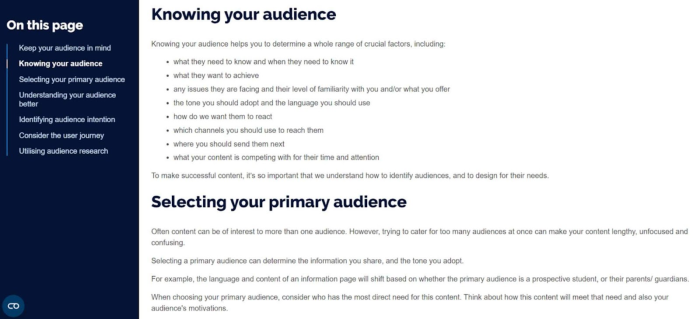
Example: Newcastle University (UK). The university’s marketing team uses data and research to deeply understand prospective students. Newcastle’s internal content guide emphasizes identifying audience needs through methods like analytics, social media listening, surveys, and focus groups. This research informs content planning, ensuring communications solve audience problems and use the right tone and channels.
Once you know your audience, tailor your outreach accordingly. Working parents may prefer evening emails; international families may value multilingual content highlighting boarding life. Each message should reflect your school’s unique strengths and speak directly to what families care about most.
In short, marketing begins with knowing your families deeply and crafting messages that make them feel seen, understood, and inspired to choose your school.
2. Define and Promote Your School’s Unique Value Proposition
Once you know your audience, the next step is to define what truly makes your school stand out. In a competitive education landscape, clarity is power, and your Unique Value Proposition (UVP) is what helps families instantly understand why your school is the right choice.
Start by asking: “What do we offer that others don’t?” Your differentiators might be tangible (like an IB-accredited curriculum, advanced STEM facilities, or bilingual instruction) or emotional (a nurturing environment, strong moral foundation, or inclusive community). The key is to highlight the qualities that align with your audience’s values and can’t easily be replicated by competitors.
Look at what nearby schools emphasize, then find the white space. Finally, weave your UVP consistently through your website, tagline, visuals, and social media tone. A clear, authentic value proposition creates confidence and shows families not just what you offer, but why it matters.
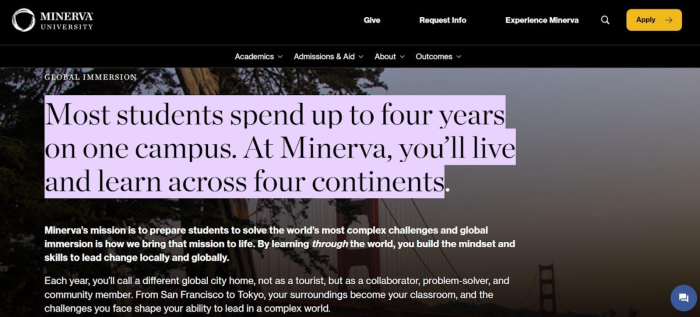
Example: Minerva University (USA). Minerva differentiates itself with a global immersion undergraduate program and an active learning model. The university clearly promotes this UVP: students live and study in seven cities on four continents over four years, rather than staying on one campus. Minerva’s website emphasizes that this global rotation and its innovative, seminar-based curriculum prepare students to solve complex global challenges. Each year in a new international city is not a travel experience but an integral part of academics, which Minerva markets as a unique offering in higher education.
3. Build a Robust Online Presence (Website, SEO, and Content)
Your school’s online presence is its digital front door, often the first impression prospective families have. A strong online foundation combines a polished website, smart SEO, and valuable content that informs, inspires, and converts.
Website Design & User Experience (UX) Your website should feel like a guided tour: beautiful, intuitive, and informative. Parents should quickly find essentials like admissions details, tuition, programs, and contact info. Use clean navigation, mobile-first design, and fast loading speeds to keep users engaged. High-quality visuals, such as campus photos, testimonial videos, or 360° virtual tours, bring your school to life. Consistent colors, logos, and tone across every page reinforce trust and ensure brand cohesion.
Search Engine Optimization (SEO) Even the best website can’t help if no one finds it. Use relevant keywords (e.g., “private school in Toronto,” “Catholic high school with IB program”) naturally in titles, headings, and meta descriptions. Create dedicated pages for programs and locations, optimize image alt text, and claim your Google Business profile to strengthen local SEO visibility.
Content Marketing Keep your site dynamic through regular updates via blog posts, student stories, and event recaps. Highlighting achievements and thought-leadership topics (like “How to Choose the Right Private School”) builds credibility and draws organic traffic.
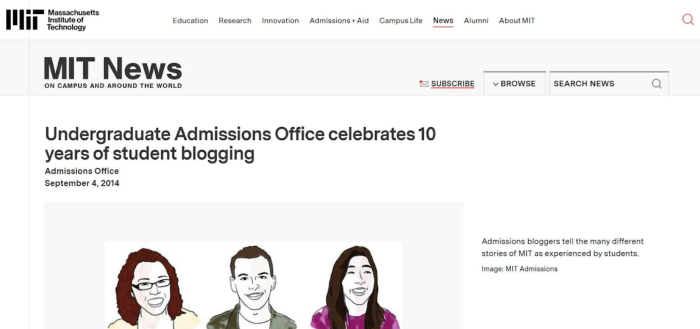
Example: Massachusetts Institute of Technology – MIT (USA): MIT’s Admissions Office hosts a famous student-written Admissions Blog that has become a pillar of its online presence. For over a decade, current MIT students have blogged candidly about campus life and academics, amassing thousands of posts read by prospective students worldwide. This blog strategy – focusing on transparency and real student voices – has paid off: the content generated millions of views, a robust engagement, and is often cited by applicants as influential in their college choice. MIT even curates a “Best of the Blogs” booklet and frequently analyzes blog traffic and feedback, using those insights to continually refine content and keep its website highly relevant to what prospective students want to know.
A well-designed, search-optimized, content-rich website isn’t just marketing; it’s proof of excellence.
4. Leverage Social Media and Digital Engagement
Social media is no longer optional. For private schools, it’s often the first place parents and students experience your community. Done right, it doesn’t just showcase your school; it builds lasting emotional connections.
Choose the Right Platforms Focus on where your audience spends time. For most schools, Facebook and Instagram are the anchors.
Facebook for community updates, parent groups, and event highlights.
Instagram for vibrant visuals and stories from daily campus life.
Schools serving older students or alumni can also explore TikTok, YouTube, or LinkedIn to reach new audiences.
Be Consistent and Purposeful Post regularly, at least a few times weekly, and plan around the school calendar. Use photos, short videos, or student/teacher takeovers to bring authenticity. Feature achievements, classroom moments, and cultural highlights to help families visualize their child’s experience.
Engage and Respond Social media is a dialogue, not a monologue. Reply promptly to comments, use polls or Q&As, and encourage user-generated content. Paid campaigns on Facebook and Instagram can further boost awareness, driving families to your website or open house events.
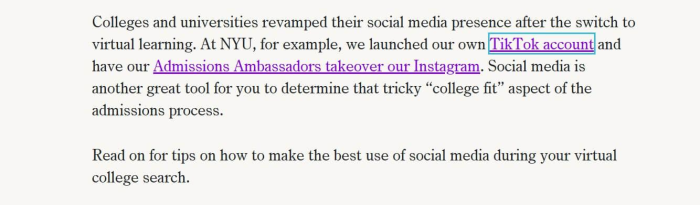
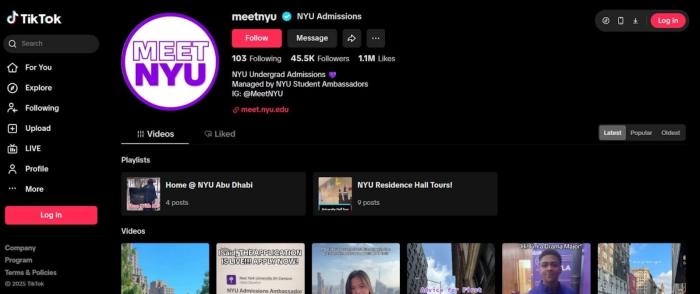
Example: New York University (USA). NYU’s admissions team expanded its digital reach by launching an official TikTok account and running student-led Instagram takeovers to showcase campus life. Current NYU students (Admissions Ambassadors) frequently create Instagram Stories and TikToks about dorm life, classes, and NYC activities, allowing prospects to see authentic student experiences. NYU actively encourages prospective students to engage – liking, commenting, or DMing questions – and monitors that feedback. This social strategy not only entertains (e.g., seniors doing TikTok dances) but also provides valuable peer-to-peer insights about “fit,” helping applicants feel more connected to the university culture.
A strong social presence humanizes your brand and turns followers into advocates.
5. Utilize Both Digital and Traditional Advertising Wisely
A balanced mix of digital and traditional advertising ensures your school reaches families online and in the local community. Each channel serves a distinct purpose.
Digital Advertising: Platforms like Google Ads and Facebook/Instagram Ads allow precise targeting by location, interests, and demographics. Search ads capture families actively looking for private schools (“private school near me”), while display and remarketing ads keep your brand visible even after visitors leave your site. For best results, pair strong ad copy with well-optimized landing pages. Email marketing is also a cost-effective channel for nurturing inquiries through newsletters and event updates.
Traditional Advertising: Local print ads, outdoor banners, and community events remain powerful for visibility. Direct mail campaigns and education fairs can connect you with parents in person, adding a personal touch that digital may lack. Track every campaign’s ROI and adjust accordingly.
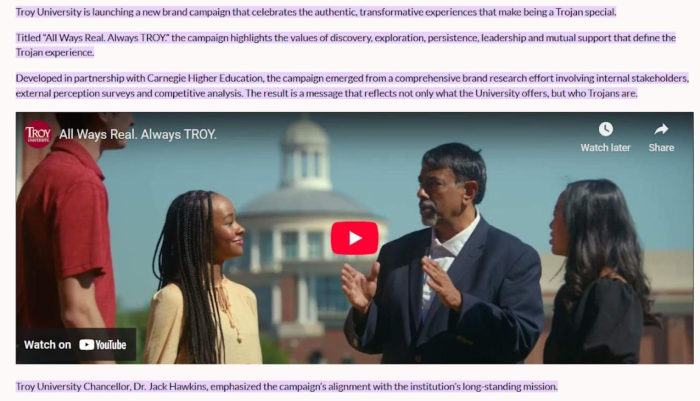
Example: In 2025, Troy University rolled out “All Ways Real. Always TROY,” a new brand campaign across a mix of traditional and digital channels. The integrated campaign includes a dynamic video commercial, print ads in publications, targeted online ads, extensive social media content, billboards in key markets, and even on-campus signage reinforcing the message. By deploying a cohesive theme on multiple platforms, Troy ensures its story of “authentic, career-focused” education reaches people wherever they are – whether scrolling online or driving past a billboard. (The campaign was informed by research and campus stakeholder input, and its multi-channel approach builds broad awareness while maintaining consistent branding.)
6. Emphasize Personal Connections: Tours, Open Houses, and Word-of-Mouth
Even in the digital age, enrollment decisions are deeply personal. Families may start online, but the final decision often comes down to how a school feels, its people, warmth, and community spirit. That’s why in-person experiences and authentic connections remain at the heart of private school marketing.
Tours and Open Houses: These events are your strongest conversion tools. Host open houses that showcase your facilities, programs, and culture. Include presentations, guided tours, and student or parent ambassadors to share authentic perspectives. Personal tours should be tailored to family interests, show relevant classrooms, introduce teachers, and follow up promptly afterward.
Word-of-Mouth and Community Engagement: Encourage satisfied parents, alumni, and students to share their experiences online and offline. Create ambassador programs or host informal meet-ups. Families trust real stories from peers more than polished ads, its important to nurture that organic advocacy.
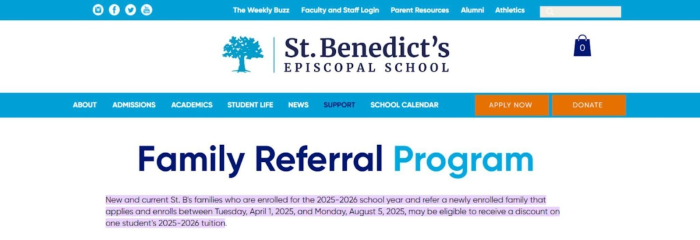
Example:St. Benedict’s Episcopal School (USA). This private school in Georgia leverages parent word-of-mouth through an organized Parent Ambassador Program. Enthusiastic current parents serve as school ambassadors – they attend open houses (in person or virtual) to welcome and mentor new families, display yard signs in their neighborhoods, bumper stickers on cars, and share school posts on their personal social media to spread the word. To further encourage referrals, St. Benedict’s even offers a Family Referral Program: current families receive a tuition discount (10–15% off one child’s tuition) if they refer a new family who enrolls. These personal recommendations and community events create a warm, trust-based marketing channel that no paid advertisement can replace.
7. Monitor, Measure, and Refine Your Marketing Efforts
Marketing is an evolving process of observation, analysis, and improvement. The best-performing private schools treat marketing as a cycle: plan, execute, measure, and refine.
Track and Analyze Performance: Use tools like Google Analytics, Meta Ads Manager, or your CRM to monitor how families engage with your campaigns and website. Track metrics such as page visits, inquiries, conversion rates, and the most effective traffic sources. For example, if your admissions page gets plenty of views but few form completions, it may need stronger calls to action or a simpler layout.
Define and Review KPIs: Set measurable goals, like inquiry volume, open house attendance, or enrollment yield, and review them monthly or quarterly. Data-driven insights allow you to invest more in what works and cut what doesn’t.
Iterate and Adapt: Marketing trends shift quickly. Regularly test your messaging, visuals, and targeting strategies. Even small A/B tests on ads or email subject lines can lead to significant improvements over time.
Example:Drexel University (USA). Drexel invests heavily in data analytics to continually refine its marketing and enrollment strategies. The university established an Enrollment Analytics team dedicated to measuring what’s working and advising adjustments. This team analyzes prospect and applicant data, builds dashboards and predictive models, and shares actionable insights with admissions and marketing units. By using data visualization and machine-learning models (for example, predicting which inquiries are most likely to apply), Drexel’s marketers can focus resources on high-yield activities and tweak messaging or outreach frequency based on evidence. The goal is to enable fully data-driven decisions – Drexel explicitly ties this analytic approach to improving efficiency and effectiveness in hitting enrollment goals.
How to Create a Marketing Strategy for a School (Step-by-Step)
We’ve explored what effective school marketing entails. Now let’s unpack how to build a plan that actually works.
How to create a marketing strategy for a school? To create a marketing strategy for a school, set clear goals, analyze your audience and competitors, define your unique value proposition, choose effective marketing channels, implement campaigns consistently, measure performance using data and feedback, and refine tactics regularly for continuous improvement and enrollment growth.
Whether you’re starting from scratch or optimizing an existing strategy, a clear, step-by-step framework helps you move from ideas to measurable impact.
Step 1: Determine Your Goals
Start by defining what success looks like for your school. Without clear goals, marketing becomes guesswork. Use the SMART framework: Specific, Measurable, Achievable, Relevant, and Time-bound, to make goals actionable.
For instance:
Increase Grade 9 applications by 15% for the next school year
Boost awareness in new neighborhoods to attract 10 students from that area
Enhance perception of our arts program through digital storytelling campaigns
Each goal should have a metric. If you aim to “increase inquiries,” specify how many, by when, and through which channels. Concrete targets create accountability and make it possible to assess ROI later.
Step 2: Conduct a Situation Analysis
Before planning tactics, understand your current position. Conduct a SWOT analysis (Strengths, Weaknesses, Opportunities, Threats) to evaluate both internal and external factors.
Internal Assessment:
What is your brand reputation in the community?
Are your social media channels active and engaging?
Does your website effectively communicate your strengths?
External Assessment:
Is the local school-age population growing or declining?
Who are your competitors, and what are they emphasizing?
What economic, demographic, or policy shifts could impact enrollment?
For example, a strength could be high university placement rates; a weakness might be outdated branding; an opportunity could be a new housing development nearby; a threat might be a competing school opening next year.
Review past marketing data, too. Which campaigns generated the most inquiries? Did your open house attendance meet expectations? Insights from past efforts shape a more effective plan moving forward.
Step 3: Define Your Value Proposition and Key Messages
Your Unique Value Proposition (UVP) is the heart of your marketing strategy. It defines what makes your school distinct and why families should choose you.
Once identified, craft three to five key supporting messages. Example:
UVP: “We provide a holistic education that develops intellect and character.”
Key Messages:
Dual-curriculum integrating academics and character education.
Small class sizes for individualized attention.
Safe, inclusive community environment.
Commitment to innovation and creativity.
Decades-long legacy of academic excellence.
These pillars should guide every piece of communication, from your homepage copy to your social media captions. Make sure they align with your audience’s priorities. Involving key stakeholders, teachers, admissions staff, parents, and alumni ensures authenticity and internal alignment.
Step 4: Select Your Marketing Channels and Tactics
With messaging established, identify how you’ll deliver it. The best school marketing strategies blend digital and traditional approaches, tailored to your budget and bandwidth.
Digital Channels:
Revamp and optimize your website for clarity, SEO, and mobile responsiveness.
Create a content calendar for blogs, newsletters, and video storytelling.
Maintain consistent posting on key social platforms (e.g., Instagram, Facebook, YouTube).
Run targeted Google Ads and Facebook campaigns for open house registrations.
Traditional Channels:
Host community events, sponsor local activities, or participate in school expos.
Distribute branded print materials like brochures and banners.
Leverage alumni and parent networks for referral-based outreach.
Outline timelines and assign responsibilities. For instance, if the admissions team handles social posts while a vendor manages SEO, document it clearly. Prioritize what’s realistic, for example, executing three channels effectively beats juggling six poorly.
Tip: Always make sure your digital foundation (especially your website) is strong before investing in high-cost advertising. A great ad can’t compensate for a poor landing page.
Step 5: Launch and Implement the Campaign
This is where planning meets execution. Roll out initiatives systematically and track everything from day one.
Develop a month-by-month marketing calendar tied to admissions milestones. For example:
August: Update website content, design new visuals, and optimize SEO.
September: Launch “Back-to-School” awareness campaign and host the first open house.
October–November: Run paid social ads and distribute direct mailers.
January: Promote application deadlines through retargeting and email follow-ups.
To maintain consistency, use automation tools (like HubSpot or Hootsuite) to schedule posts, emails, and reminders. However, ensure automation still feels human; personalized responses matter.
Coordinate closely with admissions and faculty teams so inquiries are promptly followed up on. A well-executed campaign can fail if responses are delayed. Always be ready to scale operationally when interest spikes.
Step 6: Evaluate and Refine
Once campaigns have run for a few months or after a full admissions cycle, analyze outcomes against your original goals.
Ask:
Did applications or inquiries increase as projected?
Which channels drove the most qualified leads?
Were conversion rates consistent across the funnel (inquiry → visit → enrollment)?
Review quantitative data (Google Analytics, CRM reports, ad dashboards) and qualitative feedback (from parent surveys, open house attendees, or declined applicants).
Then refine your strategy accordingly. Maybe your direct mail campaign underperformed while Instagram ads overdelivered. Next year, you’ll reallocate the budget. Or perhaps your messaging around “academic rigor” resonated more than “extracurricular excellence,” lean into what’s connecting emotionally.
Treat underperforming tactics not as failures but as opportunities to learn and adapt. The most successful schools are agile; they evolve messaging, visuals, and targeting as they collect new insights.
Step 7: Maintain and Innovate (Ongoing)
Marketing is cyclical. Each year, repeat the process of reassessing goals, refreshing creative assets, and incorporating new ideas.
Innovation keeps your brand vibrant. Test emerging platforms (like TikTok or Threads), experiment with storytelling formats (student podcasts, short documentaries), or integrate automation and AI for efficiency. Ensure each new initiative aligns with your mission and audience preferences.
Document everything in a concise marketing strategy brief: a one-page summary outlining:
Goals and KPIs
Target audience profiles
Key messages
Marketing channels and timeline
Budget and resource plan
Sharing this internally keeps admissions, communications, and leadership aligned.
Creating a marketing strategy for your school is about clarity, structure, and alignment. By defining goals, analyzing your position, articulating your value, choosing the right channels, and refining based on results, your school can build a sustainable and measurable marketing system.
At HEM, we’ve experienced how following this structured approach outperforms those relying on ad-hoc efforts. The difference? A strategy built on data, storytelling, and intentionality, turning marketing from a task into a powerful growth engine for your institution.
Wrapping Up
Marketing a private or independent school is both an art and a science. It blends the emotional connection of storytelling with the precision of data-driven strategy. The most successful schools understand their audiences deeply, communicate their value clearly, and use modern tools to bring those stories to life.
In today’s evolving landscape of private education marketing, technology has created new opportunities, from SEO and social media to virtual tours and AI chatbots, yet the heart of school marketing remains the same: authentic human connection. A well-placed digital ad may spark interest, but it’s the warmth of a personal tour or a parent’s heartfelt testimonial that inspires trust and enrollment.
If you’re just beginning, focus on the fundamentals: know your audience, tell your school’s story authentically, and ensure every touchpoint, online and offline, reflects your values. With consistent, strategic communication, your school can build visibility, strengthen relationships, and attract the right families.
And remember, you don’t have to do it alone. Partnering with education marketing experts like Higher Education Marketing can help transform your strategy into measurable enrollment success.
Do you need help developing a results-driven private education marketing plan for your institution?
Struggling with enrollment?
Our expert digital marketing services can help you attract and enroll more students!
Frequently Asked Questions
Question: What is the role of marketing in schools?
Answer: Essentially, marketing in schools is about alignment; connecting what a school offers with what families seek. A strong marketing function doesn’t just fill seats; it sustains a mission. It ensures enrollment remains healthy, relationships stay strong, and the school continues to thrive long term.
Question: How to create a marketing strategy for a school?
Answer: To create a marketing strategy for a school, set clear goals, analyze your audience and competitors, define your unique value proposition, choose effective marketing channels, implement campaigns consistently, measure performance using data and feedback, and refine tactics regularly for continuous improvement and enrollment growth.
Question: What is marketing in education?
Answer: Put simply, marketing in education is about connection. It’s understanding what families value and communicating how your school meets those needs with clarity and authenticity. It’s a strategic process of shaping perception, building relationships, and inspiring trust in your institution’s promise.
Working as a successful team member remains one of the most important skills that employers report that they want when hiring college graduates. This means that when professors create well-executed and high-quality team projects, they can help their students succeed in a challenging job market. However, there are times when professors fail to help students to develop the necessary teamwork skills that our students will need, such as helping them learn how to manage team conflict.
We surveyed college professors a few years ago to better understand the problems they face when running team projects, even learning about why some choose to avoid team projects altogether. Many reported that they struggle because of the issues that students face when working in a team, such as one student taking over the project, figuring out how to grade a team project, motivating social loafers, and including dealing with team conflict.
The reality is that conflict will inevitably occur during team projects. We can help our students work better in teams by teaching them how to manage the conflict that they will face.
Many students think that there is something wrong when conflict occurs on their team. However, conflict can be a positive force for team decision-making when it’s focused on the task, provides new perspectives on the issues, and shows how the team can improve. On the other hand, there are types of conflict that can be destructive, such as when it gets emotional and focuses on people and personal grievances, rather than the work that the team is doing.
In this article, we recommend six easy strategies to help your students try to avoid the destructive emotional conflict and better manage the substantive conflict in their team when it does occur.
1. Focus on Team Goals
It’s important to start your team project by emphasizing the importance of the team project to their work in your class. This requires more than discussing how the project paper or presentation relates to their grade. Instead, help your teams to understand the skills that they will gain from working on the project you’ve assigned. When team members see the value in your team project, they are more likely to work together on it.
2. Create a Team Charter
Start your teams off right by having them create a team charter. This should include at least three components: when and how long they will meet each week, how to contact one another, and a list of behavioral and attitudinal obligations that they have to one another. These obligations may include things like how soon to respond to messages, how responsibilities are assigned, and even how they will resolve disagreements as they work together.
3. Use Frequent Check-ins
Monitoring how well your teams are working together can help you to identify a minor conflict before it becomes a major problem. These check-ins can be accomplished through ongoing peer evaluations, when you attend their team meetings, and/or through team updates they can provide, often as an assignment on your LMS. Once you learn about a potential conflict, you can make some suggestions for how they might move forward. We have often made Google Drive folders for each team with instructor access, and we require students to write their contributions to the instructor each week as one way to keep an eye on potential issues that might derail their projects. We’ve even had these project updates impact a small portion of the final grade of the project.
4. Focus the Team on Their Task
Keep your teams focused on the team task. You can help them to accomplish this by breaking down your project into components and setting intermediary deadlines. Scaffolding a team project this way can help keep your teams moving forward rather than spiraling or stalling. You can also regularly remind them about the main goal of the assignment. Finally, make sure to explain how any conflict that occurs needs to focus on issues with substance (e.g., how to collect data, what recommendations should we give, etc.) because these are important parts of the discussions that will help their team to create a better project. Similarly, remind them that they should not be spending time hurling angry accusations at each other or talking to team members behind others’ backs. We like to use the following quote to help our students with this:
Conflict is inevitable. Anger is a choice. And almost always the wrong choice. — Seth R. Silver
This way, they begin to understand that their conflict is not a problem until it starts to boil over into frustration, anger, and even resentment that derails them.
5. Address Conflict Resolution Strategies in Class
There are many great conflict resolution strategies that you can use to help your students recover when they do in fact face some conflict. One of our favorites is a team-based Start-Stop-Continue exercise. In it, the team discusses what they should start doing (e.g., setting deadlines for completing action items), stop doing (e.g. showing up late to team meetings), and continue doing (e.g. keeping the other team members informed about their work) in order to be successful. Remind students that this is a team discussion, which means that they should use team talk (“we can start setting deadlines”) and it should not include any ‘naming or shaming’ that calls out any one team member by name.
6. Get Involved When Necessary
If you’re following the first five steps, your teams will usually work through most conflicts. But, there are times where you might need to get involved – this should be a last resort and often only when you are asked to intervene. When you get such a request, you should meet with the team outside of class time. Your main role will be listening to their issues and asking open-ended questions. This will help them to find (or maybe even gently guide them towards) a solution on their own, because your students will be more committed to a solution that they help to create. You want to avoid dictating a solution unless the team is ready to self-destruct and it is truly the only way forward.
By incorporating these six strategies into your team project, your students will be more likely to:
Have a better team experience in your class;
Learn important skills that will help them in future teams;
Be more likely to successfully work in teams in other classes; and
Have a compelling story that they can share with potential employers about how well they worked in a team.
In addition, it will improve your own experience with team projects (and make them easier for you to grade, too)!
Tim Franz is Professor of Psychology and Lauren Vicker is Communications Professor Emeritus, both at St. John Fisher University. We started working together to team-teach a course in group dynamics beginning in 2004, coming from the fields of psychology and communications. We have presented, written, and published on teamwork and team projects, with our latest effort being Making Team Projects Work: A College Instructor’s Guide to Successful Student Groupwork, published by Routledge/Taylor & Francis, 2025. Approaching the issue from two different perspectives and teaching beyond our own home disciplines in business, pharmacy, criminology, etc. has given us a broad perspective into the issue.

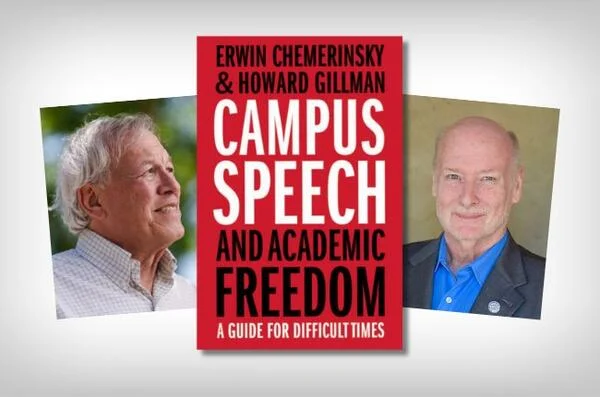

![The Higher Ed CFO’s Guide to Building a High-Performing IT Operation [eBook]](https://blog.college-counseling.com/wp-content/uploads/2025/12/The-Higher-Ed-CFOs-Guide-to-Building-a-High-Performing-IT.jpg)