
Tag: Gut

  • Parents, advocates alarmed as Trump leverages shutdown to gut special education department

    Parents, advocates alarmed as Trump leverages shutdown to gut special education department

    Two months after Education Secretary Linda McMahon was confirmed, she and a small team from the department met with leadership from the National Center for Learning Disabilities, an advocacy group that works on behalf of millions of students with dyslexia and other disorders. 

    Jacqueline Rodriguez, NCLD’s chief executive officer, recalled pressing McMahon on a question raised during her confirmation hearing: Was the Trump administration planning to move control and oversight of special education law from the Education Department to Health and Human Services?

    Rodriguez was alarmed at the prospect of uprooting the 50-year-old Individuals with Disabilities in Education Act (IDEA), which spells out the responsibility of schools to provide a “free, appropriate public education” to students with disabilities. Eliminating the Education Department entirely is a primary objective of Project 2025, the conservative blueprint that has guided much of the administration’s education policy. After the department is gone, Project 2025 said oversight of special education should move to HHS, which manages some programs that help adults with disabilities. 

    But the sprawling department that oversees public health has no expertise in the complex education law, Rodriguez told McMahon.

    “Someone might be able to push the button to disseminate funding, but they wouldn’t be able to answer a question from a parent or a school district,” she said in an interview later. 

    For her part, McMahon had wavered during her confirmation hearing on the subject. “I’m not sure that it’s not better served in HHS, but I don’t know,” she told Sen. Tim Kaine, D-Va., who shared concerns from parents worried about who would enforce the law’s provisions.

    But nine days into a government shutdown that has furloughed most federal government workers, the Trump administration announced that it was planning a drastic “reduction in force” that would lay off more than 450 people, including almost everyone who works in the Office of Special Education Programs. Rodriguez believes the layoffs are a way that the administration plans to force the special education law to be managed by some other federal office.

    Related: Become a lifelong learner. Subscribe to our free weekly newsletter featuring the most important stories in education. 

    The Education Department press office did not respond to a question about the administration’s plans for special education oversight. Instead, the press office pointed to a social media post from McMahon on Oct. 15. The fact that schools are “operating as normal” during the government shutdown, McMahon wrote on X, “confirms what the President has said: the federal Department of Education is unnecessary.”’

    Yet in that May meeting, Rodriguez said she was told that HHS might not be the right place for IDEA, she recalled. While the new department leadership made no promises, they assured her that any move of the law’s oversight would have to be done with congressional approval, Rodriguez said she was told. 

    The move to gut the office overseeing special education law was shocking to families and those who work with students with disabilities. About 7.5 million children ages 3 to 21 are served under IDEA, and the office had already lost staffers after the Trump administration dismissed nearly half the Education Department’s staff in March, bringing the agency’s total workforce to around 2,200 people. 

    For Rodriguez, whose organization supports students with learning disabilities such as dyslexia, McMahon’s private assurances was the administration “just outright lying to the public about their intentions.”

    “The audacity of this administration to communicate in her confirmation, in her recent testimony to Congress and to a disability rights leader to her face, ‘Don’t worry, we will support kids with disabilities,’” Rodriguez said. “And then to not just turn a 180-degree on that, but to decimate the ability to enforce the law that supports our kids.”

    She added: “It could not just be contradictory. It feels like a bait and switch.”

    Five days after the firings were announced, a U.S. district judge temporarily blocked the administration’s actions, setting up a legal showdown that is likely to end up before the Supreme Court. The high court has sided with the president on most of his efforts to drastically reshape the federal workforce. And President Donald Trump said at a Tuesday press briefing that more cuts to “Democrat programs” are coming.

    “They’re never going to come back in many cases,” he added.

    Related: Hundreds of thousands of students are entitled to training and help finding jobs. They don’t get it

    In her post on X, McMahon also said that “no education funding is impacted by the RIF, including funding for special education,” referring to the layoffs. 

    But special education is more than just money, said Danielle Kovach, a special education teacher in Hopatcong, N.J. Kovach is also a former president of the Council for Exceptional Children, a national organization for special educators.

    “I equate it to, what would happen if we dismantled a control tower at a busy airport?” Kovach said. “It doesn’t fly the plane. It doesn’t tell people where to go. But it ensures that everyone flies smoothly.”

    Katy Neas, a deputy assistant secretary in the Office of Special Education and Rehabilitative Services during the Biden administration, said that most people involved in the education system want to do right by children.

    “You can’t do right if you don’t know what the answer is,” said Neas, who is now the chief executive officer of The Arc of the United States, which advocates for people with intellectual and developmental disabilities. “You can’t get there if you don’t know how to get your questions answered.”

    Families also rely on IDEA’s mandate that each child with a disability receives a free, appropriate public education — and the protections that they can receive if a school or district does not live up to that requirement.

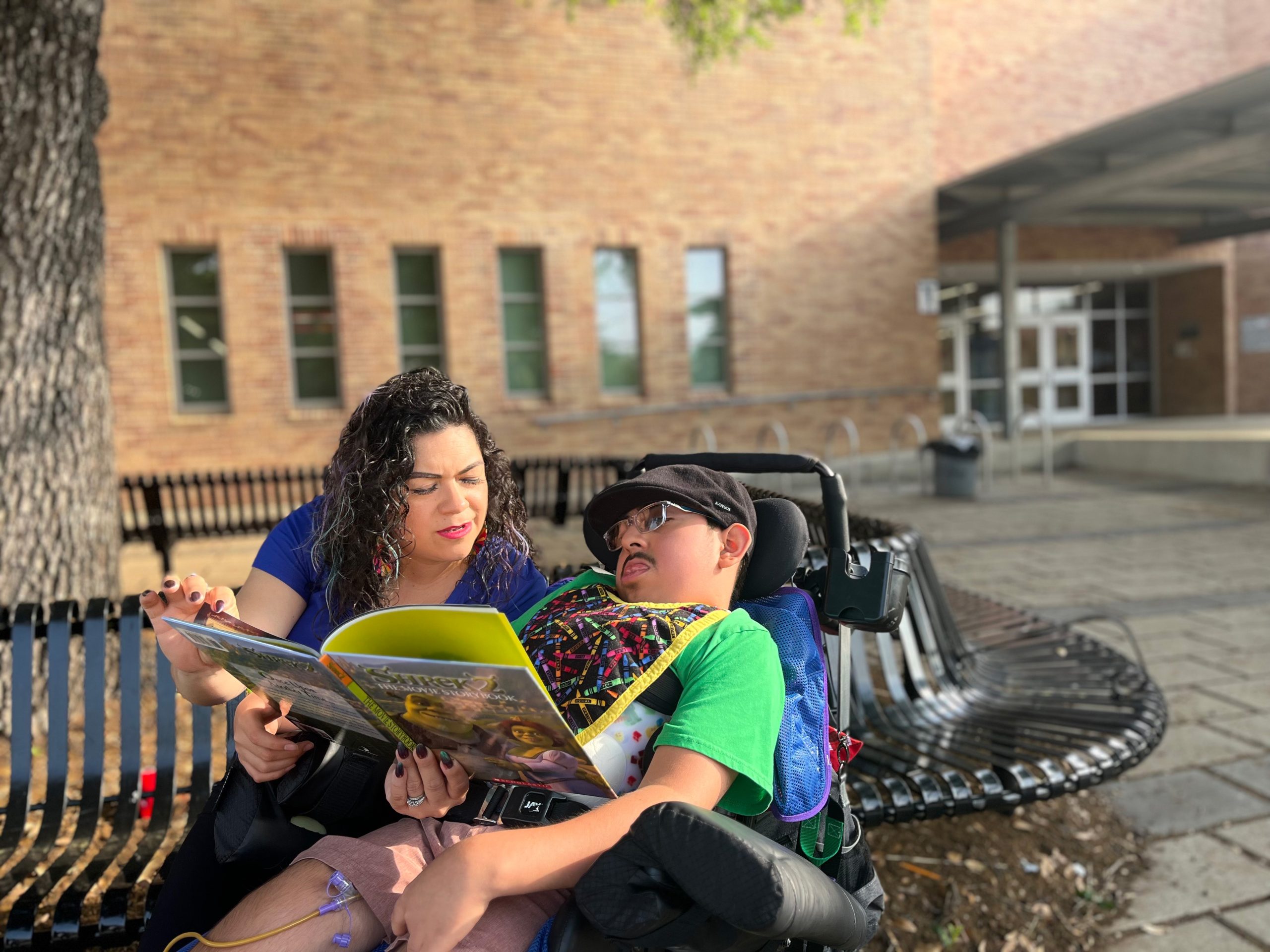
    Maribel Gardea, a parent in San Antonio, said she fought with her son’s school district for years over accommodations for his disability. Her son Voozeki, 14, has cerebral palsy and is nonverbal. He uses an eye-gaze device that allows him to communicate when he looks at different symbols on a portable screen. The district resisted getting the device for him to use at school until, Gardea said, she reminded them of IDEA’s requirements.

    “That really stood them up,” she said.

    Related: Trump wants to shake up education. What that could mean for a charter school started by a GOP senator’s wife

    Gardea, the co-founder of MindShiftED, an organization that helps parents become better advocates for their children with disabilities, said the upheaval at the Education Department has her wondering what kind of advice she can give families now.

    For example, an upcoming group session will teach parents how to file official grievances to the federal government if they have disputes with their child’s school or district about services. Now, she has to add in an explanation of what the deep federal cuts will mean for parents.

    Voozeki Gardea, who attends school in the San Antonio area, uses an eye-gaze communication device with the assistance of school paraprofessional Vanessa Martinez. The device verbalizes words and phrases when Voozeki looks at different symbols. Credit: Courtesy Maribel Gardea

    “I have to tell you how to do a grievance,” she said she plans to tell parents. “But I have to tell you no one will answer.”

    Maybe grassroots organizations may find themselves trying to track parent complaints on their own, she said, but the prospect is exhausting. “It’s a really gross feeling to know that no one has my back.”

    In addition to the office that oversees special education law, the Rehabilitation Services Administration, which is also housed at the Department of Education and supports employment and training of people with disabilities, was told most of its staff would be fired.

    “Regardless of which office you’re worried about, this is all very intentional,” said Julie Christensen, the executive director of the Association of People Supporting Employment First, which advocates for the full inclusion of people with disabilities in the workforce. “There’s no one who can officially answer questions. It feels like that was kind of the intent, to just create a lot of confusion and chaos.”

    Those staffers “are the voice within the federal government to make sure policies and funding are aligned to help people with disabilities get into work,” Christensen said. Firing them, she added, is counterintuitive to everything the administration says it cares about. 

    For now, advocates say they are bracing for a battle similar to those fought decades ago that led to the enactment of civil rights law protecting children and adults with disabilities. Before the law was passed, there was no federal guarantee that a student with a disability would be allowed to attend public school.  

    “We need to put together our collective voices. It was our collective voices that got us here,” Kovach said.

    And, Rodriguez said, parents of children in special education need to be prepared to be their own watchdogs. “You have to become the compliance monitor.” 

    It’s unfair, she said, but necessary. 

    Contact staff writer Christina Samuels at 212-678-3635 or [email protected].

    This story about special education was produced by The Hechinger Report, a nonprofit, independent news organization focused on inequality and innovation in education. Sign up for the Hechinger newsletter.

    The Hechinger Report provides in-depth, fact-based, unbiased reporting on education that is free to all readers. But that doesn’t mean it’s free to produce. Our work keeps educators and the public informed about pressing issues at schools and on campuses throughout the country. We tell the whole story, even when the details are inconvenient. Help us keep doing that.

    Join us today.

    Source link

  • Trump’s Latest Layoffs Gut the Office of Postsecondary Ed

    Trump’s Latest Layoffs Gut the Office of Postsecondary Ed

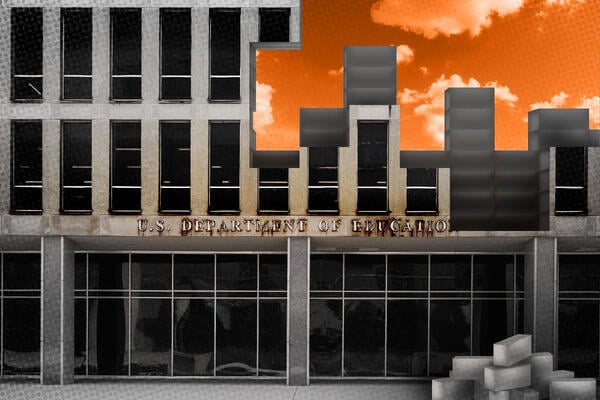
    Photo illustration by Justin Morrison/Inside Higher Ed | Tierney L. Cross/Getty Images | Matveev_Aleksandr/iStock/Getty Images

    Education Secretary Linda McMahon has essentially gutted the postsecondary student services division of her department, leaving TRIO grant recipients and leaders of other college preparation programs with no one to turn to.

    Prior to the latest round of layoffs, executed on Friday and now paused by a federal judge, the Student Services division in the Office of Postsecondary Education had about 40 staffers, one former OPE employee told Inside Higher Ed. Now, he and others say it’s down to just two or three.

    The consequence, college-access advocates say, is that institutions might not be able to offer the same level of support to thousands of low-income and first-generation prospective students.

    “It’s enormously disruptive to the students who are reliant on these services to answer questions and get the information they need about college enrollment and financial aid as they apply and student supports once they enroll,” said Antoinette Flores, a former department official during the Biden administration who now works at New America, a left-leaning think tank. “This [reduction in force] puts all of those services at stake.”

    The layoffs are another blow to the federal TRIO programs, which help underrepresented and low-income students get to and through college. President Trump unsuccessfully proposed defunding the programs earlier this year, and the administration has canceled dozens of TRIO grants. Now, those that did get funding likely will have a difficult time connecting with the department for guidance.

    In a statement Wednesday, McMahon described the government shutdown and the RIF as an opportunity for agencies to “evaluate what federal responsibilities are truly critical for the American people.”

    “Two weeks in, millions of American students are still going to school, teachers are getting paid and schools are operating as normal. It confirms what the president has said: the federal Department of Education is unnecessary,” she wrote on social media.

    This is the second round of layoffs at the Education Department since Trump took office. The first, which took place in March, slashed the department’s staff nearly in half, from about 4,200 to just over 2,400, affecting almost every realm of the agency, including Student Services and the Office of Federal Student Aid.

    Nearly 500 employees lost their jobs in this most recent round, which the administration blamed on the government shutdown that began Oct. 1. No employees in FSA were affected, but the Office of Postsecondary Education was hit hard.

    Jason Cottrell, a former data coordinator for OPE who worked in student and institution services for more than nine years, lost his job in March but stayed in close contact with his colleagues who remained. The majority of them were let go on Friday, leaving just the senior directors and a few front-office administrators for each of the two divisions. That’s down from about 60 employees total in September and about 100 at the beginning of the year, he said.

    At the beginning of the year, OPE included five offices but now is down to the Office of Policy, Planning and Innovation, which includes oversight of accreditation, and the group working to update new policies and regulations.

    Cottrell said the layoffs at OPE will leave grantees who relied on these officers for guidance without a clear point of contact at the department. Further, he said there won’t be nonpartisan staffers to oversee how taxpayer dollars are spent.

    “Long-term, I’m thinking about the next round of grant applications that are going to be coming in … some of [the grant programs] receive 1,100 to 1,200 applications,” he explained. “Who is going to be there to actually organize and set up those grant-application processes to ensure that the regulations and statutes are being followed accurately?”

    Flores has similar concerns.

    “These [cuts] are the staff within the department that provide funding and technical assistance to institutions that are underresourced and serve some of the most vulnerable students within the higher education system,” she said. “Going forward, it creates uncertainty about funding, and these are institutions that are heavily reliant on funding.”

    Other parts of the department affected by the layoffs include the Offices of Special Education and Rehabilitation Services, Communications and Outreach, Formula Grants, and Program and Grantee Support Services.

    Although the remaining TRIO programs and other grant recipients that report to OPE likely already received a large chunk of their funding for the year, Cottrell noted that they often have to check in with their grant officer throughout the year to access the remainder of the award. Without those staff members in place, colleges could have a difficult time taking full advantage of their grants.

    “It’s going to harm the institutions, and most importantly, it’s going to harm the students who are supposed to be beneficiaries of these programs,” he said. “These programs are really reserved for underresourced institutions and underserved students. When I look at the overall picture of what has been happening at the department and across higher education, I see this as a strategic use of an opportunity that this administration has created.”

    Source link

  • Hiring With Your Head—and Your Gut (opinion)

    Hiring With Your Head—and Your Gut (opinion)

    We’ve all been there: sitting on a search committee, sifting through credentials, interview notes and teaching demos, trying to decide whom to bring into our academic community. We talk about fit, collegiality and the balance between teaching and research. We refer to the rubric, the required qualifications and the preferred ones. We weigh experiences, diversity, alignment with the mission and potential.

    And sometimes, quietly and without warning, we feel that small, subtle shift in our gut that says something doesn’t align.

    For me, it happened during a campus interview years ago. The candidate had strong materials, solid experience and a warm, engaging manner. Throughout the formal interview, they said all the right things. Faculty were cautiously optimistic. But as I drove the candidate to the airport at the end of the visit, something changed. They relaxed, as anyone would, and for a brief second, I saw something in their eyes. A flash of disdain, maybe. Something sharper than the persona we had seen earlier. It was a shift in energy. A flicker of incongruence between how they had presented themselves and how they now carried themselves.

    I put the feeling aside. After all, it was just a second. A moment. Something I couldn’t explain. Was I reading too much into it? Was I being unfair?

    Later, I reflected on smaller details from their candidacy that had already made me pause. Their responses to scheduling emails had been brief and slow, lacking the warmth or curiosity I’d seen from other candidates. These weren’t red flags on their own, but together they created a subtle unease.

    At the time, I was a relatively new assistant professor. I didn’t have the language or the authority to raise what I sensed in a meaningful way. And so, I said nothing.

    Looking back, I now realize I could have simply asked a question like, “Did anyone else notice anything that felt a little different or off in our less formal moments with the candidate?” or “How did the candidate’s tone and energy feel during the downtimes between scheduled sessions?” These aren’t accusations—they’re openings for reflection. Questions like these can invite others to surface what they might have noticed but hadn’t yet verbalized.

    Gut Feeling Meets Emotional Intelligence

    Intuition doesn’t have to be the enemy of process. In fact, it can be part of an emotionally intelligent hiring culture—one that’s reflective, discerning and transparent. Emotional intelligence in this context is about being attuned to the human elements of a candidate’s fit. When we notice a gut reaction—whether it’s a spark of enthusiasm or a twinge of concern—it often stems from that attunement. What we call a “gut feeling” is frequently our mind’s quick synthesis of subtle cues, from body language to tone, guided by our own experiences and values.

    Emotional intelligence in faculty hiring begins with self-awareness: tuning in to how a candidate’s presence affects you—whether through curiosity, ease or discomfort—and asking what your reactions might be signaling. It includes social awareness, noticing how others respond in informal moments and whether the candidate engages in ways that feel consistent with your department’s values.

    Emotionally intelligent hiring also requires self-regulation—the discipline to slow down, hold back from snap judgments and lean into questions rather than assumptions. It thrives on relational transparency, where committee members can share subtle impressions without fear of being dismissed as merely “subjective.” And it rests on ethical discernment: the ability to examine whether those impressions are connected to job-relevant behaviors, not unconscious biases.

    Testing What We Feel

    Intuition shouldn’t be used to override policy or protocol. It should be used to sharpen it. When something feels off, ask yourself,

    • Am I noticing a misalignment between the candidate’s stated values and their interpersonal behavior?
    • Have others noted something similar?
    • Is there a way to probe deeper in follow-up interviews?
    • Can references offer insight into what I’m sensing?
    • Is what I’m noticing connected to the job’s required competencies, or is it something unrelated?

    If the answer to that last question is unclear, slow down. Revisit the evaluation criteria. Look for patterns. Talk with colleagues. Our job isn’t to be mind readers—it’s to be community stewards.

    When Intuition Becomes Wisdom

    We often think of emotional intelligence as something soft and interpersonal. But it’s also rigorous. It requires noticing your own biases, resisting overconfidence and attending to the full emotional ecology of a hiring process.

    The truth is, faculty hires change departments. They shape culture, morale, collaboration and stability. We owe it to our institutions and ourselves to trust what we notice and to reflect on it with care.

    Sometimes the most important insights don’t shout—they whisper. When we honor our instincts enough to examine them, and then ground them in facts, we hire with both head and gut. That practice doesn’t just avoid heartbreaks, mismatches and regrets—it builds stronger hires and healthier departments.

    When we talk openly about what we sense—not just what we score—we build departments rooted in both discernment and trust.

    Treavor Bogard is a department chair and associate professor of teacher education at the University of Dayton. He writes about emotionally intelligent leadership in higher education and is the author of The Emotionally Intelligent Chair, a Substack newsletter exploring the inner work of leading academic departments with purpose, reflection and care.

    Source link

  • Layoffs Gut Federal Education Research Agency

    Layoffs Gut Federal Education Research Agency

    Five years after the COVID-19 pandemic first forced schools and colleges into remote learning, researchers, policymakers and higher education leaders may no longer have access to the federal data they need to gather a complete picture of how those disruptions have affected a generation of students long term—or hold states and colleges accountable for the interventions they deployed to address the fallout.

    That’s because the National Center for Education Statistics, the Education Department’s data-collection arm that’s administered surveys and studies about the state of K-12, higher education and the workforce since 1867, is suddenly a shell of itself.

    As of this week, the NCES is down to five employees after the department fired nearly half its staff earlier this week. The broader Institute of Education Sciences, which houses NCES, also lost more than 100 employees as part of President Donald Trump’s campaign to eliminate alleged “waste, fraud and abuse” in federal funding.

    The mass firings come about a month after federal education data collection data took another big blow: In February, the department cut nearly $900 million in contracts at IES, which ended what some experts say was critical research into schools and fueled layoffs at some of the research firms that held those contracts, including MDRC, Mathematica, NORC and Westat.

    Although Trump and his allies have long blamed COVID-related learning loss on President Joe Biden’s approval of prolonged remote learning, numerous experts told Inside Higher Ed that without some of the federal data the NCES was collecting, it will be hard to draw definitive conclusions about those or any other claims about national education trends.

    ‘Backbone of Accountability’

    “The backbone of accountability for our school systems begins with simply collecting data on how well they’re doing. The fact that our capacity to do that is being undermined is really indefensible,” said Thomas Dee, a professor at Stanford University’s Graduate School of Education and research associate at the National Bureau of Economic Research. “One could conceive this as part of an agenda to undermine the very idea of truth and evidence in public education.”

    But the Education Department says its decision to nearly eliminate the NCES and so many IES contracts is rooted in what it claims are the agency’s own failures.

    “Despite spending hundreds of millions in taxpayer funds annually, IES has failed to effectively fulfill its mandate to identify best practices and new approaches that improve educational outcomes and close achievement gaps for students,” Madi Biedermann, deputy assistant secretary for communications at the department, said in an email to Inside Higher Ed Thursday.

    Biedermann said the department plans to restructure IES in the coming months in order to provide “states with more useful data to improve student outcomes while maintaining rigorous scientific integrity and cost effectiveness.”

    But many education researchers disagree with that characterization of IES and instead view it as an unmatched resource for informing higher education policy decisions.

    “Some of these surveys allow us to know if people are being successful in college. It tells us where those students are enrolled in college and where they came from. For example, COVID impacted everyone, but it had a disproportionate impact on specific regions in the U.S. and specific social and socioeconomic groups in the U.S.,” said Taylor Odle, an assistant professor of educational policy studies at the University of Wisconsin at Madison.

    “Post-COVID, states and regions have implemented a lot of interventions to help mitigate learning loss and accelerate learning for specific individuals. We’ll be able to know by comparing region to region or school to school whether or not those gaps increased or reduced in certain areas.”

    Without uniform federal data to ground comparisons of pandemic-related and other student success interventions, it will be harder to hold education policymakers accountable, Odle and others told Inside Higher Ed this week. However, Odle believes that may be the point of the Trump administration’s assault on the Education Department’s research arm.

    “It’s in essence a tacit statement that what they are doing may potentially be harmful to students and schools, and they don’t want the American public or researchers to be able to clearly show that,” he said. “By eliminating these surveys and data collection, and reducing staff at the Department of Education who collect, synthesize and report the data, every decision-maker—regardless of where they fall on the political spectrum—is going to be limited in the data and information they have access to.”

    Scope of Data Loss Unclear

    It’s not clear how many of the department’s dozens of data-collection programs—including those related to early childhood education, college student outcomes and workforce readiness—will be downsized or ended as a result of the cuts. The department did not respond to Inside Higher Ed’s request for clarity on exactly which contracts were canceled. (It did confirm, however, that it still maintains contracts for the National Assessment of Educational Progress, the College Scorecard and the Integrated Postsecondary Education Data System.)

    A now-fired longtime NCES employee who asked to remain anonymous out of fear of retaliation said they and others who worked on those data-collection programs for years are still in the dark on the future of many of the other studies IES administers.

    “We’ve been out of the loop on all these conversations about the state of these studies. That’s been taking place at a higher level—or outside of NCES entirely,” said the terminated employee. “What these federal sources do is synthesize all the different other data sources that already exist to provide a more comprehensive national picture in a way that saves researchers a lot of the trouble of having to combine these different sources themselves and match them up. It provides consistent methodologies.”

    Even if some of the data-collection programs continue, there will be hardly any NCES staff to help researchers and policymakers accurately navigate new or existing data, which was the primary function of most workers there.

    “We are a nonpartisan agency, so we’ve always shied away from interpreting or making value judgments about what the data say,” the fired NCES worker said. “We are basically a help desk and support resource for people who are trying to use this data in their own studies and their own projects.”

    ‘Jeopardizing’ Strong Workforce

    One widely used data set with an uncertain future is the Beginning Postsecondary Students Longitudinal Study—a detailed survey that has followed cohorts of first-time college students over a period of six to eight years since 1989. The latest iteration of the BPS survey has been underway since 2019, and it included questions meant to illuminate the long-term effects of pandemic-related learning loss. But like many other NCES studies, data collection for BPS has been on pause since last month, when the department pulled the survey’s contract with the Research Triangle Institute.

    In a blog post the Institute for Higher Education Policy published Wednesday, the organization noted that BPS is intertwined with the National Postsecondary Student Aid Study, which is a comprehensive nationwide study designed to determine how students and their families pay for college and demographic characteristics of those enrolled.

    The two studies “are the only federal data sources that provide comprehensive insights into how students manage college affordability, stay enrolled and engaged with campus resources, persist to completion, and transition to the workforce,” Taylor Myers, assistant director of research and policy, wrote. “Losing these critical data hinders policy improvements and limits our understanding of the realities students face.”

    That post came one day after IHEP sent members of Congress a letter signed by a coalition of 87 higher education organizations and individual researchers urging lawmakers to demand transparency about why the department slashed funding for postsecondary data collection.

    “These actions weaken our capacity to assess and improve educational and economic outcomes for students—directly jeopardizing our ability to build a globally competitive workforce,” the letter said. “Without these insights, policymakers will soon be forced to make decisions in the dark, unable to steward taxpayer dollars efficiently.”

    Picking Up the Slack

    But not every education researcher believes federal data is as vital to shaping education policy and evaluating interventions as IHEP’s letter claims.

    “It’s unclear that researchers analyzing those data have done anything to alter outcomes for students,” said Jay Greene, a senior research fellow in the Center for Education Policy at the right-wing Heritage Foundation. “Me being able to publish articles is not the same thing as students benefiting. We have this assumption that research should prove things, but in the world of education, we have very little evidence of that.”

    Greene, who previously worked as a professor of education policy at the University of Arkansas, said he never used federal data in his assessments of educational interventions and instead used state-level data or collected his own. “Because states and localities actually run schools, they’re in a position to do things that might make it better or worse,” he said. “Federal data is just sampling … It’s not particularly useful for causal research designs to develop practices and interventions that improve education outcomes.”

    Other researchers have a more measured view of what needs to change in federal education data collection.

    Robin Lake, director of the Center on Reinventing Public Education at Arizona State University, has previously called for reforms at IES, arguing that some of the studies are too expensive without enough focus on educators’ evolving priorities, which as of late include literacy, mathematics and how to handle the rise of artificial intelligence.

    But taking a sledgehammer to NCES isn’t the reform she had in mind. Moreover, she said blaming federal education data collections and researchers for poor education outcomes is “completely ridiculous.”

    “There’s a breakdown between knowledge and practice in the education world,” Lake said. “We don’t adopt things that work at the scale we need to, but that’s not on researchers or the quality of research that’s being produced.”

    But just because federal education data collection may not focus on specific interventions, “that doesn’t mean those data sets aren’t useful,” said Christina Whitfield, senior vice president and chief of staff for the State Higher Education Executive Officers Association.

    “A lot of states have really robust data systems, and in a lot of cases they provide more detail than the federal data systems do,” she said. “However, one of the things the federal data provides is a shared language and common set of definitions … If we move toward every state defining these key elements individually or separately, we lose a lot of comparability.”

    If many of the federal data collection projects aren’t revived, Whitfield said other entities, including nonprofits and corporations, will likely step in to fill the void. But that likely won’t be a seamless transition without consequence.

    “At least in the short term, there’s going to be a real issue of how to vet those different solutions and determine which is the highest-quality, efficient and most useful response to the information vacuum we’re going to experience,” Whitfield said. And even if there’s just a pause on some of the data collections and federal contracts are able to resume eventually, “there’s going to be a gap and a real loss in the continuity of that data and how well you can look back longitudinally.”

    Source link