Tag: Hall

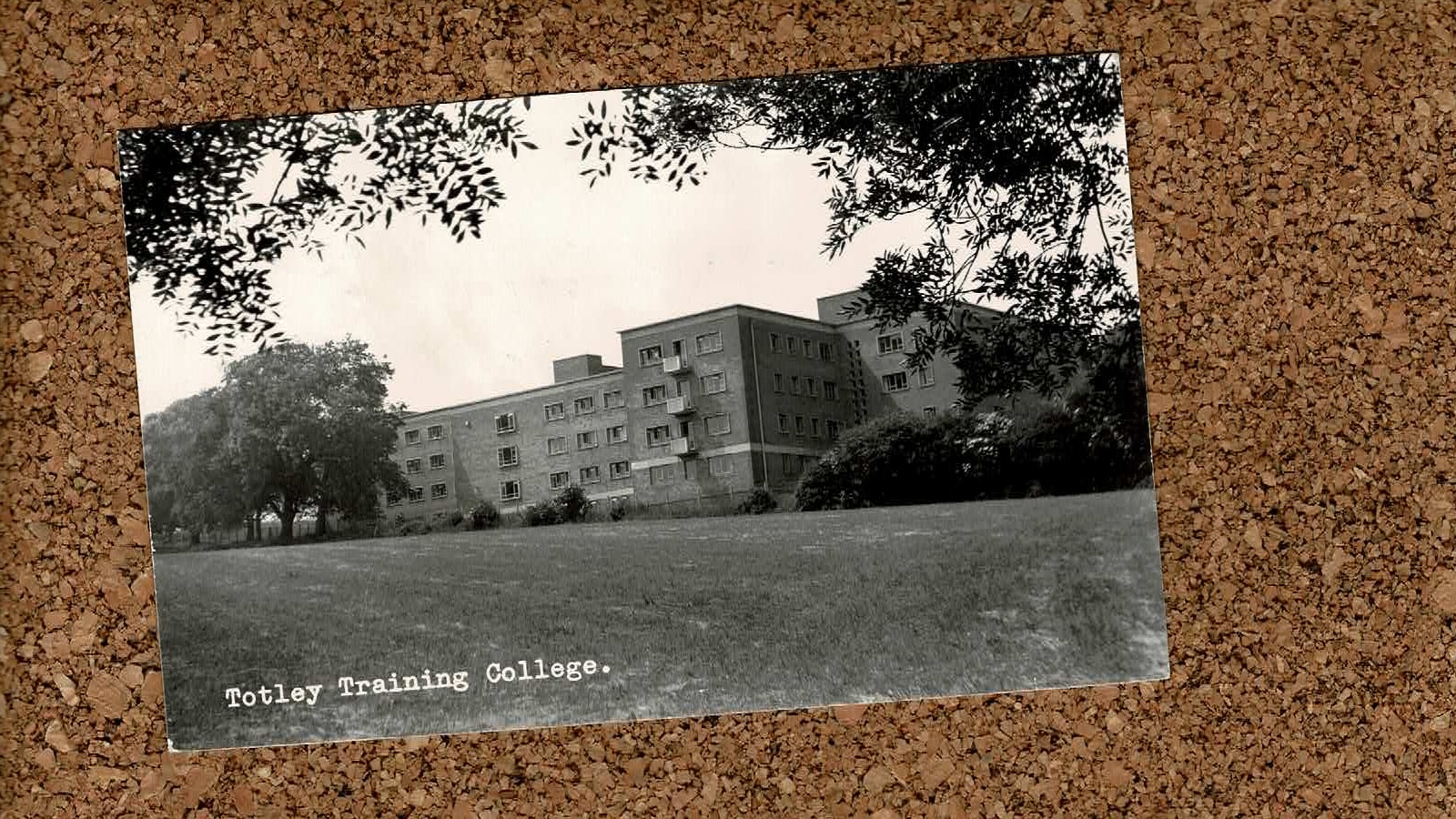
  • Higher education postcard: Totley Hall Training College

    Higher education postcard: Totley Hall Training College

    Back in 1943 the UK government knew that more school teachers would be needed. The school leaving age was to be raised: this and other planned changes meant that 70,000 extra teachers would be needed over the coming years. The teacher training colleges then in place trained 7,000 a year, so there was a problem.

    The solution? Emergency Training Colleges. A compressed curriculum was piloted at Goldsmiths College, and in five years about 50 such colleges produced about 35,000 teachers. But it was a short-term scheme, and many of the colleges were wound up after 1950 or 1951.

    Nevertheless, there continued to be a need to grow base capacity to train teachers. The emergency colleges had dealt with the immediate shortfall, but with more children attending schools every year, there was still work to be done. Some of the emergency colleges became regular training colleges, and some local authorities established new colleges of their own. And this is where Totley Hall enters the stage.

    Not shown on the card is Totley Hall, built in 1623 and in 1949 passed to Sheffield Council. This was to be the heart of a new training college – the Totley Hall Training College of Housecraft. Its mission: training domestic science teachers.

    There’s a wonderful account of the college’s foundation and development, written by Anna Baldry, who was one of the first lecturers at the college. It’s well worth a read. Highlights include her nerves at interview; problems with electricity blackouts; HMI inspections; the admission of men; its opening by Violet Attlee; and some lovely photographs.

    More prosaically, the college had by 1963 become the plain Totley Hall Training College, focusing on training primary teachers. In 1967 men were admitted; in 1969 the best students could continue to study for a fourth year to gain a Bachelor of Education (BEd) degree from the University of Sheffield, rather than the Certificate in Education. And in 1972 – there being simultaneous vacancies in the principalships – Totley Hall Training College and the nearby Thornbridge Hall Training College were merged, to form the Totley/Thornbridge College of Education.

    In 1976 the College became part of Sheffield Polytechnic, which was renamed Sheffield City Polytechnic – and this in turn became Sheffield Hallam University in 1992, and I’ve written about it here.

    Here’s a jigsaw of the card.

    The card was posted, but I can’t read the postmark, so don’t know when. The 3p stamp shows it was after decimalisation. If it was in 1971 or 1972 it was sent first class; if it was 1973 it was sent second class. Those are the only options for that stamp.

    An engagement? A wedding? A pools win? A baby? What do we think?

    Source link

  • From playground to lecture hall – working with schools to support wellbeing throughout education

    From playground to lecture hall – working with schools to support wellbeing throughout education

    Higher education institutions are increasingly acknowledging the importance of wellbeing in shaping meaningful and sustainable learning experiences. However, the wellbeing of students and staff is often treated as a separate or secondary issue, addressed through isolated initiatives rather than embedded into the fabric of university life.

    I propose adopting a lifelong approach to wellbeing in education grounded in appreciating that schools and universities are not distinct spheres. Rather, they are stages on a continuous educational journey. The way we foster wellbeing in schools must inform, and align with, our practices in higher education.

    Foundations for wellbeing

    The foundations laid in schools play a crucial role in shaping how learners experience their transition into university. When educational environments nurture emotional resilience, social connection, and inclusive responses to academic pressures, learners arrive in higher education with a stronger base of support. In contrast, when wellbeing is not prioritised earlier in the educational journey, the structural and emotional demands of university life can amplify existing challenges. This underscores the need for continuity and care across the educational continuum, rather than placing responsibility on individuals to adapt alone.

    In many school systems, wellbeing is increasingly recognised as integral to education. A holistic, strengths-based approach helps ensure that wellbeing is supported through curriculum design, teaching practices, and whole-school approaches and policies. Programmes focused on social and emotional learning are embedded, and collaboration across sectors – education, health, and community – creates a network of support that extends beyond the classroom.

    In higher education, this picture is evolving. The work on wellbeing spearheaded by Universities UK in recent years has helped universities to become more attuned to the importance of wellbeing, yet academic culture often remains shaped by competitiveness, performance metrics, and output-driven models. This dynamic also influences schools in some contexts, particularly where high stakes testing and narrow accountability frameworks dominate. However, there tends to be greater acceptance within schools that wellbeing and learning are deeply interconnected.

    In the university context, structural pressures, including institutional expectations and the demands of competitive academic cultures, continue to affect both students and staff, contributing to stress, burnout, and mental health difficulties. Although there is growing attention to student wellbeing in policy and strategy, support for staff wellbeing remains less visible, despite its clear influence on teaching quality and the wider learning environment. There is a need for a joined-up, systemic approach recognising the interdependence of student and staff wellbeing.

    Whole institution approaches

    A whole-university approach, as promoted by Universities UK, is a strategic, institution-wide commitment to embedding wellbeing into every dimension of university life, echoing the well-established whole-school model in many primary and secondary education systems. Just as whole-school approaches integrate wellbeing into teaching, leadership, curriculum, and engagement with families and communities, a whole-university approach ensures that wellbeing is not confined to support services or stand-alone initiatives. It becomes a shared responsibility, woven into the ethos, governance, and daily practices of the institution.

    Rather than relying on reactive services, this model positions wellbeing as a core value that shapes leadership, curriculum, pedagogy, and institutional relationships. It calls for cultural transformation, redefining success to focus not solely on outcomes, but on flourishing. This includes embedding wellbeing in teaching and assessment, professional development, work-life balance, and inclusive, compassionate organisational values. It requires systems that promote flexibility, equity, and psychological safety as the norm.

    Universities must be understood as ecosystems. When this ecosystem is well, everyone within it is more likely to thrive. This involves designing curricula that support engagement and wellbeing, adopting inclusive policies, and nurturing cultures of trust, care, and belonging in both academic and administrative contexts.

    Higher education can also learn from the progress made in schools. Many school systems have already developed comprehensive frameworks for promoting wellbeing – such as the Health Promoting Schools model – which successfully embed wellbeing into governance, pedagogy, and wider school life. Higher education has much to gain from adapting these models to its own settings, helping to ensure continuity of support as learners move between sectors.

    Embedding wellbeing through national frameworks

    Aligning approaches across schools and universities creates a more cohesive experience for learners and reduces the sense of disorientation that often accompanies educational transitions. It also enables valuable exchange between sectors, where shared learning can lead to better outcomes for all.

    Within this context, and especially given the significance of the transition from school to university, national leadership is essential in embedding wellbeing consistently across education systems. The move into higher education is more than a change of setting; it is a profound developmental shift, often marked by increased autonomy, identity exploration, and academic complexity. While this transition can be exciting, it also brings vulnerability and emotional strain. Maintaining wellbeing support across this bridge is therefore not optional; it is essential. Yet it is precisely at this stage that inconsistencies and gaps often emerge. National policies that intentionally bridge sectors can ensure wellbeing remains a continuous thread throughout a learner’s journey.

    One crucial aspect of national leadership is the development of robust policy and strategy relating to wellbeing, both within institutions and at a broader, systemic level. Country-wide initiatives create coherence, consistency, and a shared vision – particularly important when seeking to strengthen the links between schools and universities. Ireland, for instance, has implemented a national policy and strategy around mental health that spans multiple sectors, not just education. This kind of joined-up approach exemplifies how public policy can help to sustain cultural change across the education system and beyond.

    The wellbeing of our educational communities is not a peripheral concern. It is central to the very purpose of education. By embedding wellbeing across every level – through policy, pedagogy, leadership, and institutional culture – we not only support individuals to succeed, but also help to build resilient, compassionate institutions where everyone can flourish.

    Source link

  • Solving our literacy crisis starts in the lecture hall

    Solving our literacy crisis starts in the lecture hall

    Key points:

    The recent NAEP scores have confirmed a sobering truth: Our schools remain in the grips of a literacy crisis. Across the country, too many children are struggling to read, and too many teachers are struggling to help them. But why? And how do we fix it?

    There are decades of research involving thousands of students and educators to support a structured literacy approach to teaching literacy. Teacher preparation programs and school districts across the nation have been slow to fully embrace this research base, known as the science of reading. Since 2017, consistent media attention focused on the literacy crisis has created a groundswell of support for learning about the science of reading. Despite this groundswell, too many educators are still entering classrooms without the skills and knowledge they need to teach reading.

    While there is steady progress in teacher preparation programs to move toward the science of reading-aligned practices, the National Council on Teacher Quality’s latest report on the status of teacher preparation programs for teaching reading (2023) still shows that only 28 percent of programs adequately address all five components of reading instruction. Furthermore, according to the report, up to 40 percent of programs still teach multiple practices that run counter to reading research and ultimately impede student learning, such as running records, guided reading, leveled texts, the three cueing systems, etc. This data shows that there is still much work to be done to support the education of the teacher educators responsible for training pre-service teachers.

    The disconnect between theory and practice

    When it comes to literacy instruction, this problem is especially glaring. Teachers spend years learning about teaching methods, reading theories, and child development. They’re often trained in methods that emphasize comprehension and context-based guessing. However, these methods aren’t enough to help students develop the core skills they need to become proficient readers. Phonics–teaching students how to decode words–is a critical part of reading instruction, but it’s often left out of traditional teacher prep programs.

    One primary reason this disconnect happens is that many teacher prep programs still rely on outdated methods. These approaches prioritize reading comprehension strategies that focus on meaning and context, but they don’t teach the foundational skills, like phonics, essential for developing fluent readers.

    Another reason is that teacher prep programs often lag when it comes to incorporating new research on reading. While the science of reading–a body of evidence built from decades of research and studies involving thousands of students and educators about how humans learn to read and the instructional practices that support learning to read–has been gaining deserved traction, it’s not always reflected in the teacher preparation programs many educators go through. As a result, teachers enter classrooms without the knowledge, skills, and up-to-date methods they need to teach reading effectively.

    A way forward: Structured literacy and continuous professional development

    For real progress, education systems must prioritize structured literacy, a research-backed approach to teaching reading that includes explicit, systematic instruction in phonics, decoding, fluency, and comprehension. This method is effective because it provides a clear, step-by-step process that teachers can follow consistently, ensuring that every single student gets the support they need to succeed.

    But simply teaching teachers about structured literacy is not enough. They also need the tools to implement these methods in their classrooms. The goal should be to create training programs that offer both the theoretical knowledge and the hands-on experience teachers need to make a lasting difference. Teachers should graduate from their prep programs not just with a degree but with a practical, actionable plan for teaching reading.

    And just as important, we can’t forget that teacher development doesn’t end once a teacher leaves their prep program. Just like doctors, teachers need to continue learning and growing throughout their careers. Ongoing professional development is critical to helping teachers stay current with the latest research and best practices in literacy instruction. Whether through in-person workshops, online courses, or coaching, teachers should have consistent, high-quality opportunities to grow and sharpen their skills.

    What do teacher educators need?

    In 2020, the American Federation of Teachers published an update to its seminal publication, Teaching Reading is Rocket Science. First published in 2000, this updated edition is a collaboration between the AFT and the Center on Development and Learning. Although some progress has been made over the past 20 years in teaching reading effectively, there are still too many students who have not become proficient readers.

    This report outlines in very specific ways what pre-service and in-service teachers need to know to teach reading effectively across four broad categories:

    1. Knowing the basics of reading psychology and development
    2. Understanding language structure for word recognition and language comprehension
    3. Applying best practices (based on validated research) in all components of reading
    4. Using validated, reliable, efficient assessments to inform classroom teaching

    There should be a fifth category that is directly related to each of the four areas listed above: the knowledge of how to address the specific oral language needs of multilingual learners and speakers of language varieties. Structured, spoken language practice is at the heart of addressing these needs.

    Moving forward: Reimagining teacher training

    Ultimately, fixing the literacy crisis means changing the way we think about teacher preparation and ongoing professional development. We need to create programs that not only teach the theory of reading instruction but also provide teachers with the practical skills they need to apply that knowledge effectively in the classroom. It’s not enough to just teach teachers about phonics and reading theory; they need to know how to teach it, too.

    Literacy instruction must be at the heart of every teacher’s training–whether they teach kindergarten or high school–and ongoing professional development should ensure that teachers have the support they need to continuously improve.

    It’s a big task, but with the right tools, knowledge, and support, we can bridge the gap between theory and practice and finally begin to solve a literacy crisis that has stubbornly endured for far too long.

    Latest posts by eSchool Media Contributors (see all)

    Source link

  • Higher education postcard: Hughes Hall, Cambridge

    Higher education postcard: Hughes Hall, Cambridge

    Greetings from Cambridge – and unlike last week, this time we’re definitely in England.

    It is 1878, and the Cambridge Independent Press of 7 December reports that the university has taken steps to enable the training of teachers. The Teachers’ Training Syndicate (its Cambridge-ese for a committee or working group, I think) is to be established, to oversee programmes of training for students intending to become school teachers, and the colleges at which they train.

    Image: Shutterstock

    All of this took place in the context of increased state engagement with school education: the provision of schools for all children was becoming increasingly necessary, and local authorities of various kinds (it’s complicated!) were empowered to fund such schools.

    And it stands to reason that where you have schools, you need teachers. And by then the practice of teaching was becoming increasingly professionalised. Plus, it was one of the few professions open to women.

    And so in 1885 the Cambridge Training College for Women was opened. Initially based at Newnham College, there were fourteen students, under the guidance of the college’s first principal, Elizabeth Phillips Hughes. Hughes was the first woman to gain first class honours in moral sciences at Cambridge, having studied at Newnham. (She also helped to found the Barry Teachers Training College, which ultimately became part of the University of South Wales, and helped to draft the statutes of the University of Wales). She remained principal of the new college until 1899, steering it from its modest start to a new building – that shown on the card – in 1895.

    The driving forces behind the establishment of the college included Miss Frances Buss, champion of girls’ education, and one of the subjects of an anonymous verse of some fame:

    Miss Buss and Miss Beale

    Cupid’s darts do not feel.

    How different from us

    Miss Beale and Miss Buss.

    Miss Beale was Dorothea Beale, suffragist, headmistress of Cheltenham Ladies’ College and one of the founders of St Hilda’s College, Oxford. And it seems that the pioneers of women’s education had a lot to put up with.

    At this point Hughes Hall was not a college. (It wasn’t even Hughes Hall yet!) It was only after the university recognised women as full members (in 1947, less than a lifetime ago) that the college gained recognition as part of the university (albeit not yet a college) and was renamed Hughes Hall. This was in honour of Elizabeth Phillips Hughes, the first principal; its full name at that time was Elizabeth Phillips Hughes Hall.

    It began to admit male students in 1973: the first of Cambridge’s all-women institutions to do so. In 1985 Hughes Hall became an “approved foundation” of the university (it’s the step below being a full college) and in 2006 Hughes Hall became a college of the university, with a charter and everything. And a full name – for Sunday best or when it has been naughty – of The President and Fellows of Hughes Hall in the University of Cambridge.

    Hughes Hall admits only mature students (judged by age not attitude), to both undergraduate and postgraduate degrees. It still teaches education, both as an academic subject and as a PGCE, as well as programmes across other disciplines.

    This post owes its origins to the eagle-eyed Professor Chris Brooke of Homerton, Cambridge, who corrected me about wat was shown on the card. I’d shared the card as one of my daily posts on Bluesky thinking it was Homerton. But it definitely isn’t!

    Here’s a jigsaw of the card – hope you enjoy it.

    Backstory

    A couple of you have asked about the #HigherEducationPostcard backstory.

    It started about ten years ago when I was in a Cardiff antiques mall, sheltering from the rain. One of the stalls had books and old postcards, and when browsing the latter I found half a dozen showing universities. Which I thought was quite cute. So I bought them.

    Fast forward to 2020 and the pandemic. The first few months were scary for lots of reasons, and if you were self-employed in the HE sector the question of how to do consulting without being on site was very much front and centre. And whilst sitting at my desk trying to solve this puzzle I noticed the small stack of postcards, and thought I’d share them on Twitter. They were really popular, so I thought I could carry on doing this. But where to get postcards? eBay, mostly. And so I started bidding. And then the collection sort of growed. Its at about 1200 cards now, in fifteen albums with a stack of a couple of hundred still to be scanned and filed.

    In the summer of 2020 I ran a #HigherEducationPostcard world cup on Twitter – 32 cards, paired off, the one with most votes went through to the next round. In the final, Swansea University beat van Mildert College, Durham; thousands of votes were cast, each institution getting its students, staff and alumni to join in. It was great fun!

    I’d been posting daily on Twitter, and when in summer 2021 Paul Greatrix retired from weekly Registrarism blogposts on Wonkhe, I suggested that I write a weekly higher education postcard blog. The good folk at Wonkhe towers said yes, and here we are, 170 posts later. My only rule is that I have to own the actual postcard; and I try to make them interesting and informative. And mostly true. I really enjoy writing and sharing them, and have no plans to stop just yet. I hope you like them too. Thanks for reading!

    Source link

  • Immigrants Keep Lining Up to Learn English as City Hall Cuts Support – The 74

    Immigrants Keep Lining Up to Learn English as City Hall Cuts Support – The 74


    Get stories like this delivered straight to your inbox. Sign up for The 74 Newsletter

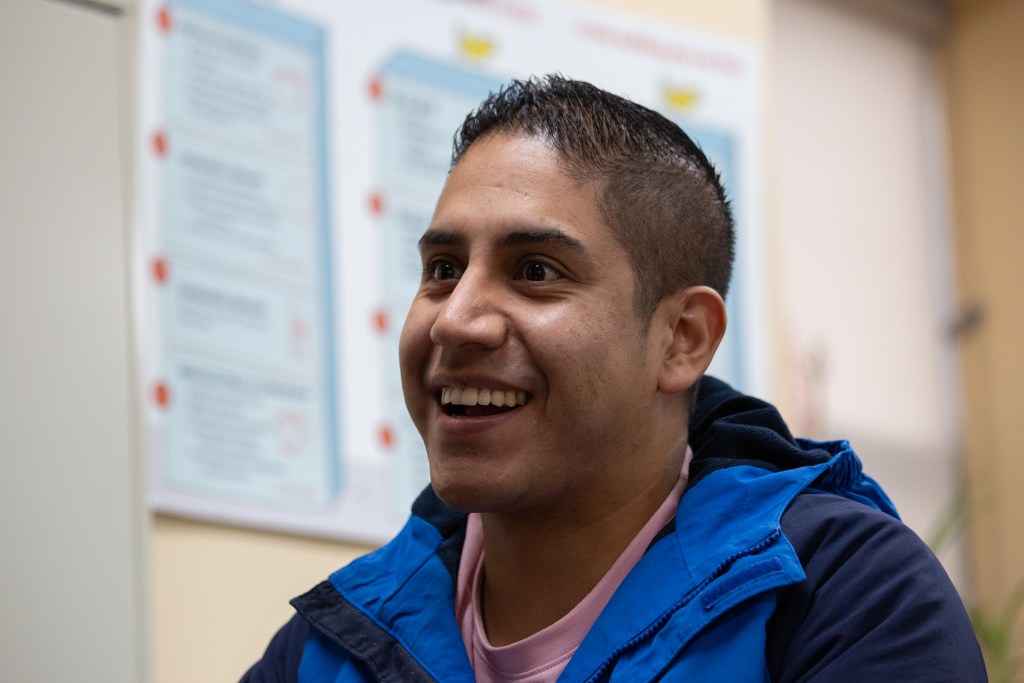
    Inside a classroom at the Center for Family Life in Sunset Park on a recent Monday morning, teacher Julian Colón was busy setting out notebooks, folders, pens and crayons on a table. Outside in the hallway, a sign taped to a wall reads “CLASES DE INGLÉS POR ESTE CAMINO” — English classes this way.

    It was the first day of the spring semester in this predominantly Latino corner of the Brooklyn neighborhood, where Colón was expecting about 30 students in class.

    Julian Colón teaches an English as a Second Language class at the Center for Family Life in Sunset Park, Brooklyn, April 7, 2025. (Ben Fractenberg/THE CITY)

    But not everyone who wanted a seat at the table was there. More than 400 students are now on the center’s waitlist, according to Maria Ferreira, its adult employment program director.

    “I sit right by the reception, and every single day we get inquiries about ESOL,” Ferreira told THE CITY, using the acronym for English for Speakers of Other Languages. “Every day we’re adding people to the waiting list.”

    Demand for English classes has increased with the influx of migrants that began in 2022, according to a new report by United Neighborhood Houses, which represents 46 settlement houses that help serve immigrant populations, even as City Hall has slashed funding.

    At Flatbush-based social services giant CAMBA, program manager Jude Pierre said more than 700 prospective students are now waiting to get into one of its 10 city-funded ESL classes, which collectively accommodate about 200 students.

    “With the migrant crisis…we ended up getting a lot of individuals coming here to register for classes to the point where we basically had to stop taking registrations,” Pierre told THE CITY. “We got to the point where it didn’t make any more sense to have thousands of people on a waiting list, knowing we would never get to most of them. We started saying, ‘Sorry, we can’t do this, because it’s not fair to you,’ and trying to refer them to other places.”

    Last year, the Department of Youth and Community Development reduced funding for literacy classes by nearly 30% to $11.9 million from $16.8 million, the report noted. Many long-time providers in areas where migrant shelters were clustered also lost out on DYCD dollars after the agency adjusted its funding eligibility formula,” as THE CITY previously reported.

    An immigrant student takes an English as a Second Language class at the Center for Family Life in Sunset Park, Brooklyn.
    An immigrant student takes an English as a Second Language class at the Center for Family Life in Sunset Park, Brooklyn, April 7, 2025. (Ben Fractenberg/THE CITY)

    According to the report, many classes now depend entirely on discretionary dollars from the City Council, which increased its funding to $16.5 million in fiscal year 2025 from roughly $6.5 million in recent years to back organizations DYCD left behind.

    Several providers, however, told THE CITY that compared to DYCD’s multi-year contracts, Council funding, which requires annual reconsideration, makes it difficult to plan ahead and maximize offerings.

    And for some, like CAMBA, Council funding was not enough to cover the losses from DYCD with the group reducing the number of students it serves by 174 and closing its waitlist, Pierre said.

    So far, providers say, demand among new arrivals has remained steady even as the Trump administration’s mass deportation efforts have led many new arrivals fearful of working or sending kids to school or even walking the streets.

    “Ideally, these programs would be supported by a robust, baselined program managed by DYCD that offered students and providers stability with year-over-year funding,” the report says. “However, until DYCD revisits its unnecessarily restrictive stance…it is crucial that the City Council continue this support to make sure that adult learners continue to have access to quality classes.”

    ‘I Understand People Now’

    While fewer than 3% of the 1.7 million immigrants in need of English classes are able to access it through city-funded programs, according to the report, students who were able to find their way into a class told THE CITY improved English has helped with their daily lives — and their job prospects.

    Currently, two-thirds of New Yorkers with limited English proficiency earn less than $25,000 a year, according to American Community Survey data cited in the report.

    Rosanie Andre, 42, came to New York City from Haiti in 2023, and said she started taking English classes at CAMBA last year after three months on a waitlist. Since then, she’s been able to get a job serving food at Speedway while also delivering packages for Amazon per diem.

    “When I did my interviews, you have to speak in English with the manager. And it helped me a lot because I understand people now,” Andre, a native Haitian Creole and French speaker, said in English.

    Learning English has also helped Andre communicate with her 6-year-old — who only started speaking after their move to New York City.

    “And she started to speak English — English only. She knows nothing in Creole,” Andre said. “I try to listen to my daughter and speak to her English-only.”

    With her English improving, Andre said she is better able to help her daughter with her homework.

    “I try to explain her how to do it in English,” Andre said. “If no CAMBA, I have difficulty to understand. Cuz when I come here, I don’t understand nothing. When people speak, I smile because I understand nothing.”

    Roodleir Victor, 29, saw English classes as an essential stepping stone in furthering his education. He had completed his college coursework for an economics degree in his native Haiti, he said, though he ultimately fell just short of obtaining a degree because it would have required him to stay in the country’s capital, which has been embroiled in political turmoil and gang violence. 

    He started taking English classes when he moved to the city in 2023, he said, in hopes of continuing his studies here. For four days a week, he attended English classes in Flatbush from 1 to 4 p.m. before heading to Long Island to work at a pasta factory on a 5 p.m. to 5 a.m. overnight shift.

    Victor is now enrolled in a GED class, he said, and hopes to study computer programming after that.

    “I would like to study at a university which I can learn technology. But it’s difficult for me, because I don’t have the support I need to go there,” Victor said in English. “But for me personally, I believe in my capacity to adapt.”

    ‘It’s Not Impossible’

    Back in Sunset Park, a 55 year-old asylum seeker was patiently waiting to enter the room half an hour before class started at 9 a.m.

    “I’m just eager to learn,” the native of Ecuador  said in Spanish. “It’s important because I want to communicate with others for a job.”

    The mother of five arrived in New York City three months ago, she said, after seeking asylum at the Mexico-California border then being detained there for three months. She’s cleaning homes to help make ends meet, but hopes to land a job with steadier income soon.

    “Whatever I can get I pick up, but those jobs come and go,” she said. “I was in a workforce development program but the curriculum was in English so I started looking for classes.”

    Oscar Lima rolled into English class with his e-scooter just after class started at 9:30 a.m. The 34-year-old is now in his second semester of classes, he said, which he makes time for in between catering gigs, food deliveries and a third job as a barback.

    Columbian immigrant Oscar Lima says learning English will help him work in the food service industry.
    Columbian immigrant Oscar Lima says learning English will help him work in the food service industry, April 7, 2025. (Ben Fractenberg/THE CITY)

    “My bosses told me, ‘You’re a good worker, but you need to learn English,’” Lima said. “And I decided that I didn’t want to learn English myself.”

    Lima and other students now settled into their seats, turning their attention to Colón.

    “Everybody, are we ready? Listos?” Colón asked.

    “Yes,” the class responded timidly.

    Students practice learning the names of colors at an English as a Second Language class in Sunset Park, Brooklyn.
    Students practice learning the names of colors at an English as a Second Language class in Sunset Park, Brooklyn, April 7, 2025. (Ben Fractenberg/THE CITY)

    Colón then began presenting ground rules on a digital whiteboard: Try to arrive within the five-minute grace period after the class start time, and come prepared with books, papers and pencils.

    “The most important rule,” Colón continued, before repeating himself in Spanish. “Please don’t be afraid to participate and make mistakes.”

    At break time, Lima shared how he, his wife and his two sons had arrived in the city from Colombia about three years ago. While the family had started off at a shelter, Lima said, they’re now able to afford an apartment of their own. His two kids — seven and ten years old — quiz him about names of objects around the house, he said, and often encourages him to learn English alongside with them.

    “New York, it poses many challenges. It’s difficult at the beginning, but it’s not impossible,” Lima said in Spanish. “My American Dream is my sons…I want my children to perhaps have what I didn’t have, but at the same time I want to show them how to earn it, and how to work like good people.”

    The story was originally published on THE CITY.


    Get stories like these delivered straight to your inbox. Sign up for The 74 Newsletter

    Source link

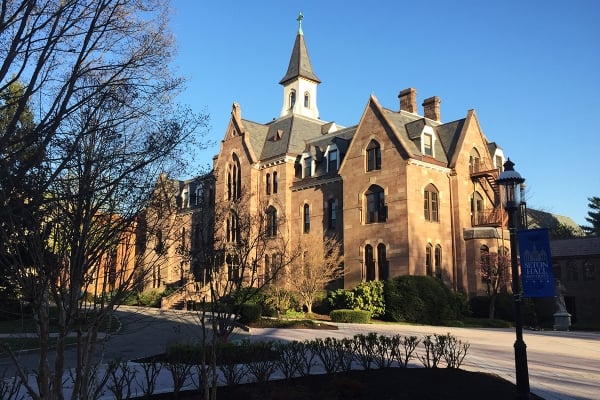
  • Seton Hall sues its former president

    Seton Hall sues its former president

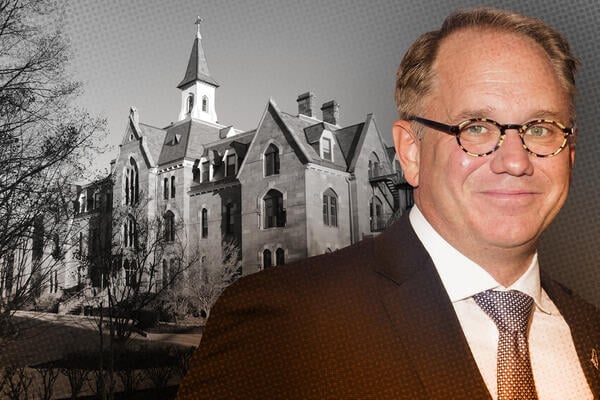
    A year after being sued by ex-president Joseph Nyre for alleged breach of contract and retaliation, among other claims, Seton Hall University has hit back with its own legal action against the former leader.

    In a lawsuit filed Wednesday in the Superior Court of New Jersey, the university accused Nyre of “illicitly accessing, downloading, maintaining, and later disseminating confidential and proprietary documents, as well as documents protected by the attorney-client and work product privileges, and information after his departure as President of the University.” Those documents led to critical reports about the university’s current president, Monsignor Joseph Reilly.

    Alongside Nyre, the lawsuit also names John Does 1–10, referring to them as “persons who are in possession of documents unlawfully maintained, retrieved, accessed, and/or downloaded.”

    In a statement to Inside Higher Ed, a Seton Hall spokesperson wrote that Wednesday’s filing “makes clear that confidential documents were utilized with sections selectively released, causing damage to the University and its leadership and painting a false narrative about Monsignor Reilly.” Reilly has been accused of failing to report allegations of sexual misconduct and thus violating the university’s Title IX policies.

    An attorney for Nyre blasted the lawsuit as a “cover-up” by Seton Hall.

    A Legal Clash

    Nyre led Seton Hall from 2019 to 2023, when he stepped down unexpectedly.

    The former president later sued Seton Hall, alleging he was pushed out by the Board of Regents amid conflict with then-chair Kevin Marino, whom Nyre accused of micromanagement, improperly involving himself in an embezzlement investigation at the law school and sexually harassing the president’s wife, Kelli Nyre, among other claims. Marino, who is no longer a board member, was not named as a defendant in Nyre’s lawsuit, and an investigation found no evidence of sexual harassment.

    While Seton Hall is defending itself against Nyre’s lawsuit, it also threw a legal counterpunch in suing the ex-president. The university alleges that its information technology team confirmed that Nyre had improperly accessed materials after his departure, and in doing so, he violated confidentiality provisions in his employment and separation agreement.

    Specifically, Nyre is accused of improperly downloading confidential documents that were later provided to Politico. Those files—some of which were also obtained by Inside Higher Ed—seemed to indicate Reilly, the current president, overlooked instances of sexual harassment while rector and dean of the university’s graduate seminary from 2012 to 2022.

    However, one of the leaked documents in question—a letter from a Board of Regents member to Reilly in February 2020 that said he had violated university Title IX policies through his inaction—was an unsent draft, university officials previously told Inside Higher Ed.

    Seton Hall officials said in the lawsuit that though the Politico reporter never disclosed who provided him with the documents, “it was clear that [Nyre], directly or indirectly, was responsible” for the leak of confidential information to the news outlet between December and February. Seton Hall accused Nyre of trying to “create a false impression about” Reilly, arguing he acted in “bad faith and malicious intent” by not disclosing that the February 2020 letter was never sent.

    The allegations against Reilly have prompted calls for transparency from state lawmakers and Democratic governor Phil Murphy, who called on the university to release an investigative report that allegedly cleared Reilly. Seton Hall has thus far declined to do so, citing the need to protect the confidentiality of participants who voluntarily cooperated with the investigation.

    The allegations against Reilly come as the university is only a few years removed from the sprawling sexual abuse scandal involving former cardinal Theodore McCarrick, who sat on both of Seton Hall’s governing boards. Investigators determined in a 2019 university report that McCarrick “created a culture of fear and intimidation” and “used his position of power as then–Archbishop of Newark”—which sponsors Seton Hall—“to sexually harass seminarians” for decades. (McCarrick was defrocked but avoided criminal charges due to a dementia diagnosis.)

    As part of the lawsuit, Seton Hall is seeking a temporary restraining order to stop Nyre from allegedly sharing more documents. University officials argued in court filings that Seton Hall stands to “suffer irreparable harm” from further leaks, which “cannot be adequately compensated” monetarily.

    “The nature of the harm is such that it affects the university’s ability to maintain the confidentiality of sensitive information, which is crucial for its operations and reputation,” filings read. “Moreover, to the extent that documents to which defendant has access are protected under [the Family Educational Rights and Privacy Act] or Title IX, the disclosure of such documents would directly implicate the right of students and their parents to control the disclose [sic] of such confidential educational records as well as the confidentiality rights of university employees.”

    Pushback

    In a statement to Inside Higher Ed, Nyre attorney Matthew Luber called the lawsuit “a desperate, retaliatory ploy designed to silence a whistleblower and distract from the university’s own corruption and misconduct.”

    Luber did not specifically address the allegations that Nyre had inappropriately leaked confidential documents but accused Seton Hall of ignoring red flags in hiring Reilly and overlooking Title IX infractions.

    “Let’s be clear: Dr. Nyre was not at Seton Hall when Monsignor Reilly engaged in misconduct, nor when the board knowingly violated its own policies and Title IX to install him as President,” Luber wrote. “But he was the one who warned university officials about Reilly’s disqualifying history during his presidential search—warnings that were deliberately ignored by board leadership. Instead of addressing their own failures, Seton Hall is now attempting to smear and intimidate Dr. Nyre.”

    As of publication, a judge has not set to a hearing to consider the request for a restraining order.

    Source link

  • Dual leadership controversies plague Seton Hall

    Dual leadership controversies plague Seton Hall

    Seton Hall University president Monsignor Joseph Reilly is facing mounting pressure from public officials and demands for transparency following a report alleging that he looked the other way on sexual abuse cases.

    At the same time, the university is contending with a lawsuit filed last year by former president Joseph Nyre, which alleges retaliation, breach of contract and various other misdeeds by the Board of Regents.

    The regents have remained silent on the Reilly situation and said little about Nyre’s lawsuit, beyond a report issued in July. Now lawmakers are ratcheting up pressure on the private institution to take action, raising questions about how the board is navigating the dual controversies behind closed doors with little public oversight.

    A Bombshell Report

    Reilly, who was hired as president in April, has a long history with Seton Hall.

    The new president earned a psychology degree from the university in 1987; in 2002, he became rector of the College Seminary at St. Andrew’s Hall, the undergraduate seminary of the Archdiocese of Newark, which is part of Seton Hall. A decade later Reilly became rector and dean of the university’s graduate seminary, a position he held until 2022. Then he took a yearlong sabbatical before returning as vice provost of academics and Catholic identity.

    Reilly also served on Seton Hall’s Board of Trustees—one of two governing bodies—during his time as an administrator.

    It was during his time at the graduate School of Theology that Reilly is accused of knowing about sexual abuse allegations that he did not report, according to documents reviewed by Politico. The case is linked to sprawling sexual abuse allegations involving disgraced cardinal Theodore McCarrick, the news outlet reported, who “created a culture of fear and intimidation” and “used his position of power as then–Archbishop of Newark”—which sponsors Seton Hall—“to sexually harass seminarians” for decades, according to a university report released in 2019.

    McCarrick, who sat on both of Seton Hall’s boards, was defrocked by the Vatican after he was found guilty of sexual misconduct in a canonical trial. A criminal case against McCarrick was suspended last year due to his inability to stand trial because of a dementia diagnosis.

    While Seton Hall never released to the public its full report on the abuse McCarrick allegedly committed, Politico’s review of the findings revealed that Reilly knew about the allegations against the cardinal and failed to report to university officials a student complaint about sexual assault by a seminarian. Politico also reported that Reilly dismissed another seminarian in 2012 who had allegedly been sexually abused and that he did not investigate the incident. In another instance, Reilly was allegedly made aware of a 2014 sexual harassment charge and did not report it.

    Politico also reported that Reilly did not fully cooperate with a 2019 investigation into McCarrick’s alleged abuse. A task force set up in 2020 to mete out discipline after the McCarrick scandal reportedly recommended removing Reilly from board and leadership roles.

    As the controversy has unfolded, Seton Hall has said little publicly.

    “As part of the search for the university’s 22nd president, the Board of Regents reviewed several candidates and overwhelmingly selected Monsignor Joseph Reilly to lead Seton Hall in recognition of his decades of effective service and leadership,” a Seton Hall spokesperson wrote in an email to Inside Higher Ed. “The Board of Regents remains unequivocal in its support of Monsignor Reilly and firmly believes in his ability and vision to enhance Seton Hall’s standing as one of the nation’s foremost Catholic universities.”

    The university did not provide a requested interview with regents, but the spokesperson added that following a 2019 review by a law firm, “the board determined that Monsignor Reilly should remain in his role and eligible for future roles at the University.” Seton Hall declined to provide a copy of the report.

    Demanding Answers

    Seton Hall’s silence has not gone unnoticed by Democratic state senator Andrew Zwecker, who chairs the Senate Oversight Committee and is vice chair of the higher education committee.

    “I’m appalled at the fact that they’ve just doubled down at this point without any transparency, just generic statements about values and doing a good job, et cetera,” he told Inside Higher Ed.

    Though Seton Hall is private, Zwecker noted that it receives about $2.5 million in state funding for certain programs. He added that the state could cut those funds—an option he might pursue if the university doesn’t respond transparently to concerns that Reilly ignored sexual abuse.

    “That is a lever that we must absolutely consider to keep the pressure on,” Zwecker said.

    He’s also weighing a public hearing. But Zwecker said he would rather see Seton Hall address the issue and answer questions about what Reilly knew about sexual abuse and whether the Board of Regents ignored those findings when it voted to hire him.

    If regents knew and “voted to install this president anyway, they should resign immediately,” Zwecker said.

    Democratic governor Phil Murphy also weighed in last week.

    “The Governor is deeply concerned by the allegations and believes that Seton Hall University must release the full report,” press secretary Natalie Hamilton told Inside Higher Ed by email.

    The Star-Ledger editorial board has challenged the university on its opacity, publishing an opinion piece on Monday under the headline “Why is Seton Hall hiding this sex abuse report?

    Faculty members at Seton Hall are also pressing for transparency.

    Nathaniel Knight, chair of Seton Hall’s Faculty Senate, noted “considerable concern” among the professoriate and said he wants to see a “greater degree of transparency” from the university.

    Knight said he supported Reilly’s hiring when he was named president, noting he “had the institutional memory” given his years of service and seemed to “embody the spirit of Seton Hall.” But now Knight wants the university to fully explain the concerns around the new president.

    “I support Monsignor Reilly. I supported his hiring. I think he’s a good man, a man of integrity and religious faith, and is someone who brought a promise of bringing the university, the community, together around its core values as a Catholic institution of higher education. Whatever is out there, I’d like to be able to weigh that against the positives that I see with Monsignor Reilly,” Knight said.

    An Explosive Lawsuit

    For Seton Hall, the Reilly controversy comes on the heels of Nyre’s unexpected exit in 2023, which shocked many in the community.

    “It was a surprise. I think we were bewildered. He had been brought in with great fanfare not long before,” Knight said. “He saw the university through the COVID years with a steady hand and was in the process of implementing this strategic plan that he had crafted. We saw no indication that there were any problems in the works. It was out of the blue and had us all scratching our heads.”

    Nyre sued Seton Hall last February, alleging breach of contract and retaliation by the board.

    In the lawsuit, Nyre alleges he was pushed out by the Board of Regents following a clash with then-chair Kevin Marino, whom he accused of micromanagement, improperly inserting himself into an embezzlement investigation at the law school and sexually harassing his wife, Kelli Nyre, among other charges. Marino, who is no longer on the board, was not named as a defendant in the lawsuit despite being at the center of many of the allegations.

    “Our litigation centers on the alleged systemic failures of the Board of Regents and their unwillingness to comply with federal laws, including Title IX, Title VII, and Title IV, as well as university bylaws and policies,” Matthew Luber, an attorney representing Nyre, said in a statement. “As alleged in the Complaint, the Defendants prioritized self-preservation, suppressing dissent and retaliating against individuals like Dr. Nyre who reported misconduct and advocated for meaningful change. As further alleged in the Complaint, the Board of Regents not only neglected their fiduciary responsibilities, but exposed the University and its personnel to significant risk. No matter the outcome, change is urgently needed at Seton Hall.”

    The university has pushed back in court. Officials filed a motion to dismiss last March, alleging that Nyre failed to state a claim and that the terms of his exit agreement barred him from filing a lawsuit against Seton Hall and/or its Board of Regents. Lawyers for Seton Hall wrote in a brief that Nyre’s lawsuit “can best be described as gamesmanship, and at worst sheer dishonesty.”

    University officials did not address the Nyre lawsuit in a statement to Inside Higher Ed, but last July they released a report from an outside law firm rejecting the claims against Marino. Attorneys for the firm, Perry Law, wrote that they “found no evidence to substantiate Mrs. Nyre’s allegations regarding Mr. Marino, despite the purported harassment allegedly occurring in public places in close proximity to numerous other individuals.”

    The Perry Law report was issued July 2, one day after Reilly assumed office. The report did not include interviews with the Nyres, who the authors noted did not participate in the investigation. Witnesses present for the alleged incidents told investigators that they did not see Marino engage in the behavior he is accused of, and the former board chair has denied the claims and blasted the lawsuit as “desperate and pathetic.” And, in a statement to Inside Higher Ed last year, Seton Hall said the claims were without merit.

    As controversies around Seton Hall’s current and former leaders play out, more details are likely to emerge in the Nyre case, barring a dismissal or settlement. But the Reilly review may remain shrouded in mystery as Seton Hall hunkers down, ignoring widespread calls for transparency.

    Source link