Tag: halts

  • Judge halts layoffs of federal employees — for now

    Judge halts layoffs of federal employees — for now

    This audio is auto-generated. Please let us know if you have feedback.

    On Wednesday, a federal judge ordered the Trump administration to immediately stop the mass firing of federal employees during the government shutdown. 

    The Trump administration cannot issue any additional reduction-in-force notices, and it cannot enforce the notices already issued, according to the ruling from Judge Susan Illston of the U.S. District Court for the Northern District of California. 

    The temporary block follows a Sept. 30 lawsuit filed by two unions — the American Federation of Government Employees and the American Federation of State, County and Municipal Employees — against the U.S. Office of Management and Budget for violating the law when OMB Director Russ Vought threatened a mass firing of federal workers during a shutdown. 

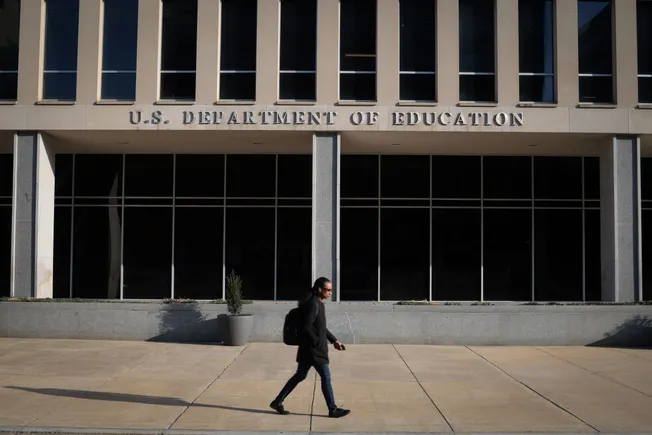
    For the second time this year, the Trump administration on Oct. 10 laid off a significant number of staff in the U.S. Department of Education, as part of President Donald Trump’s broader effort to abolish the agency. 

    The first round of RIF notices at the Education Department came in March, leading the agency to get entangled in multiple lawsuits that challenged the legality of those firings. 

    Before Trump took office on Jan. 20, the department had 4,133 employees. In March, that dwindled to 2,183. The number of staff then dipped further to an estimated 2,000 after the Oct. 10 firings, which also impacted other federal agencies nearly two weeks after a federal shutdown began after lawmakers failed to reach an agreement on the federal budget.   

    Meanwhile, U.S. Education Secretary Linda McMahon said in a X post on Wednesday that schools are operating as normal despite the government shutdown, which confirms that the U.S. Department of Education is “unnecessary.”

    “The Department has taken additional steps to better reach American students and families and root out the education bureaucracy that has burdened states and educators with unnecessary oversight,” McMahon wrote. “No education funding is impacted by the RIF, including funding for special education, and the clean CR [continuing resolution] supported by the Trump Administration will provide states and schools the funding they need to support all students.”

    Here’s a timeline of events leading up to the agency’s latest round of RIFs and the continued downsizing of the federal education footprint.

    • March 11, 2025

      The Education Department announced a massive reduction in force, with plans to slash nearly half of its workforce, impacting all divisions within the federal agency — some “requiring significant reorganization,” according to McMahon.

      The cuts, along with previously accepted employee “buyouts,” reduced the department’s headcount from 4,133 when Trump was inaugurated Jan. 20 to approximately 2,183 — affecting over 1,900 employees.

    • March 12, 2025

      As part of the Education Department’s mass downsizing of its staff, the agency also shuttered seven of its 12 civil rights enforcement offices. The seven closed offices of the Education Department’s Office for Civil Rights oversaw half of the nation’s states, impacting nearly 60,000 public schools and over 30 million K-12 students.

      The Trump administration also informed all seven Office of Educational Technology employees in an email that their positions and office were being “abolished” as the Education Department announced massive layoffs across the agency the day prior.

    • March 20, 2025

      President Donald Trump signed an executive order calling on McMahon to “take all necessary steps to facilitate the closure of the Department of Education,” marking the boldest push from the president to shut down the agency since its establishment under the Carter administration over four decades ago.
    • April 14, 2025

      A lawsuit was filed against the Trump administration over its significant downsizing of the Education Department’s Institute of Education Sciences in March. The lawsuit from the American Educational Research Association and the Society for Research on Educational Effectiveness said the layoffs made it impossible for IES to carry out education research.

      A similar lawsuit disputing the IES cuts was filed by the Association for Education Finance and Policy and the Institute for Higher Education Policy on April 4 in federal court.

    • April 17, 2025

      Despite massive layoffs that left the Education Department with a skeleton crew in charge of administering and analyzing the Nation’s Report Card, the agency said the assessment will continue as planned in 2026.
    • June 18, 2025

      A federal judge ordered the Education Department to reinstate all laid-off Office for Civil Rights employees for the time being, saying the layoffs and shuttering of seven regional offices had rendered the remaining staff “incapable of addressing the vast majority of OCR complaints.”
    • July 14, 2025

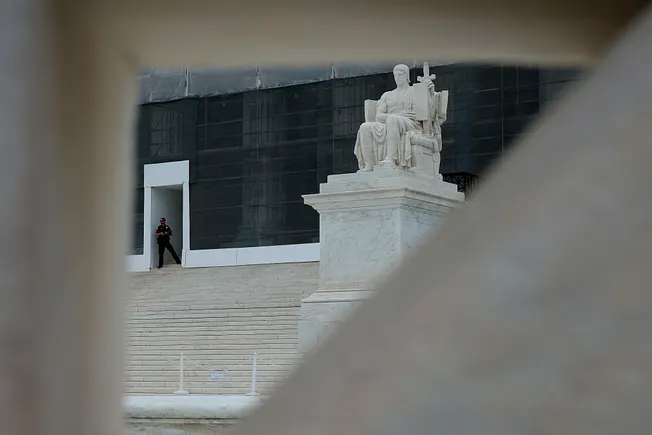
      The U.S. Supreme Court allows the Trump administration to carry on with its efforts to lay off nearly half the Education Department’s staff as lower courts weigh in on the layoffs’ legality in New York v. McMahon.
    • July 15, 2025

      Management of key federal workforce development programs began shifting from the Education Department to the U.S. Department of Labor under an interagency agreement signed in May, both agencies announced.
    • Aug. 19, 2025

      Following a federal judge’s order directing that the Education Department be restored to “the status quo,” the agency said it plans to bring back more than 260 Office for Civil Rights staff who were cut as part of the March reduction in force, and it will be returning groups of employees to the civil rights enforcement arm in waves every two weeks from Sept. 8 through Nov. 3.
    • Sept. 29, 2025

      The 1st U.S. Circuit Court of Appeals overturned a lower court’s order requiring the Education Department to restore the Office for Civil Rights to the “status quo,” which also allowed the department to move forward with plans to cut half of its OCR staff as litigation proceeds.
    • Oct. 1, 2025

      The federal government enters the first day of its shutdown as Congress remains at a funding impasse for fiscal year 2026. During the shutdown, the Education Department planned to furlough about 95% of its non-Federal Student Aid staff for the first week, according to a Sept. 28 memo from U.S. Education Secretary Linda McMahon.

      The Trump administration’s Office of Management and Budget issued a memo a week before that threatened mass firings of federal employees if a government shutdown occurs, according to a Sept. 30 lawsuit filed by labor unions against OMB.

    • Oct. 10, 2025

      The Trump administration issued reduction-in-force notices throughout the federal government, including at the Education Department where court filings show 466 Education Department employees were impacted by the layoffs. Most of the employees at the Office of Special Education Programs — where staffing had remained fairly stable — were laid off as part of the department’s second wave of RIF notices this year, according to several special education professional organizations.

      The latest RIFs also reached Education Department offices that oversee civil rights, student achievement supports, budgeting services, school safety, postsecondary education and more, according to the American Federation of Government Employees, a union representing more than 2,700 Education Department employees.

    • Oct. 15, 2025

      A federal judge ordered the Trump administration to cease any mass firings of federal employees initiated during the government shutdown. The temporary block came in response to a lawsuit filed by two federal employee unions against OMB over the office’s threats to initiate mass firings ahead of the Oct. 1 shutdown.

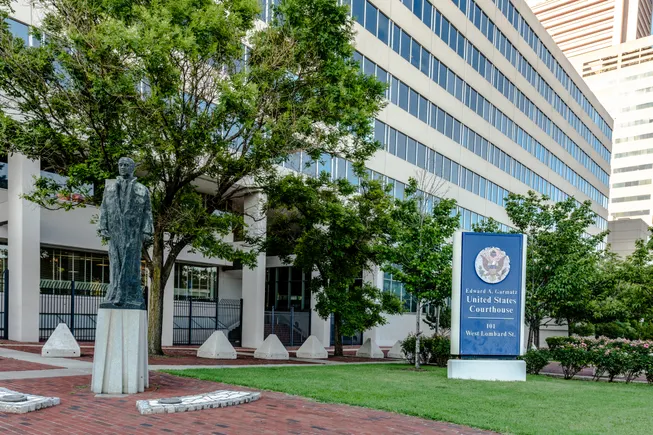
      Judge Susan Illston of the U.S. District Court for the Northern District of California said the administration’s issuance of reduction-in-force notices to over 4,000 employees throughout the federal government during the shutdown is illegal, exceeds the administration’s authority and is arbitrary and capricious.

    Source link

  • Judge Halts UT’s Comprehensive Ban on Student Speech

    Judge Halts UT’s Comprehensive Ban on Student Speech

    Jon Shapley/Houston Chronicle via Getty Images

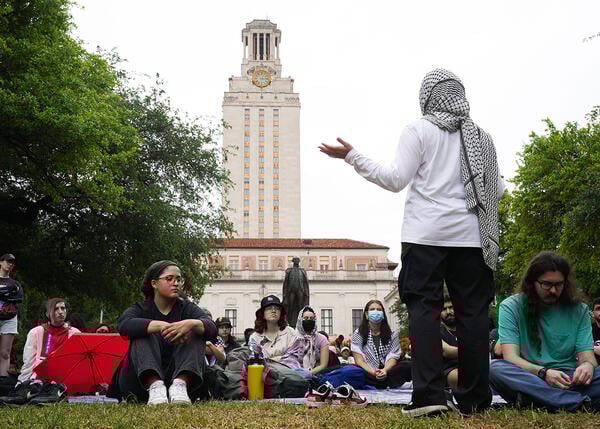
    A Texas district court judge on Tuesday ordered the University of Texas system to hold off on enforcing new, sweeping limits on student expression that would prohibit any “expressive activity” protected by the First Amendment between 10 p.m. and 8 a.m. 

    “The First Amendment does not have a bedtime of 10 p.m.,” wrote U.S. district court judge David Alan Ezra in his order granting the plaintiff’s request for a preliminary injunction. “Giving administrators discretion to decide what is prohibited ‘disruptive’ speech gives the school the ability to weaponize the policy against speech it disagrees with. As an example, the Overnight Expression Ban would, by its terms, prohibit a sunrise Easter service. While the university may not find this disruptive, the story may change if it’s a Muslim or Jewish sunrise ceremony. The songs and prayer of the Muslim and Jewish ceremonies, while entirely harmless, may be considered ‘disruptive’ by some.”

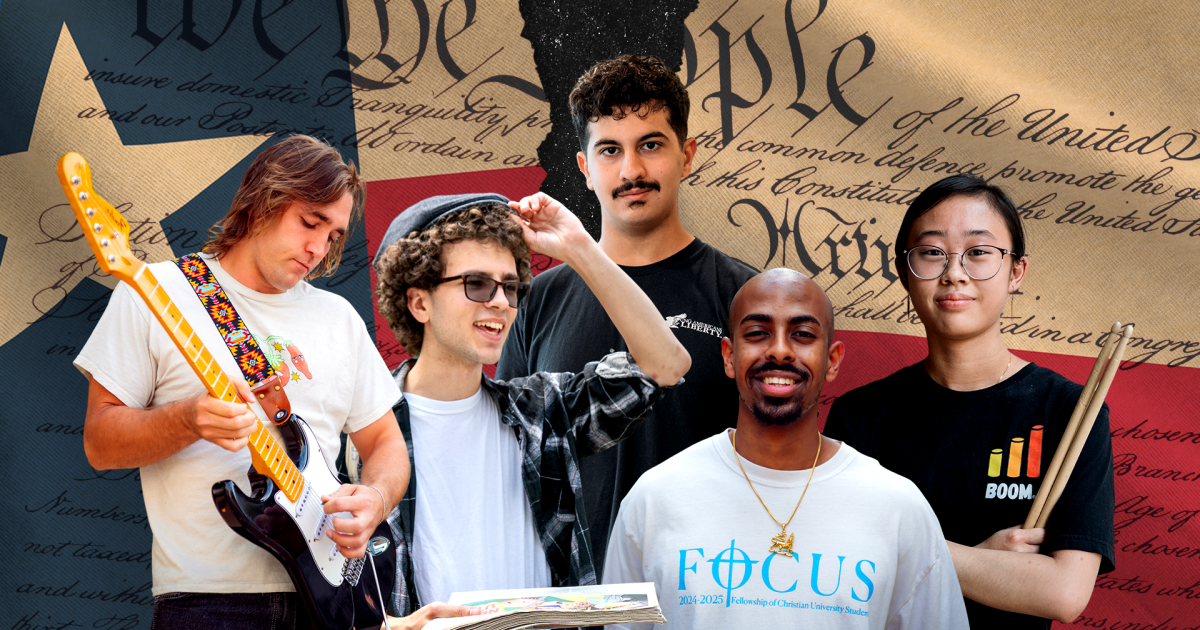
    A coalition of student groups—including the student-run Retrograde Newspaper, the Fellowship of Christian University Students at the University of Texas at Dallas and the student music group Strings Attached—sued to challenge the restrictions, which, in addition to prohibiting expression overnight, also sought to ban campus public speakers, the use of drums and amplified noise during the last two weeks of the semester. The restrictive policies align with Texas Senate Bill 2972, called the Campus Protection Act, which requires public universities to adopt restrictions on student speech and expression. The bill took effect on Sept. 1. 

    “Texas’ law is so overbroad that any public university student chatting in the dorms past 10 p.m. would have been in violation,” said Adam Steinbaugh, a senior attorney at the Foundation for Individual Rights and Expression, in a press release. “We’re thankful that the court stepped in and halted a speech ban that inevitably would’ve been weaponized to censor speech that administrators disagreed with.”

    Source link

  • VICTORY: Federal court halts Texas’ ‘no First Amendment after dark’ campus speech ban

    VICTORY: Federal court halts Texas’ ‘no First Amendment after dark’ campus speech ban

    AUSTIN, Texas, Oct. 14, 2025 — A federal judge today issued a preliminary injunction blocking the University of Texas System from enforcing a new Texas law that bans virtually all protected expression on public university campuses after dark.

    In his ruling, Judge David Alan Ezra of the U.S. District Court for the Western District of Texas found that students challenging the law on First Amendment grounds were likely to succeed on the merits, and blocked the law from going into effect while the case makes its way through the courts.

    “The First Amendment does not have a bedtime of 10:00 p.m.,” the District Court held. “The burden is on the government to prove that its actions are narrowly tailored to achieve a compelling governmental interest. It has not done so.”

    “Today’s ruling is a victory not only for our plaintiffs, but all of those who express themselves on college campuses across Texas,” said Foundation for Individual Rights and Expression senior supervising attorney JT Morris. “The First Amendment protects their freedom of speech on campus, every hour of the day, every week of the year.”

    Passed in the wake of several protests over the Israeli-Palestinian conflict, Senate Bill 2972 reversed Texas’s previously strong statute enshrining campus free speech protections into state law, and would have forced public universities to ban “expressive activities” from 10 p.m. to 8 a.m., which it defined as “any speech or expressive conduct protected by the First Amendment.”

    That’s a shockingly sweeping ban that would have empowered colleges to punish everything from wearing a T-shirt with a message, to writing an op-ed, to playing music — even worship. That’s an intolerable attack on freedom of speech at public universities, where First Amendment protections must remain indispensable. 

    “Texas’ law is so overbroad that any public university student chatting in the dorms past 10 p.m. would have been in violation,” said FIRE senior attorney Adam Steinbaugh. “We’re thankful that the court stepped in and halted a speech ban that inevitably would’ve been weaponized to censor speech that administrators disagreed with.”

    Another provision from Texas’ law required public universities to ban students from inviting outside speakers, or using amplified sound or percussive instruments during the last two weeks of any academic term. FIRE challenged those provisions on behalf of a diverse group of student groups and organizations who would be adversely affected if Texas’s law was allowed to go into effect on UT System campuses:

    • The Fellowship of Christian University Students (FOCUS) at UT-Dallas, a campus ministry group whose evening prayer gatherings and guest‑led services would be curtailed by the law’s nighttime ban on “expressive activities” and its ban on invited speakers.
    • The Retrograde, an independent student newspaper at UT-Dallas whose newsgathering, writing, and posting often occur after 10 p.m.
    • Young Americans for Liberty, an Austin-based, pro-liberty nonprofit with campus chapters throughout Texas that organize petitions, protests, and speaker events. (FIRE is also representing Zall Arvandi, a student member of YAL who attends UT-Austin).
    • Texas Society of Unconventional Drummers, a UT-Austin student percussion performance group known for their end‑of‑semester shows that would be barred by the law’s ban on percussion during finals week.
    • Strings Attached, a UT-Dallas student music group that stages public concerts — including in the final two weeks of term and sometimes using amplification.

    The Foundation for Individual Rights and Expression (FIRE) is a nonpartisan, nonprofit organization dedicated to defending and sustaining the individual rights of all Americans to free speech and free thought—the most essential qualities of liberty. FIRE recognizes that colleges and universities play a vital role in preserving free thought within a free society. To this end, we place a special emphasis on defending the individual rights of students and faculty members on our nation’s campuses, including freedom of speech, freedom of association, due process, legal equality, religious liberty, and sanctity of conscience.

    CONTACT:

    Alex Griswold, Communications Campaign Manager, FIRE: 215-717-3473; [email protected]

    Source link

  • ‘Wrong and deeply disappointing’: Supreme Court halts order restoring NIH grants

    ‘Wrong and deeply disappointing’: Supreme Court halts order restoring NIH grants

    This audio is auto-generated. Please let us know if you have feedback.

    Dive Brief:

    • The U.S. Supreme Court on Thursday dealt a blow to universities and other research institutions seeking to restore grants cut in mass by the National Institutes of Health.
    • Researchers, unions and associations sued NIH this spring after the agency abruptly terminated millions of dollars in grants for projects that dealt with diversity, equity and inclusion.
    • In a 5-4 decision, conservative justices on the Supreme Court paused a June order that would have restored $783 million in funding, ruling that the district court lacked jurisdiction to handle the grant restoration. However, the court declined to block the lower court’s order that deemed NIH’s guidance that led to the cuts illegal.

    Dive Insight:

    With the Supreme Court decision, those who have seen grant funding cut by NIH could face a longer, more complicated path through another federal court to have their awards restored.

    In their April complaint, plaintiffs accused NIH of “launching a reckless and illegal purge to stamp out NIH-funded research that addresses topics and populations that they disfavor.”

    They tallied 678 terminated projects resulting in $1.3 billion already spent by the government on projects “stopped midstream” being wasted, and another $1.1 billion that had yet to be spent.

    When U.S. District Judge William Young ruled against NIH in June, he blasted the agency for what he saw as discrimination, both racial and against LGBTQ+ communities, in its purge of research funding. 

    “Have we no shame,” said Young, a Reagan appointee, according to a report from The Associated Press

    Earlier this month, the watchdog agency U.S. Government Accountability Office also determined that NIH acted illegally in its DEI cuts. 

    The Supreme Court did not block Young’s ruling that NIH’s guidance that led to the agency cutting DEI research funding was illegal. That ruling is still being litigated in appellate court.

    Instead, the ruling majority determined that the U.S. Court of Federal Claims — which hears monetary claims against the federal government — is the venue for handling terminated grants. 

    Massachusetts Attorney General Andrea Campbell, who has been active in fighting the Trump administration’s various moves to cut federal research funding, blasted the Supreme Court’s ruling on Friday. 

    The Supreme Court’s decision is wrong and deeply disappointing,” Campbell said in a statement. “Even though the Court did not dispute that the Trump Administration’s decision to cut critical medical and public health research is illegal, they ordered the recipients of that fundinghospitals, researchers, and the stateto jump through more hoops to get it back.”

    The Supreme Court’s split decision brought internal dissent as well. In a minority opinion, Chief Justice John Roberts, who joined the court’s liberal justices, wrote that “if the District Court had jurisdiction to vacate the directives, it also had jurisdiction to vacate the ‘Resulting Grant Terminations.’”

    In a separate dissent, Justice Ketanji Brown Jackson rebuked the majority’s opinion. 

    By today’s order, an evenly divided Court neuters judicial review of grant terminations by sending plaintiffs on a likely futile, multivenue quest for complete relief,” she wrote, adding that the court “lobs this grenade” without considering Congress’ intent or the “profound” consequences of the ruling. 

    “Stated simply: With potentially life-saving scientific advancements on the line, the Court turns a nearly century-old statute aimed at remedying unreasoned agency decisionmaking into a gauntlet rather than a refuge,” Jackson said in the dissent.

    Clarification: This article has been updated to clarify the nature of the Supreme Court decision.


    Source link

  • Federal judge halts Education Department’s anti-DEI measures

    Federal judge halts Education Department’s anti-DEI measures

    This audio is auto-generated. Please let us know if you have feedback.

    A federal judge blocked two U.S. Department of Education actions attempting to restrict diversity, equity and inclusion in schools on Thursday. 

    The decision undoes a February “Dear Colleague” letter that threatened to withhold federal funding to schools that didn’t eliminate race-based programming, as well as a subsequent letter requiring school districts to certify that they do not incorporate DEI in their schools. 

    In her 76-page opinion, Judge Stephanie Gallagher of U.S. District Court for Maryland ruled that the administration violated decision-making procedures under the Administrative Procedure Act — a move that violated the constitutional rights of plaintiffs, who are led by the American Federation of Teachers. 

    Gallagher, a Trump-appointed judge, took no stance, however, on the content of the Education Department’s directives themselves. 

    “Still here, this Court takes no view as to whether the policies at issue in this case are good or bad, prudent or foolish, fair or unfair,” she said. “But, at this stage too, it must closely scrutinize whether the government went about creating and implementing them in the manner the law requires. Here, it did not.” 

    The administration’s anti-DEI measures were already on pause as a result of this court case and at least two other separate but similar federal court cases pending in Washington, D.C., and New Hampshire. Those cases also challenged the Education Department’s anti-DEI policy.

    As a result of previous court action pausing the measures, the department had already withdrawn its certification requirement. 

    However, in an email to chief state school officers in April retracting the certification requirement, the department said, “Please be advised that the Court Order does not preclude the U.S. Department of Education from initiating any enforcement actions that it may otherwise pursue under Title VI of the Civil Rights Act and its implementing regulations.” 

    Title VI bars discrimination based on race, color or national origin in federally funded programs — and has in the past been used especially to protect historically marginalized students from such bias. However, since President Donald Trump reentered the White House, the Education Department has invoked the civil rights statute to protect Asian and White students. The Trump administration’s anti-DEI efforts are a core part of that interpretation. 

    The Education Department echoed its earlier sentiments in a reaction to Thursday’s ruling. 

    “While the Department is disappointed in the judge’s ruling, judicial action enjoining or setting aside this guidance has not stopped our ability to enforce Title VI protections for students at an unprecedented level,” said the department in an email to K-12 Dive on Friday. “The Department remains committed to its responsibility to uphold students’ anti-discrimination protections under the law.”

    However, some public school educators and advocates say the measures would harm decades of equity work meant to level the playing field for Black and brown students. Moreover, the directives would create an environment of fear that impacts other underserved students such as students with disabilities, they say

     “Our district works hard to ensure that every student feels included through thoughtful curriculum and programs,” said Eugene School District 4J school board member Jenny Jonak in a statement on Thursday. The Oregon district was a plaintiff in the lawsuit that led to Thursday’s court decision. 

    “Teachers and schools must be able to provide inclusive, comprehensive education without fear of losing critical federal funding. We should never be forced to choose between supporting our students and securing the resources they need and deserve,” Jonak said.

    The Trump administration, in its court response to the lawsuit, argued that the certification requirement “fails to rise to the level of final agency action,” which would have required the formal rulemaking procedures that the department didn’t undergo. 

    Source link

  • Federal Funding Uncertainty Halts Construction Projects

    Federal Funding Uncertainty Halts Construction Projects

    Earlier this year the University of North Carolina at Chapel Hill Board of Trustees approved the design of a $228 million research facility that would expand UNC’s work on virology, vaccine development and other areas. But now that project is suddenly on hold.

    UNC Chapel Hill is one of several major research universities pausing construction plans due to financial uncertainty provoked by the Trump administration’s efforts to cap federal research funding reimbursement rates.

    In recent months multiple federal agencies have announced plans to cap research reimbursement rates at 15 percent. (While such rates typically hover just under 30 percent, some institutions have negotiated reimbursement rates upward of 50 percent.) Though court challenges have halted the rate cuts for now, the uncertainty has prompted some institutions to pause certain construction projects—particularly research labs and related facilities.

    Institutions pausing or slowing plans to build new projects include some of the nation’s wealthiest private universities: Yale, Johns Hopkins and Washington U in St. Louis, which posted endowments of $41.4 billion, $13 billion and $11.9 billion, respectively, in the last fiscal year, according to a recent study of endowments. (UNC Chapel Hill is among the nation’s wealthiest public institutions, with a $5.7 billion endowment.)

    In some cases, construction on other facilities, like a new residence hall at UNC Chapel Hill, is moving forward while projects such as research labs have been halted.

    Projects on Hold

    Yale has paused construction on 10 planned projects, according to The New Haven Register.

    “We’re riding out a bad period,” Alexandra Daum, Yale’s associate vice president for New Haven affairs and university properties, said at a local Chamber of Commerce event earlier this month.

    One of those projects is the planned conversion of a street into a pedestrian and cyclist-only plaza, which officials decided in February to delay, Daum told The New Haven Independent, another local news outlet. Yale has not identified the other nine projects it plans to put off.

    Daum pointed to uncertainty about federal funding as the reason for the pause.

    “Like many, Yale is tracking federal funding closely and anticipating there will be impact to projects in the planning pipeline,” Daum wrote in an email to Inside Higher Ed. “We don’t know how much of an impact federal decisions will have on these projects, so we are being prudent.”

    Construction on projects already underway will reportedly continue.

    Johns Hopkins University announced a similar decision in early June. Administrators wrote in a message to campus that the university has experienced “a steady stream of research grant terminations, suspensions, and delays” that created uncertainty, particularly when coupled with the proposals for lower research reimbursement rates. The rate caps could deal the university a loss of more than $300 million a year in federal research funding, officials wrote.

    JHU is taking a number of measures to handle budget concerns, including a staff hiring freeze, as well as pulling back on planned construction projects.

    “Prudence dictates cutting back our ambitions in the near term, and we have decided to reduce our capital construction and renovation plans by approximately 10-20%,” officials wrote. “Final decisions on these reductions will be made over the summer in consultation with the divisions, with an emphasis on continuing mission-critical projects, essential deferred maintenance, and projects that are already far along in the permitting, demolition, and construction process.”

    JHU did not identify what specific projects might be pushed back.

    Washington University halted construction of a new arts and sciences building in April; work was expected to begin earlier this year, according to a news release from last fall.

    WashU officials also cited federal funding concerns.

    “We regret that it’s necessary to take these actions, but in our current climate, it is simply not prudent to continue with these projects as scheduled,” Chancellor Andrew D. Martin said in a news release. “We are always careful stewards of the university’s resources, but at this time, given the uncertainty around federal research funding and other potential government actions, we have to take a careful look at every aspect of our operations. We hope that once we have a clearer sense of the financial picture, we may be able to revisit some of these investments.”

    UNC Chapel Hill offered similar reasons for halting construction on the research lab.

    “Due to ongoing uncertainty surrounding federal research funding, the University has paused plans for the Translational Research Building. We are currently evaluating our research infrastructure, including our research facilities, and will continue to monitor funding trends. Scenario planning is underway to help us remain prepared for future opportunities,” a UNC Chapel Hill spokesperson told Inside Higher Ed in an emailed statement.

    However, the university is moving forward with some projects, including a $93 million residence hall.

    In neighboring Virginia, Republican governor Glenn Youngkin rejected $600 million in funding requests for 10 planned renovation and expansion projects at public universities last month, The Virginia Mercury reported. In a letter to state legislators, Youngkin cited economic uncertainty.

    “I am optimistic about Virginia’s longer-term prospects for Fiscal Year 2027 and Fiscal Year 2028, and beyond, but there are some short-term risks as President Trump resets both fiscal spending in Washington and trade policies that require us to be prudent and not spend all of the projected surplus before we bank it,” Youngkin wrote to state lawmakers in May.

    Some of those planned projects were research-oriented, though many were not.

    The Outlook

    While a few universities have publicly walked back big projects, that doesn’t appear to be happening en masse, experts say. Planned construction is still happening at many colleges.

    “Projects, generally, are moving ahead. There are some larger projects that have been paused. The ones that have been stopped tend to be research-focused projects,” said Chris Purdy, director of higher education at SmithGroup, a design and planning firm that works in the sector.

    Other buildings, particularly those that are student-focused or in high-growth areas such as health sciences and STEM, are also moving ahead, he noted. Purdy pointed out that research labs and related facilities are often highly specialized and therefore the most expensive to build.

    “They’re primed to be under the most scrutiny just because they’re very expensive buildings,” Purdy said.

    He noted that SmithGroup continues to see requests for proposals for campus construction and is optimistic that colleges won’t back off of planned projects throughout the rest of the year. But looking ahead to next summer, or fiscal year 2027, Purdy is less sure about where things will stand, noting the looming economic uncertainty for many institutions.

    “At that point they’re going to have a different outlook on funding for capital projects,” Purdy said.

    Source link

  • Judge halts ban on international enrolments at Harvard

    Judge halts ban on international enrolments at Harvard

    In the latest move in the government’s dramatic feud with the US’s oldest university – and a major victory for international education sector – district judge Allison Burroughs issued a temporary restraining order yesterday, halting the directive stripping Harvard of its eligibility to enrol students from overseas.

    It follows the institution’s swift decision to mount a legal challenge against the administration’s demands that it hand over all disciplinary records for international students from the last five years if it wanted to regain its SEVP status.

    In its lawsuit, Harvard said: “With the stroke of a pen, the government has sought to erase a quarter of Harvard’s student body, international students who contribute significantly to the University and its mission.” The next hearing in the case will be held in Boston on May 29.

    If it comes to pass, the ban on international student enrolments would significantly harm Harvard’s financial situation – with last year’s 6,793 overseas students making up a sizeable 27% of the student body.

    With the stroke of a pen, the government has sought to erase a quarter of Harvard’s student body, international students who contribute significantly to the University and its mission
    Harvard University

    Orders from the Trump administration would not only prevent Harvard from enrolling any F-1 or J-1 students for the 2025/26 academic year, but also force current international students to transfer to another university if they want to stay in the country. 

    The move cause widespread panic among international students – especially given that some are set to graduate in just one week.

    Students told The PIE News that they were worried about what was happening, but trusted Harvard to “have our backs”.

    The institution’s row with Harvard stems from the stand it took – one of the only US institutions to do so – against the administrations raft of demands, including that it reform its admissions and hiring practices to combat antisemitism on campus, end DEI initiatives and hand over reports on international students.

    When the institution refused to do so, the government froze $2.2 billion in the university’s funding, threatened to revoke its tax-exempt status, and demanded international students’ records if it didn’t want to lose its SEVP certification. 

    Although Harvard did send over some student information on April 30, and maintained that it had provided the information it was legally bound to supply, this seems to have been insufficient for the Trump administration.

    In US homeland security secretary Kristi Noem’s letter to Harvard, she said: “This action should not surprise you and is the unfortunate result of Harvard’s failure to comply with simple reporting requirements”.  

    Source link

  • Preliminary Injunction Halts Dismantling of the Department of Education (Todd Wolfson, AAUP)

    Preliminary Injunction Halts Dismantling of the Department of Education (Todd Wolfson, AAUP)

    We got great news yesterday: In a suit we brought with Democracy Forward, the AFT, and other allies in the labor movement, a district court in Massachusetts issued a preliminary injunction halting the Trump administration’s unlawful effort to dismantle the Department of Education. 

    The massive reduction in force proposed by the administration would decimate crucial services the department provides to families across the country, severely limit access to education, and eviscerate funding for HBCUs and tribal colleges.

    We can’t do this work without your support. Will you become a member or make a donation to the AAUP Foundation today?

    Here’s some background on the case. In March, after having repeatedly expressed a desire to eliminate the Department of Education, the Trump administration announced a reduction in force that would cut its staff in half. Recognizing that the department was created by an act of Congress and was mandated to carry out a number of statutorily required programs, the administration claimed that it was not trying to eliminate the department but rather was seeking to improve “efficiency” and “accountability.”

    The court definitively rejected this claim, saying that the “defendants’ true intention is to effectively dismantle the Department without an authorizing statute. . . . A department without enough employees to perform statutorily mandated functions is not a department at all. This court cannot be asked to cover its eyes while the Department’s employees are continuously fired and units are transferred out until the Department becomes a shell of itself.”

    The court also highlighted the impact of the cuts on students, educational institutions, and unions. For example, the court found that “higher education is also likely to become more expensive for students” as the staffing cuts “will put federal funding for Pell grants, work-study programs and subsidized loans at risk, reducing the pool of students able to attend college and posing an existential threat to many state university systems such as those intended to serve first generation college students.”

    The court found that the administration had violated two clauses of the US Constitution, and that its actions were beyond its authority as well as arbitrary and capricious. Therefore, the court issued a preliminary injunction requiring the department to reinstate staff and resume operations disrupted by the cuts.

    Perhaps because of skepticism about the administration’s willingness to follow directives of the judiciary, the court specifically required that the administration provide notice of this order of preliminary injunction within twenty-four hours to all its officers, and that it “file a status report with this Court within 72 hours of the entry of this Order, describing all steps the Agency Defendants have taken to comply with this Order, and every week thereafter until the Department is restored to the status quo prior to January 20, 2025.”

    What’s next: It is almost certain that the administration will appeal this decision and will likely seek to have the preliminary injunction stayed by the court of appeals while the case is pending.

    Trump’s agenda is a clear path to setting America back in quality and fairness in education. The AAUP will continue to stand up against these attacks and fight for a higher education system that serves all Americans. We can’t do it without you.

    Please join us as a member or make a donation today!

    In solidarity,
    Todd Wolfson, AAUP President
    Veena Dubal, AAUP General Counsel

    Source link

  • OCR halts investigations, switches focus to Trump priorities

    OCR halts investigations, switches focus to Trump priorities

    The U.S. Department of Education’s Office for Civil Rights has paused the majority of its investigations, according to a new report from ProPublica, and shifted focus to new cases related to gender-neutral bathrooms, trans women athletes and alleged antisemitism and discrimination against white students.

    Those cases, in contrast with most historically taken on by OCR, were not launched in response to student complaints, but rather as a result of direct orders from President Donald Trump’s administration. OCR employees told ProPublica that they have been instructed to cancel meetings related to cases opened prior to Trump taking office and to avoid communicating with students, families and institutions involved in those cases.

    One OCR employee who spoke to ProPublica under the condition of anonymity said many of the cases they have been asked to stop investigating are urgent.

    “Many of these students are in crisis,” the employee said. “They are counting on some kind of intervention to get that student back in school and graduate or get accommodations.”

    About 12,000 complaints were under investigation at the end of former president Joe Biden’s term, including 6,000 related to discrimination against students with disabilities, 3,200 related to racial discrimination and 1,000 related to sexual assault or harassment, ProPublica’s analysis of OCR data found.

    Source link

  • Scientists worried after Trump halts NIH grant reviews

    Scientists worried after Trump halts NIH grant reviews

    Orders to freeze travel, meetings, communications and hiring at the National Institutes of Health—and all other agencies within the Department of Health and Human Services—has some federally funded researchers on edge just days into President Donald Trump’s second term.

    Scholars say they’ve received emails canceling key meetings that determine which research projects to fund and they’re worried about how those and other disruptions could stall the billions of dollars in NIH-funded projects universities oversee.

    “I suspect that folks outside the sciences don’t understand just how disruptive even a short delay in funding decisions can be,” Adam Forte, an associate professor of geology at Louisiana State University who runs his own lab, posted on BlueSky Thursday alongside numerous other concerned scholars. “This is how we lose huge amounts of scientific capacity, scientific capacity we as a collective have already invested huge amounts of time and money in, just lighting it on fire to watch the flames.”

    If they leave, it’s not like there is much chance they’re coming back to that, or a similar position. That expertise is just gone as they are forced to move onto something else to pay the bills. A spectacular waste from a “short” delay in the machinery that funds science. 5/6

    Adam Forte (@topoismyforte.bsky.social) 2025-01-23T12:23:24.069Z

    Some research policy experts say a pause is typical for the initial days of a new administration and that it’s too soon to tell whether this week’s order is a cause for concern. Others, however, are interpreting it as part of a larger message from Trump, who has repeatedly undermined scientific findings about COVID-19 and climate change and nominated Robert F. Kennedy Jr., who falsely claims there are no safe or effective vaccines, to lead the HHS.

    While Kennedy, who previously vowed to enact mass layoffs at the NIH, and Trump’s other cabinet nominees await Senate confirmation, Trump has already issued a blitz of executive orders—including some that roll back diversity and environmental justice initiatives, as well as protections for federal workers and immigrants—since retaking the White House Monday. (In addition to those in HHS, all federal agencies are also under a hiring freeze.)

    “It’s not unheard-of to see some things paused when a new administration takes over, but when we look at the whole package of language and executive orders that have come out this week, they’re all tied up together,” said Jennifer Jones, director of the Center for Science and Democracy at the Union of Concerned Scientists. “The goal is to intimidate, chill and create this exact sort of fear.”

    A Communications Freeze

    That fear for NIH-affiliated researchers came after Dorothy Fink, acting secretary of HHS, sent a memo Tuesday to all HHS division heads, including the directors of the NIH, the Centers for Disease Control and Prevention, and the Food and Drug Administration.

    “As the new administration considers its plan for managing the federal policy and public communications processes, it is important that the President’s appointees and designees have the opportunity to review and approve any regulations, guidance, documents, and other public documents and communications (including social media),” explained the memo, which instructed agency employees to refrain from numerous forms of communications, including issuing grant award announcements and public speaking, until a presidential appointee can review them. The memo is in effect until Feb. 1.

    An NIH spokesperson clarified to Inside Higher Ed via email that the restrictions apply to communication “not directly related to emergencies or critical to preserving health,” and that any “exceptions for announcements that HHS divisions believe are mission critical” will be made “on a case-by-case basis.”

    On Wednesday, Glenda Conroy, a senior travel official for NIH, emailed NIH employees notifying them that all sponsored travel for HHS employees is also suspended until further notice.

    Disruptions to Research

    As of right now, all these restrictions mean that scheduled meetings have been canceled or postponed, including NIH study sections, which convene scientific experts to decide which projects to fund.

    And university-affiliated researchers make up a sizable portion of the grant application pool. The $44 billion NIH is the largest federal research funding source for colleges and universities, which receive billions in NIH grants each year to support medical and other scientific research projects, including those that have advanced treatments for common diseases such as cancer and Alzheimer’s.

    Chrystal Starbird, an assistant professor of biology and a cancer researcher at the University of North Carolina at Chapel Hill’s School of Medicine, had been planning for months to attend a study section next week where nearly 60 grants were set to be reviewed, but she got word a couple of days ago that it was canceled.

    “Ultimately, the NIH will continue to function, so maybe it’s not a huge issue, but for the people being reviewed now it is,” she said. “None of those grants will be reviewed on time. The question is: How are they going to get all of us together again to review the grant?”

    And rescheduling the study sections for weeks or months after the communication restrictions lift may disrupt certain ongoing projects.

    “Some people may be using this funding to do research that may have more time pressure,” Starbird said, noting that clinical research typically adheres to strict patient-monitoring timelines. “We have to acknowledge that there’s already a significant impact from this pause.”

    ‘Too Soon to Assume’ Worst-Case Scenario?

    Carrie Wolinetz, a science and health policy consultant who worked for the NIH between 2015 and 2023, said in an email that the communications freeze is similar to memos from previous transitions. Although she acknowledged that pausing study section meetings seems broader than previous transitions, it doesn’t strike her “as tremendously outside the norm of activities that might be paused while a new team is transitioning.”

    And though it’s understandable that all of these restrictions are “causing anxiety,” she said it’s “too soon to assume that worst case scenario.”

    “It becomes a concern if there is a long cessation of activity, of the sort you might experience if there was an extended government shutdown,” she said. “There is likely to be minimal impact in the short term—other than for folks who hopped on flights only to discover their meeting was cancelled, which I imagine was pretty irritating.”

    But others caution that having such restrictions in place for even a short time could force people out of their jobs, create a talent void and potentially stall innovation.

    “Even if this is short-lived bumpiness, the uncertainty in funding can have career-altering implications, especially for young scientists,” Erica Goldman, a former academic and director of policy entrepreneurship for the Federation of American Scientists, said in an email.

    “If conferences or travel are canceled, for example, the inability to present new ideas and network with senior colleagues can have cascading effects,” she continued. “I’m reminded of the experiments, data, and professionals who left the field during COVID-19. Even temporary pauses can have lasting consequences.”

    Source link