Immigration and Customs Enforcement is detaining a Harvard Medical School research associate who’s a Russian native. One of Kseniia Petrova’s lawyers says the government is trying to deport her to Russia, where she faces possible arrest due to her “prior political activism and outspoken opposition to Russia’s invasion of Ukraine.”
Gregory Romanovsky, the lawyer, said in a statement that Petrova was trying to re-enter the U.S. on Feb. 16 at Boston’s Logan International Airport when a Customs and Border Protection officer discovered she “had not completed the required customs paperwork for a non-hazardous scientific sample she was bringing from an affiliated laboratory in France.”
“CBP was authorized to seize the item and issue a fine,” Romanovsky wrote. “Instead, they chose to cancel Ms. Petrova’s visa and detain her.”
Petrova remains in ICE custody in Louisiana. The Boston Globereported earlier on her detention.
Romanovsky wrote that “CBP improperly invoked their extensive immigration authority to impose a punishment grossly disproportionate to the situation. This overreach reflects broader concerns about the treatment of international scholars by U.S. immigration authorities.”
A spokesperson for the Department of Homeland Security, which includes ICE, told Inside Higher Ed in an email that Petrova was “detained after lying to federal officers about carrying biological substances into the country. A subsequent K9 inspection uncovered undeclared petri dishes, containers of unknown substances, and loose vials of embryonic frog cells, all without proper permits. Messages found on her phone revealed she planned to smuggle the materials through customs without declaring them. She knowingly broke the law and took deliberate steps to evade it.”
Harvard spokespeople didn’t provide an interview Friday about the situation or answer multiple emailed questions. In a brief email, the medical school’s media relations arm said, “We are monitoring this situation.”
Romanovsky has sued to restore Petrova’s visa.
“Ms. Petrova’s 1.5-month-long detention has caused significant disruption to both her professional and personal life,” Romanovsky said in his statement. “As a dedicated and highly respected researcher, her work is critical to scientific progress. We strongly urge ICE to release Ms. Petrova while her legal proceedings are ongoing.”
Since its founding in 1836, the Harvard Alumni Association (HAA) has sought to “renew that interest in Harvard’s welfare and glory which separation and absence have hitherto caused too long and lamentably to slumber.”
Today, as Harvard faces mounting challenges to its foundational commitment to Veritas(Truth) — steadily being replaced, it seems, by Pontius Pilate’s cynical sneer: Quid est veritas? (What is truth?) — a renewed interest among alumni in their alma mater’s “welfare and glory” is more vital than ever.
And the upcoming HAA Board elections offer Harvard alumni the perfect place to start. The task is to elect leaders who will champion free expression, viewpoint diversity, civil discourse, and academic freedom — the very tools that make the pursuit of Veritas possible.
Among the candidates seeking an elected director position, Allison Pillinger Choi, A.B. 2006, stands out with a compelling vision. Under the banner of “Building Balance,” Choi is campaigning for a Harvard where “all truth-seeking ideas — whether conservative, liberal, or otherwise — are heard, valued, and respected.”
Choi’s life story exemplifies the very balance she aims to promote. Born and raised in South Florida to a Korean immigrant mother and a third-generation Jewish American father, she mastered the art of equilibrium early on. This instinct for poise carried her through Harvard, where she balanced an economics degree, Division I varsity tennis, editorship on The Crimson’s business board, and shifts at various Cambridge eateries.
Allison Pillinger Choi with her husband, Brian, and two children in the Dunster House library at Harvard.
After a successful postgraduate career in finance and fitness — balancing checkbooks and barbells — she now lives in New York with her husband and two children while serving on local nonprofit boards dedicated to the arts, civics, and the environment. Most notably, she is the co-founder of Experiment in Dialogue, an initiative promoting conversations across ideological divides.
FIRE recently sat down with Choi to discuss her campaign for the HAA Board, her thoughts on free expression at Harvard, and how she envisions bringing balance to her alma mater. Below is our conversation, edited for readability.
How has your experience at Harvard, both as a student and alum, shaped your views on free expression and intellectual diversity?
As an undergraduate, I sensed unspoken limits on which political views were acceptable. In one instance, I remember taking a class on labor markets where the professor made it clear how he felt about unions. While I respected his research and affable style of teaching, as the daughter of a union worker, I knew the issue was more complex.
My father had explained to me and my brother that while unions can be a force for good, they also have downsides. I knew there was more to the argument than was offered in class, but I didn’t want to cross that invisible line — so I often just stayed quiet, went along with the prevailing view, and answered questions accordingly.
That experience stayed with me. Over the years, as an alum, I’ve heard even more troubling stories — students and faculty feeling pressured to hide their beliefs or adjust how they talk about certain issues to avoid backlash. It made me realize that maybe I was part of the problem by staying silent.
Now, I want to be part of the solution — not only by encouraging people to speak up but also by helping others see that viewpoint diversity is essential for genuine intellectual growth.
Your campaign focuses on “Bringing Balance.” Can you explain what that means and why you think it’s important right now, especially at Harvard?
The theme of my campaign, “Building Balance,” carries several layers of meaning. For one, it’s about fostering a diversity of viewpoints. This doesn’t mean insisting on a strict 50/50 split or symmetrical representation. Rather, it’s about broadening the spectrum of perspectives and opinions. It ensures that a wide range of voices are present. This approach helps prevent institutions from falling into the trap of echo chambers, where only reinforcing viewpoints are heard and where growth is limited.
“Building Balance” also refers to finding stability. Many higher education institutions today are navigating heightened tensions. I believe that embracing viewpoint diversity — by welcoming advocates from various personal and political backgrounds — can contribute to a healthier, more stable environment where all sincere, truth-seeking perspectives are respected and considered.
Finally, “Building Balance” is about recognizing and strengthening the extraordinary elements present at Harvard. It’s not about dismantling, it’s about building upon a strong foundation. I believe that viewpoint diversity, civil discourse, and academic freedom are the foundational elements of our university community, and integral to continued success.
What role do you see alumni playing in promoting free expression and viewpoint diversity at Harvard?
Alumni have numerous ways to contribute to the promotion of free expression and viewpoint diversity at Harvard. One of the most simple and effective actions is to just show up. Attend HAA events and broader Harvard community gatherings that highlight heterodox thinkers and speakers. And why not invite an alumni friend along? Extra credit if that friend brings a different political perspective!
The HAA is always looking for new ways to engage alumni and increase participation. With the growing number of initiatives supporting the classical liberal values of freedom and expression at Harvard, our community has more opportunities for anyone eager to champion viewpoint diversity. As an HAA elected director, I would support and expand these initiatives.
One of the unique — and often overlooked — aspects of being a viewpoint diversity advocate is that there’s no requirement to hold any particular opinion. All that’s needed is curiosity. However, if a viewpoint diversity advocate does have strong convictions, that’s perfectly fine, too. The key is to approach differing views with humility and charity. With these qualities, every alumnus is capable of both promoting and exercising free expression and viewpoint diversity.
Indeed, it’s an “exercise.” As Harvard professor Eric Beerbohm, head of the university’s new Civil Discourse Initiative, aptly puts it, “The ability to engage in empathetic disagreement is like a muscle — it grows stronger with deliberate practice. These kinds of scenarios, where participants are challenged to consider new perspectives and make tough decisions, provide exactly that kind of exercise.”
How can the HAA better engage alumni who feel disconnected or frustrated with the current campus climate?
As an elected director, I would love to help the HAA deepen alumni engagement and re-engage those who feel disconnected or frustrated. One effective approach is to expand the variety of event themes, particularly by hosting panel discussions that feature diverse viewpoints on a range of important topics.
While the panelists would be experts in their fields, each would offer a unique perspective and set of beliefs. The common thread among them would be their shared commitment to open inquiry and civil discourse.
These events could be modeled after the spirit of professor Michael Sandel’s renowned undergraduate course, “Justice,” one of Harvard’s most popular classes. In Sandel’s lectures, he regularly invited professors with opposing viewpoints to debate controversial topics, with the goal of seeking truth. Professors like Sandel understand that complex issues rarely have clear-cut answers.
It is only through the rigorous process of challenging and questioning that we improve our understanding, move closer to truth, and expand our communities. Alumni groups could carry forward Sandel’s legacy of viewpoint diversity by hosting events where renowned thinkers debate significant topics, fostering a space for respectful and productive dialogue among heterodox thinkers and doers.
If elected, what would success look like for you at the end of your term as an elected director?
If elected, success at the end of my three-year term would mean accomplishing at least two key goals. The first would be seeing more HAA volunteers actively contributing to viewpoint diversity initiatives within their areas of interest. With roughly 200 Harvard clubs and 60 shared interest groups covering a range of professional fields, academic disciplines, and personal identity backgrounds, there is so much opportunity to foster diverse perspectives!
While these HAA groups share common interests, each alumnus brings something unique. I believe we can proactively seek and encourage a diversity of viewpoints across our HAA communities.
The second goal is to establish an alumni event series that pays homage to the deep friendship between Justices Ruth Bader Ginsburg and Antonin Scalia — both former Harvard Law students. Their remarkable bond transcended the controversial issues they often disagreed on in their judicial decisions.
United by their shared love of country and opera, among other interests, they demonstrated how mutual respect and admiration can flourish despite ideological differences. I want to celebrate this sentiment through events that feature speakers of opposing views, followed by a post-debate social.
Allison Pillinger Choi’s candidacy for HAA Board is a call to action –– to awaken alumni from their “slumber” and take an interest in the “welfare and glory” of Harvard. If you are a Harvard alum and are interested in supporting Choi’s vision for “Building Balance,” be sure to make your voice heard in this important election.
The HAA Board election begins on April 1 and will remain open until 5 p.m. EST on May 20th. All Harvard degree holders as of Jan. 1, 2025 are eligible to vote. Alumni can cast their ballots online, via the alumni portal, or by paper ballot, which you will receive in the mail, to fill six openings among the HAA elected directors.
Emil GuillermoAre you or your kids ready for Harvard?
It’s free.
As in F-R-E-E, free. At least for most families where the household income is $200,000 or below.
Of course, you still have to pass the standards of the school’s admissions board. But don’t assume that means straight-A’s and perfect scores.
You can just be you. If you feel you are truly special and worthy.
But now money, or class, shouldn’t get in the way.
And no one has to mention that bad word these days: Race.
So, if you’ve been shooting for two years at your local JUCO, followed by two years at the big state school, in order to save money, aim higher. Harvard has had alumni like Supreme Court Justice Ketanji Brown Jackson, the first African American woman to the high court. There’s Alvin Bragg, the District Attorney of New York who successfully prosecuted Donald Trump in the Stormy Daniels/Hush Money case.
In the arts, there’s Courtney B. Vance, the actor, who played a lawyer, the O.J. Simpson defense attorney Johnnie Cochran, in FX’s “American Crime story.” Vance is now running to be an overseer at the Harvard.
And now after what Harvard did this week, you or your kids could be the next Ketanji Brown Jackson, Alvin Bragg, or Courtney B. Vance.
Harvard’s decision follows the path of other schools that have come to the conclusion, that elite schools like Stanford and MIT, can afford to be more magnanimous to more people, especially those potential students and families who aren’t wealthy.
These days, a household income of $200,000 a year is unfortunately just a decent middle class income. It’s a family of a nurse and mid-level manager. An administrator and a fire fighter. Maybe some overtime involved.
Previously, the income number for Harvard was set at around $85,000 which is fairly modest, but more like households of two fast food managers. It’s also not as realistic in terms of attracting the most people who might give Harvard a second look. Some of course will, but at that income level, the pool is relatively small. There are more first-time college admits.
By lifting the income level, the number of people broadens to include more college educated households, and helps the school lose the tag of being elitist. There’s also likely to be a more diverse racial pool.
And that may be the prime motivator of going free. It overcomes the hurdle placed by the Supreme Court that bars the use of race in admissions through the process often called “affirmative action.”
Subsequent to that ruling, diversity at Harvard had taken a hit. Indeed, the school has been so gun-shy about using or talking about race in order not to violate the SCOTUS ruling. But with an expanded pool, maybe the numbers of Black and Latino students improve.
It’s a workaround to get by the legal roadblocks put up by those against race and diversity. And it gets past the biggest obstacle about a school like Harvard.
It’s always been, “can I afford the $80-90,000 it costs to go there?”
Harvard isn’t the first to reach out in this way. In many ways, Harvard was forced to. But why did it take so long?
Harvard is well-endowed. Harvard could always afford it. They could call it a scholarship, but it just makes better marketing sense to say Harvard is Free. Still, we all know there’s no free lunch, will Harvard really be free? Will there be a stigma attached to getting in free?
If people know, will that impact one’s status among those who want to preserve the school’s elitist tag? As an alumnus, I like the idea. But then when I applied, my family relied exclusively on Social Security and SSI. An income of $200,000 is middle-class in America. There will be more diversity in this group, without trying to appeal to race.
If this is the way to overcome the legal attacks on race-based admissions, and a bad SCOTUS decision, that’s great. It’s premeditated accidental social justice. It also shows there’s a way to fight all the present anti-DEI, anti-higher ed decisions, if colleges can be ever more creative with costs and accounting.
But the upside is worth it. Schools that may have seemed distant and unreachable can act more for the public good than they ever have. Removing the cost factor makes sense. Harvard isn’t a public school. But at least now to a segment, it’s free.
Emil Guillermo is a journalist, commentator, and former adjunct professor. You can reach him at www.amok.com
Starting next academic year, Harvard will offer free tuition to students from households that earn $200,000 or less a year, according to a Monday announcement from university leaders.
In addition, students with household incomes of $100,000 or less per year will attend Harvard for free, with the university covering not just tuition costs but food, housing, health insurance and travel expenses. Those students will also receive a $2,000 start-up grant in their first year and a $2,000 launch grant junior year to support their transitions to and from college.
“Putting Harvard within financial reach for more individuals widens the array of backgrounds, experiences, and perspectives that all of our students encounter, fostering their intellectual and personal growth,” Harvard president Alan M. Garber said in the announcement. “By bringing people of outstanding promise together to learn with and from one another, we truly realize the tremendous potential of the University.”
The changes make roughly 86 percent of American families eligible for Harvard financial aid, according to the announcement. The move comes at a time when the Ivy League institutions are under intense scrutiny from the Trump administration and lawmakers. Harvard joins a slew of other universities, including some highly selective institutions like the University of Pennsylvania and the Massachusetts Institute of Technology, that have unveiled expansive new financial aid plans.
Harvard University last week laid off the staff of the Harvard Slavery Remembrance Program, who were tasked with identifying the direct descendants of those enslaved by Harvard-affiliated administrators, faculty and staff, The Boston Globe reported.
The work, which was part of the university’s $100 million Legacy of Slavery initiative, will now fall entirely to American Ancestors, a national genealogical nonprofit that Harvard was already partnering with, according to a news release.
A Harvard spokesperson declined to comment on the layoffs to the Globe.
The Harvard Crimsonfirst reported the news, noting that the HSRP staff were terminated without warning Jan. 23.
Protesting the move, Harvard history professor Vincent Brown resigned from the Legacy of Slavery Memorial Project Committee, which was assigned the task of designing a memorial to those enslaved by members of the Harvard community.
Brown wrote in his resignation letter, which he shared with Inside Higher Ed, that he had recently returned from a productive research trip to Antigua and Barbuda when he “learned that the entire [HSRP] team had been laid off in sudden telephone calls with an officer in Harvard’s human resources department.” He called the terminations “vindictive as well as wasteful.”
“I hope and expect that the H&LS initiative will weather this latest controversy,” Brown wrote. “I only regret that I cannot formally be a part of that effort.”
Harvard’s Legacy of Slavery Initiative has repeatedly come under fire since it was announced in 2022. Critics assailed its lack of progress last year. The two professors who co-chaired the memorial committee resigned last May, citing frustration with administrators; the executive director of the initiative, Roeshana Moore-Evans, followed them out the door. Then HSRP founding director Richard Cellini told the Crimson last fall that vice provost Sara Bleich had instructed him “‘not to find too many descendants.’”
A university spokesperson denied that charge, telling the Crimson, “There is no directive to limit the number of direct descendants to be identified through this work.”
Cellini was among those fired from the HSRP last week.
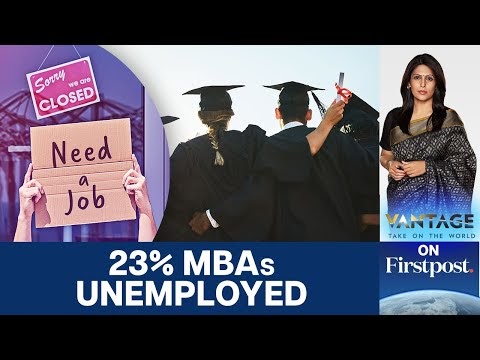
A new report has revealed that 23% of Harvard MBAs were jobless even three months after their graduation. Similar trends have been reported in top B-schools across the world. Once considered a sure-shot ticket to success, what explains the changing fortunes of MBA degrees?
No one feels like confirming nor denying how affirmative action’s death is destroying a sense of inclusion in higher ed.Emil Guillermo
But make no mistake, the destruction is under way.
Harvard College sent out letters to its early admits, but hasn’t disclosed what the demographics are yet for this year. Waiting until all the admits are sent out in the Spring buys them time to make excuses. But Harvard Law has issued its numbers and the alarm bells should be going off. There were just 19 first year Black students, 3.4 percent of the Harvard Law school class, according to data from the American Bar Association, as reported by the New York Times. It’s the lowest number since the 1960s, a period when affirmative action and civil rights was much more in vogue.
Woke wasn’t considered a disease back then. People were interested in fighting racist segregation. Inclusion and diversity weren’t institutionalized notions back then. They were the values we hoped would take us out of the darkness. But compare this years 19 Harvard Law admits with the 43 admits from the previous year, and you see the wounds have been reopened. David Wilkins, a Harvard Law professor who has kept tabs on these matters told the Times it was related to the Supreme Court ruling, and its “chilling effect.”
Since the 60s, the numbers have been around 50-70 a year. And then came this year’s 19. Hispanic students were also lower at 39, 6.9 percent of the class versus 63 students or 11 percent of the class in 2023.
The big winners in the admissions at Harvard Law? Whites and Asian American students, the latter, the principal plaintiffs in the suit before the court last year.
Now that we have diminished the game to numbers, the numbers don’t lie. When you can’t address the need of inclusion directly, we leave it up to chance.
This year at Harvard Law was not a good year. Harvard miscalculated by not settling with the anti-affirmative action SFAA front and going to court. But that allowed for a right-wing Supreme Court to set the precedent for all schools not just Harvard. Anti-affirmative action advocates will try to put a positive spin on the low numbers, saying it’s not as low as it sounds. They’ll talk about different recording standards set by the A.B.A. There’s also the issue of multi-race students, and those who decline to state.
But secretly opponents of affirmative action are gleeful. They got their way. Their court. And last November their president, elected by voters who believe that educational attainment, not race nor class, is the new dividing line in America. The less education the better. Who needs affirmative action? Let that sink in academia.
Consider the Harvard Law School numbers the first of many signs to come that will let us know just how fast we are an America in reverse.
Emil Guillermo is a journalist, commentator, and former adjunct professor.