Tag: Healthcare

  • How Healthcare Professionals Can Thrive in a Digital Era

    How Healthcare Professionals Can Thrive in a Digital Era

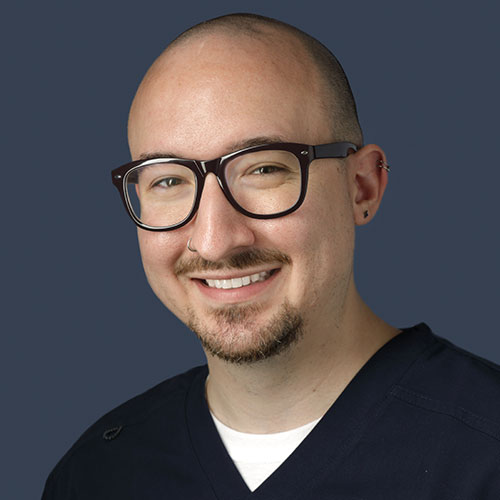
    Dr. Adam Goodcoff | Photos courtesy of MedFluencers

    Influencer and emergency medicine physician Dr. Adam Goodcoff shares insights on embracing AI and evolving career pathways to help healthcare professionals stay adaptable and future-ready.


    As someone who has successfully merged clinical practice with digital innovation, how do you believe emerging healthcare professionals can best position themselves to thrive in this evolving landscape?

    I think the best thing someone who’s coming up or even someone actively practicing now could do is keep an open mind and have a hunger for new skills and knowledge. Look at the way machine learning has come into our lives in the last two or three years. If you had asked a clinician three years ago if they found AI helpful, I don’t think they could even tell you where AI was in the mix. Today, there are tools like the ambient AI scribes and various platforms that are now making their way into healthcare. We need to have hunger and interest in the discovery of these new tools and consider how we could integrate them into our day-to-day workflow. I think having an open mind is the best way to do that. 

    What key skills or mindsets do you think are essential for those entering healthcare today?

    I think the mindset is really one of growth and opportunity. We’re entering a really interesting era, as I mentioned, with AI and medicine and tech enabling the workforce for healthcare providers. Even five years ago, it was an analog specialty. I mean, we were interacting with computers and using some dictation software, but nothing really advanced. In that short time span, we’ve accelerated that so much already. 

    What I would say to the learners and those coming into this career is to be hungry and be open to change. Medicine is well known for being slow to change and slow to adopt, and there are reasons for that; there’s safety and security in the way that we’ve done things. However, now at a time when innovation is so rapid, I think it’s important to consider the ways we might be able to integrate that into our workflow.

    Can you share some examples of how social media and digital platforms have created new career pathways within healthcare that might not have existed a decade ago? 

    I think the beauty around social media in healthcare is that we’ve now created an opportunity to educate our peers and patients in a direct-to-consumer space in a way that is faster and more direct than ever before. It’s really democratized health education. I think it’s an exciting time where real value can be brought and exchanged on social platforms.

    Healthcare workforce shortages are a pressing concern. How can innovative career models like those involving digital health communication help address these gaps while also enhancing patient care? 

    I’d be a bit biased answering this, but I think social media brings visibility to healthcare careers and brings some of the fun and discovery back into a career in healthcare. We have physicians and folks of all degrees really showing what life can be like in various career pathways. I found a lot of success in my own content by creating ways for learners to engage and test their skills and to feel rewarded in a friendly learning environment, where there was no pressure to formally study. That’s what we see at MedFluencers: These physicians and healthcare professionals are excited about reaching the next generation of learners, driving the adoption of new technologies and therapies faster, and getting that information in the right hands.

    Looking forward, what trends or opportunities do you foresee that healthcare students should be preparing for to maximize their impact and career satisfaction?

    I think healthcare careers are changing. From a technology side, there’s tremendous enablement, but also the way that the healthcare system works is constantly evolving. There are certainly things about the system that are broken, but there are things that are being fixed, and I think that goes back to my concept of keeping an open mind and being fluid or open to change around the way that a career looks. When I was in high school and thinking about being a physician, it’s different today than it was then. In an equal amount of time, it will be radically different again. We’re at such a quick evolutionary pace here.

     I’d invest in your own learning, especially understanding a bit more about machine learning and AI. I think it’s become a part of all of our lives, and there are so many folks who just quickly label it AI and write it off. What is the AI doing? Why is it different than traditional search? What are we doing differently with these tools?

    Source link

  • Purpose and Progress: Inside Today’s Healthcare Roles

    Purpose and Progress: Inside Today’s Healthcare Roles

    Our panel of experts shares how healthcare careers offer purpose, growth, and meaningful daily impact.

    Priya Parthasarathy, D.P.M.

    President, Maryland Podiatric Medical Association; Partner, US Foot & Ankle Specialists; National Spokesperson, American Podiatric Medical Association

    What makes a career in healthcare such a meaningful and rewarding path for today’s professionals?

    In podiatry, you get to literally help people move forward. There’s something so powerful about that. We take patients who are in pain or afraid they’ll lose their independence and give them back mobility and confidence. You see the difference right away. I love that our field blends medicine, surgery, and long-term patient relationships. Every day, I get to use my skills to make someone’s life better, and I walk away each day knowing I truly made an impact.

    As healthcare needs evolve and demand grows, why is it so important that we inspire more students and young professionals to pursue careers in this field?

    Foot and ankle health is connected to everything — mobility, diabetes, overall wellness — but it’s often underrepresented. I love showing students how diverse and dynamic this field is. You can perform surgery, focus on sports medicine, wound care, pediatrics, or public health. The possibilities are endless, and the need is growing. There’s so much opportunity to innovate, lead, and really shape the future of healthcare.

    How does working in healthcare allow you to make a tangible impact on people’s lives while continuing to grow and learn professionally?

    What I love about podiatry is that you get to see progress in real time. Someone comes in limping or unable to wear shoes comfortably, and weeks later, they’re walking pain-free or running again. That’s the immediate impact. The field never stops evolving, whether it’s regenerative medicine, new technology, or surgical innovation, so there’s always something new to learn. It keeps me motivated and constantly growing.

    What advice would you give to someone considering a future in healthcare about finding purpose and fulfillment in this work?

    Find your “why,” and hold on to it. The path isn’t always easy. There are long days and tough cases, but when you see a patient light up because they can walk without pain, it reminds you why you started. In podiatry, fulfillment comes from those everyday wins. Stay curious, lead with empathy, and don’t forget that what we do truly changes lives, one step at a time.

    Raymond K. Brown-Riley, B.S.N., RNC-NIC, NPT, NNIC

    NICU Assistant Director of Nursing and NICU Transport Coordinator, MedStar Georgetown University Hospital

    What makes a career in healthcare such a meaningful and rewarding path for today’s professionals?

    A career in healthcare is especially meaningful because every day offers a chance to protect dignity, relieve suffering, and support recovery. During my time at Purdue’s School of Nursing, I learned to utilize evidence-based strategies, empathy, and teamwork. These are all skills I rely on as the assistant director of nursing in the neonatal intensive care unit (NICU) at MedStar Georgetown today. Whether stabilizing a fragile, premature baby or supporting a worried family, the work is deeply human and very impactful. The reward — seeing progress and knowing our actions create safer beginnings and healthier futures — is priceless.

    As healthcare needs evolve and demand grows, why is it so important that we inspire more students and young professionals to pursue careers in this field?

    As the population ages, the need for prepared and compassionate nurses and healthcare providers keeps growing. Inspiring students to choose healthcare is not only about staffing; it is about building systems that are safer, more equitable, and innovative. Purdue taught me that evidence-based science and research, coupled with patient and family-centered care, is the formula for success. When more bright minds join nursing and allied fields, we are able to accelerate breakthroughs, improve access, and strengthen the health of communities. Developing new nurses and professionals today improves outcomes for communities tomorrow. It’s imperative that we continue to produce new graduates who have the tools to handle the challenges before them, the knowledge to avoid the mistakes of the past, and the wisdom to know the difference.

    How does working in healthcare allow you to make a tangible impact on people’s lives while continuing to grow and learn professionally?

    Healthcare offers a unique opportunity to provide an immediate impact while also having an opportunity for lifelong development. In the NICU and through our neonatal transport program, I see how timely decisions, clear communication, and skilled interventions can change the course of a family’s life every day. The field also requires that you’re committed to being a life-long learner, utilizing new guidelines, technologies, and quality improvement methods. My Purdue foundation in evidence-based practice and quality improvement prepared me to continually seek out growth opportunities, mentor others, and turn research into practice changes that make a real difference. Professional development is not just a responsible career practice; it’s a moral obligation to contribute to the advancement of the profession.

    What advice would you give to someone considering a future in healthcare about finding purpose and fulfillment in this work?

    I would tell anyone considering a future in healthcare to reflect on where their passions lie. The healthcare industry is broad and diverse, so it’s important to hone in on what fulfills you personally. Start by shadowing clinicians and asking questions about workload, emotional demands, scheduling, and opportunities for advancement. In a nursing program like Purdue’s, there is a strong emphasis on clinical excellence, interprofessional collaboration, and self-reflection. I was encouraged to expect more of myself and my future employer. It’s important to find a program that teaches not only clinical competence but also strategies to manage stress and grow professionally so your career is sustainable. Find mentors who challenge you and a specialty that matches your strengths and passions. It’s cliché, but true, that when you love what you do, you’ll never work a day in your life.

    Source link

  • Answering the Call: How HOSA Addresses the Future of Healthcare

    Answering the Call: How HOSA Addresses the Future of Healthcare

    “What do you want to be when you grow up?” is a simple question that has plagued many minds for generations. Fortunately, career and technical student organizations (CTSOs) like HOSA–Future Health Professionals (HOSA) are not only helping to answer the existential query but also addressing healthcare workforce shortages while doing it. 

    HOSA is a membership-led CTSO that supports health science career and technical education (CTE) and biomedical students by providing opportunities to develop leadership skills and explore healthcare careers.

    For Benjamin Blanco, M.D., participating in HOSA during his undergraduate studies helped him progress his goal of addressing healthcare disparities in small rural communities like his hometown of Clovis, NM.

    “My early exposure came from going with my parents to the doctor’s office and interpreting for medical visits at such a young age,” Blanco said. “Every single time we’d go into the waiting room, all the chairs were filled.”

    According to the 2020 Census, Clovis’s population was just shy of 40,000 people, and about 50% of the population identified as Hispanic. Nonetheless, residents like Blanco and his family struggled to find culturally competent and compassionate care.

    To address the gap, Blanco double-majored in biochemistry and Spanish, with a concentration in medical Spanish. At the collegiate level, he helped establish a HOSA chapter that would later lead to his position of vice president of programming of the Latino Medical Student Association (LMSA).

    “I learned conference planning through HOSA, and that prepared me to become the VP of programming at LMSA. [Being VP] was the best thing I have ever done for my career and life,” Blanco said.

    Empowering students through mentorship

    Rahma Mkuu, Ph.D., M.P.H., launched her healthcare journey in high school as part of a clinical nursing program. She said as a ninth grader, HOSA was a “big deal” on her campus, and she saw it as a way to pursue her goal of becoming a physician.

    “I never envisioned myself in research,” Mkuu said, “but after I got ‘weeded out’ by the hard sciences, I had a mentor, Dr. Adam Berry,  a HOSA alum, who introduced me to research through volunteering in his lab.”

    With Berry’s mentorship and support, Mkuu pivoted and became a leading ‪implementation science and health outcomes‬ researcher. On Google Scholar alone, she has over 500 citations and 15 published works, ranging from topics including but not limited to children’s healthy eating habits and unrecorded alcohol in East Africa.

    “Mentorship is one of the most fulfilling aspects of my career. I’m able to help others to pursue their dreams, just as my mentors inspired me to pursue mine,” Mkuu said.

    Inspiring future health professionals

    Today, members contribute to the legacy and impact of career and technical education at the annual Washington Leadership Academy. In the capstone event, State Officer Teams meet with their representatives to advocate for Perkins Funding, a federal investment in CTE, with CTSOs supporting those programs.

    For Maggie Ansert, the Georgia HOSA vice president of innovation, this experience allowed her to meet with the legislative aide of her local representative and discuss how Perkins funding helped her discover her passion for medicine.

    “I fell in love with the skills of the healthcare staff as I watched a surgeon save a life in 45 minutes,” Ansert said. 

    She said the experience inspired her to pursue a career in cardiothoracic surgery.

    From small towns to laboratories across the country, HOSA is helping to shape the next generation of health professionals. For many, what begins as a health science class becomes the first step toward answering that age-old question — not just of what they want to be, but who they want to become.

    Source link

  • One Company’s Quest to Simplify Healthcare Staffing

    One Company’s Quest to Simplify Healthcare Staffing

    Hiring and job searching are difficult in many industries, but among the most challenging is healthcare.

    Healthcare jobs are specialized, and they generally tend to be highly competitive to get. Plus, salaries aren’t always listed, and some jobs posted may be fake. What’s more, most healthcare professionals are already working demanding roles so their time to search for a new job is limited.

    Sheldon Arora saw a need — and the potential — for a better way to connect healthcare job seekers with employers.

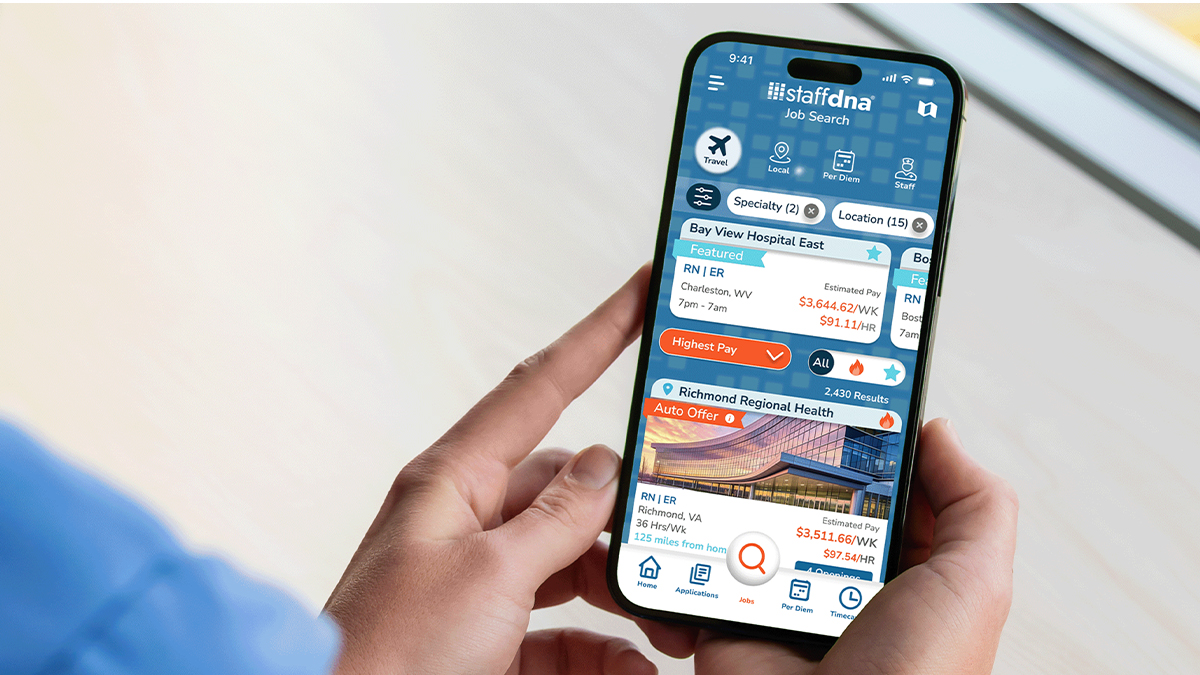
    That’s why Arora designed StaffDNA, a mobile app that helps facilitate filling healthcare roles, benefitting employers and job seekers alike. 

    StaffDNA is available to download for free on the Apple Store and Google Play.

    Meeting a need

    Sheldon Arora

    Founder and CEO, StaffDNA

    Arora, the CEO of StaffDNA, realized early in his career that hiring was an inefficient process. As a tech entrepreneur, he started companies that helped solve the most challenging aspects of matching employees with the right role at the right time. The industry he noticed had the most inefficient hiring process and could benefit the most from the right technology was healthcare.

    “We were looking for ways to make the hiring process in healthcare more efficient for a long time,” Arora said. “We saw that facilities needed on-demand access to healthcare professionals, and healthcare professionals needed more options and transparency in their job searches.”

    The resource combines a self-service app with a search platform for various needs for healthcare in all professions, specialties, job types, and settings.

    “We built a platform where job seekers and facility hiring managers could connect in real time, and we removed many layers and obstacles that stood in the way of connecting people looking to find the jobs they loved. We knew we wanted to improve the entire process, so we did just that,” said Arora, who launched the app about one month before the start of the COVID-19 pandemic, when healthcare jobs were needed most. Downloads skyrocketed.

    How it works

    “The StaffDNA marketplace is the only platform where all stakeholders in the hiring process, including hospitals, vendors, suppliers, and job seekers, can come together to address the healthcare staffing issue once and for all,” said Arora, adding that candidates can search, apply, and get hired all within the StaffDNA app. “We’re tying together all the participants in healthcare hiring and giving them the platform they need to efficiently get people hired in the right roles.”

    In the StaffDNA app, all jobs, specialties, and locations, as well as job descriptions and compensation, are shown up front. “Everything they need can be found directly in the app, from employment in their area to facility details, and even the color of scrubs they’ll need to wear,” Arora noted. “We also give candidates the ability to customize pay packages based on housing and benefit needs so they can have a better idea of what their take-home pay will be.”

    Helpful features

    Two new features of the StaffDNA app — DNAVault™ and DNAInsights™ — make the app even more beneficial for job seekers and hiring professionals.

    DNAVault allows anyone — job seekers, students, or professionals in any industry — to securely store sensitive documents, including licenses and credentials. The app makes it easy and convenient to keep these materials safely in one place, and applicants can send these items directly to their employer, school, or anyone through DNAVault’s secure online storage. DNAVault will also notify users when their documents are about to expire so they know when to renew them.

    “The inspiration for DNAVault came from my daughter, Madison, who is in medical school,” Arora said. “She was explaining how many documents and certifications she needed to keep track of and how they were required to access them from anywhere.”

    DNAInsights was created for healthcare facilities. It offers data on the number of job openings  within a given radius, along with competitive pay rates, which are critical resources for hospital hiring managers. StaffDNA is  the first company to provide healthcare facilities with real-time job data for all per-diem, travel, local, and staff positions  — for free.  “Until now, hiring managers in healthcare have had no tools to gauge pay rates in their markets,” Arora said. “So, we built the technology to support how hospitals and facilities determine pay rates when hiring.”

    Making a difference

    StaffDNA has been downloaded 2 million times and counting, and Arora has heard from users about its real-life impacts, including candidates taking dream vacations due to high-paying assignments or exploring the country through travel assignments they’ve picked up through the app.

    Arora shared that he was attending a healthcare industry conference in Las Vegas when a nurse told him she got a pay raise thanks to StaffDNA. “She said she was working at a hospital and saw a job opening in her profession, which paid more than what she was currently earning,” he said. “She used the data to request an hourly pay raise, and she got it. She thanked me for helping her earn a better income. It was exciting to hear her story.”

    Arora is hopeful the app has a broader impact, too — that is, not only on the people using the app but public health as a whole.

    “Through StaffDNA, healthcare professionals are empowered to find jobs they love, and hiring facilities can hire the right people for the right roles,” Arora said. “When these two things come together, we know ultimately patient care is improved and communities thrive.”


    Click here to download the StaffDNA app


    Source link

  • Resilience in Healthcare: A New Approach to Combatting Burnout

    Resilience in Healthcare: A New Approach to Combatting Burnout

    Burnout among nurses is reaching significant levels, making self-care, boundaries, and mental health support essential for sustaining a healthy workforce.

    Valerie J. Fuller, Ph.D., D.N.P.

    President, American Association of Nurse Practitioners

    If I had a dollar for every time someone answered “stressed” when I asked how they’re doing, I’d have a full jar. And as nurses, we’d probably add our own dollars to it. While we are working tirelessly for our patients, it’s important to recognize we are not immune to the stressors around us and must share strategies to help each other and our patients.

    Nurse practitioners and nurses enter health care with a passion to make patients’ lives better. Between work deadlines, family responsibilities, health concerns and the constant buzz of phones , the stress of our everyday lives can be compounding. It’s incumbent upon all of us to recognize that managing stress is an important component to our overall health and well-being. Drawing on our experience and clinical education, we know the value of recognition and understand how to best manage stress to prevent burnout.

    Know the signs

    Stress can also sneak up: tension, poor sleep, irritability, fatigue, appetite changes, headaches, or loss of joy.

    What you can do

    Even in the middle of a packed day, there are things you can do to promote wellbeing and prevent burnout:

    1. Take time for yourself — Whether it’s 10 minutes of quiet, a walk, or your favorite show, it counts.
    2. Set boundaries — Set realistic expectations and boundaries with work, with family and even with yourself.
    3. Schedule time for joy —Add it to your calendar like any other appointment.
    4. Ask for help —Getting support doesn’t mean you’re failing. It’s a path to better health.
    5. Rest — Real, uninterrupted rest is vital to your health.

    When to reach out

    As healthcare providers and industry leaders, we need to apply our knowledge to ensure the provider workforce is better supported to prevent burnout. While stress is a part of life, it shouldn’t take over your life. Let’s stop glorifying burnout and start normalizing rest, boundaries and asking for what we need.

    The future of healthcare depends on a healthy, supported workforce. By addressing burnout with compassion and strategy, we are ensuring that NPs remain exactly where patients need us: present, focused and ready to provide the very best care.

    Source link

  • Shaping Future Healthcare Leaders: The Journey of Mielad Ziaee

    Shaping Future Healthcare Leaders: The Journey of Mielad Ziaee

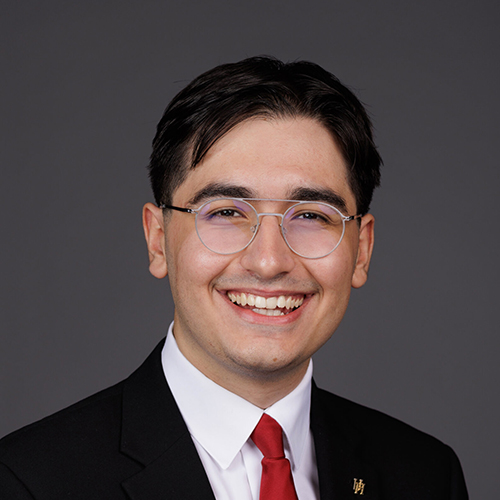
    Mielad Ziaee

    Healthcare is constantly evolving, and the future of the industry depends on the next generation of skilled professionals who are prepared to lead with knowledge, innovation, and compassion. Organizations like HOSA-Future Health Professionals play a critical role in shaping these future healthcare leaders by providing students with the resources, experiences, and mentorship needed to thrive in various medical and health-related careers.

    HOSA is an international student organization dedicated to empowering young people who are passionate about healthcare. Through leadership development, competitive events, networking opportunities, and hands-on learning experiences, HOSA helps students build the essential skills they need to succeed in the medical field. Members engage in real-world healthcare scenarios, gain exposure to public health initiatives, and develop professional competencies that set them apart in their future careers.

    Mielad Ziaee

    Alumni and Former International Executive Council Member, HOSA-Future Health Professionals

    One such success story is Mielad Ziaee, a Marshall Scholar, Truman Scholar, public health advocate, and innovator. Ziaee’s parents immigrated from Iran to the United States to manifest a new life. Their resilience and perspective deeply influenced his understanding of community, determination, and health from an early age. Before hitting the labs of prestigious institutions, Ziaee joined HOSA as a high school freshman thanks to their support. He saw it as a promising steppingstone to engage in his healthcare aspirations.

    “I really wanted to hit the ground running with HOSA. It was so empowering to have [an organization] created for students interested in healthcare, where we could all sort of geek out together,” Ziaee recalled.

    Climbing the ranks

    His two advisors, Angela Vong and Zenia Ridley, provided mentorship and guidance to immerse Ziaee in all HOSA could offer. His leadership journey quickly unfolded — from member to area officer, to Texas state officer, and eventually, to serving on HOSA’s International Executive Council. His tenure coincided with the challenges of the COVID-19 pandemic. Finding creative ways to engage members across middle school, high school, and college in virtual settings connected the dots between leadership and innovation.

    “Being part of the ‘COVID generation’ was both challenging and inspiring,” Ziaee shared. “It taught me how to build community and how that community can enact change.”

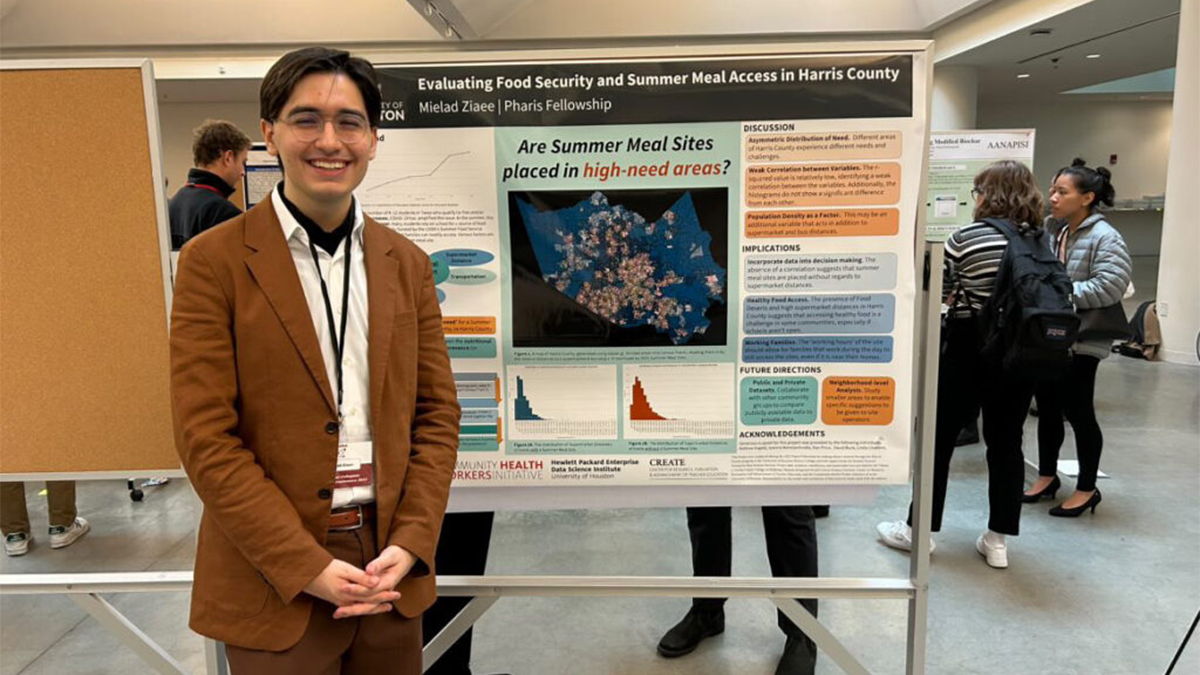
    Ziaee’s experiences ignited a passion for research, where he found the intersection of policy, public health, technology, and community engagement. In particular, food insecurity has become a focal point of his academic work.

    “I’m a proud Houstonian. I go to the University of Houston, so one of the biggest challenges that my community faces is food insecurity,” Ziaee said. “I work with our Data Science Institute to try to understand both technological and community-based cultural approaches to food insecurity. A lot of the skills I learned in HOSA, like Zoom calls or identifying key problems and addressing them, are the same things I do in my research — just different vocabulary.”

    Gaining global experience

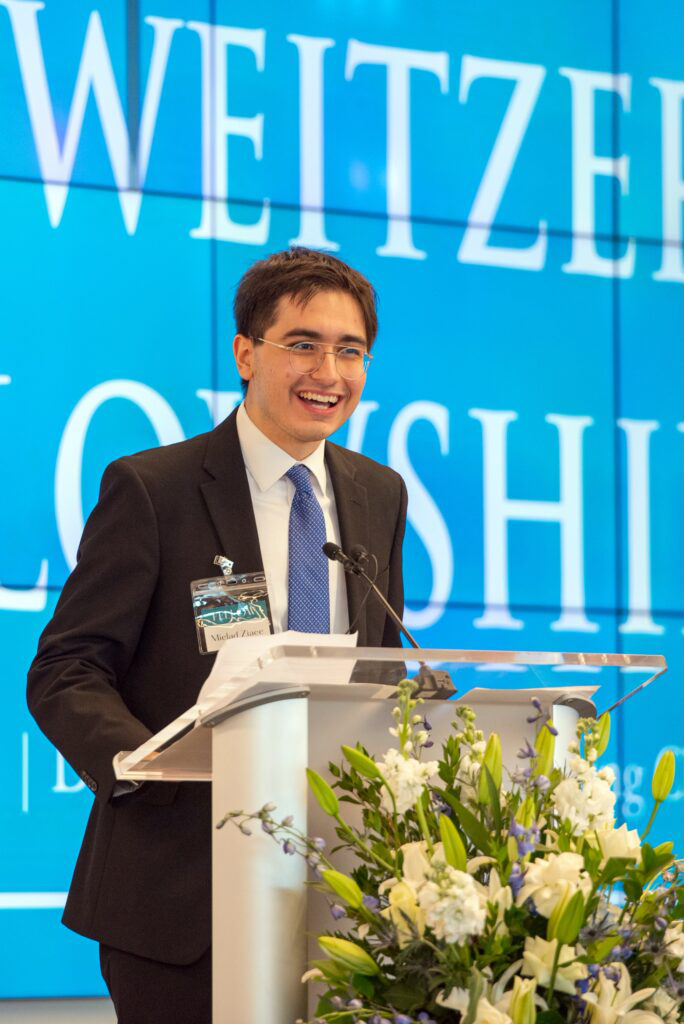
    Ziaee will continue his study of public health as a Marshall Scholar at the University of Edinburgh this fall. He beamed with excitement as he described studying at an institution that nurtured scientific legends such as Charles Darwin and Alexander Graham Bell and exploring Scotland’s unique healthcare system.

    “Edinburgh, specifically, is where they did the Dolly the Sheep experiment, which is super cool,” Ziaee said. “It’s very interesting as an American to see how they’re doing things [in Scotland], and to hopefully bring that back and promote policy innovation here in public health.”

    Reflecting on his journey, Ziaee underscores the importance of seizing opportunities and embracing HOSA as more than just an organization. As Ziaee embarks on this next chapter, his story exemplifies how HOSA-Future Health Professionals and strong family values can shape a life of innovation and impact. Following in his footsteps, his younger sister has now joined HOSA, continuing the family’s commitment to making a difference in healthcare.

    “The connections and experiences you gain will inspire and guide you for years to come. It’s one of the main constants in my life,” he said.

    Ziaee’s journey highlights that HOSA is more than just a steppingstone — it’s a foundation for lifelong growth, leadership, and meaningful connections. For students aspiring to make a difference in healthcare, organizations like HOSA offer an unparalleled opportunity to gain real-world experience, develop leadership skills, and join a network of like-minded individuals committed to improving health outcomes worldwide.

    To join this inspiring legacy, become part of the HOSA alumni network today at www.hosa.org/alumni.

    Source link

  • Realising the collaborative advantage of the Healthcare Education Consortium

    Realising the collaborative advantage of the Healthcare Education Consortium

    • By Darryll Bravenboer, Director of Apprenticeships and Professor of Higher Education and Skills, Middlesex University.

    We have all seen the media coverage with packed A&E departments, patients waiting for hours and being treated in corridors. Last week was the busiest for the NHS in England so far this year, with more patients in hospitals than at any other point this winter, and yet without action the situation will get worse.

    The NHS currently employs around 1.5 million people, making it the biggest employer in Europe. However, the NHS clinical workforce is not enough to keep pace with demand. The population of England is projected to grow to 61.7 million by mid-2043, and we are living longer which often means more complex illnesses.

    There are currently over 112,000 NHS vacancies, the population of England is projected to be 61.7 million by mid-2043, and when combined with demographic changes, a shortfall of between 260,000 and 360,000 health service staff by 2036/37 is predicted by 2036/37.

    The NHS Long Term Workforce Plan (2023) has set ambitious clinical workforce commitments with the aim to significantly increase the number of health staff, including doctors, nurses and midwives by 2032.

    To achieve this, employers and universities delivering degree apprenticeships need to work together and develop innovative programmes that benefit students, the public sector and ultimately the public.

    The University Alliance (UA) represents leading professional and technical universities, educating around 30% of all nursing apprentices in England, plus a substantial number of allied health professionals and healthcare degree apprentices.

    Several UA members* have formed the Health Education Consortium to coordinate and expand healthcare degree apprenticeships to meet the NHS Long Term Workforce Plan goals.

    By collaborating, we aim to increase the number of apprentice starts, reduce duplication and pool resources, creating a joined-up programme for local, regional and national apprenticeship provision. The Health Education Consortium will work with NHS England to scale operations in partnership with NHS Trusts and Integrated Care Boards, co-designing programmes to meet their needs.

    The key benefit for healthcare employers of a higher education collaborative approach is that by working together, we can increase training places while minimising costs.

    • A comprehensive degree apprenticeship offer – working on their own individual universities are unlikely to have the resources to meet national employer needs. By joining forces, we can pool our funds and expertise and offer a broader range of healthcare degree apprenticeships to meet NHS requirements.
    • Driving innovation: a commitment to share innovative practice is at the heart of the Health Education Consortium and ensures that we work as an innovation engine creating solutions to the growth barriers employers identify.
    • Scalability and growth: working together means it is possible to scale up provision to meet the increasing demand outlined in the NHS Long-Term Workforce Plan.
    • Towards a one-stop-shop for healthcare education: providing a ‘one-stop-shop’ for NHS, employers save time and money as they do not need to communicate and work with a range of universities.

    The benefits outlined above make the case for a more collaborative approach to delivering higher education, which, at the same time, better meets the needs of NHS employers. This aligns with the government’s ambition for greater collaboration to drive efficiency and contribute towards economic growth.

    At a time of financial challenge for the higher education sector, the significant growth of degree apprenticeships within the NHS, made possible through effective university collaboration, could address government expectations while contributing to the financial sustainability of providers in the sector.

    *Middlesex University, Birmingham City University, Oxford Brookes University, University of Hertfordshire, Kingston University and University of Greenwich.

    Source link

  • Hands off Our Healthcare, Research, Education & Jobs (Higher Ed Labor United)

    Hands off Our Healthcare, Research, Education & Jobs (Higher Ed Labor United)

    Without mass resistance, these attacks will
    result in layoffs, program & school closures, and devastation to
    local economies that depend on the economic impact of our colleges and
    universities. Higher ed workers – long facing growing job precarity –
    are now facing unprecedented job insecurity.

    In February 19, at actions across the country, higher education workers, students, and allies will get in the streets and loudly proclaim: Hands off our healthcare, research, and jobs! 
     

    Source link

  • Supreme Court Blocks OSHA Vaccine and Testing ETS and Upholds CMS Healthcare Worker Vaccine Mandate – CUPA-HR

    Supreme Court Blocks OSHA Vaccine and Testing ETS and Upholds CMS Healthcare Worker Vaccine Mandate – CUPA-HR

    by CUPA-HR | January 14, 2022

    On January 13, the U.S. Supreme Court blocked enforcement of the Occupational Safety and Health Administration (OSHA)’s Emergency Temporary Standard (ETS) that would mandate vaccines or testing requirements for employers with 100 or more employees, but reinstated enforcement of the Centers for Medicare and Medicaid Services (CMS)’s mandate that would require COVID-19 vaccinations for healthcare workers working at facilities that participate in Medicare and Medicaid.

    In December, the U.S. Court of Appeals for the 6th Circuit vacated the 5th Circuit Court’s nationwide emergency motion to stay the OSHA ETS, paving the way for OSHA to continue enforcement of the ETS vaccine and testing requirements. The decision led several business groups and Republican-led states to file emergency applications with the Supreme Court seeking to reinstate the stay. The Supreme Court heard oral arguments on the OSHA mandate on January 7, leading to the court’s decision to block the vaccine and testing mandate.

    Additionally, the Supreme Court heard oral arguments on the CMS healthcare worker mandate on January 7. They ultimately ruled in favor of allowing the CMS healthcare worker vaccine mandate to take effect while the mandate is being litigated in several U.S. district courts and circuit courts. The CMS mandate was previously stayed in 25 states after four lawsuits were filed against CMS in district courts in Missouri, Louisiana, Florida and Texas.

    Though not heard or ruled on by the Supreme Court, the federal contractor vaccine mandate, which requires all federal contractors to mandate COVID-19 vaccinations for their employees, remains stayed by the U.S. District Court for the Southern District of Georgia, which issued a nationwide preliminary injunction against the mandate on December 7. The Biden administration has appealed the decision to the 11th Circuit Court, which has since upheld the lower court’s injunction but has not yet ruled on the legal merits of the mandate. Litigation continues for this rule in the 11th Circuit Court.

    The Supreme Court’s decisions bring the rules back to the lower courts to continue litigation on their merits; however, the recent decisions do signal how the Supreme Court would likely rule on the merits of the cases if they are once again appealed to the higher court.

    CUPA-HR will continue to keep members apprised of any legal updates as they relate to the fate of the OSHA ETS, the CMS healthcare vaccine mandate, and the federal contractor vaccine mandate.


    Source link