
Tag: Heightened

  • Districts report enrollment drops amid heightened immigration enforcement

    Districts report enrollment drops amid heightened immigration enforcement

    This audio is auto-generated. Please let us know if you have feedback.

    Dive Brief:

    • Los Angeles Unified School District’s enrollment fell 4% year over year to 392,654 for 2025-26 — a greater-than-expected drop in a year where the school system has faced heightened immigration enforcement. The dip is “deeply connected to the realities our immigrant families are facing,” Superintendent Alberto Carvalho told K-12 Dive in a statement Tuesday.
    • Other districts affected by increased immigration enforcement activities have also reported enrollment drops, including Miami-Dade County Public Schools in Florida and Chicago Public Schools. The uptick in enforcement followed a Trump administration policy change in January that allows immigration raids at schools.
    • In many areas, these declines are partly driven by lower enrollment for newcomers, defined as students who have been enrolled for three years or fewer in any U.S. school, were born outside the U.S., and are English learners. 

    Dive Insight:

    “These declines reflect a climate of fear and instability created by ongoing immigration crackdowns, which disrupt family stability, housing, and mobility,” said Carvalho. “These fears are now exacerbating pre-existing factors that were already driving statewide enrollment declines — including falling birth rates, rising housing costs, and broader economic pressures.” 

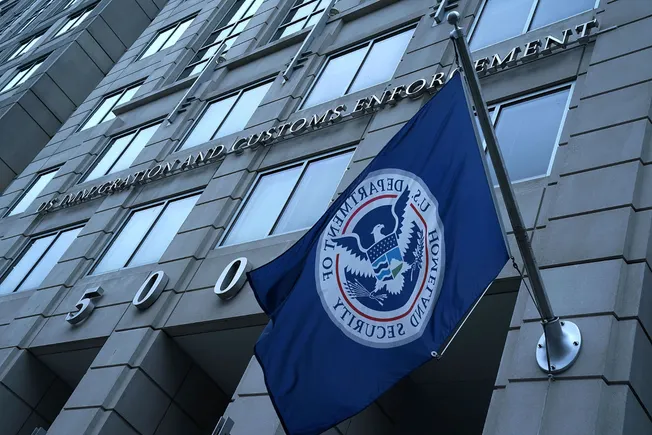
    LAUSD and its surrounding areas have seen an increase in immigration enforcement activity in both the current and previous school years, including incidents in which U.S. Department of Homeland Security officers attempted to gain entry into elementary schools by allegedly making false claims they had parent permission to speak with students. In another instance, agents apprehended a high school student with a disability while he was enrolling for classes in an apparent case of mistaken identity.

    LAUSD families and those in other areas hit by heightened immigration enforcement have also experienced activity during school pickup and dropoff hours. 

    The impact of these activities on attendance has led some school leaders to emphasize the possibility of virtual schools. 

    Now, the apparent toll on enrollment — including that of newcomers — is set to impact districts’ budgets. 

    In LAUSD, newcomer enrollment for students who were expected to return for the 2025-26 school year is down 9% at 16,668, compared to the projected 18,232. 

    “Unless these overlapping issues are addressed at the state level, California’s public schools will face long-term ramifications that will affect classrooms, staffing, programming, and the future of public education itself,” said Carvalho. 

    Late last month, congressional Democratic lawmakers sent a letter to U.S. Secretary of Education Linda McMahon in which they inquired about steps the department is taking to protect students as raids impact their families and communities. The lawmakers wrote that they are “deeply concerned” about the fallout.

    “The chaotic manner in which raids and apprehensions are being carried out is injecting needless trauma into these communities, which then makes its way into schools and contributes to absenteeism,” said lawmakers, led by House Education and Workforce Committee Ranking Member Bobby Scott, D-Va. Students, regardless of their immigration status, are being impacted, they wrote. 

    “The consequences of the Administration’s actions show that our nation’s students, families, and schools need resources to help in the days ahead,” the lawmakers wrote.

    Source link

  • Supreme Court Rejects Heightened Burden for Majority-Group Plaintiffs in Title VII Cases – CUPA-HR

    Supreme Court Rejects Heightened Burden for Majority-Group Plaintiffs in Title VII Cases – CUPA-HR

    by CUPA-HR | June 5, 2025

    On June 5, the U.S. Supreme Court ruled unanimously that plaintiffs bringing employment discrimination claims under Title VII cannot be held to a higher evidentiary standard simply because they belong to a majority group. The decision in Ames v. Ohio Department of Youth Services resolves a long-standing split among federal appeals courts over how such “reverse discrimination” claims should be evaluated.

    Background

    Marlean Ames, a heterosexual woman, has worked at the Ohio Department of Youth Services since 2004. In 2019, after being passed over for a promotion in favor of a lesbian woman and later demoted from her existing role, Ames filed suit alleging that both decisions were based on her sex and sexual orientation — protected characteristics under Title VII of the Civil Rights Act of 1964.

    Lower courts dismissed her claims. Applying a test used in the 6th U.S. Circuit Court of Appeals and several others, they held that Ames, as a member of a majority group, was required to present additional “background circumstances” — such as evidence that the employer had a pattern of discriminating against majority-group employees — in order to move forward with her case.

    The Court’s Reasoning

    Writing for the Supreme Court, Justice Ketanji Brown Jackson rejected that reasoning, emphasizing that Title VII’s protections apply equally to all individuals. She wrote that the law “draws no distinctions between majority-group plaintiffs and minority-group plaintiffs,” and instead “focuses on individuals rather than groups, barring discrimination against ‘any individual’ because of protected characteristics.”

    The court found that the so-called “background circumstances” rule used by the lower courts added an impermissible hurdle for plaintiffs like Ames. In the ruling, the Supreme Court found that such an approach “cannot be squared with the text of Title VII or the Court’s precedents,” citing the court’s 1971 opinion in Griggs v. Duke Power Co., which held that “discriminatory preference for any group, minority or majority, is precisely and only what Congress has proscribed.”

    The justices also noted that the rule adopted by the 6th Circuit conflicted with the court’s guidance to avoid rigid applications of Title VII’s burden-shifting framework, known as the McDonnell Douglas test. That framework is intended to provide a flexible method for proving discrimination based on circumstantial evidence — not to impose categorical rules based on a plaintiff’s demographic status.

    Justice Clarence Thomas, joined by Justice Neil Gorsuch, wrote separately to question the broader use of the McDonnell Douglas framework altogether. He criticized the reliance on “judge-made rules and standards in the discrimination context” and suggested that the framework “lacks basis in the statutory text” of Title VII. While the court did not revisit that framework in the Ames decision, Justice Thomas’s opinion invites further litigation on its continued use.

    What’s Next

    The decision eliminates the requirement previously used in the 6th, 7th, 8th, 10th and D.C. Circuits that majority-group plaintiffs must meet an elevated evidentiary threshold to proceed with their claims. Instead, all Title VII plaintiffs must satisfy the same standard, regardless of their group status.

    By aligning with the plain text of Title VII and affirming that its protections apply equally to all individuals, the decision in Ames may affect how courts approach other claims involving workplace diversity and inclusion efforts. CUPA-HR is continuing to review the decision and will provide additional updates as the implications for campus employers and HR professionals become clearer.


    Source link