Tag: helped

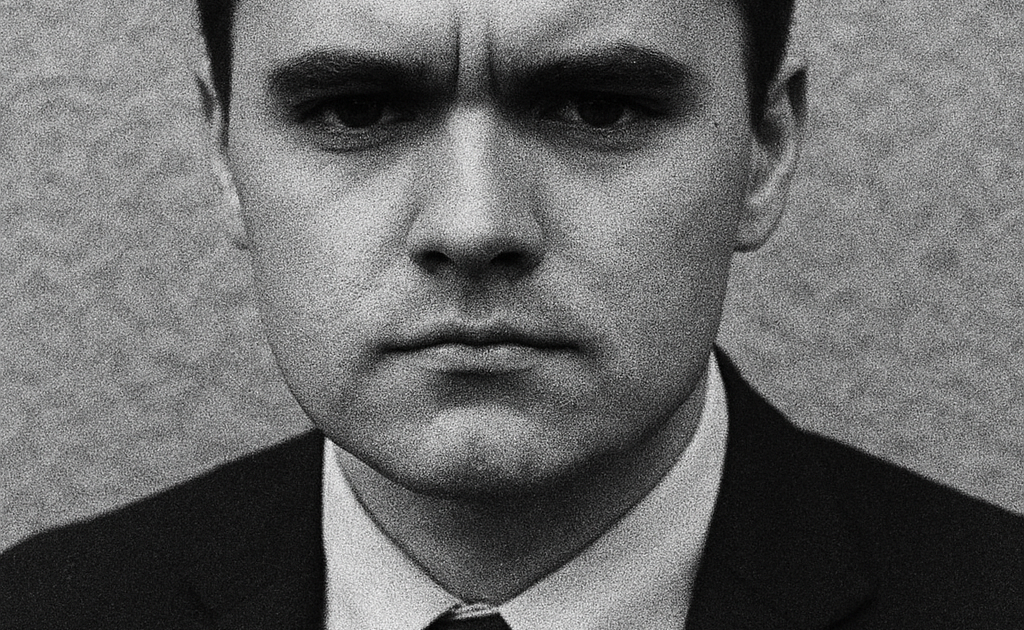
  • How U.S. Higher Education Helped Create Nick Fuentes

    How U.S. Higher Education Helped Create Nick Fuentes

    In the aftermath of each new outrage involving Nick Fuentes, pundits scramble to explain how a 20-something suburban Catholic kid became one of the most influential white supremacists in America. Many insist Fuentes is an anomaly, a glitch, a fringe figure who somehow slipped through the cracks of democracy and decency. But this narrative is both comforting and false.

    Fuentes is not an anomaly. He is the logical product of the systems that shaped him—especially American higher education.

    While institutions obsess over rankings, fundraising, and branding campaigns, they have quietly abandoned entire generations of young people to debt, alienation, status anxiety, and a digital culture that preys on male insecurity. In this vacuum, extremist networks thrive, incubating figures like Fuentes long before the public notices.

    HEI warned about this trend years ago. Since 2016, the publication tracked the rise of Charlie Kirk and Turning Point USA, noting how TPUSA used campus culture wars to radicalize disaffected young men. HEI saw that for-profit-style marketing, donor-driven politics, and relentless culture-war agitation were creating an ecosystem where reactionaries could build both influence and profit. Fuentes did not arise outside that ecosystem—he evolved from it, even as he later turned on Kirk as insufficiently extreme.

    What fuels this pipeline? A generation of young men raised on the promise of meritocracy but delivered a reality of spiraling costs, precarious futures, and institutional betrayal. Many arrive at college campuses burdened by debt, anxious about their place in an unforgiving economy, and deeply online. They bear the psychological bruises of a culture that has replaced community with competition and replaced meaning with metrics.

    This is also the demographic most vulnerable to incel ideology, a misogynistic worldview built around grievance, rejection, humiliation, and resentment. Incel communities overlap heavily with the digital spaces where Fuentes built his early audience. The mix is combustible: sexually frustrated young men who feel mocked by mainstream culture, priced out of adulthood, and invisible to institutions that once guided them. The result is a fusion of white nationalism, male resentment, Christian nationalism, ironic fascism, and livestream entertainment—perfectly tailored to a generation raised on Twitch and YouTube.

    And yet the higher-education establishment insisted for years that white supremacists were primarily rural “rednecks”—poor, uneducated, easily dismissed. This stereotype blinded journalists, academics, and administrators to the reality developing right in front of them. Higher Education Inquirer knew better because we corresponded for years with Peter Simi, one of the country’s leading scholars of extremism. Simi’s research demonstrated clearly that white supremacists were not confined to rural backwaters. They were suburban, middle-class, sometimes college-educated, often tech-savvy, and deeply embedded in mainstream institutions.

    Simi’s work showed that white supremacist movements have always thrived among people with something to lose, people who feel their status slipping. They recruit in fraternities, gaming communities, campus political groups, military circles, and online spaces where young men spend their most lonely hours. They build identities around grievance and belonging—needs that universities once helped students navigate but now too often ignore.

    This is the world that produced Nick Fuentes.

    Fuentes entered higher education during a moment of fragmentation and distrust. Tuition was skyrocketing. Campuses were polarizing. Students were increasingly treated as revenue streams rather than whole human beings. Administrators were more focused on donor relations and culture-war optics than on the psychological welfare of their students. And universities outsourced so many vital functions—to police, to lobbyists, to tech platforms—that they ceded responsibility for the very students they claimed to educate.

    Into that void stepped extremist influencers who offered simple answers to complex problems, validation for resentment, and a community that cared—if only in the performative, transactional sense of internet politics.

    The tragedy is not simply that Fuentes emerged. The tragedy is that the conditions to generate many more like him remain firmly in place.

    American higher education created the environment: hyper-competition, abandonment of the humanities, the collapse of community, the normalization of precarity, and a relentless emphasis on personal failure over systemic dysfunction. It created the audience: anxious, isolated, indebted young men looking for meaning. And it created the blind spot: a refusal to take extremism seriously until it reaches mainstream visibility.

    Fuentes is not a glitch in the system. He is the system’s mirror held up to itself.

    Unless universities confront their complicity in this radicalization pipeline—economically, culturally, and psychologically—the next Nick Fuentes is already in a dorm room somewhere, streaming at 2 a.m., finding thousands of followers who feel just as betrayed as he does.


    Sources

    Angela Nagle, Kill All Normies: Online Culture Wars from 4chan and Tumblr to Trump and the Alt-Right (2017).

    Peter Simi & Robert Futrell, American Swastika: Inside the White Power Movement’s Hidden Spaces of Hate (2010, updated 2015).

    Kathleen Belew, Bring the War Home: The White Power Movement and Paramilitary America (2018).

    Joan Donovan & danah boyd, “Stop the Presses? The Crisis of Misinformation” (Harvard Kennedy School).

    Cynthia Miller-Idriss, Hate in the Homeland: The New Global Far Right (2020).

    Michael Kimmel, Healing from Hate: How Young Men Get Into—and Out of—Violent Extremism (2018).

    Whitney Phillips, “The Oxygen of Amplification: Better Practices for Reporting on Extremists.”

    Brian Hughes & Cynthia Miller-Idriss, “Youth Radicalization in Digital Spaces.”

    David Futrelle, We Hunted the Mammoth archive on incel ideology.

    Higher Education Inquirer (2016–2024 coverage of TPUSA, Charlie Kirk, and campus extremism).

    Source link

  • How Building Rapport Helped My Students Take Risks – Faculty Focus

    How Building Rapport Helped My Students Take Risks – Faculty Focus

    Source link

  • How Building Rapport Helped My Students Take Risks – Faculty Focus

    How Building Rapport Helped My Students Take Risks – Faculty Focus

    Source link

  • Protecting Every Marketing Dollar: How Collegis Helped Block $2.2M in Ad Waste with CHEQ [CASE STUDY]

    Protecting Every Marketing Dollar: How Collegis Helped Block $2.2M in Ad Waste with CHEQ [CASE STUDY]

    CHEQ is trusted by more than 15,000 companies — from the Fortune 50 to emerging disruptors — to enable and protect each critical touchpoint in the evolving, human-AI customer journey. Powered by the only integrated Traffic, Threat, and Identity Intelligence Engine, CHEQ distinguishes legitimate users from bad actors — human, AI agent, or bot — and, in real-time, delivers granular, context-specific insights to marketing, commerce, and security platforms. With a best-in-class

    Source link

  • USF Ditches Search Firm That Helped U of Florida Pick Ono

    USF Ditches Search Firm That Helped U of Florida Pick Ono

    Bryan Bedder/Stringer/Getty Images

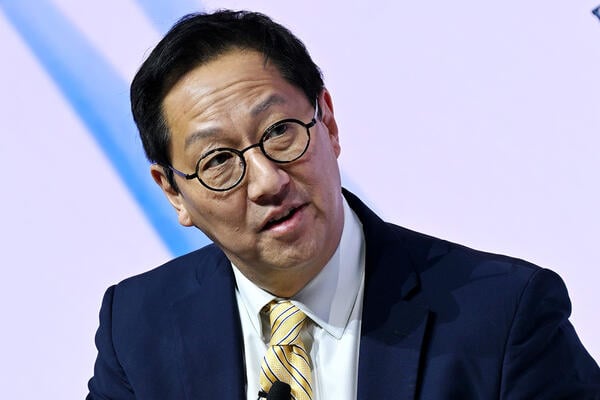
    The University of South Florida has dropped SP&A Executive Search as the firm leading its presidential search, The Tampa Bay Times reported Tuesday. The move comes after the Florida Board of Governors rejected the candidate that SP&A had helped the University of Florida pick for its top job: former University of Michigan president Santa Ono, whom the UF board unanimously approved.

    Ono’s rejection came after conservatives mounted a campaign opposing him, citing his past support of diversity, equity and inclusion and his alleged failure to protect Jewish students.

    After that failed hire, Rick Scott, a Republican U.S. senator representing Florida, blamed SP&A, telling Jewish Insider that the firm didn’t sufficiently vet Ono.

    SP&A describes itself on its website as a “boutique woman- and minority-owned executive search firm.” Scott Yenor—a Boise State University political science professor who resigned from the University of West Florida’s Board of Trustees in April after implying that only straight white men should be in political leadership—highlighted that description in an essay he co-wrote, titled “How did a leftist almost become president of the University of Florida?”

    “We can only speculate about how the deck was stacked,” Yenor and Steven DeRose, a UF alum and business executive, wrote. “SP&A colluded with campus stakeholders, especially faculty, when they were retained. Together, they developed the criteria necessary to hire a Santa Ono.”

    They also pointed out that SP&A was leading the USF search. SP&A didn’t respond to Inside Higher Ed’s requests for comment Wednesday.

    USF didn’t provide an interview or answer written questions. In a June 20 statement, USF trustee and presidential search committee chair Mike Griffin said the university was now using the international firm Korn Ferry.

    “We value the expertise of our initial search consultant and thank them for their engagement,” Griffin wrote.

    Source link

  • How Being a Mother and Academic Helped Me Fix Higher Education’s Transfer Crisis

    How Being a Mother and Academic Helped Me Fix Higher Education’s Transfer Crisis

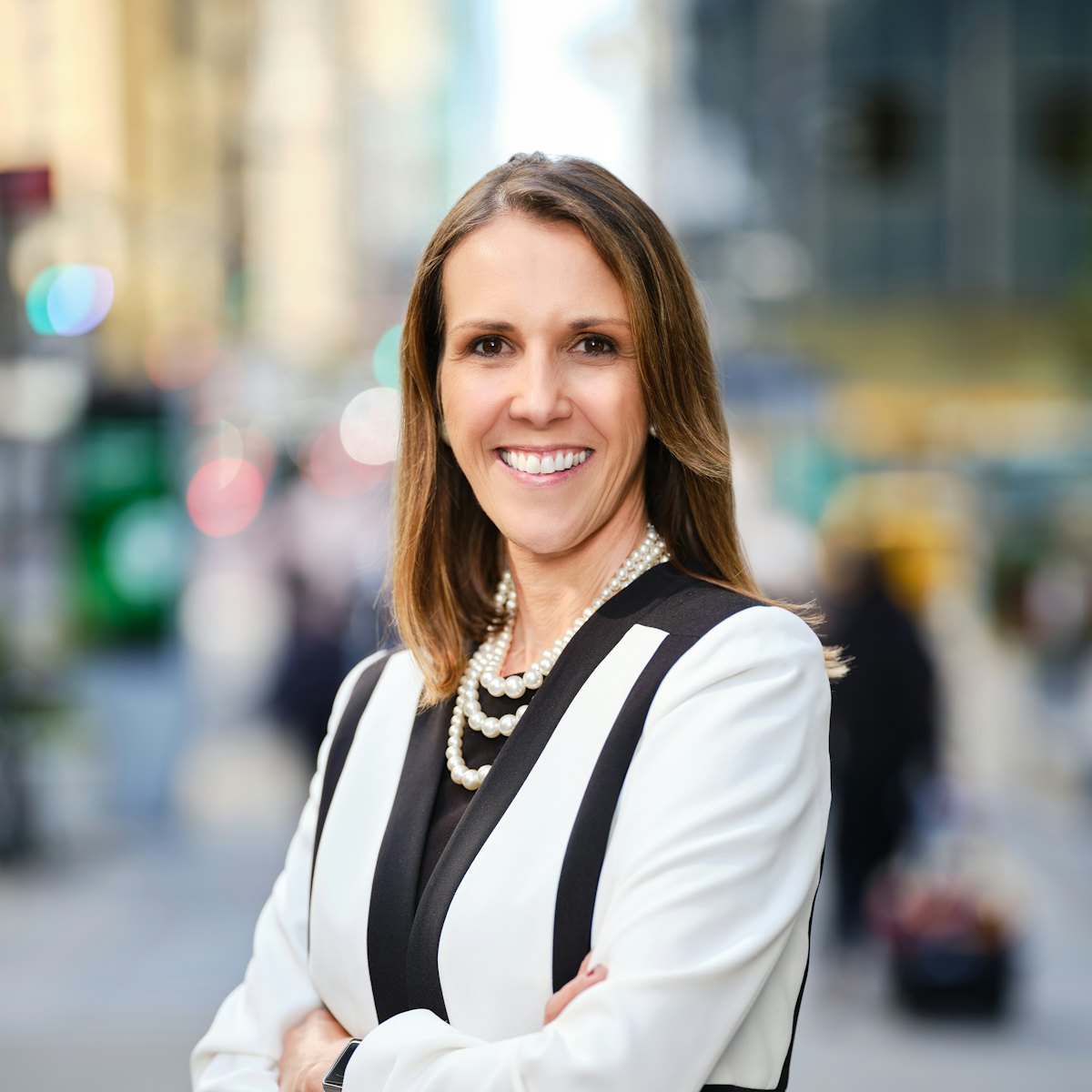
    Dr. Alicia M. AlveroWhen my daughter transferred to Queens College in Spring 2019, I could not have been more excited. As associate provost at the college, I’ll admit I was biased but even two decades of experience in higher education couldn’t fully prepare me for her struggle to transfer credits. 

    Queens College is one of The City University of New York’s 25 colleges. My daughter transferred from another school within the system yet despite mastering course material, she was told to take what was basically the same course all over again. 

    Fortunately, I understood the appeals process and was able to point her in the right direction. As a result, she obtained credit for the course, which counted toward her major. At the same time, reality struck: A student should not need to have an associate provost as a parent to transfer college credits. Frankly, they shouldn’t even need to appeal credits within the same system. 

    Nationally, the transfer system has been set up to let students fail for decades. On average, students lose a fifth of their credits when transferring to a four-year college, according to the U.S. Government Accountability Office. This leads to wasted tuition dollars and makes it more challenging to earn a bachelor’s degree. A 2023 report by the Community College Research Center found that only 16% of community college students earned a bachelor’s program within six years and just 10% of low-income students did

    As the largest public urban university system in the nation, CUNY had a real opportunity to make a change. In 2023, CUNY’s Board of Trustees charged the University’s leadership – including myself – to fix the transfer system. 

    CUNY has long been dedicated to eliminating the obstacles that result when a student transfers. In fact, the expectation that CUNY should provide a seamless ability to transfer between its constituent colleges dates to its formation as a centralized system in the 1960s. 

    Enshrined in New York state education law is the mandate for CUNY to “maintain its close articulation between senior and community college units.” Each year, up to 15,000 CUNY students – like my daughter – transfer between campuses, most commonly from a community college to a four-year college. 

    The purpose of an integrated university system is to offer an array of options for students which transfer seamlessly across all colleges. And over the years there have been efforts to achieve that at CUNY.  

    In 2013, the University implemented the Pathways initiative which established the seamless transfer of general education courses across its undergraduate colleges.  There are also many individual articulation agreements between colleges. But such agreements, between a singular CUNY community college’s program and a corresponding bachelor’s level program at another college, could only go so far in addressing a systemic problem and sometimes result in credits transferring as blanket elective, which does not help a student make progress in their major. Truly universal transferability would require faculty buy-in and better digital tools. 

    And so, one of the first things I knew I needed to do was engage our University Faculty Senate, both out of respect for their role in our decision-making process as part of shared governance and to leverage their expertise. This would come to be one of the most important steps in making this effort successful. 

    As we engaged faculty in discussions about transfer, we shifted the focus from simply identifying equivalent courses to defining the essential competencies students must master in the first half of their major. Faculty across institutions readily reached consensus on the core knowledge and skills students needed to succeed in the second half of their program.

    This competency-based approach then led to productive conversations about how specific courses developed these critical skills. Initially, the goal was to group courses into equivalent “blocks,” ensuring students could transfer seamlessly. In some cases, this process led faculty to align their individual courses more closely; others maintained course groupings but ensured consistency across institutions. Both approaches resulted in universal transfer pathways, guaranteeing students full credit toward their major at any receiving college. 

    At the same time, faculty helped us navigate practical roadblocks. For instance, we recognized that a universal approach could not always apply to programs leading to licensing exams— such as the CPA exam— where external accrediting bodies impose strict curricular requirements. While this nuance was clear to accounting faculty, it underscored for others the importance of discipline-specific constraints in shaping transfer policy. 

    Ultimately, this collaborative process ensured that transfer credit advances students’ progress toward degree completion rather than being lost as elective credit. Through collaboration, more than 300 courses, or blocks of courses, are now universally equivalent to each other across all colleges. 

    Starting in fall 2025, for over 75% of students transferring anywhere within the system, they will carry over most credits in their major. The University tackled the six most common transfer majors first – accounting, computer science, biology, math, psychology and sociology – ensuring credits transfer retroactively. We will work to align 100% of majors next. 

    The new system creates consistency on what students across CUNY campuses need to learn in the first half of their major and is expected to save students an average of $1,220 in wasted credits. 

    The CUNY Transfer Initiative extends beyond curricular alignment; it also involves evaluating the tools, policies, and practices that affect transfer student success. By reviewing policies, we identified gaps where new policies were needed and determined where existing policies required adjustments to better achieve their intended outcomes. We enhanced the CUNY Transfer Explorer (T-Rex), a tool that shows students how their credits transfer across the system, by adding leaderboards with key transfer metrics for each college and a feature that estimates how much of a degree would be completed at any CUNY school. 

    On January 21, the University automated a critical process in its student information system, known as CUNYfirst, ensuring admitted transfer students can immediately see how their credits apply at their new college. Previously, this was a manual, campus-specific process that required student advocacy and often caused delays. On its first day, the automation benefited 18,850 students, reducing stress and supporting informed academic decisions. 

    Fixing the transfer crisis will take continued effort. 

    To make sure that this system does not break again, we will be working with faculty to  adjust how we develop the curriculum for new courses. This means we will now proactively consider how a potential new course will transfer across the CUNY system before it even exists. As the initiative grows, we will have 100% of credits in the first half of a major count towards a degree when students transfer from one of CUNY’s associate programs to the same major in a CUNY bachelor’s degree program.

    The conversation is also continuing across the country. In 2023, the United States Department of Education hosted a summit of 200 higher education leaders on improving the transfer process. Then-U.S. Secretary of Education Dr. Miguel Cardona acknowledged that the current state of the college transfer system is broken, saying that it, “stacks the deck against community college students who aspire to earn four-year degrees.” 

    As part of my research when starting this effort, I reached out to my colleagues from colleges across the country to see what I could learn about what may work in improving outcomes for our transfer students. The collective response? “If you find a solution, please let us know.” 

    Everyone sees that the current state of our higher education system does a great disservice to students who transfer, presenting logistical and financial challenges that derail students who are otherwise dedicated to enhancing their education. While there is still work to be done, I am proud to say that we’ve truly begun to dismantle those barriers in an effort that I hope other public institutions of higher education will take inspiration from. 

    Dr. Alicia M. Alvero is the interim executive vice chancellor and university provost at The City University of New York. A professor of organizational behavior management for nearly two decades at CUNY’s Queens College, she also served as the college’s associate provost for academic and faculty affairs.   

    Source link

  • Extreme drought, high winds helped spark the California fires (CBS News)

    Extreme drought, high winds helped spark the California fires (CBS News)

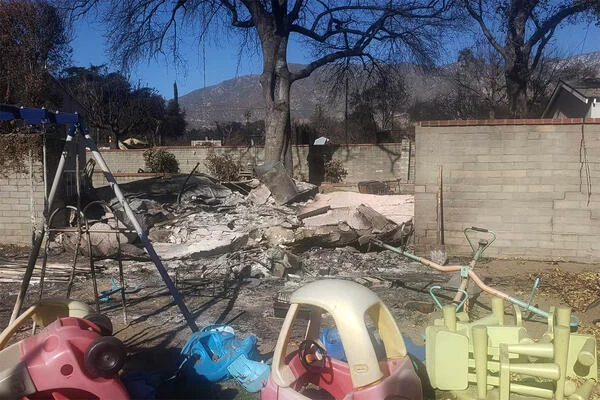
    High winds intersecting with historic drought levels are contributing to the dangerous conditions that sparked the multiple fires raging in the Los Angeles area. Dr. Helen Holmlund, an assistant professor of biology at Pepperdine University, joins CBS News with more on the extreme conditions. 

    Related link:

    Shall we all pretend we didn’t see it coming, again?: higher education, climate change, climate refugees, and climate denial by elites 

    Thinking about climate change and international study (Bryan Alexander)

    Source link