Tag: Helping

  • Helping College Students Save for Retirement

    Helping College Students Save for Retirement

    High tuition rates and cost-of-living expenses can make it difficult for students to make ends meet in the present, but that doesn’t mean they’re not worried about future financial burdens. A 2025 Student Voice survey found that one in five respondents say their biggest source of stress when considering their post-college future is “affording life after graduation.”

    A 2024 survey by Handshake found that more than 40 percent of students have thought at least “a fair amount” about planning for retirement; 15 percent say it’s a major focus area. However, a majority of young people are not saving for retirement (61 percent), according to a 2024 survey by CNBC and Generation Lab.

    By the numbers: Nationally, about three in five adults have a retirement savings plan, with more college graduates (81 percent) likely to have a retirement plan than those with some college (58 percent) or those without a college education (39 percent), according to 2025 Gallup data. Young adults between 18 and 29 were less likely to be planning for retirement in general. However, many Gen Zers have aspirations to retire by age 65, 2024 Morning Consult data showed.

    Preparing students for financial stability beyond college also has implications for their families; over half of students told Handshake they plan to provide financial support for older family members during their career.

    Previous research shows that some graduates who take on large amounts of debt to attend college may be less likely to reach adequate retirement wealth. One study found that graduates in 60 percent of majors analyzed—including education, political science, journalism, biology and general business—were unable to reach $290,000 in retirement savings by age 65. For students who held $40,000 in debt, “80 percent of all majors will not reach a sufficient level of financial wealth to have a 50/50 chance of not outliving their money at retirement,” according to the report.

    Future planning: To help students prepare for the future, some colleges and universities offer financial planning support or supply resources on financial education.

    Many institutions partner with iGrad, which provides financial literacy training. iGrad offers courses for students to help them plan for retirement, with content including understanding tax implications, identifying Social Security benefits and navigating common retirement pitfalls. The platform also has a retirement analyzer tool to help students understand the gap between their retirement savings and their goals.

    Kansas State University’s Powercat Financial division offers peer counselors and staff who can answer questions about retirement planning and help students navigate various accounts that might be available to them. The university has also created blog posts that detail how to evaluate employee benefits.

    Two-thirds of undergraduates surveyed by Handshake said they wouldn’t accept a job that didn’t include retirement benefits, and an additional 32 percent said retirement benefits aren’t essential, but they are important.

    Trinity College’s website features a Retirement 101 guide, which helps students understand when they might decide to retire, how to calculate comfortable retirement savings and how investing can factor into retirement income.

    Wellesley College encourages students both to save for their own sake and also to consider how they can give back to the college through a charitable remainder trust or by deeding their residence to the college.

    How does your college or university encourage students to practice wise money habits? Tell us about it.

    Source link

  • Helping students to make good choices isn’t about more faulty search filters

    Helping students to make good choices isn’t about more faulty search filters

    A YouTube video about Spotify popped into my feed this weekend, and it’s been rattling around my head ever since.

    Partly because it’s about music streaming, but mostly because it’s all about what’s wrong with how we think about student choice in higher education.

    The premise runs like this. A guy decides to do “No Stream November” – a month without Spotify, using only physical media instead.

    His argument, backed by Barry Schwartz’s paradox of choice research and a raft of behavioural economics, is that unlimited access to millions of songs has made us less satisfied, not more.

    We skip tracks every 20 to 30 seconds. We never reach the guitar solo. We’re treating music like a discount buffet – trying a bit of everything but never really savouring anything. And then going back to the playlists we created earlier.

    The video’s conclusion is that scarcity creates satisfaction. Ritual and effort (opening the album, dropping the needle, sitting down to actually listen) make music meaningful.

    Six carefully chosen options produce more satisfaction than 24, let alone millions. It’s the IKEA effect applied to music – we value what we labour over.

    I’m interested in choice. Notwithstanding the debate over what a “course” is, Unistats data shows that there were 36,421 of them on offer in 2015/16. This year that figure is 30,801.

    That still feels like a lot, given that the University of Helsinki only offers 34 bachelor’s degree programmes.

    Of course a lot of the entries on DiscoverUni separately list “with a foundation year” and there’s plenty of subject combinations.

    But nevertheless, the UK’s bewildering range of programmes must be quite a nightmare for applicants to pick through – it’s just that once they’re on them, job cuts and switches to block teaching are delivering increasingly less choice in elective pathways than they used to.

    We appear to have a system that combines overwhelming choice at the point of least knowledge (age 17, alongside A-levels, with imperfect information) with rigid narrowness at the point of most knowledge (once enrolled, when students actually understand what they want to study and why). It’s the worst of both worlds.

    What the white paper promises

    The government’s vision for improving student choice runs to a couple of paragraphs in the Skills White Paper, and it’s worth quoting in full:

    We will work with UCAS, the Office for Students and the sector to improve the quality of information for individuals, informed by the best evidence on the factors that influence the choices people make as they consider their higher education options. Providing applicants with high-quality, impartial, personalised and timely information is essential to ensuring they can make informed decisions when choosing what to study. Recent UCAS reforms aimed at increasing transparency and improving student choice include historic entry grades data, allowing students, along with their teachers and advisers, to see both offer rates and the historic grades of previous successful applicants admitted to a particular course, in addition to the entry requirements published by universities and colleges.

    As we see more students motivated by career prospects, we will work with UCAS and Universities UK to ensure that graduate outcomes information spanning employment rates, earnings and the design and nature of work (currently available on Discover Uni) are available on the UCAS website. We will also work with the Office for Students to ensure their new approach to assessing quality produces clear ratings which will help prospective students understand the quality of the courses on offer, including clear information on how many students successfully complete their courses.”

    The implicit theory of change is straightforward – if we just give students more data about each of the courses, they’ll make better choices, and everyone wins. It’s the same logic that says if Spotify added more metadata to every track (BPM, lyrical themes, engineer credits), you’d finally find the perfect song. I doubt it.

    Pump up the Jam

    If the Department for Education (DfE) was serious about deploying the best evidence on the factors that influence the choices people make, it would know about the research showing that more information doesn’t solve choice overload, because choice overload is a cognitive capacity problem, not an information quality problem.

    Sheena Iyengar and Mark Lepper’s foundational 2000 study in the Journal of Personality and Social Psychology found that when students faced 30 essay topic options versus six options, completion rates dropped from 74 per cent to 60 per cent, and essay quality declined significantly on both content and form measures. That’s a 14 percentage point completion drop from excessive choice alone, and objectively worse work from those who did complete.

    A study on Jam showed customers were ten times more likely to buy when presented with six flavours rather than 24, despite 60 per cent more people initially stopping at the extensive display. More choice is simultaneously more appealing and more demotivating. That’s the paradox.

    CFE Research’s 2018 study for the Office for Students (back when providing useful research for the sector was something it did) laid this all out explicitly for higher education contexts.

    Decision making about HE is challenging because the system is complex and there are lots of alternatives and attributes to consider. Those considering HE are making decisions in conditions of uncertainty, and in these circumstances, individuals tend to rely on convenient but flawed mental shortcuts rather than solely rational criteria. There’s no “one size fits all” information solution, nor is there a shortlist of criteria that those considering HE use.

    The study found that students rely heavily on family, friends, and university visits, and many choices ultimately come down to whether a decision “feels right” rather than rational analysis of data. When asked to explain their decisions retrospectively, students’ explanations differ from their actual decision-making processes – we’re not reliable informants about why we made certain choices.

    A 2015 meta-analysis by Chernev, Böckenholt, and Goodman in the Journal of Consumer Psychology identified the conditions under which choice overload occurs – it’s moderated by choice set complexity, decision task difficulty, and individual differences in decision-making style. Working memory capacity limits humans to processing approximately seven items simultaneously. When options exceed this cognitive threshold, students experience decision paralysis.

    Maximiser students (those seeking the absolute best option) make objectively better decisions but feel significantly worse about them. They selected jobs with 20 per cent higher salaries yet felt less satisfied, more stressed, frustrated, anxious, and regretful than satisficers (those accepting “good enough”). For UK applicants facing tens of thousands of courses, maximisers face a nearly impossible optimisation problem, leading to chronic second-guessing and regret.

    The equality dimension is especially stark. Bailey, Jaggars, and Jenkins’s research found that students in “cafeteria college” systems with abundant disconnected choices “often have difficulty navigating these choices and end up making poor decisions about what programme to enter, what courses to take, and when to seek help.” Only 30 per cent completed three-year degrees within three years.

    First-generation students, students from lower socioeconomic backgrounds, and students of colour are systematically disadvantaged by overwhelming choice because they lack the cultural capital and family knowledge to navigate it effectively.

    The problem once in

    But if unlimited choice at entry is a cognitive overload problem, what happens once students enrol should balance that with flexibility and breadth. Students gain expertise, develop clearer goals, and should have more autonomy to explore and specialise as they progress.

    Except that’s not what’s happening. Financial pressures across the sector are driving institutions to reduce module offerings – exactly when research suggests students need more flexibility, not less.

    The Benefits of Hindsight research on graduate regret says it all. A sizeable share of applicants later wish they’d chosen differently – not usually to avoid higher education, but to pick a different subject or provider. The regret grows once graduates hit the labour market.

    Many students who felt mismatched would have liked to change course or university once enrolled – about three in five undergraduates and nearly two in three graduates among those expressing regret – but didn’t, often because they didn’t know how, thought it was too late, or feared the cost and disruption.

    The report argues there’s “inherent rigidity” in UK provision – a presumption that the initial choice should stick despite evolving interests, new information, and labour-market realities. Students described courses being less practical or less aligned to work than expected, or modules being withdrawn as finances tightened. That dynamic narrows options precisely when students are learning what they do and don’t want.

    Career options become the dominant reason graduates cite for wishing they’d chosen differently. But that’s not because they lacked earnings data at 17. It’s because their interests evolved, they discovered new fields, labour market signals changed, and the rigid structure gave them no way to pivot without starting again.

    The Competition and Markets Authority now explicitly identifies as misleading actions “where an HE provider gives a misleading impression about the number of optional modules that will be available.” Students have contractual rights to the module catalogue promised during recruitment. Yet redundancy rounds repeatedly reduce the size and scope of optional module catalogues for students who remain.

    There’s also an emerging consensus from the research on what actually works for module choice. An LSE analysis found that adding core modules within the home department was associated with higher satisfaction, whereas mandatory modules outside the home department depressed it. Students want depth and coherence in their chosen subject. They also value autonomous choice over breadth options.

    Research repeatedly shows that elective modules are evaluated more positively than required ones (autonomy effects), and interdisciplinary breadth is associated with stronger cross-disciplinary skills and higher post-HE earnings when it’s purposeful and scaffolded.

    What would actually work

    So what does this all suggest?

    As I’ve discussed on the site before, at the University of Helsinki – Finland’s flagship institution with 40,000 students – there’s 32 undergraduate programmes. Within each programme, students must take 90 ECTS credits in their major subject, but the other 75 ECTS credits must come from other programmes’ modules. That’s 42 per cent of the degree as mandatory breadth, but students choose which modules from clear disciplinary categories.

    The structure is simple – six five-credit introductory courses in your subject, then 60 credits of intermediate study with substantial module choice, including proseminars, thesis work, and electives. Add 15 credits for general studies (study planning, digital skills, communication), and you’ve got a degree. The two “modules” (what we’d call stages) get a single grade each on a one-to-five scale, producing a simple, legible transcript.

    Helsinki runs this on a 22.2 to one staff-student ratio, significantly worse than the UK average, after Finland faced €500 million in higher education cuts. It’s not lavishly resourced – it’s structurally efficient.

    Maynooth University in Ireland reduced CAO (their UCAS) entry routes from about 50 to roughly 20 specifically to “ease choice and deflate points inflation.” Students can start with up to four subjects in year one, then move to single major, double major, or major with minor. Switching options are kept open through first year. It’s progressive specialisation – broad exploration early when students have least context, increasing focus as they develop expertise.

    Also elsewhere on the site, Técnico in Lisbon – the engineering and technology faculty of the University of Lisbon – rationalised to 18 undergraduate courses following a student-led reform process. Those 18 courses contain hundreds of what the UK system would call “courses” via module combinations, but without the administrative overhead. They require nine ECTS credits (of 180) in social sciences and humanities for all engineering programmes because “engineers need to be equipped not just to build systems, but to understand the societies they shape.”

    Crucially, students themselves pushed for this structure. They conducted structured interviews, staged debates, and developed reform positions. They wanted shared first years, fewer concurrent modules to reduce cognitive load, more active learning methods, and more curricular flexibility including free electives and minors.

    The University of Vilnius allows up to 25 per cent of the degree as “individual studies” – but it’s structured into clear categories – minors (30 to 60 credits in a secondary field, potentially leading to double diploma), languages (20-plus options with specific registration windows), interdisciplinary modules (curated themes), and cross-institution courses (formal cooperation with arts and music academies). Not unlimited chaos, just structured exploration within categorical choices.

    What all these models share is a recognition that you can have both depth and breadth, structure and flexibility, coherence and exploration – if you design programmes properly. You need roughly 60 to 70 per cent core pathway in the major for depth and satisfaction, 20 to 30 per cent guided electives organised into three to five clear categories per decision point, and maybe 10 to 15 per cent completely free electives.

    The UK’s subject benchmark statements, if properly refreshed (and consolidated down a bit) could provide the regulatory infrastructure for it all. Australia undertook a version of this in 2010 through their Learning and Teaching Academic Standards project, which defined threshold learning outcomes for major discipline groupings through extensive sector consultation (over 420 meetings with more than 6,100 attendees). Those TLOs now underpin TEQSA’s quality regime and enable programme-level approval while protecting autonomy.

    Bigger programmes, better choice

    The white paper’s information provision agenda isn’t wrong – it’s just addressing the wrong problem at the wrong end of the process. Publishing earnings data doesn’t solve cognitive overload from tens of thousands of courses, quality ratings don’t help students whose interests evolve and who need flexibility to pivot, and historic entry grades don’t fix the rigidity that manufactures regret.

    What would actually help is structural reform that the international evidence consistently supports – consolidation to roughly 20 to 40 programmes per institution (aligned with subject benchmark statement areas), with substantial protected module choice within those programmes, organised into clear categories like minors, languages, and interdisciplinary options.

    Some of those groups of individual modules might struggle to recruit if they were whole courses – think music and languages. They may well (and across Europe, do) sustain research-active academics if they could exist in broader structures. Fewer, clearer programmes at entry when students have least context, and more, structured flexibility during the degree when students have expertise to choose wisely.

    The efficiency argument is real – maintaining thousands of separate course codes, each with approval processes, quality assurance, marketing materials, and UCAS coordination is absurd overhead for what’s often just different permutations of the same modules. See also hundreds of “programme leaders” each having to be chased to fill a form in.

    Fewer programme directors with more module convenors beneath them is far more rational. And crucially, modules serve multiple student populations (what other systems would call majors and minors, and students taking breadth from elsewhere), making specialist provision viable even with smaller cohorts.

    The equality case is compelling – guided pathways with structured choice demonstrably improve outcomes for first-in-family students, students of colour, and low-income students, populations that regulators are charged with protecting. If current choice architecture systematically disadvantages exactly these students, that’s not pedagogical preference – it’s a regulatory failure.

    And the evidence on what students actually want once enrolled validates it all – they value depth in their chosen subject, they want autonomous choice over breadth options (not forced generic modules), they benefit from interdisciplinary exposure when it’s purposeful, and they need flexibility to correct course when their goals evolve.

    The white paper could have engaged with any of this. Instead, we get promises to publish more data on UCAS. It’s more Spotify features when what students need is a curated record collection and the freedom to build their own mixtape once they know what they actually like.

    What little reform is coming is informed by the assumption that if students just had better search filters, unlimited streaming would finally work. It won’t.


    Source link

  • Helping kids learn how their brains work

    Helping kids learn how their brains work

    What if improving children’s mental health — and life outcomes — could be done by teaching kids how their brains work?

    That’s a key idea behind the approach of teachers at Momentous School in Dallas, a private elementary school that serves 225 students, most of whom come from low-income families. Each day, educators present lessons on neuroscience and mindfulness, from the youngest learners all the way up to fifth graders. 

    Preschoolers in the school’s 3-year-old classroom learn about the brain by singing “The Brain Song” to the tune of “Bingo” (“I have a brain in my head/And it’s for thinking”). They practice mindfulness by lying down with stuffed animals on their stomachs and watching them move up and down as they breathe.

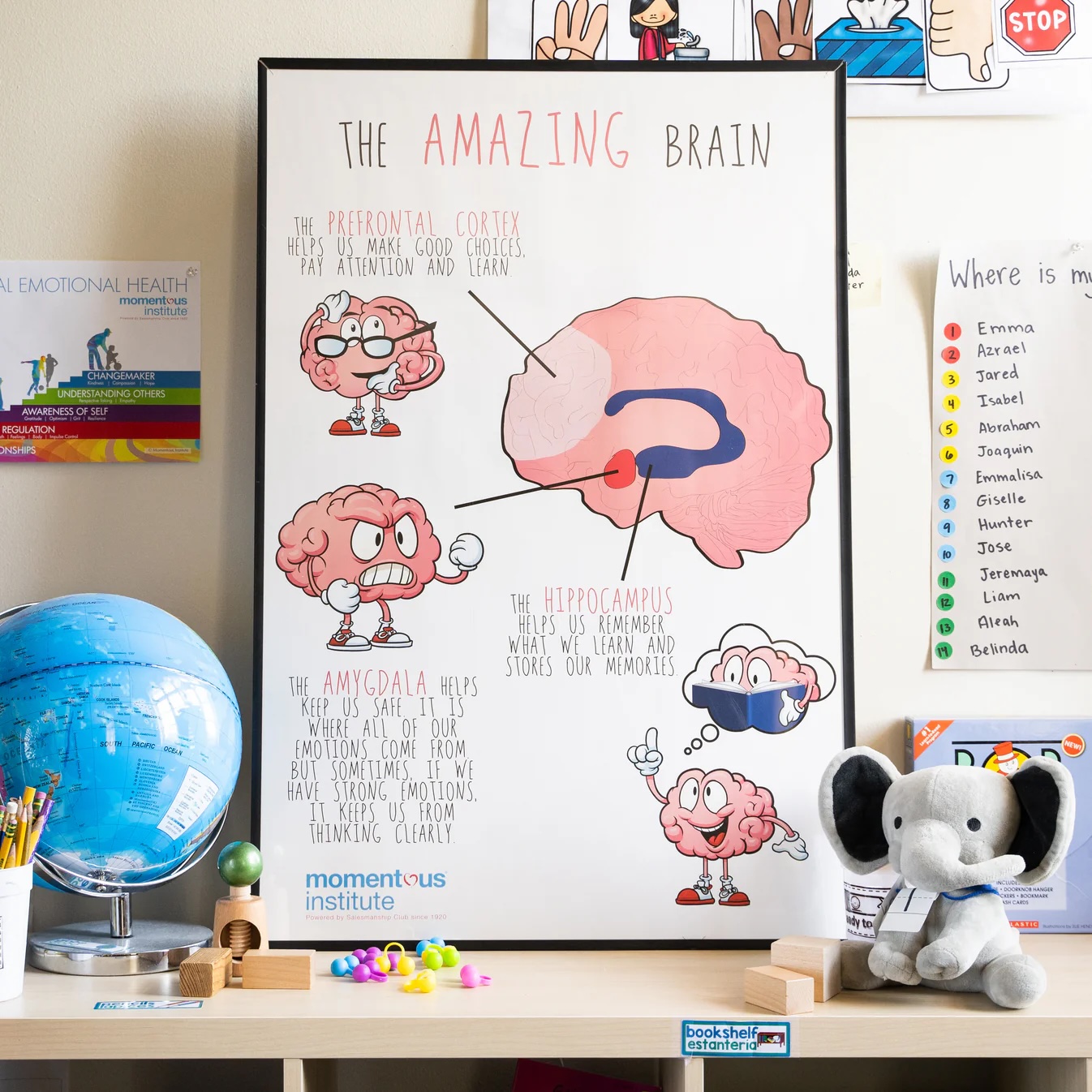
    Older students learn calming strategies like slowly counting each finger on their hands while breathing in and out. Classrooms offer tactile models of the brain to help students learn about different parts such as the prefrontal cortex, which controls such processes as executive function and problem solving, and the brain stem, which regulates breathing and blood pressure.

    This focus on mindfulness is happening in schools across the country, according to the Child Mind Institute, a nonprofit focused on children’s mental health. Experts say the goal is teaching self-awareness and regulation.

    “Once the kids feel they can calm themselves, even just through breathing it’s like the ‘wow’ moment,” said Rick Kinder, creator of a mindfulness program called “Wellness Works in Schools,” in an article by the Child Mind Institute.

    At Momentous School, conversations about the brain continue throughout the day, as teachers can be heard encouraging students to identify their emotions or asking, “What’s your amygdala saying to you in this moment?” according to Jessica Gomez, a psychologist and executive director of Momentous Institute, the Dallas-based mental health nonprofit that operates the school. (The amygdala processes emotions in the brain.)

    Through these frequent discussions and additional lessons on mental health and healthy relationships, teachers are “trying to normalize these things as part of the human condition versus something that is stigmatizing,” Gomez said. The school also holds regular parent nights to educate families on how the brain works and teach emotional regulation strategies that families can practice together at home.

    Momentous School, which launched in 1997 and is funded by philanthropic donations, was developed to put into practice mental health and brain science research from Momentous Institute*. A recent study by Momentous Institute and the Center for BrainHealth at the University of Texas at Dallas found this approach may be contributing to positive outcomes for graduates of the school. Of the 73 Momentous School students who went on to graduate from high school in 2016 through 2018, 97 percent earned a high school diploma and 48 percent earned a college degree.

    These findings come at a time when lessons on emotions, relationships and social awareness, often referred to as social and emotional learning, have become a flashpoint in education and culture wars. Studies show such lessons can improve academic performance: Other researchers unaffiliated with Momentous School have also found that teaching about the brain can provide motivation for students and improve academic and social development. 

    As teachers and students head back to school and face new routines and social situations, now is a good time to build relationships and introduce even young students to ideas about how their brain works, Gomez said. Although many students at Momentous deal with challenges such as poverty, she believes that the school’s emphasis on mental health and brain science has helped families to better cope with those pressures. 

    “The point isn’t to never have stress in your life, it’s to know what to do with it,” Gomez said. “Children and parents having agency and tools helps them know how to navigate life stressors, which has a buffering effect on their brain.” 

    *Clarification: This story has been updated to clarify that Momentous School was developed based on research by Momentous Institute.

    Contact staff writer Jackie Mader at 212-678-3562 or [email protected].

    This story about neuroscience in education was produced by The Hechinger Report, a nonprofit, independent news organization focused on inequality and innovation in education. Sign up for the Hechinger newsletter.

    The Hechinger Report provides in-depth, fact-based, unbiased reporting on education that is free to all readers. But that doesn’t mean it’s free to produce. Our work keeps educators and the public informed about pressing issues at schools and on campuses throughout the country. We tell the whole story, even when the details are inconvenient. Help us keep doing that.

    Join us today.

    Source link

  • How modern HR tools are helping higher education adapt – Campus Review

    How modern HR tools are helping higher education adapt – Campus Review

    As budget cuts continue to ripple across the education sector, many institutions are being forced to reassess how they manage their workforce. From widespread restructures to heavier workloads, staff are feeling the strain.

    Some academics are now working the equivalent of nine-hour days, 365 days a year. At the same time, some institutions are making difficult staffing decisions in response to multi-million dollar funding gaps.

    These pressures are compounding existing workforce challenges. Human resource (HR) and payroll teams are navigating complex employment arrangements, evolving compliance requirements, and increasing scrutiny around underpayment.

    Without the right systems in place, even minor errors can have significant consequences.

    The limitations of outdated systems

    For many universities and TAFEs, HR and payroll systems haven’t kept pace with the realities of modern education. What may have once worked for a more stable, less fragmented workforce is now creating unnecessary complexity.

    When systems aren’t integrated, data is difficult to reconcile and even harder to act on. Payroll teams are left cross-checking spreadsheets, while HR teams struggle to track performance, training, and entitlements across multiple roles and contracts.

    Manual processes create more room for error, and a lack of visibility makes it harder to ensure compliance. According to McKinsey, automating finance processes can free up 30 to 40 per cent of a team’s capacity.

    Disparate platforms also limit the experience for staff. Employees struggle to access their information, update details, or understand how their workload impacts their pay and entitlements. In a climate where staff are already stretched, that lack of clarity can further impact morale and retention.

    A smarter approach to HR and payroll

    Education providers are turning to integrated enterprise resource planning (ERP) software to automate tasks like timesheet management, onboarding, and performance tracking, thereby freeing up teams to focus on more strategic work.

    We have identified eight benefits of an integrated HR and payroll solution. Payroll becomes more accurate, compliance becomes easier to manage, and leaders gain clearer insights into workforce trends.

    How institutions are making it work

    While workforce challenges persist across the sector, some institutions are proving that the right technology can deliver meaningful change.

    Instead of relying on fragmented systems, organisations like GOTAFE and Victoria University have shown how ERP software, like TechnologyOne’s, can play a critical role in improving payroll accuracy, streamlining HR tasks, and boosting overall efficiency and decision-making.

    These are just two recent TechnologyOne success stories among many, but their experiences reflect a broader shift happening across the sector. More institutions are recognising the value of embracing ERP software that can grow with them.

    How GOTAFE transformed payroll and people management

    We recently saw this shift in action at GOTAFE, which replaced its ageing payroll system with TechnologyOne’s modern enterprise software.

    By moving to our Human Resources & Payroll product, GOTAFE was able to unify its systems and reduce its reliance on manual processes. Staff could manage leave and payslips through self-service tools, while HR teams gained real-time insights into workforce activity and performance.

    The improvements were significant. Contract generation dropped from four days to five minutes. Workforce reports that once took weeks could now be produced in two days. These changes helped the organisation make faster, more informed decisions and improve the employee experience.

    Importantly, the shift was also cultural. GOTAFE moved away from customising the platform to match legacy processes, instead adopting standard functionality to unlock ongoing improvements.

    The result is a more agile, data-driven workforce environment that supports both staff needs and strategic planning.

    Read more about the GOTAFE story here.

    Victoria University improves student experience

    Victoria University recently completed a major digital transformation, replacing legacy platforms with a single enterprise solution with TechnologyOne’s OneEducation. While the project was initially focused on improving the student experience, the impact on staff productivity, reporting, and decision-making has been just as significant.

    Before the shift, the university was operating across a patchwork of disconnected systems. Frequent outages and manual workarounds meant that staff were spending more time managing technology than using it effectively. Reporting was cumbersome, making it difficult to generate insights or respond to changes with confidence.

    By unifying core systems across student management, finance, and scheduling, Victoria University has created a more connected environment for both staff and students. Manual tasks have been replaced with automated workflows. Reporting is no longer a reactive process but an embedded part of everyday decision-making.

    Overall, the university fixed nearly 180 pain points. The result is a more agile workforce environment where time is spent on higher-value work and institutional knowledge is easier to share and act on.

    You can find out more about Victoria University’s transformation here.

    Embrace the future of education software

    From shifting compliance requirements to the increasing complexity of workforce management, legacy systems are no longer equipped to support long-term success.

    Modern enterprise platforms are changing that. In an environment where every hour counts, the ability to streamline tasks and remove administrative roadblocks makes a real difference.

    The next generation of education software is already here. Institutions that embrace it will be better positioned to support their people, respond to challenges, and plan with confidence.

    Invest in TechnologyOne’s Human Resources & Payroll today

    TechnologyOne Human Resources & Payroll (HRP), part of our OneEducation solution, provides universities with real-time workforce insights, automated payroll processing, and self-service HR tools.

    Designed for the unique needs of higher education, it streamlines recruitment, onboarding, and workforce planning, helping institutions manage staff efficiently while ensuring compliance.

    Adapt, evolve, and stay ahead with a solution built for the future of education.

    Do you have an idea for a story?
    Email [email protected]

    Source link

  • Helping College Students Emotionally Before They Turn to AI

    Helping College Students Emotionally Before They Turn to AI

    Photo illustration by Justin Morrison/Inside Higher Ed | Kirillm/iStock/Getty Images

    As more students engage with generative artificial intelligence and chat bots, the ways they use AI are changing. A 2025 report published by the Harvard Business Review found that, according to the discourse on social media, “therapy/companionship” is the No. 1 use case for generative AI chat bots.

    For college counseling centers, this change reflects students’ desire for immediate support. “This is not a generation that would call a counseling center and get an appointment two weeks, four weeks later,” said Joy Himmell, director of counseling services for Old Dominion University. “They want help when they want it.”

    But it’s important for counseling centers to educate students on the risks of using generative AI tools for well-being support, Himmell said.

    The research: While ChatGPT and similar text-generating chat bots are touted as productivity tools that can expedite learning and workflow, some people turn to them for personal and emotional support.

    According to a 2024 safety report, OpenAI found that some users experience anthropomorphization—attributing humanlike behaviors and characteristics to nonhuman entities—and form social relationships with the AI. Researchers hypothesized that humanlike socialization with an AI model could affect how individuals interact with other people and hamper building healthy relationship skills.

    A 2025 study from MIT Media Lab and Open AI found that high usage of ChatGPT correlates with increased dependency on the AI tool, with heavy users more likely to consider ChatGPT a “friend” and to consider messaging with ChatGPT more comfortable than face-to-face interactions. However, researchers noted that only a small share of ChatGPT users are affected to that extent or report emotional distress from excessive use.

    Another study from the same groups found that higher daily usage of ChatGPT correlated with increased loneliness, dependence and problematic use of the tool, as well as lower socialization with other humans.

    In extreme cases, individuals have created entirely fabricated lives and romantic relationships with AI, which can result in deep feelings and real hurt when the technology is updated.

    This research shows that most people, even heavy users of ChatGPT, are not seeking emotional support from the chat bot and do not become dependent on it. Among college students, a minority want AI to provide well-being support, according to a different survey. A study from WGU Labs found that 41 percent of online learners would be comfortable with AI suggesting mental health strategies based on a student’s data, compared to 38 percent who said they would be somewhat or very uncomfortable with such use.

    In higher education: On campus, Himmell has seen a growing number of students start counseling for anxiety disorders, depression and a history of trauma. Students are also notably lonelier, she said, and less likely to engage with peers on campus or attend events.

    Student mental health is a top retention concern, but few counseling centers have capacity to provide one-on-one support to everyone who needs it. At her center, more students prefer in-person counseling sessions, which Himmell attributes to them wanting to feel more grounded and connected. But many still engage with online or digital interventions as well.

    A significant number of colleges have established partnerships with digital mental health service providers to complement in-person services, particularly since the COVID-19 pandemic necessitated remote instruction. Such services could include counseling support or skill-building education to reduce the need for intensive in-person counseling.

    Digital mental health resources cannot replace some forms of therapy or risk assessment, Himmell said, but they can augment counseling sessions. “Having automated AI systems with emotional intelligence to be able to convey some of those concepts and work with students, in some ways, it actually frees the counselor in terms of doing that kind of [skill building], so that we can get more into the nitty-gritty of what we need to talk about,” she explained.

    AI counseling or online engagement with ChatGPT is not a solution to all problems, Himmell said. For those who use chat bots as companions, “it sets up a system that is not based in reality; it’s a facade,” Himmell said. “Even though that can serve a purpose, in the long run, it really doesn’t bode well for emotional or social skill development.”

    Faculty and staff need to learn how to identify students at risk of developing AI dependency. Compared to anxiety or depression, which have more visible cues in the classroom, “the symptomology related to that inner world of AI and not engaging with others in ways that are helpful is much more benign,” Himmell said. Campus stakeholders can watch out for students who are disengaged socially or reluctant to engage in group work to help identify social isolation and possible digital dependency.

    AI in the counseling center: Part of addressing student AI dependency is becoming familiar with the tools and helping students learn to use them appropriately, Himmell said. “We need to be able to harness it and use it, not be afraid of it, and embrace it,” she said. She also sees a role for counseling centers and others in higher education to provide additional education on AI in different formats and venues.

    Old Dominion partners with TalkCampus, which offers 24-7 peer-based support. The counseling service is not automated, but the platform uses AI to mine the data and identify risk factors that may come up in conversation and provide support if needed.

    Source link

  • Helping professional services get confident with data

    Helping professional services get confident with data

    “I don’t do data.”

    It’s a phrase heard all too often across professional services in UK higher education.

    Despite the sector’s growing reliance on data to inform strategic decisions, evaluate performance, and improve services, a significant skills gap remains—particularly among non-specialist staff.

    Critical skills

    Universities increasingly regard data as a critical asset. But while institutional expectations are rising, many professional services teams feel underprepared to meet what is now expected of them. The ability to interpret, contextualise, and communicate insights from data is now an essential part of most roles. And yet, for many professionals, data remains confusing, intimidating, or simply outside their perceived remit.

    This gap isn’t just about technical skills—it’s about confidence, culture, and collaboration. Professional services staff are often expected to make sense of complex datasets without the training or tools to do so effectively. Everyone is expected to engage with data daily, but few are properly equipped to do so. The result? Missed opportunities, reliance on specialist teams, and a growing divide between “data people” and everyone else.

    That divide threatens more than just productivity. In an era of AI and self-service analytics, the risk is that subject matter expertise gets lost or overridden by automated insights or misunderstood metrics. True value comes not just from accessing data, but from interpreting it through a lens of organisational understanding and professional experience. So how can we bridge the gap between those who do and those who don’t do data?

    The options

    Often the answer seems to be recruiting external data specialists – usually at considerable expense. While this brings in the needed expertise it also creates silos rather than building capability across teams. This approach not only strains budgets—with specialist salaries commanding premium rates in today’s competitive market—but also creates dependency on individuals who may lack contextual understanding of higher education. There is also a problem of longevity. When these specialists eventually leave, they take their knowledge with them, leaving institutions vulnerable.

    By contrast, institutions that invest in developing data confidence across existing staff leverage their team’s deep sector knowledge while creating more sustainable, resilient capabilities. The return on investment becomes clear: upskilling current staff who understand institutional nuances creates more value than repeatedly recruiting external experts who require months to grasp the complexities of university operations.

    Meanwhile, higher education faces an ever-expanding regulatory and statutory data burden. From HESA returns and TEF submissions to access and participation plans and REF preparations, the volume and complexity of mandatory reporting continues to grow. Each new requirement brings not just additional work but increased scrutiny and consequences for inaccuracy or misinterpretation. This regulatory landscape demands that universities distribute data capabilities widely rather than concentrating them in specialist teams who come close to breaking point during reporting seasons.

    When professional services staff across the institution can confidently engage with data, universities can respond more nimbly to regulatory changes, identify compliance risks earlier, and transform what might otherwise be box-ticking exercises into meaningful insights that drive institutional improvement.

    Data confident

    Recognising this challenge, UHR and Strive Higher have developed the Developing Confident Data Partners programme—a practical, supportive course designed specifically for HR and People professionals in higher education. Drawing on insights from UHR’s 6,000+ members, the programme addresses the real barriers to data confidence and equips participants with the skills and language to contribute meaningfully to data-informed conversations.

    By bridging the gap between subject matter expertise and data literacy, this initiative empowers professionals to engage more fully with the data-driven culture of their institutions. As one participant put it:

    The programme boosted my confidence and has taken away some of the mystery that some pure data experts can often create. I know what to do now before I ask for data, and what to say when I do want some.

    In a sector where informed decision-making is critical, the data skills gap in professional services can no longer be ignored. The Confident Data Partners programme is one step toward a more inclusive, capable, and collaborative data culture across UK higher education.

    The journey is just beginning. The opportunities in a data-driven world are endless, but success hinges on individuals understanding how to use data to inform strategy, planning and continuous improvement, and being able to communicate and collaborate with their peers.

    This initiative has been a learning experience for us both. It’s shown how, when data aligns with real-world needs, the results are transformative. Because when data meets purpose – that’s where the magic happens.

    Source link

  • Helping Students Navigate Transitions, Addressing Teacher Shortages

    Helping Students Navigate Transitions, Addressing Teacher Shortages

    Across Texas, students entering dual-credit programs with the goal of becoming educators often face unclear pathways and unnecessary obstacles. But in the North Texas region, a multisector group is working to change that—starting as early as high school.

    Through programs like Pathways in Technology Early College High School (P-TECH) and early-college high schools, students can begin working toward their teaching credentials before they graduate. The Acceleration to Credential (A2C) Working Group—convened by Educate Texas—brings together local independent school districts, Dallas College and four-year university partners to create clearly defined pathways that connect high school, community college and bachelor’s-level educator preparation.

    While the intention behind many dual-credit programs is to offer students more opportunity, the reality is that inconsistent requirements across institutions often create confusion. A student may graduate high school having earned college credits, only to find those credits don’t transfer toward a four-year degree. Or they may complete an associate degree that doesn’t align with bachelor’s programs in education.

    To address this, A2C partners designed a coordinated model known as Target Pathways, which:

    • Aligns associate degree pathways to all bachelor’s education programs in the region.
    • Meets both high school graduation and Texas Core Curriculum requirements.
    • Creates space for local adaptation within a unified regional framework.
    • Provides students with clear maps of all degree and certification requirements.

    These streamlined pathways aim to improve student outcomes, reduce excess credit accumulation and increase the number of teacher candidates completing their degrees on time and with less debt.

    The associate of art in teaching (A.A.T.) degrees that students earn in these P-TECH programs have shown promising outcomes when it comes to entering education careers. Between 2010 and 2023, 49 percent of A.A.T. earners in Dallas–Fort Worth became paraprofessionals or teachers or advanced into education leadership positions, according to an analysis by Wesley Edwards at the University of North Texas (Wesley Edwards, AAT Analysis, University of North Texas, April 23, 2024, and Sept. 21, 2024). As these pathways expand across more high schools, partners across the state should continue investing in the supports students need to enter the education workforce.

    “Developing a robust pathway for high school students to not only earn credentials but also gain valuable exposure to industry is critically important as we look to meet workforce needs,” said Robert DeHaas, vice provost of the School of Education at Dallas College.

    This work is about more than academic alignment—it’s about building the relationships and trust needed to create meaningful change.

    “This work requires close coordination between large systems that haven’t always worked together,” DeHaas said. “The collaborative has helped foster the coalition-building needed to break down these historical silos and create a college road map that supports the upward economic mobility of our students.”

    Educate Texas will continue supporting A2C by helping school districts implement these pathways and facilitating collaboration with higher education partners. By investing in regional alignment and early access, the A2C model offers a promising solution for expanding the teacher pipeline in Texas and beyond.

    Joseph Reyes is deputy director of teaching and leading at Educate Texas, an initiative of Communities  Foundation of Texas. In this role, he manages programs that increase access to high-quality educator preparation and works with school districts and higher education partners to strengthen the teacher workforce across the state.

    Source link

  • Aerial Aviators: Helping STEM minds soar one afternoon at a time

    Aerial Aviators: Helping STEM minds soar one afternoon at a time

    After a long day of school, most kids are ready to head home—but in San Antonio, teachers across Northside Independent School District’s (NISD) several middle schools are giving them a reason to stay.

    Amanda Quick, NISD’s K–8 STEM Coordinator, organizes Aerial Aviators for the district—an out-of-school time (OST) program that skips the busy work. Instead, students are learning to fly drones, solve problems, and build real skills they can apply in school, at work, and in life. 

    The Newest OST Program Takes Off

    Middle school is when students start figuring out who they are—caught between wanting more independence and being open to new challenges. It’s also when out-of-school-time programs have the most potential to make an impact.

    “We were looking at additional afterschool STEM opportunities for our middle school students that would build upon the coding skills they learn in elementary STEM classes,” Amanda explains. “We already offered a robotics program and a solar-car design program that have been highly engaging. With all the local development that uses drones in industry, having an afterschool drone program was a natural addition.”

    In San Antonio—home to the nation’s second-largest cybersecurity hub—the answer was practically built into the landscape: drones.

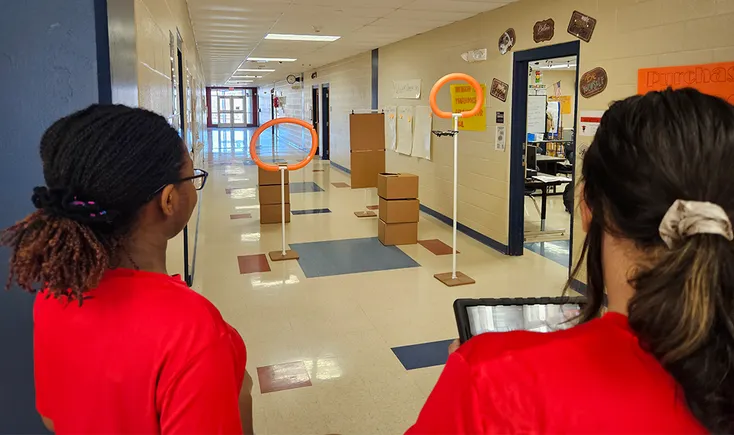
    With Echo Drones in hand and a city full of real-world inspiration, NISD launched Aerial Aviators, a program that goes far beyond the basics. Students take part in flight challenges, work together on real missions, and build the kind of confidence that sticks. It’s not just about learning to fly—it’s about seeing where they’re capable of going.

    Never Leaving Relevance Up in the Air

    Even with exposure to aviation, cybersecurity, construction, and engineering, not every student saw themselves heading into those fields. Instead, many came to the afterschool program thinking drones would be fun—but not exactly tied to their future plans.

    While visiting one school’s Aerial Aviators program, Amanda noticed a girl who had more of an entrepreneurial spirit than an engineering one. “Drones don’t feel like something I can use in my future. I want to own a restaurant,” she explained.

    Despite the depth of her imagination, the girl struggled to see how drones could be connected to her ambitions. But with some critical thinking and a fresh perspective, Amanda helped her see things differently.

    “Remember the Covid pandemic? What if you didn’t have the option of using people to deliver food? How could you solve this problem to keep your business running?” 

    Suddenly, “women in STEM” took on new meaning for the girl as she realized how much her dream job depended on technology. “I could use drones!”

    Like the girl, some students had their futures already mapped out, while others hadn’t even started to imagine careers beyond what they saw through the classroom window. No matter whether the students had their sights set on adulthood, or just their afternoon, Amanda and campus program sponsors knew the right opportunity would be memorable for everyone.

    “We want kids to see drone knowledge as a skill, not just a trend. We can’t predict exactly how drones will be used in the future, but we want them to ask, ‘How does this connect to something I’m already passionate about?’”

    The goal wasn’t to change their dreams, but to mold them—and for some, to show how a STEM mindset could make those dreams more attainable.

    Skilled Students are Soaring Students

    Students don’t have to look far to see how STEM technology fuels innovation. Right in their own community, drones are elevating industries—helping strip and repaint airplanes to protect workers from harmful chemicals, and delivering medical supplies in emergencies. As students get hands-on with drones, they begin to see how industries are connected and how transferable skills—beyond coding, engineering, and tech literacy—are key to making it all happen.

    “We’re seeing a lot of students troubleshooting when they connect devices to the wrong drone,” Amanda shares. “They’re collaborating, thinking critically, communicating with peers and tech support, and developing grit—lots of it.”

    When students get the chance to lead flight challenges, they don’t just show off their skills—they gain the confidence to share what they’ve learned with others. The campus program sponsors have seen this firsthand, noting how eager the kids are to include everyone in the fun:

    “At a family event held at one of our high schools where Aerial Aviators students displayed their knowledge and skills, one mom was nervous about her child struggling or breaking something. But before she could worry too much, one student stepped up and reassured her: ‘Don’t worry! If he breaks it, we know how to fix it!’ That moment left everyone smiling.”

    Although each student has different interests, the drone program’s design and flight challenges make sure every kid feels their talents are recognized. And the results speak for themselves: 100% of students in the post-program survey said they had a great time.

    Just the Beginning

    Aerial Aviators has already made an impact on students. Even when things don’t go according to plan—like a broken propeller or a misconfigured drone—these middle schoolers stay motivated, always eager to learn from setbacks.

    Looking ahead, students are eager to deepen their STEM experience—especially through coding. Many have even expressed interest in competitions where they can showcase their skills. It’s a level of enthusiasm that educators are proud of—and one they’re ready to champion. Amanda and the campus sponsors are now exploring ways to weave these opportunities into the program, ensuring student voice continues to shape its future.

    The success of Aerial Aviators has sparked growing interest, with the program expanding from three schools last year to seven this year. With more funding, the goal is to continue this growth and reach even more students in the year ahead.

    No matter how the program evolves, it’s leaving a lasting legacy with the students—whether they’re back in class, opening their own restaurant, applying to college, or building with friends. Equipped with critical 21st century skills, these kids will step into high school, careers, and society as inspired leaders, ready to lend a hand so everyone’s dreams can take flight.

    More Out of School Time Resources

    Source link

  • Helping students evaluate AI-generated content

    Helping students evaluate AI-generated content

    Key points:

    Finding accurate information has long been a cornerstone skill of librarianship and classroom research instruction. When cleaning up some materials on a backup drive, I came across an article I wrote for the September/October 1997 issue of Book Report, a journal directed to secondary school librarians. A generation ago, “asking the librarian” was a typical and often necessary part of a student’s research process. The digital tide has swept in new tools, habits, and expectations. Today’s students rarely line up at the reference desk. Instead, they consult their phones, generative AI bots, and smart search engines that promise answers in seconds. However, educators still need to teach students the ability to be critical consumers of information, whether produced by humans or generated by AI tools.

    Teachers haven’t stopped assigning projects on wolves, genetic engineering, drug abuse, or the Harlem Renaissance, but the way students approach those assignments has changed dramatically. They no longer just “surf the web.” Now, they engage with systems that summarize, synthesize, and even generate research responses in real time.

    In 1997, a keyword search might yield a quirky mix of werewolves, punk bands, and obscure town names alongside academic content. Today, a student may receive a paragraph-long summary, complete with citations, created by a generative AI tool trained on billions of documents. To an eighth grader, if the answer looks polished and is labeled “AI-generated,” it must be true. Students must be taught how AI can hallucinate or simply be wrong at times.

    This presents new challenges, and opportunities, for K-12 educators and librarians in helping students evaluate the validity, purpose, and ethics of the information they encounter. The stakes are higher. The tools are smarter. The educator’s role is more important than ever.

    Teaching the new core four

    To help students become critical consumers of information, educators must still emphasize four essential evaluative criteria, but these must now be framed in the context of AI-generated content and advanced search systems.

    1. The purpose of the information (and the algorithm behind it)

    Students must learn to question not just why a source was created, but why it was shown to them. Is the site, snippet, or AI summary trying to inform, sell, persuade, or entertain? Was it prioritized by an algorithm tuned for clicks or accuracy?

    A modern extension of this conversation includes:

    • Was the response written or summarized by a generative AI tool?
    • Was the site boosted due to paid promotion or engagement metrics?
    • Does the tool used (e.g., ChatGPT, Claude, Perplexity, or Google’s Gemini) cite sources, and can those be verified?

    Understanding both the purpose of the content and the function of the tool retrieving it is now a dual responsibility.

    2. The credibility of the author (and the credibility of the model)

    Students still need to ask: Who created this content? Are they an expert? Do they cite reliable sources? They must also ask:

    • Is this original content or AI-generated text?
    • If it’s from an AI, what sources was it trained on?
    • What biases may be embedded in the model itself?

    Today’s research often begins with a chatbot that cannot cite its sources or verify the truth of its outputs. That makes teaching students to trace information to original sources even more essential.

    3. The currency of the information (and its training data)

    Students still need to check when something was written or last updated. However, in the AI era, students must understand the cutoff dates of training datasets and whether search tools are connected to real-time information. For example:

    • ChatGPT’s free version (as of early 2025) may only contain information up to mid-2023.
    • A deep search tool might include academic preprints from 2024, but not peer-reviewed journal articles published yesterday.
    • Most tools do not include digitized historical data that is still in manuscript form. It is available in a digital format, but potentially not yet fully useful data.

    This time gap matters, especially for fast-changing topics like public health, technology, or current events.

    4. The wording and framing of results

    The title of a website or academic article still matters, but now we must attend to the framing of AI summaries and search result snippets. Are search terms being refined, biased, or manipulated by algorithms to match popular phrasing? Is an AI paraphrasing a source in a way that distorts its meaning? Students must be taught to:

    • Compare summaries to full texts
    • Use advanced search features to control for relevance
    • Recognize tone, bias, and framing in both AI-generated and human-authored materials

    Beyond the internet: Print, databases, and librarians still matter

    It is more tempting than ever to rely solely on the internet, or now, on an AI chatbot, for answers. Just as in 1997, the best sources are not always the fastest or easiest to use.

    Finding the capital of India on ChatGPT may feel efficient, but cross-checking it in an almanac or reliable encyclopedia reinforces source triangulation. Similarly, viewing a photo of the first atomic bomb on a curated database like the National Archives provides more reliable context than pulling it from a random search result. With deepfake photographs proliferating the internet, using a reputable image data base is essential, and students must be taught how and where to find such resources.

    Additionally, teachers can encourage students to seek balance by using:

    • Print sources
    • Subscription-based academic databases
    • Digital repositories curated by librarians
    • Expert-verified AI research assistants like Elicit or Consensus

    One effective strategy is the continued use of research pathfinders that list sources across multiple formats: books, journals, curated websites, and trusted AI tools. Encouraging assignments that require diverse sources and source types helps to build research resilience.

    Internet-only assignments: Still a trap

    Then as now, it’s unwise to require students to use only specific sources, or only generative AI, for research. A well-rounded approach promotes information gathering from all potentially useful and reliable sources, as well as information fluency.

    Students must be taught to move beyond the first AI response or web result, so they build the essential skills in:

    • Deep reading
    • Source evaluation
    • Contextual comparison
    • Critical synthesis

    Teachers should avoid giving assignments that limit students to a single source type, especially AI. Instead, they should prompt students to explain why they selected a particular source, how they verified its claims, and what alternative viewpoints they encountered.

    Ethical AI use and academic integrity

    Generative AI tools introduce powerful possibilities including significant reductions, as well as a new frontier of plagiarism and uncritical thinking. If a student submits a summary produced by ChatGPT without review or citation, have they truly learned anything? Do they even understand the content?

    To combat this, schools must:

    • Update academic integrity policies to address the use of generative AI including clear direction to students as to when and when not to use such tools.
    • Teach citation standards for AI-generated content
    • Encourage original analysis and synthesis, not just copying and pasting answers

    A responsible prompt might be: “Use a generative AI tool to locate sources, but summarize their arguments in your own words, and cite them directly.”

    In closing: The librarian’s role is more critical than ever

    Today’s information landscape is more complex and powerful than ever, but more prone to automation errors, biases, and superficiality. Students need more than access; they need guidance. That is where the school librarian, media specialist, and digitally literate teacher must collaborate to ensure students are fully prepared for our data-rich world.

    While the tools have evolved, from card catalogs to Google searches to AI copilots, the fundamental need remains to teach students to ask good questions, evaluate what they find, and think deeply about what they believe. Some things haven’t changed–just like in 1997, the best advice to conclude a lesson on research remains, “And if you need help, ask a librarian.”

    Steven M. Baule, Ed.D., Ph.D.
    Latest posts by Steven M. Baule, Ed.D., Ph.D. (see all)

    Source link

  • The Tools Helping University Students Succeed After Graduation (Post College Journey)

    The Tools Helping University Students Succeed After Graduation (Post College Journey)

    Seattle, Wash.– As thousands of university students graduate each year, many find themselves
    facing an unexpected challenge: career uncertainty. Despite earning degrees, a large portion of
    graduates report feeling unprepared to enter the workforce. Post-college career expert Laurie
    Nilo-Klug
    is tackling this issue head-on, providing students with the tools they need to build
    confidence and thrive in their careers.

    Ms. Nilo-Klug, an Adjunct Professor at Seattle University and the founder of Post College
    Journey
    , has dedicated her work to helping students transition from college to the professional
    world. Through her programs, Laurie has empowered students to take control of their career
    paths, addressing common issues such as imposter syndrome, skill uncertainty, and job market
    navigation.


    After implementing her career confidence-building tools in the classroom, Laurie observed a
    remarkable 60% increase in student confidence levels. “Many students leave college with
    impressive degrees but lack the self-assurance to effectively launch their careers. 

    My goal is to bridge that gap with actionable strategies that instill confidence and competence,” says Laurie. Laurie explains, “In a recent assignment, I had students choose two career exploration activities, and their selections revealed a strong drive to connect classroom learning with their post-college goals. 

    Their enthusiasm for hands-on experiences, such as job applications and simulations, highlighted the critical need for practical, real-world learning opportunities. After gathering student feedback and analyzing the data, I found a 60% increase in their career confidence levels. This reinforced my belief that early and direct exposure to career exploration is essential for student success.”

    In this activity, students were tasked with selecting two career exploration activities from the
    following options:

    ● Attending a career development event;
    ● Having an appointment with the career center;
    ● Joining a student club;
    ● Doing a career self-assessment
    ● Applying to a job;
    ● Or completing a job simulation and then reflecting on what they have learned.

    This assignment aimed to show that career development offers many paths, so it’s crucial to
    understand why you choose an activity, what you hope to gain, and reflect on what you learn.
    Laurie expected students to pick low-effort options like self-assessments or joining a club, given
    their frequent concerns about time constraints. Instead, nearly all chose job simulations or
    applied for a job, showing a strong preference for hands-on experience.

    For media inquiries or to schedule an interview with Laurie Nilo-Klug, please contact:
    Marisa Spano
    [email protected]

    Source link