Tag: Henry

  • Ford, Trump and the War on Education (Henry A. Giroux and William Paul)

    Ford, Trump and the War on Education (Henry A. Giroux and William Paul)

    Analyses of fascism too often fixate on its most spectacular expressions: staggering inequality, systemic racism, the militarization of daily life, unbridled corruption, monopolistic control of the media, and the concentration of power in financial and political elites. Fascism thrives on a culture of fear and racial cleansing and the normalization of cruelty, lies, and state violence. Yet what is often overlooked is how culture and education now function as decisive forces in legitimating these authoritarian passions and in eroding democratic commitments. As Hannah Arendt, Jason Stanley, Richard Evans, Chris Hedges, and others remind us, the protean origins of fascism are never fully buried; they return in altered and often disguised forms, seeping into everyday life and reshaping the common sense of a society.

    Under US President Donald Trump, we face a terrifying new horizon of authoritarian politics: the erosion of due process, mass abductions, vicious attacks on higher education, and the steady construction of a police state. Canada has not yet descended into such full-fledged authoritarianism, but troubling echoes are undeniable. Public spaces and public goods are under assault, book bans have appeared in Alberta, languages of hate increasingly target those deemed disposable, the mass media bends to corporate interests, labour is suppressed, and democratic values are met with disdain. These may not replicate the worst horrors of the past, but they reveal how culture and education become the terrain upon which democracy is dismantled and authoritarianism gains legitimacy. These are warning signs of a gathering darkness that must be confronted before they harden into something far more sinister.

    Culture and Pedagogy

    Fascism thrives not only on brute police power, prisons, or economic violence but also on culture and pedagogy. Culture has increasingly become a site in the service of pedagogical tyranny. It works through erasure and repression, through memory stripped of its critical force, and through dissent silenced in the name of order. Fascism is never solely a political or economic system; it is a pedagogical project, a machinery of teaching and unlearning that narrows the horizon of what can be said, imagined, or remembered.

    Today authoritarianism seeps insidiously into everyday life, embedded in seemingly obvious maneuvers that consolidate power under the guise of technical or bureaucratic necessity. Its mobilizing passions often emerge unobtrusively in maneuvers that hide in the shadows of the mundane, often at the level of everyday experience.

    This creeping logic is starkly visible in Ontario, where Doug Ford’s Progressive Conservative (PC) government has moved to seize control of local school boards. What may look like routine administrative measures should be read as a warning: authoritarianism does not arrive only with grandiose spectacles or open attacks on democracy’s foundations; it gains ground quietly, through the erosion of the ordinary, the capture of the local, and above all, through the weaponization of education as a tool to dismantle democracy itself.

    The Ford government’s seizure of the Toronto, Toronto Catholic, Ottawa-Carleton, and Dufferin-Peel Catholic district school boards is extraordinary, even for this democracy-averse regime. Education Minister Paul Calandra has even mused about eliminating trustees altogether before the 2026 local elections, declaring “Everything is on the table.” His justification that Ontario’s Ministry of Education (MOE) has allowed them to make too many decisions on their own is both unsupported and revealing. It exposes a deeper authoritarian project: the desire to centralize power and strip away democratic oversight from institutions closest to local communities. It curbs liberal instincts of trustees who see first-hand the vast diversity of lives and needs of the families who rely on their schools.

    This is precisely how authoritarian control operates: by eroding intermediary structures that connect people to power. Just as Donald Trump sought to bend national cultural institutions like the Smithsonian Museum to his will, Ford dismantles the modest democratic functions of trusteeship. Both cases illustrate how authoritarianism works through the fine print of governance as much as through grandiose pronouncements.

    Manufactured Deficits and Structural Starvation

    The pretext for takeover was financial mismanagement. Yet none of the investigators found evidence of serious fiscal incompetence. The truth is that boards submitted balanced budgets year after year but only after slashing programs and services, closing outdoor education centres, selling property, cutting staff, and raising fees. What really drives their fiscal crises is a decades-old funding model – first imposed by the Mike Harris PC government in 1997 – that shifted resources from local taxes to provincial grants. This was not a move toward equitable funding; these were neoliberals of the first order who believed in central control of funding so they could squeeze school boards and education workers to contain costs.

    This model, based on enrolment rather than actual need, starved boards of resources for special education, transportation, salaries, and infrastructure. For instance, school boards don’t get funding for actual children who need special education support but rather on the basis of a predictive model MOE devised. Boards pay for the kids MOE doesn’t fund. The Ford government hasn’t funded the full increase for statutory teacher benefits for years, leaving boards short by millions. The result is a structural deficit: chronic underfunding that leaves even well-managed boards teetering on insolvency. The Ford government, while claiming to increase spending, has in fact cut funding per student by $1,500 in real terms since 2018. This is the problem faced by with 40 percent of Ontario school boards.

    It is this manufactured insolvency that led Minister Calandra to get the most out of a useful crisis and put the four school boards under supervision and maybe next eliminate all school boards in the province. Here we see neoliberal austerity converging with authoritarian ambition. Underfunding is not a policy mistake; it is a deliberate strategy to weaken public education, undermine trust in democratic institutions, and prepare the ground for privatization schemes such as vouchers and charter schools. In this instance, the policy of underfunding is a way of weakening public education and then blaming whatever problems occur on education itself. This is gangster capitalism at work, cloaked in the language of fiscal responsibility but fueled by a pedagogy of dispossession.

    Eliminating Trustees, Silencing Communities

    If board takeovers were simply about money, supervisors would have been told to just find savings. Instead, elected trustees were suspended, their offices shuttered, their tiny stipends cut off, and their ability to communicate with constituents forbidden. Calandra’s power grab has all the elements of Elon Musk’s DOGE assaults in the US: move fast, offer absurd excuses, and blame the victims. The supervisors replacing trustees – accountants, lawyers, and former politicians with no background in education – now wield greater power than the elected community representatives they displaced.

    This substitution of technocrats for democratically accountable representatives is part of fascism’s pedagogy. It teaches the public to accept disenfranchisement as efficiency, to see obedience as order. Parents who ask why a program disappeared or why their child’s special education class has grown larger are now met with silence. In this vacuum, the lesson learned is that participation is futile and resistance meaningless – precisely the kind of civic numbing oligarchic fascism requires.

    Command, Control, and the Policing of Education

    Ford’s government frames these takeovers as a “broader rethink” of governance, but the real project is clear: the imposition of command and control over education. This move sends a strong message that it’s time to duck our heads and get back to basics: teaching “reading, writing, spelling, and arithmetic and the whole shebang…” as Doug Ford complained last fall after teachers and students attended a rally in support of the Grassy Narrows First Nation and its efforts to deal with generations of mercury contamination in their area. He proclaimed, with no evidence, that the field trip was “indoctrination” by teachers because activists protesting Israeli genocide were present. Community members who supported an Indigenous curriculum, modern sexual education, or even school-name changes honoring anti-colonial figures are dismissed or painted as obstacles. The message from Ford and Calandra is blunt: stick to the basics – reading, writing, arithmetic – and leave politics at the door.

    Yet politics hangs over classrooms like a shroud. Despite his Captain Canada complaints about the Trump tariffs, Ford admires the President quick-marching America toward fascism. In an off-mic moment he commented recently: “Election day, was I happy this guy won? One hundred per cent I was.” It’s not the racism, the authoritarianism, the compulsive lying, the fraud, the sexual assaults that bothers the Premier; it’s that he got stiffed by his friend.
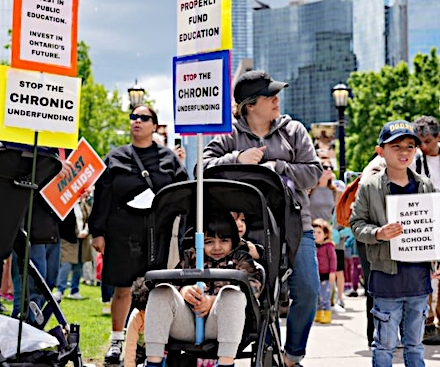
    Usurping trustees according to University of Ottawa professor Sachin Maharaj is just another step toward the Progressive Conservatives’ goal to “squelch the pipeline of more progressive leaders” like those gaining notice and experience attending to the needs of local schools.

    The banning of the Toronto Muslim Student Alliance’s screening of the film No Other Land, which documents Israeli settler violence, shows how censorship now masquerades as neutrality. This is the pedagogy of repression in action: narrowing what can be taught, remembered, or discussed until education is reduced to obedience training. What parades as a “broader rethink” is part of the authoritarian language of censorship and control. Like Trump’s attacks on “critical race theory” or his censorship of the Smithsonian, Ford’s moves are not about protecting students from politics but about protecting power from critique. The real issue here is constructing authoritarian policies that narrow critical thinking, teacher autonomy, essential funding, and knowledge that enable schools to both defend and facilitate democracy.

    For Ford and his adherents, the real issue is not that schools are failing but that they are public and have a vital role to play in a democracy. The real threat to Ford is that a democracy can only exist with informed citizens. Yet that is precisely the role education should assume.

    Bill 33: Codifying Authoritarianism

    The perversely named Bill 33, the Supporting Children and Students Act extends this authoritarian logic. It allows the Minister to investigate boards or trustees on the mere suspicion they might act “inappropriately” or against the “public interest” – an elastic phrase that grants unchecked power. It checks much-maligned Diversity Equity and Inclusion efforts by refusing boards the right to name schools, forcing them to abandon diversity-affirming figures in favor of colonial or sanitized names. It mandates the reintroduction of police officers into schools, despite community opposition to surveillance and “unaccountable access to youth by cops.”

    At work here is the legacy of colonialism, a legacy that is terrified of diversity, of those deemed other, being able to narrate themselves. Viewed as threat, this anti-democratic language ultimately falls back on issues of control and security. This is one instance of how authoritarianism consolidates itself, not through tanks in the streets but through legislation that transforms education into an arm of the security state. Pedagogical spaces are militarized, memory is policed, and students are taught that surveillance is normal and dissent dangerous.

    Trumpasitic Authoritarianism

    Ford’s methods echo those of his southern counterpart. Just as Trump’s politics thrive on dispossession, erasure, and the weaponization of culture, Ford borrows from the same authoritarian playbook. The takeover of school boards not only tightens political control but also grants easy access to billions of dollars in public land, enriching developers tied to his government. Here, neoliberal profiteering fuses seamlessly with authoritarian centralization, an example of the merging of gangster capitalism with the pedagogy of repression.

    What do you expect from a government that makes decisions reflecting the arrogance of power? The Ford government cut Toronto city council in half soon after took office in 2018 and threatened to use a constitutional override, the Notwithstanding Clause, Section 33 of Canada’s Charter of Rights and Freedoms, to overturn a Superior Court justice’s decision that the move was unconstitutional. Ford actually used the clause to push through a bill restricting election advertising in 2021 and again, pre-emptively, in 2022, buttressing back-to-work legislation against striking public workers, among the lowest paid in the province. He’s considering using it again after his decision to remove bike lanes from Toronto streets was overturned in court; power makes you petty.

    Democracy in the Smallest Details

    The takeover of Ontario school boards may appear less dramatic than Trump’s assaults on national institutions, but its implications are just as dire. Authoritarianism advances not only through spectacle but through the slow erosion of local democratic practices that once seemed secure.

    If fascism is a pedagogy of fear, amnesia, and conformity, then resistance must be a pedagogy of memory, solidarity, and imagination. To defend education is to defend democracy itself, for schools are not simply sites of instruction but laboratories of citizenship, places where young people learn what it means to speak, to question, to remember, and to act. When trustees are silenced, when curricula are censored, when communities are stripped of their voice, what is lost is not only oversight but the very possibility of democratic life.

    What is at stake, then, is far larger than budget shortfalls or bureaucratic reshuffling. It is whether the future will be governed by communities or dictated from above by those who mistake obedience for learning and silence for peace. Fascism thrives in these small erasures, in the details that seem technical until they harden into structures of domination.

    The lesson could not be clearer: democracy dies in increments, but it can also be rebuilt in increments – through collective memory, through civic courage, through the refusal to allow education to become a weapon of obedience. To resist the Ford government’s authoritarian incursions is not only to protect local school boards; it is to reclaim the very ground on which democratic hope stands. •
    Henry A. Giroux currently is the McMaster University Professor for Scholarship in the Public Interest and The Paulo Freire Distinguished Scholar in Critical Pedagogy. His most recent books include The Violence of Organized Forgetting (City Lights, 2014), Dangerous Thinking in the Age of the New Authoritarianism (Routledge, 2015), coauthored with Brad Evans, Disposable Futures: The Seduction of Violence in the Age of Spectacle (City Lights, 2015), and America at War with Itself (City Lights, 2016). His website is henryagiroux.com.

    William Paul is editor of School Magazine website.

    This article first appeared at the Social Project Bullet

    Source link

  • Language in the Age of Fascist Politics (Henry Giroux)

    Language in the Age of Fascist Politics (Henry Giroux)

    becomes all the more urgent and makes clear that the language of tyrants, embodied in the rhetoric, images, and modes of communication characteristic of the Trump regime, is a dead language. For her “a dead language is not simply one that is no longer spoken or written,” it is unyielding language “content to admire its own paralysis.” It is repressive language infused with power, censored and censoring. Ruthless in its policing duties and dehumanizing language, it has no desire or purpose other than maintaining the free range of its own narcotic narcissism, its own exclusivity and dominance. “Though moribund, it is not without effect” for it actively thwarts the intellect, stalls conscience, and “suppresses human potential.” Unreceptive to interrogation, it cannot form or tolerate new ideas, shape other thoughts, tell another story, or fill baffling silences. This is the language of official power whose purpose is to sanction ignorance and preserve. 

    As more people revolt against this dystopian project, neoliberal ideology and elements of a fascist politics merge to contain, distract and misdirect the anger that has materialised out of legitimate grievances against the government, controlling privileged elites and the hardships caused by neoliberal capitalism. The current crisis of agency, representation, values and language demands a discursive shift that can call into question and defeat the formative culture and ideological scaffolding through which a savage neoliberal capitalism reproduces itself. This warped use of language directly feeds into the policies of disposability that define Trump’s regime.

    State Terror and Trump’s Politics of Disposability

    As Trump’s regime concentrates power, he invokes a chilling convergence of law, order, and violence, a cornerstone of his politics of disposability. His acts of cruelty and lawlessness, abducting and deporting innocent people, branding immigrants as “vermin,” claiming they are “poisoning the blood” of Americans, and even proposing the legalization of murder for twelve hours, make clear that his violent metaphors are not just rhetorical flourishes. They are policy blueprints. In Trump’s hands, rhetoric becomes a weaponized prelude to atrocity, a tool of statecraft. Threats, hatred, and cruelty are transformed into instruments of governance.

    This is not careless talk, it is a brutal and calculated expression of power. Trump’s threats to arrest and deport critics such as Zohran Mamdani reveal his willingness to use the machinery of the state for political extermination. His targets are predictable: immigrants, Black people, educators, journalists, LGBTQ+ individuals, and anyone who dares to challenge his white Christian nationalist, neoliberal, and white supremacist vision. His language does not merely offend, it incites harm, enacts repression, and opens the gates to state-sanctioned violence. It extends the reign of terror across the United States by labeling protesters as terrorists and deploying the military to American cities, treating them as if they were “occupied territories.” 

    Trump is not alone. Many of his MAGA follower use these same hateful discourse. For instance, conservative pundit Ann Coulter wrote “in response to a speech by Melanie Yazzie, a Native artist and professor, about decolonization, “We didn’t Kill enough Indians.” This is not simply harsh rhetoric; nor is it a performative display of emboldened hatred and historical forgetting, it sets the stage for state-sanctioned repression and mass violence. What is at stake is more than civic respect. It is democracy itself. When language loses meaning and truth is blurred, tyranny thrives. Trump’s and too much of MAGA discourse is not about persuasion; it is about dehumanization and domination. It functions as statecraft, laying the groundwork for a society where suffering becomes spectacle and repression masquerades as law and order. Language is the canary in the coal mine, warning us that democracy dies without an informed citizenry.

    As Eddie Glaude Jr. has powerfully argued, Americans must confront a brutal truth: the creation and expansion of Immigration and Customs Enforcement (ICE), now the largest federal law enforcement agency, is not merely a matter of policy, it is a cornerstone of white supremacy. It is a racist institution, entrenched in an immigration policy designed to uphold the values of white nationalism. In the face of shifting demographics, ICE is tasked with an urgent mission—to make America white again, a calculated attempt to turn back the clock on progress, to preserve an imagined past at the cost of justice and humanity.

    We now live in a country where class and racial warfare both at home and abroad is on steroids, exposing the killing machine of gangster capitalism in its rawest, most punitive form. Trump supports the genocidal war waged by a state led by a war criminal. Children are being slaughtered in Gaza. Millions of Americans, including poor children, teeter on the edge of losing their healthcare. Funds for feeding hungry children are being slashed, sacrificed to feed the pockets of the ultra-rich. Thousands will die, not by accident, but by design. Terror, fear, and punishment have replaced the ideals of equality, freedom, and justice. Childcide is now normalized as the law of the land. The lights are dimming in America, and all that remains are the smug, ignorant smirks of fascist incompetence and bodies drained of empathy and solidarity.

    Gangster Capitalism and the Death of Empathy

    Gangster capitalism lays the foundation for Trump’s racist and fascist politics. As I have noted elsewhere, the United States has descended into a state of political, economic, cultural, and social psychosis, where cruel, neoliberal, democracy-hating policies have prevailed since the 1970s. At the core of this authoritarian shift lies a systemic war on workers, youth, Blacks, and immigrants, increasingly marked by mass violence and a punishing state both domestically and internationally. The U.S. has transformed into an empire dominated by a callous, greedy billionaire class that has dismantled any remnants of democracy, while embracing the fascistic ideology of white Christian nationalism and white supremacy. Fascism now parades not only beneath the flag but also under the Christian cross. 

    America has shifted from celebrating unchecked individualism, as depicted in Ayn Rand’s Atlas Shrugged, to the glorification of greed championed by Gordon Gekko in Wall Street, and the psychotic avarice of Patrick Bateman in American Psycho. This descent into barbarity and psychotic infatuation with violence is further demonstrated by Justin Zhong, a right-wing preacher at Sure Foundation Baptist Church in Indianapolis, who called for the deaths of LGBTQ+ individuals during a sermon. Zhong defended his comments by citing biblical justifications and labeling LGBTQ+ people as “domestic terrorists.” 
    It gets worse. During a Men’s Preaching Night at Sure Foundation Baptist Church, Zhong’s associate, Stephen Falco, suggested that LGBTQ+ people should “blow yourself in the back of the head,” and that Christians should “pray for their deaths.” Another member, Wade Rawley, advocated for violence, stating LGBTQ+ individuals should be “beaten and stomped in the mud” before being shot in the head. Fascism in America, nourished by the toxic roots of homophobia, now cloaks itself not just in the poisonous banner of the Confederate flag, but also in the sacred guise of the Christian cross.

    Welcome to Trump’s America, where empathy is now viewed as a weakness and the cold rule of the market is the template for judging all social relations. One noted example can be found in the words of Trump’s on-and-off billionaire ally, Elon Musk, who dismisses empathy as a naive and detrimental force that undermines the competitive, individualistic ethos he champions. Speaking to Joe Rogan on his podcast, Musk specifically stated that “The fundamental weakness of western civilization is empathy.” As Julia Carrie Wong observes in The Guardian, the stakes extend far beyond casting empathy as a “parasitic plague.” Empathy’s true danger lies in its role as an enabler—granting permission to dehumanize others and constricting the very “definition of who should be included in a democratic state.” This is a recipe for barbarism, one that allows both states and individuals to turn a blind eye to the genocidal violence unfolding in Gaza and beyond.

    Naming the Deep Roots of the Police State

    Ruth Ben-Ghiat has warned that “America has been set on a trajectory to become a police state,” pointing to the passage of the Brutal and Bellicose Bill (BBB), which handed ICE a budget larger than the militaries of Brazil, Israel, and Italy combined. But the roots of this state violence go deeper. The foundation was laid under Bush and Cheney, whose war on terror birthed Guantanamo, Abu Ghraib, mass surveillance, and extraordinary rendition. What Trump has done is strip these earlier authoritarian practices of all pretenses, elevating them to the status of governing principles.

    The police state did not begin with Trump; it evolved through him. Now, we see its terrifying maturity: racial cleansing disguised as immigration policy, hatred normalized as political speech, dissent criminalized, birthright citizenship threatened, and everyday life militarized. This is not politics as usual, it is fascism in real time.

    Trump’s fascist politics grows even more dangerous when we recognize that his language of colonization and domination has helped transform American society into what Ngũgĩ wa Thiong’o chillingly describes as a “war zone.” This war zone now spans the digital terrain—through the internet, podcasts, social media, and educational platforms—becoming a fertile breeding ground for fascist symbols, reactionary values, manufactured identities, and the toxic resurrection of colonial logics. In this battleground of meaning, the language of colonization does more than obscure the truth—it erodes critical thinking, silences historical memory, and disarms the very possibility of empowered agency. What remains in its wake is a nation scarred by suffering, haunted by loneliness, bound by shared fears, and anesthetized by the numbing rituals of a punishing state.

    The transformation of America into a war zone finds its most visible expression in the rise of Trump’s omnipresent police state. This authoritarian machinery reveals itself through the mechanisms of state-sponsored terror, a heavily militarized ICE force operating like masked enforcers, and the rapid expansion of detention centers that will increasingly resemble a network of potential forced labor camps. As Fintan O’Toole warns, Trump’s deployment of troops onto the streets of Los Angeles is not merely symbolic—it is “a training exercise for the army, a form of reorientation.” In this reorientation, soldiers are no longer defenders of the Constitution but are being retrained as instruments of authoritarian power, bound not by democratic ideals but by obedience to a singular will.

    Nevertheless, we resist or refuse to name the fascist threat and the ideological and economic architecture of its politics. Still, we recoil from calling the Trump regime what it is: a fascist state engaged in domestic terrorism. Still, we remain blind to the fact that economic inequality, global militarism, and the genocidal logics of empire are not peripheral issues, they are the center. Why is it so difficult to admit that we are living in an age of American fascism? Why do the crimes of the powerful, at home and abroad, so often pass without scrutiny, while the victims are blamed or erased?

    The Collapse of Moral Imagination

    What we face is not only a political crisis, partly in the collapse of conscience and civic courage– a profound moral collapse. The war being waged at home by the Trump regime is not just against immigrants or the poor, it is a war on critical thought, on historical memory, on the courage to dissent. It is a war on every institution that upholds critical thinking, informed knowledge, and civic literacy. This is a genocidal war against the very possibility of a just future—a war not merely against, but for stupidity, for the death of morality, and for the annihilation of any robust notion of democracy. Viktor Klemperer, in his seminal work The Language of the Third Reich, offers a crucial lesson from history: “With great insistence and a high degree of precision right down to the last detail, Hitler’s Mein Kampf teaches not only that the masses are stupid, but that they need to be kept that way, intimidated into not thinking.” Klemperer’s analysis reveals that Nazi politics did not arise in a vacuum; it was cultivated in a culture where language itself was the breeding ground of cruelty and control.

    Trump’s rhetoric of fear, racial hatred does not emerge in a vacuum. It resonates because it taps into a long and violent history, a history soaked in blood, built on genocide, slavery, colonialism, and exclusion. His language recalls the genocidal campaigns against Indigenous peoples, Black Americans, Jews, and others deemed disposable by authoritarian regimes. It is a necrotic lexicon, resurrected in service of tyranny. It gives birth to politicians with blood in their mouths, who weaponize nostalgia and bigotry, cloaking brutality in the false promises of patriotism and “law and order.”

    Language as War and the Return of Americanized Fascism

    This is not merely a rhetoric of cruelty, it is a call to arms. Trump’s words do not simply shelter fascists; they summon them. They silence dissent, normalize torture, and echo the logic of death camps, internment camps, and mass incarceration. His discourse, laden with hatred and lies, is designed to turn neighbors into enemies, civic life into war, and politics into a death cult and zone of terminal exclusion. Undocumented immigrants, or those seeking to register for green cards or citizenship, are torn from their families and children, cast into prisons such as Alligator Alcatraz, a grotesque manifestation of the punishing state. As Melissa Gira Grant writes in The New Republic, it is “an American concentration camp…built to cage thousands of people rounded up by ICE,” constructed in a chilling display of colonial disregard, and erected on traditional Miccosukee land without so much as consulting the Tribe.

    This is the face of modern cruelty: language wielded as a tool to orchestrate a spectacle of violence, designed to degrade, divide, and erase. Culture is no longer a peripheral force in politics; it has become the central weapon in the rise of state terrorism. The language of war and complicity normalizes America’s transformation into a monstrous carceral state, a symbol of state-sponsored terror where due process is suspended, and suffering is not just an outcome but the point itself. 

    A culture of cruelty now merges with state sponsored racial terror, functioning as a badge of honor. One example is noted in Trump advisor Laura Loomer, who ominously remarked that “the wild animals surrounding President Donald Trump’s new immigration detention center… will have ‘at least 65 million meals.” Change.org, along with others such as Pod Save America co-host Tommy Vietor, noted that her comment “is not only racist, it is a direct emotional attack and veiled threat against Hispanic communities. This kind of speech dehumanizes people of color and normalizes genocidal language.” Her racist remark not only reveals the profound contempt for human life within Trump’s inner circle but also highlights how cruelty and violence are strategically used as both a policy tool and a public spectacle. Loomer’s remark is not an aberration, it is a symptom of the fascist logic animating this administration, where death itself becomes a political message. Her blood-soaked discourse if symptomatic of the criminogenic politics fundamental to the working of the Trump regime.

    The parallels to history are unmistakable. Loomer’s invocation of death as the outcome of detention recalls the Nazi designation of certain camps as Vernichtungslager, extermination camps, where as Holocaust survivor Primo Levi noted, imprisonment and execution were inseparable. Likewise, the U.S. internment of Japanese Americans during World War II, though often sanitized in public memory, operated under a similar logic of racial suspicion and collective punishment. The message in each case is clear, as Judith Butler has noted in her writing: some lives are rendered invisible, deemed unworthy of legal protection, of family, of dignity, of life itself. In fascist regimes, such spaces function not only as instruments of punishment but as symbolic theaters of power, meant to instill terror, enforce obedience, and declare which bodies the state has marked for erasure.

    For Trump, J.D. Vance, and their ilk, fascism is not a specter to be feared but a banner to be waved. The spirit of the Confederacy and the corpse-like doctrines of white supremacy, militarism, and neoliberal authoritarianism have returned, this time supercharged by surveillance technologies, financial capital, and social media echo chambers. In the spirit of the Trump regime, the symbols of the Confederacy are normalized. Confederate flags are now waved by neo-Nazis in public squares and parades, while Trump renames US warships and 7 military bases after Confederate officers, reinforcing a dangerous nostalgia for a past rooted in racism and rebellion against the very ideals of unity and equality that this nation claims to uphold.

    Higher Education and the Fight Against Authoritarianism

    Read More

    It should not surprise us that the American public has grown numb with the constant echo chamber of state terrorism playing out in multiple sites of attack. Powerful disimagination machines, mainstream media, right-wing propaganda platforms, tech billionaires, have flooded public consciousness with conspiracy theories, historical amnesia, and spectacularized images of immigrants and others being deported to prisons, foreign Gulags, and modern day black holes. These are not simply entertainment outlets; they are pedagogical weapons of mass distraction, breeding civic illiteracy and moral paralysis. Under their influence, the American people have been placed in a moral and political coma.

    White Nationalism and Reproductive Control

    Nowhere is this more evident than in the mainstream media’s failure to address the racial and ideological foundations of Trump’s agenda. His attacks on Haitian immigrants, the travel ban on seven African countries, the shutting down of refugee programs, and his open-door policy for white Afrikaners from South Africa are not merely racist; they are explicitly white nationalist. The same ideology drives attacks on women’s reproductive rights, revealing the deep racial and gender anxieties of a movement obsessed with white demographic decline. These are not isolated skirmishes, they are interconnected strategies of domination.

    These converging assaults, white nationalism, white supremacy, patriarchal control, and militarized life, manifest most vividly in the war on reproductive freedom. White nationalists encourage white women to reproduce, to hold back demographic change, while punishing women of color, LGBTQ+ people, and the poor. It is a violent calculus, animated by fantasies of purity and control.

    The Systemic Assault on Democracy

    This is a full-spectrum assault on democracy. Every act of cruelty, every racist law, every violent metaphor chips away at the social contract. A culture of authoritarianism is now used to demean those considered other, both citizens and non-citizens, critics and immigrants, naturalized citizens and those seeking such status. They are labeled as unworthy of citizenship now defined by the Trump regime as a privilege rather than a right. Meanwhile, a media ecosystem built on clickbait and erasure renders both such fascists as legitimate while making invisible the roots of suffering mass suffering and fear, all the while, turning oppression into spectacle and silence into complicity.

    In this fog, language itself is emptied of meaning. Truth and falsehood blur. As Paulo Freire warned, the tools of the oppressor are often adopted by the oppressed. We now see that the logic of fascism has seeped into the culture, eroding civic sensibility, destroying moral imagination, and rendering resistance almost unspeakable.

    The Normalization of Tyranny

    Trump’s authoritarian fantasies do not alienate his base, they galvanize it. What was once unthinkable is now policy. What was once fringe has become mainstream. Cruelty is not something to be deplored and avoided at all costs, it is a central feature of power, wielded with theatrical and spectacularized brutality. Under the current acting ICE Director, Todd Lyons, this punitive logic has intensified: Lyons oversees a $4.4 billion Enforcement and Removal Operations apparatus staffed by over 8,600 agents across 200 domestic locations, using militarized tactics, surprise raids, and aggressive targeting of immigrant communities to sustain a regime of fear. ICE’s presence is at the heart of Trump’s hyper-police state, and its funding has been greatly expanded to $170 billion under Trump’s new budget bill, creating what journalist Will Bunch calls Trump’s “own gulag archipelago of detention camps across a United States that’s becoming increasingly hard to recognize.”

    Meanwhile, figures like Tom Homan, who led ICE under Trump’s first term, laid the groundwork with Gestapo-style operations, midnight raids, family separations, and public declarations that undocumented immigrants “should be afraid”. As the “border tzar” under Trump, Homan has initiated deportation policies that are even more aggressively violent and cruel that those that took place in Trump’s first term as president. As Bunch notes, take the case of “the 64-year-old New Orleans woman, Donna Kashanian, who fled a tumultuous Iran 47 years ago, volunteered to rebuild her battered Louisiana community after Hurricane Katrina, never missed a check-in with U.S. immigration officials , and was snatched by ICE agents in unmarked vehicles while she was out working in her garden and sent to a notorious detention center.” These horror stories now take place daily in cities extending from Los Angeles to Providence, Rhode Island.

    A central player in this current regime of state terrorism, systemic racism, mass abductions, deportations, and the criminalization of dissent is Stephen Miller, Trump’s White House Deputy Chief of Staff. During Trump’s first term, Miller was the driving force behind the Muslim ban, the family separation policy, and assaults on birthright citizenship, all rooted in an unapologetic white supremacist and eugenicist worldview. In Trump’s second term, he has emerged as the architect of even more draconian measures, pushing for mass deportations, the abolition of birthright citizenship, and the revocation of naturalized citizenship for those who fall outside his white Christian vision of who deserves to be called American.

    Far-right white nationalist such as Miller, Tom Homan and Todd Lyons, do not treat cruelty as a regrettable side effect. For them, cruelty is the currency of power. Suffering becomes a spectacle, and violence a ritual of statecraft. Tyranny is not inching forward in silence; it is advancing at full speed, cheered on by those who treat fear as a governing principle and pain as public policy. At stake here is what Timothy Snyder calls the practice of fascist dehumanization.

    This is not a passing storm. It is the death throes of a system that has long glorified violence, commodified everything, and fed on division. Trump’s language is not a performance, it is preparation. His words are laying the foundation for a society without empathy, without justice, without democracy.

    Reclaiming the Language of Resistance, Reclaiming Democracy

    In a decent society, language is the lifeblood of democracy, a vessel of solidarity, truth, and hope. But in Trump’s America, language has become a weapon, dehumanizing, excluding, and dominating. His vision is not a warning; it is a blueprint. We must resist, or we risk losing everything. The stakes are nothing less than the survival of democracy, the retrieval of truth and the refusal to live in a world where cruelty is policy and silence is complicity. 

    What is needed now is not only a rupture in language but a rupture in consciousness, one that brings together the critical illumination of the present with a premonitory vision of what lies ahead if fascist dynamics remain unchecked. As Walter Benjamin insisted, we must cultivate a form of profane illumination, a language that disrupts the spectacle of lies and names the crisis in all its violent clarity. At the same time, as A.K. Thompson argues, we must grasp the future implicit in the present. His notion of premonitions urges us to read the events unfolding around us as urgent warnings, as signs of the catastrophe that awaits if we do not confront and reverse the political and cultural paths we are on. It demands that we see the connections that bind our suffering, rejecting the fragmented reality that neoliberalism forces upon us. 
    The time for complacency is past. The time for a new and more vibrant language, one of critique, resistance, and militant hope, is now. A language capable not only of indicting the present but of envisioning a future rooted in justice, memory, and collective struggle.

    As Antonio Gramsci remarked in his Prison Notebooks, “The crisis consists precisely in the fact that the old is dying and the new cannot be born; in this interregnum a great variety of morbid symptoms appear.” What is clear is that these morbid symptoms have arrived. Yet, alongside the despair they breed, they also present new challenges and opportunities for revitalized struggles. This is where the power of language comes into play—this is the challenge and opportunity for those who believe in the transformative power of culture, language, and education to address not just the nature of the crisis but its deeper roots in politics, memory, agency, values, power, and democracy itself.

    [This article first appeared in the LA Progressive.]


    By Henry A. Giroux

    Henry A. Giroux currently holds the McMaster University Chair for Scholarship in the Public Interest in the English and Cultural Studies Department and is the Paulo Freire Distinguished Scholar in Critical Pedagogy. His latest book is The Burden of Conscience: Educating Beyond the Veil of Silence (Bloomsbury in 2025). He is LA Progressive’s Associate Editor. His website is www.henryagiroux.com

    Source link

  • Capitalism and Culture, Their Connection in Crisis Now (Richard Wolff with Henry Giroux)

    Capitalism and Culture, Their Connection in Crisis Now (Richard Wolff with Henry Giroux)

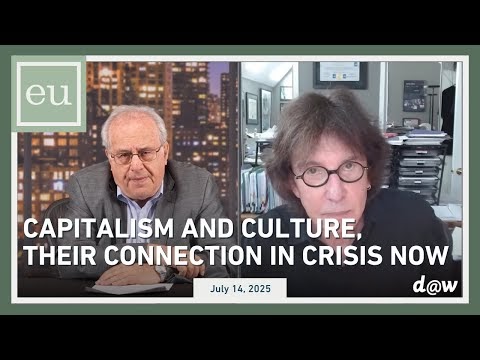
    On this week’s episode of Economic Update, Professor Wolff provides updates on Medicare advantage and “pre-authorization” as a way to reduce Medicare payments, liberals and radicals split over Mamdani, Trump’s current budget further deepens the inequality of wealth across the US, and Mexico attends the BRICS meeting in Rio de Janeiro. In the second part of today’s show, Professor Wolff interviews Professor Henry Giroux from McMaster University, Canada, on capitalism, culture, and fascism in the U.S. today.

    Source link

  • Higher Education Inquirer : Forgetting Henry George

    Higher Education Inquirer : Forgetting Henry George

    As American colleges and universities spiral deeper into debt, corporatization, and social irrelevance, it is worth asking not just what ideas dominate the landscape—but what ideas have been buried, neglected, or deliberately forgotten. Among the most significant casualties in our intellectual amnesia is Georgist economics, a once-influential school of thought that offered a radical, yet practical, alternative to both capitalism’s excesses and socialism’s centralization. And in today’s extractive academic economy—what Devarian Baldwin calls the “UniverCity”—its insights are more relevant than ever.

    The Ghost of Henry George

    Henry George, a 19th-century American political economist, is best known for his seminal work Progress and Poverty (1879), in which he argued that while technological and economic progress increased wealth, it also deepened inequality—primarily because the gains were siphoned off by landowners and monopolists. His solution was deceptively simple: tax the unearned income from land and natural monopolies, and use that revenue to fund public goods and social services.

    At one time, George’s ideas inspired political movements, policy debates, and even academic curricula. He was considered a serious rival to Karl Marx and a practical philosopher for American reformers, including the early labor movement. Cities like San Francisco saw brief experiments with land value taxation. But today, outside niche think tanks and the occasional urban planning circle, Georgism is a faint echo, barely audible in the halls of economic departments or public policy schools.

    The University and the Land

    If we look at contemporary higher education through a Georgist lens, what emerges is a sobering picture. Colleges and universities are not merely neutral grounds for the exchange of ideas—they are massive holders of land, beneficiaries of public subsidies, and agents of displacement. Institutions from NYU to the University of Chicago to Arizona State have used their nonprofit status and real estate portfolios to expand into communities, often gentrifying and pricing out working-class and BIPOC residents.

    At the same time, these same institutions profit from a credentialing economy built on a foundation of student loan debt. Over 43 million Americans collectively owe more than $1.6 trillion in federal student loans, an economy of indebtedness that props up tuition-driven institutional budgets while shackling generations of graduates. The very students who attend these universities, often in the hope of upward mobility, find themselves trapped in debt servitude—subsidizing administrative bloat, sports franchises, and real estate empires they will never own.

    This is where Devarian Baldwin’s work becomes critical. In In the Shadow of the Ivory Tower, Baldwin exposes how universities have become “anchor institutions,” deeply embedded in the urban fabric—not just through education, but through policing, property development, hospital systems, and labor exploitation. These institutions accumulate wealth not by producing new knowledge, but by extracting rents—social, economic, and literal—from their surroundings.

    Baldwin and George, though a century apart, are speaking to the same fundamental economic injustice: wealth flowing upwards through property and privilege, at the expense of the many.

    Why Georgism Was Forgotten

    So why has Georgism disappeared from mainstream education? The answer lies partly in the success of those it sought to regulate. Landowners and financiers, who stood to lose the most from land value taxation, worked diligently to discredit George’s theories. Neoclassical economics, with its abstract models and marginal utility curves, became the dominant language—obscuring the real-world power dynamics of land and labor.

    Universities, especially elite ones, adopted this neoclassical framework, increasingly aligning their interests with those of capital. Philanthropic foundations and corporate donors funded economic departments and think tanks that promoted market fundamentalism. Over time, Georgism—radical yet rooted in common sense—was pushed out of the curriculum.

    This forgetting wasn’t accidental. It was ideological.

    A Forgotten Game with a Forgotten Message

    A striking example of Georgism’s cultural erasure lies in the very board game that has taught generations about capitalism: Monopoly. Originally created in the early 20th century by a woman named Elizabeth Magie, the game was first called The Landlord’s Game and was explicitly designed to illustrate Henry George’s ideas. Magie’s intent was pedagogical—she wanted players to see how land monopolies enriched a few while impoverishing others, and to promote George’s remedy of a single land tax.

    But over time, the game was appropriated and rebranded by Parker Brothers and later Hasbro, stripped of its Georgist message and recast as a celebration of ruthless accumulation. What began as a cautionary tale about inequality became a glorification of it—a metaphor for how George’s ideas were not just buried but inverted.

    In that sense, Monopoly is the perfect symbol for the American university: a system that once had the potential to democratize opportunity but now functions as a machine for privatizing wealth and socializing risk, leaving students and communities to pick up the tab.

    What Higher Education Could Learn—and Teach

    If the goal of higher education is to educate an informed, critical citizenry, then forgetting Georgist economics is not just an intellectual oversight—it’s a moral failure. Henry George offered a vision of society where value created by the community is returned to the community. In the age of student debt, university land grabs, and deepening inequality, this vision is urgently needed.

    Imagine a higher education system where public revenue from land values funds debt-free college. Imagine a world where students no longer mortgage their futures for degrees whose value is increasingly uncertain. Imagine colleges not as engines of gentrification but as stewards of local wealth, investing in community-owned housing and cooperatives. Imagine students learning about economics not just as math problems, but as moral questions about justice, equity, and the public good.

    Devarian Baldwin’s scholarship, much like George’s, invites us to interrogate power structures and imagine alternatives. It’s time for a revival of that imagination.

    Relearning the Unlearned

    Reclaiming Georgist economics in the academy would not be a return to some golden past, but a reckoning with the present. It would mean confronting the rentier logic at the heart of higher education—and the debt-based financing that sustains it—and reorienting our institutions toward justice and common prosperity.

    In a moment when so much of American higher ed is collapsing under its own contradictions, perhaps what’s needed is not another billion-dollar endowment or ed-tech unicorn, but an idea long buried: that land—and learning—should belong to the people.

    For the Higher Education Inquirer, this is part of an ongoing inquiry into the pasts we forget, the futures we imagine, and the power structures that shape both. 

    Source link

  • Historian Dr. Jonathan Holloway to Lead Henry Luce Foundation Following Rutgers Presidency

    Historian Dr. Jonathan Holloway to Lead Henry Luce Foundation Following Rutgers Presidency

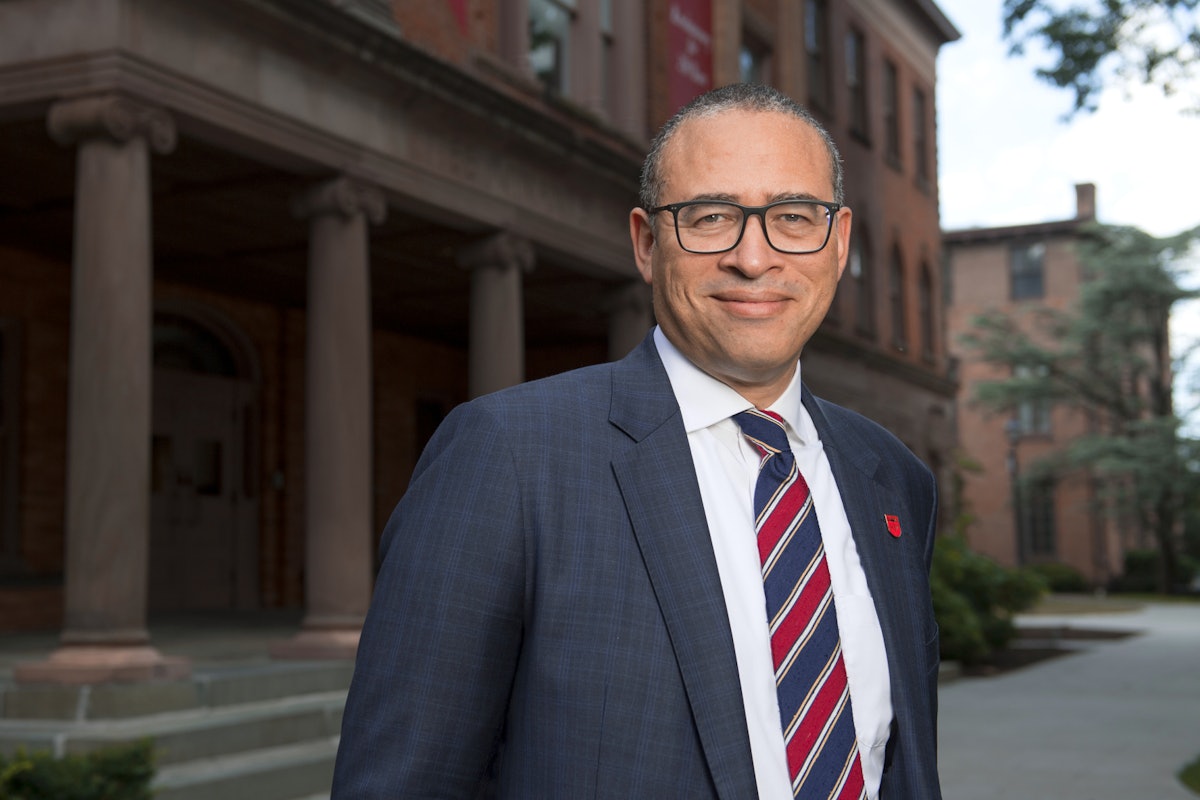
    Dr. Jonathan HollowayDr. Jonathan Holloway has been named the new President and CEO of the Henry Luce Foundation, following his five-year presidency at Rutgers University.

    The Henry Luce Foundation announced on Friday, that Holloway will become its seventh President and CEO in the organization’s 89-year history. The Foundation’s Board Co-Chairs, Debra Knopman and Terry Adamson, praised Holloway as “an eminent historian, a respected scholar of the humanities, a public intellectual, and an influential leader in higher education,” highlighting his “thoughtful approach to collaboration” and “firm commitment to the Foundation’s long-term view.”

    Holloway, who will succeed Dr. Mariko Silver (who departed in October 2024 to lead the Lincoln Center for the Performing Arts), expressed his enthusiasm for the new role.

    “I am honored to join the Henry Luce Foundation after I complete my tenure at Rutgers and to build upon its decades of remarkable work to foster discussion across differences, improve public discourse, and nurture ideas that will strengthen communities.”

    Holloway’s appointment comes after his term as Rutgers’ 21st president and first Black president in the university’s 250-year history. His tenure saw both accomplishments and challenges. In September 2023, the Rutgers University Senate passed a no-confidence vote (89-47) citing concerns about shared governance following decisions including the merger of medical schools and his handling of a faculty strike.

    Despite these challenges, Holloway championed several initiatives during his Rutgers presidency. He established the Rutgers Scarlet Service program, providing students with paid internships at nonprofit and government organizations. He also launched the Rutgers Democracy Lab at the Eagleton Institute of Politics in November 2024, focusing on democratic engagement and civil discourse. Under his leadership, the university saw record-breaking freshman enrollment with increased diversity and research grants reaching an unprecedented $970 million.

    Like many university presidents nationwide, Holloway navigated the complex landscape of campus protests, testifying before Congress about his administration’s response to demonstrations.

    Prior to Rutgers, Holloway served as provost at Northwestern University and held faculty roles at Yale University, where he was also Dean of Yale College. His scholarly work focuses on post-emancipation U.S. history, particularly social and intellectual history. He has authored several notable publications, including African American History: A Very Short Introduction and Jim Crow Wisdom: Memory & Identity in Black America Since 1940.

    The Luce Foundation Board expressed confidence that Holloway’s “exceptional listening skills, patience, and transparency will be instrumental in addressing the complex challenges that lie ahead” as the organization continues its work fostering discourse and strengthening communities.

    Source link

  • Trump’s Authoritarian Assault on Education (Henry Giroux, Truthout)

    Trump’s Authoritarian Assault on Education (Henry Giroux, Truthout)

    Did
    you know that Truthout is a nonprofit and independently funded by
    readers like you? If you value what we do, please support our work with
    a donation.

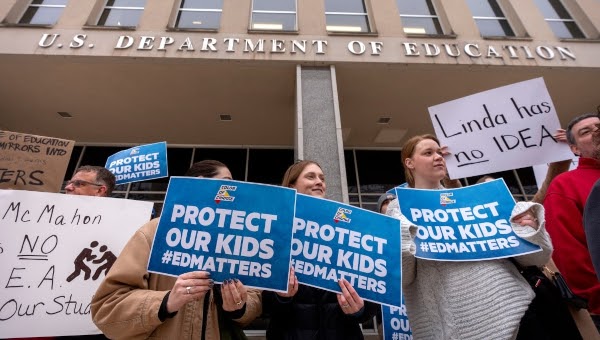
    Trump appears bent on ridding schools of dangerous practices like critical thinking and an unsanitized study of history.

    In the initial days of his second term, President Donald Trump issued several executive orders “seeking
    to control how schools teach about race and gender, direct more tax
    dollars to private schools, and deport pro-Palestinian protesters.”
    On January 29, 2025, he signed the “Ending Radical Indoctrination in K-12 Schooling
    executive order, which mandates the elimination of curricula that the
    administration deems as promoting “radical, anti-American ideologies.”
    This executive order is not just an attack on critical race theory or
    teachings about systemic racism — it is a cornerstone of an
    authoritarian ideology designed to eliminate critical thought, suppress
    historical truth and strip educators of their autonomy. Under the guise
    of combating “divisiveness,” it advances a broader war on education as a
    democratizing force, turning schools into dead zones of the
    imagination. By threatening to strip federal funding from institutions
    that refuse to conform, this policy functions as an instrument of
    ideological indoctrination, enforcing a sanitized, nationalistic
    narrative that erases histories of oppression and resistance while
    deepening a culture of ignorance and compliance.

    Concurrently, President Trump issued the “Expanding Educational Freedom and Opportunity for Families
    executive order, aiming to enhance school choice by redirecting federal
    funds to support charter schools and voucher programs. This policy
    enables parents to use public funds for private and religious school
    tuition. While proponents claim that this legislation empowers parents
    and fosters competition, in reality, it is a calculated effort to defund
    and privatize public education, undermining it as a democratizing
    public good. As part of a broader far right assault on education, this
    policy redirects essential resources away from public schools, deepening
    educational inequality and advancing an agenda that seeks to erode
    public investment in a just and equitable society.

    In the name of eliminating radical indoctrination in schools, a third executive order,
    which purportedly aims at ending antisemitism, threatens to deport
    pro-Palestinian student protesters by revoking their visas, warning that even those legally in the country could be targeted
    for their political views. In a stark display of authoritarianism,
    Trump’s executive order unapologetically stated that free speech would
    not be tolerated. Reuters
    made this clear in reporting that one fact sheet ominously declared: “I
    will … quickly cancel the student visas of all Hamas sympathizers on
    college campuses, which have been infested with radicalism like never
    before. To all the resident aliens who joined in the pro-jihadist
    protests, we put you on notice: come 2025, we will find you, and we will
    deport you.”

    By gutting federal oversight, he is handing the fate of education to
    reactionary state legislatures and corporate interests, ensuring that
    knowledge is shaped by a state held captive by billionaires and far
    right extremists. This is the logic of authoritarianism: to hollow out
    democratic institutions and replace education with white Christian
    propaganda and a pedagogy of repression. At issue here is an attempt to
    render an entire generation defenseless against the very forces seeking
    to dominate them.

    What we are witnessing is not just an educational crisis but a
    full-scale war on institutions that not only defend democracy but enable
    it. What is under siege in this attack is not only the critical
    function of education but the very notion that it should be defined
    through its vision of creating a central feature of democracy, educating
    informed and critically engaged citizens.

    These executive actions represent an upgraded and broader version of
    McCarthyite and apartheid-era education that seeks to dictate how
    schools teach about race and gender, funnel more taxpayer dollars into
    private institutions, and deport Palestinian protesters. The irony is
    striking: The White House defends these regressive measures of
    sanitizing history, stripping away the rights of transgender students
    and erasing critical race theory as efforts to “end indoctrination in
    American education.” In truth, this is not about the pursuit of freedom
    or open inquiry, nor is it about fostering an education that cultivates
    informed, critically engaged citizens. At its core, this agenda is a
    deliberate attack on education as a public good — one that threatens to
    dismantle not only public institutions, but the very essence of public
    and higher education and its culture of criticism and democracy. The
    urgency of this moment cannot be overstated: The future of education
    itself is at stake.

    In the raging currents of contemporary political and cultural life,
    where fascist ideologies are rising, one of the most insidious and
    all-encompassing forces at play is the violence of forgetting — a plague
    of historical amnesia. This phenomenon, which I have referred to as “organized forgetting,
    describes the systemic erasure of history and its violent consequences,
    particularly in the public sphere. This is especially evident in the
    current historical moment, when books are banned in
    libraries, public schools and higher education across countries, such
    as the United States, Hungary, India, China and Russia. Ignoring past
    atrocities, historical injustices and uncomfortable truths about a
    society’s foundation is not merely an oversight — it constitutes an
    active form of violence that shapes both our collective consciousness
    and political realities. What we are witnessing here is an assault by
    the far right on memory that is inseparable from what Maximillian
    Alvarez describes as a battle over power — over who is remembered, who
    is erased, who is cast aside and who is forcibly reduced to something
    less than human. This struggle is not just about history; it is about
    whose stories are allowed to shape the present and the future. Alvarez captures this reality with striking clarity and is worth quoting at length:

    Among the prizes at stake in the endless war of politics is history
    itself. The battle for power is always a battle to determine who gets
    remembered, how they will be recalled, where and in what forms their
    memories will be preserved. In this battle, there is no room for neutral
    parties: every history and counter-history must fight and scrap and
    claw and spread and lodge itself in the world, lest it be forgotten or
    forcibly erased. All history, in this sense, is the history of empire — a
    bid for control of that greatest expanse of territory, the past.

    Organized forgetting also helped fuel the resurgence of Donald Trump,
    as truth and reason are being systematically replaced by lies,
    corruption, denial and the weaponization of memory itself. A culture of
    questioning, critique and vision is not simply disappearing in the
    United States — it is actively maligned, disparaged and replaced by a
    darkness that, as Ezra Klein
    observes, is “stupefyingly vast, stretching from self-destructive
    incompetence to muddling incoherence to authoritarian consolidation.”

    This erosion affects institutions of law, civil society and education
    — pillars that rely on memory, informed judgment and evidence to foster
    historical understanding and civic responsibility. The attack on the
    common good goes beyond the distractions of an “attention economy designed
    to distort reality; it reflects a deliberate effort to sever the ties
    between history and meaning. Time is reduced to fragmented episodes,
    stripped of the shared narratives that connect the past, present and
    future.

    This crisis embodies a profound collapse of memory, history,
    education and democracy itself. A culture of manufactured ignorance —
    rooted in the rejection of history, facts and critical thought — erases
    accountability for electing a leader who incited insurrection and
    branded his opponents as “enemies from within.” Such authoritarian
    politics thrive on historical amnesia, lulling society into passivity,
    eroding collective memory and subverting civic agency. This is
    epitomized by Trump’s declaration
    on “Fox & Friends” that he would punish schools that teach students
    accurate U.S. history, including about slavery and racism in the
    country. The call to silence dangerous memories is inseparable from the
    violence of state terrorism — a force that censors and dehumanizes
    dissent, escalating to the punishment, torture and imprisonment of
    truth-tellers and critics who dare to hold oppressive power accountable.

    At its core, the violence of forgetting operates through the denial
    and distortion of historical events, particularly those that challenge
    the dominant narratives of power. From the colonial atrocities and the
    struggles for civil rights to the history of Palestine-Israel relations,
    many of the most significant chapters of history are either glossed
    over or erased altogether. This strategic omission serves the interests
    of those in power, enabling them to maintain control by silencing
    inconvenient truths. As the historian Timothy Snyder
    reminds us, by refusing to acknowledge the violence of the past,
    society makes it far easier to perpetuate injustices in the present. The
    politics of organized forgetting, the censoring of history and the
    attack on historical consciousness are fundamental to the rise of far
    right voices in the U.S. and across the world.

    With the rise of regressive memory laws, designed to repress what
    authoritarian governments consider dangerous and radical interpretations
    of a country’s past, historical consciousness is transformed into a
    form of historical amnesia. One vivid example of a regressive memory law
    was enacted by Trump during his first term. The 1776 Report,
    which right-wingers defended as a “restoration of American education,”
    was in fact an attempt to eliminate from the teaching of history any
    reference to a legacy of colonialism, slavery and movements which
    highlighted elements of American history that were unconscionable,
    anti-democratic and morally repugnant. Snyder highlights the emergence
    of memory laws in a number of states. He writes in a 2021 New York Times article:

    As of this writing, five states (Idaho, Iowa, Tennessee, Texas and
    Oklahoma) have passed laws that direct and restrict discussions of
    history in classrooms. The Department of Education of a sixth (Florida)
    has passed guidelines with the same effect. Another 12 state
    legislatures are still considering memory laws. The particulars of these
    laws vary. The Idaho law is the most Kafkaesque in its censorship: It
    affirms freedom of speech and then bans divisive speech. The Iowa law
    executes the same totalitarian pirouette. The Tennessee and Texas laws
    go furthest in specifying what teachers may and may not say. In
    Tennessee teachers must not teach that the rule of law is “a series of
    power relationships and struggles among racial or other groups.”… The
    Idaho law mentions Critical Race Theory; the directive from the Florida
    school board bans it in classrooms. The Texas law forbids teachers from
    requiring students to understand the 1619 Project. It is a perverse
    goal: Teachers succeed if students do not understand something.

    A major aspect of this forgetting and erasure of historical memory is the role of ignorance,
    which has become not just widespread but weaponized in modern times.
    Ignorance, particularly in U.S. society, has shifted from being a
    passive lack of knowledge to an active refusal to engage with critical
    issues. This is amplified by the spectacle-driven nature of contemporary
    media and the increasing normalization of a culture of lies and the
    embrace of a language of violence, which not only thrives on distraction
    rather than reflection, but has become a powerful force for spreading
    bigotry, racial hatred and right-wing lies. In addition, the mainstream
    media’s obsession with spectacle — be it political drama, celebrity
    culture or sensationalist stories — often overshadows the more
    important, yet less glamorous, discussions about historical violence and
    systemic injustice.

    This intellectual neglect allows for a dangerous cycle to persist,
    where the erasure of history enables the continuation of violence and
    oppression. Systems of power benefit from this amnesia, as it allows
    them to maintain the status quo without having to answer for past
    wrongs. When society refuses to remember or address past injustices —
    whether it’s slavery, imperialism or economic exploitation — those in
    power can continue to exploit the present without fear of historical
    accountability.

    To strip education of its critical power is to rob democracy of its transformative potential.

    The cultural impact of this organized forgetting is profound. Not
    only does it create a void in public memory, but it also stunts
    collective growth. Without the lessons of the past, it becomes nearly
    impossible to learn from mistakes and address the root causes of social
    inequalities. The failure to remember makes it harder to demand
    meaningful change, while reproducing and legitimating ongoing far right
    assaults on democracy.

    The violence of organized forgetting is not a mere act of neglect; it
    is a deliberate cultural and intellectual assault that undercuts the
    foundations of any meaningful democracy. By erasing the past, society
    implicitly condones the ongoing oppression of marginalized groups and
    perpetuates harmful ideologies that thrive in ignorance. This erasure
    silences the voices of those who have suffered — denying them the space
    to speak their truth and demand justice. It is not limited to historical
    injustices alone; it extends to the present, silencing those who
    courageously criticize contemporary violence, such as Israel’s
    U.S.-backed genocidal war on Gaza, and those brave enough to hold power
    accountable.

    The act of forgetting is not passive; it actively supports systems of
    oppression and censorship, muffling dissent and debate, both of which
    are essential for a healthy democracy.

    Equally dangerous is the form of historical amnesia that has come to
    dominate our contemporary political and cultural landscape. This
    organized forgetting feeds into a pedagogy of manufactured ignorance
    that prioritizes emotion over reason and spectacle over truth. In this
    process, history is fragmented and distorted, making it nearly
    impossible to construct a coherent understanding of the past. As a
    result, public institutions — particularly education — are undermined,
    as critical thinking and social responsibility give way to shallow,
    sensationalized narratives. Higher education, once a bastion for the
    development of civic literacy and the moral imperative of understanding
    our role as both individuals and social agents, is now attacked by
    forces seeking to cleanse public memory of past social and political
    progress. Figures like Trump embody this threat, working to erase the
    memory of strides made in the name of equality, justice and human
    decency. This organized assault on historical memory and intellectual
    rigor strikes at the heart of democracy itself. When we allow the
    erasure of history and the undermining of critical thought, we risk
    suffocating the ideals that democracy promises: justice, equality and
    accountability.

    A democracy cannot thrive in the absence of informed and engaged
    agents that are capable of questioning, challenging and reimagining a
    future different from the present. Without such citizens, the very
    notion of democracy becomes a hollow, disembodied ideal — an illusion of
    freedom without the substance of truth or responsibility. Education, in
    this context, is not merely a tool for transmitting knowledge; it is
    the foundation and bedrock of political consciousness. To be educated,
    to be a citizen, is not a neutral or passive state — it is a vital,
    active political and moral engagement with the world, grounded in
    critical thinking and democratic possibility. It is a recognition that
    the act of learning and the act of being a citizen are inextricable from
    each other. To strip education of its critical power is to rob
    democracy of its transformative potential.

    Confronting the violence of forgetting requires a shift in how we
    engage with history. Intellectuals, educators and activists must take up
    the responsibility of reintroducing the painful truths of the past into
    public discourse. This is not about dwelling in the past for its own
    sake, but about understanding its relevance to the present and future.
    To break the cycles of violence, society must commit to remembering, not
    just for the sake of memory, but as a critical tool for progress.

    Moreover, engaging with history honestly requires recognizing that
    the violence of forgetting is not a one-time event but a continual
    process. Systems of power don’t simply forget; they actively work to
    erase, rewrite and sanitize historical narratives. This means that the
    fight to remember is ongoing and requires constant vigilance. It’s not
    enough to simply uncover historical truths; society must work to ensure
    that these truths are not forgotten again, buried under the weight of
    media spectacles, ideological repression and political theater.

    Ultimately, the violence of forgetting is an obstacle to genuine
    social change. Without confronting the past — acknowledging the violence
    and injustices that have shaped our world — we cannot hope to build a
    more just and informed future. To move forward, any viable democratic
    social order must reckon with its past, break free from the bonds of
    ignorance, and commit to creating a future based on knowledge, justice
    and accountability.

    The task of confronting and dismantling the violent structures shaped
    by the power of forgetting is immense, yet the urgency has never been
    more pronounced. In an era where the scope and power of new pedagogical
    apparatuses such as social media and AI dominate our cultural and
    intellectual landscapes, the challenge becomes even more complex. While
    they hold potential for education and connection, these technologies are
    controlled by a reactionary ruling class of financial elite and
    billionaires, and they are increasingly wielded to perpetuate
    disinformation, fragment history and manipulate public discourse. The
    authoritarian algorithms that drive these platforms increasingly
    prioritize sensationalism over substance, lies over truth, the
    appropriation of power over social responsibility, and in doing so,
    reinforce modes of civic illiteracy, while attacking those fundamental
    institutions which enable critical perspectives and a culture of
    questioning.

    The vital need for collective action and intellectual engagement to
    reclaim and restore historical truth, critical thinking and social
    responsibility is urgent. The present historical moment, both
    unprecedented and alarming, resonates with Antonio Gramsci’s reflection
    on an earlier era marked by the rise of fascism: “The old world is
    dying, and the new world struggles to be born; now is the time of
    monsters.”

    In the face of a deepening crisis of history, memory and agency, any
    meaningful resistance must be collective, disruptive and
    unapologetically unsettling — challenging entrenched orthodoxies and
    dismantling the forces that perpetuate ignorance and injustice. This
    struggle needs to be both radical in its essence and uncompromising in
    its demands for social change, recognizing education as inseparable from
    politics and the tangible challenges people face in their everyday
    lives. In this collective effort lies the power to dismantle the
    barriers to truth, rebuild the foundations of critical thought, and
    shape a future rooted in knowledge, justice and a profound commitment to
    make power accountable. Central to this vision is the capacity to learn
    from history, to nurture a historical consciousness that informs our
    present and to reimagine agency as an essential force in the enduring
    struggle for democracy. This call for a radical imagination cannot be
    confined to classrooms but must emerge as a transformative force
    embedded in a united, multiracial, working-class movement. Only then can
    we confront the urgent crises of our time.

    We’re resisting Trump’s authoritarian pressure.

    As
    the Trump administration moves a mile-a-minute to implement right-wing
    policies and sow confusion, reliable news is an absolute must.

    Truthout
    is working diligently to combat the fear and chaos that pervades the
    political moment. We’re requesting your support at this moment because
    we need it – your monthly gift allows us to publish uncensored,
    nonprofit news that speaks with clarity and truth in a moment when
    confusion and misinformation are rampant. As well, we’re looking with
    hope at the material action community activists are taking. We’re
    uplifting mutual aid projects, the life-sustaining work of immigrant and
    labor organizers, and other shows of solidarity that resist the
    authoritarian pressure of the Trump administration.

    As we work to dispel the atmosphere of political despair, we ask that you contribute to our journalism. Over 80 percent of Truthout’s
    funding comes from small individual donations from our community of
    readers, and over a third of our total budget is supported by recurring
    monthly donors.

    8
    days remain in our fundraiser, and you can help by giving today.
    Whether you can make a small monthly donation or a larger gift, Truthout only works with your support.

    This article is licensed under Creative Commons (CC BY-NC-ND 4.0), and you are free to share and republish under the terms of the license. 

    Source link