This audio is auto-generated. Please let us know if you have feedback.
Dive Brief:
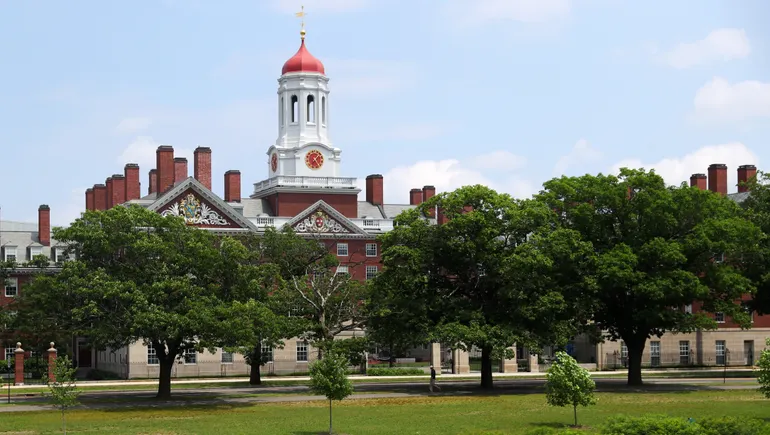
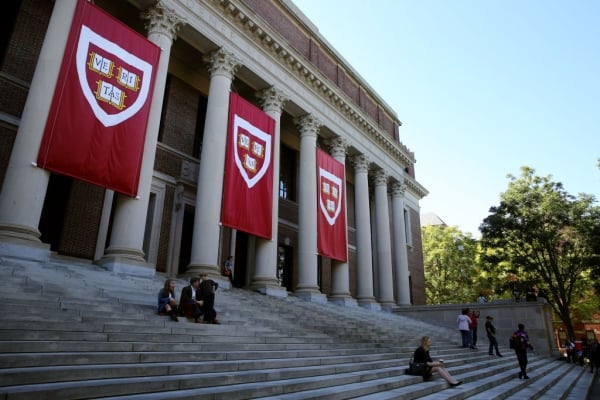
Harvard University could lose access to all federal grants and contracts under proceedings initiated by the U.S. Department of Health and Human Services on Monday.
The agency’s Office for Civil Rights has referred the university for suspension and debarment, the process by which the agency can cut off entities from federal grants and contracts if it determines that wrongdoing renders them “not responsible enough to do business” with the government.
The move represents the latest federal effort to bend Harvard to the Trump administration’s will through financial pressure. The administration has sought to use multiple federal agencies to gain increased influence over the higher education sector, singling out Harvard as a prime target.
Dive Insight:
On Monday, HHS’ OCR recommended excluding Harvard from federal funding, arguing the move would protect the public interest. The agency cited its June notice that formally accused Harvard of being in “violent violation” of Title VI by being “deliberately indifferent” to harassment of Jewish and Israeli students on its campus.
Title VI forbids institutions that accept federal funds from discriminating based on race, color or national origin.
HHS can pursue the debarment process when an entity — in this case Harvard — does not voluntarily agree with the agency’s terms to return to compliance with Title VI,according to Paula Stannard, director of HHS’ OCR. HHS and three other federal agencies on the Trump administration’s Joint Task Force to Combat Anti-Semitism in June called for Harvard to “institute adequate changes immediately”but did not publicly detail what those changes should be.
Stannard said Monday that Harvard has the right to a formal hearing during the suspension and debarment process.
“An HHS administrative law judge will make an impartial determination on whether Harvard violated Title VI by acting with deliberate indifference towards antisemitic student-on-student harassment,” Stannard said.
Harvard has 20 days to request the hearing. The university did not immediately respond to a request for comment on Tuesday.
Suspension and debarment applies to all federal grants and contracts, not just those from HHS. And agencies across the federal government can initiate suspension and debarment proceedings. If sustained, debarment is not permanent and typically lasts under three years, according to a 2022 HHS report.
Monday’s announcement is unrelated to HHS’ joint civil rights investigation with the U.S. Department of Education into Harvard and the Harvard Law Review.The agencies opened the probe in April,citing allegations of “race-based discrimination permeating the operations” of the student-run journal.
Months before HHS formally determined Harvard had violated Title VI, the Trump administration’s antisemitism task force froze over $2.2 billion of the university’s grants and contracts.
The halt cameafter Harvard President Alan Garber publicly rebuked the Trump administration’s call for increased federal control of the institution. Its demands includedthat the university hire a third party to audit the viewpoints of Harvard students and employees,halt all diversity, equity and inclusion efforts,and reduce the power of certain faculty and administrators involved in activism.
A federal judge ruled in early September that the Trump administration violated the university’s First Amendment rightsand didn’t follow proper steps when it suspended the funding. No evidence indicated that “fighting antisemitism was Defendants’ true aim in acting against Harvard,” the judge wrote.
The judge’s decision barred the Trump administration from cutting off Harvard’s federal funding in retaliation for the university exercising its free speech rights or without following the procedural requirements of Title VI. However, the judge noted that her ruling didn’t prevent the Trump administration from “acting within their constitutional, statutory, or regulatory authority.”
Trump administration officials appealed the decision and said it would keep Harvard “ineligible for grants in the future.”
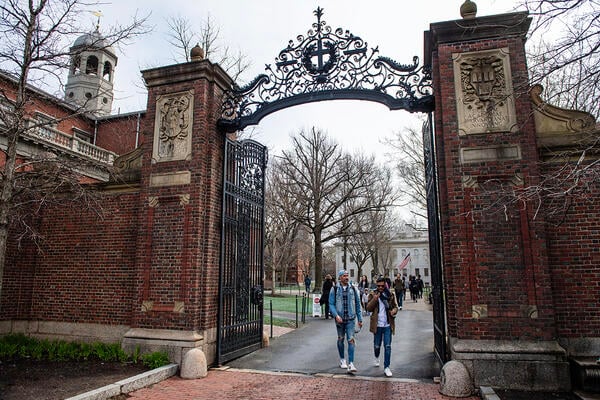
Harvard is facing increasing pressure from the Trump administration after winning back its frozen grants in court.
Joseph Prezioso/AFP/Getty Images
The U.S. Department of Health and Human Services’ Office for Civil Rights announced Monday that it’s moving to cut off Harvard University’s eligibility to receive federal funding.
The announcement comes amid a power struggle between Harvard and the White House.
While the Trump administration has accused Harvard of allowing antisemitism to run amok on campus—and the university has acknowledged concerns on the front—it has sought sweeping power over the institution and changes that go beyond addressing antisemitism. The HHS Office for Civil Rights previously found that Harvard violated Title VI of the Civil Rights Act of 1964, which bars discrimination based on race, color and national origin, and acted with “deliberate indifference toward discrimination and harassment against Jewish and Israeli students,” according to an HHS news release.
Now HHS OCR has recommended cutting off federal funding to Harvard “to protect the public interest” through a suspension and debarment process operated by the HHS Office of the Assistant Secretary for Financial Resources. Suspension would be temporary and debarment would last “for a specified period as a final determination that an entity is not responsible enough to do business with the federal government because of the wrongdoing,” according to the agency. The move comes less than two weeks after the Education Department placed Harvard on heightened cash monitoring—a highly unusual move given the university’s significant resources.
Harvard did not immediately respond to a request for comment Monday.
“OCR’s referral of Harvard for formal administrative proceedings reflects OCR’s commitment to safeguard both taxpayer investments and the broader public interest,” HHS OCR director Paula M. Stannard said in a statement. “Congress has empowered federal agencies to pursue Title VI compliance through formal enforcement mechanisms, including the termination of funding or denial of future federal financial assistance, when voluntary compliance cannot be achieved.”
Harvard has 20 days to request a hearing in front of an HHS administrative law judge, who will decide whether the university violated Title VI.
Monday’s announcement is the latest salvo by the federal government after Harvard emerged initially victorious in a legal battle over more than $2 billion in frozen federal research funding. While a judge ruled that the Trump administration illegally froze funds granted to Harvard, the federal government has continued to pressure the private institution to make changes to disciplinary processes, admissions, hiring and more. Other Ivy League institutions, such as Columbia University and Brown University, have agreed to such deals, under federal scrutiny.
In June, in an escalation of the Trump administration’s pressure on Harvard University to bow to its demands, a federal Office for Civil Rights announced that the institution was violating federal law.
The office released a nearly 60-page report accusing Harvard of “deliberate indifference” to ongoing discrimination against Jewish and Israeli students, which is illegal under Title VI of the Civil Rights Act of 1964. “OCR’s findings document that a hostile environment existed, and continues to exist, at Harvard,” the office said in an accompanying news release.
But this wasn’t the Education Department’s Office for Civil Rights. It was an office of the same name within the Health and Human Services Department that’s been playing a more public role as part of Trump’s crackdown on higher ed. Officials who served in previous administrations said agencies used to generally defer to the Education Department when it came to civil rights issues in higher ed. But since Trump retook office, colleges and universities are facing increased pressure from probes by HHS and other agencies enforcing the new administration’s right-wing interpretation of civil rights.
HHS OCR said it began its Harvard investigation in February by looking into the university’s medical school, after alleged antisemitism during the May 2024 graduation ceremony. But, in April, it widened its probe to “include Harvard University as a whole and to extend the timeframe of review to include events and information from October 7, 2023, through the present.” (The HHS OCR has jurisdiction over institutions that accept HHS funding, including National Institutes of Health research grants and Medicaid dollars.)
And this wasn’t the HHS OCR’s only investigation into parts of Harvard that didn’t appear related to health or medicine. The news release noted the “findings released today do not address OCR’s ongoing investigation under Title VI into suspected race-based discrimination permeating the operations of the Harvard Law Review journal.” And Harvard is just one of several universities that this non–Education Department OCR has targeted since Trump retook the White House in January.
Civil rights advocates say the HHS OCR has become just one more pawn in Trump’s strategy to target universities and end protections and programs that aid minority groups. For universities, Trump’s HHS OCR represents a new threat to their funding if they’re accused of promoting diversity, equity and inclusion; fostering antisemitism; or letting transgender women play on women’s sports teams.
It’s unnecessary to do what the administration is doing now, unless one is operating like a mob boss.”
—Catherine Lhamon, former head of OCR at the Education Department
The office’s investigations and public denunciations add to the work of the ED OCR, which the Trump administration has also shifted to focus on the same issues. The two OCRs announced a joint finding of violations against Columbia University, but they’ve also trumpeted independent probes into other institutions.
“As we feared, the Trump administration is abusing civil rights tools to advance a radical and divisive agenda that aggressively hoards access to education, living wage jobs, and so much more,” the NAACP Legal Defense Fund said in a statement. “Unfortunately, HHS and many other federal agencies are being used as one of the vehicles to carry out that agenda.”
The Legal Defense Fund said, “Colleges and universities are being targeted precisely because of the critical role they play in opening the doors of opportunity and preparing the next generation to lead our multi-racial democracy. By attacking institutions that help level the playing field for Black students and other students of color, the Trump administration is ultimately weakening our democracy and our economy as a whole.”
Former officials at the Justice Department, to which HHS OCR can forward cases if the targets of investigations don’t comply, told Inside Higher Ed that HHS OCR historically deferred probes into universities to the Education Department.
Catherine Lhamon, former director of the Education Department’s OCR under Presidents Biden and Obama, said, “There are 13 federal agencies with external civil rights enforcement, of which HHS is one, and it’s relatively large.” She said they’re pieces of Trump’s broader strategy.
“The administration has used every agency in a contemporaneous, simultaneous assault on universities,” Lhamon said, multiplying the amount of federal funding it can threaten.
The HHS OCR’s announced investigations under Trump show it’s investigating similar issues to the Education Department OCR—or what’s left of that office after the administration’s cuts. Lhamon said the practice for decades has been for the agency with principal expertise over an area to investigate that area—hence why universities were mostly investigated by the Education Department OCR.
“It’s unnecessary to do what the administration is doing now, unless one is operating like a mob boss,” Lhamon said.
An HHS spokesperson said, “We’re leading implementation of the president’s bold civil rights agenda,” which includes four focuses: upholding religious conscience rights, fighting antisemitism, ending race-based discrimination embedded in DEI programs and “defending biological truth” in sex-discrimination enforcement. She also said that fighting antisemitism, for instance, is a priority across the whole administration, “so our office is going to be a part of that and going to participate to the fullest extent that we can.”
It remains unclear how much of the HHS OCR’s daily workload is now devoted to Trump’s targeting of higher ed. HHS OCR did investigate higher ed institutions even before Trump took office, the HHS spokesperson said.
“We may be being more public about it now,” the spokesperson said, “particularly because that’s where the issue areas with respect to this administration are.”
She said the office also continues to investigate non–higher ed–related medical providers and non–civil rights issues that it has responsibility for despite the office’s name—such as information privacy under the Health Insurance Portability and Accountability Act.
The spokesperson said the HHS OCR news releases don’t tell the full story of what the office is currently investigating because—out of the roughly more than 40,000 complaints it receives annually—it doesn’t normally disclose which complaints lead to probes “to protect the integrity of the investigation.” The office also launches some investigations without receiving complaints, she said.
“In the past we’ve not announced through press releases that we’ve opened major investigations,” she said.
She didn’t provide Inside Higher Ed a list of the office’s current investigations. She also didn’t say how many employees HHS OCR has. HHS’s fiscal year 2026 budget request said that “in FY 2010, there were 111 investigators onboard, and in FY 2022, this number fell to 60, while simultaneously HHS received the highest number of complaints in its history (51,788).” (For comparison, the ED OCR, in a FY 2024 report, said it had received its highest-ever volume of complaints, but the number was only 22,687.)
Since taking power, the Trump administration has been slashing the federal workforce—the administration laid off nearly half of the Education Department’s OCR staff in March. It’s unclear how much HHS OCR has been cut. The FY 2026 budget request said the HHS OCR “has faced a continually growing number of cases in their backlog, rising to 6,532 cases by the end of FY 2024.” And that was before the office launched these new probes based on Trump’s priorities.
The HHS OCR receives roughly more than 40,000 complaints annually, a spokesperson said.
Kayla Bartkowski/Getty Images
A String of Investigations
Since Trump’s Jan. 20 inauguration, HHS OCR has announced a spate of higher ed investigations, mostly without naming the institutions. The spokesperson said most are ongoing.
In early February, it announced investigations of four unnamed medical schools, also citing reports of antisemitism during their 2024 commencements. (That was the same month the Harvard investigation began, HHS OCR later said, so Harvard was likely among the four.)
On Feb. 21, Trump told Maine governor Janet Mills during a televised White House event that her state must bar transgender women from women’s sports or lose federal funding, to which Mills replied, “See you in court.” In response to this, the HHS OCR issued a news release that same day announcing an investigation into “the Maine Department of Education, including the University of Maine System,” due to reports that the “state will continue to allow biological males to compete in women’s sports.” (The HHS spokesperson said the investigation eventually found that the most relevant issues were unrelated to higher ed.)
In March, the office announced investigations into four unnamed “medical schools and hospitals” over “allegations and information” concerning medical education or scholarships “that discriminate on the basis of race, color, national origin, or sex.” The news release didn’t have much further detail but referenced a Trump executive order targeting “illegal” diversity, equity and inclusion programs. Later that month—again citing the anti-DEI order—it announced it was investigating “a major medical school in California” over whether it “gives unlawful preference to applicants based on their race, color, or national origin.”
In April, it announced it was investigating an “HHS-funded organization” over whether it excludes “certain races” from a “health services research scholarship program.” Later in April, it launched an “online portal where whistleblowers can submit a tip or complaint regarding the chemical and surgical mutilation of children”—the Trump administration’s phrase for gender-affirming care. Simultaneously, it announced it’s investigating “a major pediatric teaching hospital” for allegedly firing a whistleblower nurse who “requested a religious accommodation to avoid administering puberty blockers and cross-sex hormones to children.” (The HHS spokesperson said the first Trump administration brought a focus on religious conscience rights to the office that disappeared under Biden but has now returned.)
Also in April, it announced a second Harvard probe: a joint investigation with the Education Department’s OCR into both Harvard and the Harvard Law Review “based on reports of race-based discrimination permeating the operations of the journal.” The HHS OCR news release said an editor of the law journal “reportedly wrote that it was ‘concerning’ that ‘[f]our of the five people’ who wanted to reply to an article about police reform ‘are white men.’” The office also raised concern about another editor allegedly suggesting expedited review for an article because the author was a minority.
In May, the HHS OCR announced it’s investigating a “prestigious Midwest university” over alleged discrimination against Jewish students. Later that month came its announcement of its joint finding with the Education Department OCR that Columbia University violated Title VI through “deliberate indifference towards student-on-student harassment of Jewish students.” (This was part of the administration’s pressure campaign on Columbia that culminated with a controversial July settlement.)
In June came the HHS OCR’s Title VI finding against Harvard in the investigation of alleged antisemitism. Then, in July, HHS OCR said it was investigating “allegations of systemic racial discrimination permeating the operations of Duke University School of Medicine and other components of Duke Health,” which includes “other Duke health professions schools” and “health research programs across Duke University.” In a statement alongside that announcement, HHS secretary Robert F. Kennedy Jr. said, “Federal funding must support excellence—not race—in medical education, research, and training.”
And last week, after months of silence on new higher ed–related investigations, the HHS OCR announced an investigation into the legal scholarship of an HHS-funded “national organization,” over allegations that it “preferences applicants of certain races and national origin groups.”
Lhamon, the former Education Department OCR head, said what the administration has called civil rights investigations into Harvard, Columbia and other universities aren’t really investigations. She noted the administration has used a “mob theory” by going ahead and pulling HHS and other funding from multiple institutions before the investigations are over.
Instead, she said, this is “an assault on universities, which is a very different thing from ensuring compliance with the civil rights laws as Congress has enacted them.”
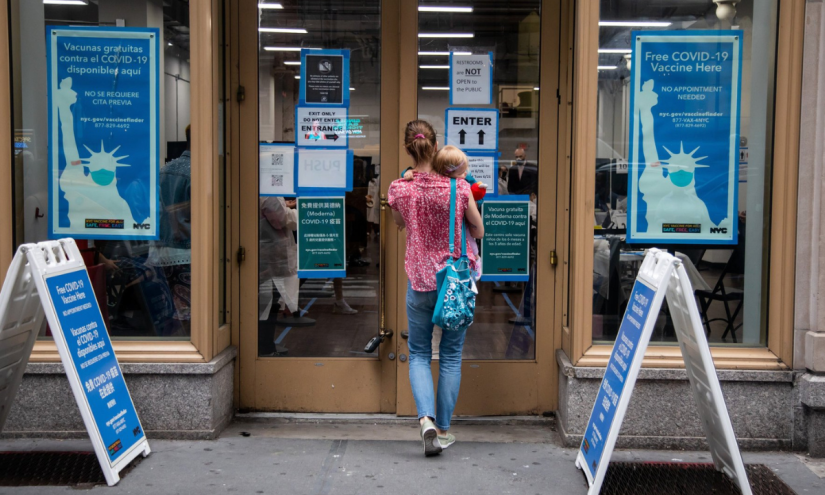
The federal government’s latest guidelines for COVID-19 vaccines make it difficult to know who, exactly, will be able to access shots this fall. While Health and Human Services Secretary Robert F. Kennedy Jr. and some of his staff claim anyone will be able to access a shot in consultation with their doctor, medical groups are warning that the new guidance will impact a broad swath of people, including postpartum people and healthy children.
“For children and young adults that I see, there are constraints, and they are significant,” said Dr. Molly O’Shea, a pediatrician in Michigan and a spokesperson for the American Academy of Pediatrics (AAP).
It might also take several more weeks to know who will be able to receive no-cost COVID-19 vaccines covered by health insurance. That decision partly depends on formal recommendations from a vaccine panel that isn’t scheduled to meet until mid-September.
Actions by the Food and Drug Administration last week mean that none of the COVID-19 vaccines that are slated to be on the U.S. market this fall will have an emergency use authorization that had allowed their quick (yet still rigorously tested) approval at the height of the pandemic. The removal of this designation means the drug company Pfizer will no longer offer COVID-19 vaccines to very young children, limiting parents’ brand options and potentially impacting supply.
Moderna, Pfizer and Novavax, the three main COVID-19 vaccine manufacturers, have all shared news releases about what they’ve been approved to offer:
Moderna, Pfizer or Novavax will offer shots to anyone who is 65 and older, irrespective of medical history.
Pfizer will offer shots to anyone between the ages of five and 64 if they have at least one underlying condition that puts them at high risk for severe outcomes from COVID-19.
Moderna will offer shots to anyone between six months and 64 if they have at least one underlying condition that puts them at high risk for severe outcomes from COVID-19.
Novavax, the only company providing a non-mRNA COVID-19 vaccine, will offer shots to anyone between 12 and 64 if they have at least one underlying condition that puts them at high risk for severe outcomes from COVID-19.
The vaccine panel known as the Advisory Committee for Immunization Practices (ACIP) is expected to make formal recommendations on these FDA-approved vaccines, and those recommendations have historically determined whether insurance providers will cover a vaccine at no cost under insurance.
An HHS spokesperson did not immediately respond to a request for information and comment from The 19th, but in a post on X, Kennedy said: “These vaccines are available for all patients who choose them after consulting with their doctors.” Separately, USA Today reported on a document from HHS stating the FDA’s actions do “not affect access to these vaccines for healthy individuals. These vaccines remain available to those who choose them in consultation with their healthcare provider.”
Dr. Marty Makary, FDA commissioner, added in a separate X post: “100% of adults in this country can still get the vaccine if they choose. We are not limiting availability to anyone.”
But what that means practically for everyday people who want to access a COVID-19 shot — everything from whether their doctor will prescribe it, or if a pharmacy will be able to administer it, and whether there will be an out-of-pocket cost — is unclear for now.
How will it impact postpartum people?
Pregnant people are expected to still have access to the vaccine because the CDC continues to list pregnancy as an underlying condition that puts an individual at high risk for severe outcomes from COVID-19. (The list of at least two dozen conditions also includes chronic health conditions and immunocompromised conditions.)
Lactating and postpartum individuals must have an underlying medical condition to be eligible for one of the FDA’s approved vaccines, according to the American College of Obstetricians and Gynecologists (ACOG)’s understanding of the announcement. ACOG continues to recommend COVID-19 vaccination to people who are contemplating pregnancy, are pregnant, were recently pregnant or are now lactating.
“We recognize that now, disappointingly, only lactating and postpartum individuals with an underlying condition will be eligible for vaccination. Still, it remains critical that pregnant patients receive the vaccines so that they are able to provide passive immunity from COVID-19 to their infants in those first few months of life before they can be vaccinated,” said ACOG President Steven J. Fleischman in an email.
How will it impact healthy children?
Healthy children will likely still be able to access the COVID vaccine, but the cost for a parent or guardian, as well as availability, will be impacted by these decisions.
Charlotte A. Moser, co-director of the Vaccine Education Center at Children’s Hospital of Philadelphia, said parents who want to get their kids the COVID-19 vaccine should still be able to do so through what is called shared clinical decision-making in consultation with their child’s health care provider, according to the CDC’s current vaccine schedule. But it’s unclear whether this will change when ACIP meets again.
But physicians who prescribe a COVID-19 vaccine outside of the parameters of how the FDA approved them would be OKing use of the shot “off-label” — a designation that means a medical product is being used outside of how the FDA approved it. That raises questions about access and cost. Physicians might not be willing to prescribe off-label because of concerns about liability.
“I think that there will be a substantially smaller number of pediatricians, pharmacies, etc., who will be comfortable taking that risk,” O’Shea said.
Dr. Dial Hewlett, medical director of tuberculosis services at Westchester County Department of Health in New York and a spokesperson for the Infectious Diseases Society of America, said an off-label prescription might also not be covered by insurance.
“A mother or father can go in with their child and say, ‘I’d like for them to have the vaccine,’ but they may be told, ‘Well we’ll give it, but you’re going to have to pay $200,’” he said.
The science on COVID vaccines has consistently indicated they are safe for children to receive. (Joseph Prezioso / AFP / Getty Images)
Depending on the circumstances, pharmacists may also not be able to provide off-label vaccines. Some states tie pharmacist immunization authority to FDA approval,which has the potential to create a hodgepodge of access. The New York Times reported that CVS and Walgreens, the country’s largest pharmacy chains, have begun restricting COVID-19 shots in some states to people with a prescription.
“There may be some variability from state to state, but it’s a big barrier if FDA approval is not there, and the FDA approvals have been pulled back from where they were previously,” Hewlett said.
The FDA announcement is “concerning,” added Moser, who noted that limiting Pfizer’s vaccine will make it more difficult for all children to get a COVID-19 vaccine this year because of anticipated supply limitations.
O’Shea, the pediatrician in Michigan, said her office is currently deciding how many COVID-19 shots to stock, and it’s proving tricky as they weigh the cost vs. demand — the percentage of children under 18 getting the shot is under 15 percent.
“Figuring out how much we want to have at any one time, and how we are going to give it to people — this really makes it a lot more complicated,” she said.
What happens next?
Moser said the announcement adds confusion for providers and families, and noted that the unilateral approach by Kennedy so far when it comes to vaccine policy “removes hundreds of voices of clinicians and scientists that were part of the process.” Moser recently served on ACIP and is among the members that Kennedy removed. He has replaced the panel with people who do not have relevant experience.
“That army of voices ensured a process informed by clinical experience and scientific expertise to which the small group making these decisions now cannot possibly compare,” she said in an email.
The revamped ACIP panel is scheduled to meet over two days beginning on September 18. Republican Sen. Bill Cassidy, a doctor who is chair of the Senate Health, Education, Labor, and Pensions (HELP) Committee, is now questioning whether that panel has enough legitimacy to meet, especially amid a leadership shakeup at the Centers for Disease Control and Prevention.
“Serious allegations have been made about the meeting agenda, membership, and lack of scientific process being followed for the now announced September ACIP meeting,” he said in a statement. “These decisions directly impact children’s health and the meeting should not occur until significant oversight has been conducted. If the meeting proceeds, any recommendations made should be rejected as lacking legitimacy given the seriousness of the allegations and the current turmoil in CDC leadership.”
AAP called Kennedy’s latest COVID guidelines “deeply troubling” and urged COVID vaccine decision-making to remain between medical experts and families.
Dr. Susan J. Kressly, president of AAP, said in a statement that any barrier to COVID-19 vaccination as the nation enters the respiratory virus season creates “a dangerous vulnerability for children and their families.”
“Any parent who wants their child vaccinated should have access to this vaccine,” she said, adding that HHS’ action “not only prevents this option for many families, but adds further confusion and stress for parents trying to make the best choices for their children.”
The Health and Human Services Department has terminated the Minority Biomedical Research Support program, which provided colleges and universities grants to increase the number of minority faculty, students and investigators conducting biomedical research.
In a notice published Monday in the Federal Register, HHS secretary Robert F. Kennedy Jr. said the cancellation is to comply with two anti–diversity, equity and inclusion executive orders President Trump signed in January on his first two days back in office, plus the 2023 U.S. Supreme Court decision banning affirmative action in college admissions decisions. The change is effective Sept. 25.
“The MBRS program prioritizes racial classifications in awarding federal funding,” including by relying on “‘minority student enrollment’ to determine applicant eligibility,” Kennedy wrote. And, though the Supreme Court ruling focused on university admissions, Kennedy wrote that “the principles identified in Students for Fair Admissions also apply to the federal government and require repeal of the MBRS program.”
STAT reported the move earlier. Rochelle Newman, a University of Maryland psychologist who used the grant to pay undergraduate researchers and train them, told STAT that “cutting of these programs means that an entire generation of students will end up being lost to science.”
The Trump administration has accused Harvard University officials of failing to comply with an ongoing civil rights investigation into alleged campus antisemitism, The Boston Globe reported.
The U.S. Department of Health and Human Services said in a letter to Harvard president Alan Garber that it was referring the civil rights investigation to the U.S. Department of Justice, which it is permitted to do in cases where “compliance under Title VI cannot be obtained voluntarily.”
The letter, written by Paula Stannard, director of the HHS Office for Civil Rights, also referenced legal actions taken by Harvard, which has fought back against frozen federal research funding and other matters.
“Rather than voluntarily comply with its obligations under Title VI, Harvard has chosen scorched-earth litigation against the Federal government,” Stannard wrote. “The parties’ several months’ engagement has been fruitless.”
Harvard did not respond to a request for comment from Inside Higher Ed.
The letter comes as Harvard is reportedly considering a $500 million settlement with the Trump administration to close current investigations and unfreeze $2 billion in federal research funding. Harvard is reportedly mulling a settlement even though a judge appears to view its case favorably.
If Harvard settles, it will add to the list of wealthy and highly visible institutions that have yielded to the Trump administration’s demands in recent weeks. Columbia University agreed to far-reaching changes and a $221 million settlement to restore federal funding and close investigations into antisemitism on campus that stemmed from pro-Palestinian protests in 2024. Brown University also struck a deal with the Trump administration to restore $510 million in research funding, agreeing to various concessions but no payout to the federal government.
As a potential settlement with the Trump administration looms, some Harvard faculty members sent a letter to the president and board, urging Garber to push back on what they called “the Trump administration’s assault on the vibrancy and inclusiveness of U.S. higher education.”
Signed by multiple well-known scholars, the letter exhorted Garber not to “compromise core university and academic-freedom values that generations before us have worked to define and sustain,” and to resist ceding power to the federal government over hiring and admissions.
Texas state representative Brian Harrison has asked the U.S. Department of Health and Human Services to investigate his alma mater, Texas A&M University, for allegedly engaging in “discriminatory” student recruiting practices,The Dallas Express reported.
“In the state of Texas, government entities … should not be treating people differently based on anything other than merit,” Harrison told the outlet. “We have got to bring back a focus on meritocracy. And the president of Texas A&M brags about the fact that he’s doing it.”
According to a May letter to HHS acting general counsel Brian Keveney that Harrison posted on X, Texas A&M president Mark Welsh had sent him a letter “admitting @TAMU is still engaged in DEI courses and discriminatory ‘targeted recruiting’ practices.”
Welsh’s letter, which Harrison also included, criticizes the lawmaker for posting a video and other content online accusing the TAMU president of flouting the law.
“Your comments accompanying the video imply that the university is doing something illegal by engaging in ‘targeted’ student recruitment efforts,” Welsh’s letter says. “You’ve also posted about student groups and academic courses, which, like recruiting activities, are specifically exempted in the bill. Since you voted in favor of the law, you must also be aware of those exemptions.”
In his letter to Keveney, Harrison called Welsh’s defense—that Texas law does not explicitly ban targeted recruiting—“preposterous.” He asked HHS to “take any action[s] you or President Trump’s Task Force deem appropriate to ensure that Texas universities receiving federal funds are complying with the U.S. Constitution.”
Harrison told The Dallas Express that HHS had received his letter and is “taking it and handling it appropriately.”
On Thursday, the Department of Health and Human Services (HHS) published a 400-page analysis of research on gender-affirming care for transgender youth, as directed by President Donald Trump. The agency used the release of the report to declare that available science does not support providing gender-affirming care to trans youth. LGBTQ+ advocacy groups worry the report will be used to further restrict gender-affirming care and to change medical guidelines in ways that harm trans youth.
The president mandated the report in an executive order condemning the medical treatment — without evidence — as a form of mutilation, amid a broader push by the administration to exclude trans people from public life. Trump’s order asked the health agency to review the “best practices for promoting the health of children who assert gender dysphoria,” while pressuring youth clinics to halt treatment or lose federal funding.
Now, the HHS has produced that report. The agency combed through research on the outcomes of puberty blockers, hormone replacement therapy, social transition, psychotherapy, and the rare cases of surgeries on adolescents and young adults diagnosed with gender dysphoria.
Gender dysphoria, the reason that most trans people undergo gender-affirming care, is a strong and persistent distress felt when one’s body is out of sync with their gender identity. Without treatment, gender dysphoria can lead to severe negative impacts in day-to-day life.
The agency states in its executive summary of the report that the document is not meant to provide clinical practice guidelines or issue legislative or policy recommendations. However, the report does imply that health care providers should refuse to offer gender-affirming care to adolescents and young adults on the basis that such care comes with the potential for risk — despite little evidence for that risk actually being found in the report.
“The evidence for benefit of pediatric medical transition is very uncertain, while the evidence for harm is less uncertain,” the executive summary states. “When medical interventions pose unnecessary, disproportionate risks of harm, healthcare providers should refuse to offer them even when they are preferred, requested, or demanded by patients.”
In its research review,the HHS determined that evidence measuring the effects of gender-affirming care on psychological outcomes, quality of life, regret and long-term health is of “very low” quality. This conclusion ignores decades of research, as well as a recent survey of more than 90,000 transgender people in the United States that found an overwhelming majority report more life satisfaction after having transitioned. Access to gender-affirming care has been linked to lower odds of suicidality and depression in trans youth, while gender-affirming surgeries have been found to lower psychological distress for adults.
Even when analyzing research that the administration deemed low-bias, the HHS found “sparse” to no evidence of harm from gender-affirming care. What’s more, the report frequently found evidence demonstrating the benefits of gender-affirming care — though it ultimately downplays those findings as not significant.
Available research on puberty blockers found high satisfaction ratings and low rates of regret. A systematic review of hormone replacement therapy described improved gender dysphoria and body satisfaction. Another found that hormone treatment leads to improved mental health. Two before-and-after studies reported reduced treatment needs or lower levels of suicidality and self-harm after hormone treatment. When measuring safety outcomes of hormone treatment, side effects did not have a major impact on treatment and complications were limited.
Despite these findings, the Department of Health and Human Services advertised the report in a Thursday news release as one that “highlights a growing body of evidence pointing to significant risks” of gender-affirming care. At the White House briefing room Thursday, deputy chief of staff for policy Stephen Miller touted the new report and attributed the idea of being transgender as part of a “cancerous communist woke culture” that is “destroying this country.”
There are side effects to many of the medications that transgender people — and cisgender people — take to receive gender-affirming care, as is the case with most medical treatments. These side effects, like the risk of decreased bone density when taking puberty blockers, are closely monitored and treated by doctors and communicated to patients.
LGBTQ+ advocacy organizations denounced the report as a political attack on transgender youth. Multiple groups said that the report’s endorsement of psychotherapy as a “noninvasive alternative” to puberty blockers and hormone treatment amounts to an endorsement of conversion therapy — a practice wherein mental health professionals try to change a youth’s sexual orientation or gender identity.
“It is already clear that this report is a willful distortion of the evidence intended to stoke fear about a field of safe and effective medicine that has existed for decades, in order to justify dangerous practices which amount to conversion therapy,” said Sinead Murano Kinney, health policy analyst at Advocates for Trans Equality.
The Human Rights Campaign, the country’s largest LGBTQ+ rights organization, accused the HHS of producing a report that is attempting to lay the groundwork to replace medical care for trans and nonbinary people with conversion therapy.
“Trans people are who we are. We’re born this way. And we deserve to live our best lives and have a fair shot and equal opportunity at living a good life,” said Jay Brown, chief of staff at the Human Rights Campaign. “This report … lays the groundwork to push parents and doctors aside and allow politicians to subject our kids to the debunked practice of conversion therapy.”
No authors or contributors are named in the report or in its executive summary. The agency says these names are being initially withheld to “maintain the integrity of this process,” and states that chapters of the document were subject to peer review.
This audio is auto-generated. Please let us know if you have feedback.
Early childhood education advocates predict devastating impacts on young children from a series of federal staff reductions and proposed budget cuts to programs supporting low-income families.
Mass layoffs in the U.S. Department of Health and Human Services on April 1 led to the shuttering of five Office of Head Start regional offices: Boston, New York, Chicago, San Francisco and Seattle. The closed offices will be consolidated into the five remaining offices.
The regional offices provide federal policy direction, training and technical assistance to Head Start providers.
“This restructuring will not impact the critical services you rely on, and we are here to ensure a seamless experience as we move forward together,” wrote Laurie Todd-Smith, HHS deputy assistant secretary for early childhood development, in an April 3 announcement to Head Start grant recipients.
The move is part of a broader restructuring in HHS that is to save $1.8 billion, according to an agency press release on March 27.
The National Head Start Association, a nonprofit that represents children, families and educators, has urged the Trump administration to reconsider the office closures until a plan can be created and disseminated. “Closing these regional Head Start offices could create delays in essential program support and weaken the system that has successfully served millions of children for decades,” said NHSA in an April 1 statement.
The Trump administration says spending cuts at HHS and across the federal government are needed to reduce the country’s deficit and eliminate fiscal bloat and waste in federal agencies.
The Head Start move comes just a few months after HHS agreed to improve monitoring and reporting activities based on a U.S. Government Accountability Office report. The report found a small portion of Head Start programs that were operating under interim management in recent years had faced challenges from low student enrollment, unqualified staff and unsafe facilities.
Head Start, which celebrates its 60th anniversary this year, is a federally funded early childhood and pre-K program that serves infants, toddlers and preschool children from families with low incomes. It also provides prenatal services through Early Head Start.
In fiscal year 2023, the program was funded at $11.5 billion to serve 778,420 children and pregnant people in centers and through home-based programs, according to the Office of Head Start.
Closure of the regional offices could put young children at risk of abuse and other safety threats, early childhood advocates said during a Thursday press call hosted by The Child Care for Every Family Network.
“You can’t say you’re a champ of kids and then put kids at risk for abuse by gutting the very agency responsible for protecting America’s most vulnerable kids,” said Sen. Ron Wyden, D-Ore., during the press call.
The Head Start system was already in a precarious position earlier this year when the Trump administration froze federal funding in many agencies, asking that agency leaders assess how their fiscal programs conflict with President Donald Trump’s executive orders.
Even though the funding freeze was lifted just days later, NHSA said that even more than a week later, 52 Head Start grant recipients serving just under 20,000 children and families in 22 states, D.C. and Puerto Rico were still unable to access their already approved grant funding.
Stability of the child care system
Advocates are also concerned about stability of the broader child care and early childhood education infrastructure.
The Republican-led Congress is considering budget cuts that could significantly reduce programs that low-income families rely on, including Temporary Assistance for Needy Families and Social Services Block Grant.
Rep. Danny Davis, D-Ill, who was also on the press call, said all TANF and SSBG staff at HHS were laid off this week. “The mass layoffs for child care and Head Start programs are threatening the safety and care of children,” Davis said.
A recent report by the Center for Law and Social Policy found 40,000 children nationwide could lose access to child care if TANF and SSGB funding is cut. Children in California, Massachusetts and North Carolina would be hardest hit, according to the research.
The April 1 firings at HHS included all the staff in the Low Income Home Energy Assistance Program, a federally-funded initiative which helps vulnerable families afford their electricity and gas bills.
On Thursday, Wyden and Sen. Elizabeth Warren, D-Mass., introduced The Building Child Care for a Better Future Act, which proposes new, permanent funding of $20 billion per year for Child Care Entitlement to States allocations.
According to a statement about the legislation, individual child care costs range from $5,357 to $17,171 per year depending on location and type of care. The cost of center-based care for two children exceeds the average mortgage in 45 states and more than the average annual rent in all 50 states and the District of Columbia.
Nationally, 56% of early childhood educators surveyed said at least one child care center in their community closed over the past year, while 40% said centers opened, according to polling of nearly 10,000 workers by the National Association for the Education of Young Children. The survey data includes national and state-level responses.
Federal fiscal and workforce cuts “will ultimately mean child care will become less safe for children, more expensive for families, and even harder to find across all 50 states,” said Ruth Friedman, a senior fellow at The Century Foundation and director of the Office of Child Care at HHS under President Joe Biden.
This audio is auto-generated. Please let us know if you have feedback.
Federal special education operations, currently spearheaded by the U.S. Department of Education, will move to the U.S. Department of Health and Human Services, President Donald Trump said on Friday.
“It’s going to be a great situation. I guarantee that in a few years from now… I think that you’re going to have tremendous results,” said Trump, while seated in the Oval Office of the White House. Trump also said he would move federal student loan and school nutrition program oversight from the Education Department to the Small Business Administration.
Trump did not say when or how the transitions would occur. Additional information from the Education Department about logistics concerning the transfer of responsibilities was not available Friday afternoon.
U.S. Education Secretary Linda McMahon, in a Fox News interview Friday, said funding for the federal special education law — the Individuals with Disabilities Education Act — was in place before the creation of the Education Department in 1979. McMahon added that before the Education Department was created, special education programming was housed in what was then the U.S. Department of Health, Education and Welfare, “and it managed to work incredibly well.”
HHS Secretary Robert F. Kennedy, Jr. wrote on the social media platform X on Friday that HHS, “is fully prepared to take on the responsibility” of supporting students with disabilities. He added, “We are committed to ensuring every American has access to the resources they need to thrive. We will make the care of our most vulnerable citizens our highest national priority.”
.@HHSGov is fully prepared to take on the responsibility of supporting individuals with special needs and overseeing nutrition programs that were run by @usedgov. We are committed to ensuring every American has access to the resources they need to thrive. We will make the care of…
The Education Department oversees the distribution of about $15.4 billion for supports to about 8.4 million infants, toddlers, school children and young adults with disabilities. The department’s Office of Special Education and Rehabilatives Services and Office of Special Education Programs also conducts monitoring, provides technical assistance to states and districts, and holds states and districts accountable for compliance to IDEA.
The president’s comments come a day after he signed an executive order during a White House event directing McMahon to shutter the department to the “maximum extent appropriate.”
At the Thursday signing of the executive order and during comments on Friday, Trump said the low academic performance of U.S. students required a shakeup at the federal level.
He and his administration have also cited the desire to reduce federal bureaucracy in order to give more decision-making power to the state and local levels.
But public school supporters have vigorously denounced the Trump administration’s moves to dismantle the Education Department, which have already included reducing the workforce by half and canceling research and teacher preparation grants. At least one group — Democracy Forward — says it is planning legal action to stop the department shutdown.
Chad Rummel, executive director of the Council for Exceptional Children, said in a statement Friday, “IDEA is an education law, not a healthcare law, and belongs at the Department of Education.”
CEC is a nonprofit for professionals who work in special and gifted education.
Rummel added, “Moving IDEA programs to HHS would de-emphasize the purpose of IDEA to provide a free and appropriate public education and other critical activities to infants, toddlers, children, and youth with disabilities, and challenge the federal role to provide evidence-based research, personnel preparation, and technical assistance to advance the field of special education.”
National Parents Union President Keri Rodrigues said in a Friday statement, “This is not a minor bureaucratic reorganization — it is a fundamental redefinition of how our country treats children with disabilities.” The National Parents Union is a 1.7 million membership organization with more than 1,800 affiliated parent organizations in all 50 states, Washington, D.C., and Puerto Rico.
“We must call this what it is: an effort to dismantle protections, disempower families, and turn education into a battleground for profit-driven insurance corporations,” Rodrigues said. “We will not allow it.”