Tag: Higher education affordability

  • I earned my associate degree while still in high school, and it changed my life

    I earned my associate degree while still in high school, and it changed my life

    by Maxwell Fjeld, The Hechinger Report
    December 1, 2025

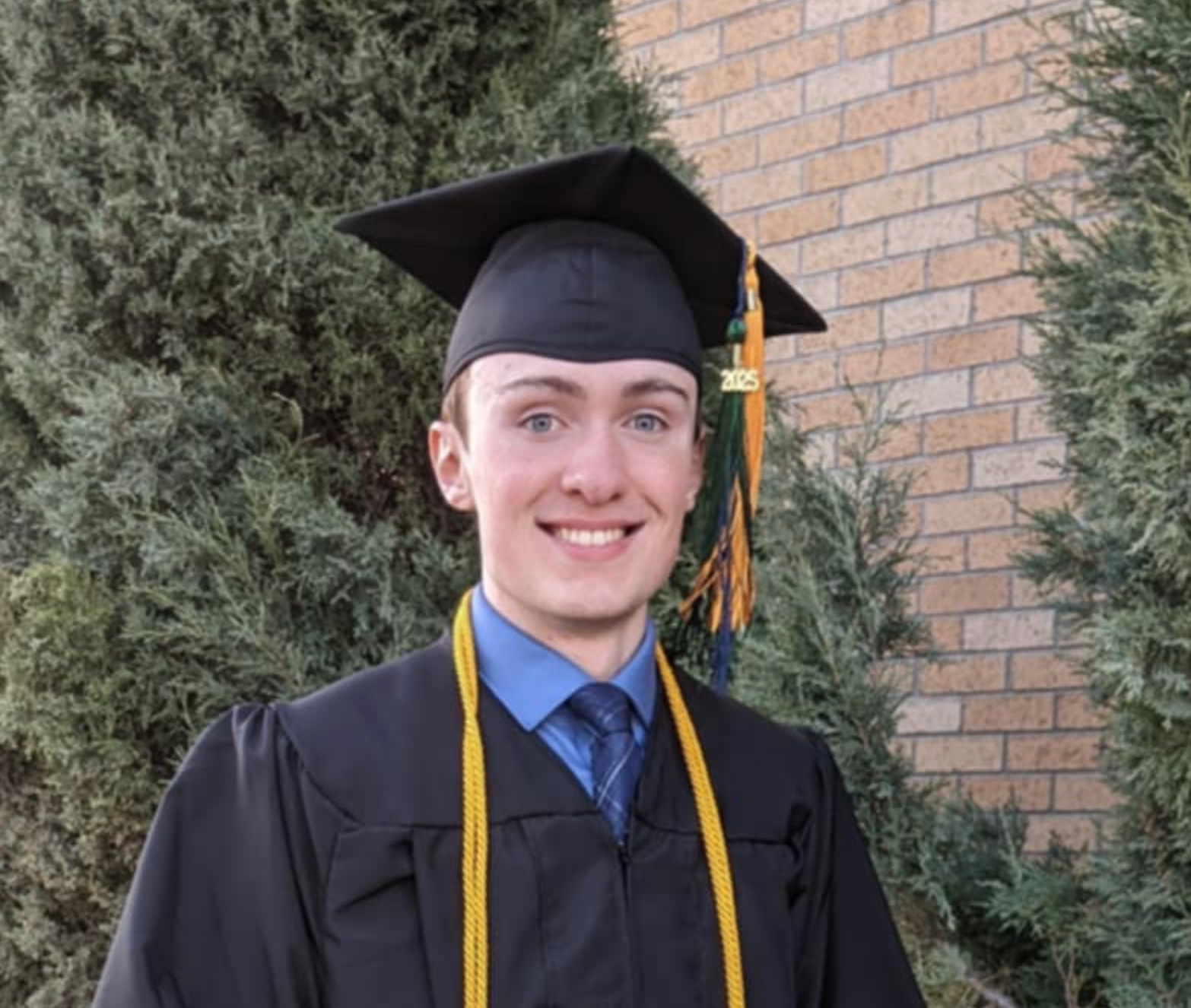
    Earning an associate degree alongside my high school diploma was an ambitious goal that turned into a positive high school experience for me. By taking on the responsibilities of a college student, I further prepared myself for life after high school.  

    I needed to plan out my own days. I needed to keep myself on task. I needed to learn how to monitor and juggle due dates, lecture times and exams while ensuring that my extracurricular activities did not create conflicts. 

    All of this was life-changing for a rural Minnesota high school student. Dual enrollment through Minnesota’s PSEO program saved me time and money and helped me explore my interests and narrow my focus to business management. After three years of earning dual credits as a high school student, I graduated from community college and was the student speaker at the commencement earlier this year in May — one month before graduating from high school. 

    As a student earning college credits while still in high school, I gained exposure to different career fields and developed a passion for civic engagement. At the beginning of my senior year, while taking courses at the local community and technical college, I was elected to serve as that school’s first cross-campus student body president. 

    Related: A lot goes on in classrooms from kindergarten to high school. Keep up with our free weekly newsletter on K-12 education.  

    While most states have dual-enrollment programs, Minnesota’s support for its PSEO students stands out. As policymakers consider legislative and funding initiatives to strengthen dual enrollment in other states, I believe that three features of our program could provide a blueprint for states that want to do more. 

    First, the college credits I earned are transferable and meet degree requirements.  

    Second, the PSEO program permitted me to take enough credits each semester to earn my associate degree. While the number of dual-enrollment credits high school students can earn varies by state and program, when strict limitations are set on those numbers, the program can become a barrier to higher education instead of an alternate pathway.  

    Third, Minnesota’s PSEO program limits the cost burden placed on students. With rising costs and logistical challenges to pursuing higher education credentials, the head start that students can create for themselves via loosened restrictions on dual-enrollment credits can make a real financial impact, especially for students like me from small towns. 

    Dual-enrollment costs vary significantly from state to state, with some programs charging for tuition, fees, textbooks and other college costs. In Minnesota, those costs are covered by the Department of Education. In addition, if families meet income requirements, the expenses incurred by students for education-related transportation are also covered.  

    If I did not have state support, I would not have been able to participate in the program. Financial support is a crucial component to being a successful dual-enrollment student. When the barrier of cost is removed, American families benefit, especially students from low-income, rural and farming backgrounds.  

    Early exposure to college helped me choose my major by taking college classes to experiment — for free. When I first started, I was interested in computer science as a major. After taking a computer science class and then an economics class the following semester, I chose business as my major.  

    The ability to explore different fields of study was cost-saving and game-changing for me and is an opportunity that could be just as beneficial for other students. 

    Targeted investments in programs like this have benefited many students, including my father in the 1990s. His dual-enrollment experience allowed him to get a head start on his education and gain valuable life skills at a young age and is a great example of dual enrollment’s potential generational impact. 

    Related: STUDENT VOICE: I’m thriving in my dual-enrollment program, but it could be a whole lot better 

    When dual-enrollment students receive guidance and support, it can be transformational. Early exposure to college introduced me to college-level opportunities. As student government president, I went to Washington, D.C., to attend a national student summit. I was able to meet with congressional office staffers and advocate for today’s students and for federal investment in dual-enrollment programs, explaining my story and raising awareness. 

    The daily life of high school is draining for some and can be devastating for others. I had many friends who came to believe that the bullying, peer-pressure and culture they experienced in high school would continue in college, so they deemed higher education “not worth it.” 

    Through dual enrollment, I saw the difference in culture; students who face burnout from daily high school life can refocus and feel good about their futures again. 

    Congress can help state legislatures by establishing strong dual-enrollment programs nationwide. With adequate government support, dual-enrollment programs can help students from all walks of life and increase college graduation rates. If all states offer access to the same opportunities that I had in high school, our next generation will be better prepared for the workforce and more successful. 

    Maxwell Fjeld is pursuing his bachelor’s degree at the University of Minnesota Twin Cities’ Carlson School of Management after earning an associate degree upon high school graduation through dual enrollment. He is also a student ambassador fellow at Today’s Students Coalition. 

    Contact the opinion editor at [email protected]. 

    This story about dual-enrollment programs was produced by The Hechinger Report, a nonprofit, independent news organization focused on inequality and innovation in education. Sign up for Hechinger’s weekly newsletter. 

    This <a target=”_blank” href=”https://hechingerreport.org/student-voice-i-earned-my-associate-degree-while-still-in-high-school-and-it-changed-my-life/”>article</a> first appeared on <a target=”_blank” href=”https://hechingerreport.org”>The Hechinger Report</a> and is republished here under a <a target=”_blank” href=”https://creativecommons.org/licenses/by-nc-nd/4.0/”>Creative Commons Attribution-NonCommercial-NoDerivatives 4.0 International License</a>.<img src=”https://i0.wp.com/hechingerreport.org/wp-content/uploads/2018/06/cropped-favicon.jpg?fit=150%2C150&amp;ssl=1″ style=”width:1em;height:1em;margin-left:10px;”>

    <img id=”republication-tracker-tool-source” src=”https://hechingerreport.org/?republication-pixel=true&post=113590&amp;ga4=G-03KPHXDF3H” style=”width:1px;height:1px;”><script> PARSELY = { autotrack: false, onload: function() { PARSELY.beacon.trackPageView({ url: “https://hechingerreport.org/student-voice-i-earned-my-associate-degree-while-still-in-high-school-and-it-changed-my-life/”, urlref: window.location.href }); } } </script> <script id=”parsely-cfg” src=”//cdn.parsely.com/keys/hechingerreport.org/p.js”></script>

    Source link

  • As the supply of applicants declines, college admissions gets kinder and gentler

    As the supply of applicants declines, college admissions gets kinder and gentler

    by Jon Marcus, The Hechinger Report
    November 18, 2025

    PLEASANTVILLE, N.Y. — As she approached her senior year in high school, the thought of moving on to college was “scary and intimidating” to Milianys Santiago — especially since she would be the first in her family to earn a degree.

    Once she began working on her applications this fall, however, she was surprised. “It hasn’t been as stressful as I thought it would be,” she said.

    It’s not that Santiago’s anxiety was misplaced: The college admissions process has been so notoriously anxiety inducing that students and their parents plan for it for years and — if social media is any indication — seem to consider an acceptance as among the greatest moments of their lives.

    It’s that getting into college is in fact becoming easier, with admissions offices trying to lure more applicants from a declining pool of 18-year-olds. They’re creating one-click applications, waiving application fees, offering admission to high school seniors who haven’t even applied and recruiting students after the traditional May 1 cutoff.

    The most dramatic change is in the odds of being admitted. Elite universities such as Harvard and CalTech take as few as 1 applicant in 33, but they are the exception. Colleges overall now accept about 6 in 10 students who apply, federal data show. That’s up from about 5 out of 10 a decade ago, the American Enterprise Institute calculates.

    “The reality is, the overwhelming majority of universities are struggling to put butts in seats. And they need to do everything that they can to make it easier for students and their families,” said Kevin Krebs, founder of the college admission consulting firm HelloCollege.

    This has never been as true as now, when the number of high school graduates entering higher education is about to begin a projected 15-year drop, starting with the class now being recruited. That’s on top of a 13 percent decline over the last 15 years.

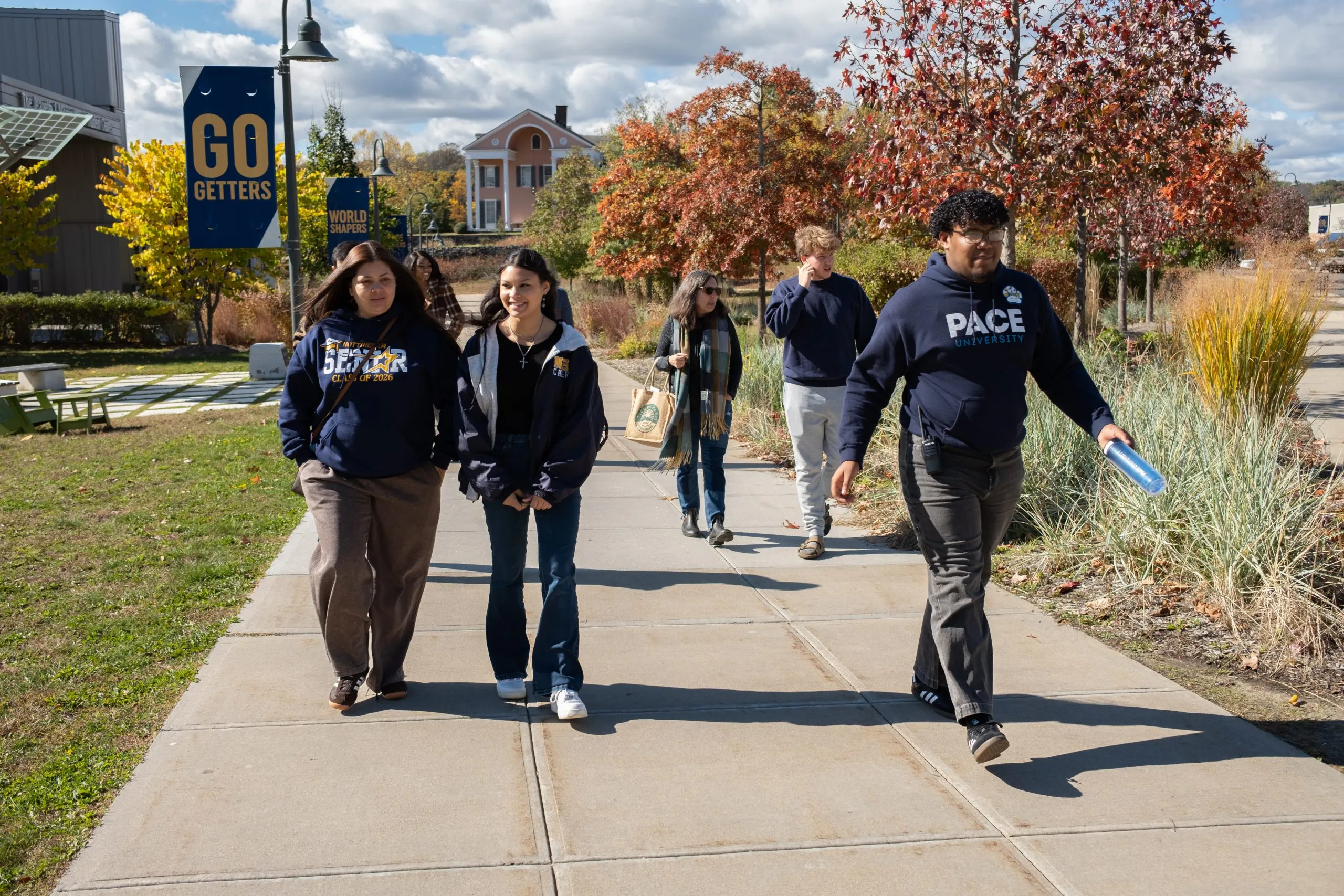
    Santiago, who lives in Hamilton, New Jersey, was waiting for a tour to start at Pace University as a video on repeat showed exuberant students and drone footage of the leafy, 200-acre grounds about 30 miles north of New York City, where the university also has a campus. 

    Related: Interested in more news about colleges and universities? Subscribe to our free biweekly higher education newsletter.

    Pace was one of 130 New York state colleges and universities that during October waived their application fees of from $50 to $90 per student, per school. That’s just one of the ways it’s trying to make admissions easier. 

    “That was a little eye-opening, when we received that letter,” Sueane Goodreau of Ithaca, New York, said about the free application offer as she waited for a tour of Pace’s campus with her high school senior son, Will. Compared to when her older daughter applied to college just three years ago, said Goodreau, “it does feel a little more receptive.”

    There was an even bigger incentive offered by Pace: Prospects such as Santiago and Goodreau who visit are promised an additional $1,000 a year of financial aid if they enroll. Applicants who come to visit a campus are twice as likely to enroll as those who don’t, research has found.

    The students’ names awaited them on a welcome sign at the reception desk in the office where tours depart. “You Belong Here,” pronounced another placard, on an easel in the waiting area. There was a QR code they could scan if they wanted to chat one-on-one with an admissions officer — who, in earlier times at many schools, were often unapproachable.

    “I feel like I’m already a student here,” Santiago quipped.

    The reason the university encourages that feeling? It’s simple, said Andre Cordon, dean of admission, in the distinctive pink Choate House at the center of the campus: “We want more students to apply. We don’t want to put up hurdles.”

    So many hurdles previously stood along the route to college admission, it’s become a part of popular culture. “Everyone thinks we’re sadists — that we like saying no,” noted Tina Fey in her role as a Princeton admissions officer in the 2013 movie “Admission.” 

    Related: The number of 18-year-olds is about to drop sharply, packing a wallop for colleges — and the economy 

    Perceptions such as those are hard to change. Not only do young Americans aged 18 to 29 believe it isn’t any easier to get into college than it was for people in their parents’ generation, 45 percent of them think it’s harder, a Pew Research Center survey found. More than three-quarters say the admissions process is complex, and more than half that it’s more stressful than anything else they’ve done during their time in elementary, middle or high school, according to a separate survey, by the National Association for College Admission Counseling, or NACAC.

    “People have that notion that all campuses are in the same category as MIT, Harvard, Stanford” with their impossibly low acceptance rates, said Cordon. (Pace took 76 percent of its applicants last year, university statistics show.) And “teenagers are still teenagers. There’s anxiety no matter what. They overthink things, and they overthink the admissions process.”

    There’s also still a lot of genuine emotion in the process, he said. For many parents, “It’s a pride thing. It’s a status thing. It’s showing off. Or from the student’s side, it’s, ‘I want to make my parents proud.’ ”

    In the new world of university admissions, however, that no longer necessarily even requires filling out an application.

    “Congratulations! You’ve been admitted,” a new California State University website tells prospective students, before they enter a single piece of information about themselves. 

    Cal State is the latest system to deploy so-called direct admission: They will automatically accept any student who earns at least a C in a list of required high school courses, starting in January for students in some and expanding the following year to every high school in the state.

    Related: To fill seats, more colleges offer credit for life experience

    Public universities or systems in Alabama, Arizona, Connecticut, Georgia, Hawai’i, Idaho, Illinois, Indiana, Minnesota, New York, North Carolina, Tennessee, Texas, Utah, Washington and Wisconsin also now offer various forms of direct admission — some beginning this fall — accepting students automatically if they meet certain high school benchmarks.

    Several systems now allow students to apply to several public universities and colleges with a single application, avoiding the time-consuming process of completing different forms, writing essays, collecting letters of recommendation or paying fees. 

    Through Illinois’s new One Click College Admit, for instance, high school students can have their transcripts provided instantly to 10 of the state’s 12 four-year public universities and all of its community colleges and get back a guaranteed offer of admission to at least one, depending on their grades.

    “Especially first-generation students, they don’t have that knowledge of how to apply to college,” said José Garcia, spokesman for the Illinois Board of Higher Education. “That’s among the people we’re trying to reach — those who might be intimidated by the name of an institution or not feel confident in their academic abilities or their grades.”

    Several of these programs have been advocated for public institutions by governors and legislatures worried about a continued supply of college-educated workers in their states as the proportion of high school graduates going on to get degrees declines.

    “Basically we need to have a bigger pipeline,” said David Troutman, deputy commissioner for academic affairs at the Texas Higher Education Coordinating Board. “We have to do everything we can to open that door to all students, not just a few. So we have to make sure we’re making the process as painless as we can.”

    Now private colleges are jumping aboard the direct-admission bandwagon. More than 210 have arranged through the Common App — an online application used by about 1,100 institutions nationwide — to extend offers of direct admission for the coming academic year to students who filed the Common App but have not applied. That’s almost twice as many as signed on last year, when Common App says 119 institutions in 35 states made more than 733,000 unsolicited offers. 

    It’s still early to definitively know the effect of this on whether students ultimately enroll. In Idaho, which in 2015 became the first state to try direct admission, enrollment of first-time undergraduates at participating public universities rose 11 percent

    Direct admission by itself does not resolve the other reasons students forgo college, however, said James Murphy, director of postsecondary policy at the nonprofit Education Reform Now, which advocates for more access to and diversity in higher education.

    “It’s the furthest thing from a panacea,” Murphy said. “How do we know? Because colleges embraced it so quickly. Any reform taken up so quickly by colleges is likely to have more benefit to colleges than to students.”

    While direct admission might help colleges get closer to enrollment targets, for example, he said, “it works best when it’s paired with financial aid and other resources that actually make it easier” to pay.

    Waiving application fees has driven increases in applications, some research has shown. During the month that fees were waived last fall in New York state, a quarter of a million students applied to the public State University of New York, up 41 percent from the same period the year before, according to the state’s Higher Education Services Corporation, or HESC. 

    Related: After years of quietly falling, college tuition is on the rise again

    While college applications may not seem expensive, at around $50 each, many students “aren’t just paying one application fee. They can be paying multiple fees,” which add up, said Angela Liotta, HESC’s director of communication. 

    Universities and colleges are trying other ways to ease the process. More than 2,000 continue to make submitting the results of SAT and ACT scores optional, for instance, something many started doing during the pandemic. More have extended their deadlines or recruited after the traditional May 1 cutoff, when incoming classes were previously considered locked in. 

    Students are noticing. One way is through the massive amount of marketing materials they’re getting, begging them to apply. The median high school student gets more than 100 letters and emails from colleges and universities each month, a survey by the education technology company CollegeVine found — an old-style approach that CollegeVine found turns out for this generation to be generally ineffective.

    Will Goodreau, who was visiting Pace, for instance, got “so many emails and texts,” he said, laughing. “I must have given somebody my number for something.”

    All of these things appear to be slowly changing students’ perception of admission. In that NACAC survey, fewer of those who had already gone through the process — while they still found it challenging — considered it as challenging as students who hadn’t started yet.

    There could be more changes ahead. A lawsuit was filed in August against 32 colleges and universities that practice so-called early decision, under which students who apply before the usual admission period are more likely to get in, but are obligated to enroll. The practice, which the lawsuit seeks to end, helps colleges fill their classes, but prevents students from shopping around for better offers of financial aid.

    Whatever happens, students and their parents should know that “they’re actually the ones in control of this process,” said Krebs, of HelloCollege. “The reality is that at a lot of schools, if you have the grades, you’re going to get in.”

    Contact writer Jon Marcus at 212-678-7556, [email protected] or jpm.82 on Signal.

    This story about applying to college was produced by The Hechinger Report, a nonprofit, independent news organization focused on inequality and innovation in education. Sign up for our higher education newsletter. Listen to our higher education podcast.

    This <a target=”_blank” href=”https://hechingerreport.org/colleges-ease-the-dreaded-admissions-process-as-the-supply-of-applicants-declines/”>article</a> first appeared on <a target=”_blank” href=”https://hechingerreport.org”>The Hechinger Report</a> and is republished here under a <a target=”_blank” href=”https://creativecommons.org/licenses/by-nc-nd/4.0/”>Creative Commons Attribution-NonCommercial-NoDerivatives 4.0 International License</a>.<img src=”https://i0.wp.com/hechingerreport.org/wp-content/uploads/2018/06/cropped-favicon.jpg?fit=150%2C150&amp;ssl=1″ style=”width:1em;height:1em;margin-left:10px;”>

    <img id=”republication-tracker-tool-source” src=”https://hechingerreport.org/?republication-pixel=true&post=113378&amp;ga4=G-03KPHXDF3H” style=”width:1px;height:1px;”><script> PARSELY = { autotrack: false, onload: function() { PARSELY.beacon.trackPageView({ url: “https://hechingerreport.org/colleges-ease-the-dreaded-admissions-process-as-the-supply-of-applicants-declines/”, urlref: window.location.href }); } } </script> <script id=”parsely-cfg” src=”//cdn.parsely.com/keys/hechingerreport.org/p.js”></script>

    Source link

  • College students are tired of being told that we ‘should be grateful’ for our internships. We also want to get paid

    College students are tired of being told that we ‘should be grateful’ for our internships. We also want to get paid

    by Savannah Celeste Scott, The Hechinger Report
    November 17, 2025

    Imagine clocking out of an eight-hour shift and your compensation is a pat on the back and experience for your resume.  

    This scenario is a disturbing reality for around one million college students, and it needs to stop. Students work countless hours on top of their academic pursuits only to be told they should be “grateful for the opportunity.”  

    The government must pass legislation mandating that all internships include monetary compensation; employers must stop exploiting students and recent graduates while they build necessary work experience.  

    The idea of an unpaid internship is odd considering that most of us grew up learning that work is rewarded. Some 71 percent of American households give children ages 5 to 17 an allowance for doing their chores, a Wells Fargo study found.  

    Practices like that have led many of us to believe that labor should be paid, and it should be no different when we enter the job market.  

    Related: Interested in innovations in higher education? Subscribe to our free biweekly higher education newsletter.  

    There is a disturbing correlation between unpaid internships and exploitation, especially for people from marginalized communities. Historically, Black people have been the face of working without compensation — a phenomenon dating back to early American slave practices.  

    Unpaid work is not just exploitation — it is dehumanizing. No person can survive without money, so no one should be required to work with no compensation to help them live. The reality is that, unlike higher-income students, low-income students cannot afford to work for free. They need money to cover their tuition, afford groceries and pay for a place to live. This is why unpaid internships further the cycle of economic exploitation, the student-run Columbia Spectator noted.  

    Yet there are plenty of people who believe compensation does not always have to be monetary. Many students have heard employers extol the value of “experience” as they try to persuade them to work without pay.  

    Such was the case for me when I was hired for a legal internship as a freshman in college. I thoroughly enjoyed my internship, as it gave me both professional and social opportunities. But it was an extremely difficult time for me both mentally and financially.  

    I was taking 16 credit hours, regularly writing for a student publication and working another part-time job to save money for law school. The stress of going into the office every day to handle casework — often ranging from domestic violence to sexual assault cases — was mentally taxing when combined with schoolwork and extracurricular responsibilities.  

    While the experience that the internship provided was incredible, monetary compensation would have made it much less stressful, as I would not have needed the other job.  

    Unpaid internships can also hurt graduates’ prospects in the job market. Those who have had unpaid internships receive fewer job offers on average than those who completed paid internships, statistics from the National Association of Colleges and Employers (NACE) show.  

    The average student who completed an unpaid internship also saw $22,500 less in their starting salaries than those who completed paid internships. According to the Delta Institute, “employers offering compensation tend to invest more in mentoring, performance feedback, and skill-building”; that added investment provides students with more preparation for the job market and helps them look more impressive to an employer.  

    Related: Looking for internships? They are in short supply 

    Unpaid interns have been fighting for compensation for decades. A lawsuit filed by two interns against Fox Searchlight over their lack of compensation when working on the movie “Black Swan” resulted in a legal battle that lasted five years. The two interns were finally compensated a total of $13,500 for their work — despite the film grossing more than $300 million.  

    The Fox Searchlight lawsuit sparked a wave of other impassioned interns to plead their cases as well, including a class-action lawsuit against NBCUniversal back in July 2013. That resulted in a $6.4 million settlement split among thousands of interns.  

    In both cases, the employers made millions of dollars in profits but still refused to pay their interns until they were legally forced to do so.  

    According to Shawn VanDerziel, the president and chief executive officer of NACE, paid internships are a “game changer” to employers and employees alike. The dilemma is this: Employers want labor, and students want internships. The most obvious solution would be to pay students for the work that they do.  

    Students do not work for fun. They work because they want to create better futures for themselves; their success will be less likely if they don’t receive monetary compensation. The government needs to make it illegal for employers to exploit students by having them work without pay.  

    College students should not be expected to work for free.  

    Savannah Celeste Scott is a senior at the University of Georgia in Athens, studying journalism, Spanish and law, jurisprudence and the state on a pre-law track.  

    Contact the opinion editor at [email protected].  

    This story about unpaid internships was produced by The Hechinger Report, a nonprofit, independent news organization focused on inequality and innovation in education. Sign up for Hechinger’s weekly newsletter.

    This <a target=”_blank” href=”https://hechingerreport.org/student-voice-college-students-are-tired-of-being-told-that-we-should-be-grateful-for-our-internships-we-also-want-to-get-paid/”>article</a> first appeared on <a target=”_blank” href=”https://hechingerreport.org”>The Hechinger Report</a> and is republished here under a <a target=”_blank” href=”https://creativecommons.org/licenses/by-nc-nd/4.0/”>Creative Commons Attribution-NonCommercial-NoDerivatives 4.0 International License</a>.<img src=”https://i0.wp.com/hechingerreport.org/wp-content/uploads/2018/06/cropped-favicon.jpg?fit=150%2C150&amp;ssl=1″ style=”width:1em;height:1em;margin-left:10px;”>

    <img id=”republication-tracker-tool-source” src=”https://hechingerreport.org/?republication-pixel=true&post=113342&amp;ga4=G-03KPHXDF3H” style=”width:1px;height:1px;”><script> PARSELY = { autotrack: false, onload: function() { PARSELY.beacon.trackPageView({ url: “https://hechingerreport.org/student-voice-college-students-are-tired-of-being-told-that-we-should-be-grateful-for-our-internships-we-also-want-to-get-paid/”, urlref: window.location.href }); } } </script> <script id=”parsely-cfg” src=”//cdn.parsely.com/keys/hechingerreport.org/p.js”></script>
    Source link

  • College students hedge their bets in a chaotic labor market by double-majoring

    College students hedge their bets in a chaotic labor market by double-majoring

    by Jon Marcus, The Hechinger Report
    November 5, 2025

    After he graduates from the University of Wisconsin-Madison, Drew Wesson hopes to begin a career in strategic communication, a field with higher-than-average job growth and earnings.

    One year into his time at the university, Wesson became more strategic about this goal. Like nearly 1 in 3 of his classmates, he declared a second major to better stand out in an unpredictable labor market.

    It’s part of a trend that’s spreading nationwide, according to a Hechinger Report analysis of federal data, as students fret about getting jobs in an economy that some fear is shifting faster than a traditional college education can keep up.

    “There’s kind of a fear of graduating and going out into the job market,” said Wesson, a sophomore from Minneapolis who is double-majoring in international security and journalism. “And having more skills and more knowledge and more majors gives you a competitive edge.”

    The number of students at UW-Madison who double-major has grown by 25 percent over the last decade, the data show. But double-majoring is also on the rise at private, nonprofit colleges across the country, and at other public institutions, including the University of California, San Diego, and the University of North Carolina at Chapel Hill. 

    Nearly 5.4 million credentials — degrees or certificates — were earned by the 4.8 million college and university graduates in 2023-24, the most recent year for which the figure is available. That means about 12 percent left school with more than one, compared to 6 percent ten years earlier. Academic minors don’t count as a credential and aren’t tracked..

    Related: Interested in innovations in higher education? Subscribe to our free biweekly higher education newsletter.

    “Students are feeling a sort of spiraling lack of control in a very dynamic labor market,” said Rachel Slama, associate director of Cornell University’s Future of Learning Lab, which studies how technology and other innovations are changing education. “They’re probably clinging to the one thing that’s in their control, which is the majors they choose. And they think that more is more.”

    They may be right, according to one of the few studies of this topic, by scholars at St. Lawrence University and Vanderbilt Law School. Students who have one major in business and a second in science, technology, engineering or math, it found, earn more than if they majored in only one of those disciplines, the 2016 study found. 

    Graduates who double-major are also 56 percent less likely to be laid off, have their pay cut or suffer other negative effects in economic downturns, according to another study, released last year by researchers at Ohio State and four other universities. These outcomes show “the importance of diverse skill sets,” the researchers concluded. If there’s a drop in demand for the skills associated with one major, “a double major can pursue a job related to the unaffected major.” 

    At Wisconsin, nearly 6 in 10 students in computer science who pick a second major choose the lucrative discipline of data science; the number of jobs in data science is projected by the Bureau of Labor Statistics to increase 34 percent over about the next 10 years, at salaries that are nearly twice the national average.

    The unemployment rate among new bachelor’s degree recipients is now higher than for workers overall, and at its highest level since 2014, not including the pandemic years, according to the Federal Reserve Bank of St. Louis. That’s partly because artificial intelligence and other factors are transforming what employers need. 

    Nearly half of recent graduates feel underqualified to apply for even entry-level jobs, a survey by the education technology company Cengage Group finds. Only 30 percent say they have full-time jobs related to the fields that they studied.

    Meanwhile, colleges and universities — traditionally slow to transform what and how they teach — are encouraging students to combine majors as a faster way to keep up with changes in the labor market, said Taylor Odle, an assistant professor at UW-Madison who studies the economics of education and the value of credentials in the workforce.

    “Institutions are thinking strategically about how to align their degree programs with industry, and it might be by pairing two things they already have,” Odle said.

    There are other reasons for the rising popularity of double majors. At UW-Madison, for example, one factor propelling the growth is that there are no minors, noted Taylor Odle, an assistant professor there who studies the economics of education and the value of credentials in the workforce.. 

    Double-majoring isn’t easy. It typically means earning more than the usual minimum number of credits required to graduate, on top of extracurricular and other obligations. Wesson, at UW-Madison, for instance, is an officer of student government, a reporter and photographer for the campus newspaper and an honors student.

    Some separate majors have overlapping requirements. Even if they don’t, most universities and colleges charge the same tuition per semester no matter how many courses undergraduates take. So unless a second major extends the number of semesters a student needs to complete required courses, or forces him or her to take additional classes in the summers, double-majoring doesn’t typically cost more or take longer.

    Meanwhile, more students are arriving at college having already knocked off credits by taking dual-enrollment and Advanced Placement classes in high school. 

    About 2.5 million high school students participate in dual enrollment, according to an analysis of federal data by the Community College Research Center at Teachers College, Columbia University. (The Hechinger Report, which produced this story, is an independent unit of Teachers College.)

    This means they have room in their schedules in college for second majors, said Kelle Parsons, who focuses on higher education as a principal researcher at the American Institutes for Research.

    Related: After years of quietly falling, college tuition is on the rise again

    For some students, double-majoring makes more sense than changing majors altogether. About 30 percent of students change their majors at least once, and 10 percent two or more times, according to the U.S. Department of Education. Adding a second major is less drastic than dropping a first one and starting again from scratch, said Patrick Denice, an associate professor of sociology at the University of Western Ontario.

    “If you add a [second] major, you hedge your bets against a changing labor market without losing those credits and that coursework you’ve already earned” toward the first one, said Denice, who has studied why students at U.S. universities pick and change their majors.

    There’s yet another reason students are increasingly double-majoring. Even as they crowd into specialties associated with career opportunities, such as business and health-related disciplines — which together now account for nearly 1 in 3 undergraduate fields of study — some are adding second majors for which they simply have a passion.

    Related: Students can’t get into basic college courses, dragging out their time in school

    “They’re trying to satisfy their parents, who want them to be employed,” said J. Wesley Null, vice provost for undergraduate education and academic affairs at Baylor University, where there were more than twice as many double majors last year than there were in 2014. “But they’re also interested in a lot of interdisciplinary kinds of things. They’ll combine biology with Sanskrit or Chinese. These really bright students have a lot of diverse interests.”

    At the University of Chicago, where the number of double majors has also more than doubled, “I see students committing to one career but wanting to have more breadth,” said Melina Hale, dean of the college. “They’re going and exploring all of these other majors and finding one they love.”

    Double-majoring is also “a great way for students to demonstrate that they know how to think in different ways,” said Hale, herself a biologist who has collaborated with engineers. “If you’re going into a job in finance and have a deep background in history, you’re bringing different ways of approaching problems.”

    Related: To fill seats, more colleges offer credit for life experience

    This way of thinking is pushing still another trend: More students nationwide are earning certificates, which they can get in a matter of months and alongside their degrees, in subjects such as business management. Seventeen percent of bachelor’s degree recipients also finished college with at least one certificate in 2023-24, the National Student Clearinghouse Research Center reports.

    Known as “stackable credentials,” these kinds of certificates “have been talked about for a long time,” said Ryan Lufkin, vice president of global academic strategy at the educational technology company Instructure. “And now there’s really demand for them.” 

    That’s because — like double-majoring and minoring — they make applicants stand out to employers, said Odle, at UW-Madison. 

    Students, he said, “are trying to emphasize their attractiveness in the labor market. They’re trying to cover their bases.”

    Contact writer Jon Marcus at 212-678-7556, [email protected] or jpm.82 on Signal.

    This story about double majors was produced by The Hechinger Report, a nonprofit, independent news organization focused on inequality and innovation in education.

    Data analysis by Marina Villeneuve.

    Sign up for our higher education newsletter. Listen to our higher education podcast.

    This <a target=”_blank” href=”https://hechingerreport.org/students-worried-about-getting-jobs-extra-majors/”>article</a> first appeared on <a target=”_blank” href=”https://hechingerreport.org”>The Hechinger Report</a> and is republished here under a <a target=”_blank” href=”https://creativecommons.org/licenses/by-nc-nd/4.0/”>Creative Commons Attribution-NonCommercial-NoDerivatives 4.0 International License</a>.<img src=”https://i0.wp.com/hechingerreport.org/wp-content/uploads/2018/06/cropped-favicon.jpg?fit=150%2C150&amp;ssl=1″ style=”width:1em;height:1em;margin-left:10px;”>

    <img id=”republication-tracker-tool-source” src=”https://hechingerreport.org/?republication-pixel=true&post=113148&amp;ga4=G-03KPHXDF3H” style=”width:1px;height:1px;”><script> PARSELY = { autotrack: false, onload: function() { PARSELY.beacon.trackPageView({ url: “https://hechingerreport.org/students-worried-about-getting-jobs-extra-majors/”, urlref: window.location.href }); } } </script> <script id=”parsely-cfg” src=”//cdn.parsely.com/keys/hechingerreport.org/p.js”></script>

    Source link

  • Student-parents belong on college campuses. So do their children

    Student-parents belong on college campuses. So do their children

    Too many student-parents never make it to graduation, in no small part because their campuses don’t adequately help them fit college into their lives — or even just fit in.

    Yet over 3 million student-parents across the nation, myself included, are pursuing higher education, seeking the intergenerational benefits that come with earning a degree. To reap them, we must overcome many obstacles, as colleges aren’t designed for students like us.

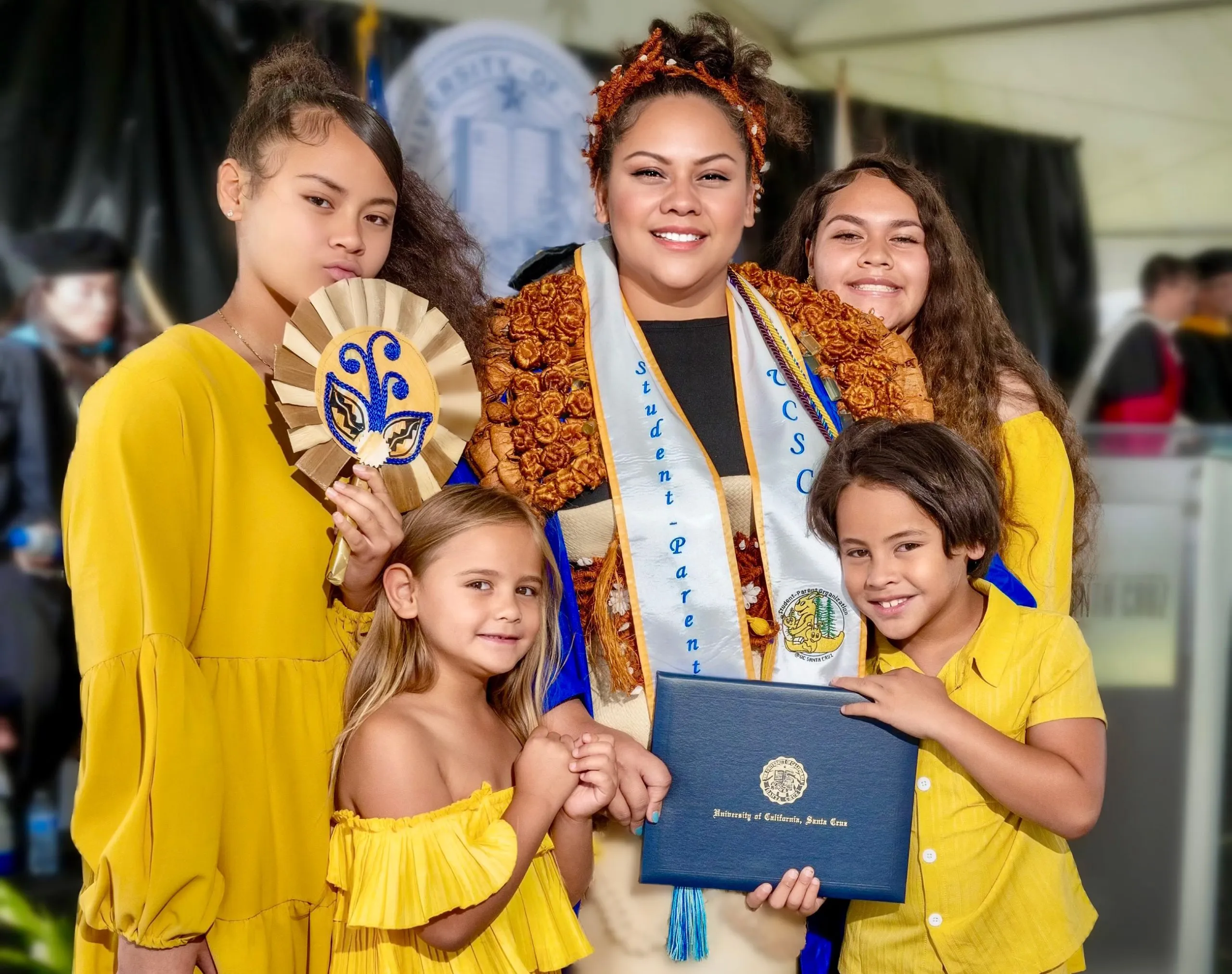
    For me, the last hurdle I had to clear was graduation itself. After years of sacrifice — not just my own, but my whole family’s — walking the stage with my four children at my graduation from the University of California, Santa Cruz was deeply important.

    The university, however, didn’t understand that or account for us. When I asked to accept my diploma with my kids, I was met with resistance, a particularly tough reminder of the work institutions have left to do to meet the needs and priorities of student-parents.

    Related: Interested in innovations in higher education? Subscribe to our free biweekly higher education newsletter.

    Earning my college degree in my late 30s was undoubtedly a major achievement, but so was going back for my bachelor’s in the first place — I didn’t even finish high school the first time around.

    After I became a mom at 20, I earned my GED, hoping it would help me support my family. Continuing my education only got harder. I started and stopped community college more times than I can count, juggling bills, jobs, custody battles and parenting.

    Finally, I transferred to UCSC, proud that I was taking this step two decades in the making and changing the trajectory of my and my family’s lives.

    However, I didn’t fully realize what my education would cost my children. Used to our tight-knit Tongan community, they felt like cultural outsiders when we moved to Santa Cruz, no longer surrounded by family, our native language or familiar foods and music.

    My children sacrificed their home and sense of belonging so that I could pursue this dream. As graduation approached, I knew I wanted to walk the stage with them. They had earned it just as much as I had.

    Yet the administration denied my request, citing the added logistical difficulties. They suggested I bring my kids to a separate, informal celebration for those of us living in family student housing instead. The offer sounded like “be invisible or settle for less.”

    I immediately started mobilizing UCSC’s Student Parent Organization, where I was president. Working with the student government, I drafted a resolution permitting student-parents to walk with their children. I reached out to alumni, administrators, fellow parents and friends for support.

    Thanks to our collective voice, the dean of students changed his mind, offered an apology and committed to changing the policy going forward for all graduating student-parents. Though my kids and I were placed at the end of the ceremony, we crossed the stage together as a family.

    That seed of inclusion will grow in them, just like it will for all the children of student-parents who walk that path in the future.

    The next year, my mentee and friend walked with her son at the UCSC commencement, this time without pushback. The university invited them to rehearsal, and on graduation day, they had VIP seats. She was one of the first to walk, not the last.

    That is the power of advocacy. It turns exclusion into inclusion. It rewrites the rules not just for one person, but for those who come after. I am proud to continue my advocacy work as a graduate student at the University of San Francisco and a member of The California Alliance for Student Parent Success.

    I have since seen institutions across California make good progress on their efforts to support student-parents, but colleges and universities nationwide must still do more. At the University at Buffalo, university police chased a graduating student across the stage when he attempted to bring his infant son with him.

    Related: A federal program helped student-parents thrive. Now it’s on life support

    These stories and the momentum building in the wake of September’s National Student Parent Month should serve as a call to higher education leaders across the country to cultivate campus climates that build trust and belonging among student-parents.

    This work should start before we even step foot on campus and continue until we graduate.

    Institutions that truly wish to serve families will ensure that the value we bring to higher education is visible. They will account for student-parents when planning campus events and weave together support networks of faculty, staff and peers who can respond to our needs.

    When we ask institutions for policies and practices to better accommodate our families, they will listen and act. They will hold themselves accountable to all of their students, parents included.

    Walking the stage with my kids was a step in the right direction, albeit an uphill climb. Let’s keep going and do better by student-parents and their families.

    Krystle Pale is a UC Santa Cruz graduate, a mother of five and a recent Advisory Committee member of The California Alliance for Student Parent Success.

    Contact the opinion editor at [email protected].

    This story about student-parents was produced by The Hechinger Report, a nonprofit, independent news organization focused on inequality and innovation in education. Sign up for Hechinger’s weekly newsletter.

    The Hechinger Report provides in-depth, fact-based, unbiased reporting on education that is free to all readers. But that doesn’t mean it’s free to produce. Our work keeps educators and the public informed about pressing issues at schools and on campuses throughout the country. We tell the whole story, even when the details are inconvenient. Help us keep doing that.

    Join us today.

    Source link

  • Higher Education must help shape how students learn, lead and build the skills employers want most

    Higher Education must help shape how students learn, lead and build the skills employers want most

    For the first time in more than a decade, confidence in the nation’s colleges and universities is rising. Forty-two percent of Americans now say they have “a great deal” or “quite a lot” of confidence in higher education, up from 36 percent last year.  

    It’s a welcome shift, but it’s certainly not time for institutions to take a victory lap. 

    For years, persistent concerns about rising tuition, student debt and an uncertain job market have led many to question whether college was still worth the cost. Headlines have routinely spotlighted graduates who are underemployed, overwhelmed or unsure how to translate their degrees into careers.  

    With the rapid rise of AI reshaping entry-level hiring, those doubts are only going to intensify. Politicians, pundits and anxious parents are already asking: Why aren’t students better prepared for the real world?  

    But the conversation is broken, and the framing is far too simplistic. The real question isn’t whether college prepares students for careers. It’s how. And the “how” is more complex, personal and misunderstood than most people realize.  

    Related: Interested in innovations in higher education? Subscribe to our free biweekly higher education newsletter. 

    What’s missing from this conversation is a clearer understanding of where career preparation actually happens. It’s not confined to the classroom or the career center. It unfolds in the everyday often overlooked experiences that shape how students learn, lead and build confidence.  

    While earning a degree is important, it’s not enough. Students need a better map for navigating college. They need to know from day one that half the value of their experience will come from what they do outside the classroom.  

    To rebuild America’s trust, colleges must point beyond course catalogs and job placement rates. They need to understand how students actually spend their time in college. And they need to understand what those experiences teach them. 

    Ask someone thriving in their career which part of college most shaped their success, and their answer might surprise you. (I had this experience recently at a dinner with a dozen impressive philanthropic, tech and advocacy leaders.) You might expect them to name a major, a key class or an internship. But they’re more likely to mention running the student newspaper, leading a sorority, conducting undergraduate research, serving in student government or joining the debate team.  

    Such activities aren’t extracurriculars. They are career-curriculars. They’re the proving grounds where students build real-world skills, grow professional networks and gain confidence to navigate complexity. But most people don’t discuss these experiences until they’re asked about them.  

    Over time, institutions have created a false divide. The classroom is seen as the domain of learning, and career services is seen as the domain of workforce preparation. But this overlooks an important part of the undergraduate experience: everything in between.  

    The vast middle of campus life — clubs, competitions, mentorship, leadership roles, part-time jobs and collaborative projects — is where learning becomes doing. It’s where students take risks, test ideas and develop the communication, teamwork and problem-solving skills that employers need.  

    This oversight has made career services a stand-in for something much bigger. Career services should serve as an essential safety net for students who didn’t or couldn’t fully engage in campus life, but not as the launchpad we often imagine it to be. 

    Related: OPINION: College is worth it for most students, but its benefits are not equitable 

    We also need to confront a harder truth: Many students enter college assuming success after college is a given. Students are often told that going to college leads to success. They are rarely told, however, what that journey actually requires. They believe knowledge will be poured into them and that jobs will magically appear once the diploma is in hand. And for good reason, we’ve told them as much. 

    But college isn’t a vending machine. You can’t insert tuition and expect a job to roll out. Instead, it’s a platform, a laboratory and a proving ground. It requires students to extract value through effort, initiative and exploration, especially outside the classroom.  

    The credential matters, but it’s not the whole story. A degree can open doors, but it won’t define a career. It’s the skills students build, the relationships they form and the challenges they take on along the way to graduation that shape their future. 

    As more college leaders rightfully focus on the college-to-career transition, colleges must broadcast that while career services plays a helpful role, students themselves are the primary drivers of their future. But to be clear, colleges bear a grave responsibility here. It’s on us to reinforce the idea that learning occurs everywhere on campus, that the most powerful career preparation comes from doing, not just studying. It’s also on us to address college affordability, so that students have the time to participate in campus life, and to ensure that on-campus jobs are meaningful learning experiences.  

    Higher education can’t afford public confidence to dip again. The value of college isn’t missing. We’re just not looking in the right place. 

    Bridget Burns is the founding CEO of the University Innovation Alliance (UIA), a nationally recognized consortium of 19 public research universities driving student success innovation for nearly 600,000 students. 

    Contact the opinion editor at [email protected]. 

    This story about college experiences was produced by The Hechinger Report, a nonprofit, independent news organization focused on inequality and innovation in education. Sign up for Hechinger’s weekly newsletter. 

    The Hechinger Report provides in-depth, fact-based, unbiased reporting on education that is free to all readers. But that doesn’t mean it’s free to produce. Our work keeps educators and the public informed about pressing issues at schools and on campuses throughout the country. We tell the whole story, even when the details are inconvenient. Help us keep doing that.

    Join us today.

    Source link

  • Cosmetology schools and other certificate programs got exemption from rules on graduates’ earning levels

    Cosmetology schools and other certificate programs got exemption from rules on graduates’ earning levels


    Remiah Ward’s shift at the SmartStyle salon inside Walmart was almost over, and she’d barely made $30 in tips from the haircuts she’d done that day. It wasn’t unusual — a year after her graduation from beauty school, tips plus minimum wage weren’t enough to cover her rent.

    She scarcely had time to eat and sleep before she had to drive back to the same Walmart in central Florida to stock shelves on the night shift. That job paid $14 an hour, but it meant she sometimes spent 18 hours a day in the same building. She worked six days a week but still struggled to catch up on bills and sleep. 

    The admissions officer at the American Institute of Beauty, where she enrolled straight out of high school, had sold her on a different dream. She would easily earn enough to pay back the $10,000 she borrowed to attend, she said she was told. Ward had no way of knowing that stylists from her school earn $20,200 a year, on average, four years after graduating. Seven years later, her debt, plus interest, is still unpaid.

    In July, Republicans in Congress pushed through policies aimed at ensuring that what happened to Ward wouldn’t happen to other Americans on the government’s dime; colleges whose graduates don’t earn at least as much as someone with a high school diploma will now risk losing access to federal student loans. But one group managed to slip through the cracks — thousands of schools like the American Institute of Beauty were exempt. 

    Remiah Ward worked two jobs while trying to make it as a hair stylist but never made enough to pay her all her bills and has had to put her dream career on hold. Credit: Courtesy Remiah Ward

    Certificate schools succeeded in getting a carve-out. The industry breathed a collective sigh of relief, and with good reason. At least 1,280 certificate-granting programs, which enrolled more than 220,000 students, would have been at risk of losing federal student loan funding if they had been included in the bill, according to a Hechinger Report analysis of federal data. [See table.] About 80% of those are for-profit programs, and 45 percent are cosmetology schools.

    “There is this very strange donut hole in accountability where workforce programs are held accountable, two-year degree programs are held accountable, but everything in between gets off without any accountability,” said Preston Cooper, a senior fellow at the conservative think tank American Enterprise Institute.

    The schools spared are known as certificate programs and, with their promise of an affordable and relatively quick path to economic security, are the fastest growing part of higher education. They usually take about a year to complete and train people to be hair-stylists, welders, medical assistants and cooks, among other jobs.

    As with traditional colleges, there are big differences in quality among certificate programs. Some hair stylists can make a middle-class living if they work in a busy salon. But for people who have to pay back hefty student loans, the low wages for stylists in the early years can be an insurmountable obstacle.

    Ward found herself facing that dilemma. When she could no longer sustain the lack of sleep from her double shifts at Walmart, she pressed pause on her styling career and took a job with Amazon, loading and unloading planes. She wasn’t ready to give up her dream career, though, so in addition to her 10-hour days moving boxes, she took part-time gigs at local hair salons. She didn’t have family to help pay rent, not to mention loan payments, so she couldn’t afford to work fulltime at a salon, which is essential to build up a regular clientele — and bigger tips. Without that, she couldn’t get much beyond minimum wage. 

    A representative from the American Institute of Beauty denied that Ward was told she would easily repay her loan.

    “No admissions representative, not at AIB or elsewhere, would ever make such a statement,” Denise Herman, general counsel and assistant vice president of AIB, said in an email. 

    The high cost of many for-profit cosmetology schools — tuition can be upward of $20,000, usually for a one-year program  — can leave former students mired in debt. In May, the government released data showing 850 colleges where at least a third of borrowers haven’t made a loan payment for 90 days or more, putting them on track to default. About 42 percent of those were for-profit cosmetology and barbering schools (including AIB).

    Brittany Mcnew says she loves working as a stylist but that her income takes a hit when traffic is slow in her salon in Bethlehem, Pennsylvania. Credit: Meredith Kolodner/The Hechinger Report

    Herman blamed the Biden administration policy that after the pandemic let borrowers forgo payments without any penalty.

    “Debtors became ‘comfortable’ not making payments,” said Herman. “AIB provides the graduate with the information graduates need to make their payments. What that graduate decides to pay, or not pay, is not influenced by AIB.”

    Under the “big beautiful bill” passed in July, two- and four-year colleges must ensure that, after four years, graduates on average make at least as much as someone in their state who has only a high school diploma. The colleges must inform students if they fail that test, and if it happens for two out of three years, the college will be ineligible to receive federal loan funds.

    Some for-profit certificate schools lobbied hard for an exemption. The American Association of Career Schools, which represents proprietary cosmetology schools, spent $120,000 lobbying the Education Department and Congress, including on the “big beautiful bill,” in the first six months of this year. At the group’s major lobbying event in April, Sen. Bill Cassidy, chairman of the Senate Health, Education, Labor and Pensions Committee, was the keynote speaker.

    Cassidy declined to answer questions about why certificate programs were excluded, but a fact sheet from his committee noted that they are already covered by something else, the gainful employment rule, which is also being challenged by the for-profit cosmetology industry.

    That federal gainful employment regulation, updated in 2023, requires in essence that graduates from career-oriented schools earn enough to be able to pay back their loans and earn more than a high school graduate. It also requires that consumers, like Ward, be given more information about how graduates from all colleges fare in the workplace.

    The rule posed an existential threat to a huge swath of cosmetology schools.

    In 2023, the American Association of Career Schools sued to block the gainful employment rule. 

    “AACS supports fair and reasonable accountability measures,” Cecil Kidd, the AACS’s executive director, said in an email. “However, we strongly object to arbitrary or discriminatory policies such as the US Department of Education’s Gainful Employment rule, which unfairly targets career schools while exempting many public and private non-profit institutions that fail to meet comparable outcomes.”

    He pointed to public comments in which AACS has argued that the rule imposes an unfair burden on cosmetology schools since stylists are predominantly women, who are more likely to have “personal commitments” that affect their earnings, and who rely on tips that are often pocketed as unreported income.

    Cameron Vandenboom is a successful hair stylist but says the high cost of her private beauty school wasn’t worth thousands of dollars in student debt: “I absolutely should have gone to community college.” Credit: Courtesy Shanna Kaye Photo

    In a twist that surprised advocates on both sides, the Education Department in May asked the court to effectively dismiss AACS’ lawsuit. 

    If the court rules in favor of the cosmetology schools, certificate programs will be free of all accountability requirements on their graduates’ earning levels, because they got the carveout in July. 

    Even if the court rules against cosmetology schools, advocates are pessimistic that the Trump administration will implement the gainful rules. The first Trump administration got rid of the original rules back in 2019 and Nicholas Kent, now the U.S. undersecretary of education, was previously the chief policy officer for Career Education Colleges and Universities, or CECU, the trade group that represents for-profit colleges, including certificate programs. He is a well-known critic of the rule.

    “I would be very surprised, if the unlikely scenario plays out that the Biden rule is upheld, that this Department of Education would just say, OK, the court has spoken,” said Jason Altmire, CECU’s executive director. “We are not opposed to accountability for certificate programs, so long as it’s fair to everybody and we have a voice in how you’re measuring programs.”  

    Altmire said CECU didn’t lobby for certificate programs to be carved out of Congress’ bill, but did argue against the earnings formula that Congress landed on. Altmire said it doesn’t take into account part-time work and the gender gap in wages.

    One objection from AACS, raised by CECU as well, is that the earnings measured don’t include tips, which are crucial to hair stylists’ income. Analyzed without including tips, 576 of 724 cosmetology schools in the Hechinger Report analysis would fail Congress’ earnings test. But even if tips were included and raised stylists’ income by 20 percent, 526 cosmetology schools would still fail.

    Earlier this year, Remiah Ward made the difficult decision to leave Florida and move to Kentucky, where the cost of living was more forgiving. She’s working from 7 p.m. to 7 a.m. at an aluminum factory for $19.50 an hour. 

    One day, she might go back to styling after her debt is paid off. Like many former beauty school students, she wishes she’d had more information when she decided to enroll.

    “They really sugar-coated it. I was 18 years old, and I needed a trade that I was already pretty good at,” said Ward, who is now 26. “Everybody thinks they’re going to make a high return, and it’s just not the reality.”

    Marina Villeneuve contributed data analysis to this story. 

    This story about cosmetology schools produced by The Hechinger Report, a nonprofit, independent news organization focused on inequality and innovation in education. Sign up for the Hechinger higher-education newsletter.

    The Hechinger Report provides in-depth, fact-based, unbiased reporting on education that is free to all readers. But that doesn’t mean it’s free to produce. Our work keeps educators and the public informed about pressing issues at schools and on campuses throughout the country. We tell the whole story, even when the details are inconvenient. Help us keep doing that.

    Join us today.

    Source link

  • Explore the earnings for graduates of beauty schools, other certificate programs

    Explore the earnings for graduates of beauty schools, other certificate programs

    Schools that train hairstylists, dental assistants and health aides will be able to keep getting federal student loan dollars even if the professionals they turn out don’t end up earning any more than a high school graduate.

    That’s because programs like those, which don’t end in a college degree, were granted an exemption from new accountability measures under President Donald Trump’s ”big, beautiful bill.” 

    A Hechinger Report analysis of federal data found at least 1,280 such certificate programs could have been at risk of their students losing access to federal student loans — but a successful lobbying effort excluded them from the accountability measures. 

    Related: Become a lifelong learner. Subscribe to our free weekly newsletter featuring the most important stories in education. 

    Under the new law, most graduates of associate, bachelor’s and graduate degree programs must earn at least as much as someone who has only a high school diploma. If programs fail to hit that benchmark for two out of three years, their students will no longer be eligible for federal student loans. (And the schools must warn students of this possibility if they miss the mark for just one year). Without that borrowing power, many students could not afford to attend. And without those students, some of the schools might not survive. 

    Using the table below, see which certificate programs might have been flagged under the Trump law if not for the exemption. If graduates of a particular program ended up earning less than adults with only a high school diploma, that program could have faced losing eligibility for federal student loans under the Trump law.

    Methodology

    What exactly does the “big, beautiful bill” call for?

    The legislation requires the Department of Education to compare earnings of working adults who have only a high school diploma to the earnings of adults four years after they complete a degree program or graduate certificate. If a postsecondary program’s graduates fail to outearn adults with only high school degrees for two out of three years, students can no longer obtain federal student loans to attend that program. 

    The law also sets up an appeals process and a way for programs to apply to regain eligibility for federal student loans.

    What data was analyzed? 

    The law directs the education secretary to use census data to calculate median earnings for working adults with only a high school degree in the state where a program is located. The Department of Education will release regulations that spell out exactly how to do that math. For example, the law does not spell out whether it will look at census data averaged out over 12 months or a longer period of time. 

    For earnings data for high school graduates, The Hechinger Report relied on calculations from the Department of Education, which were derived from the 2022 American Community Survey 5-Year Estimates Public Use Microdata Sample from the U.S. Census Bureau.

    To calculate median earnings for graduates, the law directs the Education Department to put together earnings data for a cohort of at least 30 graduates who received federal student aid for postsecondary education — which typically includes grants, loans or work-study. Graduates are excluded if they’re currently enrolled in another higher education program. If there are fewer than 30 students in a cohort, the Education Department can lump together several years of data to get to 30 students.

    To get earnings data for graduates of certificate programs, Hechinger used a federal database known as College Scorecard. We downloaded field of study data for the 2022-23 school year. From this data, The Hechinger Report extracted information about certificate programs, at their main campuses, and included only programs that had median earnings data. The federal database suppresses earnings data for small programs. That left 4,431 currently operating certificate programs. 

    How was a program determined to be at possible risk of failing the accountability measure?

    For each program, The Hechinger Report compared median graduate earnings to the high school graduate earnings data of the state where the program was located. If the graduates earned less, the program was considered to be at risk.  

    Under the law, postsecondary programs that don’t meet the earnings benchmark for one year have to inform all current students that they are at risk of losing their eligibility for federal student loans. 

    Are there any limitations to the data? 

    The “big, beautiful bill” takes online programs into account by considering whether students live in the same state where their academic program is based. Under the law, student earnings are compared with national data rather than state data when fewer than half of enrolled students live in the state where the school is located, which may be the case for online programs. 

    The Hechinger Report’s analysis instead compares every program with state earnings. That’s because the College Scorecard field of study data set is limited and only includes information about graduates employed within the same state as the institution, not whether enrolled students live in the same state as the program. In addition, College Scorecard data provides earnings data for all graduates without a breakdown for whether they receive federal aid.

    Also, the Hechinger database looks at the available median earnings of all students four years after graduation for the school year 2022-23, regardless of the number of graduates. Though College Scorecard suppresses data on smaller programs, median earnings data is available for programs with 16 or more working graduates. The “big, beautiful bill” directs the Department of Education to instead lump together years of data to create cohorts of at least 30 students.

    Contact investigative reporter Marina Villeneuve at 212-678-3430 or [email protected] or on Signal at mvilleneuve.78

    This story about beauty schools was produced by The Hechinger Report, a nonprofit, independent news organization focused on inequality and innovation in education. Sign up for the Hechinger newsletter.

    The Hechinger Report provides in-depth, fact-based, unbiased reporting on education that is free to all readers. But that doesn’t mean it’s free to produce. Our work keeps educators and the public informed about pressing issues at schools and on campuses throughout the country. We tell the whole story, even when the details are inconvenient. Help us keep doing that.

    Join us today.

    Source link

  • College president fears that federal education cuts will derail the promise of student parents, student military veterans and first-gen students

    College president fears that federal education cuts will derail the promise of student parents, student military veterans and first-gen students

    As a college president, I see the promise of higher education fulfilled every day. Many students at my institution, Whittier College, are the first in their families to attend a university. Some are parents or military veterans who have already served in the workforce and are returning to school to gain new skills, widen their perspectives and improve their job prospects.  

    These students are the future of our communities. We will rely on them to fill critical roles in health care, education, science, entrepreneurship and public service. They are also the students who stand to lose the most under the proposed fiscal year 2026 federal budget, and those who were already bracing for impact from the “One Big Beautiful Bill” cuts, including to the health care coverage many of them count on. 

    The drive with which these extraordinary students — both traditionally college-aged and older — pursue their degrees, often while juggling caregiving commitments or other responsibilities, never fails to inspire me.  

    Related: Interested in innovations in higher education? Subscribe to our free biweekly higher education newsletter. 

    We do not yet know the precise contours of the spending provisions Congress will consider once funding from a continuing resolution expires at the end of September. Yet we expect they will take their cues from the president’s proposed budget, which slashes support for students and parents and especially hammers those already struggling to improve their lives by earning a college degree, with cuts to education, health and housing that could take effect as early as October 1.  

    That budget would mean lowering the maximum Pell Grant award from $7,395 to $5,710, reversing a decade of progress. For the nearly half of Whittier students who received Pell Grants last year, this rollback would profoundly jeopardize their chances of finishing school. 

    So would the proposal to severely restrict Federal Work-Study, which supports a third of Whittier students according to our most recent internal analysis, and to eliminate the Supplemental Educational Opportunity Grant, which more than 16 percent of our student body relies upon. In addition, this budget would impose a cap on Direct PLUS Loans for Parents, which would impact roughly 60 percent of our parent borrowers. It would also do away with the Direct PLUS Loans for Graduates program.  

    These programs are lifelines, not just for our students but for students all across the country. They fuel social mobility and prosperity by making education a force for advancement through personal work ethic rather than a way to rack up debt. 

    If enacted, these proposed cuts would gut the support system that has enabled millions of low-income students to earn a college degree.  

    Higher education is a bridge. To cross it and achieve their full potential, students from all walks of life must have access to the support and resources colleges provide, whether through partnerships with local high schools or with professional gateway programs in engineering, accounting, business, nursing, physical therapy and more. Yet, to access these invaluable programs, they must be enrolled. How will they reach such heights if they suddenly can’t afford to advance their studies? 

    The harm I’ve described doesn’t stop with cuts to financial aid, loans and services. Proposed reductions also target research funding for NASA, NIH and the National Science Foundation. One frozen NASA grant has already led to the loss of paid student research fellowships at Whittier, a setback not just in dollars but in momentum for students building real-world skills, networks and résumés.  

    These research opportunities often enable talented first-generation students to connect their classroom learning to career pathways, opening the door to graduate school, lab technician roles and futures in STEM fields. We’ve seen how federal funding has supported student projects in everything from climate data analysis to environmental health.  

    Stripping away support for hands-on research undermines the federal government’s own calls for colleges like ours to better prepare students for the workforce by dismantling the very mechanisms that make such preparation possible. 

    Related: These federal programs help low-income students get to and through college. Trump wants to pull the funding 

    It’s particularly disheartening that these changes will disproportionately hurt those students who are working the hardest to achieve their objectives, who have done everything right and have the most to lose from this lack of investment in the future.  

    The preservation and strengthening of Pell, Work-Study, Supplemental Educational Opportunity grants and federal loan programs is not a partisan issue. It is a moral and economic imperative for a nation that has long been proud to be a land of opportunity.  

    Let’s build a system for strivers that opens doors instead of slamming them shut.  

    Let’s recommit to higher education as a public good. Today’s students are willing to work hard to deserve our continuing belief in them.  

    Kristine E. Dillon is the president of Whittier College in California. 

    Contact the opinion editor at [email protected]. 

    This story about education cuts was produced by The Hechinger Report, a nonprofit, independent news organization focused on inequality and innovation in education. Sign up for Hechinger’s weekly newsletter. 

    The Hechinger Report provides in-depth, fact-based, unbiased reporting on education that is free to all readers. But that doesn’t mean it’s free to produce. Our work keeps educators and the public informed about pressing issues at schools and on campuses throughout the country. We tell the whole story, even when the details are inconvenient. Help us keep doing that.

    Join us today.

    Source link

  • Colleges struggle to make manufacturing training hot again

    Colleges struggle to make manufacturing training hot again

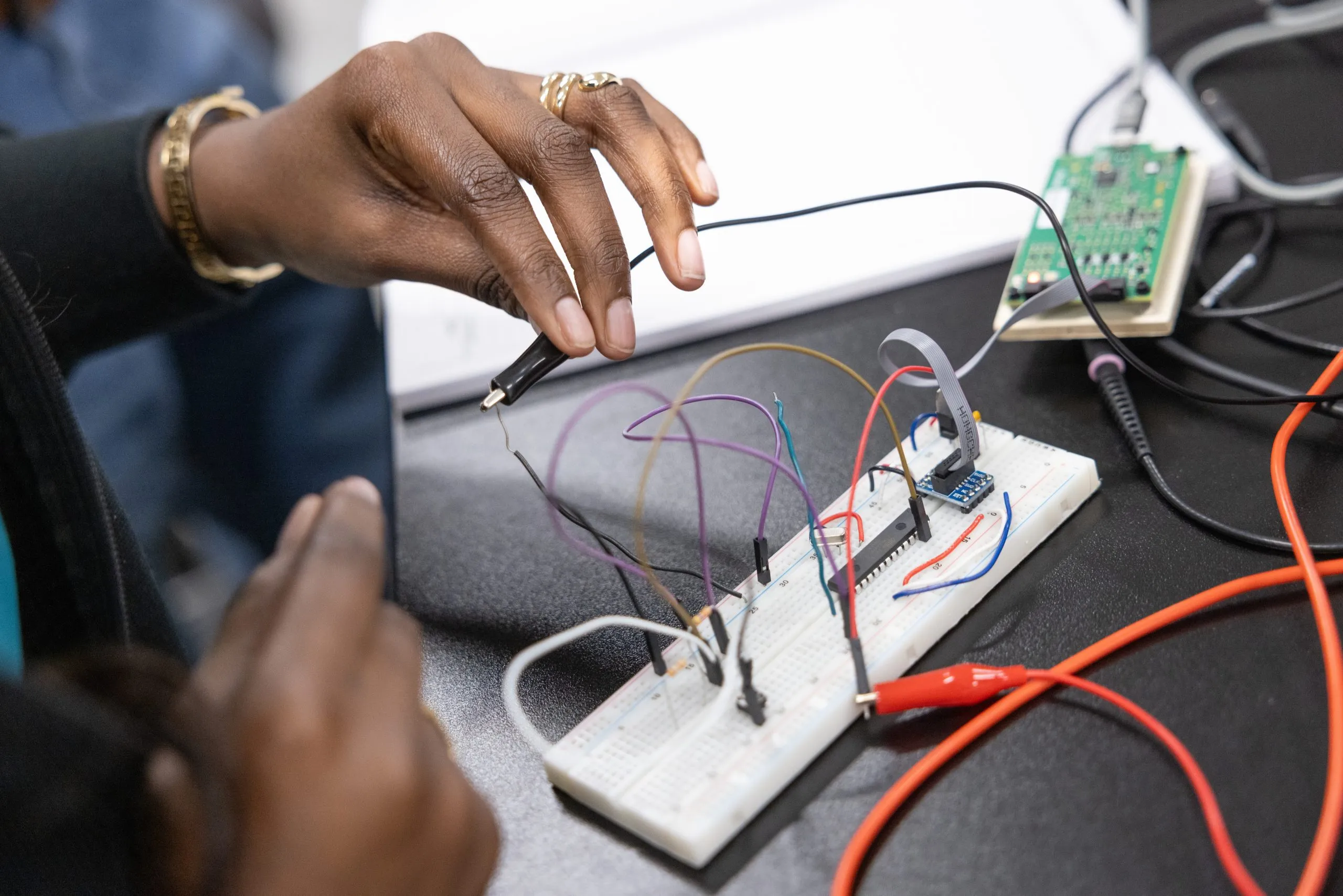
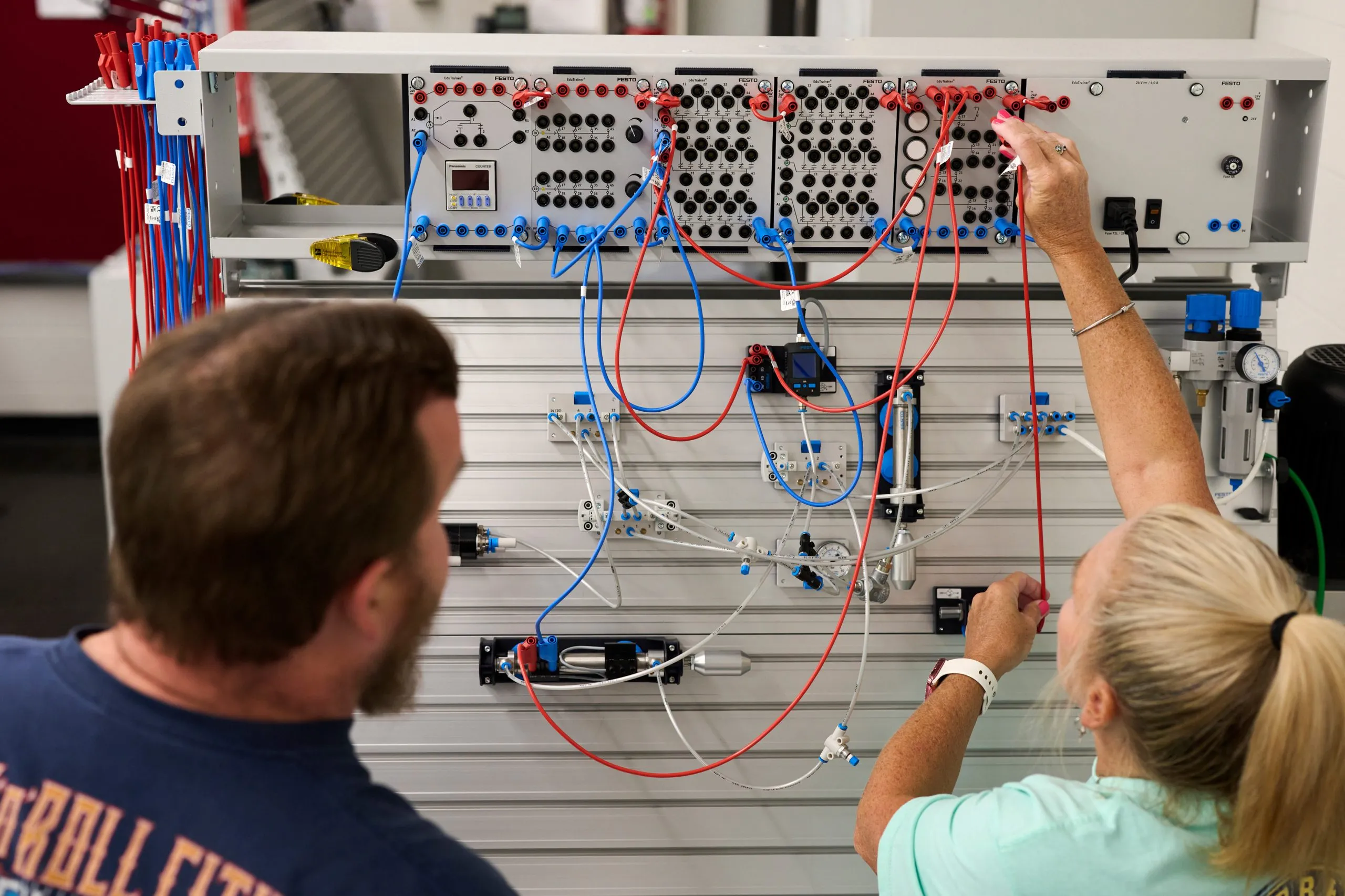
    ELYRIA, Ohio — Nolan Norman had no idea what microelectronic manufacturing entailed when his adviser at Midview High suggested he take the school’s new class on it last year. 

    Yet once he started fusing metal to circuit boards, he says he was hooked. “When I was little, I thought that wizards made these things,” the 18-year-old joked of the electronics he’s now able to assemble. Despite long “hating” the idea of college, he was motivated to enroll in the microelectronic manufacturing bachelor’s degree program at nearby Lorain County Community College this fall. He’s spent the summer working in a job in the field that gives him both college credit and pays $18 an hour. Said Norman: “Now I’m seeing the path to get to be one of these wizards.” 

    Norman’s path wasn’t accidental: Two years ago, Lorain County Community College partnered with Midview High to create the course, one of several ways the college is trying to recruit and train more young people for jobs in manufacturing. 

    Nationally, more than 400,000 manufacturing jobs are going unfilled, many of them in advanced manufacturing, which requires the sort of high-tech skills and postsecondary credentials that Norman is working toward. President Donald Trump is leveraging tariffs in part, he has said, to grow manufacturing jobs in the United States, including those that involve machinery or robotics and training after high school.

    Nolan Norman, 18, an incoming freshman at Lorain County Community College, observes a circuit board under a microscope on Aug. 6 in Elyria, Ohio. Credit: Dustin Franz for The Hechinger Report

    Yet as it is, colleges have struggled to add and revise their training based on employer input and prepare students for tomorrow’s jobs, not just today’s. In the area surrounding Lorain County Community College, officials estimate that they’d have to teach four times the number of students to meet today’s unfilled manufacturing jobs.

    Gogebic Community College, in rural Michigan, suspended its 22-year-old manufacturing technology program this spring because of low enrollment. “We could not get people into it,” registrar Karen Ball said, speaking in her personal capacity and not on behalf of the institution. “The needs in manufacturing are evolving so quickly, that to stay on top of it is too difficult.”

    And then there is the history of manufacturing in communities like Norman’s, where so many factories moved to other countries in recent decades. The manufacturing workforce in the Great Lakes region shrunk by 35 percent between 2000 and 2010, a loss of 1.6 million jobs. But nationwide manufacturing has seen some recovery since then, rising from 11.5 million manufacturing jobs in 2010 to 12.9 million today, according to an analysis by the Economic Innovation Group. 

    “If your family experienced tumultuous layoffs in steel or automotives, they may see manufacturing as a risky pathway rather than a solid pathway,” said Marisa White, vice president for enrollment management and student services at Lorain County Community College. “Individuals are like, ‘I don’t want my kids to go into something like that.’”

    Related: Interested in more news about colleges and universities? Subscribe to our free biweekly higher education newsletter.

    White and other Lorain officials, though, have been slowly making strides in adding more students in recent years — and in trying to keep up with the needs of companies. 

    Printed circuit boards before components are attached in a lab at Lorain County Community College in Elyria, Ohio. Credit: Dustin Franz for The Hechinger Report

    In addition to partnering with Midview High, staff from the college set up tables at food banks and Boys and Girls Clubs where they answer questions about its manufacturing degree and certificate programs, and even partner with a nearby manufacturing nonprofit that uses holograms and a robot dog to get the attention of high school students. That is paying off, officials say. The college now produces 120 graduates each year in advanced manufacturing — a category that includes industrial engineering tech, mechanical engineering tech, welding, automation and microelectronics — compared to 43, a decade ago.

    It has also cultivated a large network of local employers and a system to do market research before launching certificate programs. In some cases, it partners with companies that pay for employees to get training at Lorain college. In a classroom on a recent Wednesday, one of those electrician apprentices, Tyler Tector, 25, had rigged a series of plastic tubes to a small air pump. He hoped it would generate enough suction to keep its grip on his lab partner’s smartphone, which dangled precariously in the air (and already had a cracked screen from some previous misadventure).

    The assignment was part of a class in practical applications of fluid power. Tector’s employer, Ford Motor Co., was sending him and a small group of other apprentice electricians to take this class once a week, so they could better work with the growing number of robots at the local engine plant.

    Nick Wade, an electrical apprentice for Ford Motor Co., works on a circuitry exercise during professor Brian Iselin’s practical applications of fluid power course at Lorain County Community College in Elyria, Ohio. Credit: Dustin Franz for The Hechinger Report

    “Robots are the best co-workers,” joked Tector, who added that he’s not worried about bots putting him out of a job because so many humans are needed to fix them. “They do exactly what you tell them to do. They don’t ask questions. They don’t yell and complain.” They are finicky though, he added. If anything in a robot’s area gets bumped out of place even a fraction of an inch, that could throw the machine off and require reprogramming.

    So many employers told college officials they need technicians with basic knowledge across a range of trades that the college is starting a new associate degree program in the fall called Multicraft Industrial Maintenance that will include lessons like the one Tector is doing but in a condensed format. 

    “Because of the high-tech nature of things, employers don’t want students siloed into trades anymore,” said Brian Iselin, an assistant professor in manufacturing who is leading the effort. 

    Johnny Vanderford, who leads the college’s microelectronic manufacturing degree program, often spends part of his lunch break scouring LinkedIn for the latest job postings by local employers to see what skills they are looking for. His program’s model involves finding every student a paid internship, and students can take classes two days a week or in the evening to have the rest of the time free for paid work in the field. 

    Professor Brian Iselin teaches a course to employees of Ford’s Cleveland Engine Plant No. 1 at Lorain County Community College in Elyria, Ohio. Credit: Dustin Franz for The Hechinger Report

    Vanderford pointed to a PowerPoint slide showing more than 90 manufacturing companies in the area he said the college has worked with: “We basically tailor our curriculum to meet their workforce needs.” In some cases that means wedging into a class syllabus training on some specialized machine that might be used at only a handful of employers.

    Rather than simply having advisory committees with a few large companies that meet occasionally, today Lorain and many other colleges follow a model that involves frequent discussions with company leaders, instructors directly participating in those meetings and a greater focus on the skills employers need. 

    “Those relationships take time,” said Shalin Jyotishi, managing director of the Future of Work and Innovation Economy Initiative at the think tank New America. He says that it is hard for other community colleges to replicate best practices from Lorain because they are labor-intensive to enact.

    Employers also have a tendency to change their plans. For instance, when Tesla pledged to build an electrical vehicle plant in Flint, Michigan, the local Mott Community College started an EV program, said Jyotishi. But the plant never came. “The college still has a Tesla sign,” he said.

    Related: After its college closes, a rural community fights to keep a path to education open 

    The numbers no longer add up at Gogebic Community College, in Michigan’s Upper Peninsula. 

    When the college suspended its program in manufacturing technology in May, it had just three students.

    As with many programs at the college, a single employee was charged with administering and teaching. Doing all that plus staying on top of nearby companies’ workforce needs was “unsustainable,” said Ball, the registrar.

    The few small manufacturers in the area all say they have different needs, rather than one clear set of skills, she said, noting that “you can’t be a generalist in manufacturing.” Even when the college does identify a needed skill to teach, it takes at least six months to a year to get the program approved by college leaders and the accreditor. By then, companies might need something different. 

    And the pay offered by small manufacturers is often low, despite an expectation of training beyond a high school diploma, said Ball.

    The Richard Desich SMART Center at Lorain County Community College in Elyria, Ohio, houses the microelectronic manufacturing systems program, which teaches students about the manufacture of semiconductors. Credit: Dustin Franz for The Hechinger Report

    Nationwide, automation has reduced the earning power for many manufacturing jobs, said Jyotishi of New America. “For a long time manufacturing was the bedrock of the middle class,” said Jyotishi. “That wage premium for manufacturing has actually gone away.” 

    And there’s a danger that as colleges aim to please employers, they will create programs that are too narrow, argues Davis Jenkins, senior research scholar at Columbia University’s Community College Research Center. (Editor’s note: The Hechinger Report, which produced this story, is an independent unit of Columbia’s Teachers College.) “You don’t want specific skills training — you don’t want to just train students to work in a fab,” he said, referring to a facility where microchips and other electronics are produced. “Whenever schools buy a lot of specific equipment for training, I worry a lot. What students really need are broader skills.”

    Even Lorain doesn’t always find the right fit. During the pandemic, the college started what it calls fast-track programs, which typically run 16 weeks, across a range of professional fields (not just manufacturing). But because of mixed success attracting students, officials recently slimmed the list from 60 to 13, said Tracy Green, vice president of strategic and institutional development at Lorain County Community College. And the college recently started winding down a program in industrial safety because of a lack of student interest, even though there are still a large number of job postings by local companies for jobs with those skills, said Iselin. 

    One provision in Trump’s new “one big, beautiful bill” promises a boost to manufacturing education, however. For the first time, the law will allow low-income students to use federal Pell Grants for short-term certificate programs, in what is known as Workforce Pell. It’s a change many community college leaders have been calling for for years as they have created more short-term programs in response to demand by students and employers who want to quickly gain new skills in fast-changing areas, including manufacturing. But that program won’t be up and running until the 2026-27 academic year. 

    Related: Colleges partnered with an EV battery factory to train students and ignite the economy. Trump’s clean energy war complicates their plans

    The promise of a big new employer moving to town can galvanize student interest in manufacturing. 

    In Ohio, the talk for years has been a $28 billion Intel chip manufacturing plant under construction in Columbus. The facility is expected to bring some 3,000 jobs to the area, and the company has committed $50 million to workforce education in the state, including $2 million to Lorain County Community College, which it used to buy new classroom equipment, support student scholarships, and pay for program development and instructor training.

    Chris Dukles, 36, an electrician apprentice for Ford Motor Co., takes notes during a course taught by Brian Iselin at Lorain County Community College. Credit: Dustin Franz for The Hechinger Report

    The top graduates in Lorain County Community College’s microelectronic manufacturing program each year typically get internships at Intel’s closest existing plant, which is in Chandler, Arizona, a suburb of Phoenix. It’s a motivator to work hard in their classes, some students say.

    Lia Douglas, a student in the microelectronic manufacturing program at Lorain, scored one of those slots and headed to Arizona last summer. The experience, though, was sobering. 

    “My plan really was to make a good impression with my internship, get a job maybe in Arizona even if it was for a year or two, and then try to move back to Ohio when they have an Ohio plant,” she said. 

    But one day last July, all the employees were unexpectedly summoned to an all-hands call where the company announced a wave of layoffs and reductions in some benefits that had interested Douglas, including a sabbatical program. This year, Intel announced that the opening of the Ohio plant has been delayed until 2030. 

    “I learned I had a little too much faith in a company and the promises of a company,” she said. “And it reminded me that at the end of the day, the company has to make money.”

    She’s still glad she chose Lorain’s program, which has landed her several local internships and opened her eyes to the many small and mid-sized manufacturers in the area. 

    Lia Douglas is a student in the microelectronic manufacturing program at Lorain County Community College. Credit: Dustin Franz for The Hechinger Report

    And she has been hooked on a career in making things ever since she was in middle school and a family friend taught her a bit of welding. Her hero was Adam Savage, co-host of the TV show “MythBusters,” who she even got to meet at a comic book convention in Cleveland.

    Douglas complains that students are told in high school that they either have to choose a trade for hands-on work or an academic track to prepare for a career behind a desk that might involve design and project management. She says that as manufacturing changes, there’s plenty of room to do both. In fact, she says, when a group of doctoral students from Kent State University recently visited the college’s clean room, she was amused to see them struggle with some of the tools the students routinely use in the microelectronic manufacturing program.

    “It takes as much brainpower to figure out what is the right tool for the right process as getting a Ph.D.,” she said. 

    Contact editor Caroline Preston at 212-870-8965, via Signal at CarolineP.83 or on email at [email protected]

    This story about manufacturing jobs was produced by The Hechinger Report, a nonprofit, independent news organization focused on inequality and innovation in education. Sign up for the Hechinger newsletter.

    The Hechinger Report provides in-depth, fact-based, unbiased reporting on education that is free to all readers. But that doesn’t mean it’s free to produce. Our work keeps educators and the public informed about pressing issues at schools and on campuses throughout the country. We tell the whole story, even when the details are inconvenient. Help us keep doing that.

    Join us today.

    Source link