Despite federal attitudes and policies toward international students, demand to study in the U.S. remains high.
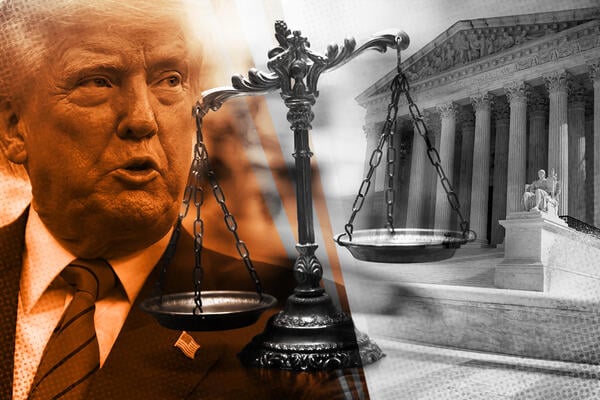
Photo illustration by Justin Morrison/Inside Higher Ed | Getty Images
Advocates for international students are raising alarms that federal actions are limiting foreign-born learners’ ability to study in the U.S. But researchers say the trend isn’t an indication of international student interest or demand to study in the U.S.
A late July survey of 300 foreign-born students found 91 percent plan to study in the U.S., despite funding cuts and internal instability in the U.S. The reputation of U.S. institutions also has yet to take a hit, with 99 percent of respondents indicating they still trust the academic quality of U.S. institutions.
That’s not to say students are unaware of or undeterred by changes at the federal level. Fifty-five percent of survey respondents indicated some level of concern about pursuing their degree in the U.S., and 50 percent said they’re less excited about the opportunity now than they were previously. The top reason their sentiment has changed is international tensions or politics (54 percent), followed by worries about political instability in the U.S. (45 percent).
Brian Meagher, vice president at Shorelight, a higher education consulting group focused on international students, said at an Aug. 12 media roundtable that even students caught in the visa backlog haven’t shifted their gaze to other countries yet. Instead, they are deferring to the spring semester. May data from the U.S. Department of State shows 19,000 fewer students received a F-1 or J-1 visa that month compared to May 2024, which experts say is the first sign that a fraction of expected students will be coming to campus this fall.
“Most of them want [to study in] the U.S.—they’re not changing their minds to the U.K. or Canada or Australia,” Meagher said. “We do think there will be a longer-term impact on switching to other country destinations as a result of this.”
Others are taking classes online at their host institution or enrolling in a satellite campus elsewhere in the world for their first term, but those are less popular options, Meagher said.
“In talking with prospective students, I’d say the belief is that this is a temporary changeover at an unfortunate time that may result in missing a fall semester,” Shorelight CEO Tom Dretler said during the roundtable.
Long-Term Challenges Expected
While international students see the changes as a short-term setback, some market predictions forecast significant changes to U.S. higher education enrollment and revenue. At least the lack of visas could impact future applications to U.S. colleges, Dretler said.
Research by Holon IQ, a global intelligence agency, points to the U.S. as a top destination country for international students for decades, but since 2016—roughly the start of the first Trump administration—the country lost 10 percentage points of its share of international students.
Starting in 2016, “the U.S. became perceived by some as less welcoming or safe, did not recruit international students as energetically, and denied a substantial fraction of student visa applications, while governments and university sectors in the other countries acted in concert to grow international student numbers,” according to an August report from Holon IQ.
Modeling by Holon IQ finds that a variety of actions by the federal government, including visa policy changes, a crackdown on universities and new tariffs could create barriers to students in the U.S. as well as a climate of uncertainty for prospective students.
The agency predicts the most likely trajectory is there will be a short-term decline in U.S. international enrollment, with 1.12 million students in 2030, unchanged from 2023 levels. But possible scenarios range from an increase in students of 8.3 percent to a drop of 7.9 percent by 2030.
“I think what’s happening in the U.S. is a point in time as to whether the U.S. will continue to lead and for how long it will continue to remain the global leader for international student mobility and a desired study destination,” said Patrick Brothers, co-CEO of Holon IQ Global Impact Intelligence, during the media roundtable.
Paying the Price
Experts warn that a lack of students on campus could mean billions in lost tuition revenue for years to come.
NAFSA, the association of international educators, reported if the number of new international student enrollment declined between 30 and 40 percent, it would result in a 15 percent drop in overall international enrollment and result in a loss of $7 billion in revenue.
June data from Shorelight found even a 20 percent decline would result in a $1.7 billion annual loss in tuition revenue, or $5 billion over four years.
“We think it’s going to be something that is negative for the U.S. economy, negative from a jobs perspective and also very hurtful to colleges and universities, but not always the one that people think,” Dretler said. Top universities will be able to weather the financial hit, pulling students off their waiting lists, but regional and community colleges will experience greater losses, which could increase tuition rates for middle-class families.
States with high international student enrollment would be hit hardest by the changes. Among the top states for international students—California, New York and Texas—Shorelight anticipates a total loss of $566.6 million and NAFSA projects a loss of $2.39 billion, based on their respective data models.
Judge Stephanie Gallagher declared in the Thursday ruling that the Department of Education broke the law when it tried to withhold grant funding from institutions that practiced DEI based on one of the president’s executive orders and a related guidance letter.
In her opinion, Gallagher focused less on the legality of the attempt to ban DEI itself, but rather the process through which the president and secretary of education tried to do so.
“This court takes no view as to whether the policies at issue in this case are good or bad, prudent or foolish, fair or unfair. But, at this stage too, it must closely scrutinize whether the government went about creating and implementing them in the manner the law requires. Here, it did not,” the judge wrote. “By leapfrogging important procedural requirements, the government has unwittingly run headfirst into serious constitutional problems.”
That said, she did explain the ways Trump’s policy violated the Constitution, saying, “The government cannot proclaim that it ‘will no longer tolerate’ speech it dislikes because of its ‘motivating ideology’—that is a ‘blatant’ and ‘egregious’ violation of the First Amendment.”
Gallagher’s decision followed a motion for summary judgment that was filed by the plaintiffs, the American Federation of Teachers and the American Sociological Association, after they won a preliminary injunction that blocked parts of Trump’s anti-DEI policy since April. (Gallagher was appointed by Trump during his first presidency in 2018.)
Since the Education Department’s anti-DEI guidance was enjoined, the Trump administration has made other attempts to block the same academic practices. Most recently, the Department of Justice published a nine-page memo that stated that DEI is unlawful and discriminatory.
Still, AFT president Randi Weingarten viewed the ruling as a “huge win” against Trump’s “draconian attacks on the essence of public education.”
“This decision rightly strikes down the government’s attempt to dictate curriculum, and, in so doing, upholds the purpose and promise inherent in our public schools,” Weingarten said in a news release.
In the old American dreambook, a “college prospect” was a young person with ambition and promise—a student looking for a campus where they could grow intellectually, socially, and economically. But in today’s reality, “prospect” is an industry term, a sales category. In enrollment management suites across the country, prospective students aren’t just applicants; they’re targets.
[Image from Brown University, August 2025)
Higher education—whether elite, public, or for-profit—now runs on sophisticated marketing pipelines. The same predictive analytics used by corporations, political campaigns, and even law enforcement are deployed to track, segment, and convert students into paying customers. Colleges buy and sell student data from standardized test companies, online lead generators, and high school surveys. They follow “prospects” through their clicks, their campus visits, their FAFSA submissions—nudging them toward a deposit with personalized emails, algorithmically timed text messages, and calculated financial aid offers.
This is not about education first. It’s about yield rates, tuition revenue, and net tuition per student. For working-class families, first-generation students, and those from marginalized backgrounds, this targeting can be especially dangerous. The glossy brochures and “student success” slogans conceal the hard realities: inflated tuition, debt burdens that can last decades, and career outcomes far less rosy than advertised.
The for-profit sector perfected this playbook. Schools like Corinthian Colleges, ITT Tech, and the Art Institutes honed high-pressure recruiting scripts, built massive lead databases, and saturated social media feeds with ads promising quick career training and big paydays. When many of these institutions collapsed under federal scrutiny, their tactics didn’t disappear—they spread. Today, public universities and elite private schools use their own version of the same system, dressed up in more respectable branding.
At the top end of the prestige ladder, “targets” have a different profile. Elite schools scout “development prospects”—wealthy families whose applications are accompanied by the potential for multimillion-dollar gifts. The student is both a potential enrollee and a future donor pipeline. Recruitment here is less about financial aid and more about legacy admissions, networking dinners, and quiet tours with the president.
What all this targeting has in common is an imbalance of information. Colleges know almost everything about their prospects—income bands, likely majors, ability to pay—while students and families often have only the marketing copy and a sticker price. In this environment, independent, transparent information is a rare form of defense.
That’s where tools like TuitionFit and the CollegeViability app come in—not as recruitment aids, but as counterintelligence for families.
TuitionFit collects and shares real financial aid offers from students across the country. This allows families to see what schools are actually charging students with similar academic and financial profiles—not just the “average” cost schools advertise. By revealing the hidden discounting game, TuitionFit helps families avoid overpaying and resist the psychological pressure of “limited-time offers” from admissions officers.
The CollegeViability app compiles public financial data from the U.S. Department of Education and other sources to create an at-a-glance picture of an institution’s fiscal health. It tracks enrollment trends, tuition dependency, debt loads, and other risk factors—warning signs that a college might be on the verge of closing or slashing programs. Families who use it can see trouble coming long before the next headline about a sudden campus shutdown.
These are not small benefits. Every year, thousands of students are lured into institutions that overpromise and underdeliver. Some are blindsided by mid-program closures. Others graduate into underemployment with six figures of debt. Without tools like TuitionFit and CollegeViability, many would walk into these situations blind.
The troubling truth is that higher education’s recruitment machine treats students the same way a corporate sales funnel treats customers—and sometimes the way a military intelligence operation treats enemy assets. Prospects are acquired, qualified, engaged, and converted. They are ranked by “propensity to enroll,” courted by carefully timed contact, and celebrated in quarterly revenue reports.
The people making the targeting decisions rarely bear the costs of a bad outcome. If a student drops out with debt and no degree, it’s a personal tragedy, not a liability on the college’s balance sheet. If a school shutters with no warning, students and their families are left scrambling while administrators move on to new posts elsewhere.
College should be more than a precision-marketed capture. It should be a transparent, good-faith exchange where both sides have access to the same essential facts. Right now, that balance doesn’t exist—and the gap is being exploited.
Families who want to survive the recruitment gauntlet must treat it for what it is: a sales process backed by data analytics, designed to maximize institutional revenue, not student outcomes. That means using every independent resource available, asking hard questions, and refusing to be rushed into decisions.
In the end, the difference between being a college prospect and a college target might be whether you’re armed with real information—or just hope.
Sources:
The Century Foundation, College Admissions and the Business of Enrollment Management
U.S. Senate HELP Committee, For Profit Higher Education: The Failure to Safeguard the Federal Investment and Ensure Student Success
The Hechinger Report, How Colleges Use Big Data to Target Students
Leon Black, the billionaire co-founder and former chief executive officer of Apollo Global Management, maintained a financial relationship with convicted sex offender Jeffrey Epstein that lasted for years and ultimately contributed to Black’s resignation from the firm. Why should HEI be covering this old story? Because the theme, of profits over people, is a major theme in the dirty world of business that permeates US higher education.
Profits Over People
Apollo Global Management, the firm Black co-founded, is one of the world’s largest alternative asset managers, with hundreds of billions of dollars in assets under management across private equity, credit, and real estate. In 2016, Apollo, along with the Vistria Group and Najafi Companies, acquired Apollo Education Group, the parent company of theUniversity of Phoenix, for over $1.1 billion. The University of Phoenix remains under the control of these owners and continues to operate as a for-profit institution.
Critics of private equity and venture capital in education argue that such firms are driven by short-term profitability rather than long-term institutional quality. This can lead to aggressive marketing, high tuition, cuts to faculty and staff, and diminished student outcomes. In the case of Apollo Global Management’s ownership of the University of Phoenix, concerns have persisted about the potential for cost-cutting and profit-maximizing strategies to undermine the educational mission. For-profit colleges owned by large investment firms have been accused in the past of prioritizing shareholder returns over student success, adding another layer to the public scrutiny of both Apollo and the institutions it controls.
Ties Between Leon Black and Jeffrey Epstein
Between 2012 and 2017, Black paid Jeffrey Epstein approximately $158 million for what he described as financial advice, including tax and estate planning services. A March 2025 report from the Senate Finance Committee revealed that the total amount transferred to Epstein was closer to $170 million, about $12 million more than previously disclosed. In 2023, Black agreed to pay $62.5 million to the U.S. Virgin Islands to settle claims that some of his payments to Epstein were used to support Epstein’s illicit operations. Black has said publicly that his association with Epstein was a “horrible mistake” and has emphasized that had he known more about Epstein’s criminal activities, he would have cut ties sooner.
Although Black has described his relationship with Epstein as limited, records show that Epstein became one of the original trustees of the Leon Black Family Foundation in 1997. Black also contributed a handwritten poem to a 2003 “50th birthday book” for Epstein, an item that included greetings from other prominent figures. In January 2021, following an independent review by the law firm Dechert LLP that detailed the payments to Epstein, Black announced that he would step down as CEO of Apollo Global Management.
Black has faced several legal challenges connected to allegations of sexual misconduct, many of which reference Epstein. In 2023, “Jane Doe” filed a lawsuit claiming she was assaulted by Black at Epstein’s Manhattan townhouse; in April 2025, her lawyers sought to withdraw from the case. In another case, accuser Cheri Pierson alleged rape but withdrew her lawsuit in early 2024. A separate suit filed by Guzel Ganieva, which accused Black of abuse and coercion involving Epstein, was dismissed in 2023. Black has consistently denied any wrongdoing.
Colleges across the United States are facing an alarming increase in “ghost students”—fraudulent applicants who infiltrate online enrollment systems, collect financial aid, and vanish before delivering any academic engagement. The problem, fueled by advances in artificial intelligence and weaknesses in identity verification processes, is undermining trust, misdirecting resources, and placing real students at risk.
What Is a Ghost Student?
A ghost student is not simply someone who drops out. These are fully fabricated identities—sometimes based on stolen personal information, sometimes entirely synthetic—created to fraudulently enroll in colleges. Fraudsters use AI tools to generate admissions essays, forge transcripts, and even produce deepfake images and videos for identity verification.
Once enrolled, ghost students typically sign up for online courses, complete minimal coursework to stay active long enough to qualify for financial aid, and then disappear once funds are disbursed.
Scope and Impact
The scale of the problem is significant and growing:
California community colleges flagged approximately 460,000 suspicious applications in a single year—nearly 20% of the total—resulting in more than $11 million in fraudulent aid disbursements.
The College of Southern Nevada reported losing $7.4 million to ghost student fraud in one semester.
At Century College in Minnesota, instructors discovered that roughly 15% of students in a single course were fake enrollees.
California’s overall community college system reported over $13 million in financial aid losses in a single year due to such schemes—a 74% increase from the previous year.
The consequences extend beyond financial loss. Course seats are blocked from legitimate students. Faculty spend hours identifying and reporting ghost students. Institutional data becomes unreliable. Most importantly, public trust in higher education systems is eroded.
Why Now?
Several developments have enabled this rise in fraud:
The shift to online learning during the pandemic decreased opportunities for in-person identity verification.
AI tools—such as large language models, AI voice generators, and synthetic video platforms—allow fraudsters to create highly convincing fake identities at scale.
Open-access policies at many institutions, particularly community colleges, allow applications to be submitted with minimal verification.
Budget cuts and staff shortages have left many colleges without the resources to identify and remove fake students in a timely manner.
How Institutions Are Responding
Colleges and universities are implementing multiple strategies to fight back:
Identity Verification Tools
Some institutions now require government-issued IDs matched with biometric verification—such as real-time selfies with liveness detection—to confirm applicants’ identities.
Faculty-Led Screening
Instructors are being encouraged to require early student engagement via Zoom, video introductions, or synchronous activities to confirm that enrolled students are real individuals.
Policy and Federal Support
The U.S. Department of Education will soon require live ID verification for flagged FAFSA applicants. Some states, such as California, are considering application fees or more robust identity checks at the enrollment stage.
AI-Driven Pattern Detection
Tools like LightLeap.AI and ID.me are helping institutions track unusual behaviors such as duplicate IP addresses, linguistic patterns, and inconsistent documentation to detect fraud attempts.
Recommendations for HEIs
To mitigate the risk of ghost student infiltration, higher education institutions should:
Implement digital identity verification systems before enrollment or aid disbursement.
Train faculty and staff to recognize and report suspicious activity early in the semester.
Deploy AI tools to detect patterns in application and login data.
Foster collaboration across institutions to share data on emerging fraud trends.
Communicate transparently with students about new verification procedures and the reasons behind them.
Why It Matters
Ghost student fraud is more than a financial threat—it is a systemic risk to educational access, operational efficiency, and institutional credibility. With AI-enabled fraud growing in sophistication, higher education must act decisively to safeguard the integrity of enrollment, instruction, and student support systems.
In SRHE News and Blog a series of posts is chronicling, decade by decade, the progress of SRHE since its foundation 60 years ago in 1965. As always, our memories are supported by some music of the times.
1995 was the year of the war in Bosnia and the Srebrenica massacre, the collapse of Barings Bank, and the Oklahoma Bombing. OJ Simpson was found not guilty of murder. US President Bill Clinton visited Ireland. President Nelson Mandela celebrated as South Africa won the Rugby World Cup, Blackburn Rovers won the English Premier League. Cliff Richard was knighted, Blur-v-Oasis fought the battle of Britpop, and Robbie Williams left Take That, causing heartache for millions. John Major was UK Prime Minister and saw off an internal party challenge to be re-elected as leader of the Conservative Party. It would be two years until D-Ream sang ‘Things can only get better’ as the theme tune for the election of New Labour in 1997. Microsoft released Windows 95, and Bill Gates became the world’s richest man. Media, news and communication had not yet been revolutionised by the internet.
“The 1990s has been the decade of quality in higher education. There had been mechanisms for ensuring the quality of higher education for decades prior to the 1990s, including the external examiner system in the UK and other Commonwealth countries, the American system of accreditation, and government ministerial control in much of Europe and elsewhere in the world. The 1990s, though, saw a change in the approach to higher education quality.”
In his own retrospective for the European Journal of Education on the previous decade of ‘interesting times’, Guy Neave (Twente) agreed there had been a ‘frenetic pace of adjustment’ but
“Despite all that is said about the drive towards quality, enterprise, efficiency and accountability and despite the attention lavished on devising the mechanics of their operation, this revolution in institutional efficiency has been driven by the political process.”
Europe saw institutional churn with the formation of many new university institutions – over 60 in Russia during 1985-1995 in the era of glasnost, and many others elsewhere, including Dublin City University and University of Limerick in 1989. Dublin Institute of Technology, created in 1992, would spend 24 years just waiting for the chance[1] to become a technological university. 1995 saw the establishment of Aalborg in Denmark and several new Chinese universities including Guangdong University of Technology.
UK HE in 1995
In the UK the HE participation rate had more than doubled between 1970 (8.4%) and 1990 (19.4%) and then it grew even faster, reaching 33% by 2000. At the end of 1994-1995 there were almost 950,000 full-time students in UK HE. Michael Shattock’s 1995 paper ‘British higher education in 2025’ fairly accurately predicted a 55% APR by 2025.
There had been seismic changes to UK HE in the 1980s and early 1990s. Polytechnic directors had for some years been lobbying for an escape from unduly restrictive local authority bureaucratic controls, under which many institutions had, for example, not even been allowed to hold bank accounts in their own names. Even so, the National Advisory Body for Public Sector HE (NAB), adroitly steered by its chair Christopher Ball (Warden of Keble) and chief executive John Bevan, previously Director of Education for the Inner London Education Authority, had often outmanoeuvred the University Grants Committee (UGC) led by Peter Swinnerton-Dyer (Cambridge). By developing the idea of the ‘teaching unit of resource’ NAB had arguably embarrassed the UGC into an analysis which declared that universities were slightly less expensive for teaching, and the (significant) difference was the amount spent on research – hence determining the initial size of total research funding, then called QR.
Local authorities realised too slowly that controlling large polytechnics as if they were schools was not appropriate. Their attempt to head off reforms was articulated in Management for a Purpose[2], a report on Good Management Practice (GMP) prepared under the auspices of NAB, which aimed to retain local authority strategic control of the institutions which they had, after all, created and developed. It was too little, too late. (I was joint secretary to the GMP group: I guess, now it’s time, for me to give up.) Secretary of State Kenneth Baker’s 1987 White Paper Higher Education: Meeting the Challenge was followed rapidly by the so-called ‘Great Education Reform Bill’, coming onto the statute book as the Education Reform Act 1988. The Act took the polytechnics out of local authorities, recreating them as independent higher education corporations; it dissolved the UGC and NAB and set up the Universities Funding Council (UFC) and the Polytechnics and Colleges Funding Council (PCFC). Local authorities were left high and dry and government didn’t think twice, with the inevitable progression to the Further and Higher Education Act 1992. The 1992 Act dissolved PCFC and UFC and set up Higher Education Funding Councils for England (HEFCE) and Wales (HEFCW). It also set up a new Further Education Funding Council (FEFC) for colleges reconstituted as FE corporations and dissolved the Council for National Academic Awards. The Smashing Pumpkins celebrated “the resolute urgency of now”, FE and HE had “come a long way” but Take That sensibly advised “Never forget where you’ve come here from”,
The Conservative government was not finished yet, and the Education Act 1994 established the Teacher Training Agency and allowed students to opt out of students’ unions. Debbie McVitty for Wonkhe looked back on the 1990s through the lens of general election manifestos:
“By the end of the eighties, the higher education sector as we know it today had begun to take shape. The first Research Assessment Exercise had taken place in 1986, primarily so that the University Grants Committee could draw from an evidence base in its decision about where to allocate limited research funding resources. … a new system of quality assessment had been inaugurated in 1990 under the auspices of the Committee of Vice Chancellors and Principals (CVCP) …
Unlike Labour and the Conservatives, the Liberal Democrats have quite a lot to say about higher education in the 1992 election, pledging both to grow participation and increase flexibility”
In 1992 the Liberal Democrats also pledged to abolish student loans … but otherwise many of their ideas “would surface in subsequent HE reforms, particularly under New Labour.” Many were optimistic: “Some might say, we will find a brighter day.”
In UK HE, as elsewhere, quality was a prominent theme. David Watson wrote a famous paper for the Quality Assurance Agency (QAA) in 2006, Who Killed What in the Quality Wars?, about the 1990s battles involving HE institutions, QAA and HEFCE. Responding to Richard Harrison’s Wonkhe blog about those quality wars on 23 June 2025, Paul Greatrix blogged the next day about
“… the bringing together of the established and public sector strands of UK higher education sector following the 1992 Further and Higher Education Act. Although there was, in principle, a unified HE structure after that point, it took many more years, and a great deal of argument, to establish a joined-up approach to quality assurance. But that settlement did not last and there are still major fractures in the regime …”
SRHE’s chairs from 1985-1995 were Gareth Williams, Peter Knight, Susan Weil, John Sizer and Leslie Wagner. The Society’s administrator Rowland Eustace handed over in 1991 to Cynthia Iliffe; Heather Eggins then became Director in 1993. Cynthia Iliffe and Heather Eggins had both worked at CNAA, which facilitated a relocation of the SRHE office from the University of Surrey to CNAA’s base at 334-354 Gray’s Inn Road, London from 1991-1995. From the top floor at Gray’s Inn Road the Society then relocated to attic rooms in 3 Devonshire St, London, shared with the Council for Educational Technology.
In 1993 SRHE made its first Newer Researcher Award, to Heidi Safia Mirza (then at London South Bank). For its 30th anniversary SRHE staged a debate: ‘This House Prefers Higher Education in 1995 to 1965’, proposed by Professor Graeme Davies and Baroness Pauline Perry, and opposed by Dr Peter Knight and Christopher Price. My scant notes of the occasion do not, alas, record the outcome, but say only: “Now politics is dead on the campus. Utilitarianism rules. Nationalisation produces mediocrity. Quangos quell dissent. Arid quality debate. The dull uniformity of 1995. Some students are too poor.”, which rather suggest that the opposers (both fluent and entertaining speakers) had the better of it. Whether the past or the future won, we just had to roll with it. The debate was prefaced by two short papers from Peter Scott (then at Leeds) on ‘The Shape of Higher Education to Come’, and Gareth Williams (Lancaster) on ‘ Higher Education – the Next Thirty Years’.
Research into higher education was still a small enough field for SRHE to produce a Register of Members’ Research Interests in 1996, including Ron Barnett (UCL) (just getting started after only his first three books), Tony Becher, Ernest Boyer, John Brennan, Sally Brown, Rob Cuthbert, Jurgen Enders, Dennis Farrington, Oliver Fulton, Mary Henkel, Maurice Kogan, Richard Mawditt, Ian McNay, David Palfreyman, Gareth Parry, John Pratt, Peter Scott (in Leeds at the time), Harold Silver, Maria Slowey, Bill Taylor, Paul Trowler, David Watson, Celia Whitchurch, Maggie Woodrow, and Mantz Yorke. SRHE members and friends, “there for you”. But storm clouds were gathering for the Society as it entered the next, financially troubled, decade.
If you’ve read this far I hope you’re enjoying the musical references, or perhaps objecting to them (Rob Gresham, Paul Greatrix, I’m looking at you). There will be two more blogs in this series – feel free to suggest musical connections with HE events in or around 2005 or 2015, just email me at [email protected]. Or if you want to write an alternative history blog, just do it.
Rob Cuthbert is editor of SRHE News and the SRHE Blog, Emeritus Professor of Higher Education Management, University of the West of England and Joint Managing Partner, Practical Academics. Email [email protected]. Twitter/X @RobCuthbert. Bluesky @robcuthbert22.bsky.social.
[1] I know this was from the 1970s, but a parody version revived it in 1995
[2]National Advisory Body (1987) Management for a purpose Report of the Good Management Practice Group London: NAB
Academic researchers are worried that the government’s plans to stop investing in the development of messenger RNA vaccines, a technology university scientists first used to help develop the COVID-19 vaccines, will undermine the United States’ standing as a global leader in biomedical research and development.
As promising as mRNA technology may be for treating a range of maladies, including numerous types of cancer and autoimmune diseases, its role in developing the COVID vaccine has thrust it into a political crossfire, fueled by the Trump administration’s smoldering criticisms of the Biden administration’s handling of the pandemic.
Last week, Robert F. Kennedy Jr., director of the Department of Health and Human Services, who frequently cites misinformation about vaccines and other public health issues, announced that the department is winding down mRNA vaccine research under the Biomedical Advanced Research and Development Authority and canceling $500 million worth of contracts and grants with numerous biotech companies and Emory University in Atlanta.
“We reviewed the science, listened to the experts, and acted,” Kennedy, a lawyer by training, said in a statement, claiming that “thedata show these vaccines fail to protect effectively against upper respiratory infections like COVID and flu. We’re shifting that funding toward safer, broader vaccine platforms that remain effective even as viruses mutate.”
Jeff Coller, director of the RNA Innovation Center at Johns Hopkins University, whose own graduate student helped develop Moderna’s COVID vaccine, said that “mRNA technology is incredibly misunderstood by the public and many of our politicians.”
Despite that, “the science has always been consistently clear about the powerful medical benefits of the mRNA platform,” he said. “It’s saved millions of lives, is incredibly safe, has huge potential and will revolutionize medicine in the next 100 years. Yet, we’re ceding American leadership in this technology.”
The half-a-billion-dollar cut comes at the same time that the Trump administration has withdrawn support for federally funded scientific research that doesn’t align with its ideological views, including projects focused on vaccine hesitancy, LGBTQ+ health and climate change.
According to a report from STAT News, the 181-page document Kennedy cited as his evidence that mRNA vaccines aren’t safe or effective references disputed studies written by other skeptics of COVID mitigation protocols, including stay-at-home orders and vaccines.
In his op-ed, Bhattacharya acknowledged that mRNA is a “promising technology” that “may yet deliver breakthroughs in treating diseases such as cancer,” but that “as a vaccine intended for broad public use, especially during a public health emergency, the platform has failed a crucial test: earning public trust.”
“Unfortunately, the Biden administration did not manage public trust in the coronavirus vaccines, largely because it chose a strategy of mandates rather than a risk-based approach and did not properly acknowledge Americans’ growing concerns regarding safety and effectiveness,” he wrote.
‘Political Shot Across the Bow’
The vast majority of scientists agree that the mRNA-based COVID vaccine—which was created in record time as a result of President Donald Trump’s Operation Warp Speed, launched in 2020—is generally safe and effective.
“I’m concerned about [the cut] weakening our country and putting us at a disadvantage,” said an mRNA researcher who asked to remain anonymous out of fear of retaliation. “The promise of mRNA is almost limitless, and I’d like to see those advances being made in this country. But currently it seems those advances are more likely to come from Europe and Asia. I’m also worried about the impact this could have on our economy—this is a growing field of industry.”
Coller, of Johns Hopkins, said Kennedy’s decision to withdraw funding for mRNA vaccine research has more than financial implications.
“It was a political shot across the bow of the entire research community, both in industry and academia,” Coller said. “What it says is that the government doesn’t want to support this technology and is going to make sure it doesn’t happen. If you’re an academic thinking about starting a new program in mRNA medicines, don’t waste your time.”
And now it will be even easier for political whims to drive the government’s scientific research priorities. Last week, Trump issued an executive order that will put political appointees—rather than subject-matter experts—in charge of federal grant-making decisions.
Heather Pierce, senior director for science policy and regulatory counsel at the Association of American Medical Colleges, said that while Kennedy’s decision won’t end all of the nation’s mRNA research, “the indication that a certain technology or scientific area won’t be pursued regardless of the progress made so far is worrisome as a concept.”
That’s in part because “when we unilaterally close the door on a specific type of research or technology, we don’t know what would have come from that,” she said. “It’s not to say that every research project using every technology and scientific tool will necessarily lead to a cure or breakthrough, but the initial funding of these projects shows that there was promise that made it worth exploring.”
Both Kennedy and Bhattacharya have said the government will continue to support research on other uses of mRNA technology unrelated to infectious disease vaccines. But experts say separating those research areas isn’t so simple.
“They’re all interconnected,” said Florian Krammer, a professor of vaccinology at the Icahn School of Medicine at Mount Sinai. “If you take away funding in the infectious disease space and innovation doesn’t happen there, it’s also not happening in other spaces where mRNA technology is used.”
That will create a “huge problem for researchers,” he added, “because a lot of fields are using this technology, and if it’s not moving forward, it closes doors.”
The judge denied a motion for a preliminary injunction to block the anti-DEI law.
Just_Super/iStock/Getty Images Plus
Ruling in part that professors lack First Amendment protections in the classroom, a federal judge denied an effort from college faculty and students in Alabama to block a 2024 state law that banned diversity, equity and inclusion programs as well as the teaching of so-called divisive concepts.
The plaintiffs, who include students from the University of Alabama at Birmingham and professors at the University of Alabama in Tuscaloosa, argued in court filings and at hearings that the legislation known as Senate Bill 129 amounted to state-sponsored censorship and infringed on their rights under the First and 14th Amendments. The professors alleged that they had to cancel class projects or events and faced other questions about their classroom conduct from administrators because of the law. They’ve also changed course material as a result.
R. David Proctor, chief judge in the U.S. District Court for the Northern District of Alabama, found that while the professors and the Alabama NAACP had standing to sue, they weren’t likely to succeed at this time. For instance, he ruled that the professors aren’t protected by the First Amendment because their “in-class instruction constitutes government speech.”
Furthermore, Proctor wrote, based on other rulings in the U.S. Court of Appeals for the 11th Circuit, “when there is a dispute about what is taught in the classroom, the university’s interests outweigh those of a professor, and the professor’s interest in academic freedom and free speech do not displace the university’s interest inside the classroom.”
The plaintiffs said Proctor’s ruling was disappointing.
“I feel incredibly dismayed that SB 129 is allowed to continue going into the new school year,” said Sydney Testman, one of the students who sued, in a statement. “As a senior at University of Alabama at Birmingham, I’ve seen firsthand how SB 129 has transformed my college campus for the worst. Voices have been silenced, opportunities have been revoked, and meaningful community engagement has faded. This decision undermines the need for students to properly feel a sense of belonging and inclusion on campus.”
A couple of years ago, I got into a heated argument with a white male lab mate about whether racial and gender inequities still existed in science. He argued that, having both made it to our Stanford cancer biology lab for graduate school, the two of us, a white man and a Black woman, were functionally equal, and that attempts to distinguish us in future grant and fellowship applications were unfair. When I explained, among many differences, the unequal labor I took on by running a pipeline program for underrepresented aspiring physician-scientists, he replied, “If you gave a fuck about your academic career, you would stop doing that stuff.”
His attitude is not unique; it represents a backlash against baby steps made toward any form of equity that was also reflected in the 2023 Supreme Court decision to overturn affirmative action. But in recent months, as attacks on diversity equity, and inclusion have unfolded with shockingfervor from the highest office in the country, I have been confronted with terrifying questions: Was my lab mate right? Has DEI work become antithetical to advancement in science?
Science, as a seemingly objective craft, has historically not cared about the self. Science does not care if you couldn’t spend free time in the lab because you had to work to support your family. Science does not care that the property taxes in the low-income area where you attended high school couldn’t fund a microscope to get you excited about biology. Science does not care that I’ve never once gotten to take a science class taught by a Black woman.
Such experiences, and many, many more, contribute to the leaky pipeline, a reference to how individuals with marginalized identities become underrepresented in STEM due to retention problems on the path from early science education to tenured professorships. The gaps are chasmic. A couple years ago, Science published the demographics of principal investigators receiving at least three National Institutes of Health grants, so-called super-PIs. Among the nearly 4,000 of these super-PIs, white men unsurprisingly dominated, accounting for 73.4 percent, while there was a grand total of 12 Black women in this category.
Pipeline programs—initiatives aimed at supporting individuals from underrepresented groups—are meant to patch the leaks. They are rooted in the understanding that minorities are important to science, not just for representation’s sake, but because diverse perspectives counteract a scientific enterprise that, because scientists are human, has historically perpetuated racial, gender and other social inequities. Such programs range from early-stage programs like BioBus, a mobile laboratory in New York City that exposes K–12 students to biology, to higher-level pipeline programs like the one I run at Stanford, which provide targeted early-career support to aspiring scientists from diverse and marginalized backgrounds.
These programs work. Participants in the McNair Scholars Program, a federally funded pipeline program aimed at increasing Ph.D. attainment among first-generation, low-income and otherwise underrepresented students, are almost six times more likely to enroll in graduate school than their nonparticipant counterparts. These programs are designed to see the student’s full self, and they recognize the extra labor minorities and women disproportionately take on, like mentoring trainees or running their own pipeline programs.
Researchers and academics have held rallies to stand up for science and have proposed bills for state-funded scientific research institutes, but many have remained silent on DEI. Meanwhile, after a pause to screen for DEI language, the NIH has resumed grant approvals (albeit not at its normal pace), and private organizations like Chan Zuckerberg continue to fund “uncontroversial” science. But science will never be whole without the inclusion of trainees from underrepresented backgrounds, who broaden and improve scientific questions and practice in service of a diverse human population. And without pipeline programs, the gaps will grow.
That is why I am calling on academics to stand up not just for science but also for DEI. Stand up against the leaky pipeline. Universities and private research institutes must reinstate language on diversity, equity and inclusion, particularly for pipeline programs. Faculty, students and community members should contact the heads of local universities and private organizations like Howard Hughes and Chan Zuckerberg, demanding reinstatement of diversity language and programs. Labs and research groups should adopt diversity statements reaffirming this commitment.
Given the financial jeopardy federal policy has imposed on pipeline programs, states should also step in. Sixteen state attorneys general recently sued the National Science Foundation for, among other things, reneging on its long-established, congressionally mandated commitment to building a STEM workforce that draws from underrepresented groups; states can take their advocacy further by filling funding gaps. Individuals and private organizations can donate either directly to nonprofits like BioBus or to universities with funds earmarked for pipeline programs.
Many minority students who have done DEI advocacy worry they can no longer discuss their work when applying for fellowships or faculty positions. To counteract this, universities and research organizations should proactively ask applicants about their leadership and advocacy work, to signal that these are the kinds of employees they want. And scientists who are not from underrepresented groups should leverage their privilege—volunteer for mentorship programs, serve on graduate admissions committees to fight for diversity, advise young scientists from underrepresented backgrounds.
Show my lab mate that he was wrong. Caring and succeeding are not mutually exclusive.
Tania Fabo, M.Sc., is an M.D.-Ph.D. candidate in genetics at Stanford University, a Rhodes Scholar, a Knight-Hennessy Scholar, a Paul and Daisy Soros Fellow, and a Public Voices Fellow of the OpEd Project. She is the program leader for Stanford’s MSTP BOOST pipeline program.
On a recent vacation in the southwest portion of Ireland, as I was slogging away, trying to get the bicycle I was peddling up a reasonably daunting hill, I started thinking about generative AI.
I was thinking about generative AI because my wife, who is quite fit, but historically not as a strong a biker as I am, had disappeared into the distance, visible only because we were on twisting roads and she was several switchbacks ahead.
She also powered past my older brother, who competes in triathlons, and (I was told later) a French couple that muttered some apparent swears in their native language. Ultimately, she arrived only three or four minutes ahead of me at the top-of-the-hill way station, but as I huffed and puffed the final couple hundred yards, down to my next-to-lowest gear, moving at a just-above-walking pace, the gap felt enormous.
If you haven’t figured it out, my wife was riding an e-bike, while I was on a conventional (though very nice) bike. For the most part, the biking was very doable, but there were moments where I was not entirely sure I could or should keep peddling.
But I made it! Because we were touring with Backroads, an active vacation company, there was a delicious snack waiting for me at the top, which I enjoyed with great relish, knowing that I’d burned quite a few calories with many more to come that day.
I believe those French riders might’ve said something about “cheating” by using an e-bike, but this is obviously a case where what is cheating is in the eye of the beholder and significantly dependent on what you’re valuing about the experience.
If the point of our Ireland cycling vacation was to expend maximum effort on physical activities while cycling around the southwestern Ireland countryside, using an e-bike would prevent you from achieving your objective. But this is not the point of these kinds of trips. Yes, we have a desire to be active, outside and engaged, but the point is to use these methods to experience the place we’ve traveled to, and if—as happened to me a different day—you are perspiring so hard that the sweat dripping into your eyes has temporarily blinded you, it is tough to say that you are maximizing the experience.
Having the “best” vacation on this kind of trip is often a matter of balance. At times, I actively wished for the boost an e-bike could’ve given me. Other times, particularly on a day where we did 60 miles, and my brother and I were the only ones doing the whole itinerary, and we managed to go fast enough on the closing stretch to beat the Backroads van back to the hotel, I was thrilled with what it felt like to put my full physical effort behind the task.
I think my body paid for that big effort for a couple of days afterward, but I don’t regret it.
Like I said, it’s a matter of balance and values.
The e-bikes are great because they made it easier for my wife and me to ride together. The bottom-level boost had her toasting me up the hills, but on the flats, we were essentially the same speed, with us both working at levels we were comfortable with. The e-bike isn’t a motorcycle. You are still working plenty hard at the lower levels of boost.
But at the higher levels, you might find yourself speeding through the itinerary, as a group of four gentlemen in our group seemed to do, frequently arriving at our stopping points 20 minutes ahead of the rest of us.
I was thinking of generative AI because of the different lenses through which you can look at the use of an e-bike in the context of a bike-touring vacation.
You could see it as supplementary, allowing someone to experience something (like the view from a particular peak) that they wouldn’t otherwise unless they substituted something entirely nonbiking, like a car.
You could see it as substitutive, removing effort in exchange for feeling less tired and taxed at the end of the day.
You could see it as cheating, as those French riders did.
Because I don’t bike all that often at home, my primary “training” for the trip has been my regular Peloton rides, and for sure, those helped. My metrics on the stationary bike suggested I was well prepared. And I was, but well prepared doesn’t mean you aren’t going to face some very challenging moments.
There were several times—like that sweat-pouring-down-my-face period—where I would have gladly kicked in an e-bike boost in order to reduce my effort to conserve something for a different aspect of the trip, e.g., not being exhausted over dinner. But at no point did I need the boost to continue or finish the route, and if I was so inclined, Backroads is happy for you to hop in the van and get a ride the rest of the way.
I’m stubborn enough to not do that, but knowing myself, there were many times when an e-bike boost wouldn’t have been necessary or even desirable, when I would’ve switched it on in order to alleviate some measure of present discomfort. If it’s available, why not use it?
This would have signaled a shift in the values I initially brought to the trip. Whether or not it should be viewed as a betrayal or merely a change with its own benefits is a more complicated question, but at least for this trip, I was glad to not have the temptation.
I like to look at my opportunities to travel through the lens of experience. We aren’t going somewhere to check a box, but instead to literally spend time in a different place doing different things than our regular routines. I often know that I’ve had a good trip by the number of pictures I take—the fewer the better, because it means I was too absorbed in the experience to bother reaching for my phone to document something.
As we consider how to teach in a world where students have a superpowered e-bike instantly and constantly available, I’ve found looking at learning through the lens of experience is helpful, because focusing on the experience is a good way of identifying the things we should most value.
For my focus, writing, it seems almost irrefutable that if we want students to develop their writing practices, they should be doing the work without the assistance. The work must be purposeful and focused on what’s important in a given experience, but if that’s been achieved, any use of a boost is to miss out on something important. Learning is about riding up that hill under your own steam.
For writing especially, it’s axiomatic that the more you can do without the boost, the more you could potentially do with the boost.
Perhaps more importantly, the more you do without the boost, the greater knowledge you will gain about when the boost is truly an aid or when it is a way to dodge responsibility.
Figuring out where these lines must be drawn isn’t easy, and ultimately, because of the nature of school and the fact that students should be viewed as free and independent actors, the final choice must reside with them.
But we can act in ways that make the consequences of these choices and the benefits to opting for unboosted ride as apparent and inviting as possible.