Tag: Higher

  • So, Did I Miss Anything?

    So, Did I Miss Anything?

    My erstwhile wise and worldly readers will remember that I wrote this column for many years, trying to shed light on the inner workings of public higher education in hopes of making things better.

    In 2023, my career took an unexpected turn, and I found myself working at a public policy think tank in another part of the country. Though I’m proud of the work we did there, ultimately, it just wasn’t me. I’ve returned to the world of community colleges, this time as VPAA at Westmoreland County Community College, near Pittsburgh. Being back in public higher education feels right, and being within driving distance of family again makes a difference.

    So, in the two years away, did I miss anything?

    When I stepped away, the public discourse around higher education involved deciding how much of it should be free and how much student debt should be forgiven. Colleges proudly trumpeted their commitments to diversity and inclusive student success. Harvard and its counterparts enjoyed massive public prestige and had more money than they knew what to do with. (I was known to comment that Harvard was wildly unrepresentative of American higher education, which is still true.) Debates around academic integrity tended to focus on whether it was reasonable to use detection software to figure out if students plagiarized from existing websites. The president of the United States openly lauded community colleges, and not only because his wife worked at one.

    Hmm. I might need to update a few things.

    I regularly included stories about family, partly because they’re fun to share, but mostly to make the point that men, too, need to own the implications of being working parents. I’m happy to report that the main characters are still around, and thriving. The Wife and I had our 26th wedding anniversary this year. The Boy (!) is 24, living in New York City, working in a clinical research lab and applying to medical schools. The Girl (!) is 21, a rising senior in college, and writing papers that earn effusive praise from her professors. Even Penny, our dog, is still around, making new friends wherever she goes.

    The new job started before we found a house in Pennsylvania, so we’ve been staying in an apartment. Our previous houses had sliding doors that led to the backyard, so Penny learned that when she needed to go outside, she’d stand by the sliding door. In the apartment, the sliding door opens onto a second-floor balcony; the first time Penny stepped out there, she looked confused and even a little betrayed.

    Since then, we’ve found a house, so we’ll be moving over the next few weeks. It has a backyard, so sanity will be restored to Penny’s world.

    I’m unspeakably grateful to WCCC for letting me back into the world I’ve spent much of my adult life trying to help. And I’m grateful to Sara Custer at Inside Higher Ed for letting me unretire the jersey and bring “Confessions” back to life. Inspired by Jon Stewart’s example, I’m setting a goal of posting twice a week, as opposed to the four or five posts per week from before.

    So, to my longtime readers: It’s great to see you again! And to new readers: Welcome! I hope we can make some sense of what has abruptly become a much more complicated field. The students, as always, are worth it. And as before, reader questions are welcome at deandad (at) gmail (dot) com. See you soon!


    Source link

  • What to Do When Your Job Search Stalls (opinion)

    What to Do When Your Job Search Stalls (opinion)

    Graduating into a tight job market can feel very daunting. You’ve invested years into your education and training, built strong skill sets, and followed the advice given by mentors and peers to make yourself competitive. So why aren’t the offers coming?

    If you find yourself in this situation, it’s normal to feel discouraged, demoralized or unsure of what to do next. Below are some steps you can take to help jump-start your job hunt by evaluating what’s working and identifying what might need adjusting so you can move forward and maintain momentum.

    Step 1: Evaluate Your Job Search Strategy

    Before making any major changes, start by examining your current approach.

    Are you submitting lots of job applications but not hearing back? This could be a sign that your application materials need refinement. Ask yourself: Are my CV or résumé and cover letter polished and tailored to each role? Am I clearly highlighting how my skills align with the job description? If you’re unsure, reach out to a professional in your field, mentor or career coach to review these materials and provide feedback.

    Are you getting interviews but not progressing to the next round or receiving final offers? This may signal that your interview approach needs improvement. Using structured interview methods, such as the STAR method (situation, task, action, result), can help you learn how to better organize your responses to highlight your experiences in a more focused manner. Practicing with a mentor or even a peer can help you identify gaps in preparation or missteps in how you present yourself. Many universities offer free career services, including mock interviews, to their students and alumni.

    In a competitive market, job searching also requires proactive strategies beyond submitting applications. I often see job seekers hyperfixate on tweaking applications that are already strong when their time would be better spent networking. Reach out to professionals, schedule informational interviews and make connections that help you uncover hidden opportunities and potentially receive internal referrals. These conversations can also help you better understand your target roles and the broader job landscape.

    Step 2: Broaden Your Search Strategically

    If networking and refining your materials isn’t enough, it may be time to broaden the types of jobs you’re considering. This doesn’t mean giving up on your long-term career aspirations; instead it means exploring bridge or adjacent roles that can help you stay on track while you continue to grow professionally. While bridge roles may not be your first choice, they can support future career moves by helping you gain relevant work experience, build new skills and expand your professional network.

    One way to identify bridge roles is to explore LinkedIn profiles of alumni and professionals in your field. Examining the positions they held after graduating and where they are now can help expand your list of possible bridge roles. Take this a step further during informational interviews by asking professionals about their knowledge of bridge roles. For example, a person targeting a medical science liaison role might ask an MSL in an informational interview, “I have been applying to MSL roles without any success; what other roles could help me work toward this path?” They might learn of opportunities in medical communications, clinical research or technical sales, positions that develop many of the same skills valued in MSL roles and often done by professionals before landing an MSL position.

    Bridge jobs can also provide financial stability while allowing you to build your skills. For example, I work with many students who aim to move directly into industry as scientists. However, if the job search stalls, an academic postdoc can be a strategic choice, especially when it aligns with building specific skills and provides much-needed income. One graduate I advised discovered through informational interviews that he would need additional expertise in advanced sequencing techniques to be competitive for the R&D roles he was targeting. He chose to take a two-year academic postdoc with a clear plan to build those exact skills, positioning himself for a stronger transition into industry while providing financial stability for his family. A postdoc can offer time to deepen your technical expertise, build a more competitive research portfolio and prepare for roles in biotech, R&D or other sectors.

    If you pursue a postdoc as a bridge role, be transparent with the postdoc mentor about your intentions. Take the earlier example of the graduate pursuing industry R&D roles. He was clear in communicating both the specific skills he needed to gain (RNA sequencing) and the time frame he would commit (two years). That kind of clarity helps establish shared expectations and ensures the postdoc experience is mutually beneficial for both you and the lab.

    Another important strategy for broadening your job search is to reflect carefully on your needs versus preferences. Needs are the nonnegotiables, such as visa requirements, caregiving responsibilities or a two-income household situation. A person’s preferences might include living in a specific city, having a certain job title or starting at a particular salary. While all of these are important to consider, being flexible on preferences can help you uncover new possibilities. Ask yourself: Are there geographic areas I’ve ruled out that might be worth reconsidering? Could I shift my salary expectations temporarily to get a foot in the door? Widening your criteria doesn’t mean compromising your goals; it’s a strategic step in reaching them.

    Step 3: Know When to Pivot

    If you’ve been searching consistently and not gaining traction, it may be time for a bigger strategic shift. Sometimes we become so focused on our initial ideas about our career that we overlook other options that could be equally or more fulfilling. Ask yourself: Could there be paths that better match my strengths or allow me to grow in ways my original plan didn’t? Have I overlooked opportunities that may better align with my values, interests or lifestyle goals as they are now?

    In the book Designing Your Life: How to Build a Well-Lived, Joyful Life (Knopf, 2016), authors Bill Burnett and Dave Evans suggest that being stuck can be a powerful launchpad for creativity and personal growth. They encourage readers to approach career planning as a design problem that benefits from curiosity, experimentation and iteration. One recommended exercise to stimulate curiosity is to brainstorm multiple career paths for yourself. Once you have your list of possible futures, you can then explore the most promising options through research and conversations with professionals in those roles.

    If you need help identifying new directions, the individual development plan can be a useful tool. Platforms such as myIDP or ImaginePhD offer exercises and assessments to help you identify your skills, interests and values and pinpoint career paths aligned with your results. These platforms also include resources to guide you toward researching and setting goals to reach a new path.

    Importantly, pivoting doesn’t mean giving up. It means recognizing that there are many viable paths available and you may end up at a better destination than originally planned.

    Managing the Emotions of Job Searching

    Job searching can take a real emotional toll, especially when it feels like you’re doing everything right and not seeing results. Many students feel intense pressure to secure a job after graduation, and when that doesn’t happen quickly, feelings of inadequacy can creep in. These feelings can make it harder to ask for help, reach out for support or even acknowledge how difficult the process has been. When the process feels overwhelming, shift your focus to what you can control. Set small, achievable goals each week to keep your momentum going during a slow-moving search. For example, set a goal of applying to a defined number of jobs, completing a short online course to build a new skill or attending a virtual or local networking event in your field.

    One trend I’ve noticed is that some students reach a point in which they are tempted to pay someone to “fix” the problem. If you are considering investing in paid career coaching, do your homework first. This should be a thoughtful decision, not an emotional reaction driven by frustration. Some paid coaches and services are legitimately helpful, but others overpromise results and prey on frustrated job seekers. Ask about outcomes, get referrals and make sure that their services align with your goals.

    Take Your Next Steps

    After reading this, you may have several new ideas or directions you are considering. To avoid feeling overwhelmed, start by writing down one microgoal you can complete in the next few days that is simple but still meaningful. For example, you might set up a meeting with a mentor, revise a section of your résumé or research a new role. Choose something that is doable and aligned with where you want to go. Small steps like these can really jump-start your progress.

    Even if it’s not going according to your original timeline, remember that the job search is a dynamic process. By keeping an eye on your long-term goals but remaining flexible, you’ll be open to the roles and experiences that can help you get there. Most importantly, give yourself credit for working the problem, pushing forward and continuing to put yourself out there.

    Raquel Y. Salinas is the assistant dean of career and alumni engagement at the University of Texas MD Anderson Cancer Center UTHealth Houston Graduate School of Biomedical Sciences. She is a member of the Graduate Career Consortium, an organization providing an international voice for graduate-level career and professional development leaders.

    Source link

  • Don’t Wait for Permission to Write for the Public

    Don’t Wait for Permission to Write for the Public

    Welcome to the first installment of my monthly column, “The Public Scholar,” in which I invite academics and other experts to step forward—thoughtfully, clearly and with purpose—to help shape public conversations that matter. In this space, I’ll offer practical, field-tested strategies for turning academic expertise into public impact, including how to know if an idea is op-ed–worthy, how to turn a classroom anecdote into publishable prose, how to know when it’s time to query a literary agent about your book idea and more.

    I’m Susan D’Agostino, a mathematician whose stories have been published in The Atlantic, the BBC, Scientific American, The Washington Post, The Financial Times, Wired, Quanta and other leading publications. (You may recall that I wrote with some frequency about math and technology for Inside Higher Ed a couple of years ago.) My last book, How to Free Your Inner Mathematician (Oxford University Press, 2020), won the Mathematical Association of America’s Euler Book Prize for an exceptionally well-written book with a positive impact on the public’s view of math. My next book, How Math Will Save Your Life, to be published by W. W. Norton, makes the case for harnessing mathematical thinking in the face of personal and global crises.

    But none of that came easily or automatically. A decade ago, I was a tenured mathematics professor who had spent years honing proofs and lectures. Yet amid lagging public math literacy, I felt an unshakable urge to reach beyond the walls of academia and write for the public. Still, I hesitated. Was my voice or expertise welcome outside of peer-reviewed journals? Did I have the authority to write for readers I could not picture in a seminar room? Did I even know how?

    That transition—from academic to public scholar—was bumpy. I made mistakes. I received more rejections than I care to count. (Stay tuned for a future column about all those rejections!) I had to unlearn some academic habits and relearn how to communicate with clarity for broad audiences. But step by step, I found my way.

    You don’t need to leave higher ed to write for the public. And you certainly don’t need permission. Academia often trains scholars to seek approval—through grants, press offices and peer-reviewed publications. But the reality is that institutional support often follows after a scholar gains visibility. You already have the credentials to write for the public in your area of expertise. Now you need the courage and practical tips for doing so.

    Maybe you’re a historian who sees how your field illuminates today’s political divides. Or a scientist concerned about climate change, misinformation or public health. Or an artist reflecting on what the arts can—and do—offer society. Or a literary scholar exploring how stories shape our moral imaginations. Or an educator with hard-won insights into what learning looks like in today’s classrooms. If you feel the tug to engage beyond campus gates, this column is for you.

    Many academics assume that public writing takes time away from scholarship. But making your work accessible to a wide audience forces you to think harder, not less. How can you distill the central argument of your research so that an intelligent friend with no training in your field can understand? Why should they care? Honing translation skills is an art. Your goal is to show up with clarity and generosity.

    As a bonus, crafting the occasional op-ed can energize your research and teaching—not distract from it. You can clarify your ideas and receive real-time feedback on your argument and may even attract collaborators. Public writing can also be personally restorative. It reconnects you with the real-world questions that made you fall for your field. Your op-ed may even catch the eye of a literary agent or editor who’s interested in discussing book ideas. Also, your willingness to be a novice again may offer credibility among students, as that’s what many are wrestling with in your classroom.

    When I began writing in public-facing newspapers and magazines, I felt newly connected to issues that mattered beyond academia. While campus conversations are vital and intellectually rich, I found that engaging the broader public offered a different kind of clarity and urgency—to respond to a moment unfolding in real time and to make research relevant to people’s lives.

    Scholars across disciplines have watched with rising unease as the Trump administration has terminated research grants, dismissed government scientists without cause and wielded funding as a cudgel against universities. In this atmosphere, it can be tempting to self-censor or to wait for more hospitable times.

    But the cost of silence must be weighed against the consequences of inaction. Public conversations—about health care, history, science, democracy, libraries, public art and education—unfold every day, with or without scholars who can offer nuance, evidence and context.

    “Opinions are most malleable before they are fully formed,” wrote Lisa Fazio, a psychology professor at Vanderbilt whose federal grant for misinformation research was terminated. “We must not shy away from the spotlight.”

    Fazio’s warning is especially resonant now, as academics face mounting pressure from funding threats to political scrutiny. These pressures are real, and they are unevenly distributed. As University of Washington computer scientist Kate Starbird, also a target for her work on misinformation, told Science magazine, “I never had the option of keeping my head down.”

    And yet: Sharing knowledge, humanizing data and contextualizing history are profound acts of public service in consequential times. The OpEd Project puts it plainly: “If you say things of consequence, there may be consequences. The alternative is to be inconsequential.”

    Here’s some good news: Editors at newspapers and magazines want academic voices in the mix, and they’re often willing collaborators in helping your ideas rise above the noise. Editors want assurance that you are trained in your area of expertise, but they are less concerned with titles or tenure than your academic colleagues. Whether you’re a graduate student, an adjunct, new on the tenure track or a full professor, what matters is your voice, your argument and your ability to meet the moment.

    Ready to begin? Here are a few prompts to spark your first (or next) op-ed:

    • What’s one thing people misunderstand about your field, and why does it matter?
    • What recent news headline made you think, “If only they understood this about my field …?”
    • What conversation is already happening in the news, online or in your community that your research can help reframe, complicate or clarify?
    • What’s one counterintuitive idea from your work that could shift how people think?
    • Has your research or teaching ever changed how you see the world, and could it do the same for others?
    • Where is your field falling short in meeting a public need, and what would it take to change that?

    You don’t need to have all the answers. Often, a strong op-ed starts with one sharp insight, thoughtfully delivered and timed to the news cycle.

    Try drafting a few notes in your phone during your commute, between classes or even while multitasking in that faculty meeting (I won’t tell). Write as if you’re talking to a smart, curious friend. Make it clear, specific and real. Proofread like your reputation depends on it, because for the editor you’re pitching, it does. Make it short, too! Aim for 800 words max.

    And if you’d like more help along the way, sign up for my monthly newsletter. You’ll get notice of each new article in “The Public Scholar,” practical writing tips, behind-the-scenes insights from my work and inspiration from other academics finding their voice in public spaces. Your expertise is hard-won. What might happen if you shared what you know more broadly?

    Susan D’Agostino is a mathematician whose stories have been published in The Atlantic, the BBC, Scientific American, The Washington Post, Wired, The Financial Times, Quanta and other leading publications. Her last book, How to Free Your Inner Mathematician (Oxford University Press, 2020) won the Mathematical Association of America’s Euler Book Prize for an exceptionally well-written book with a positive impact on the public’s view of math. Her next book, How Math Will Save Your Life, will be published by W. W. Norton. She has been a journalism fellow at Oxford University’s Reuters Institute, Columbia University’s Graduate School of Journalism and the Mila-Quebec AI Institute. For notice of each new article in Susan’s Inside Higher Ed column, “The Public Scholar,” practical writing tips, behind-the-scenes insights from her work and inspiration from other academics finding their voice in public spaces, sign up for her free, monthly newsletter here.

    Source link

  • 4 Initiatives for Graduate Student Success

    4 Initiatives for Graduate Student Success

    Ivant Weng Wai/E+/Getty Images

    Graduate student success has been a growing priority for institutions of higher education; national data points to a lower return on investment for some programs, leaving students saddled with debt. Nationally, only 58 percent of students who enter graduate programs complete their degree within six years.

    The elimination of Grad PLUS loans, included in the recently passed One Big Beautiful Bill Act, may further impede students’ ability to pay for graduate degrees, threatening enrollment and persistence in some programs.

    Graduate students can also struggle with basic needs insecurity; 12.2 percent of students pursuing a graduate degree experience food insecurity and 4.6 experience homelessness, according to the U.S. Department of Education’s National Center for Education Statistics.

    Inside Higher Ed compiled four examples of institutions that are devoting resources toward boosting graduate students’ financial and personal well-being.

    1. Texas Christian University: Suits for M.B.A. Students

    Campus leaders at Texas Christian University’s Neeley School of Business created a program to provide M.B.A. students with free professional clothes, helping low-income enrollees dress for success.

    Through a partnership with suit maker Reveal Suits, eligible students receive a custom suit with a TCU-branded lining that includes their name. Thanks to donations, they can also receive shoes and a shirt and tie if needed.

    To receive a suit, students submit an application detailing their career goals and a brief statement of financial need, which university leaders use to select recipients.

    By the Numbers

    Master’s of business administration degrees are among the most popular graduate programs in the U.S.; over 205,000 students earned an M.B.A. in 2021–22, according to data from the National Center for Education Statistics. However, affordability remains a top barrier to students looking to advance their careers.

    Nearly half of students say the cost of an M.B.A. program is one of the top barriers to their pursuit of additional education, according to the 2025 GMAC Prospective Students survey.

    The survey also found that the average candidate plans to fund their degree using more financial aid and less support from their parents, compared to pre-pandemic.

    1. Wichita State University: Mental Health Course

    To emphasize the importance of well-being to executive M.B.A. students, Wichita State University faculty designed a mandatory course that teaches wellness as a leadership skill.

    The course, Mental Wellness as a Business Strategy, launched in fall 2024 and focuses on integrating mental health initiatives into company culture as a way to gain a competitive advantage. Students learn to build psychologically safe teams, incorporate mental health policies into leadership practices and drive business success using well-being.

    1. California State University, Fullerton: Mentorship and Education

    Project upGRADS, short for Utilizing and Promoting Graduate Resources and Access for Disadvantaged Students, provides advising, mentorship and scholarships to students enrolled at CSUF. The program has supported nearly 7,000 students from all levels of higher education since 2019; Excelencia in Education recently recognized it as a model of innovative support for Latino students, according to a university press release.

    The program provides information about the benefits of graduate school, how to navigate the admissions and financial aid processes, and the advantages of participating in faculty mentorship and professional networking.

    Through Project upGRADS, graduate students can ask to be matched with a faculty member who provides support for research, career development and overcoming impostor syndrome. Students can also opt into GRAD 700, a Canvas community that offers deadlines and guidelines for thesis writing in addition to a workshop calendar and upcoming events database.

    1. Ohio State University: Mental Health Resources

    In 2024, Ohio State University bolstered on-campus and online mental health resources for graduate students.

    The university invested in training peer mental health ambassadors, providing teletherapy services and developing online mental health modules for self-paced learning and preventative care.

    Ohio State also extended on-campus services to ensure students who need after-hours care on the weekends or evenings can continue to receive support.

    If your student success program has a unique feature or twist, we’d like to know about it. Click here to submit.

    Source link

  • In Columbia’s Deal, More Gaslighting (opinion)

    In Columbia’s Deal, More Gaslighting (opinion)

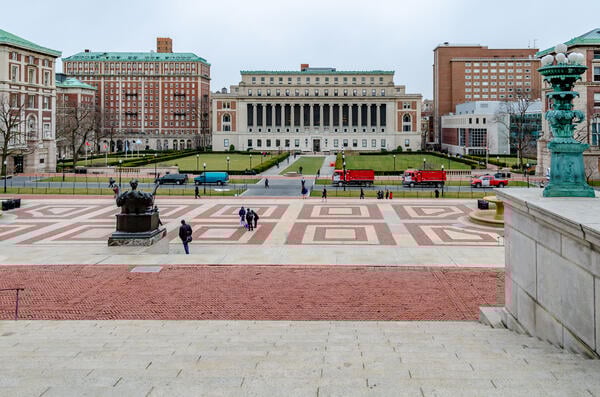
    Columbia University president Claire Shipman would have us believe she snatched academic freedom from the flames of Trump’s higher education dumpster fire, but this is more of the same gaslighting we’ve endured for almost two years. Beginning with the first university administrator’s response to the first campus protest against the war in Gaza, university administrations everywhere repeatedly decried antisemitism while rarely naming what the students were actually calling for—namely, for the harm to the Palestinian people to stop, not for harm to come to the Jewish people.

    The words “Palestine” and “Gaza” almost never appeared in university administrators’ statements. That they also don’t appear in Shipman’s announcement of the agreement Columbia reached with the federal government to settle allegations of antisemitism is one tell that protections for academic freedom were not “carefully crafted” over the course of the negotiations but that they were abandoned instead. (For a thorough analysis of the settlement’s many failures that goes beyond the focus of this article, see “An Agreement That Settles Nothing,” by the Columbia chapter of the American Association of University Professors.)

    On CNN, Shipman claimed that the resolution “protects our academic integrity,” calling that a “red line” for Columbia. In her announcement, Shipman offers as evidence of this integrity a sentence in the settlement that reads, “No provision of this agreement, individually or taken together, shall be construed as giving the United States authority to dictate faculty hiring.” She glosses this by adding, “The federal government will not dictate … who teaches.”

    When reading the official document, one is startled, then, to find that faculty hiring is dictated by its terms:

    “13. Columbia shall, consistent with its announcement on March 21, 2025, appoint new faculty members with joint positions in both the Institute for Israel and Jewish Studies and the departments or fields of economics, political science, or SIPA [the School of International and Public Affairs].”

    The government should not be determining which programs Columbia chooses to invest in. I suspect that the slippage in Shipman’s statement from “faculty hiring” (the government cannot dictate faculty hiring) to “who teaches” (the government cannot dictate who teaches) is purposeful. She can always say that no member of the multiagency Task Force to Combat Anti-Semitism that had her by the throat will be personally reviewing candidate files, so Columbia retains control over the who of who teaches. But this is a distinction without substance when the ideological viewpoint of candidates is guaranteed in advance.

    The Institute for Israel and Jewish Studies “is dedicated to the academic study and discussion of Israel and Jewish Studies,” we learn from its webpage. “The Institute for Israel and Jewish Studies supports the State of Israel’s right to exist and to flourish,” its webpage also tells us. Can an academic department be a kind of lobbying organization at the same time? And can an academic department on Israel exclude some of the best thinking on its formation, that of anti-Zionist Jewish scholars? Isn’t this combination of the academic and the ideological a bit like the nonsensical liberal platitude calling Israel a Jewish and democratic state? The conjunction “and” does a heck of a lot of spackling work.

    By sharing the hires in the Institute for Israel and Jewish Studies as joint appointments with other departments, the work performed by phrases like “Israel’s right to exist” is amplified. In this way, the settlement seeks to multiply a particular, pro-Israel point of view in the university, potentially helping to shield Israel from criticism at the very moment it most needs to be criticized. This is not institutional neutrality. This is an intentional tilting of an already painfully tilted playing field.

    If anyone doubts that this tilt is precisely what the settlement seeks to secure, they need only consult No. 12 in the agreement, which stipulates that “the Senior Vice Provost, acting with the authority of the Office of the Provost, will conduct a thorough review of … the Center for Palestine Studies; the Institute for Israel and Jewish Studies; Middle Eastern, South Asian, and African Studies; the Middle East Institute; the Tel Aviv and Amman global hubs; the School of International and Public Affairs Middle East Policy major; and other University programs focused on the Middle East.”

    This person will “make recommendations to the President and Provost, in accordance with academic procedures, about any necessary changes, academic restructuring, or investments.” We already know which program on this list will find its fortunes soon improved. It’s not hard to imagine which ones might find themselves impoverished under the heading “necessary changes” or “academic restructuring.”

    Columbia did negotiate something wise. As Shipman wrote, “We have agreed on a robust dispute resolution process that includes a mutually agreed upon independent monitor and arbitrator as neutral third parties, rather than ceding authority to the government or a court.” Without this provision, Columbia would face a future of potentially endless arbitrary civil rights investigations.

    As more journalists report on the transformation of the federal civil service from a body of mostly nonpartisan experts into one evaluated on loyalty to the president, and as more stories expose the illegitimate tactics and methodologies used to levy accusations of antisemitism, this caveat providing for a third-party arbiter will be one that every institution will want to negotiate before discussing anything else. Columbia’s saga is, after all, only one of the first of many likely to come—last week, Brown University became the second institution to strike a deal with the Trump administration, and Harvard University is reportedly making progress toward one). After the Columbia settlement was announced, Trump posted on Truth Social, “Numerous other Higher Education Institutions that have hurt so many, and been so unfair and unjust, and have wrongly spent federal money, much of it from our government, are upcoming.”

    But this third-party provision holding out the hope that saner heads than those in the federal government will adjudicate going forward—a provision that will have to be negotiated individually by each institution—isn’t good enough, is it? Each institution, in this scenario, stanches its own bleeding, but not one of them directly challenges the federal administration’s use of antisemitism as a weapon of intimidation. It’s a rational calculation for each institution, I suppose, but a disastrous one taken as a whole.

    “For months,” Shipman says, “Columbia’s discussions with the federal government have been set up as a test of principle—a binary fight between courage and capitulation. But like most things in life, the reality is far more complex.” No doubt Shipman has in mind the real tragedies that would have resulted from a show of courage that might have cost Columbia its federal funding—critical research halted, jobs lost, students’ lives derailed, perhaps even the end of Columbia’s continued existence. The stakes were very high for Columbia, as they remain very high for all but the most financially insulated universities and colleges.

    And I suppose the compromises to academic freedom our institutions make, with no end in sight, in order to keep doors open and funds flowing might be forgivable, were it not for the 60,000 people and counting who are now dead—18,500 of them children. Were it not for the “worst-case scenario of famine” now unfolding. Were it not for the “war crimes in plain sight.”

    When the presidents of our universities and colleges compromise our academic freedom, they are doing so by playing along with a narrative of widespread antisemitism that they know is a pretext and a deflection. By going along with this narrative rather than challenging it, they co-create with the federal government a culture of fear that makes us scared to use our voices as professors to name and discuss a genocide. When we hesitate to openly address what is morally undeniable, the world begins to wobble. Yes, the reality is more complex than “a test of principle,” because we do not lose an abstract principle when we lose academic freedom; we slowly but surely lose our ability to tell right from wrong.

    Jennifer Ruth is a professor in the School of Film at Portland State University. She is co-author, with Michael Bérubé, of It’s Not Free Speech: Race, Democracy, and the Future of Academic Freedom (Johns Hopkins Press, 2022); coeditor, with Ellen Schrecker and Valerie Johnson, of The Right to Learn: Resisting the Right-Wing Attack on Academic Freedom (Beacon, 2024); and co-director, with Jan Haaken, of the film The Palestine Exception: What’s at Stake in the Campus Protests?

    Source link

  • Weekend Reading: Rethinking the Role of Place in UK Higher Education Policy

    Weekend Reading: Rethinking the Role of Place in UK Higher Education Policy

    • This HEPI guest blog was kindly authored by John Goddard OBE, Emeritus Professor of Regional Development Studies at Newcastle University.

    In a HEPI note prompted by a Centre for Skills, Knowledge and Organisational Performance (SKOPE) conference, Nick Hillman asked: Should the seminal Robbins report inform the forthcoming post-16 strategy? He referenced the point made by Professor Robson of SKOPE about the need ‘to encourage place-based approaches … and replace competition with coordination.’ As Nick points out, the challenge of place and coordination are not new, but as I will argue, these are not being confronted by policymakers right now.

    The Robbins’ report led to new universities being established. But these were in county towns and as we observe in our volume on The University and the City, overlook the growing urban crisis of that period. The Education Reform Act of 1988 severed the link between polytechnics and local government. The Further and Higher Education Act 1992, which allowed polytechnics to apply for university status, had the Government’s desired impact of reducing the unit cost of higher education and moving the UK instantly up the OECD rankings in terms of participation in higher education. But it also signalled a further disconnection with cities. The creation of new universities in the 1970s to meet a 50% participation rate was also unplanned in geographical terms. So, unlike many countries, the UK has not had a plan for the geography of higher let alone further education.

    Indeed, UK higher education policy and practice has ignored the lessons of history as well as being geographically blind. It has not been sensitive to the different local contexts where universities operate and the evolution of these institutions and places through time.

    It is important to remember that locally endowed proto-universities like Newcastle, Sheffield and Birmingham supported late 19th-century urban industrialisation and the health of the workforce. They also played a role in building local soft infrastructure, including facilitating discourse around the role of science and the arts in business and society. This was also a time in which new municipal government structures were being formed. In short, universities helped build the local state and create what the British Academy now calls social and cultural infrastructure, in which universities play a key role

    These founding principles became embedded in the DNA of some institutions. For example, in 1943, the Earl Grey Memorial lecturer in King’s College Newcastle noted,

    Ideal Universities… should be an organic part of regional existence in its public aspects, and a pervading influence in its private life. …Universities to be thus integrated in the community, must be sensitive to what is going on in the realm of business and industry, of practical local affairs, of social adaptation and development, as well as in the realm of speculative thought and abstract research.

    In the later 20th century, most so-called redbrick universities turned their back on place as the central state took on direct funding of higher education and research and did not prioritise the local role of universities. But this was challenged by the Royal Commission on the Future of Higher Education in 1997, chaired by Lord Dearing. He noted that: ‘As part of the compact we envisage between HE and society, each institution should be clear about its mission in relation to local communities and regions.’ For him, this ‘compact’ was wide-ranging, had a strong local dimension and was one where the university’s contribution to ‘the economy’ could not be separated from the wider society in which it was embedded.

    Many of Dearing’s ideas were subsequently incorporated into the work of Regional Development Agencies (RDAs) that were established in 1989 to promote economic development and regeneration, improve business competitiveness, and reduce regional disparities. This included investment, (matched by European regional funds ) into university-related research and cultural facilities. These capital and recurrent investments contributed to ‘place making’ and university links with business and the arts. For example, the former Newcastle brewery site was purchased by Newcastle University, Newcastle City Council and RDA, which they named ‘Science Central’. The partnership was incorporated as Newcastle Science City Ltd., a company limited by guarantee with its own CEO and independent board. The organisation’s portfolio included:

    Support for business, facilitating the creation of new enterprises drawing on the scientific capabilities of the region’s universities and work with local schools and communities, particularly focussed on promoting science education in deprived areas.

    The initiatives recognised the role that universities could play in their places by building ‘quadruple helix partnerships’ between universities, business, local and central government and the community and voluntary sectors.

    But from 2008, with the onset of public austerity, a focus on national competitiveness and a rolling back of the boundaries of the state, we saw the abolition of the RDAs in 2012, the creation of Local Enterprise Partnerships with more limited powers and resources and a cutting back on non-statutory local government activities, notably for economic development. My 2009 NESTA provocation Reinventing the Civic University was a reminder that universities had to go back to their roots and challenge broader geo-political trends, including globalisation and the creation of university research excellence hierarchies that mirrored city hierarchies.

    Marketisation was subsequently embedded into law in the 2017 Higher Education Act. This abolished the Higher Education Funding Council for England and its network of regional consultants working with formal university associations. The act unleashed competition regulated via the Office for Students (OfS) and supported by an enhanced discipline-based research excellence funding scheme. Both were place blind. Some of us raised the possibility of the financial collapse of universities in less prosperous places where they were so-called ‘anchor institutions’

    It was a recognition of this place blindness that contributed to the case for the establishment of the Civic University Commission, chaired by the late Lord Kerslake. The Commission argued that the public – nationally and locally – needed to understand better the specific benefits that universities can bring in response to the question: ‘We have a university here, but what is it doing for us? Institutions that were ultimately publicly funded needed to be locally accountable given our place-based system of governance – parliamentary constituencies and local authorities.

    For the Commission, accountability meant something different from a top-down compliance regime. Rather, sensitive and voluntary commitments made between a diverse set of actors to one another, whose collective powers and resources could impact local economic and social deficiencies

    The Commission therefore proposed that universities wishing to play a civic role should prepare Civic University Agreements, co-created and signed by other key partners and embracing local accountability. Strategic analysis to shape agreements should lead to a financial plan that brings together locally the many top-down and geographically blind funding streams that universities receive from across Whitehall – for quality research, for health and wellbeing, for business support, for higher-level skills and for culture.

    Some of these national funds now need to be ring-fenced to help universities work with partners to meet local needs and opportunities, including building capacity for collaborative working within an area. As the Secretary of State for Education has suggested in her letter to VCs, this might include a slice of core formulaic Quality Research (QR) funding. Such processes would be preferable to the ad-hoc interventions that have hitherto failed to establish long-term trust between universities and the community. At the same time, a place dimension could be included in the regulation of the domestic student marketplace. This could all form part of a compact or contract between universities and the state which enshrined a responsibility to serve the local public good.

    Going forward, I would argue that the coincidence of multiple crises across the world has far-reaching implications that universities cannot ignore. Indeed, if they do not step up to the plate and assert their civic role as anchor institutions in their places, their very existence may be at stake. The issues are well set out in this Learning Planet Institute Manifesto for the Planetary Mission of the University.

    Reading this Manifesto should help policy makers and institutional leaders in the UK recognise that the current financial crisis facing universities is an outward and visible sign of deeper threats, not least those arising from popularism and being fanned by Donald Trump. And popularism has its roots in the experience of people in left behind places.

    Therefore, Government support for the role of universities in their communities is not only beneficial to them but also to society at large. To respect institutional autonomy, this requires the right incentives (sticks and carrots). For example, universities throughout England could be required to support the Government’s plans for devolution as part of the compact I suggest. Questions to be answered by the Departments for Education; for Housing, Communities and Local Government and for Science, Innovation and Technology working TOGETHER could include:

    • What structures need to be put in place inside and outside of universities to facilitate joint working between universities and Mayoral Combined Authorities (MCAs)?
    • How should universities be included in upcoming Devolution Deals?
    • How might these differ between MCAs at different stages of development and different levels of prosperity?
    • How should universities link their work with business, with the community and the priorities of MCAs for inclusive growth and with the Industrial Strategy White paper?
    • How should Combined Authorities work with different universities and colleges in their area to meet skills gaps?
    • How can areas without MCAs work with universities to deliver equivalent outcomes?

    In summary, universities must recognise that they are part of the problem identified by populism, but can contribute to solutions through purposive local actions supported by the government.

    Source link

  • Research Funding Starts to Flow Back to Columbia, Brown

    Research Funding Starts to Flow Back to Columbia, Brown

    Photo illustration by Justin Morrison/Inside Higher Ed | Wolterk/iStock/Getty Images | Alex Kent/Getty Images

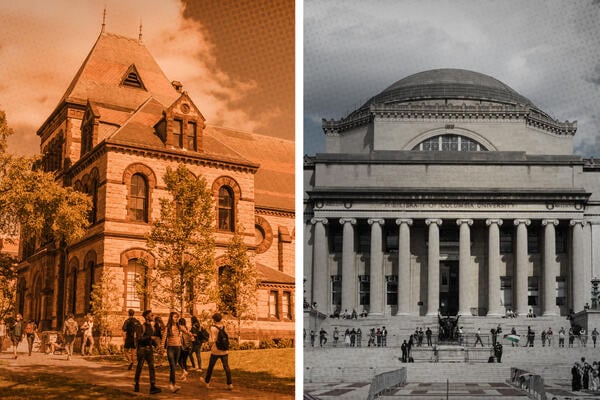
    Days after reaching deals with the Trump administration, Columbia and Brown Universities say the government has already initiated the process of restoring hundreds of millions in federal research dollars it terminated earlier this year in retaliation for their alleged failures to address antisemitism on campus. 

    Many of those grants came from the National Institutes of Health, which is overseen by the Department of Health and Human Services, and funded medical research, including time-sensitive clinical trials.  

    “The agreement finalized this week restored all National Institutes of Health grants to Brown researchers that had been terminated,” Brian Clark, a Brown spokesperson, wrote in an email to Inside Higher Ed Thursday evening. “We started to see that formalized in award letters today and expect in the coming days and weeks to see this across all of these grants.” 

    In April, the administration blocked $510 million in federal grants and contracts for Brown. But under the terms of the agreement the government and university finalized Wednesday, Clark said, “Any payments should resume within 30 days,” which applies to both “the restoration of specific grants that had been terminated, and also to active (non-terminated) grants for which Brown had not been reimbursed.”

    If you had a grant frozen because of the Trump administration’s investigations, we want to hear about your experience and whether you’ve received your funding. Email [email protected] to share more.

    The Brown deal came about a week after Columbia agreed to pay the government $221 million in addition to changing its admissions policies, disciplinary processes and academic programs in order to restore about $400 million in federal funding the administration canceled in March.

    According to Columbia’s website, “Funding and reimbursement payments have already begun to flow.”

    “One week later, more than half of the terminated grants have been restored, and we expect the others to be reinstated promptly,” the website says. “Renewals and continuations that were frozen are also coming in on non-terminated grants.”

    The university wrote that it’s “reviewing all grants that were terminated or suspended over the last months to identify those that were specifically directed at Columbia” and expects “the fair treatment of Columbia grants and ability to compete to be honored by all federal agencies.”

    The university noted that the agreement only applies to HHS and NIH grants that the administration canceled as part of its targeted pressure campaign on Columbia. 

    Faculty who asked to remain anonymous told Inside Higher Ed that either the university or NIH has told them that some grants are being reinstated or renewed. But it was unclear to them whether actual dollars have resumed flowing, and how many.

    Since Trump took office in January, numerous federal agencies, including the NIH, the National Science Foundation and Education Department, have terminated thousands of other research grants at institutions across the country that don’t align with their ideological priorities. In particular, many grants that focused on transgender health, vaccine hesitancy, climate change and racial disparities have been canceled. 

    Columbia researchers whose grants were terminated as part of that sweep should not expect to see their funding restored as part of this deal, the university wrote on its website. 

    “Some of these grants were terminated or suspended across the board for all institutions, and have nothing specific to do with Columbia,” the webpage said. “To the extent that the federal government has made the decision not to fund certain types of projects at any institution, those grants will not be coming back to Columbia.”

    Columbia and Brown are just two of numerous Ivy League Institutions that the Trump administration has targeted by threatening federal funding. 

    The administration was also holding up $175 million at the University of Pennsylvania in retaliation for the university allowing a transgender athlete to compete on its swim team. Last month, the university reached a deal with the government, which has said it will restore the funding

    The administration is also blocking $2.2 billion at Harvard University$202 million at Princeton University and $1 billion at Cornell University. However, those institutions have yet to reach agreements with the government that could result in restoration of their federal funding.

    So far, the administration has frozen nearly $5.9 billion across eight universities, including Brown, Columbia and Penn. Most of the funding freezes started in March, but in the last week, the administration resumed blocking funds at institutions under investigation. First, it put about $108 million on hold at Duke University, and then officials suspended an unspecified number of grants at the University of California, Los Angeles.

    Ryan Quinn contributed to this report.

    Source link

  • GMU President Keeps Job Amid Tensions

    GMU President Keeps Job Amid Tensions

    Embattled George Mason University president Gregory Washington remains on the job despite concerns that GMU’s Board of Visitors would fire him amid multiple federal investigations into alleged racial discrimination, antisemitism and other matters, which he has publicly pushed back on.

    GMU’s Board of Visitors met Friday to review Washington’s performance and to consult with legal counsel on “actual or probable litigation,” according to the board agenda. While specific legal matters were not detailed in the agenda, GMU is facing investigations from both the U.S. Department of Education and the Department of Justice over alleged discrimination in hiring practices and antisemitism. The DOJ also launched a highly unusual investigation into GMU’s Faculty Senate after it approved a resolution in support of Washington’s leadership.

    The Trump administration seized on remarks made by Washington following the 2020 murder of George Floyd. Washington, as noted in a letter from the DOJ to the university, expressed the need to hire diverse faculty members, promised to advance an antiracist agenda and threw his support behind GMU’s diversity, equity and inclusion initiatives.

    Washington denied engaging in what the Trump administration labeled “illegal DEI” efforts.

    On Friday, he defended both GMU and his own performance, noting he arrived on campus in 2020 when tensions were high and racial strife was still simmering over Floyd’s murder. Adding to the pressure, students, faculty members and others demanded he tear down a statue of university founder George Mason, who was a slave owner. 

    “Despite the commentary that you might hear, this institution is doing extraordinarily well,” Washington told board members on Friday in the open session portion of the meeting, during which he touted GMU’s rise in various university rankings as well as an increase in state funding.

    But many community members feared that Washington, GMU’s first Black president, would lose this job as a result of the investigations. They worried that the inquiries give the Board of Visitors—which is stocked with conservative political activists and former GOP officials—the pretext to remove him. Multiple speakers and attendees at a Friday rally held in support of Washington pointed to other campus leaders recently pushed out. That includes Jim Ryan at the University of Virginia, who resigned under pressure from the DOJ over DEI programs, and Cedric Wins, superintendent of Virginia Military Institute, whose contract was not renewed this spring amid alumni complaints about DEI. One rally organizer had referred to the Friday meeting as “high noon at the OK Corral.”

    Instead, after roughly three hours in closed session, the board emerged with one action item: approval of a 1.5 percent raise for Washington, which members unanimously signed off on. Board members did not discuss their review of his performance conducted behind closed doors.

    That means despite faculty concerns Washington will keep his job—at least for now.

    Support for Washington

    As faculty, students and local lawmakers gathered Friday, they had a clear message for the Board of Visitors: Support Washington and push back on federal investigations they deemed both illegitimate and a broadside against academic freedom at GMU. They also called on the board to protect DEI at GMU, which is Virginia’s most diverse university. However, the board defied that demand by passing a resolution Friday to end race-conscious hiring, scholarships, graduation ceremonies and other initiatives.

    While Washington’s fate was unknown during the rally, speakers urged attendees to push on.

    “We’ve got to keep fighting. No matter what happens today, this is still our university,” said Bethany Letiecq, chair of GMU’s chapter of the American Association of University Professors. Letiecq also referenced personal safety concerns, arguing, “Faculty are being harassed and threatened.” (She previously told Inside Higher Ed she has been subject to two death threats.)

    Bethany Letiecq was one of several speakers to voice support for GMU president Gregory Washington at a Friday rally.

    Former Board of Visitors member Bob Witeck, who served on the search committee that hired Washington in 2020, said he “could not believe our luck” in selecting the president from a pool of nearly 200 candidates and praised his “character, intellect and honesty.” Witeck also warned about threats to both academic freedom and the inclusive nature of GMU, stating, “Discrimination cannot find a home here, nor should political interference or baseless investigations.”

    Another speaker was supportive of Washington while also critical.

    Ellie Fox, a GMU student and president of its Jewish Voices for Peace chapter, was critical of Washington for allegedly repressing “pro-Palestinian speech in the name of Jewish safety.” Fox added that he was “reluctant to resist Trump and conservatives and their attack” on GMU but urged Washington to defy calls to resign from his position and work “toward a better future.”

    Other rally speakers included Fairfax mayor Catherine Read and State Senator Saddam Salim, both GMU graduates and Democrats, who threw their support behind the university and Washington and expressed concerns about the investigations and other attacks on higher education.

    Board-Faculty Tensions

    Although the board did not make any public announcement about the items they discussed in closed session, beyond approving a raise for Washington, an exchange between one member and a GMU professor highlighted the tensions at play.

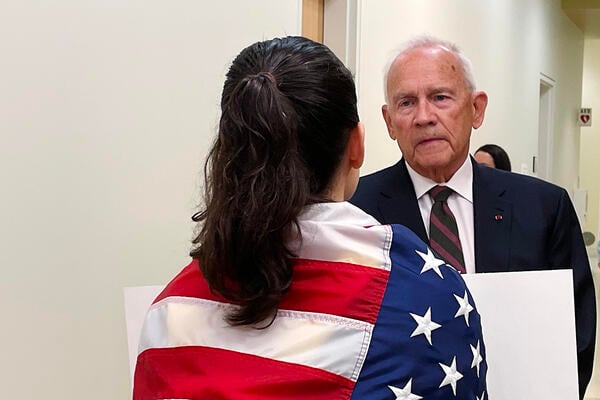
    Robert Pence, a former ambassador to Finland appointed during President Donald Trump’s first term, took issue with a faculty member’s protest sign when he encountered her in a hallway outside the board’s meeting room during a break. Tehama Lopez, a professor in the Jimmy and Rosalynn Carter School for Peace and Conflict Resolution, held a sign calling on the board to support Washington and uphold the First Amendment, academic freedom and due process.

    “You’re suggesting that Bob Pence—Robert Pence—does not support the First Amendment,” he told Lopez before shifting his attention to her call for board members to support Washington.

    Pence then asked Lopez, “If you got a lot of facts and you became convinced that he was engaged in conduct that is deleterious to the university, would you then fire [Washington]? If he meets the standard—whatever the standard is for discharge—would you be willing to fire him?”

    Lopez responded, “Who is being deleterious to the university?” Pence fired back, “You won’t answer the question” and “I’m not playing that game” before walking away from the exchange to return to the meeting.

    A photo of Robert Pence and Tehama Lopez in conversation. She has her back to the camera and an American flag wrapped around her shoulders.

    Board member Robert Pence clashed with a faculty member outside of Friday’s meeting.

    In a brief interview following that conversation, Lopez said that she wanted to see the board uphold its fiduciary duties as GMU faces multiple investigations, which she called “politically motivated.” Given the stakes, she wants to make sure the Board of Visitors protects the university rather than enacting a political agenda pushed by the Trump administration.

    But Lopez appeared uncertain of which path the board will take.

    “Their job on the Board of Visitors is to do the work of protecting the school and the school’s interest, and it’s very unclear whose bidding they’re doing,” Lopez said.

    Source link

  • Higher Education Inquirer Surpasses 1 Million Views, Including More Than 200,000 in July 2025

    Higher Education Inquirer Surpasses 1 Million Views, Including More Than 200,000 in July 2025

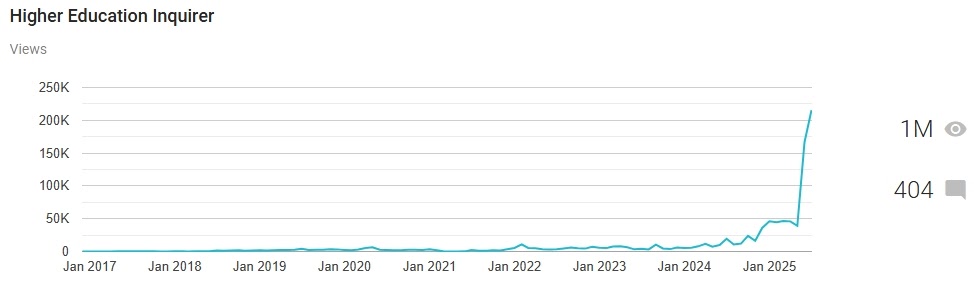
    The Higher Education Inquirer has reached a major milestone: more than 1 million total views since its founding, with over 200,000 views in July 2025 alone—a record-breaking month for the independent investigative site. This surge in readership reflects growing public concern with the state of U.S. higher education, especially at a time of increasing economic precarity, political unrest, and institutional dysfunction.

    As corporate media outlets continue to downsize or ignore coverage of student debt, credential inflation, predatory schools, and the exploitation of academic labor, readers are seeking more critical, independent voices. HEI, which has long focused on underreported stories within the higher education-industrial complex, is becoming a go-to resource for policymakers, whistleblowers, journalists, and everyday people trying to make sense of the education economy.

    Most Viewed Stories in July 2025

    A few standout articles reveal key themes that are resonating with readers:


    1. “Camp Mystic: A Century of Privilege, Exclusion, and Resilience Along the Guadalupe”

    Views: 8,730

    This deeply researched piece on the elite girls’ camp in Texas struck a nerve with readers interested in the intersection of inherited wealth, segregation, and performative philanthropy. Camp Mystic serves as a metaphor for the parallel institutions that shape American leadership in quiet, exclusive ways—far from public scrutiny.

    Trend: Growing interest in how generational wealth and private networks perpetuate elite power and influence, especially through educational institutions.


    2. “The Big Beautiful Bill”: A Catastrophic Blow to College Affordability

    Views: 1,290

    This analysis of new legislation affecting federal student aid programs explores how a bill dressed in populist language has real consequences for working-class and middle-income families. Readers responded to its dissection of policy doublespeak and the structural defunding of public education.

    Trend: Rising awareness of how both major political parties contribute to the erosion of affordable education—often under misleading rhetoric.


    3. “Santa Ono: Take the Money and Run”

    Views: 956

    A pointed critique of University of Michigan President Santa Ono’s high salary and revolving-door administrative career drew in readers frustrated by bloated leadership pay and lack of institutional accountability.

    Trend: Increased public scrutiny of university presidents and boards of trustees, especially at elite institutions.


    4. “List of Schools with Strong Indicators of Misconduct, Evidence for Borrower Defense Claims”

    Views: 943

    This database-style article provided a valuable resource for former students, journalists, and attorneys. By documenting schools with troubling records, it supported those filing Borrower Defense to Repayment claims and highlighted the ongoing fallout from the for-profit college boom.

    Trend: Continued demand for actionable consumer information amid the Biden Administration’s limited and politically fraught debt relief efforts.


    5. “Degrees of Discontent: Credentialism, Inflation, and the Global Education Crisis”

    Views: 900

    This global take on the failures of credential-driven economies resonated with a wide audience—from jobseekers with degrees they can’t use to educators struggling to make sense of shifting academic value.

    Trend: A philosophical and economic reckoning with credentialism, especially as degrees lose value while tuition and debt skyrocket.


    6. “Layoffs at Southern New Hampshire University”

    Views: 826

    Coverage of SNHU, a major player in online education, shed light on the darker side of “innovation”: layoffs, overwork, and instability for faculty and staff.

    Trend: Growing doubts about the long-term sustainability and labor ethics of the online education model.


    7. “Universities Brace for Endowment Tax Hike, Rethink Investment Strategies”

    Views: 687

    A timely piece on elite university endowments caught the eye of readers interested in how wealth hoarding and financial engineering are baked into modern academia.

    Trend: Rising critiques of nonprofit tax loopholes and the financialization of higher ed.


    8. “Liberty University in Black and White”

    Views: 684

    This critical examination of Liberty University’s public image, internal contradictions, and links to right-wing political power explored how Christian nationalist ideology operates through higher education.

    Trend: High interest in the political roles of conservative religious institutions and their ties to the culture wars.


    9. “Corruption, Fraud and Scandal at Los Angeles Community College District (LACCD Whistleblower)”

    Views: 615

    A whistleblower-centered article on LACCD corruption revealed widespread misuse of funds and institutional cover-ups, especially in facilities projects.

    Trend: Rising demand for investigative journalism focused on local corruption in publicly funded institutions.


    10. “Agency Information Collection Activities…Borrower Defense to Loan Repayment Universal Forms”

    Views: Not Yet Indexed

    While bureaucratic in title, this article was shared among policy experts and debt activists for its breakdown of how regulations—and public comment periods—impact real people trying to discharge fraudulent debt.

    Trend: Readers are becoming more engaged in regulatory policy and more skeptical of federal agencies’ ability or willingness to protect consumers.


    What Readers Want 

    What these stories show is a distinct pattern: readers want more accountability, more transparency, and less propaganda from the education system that has long promised prosperity and delivered precarity. They’re fed up with bloated administrative salaries, empty credentials, elite hypocrisy, and legislative betrayal.

    Thanks to grassroots support and collaborations with students, whistleblowers, and journalists, the Higher Education Inquirer continues to grow in both reach and relevance.

    As we pass 1 million views, we’re not just marking clicks—we’re tracking the pulse of a system in crisis. And we’re not done yet.

    Source link

  • Mass. Governor Proposes $400M in State Funding for Research

    Mass. Governor Proposes $400M in State Funding for Research

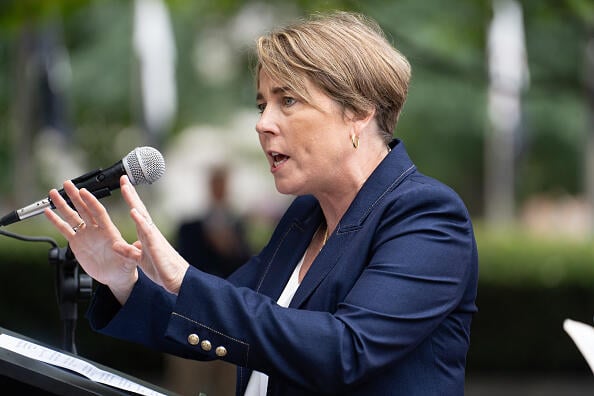
    Massachusetts governor Maura Healey introduced legislation Thursday that would provide $400 million in state funding for research and development, including projects conducted by colleges and universities, The Boston Globe reported. The move appears to be an attempt to alleviate some of the pain caused by the Trump administration’s drastic federal funding cuts to higher ed institutions.

    Introducing the legislation at the State House yesterday, Healey cited Massachusetts’ prowess as a research leader, noting that it has the highest percentage of STEM graduates and hosts 10 percent of all research and development jobs in the country. It is also home to Harvard University, which has had roughly $2.6 billion in funding frozen by the Trump administration.

    “In the face of uncertainty from the federal government, this is about protecting one of the things that makes Massachusetts so special—our global leadership in health care and helping families across the world,” Healey said in a statement.

    The plan calls for $200 million to be appropriated for research at hospitals, universities and independent research groups; the other $200 million will support the state’s public colleges and universities in covering the direct and indirect costs of research and partnerships, as well as hiring personnel. The funds must be approved by the Legislature.

    Higher ed leaders applauded the move.

    “University research fosters the creation of new knowledge, drives regional economies, and is vital to prepare the next generation of innovators,” said Northeastern University president Joseph Aoun in a statement. “I commend Governor Healey and her team for their commitment to ensuring Massachusetts remains a global leader in cutting-edge research.”

    “In moments of uncertainty, it is essential that we protect the integrity of Massachusetts’ renowned biomedical research ecosystem, which contributes immensely to our nation’s research enterprise,” said Michael Collins, chancellor of the UMass Chan Medical School. “We are profoundly grateful to Governor Healey and her administration for their leadership in recognizing the urgent need to support research and innovation in the commonwealth, and we look forward to working with the Legislature to assure passage of this timely initiative.”  

    Source link