Tag: Higher

  • UK and Aus higher education compared – Campus Review

    UK and Aus higher education compared – Campus Review

    How do perceptions of artificial intelligence, online education, tertiary harmonisation, regulation and the skills agenda differ between Australia and the United Kingdom?

    Please login below to view content or subscribe now.

    Membership Login

    Source link

  • Assignments for Politically Disaffected Students (opinion)

    Assignments for Politically Disaffected Students (opinion)

    Joe Rogan is no fan of my work, obviously. The chart-topping conservative influencer famously insists that universities are “cult camps” where professors like me indoctrinate students with leftist ideas. Typically, I do not worry about my haters, but increasingly it seems that if I want to create a meaningful learning experience, I need to.

    I teach first-year undergraduate humanities electives. Like most universities, ours offers large-format 200-student lectures for training in academic writing and critical theory. This would be the “indoctrination” in question, as I introduce students to canonical thinkers from Karl Marx to Sylvia Wynter. These electives are degree requirements, snaring students who might intentionally avoid liberal arts in an otherwise professional degree.

    In the current political climate, many of my students come to the classroom with their minds made up based on authorities who directly undermine my scholarship and profession. Rogan is just one of many conservative anti-intellectuals who regularly attack liberal, feminist, social justice–oriented biases in university education. The result is a polarized atmosphere antithetical to learning: a tangibly mistrustful, sometimes even resentful classroom.

    Although only a small handful of students typically adhere to anti-intellectual doctrine, their small group undermines my authority with risky jokes in the classroom and intense criticism in student back channels (as reported by concerned classmates). This causes undecided students to falter in their trust of my authority, while students who do not share their views nervously censor their contributions.

    Ironically, my dissenting students often do not recognize that I am interested in their views. I am convinced that the way out of this explosive historic moment is through rigorous discussion in educational forums. Like any academic, this is why I teach: I love sincere inquiry, debate and critical engagement, and I was a rabble-rouser myself as a student. But the current classroom mood is less debate and more deadlock.

    So, I spent this year brainstorming with my students to build creative assignments to spin resentment into passion, no matter how opposite my own, welcoming self-directed research and encouraging deeply engaged reading. I offer any one of these assignments, with the goal to bring disaffected, anxious students back to a love of learning and democratized engagement. This is a work in progress, and I welcome suggestions.

    Turn Tensions Into Data: This introductory exercise eases students into an atmosphere of open collegial discussion. Surveys or anonymous polls quantify disagreements, and then we analyze the results as a class.

    Example: Class Belief Inventory—anonymously poll students on hot-button questions (e.g., “Is systemic racism a major problem?”). The objective here would be to compare the class’s responses to national survey data. Potential discussion topics: Why might differences exist? What shapes our perceptions?

    Hostile Influencers as Primary Sources: This in-class activity treats figures like Rogan or Jordan Peterson not as adversaries but as authors of texts to analyze, to disarm defensiveness and position students as critical investigators.

    Example: “Compare/contrast an episode of [X podcast] with a peer-reviewed article on the same topic. How do their arguments differ in structure, evidence and rhetoric? Whom do you find more persuasive, and why?”

    Gamifying Ideological Tensions: This class activity turns assigned readings into structured, rule-bound games where students must defend positions they don’t personally hold.

    Example: Role-Play a Summit—Students are assigned roles (e.g., Jordan Peterson, bell hooks, climate scientist, TikTok influencer) and must collaborate to solve a fictional problem (e.g., redesigning a curriculum). They must cite course readings to justify their choices.

    Therapy for Arguments: This fun early activity teaches students to diagnose weak arguments—whether from Rogan, a feminist theorist or you—using principles of logic.

    Example: Argument Autopsy—Students dissect a viral social media post, podcast clip or course reading. Identify logical fallacies, cherry-picked evidence or unstated assumptions. Reward students for critiquing all sides.

    Intellectual Sleuthing: This is a scaffolded midterm writing assignment building up to a final essay. Ask students to trace the origins of their favorite influencers’ ideas. Many anti-establishment figures borrow from (or distort) academic theories—show students how to connect the dots.

    Example: Genealogy of an Idea—Pick a claim from a podcast (e.g., “universities indoctrinate students”). Research its history: When was this idea popular in mainstream news or on social media? Are there any institutes, think tanks, influencers or politicians associated with this idea? What are the stated missions and goals of those sources? Where do they get their funding? Which academics agree or disagree, and why?

    Leverage “Forbidden Topics” as Case Studies: If students resent “liberal bias,” lean into it: make bias itself the subject of analysis. This might work as a discussion prompt for tutorials or think-pair-share group work.

    Example: “Is This Reading Biased?”—Assign a short text students might call “woke” (e.g., feminist theory) and a countertext (e.g., Peterson’s critique of postmodernism). Have students evaluate both using a rubric: What counts as bias? Is objectivity possible? How do they define “truth”?

    Choose-Your-Own-Adventure Assignments: The final essay assignment gives students agency to explore topics they care about, even if they critique my field. Clear guardrails are important here to ensure rigor.

    Example: Passion Project: Students design a research question related to the course—even if it challenges the course’s assumptions. They must engage with three or more course texts and two or more outside sources, as in favorite influencers or authorities, even those who oppose course themes.

    Red Team vs. Blue Team: For essays, students submit two versions: one arguing their personal view and one arguing the counterpoint. Grading is based on how well they engage evidence, not their stance.

    Elisha Lim is an assistant professor of the technological humanities at York University in Toronto. They used generative AI tools to assist with the editing of this piece.

    Source link

  • Judge Says Harvard Can Enroll International Students for Now

    Judge Says Harvard Can Enroll International Students for Now

    Photo illustration by Justin Morrison/Inside Higher Ed | greenleaf123/iStock/Getty Images | APCortizasJr/iStock/Getty Images

    District Judge Allison Burroughs granted a preliminary injunction to Harvard University on Friday in its case challenging the Trump administration’s efforts to prevent the university from enrolling international students. It’s the latest development in a tit-for-tat legal battle over the ability of more than a quarter of Harvard’s students to remain enrolled. 

    The injunction prevents the Department of Homeland Security from stripping Harvard of its Student Exchange and Visitor Program certification until Burroughs issues a final ruling in the lawsuit. It does not address President Donald Trump’s executive proclamation from earlier this month banning the State Department from issuing visas to international students and researchers attending Harvard; a temporary restriction on that ban expired June 20. 

    Burroughs has not issued an injunction on the Trump administration’s second attempt to revoke Harvard’s SEVP certification, which could take effect Wednesday if she declines to take further action, as Harvard has requested. 

    Source link

  • Judge Orders Mahmoud Khalil to Be Released

    Judge Orders Mahmoud Khalil to Be Released

    A federal judge ordered that Mahmoud Khalil, the Columbia University graduate and student protest leader who was detained by ICE agents in March, be released from a detention center in Louisiana. News outlets reported that he walked out of the detention center around 6:40 Central time Friday evening. 

    U.S. District Judge Michael Farbiarz ruled on Friday that Khalil, a legal permanent resident who has not been accused of any crime, should be released on bail and that continuing to hold him was highly unusual and could constitute “unconstitutional” punishment for his political beliefs. The Trump administration had sought to keep Khalil imprisoned based on a minor alleged immigration infraction after another judge ruled earlier this month that it could not continue to hold him purely based on the State Department’s claim that his continued presence in the U.S. posed a foreign policy threat. 

    Khalil’s arrest made national headlines and kicked off the Trump administration’s months-long campaign of detentions, visa revocations and threats of deportation against international students.

    Source link

  • RAQUEL MONROE | Diverse: Issues In Higher Education

    RAQUEL MONROE | Diverse: Issues In Higher Education

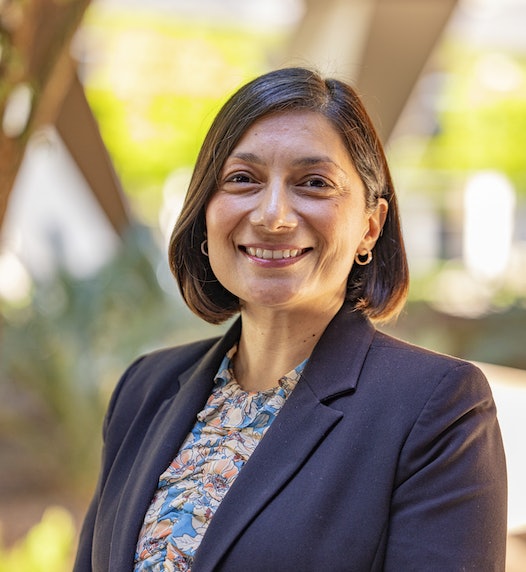
    Dr. Raquel MonroeHoward University has named Raquel Monroe dean of the Chadwick A. Boseman College of Fine Arts. In that role, she Monroe will oversee academic, performance, and research programming for visual arts and design, music, and theater arts at Howard. Monroe currently serves as a full professor and associate dean of graduate education and academic affairs at the University of Texas at Austin’s (UT Austin) College of Fine Arts. Monroe will begin her new role Aug. 4, 2025.

    Monroe is a founding board member of the Collegium for African Diaspora Dance and a member of Propelled Animals, a multimedia, interdisciplinary arts collective. Before her work at UT Austin, she was a professor in dance and an administrator at Columbia College in Chicago.

    Monroe earned bachelor’s degrees in dance and theatre and a master’s degree in communication from Arizona State University. Monroe also holds a doctorate in culture and performance from the University of California, Los Angeles.

    Source link

  • Removing Credit Transfer Barriers Key to Improving Higher Ed Completion Rates

    Removing Credit Transfer Barriers Key to Improving Higher Ed Completion Rates

    Dr. Andrew J. SeligsohnHigher education in the United States has come under increasing scrutiny — but not always for the right reasons. Critics claim that colleges and universities award degrees with little economic value, limit ideological expression on campus, and operate primarily for their own financial interests, rather than as institutions of shared public value. While much in this narrative is false, it nonetheless affects the public’s attitude toward higher education and individuals’ decisions about pursuing a postsecondary degree, which may be detrimental to their economic interest.

    When these critiques are made in bad faith, we should counter them with facts about the value of college attainment. It remains true for example, that a college degree is likely to yield a significant boost in earnings. Nonetheless, anyone who cares about higher education must also ask why these arguments resonate so deeply with the public. Where real frustrations are fueling legitimate skepticism, addressing those concerns can both improve higher education’s reputation and enhance its value for students, families, and society. Since the experiences that give rise to frustration and receptivity to attacks on higher education are personal experiences, it pays to drill down into the particulars to figure out what’s going on.

    In that spirit, Public Agenda, in partnership with Sova and the Beyond Transfer Policy Advisory Board, set out to deepen our collective understanding of learner experiences with the credit transfer process. We knew from research on enrolled students that transfer was a source of pain for many learners. But we didn’t know how many people were affected, how much it mattered to them, and how it shaped their views of higher education more broadly. With support from ECMC Foundation, we fielded a national survey of adult Americans that interrogates transfer experience and outcomes. 

    Dr. Lara CouturierDr. Lara CouturierThe findings were striking, and they should serve as a call to action for institutions of higher education. Nearly 4 in 10 respondents reported that they had tried to transfer credit toward a college degree or credential. This included credits earned at a previous college or university, as well as credits earned from nontraditional sources. In fact, more than a third attempted to transfer credits earned from workplace training, military experience, industry certification, vocational or trade school, or other prior learning. With more households feeling the cost of inflation and needing to upskill to survive in this economy, and more higher education institutions facing enrollment declines, we should be finding ways to develop more on-ramps and clear the path to a college degree.

    Unfortunately, the survey revealed that Americans who attempt to transfer encounter convoluted paths, often losing credit hours, money, and motivation along the way. One in five respondents reported having to repeat a class they had already taken because their credits didn’t transfer. Thirteen percent reported running out of financial aid as a result of having to repeat courses. And, most concerning, 16% reported that they gave up on pursuing a college degree or credential because the process of transferring was so difficult. It’s clear difficulties with transfer are not only inconveniences — they’re significant financial burdens and barriers to completion.

    We also sought to understand how these direct experiences shape individuals’ broader attitudes toward higher education. We found it profoundly troubling that 74% of respondents who had tried to transfer credit agreed with the statement that two- and four-year higher education institutions care more about making money than about educating students. In fact, respondents who had tried to transfer credit were more likely to hold this jaded view than those who had attended college but had not transferred or those who had no prior experience with higher education. So while some of the current attacks on higher education may be in bad faith, it should not be surprising that they find a receptive audience among so many Americans who recall feeling personally misled. 

    We know, then, that credit transfer needs reform — but what exactly does that look like? Public Agenda also surveyed Americans about potential interventions, and the results are promising. First, when asked what should happen to a college with a track record of not accepting many credits for transfer, Americans felt public accountability would be more helpful than heavy-handed punitive approaches. Fifty-four percent of Democrats and 47% of Republicans agreed that institutions should have to make a plan to improve credit transfer rates. Conversely, just one-third of Republicans and Democrats thought colleges should lose their funding. But what might go into a plan for improvement? Our survey found broad support among Republicans, Democrats, and independents for a variety of policies intended to make it easier for students to transfer credits. Support is notably strong for requiring that students have free and easy access to their transcripts, credentials, and degrees; requiring institutions to create public databases with transfer information; and requiring that prospective transfer students are quickly told how many credits will be accepted. 

    The benefits of a better transfer process are clear and compelling. Students would face fewer obstacles to completing their degrees, leading to higher graduation rates, better individual economic outcomes, and broader prosperity. Just as importantly, higher education would rebuild trust with the public by showing that institutions are committed to serving students—not just collecting tuition dollars. And the benefits of this renewed trust extend beyond the higher education system. The perception that public institutions don’t care about ordinary Americans is a key element of the challenge our broader democracy is facing. Since the education system is a direct way many people interact with our government, restoring confidence that higher education works for all Americans can further inspire faith in public institutions.

    If we ignore issues like the broken credit transfer system, skepticism about higher education will continue to fester. Worse, more students may give up on college altogether, missing out on opportunities for personal and professional growth—all of which ultimately erodes our democracy. Pushing back against misinformation isn’t the only way to defend higher education; we must acknowledge and address the real barriers students face. Credit transfer is an experience shared by many with cross-partisan support for reform—now is the time to act. Reforming the transfer process won’t solve every challenge facing higher education, but it’s a clear and necessary step toward improving the system for the good of both students and institutions themselves.

    Dr. Andrew J. Seligsohn is president of Public Agenda, a national research-to-action organization. Dr. Lara Couturier is a partner at Sova, a higher ed advocacy organization.

    Source link

  • How Senate Republicans Want to Hold Colleges Accountable

    How Senate Republicans Want to Hold Colleges Accountable

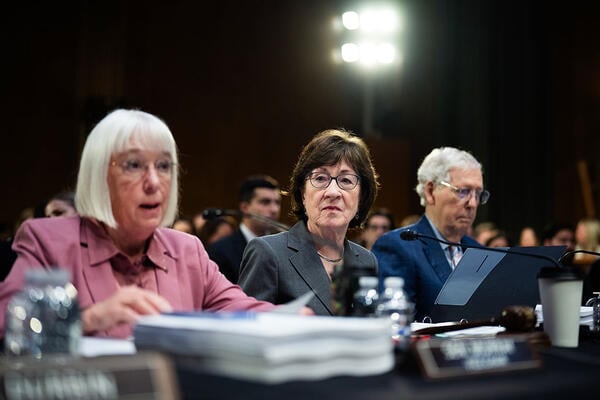
    More than a week after the Senate education committee released its draft plan to overhaul the federal student aid system, higher education leaders across the sector are still breathing a sigh of relief over key provisions concerning how to hold colleges accountable for student outcomes.

    The high chamber’s proposal, which ties a university’s access to federal loans to how much their students earn after graduation, is simpler and more productive than the House proposal, known as risk-sharing, which would require colleges to pay an annual penalty based on their students’ outstanding loan balances, they say.

    “More than any other factor, a program having low earnings is the thing that is most connected with the prevalence of students defaulting or struggling to pay down their loans,” said Jordan Matsudaira, director of the Postsecondary Education and Economics Research Center at American University. “This is a serious and sensible proposal to establish what I think of as a very necessary accountability in the higher education space.”

    The Senate plan seems to be based on an existing regulation known as gainful employment, which uses students’ earnings and debt to measure whether for-profit and non-degree programs adequately prepare their students for the workforce. But Republicans who sponsored the bill and expanded its reach to all degree programs have been wary of drawing attention to the overlap, as lawmakers have avoided calling it anything like “gainful employment 2.0” or “gainful for all.”

    Republicans have historically opposed the Democratic policy, which was first put in place during the Obama administration, saying it unfairly targeted for-profit programs and that a free market would be the best way to regulate the quality of academic programs. (The first Trump administration rescinded the policy, and then the Biden administration enacted a stricter version that remains in place today.)

    But now, as congressional Republicans grow increasingly concerned about student debt and skeptical of higher education, some have started to change their tune.

    Some say the Senate’s proposed earnings test is likely to succeed and become law, as it’s the lesser of two evils and aligns more with a conservative federalist ideology when compared to the House’s plan. But others view this new accountability measure as just that—new.

    “They’re not looking at the Biden gainful-employment rules and saying, ‘Oh, this was a good thing. Let’s do it like they did.’ They’re taking a different approach,” said Jason Altmire, president of Career Education Colleges and Universities, the national trade association representing for-profit institutions, which criticized the Biden regulations. He also noted that including all types of colleges is “a huge difference from the way the two last Democratic administrations approached gainful employment.”

    Either way, the provision is now up for consideration as part of a broader legislative package—the One Big Beautiful Bill Act—that would cut spending in order to finance Trump’s tax cuts and immigration policies. The House bill passed by a one-vote margin last month; now, senators are aiming to pass their version by July 4.

    Since lawmakers are using a process known as reconciliation, they only need 51 votes to pass the bill in the Senate, down from the typical 60 votes. But it also means the legislation has to adhere to a specific set of rules.

    Some policy experts question whether the Senate’s accountability measure for colleges will pass the sniff test. If it does, they expect the proposal to be included in the final bill.

    How Does It Work?

    The crux of the Senate’s accountability measure is tracking the median earnings of students program by program and comparing them to the average earnings of adults ages 25 to 34 with only a high school diploma. If students don’t earn more than adults without a college degree for two out of three consecutive years, then the program would lose access to federal loans for at least two years.

    Earnings for baccalaureate degree programs will be measured four years after a student leaves the program regardless of age—a time frame that some experts say is too short to truly gauge a program’s value. Meanwhile, the median income of high school graduates would not be evaluated until they hit at least 25 years old, or seven years after the typical high school graduation. Some higher ed lobbyists say that comparison isn’t fair.

    “You’re comparing a 23-year-old, let’s say, cosmetology graduate just getting started with her book of business to a 34-year-old flight attendant who’s been on the job for 16 years who only has a high school diploma,” Altmire said.

    A similar process would be used for graduate and professional programs, except the income level would be compared to adults with a bachelor’s degree and earnings will be evaluated further out from when the student left the program.

    The Senate hasn’t released any data on its plan, but studies on the Biden gainful-employment rule offer some insights into which types of college programs could be affected most.

    Data collected by the Department of Education in 2022 showed that about 1.3 percent of programs not currently subject to gainful employment would fail. About half of the programs failed because of the earnings test, according to an Inside Higher Ed analysis of department data.

    Other studies show that of those programs, the ones most impacted will likely be graduate studies and for-profit bachelor’s degrees. For example, about 20 percent of students in each of these sectors failed the Biden earnings test, said Matsudaira, who worked for the Department of Education during the Biden administration and is very familiar with gainful employment. That’s compared to only about 4 percent of nonprofit bachelor programs.

    Altmire, from CECU, however, disagreed. He pointed to a 2023 study conducted by Monroe College, a for-profit institution, which showed that nearly 90 percent of the undergraduate degree programs that would fail the earnings test are at public and private nonprofit colleges.

    But just because more nonprofit colleges fail doesn’t mean they have a high rate of failure proportionally, Matsudaira responded.

    “About 90 percent of enrollment is in the nonprofit sector, and only 10 percent of enrollment is in the for-profit sector, so of course, that should tilt in the direction of the nonprofit sector,” he said. “I would think about it a little bit more within each one of those sectors.”

    A Fairer Gainful?

    The Senate plan does keep the current gainful-employment rules in place while House Republicans want to repeal them. The Trump administration is currently defending the regulations in federal court, but a judge could throw them out.

    Still, policy experts cautioned against thinking of the Senate proposal as an add-on to Biden’s version of gainful employment.

    “I think it would be inaccurate to say the Senate took the Biden gainful-employment rules and tinkered around the edges,” Altmire said. “They took one concept from the Biden rules but then did a lot of other things that greatly improved that concept and made it more fair across all schools.”

    Beyond covering all degree programs, the Senate plan doesn’t specifically include credential programs, which currently fall under gainful employment. That’s a change that some experts say is a mistake, especially when the Senate is looking to expand the Pell Grant to cover some of these credentials. However, that plan comes with its own guardrails.

    “Certificates, beyond any other type of program, are most typified by extremely low earnings, and having those low earnings leads to a lot of loan defaults over all. So the fact that the Senate proposal ignores the certificate space altogether is baffling,” Matsudaira said.

    The Senate also changed the test itself. This version only measures a student’s earnings, while the Biden rule measures both income and whether students can pay off their loans. Furthermore, the Senate’s calculation includes all program enrollees, regardless of whether they completed their degree. The current gainful-employment regulations only count completers.

    Of these changes, the most debated has been whether to include in the earnings calculation students who stopped out before completing their degrees.

    Some policy experts argue that it’s fair to hold colleges accountable only for the earnings of students who complete their degree programs. If the goal is also to increase degree completion, that’s great, they say, but it should be handled through a separate provision than the one focused on return on investment.

    “If the goal is to actually measure the ROI, we should be looking specifically at those who earned a degree,” said Craig Lindwarm, senior vice president for governmental affairs at the Association of Public and Land-grant Universities. “There are a lot of other ways of supporting efforts to boost college completion, like investment in the Postsecondary Student Success Grant program.”

    But others say it is entirely fair.

    “You shouldn’t be rewarded when a student chooses your school, takes a bunch of financial aid, doesn’t complete the program,” said Altmire from CECU. “That makes no sense.”

    That said, higher education leaders from all sectors of the industry are generally pleased with the proposal and say it shows that the Senate has been listening to their concerns.

    “We’re encouraged that the Senate is heading down a more productive path,” one collegiate lobbyist said. “This is a much fairer, simpler and [more] effective approach to accountability.”

    Source link

  • Swiss University, CIC to Help International Students

    Swiss University, CIC to Help International Students

    Following the Trump administration’s crackdown on international students, Franklin University Switzerland is opening up its doors to some of those who won’t be able to re-enter the United States. 

    About 40 slots are open to the students who attend institutions that are part of the Council of Independent Colleges, according to an email from CIC president Marjorie Hass. Franklin University is one of the association’s international members and is accredited in the United States and Switzerland. Students can receive an $11,250 scholarship per semester.

    This partnership with Franklin University is just one way that colleges are working to support students amid the travel bans and visa restrictions. Experts have suggested that colleges could establish branch campuses in other countries as another option.

    Hass wrote that she hopes students will be able to return to their original U.S. institution when possible, but the Franklin option could help them continue their studies in the meantime.

    “I am proud to see an international member step up to offer this enriching academic opportunity to students at other CIC institutions,” she wrote. “I’d like to express my appreciation to Samuel Martín-Barbero, president of Franklin University Switzerland, for recognizing the plight of US CIC institutions and for stepping forward with a collegial offer of support.”

    Since CIC announced the Franklin University partnership, Al Akhawayn University in Morocco and American University of Nigeria have alaso agreed to offer a similar deal to CIC member institutions. 

    Source link

  • Helping Students Navigate Transitions, Addressing Teacher Shortages

    Helping Students Navigate Transitions, Addressing Teacher Shortages

    Across Texas, students entering dual-credit programs with the goal of becoming educators often face unclear pathways and unnecessary obstacles. But in the North Texas region, a multisector group is working to change that—starting as early as high school.

    Through programs like Pathways in Technology Early College High School (P-TECH) and early-college high schools, students can begin working toward their teaching credentials before they graduate. The Acceleration to Credential (A2C) Working Group—convened by Educate Texas—brings together local independent school districts, Dallas College and four-year university partners to create clearly defined pathways that connect high school, community college and bachelor’s-level educator preparation.

    While the intention behind many dual-credit programs is to offer students more opportunity, the reality is that inconsistent requirements across institutions often create confusion. A student may graduate high school having earned college credits, only to find those credits don’t transfer toward a four-year degree. Or they may complete an associate degree that doesn’t align with bachelor’s programs in education.

    To address this, A2C partners designed a coordinated model known as Target Pathways, which:

    • Aligns associate degree pathways to all bachelor’s education programs in the region.
    • Meets both high school graduation and Texas Core Curriculum requirements.
    • Creates space for local adaptation within a unified regional framework.
    • Provides students with clear maps of all degree and certification requirements.

    These streamlined pathways aim to improve student outcomes, reduce excess credit accumulation and increase the number of teacher candidates completing their degrees on time and with less debt.

    The associate of art in teaching (A.A.T.) degrees that students earn in these P-TECH programs have shown promising outcomes when it comes to entering education careers. Between 2010 and 2023, 49 percent of A.A.T. earners in Dallas–Fort Worth became paraprofessionals or teachers or advanced into education leadership positions, according to an analysis by Wesley Edwards at the University of North Texas (Wesley Edwards, AAT Analysis, University of North Texas, April 23, 2024, and Sept. 21, 2024). As these pathways expand across more high schools, partners across the state should continue investing in the supports students need to enter the education workforce.

    “Developing a robust pathway for high school students to not only earn credentials but also gain valuable exposure to industry is critically important as we look to meet workforce needs,” said Robert DeHaas, vice provost of the School of Education at Dallas College.

    This work is about more than academic alignment—it’s about building the relationships and trust needed to create meaningful change.

    “This work requires close coordination between large systems that haven’t always worked together,” DeHaas said. “The collaborative has helped foster the coalition-building needed to break down these historical silos and create a college road map that supports the upward economic mobility of our students.”

    Educate Texas will continue supporting A2C by helping school districts implement these pathways and facilitating collaboration with higher education partners. By investing in regional alignment and early access, the A2C model offers a promising solution for expanding the teacher pipeline in Texas and beyond.

    Joseph Reyes is deputy director of teaching and leading at Educate Texas, an initiative of Communities  Foundation of Texas. In this role, he manages programs that increase access to high-quality educator preparation and works with school districts and higher education partners to strengthen the teacher workforce across the state.

    Source link

  • What’s With the Em Dash/AI Anxieties? (opinion)

    What’s With the Em Dash/AI Anxieties? (opinion)

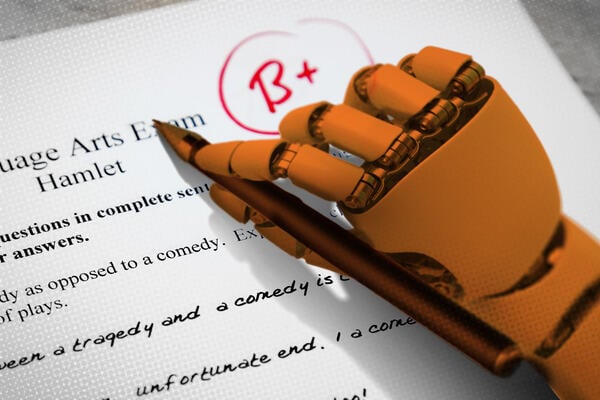
    In recent months, a curious fixation has emerged in corners of academia: the em dash. More specifically, the apparent moral panic around how it is spaced. A dash with no spaces on either side? That must be AI-generated writing. Case closed.

    What might seem like a minor point of style has, in some cases, become a litmus test for authenticity. But authenticity in what sense—and to whom? Because here is the thing: There is no definitive rule about how em dashes should be spaced. Merriam-Webster, for instance, notes that many newspapers and magazines insert a space before and after the em dash, while most books and academic journals don’t. Yet, a certain kind of scholar will see a tightly spaced dash and declare: “AI.”

    This tells us less about punctuation and more about the moment we are in. It reflects a deeper discomfort within academic knowledge production—about writing, authority and who gets to speak in the language of the academy.

    Academic writing has long been a space of exclusion. Mastering its conventions—its structures, tones and unwritten rules—is often as important as the content itself. Those conventions are not neutral. They privilege those fluent in a particular kind of English, in a particular kind of intellectual performance. And while these conventions have sometimes served a purpose—precision, nuance, care—they have also functioned to gatekeep, obscure and signal belonging to a small circle of insiders.

    In that context, generative AI represents a real shift. Not because it replaces thinking—clearly, it does not—but because it lowers the barriers to expressing ideas in the right register. It makes writing less labor-intensive for those who are brilliant thinkers but not naturally fluent in academic prose. It opens possibilities for scholars writing in their second or third languages, for early-career researchers who have not yet mastered the unwritten codes and for anyone who simply wants to get to the point more efficiently. This is not a minor intervention—it is a step toward democratizing academic expression.

    And in that lies both the opportunity and the anxiety.

    I have read academic work recently that likely used AI writing tools—either to help organize thoughts, smooth expression or clarify argument. Some of it has been genuinely excellent: clear, incisive and original. The ideas are coherent and well articulated. The writing does not perform difficulty; it performs clarity. And in doing so, it invites more people in.

    By contrast, a fair portion of traditionally polished academic writing still feels burdened by its own formality—long sentences, theoretical throat-clearing prose that loops and doubles back on itself. It is not that complexity should be avoided, but rather that complexity should not be confused with value. The best writing does not show off; it shows through. It makes ideas visible.

    Needless to say, I am not about to cite examples—whether of the work I suspect was AI-assisted or the work that could have done with a bit of help.

    So why, then, do so many in academic circles focus their attention on supposed telltale signs of AI use—like em dashes—rather than on the substance of the ideas themselves?

    Part of the answer lies in the ethics discourse that continues to swirl around AI. There are real concerns here: about transparency, authorship, citation and the role of human oversight. Guidance from organizations such as the Committee on Publication Ethics, and emerging policies from journals and universities, reflect the need for thoughtful governance. These debates matter. But they should not collapse into suspicion for suspicion’s sake. That’s because the academic world has never been a perfectly level field. Those with access to time, mentorship, editorial support and elite institutions have long benefited from invisible scaffolding.

    AI tools, in some ways, make that scaffolding more widely available.

    Of course, there are risks. Overreliance on AI can lead to formulaic writing or the flattening of style. But these are not new issues—they predate AI and are often baked into the structures of journal publishing itself. The greater risk now is a kind of reactionary gatekeeping: dismissing writing not because of its content, but because of how it looks, mistaking typography for intellectual integrity.

    What is needed, instead, is a mature, open conversation about how AI fits into the evolving ecosystem of scholarly work. We need clear, consistent guidelines that recognize both the benefits and limitations of these tools. Recent statements from major institutions have begun to address this, but more are needed. We need transparency around how AI is used—without attaching shame to its use. And we need to refocus on what matters most: the quality of the thinking, the strength of the contribution and the clarity with which ideas are communicated.

    The em dash is not the problem. Nor is AI. The problem is a scholarly culture still too often wedded to performance over substance—one where form is used to mask or elevate, rather than to express.

    If we are serious about making knowledge more inclusive, more global and more just, then we should embrace tools that help more people take part in its production. Not uncritically, but openly. Not secretly, but responsibly.

    What we should be asking is not “Was this written with AI?” but rather, “Is this work rigorous? Is it generous? Does it help us think differently?”

    That is the kind of scholarship worth paying attention to—em dash or not.

    Joseph Mellors is a research associate for FUTOURWORK at Westminster Business School at the University of Westminster, in the U.K.

    Source link