Tag: Higher

  • Grant Applications for Campus Childcare Put on Hold

    Grant Applications for Campus Childcare Put on Hold

    Eveline McPhee, a 39-year-old mother of two, has been a dental assistant in northern Massachusetts for nearly 15 years. And while she’s long aspired to upgrade that title to dental hygienist, for most of her career that goal seemed unattainable.

    With a full-time job, managing classes seemed arduous, and without a job she and her husband wouldn’t be able to afford day care and after-school programs.

    But that all changed last year when an admissions officer at Mount Wachusett Community College told McPhee about Child Care Access Means Parents in School, or CCAMPIS—a $75 million federal grant program designed to help low-income parents in college pay for childcare both on and off campus. McPhee enrolled last fall and is on track to graduate in 2026.

    “I have a 9-year-old son, and they paid for him to go to camp this summer so that I can take an intensive course in the dental hygiene program,” McPhee said. “I definitely would not have been able to go back to school without CCAMPIS.”

    Now the future of the program is cloudy.

    Applications for this year’s CCAMPIS grants—which typically open in May and close by the end of July—have yet to be announced, leaving thousands of student parents in limbo.

    Multiple think tank fellows and student advocacy representatives said they’ve been reaching out to the Trump Department of Education for more information since the spring, but the response is always “We’ll open it soon.” Similar circumstances have been reported for other basic needs programs included under FIPSE, the Fund for the Improvement of Postsecondary Education.

    Neither the Department of Education nor Republican committee chairs in the House and the Senate responded to Inside Higher Ed’s request for comment.

    With the new academic year quickly approaching, the lack of funds leaves many colleges and universities with major budget gaps.

    Until last month, Mount Wachusett’s childcare finances looked grim; CCAMPIS funding was set to run out on Sept. 30. But Ann Reynolds, the student support adviser who runs the program, had seen all the headlines about the Trump administration’s funding freezes and anticipated the delay. (Last year, the Biden administration chose not to open the grant to new applicants, but it sent out a clear notice in advance and allowed existing awardees to reapply.) She reached out to a local philanthropy and secured $94,000 to carry McPhee and about a dozen other student parents through graduation.

    “We could see the writing on the wall, so to speak,” Reynolds said. “And it’s lifted a great weight from my student parents’ shoulders.”

    Not all colleges were so forward-thinking. Many students, including future enrollees at Mount Wachusett, will have to take out additional loans—or drop out and try to repay the loans they already have without a college degree.

    “We’re seeing a lot of students raising children coming to school now, so our need is greater,” Reynolds said. “But we can’t take in new students.”

    Without the grants, which have had bipartisan support in Congress for years, historically underfunded institutions, including community colleges and minority-serving institutions, will be cash-strapped. Some may be forced to cut staffing or eliminate services entirely.

    “Given all the other funds from the U.S. Department of Education that have been frozen or subject to political games in the last few months, the community is right to worry,” said Bryce McKibben, senior director of policy and advocacy at Temple University’s Hope Center for Student Basic Needs. “This doesn’t serve anyone—certainly not taxpayers. The administration should announce a competition or award continuation grants immediately.”

    ‘A Vicious Cycle’

    Most experts speculate the delay is occurring for one of two reasons: Either the department lacks the capacity to meet this statutory requirement since it laid off half its staff in March, or it is intentionally withholding the dollars as part of a broader effort to claw back education funding through a process known as rescission.

    The latter option would require congressional approval. But the president already won enough votes to pass one rescission package earlier this month, and policy analysts say it’s likely he’ll try to do it again. (Trump’s proposed budget for fiscal year 2026 axes CCAMPIS and FIPSE completely.)

    Either way, Theresa Anderson, a senior education and labor fellow at the Urban Institute, a nonpartisan think tank, said the delay symbolizes a larger restriction on college access.

    This is a “well-documented agenda pattern and strategy” of the Trump administration, she explained. “It represents further disinvestment and disinterest in helping people access the necessary training, education and credentialing programs that states recognize are necessary to development of the workforce.”

    Tanya Ang, executive director of the Today’s Student Coalition, an adult learner advocacy group, described the situation as putting the leaders of critical student support services “up against a brick wall.”

    “If students are going to school, we want them to finish, because that’s going to ensure they can get a job and start a long-term career that will provide a strong return on investment,” Ang explained. Cutting off access to childcare “creates a vicious cycle that will hurt not just them and their children as individuals but, honestly, our economy.”

    Critics have long argued that CCAMPIS is a duplicate program, suggesting that the Child Care and Development Block Grant, which is run by the Department of Health and Human Services, fulfills a similar purpose. But higher education experts say that’s simply not the case.

    CCDBG, they say, supports broad, state-level childcare subsidies, predominantly allocated to parents who work full-time. CCAMPIS, on the other hand, is more targeted and serves student parents, many of whom can’t meet the work requirements attached to the block grant.

    “CCAMPIS was really important to not only be able to fill childcare needs in a way that was very flexible for colleges, but also to allow for additional wraparound supports that are incredibly important to support persistence,” Anderson said. It helps student parents “build meaningful community connections, not only with staff of the college, but also with each other.”

    At Mount Wachusett, Reynolds said student parents who participate in the CCAMPIS program have one of the highest completion rates among any demographic, at 73 percent. So she hopes that even a sliver of the current operation will survive past its current end date in 2027.

    When asked what she would tell the Trump administration if she had the chance, McPhee said she was worried people were losing the opportunity to get ahead.

    “I wanted to do better for my family, and this allowed me to do that,” she said. “To not be able to provide that for people moving forward, it’s just not what this country is about. It’s wrong, and I don’t really understand why they would do it.”
    Source link

  • Brown Strikes Deal With Trump Administration

    Brown Strikes Deal With Trump Administration

    Jonathan Wiggs/The Boston Globe via Getty Images

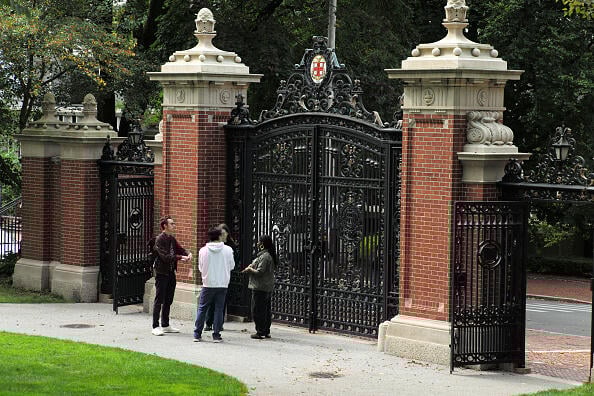
    Brown University has struck a deal with the Trump administration to restore about $510 million in frozen federal research funds in exchange for various concessions but no payment, officials announced Wednesday.

    The federal government will restore millions in frozen research funding and settle investigations over allegations of campus antisemitism, according to the agreement. While Brown will not pay out a settlement to resolve the complaints like its Ivy League counterpart Columbia University did, the university pledged $50 million over the next decade to state workforce development efforts in Rhode Island.

    Brown is the second university to cut a deal with the Trump administration since Columbia reached a similar agreement last week. Trump officials said the Columbia settlement would be a template for their talks with other colleges, though other higher ed experts argued the deal was unlawful and represented a threat to the sector at large. (Harvard University, which has also been in the administration’s crosshairs over alleged antisemitism, has reportedly considered a settlement of up to $500 million to resolve its ongoing dispute.)

    Still, Brown agreed to multiple other changes. They include adopting the Trump administration’s definitions of male and female, not performing gender-affirming surgeries on minors or prescribing them puberty blockers, providing admissions data to the federal government, and conducting a campus climate survey and sharing the results with the federal government. Brown also agreed to codify prior changes officials announced to combat discrimination on campus.

    The deal does not include restrictions on campus curriculum or programs.

    “At its core, the agreement preserves the integrity of Brown’s academic foundation, and it enables us as a community to move forward after a period of considerable uncertainty in a way that ensures Brown will continue to be the Brown that our students, faculty, staff, alumni, parents and friends have known for generations,” President Christina Paxson said in a statement.

    Brown announced the agreement shortly after the university took out a $500 million loan, which could have helped plug research funding holes or fund a protracted legal battle. The university also borrowed $300 million in April after the Trump administration froze research funding over allegations of antisemitism connected to pro-Palestinian protests.

    The funding freeze, along with other changes in federal policy, has hit the university hard, and officials warned in June of the potential for “deep financial losses.”

    Education Secretary Linda McMahon celebrated the deal, asserting in a statement that the agreement would protect Jewish students from antisemitism as well as women’s sports.

    “Restoring our nation’s higher education institutions to places dedicated to truth-seeking, academic merit, and civil debate—where all students can learn free from discrimination and harassment—will be a lasting legacy of the Trump administration, one that will benefit students and American society for generations to come,” McMahon wrote in a social media post.

    Source link

  • DOJ Declares Slew of DEI Practices Unlawful in Memo

    DOJ Declares Slew of DEI Practices Unlawful in Memo

    Photo by Yasin Ozturk/Anadolu via Getty Images

    More than three months after a federal court struck down an Education Department directive that barred any practices that consider race at colleges across the country, the Department of Justice declared Wednesday that diversity, equity and inclusion practices are unlawful and “discriminatory.”

    But the agency’s memo goes even further than ED’s guidance, suggesting that programs that rely on what they describe as stand-ins for race, like recruitment efforts that focus on majority-minority geographic areas, could violate federal civil rights laws. The directive applies to any organization that receives federal funds, and DOJ officials warned that engaging in potentially unlawful practices could lead to a loss in grant funding.

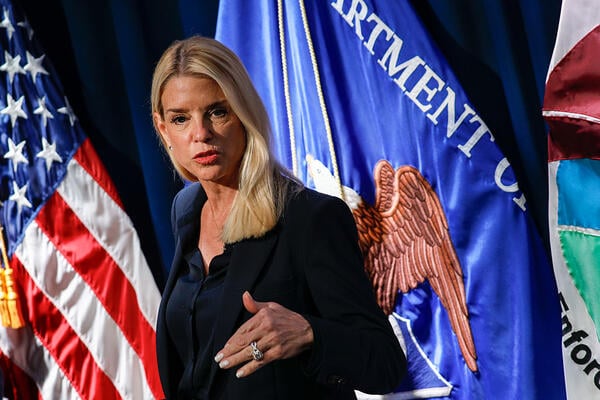
    Other examples of “potentially unlawful proxies” include requirements that job applicants “demonstrate ‘cultural competence,’ ‘lived experience,’ or ‘cross-cultural skills’” or narratives about how the applicant has overcome obstacles, Attorney General Pamela Bondi wrote.

    This interpretation of federal law could present new challenges for colleges that have relied on tactics like place-based recruitment to create diverse student bodies since the Supreme Court banned affirmative action in 2023. For instance, some colleges have guaranteed admission to students who graduate in the top 10 percent of their high schools.

    “This highlights that every practice of colleges is under scrutiny, even ones that have been viewed as politically safe for years (such as top ten percent plans or even TRIO programs). The only truly safe ways to admit students right now are to admit everyone or only use standardized test scores,” Robert Kelchen, a professor in the University of Tennessee at Knoxville’s Department of Educational Leadership and Policy Studies, wrote in an email to Inside Higher Ed. “Being an enrollment management leader has always been tough, but now it’s even more challenging to meet revenue targets and satisfy stakeholders who have politically incompatible goals.”

    The document offers clearer guidance about what the Justice Department considers off-limits as it investigates DEI at colleges and universities. The DOJ is playing a greater role in investigating colleges as it enforces its position that DEI programs as well as efforts to boost diversity among faculty and staff violate federal antidiscrimination laws.

    Since President Trump took office in January, he’s targeted DEI programs, practices and personnel via executive orders and other efforts. However, higher ed experts have repeatedly said that the orders don’t change the underlying laws, so colleges that complied with the law before Jan. 20 remain in compliance. In response to the federal edicts, colleges have rolled back a number of their programs and closed centers that catered to specific student groups.

    Many of the practices declared unlawful in the nine-page memo echo those referenced in the Education Department’s February Dear Colleague letter, such as race-based scholarships. But it also explicitly states that “BIPOC-only study lounges” and similar facilities are unlawful. The Education Department’s guidance mentioned race-based facilities generally but not specifically study lounges.

    DEI advocates have long argued that these centers or lounges are open to all students. Some have persisted even after state DEI bans, but multiple colleges have in recent months closed centers that catered to specific student groups. Bondi argued that such spaces violate Title VI of the Civil Rights Act of 1964, which bars discrimination based on race and national origin.

    “Even if access is technically open to all, the identity-based focus creates a perception of segregation and may foster a hostile environment. This extends to any resource allocation—such as study spaces, computer labs, or event venues—that segregates access based on protected characteristics, even if intended to create ‘safe spaces,’” the order reads.

    Lynn Pasquerella, president of the American Association of Colleges and Universities, said that the memo is “another example of governmental overreach into academic freedom, institutional autonomy and shared governance that conditions federal funding on ideological alignment with the administration’s viewpoints.”

    She added that the guidelines in the document violate existing constitutional protections and erode federal civil rights law.

    “What is missing from the DOJ narrative on DEI is that treating people differently is not always unjust, especially when doing so corrects a broader pattern of systemic injustice. Considering race and gender in the context of historic unjust discrimination to inform policies and practices at colleges and universities doesn’t in and of itself constitute illegal discrimination, though the letter suggests otherwise.”

    Beyond race-based practices, the letter also addresses transgender student athletes, building on the Trump administration’s previous actions that advocates say deny the existence of trans individuals and roll back their rights. The memo states that it would “typically be unlawful” for someone assigned male at birth to compete on women’s sports teams or for an institution to “compel” individuals to share an intimate space, like a locker room, with someone of another sex.

    Pasquerella noted that the letter offers guidance, not legal mandates.

    “Nevertheless,” she said, “what are described as ‘best practices and nonbinding suggestions’ will likely cause another wave of anticipatory compliance and overcorrection given the climate of fear and intimidation created by the weaponization of research funds.”

    Katherine Knott contributed to this report.

    Source link

  • How the Workforce Pell Grant Could Transform Higher Ed and Workforce Training

    How the Workforce Pell Grant Could Transform Higher Ed and Workforce Training

    Higher education is at an inflection point. As college enrollment continues to decline and pressure mounts to demonstrate return on investment, the federal government has responded with a potentially transformative shift: the creation of Workforce Pell Grants.

    Included in the sweeping One Big Beautiful Bill Act (OBBBA) recently signed into law, this expansion of Pell Grant eligibility could open the door to new student populations, new revenue streams, and new institutional strategies — if colleges and universities act quickly and strategically. 

    What is the Workplace Pell Grant? 

    Traditionally, Pell Grants have been limited to students enrolled in credit-bearing, degree-seeking programs. That changed with the passage of OBBBA. Workforce Pell expands access to federal financial aid for students enrolled in short-term, non-degree training programs that lead directly to high-demand jobs. 

    Under the law, students may now use Pell Grants to pay for qualifying workforce training programs that meet the following criteria: 

    • Are between 150 and 600 clock hours (roughly 8 to 15 weeks of instruction); 
    • Are offered by eligible institutions of higher education (IHEs) 
    • Lead to industry-recognized credentials tied to in-demand occupations as defined by the U.S. Department of Labor and/or state workforce boards. 

    This development reflects a growing bipartisan consensus that higher education must play a more responsive role in preparing learners for rapidly evolving labor market needs. 

    Why Workforce Pell matters for colleges and universities 

    The proposed expansion of Pell Grant funding isn’t just a policy update — it’s a strategic opportunity. Here are some key opportunities institutions should be paying attention to:

    1. New enrollment markets 

    Workforce Pell unlocks funding for adult learners, displaced workers, and non-traditional students who may not have the time, resources, or need to pursue a two- or four-year degree. For institutions facing enrollment declines, particularly at the community college level, this represents a powerful new market. 

    2. Revenue diversification 

    Short-term credentialing programs — especially those that can scale — offer a way to generate net new revenue without over-reliance on traditional tuition models. With federal aid now available, these programs become more accessible and financially sustainable. 

    3. Employer partnerships 

    The law encourages alignment between institutions and regional labor market demands. Institutions that already collaborate with employers or workforce boards will be well-positioned to fast-track qualifying programs and potentially receive direct funding support or partnership commitments. 

    4. Strategic positioning 

    Institutions that embrace short-term, skills-based credentialing can position themselves as hubs of workforce development and talent pipelines. This enhances their relevance with local governments, employers, and adult learners alike. 

    Ready for a Smarter Way Forward?

    Higher ed is hard — but you don’t have to figure it out alone. We can help you transform challenges into opportunities.

    How can institutions prepare for the Workplace Pell? 

    Now is the time for higher ed leaders and innovators to act on these policy changes. Here’s where you can start: 

    1. Audit existing offerings 

    Begin by reviewing current non-credit or certificate programs. Identify which ones could meet the new Workforce Pell criteria with limited modification—particularly programs already tied to industry credentials and high-demand jobs. 

    2. Build approval infrastructure 

    Programs must be approved by the U.S. Department of Education and/or state agencies. Start building a compliance plan, including documentation of program outcomes (e.g., job placement rates, earnings gains) and accreditation alignment. Consider appointing a cross-functional task force including financial aid, academic leadership, compliance, and workforce liaisons. 

    3. Seek out strategic partnerships 

    Engage with local employers, chambers of commerce, and workforce boards to validate demand and align curriculum. Public-private partnerships can strengthen program justification and outcomes data—key elements for gaining approval and maintaining eligibility. 

    4. Invest in marketing and outreach 

    Many potential Workforce Pell students are not currently in your database. Institutions must rethink marketing strategies to reach adult learners, incumbent workers, and individuals navigating career transitions. Messaging should highlight affordability, short duration, and job outcomes. 

    5. Track the data 

    Institutions must monitor the performance of Workforce Pell students and programs. The Department of Education will evaluate outcomes like employment rates and earnings. Underperforming programs may lose eligibility, so building robust reporting systems is not optional — it’s critical. 

    A new era of credentialing is coming 

    The Workplace Pell Grant represents more than a funding change — it’s a shift in federal policy philosophy. It signals growing recognition that short, focused training can be just as powerful as a traditional degree in driving upward mobility. 

    This policy has the potential to reshape the education market within a few years, favoring modular, job-connected learning and expanding access for nontraditional students. For institutions ready to lead, the opportunity is clear. 

    At Collegis, we partner with institutions to navigate policy shifts like the Workplace Pell with confidence, bringing the strategy, technology, and operational support needed to move quickly, ensure compliance, and deliver real impact. 

    The future of workforce-connected education is coming fast. Let’s lead it together. 

    Innovation Starts Here

    Higher ed is evolving — don’t get left behind. Explore how Collegis can help your institution thrive.

    Source link

  • Lorin Basden Arnold | Diverse: Issues In Higher Education

    Lorin Basden Arnold | Diverse: Issues In Higher Education

    Dr. Lorin Basden ArnoldLorin Basden Arnold has been promoted to senior vice president for Academic Affairs at Kutztown University. Basden Arnold has served as chief academic officer and second-in-command for the institution since June 2021.

    In the last four years, Basden Arnold has led the university’s vision of its academic offerings, including the addition of new concentrations and certificates as well as new non-credit learning opportunities. In addition, she plays a pivotal role in the university’s Middle States review process.

    In 2023, Basden Arnold helped the university acquire a multi-million-dollar grant from the U.S. Department of Education to increase undergraduate retention and graduation rates and eliminate equity gaps for KU students. Under her guidance, the university launched a new student support platform (Starfish), began assigning a student success navigator for each incoming student, engaged in the transition to a new student information system (Banner) and broadened non-credit learning opportunities through KU Advance.

    Basden Arnold came to KU in June 2021 from SUNY New Paltz, New Paltz, N.Y., where she served three years as provost and vice president for Academic Affairs; and five years as professor of Communication. She provided leadership and direction for six academic divisions, serving nearly 7,000 students. Before SUNY New Paltz, Basden Arnold spent seven years as dean of the College of Communication and Creative Arts at Rowan University, Glassboro, N.J. She provided leadership for six academic departments and nearly 250 faculty and staff, serving more than 1,700 students enrolled in both undergraduate and graduate degree programs at an institution of 16,000 students. She oversaw a $11 million budget and established the Rowan Writing Center.

    A three-time graduate of Purdue University, Basden Arnold earned her doctorate in interpersonal communication in 1996, her master’s degree in public affairs/issue management in 1991 and her bachelor’s degree in communication/public relations in 1988.

    Source link

  • More Campuses Earn “Green Light” Free Speech Ratings From FIRE

    More Campuses Earn “Green Light” Free Speech Ratings From FIRE

    The number of colleges and universities with written policies that do not seriously threaten student expression are on the rise this year, according to the Foundation for Individual Rights and Expression’s 19th annual “Spotlight on Speech Codes” report, published Tuesday.

    Since 2006, FIRE has grouped hundreds of public and private higher education institutions into three overall categories based on their campus speech policies: green, yellow and red lights. This year, 73 of the 490 (14.9 percent) colleges and universities surveyed received a green light ranking—meaning their policies don’t threaten free expression—compared to 63 last year. It’s the highest share since 2012, when just 3.6 percent of institutions earned green-light ratings. 

    For the first time in 19 years, the number of green-light colleges outnumbered those in the red-light category (14.7 percent), reserved for institutions with policies that “clearly and substantially restrict free speech,” according to the report. Last year, 20 percent of institutions received a red-light rating.

    Although political and institutional responses to campus protests related to the Israel-Hamas war reignited debate over free expression last year, the report attributed the decrease in red-light ratings to colleges and universities revising their policies related to harassment, hate speech and bias-reporting systems. Specifically, the report said that while bias-reporting systems have become popular over the past decade, they “have invited students to report protected speech simply because it offends them,” turned academic institutions into “referees of political and academic speech,” and created a “chilling effect on campus expression.”

    Lawsuits, free speech advocacy—from students, alumni and groups like FIRE—and lawmaker scrutiny have all spurred changes in recent years.

    “Over a dozen institutions have either substantially revised or eliminated entirely their bias reporting systems,” the report said. “Others have significantly reduced the prominence of their bias reporting teams, either by reducing the number of places on their website the team is mentioned or by requiring students enter their credentials to access the policy information.”

    FIRE rated the majority of institutions—337, or 68.8 percent—as yellow, meaning they “maintain policies that impose vague regulations on expression.” And eight colleges—including Baylor University, Brigham Young University and Hillsdale College—received a warning rating for “clearly and consistently stat[ing] that they hold a certain set of values above a commitment to freedom of speech.”

    Over all, private colleges have more restrictive policies than public colleges. Just 10.6 percent of public colleges earned red lights compared to 28 percent of private colleges—and only 7.1 percent of private colleges earned a green-light rating, compared to 17 percent of public ones.

    Source link

  • Preparing Grad Students to Defend Academic Freedom (opinion)

    Preparing Grad Students to Defend Academic Freedom (opinion)

    Defending academic freedom is an all-hands-on-deck emergency. From the current administration’s scrutiny of (and executive orders related to) higher education, to state legislative overreach and on-campus bad actors, threats to academic freedom are myriad and dire.

    As leader of a program focused on free expression and academic freedom, I see faculty and campus leaders who are flummoxed about how to respond: Where to begin? What can be done to make a difference in defending academic freedom?

    I have an answer, at least if you’re graduate faculty, a dean or director of graduate studies, or a provost: Make a plan to prepare graduate students—tomorrow’s professors—to defend academic freedom.

    Graduate students often feel too pressed to focus on anything other than their coursework or dissertation and so are unlikely to study academic freedom on their own, even if they know where to find solid information. It is incumbent on faculty to put academic freedom in front of graduate students as a serious and approachable topic. If their professors and directors of graduate study do not teach them about academic freedom, they will be ill prepared to confront academic freedom issues when they arise, as they surely will, especially in today’s climate.

    An example: When I met with advanced graduate students at an R-1 university, one student recounted an experience as a junior team member reviewing submissions for a journal. He reported that another team member argued for rejecting a manuscript because its findings could be used to advance a public policy position favored by some politicians that this colleague opposed. The student was rightly troubled about political factors being weighed along with methodology and scholarship but reported he didn’t have the knowledge or confidence to respond effectively. Bottom line: His graduate school preparation had incompletely prepared him to understand and act on academic freedom principles.

    Here is a summer action plan for graduate faculty, deans and provosts to ensure we don’t leave the next generation of scholars uncertain about academic freedom principles and how they apply in teaching, scholarship and extracurricular settings.

    Add an academic freedom session to orientation. Orientation for matriculating graduate students is a can’t-miss chance to begin education about academic freedom.

    Patrick Kain, associate professor of philosophy at Purdue University, provides a primer on graduate students’ academic freedom rights and responsibilities during his department’s graduate student orientation. His session covers the First Amendment, state law and campus policies. He provides written guidance about what to do, especially in their roles as teaching assistants (“pay attention to the effects of your expression on others”); what not to do (“don’t compel speech”); and what they should expect (“students’ experiences and sensitivity to others’ expression will vary”).

    Reflecting on his experiences leading these orientation sessions, Kain said, “Graduate students, especially those joining us from quite different cultures and institutions, really appreciate a clear explanation of the ground rules of academic freedom and free expression on campus.” He added, “It puts them at ease to be able to imagine how they can pursue their own work with integrity in these trying times, and what they can expect from others when disagreements arise.”

    However, orientation cannot be a “one and done” for a topic as complex as academic freedom. Additional steps to take this summer include:

    Revisit the professional development seminar. Most graduate students take a professional development seminar before preliminary exams. When I took that seminar three decades ago, academic freedom wasn’t a topic—and my inquiries suggest academic freedom hasn’t been added to many professional development seminars since. This must change. In addition to sessions on writing a publishable article and giving a job talk, include sessions on the history and norms of academic freedom and free inquiry. Assign foundational academic freedom documents, such as the American Association of University Professors’ 1940 Statement on the Principles of Academic Freedom and Tenure and the 1967 Joint Statement on Rights and Freedoms of Students, alongside a text offering an overview of academic freedom principles, such as Henry Reichman’s Understanding Academic Freedom (Johns Hopkins Press, 2025).

    Schedule an academic freedom workshop. Graduate students at all stages—and your faculty colleagues, too!—can benefit from stand-alone workshops. Include tabletop exercises that allow students to appreciate nuances of academic freedom principles. For example, tabletop exercises let students test possible responses to a peer who is putting a thumb on the scale against publishing a manuscript submission on nonacademic grounds, to department colleagues who are exerting pressure on them to sign a joint statement with which they disagree or to administrators bowing inappropriately to donor wishes or political pressures. The reports of the Council of Independent Colleges’ Academic Leaders Task Force on Campus Free Expression include ready-for-use tabletop exercises.

    Bolster classroom training for teaching assistants. Professors with teaching assistants can provide an insider’s look into their process for designing a course and planning class meetings, with a focus on how they build trust and incorporate divergent viewpoints, and their approach to teaching potentially controversial topics. In weekly TA meetings, professors and TAs can debrief about what worked to foster robust discussion and what didn’t. Centers for teaching and learning can equip graduate students with strategies that build their confidence for leading discussions, including strategies to uphold free expression and inclusive values when a student speaks in ways that others think is objectionable or violates inclusion norms. The University of Michigan’s Center for Research on Learning and Teaching offers programs tailored to graduate students and postdocs, including a teaching orientation program.

    Look for opportunities to provide mentorship. An academic career isn’t only about teaching and scholarship but also entails serving on department and university committees, providing—and being subject to—peer review, and planning conferences. Academic freedom questions come up with regularity during these activities. Graduate faculty serve as mentors and should be alert to opportunities to discuss these questions. One idea: Take a “ripped from the headlines” controversy about journal retractions, viral faculty social media posts or how universities are responding to Trump administration pressures and plan a brown-bag lunch discussion with graduate students.

    Take the next step in rethinking graduate student preparation. While the steps above can be taken this summer, with a longer planning horizon, it is possible to rethink graduate preparation for a changed higher education landscape. Morgan State University, a public HBCU in Maryland, offers Morgan’s Structured Teaching Assistant Program (MSTAP), an award-winning course series to prepare graduate students as teachers. Mark Garrison, who as dean of the School of Graduate Studies led the development of MSTAP, explained, “In our required coursework for teaching assistants, we are intensely focused on establishing ground rules for TAs” around how to guide “student engagement that is accepting and encouraging without the intrusion of the TA’s personal views.”

    Garrison added, “This makes free expression a component of instruction that must be cherished and nourished. We cannot assume that the novice instructor will come to this view naturally, and we do our best to embrace a reflective teaching model.”

    Academic freedom is under threat. As Mary Clark, provost and executive vice chancellor at the University of Denver, observed, “Graduate students are developing identities as scholars, learning what academic freedom means in their research and in the classroom—and how their scholarly identity intersects with their extracurricular speech as citizens and community members. It is critical that we support them in developing these understandings.” This summer is the time to plan to do exactly that.

    Jacqueline Pfeffer Merrill is senior director of the Civic Learning and Free Expression Projects at the Council of Independent Colleges.

    Source link

  • Right-Leaning Faculty Likelier to Be “Hostile” to Jews

    Right-Leaning Faculty Likelier to Be “Hostile” to Jews

    A new report from Brandeis University researchers concluded that 7 percent of non-Jewish faculty polled during the spring semester at “very high research activity” universities showed “a pattern of explicitly hostile views toward Jews as a people.”

    The “Ideology in the Classroom” report, released last week, says an additional 3 percent of non-Jewish faculty “had a pattern of views about Israel that are generally described as antisemitic” by Jewish organizations and Jewish students. And while 11 percent of non-Jewish faculty who self-identified as extremely liberal were “hostile to Israel”—a view “virtually non-existent among all other political identities, including other liberals”—the faculty “with more conservative political views, including those who were the most critical of DEI, were the most likely to be hostile to Jews.”

    Over all, though, the report says 90 percent of non-Jewish faculty were hostile to neither Jews nor Israel.

    “The results confirm our earlier research findings that Jewish students are more likely to experience hostility from their peers than from faculty,” the authors wrote. They added that “government efforts to punish universities as a whole for their lack of viewpoint diversity and failure to address antisemitism are not well targeted to address these challenges. For example, STEM faculty, who are less likely to teach about contentious political issues, are the most likely to be profoundly harmed by the government’s cancellation of federal research grants.”

    Leonard Saxe, one of the authors and the Klutznick Professor of Contemporary Jewish Studies and Social Policy at Brandeis, told Inside Higher Ed that faculty “don’t appear to express any interest in imposing their own political or ideological views on students.” Saxe said, “Faculty need to be seen as allies” in resolving the problems underlying the conflict between the government and universities regarding antisemitism and diversity more broadly.

    “They want the same thing,” Saxe said. “They want to teach students how to understand diverse perspectives, multiple perspectives. They don’t want to make every single issue political.”

    Graham Wright, another author and an associate research scientist at Brandeis’s Cohen Center for Modern Jewish Studies, said that to the extent antisemitism is an issue on some campuses, it’s “not necessarily due to the actions of large numbers of faculty, but a smaller group.”

    The report found that almost half of Jewish faculty were somewhat or very much concerned about antisemitism on their campuses, and they were “more concerned about antisemitism emanating from the political right than the political left.” This “can be attributed in part to the political makeup of Jewish faculty,” the authors wrote, noting that more than 80 percent of Jewish faculty identified as liberal and about a quarter as extremely liberal.

    Using a statistical model, the researchers also sought to predict hostility from non-Jewish faculty based on their holding certain beliefs. They concluded that “faculty who more strongly agreed that Israel was an apartheid state” were likelier to be hostile to both Israel and Jews. And they found no statistically significant difference between academic areas in levels of faculty hostility after controlling for other factors.

    The study grouped faculty into these categories of “hostile to Jews,” “hostile to Israel” or hostile to neither based on their pattern of agreeing or disagreeing with seven statements.

    The statements were:

    • “Jews in America have too much power,”
    • “Jews don’t care what happens to anyone but their own kind,”
    • “Jewish people talk about the Holocaust just to further their political agenda,”
    • “Jews should be held accountable for Israel’s actions,”
    • “Israel does not have the right to exist,”
    • “I wouldn’t want to collaborate with a scholar who supports the existence of Israel as a Jewish state,” and
    • “All Israeli civilians should be considered legitimate targets for Hamas.”

    The report says “virtually no non-Jewish faculty expressed agreement” with that last claim.

    The researchers also wrote that “more than three-quarters of the faculty in our sample reported that, over the past academic year, the Israel-Palestine conflict never came up in class discussions, and less than 10 percent reported actively teaching about it.” Saxe said there’s not much evidence that a faculty member’s negative attitudes toward a group “seep into” their classroom.

    The researchers surveyed 2,335 faculty across 146 R-1 Carnegie classification universities from Feb. 3 to May 5. About 11 percent of the sample was Jewish. The online survey also polled faculty on other current political issues, such as immigration.

    “More than two-thirds of faculty identified as liberal, while one-third identified as moderate or conservative,” the report says, but “there was overwhelming agreement among faculty that climate change is a crisis requiring immediate action and that President Trump is a threat to democracy.”

    The report also says that “half of liberal faculty members and 70 percent of extremely liberal faculty members expressed serious concerns about being targeted by the federal government for their political views.”

    But Saxe said that “as a faculty member on campuses most of my life, I believe we’re not going to address the current issues unless faculty themselves get more engaged—and that it’s recognized by policymakers that we need faculty if we’re going to solve these issues.”

    Source link

  • Post-Test Worksheet Encourages College Student Metacognition

    Post-Test Worksheet Encourages College Student Metacognition

    Many of today’s college students have experienced disruptions to their education due to the COVID-19 pandemic, negatively affecting their personal well-being as well as their academic preparation. Encouraging students to embrace effective and meaningful study habits can be one way to improve their college readiness and confidence in learning.

    One professor at Western Iowa Tech Community College designed a mandatory post-test reflection and correction for students and saw dramatic improvement in their performance on the second exam. The assignment encourages students to strengthen their study habits and hold themselves accountable for making meaningful changes.

    What’s the research: Students say their biggest challenges when studying are time management (47 percent) and distractions from technology or other people (both 38 percent), as well as a lack of sufficient time (34 percent), according to a 2024 survey from Kahoot. Forty-one percent of respondents indicated they experience anxiety while studying, compared to 34 percent who said they feel confident.

    Test corrections, also called exam wrappers by teaching and learning centers, are activities delivered before or after an assessment to help students consider how they study and ways they could improve their practices before the next exam.

    Past research on exam wrappers has found that implementing the strategy can improve course and exam grades, as well as students’ level of metacognition and changes to study habits.

    For years, Frank O’Neill, a sports medicine instructor at Western Iowa Tech, has offered students the opportunity to complete an optional correction worksheet after each exam. Typically, the students who take him up on the opportunity are the ones already excelling in the course, he said—not those who could benefit from additional support.

    “My primary goal is to turn a D student into a C student,” O’Neill said.

    This summer, O’Neill decided to run an experiment and see if making the test analysis and correction worksheet mandatory would have any impact on students’ grades.

    The assignment: After students take an exam, O’Neill’s assignment asks them a series of reflection questions on their study habits as well as a post-test commitment to improving their test-taking abilities.

    Some of the questions are designed to help O’Neill understand which study strategies students employ and how they correlate to their grades.

    For example, he’s learned that a student who’s less confident entering into the assessment more often receives a higher score than their confident peers, which O’Neill believes is because students who have studied longer have spent more time wrestling with the material and consider it to be difficult, compared to their peers who skim notes and think they’ve learned content.

    Other questions prompt students to consider their test-taking abilities and the errors they make frequently. Sometimes students indicate that they got a question wrong because they changed their answer from the correct response to an incorrect one, O’Neill said, which allows him to encourage more confident responses.

    “Your brain is smart; your gut is smarter than your brain,” O’Neill said. “You gotta go with that gut.”

    Students can also provide feedback to the professor on how to improve the course. Sometimes O’Neill gains insights from test performance and frequently missed questions to understand how to make content clearer in the future.

    The assignment requires students to correct every incorrect response on the test, which O’Neill says serves as a study technique as well, because exams are cumulative, so students will need to know the right answer later. It also fosters a growth mindset among learners, helping them reframe their learning and consider how to fail forward and see assessment as progress toward their goals, O’Neill said.

    The impact: O’Neill is teaching two sections of microbiology this summer with 20 students enrolled in each section.

    After the first exam, O’Neill assigned all students in one section to complete the exam wrapper, which would add five points to their grade. The other section could complete the optional wrapper but without points attached.

    By the second test, the difference between classes was clear; the optional correction section showed little to no difference in grades between exams one and two. In the mandatory correction section, the average exam grade rose nine percentage points.

    Since he first offered the assignment, O’Neill hasn’t received any negative feedback from students about having to complete the exam wrapper, which he attributes in part to his commitment to avoid giving students “busywork,” instead explaining the purpose behind each assignment. He’s also seen self-reported levels of test anxiety decrease over the course of the semester among students who use the wrapper and fewer students failing or dropping the class, signaling the personal benefits of the worksheet.

    O’Neill now plans to assign the post-test reflection to all the courses he’s teaching this fall, for about 200 students in total. He’s also exploring opportunities to digitize at least portions of the assignment in the college’s learning management system, Canvas.

    Do you have an academic intervention that might help others improve student success? Tell us about it.

    Source link

  • Duke Faces $108M Funding Freeze, Multiple Investigations

    Duke Faces $108M Funding Freeze, Multiple Investigations

    Duke University file photo

    The Departments of Education and Health and Human Services are investigating Duke University and the Duke Law Journal for allegedly violating Title VI of the Civil Rights Act of 1964, which bars discrimination based on race and national origin, the agencies announced Monday.

    The New York Times reported Tuesday night that the Trump administration froze $108 million in federal grants and contracts at Duke’s medical school and health system.

    On Monday, ED and HHS sent a letter detailing their concerns about potentially discriminatory practices at Duke Health and threatening the medical school’s federal funding.

    “These practices allegedly include illegal and wrongful racial preferences and discriminatory activity in recruitment, student admissions, scholarships and financial aid, mentoring and enrichment programs, hiring, promotion, and more,” the letter states, though officials didn’t offer specifics.

    The departments want Duke to “review all policies and practices at Duke Health for the illegal use of race preferences, take immediate action to reform all of those that unlawfully take account of race or ethnicity to bestow benefits or advantages, and provide clear and verifiable assurances to the government that Duke’s new policies will be implemented faithfully going forward—including by making all necessary organizational, leadership, and personnel changes to ensure the necessary reforms will be durable.”

    Additionally, the agencies want Duke to convene a “Merit and Civil Rights Committee” that can negotiate with the federal government on behalf of university leaders and “avoid invasive federal engagement,” according to the letter. This request appears to be a new ask for the Trump administration as officials work to expand their scrutiny of higher education, based on what’s publicly known about investigations at other colleges.

    “We hope this arrangement will enable the parties to move quickly toward a mutually agreeable resolution of outstanding concerns and complaints,” officials wrote in the letter. “If the alleged offending policies, practices, and programs are found to exist and remain unrectified after six months, or if at any time the Merit and Civil Rights Committee and federal government reach an impasse, the federal government will commence enforcement proceedings as appropriate.”

    Duke has 10 days to respond to the request to form the committee.

    Meanwhile, the Duke Law Journal investigation, led by the Education Department’s Office for Civil Rights, centers on allegations that the journal uses factors such as race or national origin to select editors. The department opened a similar investigation into the Harvard Law Review

    The Washington Free Beacon, a conservative news outlet, reported last month that the Duke Law Journal prepared a special application packet for affinity groups that noted applicants could get a three- to five-point bump if they have “meaningfully advanced the interests of communities with diverse perspectives and experiences either at school or in their community.” 

    Source link