Tag: Higher

  • Higher Ed Must Recommit to Its Enlightenment Roots (opinion)

    Higher Ed Must Recommit to Its Enlightenment Roots (opinion)

    American higher education is on its back foot. As part of the Trump administration’s broader project of regime consolidation, universities are facing new and shockingly direct threats to their independence and academic freedom. And in the past few months, we’ve seen that reality start to sink in. Sometimes there is no more compromise to be had and the only way to stand on principle is to forthrightly say no. In the process, the academic community can reclaim fundamental values that had been eroding well before the present crisis.

    This campaign to assert government control is bad for the academy, but it’s even worse for liberal democracy. Despite the political challenges facing higher ed, or rather, in light of those challenges, it’s critical that scholars, academic leaders and students reclaim what seems to have been forgotten —that the modern university is a living legacy of Enlightenment-era liberalism, the tradition that champions political liberty, constitutional constraints on power, freedom of thought and evidence-based reasoning.

    Founding-era academic leaders understood, in concrete terms, that universities were cornerstone institutions of the fledgling American experiment. They took it as their duty to educate not royal subjects but politically free, self-governing citizens capable of managing complex matters of private, commercial and public life. They believed that liberty and intellectual agency were inextricably linked.

    As Benjamin Rush, a prominent signer of the Declaration of Independence and founder of Dickinson College, observed, “Freedom can exist only in the society of knowledge. Without learning, men are incapable of knowing their rights, and where learning is confined to a few people, liberty can be neither equal nor universal.” In other words, right from the start, the ethos of American universities was bound up with the American ideal of liberal democracy.

    To be clear, I am not suggesting that only liberal perspectives should be taught in institutions of higher learning. Far from it. Among liberalism’s most distinctive strengths is that it creates space for its own critics. But while individual scholars may explore and promote alternatives to constitutionally constrained liberal democracy, the institution itself must assertively defend the liberal rules of the game that make those critiques possible in the first place.

    In other words, if universities are to have a future as cornerstone institutions of a free society, they must assert their role as caretakers of the liberal democratic project. My point is not that it would be nice if universities were to play this role. As my co-author Bradley Jackson and I have argued, “The future of higher education and the future of the liberal order are inextricably bound to one another. As goes one, so goes the other.”

    As I take stock of the past decade, a few moments stick in my mind as emblematic of the current state in which higher education now finds itself. The first was in 2015, when a professor of mass media at the University of Missouri famously called for “some muscle” to prevent a student photojournalist from exercising his First Amendment rights to cover a public demonstration on the campus quad. At least one other Mizzou staff member assisted in the effort to intimidate the journalist.

    The 2017 episode at Middlebury College, when students organized to shout down invited speaker Charles Murray, was another. Like so many others, I was shocked and angry that outsiders saw it as an opportunity to engage in political violence. But what broke my heart was the fact that students carefully prepared for the event not by marshaling their best arguments to counter Murray, but by crafting prescripted chants designed to shut down the open exchange of ideas. As a professor and provost, I cringed as I considered what these incidents said about the profession to which I was so passionately dedicated. And wasn’t it obvious that attacks on intellectual freedom would always, one way or another, end up harming the marginalized and those fighting for social justice? Somehow, we had lost the plot.

    Perhaps the most cringe-inducing episode before this year’s events was in December 2023, when the presidents of Harvard University, the Massachusetts Institute of Technology and the University of Pennsylvania were summoned before a congressional committee to face allegations of antisemitism for not shutting down protests opposing Israel’s response to the Oct. 7 Hamas attack. I winced not just at the Inquisition-style interrogation and the lawyerly responses the witnesses offered. I cringed because, in their attempts to invoke First Amendment freedoms as their rationale, the presidents of three of our most prestigious institutions had zero credibility. Their allegiance to First Amendment principles read like an unconvincing foxhole conversion.

    My point is not to relitigate these incidents. Rather, it is to suggest a pattern —and to provide context for why universities are so vulnerable to the Trump administration and state legislatures seeking to compel ideological compliance. When academic leaders, professors and students disregard the academy’s liberal foundations, we no longer have ground to stand upon when illiberal forces come to tear it all down. The weaponization of federal funding, deportation of students and scholars engaged in protected political speech, bans on “divisive concepts,” and threats of consent decrees— legal settlements that would place universities under long-term federal control—effectively strip universities of governance autonomy and set dangerous precedents for political interference in academic institutions.

    Now faced with a truly existential crisis, many institutions are starting to fight back. Harvard has dug in its heels in the face of previously unthinkable threats, turning to the courts to protect its rights—fighting not just its blacklisting from federal research grants, but a flagrantly lawless attack on its tax-exempt status and an equally illegal attempt to revoke its certification to enroll international students on visas. In a response to the government through its lawyers, Harvard made clear its refusal to cave in no uncertain terms: “The university will not surrender its independence or relinquish its constitutional rights. Neither Harvard nor any other private university can allow itself to be taken over by the federal government.”

    Harvard isn’t the only institution finding its courage. Georgetown University, when menaced by the interim federal prosecutor for Washington, D.C., correctly asserted, as a matter of both speech and religious freedom (as a Jesuit university), its right to determine its own faculty and curriculum. It’s not a matter of abstract principle. A member of Georgetown’s own faculty has been targeted for abduction and meritless deportation. Princeton University, as well, has aggressively pushed back.

    Nor is the resistance limited to elite universities. As students are disappeared for speech displeasing the government, and as Trump’s overt censorship demands mount, smaller private colleges and state institutions have been sounding the alarm. In the process, they aren’t just defending their own self-interest, they are rallying civil society to resist incipient authoritarianism. Charles Murray’s work provides a compelling example of how the tit-for-tat cycle of illiberal escalation unfolds. At the U.S. Naval Academy in Annapolis, the office of Secretary of Defense Pete Hegseth ordered the removal of supposed “DEI” works. While The Bell Curve survived the purge, a pointed critique of Murray’s most controversial book did not.

    The irony is hard to ignore. Upon entry into the Naval Academy, midshipmen swear an oath to defend the Constitution “against all enemies, foreign and domestic.” Shouldn’t we trust America’s future military leaders to exercise the very freedoms we’re asking them to defend with their lives? (Most of the books that were initially removed have since been returned to the Naval Academy’s shelves.)

    Fortunately for civilian institutions, the courts are proving up to the task in pushing back. Tufts University student Rümeysa Öztürk was freed after several weeks in Immigration and Customs Enforcement custody, having been targeted for co-authoring an op-ed critical of the war in Gaza. That such a thing would happen in the United States is an unthinkable attack on free speech at its very core. Öztürk was incarcerated and threatened with expulsion not for protests, which can devolve into physical conflict and rule breaking, but simply for writing an opinion the government decided it disliked.

    No liberal education—no liberal society—can endure under such a menacing shadow of state retaliation and suppression. We shouldn’t lose sight of the longer term, and the need to recommit ourselves to first principles. We must reinforce the principle of academic freedom as the constitutional order that governs a functioning university. Further, as we welcome new students and colleagues into the academy, we can’t leave it to chance that liberal values that privilege openness, curiosity, ingenuity and intellectual humility will take hold. We must be deliberate in our efforts to cultivate those values.

    But an important, though less obvious, recommendation is one that won’t be easy to follow in a moment when our impulse is to defend the academy at all cost. Simply put, we must own our mistakes. If we are to refortify the liberal foundations of American higher education, we must proactively name the failures that have contributed to a permission structure that now accommodates illiberal and authoritarian reactionary forces. In some cases, that will mean replacing leaders who have tarnished their credibility with those who can better meet the moment.

    To be clear, in owning our mistakes, we will not be currying favor with political elites on either side of the aisle. We will be speaking to and rebuilding trust with the public who support institutions of higher learning through their taxes and tuition payments. And we will be speaking to our own campus communities who seek principled leadership.

    Taking full responsibility for the course correction will be good for the academy, as it will reset the path by which colleges and universities become sites of intellectual openness, challenge and discovery. But it will also be good for the future of our country. It will offer an example of how, after shifting away from its liberal foundations, a cornerstone institution of the American experiment can once again find its bearings, re-establish its independence and assertively take the lead in fortifying, in its most urgent hour, our system of constitutionally constrained liberal democracy.

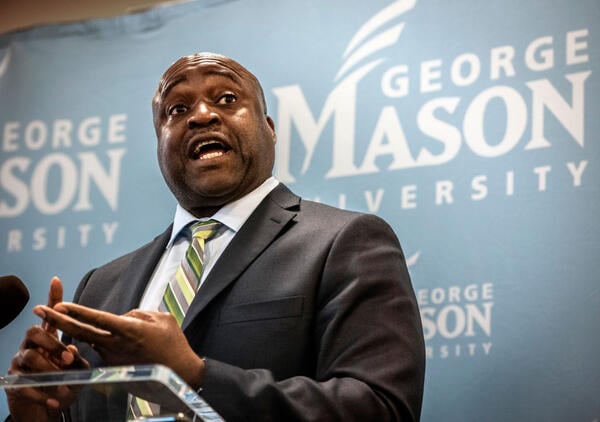
    Emily Chamlee-Wright is president of the Institute for Humane Studies at George Mason University and was previously provost and dean at Washington College.

    Source link

  • Three Questions for Tulane’s Ashley Francis

    Three Questions for Tulane’s Ashley Francis

    Tulane University’s Freeman School of Business recently launched its first fully online M.B.A. program, marking a significant step in expanding its offerings for working professionals. As assistant dean at the Stewart Center for Professional and Executive Education, Ashley Francis plays a pivotal role in shaping and overseeing these programs. With a background in online learning and program development, she brings deep expertise in designing market-competitive programs that maintain Tulane’s unique academic experience.

    I wanted to sit down with Ashley to learn more about the strategy behind launching an online M.B.A. at Tulane’s Freeman School of Business, how the program distinguishes itself in a competitive landscape and what universities should consider when developing online offerings.

    Q: Why did Tulane’s Freeman School of Business decide to launch an online M.B.A. and how did you approach designing a program that stands out in an increasingly competitive market?

    A: Tulane University’s Freeman School of Business launched its online M.B.A. program as part of a comprehensive strategy complementing the school’s portfolio of programs directed towards working professionals and meeting students where they are. It was conceptualized in response to both an evolving institutional culture and a clear demand for accessible, high-quality business education.

    The COVID-19 pandemic further accelerated this momentum. With support from Dean Paulo Goes and our partnership with AllCampus, Tulane’s Freeman School of Business was able to build a rigorous and forward-thinking program.

    What sets Freeman’s online M.B.A. apart is its commitment to academic excellence, flexibility and support. The curriculum is designed specifically for working professionals, offering the same tenured faculty who teach on campus—a rarity among online programs, which often rely on adjunct instructors. The program underwent a rigorous four-month development process to ensure that our curricula offered engaging, culturally rich courses. We specifically structured a program with reduced credits to help lower cost and time to completion.

    The Freeman School’s online M.B.A. program is not only competitive but it’s also deeply student-centric. We offer unique, customized career support and access to tutoring services that not many other programs offer. While being competitive in the market was a top priority, ultimately the onus was on us to create a program that truly benefited students.

    Q: When selecting an online program management partner, what key factors did Tulane’s Freeman School of Business consider? Why was working with an OPM important to you?

    A: We went into the OPM selection process knowing the values and capabilities of working with an OPM and that this partnership style would set our online M.B.A. up for the most success. At their best, OPMs are sophisticated, passionate and willing to invest in the success of the program. At the same time, my previous experiences with OPMs had left me feeling wary and cautious when choosing our partner.

    For the new online M.B.A. program, we ended up going with AllCampus, and they’ve absolutely met my high expectations. Tulane’s Freeman School of Business was seeking a true partner—one that would collaborate deeply, offer full transparency and share in the school’s mission for success and AllCampus has embraced those values fully.

    My advice to other higher education leaders considering working with an OPM would be to build a relationship framed around mutual commitment and trust, with a shared goal of creating a standout program. Having a hands-on partnership allowed us to move quickly and tactfully when launching a high-quality program.

    Q: Tulane University is deeply connected to the culture and identity of New Orleans. How does the online M.B.A. program incorporate that sense of place and community for students logging in from around the country?

    A: Tulane’s Freeman online M.B.A. is infused with the spirit of New Orleans, bringing the city’s vibrancy and community-driven ethos into the virtual classroom. One of the core pillars of the program is “bringing the joy of New Orleans” to students—wherever they are. Rather than creating a hypercompetitive environment, the Freeman School fosters a sense of belonging and cultural richness, helping students feel the NOLA experience even if they never set foot on campus.

    This is accomplished through course design, community engagement strategies and faculty involvement that reflect our university’s values and strengths. Our courses embed the city’s ethos and leverage our expertise in energy, supply chain, brand management and entrepreneurial resilience. Tulane’s brand affinity, loyal alumni network and supportive student services—such as a dedicated career management center and a financial aid adviser—all contribute to building a connected environment. The result is a program that not only educates but also inspires a lifelong connection to the Tulane community and the unique culture of New Orleans.

    Source link

  • RFK Jr. Falsely Claims New Vax Board Member Works at GWU

    RFK Jr. Falsely Claims New Vax Board Member Works at GWU

    Robert F. Kennedy Jr., secretary of the Department of Health and Human Services, falsely said he named a doctor from George Washington University to a federal vaccine advisory board, reported News 4, the NBC affiliate in Washington, D.C. 

    Last Monday, Kennedy, who denies that vaccines are safe and effective and whose department has previously cited fake studies to support parts of its public health agenda, fired all 17 members of the federal Advisory Committee on Immunization Practices. By Wednesday, he posted on X that he had “repopulated” it with eight new members.

    “The slate includes highly credentialed scientists, leading public-health experts, and some of America’s most accomplished physicians,” he wrote. “All of these individuals are committed to evidence-based medicine, gold-standard science, and common sense.”

    One of them, according to Kennedy, is Michael A. Ross, a clinical professor of obstetrics and gynecology at George Washington University and Virginia Commonwealth University, with a career spanning clinical medicine, research and public health policy.

    But a GWU spokesperson told News 4 that Ross hasn’t taught there in eight years; a VCU spokesperson also said Ross hasn’t taught there for four years. Instead, Ross is listed as an operating partner for the private equity fund Havencrest, and his company bio says he “serves on the boards of multiple private healthcare companies.”

    Kennedy’s post on X made no mention of Ross’s current involvement with the company.


    Source link

  • Senate Outlines Plans for Endowment Tax Hike

    Senate Outlines Plans for Endowment Tax Hike

    The Senate Committee on Finance is proposing to raise the endowment tax on private colleges and universities, but not to the extent the recently passed bill in the House calls for, according to a draft plan released Monday.

    The less dramatic excise tax tops out at 8 percent for the wealthiest institutions, compared to 21 percent in the House plan, but the Senate’s proposal keeps the House’s tiered rate structure, with some colleges paying more depending on the value of their endowment per student. The current rate for affected institutions is 1.4 percent.

    Institutional lobbyists and college presidents have warned that the sharp increase in the House plan would hurt their ability to provide need-based aid and be debilitating for some low-income students. Although the Senate’s iteration offers some relief, it’s not as much as they hoped for.

    “The Senate version of the so-called endowment tax is better, but it’s still bad and harmful tax policy,” said Steven Bloom, assistant vice president of government relations​​ at the American Council on Education. “They’re going to take money that would likely have been devoted to financial aid and research and other academic purposes on campus, and they’re going to send it to Washington, where it’s used largely for purposes unrelated to higher education.”

    The Senate committee’s plan, like the House proposal, also still exempts religious colleges and requires colleges to take international students out of the total roll call when calculating the endowment’s value per student. If passed, this stipulation would increase the tax rate significantly for institutions like Columbia University that have 20 percent or more foreign students.

    The finance committee legislation, which also includes cuts to Medicaid that could put pressure on states’ budgets, is part of a broader package of bills that would make significant changes to higher education policy and cut spending and taxes in order to pay for President Donald Trump’s priorities, which include increased deportations and tax cuts for the wealthy. The House version of the reconciliation bill known as the One Big Beautiful Bill Act passed by a one-vote margin last month. Senators are aiming to pass their version by July 4 and only need 51 votes thanks to the reconciliation process, as opposed to the traditional 60 votes.

    Unlike the House proposal, colleges that don’t accept federal financial aid would be exempt from the tax entirely. Hillsdale College president Larry Arnn blasted the House plan in an op-ed last month as an attack on the institution’s independence. (Hillsdale doesn’t participate in the federal financial aid system.)

    “The resources entrusted to Hillsdale College are not drawn from the public treasury,” Arnn wrote. “They are given freely by those who believe in our mission. To tax these gifts is to tax philanthropy itself—to burden those who would lift burdens. It is to weaken those who do good precisely because they are free to do it. It weakens them and strengthens the federal government, reversing the order intended by our Founders.”

    Hillsdale wasn’t the only college that pushed back on the rate increase. In recent weeks, private institutions big and small have pitched their own alternatives to Congress.

    Some of the largest and wealthiest research institutions that would be affected by the tax—such as Harvard, Stanford and Princeton Universities—pledged to spend 5 percent of their endowment’s value annually in exchange for a much lower 2.4 percent endowment tax rate, The Wall Street Journal reported. Bloom agreed that if the tax is to increase, he would like to see some kind of incentive introduced, like financial aid spending thresholds, to mitigate the tax rate.

    “They’ve created no incentive for schools to behave in ways that we believe that they would want schools to behave,” he said.

    Other institutions suggested that the tax rate should be based on what percentage of endowment revenue an institution spends each year on student financial aid or how many students enrolled come from a low-income background and receive the federal Pell Grant.

    A coalition of 24 smaller institutions, including Grinnell and Davidson Colleges, which would be hit hardest by the House endowment tax, proposed adjusting the excise rate based on the number of students enrolled. Colleges with fewer than 5,000 students have a different economic model than an institution with 30,000, they said.

    Grinnell president Anne Harris, who spent part of the last week educating lawmakers about the harm of the increased endowment tax, said Monday evening that the Senate plan still disproportionately burdens smaller institutions. She noted that her institution will likely still face the maximum 8 percent tax.

    “I deeply appreciate all the work that’s gone on and clearly all the consideration that has informed what we’re seeing this afternoon, but having said that, the current proposal still disproportionately burdens small colleges,” Harris said. “You’re going to find a school like Grinnell College with 1,700 students, a small college in a rural setting, bearing a much greater burden of this tax than a research institution in a large city.”

    She could only speculate that senators stuck with a tiered structure for simplicity, but added that “the simple fix” would be to make a stipulation that places all small private colleges in the lowest bracket and maintain the current 1.4 percent tax rate.

    Harris is hopeful that there will still be further opportunities for compromise and said she will continue to advocate for small liberal arts institutions like her own. But in the meantime, her executive team will also continue to plan out all the possible scenarios to figure out the best course of action to protect student aid if the bill passes as it currently stands.

    “All responsible options that provide the most money for financial aid and mission fulfillment are on the table as part of our scenario planning with the board,” she said.

    Source link

  • Don’t Fall for Trump’s Trade School Trojan Horse (opinion)

    Don’t Fall for Trump’s Trade School Trojan Horse (opinion)

    In one of his all-too-frequent rants on Truth Social last month, President Trump posted, “I am considering taking Three Billion Dollars of Grant Money away from a very antisemitic Harvard, and giving it to TRADE SCHOOLS all across our land.” It’s a transparent and cynical ploy: pit one segment of the education community against another—rich Harvard versus poor “trade schools”—and watch the divisions take hold. But make no mistake: This strategy only works if institutions, elite or otherwise, fall for the bait.

    We’re not sure what the president means by “trade schools” but suspect he’s referring to the nation’s 1,000-plus community and technical colleges— institutions that educate about a third of all U.S. undergraduates. We’ve both spent our careers making the case for greater investment in these colleges, including through the Project on Workforce, the cross-Harvard initiative we helped found six years ago to forge better pathways between education and good jobs.

    (And for the record: Trump’s accusation that Harvard is “very antisemitic” rings hollow coming from the man who hosted a Holocaust-denying white nationalist at Mar-a-Lago. It’s certainly unrecognizable to us—two Jews who, between us, have spent more than 40 years as Harvard students, staff and faculty.)

    If Trump actually cared about funding “trade schools,” he would start by telling congressional leaders to strip the provision in his so-called Big Beautiful Bill that raises the credit-hour threshold for Pell Grant eligibility. Community colleges serve the bulk of low-income students, and most of them have to work while in school. This proposed change proffered by the House, which was not included in the Senate version of the reconciliation bill, could cut off aid for 400,000 students a year and force many to drop out.

    But the threat isn’t just in proposed legislation: Community colleges are already the targets of Trump’s politically motivated grant cancellations. For example, just last month, his administration revoked awards from six Tech Hubs, created by bipartisan legislation to boost innovation, job creation and national security. These included projects in Alabama, where a community college would expand biotech training; in Idaho, where a community college planned to train aerospace workers; and in Vermont, where a community college was preparing a new semiconductor workforce.

    And the cuts don’t stop there. If the president was really serious about supporting the U.S. skilled technical workforce, he would expand, not gut, programs like the National Science Foundation’s Advanced Technological Education initiative, which has provided $1.5 billion to more than 500 community and technical colleges to develop cutting-edge training in fields like advanced manufacturing and robotics. Instead, his budget proposes cutting NSF by 55 percent, including deep reductions to education and workforce programs. The president’s budget also proposes eliminating all Perkins Act funding for community colleges (approximately $400 million), limiting the funding to middle and high schools and thereby cutting off a key source of federal support for technical training beyond secondary school.

    If by “trade schools” Trump means education for trades jobs, his hostility toward immigrants undermines the very students he claims to support. Eight percent of community college students are not U.S. citizens, with much higher shares on some campuses. They are just as vital to America’s future as the researchers in Harvard’s labs. In 2024, immigrants made up more than 30 percent of construction trades workers and 20 percent of U.S. manufacturing workers. Closing America’s doors won’t just harm colleges: It will weaken our ability to build, make and compete.

    Last week, we joined more than 12,000 Harvard alumni in signing an amicus brief to pledge our commitment to defend not only Harvard but the broader higher education enterprise from the Trump administration’s bullying attacks. Over the past month, we also spoke with community college leaders from around the country whose work we profiled in our 2023 book, America’s Hidden Economic Engines. Without exception, these leaders expressed deep concern, understanding that if Harvard, with all of its resources, could be forced to bend to the will of a tyrannical government, what chance would less resourced institutions have to defend academic freedom and maintain independence from governmental intrusion?

    If elite universities and community and technical colleges stand together, we can defend not just education, but democracy itself. Challenging as it will be for Harvard to weather this unprecedented assault on its independence, and that of higher education, it has no choice but to stand firm. Unlike many more vulnerable victims of Trump’s bullying—immigrants, civil servants, USAID grantees, the trans community—Harvard has the resources to fight back. Ultimately its rights, along with the rights of others targeted, will likely be vindicated by the courts. But in the interim, a lot of needless damage will be done to the lives of affected people and institutions. Most Americans may not speak often of such abstractions as academic freedom, due process and the fate of democracy. But they know a bully when they see one.

    Rachel Lipson, a co-founder of the Harvard Project on Workforce, was a senior adviser on workforce at the CHIPS Program Office at the U.S. Department of Commerce. She recently returned to Harvard Kennedy School as a research fellow.

    Robert Schwartz is a professor of practice emeritus at Harvard Graduate School of Education. Before joining the Harvard faculty in 1996, he had a long career in education and government.

    Source link

  • Federal Funding Uncertainty Halts Construction Projects

    Federal Funding Uncertainty Halts Construction Projects

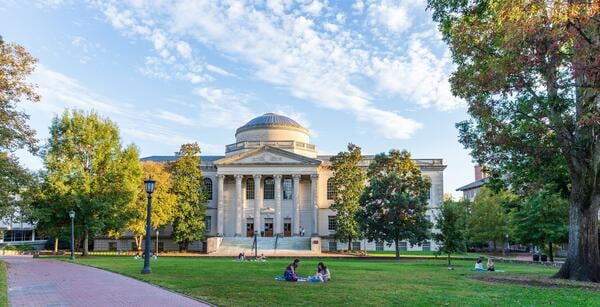
    Earlier this year the University of North Carolina at Chapel Hill Board of Trustees approved the design of a $228 million research facility that would expand UNC’s work on virology, vaccine development and other areas. But now that project is suddenly on hold.

    UNC Chapel Hill is one of several major research universities pausing construction plans due to financial uncertainty provoked by the Trump administration’s efforts to cap federal research funding reimbursement rates.

    In recent months multiple federal agencies have announced plans to cap research reimbursement rates at 15 percent. (While such rates typically hover just under 30 percent, some institutions have negotiated reimbursement rates upward of 50 percent.) Though court challenges have halted the rate cuts for now, the uncertainty has prompted some institutions to pause certain construction projects—particularly research labs and related facilities.

    Institutions pausing or slowing plans to build new projects include some of the nation’s wealthiest private universities: Yale, Johns Hopkins and Washington U in St. Louis, which posted endowments of $41.4 billion, $13 billion and $11.9 billion, respectively, in the last fiscal year, according to a recent study of endowments. (UNC Chapel Hill is among the nation’s wealthiest public institutions, with a $5.7 billion endowment.)

    In some cases, construction on other facilities, like a new residence hall at UNC Chapel Hill, is moving forward while projects such as research labs have been halted.

    Projects on Hold

    Yale has paused construction on 10 planned projects, according to The New Haven Register.

    “We’re riding out a bad period,” Alexandra Daum, Yale’s associate vice president for New Haven affairs and university properties, said at a local Chamber of Commerce event earlier this month.

    One of those projects is the planned conversion of a street into a pedestrian and cyclist-only plaza, which officials decided in February to delay, Daum told The New Haven Independent, another local news outlet. Yale has not identified the other nine projects it plans to put off.

    Daum pointed to uncertainty about federal funding as the reason for the pause.

    “Like many, Yale is tracking federal funding closely and anticipating there will be impact to projects in the planning pipeline,” Daum wrote in an email to Inside Higher Ed. “We don’t know how much of an impact federal decisions will have on these projects, so we are being prudent.”

    Construction on projects already underway will reportedly continue.

    Johns Hopkins University announced a similar decision in early June. Administrators wrote in a message to campus that the university has experienced “a steady stream of research grant terminations, suspensions, and delays” that created uncertainty, particularly when coupled with the proposals for lower research reimbursement rates. The rate caps could deal the university a loss of more than $300 million a year in federal research funding, officials wrote.

    JHU is taking a number of measures to handle budget concerns, including a staff hiring freeze, as well as pulling back on planned construction projects.

    “Prudence dictates cutting back our ambitions in the near term, and we have decided to reduce our capital construction and renovation plans by approximately 10-20%,” officials wrote. “Final decisions on these reductions will be made over the summer in consultation with the divisions, with an emphasis on continuing mission-critical projects, essential deferred maintenance, and projects that are already far along in the permitting, demolition, and construction process.”

    JHU did not identify what specific projects might be pushed back.

    Washington University halted construction of a new arts and sciences building in April; work was expected to begin earlier this year, according to a news release from last fall.

    WashU officials also cited federal funding concerns.

    “We regret that it’s necessary to take these actions, but in our current climate, it is simply not prudent to continue with these projects as scheduled,” Chancellor Andrew D. Martin said in a news release. “We are always careful stewards of the university’s resources, but at this time, given the uncertainty around federal research funding and other potential government actions, we have to take a careful look at every aspect of our operations. We hope that once we have a clearer sense of the financial picture, we may be able to revisit some of these investments.”

    UNC Chapel Hill offered similar reasons for halting construction on the research lab.

    “Due to ongoing uncertainty surrounding federal research funding, the University has paused plans for the Translational Research Building. We are currently evaluating our research infrastructure, including our research facilities, and will continue to monitor funding trends. Scenario planning is underway to help us remain prepared for future opportunities,” a UNC Chapel Hill spokesperson told Inside Higher Ed in an emailed statement.

    However, the university is moving forward with some projects, including a $93 million residence hall.

    In neighboring Virginia, Republican governor Glenn Youngkin rejected $600 million in funding requests for 10 planned renovation and expansion projects at public universities last month, The Virginia Mercury reported. In a letter to state legislators, Youngkin cited economic uncertainty.

    “I am optimistic about Virginia’s longer-term prospects for Fiscal Year 2027 and Fiscal Year 2028, and beyond, but there are some short-term risks as President Trump resets both fiscal spending in Washington and trade policies that require us to be prudent and not spend all of the projected surplus before we bank it,” Youngkin wrote to state lawmakers in May.

    Some of those planned projects were research-oriented, though many were not.

    The Outlook

    While a few universities have publicly walked back big projects, that doesn’t appear to be happening en masse, experts say. Planned construction is still happening at many colleges.

    “Projects, generally, are moving ahead. There are some larger projects that have been paused. The ones that have been stopped tend to be research-focused projects,” said Chris Purdy, director of higher education at SmithGroup, a design and planning firm that works in the sector.

    Other buildings, particularly those that are student-focused or in high-growth areas such as health sciences and STEM, are also moving ahead, he noted. Purdy pointed out that research labs and related facilities are often highly specialized and therefore the most expensive to build.

    “They’re primed to be under the most scrutiny just because they’re very expensive buildings,” Purdy said.

    He noted that SmithGroup continues to see requests for proposals for campus construction and is optimistic that colleges won’t back off of planned projects throughout the rest of the year. But looking ahead to next summer, or fiscal year 2027, Purdy is less sure about where things will stand, noting the looming economic uncertainty for many institutions.

    “At that point they’re going to have a different outlook on funding for capital projects,” Purdy said.

    Source link

  • USC Course Connects Students and Shelter Dogs for Exercise

    USC Course Connects Students and Shelter Dogs for Exercise

    Some colleges and universities use therapy dogs to help students destress or address homesickness. The University of South Carolina employs shelter dogs for students to engage with as a form of exercise.

    The Canine Fitness and Connection course invites about 25 students each semester to volunteer at a local animal shelter, giving them exposure to working with dogs while encouraging them to live healthy and active lives.

    What’s the need: A 2023 survey by Inside Higher Ed and College Pulse found that 57 percent of students named getting more exercise as a top health-related goal, while 43 percent cited spending more time outside. About half of respondents indicated their physical health and wellness impact their ability to focus, learn and do well in school at least somewhat.

    At USC, the physical activities program strives to offer unique courses that match student interests, said director Gary Nave. In the past, courses have included Zumba and Quidditch, but as trends change, student interest wanes, requiring more creative programs.

    In 2022, Nave was researching physical education offerings at other universities and came across Auburn University’s Puppy Play course, which was offered from about 2014 to 2017.

    “We know that interacting with animals has benefits and it makes a difference in your stress and your anxiety, and I think a lot of our physical activity classes help do that,” Nave said, so pairing the two seemed natural.

    Walking clubs have also grown in popularity among young people as Gen Z seeks to both make friends and stay active.

    How it works: USC partners with Final Victory Animal Rescue in West Columbia (roughly four miles from campus) to offer the course, which has two sections with a total enrollment of about 25.

    Students who enroll often have some level of experience with dogs and are looking to connect with animals while living in college housing, or to learn how to better care for their pets. For others less familiar with dogs, the course is an opportunity to step out of their comfort zone.

    Prior to class time, students are assigned a reading or video to watch, and the instructor delivers a brief 15-minute lecture at the start of their meeting.

    The remainder of the 90-minute class is devoted to animal care, including dog walking, grooming and feeding, plus kennel cleaning.

    “They do a lot of other stuff, because there’s more to taking care of a dog than just walking it,” Nave said. “If that was the case, then there’s no responsibility, everybody would want a dog, right?”

    Students submit their step count to the instructor as part of their participation grade, often tracked by a pedometer app or similar smartphone or smartwatch technology.

    Throughout the term, students learn about canine behavior, how to use a slip lead, the benefits of walking with dogs and the importance of community service, among other topics.

    At the end of the term, students complete a project in which they take the dogs out of the shelter for a day to practice handling them on their own. After the excursion, students provide feedback to shelter staff about the dog’s temperament and behavior so staff can create the best match for the dog’s permanent home.

    Students also take pictures and videos, which are shared as promotional material for the shelter, helping increase the visibility of dogs up for adoption.

    The impact: Since the program launched in spring 2022, student interest has been strong, with end-of-term feedback revealing how much participants enjoyed the opportunity to work with dogs.

    More Pup Perspectives

    Several colleges and universities have recognized the positive impact dogs can have on student well-being and engagement.

    “This semester, I was able to do something I love, while at the same time learning skills that I could apply to my everyday life,” one student wrote. “I highly, highly recommend taking this class any chance you get.”

    Former students have even elected to foster or adopt animals they cared for during the course, according to the USC website.

    Assignment data shows an impact on students’ physical activity as well, with participants walking an average of 2.5 miles over 90 minutes, clocking 7,000 steps during the week.

    The course also connects students with a philanthropic organization and professional instructors with extensive experience raising and handling dogs, exposing them to new perspectives, Nave said.

    “It’s worth experimenting to see if this class could be beneficial for your students,” Nave said.

    DIY: For institutions looking to model the course, Nave advises starting with a student survey to gauge interest. “If they don’t want it, there’s no sense in offering it.” Then identify a local animal shelter willing to serve as a host and partner for the course.

    Another consideration is risk management. Working with animals can pose a safety risk for students, so identifying whether the course requires a waiver or other documentation to lessen liability is key, Nave said.

    Source link

  • How should higher education respond to calls to be relevant?

    How should higher education respond to calls to be relevant?

    In their examination of ten trends that will shape the future of the campus university, Edward Peck, Ben McCarthy and Jenny Shaw set out a compelling account of the factors that will shape English higher education. As a result of these factors, they argue that, in the future, ‘Academic awards will focus as much on the development of employment and generic skills as the acquisition and retention of specific knowledge’. Given that it is co-authored by a long-standing vice chancellor, who will shortly take on the role of the Chair of the higher education regulator, this can be read as an urgent call for higher education to be clear about how it produces graduates who will make important contributions to society.

    While I agree that higher education needs to be open to discussing the value of its education for graduates and society, I do not think a convincing case can be made by focusing on the distinction between generic skills and specific knowledge. Instead, my argument is that higher education needs to develop a much better account of how the knowledge that students engage with through their degrees prepares them to make important contributions to society. There are four elements to this. 

    First, the development of generic skills and the acquisition of specific knowledge are not alternative educational objectives for degree programmes. Rather, they are different elements of a rich educational environment. More fundamentally, the educational power of higher education does not lie in either of these options. What is educationally powerful about higher education is the way in which it offers students access to structured bodies of knowledge. Seeing these bodies of knowledge from the inside gives students and graduates the opportunity to view themselves and the world differently. It is the structure of these bodies of knowledge that allows students and graduates to develop ways of engaging with the world that make use of this knowledge and related skills in a diverse range of contexts. Generic skills and specific knowledge are generated as part of this engagement with structured bodies of knowledge, but they are not where the educational treasure of higher education lies. Indeed, our seven-year international longitudinal study of those who studied degrees in Chemistry and in Chemical Engineering found that those who focused on specific knowledge rather than the ways of engaging with the world they gained from their degrees tended to benefit less from their education. 

    Second, showing that higher education is about gaining access to structured bodies of knowledge explains why it requires programmatic study over the three or four years of a degree. If it were simply about generic skills or specific knowledge, then there would be no need for the systematic and sustained engagement that we currently demand of students. Presenting higher education as about generic skills or specific knowledge risks it appearing very obvious that demanding several years of sustained study is an unnecessary and expensive luxury. It is only by showing the importance of students’ gaining access of bodies of knowledge that we can explain why alternative forms of higher education that are already boxing higher education in, such as micro-credentials, are not up to the job of supporting students to see these bodies of knowledge from the inside and engaging with the world from the perspective of this knowledge.

    Third, understanding the importance of the structured nature of this knowledge helps to highlight the importance of producing graduates from a rich diversity of disciplinary, interdisciplinary and professional subjects, who engage with the world in different ways. Addressing the challenges facing the world will require drawing on the diversity of these perspectives which cannot be gained through being taught generic skills or unconnected stores of specific knowledge.

    Fourth, ensuring that higher education maintains its focus on structured bodies of knowledge is key to challenging educational inequalities. Otherwise, it is entirely predictable that the education offered by ‘elite’ institutions will remain focused on structured bodies of knowledge while ‘mass’ higher education shifts to focus on generic skills. Given that those with the greatest resources are most likely to access elite higher education, the poor will be left with an education that leaves them rooted in the contexts in which they have developed their generic skills whereas the privileged will benefit from the ways in which structured bodies of knowledge support them to move between contexts.

    The great higher education advocate David Watson urged universities and academics to ‘guard your treasure’. The treasure of higher education is the collective structured bodies of knowledge that we are stewards of for society. Our role is to support society and students to understand the power of this knowledge and what it can do in the world. In response to the important questions raised by Edward Peck, Ben McCarthy and Jenny Shaw, we need to develop much more compelling accounts of how access to these structured bodies of knowledge provides an education that is qualitatively different from an education focused on developing generic skills and specific knowledge. We need to show how this qualitative difference is crucial in offering a relevant education that has the potential to change students and society.  If we fail to do this, then we are in great danger of throwing away our greatest treasure.

    Source link

  • Higher education governance needs the conflict between academic and business imperatives to be successful

    Higher education governance needs the conflict between academic and business imperatives to be successful

    The sector’s financial challenges have shone a spotlight on governance effectiveness in higher education in England.

    When the incoming government tasked the Office for Students (OfS) with directing more of its energy towards financial sustainability in the summer of 2024, it was only a matter of months before director of regulation Philippa Pickford put forward the view that the sector needed “a conversation” about governance, specifically about how robustly boards had tested some of the financial projections they had been prepared to sign off.

    That signal of concern about governance has clearly manifested in the corridors of the Department for Education (DfE), if these words from the Secretary of State to the Commons Education Committee in May are anything to go by:

    The government is clear that there needs to be a focus on and improvement in providers’ governance. Planning and strategy development within higher education providers, including financial planning, should be supported by the highest standards of governance to ensure realistic planning, robust challenge and the development of sustainable business models.

    The sector has not been unresponsive to these cues – Advance HE in partnership with the wider sector is (taking the conversation metaphor literally) curating a “big conversation” about governance and the Committee of University Chairs (CUC) has pledged to review the higher education code of governance – which for a large number of institutions acts as a reference document for compliance with OfS’ conditions of registration on governance.

    The implicit underpinning premise from OfS and DfE is fairly stark: the government is disavowing any responsibility it might have to come up with a financial settlement that would shore up higher education finances while retaining the current delivery model; nor is it especially keen to have to deal with institutional bailouts arising from institutional inability to manage the changed funding landscape. The strong signal is that it is up to higher education institutions to work out how to survive in this environment – and if boards are not up to the task of finding the answers then it’s the boards that need reforming.

    Business acumen

    I read this communication as part of a discursive stand off between government and the sector in which the lines between the role of government and role of individual institutions in securing the future of higher education is contested. Within that context, the validity of the implied criticism – that boards are insufficiently businesslike and strategic – needs to be interrogated.

    There was a fascinating piece on The Critic last week by University of Buckingham academic Terence Kealey bemoaning the rise of the managerialist board. In Kealey’s analysis, when the balance of power in governance tilted towards the Senate – the governing body of academics – the institution thrived, as evidenced by strong performance in NSS and a financial surplus. But when the Council flexed its muscles, the university faltered, dropping in the league tables and spending more than it brought in.

    Kealey’s core argument – that academics are best placed to steward the core higher education mission of excellent teaching and research – picks up a longer standing critique of higher education governance that perceives organisational strategic objectives as articulated by institutional boards and executive teams as frequently in opposition to the academic endeavour, being far too concerned with financial efficiency, performance management, reputation/league tables, and capturing market share. Echoes of aspects of this critique appear in the recent Council for the Defence of British Universities’ proposed code of ethical university governance, which urges boards to adhere to high standards of transparent, principled, and public-spirited conduct.

    At the other end of the spectrum, the criticism of higher education governance – including sometimes from governors themselves – is that boards are insufficiently businesslike, fail to articulate long-term strategic objectives that will secure the institution’s sustainability, and have limited entrepreneurial spirit that would allow the institution to adapt to adverse headwinds. A more moderate version of this criticism argues that it is very difficult to convene the diverse skillset that could allow for effective board oversight of the wide range of activities that higher education institutions do.

    Thinking about activities like academic and knowledge exchange partnerships, the creation of new campuses or the erection of new buildings, or civic and international engagement, all of these have the the academic endeavour at their core but are mostly about deploying the knowledge and reputational assets of the institution to generate additional value – and they each carry complicated associated legal and regulatory compliance expectations and reputational risk. It’s not clear that developing those strategies and managing those risks and expectations coheres well with academic professional practice – though some academics will obviously have a keen interest and want to develop knowledge in these areas.

    The worst of both

    There has always been an expectation that higher education institutions need to be simultaneously academically excellent and sufficiently business savvy to make sure the institution remains financially stable. Both academic and institutional governance can fail – the latter often more spectacularly and with greater reputational impact – but the impact of academic governance failure is arguably greater overall both on the long term health of the institution and on the lives of the staff and students affected.

    So you could argue that it’s odd and/or problematic that the sector has witnessed the erosion of the power of senates and academic boards as part of a wider set of trends towards a more executive style of higher education leadership, the rise of metrics, league tables and more managerial approaches to institutional performance, the intensification of regulatory expectations, and the steady withdrawal of direct public funding from the sector. It’s telling that under the current regulatory regime in England institutional boards have had to master new expectations of oversight of academic quality, on the presumption that all institutional accountability should sit in one place, rather than being distributed – suggesting that quality is now seen as part of the wider business imperative rather than a counterweight to it.

    But simply pivoting the balance of power back to senates and the academic community doesn’t necessarily address the problem. It’s possible, I suppose, to imagine a relatively benign or at least predictable funding and regulatory environment in which some of the pressing strategic questions about institutional size and shape, partnerships, or external engagement are answered or moot, and in which knowledge stewardship, academic excellence, and (one would hope) student learning experience are the primary purpose of higher education governance.

    But even if that environment was plausible – I’m not sure it has ever existed – it doesn’t really address the more existential contemporary questions that governments and the public seem to be putting to higher education: how does the country see, and experience the value of all this knowledge stewardship and academic excellence? To realise that value and make it visible in more than an ad hoc way – to be institutionally accountable for the systematic manifestation of public value from academic knowledge – requires knowledge and professional practice beyond individual teaching and research excellence. And, more prosaically but equally importantly, buildings, infrastructure, and systems that create the environment for effective knowledge stewardship. Without a functioning institution there can be no knowledge stewardship.

    There’s a reason, in other words, even if you strip out all the neoliberal value propositions from higher education governance, why higher education institutions need a “business” arm and associated governance structures. And that’s before you confront the actual reality of the current situation where the funding and regulatory environment is neither benign nor predictable – and the need for effective external relationship-building and systematic collaboration is greater than it has been in decades.

    On the other hand, some of the business decisions that are made to secure financial sustainability or long term institutional success put the academic imperative at risk. Rapid growth in student numbers, redundancy programmes, departmental or services cuts or new strategic partnerships can compromise quality, as we have seen in a number of recent cases. There may be mitigations or the impact may be worth the reward, but there can be no meaningful strategic decision without being able to weigh up both.

    Yet where we have ended up, I fear, is in the worst of both worlds – institutional boards that are neither sufficiently academically robust to have a grip of academic excellence nor sufficiently strategic and entrepreneurial to ensure institutions are able to thrive in the current higher education landscape. This is no shade to the immense talent and knowledge of the individuals who take up roles as higher education governors – it is a structural critique.

    Creative tension

    Where I end up is with the question – if there is really an inbuilt tension between the academic and business imperatives of higher education institutions, what would it look like for that tension to be a productive one in higher education governance rather than a source of toxicity?

    I suspect – though I’ve not (yet) asked – many vice chancellors and their executive teams would argue that in their individual experience and team skillset they manifest both academic and business imperatives – that in fact, it is their job to reconcile these two aspects of institutional leadership in their daily practice, decisions, and communications.

    Yet if that reconciliation of two competing imperatives is the job of leadership, arguably it’s not going all that well. While this experience is by no means universal, it’s clear that at times both academic and professional staff can feel sidelined and disempowered in the tug of war for day to day resource – but also at a deeper level for a recognition of their purpose and contribution to the higher education endeavour. Each can feel subordinated to the other in the institutional hierarchy – yet while there are outliers on both sides I’d put money on the majority of individuals on both sides accepting and embracing the value and contribution of the other. Yet at the same time the real tensions and contradictions that manifest in the pursuit of the two parallel imperatives are deeply felt by staff yet not always acknowledged by leadership.

    What if the job of leadership and boards of governors was not to seek to reconcile academic and business imperatives, but to actively manage the conflicts that arise at times? Where strategic questions arise related to either opportunities or risks, boards need to understand the perspective of both “sides” before being able to judge whether the executive team’s decisions are appropriate. And for institutional staff (and students, to the extent they have a role in institutional governance) there needs to be confidence that the governors have the skills and understanding of the value and importance of both imperatives and the relationship between them – so that there is the trust that decisions have been made in the most effective and transparent way possible.

    There might even be a case for institutions to convene internal business strategy boards as part of the governance structure as a counterweight to academic boards – actively empowering both equally as sites of knowledge, expertise and influence – and potentially reducing the strategic burden on institutional boards through creating a more transparent and maybe even more democratic or at least representative forum for internal governance of strategic business development.

    It seems likely that the next academic year will see the higher education sector in England move on from “conversations” about governance into something more systematically developmental, whether that’s via the mechanism of the CUC’s review of the Higher Education Code of Governance, or a policy agenda from one of the sector bodies. This is one of those areas where the sector can help itself with government by taking a lead on reform.

    Yet there’s a risk that the financial pressures on the sector lead to too close a focus on the strategic business imperatives and not enough on the academic excellence imperative. Institutions need both to be successful, and boards and executive teams – as well as any reviewing organisation – need to give deep consideration to how those can – even if not always peacefully – coexist.

    Source link

  • Help us tell the story of how the Trump administration is changing higher education

    Help us tell the story of how the Trump administration is changing higher education

    Since January, President Donald Trump has taken countless steps to transform the nation’s colleges and universities. His administration has cut scientific and medical research, ended efforts to promote diversity equity and inclusion (DEI), introduced newly aggressive policies on loan repayment, revoked visas for international students, and more. While Trump’s battles with Harvard and Columbia have received the most attention, the administration’s actions have had consequences far beyond those two universities.  

    We want to know how the Trump administration is affecting higher education and life on your campus. What, if any, changes are you seeing at your college or university because of federal policy shifts? In what ways do you see higher education changing?

    If you prefer, you can also email us directly at [email protected]. Contact editor Lawrie Mifflin at [email protected] or 212-678-4078. Contact editor Caroline Preston at 212-870-8965, via Signal at CarolineP.83 or on email at [email protected].

    This story about higher education was produced by The Hechinger Report, a nonprofit, independent news organization focused on inequality and innovation in education. Sign up for our newsletters.

    The Hechinger Report provides in-depth, fact-based, unbiased reporting on education that is free to all readers. But that doesn't mean it's free to produce. Our work keeps educators and the public informed about pressing issues at schools and on campuses throughout the country. We tell the whole story, even when the details are inconvenient. Help us keep doing that.

    Join us today.


    Source link