Raise the topic of AI in education for discussion these days and you can feel the collective groan in the room.
Sometimes I even hear it. We’re tired, I get it. Many students are too. But if we don’t keep working creatively to address the disruption to education posed by AI – if we just wait and see how it plays out – it will be too late.
AI fatigue is many things
There are a few factors at play, from an AI literacy divide, to simply talking past each other.
AI literacy is nearly unmanageable. The complexity of AI in education, exacerbated by the pace of technological change, makes AI “literacy” very difficult to define, let alone attain. Educators represent a wide range of experience levels and conceptual frames, as well as differing opinions on the power, quality, opportunity, and risk of generative AI.
One person will see AI as a radical first step in an intelligence revolution; the next will dismiss it as “mostly rubbish” and minimise the value discussing it at all. And, as far as I have found, there is no leading definition of AI literacy to date. Some people don’t even like the term literacy.
Our different conceptual frames compete with each other. Many disciplines and conceptual orientations are trying to talk together, each with their own assumptions and incentives. In any given space, we have the collision of expert with novice, entrepreneur with critic, sceptic with optimist, reductionist with holist… and the list goes on.
We tend to silo and specialise. Because it is difficult to become comprehensively literate in generative AI (and its related issues), many adopt a narrow focus and stick with that: assessment design, academic integrity, authorship, cognitive offloading, energy consumption, bias, labour ethics, and others. Meetings take on the character of debates. At the very least, discussions of AI are time-consuming, as each focus seems to need airing every day.
We feel grief for what we may be losing: human authorship, agency, status, and a whole range of normative relational behaviours. A colleague recently told me how sad she feels marking student work. Authorship, for example, is losing coherence as a category or shared value, which can be surreal and dispiriting for both writers and readers. AI’s disruption brings a deeply challenging emotional experience that’s rarely discussed.
We are under-resourced. Institutions have been slow to roll out policy, form working groups, provide training, or fund staff time to research, prepare, plan, and design responses. It’s a daunting task to just keep up with, let alone get ahead of, Silicon Valley. Unfortunately, the burden is largely borne by individuals.
The AI elephant in the room
Much of the sector suffers from the wishful thinking that AI is “mostly rubbish”, not likely to change things much, or simply an annoyance. Many educators haven’t thought through how AI technologies may lead our societies and our education systems to change radically and quickly, and that these changes may impact the psychology of learning and teaching, not to mention the entire infrastructure of education. We talk past each other.
Silicon Valley is openly pursuing artificial general intelligence (AGI), or something like that. Imagine a ChatGPT that can do your job, my job, and a big piece of the knowledge-work jobs recent graduates may hope to enter. Some insiders think this could arrive by 2027.
A few weeks ago, Dario Amodai, CEO of AI company Anthropic, wrote his prediction that 50 per cent of entry-level office jobs could vanish within the next couple of years, and that unemployment overall could hit 20 per cent. This could be mostly hype or confirmation bias among the tech elite. But IBM, Klarna, and Duolingo have already cited AI-linked efficiencies in recent layoffs.
Whether these changes take two years, or five, or even ten, it’s on the radar. So, let’s pause and imagine it. What happens to a generation of young people who perceive increasing job scarcity, and options and social purpose?
Set aside, for now, what this means for cities, mental health, or the social fabric. What does it mean for higher education – especially if a university degree no longer holds the value it once promised? How should HE respond?
Responding humanely
I propose we respond with compassion, humanity… and something like a plan. What does this look like? Let me suggest a few possibilities.
The sector works together. Imagine this: a consortium of institutions gathers together a resource base and discussion space (not social media) for AI in education. It respects diversity of positions and conceptual frames but also aims for a coherent and pragmatic working ethos that helps institutions and individuals make decisions. It drafts a change management plan for the sector, embracing adaptive management to create frameworks to support institutions to respond quickly, intelligently, flexibly, and humanely to the instability. It won’t resolve all the mess into a coherent solution, but it could provide a more stable framework for change. And lift the burden on thousands of us who feel we are reinventing the wheel every day.
Institutions take action. Leading institutions embrace big discussions around the future of society, work, and education. They show a staunch willingness to face the risks and opportunities ahead, they devote resources to the project, and they take actions that support both staff and students to navigate change thoughtfully.
Individuals and small groups are empowered to respond creatively. Supported by the sector and their HEIs, they collaborate to keep each other motivated, check each other on the hype, and find creative new avenues for teaching and learning. We solve problems for today while holding space for the messy discussions, speculate on future developments, and experiment with education in a changing world.
So sector leaders, please help us find some degree of convergence or coherence; institutions, please take action to resource and support your staff and students; and individuals, let’s work together to do something good.
With leadership, action, and creative collaboration, we may just find the time and energy to build new language and vision for the strange landscape we have entered, to experiment safely with new models of knowledge creation and authorship, and to discover new capacities for self-knowledge and human value.
So groan, yes – I groan with you. And breathe – I’ll go along with that too. And then, let’s see what we can build.
That Southern rock refrain from Molly Hatchet captures the bitter reality faced by millions of Americans who invested in higher education only to be left with debt, shattered hopes, and uncertain futures.
Educator Gary Roth’s The Educated Underclass points to a growing class of credentialed individuals caught in precarious economic and social positions—overqualified yet underpaid, burdened by debt without the stability education promised. Yet it is the borrowers’ own stories that reveal the human toll behind the numbers.
Over the past month, The Higher Education Inquirer has chronicled the experiences of borrowers misled by predatory institutions—mainly for-profit colleges—through its Borrower Defense Story Series. These narratives shed light on the deeply personal consequences of institutional deception and a federal loan forgiveness process that is often slow, bureaucratic, and uneven.
In one story, a single mother describes her experience at Chamberlain University School of Nursing. She followed every instruction, met every deadline, and committed herself fully to a career in health care. Yet she never earned her degree. Despite this, she remains burdened with thousands of dollars in student loan debt. Her borrower defense application has yet to yield relief.
Another borrower shares her journey with Kaplan University Online, where promises of flexible learning and job placement proved empty. After transferring and completing her degree elsewhere, she still faces uncertainty as her borrower defense claim drags on, highlighting the emotional toll of navigating a broken loan forgiveness system.
A third story critiques the broader system of higher education finance, describing how students—especially those without family wealth or institutional support—become trapped in debt relationships that limit their autonomy and economic mobility. Rather than offering a pathway to security, college becomes a mechanism of financial entrapment.
These individual stories are not exceptions. As of April 30, 2024, over 974,000 borrowers had received more than $17 billion in loan discharges under borrower defense rules, mostly through group claims tied to scandals involving Corinthian Colleges, ITT Tech, and DeVry. Yet hundreds of thousands still await decisions, and many are excluded entirely due to private loans, school exclusions, or bureaucratic delays.
The borrower defense rule was meant to shield students from fraud, but political interference, legal challenges, and an overwhelmed bureaucracy have marred its implementation. Behind the statistics are people deceived, indebted, and left behind.
Meanwhile, elite institutions hoard resources, adjunct faculty struggle to survive, and the promise of higher education rings hollow for many.
“I’m hung up on dreams I’ll never see.” This lyric is not just poetry but the lived reality for millions. Unless there is radical change—debt cancellation, labor protections, honest admissions, and accountability—the cycle of exploitation will only grow louder.
Some were sold dreams they could never afford. Many of those dreams are now lost.
Sources
Roth, Gary. The Educated Underclass. Pluto Press, 2022
National Center for Education Statistics. “Debt After College”
The Institute for College Access and Success (TICAS). “Student Debt and the Class of 2023”
American Psychological Association. “Mental Health Impacts of Student Debt”
Bousquet, Marc. How the University Works. NYU Press, 2008
McMillan Cottom, Tressie. Lower Ed. The New Press, 2017
The NIH has cut hundreds of millions of dollars in grant funding that it says is used to conduct illegal DEI and gender identity-related research.
Photo illustration by Justin Morrison/Inside Higher Ed | Adam Bartosik and Jacob Wackerhausen/iStock/Getty Images
The Trump administration has taken its fight over grants awarded by the National Institutes of Health to the Supreme Court, requesting permission Thursday to finalize millions of dollars in award cuts, CBS News reported.
President Trump began slashing research funding shortly after he took office in January, targeting projects that allegedly defied his executive orders against issues such as gender identity and DEI. By early April, 16 states and multiple academic associations and advocacy groups had sued, arguing the funding cuts were an unjustified executive overreach and bypassed statutory procedures.
Since then, a federal district court ordered a preliminary injunction requiring all grants to be reinstated, and a court of appeals denied the Trump administration’s request to halt the decision. Now, executive branch legal officials are taking the case to the highest court.
In an emergency appeal, Solicitor General John Sauer wrote that the NIH is attempting to “stop errant district courts from continuing to disregard” presidential orders.
The solicitor also pointed to an April ruling from the Supreme Court allowing the Department of Education to terminate some of its own grants for similar reasons. In that case, the justices said the Trump administration would likely be able to prove that the lower court lacked jurisdiction to mandate the payment of a federal award.
The court system does not allow a “lower-court free-for-all where individual district judges feel free to elevate their own policy judgments over those of the Executive Branch, and their own legal judgments over those of this Court,” Sauer wrote.
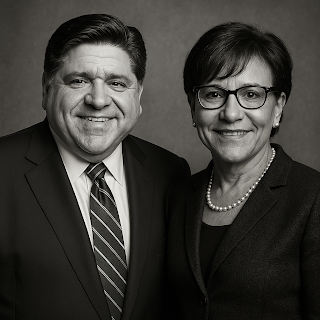
The Pritzker family stands as a symbol of wealth, influence, and access in American public life. From the luxury of Hyatt Hotels to the boardrooms of private equity and the highest ranks of government, their reach extends across economic sectors and institutional spheres. But beneath the carefully managed public image lies a troubling contradiction—one that implicates higher education, for-profit exploitation, and national politics.
Penny Pritzger
Penny Pritzker, a former U.S. Secretary of Commerce and current trustee of Harvard University, has been a key figure in shaping education policy from elite perches. She also had a working relationship with Vistria Group, a private equity firm that now owns the University of Phoenix and Risepoint. These two entities have been central to the subprime college industry—profiting from the hopes of working-class students while delivering poor outcomes and burdensome debt.
Pritzker’s relationship with Vistria runs deeper than simple association. In the late 1990s, she partnered with Vistria co-founder Marty Nesbitt to launch The Parking Spot, a national airport parking venture that brought them both business success and public recognition. When Nesbitt founded Vistria in 2013, he brought with him the experience and elite networks formed during that earlier partnership. Penny Pritzker’s family foundation—Pritzker Traubert—was among the early funders of Vistria, helping to establish its brand as a more “socially conscious” private equity firm. Although she stepped away from any formal role when she joined the Obama administration, her involvement in Vistria’s formation and funding set the stage for the firm’s expansion into sectors like for-profit education and healthcare.
Vistria’s acquisition of the University of Phoenix, and later Risepoint, positioned it as a major player in the privatization of American higher education. The firm continues to profit from schools that promise economic mobility but often deliver student debt and limited job prospects. This is not just a critique of business practices, but a systemic indictment of how elite networks shape education policy, finance, and outcomes.
Penny’s role as a trustee on the Harvard Corporation only sharpens this contradiction. Harvard, a university that markets itself as a global champion of meritocracy and inclusion, remains silent about one of its trustees helping to finance and support a firm that monetizes educational inequality. The governing body has not publicly addressed any potential conflict of interest between her Harvard role and her involvement with Vistria.
JB Pritzger
These contradictions are not limited to Penny. Her brother, J.B. Pritzker, is currently the governor of Illinois and one of the wealthiest elected officials in the country. Though he has no documented personal financial stake in Vistria, his administration has significant ties to the firm. Jesse Ruiz, J.B. Pritzker’s Deputy Governor for Education during his first term, left state government in 2022 to take a top leadership position at Vistria as General Counsel and Chief Compliance Officer.
This revolving-door dynamic—where a senior education policymaker transitions directly from a progressive administration to a private equity firm profiting from for-profit colleges—underscores the ideological alignment and operational synergy between the Pritzker political machine and firms like Vistria. While the governor publicly champions equity and expanded public education access, his administration’s former top education official is now helping manage legal and compliance operations for a firm that extracts value from struggling students and public loan programs.
J.B. Pritzker has announced plans to run for a third term as governor in 2026, but many observers believe he is positioning himself for a 2028 presidential campaign. His high-profile public appearances, pointed critiques of Donald Trump, and increased visibility in early primary states all suggest a national campaign is being tested. With his vast personal wealth, Pritzker could self-fund a serious run while drawing on elite networks built over decades—networks that include both his sister’s role at Harvard and their shared business and political allies.
Elites in US Higher Education, A Familiar Theme
What emerges is a deeply American story—one in which the same elite networks shape both the problems and the proposed solutions. The Pritzkers are not alone in this dynamic, but their dual influence in higher education and politics makes them a case study in elite capture. They are architects and beneficiaries of a system in which public office, private equity, and nonprofit institutions converge to consolidate power.
The for-profit education sector continues to exploit regulatory gaps, marketing expensive credentials to desperate individuals while avoiding the scrutiny that traditional nonprofit colleges face. When private equity firms like Vistria acquire troubled institutions, they repackage them, restructure their branding, and keep extracting value from public loan dollars. The government lends, students borrow, and investors profit. The people left behind are those without political clout—low-income students, veterans, working parents—who believed the marketing and now face debt with little return.
Harvard’s silence, University of Phoenix’s reinvention, the rebranding of Academic Partnerships/Risepoint, and J.B. Pritzker’s ambitions all signal a troubling direction for American democracy. As more billionaires enter politics and public institutions become more dependent on private capital, the line between public service and private gain continues to erode.
The Higher Education Inquirer believes this moment demands not only scrutiny, but structural change. Until elite universities hold their trustees accountable, until political candidates reject the influence of exploitative industries, and until the public reclaims its voice in higher education policy, the Pritzker paradox will continue to define the American experience—where access to opportunity is sold to the highest bidder, and democracy is reshaped by those who can afford to buy it.
Sources
– U.S. Department of Education College Scorecard
– University of Phoenix outcome data (IPEDS, 2024)
– Harvard University governance and trustee records
– Vistria Group investor reports and public filings
– Wall Street Journal, “America’s Second-Richest Elected Official Is Acting Like He Wants to Be President” (2025)
– Associated Press, “Governor J.B. Pritzker positions himself as national Democratic leader” (2025)
– Vistria.com, “Marty Nesbitt on his friendship with Obama and what he learned from the Pritzkers”
– Politico, “Former Obama Insiders Seek Administration’s Blessing of For-Profit College Takeover” (2016)
– Vistria Group announcement, “Jesse Ruiz Joins Vistria as General Counsel and CCO” (2022)
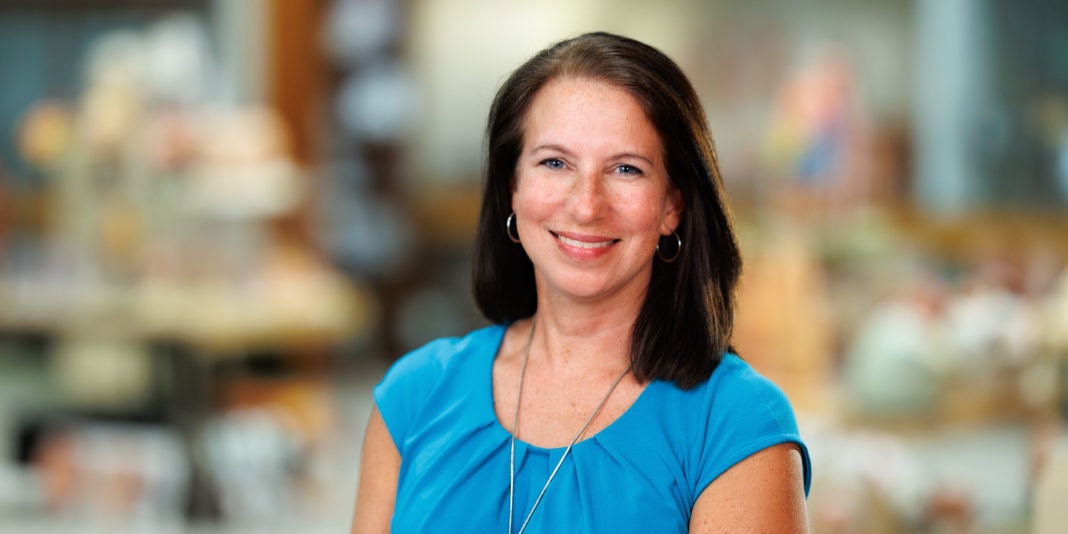
Dr. Christy Chancy BridgesChristy Chancy Bridges has been appointed associate dean of graduate programs at Mercer University School of Medicine.
Bridges, a professor of histology, also served as director of MUSM’s Ph.D. in biomedical sciences program and had been serving as interim chair of the biomedical sciences department since 2022. She served as director of the Master of Science in preclinical sciences program from 2018-25. She joined the MUSM faculty in 2006.
Bridges earned her bachelor’s degree in biology from Berry College and her Ph.D. in cellular biology from the Medical College of Georgia at Augusta University. She completed postdoctoral training at the Medical College of Georgia in the Department of Biochemistry and Molecular Biology and at MUSM in the Department of Biomedical Sciences.
Education technology as a whole is an academic freedom issue, unfortunately, the encroachment of technological systems which shape (and in some cases even determine) pedagogy, research and governance have been left in the hands of others, with faculty required to capitulate to a system designed and controlled by others.
AI is here, rather suddenly, pretty disruptively, and in a big way. Different institutions are adopting different stances and much of the adaptation is falling on faculty, in some cases with minimal guidance. While considering how these tools impact what’s happening at the level of course and pedagogy is a necessity, it also seems clear that faculty concerned about preserving their own rights should be considering some of the institutional/structural issues.
Personally, I have more questions than answers at this time, but there’s a handful of recent readings that I want to recommend to others to help ground thinking that may lead to better questions and actionable answers.
A report, Artificial Intelligence and the Academic Professions, just released by the AAUP, should be at the top of anyone’s list. Based on a national survey, the report examines a number of big-picture categories, all of which have a direct relationship to issues of academic freedom.
Improving Professional Development Regarding AI and Technology Harms
Implementing Shared Governance Policies and Professional Oversight
Improving Working and Learning Conditions
Demanding Transparency and the Ability to Opt Out
Protecting Faculty Members and Other Academic Workers.
The report both summarizes faculty concerns as expressed in the survey and offers recommendations for actions that will protect faculty rights and autonomy. Having read the report, in some cases the recommendations initially seem frustratingly vague but looked at in total, they are essentially a call for active faculty involvement in considering the implications of the intersection of this technology (and the companies developing it) with educational institutions.
In a way, the report highlights, in hindsight, how truly absent faculty have been as existing educational technology has been woven into the fabric of our institutions, and that it would be a disaster for that absence to be perpetuated when it comes to AI.
After checking out the AAUP report, move on to Matt Seybold’s, How Venture Capitalists Built A For-Profit “Micro-University” Inside Our Public Flagships, published at his newsletter, The American Vandal. It’s a long and complicated story about the ways outside service providers conceived in venture capital/private equity have insinuated themselves into our universities in ways that undermine faculty roles and educational quality.
It would take a full column to do Seybold’s piece justice, but here are two quotes that I hope induce you to go consider his full argument.
Here Seybold pulls the lid back on what it means for these third-party provider offerings to exist under a university brand “powered by” the third-party provider:
The “powered by model” is a truly absurdist role reversal. A private, unaccredited company founded and run by sales and marketing professionals is responsible for the (pseudo)educational coursework, while the accredited university is employed only for its sales and marketing functions, getting paid by commission on the headcount of students who enroll from their branded portal. University partners are incentivized to flex their brand power and use their proprietary data, advertising budgets, and sales forces to maximize this commission, while Ziplines provides cookie-cutter landing pages and highly reproducible microdegrees, the content of which is largely created by gigworkers.
And here, Seybold pinpoints the downstream effect of these kinds of “partnerships.”
EdTech is not only always a Trojan horse for elite capture of public resources; it is also always a project in delegitimizing the project of public education itself.
The applicability of Seybold’s analysis to the “AI partnerships” many institutions are busy signing should be clear.
As another thought experiment exercise, I recommend making your way through a Hollis Robbins’s piece at her Anecdotal website, How to Deliver CSU’s Gen Ed with AI.
Robbins, a former university dean, perhaps intends this more as a provocation than an actionable proposal but, as a proposal, it is a comprehensive vision for replacing human labor with AI instruction that relies on a series of interwoven tech applications where humans are “in the loop,” but which largely run autonomously.
If realized, this sort of vision would obviate academic freedom on two fronts:
The curriculum would be codified and assessed according to a rigid standard and then be delivered primarily through AI.
Faculty would barely exist.
I read it as a surveillance-driven dystopia from which I would either have to opt-out (if allowed), or more likely have to flee, but you can check the comments to the post itself and find some early enthusiasts. The complexity of the technological vision suggests that such a vision would be difficult to impossible to realize, but the underlying values of increased efficiency, decreased cost and increased standardization are consistent with the direction educational systems have been going for decades.
Many of the factors that have eroded faculty rights and left institutions vulnerable to the attacks that have been coming were, indeed, foreseeable. Adjunctification is at the top of my list.
When it comes to technology and the university, we’ve seen this play before. If faculty aren’t prepared to assert their rights and exercise their power, you won’t see me writing the kinds of lamentations I’ve offered about tenure over the years because there won’t be enough faculty left to worry about such things.
An Idaho judge Wednesday sentenced the murderer of four University of Idaho students to life in prison without possibility of parole, various mediaoutlets reported.
Judge Steven Hippler of the state’s 4th Judicial District sentenced Bryan Kohberger to four consecutive life sentences.
Kohberger pleaded guilty June 30 to the 2022 killings of seniors Kaylee Goncalves and Madison Mogen, both 21; junior Xana Kernodle, 20; and freshman Ethan Chapin, 20. As part of Kohberger’s plea deal, prosecutors agreed to not pursue the death penalty.
Authorities said the four University of Idaho students were sleeping at an off-campus home in Moscow, Idaho, when Kohberger—then a criminology graduate student at nearby Washington State University—stabbed them to death. He declined to speak during his sentencing hearing, and his motive remains unknown.
It is already 93 degrees, but temperatures are rising further outside the Tampa Convention Center—especially for the young man dressed in a dinosaur costume. Also sporting a Tom Brady Tampa Bay Buccaneers jersey, he is loudly debating immigration with another young man in a smart suit on the pavement. Across the street, a handful of protesters face off against a growing number of right-wing influencers with cameras.
Inside the building, political strategist Steve Bannon is denouncing billionaire Elon Musk as “evil” while filming a live TV broadcast. Thousands of young college students cheer when border czar Tom Homan threatens to beat up a heckler in the crowd. And a YouTuber leads the audience in a mass “Trump dance party” to the tune of YMCA.
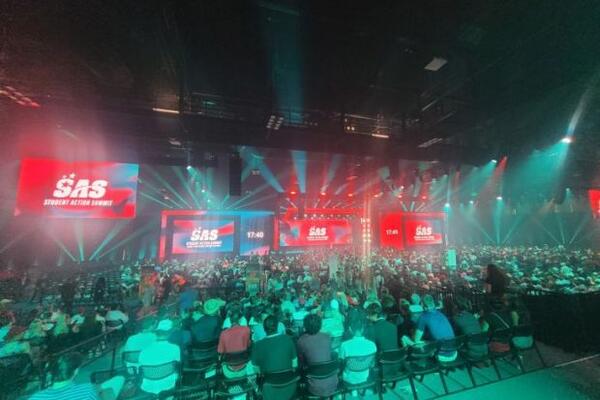
Welcome to the Student Action Summit 2025. Organized by youth activist organization Turning Point USA (TPUSA), the three-day annual conference is billed as the premier event for conservative college students to debate ideas, network and hear from top Republicans. They include Tucker Carlson, Donald Trump Jr. and, of course, Charlie Kirk, who founded the movement as an 18-year-old college dropout.
More than 5,000 people attended this year’s event in Florida, held July 11–13, and Times Higher Education was there to learn what matters to college conservatives today, what issues are dividing this branch of the MAGA movement, and whether this youthful “red wave” can reshape U.S. electoral politics.
As a countdown clock ticks down to zero, a DJ pumps up the well-dressed young crowd—advised to style themselves after Donald Trump’s permanently besuited youngest son Barron—with Rednex’s Cotton Eye Joe and The Killers’ Mr. Brightside. Along with the big hitters, students also hear from Happy Gilmore actor Rob Schneider, founder of the Dark Web marketplace Silk Road, Ross Ulbricht, and fitness trainer Jillian Michaels across an eclectic and often bizarre three days.
Kirk’s fingerprints are all over the summit. Owing to the slightly chaotic nature of the schedule, he is often timetabled to appear in two places at the same time—particularly tricky given that, as the podcaster Dan Nunn puts it, “Charlie can’t even walk around: he’s like a rock star.”
He kicks off the summit on the vast East Hall stage by hitting some issues that Republicans of all ages can agree on—namely, religion and immigration. The 31-year-old activist and podcaster praises the audience for helping reverse decades of declining church attendance (many of them attend a service in the Convention Center on Sunday morning) and for helping TPUSA fight the “spiritual sickness throughout the West.” Talks are regularly interrupted by football-style chants of “Christ is King” or “God is great.”
Kirk also gets loud acclaim when he says that no foreigner should be allowed to own a home or get a job before a U.S. citizen, and draws an even bigger cheer when he mentions President Trump’s plans for mass deportation of illegal migrants. Even legal migration comes under fire over the convention weekend, and Homan, the former chief of Immigration and Customs Enforcement (ICE), is treated like a rock star, his frequent mentions of buzz phrases such as “send them home” chanted back to him from the floor.
Abortion is mentioned on stage, as one might expect. Riley Gaines, a former college swimmer who became an activist after finishing tied for fifth in a race with a trans woman, praised Trump as the most pro-life president in modern history. And the issue is brought up repeatedly in interviews with THE—often by young men.
Many speakers are also very keen to stress the importance of reproduction and “traditional” families. Michael Knowles, a political commentator and YouTuber, calls falling birth rates in the U.S. an “existential crisis.” He welcomes the “trad wife” trend on social media—right-wing women promoting their role as stay-at-home moms—and praises young women for rejecting the corporate rat race, “to the horror of the feminists.” A middle-aged audience member, who gets a massive round of applause when he reveals he has 12 children, wants to help convince the college generation of the “beauty of big families.”
Kirk also ploughs that furrow. He tells the audience that the real threat to the U.S. is not racism or environmentalism, but low birth rate. And he tells those listening online what they are missing out on by not being there in person. “If you want to find your future husband or wife … you should be here in Tampa, Florida, because there’s a lot of eligible bachelors and bachelorettes here.”
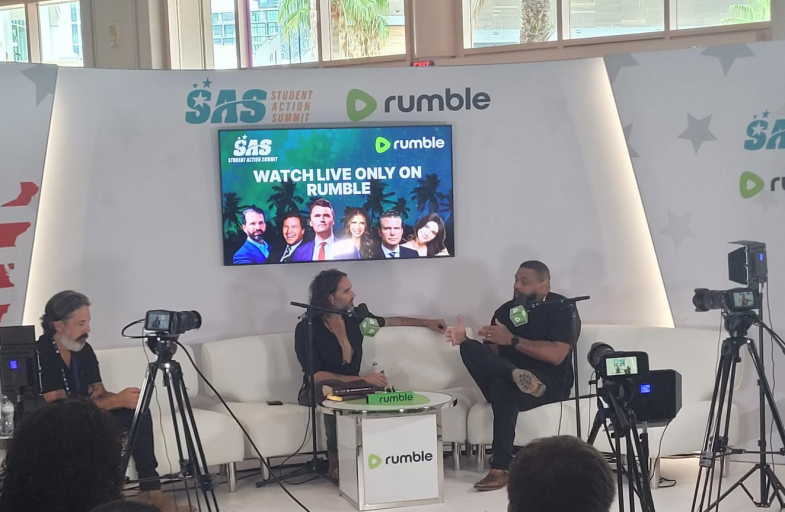
Equally, however, conservative attitudes to dating and sex are evident. Brandon Tatum, a former college football player, police officer and now online activist, advises against “hooking up with people and doing all this crazy stuff.” Brett Cooper, a child actor turned online activist, warns delegates not to party too much or waste time playing video games. And comedian Russell Brand, currently awaiting trial in the U.K. for rape, sexual assault and indecent assault (he has pleaded not guilty), also praises family values and religion while denouncing pornography and claiming that Jesus was opposed to bad government. During his strange 20-minute speech-cum-rap in front of one of the largest audiences of the weekend, Brand explains how he turned to God following a life of crack and heroin addiction, a “pursuit of carnality” and an “all-you-can-eat buffet” of hedonism.
Source: Patrick Jack
Russell Brand (center) at the Turning Point USA Student Action Summit 2025
Away from the main hall lies the exhibition floor. Here, students can take selfies with political consultant Roger Stone—pardoned by Trump in 2020 after being convicted of lying to Congress, obstruction of justice and witness tampering relating to a Congressional inquiry into Russian attempts to boost Trump’s 2016 election campaign. They can also pick up free copies of a book on the “untold story behind the Vatican’s rising influence in America,” challenge their friends to a pull-up contest or play cornhole.
You can also buy just about anything—provided it has some red, white and blue on it. There’s a stall to “Make Coffee Great Again,” “Trump 2028” hats are on sale for $30 (£23), and there are even cool pads to keep your head cool under them—as well as vibration plates for “advanced whole-body vibration therapy.”
Attendees can also hear from a wide range of fringe groups. A “Blexit” stall promotes “free thinking and empowerment” at historically black colleges and universities and is dedicated to bringing “traditional American principles to urban communities.” Wilbur Sims, strategic manager of student movement at Blexit, said, “We’re trying to educate people …and get away from a victimhood mentality within the black community.”
A surprisingly large number of families, many with young children, mingle with the students, as do some retirees. Steve, a 75-year-old lifelong Republican from Florida, hopes that TPUSA can help ensure the Democrats never get back into power. But there are a few signs of a divide between the younger and older generations.
Guns, which receive very few mentions from the stage, are one. Gun ownership has, for generations, been a mainstay of right-wing identity, but two lonely young men at the National Rifle Association stall express concern that their classmates are not interested in the Second Amendment (the right to bear arms).
The other dividing line is Israel. The most prominent stall on the exhibition floor is that of the International Fellowship of Christians and Jews (IFCJ), featuring hundreds of Israeli flags. Some college students nearby pose for pictures with a giant cardboard cut-out of Israeli prime minister Benjamin Netanyahu, but when Michele Bachmann, a former member of Congress and board member of the IFCJ, begins to discuss the “unprecedented” amount of antisemitism on college campuses, the hall empties out. And during a debate on day three, Dave Smith, a comedian and regular guest on the popular Joe Rogan podcast, warns of the “tremendous” influence of Israel in U.S. politics. And in the wake of the U.S. attack on Iran during Israel’s recent 12-day assault on the country, Smith elicits cheers when he criticizes “neoconservatives” for starting foreign wars—in contravention of the isolationism typically adopted by “America First” advocates. One young man and woman express their skepticism of the U.S.–Israel alliance and are convinced that convicted sex offender Jeffrey Epstein was a Mossad agent.
Epstein may have died by suicide in 2019, but his presence is keenly felt at the convention. The event occurs amid the MAGA backlash to attorney general Pam Bondi’s comment that the sex trafficker’s “client list”—which, according to Musk, includes Donald Trump, but which right-wing figures are convinced contains prominent Hollywood stars and Democratic politicians—does not, in fact, exist. Despite saying that homes and jobs are more important, Kirk admits the Epstein issue still matters. And in conversation with him, journalist Megyn Kelly calls it a “scandal of the right’s making.” When she asks the audience how many of them think it is an important story, everyone puts their hand up.
Hours later, media personality Tucker Carlson devotes almost his entire 30-minute speech to the issue, while Bannon sees it as symptomatic of the problems with the “deep state.” Even former college athletes Gaines and Tatum devote considerable time to talking about Epstein—with vocal prompting from the crowd.
The TPUSA president at the University of Alabama believes the issue is so important for this crowd because Bondi’s decision not to publish any of the Justice Department’s files on Epstein fits in with their skeptical worldview and their concern that they are being “lied to,” he said.
That sense also permeates the MAGA view of COVID-19. Bannon is cheered when he claims the pandemic originated from a “Chinese Communist Party bioweapon dropped in Wuhan.” There are frequent references over the weekend to the supposedly nefarious “mask mandates,” cancelled proms and young adults’ lost years—for which Kirk calls for a national apology.
“Nobody likes being lied to, and [young people] lived through COVID in a way that adults did not,” according to Nunn, host of the America First and the constitutionalist Nunn Report podcast. “They got their social lives shut down, they got their schools shut down, and then they found out it was all bullshit.” Since they blamed the Democrats for that, he believes that universities became less efficient “leftist breeding grounds” when that cohort arrived on campus.
Chase, a student from Florida, says COVID was a big factor in pushing his generation to the right. “So many people were lied to during that period of time and it definitely brought to light the corruption in the Democratic Party,” he tells THE. TPUSA is important because it helps students learn that they cannot trust mainstream media and must “seek out your own truth.”
The pandemic is clearly still an issue for Owen, a student in Michigan, where Democratic governor Gretchen Whitmer was caught breaking public health protocols at a restaurant in 2021. “I don’t really think that what the left was pushing made rational sense to the youth vote at the time, and it still doesn’t make sense now,” he said. “It’s just the hypocrisy of it all—you’re telling me not to leave my house, yet you’re going out and having parties without wearing masks closer than six feet.” Source: Patrick Jack
A striking omission from the stages of a conference targeted at students is higher education itself—despite the fact that Trump’s crackdown on prominent universities’ funding and autonomy has previously been cheered by many figures on the right. When prompted, however, delegates express universal scorn for universities.
John Paul Leon, TPUSA chapter president at University of California, Berkeley, tells THE he is becoming increasingly worried by academia’s left-wing consensus and “moral superiority,” particularly around “discriminatory” diversity, equity and inclusion (DEI) measures. David Goodwin, president of the Association of Classical Christian Schools and co-author of Battle for the American Mind with defense secretary Pete Hegseth, says higher education is a “mess”; and while institutions should be free to do whatever they want, he believes that they should expect to forgo government funds if they choose to defy the administration’s policies in areas such as DEI or choice of research topics. And Owen, who attends a private college, welcomes Trump’s attacks on universities because they are “indoctrinating students with wrong ideas.” International students, particularly “military-age males,” should be sent home, he adds.
Carol Swain, a retired professor of political science and law at Vanderbilt University and one of the few academics at the event, also welcomes Trump’s fight with Harvard because universities have “lost sight of the original purpose” of the sector, which was to educate minds by exposing individuals to divergent viewpoints. “Now the Ivy League has lost some of its allure, I believe there’s an opportunity for some state colleges and universities and some universities that were considered less prestigious to rise just by doing what the Ivy League hasn’t done, which is educate and create an environment where you have free speech, are following the Constitution, creating opportunities, [and] not practicing discrimination,” she said.
As for the effects of research funding cuts on the academic strength of the U.S., Swain says most papers in recent decades have been “garbage.” The “people that have pushed the beliefs that minorities have been discriminated against … lowered the standards in certain fields, and the emphasis on lived experience as opposed to research and data … has hurt academic research.”
But Jennifer Burns, director of academics at Turning Point Education, does not believe universities are solely to blame, claiming that grade schools are failing to prepare students properly: “If you’re building a house and your foundation is sinking and cracking, then the frame of the house is going to be cracked. It’s not the fault of the carpenters who put up the beams, it’s the cement layers. [Students] are not trained in how to think, so they’re going into college at the whim of a radical college professor and they’re soaking that up.”
TPUSA advocates for a “classical Christian education,” and some attendees propose private, conservative Christian liberal arts colleges such as Hillsdale in Michigan, or New Saint Andrews in Idaho, as exemplars of what higher education should be. Lennox Kalifungwa, digital engagement officer at New Saint Andrews, expresses the view that “the only true education is a Christian education because Christianity has the exclusive when it comes to truth and freedom.”
“Woke” students and academics, meanwhile, are a reoccurring punching bag on the convention floor—particularly those with a specific hair color. Kirk, who rose to fame through viral videos debating with left-wing students, calls them “purple-haired jihadis,” Homan bemoans “people with purple hair and nose rings,” Tatum deplores “liberal non-binaries” and Trump Jr. condemns “raging libtards.”
Such critiques are also usually tied up with anti-trans and anti-gay language. Trump Jr., a long-time ally of Kirk, whose daughter, Kai, is a college-level golfer at the University of Miami, proudly boasts of having been anti-trans since 2017 and sees it as being a “losing issue” for the Democrats. One student tells THE that drag queens reading children stories cause “horrible developmental issues” and contribute to rising suicide rates. Knowles celebrates the Trump-imposed end of the “preposterous ideology” of trans people, calling it “deader than disco,” the cancellation of LGBTQ+ pride parades due to lack of attendance and pop musician Jojo Siwa’s announcement that she no longer identifies as a lesbian. “Nature is healing,” he says with a laugh.
A lone protester who interrupts Homan is called a “loser,” a “moron,” an “asshole” and someone who “sits down when he pees”—to huge chants of “U-S-A.” Homan, who says he “wake[s] up like a kid in a candy shop every day” as border czar, offers to fight the man before his speech is over.
Outside are a few more dissenters. A handful of middle-aged Floridians, who fear TPUSA is “indoctrinating the youth,” hold a sign that says “MAGA—Movement Against Genuine Academics”—perhaps in reference to Kirk’s creation of the Professor Watchlist, which lists scholars who “discriminate against conservative students and advance leftist propaganda.” They are soon joined by a rag-tag group of a few dozen young students, some dressed as characters from the dystopian TV show TheHandmaid’s Tale and others wearing the Guy Fawkes masks popularized by the hacker collective Anonymous. Vicky Tong, spokesperson for the Tampa Bay Students for a Democratic Society, says they want to show that not everyone in Florida supports the “sexist, homophobic, anti-trans, anti-immigrant” agenda of TPUSA.
Back inside the hall, speakers emphasize that while right-wingers are in the majority here, they are “outnumbered” on campus. Many express fear of being accused of sexual harassment or being cancelled for using the wrong pronoun. Kirk calls them “warriors” and praises them for putting up with threats and intimidation. “What they’re doing is one of the hardest things to do in the United States of America. They are deciding to be less popular on campus,” he says.
Source: Justin Sullivan/Getty Images
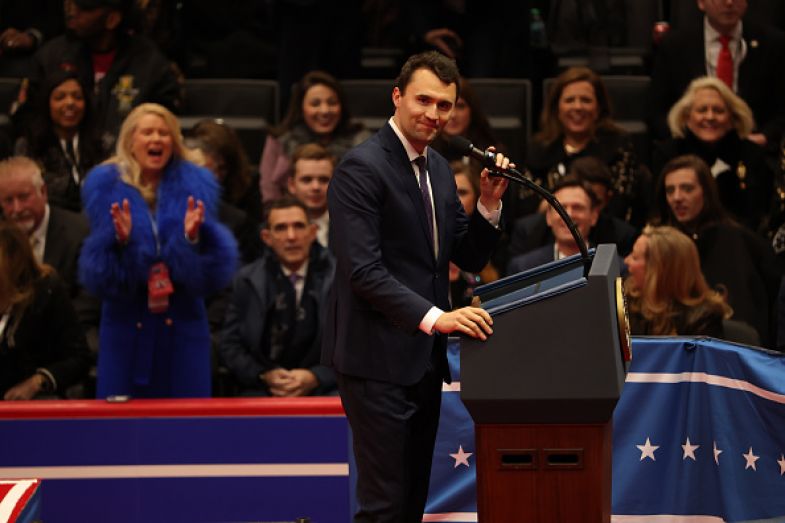
Charlie Kirk speaks at Donald Trump’s inauguration on 20 January 2025
Some of the big names can sympathize. Trump Jr. used to attend “every cool person party” in New York before his father became involved in politics and the invites dried up. “These people that I thought were friends for decades, they don’t call any more.” He encourages students to “feed off the hate,” while Kelly urges them not to be “sheep” and follow along with what their left-wing professors say just to get good grades. “Don’t call yourself a feminist because your teacher will give you pats on the head. Stand up for what you really believe in, and that’s how we spread the good word,” she said.
Fox News host Greg Gutfeld, who has come under fire for attempting to “reclaim” the word “Nazi,” complains that “left-wingers were the cool kids” when he was young. And that sense of not fitting in on campus is clearly a big reason that some of the attendees are here—many of them thanks to a TPUSA stipend (the organization is largely funded by donations). Leon, who studies in the “belly of the [progressive] beast” at Berkeley and went viral for a video where he confronts a liberal student, says he is called a fascist daily, but at TPUSA “you can find life-long friends, your forever friends, or maybe you can find your wife too.” Dylan Seiter, president of TPUSA at Texas A&M University, told students during a breakout session that “the libs want to drag us down to their level and make us seem like we’re some nasty, hateful people, but in reality, we’re not. And it’s our duty and our jobs to prove them wrong.”
Indeed, some delegates confess that they are only here to hang out and socialize, and nearby bars such as Harpoon Harry’s Crab House are packed with older students before the day’s events are even over. But this social element is not just for fun, it is also for networking. As Kirk puts it: “Marriages will happen this weekend. Lifetime friendships will happen this weekend. Careers will start this weekend.” And as well as selling “I survived college without becoming a liberal” T-shirts, the TPUSA Alumni Association is consciously attempting to replicate the college networks of Ivy League schools to help get MAGA graduates into top jobs. TPUSA also tries to persuade students to work on the “front lines” of the culture war. One recruitment video urges young people not to become doctors or lawyers, but to get a job with “real impact.”
Many speakers are convinced that they are already having an impact, crediting a “red wave” of students with delivering Trump’s landslide victory in 2024, a “shot heard around the world.” Bannon thanks them for being “the hardest core of the hardcore” and the “tip of the tip of the spear” in “winning” the 2016 and 2020 elections as well.
“This is the greatest generational realignment since Woodstock,” says Kirk. “We have never seen a generation move so quickly and so fast, and you guys are making all the liberals confused.” Accordingly, Republican Party luminaries show up in force. Michael Whatley, chair of the Republican National Committee, shakes hands on the exhibition floor and multiple members of Trump’s top team—including director of national intelligence Tulsi Gabbard and homeland security secretary Kristi Noem—deliver speeches. However, these politicians generate far less buzz than social media stars such as Gaines and Cooper.
Still, Kirk warns that Washington is taking right-wing students for granted and “messing up” a once-in-a-generation opportunity to deliver a “death blow” to the Democratic Party by failing to fully deliver on their promises—such as by publishing the Epstein list. And Swain agreed. “If these [elected] officials compromise and they prove themselves to be no different than the politicians they replaced, it’s going to be harder for [young] people to stay enthusiastic,” he said.
As one attendee puts it, conservative students have been “lurking in the shadows” for decades. Kirk has successfully dragged them out into the sunlight. The challenge he and Trump now face is one that will be familiar to the “radical left”— keeping momentum, holding the various factions together in the face of political realities, and delivering on their promises.
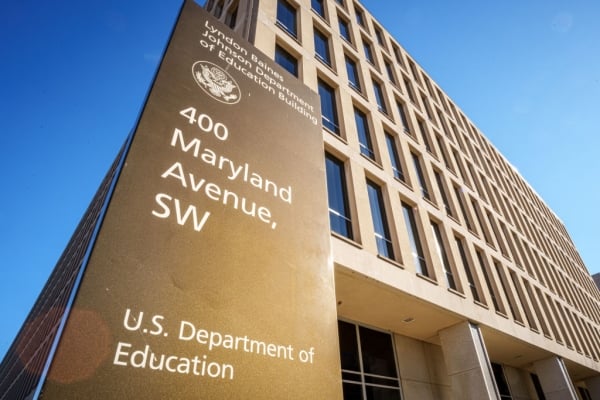
The agency announced Thursday that it will convene two advisory committees to weigh in on changes to the rules and regulations for the federal student loan program, institutional and programmatic accountability, and the Pell Grant program. Officials wrote in the announcement that this round of rule-making was necessary to implement the changes in the One Big Beautiful Bill as well as “other administration priorities.”
Many of the higher ed provisions in the legislation take effect July 1, 2026, and several experts have raised concerns about whether that’s enough time for the department to put in place the necessary regulations and guidance. Among other changes, the law ends the Graduate PLUS loan program, caps loans for graduate and professional students, and expands the Pell Grant to workforce training programs that run between eight and 15 weeks.
To revise the regulations, the department is following its lengthy and complicated process known as negotiated rule making, which involves bringing together stakeholders to review proposed changes and then listening to public comment on the plan.
One group, which the department is calling the Reimagining and Improving Student Education (RISE) Committee, will focus on the student loan regulations, including creating new repayment plans and giving colleges the ability to limit how much students can borrow. The RISE Committee will meet twice in September and November for week-long sessions to negotiate policy revisions. If the committee doesn’t reach a consensus, the department is free to move forward with its own proposal, which would still be subject to public comment.
The other policy changes in the law will fall to the other panel, known as the Accountability in Higher Education and Access through Demand-driven Workforce Pell (AHEAD) Committee. That includes implementing the new earnings test, which requires programs to prove their graduates earn more than an adult with a high school diploma or risk losing their access to student loans, as well as revising the eligibility criteria for Pell grants to exclude students who get a full ride. The AHEAD committee will meet in December and January for week-long sessions.
Both committees will include student borrowers, legal assistance organizations and representatives from various types of institutions, among other stakeholder groups. None specifically include the financial aid administrations who will play a key role in rolling out these changes on college campuses.
To kick off the rule-making process, the department will hold a virtual public hearing from 9 a.m. to 4 p.m. Aug. 7. More information is available on the department’s website.
A majority of students say they interned to gain skills for career advancement in their desired field or role.
Frazao Studio Latino/E+/Getty Images
Employers, college leaders and policymakers have shown growing interest in skills-based hiring for college graduates, and in considering students’ demonstrated learning rather than their major program or degree. This trend signals a need for more hands-on or experiential learning before a student graduates, rather than on-the-job training.
A recent report from Strada shows that students also see this gap; a majority of those surveyed opted to participate in work-based learning to prepare them for a chosen profession or improve their odds as a job candidate.
Report authors also note opportunities for institutions to enhance on-campus experiences to better equip students for the world of work, such as providing professional networking, soft skill development and mentorship.
State of play: Increasingly, employers are emphasizing skills learned in higher education over content, citing a need for students to be adaptable and responsive to the evolving workplace. The drive toward skills-based hiring also stems in part from degree inflation and a re-leveling of jobs that actually require postsecondary education.
For students, this means a smaller share of entry-level positions require a bachelor’s degree. But some employers still screen by demonstrated skills, such as those gained through internships, rather than grades.
Not every student is able to participate in an internship. A 2025 survey from Handshake found that 12 percent of students have not participated in an internship and do not expect to do so before they graduate. Barriers to participation include caregiving responsibilities, limited access to internship opportunities or needing to work for pay. A 2024 report from the Business-Higher Education Forum found that students of color, first-generation students and community college students were less likely than their peers to secure an internship.
The National Association of Colleges and Employers (NACE) published research in May pointing to the benefit of experiential learning for early career outcomes; students who engaged in work-based learning were more likely to say they had better-than-expected career progress, higher salaries and greater general career satisfaction, compared to their peers who lacked an internship.
Methodology
Strada’s National Survey of Work-based Learning includes 2,000 responses from seniors at four-year colleges and universities in the U.S. The study was fielded between October and December 2024.
The study: Strada’s survey found that 65 percent of students participate in work-based learning to gain experience or skills in a specific career or their chosen profession. This echoes Handshake’s survey from early this year, which found that 87 percent of students pursue internships to build valuable skills.
“Today’s students are much more likely to view their experiences as instrumental rather than exploratory,” according to the Strada report.
Thirteen percent said they selected work-based learning experiences as an exploration of work, and approximately 8 percent said their main purpose was to land a job at their host organization.
Students saw paid internships and undergraduate research as most valuable for improving their standing as candidates for future jobs. Practicums were also rated highly, which could include clinical experiences in the health professions or student-teaching roles. Unpaid internships, project-based learning, on-campus jobs and off-campus jobs were seen as less valuable.
Among students who participated in multiple experiential learning opportunities, 81 percent ranked their most valuable experience as at least a seven out of 10. One in four respondents gave that experience a 10 out of 10.
Students who rated their experiences highly were also more likely to say they expanded their professional networking as participants. Students who worked as paid interns or unpaid interns were most likely to say they expanded their professional network.
Practicum participants were most likely to say they gained technical skills relevant to their career goals, followed by project-based learning participants and paid interns. Those working on- or off-campus jobs were least likely to report technical skill development.
On- and off-campus job experiences were rated lowest among respondents for a variety of factors, including value added to their persona as a job applicant, increased technical or durable skills, professional networking and mentorship.
Role of higher ed: Past surveys have shown that students believe their institution has a role to play in giving them internship experience.
A winter 2023 survey from Inside Higher Ed and College Pulse found that 62 percent of students believe their career center should help them get an internship. A 2024 Student Voice survey found that 48 percent of respondents think their institution should focus on helping students find internships and jobs, and 38 percent believe colleges should focus more on helping students prepare for internship and career success.
Students say faculty should also help in this process; one in five Student Voice respondents indicated professors are at least partially responsible for helping students find internships.
Strada’s report includes recommendations for colleges and universities such as:
Set a goal for each student to have at least one work-based learning experience while enrolled.
Integrate more work-based learning into the classroom and on-campus jobs.
Leverage employer feedback to create skill development opportunities in on-campus opportunities, such as courses and projects.
Establish spaces to introduce students to employers or other professionals who can add to their professional network.
How does your college or university prepare students for the world of work? Tell us more.





 Source: Patrick Jack
 Source: Patrick Jack
  Source: Justin Sullivan/Getty Images