Tag: Higher

  • America First Legal Urges DOJ to Investigate Hopkins for DEI

    America First Legal Urges DOJ to Investigate Hopkins for DEI

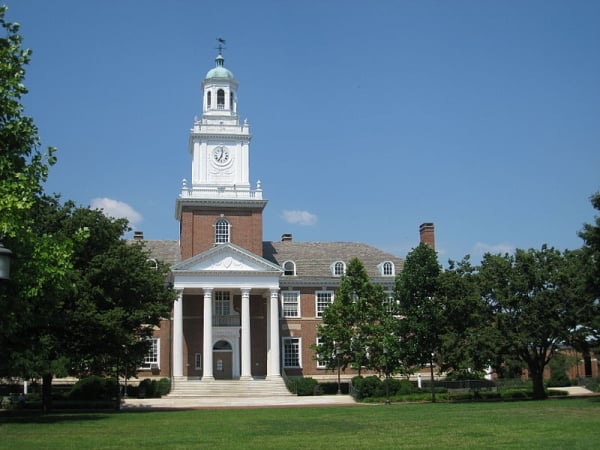
    America First Legal has called on the U.S. Department of Justice to investigate the Johns Hopkins University School of Medicine for alleged racial discrimination, according to The Baltimore Banner.

    In a 133-page complaint filed Thursday, the conservative legal group, run by President Trump’s deputy chief of staff, Stephen Miller, urged the DOJ to investigate Johns Hopkins “for its systemic, intentional, and ongoing discrimination within its School of Medicine on the basis of race, sex, ethnicity, national origin, and other impermissible, immutable characteristics under the pretext of ‘diversity, equity, and inclusion’ (‘DEI’) in open defiance” of civil rights laws, Supreme Court precedent and presidential executive orders.

    “Johns Hopkins has not merely preserved its discriminatory DEI framework—it has entrenched, expanded, and openly celebrated it as a cornerstone of its institutional identity,” the complaint reads, adding that identity-based preferences are “embedded” in the medical school’s curriculum, admissions processes, clinical practices and administrative operations.

    The America First Legal complaint singles out certain medical school divisions and programs for seeking to recruit a “diverse applicant pool,” including residency programs in gynecology and obstetrics, emergency medicine, dermatology, anesthesiology and critical care.

    But the complaint leaves room for attacks beyond the medical school, noting that DEI practices “are part of a comprehensive, university-wide regime of racial engineering.”

    Johns Hopkins has not responded to America First Legal’s complaint.

    But the university has lately taken pains to address what critics have called a lack of viewpoint diversity on campus, engaging in civic education initiatives and partnering with the conservative American Enterprise Institute to “convey the importance of rooting teaching and research with implications for the nation’s common life in a broad range of points of view,” according to the university.

    Source link

  • Teaching Critiques in an Unsettled Political Time (opinion)

    Teaching Critiques in an Unsettled Political Time (opinion)

    As a university professor, I recently found myself in an awkward spot. I teach a large survey course called Introduction to Cultural Anthropology that enrolls some 350 students. As part of the course, I usually spend one class period every semester lecturing on the anthropology of development. This is a field in which the dominant strains have involved critiquing development projects, most frequently for two sorts of reasons: either for ignoring local cultural practices and priorities, or for exacerbating the very things that development projects are meant to ameliorate.

    In the spring semester of 2025, after I had already finalized and posted the course syllabus, something unprecedented happened in the United States: the United States Agency for International Development (USAID) was dismantled by the Trump administration and Elon Musk’s Department of Government Efficiency (DOGE). From the standpoint of the standard critiques of development, some of the rationales the Trump administration provided for this unprecedented move were eerily familiar. “Musk and the Right Co-Opt the Left’s Critique of U.S. Power,” The New York Times proclaimed.

    Development isn’t the only topic on which such a critique of power has suddenly shifted politically. Science, another topic on which I spend some class sessions, is similarly fraught. For a long time, many researchers in the anthropology of science argued that the values and beliefs of scientists shape the sciences. The attacks on scientific authority that began during President Trump’s first term and have intensified since amplify these very same sorts of arguments. So how do we broach these topics today, as university professors?

    In pondering this question in the context of my own class, I came to view the common refrain that the right is “coopting” or “appropriating” the critiques made by the left with some curiosity and a bit of suspicion. Both of these terms carry some connotations of misuse and bad faith. Don’t get me wrong: There certainly is truth to the view that some Republican politicians in the United States have recently lifted and re-deployed arguments simply because they justify a desired end (and achieve a little trolling as an added benefit). But, educationally, “appropriation” in this context is not always a useful refrain. It sidesteps the arguments themselves by drawing pre-determined boundaries around their fair use.

    Further, the view that these migrating arguments are cases of “cooptation” does not always stand up to historical scrutiny. Take, for example, questions concerning the power vested in experts. Today, the right is waging more of a battle against experts and the institutions that house them than the left. This battle is undergirded by several arguments, including claims of insufficient “viewpoint diversity” and elite capture, themselves logics that have migrated.

    This battle against experts is most vociferously waged in the name of a populist view: that the people know what’s best for them. A couple of decades ago, the left was more invested in critiquing the ways that expertise was used to exert control over people who understood their own circumstances and their own needs better than many experts.

    But before that, a similar argument sat at the core of the neoliberal right. The famed neoliberal theorist Friedrich von Hayek made this sort of argument against expertise as part of his case for unfettered markets, which, he argued, aggregated and responded to the locally informed decisions of large numbers of individuals better than any expert ever could. It’s also a mistake to think about the migration of these ideas in terms of a stable divide between left and right: MAGA has instilled in the “right” in the guise of the current Republican party a new hostility toward the free market while the “left” of today’s Democratic party has embraced elements of neoliberalism.

    Instead of simple “appropriation,” the migration of arguments across an array of worldviews should be interpreted as zones of agreement where the depth of that agreement—superficial or comprehensive?—has to be scrutinized. Why and how are different implications drawn from these zones? This entails continuing to think about and teach these critical perspectives rather than shying away from them for fear of exacerbating the attacks they now authorize.

    Ultimately, recognizing that similar critiques cross-pollinate with disparate ideological positions is an invitation to engage even more deeply with the substance of these arguments, both in the classroom and beyond.

    Talia Dan-Cohen is an associate professor of sociocultural anthropology and associate director of the Center for the Humanities at Washington University in St. Louis.

    Source link

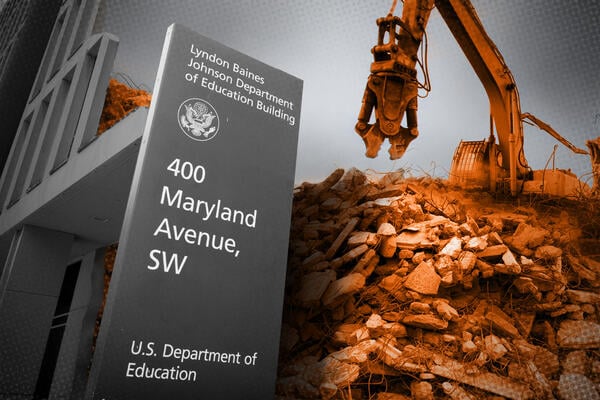
  • How Mass Layoffs at the Education Dept. Affect Colleges

    How Mass Layoffs at the Education Dept. Affect Colleges

    Before the Department of Education laid off half its staff in March, college financial aid officers on the west coast could typically help a student track down their missing login information for the federal aid application in a matter of minutes.

    But now, due to limited hours of agency operation, tracking down a student’s Federal Student Aid ID can take days or even weeks; an east coast-based help line, which used to be open until 8 p.m. now closes at 3 p.m.—or noon Pacific time, according to Diane Cooper, the senior financial aid officer at Northwest Career College in Las Vegas.

    For Cooper, the reduction in force has upended countless advising sessions and made it difficult to enroll working adult learners with tight schedules.

    “When I have a student who’s driven 30 minutes to get here and then we have this issue, I can’t do anything,” Cooper said. “When they did this reduction, I don’t think they thought about colleges on the west coast.”

    Over the past three months, the financial aid office at Northwest has tried to be proactive and warn students about retrieving their username and password in advance, but not everyone gets the message in time.

    “When [prospective students] face a roadblock, it’s very frustrating,” Cooper said. “I’ve even had some people say, ‘Well, college just must not be meant for me.’”

    Difficulties applying for financial aid are just one of the many road bumps students and university staff across the country have faced since Education Secretary Linda McMahon and the Department of Government Efficiency cut the department down to just over 2,000 employees—about half of what it was during the Biden administration.

    The Department of Education told Inside Higher Ed that all three of its help lines, the Federal Student Aid Information Center, FSA Partner School Relations and the FPS Helpdesk were open well past noon Pacific time.

    “Just within President Trump’s first six months, the Department has responsibly managed and streamlined key federal student aid features, including fixing identity verification and simplifying parent invitations, while ensuring the 2026–27 FAFSA form is on track,” said deputy press secretary Ellen Keast.

    But Cooper said ever since the reduction in force if she calls FPS in the afternoon they are closed.

    Since March, colleges, advocates and others have noticed lags in communication about financial aid. Between March 11 and June 27, the department also dismissed more than 3,400 civil rights complaints—an unprecedented number, according to one former official. Additionally, the department ended an IPEDS training contract, among other changes at the Institute for Education Sciences, sparking concerns about the future of data collection at the agency.

    Some college administrators expressed optimism that the staff shortage would be temporary after a district court blocked the layoffs in May. But the Supreme Court extinguished that hope last week when it overturned the ruling, giving McMahon the go-ahead to proceed with the pink slips and other efforts to dismantle her agency.

    Now, higher education experts are adjusting to the reality of a smaller department for potentially years to come.

    “It’s a whole lot easier to break things than it is to put them back together again,” said Ted Mitchell, president of the American Council on Education (ACE).

    He and others worry that the department’s deficiencies will only get worse as staffers rush to overhaul the federal student loan system and implement other policies in the Big Beautiful Bill over the course of the next year. Add to that President Trump’s plan to dismantle the department by transferring certain programs to other agencies and what you have, Mitchell said, is “a mess.”

    “I suppose we all need to adopt a ‘time will tell’ philosophy about this,” he said. “But I for one am not optimistic.”

    Keast, on the other hand, said the department is complying with court orders and fulfilling its statutory duties.

    “We will continue to deliver meaningful and on time results while implementing the President’s [One Big Beautiful Bill] to better serve students, families, and administrators,” she said.

    Behind the Scenes ‘Breakdown’

    Cooper and Northwest Career College are not alone in struggling to get help from the Federal Student Aid Office. Nearly 60 percent of colleges and universities experienced noticeable changes in agency responsiveness or processing delays, according to a survey conducted by the National Association of Student Financial Aid Administrators in May.

    While 48 percent of respondents ranked front-facing glitches that directly affect students as their top concern, Melanie Storey, NASFAA’s president and CEO, noted that the Free Application for Federal Student Aid and aid distribution have been operating relatively smoothly. Many of the challenges created by the reduction in force, she said, are actually taking place behind the scenes.

    Nearly half of the institutions surveyed said that the FSA regional office they reported to had closed, and about a third said they were experiencing gaps in support as a result. Applying for the financial aid eligibility of a new program or addressing compliance concerns was already difficult before the regional offices closed, said Storey, who worked at FSA during the Biden administration. Now it will be even more arduous.

    “Our communities are just not getting answers to questions that they have,” she explained. “But if we see a breakdown in that work, we will see a breakdown in the delivery of aid.”

    Paula Carpenter, the director of financial aid at Jefferson College, a community college in eastern Missouri, said the biggest unknown is whether she will be able to complete the college’s recertification before the September 30 deadline and maintain its eligibility for federal aid.

    In the past, when it was time to begin the recertification process, Carpenter received an email from staff at the FSA Kansas City office, which was one of eight that closed in March.

    Now, “I’m uncertain on when I should submit the application, how long it’s going to take, and the impact it will have on other changes along the way,” she said. “The loss of those working relationships we had with the Kansas City participation team is definitely creating a lot of uncertainty.”

    Although critics have accused DOGE of operating in a rash and haphazard manner, one senior FSA official told Inside Higher Ed that the decision to cut staff at the regional offices that handled eligibility and compliance was likely deliberate.

    “The easiest place to cut is in functions that the broader public doesn’t see, even if they may be impactful,” said the official, who requested anonymity to speak freely. “You can’t cut the FAFSA … and you can’t cut the teams that support the actual technology for dispersing aid and handling repayment, because then borrowers start calling the press and calling Congress,” they added. “But if it just takes longer for schools to go through the process, get questions answered and get support then there’s not a discrete pain.”

    But just because the pain may not be publicly distinct, that doesn’t mean colleges aren’t feeling it.

    “There’s never been a worse time to be starting or renewing a Title IV program, and there’s never been a better time to be not following Title IV regulations,” the staffer said.

    Future of ‘Flying Blind’

    Other concerns raised by higher education advocates are more focused on the future.

    The sweeping Big, Beautiful Bill, signed into law July 4, includes a swath of higher education policy changes, ranging from revamping student loan repayment plans to introducing a novel accountability metric for colleges. Getting those changes implemented by July 1, 2026 with fewer employees is a tall order for the department, and many higher education advocates worry that the agency will struggle to pull it off.

    Mitchell from ACE fears that a general lack of data will hamper efforts to implement the new policies. The Institute for Education Sciences, an agency focused on collecting and analyzing education data to inform policy, was almost entirely gutted by the layoffs. Fewer than 20 employees remain, down from more than 175 at the start of the year, according to the Hechinger Report. The National Center for Education Statistics, one of the most crucial arms of IES, is down to just three staff members.

    Without IES fully staffed, Mitchell worries colleges and universities will be held to new student outcome standards based on inaccurate data.

    “Who will be on the other side receiving information about program level earnings? We don’t know,” he said, referring to the new post-graduation income test that colleges will have to pass. “If the cuts go through the way they are planned, higher education will largely be flying blind. We won’t know what programs and interventions will work to improve student success at the very moment when higher ed is facing a crisis of confidence about whether it is doing the right thing for students.”

    Without the department, colleges will have to increase their own technical capacities, he added, and that comes at a cost.

    The department acknowledged that the bill includes major changes to the federal student aid system and the development of a new accountability program but said that, with billions of dollars in federal funding, the Office of Federal Student Aid will be able to complete both projects.

    More disruptions are expected at the department in months to come as the Trump administration aims to shift certain responsibilities and programs to other agencies. Last week, shortly after the Supreme Court ruling, McMahon formally announced a plan to move career, technical (CTE) and adult education programs to the Labor Department. Trump and other officials have also talked about moving the federal student loan program to either the Small Business Administration or the Treasury Department.

    But the FSA official said the department is using the transfer of smaller CTE programs as a test run first and will take its time to move the federal aid system—if it does at all. The official is also confident the department will be able to put the new policies and programs in motion, but only if Congress extends the deadlines.

    “I think there’s a wide recognition, including on the Hill, that the timelines in the bill aren’t realistic,” the official said. “I feel good about being able to get [it] done … [But] if the question is, can we hit all the details and all the timelines? I think that’s impossible.”

    Both the department staffer and Storey from NASFAA said that if lawmakers and White House staff are smart, they will apply the lessons learned from the last time FSA overhauled student aid programs. For the Biden administration, pressure to finish a big project in a short amount of time, combined with a lack of feedback from college leaders, led to a botched rollout of the new financial aid application, they said. Hopefully, this time things will be different.

    “If we learned anything from the FAFSA debacle, it was that while the department was struggling to get their implementation in order, they neglected institutions and vendors who are incredibly important partners in that ecosystem of delivering aid,” Storey said. “Let us not make that mistake again. Ignore the role of institutions, at your peril. They are the front lines.”

    Source link

  • The Case for Miscarriage Leave Policies (opinion)

    The Case for Miscarriage Leave Policies (opinion)

    Miscarriage leave policies are a blind spot on many college campuses, one that urgently needs to be addressed.

    For me, losing my unborn child to miscarriage exposed an uncomfortable truth about the academy. While we are encouraged to, and should be expected to, show compassion and care for our students who endure unimaginable life circumstances, there is little to no formal infrastructure in place to support the inevitable suffering of faculty.

    In the wake of my unexpected miscarriage and subsequent related surgery, I was profoundly struggling. I found out at nine weeks of gestation that I’d experienced what’s called a missed miscarriage, and what followed were weeks of mental and physical pain. Despite the traumatic nature of these events, I returned to work and continued with lesson preparation, grading and responding to emails as quickly as humanly possible, given the circumstances.

    It is not surprising I felt compelled to quickly return to work. A persistent problem in higher education is that many faculty members, staff and administrators are spread impossibly thin, leading to compassion fatigue and burnout in the face of heavy teaching loads, mentoring and service expectations, and publishing quotas. This problem is exacerbated for women, minorities, contingent faculty and marginalized groups in the academy.

    Contrast this to how we seek, rightly, to treat our students. A pedagogy of care centers on human connection and empathy to guide and support students who are struggling. It creates a culture and climate of care for students that extends beyond the classroom. For instance, students who experience miscarriage during the academic semester are protected under Title IX. This means we provide our students who have miscarriages with the proper support and grieving time so as not to derail their semesters. On my campus, if a student is going through a mental health crisis or a loss like a miscarriage, we are advised to send them to the counseling center, where they can be provided with one-on-one counseling sessions and proper resources to help with their care.

    This same structure of care that has been put in place for our students isn’t in place for faculty. As professor and scholar Maha Bali notes, an authentic pedagogy of care should recognize that faculty also need care, asking institutions to support instructors with policies and structures that allow them to do their jobs well without burning out. Though employees are protected under the Family and Medical Leave Act and the Pregnancy Discrimination Act, we don’t always have the same resources on campus for faculty and staff who are struggling with mental health issues as a result of a miscarriage. More campuses should follow the model of the University of Massachusetts Amherst, where faculty members can access counseling on campus through the Employee Counseling and Consultation Office.

    For women in academia who have endured a miscarriage, the historical silence surrounding the experience lends itself to even greater feelings of isolation and loneliness. It adds to barriers to success and tenure. Between 15 and 20 percent of pregnancies end in miscarriage, but the stigma surrounding it keeps women quiet. I work in a supportive department, where my chair and many of my colleagues never hesitated to provide me with what I needed. However, that is not the case for everyone. Even in my case, there was still a significant amount of logistical work to consider.

    When I miscarried, I knew that I’d have to cancel classes because of the physical toll it took on my body and the subsequent recovery from surgery. However, that also meant reorganizing my semester to accommodate my students’ needs. The nature of the academic year leaves little room for flexibility in canceling classes and reorganizing lessons and as such, requires considerable time and effort to do so. This detracted from my ability to grieve and heal, physically and emotionally. During times of loss, faculty shouldn’t have to think twice about mundane details; they should have a clearly outlined miscarriage policy they can turn to so there is no question they are entitled to the leave they need.

    Too often on college campuses, there is a lack of visibility and clarity on how faculty can access help. Fair and caring policies, such as a standalone miscarriage policy, provide time and space for faculty members to grieve, while also clearly defining the rights of faculty, staff, and administrators and ensuring consistent treatment when an employee experiences a loss. As Grace Ellen Brannon and Catherine L. Riley suggest in their book chapter, “Missed Realities About Miscarriage in Academia,” such policy or guidance documents typically include “(1) information on how managers can offer practical and emotional support during and after a loss, and (2) managers’ responsibilities when it comes to practical support. They also include (3) other relevant policies, including medical absence and maternity or family leave policies, alongside any relevant mental health or well-being policies.”

    In the United Kingdom, the University of Essex has a policy in which a pregnant employee who experiences a miscarriage is eligible for “pregnancy-related” sick leave, with no time limit on sick days one can take for miscarriage leave (partners or others affected are also eligible for “compassionate or special leave”). In addition, the policy outlines resources for department chairs (called line managers in the U.K.) to help them implement these policies for their faculty in the most humane way possible, as well as ideas for how to facilitate a return to work for employees who find it understandably difficult in the aftermath of pregnancy loss.

    One promising example in the United States comes from the University of Santa Clara, which has a Reproductive Loss Leave policy, which clearly outlines the time an employee can take off with pay in the event of a reproductive loss, defined as a “failed adoption, failed surrogacy, miscarriage, stillbirth, or an unsuccessful assisted reproduction.” At the University of Arizona, the paid parental leave program allocates two weeks of paid leave in the event of a miscarriage. Outside academe, a growing number of private-sector employees are adding miscarriage leave policies. But these examples still seem to be the exception, not the norm.

    Although our institutions may not be fully equipped yet, we can start showing support for our colleagues who have experienced miscarriage in small ways, whether through acts of care on an individual level or the development of formal peer support groups.

    Sometimes all we need is to be heard. The sheer act of listening can go a long way, but doesn’t replace the need for structural change. In the aftermath of my loss, one colleague reached out with a simple email, which read in part, “If you ever need to talk, I’m here.” And so, in the depths of my loss, I knocked on his door, walked into his office, and with tears in my eyes, asked, “Can I talk?” We sat, crying with one another about our respective losses and the stress of it all, and I left feeling lighter. I felt lighter because I felt love and care from my colleague.

    As bell hooks argues, love is not merely an emotion, but a practice and choice that can transform teaching and learning. I encourage us all to take a step back and listen to each other. I’m certain if you listen closely enough, you’ll hear what your colleagues need, and it’s probably love. Love in the form of small acts of care and open dialogue about miscarriage is a start. Love in the form of miscarriage-specific policies that demonstrate our institutions’ care for us is the end goal. Ultimately, we need policies that acknowledge the material reality of loss, help to reduce the invisible emotional labor of miscarriage by providing short-term teaching relief for affected faculty, and allow us to grieve and heal with dignity.

    Alyse Keller Johnson is a writer and associate professor of communication studies at Kingsborough Community College, part of the City University of New York. Her research and writing tackle themes of health, illness, motherhood and grief and can be found at alysekellerjohnson.com.

    Source link

  • College Students Pick up Pickleball for Community, Wellness

    College Students Pick up Pickleball for Community, Wellness

    Like many elements of a college student’s life, sports and physical activities are tied to trends.

    In the early 2000s, young adults led the way in out-of-the-box fitness fads, including Zumba dance fitness and Quidditch—now called quadball. Nowadays, college students are more drawn to Pilates, hot yoga and rock climbing, but lately one trend dominates all: pickleball.

    The Sports and Fitness Industry Association (SFIA) found that pickleball is the fastest-growing sport in America, with the number of players growing 233 percent in three years; every age group has seen increased participation. Young adults (ages 25–35) now make up the largest share of participants at 2.3 million players, according to SFIA.

    Behind the trend: Mark Chang, an associate professor at SUNY Brockport, is currently researching young people’s interest in pickleball. Chang’s initial screening survey of students from SUNY Brockport found multiple factors motivate participation.

    “They want to master some kind of skill, they want to win some kind of game and they want to be connected and engage socially,” Chang said.

    One of the reasons pickleball is so popular is because it’s relatively easy to engage in, featuring a smaller court than tennis, low-budget equipment and simple rules. Pickleball is most often played in doubles and doesn’t require high levels of exertion, making it a social and low-intensity sport.

    Students who have experience playing tennis, racquetball or similar sports are also more likely to play because of the similarities, Chang said.

    Social media may play a role in driving student participation because it gives them a connection point with other peers online, Chang said, but students more commonly cited goals like maintaining health, learning something new and having fun with friends.

    Funding fun: As demand grows, colleges are building pickleball courts to accommodate student preferences and encourage them to be physically active. The University of the Pacific was the first college to open a pickleball and padel complex in 2024.

    In the last 12 months, Arkansas Tech University, Eastern Mennonite University, Eastern Illinois University, Columbus State University, Wright State University, Penn State University, Duke University, Troy University, the University of Alabama, Tulane University and Baylor University have all announced plans to open, create or renovate spaces to accommodate pickleball players.

    Alabama spent $1.6 million to put in 10 new pickleball courts at the tennis facility, which the vice president of student life Steven Hood told AL.com was in response to recreation trends.

    “These courts appeal to a broad demographic, even some of our students who may not be as familiar with fitness and recreation,” Hood said. “It’s a great opportunity to connect and engage students promoting physical activity.”

    Nationally, the number of pickleball courts has also exploded, growing 55 percent year-over-year in 2024. As of this year, the USA Pickleball court location database identifies 15,910 courts.

    Most campuses with pickleball courts provide racquets and balls at no cost to students, faculty or staff through recreation offices.

    Survey Says

    A 2023 Student Voice survey by Inside Higher Ed and College Pulse found 57 percent of college students want to work on getting more exercise and 43 percent want to spend more time outside.

    When asked how their campus could improve, 23 percent of students said their campus wellness facilities or wellness class offerings could be better. By comparison, 27 percent said their college wellness facilities were satisfactory and 26 percent said fitness class offerings were also done well.

    Promoting student success: Pickleball offers several opportunities for student well-being on campus. Pickleball club membership unites students of similar interests, providing a space for physical activity and community belonging and connection.

    USA Pickleball lists 212 collegiate pickleball clubs across the country, from the University of Alaska Fairbanks to Colby College in Maine and Florida’s University of Miami, and almost every state in between. As of 2024, the University of Florida had over 400 members in its pickleball club, up from 200 in 2022. Cornell University launched a student pickleball club in 2024, which has 200 pickleballers participating each week.

    Students can also profit financially from their involvement in pickleball. After winning the collegiate pickleball championship, the University of Virginia’s pickleball club evolved into a five-person student-run business to manage name, image and likeness deals. Students at Utah Tech University can also receive scholarships for competing in pickleball tournaments or holding a leadership position in the club.

    Additionally, pickleball spaces have driven student interest in recreational facilities at some institutions. Whittier College had its inaugural intramural pickleball season this past fall, adding to the college’s four other intramural sports, as well as a staff-versus-student kickball game. Columbus State University leaders hope involvement in pickleball translates to student participation in intramural sports leagues or tournaments.

    Campus pickleball tournaments also promote community engagement. The University of Southern Indiana’s Alumni Pickleball Tournament introduced students to mentors, encouraging engagement on campus.

    Source link

  • Weekend reading: The Launch of the APPG on Students: Commission on Students in Higher Education

    Weekend reading: The Launch of the APPG on Students: Commission on Students in Higher Education

    This blog was kindly authored by Alex Stanley, NUS Vice President of Higher Education, Saranya Thambirajah, NUS Vice President Equality & Liberation and Alex Sobel Member of Parliament for Leeds Central and Headingly.

    Today, we’re proud to launch the Commission on Students in Higher Education, a project between the APPG on Students, supported by NUS UK and a group of expert Commissioners, and based on evidence, event attendance and input from over 50 students’ unions and sector organisations.

    The Commission speaks to the themes of the Department for Education’s HE Review and Post-16 Strategy and places the voices of students right at the heart of key questions on inspiring high-quality teaching and learning, access and widening participation.

    In the current financial climate for universities and for the Treasury, we would have loved to be able to produce a Commission which speaks to interventions in quality, that highlights the groundbreaking pedagogical practice that students’ unions and educational organisations were excited to share with us, and the amazing widening participation work that we have seen across the country.

    However, across all of our work we had to return to the question of funding, for students and for the sector. Right now, we risk a situation where the state of funding for students and for universities creates a double crisis, where neither the student themselves have the money to thrive while studying, nor the university has the money to adequately support them.

    We know that students are working longer and longer hours outside of their degrees, in jobs not directly relevant to their future careers. The HEPI and AdvanceHE Student Academic Experience Survey for 2025 shows that this is eating into their independent study time, with the average weekly study time dropping by two hours over the last year.

    Our evidence shows a further impact of working hours: what is suffering is not necessarily academic outcomes, but students’ overall experience in higher education. Students’ unions reported to us that the uptake of student activities, clubs, societies, and extracurricular activities is decreasing, and when asked, students stated that they were spending the time they would have liked to spend on activities undertaking paid work instead.

    This should raise significant concerns for anyone involved in higher education and student life. When a student enters university, they of course gain experience and qualifications from their academic study, but the skills and experiences gained from their additional activities are just as valuable for many students. In providing these activities, students’ unions are engines of social capital.   

    Those students who work the longest hours and come from middle and lower income families are seeing the sharpest end of the cost-of-living crisis are also those who stand to benefit from extracurricular activity. There are some widening participation initiatives actively working to rectify this, by providing mentoring and support to participate in additional activities. Evaluation of these programs, further explored in the Commission report, found that those who were enrolled in the programs were also more likely to take up leadership positions in their Students’ Unions, clubs and societies. This shows the need for financial support which supports not only academic, but social participation.

    As part of the Commission, we received proposals on how a fairer settlement for student maintenance could be reached within the current financial envelope. The Commission considered proposals on funding maintenance through a system of stepped repayments to redress regressive distributional effects in the current student loan repayment system, to instituting a graduate levy on employers who benefit from recruiting graduates, both of which have been covered in the HEPi report How should undergraduate degrees be funded?

    The cross-party consensus is clear: right now, it’s imperative that the government establish a new system of student maintenance that rises with the cost of living and ensures grant funding is available for the poorest students. We also believe that the government should have ambition toward meeting a Student Minimum Income, also fully explored here.

    In the Post-16 Review, the Department for Education has the opportunity to publish with a suite of bold, brave reforms to make like better for students. We will not be able to have the conversation about teaching, access and high-quality student experience without a foundational conversation about funding and student maintenance: we urge the Department to include a new settlement for student maintenance in the scope of the Post-16 Strategy.

    You can read the full report from the Commission here.

    Source link

  • William Inbonden | Diverse: Issues In Higher Education

    William Inbonden | Diverse: Issues In Higher Education

    Dr. William InbodenWilliam Inboden, an expert on national security and foreign policy scholar, has been appointed executive vice president and provost at The University of Texas at Austin, effective Aug. 1. He will also hold the William Powers Jr. Chair and a joint faculty appointment with the Department of History and the School of Civic Leadership.

    Inboden has held several academic leadership roles at UT Austin and the UT System from 2010 to 2023. These include serving as founder and executive director of the Clements Center for National Security, founding editor-in-chief of the Texas National Security Review, and co-director of The University of Texas System National Security Network.

    In addition, Inboden served as a faculty member in the LBJ School of Public Affairs and was a Distinguished Scholar at the Strauss Center for International Security and Law.

    Currently the director of the Alexander Hamilton School for Classical and Civic Education at the University of Florida, Inboden is also a Peterson Senior Fellow with the Kissinger Center for Global Affairs at the Johns Hopkins School of Advanced International Studies. He received Ph.D., M.Phil and M.A. degrees in history from Yale University and an A.B. in history from Stanford University.

    Source link

  • 4 Things to Know About In-State Tuition for Noncitizens

    4 Things to Know About In-State Tuition for Noncitizens

    Undocumented students who grew up in the U.S. were allowed to pay in-state college tuition in roughly half of states. But now those benefits are under attack, and some states are walking back their policies, leaving thousands of students scrambling.

    This summer, the U.S. Department of Justice sued three states—Kentucky, Minnesota and Texas—over laws that permit noncitizens who grew up in these states to pay the same rates as their peers.

    In a shocking move, Texas sided with the federal government within hours of the first lawsuit in June, abruptly ending in-state tuition for noncitizens in the state. Now undocumented students in Texas and multiple civil rights groups are seeking to intervene and reopen the case. They argue Republican state lawmakers and the federal government colluded to reach a speedy resolution, and affected students didn’t get to have their day in court.

    The defendants in the Kentucky case—Gov. Andy Beshear, Commissioner of Education Robbie Fletcher and the Kentucky Council on Postsecondary Education—have until mid-August to respond to an amended complaint from the DOJ. The Minnesota lawsuit has been assigned to a federal district judge. Gov. Tim Walz, Minnesota attorney general Keith Ellison and the Minnesota Office of Higher Education received a summons in late June.

    The rash of lawsuits comes after President Donald Trump issued an executive order in April calling for a crackdown on sanctuary cities and state laws unlawfully “favoring aliens over any groups of American citizens,” citing in-state tuition benefits for noncitizens as an example. The recent DOJ lawsuits allege that these state laws favor undocumented students over American out-of-state students.

    As these in-state tuition policies become a political flashpoint across the country, here’s what you need to know about them.

    1. These laws are more than two decades old.

    Texas became the first state to offer in-state tuition rates to certain undocumented students in 2001 when the Texas Dream Act was signed into law. California soon followed, enacting a similar law later that same year.

    Currently, 23 states and the District of Columbia have such policies, according to the Higher Ed Immigration Portal. Another four states allow in-state tuition rates for noncitizens at some but not all public universities. And five states permit in-state tuition only for participants in the Deferred Action for Childhood Arrivals program. For about a decade, Florida also allowed in-state tuition for undocumented students who met certain requirements, but the state rolled back the policy earlier this year.

    2. They’ve historically been bipartisan.

    While in-state tuition for noncitizens has become a politically polarizing issue, these policies historically enjoyed broad support from state lawmakers of both parties. Republican and Democratic advocates argued that helping undocumented students who attended local high schools go to college would set these students on career paths that benefit state economies. Opponents now argue these laws incentivize illegal immigration.

    The Texas Dream Act was signed by Republican governor Rick Perry 24 years ago. He stood by the policy during his 2012 run for president, despite pushback.

    “If you say that we should not educate children who come into our state for no other reason than that they’ve been brought there through no fault of their own, I don’t think you have a heart,” Perry said during a 2011 Republican primary debate. “We need to be educating these children because they will become a drag on our society.”

    Perry opposed the federal DREAM Act, which would have created a pathway to citizenship, but advocated for in-state tuition decisions to be left up to states.

    The author of Oklahoma’s in-state tuition law, enacted in 2007, was also a Republican lawmaker, Oklahoma representative Randy Terrill. His bill, which won bipartisan support in the state House and Senate, was signed into law by Democratic governor Brad Henry.

    Florida Republican governor Rick Scott signed a similar law in 2014, which was scrapped as part of broader immigration legislation signed by Gov. Ron DeSantis earlier this year.

    When asked about the prospect of the law’s repeal in 2023, Scott told The Florida Phoenix he was “proud” to have signed the bill and “would sign [it] again today.”

    Other Republicans rescinded their support.

    “It’s time to repeal this law,” Jeanette Nuñez, former lieutenant governor of Florida and current president of Florida International University, wrote on X shortly before the law’s demise. “It has served its purpose and run its course.”

    3. Undocumented students must meet specific criteria in each state to qualify.

    Each state law comes with different requirements, but undocumented students generally need to prove they’ve lived in a state for a significant amount of time and attended local high schools to qualify for in-state tuition benefits.

    For example, in Oklahoma, noncitizens must have graduated from an Oklahoma high school and spent two years with a parent or guardian in the state while taking classes. They also must sign an affidavit promising to apply for legal status when able or show proof they’ve already petitioned U.S. Citizenship and Immigration Services for legal status.

    Undocumented students in Washington State must have spent their senior year at a local high school or earned a G.E.D. in the state, live in the state for at least three consecutive years, as of the date they graduated, and pledge to seek legal permanent residency as soon as legally possible.

    4. The laws are designed to also apply to citizens.

    These in-state tuition laws are typically crafted to offer in-state tuition rates to students who meet their specific criteria—regardless of immigration status.

    That means, in California, for example, any nonresident who spent three years in California high schools is eligible for in-state tuition. So, the policy not only applies to undocumented students but also U.S. citizens who perhaps grew up in the state but may have left and returned for any reason.

    Similarly, before the Texas law was dismantled, out-of-state students could gain residency and eligibility for in-state tuition if they graduated from a Texas high school and spent at least three years prior in the state. The policy benefited citizens born and raised in Texas whose parents moved out of the state before they enrolled in college, according to an amicus brief filed by the Intercultural Development Research Association in 2022, when the law faced a legal challenge from the Young Conservatives of Texas.

    Advocates for these policies say that’s why they don’t violate the Illegal Immigration Reform and Immigrant Responsibility Act of 1996, which prohibits states from providing higher ed benefits to undocumented immigrants unless citizens are also eligible. Trump cited the federal statute in his executive order.

    Over the years, these laws have been challenged multiple times in court, but until the DOJ’s lawsuit against Texas, none succeeded.

    Source link

  • Humanities Students Participate in Faculty-Led Research

    Humanities Students Participate in Faculty-Led Research

    On-campus engagement is one metric that can predict student success, but external factors including needing to work, caretaking responsibilities or living off campus can hinder students’ participation in activities.

    At Stony Brook University, part of the State University of New York system, institutional data showed retention rates lagged for students in the humanities and social science disciplines. In response, leaders created several programs to incentivize students in those majors to build relationships with others in their field and engage in hands-on work.

    Three Stony Brook leaders—Tiana De Jesus, lead academic success advisor and retention specialist; Richard Tomczak, director of faculty engagement; and Jennifer Rodriguez, associate director of the student success and retention center—shared details of the program and initial results at NASPA’s Student Success in Higher Education conference in Denver last month.

    The background: The Undergraduate Retention Initiatives and Success Engagement (U-RISE) office houses a variety of innovative retention supports, including a research lab, called SSTAR, and re-engagement advising.

    One of the more recent projects the staff at SSTAR—short for Student Success Through Applied Research—have taken on is addressing gaps in retention for non-STEM students.

    University data pointed to six majors in the humanities and social sciences with the lowest retention rates as well as relatively high admission rates of students with lower grade point averages from high school.

    Research shows that students who are engaged on campus are more likely to feel a deep sense of belonging and establish meaningful relationships with peers and faculty, as well as develop career skills. Students who have a strong sense of belonging in their major program are also more likely to have higher retention rates and levels of faculty connection.

    SSTAR team members sought to foster relationships between students and their instructors, improve students’ academic readiness and provide financial support to ensure equitable retention for students across socioeconomic groups.

    A National Picture

    Research from the Student Experience in the Research University Consortium at the University of California, Berkeley, found fewer students participating in faculty-led research post-pandemic compared to their peers enrolled in 2019, showing a gap in experiential learning opportunities.

    One of the more common reasons why students are unable to take on research roles is a lack of pay or needing to work for pay. A significant number of colleges have established financial aid for students to receive a stipend for participating in unpaid or underpaid experiential learning opportunities, ensuring the inability to pay does not prevent participation.

    To accomplish these goals, campus leaders created three interventions: research assistantship positions in faculty-led research, a first-year seminar for academic preparation and paid on-campus jobs for humanities students.

    In focus: This past spring, Stony Brook hired 12 first-year students out of an application pool of over 100 to serve as research assistants. Each student was matched with a faculty member from one of a variety of departments, including English, art, history, linguistics and Asian and Asian American studies. Research assistants committed to eight to 10 hours of work per week and were paid a stipend. Funding came from the provost’s office.

    The projects varied; one English and sociology student analyzed TikTok videos of social activists to challenge stereotypes, while an English and psychology student trained artificial intelligence on European literature from the 1700s, according to a university press release.

    The impact: Across interventions, students who participated in the programs were more likely to say they feel connected to their peers, see the value of their degree and intend to persist, according to pre- and post-survey data.

    Many students said the experiences helped open their eyes to the career and research opportunities available to them in their field and made them feel faculty were more accessible to them. Of the students who participated in the three interventions, 92.8 percent enrolled as a sophomore the following year, compared to 91.8 percent of their peers who didn’t participate, surpassing the university’s 92 percent retention goal. Students also had higher cumulative GPAs, showing a correlation between engagement and academic achievement.

    An unexpected finding was that before participating in the program, many students said they felt stigmatized for their major choice (Stony Brook is a majority of STEM learners), but afterward they felt more connected to those in similar fields, even if not in their exact major.

    In the future, researchers hope to recruit a larger number of students and expand their work to other humanities and social sciences majors.

    Source link

  • Navajo Nation Considers Higher Ed Funding Boost

    Navajo Nation Considers Higher Ed Funding Boost

    A month after President Donald Trump proposed slashing some $105 million in federal funding for tribal colleges next year, the Navajo Nation is considering legislation that would provide $30 million in recurring annual funding for tribal colleges and scholarships, Native News Online reported Thursday

    The Health, Education and Human Services Committee of the 25th Navajo Nation Council passed the proposal earlier this week, but it still has to get the approval of the full council. If it does, Diné College, Navajo Technical University and the Office of Navajo Nation Scholarship and Financial Assistance would each get $10 million a year beginning in 2027, potentially indefinitely.

    The plan would more than double the current funding allocations for those institutions, which receive a total of $12.4 million from the Navajo Nation. Each one would be required to put at least 1 percent of the $10 million allocation toward support for Diné language teacher programs, institutional endowments and K–12 education pipeline efforts. 

    According to Council Delegate Andy Nez, who sponsored the legislation, fewer than half of Navajo students who apply for scholarships through ONNSFA get one. 

    “This legislation provides a stable source of funding that directly supports our students and institutions, while investing in the longevity of learners and Diné speakers,” he told Native News Online. “We are moving beyond limited five- or 10-year grants to a consistent, annual allocation. This ensures funds go directly to the institutions and scholarship office without delay.”

    (This story has been updated to correct the amount of federal funding cut.)

    Source link