Tag: Higher

  • 4 Things to Know About In-State Tuition for Noncitizens

    4 Things to Know About In-State Tuition for Noncitizens

    Undocumented students who grew up in the U.S. were allowed to pay in-state college tuition in roughly half of states. But now those benefits are under attack, and some states are walking back their policies, leaving thousands of students scrambling.

    This summer, the U.S. Department of Justice sued three states—Kentucky, Minnesota and Texas—over laws that permit noncitizens who grew up in these states to pay the same rates as their peers.

    In a shocking move, Texas sided with the federal government within hours of the first lawsuit in June, abruptly ending in-state tuition for noncitizens in the state. Now undocumented students in Texas and multiple civil rights groups are seeking to intervene and reopen the case. They argue Republican state lawmakers and the federal government colluded to reach a speedy resolution, and affected students didn’t get to have their day in court.

    The defendants in the Kentucky case—Gov. Andy Beshear, Commissioner of Education Robbie Fletcher and the Kentucky Council on Postsecondary Education—have until mid-August to respond to an amended complaint from the DOJ. The Minnesota lawsuit has been assigned to a federal district judge. Gov. Tim Walz, Minnesota attorney general Keith Ellison and the Minnesota Office of Higher Education received a summons in late June.

    The rash of lawsuits comes after President Donald Trump issued an executive order in April calling for a crackdown on sanctuary cities and state laws unlawfully “favoring aliens over any groups of American citizens,” citing in-state tuition benefits for noncitizens as an example. The recent DOJ lawsuits allege that these state laws favor undocumented students over American out-of-state students.

    As these in-state tuition policies become a political flashpoint across the country, here’s what you need to know about them.

    1. These laws are more than two decades old.

    Texas became the first state to offer in-state tuition rates to certain undocumented students in 2001 when the Texas Dream Act was signed into law. California soon followed, enacting a similar law later that same year.

    Currently, 23 states and the District of Columbia have such policies, according to the Higher Ed Immigration Portal. Another four states allow in-state tuition rates for noncitizens at some but not all public universities. And five states permit in-state tuition only for participants in the Deferred Action for Childhood Arrivals program. For about a decade, Florida also allowed in-state tuition for undocumented students who met certain requirements, but the state rolled back the policy earlier this year.

    2. They’ve historically been bipartisan.

    While in-state tuition for noncitizens has become a politically polarizing issue, these policies historically enjoyed broad support from state lawmakers of both parties. Republican and Democratic advocates argued that helping undocumented students who attended local high schools go to college would set these students on career paths that benefit state economies. Opponents now argue these laws incentivize illegal immigration.

    The Texas Dream Act was signed by Republican governor Rick Perry 24 years ago. He stood by the policy during his 2012 run for president, despite pushback.

    “If you say that we should not educate children who come into our state for no other reason than that they’ve been brought there through no fault of their own, I don’t think you have a heart,” Perry said during a 2011 Republican primary debate. “We need to be educating these children because they will become a drag on our society.”

    Perry opposed the federal DREAM Act, which would have created a pathway to citizenship, but advocated for in-state tuition decisions to be left up to states.

    The author of Oklahoma’s in-state tuition law, enacted in 2007, was also a Republican lawmaker, Oklahoma representative Randy Terrill. His bill, which won bipartisan support in the state House and Senate, was signed into law by Democratic governor Brad Henry.

    Florida Republican governor Rick Scott signed a similar law in 2014, which was scrapped as part of broader immigration legislation signed by Gov. Ron DeSantis earlier this year.

    When asked about the prospect of the law’s repeal in 2023, Scott told The Florida Phoenix he was “proud” to have signed the bill and “would sign [it] again today.”

    Other Republicans rescinded their support.

    “It’s time to repeal this law,” Jeanette Nuñez, former lieutenant governor of Florida and current president of Florida International University, wrote on X shortly before the law’s demise. “It has served its purpose and run its course.”

    3. Undocumented students must meet specific criteria in each state to qualify.

    Each state law comes with different requirements, but undocumented students generally need to prove they’ve lived in a state for a significant amount of time and attended local high schools to qualify for in-state tuition benefits.

    For example, in Oklahoma, noncitizens must have graduated from an Oklahoma high school and spent two years with a parent or guardian in the state while taking classes. They also must sign an affidavit promising to apply for legal status when able or show proof they’ve already petitioned U.S. Citizenship and Immigration Services for legal status.

    Undocumented students in Washington State must have spent their senior year at a local high school or earned a G.E.D. in the state, live in the state for at least three consecutive years, as of the date they graduated, and pledge to seek legal permanent residency as soon as legally possible.

    4. The laws are designed to also apply to citizens.

    These in-state tuition laws are typically crafted to offer in-state tuition rates to students who meet their specific criteria—regardless of immigration status.

    That means, in California, for example, any nonresident who spent three years in California high schools is eligible for in-state tuition. So, the policy not only applies to undocumented students but also U.S. citizens who perhaps grew up in the state but may have left and returned for any reason.

    Similarly, before the Texas law was dismantled, out-of-state students could gain residency and eligibility for in-state tuition if they graduated from a Texas high school and spent at least three years prior in the state. The policy benefited citizens born and raised in Texas whose parents moved out of the state before they enrolled in college, according to an amicus brief filed by the Intercultural Development Research Association in 2022, when the law faced a legal challenge from the Young Conservatives of Texas.

    Advocates for these policies say that’s why they don’t violate the Illegal Immigration Reform and Immigrant Responsibility Act of 1996, which prohibits states from providing higher ed benefits to undocumented immigrants unless citizens are also eligible. Trump cited the federal statute in his executive order.

    Over the years, these laws have been challenged multiple times in court, but until the DOJ’s lawsuit against Texas, none succeeded.


    Source link

  • Humanities Students Participate in Faculty-Led Research

    Humanities Students Participate in Faculty-Led Research

    On-campus engagement is one metric that can predict student success, but external factors including needing to work, caretaking responsibilities or living off campus can hinder students’ participation in activities.

    At Stony Brook University, part of the State University of New York system, institutional data showed retention rates lagged for students in the humanities and social science disciplines. In response, leaders created several programs to incentivize students in those majors to build relationships with others in their field and engage in hands-on work.

    Three Stony Brook leaders—Tiana De Jesus, lead academic success advisor and retention specialist; Richard Tomczak, director of faculty engagement; and Jennifer Rodriguez, associate director of the student success and retention center—shared details of the program and initial results at NASPA’s Student Success in Higher Education conference in Denver last month.

    The background: The Undergraduate Retention Initiatives and Success Engagement (U-RISE) office houses a variety of innovative retention supports, including a research lab, called SSTAR, and re-engagement advising.

    One of the more recent projects the staff at SSTAR—short for Student Success Through Applied Research—have taken on is addressing gaps in retention for non-STEM students.

    University data pointed to six majors in the humanities and social sciences with the lowest retention rates as well as relatively high admission rates of students with lower grade point averages from high school.

    Research shows that students who are engaged on campus are more likely to feel a deep sense of belonging and establish meaningful relationships with peers and faculty, as well as develop career skills. Students who have a strong sense of belonging in their major program are also more likely to have higher retention rates and levels of faculty connection.

    SSTAR team members sought to foster relationships between students and their instructors, improve students’ academic readiness and provide financial support to ensure equitable retention for students across socioeconomic groups.

    A National Picture

    Research from the Student Experience in the Research University Consortium at the University of California, Berkeley, found fewer students participating in faculty-led research post-pandemic compared to their peers enrolled in 2019, showing a gap in experiential learning opportunities.

    One of the more common reasons why students are unable to take on research roles is a lack of pay or needing to work for pay. A significant number of colleges have established financial aid for students to receive a stipend for participating in unpaid or underpaid experiential learning opportunities, ensuring the inability to pay does not prevent participation.

    To accomplish these goals, campus leaders created three interventions: research assistantship positions in faculty-led research, a first-year seminar for academic preparation and paid on-campus jobs for humanities students.

    In focus: This past spring, Stony Brook hired 12 first-year students out of an application pool of over 100 to serve as research assistants. Each student was matched with a faculty member from one of a variety of departments, including English, art, history, linguistics and Asian and Asian American studies. Research assistants committed to eight to 10 hours of work per week and were paid a stipend. Funding came from the provost’s office.

    The projects varied; one English and sociology student analyzed TikTok videos of social activists to challenge stereotypes, while an English and psychology student trained artificial intelligence on European literature from the 1700s, according to a university press release.

    The impact: Across interventions, students who participated in the programs were more likely to say they feel connected to their peers, see the value of their degree and intend to persist, according to pre- and post-survey data.

    Many students said the experiences helped open their eyes to the career and research opportunities available to them in their field and made them feel faculty were more accessible to them. Of the students who participated in the three interventions, 92.8 percent enrolled as a sophomore the following year, compared to 91.8 percent of their peers who didn’t participate, surpassing the university’s 92 percent retention goal. Students also had higher cumulative GPAs, showing a correlation between engagement and academic achievement.

    An unexpected finding was that before participating in the program, many students said they felt stigmatized for their major choice (Stony Brook is a majority of STEM learners), but afterward they felt more connected to those in similar fields, even if not in their exact major.

    In the future, researchers hope to recruit a larger number of students and expand their work to other humanities and social sciences majors.

    Source link

  • Navajo Nation Considers Higher Ed Funding Boost

    Navajo Nation Considers Higher Ed Funding Boost

    A month after President Donald Trump proposed slashing some $105 million in federal funding for tribal colleges next year, the Navajo Nation is considering legislation that would provide $30 million in recurring annual funding for tribal colleges and scholarships, Native News Online reported Thursday

    The Health, Education and Human Services Committee of the 25th Navajo Nation Council passed the proposal earlier this week, but it still has to get the approval of the full council. If it does, Diné College, Navajo Technical University and the Office of Navajo Nation Scholarship and Financial Assistance would each get $10 million a year beginning in 2027, potentially indefinitely.

    The plan would more than double the current funding allocations for those institutions, which receive a total of $12.4 million from the Navajo Nation. Each one would be required to put at least 1 percent of the $10 million allocation toward support for Diné language teacher programs, institutional endowments and K–12 education pipeline efforts. 

    According to Council Delegate Andy Nez, who sponsored the legislation, fewer than half of Navajo students who apply for scholarships through ONNSFA get one. 

    “This legislation provides a stable source of funding that directly supports our students and institutions, while investing in the longevity of learners and Diné speakers,” he told Native News Online. “We are moving beyond limited five- or 10-year grants to a consistent, annual allocation. This ensures funds go directly to the institutions and scholarship office without delay.”

    (This story has been updated to correct the amount of federal funding cut.)

    Source link

  • New Michigan Law Essay Prompt Asks Applicants to Use AI

    New Michigan Law Essay Prompt Asks Applicants to Use AI

    Photo illustration by Justin Morrison/Inside Higher Ed | Gazanfer and InspirationGP/iStock/Getty Images

    In 2023, the University of Michigan Law School made headlines for its policy banning applicants from using generative AI to write their admissions essays.

    Now, two admissions cycles later, the law school is not only allowing AI responses but actually mandating the use of AI—at least for one optional essay.

    For those applying this fall, the law school added a supplemental essay prompt that asks students about their AI usage and how they see that changing in law school—and requires them to use AI to develop their response. (Applicants may write up to two supplemental essays, selected from 10 prompt options in total.)

    “TO BE ANSWERED USING GENERATIVE AI: How much do you use generative AI tools such as ChatGPT right now? What’s your prediction for how much you will use them by the time you graduate from law school? Why?” the prompt asks.

    Sarah Zearfoss, senior assistant dean at the University of Michigan Law School, said she was inspired to include such a question after hearing frequent anecdotes over the past year about law firms using AI to craft emails or short motions.

    Indeed, in a survey released by the American Bar Association earlier this year, 30 percent of all law firms reported that they use AI tools; among law firms with over 100 employees, the share is 46 percent.

    But many have been derailed by the same well-documented hallucinations that have plagued other AI users. Judges have sanctioned numerous lawyers over the past several years because their use of AI resulted in filings riddled with imaginary cases and quotations. That makes it all the more important to evaluate whether prospective students are able to use AI tools responsibly and effectively, the law school believes.

    “That is now a skill that … probably not all legal employers, but big law firms, are looking for in their incoming associates,” Zearfoss said in an interview. “So I thought it would be interesting: If we have applicants who have that skill, let’s give them an opportunity to demonstrate it.”

    Michigan Law still disallows applicants from using AI writing tools when they compose their personal statements and for all other supplemental essay questions, which Zearfoss hopes will allow her to compare applicants’ writing with AI’s assistance to their writing without it.

    Is AI Inevitable for Lawyers?

    Frances M. Green, an attorney with Epstein Becker & Green, P.C., who specializes in AI, told Inside Higher Ed that she believes the ability to use and engage with AI will eventually become a required skill for all lawyers. That doesn’t mean just using it to write court filings but also understanding how to manage the use of AI-generated evidence—say, the notes of a physician who uses AI technology to listen to and summarize appointments, rather than old-fashioned, handwritten doctors’ notes.

    “I believe lawyers who use AI will replace lawyers who don’t,” she said. “I think that is very, very true. And judges even, in some jurisdictions, are encouraging the use of artificial intelligence tools.”

    Even so, Green noted that she doesn’t really like how Michigan’s question is phrased, because applicants may be inclined to over- or understate how much they use AI based on what they think the admissions officer is looking for.

    But Melanie Dusseau, an English professor at the University of Findlay in Ohio and a critic of AI, questioned the prompts’ utility in actually evaluating if a student is well-suited for law school.

    “A law school application is a showcase of a student’s language abilities, their passion for lively rhetoric, logic, and captivating narrative. Do reviewers want to know how well future lawyers can prompt a bot [to] turn its beige copyslop into something compelling, or how well they can write? And which would be more important in a law school application?” she wrote in an email. “Since LLMs are fawning sycophants, at least tonally, I would imagine that future lawyers would do better to polish their persuasive writing chops without automation.”

    Zearfoss is not a prolific AI user herself; once she decided she wanted to include an essay option related to AI, she recruited the help of another Michigan Law professor, Patrick Barry, who teaches a course on lawyering in the age of AI, to help compose the question itself.

    She expects the essays will reveal uses of and perspectives on AI that she never would have been exposed to otherwise.

    “I’m always excited when an essay teaches me something, but I don’t really expect that—it’s sort of a bonus, right?” she said. “But I think with this particular prompt, I assume a high percentage of the essays will be teaching me something.”

    Source link

  • Republicans Denounce Georgetown Professor for Post on Iran

    Republicans Denounce Georgetown Professor for Post on Iran

    On June 22, the United States bombed Iranian nuclear enrichment facilities. Observers wondered whether it was the start of another lengthy, destructive American war in the Middle East.

    Hours later, a conservative social media account with more than 4.3 million followers highlighted one response—allegedly from a Georgetown University professor. According to a screenshot the Libs of TikTok X account posted, Jonathan Brown, the Alwaleed bin Talal Chair of Islamic Civilization, had written on X, “I hope Iran does some symbolic strike on a base, then everyone stops.”

    Tagging the university’s X account, Libs of TikTok summarized it this way: “Professor at Georgetown University @Georgetown says he hopes Iran strikes a US base.”

    What transpired is becoming a familiar story in U.S. higher education: Conservatives denounce a faculty member’s speech, members of Congress join in and eventually pressure a prestigious university’s president to publicly denounce and punish the scholar.

    In his own June 22 X post, Congressman Randy Fine, a Florida Republican whom Gov. Ron DeSantis previously wanted to lead Florida Atlantic University, noted that Georgetown interim president Robert M. Groves was scheduled to testify before the House Education and Workforce Committee, which he did on Tuesday.

    “This demon had better be gone by then,” Fine wrote of Brown. “We have a Muslim problem in America.”

    A June 23 Iranian strike that appeared symbolic did mark the end of the conflict. President Trump said Iran had forewarned the U.S. about the coming attack on a U.S. base in Qatar, allowing Americans to avoid any casualties. But, unlike that fight’s swift end, the battle over Brown’s social media post has dragged on.

    At the House committee’s hearing this week, former committee chair Virginia Foxx, a North Carolina Republican, asked Groves about Brown, who works in Georgetown’s respected School of Foreign Service. “Is this person really suited to be educating the next generation of American diplomats?” she said.

    Groves didn’t respond that this was a personnel matter he couldn’t discuss. Like former Columbia University president Minouche Shafik did in front of the same committee last year, he discussed actions the university was taking regarding his employee.

    “Within minutes of our learning of that tweet, the dean contacted Professor Brown, the tweet was removed, we issued a statement condemning the tweet, Professor Brown is no longer chair of his department and he’s on leave, and we’re beginning a process of reviewing the case,” Groves said.

    “You are now investigating and disciplining him?” Foxx asked.

    “Y-yes, Congresswoman,” Groves said.

    He responded differently to a question from another Republican about Georgetown employee Mobashra Tazamal, an associate director of an Islamophobia research project who allegedly reposted a statement that said, “Israel has been recreating Auschwitz in Gaza for two years.” In that case, Groves said he rejected the statement but added, “That’s behavior covered under the First Amendment on social media that we don’t intervene on.”

    ‘Willful Misreading’

    Greg Afinogenov, an associate history professor and president of Georgetown’s chapter of the American Association of University Professors, said Brown has received “death threats, his family has come under attack and members of the university administration have also criticized him and disavowed him.”

    Afinogenov said the university should clarify that Brown’s post was “protected speech.”

    The university didn’t provide Inside Higher Ed an interview or answer most written questions Thursday. In an email, a university spokesperson said Brown is no longer chair of the Arabic and Islamic Studies Department. But the spokesperson didn’t say why or whether he violated any policy.

    “He retains his faculty appointment,” including his named chair position, the spokesperson wrote.

    In a statement the day after Brown’s alleged post, the university said, “We are appalled that a faculty member would call for a ‘symbolic strike’ on a military base in a social media post.”

    “The faculty member has since deleted the post and stated that he would not want any harm to befall American servicemembers,” the statement said. “We are reviewing this matter to see if further action is warranted. We take our community’s concerns seriously and condemn language which is deeply inconsistent with Georgetown University’s values.”

    In response to a request for an interview and written questions, Brown told Inside Higher Ed in an email, “I am unable to make any public comments at this time.” He previously told Fox News Digital he was “calling for de-escalation” in his post, likening it to the strikes Iran ordered after an American drone strike killed Gen. Qassim Suleimani during Trump’s first term, “with telegraphed warning and no American casualties and no one felt any further need for attacks.”

    In a statement, the Council on American-Islamic Relations said that “to frame Dr. Brown’s comment as unpatriotic or violent, as some have done, requires a willful misreading of his intent and of the broader context of the brief U.S.-Iran war.”

    “Hoping for a swift end to the war was the clear intent of his message, it was a sentiment shared by many Americans, and it is what ultimately happened: Iran launched a telegraphed strike on a U.S. military base that harmed no one, President Trump declined to respond, and the war ended,” the statement said.

    For Afinogenov, the incident bodes ill for faculty rights.

    “This procedure of hauling members of university administrations before” a “congressional kangaroo court” harms academic freedom, he said. Administrators should push back against these “smear campaigns,” and Georgetown should articulate a policy to protect faculty and other members of the university community from retaliation for their “extramural speech,” such as on social media, he said.

    Over all, Afinogenov said, Brown’s situation is part of an “attack on academic freedom and the independence of universities in general, which we’re seeing across the country.”

    Source link

  • UVA Seeks Nominations for Interim President

    UVA Seeks Nominations for Interim President

    The University of Virginia is accepting nominations for an interim president to replace former executive James Ryan, who announced his resignation late last month under pressure from the Department of Justice. Ryan officially stepped down last Friday.

    The nomination form will remain open to all members of the university community through July 25. Then the board will conduct a series of listening sessions with faculty, staff, division leaders and students.

    “The Board of Visitors is committed to working closely with members of our community to hear their perspectives and ensure stability and continuity going forward,” board rector Rachel Sheridan said in a news release. “Shared governance is a core value of this institution and we will uphold it as we pursue the selection of an interim president, as well as our 10th university president after that.”

    In the meantime, Jennifer Wagner Davis, the university’s chief operating officer, is serving as acting president.

    The Justice Department had accused Ryan and the flagship institution of failing to eliminate all DEI programs on campus, violating Title VI of the Civil Rights Act, which prohibits discrimination based on race, color and national origin. The letters said that Ryan and his “proxies” had made “little attempt to disguise their contempt and intent to defy these fundamental civil rights.” But the Trump administration has said multiple times that it did not demand Ryan’s resignation verbally or via the letters.

    Source link

  • GMU President Responds to Civil Rights Investigation

    GMU President Responds to Civil Rights Investigation

    In a pointed letter to the George Mason University community Wednesday, President Gregory Washington defended his institution against the Trump administration, which launched an investigation last week into the university’s alleged violations of Title VI.

    According to an announcement from the Education Department, GMU “illegally uses race and other immutable characteristics in university policies, including hiring and promotion.”

    In his letter, Washington vowed to “cooperate fully” with the Office for Civil Rights.

    “I can assure you that George Mason has always operated with a commitment to equality under the law, ever since our inception,” he wrote. ”It is simply the Mason way, and in my experience, it has not discriminated based on race, color, national origin, or otherwise. Our diversity efforts are designed to expand opportunity and build inclusive excellence—not to exclude or advantage any group unlawfully.”

    He offered a brief history of Title VI—which prohibits discrimination on the basis of race, color and national origin in federally funded programs—and the rest of the Civil Rights Act of 1964. Then, without naming any names, he essentially accused the Trump administration of willfully misinterpreting the law.

    “Today, we are seeing a profound shift in how Title VI is being applied,” he wrote. “Longstanding efforts to address inequality—such as mentoring programs, inclusive hiring practices, and support for historically underrepresented groups—are in many cases being reinterpreted as presumptively unlawful. Broad terms like ‘illegal DEI’ are now used without definition, allowing virtually any initiative that touches on identity or inclusion to be painted as discriminatory.

    “This shift represents a stark departure from the spirit in which civil rights law was written: not to erase difference, but to protect individuals from exclusion and to enable equal opportunity for all.”

    He noted that GMU—which enrolls roughly 40,000 students—admits 90 percent of applicants and has more Pell-eligible students than any other institution in Virginia.

    The university’s mission “includes the belief that diversity includes thought, background, and circumstance and any attempt to artificially redefine our diversity, as one of race-based exclusivity, is doomed to fail no matter who ends up being excluded,” he wrote.

    Source link

  • Higher education postcard: Oh I do like to be beside the seaside!

    Higher education postcard: Oh I do like to be beside the seaside!

    Student life can mean lots of things, but for some universities it means the seaside! And I’m not talking here about universities in towns by the sea, I mean ones where the seaside is literally on their doorstep.

    Now I’m not claiming that this is a comprehensive survey of UK seaside universities – I haven’t visited them all, and I’m almost certain to have missed some. But let’s visit three.

    First of all, the University of the Highlands and Islands. Which, as the name suggests, includes some campuses on islands. And the Stornoway campus is in Lews castle, overlooking the sea. I wrote about UHI a couple of years ago – here’s a link – and it’s highly likely that some of the other campuses are right by the sea too. But I don’t have postcards, so I can’t really check.

    Secondly, going widdershins, is Aberystwyth. The old college, which is in the card, is no longer the hub of the university, but it is still part of the university. And it is literally on the seafront. I’ve written about Aberystwyth a few times – here’s one on the university, here’s one about student representation, and here’s one about the university court.

    And finally, here’s Swansea. The university’s old campus is right next to the coast – you can see the coast road, the now-gone railway and the edge of the beach at the bottom right of the card above. Swansea has a new campus too, further round the bay and still on the sea front. Here’s a blog I wrote about Swansea almost three years ago now.

    So what other universities are right by the sea? Let me know in the comments below, and I’ll try and find postcards and add them to my list of future bogs.

    Anyway, here’s a jigsaw of the three postcards, pinned, as it were, on the cork-board in your office. It’s a tougher one then normal!

    Thank you for reading, and for all of the comments and feedback. I hope you have a great summer, and I’ll be back again with some more higher education postcards in September.

    Source link

  • Deborah F. Rutter | Diverse: Issues In Higher Education

    Deborah F. Rutter | Diverse: Issues In Higher Education

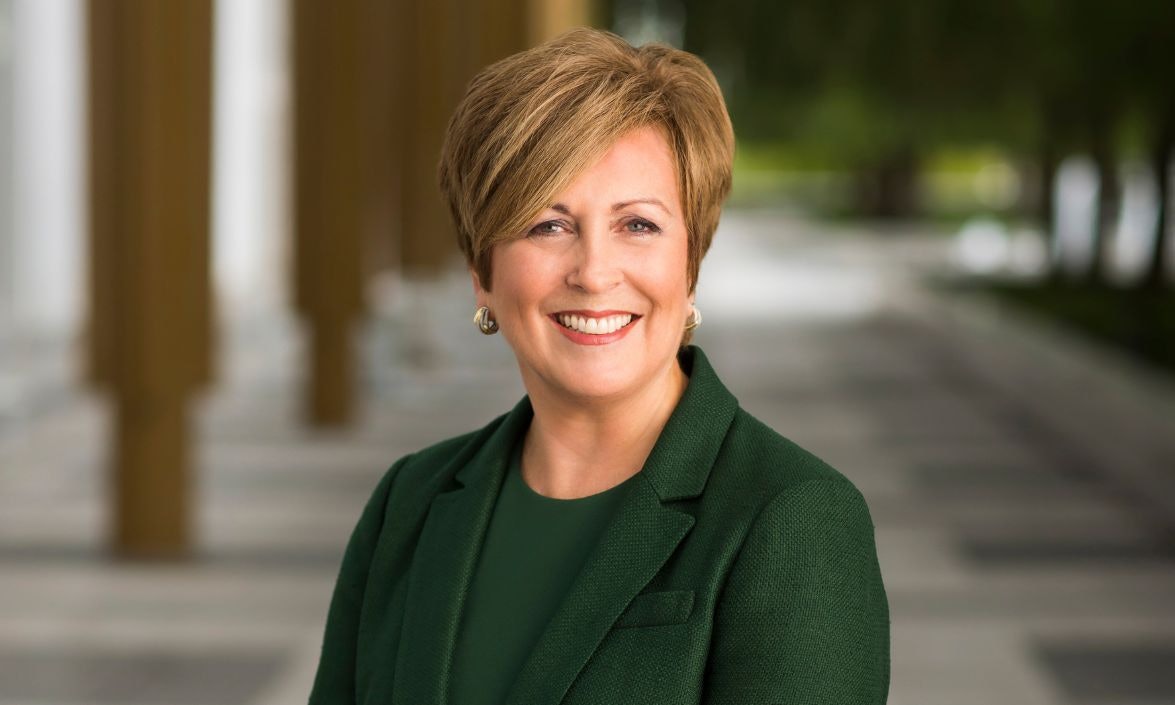
    Deborah F. RutterDeborah F. Rutter, the former president of the John F. Kennedy Center for the Performing Arts in Washington, D.C., has been appointed vice provost for the arts at Duke University.

    From 2014 to 2025, Rutter was the first woman to serve as president of the Kennedy Center, the nation’s cultural center and living memorial to President Kennedy. Under Rutter’s leadership, the center experienced a period of transformative programmatic growth; opened the REACH, a physical expansion of the campus; and strengthened its financial position through increases in its endowment and working capital reserves.

    Rutter is a graduate of Stanford University, where she majored in music and German, and earned an MBA from the University of Southern California. Trained in piano and violin, she previously served as president of the Chicago Symphony Orchestra Association and executive director of the Seattle Symphony Orchestra. She also held executive leadership roles with the Los Angeles Chamber Orchestra and the Los Angeles Philharmonic.

    Rutter received an honorary Doctor of Arts degree from Duke in 2023.

    Source link

  • The Enshitification of Higher Education in the United States

    The Enshitification of Higher Education in the United States

    Cory Doctorow’s theory of enshitification—originally coined to describe how digital platforms decay over time—perfectly captures the grim evolution of U.S. higher education. Institutions that once positioned themselves as public goods now exist primarily to sustain themselves, extracting revenue, prestige, and labor at the expense of students, faculty, and the broader public.

    In the post–World War II era, higher education in the United States was broadly seen as a driver of social mobility, economic growth, and democratic citizenship. The GI Bill and substantial state funding opened college doors to millions. Tuition at public institutions was minimal or nonexistent. Academic freedom, faculty governance, and research for the common good were foundational ideals.

    By the 1980s, neoliberal policies began to reshape the higher education landscape. Public disinvestment led institutions to rely more heavily on tuition, philanthropy, corporate partnerships, and student debt. Universities became more bureaucratic and brand-conscious. Students were reframed as consumers, and education as a commodity. Faculty positions gave way to underpaid adjunct labor, and Online Program Managers like 2U, Academic Partnerships (aka Risepoint) and Kaplan emerged to monetize digital learning. Marketing budgets ballooned. Classrooms and research labs became secondary to enrollment targets and revenue generation.

    A 2019 Higher Education Inquirer report revealed how elite universities joined the downward spiral. Institutions like Harvard, Yale, and USC outsourced online graduate programs to 2U, employing aggressive recruitment tactics that resembled those of discredited for-profit colleges. Applicants were encouraged to take on excessive debt for degrees with uncertain returns. Whistleblowers likened it to fraud-by-phone—evidence that even the most prestigious universities were embracing an extractive model.

    Doctoral education offers a deeper glimpse into how enshitification has hollowed out academia. Sold as a noble pursuit of truth and a path to secure academic employment, the Ph.D. has become, for many, a journey into economic instability, psychological distress, and underemployment. Only a small percentage of doctoral students land tenure-track jobs. Graduate schools continue to admit far more students than they can responsibly support, while providing little preparation for careers outside academia. Mentorship is often lacking, and financial support is frequently inadequate. Many graduate students rely on food pantries, defer medical care, or take on gig work just to survive. Meanwhile, universities benefit from their labor in teaching and research.

    International graduate students face even steeper challenges. Promised opportunity, they instead encounter a saturated job market, low wages, and immigration precarity. Their labor props up U.S. research and rankings, but their long-term prospects are often bleak.

    The rise of career-transition consultants—like Cheeky Scientist and The Professor Is In—has become a booming cottage industry, a byproduct of the failed academic job pipeline. For most Ph.D.s, what was once considered “alternative academia” is now the only path forward.

    Financial hardship compounds the crisis. Graduate stipends in many programs are far below local living wages, especially in high-cost cities like San Francisco, Boston, or New York. Few programs provide retirement benefits or financial literacy resources. The financial toll of earning a doctorate is often hidden until students are years deep into their programs—and years behind in wealth accumulation.

    Meanwhile, university medical centers—often affiliated with elite institutions—offer a parallel example of institutional enshitification. These hospitals have long histories of exploitation, particularly of poor and minority patients. Even today, these facilities prioritize affluent patients and donors, while relying on precariously employed staff and treating marginalized communities as research subjects. The disparities are systematic and ongoing. The rhetoric of innovation and healing masks a legacy of racial injustice and extractive labor practices.

    Legacy admissions further entrench inequality. While race-conscious admissions have been rolled back, legacy preferences remain largely untouched. They serve to maintain elite networks, ensuring that wealth and access remain intergenerational. These policies not only contradict the rhetoric of meritocracy but also deepen structural inequities in the name of tradition.

    Today, higher education serves itself. Institutions protect billion-dollar endowments, award executive salaries in the millions, expand sports programs and real estate portfolios, and depend on underpaid faculty and indebted students. Campuses are rife with inequality, surveillance of student protest, and performative gestures of inclusion, even as DEI initiatives are gutted by state governments or internal austerity.

    The consequences are clear. Enrollment is declining. Campuses are closing. Faculty are being laid off. Public trust is eroding. And even elite institutions are feeling the strain. Doctorow’s theory suggests that once a system has fully enshittified, collapse becomes inevitable. The College Meltdown is not hypothetical—it’s here.

    And yet, collapse can be a beginning. Higher education must be radically reimagined: public investment, tuition-free education, student debt relief, labor protections, honest admissions policies, and genuine democratic governance. The alternative is more of the same: a system that costs more, delivers less, and cannibalizes its future to feed its prestige economy.


    Selected Sources

    Caterine, Christopher L. Leaving Academia: A Practical Guide. Princeton University Press, 2020.

    Cassuto, Leonard. The Graduate School Mess: What Caused It and How We Can Fix It. Harvard University Press, 2015.

    Kelsky, Karen. The Professor Is In: The Essential Guide to Turning Your Ph.D. into a Job. Three Rivers Press, 2015.

    Roberts, Emily. Personal Finance for Ph.D.s. https://www.pfforphds.com

    Shaulis, Dahn. “2U Expands College Meltdown to Elite Universities.” Higher Education Inquirer, Oct. 4, 2019. https://www.highereducationinquirer.org/2019/10/college-meltdown-expands-to-elite.html

    Shaulis, Dahn. “The Dark Legacy of Elite University Medical Centers.” Higher Education Inquirer, Mar. 13, 2025. https://www.highereducationinquirer.org/2025/03/the-dark-legacy-of-elite-university.html

    Doctorow, Cory. “TikTok’s Enshittification.” Pluralistic.net, Jan. 21, 2023. https://pluralistic.net/2023/01/21/potemkin-ai/

    American Association of University Professors. Annual Report on the Economic Status of the Profession, 2023. https://www.aaup.org

    National Student Clearinghouse Research Center. Current Term Enrollment Estimates, 2024. https://nscresearchcenter.org

    Newfield, Christopher. The Great Mistake: How We Wrecked Public Universities and How We Can Fix Them. Johns Hopkins University Press, 2016.

    Goldrick-Rab, Sara. Paying the Price: College Costs, Financial Aid, and the Betrayal of the American Dream. University of Chicago Press, 2016.

    Roth, Gary. The Educated Underclass: Students and the Promise of Social Mobility. Pluto Press, 2019.

    Teen Vogue. “The Movement Against Legacy Admissions.” Jan. 2, 2025. https://www.teenvogue.com/story/movement-against-legacy-admissions

    The Guardian. “‘Affirmative Action for the Privileged’: Why Democrats Are Fighting Legacy Admissions.” Aug. 11, 2023. https://www.theguardian.com/education/2023/aug/11/college-legacy-admissions-affirmative-action-democrats

    Source link