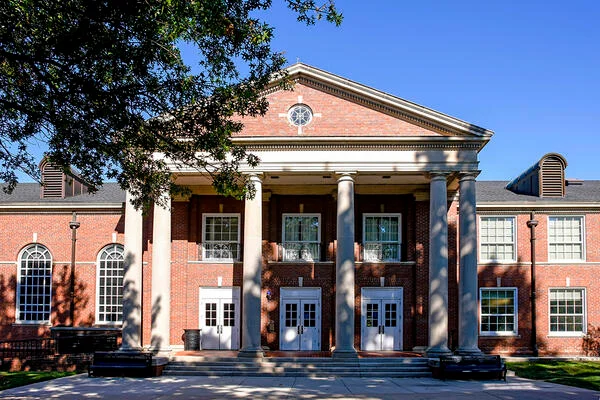
A significant book in political science is Pressman and Wildavsky’s wonderfully titled Implementation: how great expectations in Washington are dashed in Oakland; or, why it’s amazing that federal programs work at all, this being a saga of the economic development administration as told by two sympathetic observers who seek to build morals on a foundation of ruined hopes.
Let’s see how different things were in County Durham.
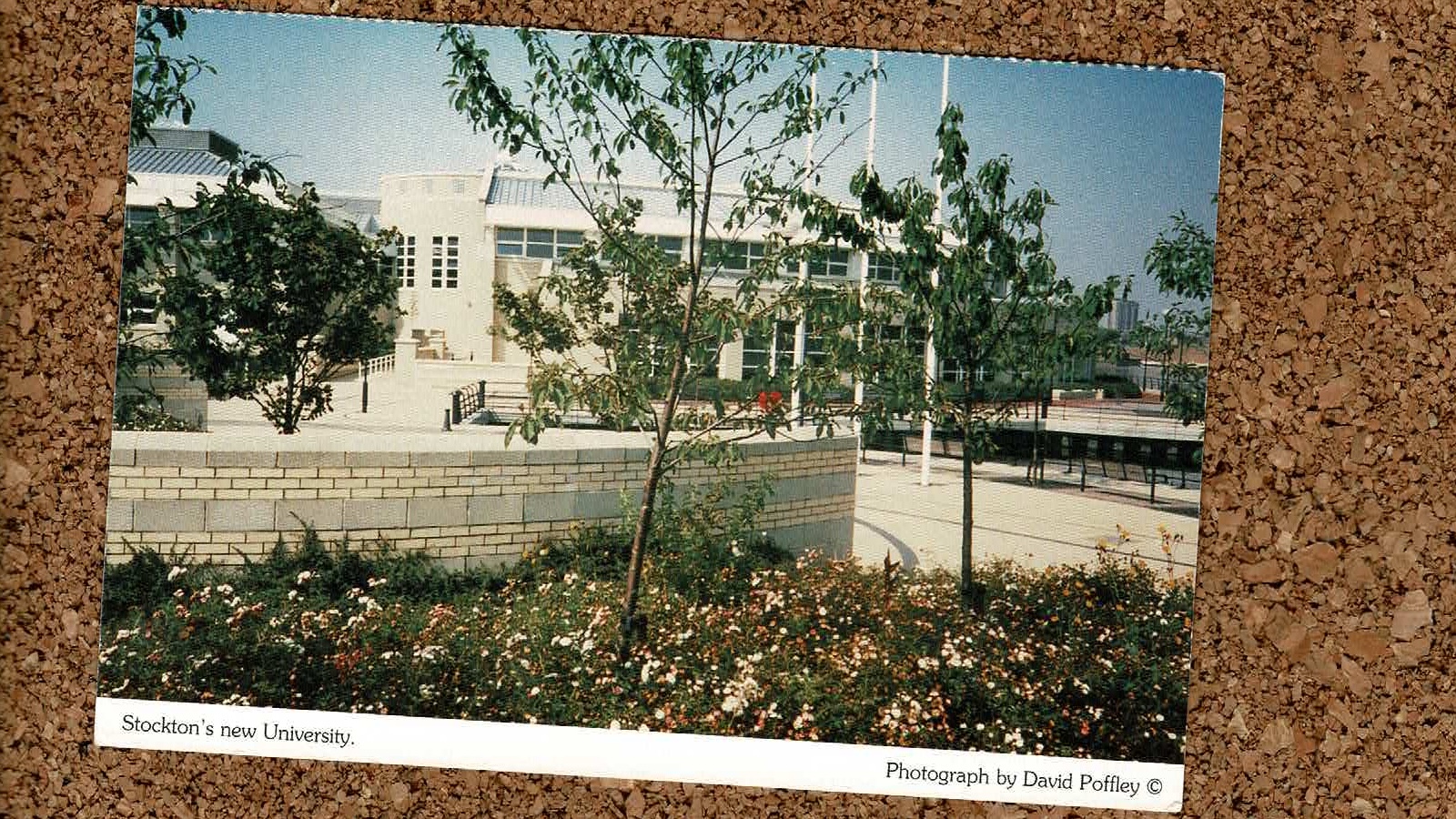
The Middlesbrough Herald and Post, 14 October 1992, could hardly have been more excited. Hailing the opening of the University College Stockton, a joint venture between Durham and Teesside universities, it noted that it was “the most important higher education development in Britain for 25 years” (the transmogrification of polytechnics to universities was clearly just a footnote).
The principal, Professor Bob Parfitt, who had joined from the University of Western Australia, expressed the view that the college would have a bright future in 20 years’ time:
I would hope that we are an international institution which is a clear part of the local community. We will be meeting the needs of the local market in our degrees and short courses, but I also hope we shall play a leading role in the industrial and urban regeneration of the area.
Fast forward to 1995 and the first students were graduating. The Stockton and District Herald and Post on 28 June 1995 reports that Catherine Barker was the first to receive a joint degree from Durham and Teesside, gaining a first in European Studies (French). Environmentalist David Bellamy and local environmental activist Angela Cooper received honorary degrees at the same ceremony.
But it wasn’t to last. John Hayward’s account of the first ten years of the college tells a tale of insufficient capital, changing government policy which slowed expansion of student numbers, and the complexities of operating a college jointly between two universities. It had been only by the skin of its teeth that the new college had got off the ground at all; and in 1994 the two universities agreed that it would continue under the tutelage of just one of them – Durham University.
Over the next few years the university college fought to establish a sustainable basis for operations, trying different subjects and seeking funding from many sources for buildings and equipment. By the late 1990s it was no longer operating in deficit, and in the early 2000s, in order to bring it more into line with norms elsewhere in Durham University, two colleges were created at the Stockton Campus – Stephenson College and John Snow College.
The colleges have since moved, physically, to Durham, and the campus is now known as the Queen’s Campus, Stockton. It hosts the university’s International Study Centre, so in this respect Professor Parfitt’s hope that it would be an international institution has been borne out. But not in a way he would ever have imagined.
John Hayward’s account is worth a read. There’s a story – hidden behind the institutional politics and the minutiae of council and senate meetings – of the practical difficulties in getting something new off the ground. And of the difficulties in multi-institutional working. Which in these days of radical new governance models is a lesson worth remembering.
Here’s a jigsaw of the postcard – it wasn’t posted, but must date from the early 1990s. It was sold in aid of the Butterwick Hospice, and slight perforation marks at the top suggest that it was one of a concertina strip of cards.
This audio is auto-generated. Please let us know if you have feedback.
The first year of President Donald Trump’s return to office brought unprecedented and far-reaching changes to the higher education sector, and 2026 is poised to continue the trend.
The conservative-led spending and tax bill, dubbed the One Big Beautiful Bill Act, is set to go into effect in July. But effects of the forthcoming policy changes, including how certain students can finance their college educations, are still in flux.
The Trump administration also looks poised to continue opening investigations into colleges as a means of gaining influence over the sector, putting higher ed leaders in a tight spot. And federal officials are likely to further restrict the ability of certain international students to study in the U.S.
All that comes as analysts predict a tough financial year ahead.
To help higher education leaders prepare for the year ahead, we’ve rounded up six trends we expect to shape the sector in 2026.
Enforcement actions against universities may escalate
The federal government under President Donald Trump last year launched a flurry of investigations into colleges, often suspending or canceling their federal research funding to pressure them into implementing vast policy changes. If the final days of 2025 offer any clue, the Trump administration doesn’t plan to slow down this tactic.
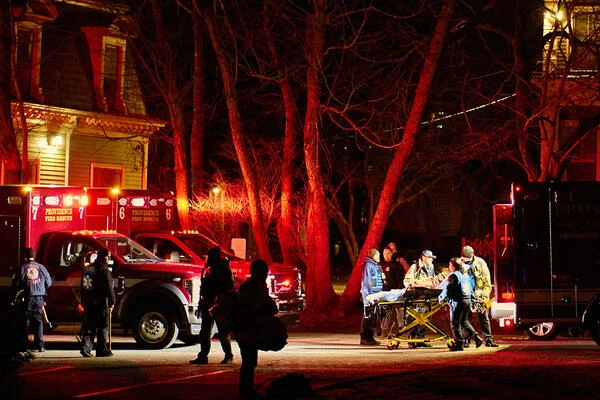
On Dec. 22, the U.S. Department of Education opened a Clery Act investigation into Brown University over the shooting on its campus earlier that month that left two dead and nine injured. The Clery Act requires federally funded colleges to warn their campuses of emergencies in a timely manner and provide support to victims of sexual assault, domestic and dating violence, and stalking.
“After two students were horrifically murdered at Brown University when a shooter opened fire in a campus building, the Department is initiating a review of Brown to determine if it has upheld its obligation under the law to vigilantly maintain campus security,” U.S. Education Secretary Linda McMahon said in a statement.
The new investigation capped a year in which the Trump administration pursued probes against dozens of colleges over potential civil rights violations.
Notably, Brown is one of a handful of institutions that struck formal agreements with the administration to settle these investigations in 2025. But its July deal did not prevent the Education Department from opening a probe into Brown over its actions that occurred after the deal — and does not preclude more such activity from the Trump administration in the future.
And in its ongoing battle with Harvard University, the Trump administration has even threatened to take over patents for inventions made with the help of government research funding. The U.S. Department of Homeland Security also revoked Harvard’s ability to enroll international students, but a federal judge blocked the move.
James Finkelstein, professor emeritus of public policy at George Mason University, said he expects federal enforcement actions to ramp up in 2026.
“They’re going to weaponize almost every available tool, whether it’s Title VI investigations, adding new conditions to federal grants and contracts, reviewing tax exempt status, putting pressure on accreditors, [or] going after individual presidents,” Finkelstein said.
Will college boards stand up for their leaders?
In the latter half of 2025, the Trump administration tried a new tactic in its quest to reshape the higher education sector — pressuring college presidents to step down.
The U.S. Department of Justice successfully deployed this strategy in June, when then-University of Virginia President Jim Ryan abruptly resigned. He said he was leaving to avoid endangering federal funding for the university, which faced a Trump administration investigation into institutional diversity efforts pursued under his tenure.
Ryan was not alone. Following a short investigation, the U.S. Department of Education found George Mason University in violation of civil rights law and called out its president, Gregory Washington, for what it has described as illegal diversity, equity and inclusion efforts.
Washington has pushed back on the Trump administration, calling the allegations a “legal fiction” through his attorney.
For its part, George Mason’s board said it would focus on its “fiduciary duty” to serve the best interests of the university. So far, the board — which has too few members to have a quorum — hasn’t announced any major actions.
Finkelstein said other colleges will experience what happened at UVA “unless you find real pushback on a campus and within a community, whether it’s faculty, students, alumni or civic leaders.”
“The boards themselves really are not going to be there to support presidents,” Finkelstein said, arguing that many boards “are being captured by governors and legislatures,” which in turn pack them “with political operatives.”
“Those aren’t really trustees who are going to defend presidents against these attacks,” Finkelstein said. “They’re really there to ensure that the institutions submit.”
As a case in point, Finkelstein pointed to the head of George Mason’s board, Charles Stimson. The lawyer had held several positions at The Heritage Foundation, the conservative think tank that spearheaded the Project 2025 blueprint for Trump’s second term. He left the group in December.
Lindsey Burke, who previously led the Heritage Foundation’s Center for Education Policy and authored Project 2025’s chapter on education, served on George Mason’s board until she stepped down last year to take a position within the Education Department. Both Stimson and Burke were appointed to the George Mason board by Gov. Glenn Youngkin, a Republican.
“The boards are being built for compliance today,” Finkelstein said. “They’re not being built for independence.”
In Virginia, the ideological tilt of university boards may soon change following the Jan. 17 inauguration of Gov.-elect Abigail Spanberger, a Democrat.
“The question is, in Virginia, will the pendulum swing too far the other way, and will Gov.-elect Spanberger try to balance the board by going to the other extreme?” Finkelstein said. “That doesn’t seem to be in her political nature, given her record. But who knows?”
Another year of college cuts?
Last year marked more downsizing for many U.S. colleges. But in addition to the now-perennial enrollment and inflation laments, many major universities slashed their ranks of staff and faculty to adapt financially to the torrent of policy changes brought on by the Trump administration.
The federal government disrupted research funding, targeted institutions with investigation and threats, and introduced obstacles to international student enrollment. Student loan caps, higher endowment taxes and other recent statutory changes could add further pressure to college budgets this year.
In its 2026 outlook for higher education, Moody’s Ratings estimated 3.5% growth overall in revenue for the higher education sector, down from 3.8% in 2025. Meanwhile, the credit rating agency forecast that costs would increase by 4.4%.S&P Global Ratings and Fitch Ratings have similarly predicted a gloomy year ahead for colleges and universities, which could well mean more budget cuts.
“We are definitely expecting more expense control measures, and layoffs are certainly one of those,” said Patrick Ronk, a vice president and senior analyst with Moody’s. “Inflation is tempering, which is nice for the sector, but at the same time we see the revenue growth being more constrained.”
While more cuts may be ahead for large institutions trying to weather the political landscape and macro trends, Ronk pointed out many smaller colleges don’t have much wiggle room left in their budgets after enduring pandemic disruption and historic inflation.
“There’s not much left to cut” for those institutions, Ronk said. “A lot of these smaller liberal arts colleges have been downsizing for years.”
Not only that, but institutions are also under pressure to spend. Moody’s and other higher ed observers have pointed to a massive backlog of facility and capital needs that colleges can’t put off addressing forever.
“At some point you have to make the dorms look nicer,” Ronk said. He added that Moody’s analysts expect capital spending in higher ed to pick up in 2026, with a potential boost coming from lower interest rates as the Federal Reserve eases its inflation fight.
OBBA goes live
Republicans’ massive spending and tax bill that passed last summer, dubbed the One Big Beautiful Bill Act, contained some of the most sweeping changes to federal higher ed policy in years. At the time, one policy leader in the sector described it as “akin to a Higher Education Act reauthorization,” referring to the primary federal law governing higher education and student aid last reauthorized in 2008.
Changes under OBBA include ending Grad PLUS loans — which became the largest new student aid program when Republicans created it two decades ago — and capping total student borrowing. Specifically, federal loans will tap out at $100,000 for graduate students and $200,000 for professional students. That latter cap has come under debate with the definition of “professional” up in the air, and some programs, including nursing, excluded.
OBBA also increased tax rates on the income of the wealthiest college endowments, expanded Pell Grants for accredited short-term programs, and developed a new accountability system that would cut off access to federal student loans for college programs whose graduates don’t meet earnings thresholds.
The new limits to student borrowing could have broad impacts on colleges. Many worry that the end of Grad PLUS and the new borrowing caps will reduce access to programs and lessen student demand. That, in turn, could weigh on colleges’ finances and drive some institutions to cut graduate programs.
Ronk said the loan system changes will likely deliver the heaviest financial impact for institutions under OBBA. But there are still many unknowns, including how private lenders will respond to the end of Grad PLUS and the start of the caps.
“It’s just a little uncertain how much the private market is going to step up, or how much the private market needs to step up,” Ronk said. For student loan caps, he said it remains unclear to what extent graduate program costs will run up against the borrowing limits.
Meanwhile, the endowment tax could amount to a hefty government payment, causing financial pain for a subset of institutions. Yale University, for example, in December announced budget measures and likely layoffs that leaders tied, in part, to a looming $300 million annual tax bill under the new law.
Yet, as Ronk noted, the tax will land hardest on colleges that typically have the highest credit ratings and the most resources and flexibility to weather the financial hit.
“Those happen to be the wealthiest institutions, with really sophisticated investment offices and really big donor bases,” Ronk said.
Ronk predicted their overall wealth would stay “pretty strong,” though he said the tax could lessen their operating activities due to lower endowment income.
Likewise, the new accountability system is not expected to have a massive impact on most colleges. Only 2% of programs are at risk of failing the earnings test, according to a recent analysis from the policy organization HEA Group of data released by the Education Department in late December.
The new accountability test is “going to put a lot more focus on specific programs and outcomes,” Ronk said. “If there is a greater scrutiny of post-grad outcomes for programs, that will lead to generally better student outcomes and benefits for the sector.”
Shifting policies for international students
Higher education is bracing for a 2026 decline in international enrollment, following a slew of Trump administration policies that have targeted foreign students and sought to clamp down on the visa programs that allow them to study at U.S. institutions.
The following week, a study from NAFSA: Association of International Educators found that polled colleges reported an average of 6% fewer new international students enrolling in bachelor’s programs and 19% fewer in master’s programs.
NAFSA is entering 2026 expecting to see “a sharp drop” in graduate degree enrollment among international students “due to the current administration’s policy decisions,” said Fanta Aw, the group’s executive director and CEO.
In Fitch Ratings’ “deteriorating” 2026 outlook for the higher ed sector, analysts predicted that last year’s federal policies would continue to weaken the international student pipeline to the U.S. For colleges, that could mean the further erosion of growth in tuition and fee revenue, the credit rating agency said.
Less than a month after Fitch issued its outlook, Trump expanded his travel ban to include 39 countries. Among the newly added is Nigeria, one of the top 10 countries of origin for international students in the U.S.
Higher ed experts say that even if foreign students have the chance to study here, they may not want to.
Neal McCluskey, director of the libertarian Cato Institute’s Center for Educational Freedom, said prospective international students are increasingly seeing the U.S. as an unfriendly place for them to study.
And Aw said the U.S. can expect to lose students to “nations that have clear, consistent welcoming policies to attract, enroll, and retain international students.” She predicted an uptick in foreign enrollment in Asian and Middle Eastern countries, as well as in Western Europe.
“Unless we reverse course on current policies, we risk a major loss of talent and innovation along with social and economic benefits,” Aw said.
McCluskey noted one factor that could change the sector’s course — Trump’s comments regarding international students as “a good business decision.”
At times last year, Trump voiced support for international students during interviews and extemporaneous remarks. But those comments have stood in contrast to his policy priorities.
“It is possible he will increasingly take that position and work to ease obstacles to international enrollment,” McCluskey said. “But that is not reflected in current administration policy.”
Standardized test requirements in flux
A new round of colleges will return to requiring prospective students to submit standardized test scores with their applications this fall.
The University of Miami, for example, said last January it would require test scores from fall applicants for the first time since the pandemic. Ohio State University made a similar announcement in March.
COVID-19 shuttered testing sites across the country in 2020 and forced colleges that required SAT and ACT scores to go test optional. But a steady trickle of institutions — selective and well-known ones in particular — have since reinstated mandatory test scores.
Many officials have cited internal research that tied test scores to collegiate success and that found students held back scores they incorrectly believed would hurt their chances of being admitted.
Increasingly, conservative politicians have favored the testing metrics as well.
The Trump administration is seeking to incentivize high-profile colleges into adopting standardized testing requirements via the president’s wide-ranging compact. The compact — first offered to nine research institutions in the fall — would give priority for research and other federal funding in exchange for adopting numerous policy changes. Seven of the nine institutions have turned down the deal, while the other two have yet to comment publicly.
But Trump appears to have opened the compact up to all colleges since, with at least a few voicing interest. Two such institutions — New College of Florida and Valley Forge Military College — are currently test optional and would have to change their admissions structure should the president accept their signatures.
Whether due to institutional or external pressures, the switch from test optional to requiring scores seldom goes into effect right away.
Applicants to Cornell University will have to include test scores in their packet this fall, more than a year and half after the Ivy League institution said it would step away from test optional.
In October, Princeton University announced it would reinstate test score requirements for applicants in the 2027-28 admissions cycle, citing internal data that found students who submitted scores had stronger academic performances than those that didn’t. Prospective students applying this year will still be able to submit without scores should they so choose.
Some institutions are taking an even more tapered approach.
The University of Alabama System announced last month it would phase out its test-optional policy over the next few years. For the 2026-27 admissions cycle, applicants with GPAs below 3.0 will be required to submit either an ACT or SAT score. Test scores will be required of all applicants beginning in the 2027-28 cycle.
Harvard University has just fired a resident dean, Gregory Davis, for his views. Davis was never accused of any wrongdoing in his job. But old social media posts written before his current job at Harvard were denounced by conservatives who objected to his hateful remarks about Donald Trump and the police. The right-wing website Yardreport exposed his posts and declared that his comments “disqualify him from serving in his role at Harvard. They reveal an ideology unbefitting of American society, let alone its most elite institution of higher education. The university must fire him immediately.”
Davis’s firing bears a strong resemblance to Harvard’s 2019 dismissal of a faculty dean, Ronald Sullivan (and his wife), because he joined the defense team for Harvey Weinstein. The Sullivan purge was a shameful episode condemned by the ACLU, FIRE and many other groups, and often cited as evidence of Harvard’s evil wokeness by the National Review (“Harvard Launches an Attack on the Culture of Liberty”) and many conservatives. Let’s hope there’s similar outrage about what just happened to Davis.
The Davis firing exposes a problem of repression at Harvard that transcends ideological borders and threatens everyone’s freedom. But while Harvard has silenced both conservatives and liberals in the past, today the target is aimed squarely at leftists accused of the new academic crime: activism.
Harvard’s newly permanent president, Alan Garber, was recently interviewed on the Identity/Crisis podcast and revealed disturbing views about activism and academic freedom.
Garber blamed campus censorship on the younger generations: “Students came to us that way, with a set of expectations that they would not hear language or thoughts that would be offensive to them,” he said, which Garber (correctly) called “inimical to the exercise of free speech.” Garber claimed that among faculty, “there has been a generational shift” in “free speech”: “If you were to speak to older faculty, around my generation, the idea that some views should not be expressed, or that certain speakers should get priority because of historical grievances of some kinds … that’s anathema … but that changed with young generations of faculty.”
Yet it’s not the young faculty and students but the old administrators like Garber who are doing the repression at Harvard. It’s almost laughable to hear Garber say that “I have long been a believer in pretty much unfettered free speech” in the wake of Davis’s firing and so many other examples of repression at Harvard.
In December, the Garber administration purged Mary T. Bassett, director of the François-Xavier Bagnoud Center for Health and Human Rights, and announced that—despite the literal name of the center—it would no longer be allowed to address human rights and instead will focus solely on the less controversial territory of children’s health. The center’s Palestine Program for Health and Human Rights had drawn attacks, and although Harvard rejected the explicit Trump administration demands for an external audit of the center, Harvard officials on their own went much further than the Trump regime and imposed this ban on controversial ideas at the center.
This is a warning to all programs and all faculty at Harvard: Engage in activism and advocacy at the risk of your careers.
In the podcast, Garber reminisced about his time teaching at Stanford: “We had a rule that the faculty … in their teaching, they had to be completely objective.” He added, “That’s what had shifted, and that’s where I think we went wrong.” But complete objectivity is more of a delusion than a dream. Garber declares, “I’m pleased to say that I think there’s real movement to restore balance in teaching and to bring back the idea that you really need to be objective in the classroom.” Garber mentions that as part of Harvard’s fight against antisemitism, “we’re hiring new people”—and it doesn’t take much guessing to figure out which views those new hires are expected to have.
The irony is that Garber is Harvard’s most powerful political activist. Anti-activists like Garber are the worst kind of activists—the ones who delude themselves into thinking that they are the purveyors of objective truth, purely logical and immune from the evils of having a point of view—because their point of view is simply the facts. When an activist like Garber is unaware of his own biases and imagines himself to be objective and incapable of bias, that sense of superiority makes him feel entitled to silence the “activists.” And his position of power as president gives him the ability to punish his ideological enemies in the name of objectivity.
Garber makes a cartoonish dismissal of activism, claiming that education “is not about how to sling slogans.” There are reasonable critiques of what some left-wing activists do in the classroom—but claiming that they just “sling slogans” is such a dishonest dismissal that it shows Garber is ignorant of what academic activism looks like, and this helps explain why he’s unable to see his own activist presidency.
Garber is fond of proclaiming his devotion to institutional neutrality, but a university truly committed to neutrality cannot punish activism (and should not even condemn it). The neutral university must protect the freedom of all scholars and students, whether they engage in activism, oppose activism or try to avoid controversial issues. A neutral university judges scholars based on their scholarly achievement and never presumes that all activists are inherently unscholarly, as Garber believes.
Garber wants to paint a scarlet A on activists and purge them from the university: “Our mission is not to provide advocacy about an issue,” he says, “it’s to provide scholarship, it’s to provide an accurate view, as objective a view as possible.” But telling the truth in a biased world sometimes requires advocacy and activism. Accuracy often violates the “objective” ideal of telling both sides equally. Even if you personally refrain from advocacy on everything, academic freedom requires a college president to respect and defend faculty who disagree and engage in advocacy.
Garber is free to reject these principles and argue for his delusions of objectivity. But when he seeks to impose his biased viewpoint on the entire university and violate the academic freedom of those who disagree, then he’s no longer a mere advocate for flawed delusions of objectivity. Garber is an activist president abusing his power to silence those he opposes.
The Trump regime’s demands of Harvard were so extreme that Garber was forced to reject a settlement. But Garber’s latest words and actions send a clear message to the Trump administration: Trust me. Garber and the Trump regime share a common enemy in left-wing activists. All the government needs to do is back down a little, and Garber will do their bidding. Garber is setting the terms of a settlement where he will implement most of Trump’s demands. It appears Garber will gladly sacrifice the academic freedom of Harvard’s faculty, staff and students as long as Harvard’s autonomy and money are preserved.
John K. Wilson was a 2019–20 fellow with the University of California National Center for Free Speech and Civic Engagement and is the author of eight books, including Patriotic Correctness: Academic Freedom and Its Enemies (Routledge, 2008), and his forthcoming book The Attack on Academia. He can be reached at [email protected], or letters to the editor can be sent to [email protected].
The stress of managing her engineering classes at Northwestern University didn’t just weigh on Fiona Letsinger mentally—it began to take a toll on her academic performance.
In her second year, Letsinger’s dean introduced her to PATH, a peer mentor–led program housed in the engineering school that helps students manage stress, perfectionism and personal growth.
“From the second he described it, my jaw was on the floor,” said Letsinger, a fourth-year civil engineering major. “I was like, ‘Yep—that’s exactly what I need.’”
Launched in 2016, PATH—short for Personal Advancement Through Habits—is an eight-week program that guides students through reflection and personal development using a mix of online coursework and small-group discussions.
During the 2024–25 school year, 88 students completed the program. About 90 percent reported a positive personal change, and more than 60 percent said they experienced growth in self-awareness; roughly half said it improved their motivation and goal-setting skills.
Letsinger said the program gave her the language to recognize and name the ways stress and perfectionism were shaping her college experience.
“I thought I couldn’t be a perfectionist because I wasn’t performing highly enough,” Letsinger said. “It wasn’t until PATH when I was able to get the vocabulary to identify how stress showed up in my life.”
Impact on students: Joe Holtgrieve, assistant dean for undergraduate engineering, said his experience supporting students in both short-term and systemic crises inspired him to start the PATH program nearly 10 years ago.
At the time, Holtgrieve said, Northwestern was reassessing its withdrawal policies and considering making it easier for students to drop courses later in the term. That prompted him to engage in difficult conversations with students about whether withdrawing was the best option—or whether they were experiencing what he calls an MOI, or “moment of intensity.”
“How you respond is going to be really important for your future success and resilience,” said Holtgrieve, who remains a PATH faculty member. He added that students would later reach out to thank him because they performed better academically than they thought they would.
Liz Daly, assistant director of academic advising and PATH faculty, said the program was originally intended for engineering students on academic probation but later expanded to include anyone feeling overwhelmed.
“We had students who would request to take it again because they appreciated the community and the conversations that weren’t happening elsewhere on campus,” Daly said.
That emphasis on reflection and peer support continued among students who participated in PATH during the 2024–25 school year.
To better understand students’ experiences, Holtgrieve and Daly surveyed participants, asking them to reflect on their academic challenges and select three goals from a list of seven. More than half chose “shift mindset to embrace challenges, persist and learn from feedback.”
Participants also completed surveys at the start and end of the program, rating which behaviors they found most challenging.
Before starting PATH, more than half said they “dwelled on inadequacy after failure” and were “avoidant and/or withdrawn when things were going poorly.” By the program’s end, that number had dropped to about 15 percent.
Daly said students often cite Holtgrieve’s “flashlight of attention” lesson as particularly helpful.
“Our attention is like a flashlight … and whatever is illuminated by that light represents our awareness,” Holtgrieve said. “Where we shine that light represents our intention,” he added, noting that students’ intentions are often “yanked back and forth by crises, breaking news or self-critical narratives.”
“If we can tune in to what’s present in the moment through our awareness and decide whether something is helpful or productive, then we can step back, understand the intention behind the attention that’s creating this awareness and adjust it,” he said.
Letsinger agreed with Daly, saying this lesson was a game-changer in how she understood her own thinking.
“I remember hearing that and immediately being like, ‘Yep, I need and want more of that kind of thinking,’” Letsinger said, adding that she not only enrolled in the program again the following quarter but later became a PATH mentor herself.
What’s next: Holtgrieve and Daly said the program became so popular that other institutions have adapted it, including Smith College, which launched its own PATH-inspired program in fall 2020.
Daly noted that in conversations about PATH’s impact, faculty and staff often asked whether they could participate as well. As a result, Holtgrieve and Daly now hold multiple sessions each year for Northwestern employees interested in learning strategies to manage stress in their own lives.
Holtgrieve said that response suggests that many of the conversations happening among students also resonate with faculty and staff.
“It’s an empathetic bridge, and it helps them to recognize that they’re struggling with some of the same things that their students are struggling with,” Holtgrieve said.
Ultimately, Holtgrieve said, PATH is meant to help anyone practice responding to moments of uncertainty instead of trying to make them disappear.
“When you’re feeling or confronting a moment where it’s not clear what to do, it’s human nature to say, ‘I want that to go away,’” Holtgrieve said. “But being able to practice living through and responding to those moments is how you build the skills to be a better person.”
Get more content like this directly to your inbox. Subscribe here.
Transcripts from the videos in which Claudio Neves Valente admitted to the crimes were released Tuesday.
Bing Guan/AFP/Getty Images
The man accused of carrying out last month’s mass shooting at Brown University that left two students dead admitted to the crime in a series of four videos, the transcripts of which were released Tuesday by the U.S. Attorney’s Office for the District of Massachusetts.
Claudio Neves Valente, the 48-year-old suspect who previously attended Brown, was found dead by a self-inflicted gunshot wound at a storage facility in New Hampshire just days after the campus attack, preventing investigators from interrogating him. But in the videos, which were pulled from an electronic device at the storage facility and have been translated from Portuguese to English, Valente admitted to the Brown shooting and the subsequent killing of a Massachusetts Institute of Technology professor near Boston.
And while the suspect said that he would not apologize, the motives of the attack remain unclear.
Throughout the more than 11 minutes’ worth of video, he spoke about how he had planned the shooting for years. In multiple instances, Valente vaguely referenced “the people” his violent actions were made in response to, saying, “I did not like any one of you. I saw all of this shit from the beginning.”
He noted that he sent three emails, seemingly to “the people” he’d referenced. But beyond that, he was “not saying anything else.”
College leaders return to campus this term appearing steady and resolved. After a year of tumult, they remain vigilant about more attacks from Washington but are ready to refocus on the other crises knocking at their doors—million-dollar deficits, declining enrollments and AI’s disruption. And now that higher ed has gone through nearly 12 months of Trump 2.0, it’s learned a few things.
First, we now know that nothing is sacred. Funding for cancer research? Canceled. Support for colleges serving low-income students? Chopped. Due process? Passed over. The sector was caught off guard by the administration’s creativity in its attacks last year, and colleges should continue to expect the unexpected. But in an interview before Christmas, Education Secretary Linda McMahon toldBreitbart that her department would “shift a little bit away from higher education” in 2026 and focus more on K–12 reform.
The year didn’t just teach colleges what to expect—it also showed them how to respond. And we’ve seen that fighting back works. Harvard is holding firm against the administration’s pressure to strike a deal and has not publicly conceded anything (though rumors abound an agreement is nigh). George Mason University president Gregory Washington came out swinging when the Department of Education accused him of implementing “unlawful DEI policies” on his campus. That’s a sharp contrast to University of Virginia president Jim Ryan, who resigned in June after the Department of Justice’s successful bid to topple him. So far, Washington remains in his post, with unanimous support from his board, campus community and state lawmakers. And in a collective act of defiance, the nine institutions initially invited to sign the White House’s “Compact for Academic Excellence in Higher Education” declined without repercussion.
Leaders have also woken up to the fact that visibility matters. At the Council for Independent Colleges’ Presidents Institute in Orlando, Fla., this week, presidents seemed ready to play offense. They spoke with a newfound political savviness about recruiting board members and alumni to do advocacy work, hiring in-house government relations professionals and spending more time on the Hill. “We all let our guard down on government relations in the lead-up to 2025,” one president said. “Being able to brand yourself in D.C. is now a necessity, not a luxury.”
At times the administration has appeared sloppy, sending “unauthorized” letters, issuing threats and never following up, or publishing typo-riddenmandates. But beyond the culture-war accusations that colleges are factories of woke indoctrination, it’s clear the government is serious about wanting to effect change in higher ed. Cost transparency, graduate outcomes and greater emphasis on workforce training are all sound policy issues lawmakers are pursuing through legislation.
Whether or not McMahon follows through on her intention to shift focus away from higher ed, the fallout from 2025 persists. We’ll be looking to see how college budgets weather new loan caps for graduate courses and the loss of international students impacted by stricter visa requirements—or turned off by the country’s hostile environment.
In December, Education under secretary Nicholas Kent vowed to “fix” accreditation. The administration’s unofficial playbook, Project 2025, suggests that could mean more accreditors, including states authorizing their own accrediting agencies, or ending mandatory accreditation to access federal financial aid. Congress will continue to apply pressure on the sector to lower the cost of college and improve transparency regarding fees and tuition. Meanwhile, negotiated rule making has begun on the accountability measures mandated by the One Big Beautiful Bill Act. And will colleges take responsibility for their role in the loss of public trust in their institutions?
We shouldn’t normalize the lasting harm the Trump administration has done to institutional independence, minoritized students and scientific research in just 12 months. And there is a risk that more is coming. But after surviving a dizzying year of attacks, the sector will face its challenges a little wiser and more informed.
Sara Custer is editor in chief at Inside Higher Ed.
Not long ago, chalky tofu and limp lettuce constituted some of the only vegetarian meal options available at campus dining halls. But that’s changed in recent years as more colleges and universities have set broader sustainability goals, which often include pledges to offer more plant-based foods.
Nowadays, students have access to more adventurous plant-based dishes, such as cauliflower ceviche, japchae and sesame tempeh, to name just a few.
In November, the University of California, Riverside—where meatless meals already make up about 45 percent of its dining options—became one of the latest universities to commit to expanding its meatless offerings, pledging to make 50 percent of meals plant-based by 2027.
While such pledges are rooted in sustainability goals, they’ve also led to the creation of more diverse and healthier menu options—both things students have called for. And regardless of students’ motivation for consuming more plant-based food, prioritizing such options at campus dining halls—which feed millions per year—has the power to affect environmental change at scale.
“Without question, institutional procurement is a massive lever for climate solutions at school and an often-overlooked tool for public health,” said Sophie Egan, co-director of the Menus of Change University Research Collaborative housed at Stanford University. Founded in 2012, the collaborative is a network of 85 colleges and universities that are using campus dining halls as living laboratories to research promotion of plant-forward options, food-waste reduction and increasing food literacy. “The decision-makers at universities who hold the purse strings and design menus are the potential heroes in this story. They can make small tweaks to menu sourcing and operations that can have a huge impact at scale.”
For colleges, the shift satisfies multiple goals.
“There are so many things that play into sustainability that are low-hanging fruit, including trying to offer menu items that don’t require a lot of water,” said Lanette Dickerson, director of culinary operations at UC Riverside. At the same time, she’s also focused on creating menus that reflect students’ varied and changing tastes. “UC Riverside is a really diverse campus—more than 40 percent of students are Latino and 34 percent are Asian—which makes it easier for us to offer these items because they’re already deeply rooted in these cultural diets.”
She added that offering vegetarian foods—which tend to be lower in fat, cholesterol and other ingredients associated with an increased risk of chronic disease—may also help some students adopt healthier overall eating habits.
Vegan Labels a ‘Turn-Off’
Reaching the university’s new plant-forward menu goals will require more training for Dickerson’s staff. “Our team needs to know how to prepare these items to make sure they’re palatable,” she said. What won’t work is advertising plant-based menu options as meatless, vegan or vegetarian. “We got such bad feedback on our ‘meatless Mondays,’” she said, noting that students assigned more value to meat-based proteins. “We did still try to do it, but without such heavy marketing behind it.”
Experts say that kind of reaction to food labeled vegetarian, vegan or meatless is exceedingly common, despite consumers’ increased appetite for plant-based foods and the growing availability of plant-based ingredients.
“The term ‘vegan’ has a bit of a bad connotation. ‘Plant-based’ seems a lot sexier,” said Scott Zahren, director of culinary development at Aramark, which provides dining and food services to more than 275 U.S. colleges and universities. “Plant-based products these days are much better than they were 10 or 20 years ago. We have such great alternative dairy products now that we can offer a lot more dishes.”
Vegetarian dining at Smith College
Jessica Scranton/Smith College
But Zahren and his team recognized that “vegan” can be a “turn-off,” and Aramark recently updated its marketing content to describe its menu items as “plant-based” instead. “The marketing reads a lot better for the masses.”
Presenting plant-based foods as a default menu item rather than an alternative also increases the likelihood that students will eat them. According to a 2024 study published in the Journal of Environmental Psychology, on days that dining halls set up food stations with a vegan default—say, stir fry with tofu—those stations saw a 58 percent increase in plant-based dining, and meat consumption declined anywhere from 21 percent to 57 percent. In short, students don’t run away from plant-based dishes when they’re presented as the norm.
‘It’s About Good Food’
In addition to sustainability initiatives, changing food preferences are also driving dining halls to offer more meatless options.
In 2020, the global market for plant-based foods was valued at $29.4 billion; by 2030, it is expected to grow more than fivefold to $162 billion, according to a report by Bloomberg Intelligence. While data also shows that about 22 percent of Gen Z are actively limiting their meat consumption, what students really want out of campus dining is more options. According to a 2023 Inside Higher Ed Student Voice survey, respondents said that if dining halls want to improve their offerings, they should prioritize variety and quality of flavors, reduce ultra-processed foods and offer a variety of cuisines.
“Campus dining programs are responding to customer preferences,” said Robert Nelson, president and CEO of the National Association of College and University Food Services. “The focus is on making great-tasting dishes that happen to be plant-forward. What’s important for dining halls as they expand their plant-forward, vegan and vegetarian offerings is to market them with descriptive, flavorful language. It’s not meatless curry, it’s coconut curry; it’s amazing mushroom pasta; it’s crispy cauliflower tacos.”
That’s the approach Smith College has taken in its quest to offer more plant-based meals.
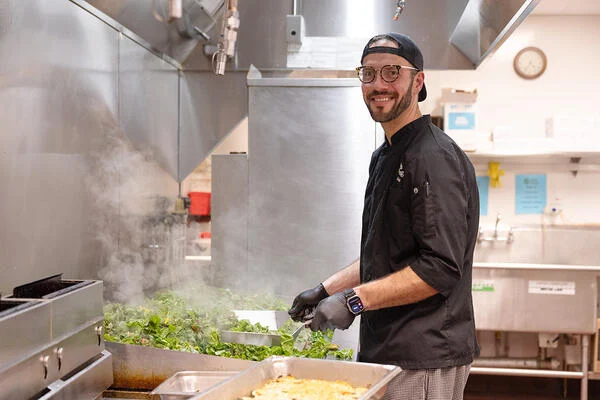
Chef Adam Dubois sauteing local greens at Smith College.
Jessica Scranton/Smith College
“We’re showing students that it’s not about the words ‘vegetarian’ or ‘vegan’—it’s about good food. It doesn’t have to have meat to be good,” said German Alvarado, director of culinary services at Smith. “With all of the technology that’s available, students are seeing all the variety of food out there and they want to see it in front of them. What’s trending is variety and healthy choices.”
In 2015, the college pledged to reduce meat consumption by 5 percent each year, aiming to make 55 percent of its entrées plant-based by 2025. As of December, it was around 51.5 percent, according to Alvarado.
“We’re not that far off,” he said, adding that the college just needs to add a handful of additional menu items to reach its goal. “We don’t want to do this for the sake of doing it. We want to make sure students are enjoying it and we’re creating good recipes.”
Choice Is Key
But Smith, UC Riverside and many other colleges have no plans to stop serving meat entirely. A dustup in the opinion pages of the Williams College student newspaper already showed limited appetite for that: In November, a student wrote an op-ed suggesting the college go vegan to mitigate animal cruelty, prompting blowback.
“When accepting the invitation to attend the College, students did not sign up for a vegan menu,” Ella Goodman, a freshman at Williams, wrote in response. “Suddenly restricting our meal offerings would be unfair to students for whom a vegan menu could have been a dealbreaker in choosing between colleges.”
Preserving personal choice is key for institutions undertaking plant-based dining initiatives, said Egan, the co-director of Menus of Change.
“The word ‘meatless’ really backfires. People tend to not like being told they can’t have something,” she said. “The behavioral science is very clear: Having something taken away or restricting choice is a very good way to make people not excited about what’s left. Plant-forward is really about celebrating what’s in a dish.”
And those initiatives at campus dining halls can also shape student relationships with food, which has implications that stretch far beyond the campus.
“A person’s college years are a particular formative time for developing food identity, food preferences and making decisions about food,” Egan said. “Showing students that healthy, sustainable, plant-forward ways of eating can be delicious, comforting, satisfying and help them perform well in sports, academics and their different pursuits—those preferences stay with them long after their college years.”
The latest episode of The Key, Inside Higher Ed’s news and analysis podcast, features a discussion between higher ed leaders and IHE editor in chief Sara Custer on how colleges can harness data to better support students.
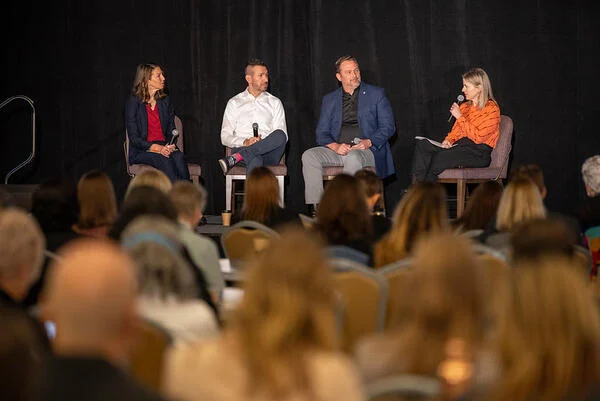
Speaking at the Student Success 2025 event in November, Courtney Brown, vice president of strategic impact and planning at the Lumina Foundation; Elliot Felix, higher education advisory practice lead at Buro Happold; and Mark Milliron, president of National University, offered unique perspectives to the question of how institutions can be data-driven and student-centered.
“You are not going to serve a student population well unless you do your data work,” said Milliron. The “data work” includes establishing good data governance and data mapping, building a data warehouse, and facilitating data integration across support platforms such as a learning management system and student information systems, he said.
Putting processes and best practice in place is what allowed National to expand its capacity, he said. “I don’t think we could’ve scaled some of the strategies we’ve done unless we did the plumbing work upfront.”
On the question of scale, Felix encouraged institutions to combine their resources to serve more students. “How many institutions are creating their own, bespoke AI policy when they can do [it] as a group or borrow from Educause? There are so many ways to work together to go farther, to go faster.”
While colleges might be teeming with data, Felix encouraged institutions to look at external sources to gain a clearer picture of students’ learning journeys. “I do think more data beyond the walls—employer data, labor market data, employment outcomes—would be really helpful.”
Meanwhile, Brown argued that the needs of the modern-day student are varied and institutions must adapt to their students, rather than students adapting to colleges. Institutions that use data to understand whom today’s students are will be better placed to support their success, she said. “[Students] are parents, they are working, they are financially independent from their own parents. But most policymakers and others don’t think about that. So we need to understand who they are and then transform the system to better serve [them].”
Michael was terminated by Austin Peay State University in September.
csfotoimages/iStock/Getty Images
Nearly four months after he was terminated for reposting a news headline that quoted the late conservative commentator Charlie Kirk’s position on gun rights, Darren Michael has been reinstated as a professor of theater at Austin Peay State University, Clarksville Now reported.
Michael returned to the classroom in late December. The university will also pay him $500,000 and reimburse therapeutic counseling services as part of the settlement.
“APSU agrees to issue a statement acknowledging regret for not following the tenure termination process in connection with the Dispute,” the settlement agreement reads in part. “The statement will be distributed via email through APSU’s reasonable communication channels to faculty, staff, and students.”
Shortly after Kirk was shot and killed at a campus event in September, Michael shared a screenshot of a 2023 Newsweek headline on his personal social media account that read, “Charlie Kirk Says Gun Deaths ‘Unfortunately’ Worth it to Keep 2nd Amendment.” His repost was picked up by conservative social media accounts, and his personally identifying information was distributed. It also caught the attention of Tennessee Sen. Marsha Blackburn, who shared Michael’s post alongside his headshot and bio with the line “What do you say, @austinpeay?” Michael was terminated Sept. 12.
Michael did not respond to a request for comment Wednesday. A spokesperson for Austin Peay State declined to comment.
Oregon’s Higher Education Coordinating Commission is recommending that the state’s public colleges and universities pursue “institutional integration”—everythingfrom sharing services and programs to full mergers. It is also seeking the power to renew, or terminate, academic programs.
The commissioners approved a document Tuesday with five recommendations, and integration and program review were listed first. Ben Cannon, the commission’s executive director, said the vote was 13 to 2.
The report says public universities will run out of money in a few years if they don’t continue to reduce costs. It cites “slowing growth forecasts for state revenue” and insufficient expected enrollment growth, adding that “especially given Oregon universities’ unusually high dependence on tuition for revenue, this creates an unsustainable dynamic.”
“On the current path universities will be forced to continue to make substantial cuts annually or, in aggregate, fund balances will be completely exhausted within an estimated three to five years,” the report says.
While the report doesn’t recommend recreating a statewide university system, it endorses “increasing systemness,” saying, “Only a few high-growth states can still afford a system of higher education built on the ‘every campus for itself’ model.”
The commission’s integration recommendation goes beyond just the universities—it says the State Legislature should direct the commission, “in consultation with all of Oregon’s public higher education institutions, including community colleges,” to come up with one or more proposals for integration by next January. It suggests, in one non–full merger example, “combining services provided to the same region by a community college and a public university.”
The commission also said lawmakers should require it to periodically review and renew universities’ degree programs, adding that the law could require programs to “demonstrate that they produce value for students and communities, don’t unnecessarily duplicate other institutional offerings” and meet “financial sustainability requirements.” It said the review should consider “impacts on underrepresented students” and not “ideological preferences” or “strictly financial returns to the individual.”
Oregon Public Broadcasting previously reported on the recommendations. It wrote that Southern Oregon University president Rick Bailey laid part of the blame for university cutbacks on stagnant state funding.
“In four years, I’ve made decisions that have eliminated 25 percent of our workforce. Imagine that happening at any other state entity,” Bailey said, according to OPB. “Our colleagues are all doing similar painful work, and so we have to ask, how much more efficient should our seven universities be?”